


6624 Résultats
Classification:
livres
livres
Titre:
Eden by design
Eden by design
Actions:
Prix:
$26.95
(disponible sur commande)
Résumé:
In 1930 the Olmsted Brothers and Harland Bartholomew & Associates submitted a report, "Parks, Playgrounds, and Beaches for the Los Angeles Region," to the Los Angeles Chamber of Commerce. After a day or two of coverage in the newspapers, the report dropped(...)
$26.95
(disponible sur commande)
Résumé:
In 1930 the Olmsted Brothers and Harland Bartholomew & Associates submitted a report, "Parks, Playgrounds, and Beaches for the Los Angeles Region," to the Los Angeles Chamber of Commerce. After a day or two of coverage in the newspapers, the report dropped(...)
Titre:
Eden by design
Actions:
Prix:
$26.95
(disponible sur commande)
Résumé:
In 1930 the Olmsted Brothers and Harland Bartholomew & Associates submitted a report, "Parks, Playgrounds, and Beaches for the Los Angeles Region," to the Los Angeles Chamber of Commerce. After a day or two of coverage in the newspapers, the report dropped from sight. The plan set out a system of parks and parkways, children's playgrounds, and public beaches. It is a model of ambitious, intelligent, sensitive planning commissioned at a time when land was available, if only the city planners had had the fortitude and vision to act on its recommendations. "Parks, Playgrounds, and Beaches" has become a highly valued but difficult-to-find document. In this book, Greg Hise and William Deverell examine the reasons it was called for, analyze why it failed, and open a discussion about the future of urban public space. In addition to their introduction and a facsimile reproduction of the report, "Eden by Design" includes a dialogue between Hise, Deverell, and landscape architect Laurie Olin that illuminates the significance of the Olmsted-Bartholomew report and situates it in the history of American landscape planning.
Eden by design
Actions:
Prix:
$26.95
(disponible sur commande)
Résumé:
In 1930 the Olmsted Brothers and Harland Bartholomew & Associates submitted a report, "Parks, Playgrounds, and Beaches for the Los Angeles Region," to the Los Angeles Chamber of Commerce. After a day or two of coverage in the newspapers, the report dropped from sight. The plan set out a system of parks and parkways, children's playgrounds, and public beaches. It is a model of ambitious, intelligent, sensitive planning commissioned at a time when land was available, if only the city planners had had the fortitude and vision to act on its recommendations. "Parks, Playgrounds, and Beaches" has become a highly valued but difficult-to-find document. In this book, Greg Hise and William Deverell examine the reasons it was called for, analyze why it failed, and open a discussion about the future of urban public space. In addition to their introduction and a facsimile reproduction of the report, "Eden by Design" includes a dialogue between Hise, Deverell, and landscape architect Laurie Olin that illuminates the significance of the Olmsted-Bartholomew report and situates it in the history of American landscape planning.
Classification:
livres
livres
Publication:
avril 2000, Berkeley - Los Angeles
avril 2000, Berkeley - Los Angeles
Sujet:
Jardins
Jardins
Classification:
livres
livres
Prix:
$41.99
(disponible sur commande)
Résumé:
The current epoch is one of accumulation: not only of capital but also of raw, often unruly material, from plastic in the ocean and carbon in the atmosphere to people, buildings, and cities. Alongside this material growth, image-making practices embedded within the fields of art and architecture have proven to be fertile, mobile, and capacious. Images of accumulation help(...)
$41.99
(disponible sur commande)
Résumé:
The current epoch is one of accumulation: not only of capital but also of raw, often unruly material, from plastic in the ocean and carbon in the atmosphere to people, buildings, and cities. Alongside this material growth, image-making practices embedded within the fields of art and architecture have proven to be fertile, mobile, and capacious. Images of accumulation help(...)
Sujet:
Théorie de l’architecture
Théorie de l’architecture
Publication:
avril 2022
avril 2022
Titre:
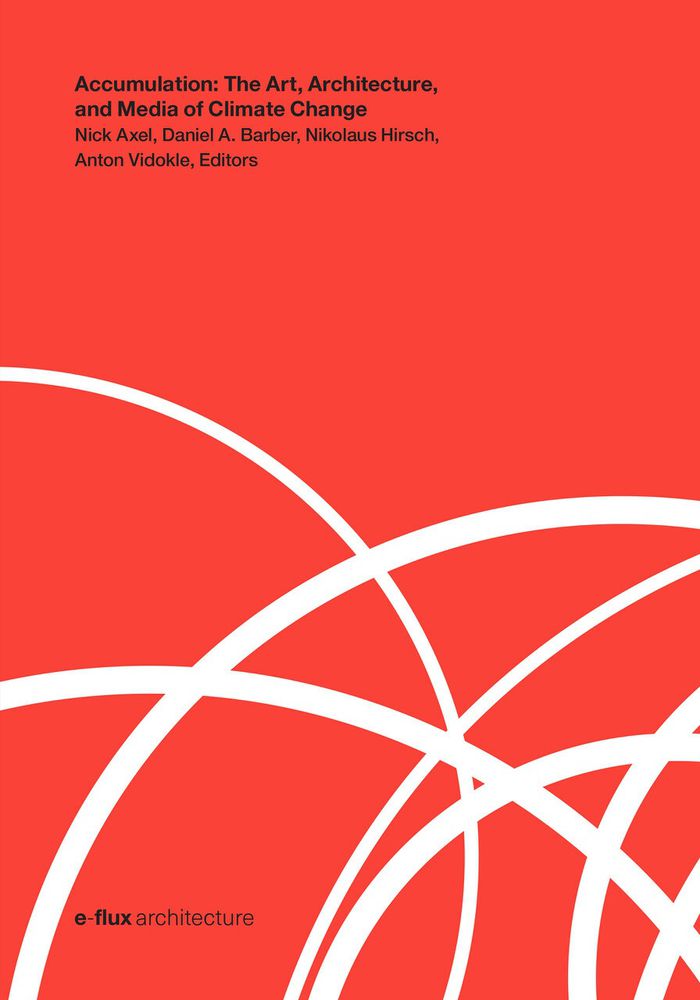
Accumulation: the art, architecture and media of climate change
Actions:
Prix:
$41.99
(disponible sur commande)
Résumé:
The current epoch is one of accumulation: not only of capital but also of raw, often unruly material, from plastic in the ocean and carbon in the atmosphere to people, buildings, and cities. Alongside this material growth, image-making practices embedded within the fields of art and architecture have proven to be fertile, mobile, and capacious. Images of accumulation help open up the climate to cultural inquiry and political mobilization and have formed a cultural infrastructure focused on the relationships between humans, other species, and their environments. The essays in ''Accumulation'' address this cultural infrastructure and the methodological challenges of its analysis. They offer a response to the relative invisibility of the climate now seen as material manifestations of social behavior. Contributors outline opportunities and ambitions of visual scholarship as a means to encounter the challenges emergent in the current moment: how can climate become visible, culturally and politically? Knowledge of climatic instability can change collective behavior and offer other trajectories, counteraccumulations that draw the present into a different, more livable, future.
Accumulation: the art, architecture and media of climate change
Actions:
Prix:
$41.99
(disponible sur commande)
Résumé:
The current epoch is one of accumulation: not only of capital but also of raw, often unruly material, from plastic in the ocean and carbon in the atmosphere to people, buildings, and cities. Alongside this material growth, image-making practices embedded within the fields of art and architecture have proven to be fertile, mobile, and capacious. Images of accumulation help open up the climate to cultural inquiry and political mobilization and have formed a cultural infrastructure focused on the relationships between humans, other species, and their environments. The essays in ''Accumulation'' address this cultural infrastructure and the methodological challenges of its analysis. They offer a response to the relative invisibility of the climate now seen as material manifestations of social behavior. Contributors outline opportunities and ambitions of visual scholarship as a means to encounter the challenges emergent in the current moment: how can climate become visible, culturally and politically? Knowledge of climatic instability can change collective behavior and offer other trajectories, counteraccumulations that draw the present into a different, more livable, future.
Classification:
livres
livres
Publication:
avril 2022
avril 2022
Sujet:
Théorie de l’architecture
Théorie de l’architecture
Classification:
livres
livres
Actions:
Prix:
$23.00
(disponible sur commande)
Résumé:
Space influences us and we influence space. Within the infinite ''space of possibilities'' of architecture, PPAG architects are permanently searching for relevance and social utility, tracking down the architectural expression of the respective society, the ''necessary new'' in all its complexity. The exhibition is a plea for an unbiased, brave look at architecture and(...)
$23.00
(disponible sur commande)
Résumé:
Space influences us and we influence space. Within the infinite ''space of possibilities'' of architecture, PPAG architects are permanently searching for relevance and social utility, tracking down the architectural expression of the respective society, the ''necessary new'' in all its complexity. The exhibition is a plea for an unbiased, brave look at architecture and(...)
Titre:
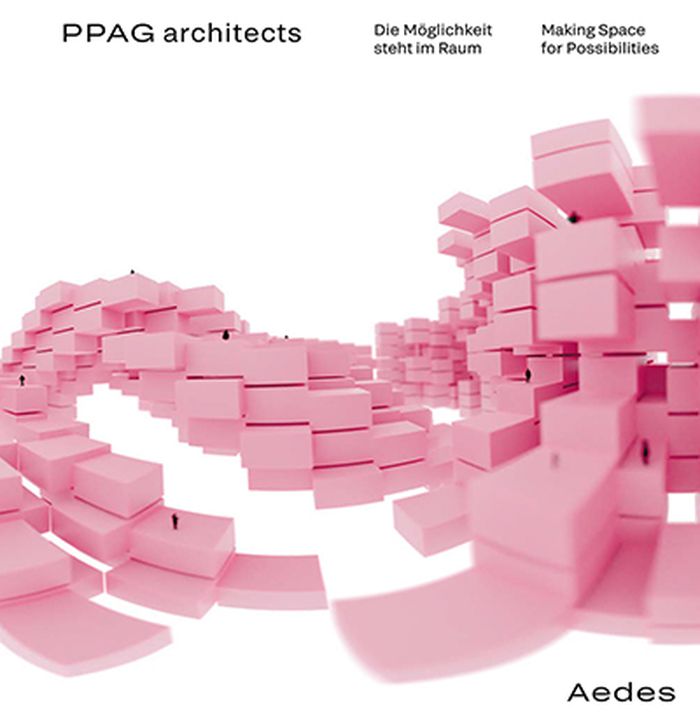
PPAG architects: making space for possibilities
Actions:
Prix:
$23.00
(disponible sur commande)
Résumé:
Space influences us and we influence space. Within the infinite ''space of possibilities'' of architecture, PPAG architects are permanently searching for relevance and social utility, tracking down the architectural expression of the respective society, the ''necessary new'' in all its complexity. The exhibition is a plea for an unbiased, brave look at architecture and urban development. A view that sees development as a necessity, even if it surprises and irritates at first glance. Especially in view of the current global challenges, we need the courage to take alternative paths. The office's work is based on trust in the collective planning abilities; on the fact that through intensive engagement and thinking ahead, solutions can be found for a good future for all of us. The diversity of the''‘space of possibilities'' is presented in a special way in the exhibition of PPAG architects at the Aedes Architecture Forum. The projects presented push the boundaries and exhaust their realm, regardless of typology, scale, age, price range or realisation – in Ecuador, Northern Macedonia, Norway, Yakutsk, Vienna or Berlin.
PPAG architects: making space for possibilities
Actions:
Prix:
$23.00
(disponible sur commande)
Résumé:
Space influences us and we influence space. Within the infinite ''space of possibilities'' of architecture, PPAG architects are permanently searching for relevance and social utility, tracking down the architectural expression of the respective society, the ''necessary new'' in all its complexity. The exhibition is a plea for an unbiased, brave look at architecture and urban development. A view that sees development as a necessity, even if it surprises and irritates at first glance. Especially in view of the current global challenges, we need the courage to take alternative paths. The office's work is based on trust in the collective planning abilities; on the fact that through intensive engagement and thinking ahead, solutions can be found for a good future for all of us. The diversity of the''‘space of possibilities'' is presented in a special way in the exhibition of PPAG architects at the Aedes Architecture Forum. The projects presented push the boundaries and exhaust their realm, regardless of typology, scale, age, price range or realisation – in Ecuador, Northern Macedonia, Norway, Yakutsk, Vienna or Berlin.
Classification:
livres
livres
Publication:
décembre 2021
décembre 2021
Sujet:
Architecture, monographies
Architecture, monographies
Classification:
livres
livres
Prix:
$26.99
(disponible sur commande)
Résumé:
Excluded from traditional design history and educational canons that heavily favor European modernist influences, the work and experiences of Black designers have been systematically overlooked in the profession for decades. However, given the national focus on diversity, equity, and inclusion in the aftermath of the nationwide Black Lives Matter protests in the United(...)
$26.99
(disponible sur commande)
Résumé:
Excluded from traditional design history and educational canons that heavily favor European modernist influences, the work and experiences of Black designers have been systematically overlooked in the profession for decades. However, given the national focus on diversity, equity, and inclusion in the aftermath of the nationwide Black Lives Matter protests in the United(...)
Sujet:
Théorie du design
Théorie du design
Publication:
février 2022
février 2022
Titre:
The black experience in design: identity, expression & reflection
Actions:
Prix:
$26.99
(disponible sur commande)
Résumé:
Excluded from traditional design history and educational canons that heavily favor European modernist influences, the work and experiences of Black designers have been systematically overlooked in the profession for decades. However, given the national focus on diversity, equity, and inclusion in the aftermath of the nationwide Black Lives Matter protests in the United States, educators, practitioners, and students now have the opportunity to make long-term, systemic changes in design education, research, and practice, reclaiming the contributions of Black designers in the process. This anthology centers on a range of perspectives, spotlights teaching practices, research, stories, and conversations from a Black/African diasporic lens. Through the voices represented, this text exemplifies the inherently collaborative and multidisciplinary nature of design, providing access to ideas and topics for a variety of audiences, meeting people as they are and wherever they are in their knowledge about design. Ultimately, this book serves as both inspiration and a catalyst for the next generation of creative minds tasked with imagining, shaping, and designing our future.
The black experience in design: identity, expression & reflection
Actions:
Prix:
$26.99
(disponible sur commande)
Résumé:
Excluded from traditional design history and educational canons that heavily favor European modernist influences, the work and experiences of Black designers have been systematically overlooked in the profession for decades. However, given the national focus on diversity, equity, and inclusion in the aftermath of the nationwide Black Lives Matter protests in the United States, educators, practitioners, and students now have the opportunity to make long-term, systemic changes in design education, research, and practice, reclaiming the contributions of Black designers in the process. This anthology centers on a range of perspectives, spotlights teaching practices, research, stories, and conversations from a Black/African diasporic lens. Through the voices represented, this text exemplifies the inherently collaborative and multidisciplinary nature of design, providing access to ideas and topics for a variety of audiences, meeting people as they are and wherever they are in their knowledge about design. Ultimately, this book serves as both inspiration and a catalyst for the next generation of creative minds tasked with imagining, shaping, and designing our future.
Classification:
livres
livres
Publication:
février 2022
février 2022
Sujet:
Théorie du design
Théorie du design
Classification:
livres
livres
Actions:
Prix:
$33.95
(disponible en magasin)
Résumé:
''Making space'' is a pioneering work first published in 1984 which challenges us to look at how the built environment impacts on women’s lives. It exposes the sexist assumptions on gender and sexuality that have a fundamental impact on the way buildings are designed and our cities are planned. Written collaboratively by the feminist collective Matrix, the book(...)
$33.95
(disponible en magasin)
Résumé:
''Making space'' is a pioneering work first published in 1984 which challenges us to look at how the built environment impacts on women’s lives. It exposes the sexist assumptions on gender and sexuality that have a fundamental impact on the way buildings are designed and our cities are planned. Written collaboratively by the feminist collective Matrix, the book(...)
Titre:
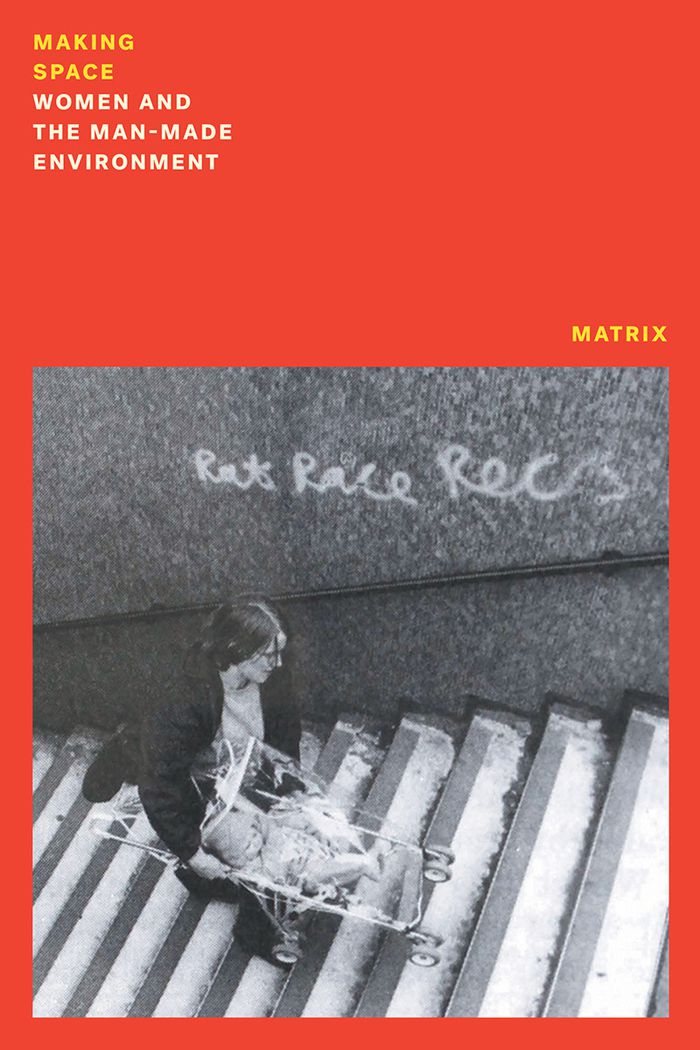
Making space: Women and the manmade environment
Actions:
Prix:
$33.95
(disponible en magasin)
Résumé:
''Making space'' is a pioneering work first published in 1984 which challenges us to look at how the built environment impacts on women’s lives. It exposes the sexist assumptions on gender and sexuality that have a fundamental impact on the way buildings are designed and our cities are planned. Written collaboratively by the feminist collective Matrix, the book provide a full blown critique of the patriarchal built environment both in the home and in public space, and outline alternative forms of practice that are still relevant today. ''Making space'' remains a path breaking book pointing to possibilities of a feminist future. Some authors worked for the London-based Matrix Feminist Architect’s collective, an architectural practice set up in 1980 seeking to establish a feminist approach to design. They worked on design projects—such as community, children and women’s centres. Others were engaged in building work, teaching and research. The new edition comes with a new introduction examining the context, process and legacy of ''Making space'' written by leading feminists in architecture.
Making space: Women and the manmade environment
Actions:
Prix:
$33.95
(disponible en magasin)
Résumé:
''Making space'' is a pioneering work first published in 1984 which challenges us to look at how the built environment impacts on women’s lives. It exposes the sexist assumptions on gender and sexuality that have a fundamental impact on the way buildings are designed and our cities are planned. Written collaboratively by the feminist collective Matrix, the book provide a full blown critique of the patriarchal built environment both in the home and in public space, and outline alternative forms of practice that are still relevant today. ''Making space'' remains a path breaking book pointing to possibilities of a feminist future. Some authors worked for the London-based Matrix Feminist Architect’s collective, an architectural practice set up in 1980 seeking to establish a feminist approach to design. They worked on design projects—such as community, children and women’s centres. Others were engaged in building work, teaching and research. The new edition comes with a new introduction examining the context, process and legacy of ''Making space'' written by leading feminists in architecture.
Classification:
livres
livres
Publication:
mars 2022
mars 2022
Classification:
livres
livres
Titre:
Showcasing the Great Experiment: Cultural Diplomacy and Western Visitors to the Soviet Union, 1921-1
Showcasing the Great Experiment: Cultural Diplomacy and Western Visitors to the Soviet Union, 1921-1
Actions:
Prix:
$37.50
(disponible sur commande)
Résumé:
During the 1920s and 1930s, thousands of European and American writers, professionals, scientists, artists, and intellectuals made a pilgrimage to experience the "Soviet experiment" for themselves. ''Showcasing the Great Experiment'' explores the reception of these intellectuals and fellow-travelers and their cross-cultural and trans-ideological encounters in order to(...)
$37.50
(disponible sur commande)
Résumé:
During the 1920s and 1930s, thousands of European and American writers, professionals, scientists, artists, and intellectuals made a pilgrimage to experience the "Soviet experiment" for themselves. ''Showcasing the Great Experiment'' explores the reception of these intellectuals and fellow-travelers and their cross-cultural and trans-ideological encounters in order to(...)
Titre:
Showcasing the Great Experiment: Cultural Diplomacy and Western Visitors to the Soviet Union, 1921-1
Actions:
Prix:
$37.50
(disponible sur commande)
Résumé:
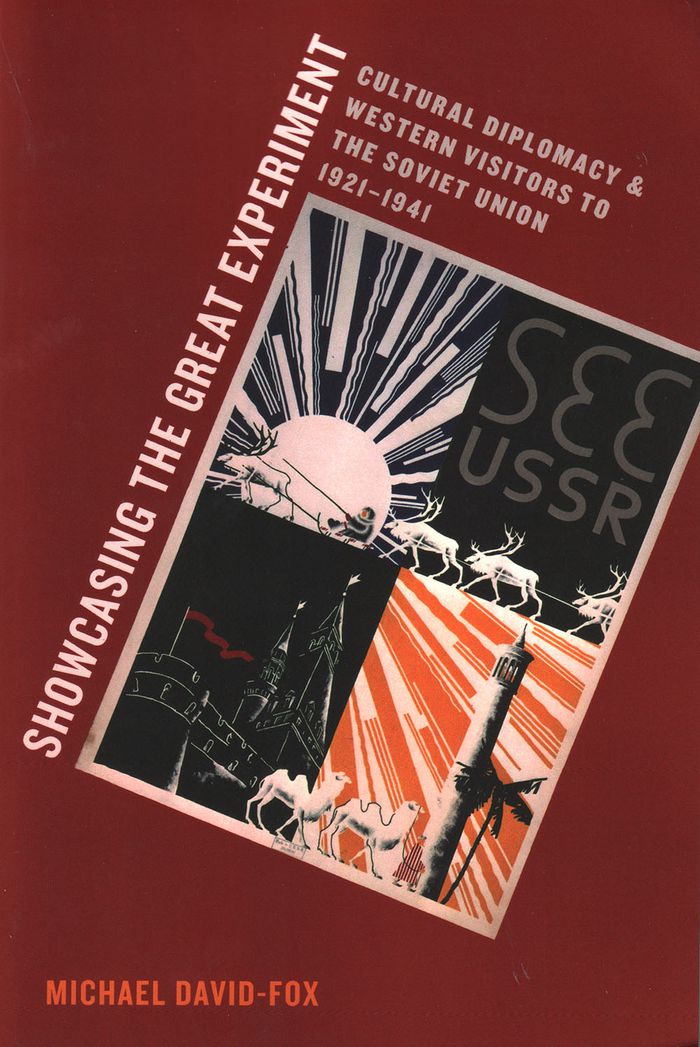
During the 1920s and 1930s, thousands of European and American writers, professionals, scientists, artists, and intellectuals made a pilgrimage to experience the "Soviet experiment" for themselves. ''Showcasing the Great Experiment'' explores the reception of these intellectuals and fellow-travelers and their cross-cultural and trans-ideological encounters in order to analyze Soviet attitudes towards the West. While many visitors were profoundly affected by their Soviet tours, so too was the Soviet system. The early experiences of building showcases and teaching outsiders to perceive the future-in-the-making constitute a neglected international part of the emergence of Stalinism at home. Michael David-Fox contends that each side critically examined the other, negotiating feelings of inferiority and superiority, admiration and enmity, emulation and rejection. By the time of the Great Purges, these tensions gave way to the dramatic triumph of xenophobia and isolationism; whereas in the twenties the new regime assumed it had much to learn from Western modernity, by the Stalinist thirties the Soviet order was declared superior in all respects.
Showcasing the Great Experiment: Cultural Diplomacy and Western Visitors to the Soviet Union, 1921-1
Actions:
Prix:
$37.50
(disponible sur commande)
Résumé:
During the 1920s and 1930s, thousands of European and American writers, professionals, scientists, artists, and intellectuals made a pilgrimage to experience the "Soviet experiment" for themselves. ''Showcasing the Great Experiment'' explores the reception of these intellectuals and fellow-travelers and their cross-cultural and trans-ideological encounters in order to analyze Soviet attitudes towards the West. While many visitors were profoundly affected by their Soviet tours, so too was the Soviet system. The early experiences of building showcases and teaching outsiders to perceive the future-in-the-making constitute a neglected international part of the emergence of Stalinism at home. Michael David-Fox contends that each side critically examined the other, negotiating feelings of inferiority and superiority, admiration and enmity, emulation and rejection. By the time of the Great Purges, these tensions gave way to the dramatic triumph of xenophobia and isolationism; whereas in the twenties the new regime assumed it had much to learn from Western modernity, by the Stalinist thirties the Soviet order was declared superior in all respects.
Classification:
livres
livres
Publication:
février 2014
février 2014
Sujet:
Expositions en cours
Expositions en cours
Classification:
livres
livres
![p[o,o]lychromie](/img-bookstore/VLo2JAsDtCqnUykK44zcBjWeLu0=/700x579/LV7623.jpg)
Titre:
p[o,o]lychromie
p[o,o]lychromie
Actions:
Prix:
$59.95
(disponible sur commande)
Résumé:
"La couleur nous inpire des expériences qui racontent notre style et notre philosophie de la société. Nous la travaillons comme une quatrième dimension, composante essentielle pour imaginer l'espace et la vie de demain... Quand nous avons réalisé notre première expérience en 1995, la couleur semblait dérangeante, son rôle passait au second plan. Le monochrome a été notre(...)
$59.95
(disponible sur commande)
Résumé:
"La couleur nous inpire des expériences qui racontent notre style et notre philosophie de la société. Nous la travaillons comme une quatrième dimension, composante essentielle pour imaginer l'espace et la vie de demain... Quand nous avons réalisé notre première expérience en 1995, la couleur semblait dérangeante, son rôle passait au second plan. Le monochrome a été notre(...)
Titre:
p[o,o]lychromie
Actions:
Prix:
$59.95
(disponible sur commande)
Résumé:
"La couleur nous inpire des expériences qui racontent notre style et notre philosophie de la société. Nous la travaillons comme une quatrième dimension, composante essentielle pour imaginer l'espace et la vie de demain... Quand nous avons réalisé notre première expérience en 1995, la couleur semblait dérangeante, son rôle passait au second plan. Le monochrome a été notre postulat, pour une approche radicale des volumes, des matières et des textures. Notre envie des couleurs est toujours spontanée et intuitive. Nous la spatialisons pour poétiser le présent et matérialiser le futur" "Colour is the catalyst in our experimental approach to style and society. We explore it like a fourth dimension and it is an essential part of the way we imagine space and things to come. When we carried out our first experience in 1995, colour seemed disturbing and took a secondary role. Monochrome was our main statement in a radical approach to volumes, materials and textures. Our desire for colour is still spontaneous and intuitive. We spatialise it to enhance the present and shape the future" - Olivier Guillemin & Olivier Védrine
p[o,o]lychromie
Actions:
Prix:
$59.95
(disponible sur commande)
Résumé:
"La couleur nous inpire des expériences qui racontent notre style et notre philosophie de la société. Nous la travaillons comme une quatrième dimension, composante essentielle pour imaginer l'espace et la vie de demain... Quand nous avons réalisé notre première expérience en 1995, la couleur semblait dérangeante, son rôle passait au second plan. Le monochrome a été notre postulat, pour une approche radicale des volumes, des matières et des textures. Notre envie des couleurs est toujours spontanée et intuitive. Nous la spatialisons pour poétiser le présent et matérialiser le futur" "Colour is the catalyst in our experimental approach to style and society. We explore it like a fourth dimension and it is an essential part of the way we imagine space and things to come. When we carried out our first experience in 1995, colour seemed disturbing and took a secondary role. Monochrome was our main statement in a radical approach to volumes, materials and textures. Our desire for colour is still spontaneous and intuitive. We spatialise it to enhance the present and shape the future" - Olivier Guillemin & Olivier Védrine
Classification:
livres
livres
Publication:
octobre 2011
octobre 2011
Sujet:
Design, monographies
Design, monographies
Classification:
livres
livres
Actions:
Prix:
$39.95
(disponible sur commande)
Résumé:
Much of contemporary visual culture can be traced directly to the work of Eadweard Muybridge, photographer and film pioneer. In Muybridge: The Eye In Motion, Stephen Barber analyses Muybridge’s prodigious output principally through the photographer’s own scrapbook, a multi-dimensional and unprecedented “memory-book” that was created in the final years of his life. Based(...)
$39.95
(disponible sur commande)
Résumé:
Much of contemporary visual culture can be traced directly to the work of Eadweard Muybridge, photographer and film pioneer. In Muybridge: The Eye In Motion, Stephen Barber analyses Muybridge’s prodigious output principally through the photographer’s own scrapbook, a multi-dimensional and unprecedented “memory-book” that was created in the final years of his life. Based(...)
Titre:
Muybridge : the eye in motion
Actions:
Prix:
$39.95
(disponible sur commande)
Résumé:
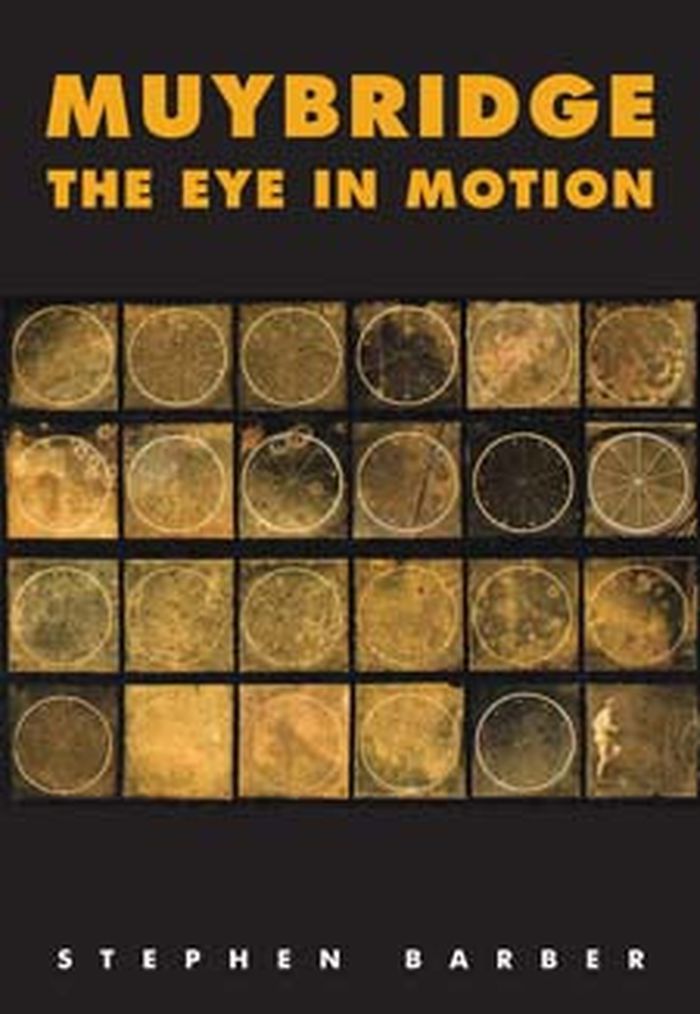
Much of contemporary visual culture can be traced directly to the work of Eadweard Muybridge, photographer and film pioneer. In Muybridge: The Eye In Motion, Stephen Barber analyses Muybridge’s prodigious output principally through the photographer’s own scrapbook, a multi-dimensional and unprecedented “memory-book” that was created in the final years of his life. Based on this extensive primary research into Muybridge’s personal archive, this innovative and ground-breaking book illuminates both the preoccupations behind his influence on twentieth-century artists like Francis Bacon, his role in the origins of cinema, and his early prefiguring of the digital world. The result is an original look at the man, his body of work, and his influence. Muybridge’s work was powered by an extreme obsessiveness and excess that enabled him to negate all preconceptions of art and to reconceptualize the dynamics of corporeal and urban forms. Above all, Muybridge envisioned the future of cinema by creating a moving-image projector—the zoopraxiscope—and by constructing the first identifiably cinematic space to project his compositions for an audience.
Muybridge : the eye in motion
Actions:
Prix:
$39.95
(disponible sur commande)
Résumé:
Much of contemporary visual culture can be traced directly to the work of Eadweard Muybridge, photographer and film pioneer. In Muybridge: The Eye In Motion, Stephen Barber analyses Muybridge’s prodigious output principally through the photographer’s own scrapbook, a multi-dimensional and unprecedented “memory-book” that was created in the final years of his life. Based on this extensive primary research into Muybridge’s personal archive, this innovative and ground-breaking book illuminates both the preoccupations behind his influence on twentieth-century artists like Francis Bacon, his role in the origins of cinema, and his early prefiguring of the digital world. The result is an original look at the man, his body of work, and his influence. Muybridge’s work was powered by an extreme obsessiveness and excess that enabled him to negate all preconceptions of art and to reconceptualize the dynamics of corporeal and urban forms. Above all, Muybridge envisioned the future of cinema by creating a moving-image projector—the zoopraxiscope—and by constructing the first identifiably cinematic space to project his compositions for an audience.
Classification:
livres
livres
Publication:
novembre 2012
novembre 2012
Sujet:
Théorie de la photographie
Théorie de la photographie
Classification:
livres
livres
Prix:
$44.50
(disponible sur commande)
Résumé:
In "Archiveology" Catherine Russell uses the work of Walter Benjamin to explore how the practice of archiveology-the reuse, recycling, appropriation, and borrowing of archival sounds and images by filmmakers-provides ways to imagine the past and the future. Noting how the film archive does not function simply as a place where moving images are preserved, Russell examines(...)
$44.50
(disponible sur commande)
Résumé:
In "Archiveology" Catherine Russell uses the work of Walter Benjamin to explore how the practice of archiveology-the reuse, recycling, appropriation, and borrowing of archival sounds and images by filmmakers-provides ways to imagine the past and the future. Noting how the film archive does not function simply as a place where moving images are preserved, Russell examines(...)
Titre:
Archiveology: Walter Benjamin and archival film practices
Actions:
Prix:
$44.50
(disponible sur commande)
Résumé:
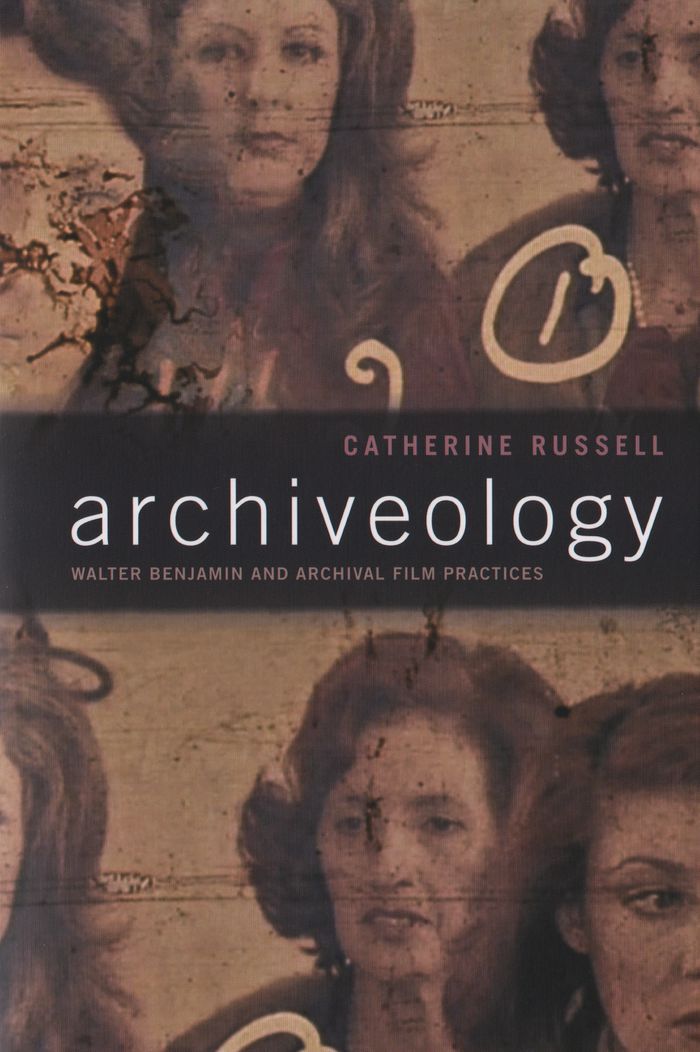
In "Archiveology" Catherine Russell uses the work of Walter Benjamin to explore how the practice of archiveology-the reuse, recycling, appropriation, and borrowing of archival sounds and images by filmmakers-provides ways to imagine the past and the future. Noting how the film archive does not function simply as a place where moving images are preserved, Russell examines a range of films alongside Benjamin's conceptions of memory, document, excavation, and historiography. She shows how city films such as Nicole Vedres's Paris 1900 (1947) and Thom Andersen's Los Angeles Plays Itself (2003) reconstruct notions of urban life and uses Christian Marclay's The Clock (2010) to draw parallels between critical cinephilia and Benjamin's theory of the phantasmagoria. Russell also discusses practices of collecting in archiveological film and rereads films by Joseph Cornell and Rania Stephan to explore an archival practice that dislocates and relocates the female image in film. In so doing, she not only shows how Benjamin's work is as relevant to film theory as ever; she shows how archiveology can awaken artists and audiences to critical forms of history and memory.
Archiveology: Walter Benjamin and archival film practices
Actions:
Prix:
$44.50
(disponible sur commande)
Résumé:
In "Archiveology" Catherine Russell uses the work of Walter Benjamin to explore how the practice of archiveology-the reuse, recycling, appropriation, and borrowing of archival sounds and images by filmmakers-provides ways to imagine the past and the future. Noting how the film archive does not function simply as a place where moving images are preserved, Russell examines a range of films alongside Benjamin's conceptions of memory, document, excavation, and historiography. She shows how city films such as Nicole Vedres's Paris 1900 (1947) and Thom Andersen's Los Angeles Plays Itself (2003) reconstruct notions of urban life and uses Christian Marclay's The Clock (2010) to draw parallels between critical cinephilia and Benjamin's theory of the phantasmagoria. Russell also discusses practices of collecting in archiveological film and rereads films by Joseph Cornell and Rania Stephan to explore an archival practice that dislocates and relocates the female image in film. In so doing, she not only shows how Benjamin's work is as relevant to film theory as ever; she shows how archiveology can awaken artists and audiences to critical forms of history and memory.
Classification:
livres
livres
Publication:
mars 2018
mars 2018
Classification:
livres
livres
Titre:
Drivers of change
Drivers of change
Actions:
Prix:
$80.00
(disponible sur commande)
Résumé:
Conceived and designed by the Foresight, innovation and incubation team at Arup, the influential consulting firm that advises on all aspects of the built environment, this card set features seven topics that have been chosen as headings for further discussion: energy, waste, climate change, water, demographics, urbanization and poverty. The 189 cards are divided into five(...)
$80.00
(disponible sur commande)
Résumé:
Conceived and designed by the Foresight, innovation and incubation team at Arup, the influential consulting firm that advises on all aspects of the built environment, this card set features seven topics that have been chosen as headings for further discussion: energy, waste, climate change, water, demographics, urbanization and poverty. The 189 cards are divided into five(...)
Titre:
Drivers of change
Actions:
Prix:
$80.00
(disponible sur commande)
Résumé:
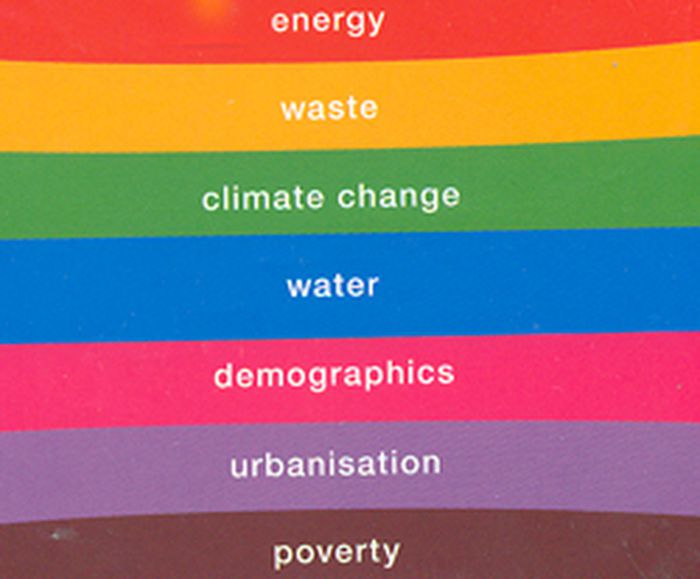
Conceived and designed by the Foresight, innovation and incubation team at Arup, the influential consulting firm that advises on all aspects of the built environment, this card set features seven topics that have been chosen as headings for further discussion: energy, waste, climate change, water, demographics, urbanization and poverty. The 189 cards are divided into five domains known as the steep framework: societal, technological, economic, environmental, and political. Each card represents a single driver of change-for instance urban migration, ageing population, austerity-along with a challenging and thought-provoking question. The flip side of the card provides pertinent data to expand on the question, as well as maps, graphs, and other illustrations. An accompanying booklet offers tips on how to use these cards independently or in a group setting. Whether brainstorming for new ideas or facilitating a discussion, these graphically sophisticated cards are an excellent resource for anyone interested in the future of technology, design and sustainability or indeed the way we might live in the years to come.
Drivers of change
Actions:
Prix:
$80.00
(disponible sur commande)
Résumé:
Conceived and designed by the Foresight, innovation and incubation team at Arup, the influential consulting firm that advises on all aspects of the built environment, this card set features seven topics that have been chosen as headings for further discussion: energy, waste, climate change, water, demographics, urbanization and poverty. The 189 cards are divided into five domains known as the steep framework: societal, technological, economic, environmental, and political. Each card represents a single driver of change-for instance urban migration, ageing population, austerity-along with a challenging and thought-provoking question. The flip side of the card provides pertinent data to expand on the question, as well as maps, graphs, and other illustrations. An accompanying booklet offers tips on how to use these cards independently or in a group setting. Whether brainstorming for new ideas or facilitating a discussion, these graphically sophisticated cards are an excellent resource for anyone interested in the future of technology, design and sustainability or indeed the way we might live in the years to come.
Classification:
livres
livres
Publication:
juillet 2009
juillet 2009
Sujet:
Architecture écologique
Architecture écologique


