


714 Résultats
Classification:
livres
livres
Actions:
Prix:
$22.00
(disponible sur commande)
Résumé:
In this book, Saul Anton argues that The Little Screens ‘operate both as a collection and much like a single photographic work conceived as open-ended, potentially infinite’. Marking the historical intersection of modern art and photography at the moment when television came into its own, Friedlander’s images reflect the competing logics of the museum, print and(...)
$22.00
(disponible sur commande)
Résumé:
In this book, Saul Anton argues that The Little Screens ‘operate both as a collection and much like a single photographic work conceived as open-ended, potentially infinite’. Marking the historical intersection of modern art and photography at the moment when television came into its own, Friedlander’s images reflect the competing logics of the museum, print and(...)
Titre:
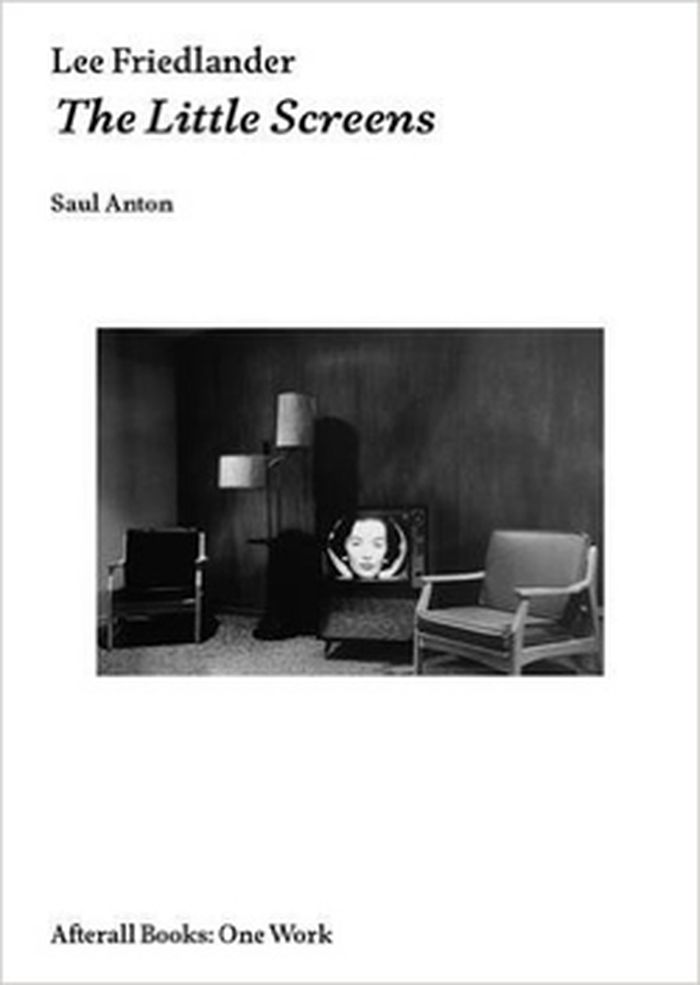
Lee Friedlander : the little screens
Actions:
Prix:
$22.00
(disponible sur commande)
Résumé:
In this book, Saul Anton argues that The Little Screens ‘operate both as a collection and much like a single photographic work conceived as open-ended, potentially infinite’. Marking the historical intersection of modern art and photography at the moment when television came into its own, Friedlander’s images reflect the competing logics of the museum, print and electronic media, and anticipate the issues that have emerged in a world of ubiquitous ‘little screens’.
Lee Friedlander : the little screens
Actions:
Prix:
$22.00
(disponible sur commande)
Résumé:
In this book, Saul Anton argues that The Little Screens ‘operate both as a collection and much like a single photographic work conceived as open-ended, potentially infinite’. Marking the historical intersection of modern art and photography at the moment when television came into its own, Friedlander’s images reflect the competing logics of the museum, print and electronic media, and anticipate the issues that have emerged in a world of ubiquitous ‘little screens’.
Classification:
livres
livres
Publication:
août 2015
août 2015
Sujet:
Théorie de la photographie
Théorie de la photographie
Classification:
livres
livres
Titre:
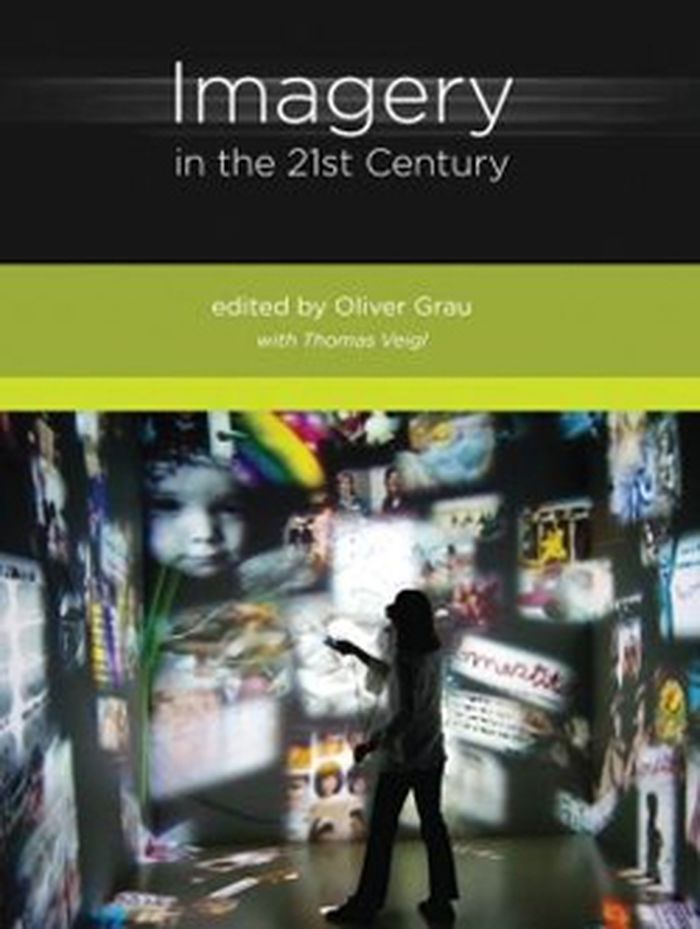
Imagery in the 21st century
Imagery in the 21st century
Actions:
Prix:
$33.95
(disponible sur commande)
Résumé:
We are surrounded by images as never before: on Flickr, Facebook, and YouTube; on thousands of television channels; in digital games and virtual worlds; in media art and science. Without new efforts to visualize complex ideas, structures, and systems, today’s informatio explosion would be unmanageable. The digital image represents endless options for manipulation; images(...)
$33.95
(disponible sur commande)
Résumé:
We are surrounded by images as never before: on Flickr, Facebook, and YouTube; on thousands of television channels; in digital games and virtual worlds; in media art and science. Without new efforts to visualize complex ideas, structures, and systems, today’s informatio explosion would be unmanageable. The digital image represents endless options for manipulation; images(...)
Titre:
Imagery in the 21st century
Actions:
Prix:
$33.95
(disponible sur commande)
Résumé:
We are surrounded by images as never before: on Flickr, Facebook, and YouTube; on thousands of television channels; in digital games and virtual worlds; in media art and science. Without new efforts to visualize complex ideas, structures, and systems, today’s informatio explosion would be unmanageable. The digital image represents endless options for manipulation; images seem capable of changing interactively or even autonomously. This volume offers systematic and interdisciplinary reflections on these new image worlds and new analytical approaches to the visual.
Imagery in the 21st century
Actions:
Prix:
$33.95
(disponible sur commande)
Résumé:
We are surrounded by images as never before: on Flickr, Facebook, and YouTube; on thousands of television channels; in digital games and virtual worlds; in media art and science. Without new efforts to visualize complex ideas, structures, and systems, today’s informatio explosion would be unmanageable. The digital image represents endless options for manipulation; images seem capable of changing interactively or even autonomously. This volume offers systematic and interdisciplinary reflections on these new image worlds and new analytical approaches to the visual.
Classification:
livres
livres
Publication:
septembre 2013
septembre 2013
Sujet:
Théorie de l’art
Théorie de l’art
Classification:
livres
livres

Actions:
Prix:
$59.95
(disponible sur commande)
Résumé:
In the postwar era, sidewalk palms grew into symbols of urban Los Angeles. Tall ranks of Mexican fan palm became familiar fixtures on the horizon, generic landmarks, the original skyscrapers of the horizontal metropolis. The entertainment industry magnified their stature. Advertisements, telecasts, television shows, movies, song recordings, and music videos produced in(...)
$59.95
(disponible sur commande)
Résumé:
In the postwar era, sidewalk palms grew into symbols of urban Los Angeles. Tall ranks of Mexican fan palm became familiar fixtures on the horizon, generic landmarks, the original skyscrapers of the horizontal metropolis. The entertainment industry magnified their stature. Advertisements, telecasts, television shows, movies, song recordings, and music videos produced in(...)
Titre:
Marie-Jose Jongerius - Los Angeles Palms
Actions:
Prix:
$59.95
(disponible sur commande)
Résumé:
In the postwar era, sidewalk palms grew into symbols of urban Los Angeles. Tall ranks of Mexican fan palm became familiar fixtures on the horizon, generic landmarks, the original skyscrapers of the horizontal metropolis. The entertainment industry magnified their stature. Advertisements, telecasts, television shows, movies, song recordings, and music videos produced in Southern California made ready use of street palm imagery. For ‘Los Angeles Palms’ Marie-José Jongerius revisited the most iconic and historic sights in the Los Angeles area to portray the palms which have all contributed to the iconic image of Los Angeles.
Marie-Jose Jongerius - Los Angeles Palms
Actions:
Prix:
$59.95
(disponible sur commande)
Résumé:
In the postwar era, sidewalk palms grew into symbols of urban Los Angeles. Tall ranks of Mexican fan palm became familiar fixtures on the horizon, generic landmarks, the original skyscrapers of the horizontal metropolis. The entertainment industry magnified their stature. Advertisements, telecasts, television shows, movies, song recordings, and music videos produced in Southern California made ready use of street palm imagery. For ‘Los Angeles Palms’ Marie-José Jongerius revisited the most iconic and historic sights in the Los Angeles area to portray the palms which have all contributed to the iconic image of Los Angeles.
Classification:
livres
livres
Publication:
juillet 2017
juillet 2017
Sujet:
Monographies photo
Monographies photo
Classification:
périodiques
périodiques
Titre:
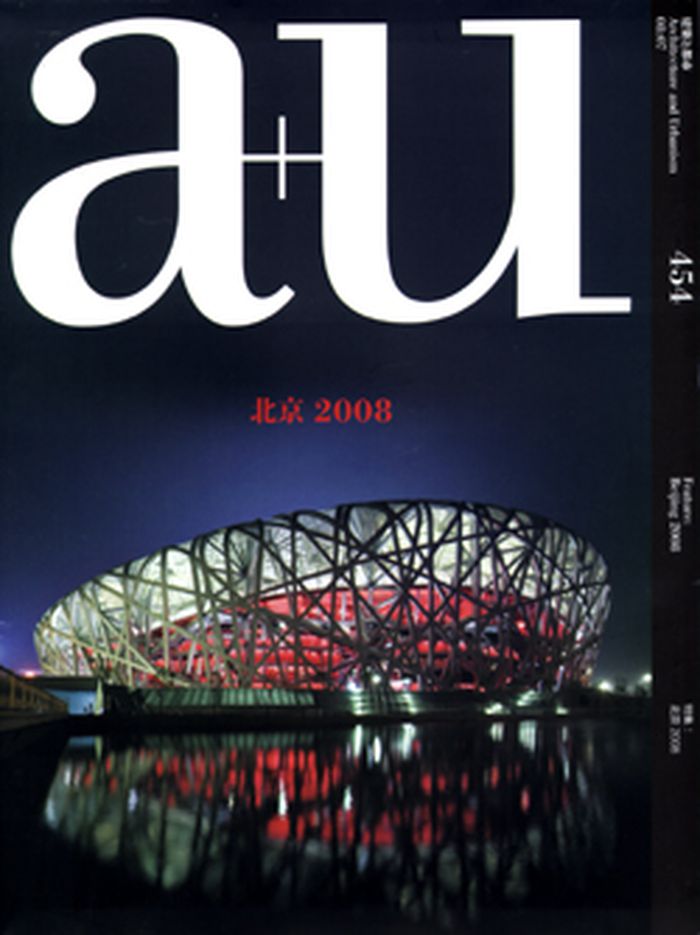
A+U 454 Beijing 2008
A+U 454 Beijing 2008
Actions:
Prix:
$35.00
(disponible sur commande)
Résumé:
A never ending succession of large-scale projects in China has attracted world-wide attention, in particular the ambitious development projects in Beijing, host city of the 2008 Olympics. Three of the most notable and eagerly anticipated are examined here – namely the National Stadium Beijing, the Beijing National Aquatics Center, and the China Central Television (CCTV)(...)
$35.00
(disponible sur commande)
Résumé:
A never ending succession of large-scale projects in China has attracted world-wide attention, in particular the ambitious development projects in Beijing, host city of the 2008 Olympics. Three of the most notable and eagerly anticipated are examined here – namely the National Stadium Beijing, the Beijing National Aquatics Center, and the China Central Television (CCTV)(...)
Titre:
A+U 454 Beijing 2008
Actions:
Prix:
$35.00
(disponible sur commande)
Résumé:
A never ending succession of large-scale projects in China has attracted world-wide attention, in particular the ambitious development projects in Beijing, host city of the 2008 Olympics. Three of the most notable and eagerly anticipated are examined here – namely the National Stadium Beijing, the Beijing National Aquatics Center, and the China Central Television (CCTV) Headquarters through plans and photographs. In addition a survey of the top 50 recent architectural projects in Beijing is included, accompanied by a handy map of the city which indicates their locations.
A+U 454 Beijing 2008
Actions:
Prix:
$35.00
(disponible sur commande)
Résumé:
A never ending succession of large-scale projects in China has attracted world-wide attention, in particular the ambitious development projects in Beijing, host city of the 2008 Olympics. Three of the most notable and eagerly anticipated are examined here – namely the National Stadium Beijing, the Beijing National Aquatics Center, and the China Central Television (CCTV) Headquarters through plans and photographs. In addition a survey of the top 50 recent architectural projects in Beijing is included, accompanied by a handy map of the city which indicates their locations.
Classification:
périodiques
périodiques
Publication:
juin 2008, Tokyo
juin 2008, Tokyo
Sujet:
Revues
Revues
Classification:
livres
livres

Actions:
Prix:
$32.00
(disponible sur commande)
Résumé:
David Chieppo, born in New Haven, Connecticut in 1973 and based in Zurich since 1998, is an artist whose drawings are fundamental to his work, for they have an openness and compositional spontaneity that relates closely to the way the world is seen. In capturing a moment, the drawings are not determined primarily by stylistic concerns, but by the potent energy of the(...)
$32.00
(disponible sur commande)
Résumé:
David Chieppo, born in New Haven, Connecticut in 1973 and based in Zurich since 1998, is an artist whose drawings are fundamental to his work, for they have an openness and compositional spontaneity that relates closely to the way the world is seen. In capturing a moment, the drawings are not determined primarily by stylistic concerns, but by the potent energy of the(...)
Publication:
janvier 2008, Zürich
janvier 2008, Zürich
Titre:
David Chieppo : an old dirt trail, a dead oak tree, a big rock on a hill
Actions:
Prix:
$32.00
(disponible sur commande)
Résumé:
David Chieppo, born in New Haven, Connecticut in 1973 and based in Zurich since 1998, is an artist whose drawings are fundamental to his work, for they have an openness and compositional spontaneity that relates closely to the way the world is seen. In capturing a moment, the drawings are not determined primarily by stylistic concerns, but by the potent energy of the person or the situation Chieppo seeks to convey - irrespective of whether these phenomena are experienced at first hand or through a medium such as photography, film or television.
David Chieppo : an old dirt trail, a dead oak tree, a big rock on a hill
Actions:
Prix:
$32.00
(disponible sur commande)
Résumé:
David Chieppo, born in New Haven, Connecticut in 1973 and based in Zurich since 1998, is an artist whose drawings are fundamental to his work, for they have an openness and compositional spontaneity that relates closely to the way the world is seen. In capturing a moment, the drawings are not determined primarily by stylistic concerns, but by the potent energy of the person or the situation Chieppo seeks to convey - irrespective of whether these phenomena are experienced at first hand or through a medium such as photography, film or television.
Classification:
livres
livres
Publication:
janvier 2008, Zürich
janvier 2008, Zürich
Classification:
livres
livres

Actions:
Prix:
$60.75
(disponible sur commande)
Résumé:
''Visual Encounters in the Study of Rural Childhoods'' brings together visual studies and childhood studies to explore images of childhood in the study of rurality and rural life. The volume highlights how the voices of children themselves remain central to investigations of rural childhoods. Contributions look at representations and experiences of rural childhoods from(...)
$60.75
(disponible sur commande)
Résumé:
''Visual Encounters in the Study of Rural Childhoods'' brings together visual studies and childhood studies to explore images of childhood in the study of rurality and rural life. The volume highlights how the voices of children themselves remain central to investigations of rural childhoods. Contributions look at representations and experiences of rural childhoods from(...)
Titre:
Visual encounters in the study of rural childhoods
Actions:
Prix:
$60.75
(disponible sur commande)
Résumé:
''Visual Encounters in the Study of Rural Childhoods'' brings together visual studies and childhood studies to explore images of childhood in the study of rurality and rural life. The volume highlights how the voices of children themselves remain central to investigations of rural childhoods. Contributions look at representations and experiences of rural childhoods from both the Global North and Global South (including U.S., Canada, Haiti, India, Sweden, Slovenia, South Africa, Russia, Timor-Leste, and Colombia) and consider visuals ranging from picture books to cell phone video to television.
Visual encounters in the study of rural childhoods
Actions:
Prix:
$60.75
(disponible sur commande)
Résumé:
''Visual Encounters in the Study of Rural Childhoods'' brings together visual studies and childhood studies to explore images of childhood in the study of rurality and rural life. The volume highlights how the voices of children themselves remain central to investigations of rural childhoods. Contributions look at representations and experiences of rural childhoods from both the Global North and Global South (including U.S., Canada, Haiti, India, Sweden, Slovenia, South Africa, Russia, Timor-Leste, and Colombia) and consider visuals ranging from picture books to cell phone video to television.
Classification:
livres
livres
Publication:
juillet 2018
juillet 2018
Sujet:
Théorie de l’architecture
Théorie de l’architecture
Classification:
livres
livres
Actions:
Prix:
$86.00
(disponible sur commande)
Résumé:
The radical ideas associated with Postmodernism swept through the arts in the 1970s, but have always been hard to summarise. Postmodernism: Style and Subversion 1970-90 presents the movement as not merely an aesthetic vocabulary, but also as a subversive attitude - a new way of looking at the world. Bringing together practitioners, theorists and critics, this book(...)
$86.00
(disponible sur commande)
Résumé:
The radical ideas associated with Postmodernism swept through the arts in the 1970s, but have always been hard to summarise. Postmodernism: Style and Subversion 1970-90 presents the movement as not merely an aesthetic vocabulary, but also as a subversive attitude - a new way of looking at the world. Bringing together practitioners, theorists and critics, this book(...)
Titre:
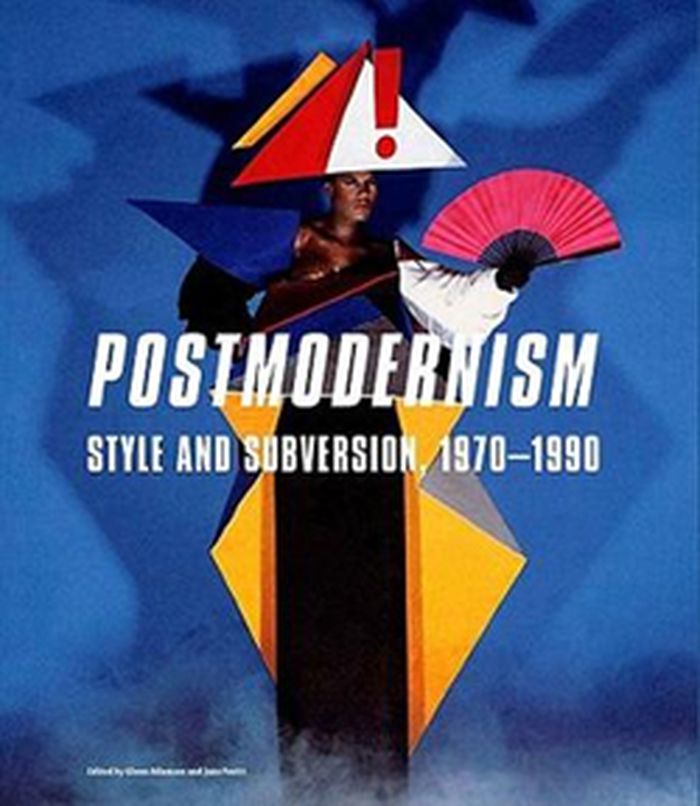
Postmodernism: Style and subversion, 1970-1990
Actions:
Prix:
$86.00
(disponible sur commande)
Résumé:
The radical ideas associated with Postmodernism swept through the arts in the 1970s, but have always been hard to summarise. Postmodernism: Style and Subversion 1970-90 presents the movement as not merely an aesthetic vocabulary, but also as a subversive attitude - a new way of looking at the world. Bringing together practitioners, theorists and critics, this book assesses the impact of the phenomenon on all areas of art and design. It covers architecture, interiors and urban planning; product, graphic and furniture design; the fashion and style industries; and photography, film, television and video
Postmodernism: Style and subversion, 1970-1990
Actions:
Prix:
$86.00
(disponible sur commande)
Résumé:
The radical ideas associated with Postmodernism swept through the arts in the 1970s, but have always been hard to summarise. Postmodernism: Style and Subversion 1970-90 presents the movement as not merely an aesthetic vocabulary, but also as a subversive attitude - a new way of looking at the world. Bringing together practitioners, theorists and critics, this book assesses the impact of the phenomenon on all areas of art and design. It covers architecture, interiors and urban planning; product, graphic and furniture design; the fashion and style industries; and photography, film, television and video
Classification:
livres
livres
Publication:
octobre 2011
octobre 2011
Sujet:
Design, époques et styles
Design, époques et styles
Classification:
livres
livres
Actions:
Prix:
$41.95
(disponible sur commande)
Résumé:
Although a few among us are intrepid architectural tourists, visiting buildings and landscapes our cameras at the ready, most of us experience architecture through the windshield of a moving vehicle, the architectural experience reduced to a blurry and momentary drive-by. And the rest of our architectural "tourism" is through the images of cameras, movies, and television(...)
$41.95
(disponible sur commande)
Résumé:
Although a few among us are intrepid architectural tourists, visiting buildings and landscapes our cameras at the ready, most of us experience architecture through the windshield of a moving vehicle, the architectural experience reduced to a blurry and momentary drive-by. And the rest of our architectural "tourism" is through the images of cameras, movies, and television(...)
Publication:
mai 2004, New York
mai 2004, New York
Titre:
Zoomscape : architecture and motion in media
Actions:
Prix:
$41.95
(disponible sur commande)
Résumé:
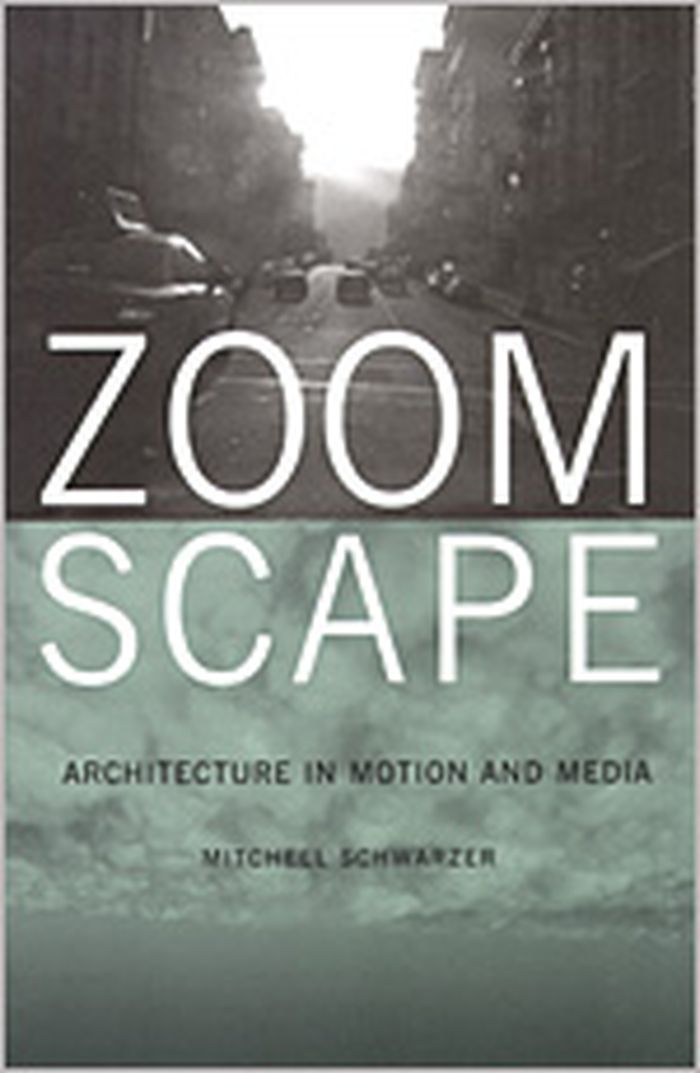
Although a few among us are intrepid architectural tourists, visiting buildings and landscapes our cameras at the ready, most of us experience architecture through the windshield of a moving vehicle, the architectural experience reduced to a blurry and momentary drive-by. And the rest of our architectural "tourism" is through the images of cameras, movies, and television programs—that is, through the lens of another's eye. Architectural historian Mitchell Schwarzer calls this new mediated architectural experience the "zoomscape." In this thought-provoking book, he argues that the perception of architecture has been fundamentally altered by the technologies of transportation and the camera - we now look at buildings, neighborhoods, cities, and even entire continents as we ride in trains, cars, and planes, and/or as we view photographs, movies, and television. "Zoomscape" shows how we now perceive buildings and places at high speeds, across great distances, through edited and multiple reproductions. Nowadays, our views of the architectural landscape are modulated by the accelerator pedal and the remote control, by studio production techniques and airplane flight paths. Using examples from high art and popular culture - from the novels of Don DeLillo to the opening credits of "The Sopranos" - Mitchell Schwarzer shows that the zoomscape has brought about unprecedented and often marvelous new ways of perceiving the built environment.
Zoomscape : architecture and motion in media
Actions:
Prix:
$41.95
(disponible sur commande)
Résumé:
Although a few among us are intrepid architectural tourists, visiting buildings and landscapes our cameras at the ready, most of us experience architecture through the windshield of a moving vehicle, the architectural experience reduced to a blurry and momentary drive-by. And the rest of our architectural "tourism" is through the images of cameras, movies, and television programs—that is, through the lens of another's eye. Architectural historian Mitchell Schwarzer calls this new mediated architectural experience the "zoomscape." In this thought-provoking book, he argues that the perception of architecture has been fundamentally altered by the technologies of transportation and the camera - we now look at buildings, neighborhoods, cities, and even entire continents as we ride in trains, cars, and planes, and/or as we view photographs, movies, and television. "Zoomscape" shows how we now perceive buildings and places at high speeds, across great distances, through edited and multiple reproductions. Nowadays, our views of the architectural landscape are modulated by the accelerator pedal and the remote control, by studio production techniques and airplane flight paths. Using examples from high art and popular culture - from the novels of Don DeLillo to the opening credits of "The Sopranos" - Mitchell Schwarzer shows that the zoomscape has brought about unprecedented and often marvelous new ways of perceiving the built environment.
Classification:
livres
livres
Publication:
mai 2004, New York
mai 2004, New York
Classification:
livres
livres
Actions:
Prix:
$54.00
(disponible sur commande)
Résumé:
Video (television, film, the moving image generally) is today's most popular information medium. Two-thirds of the world's internet traffic is video. Americans get their news and information more often from screens and speakers than through any other means. "The moving image" is the first authoritative account of how we have arrived here, together with the first(...)
$54.00
(disponible sur commande)
Résumé:
Video (television, film, the moving image generally) is today's most popular information medium. Two-thirds of the world's internet traffic is video. Americans get their news and information more often from screens and speakers than through any other means. "The moving image" is the first authoritative account of how we have arrived here, together with the first(...)
Titre:
The moving image: A user's manual
Actions:
Prix:
$54.00
(disponible sur commande)
Résumé:
Video (television, film, the moving image generally) is today's most popular information medium. Two-thirds of the world's internet traffic is video. Americans get their news and information more often from screens and speakers than through any other means. "The moving image" is the first authoritative account of how we have arrived here, together with the first definitive manual to help writers, educators, and publishers use video more effectively. Drawing on decades as an educator, publisher, and producer, MIT's Peter Kaufman presents new tools, best practices, and community resources for integrating film and sound into media that matters.
The moving image: A user's manual
Actions:
Prix:
$54.00
(disponible sur commande)
Résumé:
Video (television, film, the moving image generally) is today's most popular information medium. Two-thirds of the world's internet traffic is video. Americans get their news and information more often from screens and speakers than through any other means. "The moving image" is the first authoritative account of how we have arrived here, together with the first definitive manual to help writers, educators, and publishers use video more effectively. Drawing on decades as an educator, publisher, and producer, MIT's Peter Kaufman presents new tools, best practices, and community resources for integrating film and sound into media that matters.
Classification:
livres
livres
Publication:
février 2025
février 2025
Classification:
livres
livres
Titre:
Ways of hearing
Ways of hearing
Actions:
Prix:
$29.95
(disponible sur commande)
Résumé:
In this book, Damon Krukowski examines how the switch from analog to digital audio is changing our perceptions of time, space, love, money, and power. In ''Ways of Hearing''- modeled on ''Ways of Seeing,'' John Berger's influential 1972 book on visual culture- Krukowski offers readers a set of tools for critical listening in the digital age. Just as ''Ways of Seeing''(...)
$29.95
(disponible sur commande)
Résumé:
In this book, Damon Krukowski examines how the switch from analog to digital audio is changing our perceptions of time, space, love, money, and power. In ''Ways of Hearing''- modeled on ''Ways of Seeing,'' John Berger's influential 1972 book on visual culture- Krukowski offers readers a set of tools for critical listening in the digital age. Just as ''Ways of Seeing''(...)
Titre:
Ways of hearing
Actions:
Prix:
$29.95
(disponible sur commande)
Résumé:
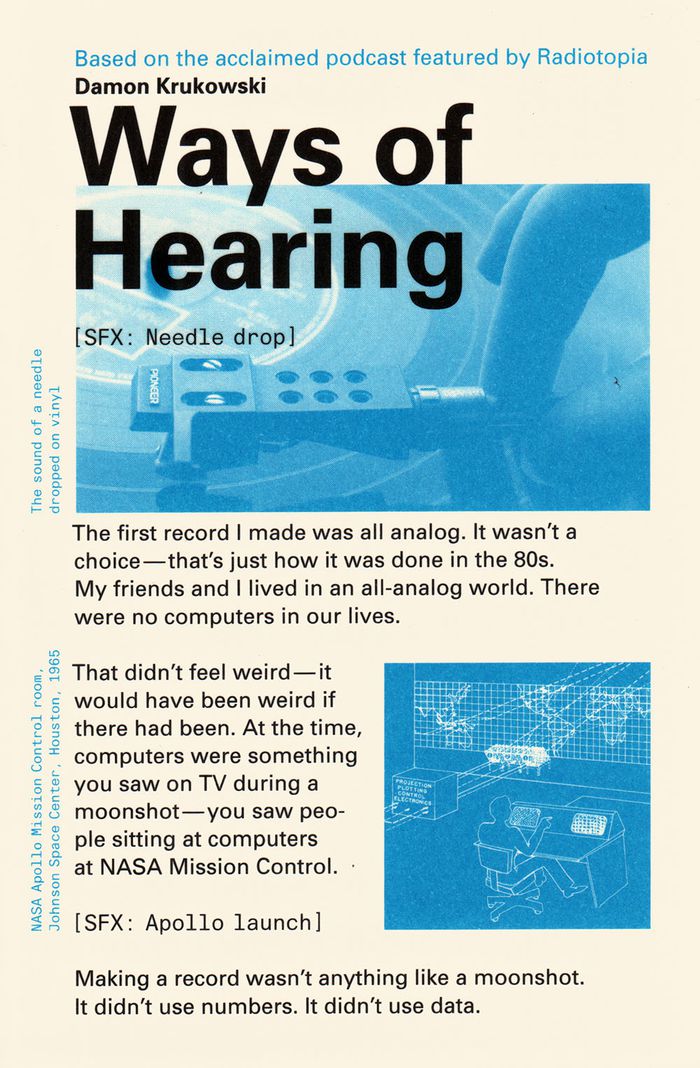
In this book, Damon Krukowski examines how the switch from analog to digital audio is changing our perceptions of time, space, love, money, and power. In ''Ways of Hearing''- modeled on ''Ways of Seeing,'' John Berger's influential 1972 book on visual culture- Krukowski offers readers a set of tools for critical listening in the digital age. Just as ''Ways of Seeing'' began as a BBC television series, ''Ways of Hearing'' is based on a six-part podcast produced for the groundbreaking public radio podcast network Radiotopia. Inventive uses of text and design help bring the message beyond the range of earbuds.
Ways of hearing
Actions:
Prix:
$29.95
(disponible sur commande)
Résumé:
In this book, Damon Krukowski examines how the switch from analog to digital audio is changing our perceptions of time, space, love, money, and power. In ''Ways of Hearing''- modeled on ''Ways of Seeing,'' John Berger's influential 1972 book on visual culture- Krukowski offers readers a set of tools for critical listening in the digital age. Just as ''Ways of Seeing'' began as a BBC television series, ''Ways of Hearing'' is based on a six-part podcast produced for the groundbreaking public radio podcast network Radiotopia. Inventive uses of text and design help bring the message beyond the range of earbuds.
Classification:
livres
livres
Publication:
avril 2019
avril 2019
Sujet:
Acoustique
Acoustique


