


644 Résultats
Classification:
livres
livres

Actions:
Prix:
$72.95
(disponible sur commande)
Résumé:
W.J.H.B. Sandberg (1897-1984) was a highly individual graphic designer as well as director of the Stedelijk Museum in Amsterdam, which after the Second World War he elevated to a leader among museums of modern art. This book gives a kaleidoscopic picture of Sandberg as the designer of almost all the Stedelijk's posters, catalogues and other printed matter and also shows(...)
$72.95
(disponible sur commande)
Résumé:
W.J.H.B. Sandberg (1897-1984) was a highly individual graphic designer as well as director of the Stedelijk Museum in Amsterdam, which after the Second World War he elevated to a leader among museums of modern art. This book gives a kaleidoscopic picture of Sandberg as the designer of almost all the Stedelijk's posters, catalogues and other printed matter and also shows(...)
Titre:
Sandberg : designer + director of the Stedelijk
Actions:
Prix:
$72.95
(disponible sur commande)
Résumé:
W.J.H.B. Sandberg (1897-1984) was a highly individual graphic designer as well as director of the Stedelijk Museum in Amsterdam, which after the Second World War he elevated to a leader among museums of modern art. This book gives a kaleidoscopic picture of Sandberg as the designer of almost all the Stedelijk's posters, catalogues and other printed matter and also shows the decisive influence he had on the modernizing of the museum building. The war years 1940-45 brought a turning-point in Sandberg's life. During the German occupation he took an active part in the artists' resistance movement, where he became convinced of the stimulating and provocative role artists could play in society. After the war, with few means at his disposal but with a great sense of purpose, he set about transforming the Stedelijk into a meeting ground where the public could become acquainted with a wealth of contemporary art and design in an informal setting. He gave the old-fashioned building a bright, airy interior and added a transparent new wing. He also provided a generally accessible library at the core of the museum together with a restaurant and terrace. The atmosphere pervading Sandberg's Stedelijk could be attributed to his zestful personality, his talents as a designer and his tireless efforts on behalf of artists and art, driven by a firm social commitment. The author and compiler of this book (born in 1931) spent many years working at the Stedelijk Museum and was a friend of Sandberg.
Sandberg : designer + director of the Stedelijk
Actions:
Prix:
$72.95
(disponible sur commande)
Résumé:
W.J.H.B. Sandberg (1897-1984) was a highly individual graphic designer as well as director of the Stedelijk Museum in Amsterdam, which after the Second World War he elevated to a leader among museums of modern art. This book gives a kaleidoscopic picture of Sandberg as the designer of almost all the Stedelijk's posters, catalogues and other printed matter and also shows the decisive influence he had on the modernizing of the museum building. The war years 1940-45 brought a turning-point in Sandberg's life. During the German occupation he took an active part in the artists' resistance movement, where he became convinced of the stimulating and provocative role artists could play in society. After the war, with few means at his disposal but with a great sense of purpose, he set about transforming the Stedelijk into a meeting ground where the public could become acquainted with a wealth of contemporary art and design in an informal setting. He gave the old-fashioned building a bright, airy interior and added a transparent new wing. He also provided a generally accessible library at the core of the museum together with a restaurant and terrace. The atmosphere pervading Sandberg's Stedelijk could be attributed to his zestful personality, his talents as a designer and his tireless efforts on behalf of artists and art, driven by a firm social commitment. The author and compiler of this book (born in 1931) spent many years working at the Stedelijk Museum and was a friend of Sandberg.
Classification:
livres
livres
Publication:
octobre 2004, Rotterdam
octobre 2004, Rotterdam
Classification:
livres
livres
Prix:
$49.50
(disponible sur commande)
Résumé:
Beginning with agoraphobia and claustrophobia in the late nineteenth century, followed by shell shock and panic fear after World War I, phobias and anxiety came to be seen as the mental condition of modern life. They became incorporated into the media and arts, in particular the (...)
$49.50
(disponible sur commande)
Résumé:
Beginning with agoraphobia and claustrophobia in the late nineteenth century, followed by shell shock and panic fear after World War I, phobias and anxiety came to be seen as the mental condition of modern life. They became incorporated into the media and arts, in particular the (...)
Titre:
Warped space : art, architecture, and anxiety in modern culture
Actions:
Prix:
$49.50
(disponible sur commande)
Résumé:
Beginning with agoraphobia and claustrophobia in the late nineteenth century, followed by shell shock and panic fear after World War I, phobias and anxiety came to be seen as the mental condition of modern life. They became incorporated into the media and arts, in particular the spatial arts of architecture, urbanism, and film. This "spatial warping" is now being reshaped by digitalization and virtual reality. Anthony Vidler is concerned with two forms of warped space. The first, a psychological space, is the repository of neuroses and phobias. This space is not empty but full of disturbing forms, including those of architecture and the city. The second kind of warping is produced when artists break the boundaries of genre to depict space in new ways. Vidler traces the emergence of a psychological idea of space from Pascal and Freud to the identification of agoraphobia and claustrophobia in the nineteenth century to twentieth-century theories of spatial alienation and estrangement in the writings of Georg Simmel, Siegfried Kracauer, and Walter Benjamin. Focusing on current conditions of displacement and placelessness, he examines ways in which contemporary artists and architects have produced new forms of spatial warping. The discussion ranges from theorists such as Jacques Lacan and Gilles Deleuze to artists such as Vito Acconci, Mike Kelley, Martha Rosler, and Rachel Whiteread. Finally, Vidler looks at the architectural experiments of Frank Gehry, Coop Himmelblau, Daniel Libeskind, Greg Lynn, Morphosis, and Eric Owen Moss in the light of new digital techniques that, while relying on traditional perspective, have radically transformed the composition, production, and experience of architecture.
Warped space : art, architecture, and anxiety in modern culture
Actions:
Prix:
$49.50
(disponible sur commande)
Résumé:
Beginning with agoraphobia and claustrophobia in the late nineteenth century, followed by shell shock and panic fear after World War I, phobias and anxiety came to be seen as the mental condition of modern life. They became incorporated into the media and arts, in particular the spatial arts of architecture, urbanism, and film. This "spatial warping" is now being reshaped by digitalization and virtual reality. Anthony Vidler is concerned with two forms of warped space. The first, a psychological space, is the repository of neuroses and phobias. This space is not empty but full of disturbing forms, including those of architecture and the city. The second kind of warping is produced when artists break the boundaries of genre to depict space in new ways. Vidler traces the emergence of a psychological idea of space from Pascal and Freud to the identification of agoraphobia and claustrophobia in the nineteenth century to twentieth-century theories of spatial alienation and estrangement in the writings of Georg Simmel, Siegfried Kracauer, and Walter Benjamin. Focusing on current conditions of displacement and placelessness, he examines ways in which contemporary artists and architects have produced new forms of spatial warping. The discussion ranges from theorists such as Jacques Lacan and Gilles Deleuze to artists such as Vito Acconci, Mike Kelley, Martha Rosler, and Rachel Whiteread. Finally, Vidler looks at the architectural experiments of Frank Gehry, Coop Himmelblau, Daniel Libeskind, Greg Lynn, Morphosis, and Eric Owen Moss in the light of new digital techniques that, while relying on traditional perspective, have radically transformed the composition, production, and experience of architecture.
Classification:
livres
livres
Publication:
juin 2000, Cambridge, Mass.
juin 2000, Cambridge, Mass.
Sujet:
Théorie de l’architecture
Théorie de l’architecture
Classification:
livres
livres
Actions:
Prix:
$28.50
(disponible sur commande)
Résumé:
"Downtown America" was once the vibrant urban center romanticized in the Petula Clark song-a place where the lights were brighter, where people went to spend their money and forget their worries. But in the second half of the twentieth century, "downtown" became a shadow of its former self, succumbing to economic competition and commercial decline. And the death of Main(...)
$28.50
(disponible sur commande)
Résumé:
"Downtown America" was once the vibrant urban center romanticized in the Petula Clark song-a place where the lights were brighter, where people went to spend their money and forget their worries. But in the second half of the twentieth century, "downtown" became a shadow of its former self, succumbing to economic competition and commercial decline. And the death of Main(...)
Titre:
Downtown America : a history of the place and the people who made it
Actions:
Prix:
$28.50
(disponible sur commande)
Résumé:
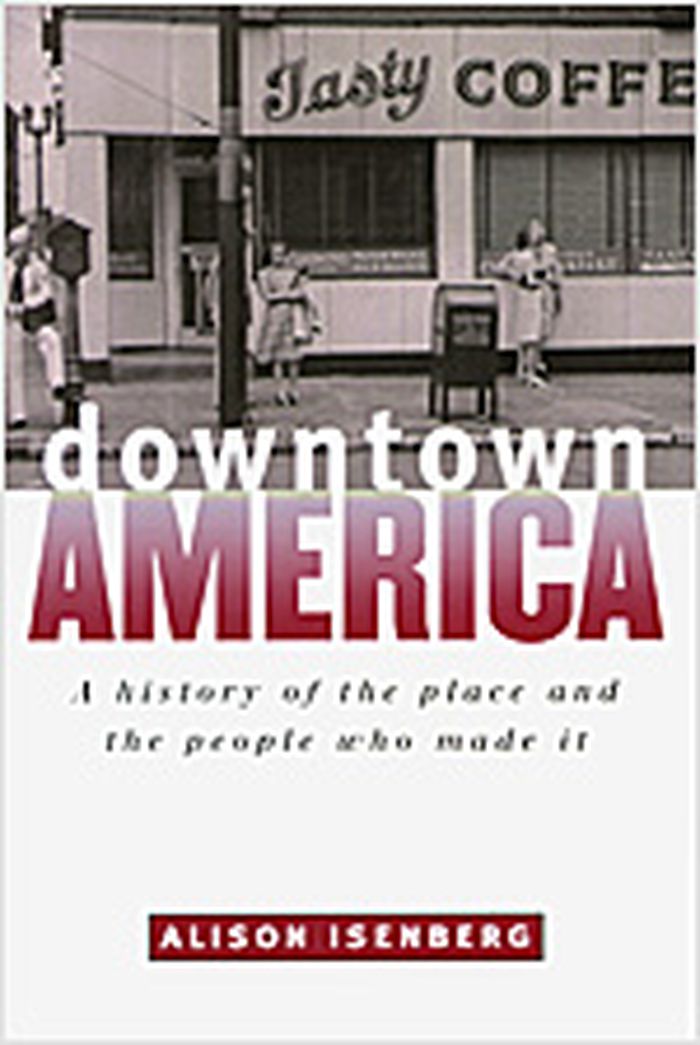
"Downtown America" was once the vibrant urban center romanticized in the Petula Clark song-a place where the lights were brighter, where people went to spend their money and forget their worries. But in the second half of the twentieth century, "downtown" became a shadow of its former self, succumbing to economic competition and commercial decline. And the death of Main Streets across the country came to be seen as sadly inexorable, like the passing of an aged loved one. "Downtown America" cuts beneath the archetypal story of downtown's rise and fall and offers a new story of urban development in the United States. Moving beyond conventional narratives, Alison Isenberg shows that downtown's trajectory was not dictated by inevitable free market forces or natural life-and-death cycles. Instead, it was the product of human actors-the contested creation of retailers, developers, government leaders, architects, and planners, as well as political activists, consumers, civic clubs, real estate appraisers, even postcard artists. Throughout the twentieth century, conflicts over downtown's mundane conditions-what it should look like and who should walk its streets-pointed to fundamental disagreements over American values. Isenberg reveals how the innovative efforts of these participants infused Main Street with its resonant symbolism, while still accounting for pervasive uncertainty and fears of decline. Readers of this work will find anything but a story of inevitability. Even some of the downtown's darkest moments-the Great Depression's collapse in land values, the rioting and looting of the 1960s, or abandonment and vacancy during the 1970s-illuminate how core cultural values have animated and intertwined with economic investment to reinvent the physical form and social experiences of urban commerce. "Downtown America"-its empty stores, revitalized marketplaces, and romanticized past-will never look quite the same again.
Downtown America : a history of the place and the people who made it
Actions:
Prix:
$28.50
(disponible sur commande)
Résumé:
"Downtown America" was once the vibrant urban center romanticized in the Petula Clark song-a place where the lights were brighter, where people went to spend their money and forget their worries. But in the second half of the twentieth century, "downtown" became a shadow of its former self, succumbing to economic competition and commercial decline. And the death of Main Streets across the country came to be seen as sadly inexorable, like the passing of an aged loved one. "Downtown America" cuts beneath the archetypal story of downtown's rise and fall and offers a new story of urban development in the United States. Moving beyond conventional narratives, Alison Isenberg shows that downtown's trajectory was not dictated by inevitable free market forces or natural life-and-death cycles. Instead, it was the product of human actors-the contested creation of retailers, developers, government leaders, architects, and planners, as well as political activists, consumers, civic clubs, real estate appraisers, even postcard artists. Throughout the twentieth century, conflicts over downtown's mundane conditions-what it should look like and who should walk its streets-pointed to fundamental disagreements over American values. Isenberg reveals how the innovative efforts of these participants infused Main Street with its resonant symbolism, while still accounting for pervasive uncertainty and fears of decline. Readers of this work will find anything but a story of inevitability. Even some of the downtown's darkest moments-the Great Depression's collapse in land values, the rioting and looting of the 1960s, or abandonment and vacancy during the 1970s-illuminate how core cultural values have animated and intertwined with economic investment to reinvent the physical form and social experiences of urban commerce. "Downtown America"-its empty stores, revitalized marketplaces, and romanticized past-will never look quite the same again.
Classification:
livres
livres
Publication:
janvier 1900, Chicago, London
janvier 1900, Chicago, London
Sujet:
Théorie de l’urbanisme
Théorie de l’urbanisme
Classification:
livres
livres
Actions:
Prix:
$85.00
(disponible en magasin)
Résumé:
The photographer Édouard Baldus (1813-1889), a central figure in the early development of French photography and acknowledged in his day as a pioneer in the still-experimental field, was widely acclaimed both for his aesthetic sensitivity and for his technical prowess. Establishing a new mode of representing architecture and describing the emerging modern landscape with(...)
$85.00
(disponible en magasin)
Résumé:
The photographer Édouard Baldus (1813-1889), a central figure in the early development of French photography and acknowledged in his day as a pioneer in the still-experimental field, was widely acclaimed both for his aesthetic sensitivity and for his technical prowess. Establishing a new mode of representing architecture and describing the emerging modern landscape with(...)
Sujet:
Publications du CCA
Publications du CCA
Publication:
octobre 1994, Montréal / New York
octobre 1994, Montréal / New York
Titre:
The photographs of Edouard Baldus
Actions:
Prix:
$85.00
(disponible en magasin)
Résumé:
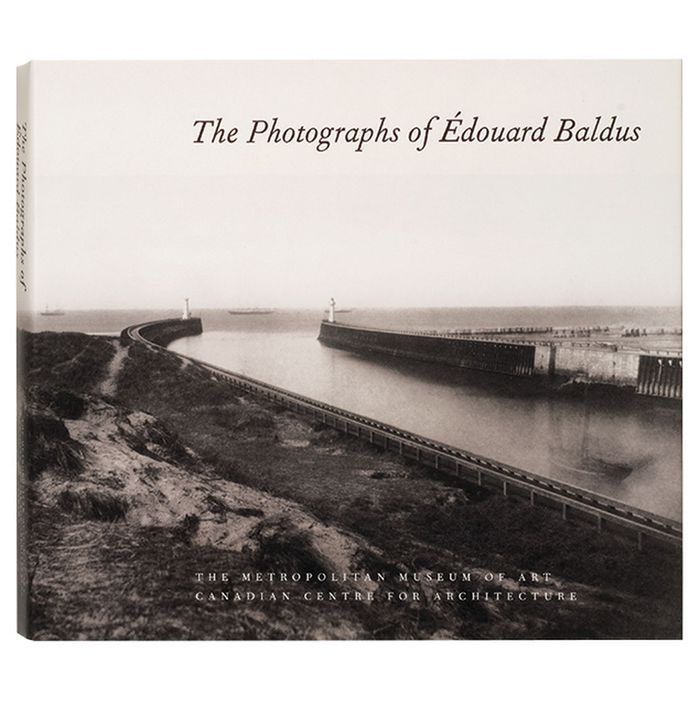
The photographer Édouard Baldus (1813-1889), a central figure in the early development of French photography and acknowledged in his day as a pioneer in the still-experimental field, was widely acclaimed both for his aesthetic sensitivity and for his technical prowess. Establishing a new mode of representing architecture and describing the emerging modern landscape with magnificent authority, he enjoyed high patronage in the 1850s and 1860s. Yet, despite the artist's renown during his lifetime, his name is all but unknown today, his work savored only by connoisseurs. This book, the first to chronicle the life and career of this important artist, brings his work once more before the public. The superb quality of the reproductions captures the subtle tones and soft matte surfaces of the original prints, many of which are published here for the first time. Baldus made his reputation with views of the monuments of Paris and the south of France, with dramatic landscape of the Auvergne, with photographs of the New Louvre, and with a poignant record of the devastating floods of 1856. But it is his two railroad albums -- the first commissioned in 1855 by Baron James de Rothschild for presentation to Queen Victoria, the second in 1861 by the Paris-Lyon-Méditerranée railroad company -- that are his greatest achievement. Here he brought together his earlier architectural and scenic images with bold geometric views of the modern landscape -- railroad tracks, stations, bridges, viaducts, and tunnels -- to address the influence of technology (of which both the railroad and the camera are prime examples). In so doing, Baldus anticipated the concerns of Impressionnist painters a decade later and those of many artists of our own day, meeting his task with a clarity and directness not since surpassed.
The photographs of Edouard Baldus
Actions:
Prix:
$85.00
(disponible en magasin)
Résumé:
The photographer Édouard Baldus (1813-1889), a central figure in the early development of French photography and acknowledged in his day as a pioneer in the still-experimental field, was widely acclaimed both for his aesthetic sensitivity and for his technical prowess. Establishing a new mode of representing architecture and describing the emerging modern landscape with magnificent authority, he enjoyed high patronage in the 1850s and 1860s. Yet, despite the artist's renown during his lifetime, his name is all but unknown today, his work savored only by connoisseurs. This book, the first to chronicle the life and career of this important artist, brings his work once more before the public. The superb quality of the reproductions captures the subtle tones and soft matte surfaces of the original prints, many of which are published here for the first time. Baldus made his reputation with views of the monuments of Paris and the south of France, with dramatic landscape of the Auvergne, with photographs of the New Louvre, and with a poignant record of the devastating floods of 1856. But it is his two railroad albums -- the first commissioned in 1855 by Baron James de Rothschild for presentation to Queen Victoria, the second in 1861 by the Paris-Lyon-Méditerranée railroad company -- that are his greatest achievement. Here he brought together his earlier architectural and scenic images with bold geometric views of the modern landscape -- railroad tracks, stations, bridges, viaducts, and tunnels -- to address the influence of technology (of which both the railroad and the camera are prime examples). In so doing, Baldus anticipated the concerns of Impressionnist painters a decade later and those of many artists of our own day, meeting his task with a clarity and directness not since surpassed.
Classification:
livres
livres
Publication:
octobre 1994, Montréal / New York
octobre 1994, Montréal / New York
Sujet:
Publications du CCA
Publications du CCA


