


6653 Résultats
Classification:
périodiques
périodiques
Actions:
Prix:
$11.00
(disponible sur commande)
Résumé:
Cabinet is an award-winning quarterly magazine of art and culture that confounds expectations of what is typically meant by the words "art," "culture," and sometimes even "magazine." Like the 17th-century cabinet of curiosities to which its name alludes, Cabinet is as interested in the margins of culture as its center. Presenting wide-ranging, multi-disciplinary content(...)
$11.00
(disponible sur commande)
Résumé:
Cabinet is an award-winning quarterly magazine of art and culture that confounds expectations of what is typically meant by the words "art," "culture," and sometimes even "magazine." Like the 17th-century cabinet of curiosities to which its name alludes, Cabinet is as interested in the margins of culture as its center. Presenting wide-ranging, multi-disciplinary content(...)
Titre:
Cabinet 17: laughter, spring 2005
Actions:
Prix:
$11.00
(disponible sur commande)
Résumé:
Cabinet is an award-winning quarterly magazine of art and culture that confounds expectations of what is typically meant by the words "art," "culture," and sometimes even "magazine." Like the 17th-century cabinet of curiosities to which its name alludes, Cabinet is as interested in the margins of culture as its center. Presenting wide-ranging, multi-disciplinary content in each issue through the varied formats of regular columns, essays, interviews, and special artist projects, Cabinet's hybrid sensibility merges the popular appeal of an arts periodical, the visually engaging style of a design magazine, and the in-depth exploration of a scholarly journal. Playful and serious, exuberant and committed, Cabinet's omnivorous appetite for understanding the world makes each of its issues a valuable sourcebook of ideas for a wide range of readers, from artists and designers to scientists and historians. In an age of increasing specialization, Cabinet looks to previous models of the well-rounded thinker to forge a new type of magazine for the intellectually curious reader of the future.
Cabinet 17: laughter, spring 2005
Actions:
Prix:
$11.00
(disponible sur commande)
Résumé:
Cabinet is an award-winning quarterly magazine of art and culture that confounds expectations of what is typically meant by the words "art," "culture," and sometimes even "magazine." Like the 17th-century cabinet of curiosities to which its name alludes, Cabinet is as interested in the margins of culture as its center. Presenting wide-ranging, multi-disciplinary content in each issue through the varied formats of regular columns, essays, interviews, and special artist projects, Cabinet's hybrid sensibility merges the popular appeal of an arts periodical, the visually engaging style of a design magazine, and the in-depth exploration of a scholarly journal. Playful and serious, exuberant and committed, Cabinet's omnivorous appetite for understanding the world makes each of its issues a valuable sourcebook of ideas for a wide range of readers, from artists and designers to scientists and historians. In an age of increasing specialization, Cabinet looks to previous models of the well-rounded thinker to forge a new type of magazine for the intellectually curious reader of the future.
Classification:
périodiques
périodiques
Publication:
avril 2005, New York
avril 2005, New York
Sujet:
Revues
Revues
Classification:
périodiques
périodiques
Actions:
Prix:
$11.00
(disponible sur commande)
Résumé:
Cabinet is an award-winning quarterly magazine of art and culture that confounds expectations of what is typically meant by the words "art," "culture," and sometimes even "magazine." Like the 17th-century cabinet of curiosities to which its name alludes, Cabinet is as interested in the margins of culture as its center. Presenting wide-ranging, multi-disciplinary content(...)
$11.00
(disponible sur commande)
Résumé:
Cabinet is an award-winning quarterly magazine of art and culture that confounds expectations of what is typically meant by the words "art," "culture," and sometimes even "magazine." Like the 17th-century cabinet of curiosities to which its name alludes, Cabinet is as interested in the margins of culture as its center. Presenting wide-ranging, multi-disciplinary content(...)
Titre:
Cabinet 16: the sea, winter 2005
Actions:
Prix:
$11.00
(disponible sur commande)
Résumé:
Cabinet is an award-winning quarterly magazine of art and culture that confounds expectations of what is typically meant by the words "art," "culture," and sometimes even "magazine." Like the 17th-century cabinet of curiosities to which its name alludes, Cabinet is as interested in the margins of culture as its center. Presenting wide-ranging, multi-disciplinary content in each issue through the varied formats of regular columns, essays, interviews, and special artist projects, Cabinet's hybrid sensibility merges the popular appeal of an arts periodical, the visually engaging style of a design magazine, and the in-depth exploration of a scholarly journal. Playful and serious, exuberant and committed, Cabinet's omnivorous appetite for understanding the world makes each of its issues a valuable sourcebook of ideas for a wide range of readers, from artists and designers to scientists and historians. In an age of increasing specialization, Cabinet looks to previous models of the well-rounded thinker to forge a new type of magazine for the intellectually curious reader of the future.
Cabinet 16: the sea, winter 2005
Actions:
Prix:
$11.00
(disponible sur commande)
Résumé:
Cabinet is an award-winning quarterly magazine of art and culture that confounds expectations of what is typically meant by the words "art," "culture," and sometimes even "magazine." Like the 17th-century cabinet of curiosities to which its name alludes, Cabinet is as interested in the margins of culture as its center. Presenting wide-ranging, multi-disciplinary content in each issue through the varied formats of regular columns, essays, interviews, and special artist projects, Cabinet's hybrid sensibility merges the popular appeal of an arts periodical, the visually engaging style of a design magazine, and the in-depth exploration of a scholarly journal. Playful and serious, exuberant and committed, Cabinet's omnivorous appetite for understanding the world makes each of its issues a valuable sourcebook of ideas for a wide range of readers, from artists and designers to scientists and historians. In an age of increasing specialization, Cabinet looks to previous models of the well-rounded thinker to forge a new type of magazine for the intellectually curious reader of the future.
Classification:
périodiques
périodiques
Publication:
janvier 2005, New York
janvier 2005, New York
Sujet:
Revues
Revues
Classification:
livres
livres
Titre:
Cabinet 14: doubles,
Cabinet 14: doubles,
Actions:
Prix:
$11.00
(disponible sur commande)
Résumé:
Cabinet is an award-winning quarterly magazine of art and culture that confounds expectations of what is typically meant by the words "art," "culture," and sometimes even "magazine." Like the 17th-century cabinet of curiosities to which its name alludes, Cabinet is as interested in the margins of culture as its center. Presenting wide-ranging, multi-disciplinary content(...)
$11.00
(disponible sur commande)
Résumé:
Cabinet is an award-winning quarterly magazine of art and culture that confounds expectations of what is typically meant by the words "art," "culture," and sometimes even "magazine." Like the 17th-century cabinet of curiosities to which its name alludes, Cabinet is as interested in the margins of culture as its center. Presenting wide-ranging, multi-disciplinary content(...)
Titre:
Cabinet 14: doubles,
Actions:
Prix:
$11.00
(disponible sur commande)
Résumé:
Cabinet is an award-winning quarterly magazine of art and culture that confounds expectations of what is typically meant by the words "art," "culture," and sometimes even "magazine." Like the 17th-century cabinet of curiosities to which its name alludes, Cabinet is as interested in the margins of culture as its center. Presenting wide-ranging, multi-disciplinary content in each issue through the varied formats of regular columns, essays, interviews, and special artist projects, Cabinet's hybrid sensibility merges the popular appeal of an arts periodical, the visually engaging style of a design magazine, and the in-depth exploration of a scholarly journal. Playful and serious, exuberant and committed, Cabinet's omnivorous appetite for understanding the world makes each of its issues a valuable sourcebook of ideas for a wide range of readers, from artists and designers to scientists and historians. In an age of increasing specialization, Cabinet looks to previous models of the well-rounded thinker to forge a new type of magazine for the intellectually curious reader of the future.
Cabinet 14: doubles,
Actions:
Prix:
$11.00
(disponible sur commande)
Résumé:
Cabinet is an award-winning quarterly magazine of art and culture that confounds expectations of what is typically meant by the words "art," "culture," and sometimes even "magazine." Like the 17th-century cabinet of curiosities to which its name alludes, Cabinet is as interested in the margins of culture as its center. Presenting wide-ranging, multi-disciplinary content in each issue through the varied formats of regular columns, essays, interviews, and special artist projects, Cabinet's hybrid sensibility merges the popular appeal of an arts periodical, the visually engaging style of a design magazine, and the in-depth exploration of a scholarly journal. Playful and serious, exuberant and committed, Cabinet's omnivorous appetite for understanding the world makes each of its issues a valuable sourcebook of ideas for a wide range of readers, from artists and designers to scientists and historians. In an age of increasing specialization, Cabinet looks to previous models of the well-rounded thinker to forge a new type of magazine for the intellectually curious reader of the future.
Classification:
livres
livres
Publication:
février 2004, New York
février 2004, New York
Classification:
livres
livres
Titre:
L'art carolingien
L'art carolingien
Actions:
Prix:
$69.95
(disponible sur commande)
Résumé:
L'époque carolingienne, volet initial d'un triptyque culturel annonçant les Ages roman et gothique, ce moment artistique est longtemps apparu comme l'apogée de la création haut médiévale, offrant la première grande définition des valeurs artistiques de l'Europe chrétienne. La synthèse qui est ici présentée dresse un panorama de l'art de cette période et en renouvelle(...)
$69.95
(disponible sur commande)
Résumé:
L'époque carolingienne, volet initial d'un triptyque culturel annonçant les Ages roman et gothique, ce moment artistique est longtemps apparu comme l'apogée de la création haut médiévale, offrant la première grande définition des valeurs artistiques de l'Europe chrétienne. La synthèse qui est ici présentée dresse un panorama de l'art de cette période et en renouvelle(...)
Titre:
L'art carolingien
Actions:
Prix:
$69.95
(disponible sur commande)
Résumé:
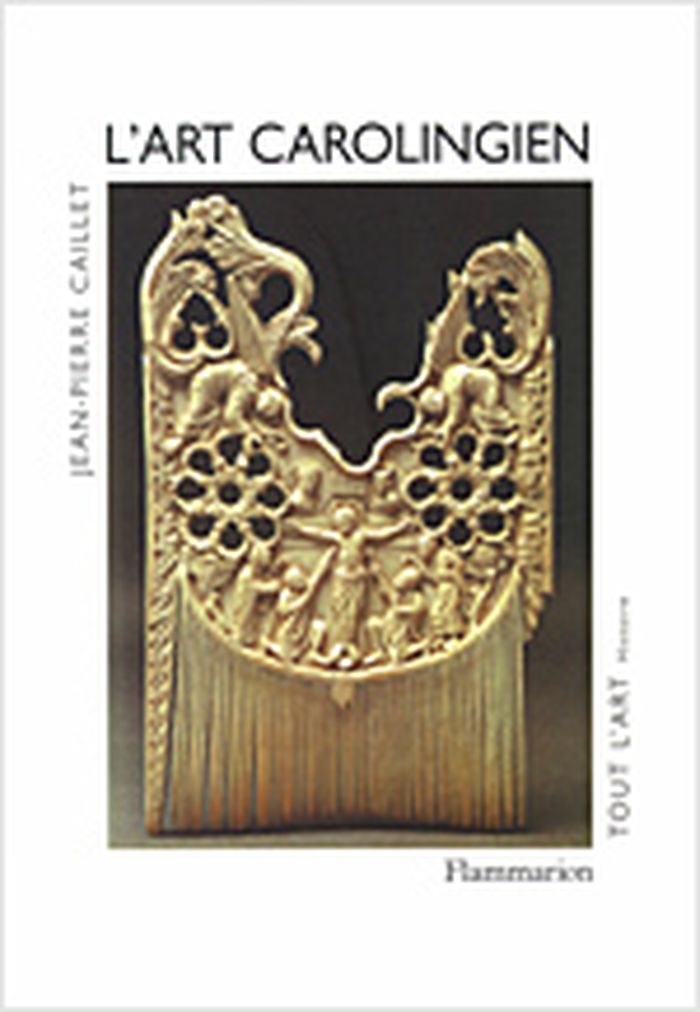
L'époque carolingienne, volet initial d'un triptyque culturel annonçant les Ages roman et gothique, ce moment artistique est longtemps apparu comme l'apogée de la création haut médiévale, offrant la première grande définition des valeurs artistiques de l'Europe chrétienne. La synthèse qui est ici présentée dresse un panorama de l'art de cette période et en renouvelle l'approche : elle se propose en effet de replacer l'art carolingien au fil d'une progression plus ample volée, en se basant sur de nombreuses données inédites issues des recherches menées dans le champ de l'archéologie paléochrétienne et des arts du " premier " haut Moyen Age. Ainsi, la prise en compte des prémices, avec les réalisations importantes du règne de Pépin le Bref dès le milieu du VIIIe siècle, mais aussi l'analyse des œuvres produites dans la mouvance de Charles le Chauve dans les décennies 840-870, ou encore l'attention portée au mécénat des hauts dignitaires, conduiront à une réorientation de la réflexion sur le sujet. Enfin, l'accent mis sur l'étude de la finalité des œuvres permettra de mieux appréhender l'esprit des concepteurs de cet art.
L'art carolingien
Actions:
Prix:
$69.95
(disponible sur commande)
Résumé:
L'époque carolingienne, volet initial d'un triptyque culturel annonçant les Ages roman et gothique, ce moment artistique est longtemps apparu comme l'apogée de la création haut médiévale, offrant la première grande définition des valeurs artistiques de l'Europe chrétienne. La synthèse qui est ici présentée dresse un panorama de l'art de cette période et en renouvelle l'approche : elle se propose en effet de replacer l'art carolingien au fil d'une progression plus ample volée, en se basant sur de nombreuses données inédites issues des recherches menées dans le champ de l'archéologie paléochrétienne et des arts du " premier " haut Moyen Age. Ainsi, la prise en compte des prémices, avec les réalisations importantes du règne de Pépin le Bref dès le milieu du VIIIe siècle, mais aussi l'analyse des œuvres produites dans la mouvance de Charles le Chauve dans les décennies 840-870, ou encore l'attention portée au mécénat des hauts dignitaires, conduiront à une réorientation de la réflexion sur le sujet. Enfin, l'accent mis sur l'étude de la finalité des œuvres permettra de mieux appréhender l'esprit des concepteurs de cet art.
Classification:
livres
livres
Publication:
novembre 2005, Paris
novembre 2005, Paris
Sujet:
Histoire jusqu’à 1900
Histoire jusqu’à 1900
Classification:
livres
livres
Actions:
Prix:
$69.95
(disponible sur commande)
Résumé:
Cities ruled the first half of the 20th century; the second half belonged to the suburbs. Will cities become dominant again? Can the recent decline of many suburbs be slowed? "Tomorrow’s cities, tomorrow’s suburbs" predicts a surprising outcome in the decades-long tug-of-war between urban hubs and suburban outposts. Planning scholars William H. Lucy and David L.(...)
$69.95
(disponible sur commande)
Résumé:
Cities ruled the first half of the 20th century; the second half belonged to the suburbs. Will cities become dominant again? Can the recent decline of many suburbs be slowed? "Tomorrow’s cities, tomorrow’s suburbs" predicts a surprising outcome in the decades-long tug-of-war between urban hubs and suburban outposts. Planning scholars William H. Lucy and David L.(...)
Sujet:
Théorie de l’urbanisme
Théorie de l’urbanisme
Publication:
février 2006, Chicago, Washington D.C.
février 2006, Chicago, Washington D.C.
Titre:
Tomorrow's cities, tomorrow's suburbs
Actions:
Prix:
$69.95
(disponible sur commande)
Résumé:
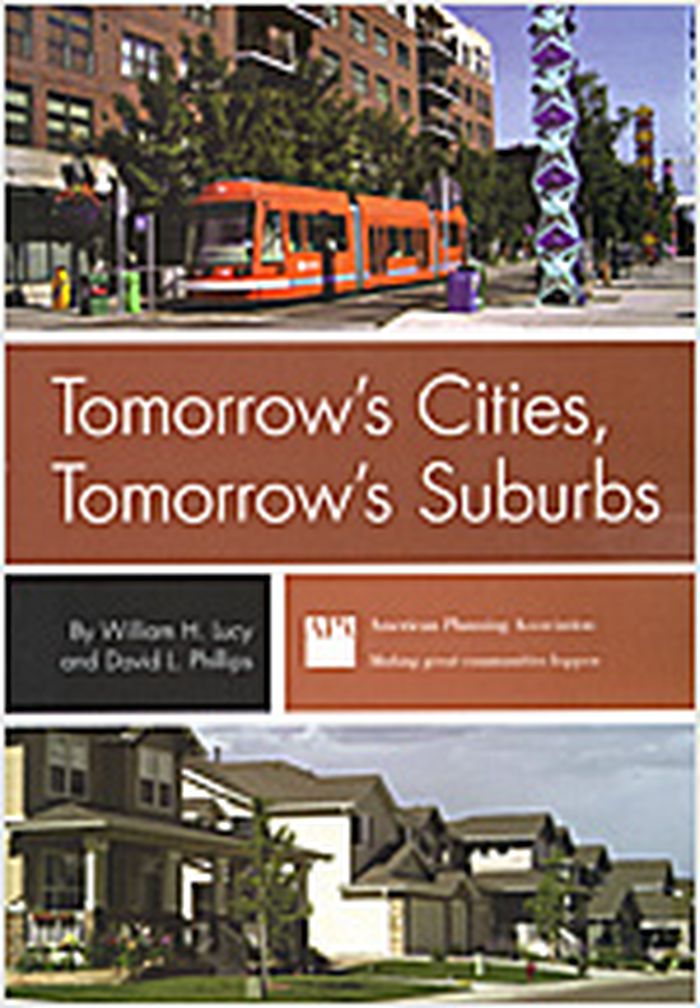
Cities ruled the first half of the 20th century; the second half belonged to the suburbs. Will cities become dominant again? Can the recent decline of many suburbs be slowed? "Tomorrow’s cities, tomorrow’s suburbs" predicts a surprising outcome in the decades-long tug-of-war between urban hubs and suburban outposts. Planning scholars William H. Lucy and David L. Phillips document signs of resurgence in cities and interpret omens of decline in many suburbs. They offer an extensive analysis of the 2000 census, with insights into the influence of income disparities, housing age and size, racial segregation, immigration, and poverty. They also examine popular perceptions—and misperceptions—about safety and danger in cities, suburbs, and exurbs that affect settlement patterns. "Tomorrow’s cities, tomorrow’s suburbs" offers evidence that the decline of cities can continue to be reversed, tempered by a warning of a mid-life crisis looming in the suburbs. It also offers practical policies for local action, steps that planners, elected officials, and citizens can take to create an environment in which both cities and suburbs can thrive.
Tomorrow's cities, tomorrow's suburbs
Actions:
Prix:
$69.95
(disponible sur commande)
Résumé:
Cities ruled the first half of the 20th century; the second half belonged to the suburbs. Will cities become dominant again? Can the recent decline of many suburbs be slowed? "Tomorrow’s cities, tomorrow’s suburbs" predicts a surprising outcome in the decades-long tug-of-war between urban hubs and suburban outposts. Planning scholars William H. Lucy and David L. Phillips document signs of resurgence in cities and interpret omens of decline in many suburbs. They offer an extensive analysis of the 2000 census, with insights into the influence of income disparities, housing age and size, racial segregation, immigration, and poverty. They also examine popular perceptions—and misperceptions—about safety and danger in cities, suburbs, and exurbs that affect settlement patterns. "Tomorrow’s cities, tomorrow’s suburbs" offers evidence that the decline of cities can continue to be reversed, tempered by a warning of a mid-life crisis looming in the suburbs. It also offers practical policies for local action, steps that planners, elected officials, and citizens can take to create an environment in which both cities and suburbs can thrive.
Classification:
livres
livres
Publication:
février 2006, Chicago, Washington D.C.
février 2006, Chicago, Washington D.C.
Sujet:
Théorie de l’urbanisme
Théorie de l’urbanisme
Classification:
livres
livres
Titre:
Josef Frank : life and work
Josef Frank : life and work
Actions:
Prix:
$112.00
(disponible en magasin)
Résumé:
Educated in Vienna just after the turn of the century, Frank became the leader of the younger generation of architects in Austria after the First World War. But Frank fell from grace when he emerged as a forceful critic of the extremes of modern architecture and design during the early 1930s. Dismissing the demands for a unified modern style, Frank insisted that it was(...)
$112.00
(disponible en magasin)
Résumé:
Educated in Vienna just after the turn of the century, Frank became the leader of the younger generation of architects in Austria after the First World War. But Frank fell from grace when he emerged as a forceful critic of the extremes of modern architecture and design during the early 1930s. Dismissing the demands for a unified modern style, Frank insisted that it was(...)
Titre:
Josef Frank : life and work
Actions:
Prix:
$112.00
(disponible en magasin)
Résumé:
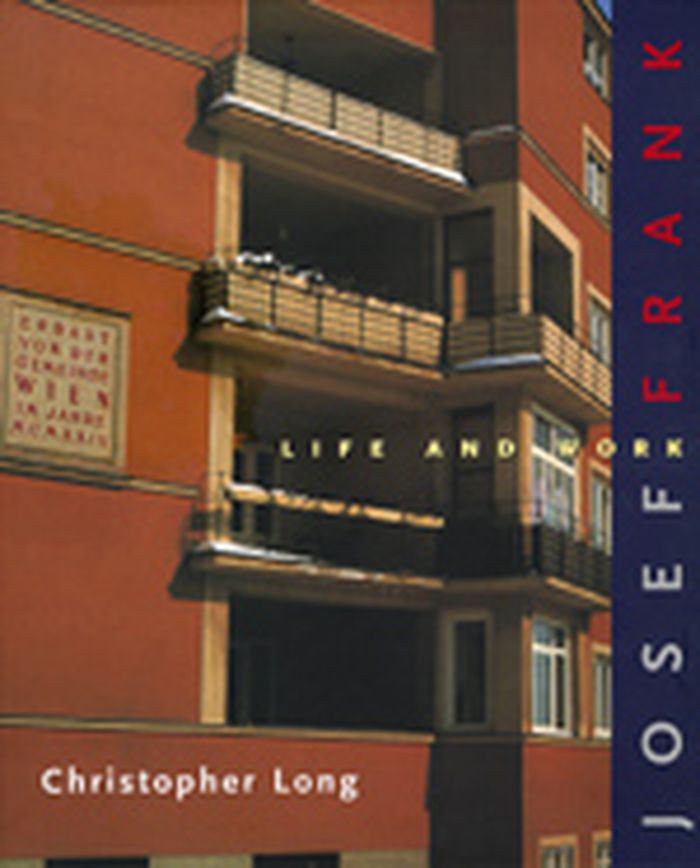
Educated in Vienna just after the turn of the century, Frank became the leader of the younger generation of architects in Austria after the First World War. But Frank fell from grace when he emerged as a forceful critic of the extremes of modern architecture and design during the early 1930s. Dismissing the demands for a unified modern style, Frank insisted that it was pluralism, not uniformity, that most characterized life in the new machine age. He called instead for a more humane modernism, one that responded to people's everyday needs and left room for sentimentality and historical influences. He was able to put these ideas into practice when, in 1933, he was forced to leave Vienna for Sweden. There his work came to define Swedish (or Scandinavian) modern design. For more than thirty years he was the chief designer for the Stockholm furnishings firm Svenskt Tenn, producing colorful, cozy, and eclectic designs that provided a refreshing alternative to the architectural mainstream of the day and presaged the coming revolt against modernism in the 1960s.
Josef Frank : life and work
Actions:
Prix:
$112.00
(disponible en magasin)
Résumé:
Educated in Vienna just after the turn of the century, Frank became the leader of the younger generation of architects in Austria after the First World War. But Frank fell from grace when he emerged as a forceful critic of the extremes of modern architecture and design during the early 1930s. Dismissing the demands for a unified modern style, Frank insisted that it was pluralism, not uniformity, that most characterized life in the new machine age. He called instead for a more humane modernism, one that responded to people's everyday needs and left room for sentimentality and historical influences. He was able to put these ideas into practice when, in 1933, he was forced to leave Vienna for Sweden. There his work came to define Swedish (or Scandinavian) modern design. For more than thirty years he was the chief designer for the Stockholm furnishings firm Svenskt Tenn, producing colorful, cozy, and eclectic designs that provided a refreshing alternative to the architectural mainstream of the day and presaged the coming revolt against modernism in the 1960s.
Classification:
livres
livres
Publication:
novembre 2002, Chicago
novembre 2002, Chicago
Sujet:
Architecture, monographies
Architecture, monographies
Classification:
livres
livres
Prix:
$12.95
(disponible sur commande)
Résumé:
Beyond the Plan is a book about the ways in which we transform our own personal space as an expression of ourselves, whilst still dwelling within structures imposed on us by architects and planners. It centres around a series of interviews carried out by Willats with people living on estates in London, Bath and Berlin between the late 1970s and late 1990s, which led to(...)
$12.95
(disponible sur commande)
Résumé:
Beyond the Plan is a book about the ways in which we transform our own personal space as an expression of ourselves, whilst still dwelling within structures imposed on us by architects and planners. It centres around a series of interviews carried out by Willats with people living on estates in London, Bath and Berlin between the late 1970s and late 1990s, which led to(...)
Titre:
Beyond the plan : the transformation of personal space in housing
Actions:
Prix:
$12.95
(disponible sur commande)
Résumé:
Beyond the Plan is a book about the ways in which we transform our own personal space as an expression of ourselves, whilst still dwelling within structures imposed on us by architects and planners. It centres around a series of interviews carried out by Willats with people living on estates in London, Bath and Berlin between the late 1970s and late 1990s, which led to the creation of interactive and participatory artworks that were often presented in the same buildings in which those people lived. They examine the personalisation of the dwelling space itself, the individualisation of the immediate environment, and the ways in which adjacent spaces such as wastelands and allotments are turned into places of escape. In the accompanying essays, Willats explains why, as an artist, he centred his work on the polemics of modern building, and sets out the conclusions he has drawn from the exchanges he has had with residents - the common attitudes he has discovered across boundaries of age, taste and social background.
Beyond the plan : the transformation of personal space in housing
Actions:
Prix:
$12.95
(disponible sur commande)
Résumé:
Beyond the Plan is a book about the ways in which we transform our own personal space as an expression of ourselves, whilst still dwelling within structures imposed on us by architects and planners. It centres around a series of interviews carried out by Willats with people living on estates in London, Bath and Berlin between the late 1970s and late 1990s, which led to the creation of interactive and participatory artworks that were often presented in the same buildings in which those people lived. They examine the personalisation of the dwelling space itself, the individualisation of the immediate environment, and the ways in which adjacent spaces such as wastelands and allotments are turned into places of escape. In the accompanying essays, Willats explains why, as an artist, he centred his work on the polemics of modern building, and sets out the conclusions he has drawn from the exchanges he has had with residents - the common attitudes he has discovered across boundaries of age, taste and social background.
Classification:
livres
livres
Publication:
avril 2002, London
avril 2002, London
Sujet:
livres soldés
livres soldés
Classification:
livres
livres
Actions:
Prix:
$100.00
(disponible sur commande)
Résumé:
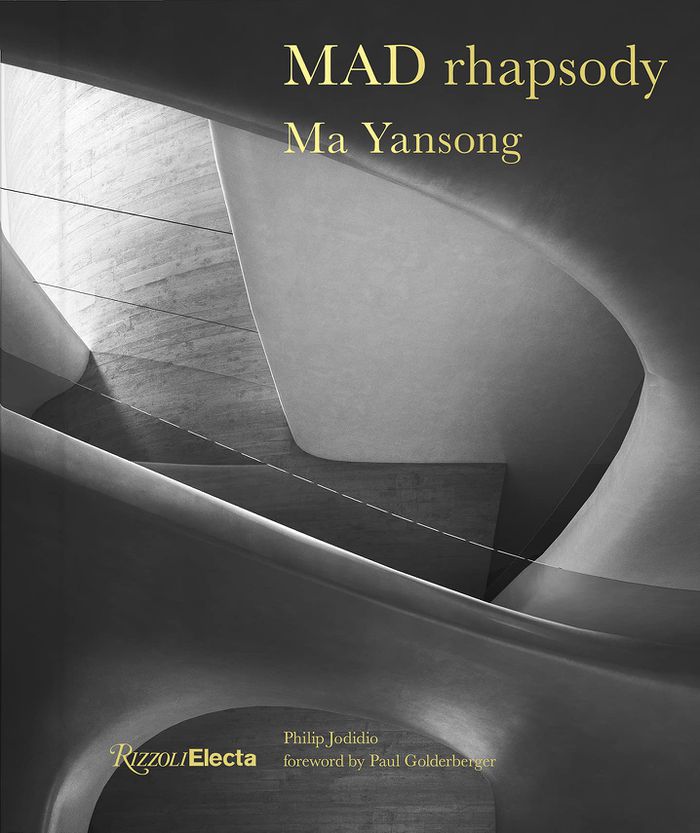
Conceived and designed by Ma Yansong, founder of MAD Architects, MAD Rhapsody documents the buildings of this avant-garde architecture firm and traces the development of their ideas through associated practice including art, research, and exhibition projects. With photographs, drawings, and models, the book highlights 23 projects from the past six years, both built and in(...)
$100.00
(disponible sur commande)
Résumé:
Conceived and designed by Ma Yansong, founder of MAD Architects, MAD Rhapsody documents the buildings of this avant-garde architecture firm and traces the development of their ideas through associated practice including art, research, and exhibition projects. With photographs, drawings, and models, the book highlights 23 projects from the past six years, both built and in(...)
Titre:
MAD rhapsody: Past, present, future
Actions:
Prix:
$100.00
(disponible sur commande)
Résumé:
Conceived and designed by Ma Yansong, founder of MAD Architects, MAD Rhapsody documents the buildings of this avant-garde architecture firm and traces the development of their ideas through associated practice including art, research, and exhibition projects. With photographs, drawings, and models, the book highlights 23 projects from the past six years, both built and in process. Known for their ',organic and dreamlike architecture'' that creates a dialogue with nature, earth, and sky, MAD projects reach all over the globe. At age 46, Ma Yansong is one of China’s best-known architects. His curvilinear, free-form, and futuristic designs are often compared to those of his mentor, Zaha Hadid. Ma’s greatest inspiration is nature; his opera house in the northern Chinese city of Harbin resembles a snow-capped mountain, while his master plan for the city of Nanjing calls for sloping buildings covered with vertical louvers that resemble waterfalls. Other projects include the Ordos Museum in the wilderness of Inner Mongolia, the Absolute Towers in Canada, and the Lucas Museum of Narrative Art in Los Angeles.
MAD rhapsody: Past, present, future
Actions:
Prix:
$100.00
(disponible sur commande)
Résumé:
Conceived and designed by Ma Yansong, founder of MAD Architects, MAD Rhapsody documents the buildings of this avant-garde architecture firm and traces the development of their ideas through associated practice including art, research, and exhibition projects. With photographs, drawings, and models, the book highlights 23 projects from the past six years, both built and in process. Known for their ',organic and dreamlike architecture'' that creates a dialogue with nature, earth, and sky, MAD projects reach all over the globe. At age 46, Ma Yansong is one of China’s best-known architects. His curvilinear, free-form, and futuristic designs are often compared to those of his mentor, Zaha Hadid. Ma’s greatest inspiration is nature; his opera house in the northern Chinese city of Harbin resembles a snow-capped mountain, while his master plan for the city of Nanjing calls for sloping buildings covered with vertical louvers that resemble waterfalls. Other projects include the Ordos Museum in the wilderness of Inner Mongolia, the Absolute Towers in Canada, and the Lucas Museum of Narrative Art in Los Angeles.
Classification:
livres
livres
Publication:
novembre 2021
novembre 2021
Sujet:
Architecture, monographies
Architecture, monographies
Classification:
livres
livres
Actions:
Prix:
$23.95
(disponible sur commande)
Résumé:
First published in 1967, Guy Debord's stinging revolutionary critique of contemporary society, The Society of the Spectacle has since acquired a cult status. Credited by many as being the inspiration for the ideas generated by the events of May 1968 in France, Debord's pitiless attack on commodity fetishism and its incrustation in the practices of everyday life continues(...)
$23.95
(disponible sur commande)
Résumé:
First published in 1967, Guy Debord's stinging revolutionary critique of contemporary society, The Society of the Spectacle has since acquired a cult status. Credited by many as being the inspiration for the ideas generated by the events of May 1968 in France, Debord's pitiless attack on commodity fetishism and its incrustation in the practices of everyday life continues(...)
Titre:
Comments on the society of the spectacle
Actions:
Prix:
$23.95
(disponible sur commande)
Résumé:
First published in 1967, Guy Debord's stinging revolutionary critique of contemporary society, The Society of the Spectacle has since acquired a cult status. Credited by many as being the inspiration for the ideas generated by the events of May 1968 in France, Debord's pitiless attack on commodity fetishism and its incrustation in the practices of everyday life continues to burn brightly in today's age of satellite television and the soundbite. In Comments on the Society of the Spectacle, published twenty years later, Debord returned to the themes of his previous analysis and demonstrated how they were all the more relevant in a period when the integrated spectacle was dominant. Resolutely refusing to be reconciled to the system, Debord trenchantly slices through the doxa and mystification offered tip by journalists and pundits to show how aspects of reality as diverse as terrorism and the environment, the Mafia and the media, were caught up in the logic of the spectacular society. Pointing the finger clearly at those who benefit from the logic of domination, Debord's comments convey the revolutionary impulse at the heart of situationism.
Comments on the society of the spectacle
Actions:
Prix:
$23.95
(disponible sur commande)
Résumé:
First published in 1967, Guy Debord's stinging revolutionary critique of contemporary society, The Society of the Spectacle has since acquired a cult status. Credited by many as being the inspiration for the ideas generated by the events of May 1968 in France, Debord's pitiless attack on commodity fetishism and its incrustation in the practices of everyday life continues to burn brightly in today's age of satellite television and the soundbite. In Comments on the Society of the Spectacle, published twenty years later, Debord returned to the themes of his previous analysis and demonstrated how they were all the more relevant in a period when the integrated spectacle was dominant. Resolutely refusing to be reconciled to the system, Debord trenchantly slices through the doxa and mystification offered tip by journalists and pundits to show how aspects of reality as diverse as terrorism and the environment, the Mafia and the media, were caught up in the logic of the spectacular society. Pointing the finger clearly at those who benefit from the logic of domination, Debord's comments convey the revolutionary impulse at the heart of situationism.
Classification:
livres
livres
Publication:
janvier 2011
janvier 2011
Sujet:
Théorie/ philosophie
Théorie/ philosophie
Classification:
livres
livres
Actions:
Prix:
$31.50
(disponible sur commande)
Résumé:
With the advent of urbanization in the early modern period, the material worlds of children were vastly altered. In industrialized democracies, a broad consensus developed that children should not work, but rather learn and play in settings designed and built with these specific purposes in mind. Unregulated public spaces for children were no longer acceptable; and the(...)
$31.50
(disponible sur commande)
Résumé:
With the advent of urbanization in the early modern period, the material worlds of children were vastly altered. In industrialized democracies, a broad consensus developed that children should not work, but rather learn and play in settings designed and built with these specific purposes in mind. Unregulated public spaces for children were no longer acceptable; and the(...)
Titre:
Designing modern childhoods: history, space, and the material culture of children
Actions:
Prix:
$31.50
(disponible sur commande)
Résumé:
With the advent of urbanization in the early modern period, the material worlds of children were vastly altered. In industrialized democracies, a broad consensus developed that children should not work, but rather learn and play in settings designed and built with these specific purposes in mind. Unregulated public spaces for children were no longer acceptable; and the cultural landscapes of children's private lives were changed, with modifications in architecture and the objects of daily life. In Designing Modern Childhoods, architectural historians, social historians, social scientists, and architects examine the history and design of places and objects such as schools, hospitals, playgrounds, houses, cell phones, snowboards, and even the McDonald's Happy Meal. Special attention is given to how children use and interpret the spaces, buildings, and objects that are part of their lives, becoming themselves creators and carriers of culture. The authors extract common threads in children's understandings of their material worlds, but they also show how the experience of modernity varies for young people across time, through space, and according to age, gender, social class, race, and culture.
Designing modern childhoods: history, space, and the material culture of children
Actions:
Prix:
$31.50
(disponible sur commande)
Résumé:
With the advent of urbanization in the early modern period, the material worlds of children were vastly altered. In industrialized democracies, a broad consensus developed that children should not work, but rather learn and play in settings designed and built with these specific purposes in mind. Unregulated public spaces for children were no longer acceptable; and the cultural landscapes of children's private lives were changed, with modifications in architecture and the objects of daily life. In Designing Modern Childhoods, architectural historians, social historians, social scientists, and architects examine the history and design of places and objects such as schools, hospitals, playgrounds, houses, cell phones, snowboards, and even the McDonald's Happy Meal. Special attention is given to how children use and interpret the spaces, buildings, and objects that are part of their lives, becoming themselves creators and carriers of culture. The authors extract common threads in children's understandings of their material worlds, but they also show how the experience of modernity varies for young people across time, through space, and according to age, gender, social class, race, and culture.
Classification:
livres
livres
Publication:
janvier 2008
janvier 2008
Sujet:
Théorie de l’architecture
Théorie de l’architecture


