


6640 Résultats
Classification:
livres
livres
Titre:
The Paul Virilio reader
The Paul Virilio reader
Actions:
Prix:
$31.95
(disponible sur commande)
Résumé:
If nothing else, the war in Iraq and the 1991 Gulf War have taught us much about media and technology as key players in how war is waged, packaged for public consumption, and exported in real time to the rest of the globe. A critic of the art of technology, Paul Virilio has keenly observed that media images quite often constitute a strategy of war and that accident is(...)
$31.95
(disponible sur commande)
Résumé:
If nothing else, the war in Iraq and the 1991 Gulf War have taught us much about media and technology as key players in how war is waged, packaged for public consumption, and exported in real time to the rest of the globe. A critic of the art of technology, Paul Virilio has keenly observed that media images quite often constitute a strategy of war and that accident is(...)
Titre:
The Paul Virilio reader
Actions:
Prix:
$31.95
(disponible sur commande)
Résumé:
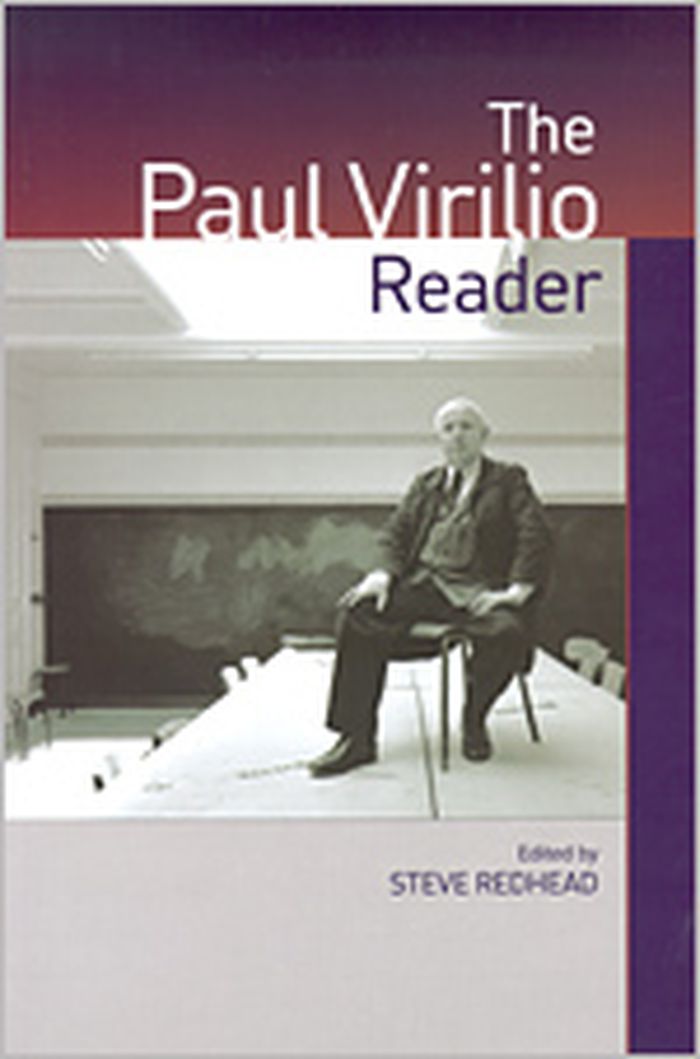
If nothing else, the war in Iraq and the 1991 Gulf War have taught us much about media and technology as key players in how war is waged, packaged for public consumption, and exported in real time to the rest of the globe. A critic of the art of technology, Paul Virilio has keenly observed that media images quite often constitute a strategy of war and that accident is becoming indistinguishable from attack. For more than fifty years Virilio has offered incisive and provocative criticism on technology and its moral, political, and cultural implications. Yet until now, much of his work, originally published in French, remains elusive in full English translation. "The Paul Virilio Reader" collects for the first time English extracts reflecting the entire range of Virilio’s diverse career. The book’s introduction demonstrates that Virilio has produced an important—if controversial—“theory at the speed of light” that uncannily illuminates the impact of new information and communications technologies in a world that collapses time and distance as never before. The inventor of “dromology,” which views speed as a defining concept for contemporary civilization, Virilio is noted for his proclamation that the logic of ever-increasing acceleration lies at the heart of the organization and transformation of the contemporary world. Arranged chronologically, "The Paul Virilio Reader" illustrates the development and interconnectedness of Virilio’s work. Each extract is prefaced by bibliographical and contextual commentary, and the book includes an innovative guide to reading Virilio.
The Paul Virilio reader
Actions:
Prix:
$31.95
(disponible sur commande)
Résumé:
If nothing else, the war in Iraq and the 1991 Gulf War have taught us much about media and technology as key players in how war is waged, packaged for public consumption, and exported in real time to the rest of the globe. A critic of the art of technology, Paul Virilio has keenly observed that media images quite often constitute a strategy of war and that accident is becoming indistinguishable from attack. For more than fifty years Virilio has offered incisive and provocative criticism on technology and its moral, political, and cultural implications. Yet until now, much of his work, originally published in French, remains elusive in full English translation. "The Paul Virilio Reader" collects for the first time English extracts reflecting the entire range of Virilio’s diverse career. The book’s introduction demonstrates that Virilio has produced an important—if controversial—“theory at the speed of light” that uncannily illuminates the impact of new information and communications technologies in a world that collapses time and distance as never before. The inventor of “dromology,” which views speed as a defining concept for contemporary civilization, Virilio is noted for his proclamation that the logic of ever-increasing acceleration lies at the heart of the organization and transformation of the contemporary world. Arranged chronologically, "The Paul Virilio Reader" illustrates the development and interconnectedness of Virilio’s work. Each extract is prefaced by bibliographical and contextual commentary, and the book includes an innovative guide to reading Virilio.
Classification:
livres
livres
Publication:
janvier 1900, New York
janvier 1900, New York
Sujet:
Théorie de l’architecture
Théorie de l’architecture
Classification:
livres
livres
Prix:
$72.00
(disponible sur commande)
Résumé:
The ideas of architects are usually conveyed by their buildings. Vladimir Belogolovsky takes a different approach in his new work. The New York-based author gives a detailed picture of contemporary architects – through words. Interviews with: David Adjaye, Will Alsop, Alejandro Aravena, Shigeru Ban, Elizabeth Diller, Winka Dubbeldam, Peter Eisenman, Norman Foster,(...)
$72.00
(disponible sur commande)
Résumé:
The ideas of architects are usually conveyed by their buildings. Vladimir Belogolovsky takes a different approach in his new work. The New York-based author gives a detailed picture of contemporary architects – through words. Interviews with: David Adjaye, Will Alsop, Alejandro Aravena, Shigeru Ban, Elizabeth Diller, Winka Dubbeldam, Peter Eisenman, Norman Foster,(...)
Titre:
Conversations with architects: in the age of celebrity
Actions:
Prix:
$72.00
(disponible sur commande)
Résumé:
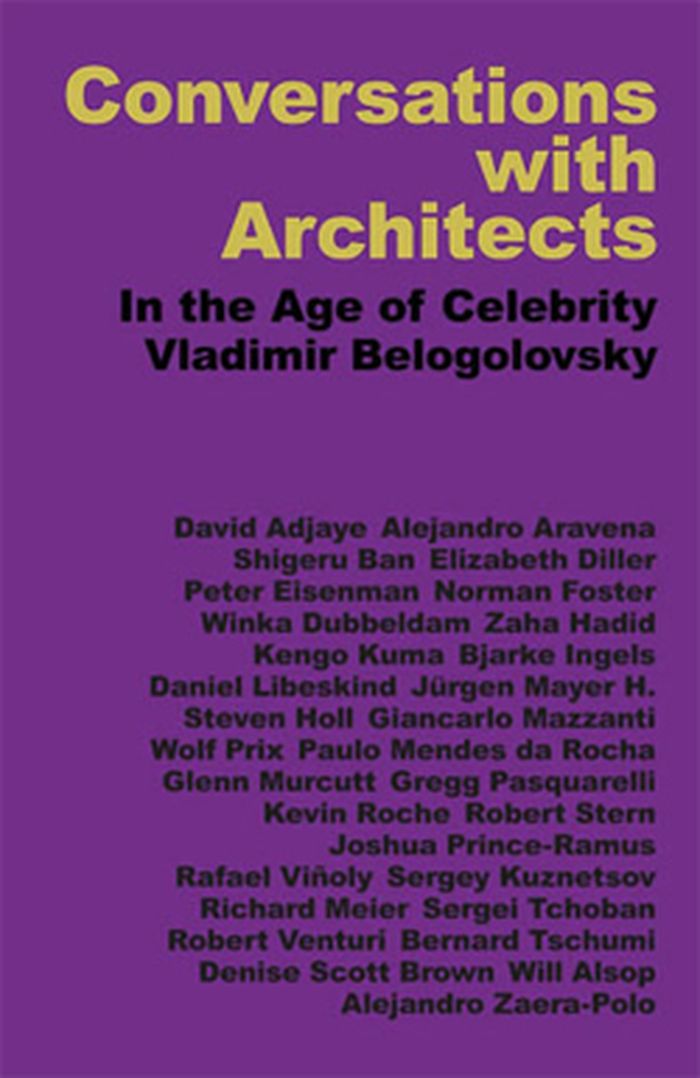
The ideas of architects are usually conveyed by their buildings. Vladimir Belogolovsky takes a different approach in his new work. The New York-based author gives a detailed picture of contemporary architects – through words. Interviews with: David Adjaye, Will Alsop, Alejandro Aravena, Shigeru Ban, Elizabeth Diller, Winka Dubbeldam, Peter Eisenman, Norman Foster, Zaha Hadid, Steven Holl, Bjarke Ingels, Kengo Kuma, Daniel Libeskind, Jürgen Mayer H., Giancarlo Mazzanti, Richard Meier, Paulo Mendes da Rocha, Glenn Murcutt, Gregg Pasquarelli, Joshua Prince-Ramus, Wolf Prix, Kevin Roche, Robert Stern, Sergei Tchoban and Sergey Kuznetsov, Bernard Tschumi, Robert Venturi and Denise Scott Brown, Rafael Viñoly, Alexandro Zaera-Polo.
Conversations with architects: in the age of celebrity
Actions:
Prix:
$72.00
(disponible sur commande)
Résumé:
The ideas of architects are usually conveyed by their buildings. Vladimir Belogolovsky takes a different approach in his new work. The New York-based author gives a detailed picture of contemporary architects – through words. Interviews with: David Adjaye, Will Alsop, Alejandro Aravena, Shigeru Ban, Elizabeth Diller, Winka Dubbeldam, Peter Eisenman, Norman Foster, Zaha Hadid, Steven Holl, Bjarke Ingels, Kengo Kuma, Daniel Libeskind, Jürgen Mayer H., Giancarlo Mazzanti, Richard Meier, Paulo Mendes da Rocha, Glenn Murcutt, Gregg Pasquarelli, Joshua Prince-Ramus, Wolf Prix, Kevin Roche, Robert Stern, Sergei Tchoban and Sergey Kuznetsov, Bernard Tschumi, Robert Venturi and Denise Scott Brown, Rafael Viñoly, Alexandro Zaera-Polo.
Classification:
livres
livres
Publication:
octobre 2015
octobre 2015
Sujet:
Théorie de l’architecture
Théorie de l’architecture
Classification:
livres
livres
Actions:
Prix:
$54.00
(disponible sur commande)
Résumé:
"Skin" presents products, furniture, fashion, architecture, and media that are expanding the limits of what we understand as surface. Reflecting the convergence of natural and artificial life, it shows how enhanced and simulated skins appear throughout the contemporary environment. Designers today continually manipulate the relationship between the inside and outside of(...)
$54.00
(disponible sur commande)
Résumé:
"Skin" presents products, furniture, fashion, architecture, and media that are expanding the limits of what we understand as surface. Reflecting the convergence of natural and artificial life, it shows how enhanced and simulated skins appear throughout the contemporary environment. Designers today continually manipulate the relationship between the inside and outside of(...)
Titre:
Skin : surface, substance and design
Actions:
Prix:
$54.00
(disponible sur commande)
Résumé:
"Skin" presents products, furniture, fashion, architecture, and media that are expanding the limits of what we understand as surface. Reflecting the convergence of natural and artificial life, it shows how enhanced and simulated skins appear throughout the contemporary environment. Designers today continually manipulate the relationship between the inside and outside of objects, garments, and buildings, creating skins that both reveal and conceal, skins that have depth, complexity and their own behaviours and identities. "Skin" features the work of such notable designers and architects as Greg Lynn, Petra Blaise, SPEEDO, Morphosis, Ross Lovegrove, Marcel Wanders, and many others. It also contains essays on artificial skin, digital surfaces, and a glossary of surface materials.
Skin : surface, substance and design
Actions:
Prix:
$54.00
(disponible sur commande)
Résumé:
"Skin" presents products, furniture, fashion, architecture, and media that are expanding the limits of what we understand as surface. Reflecting the convergence of natural and artificial life, it shows how enhanced and simulated skins appear throughout the contemporary environment. Designers today continually manipulate the relationship between the inside and outside of objects, garments, and buildings, creating skins that both reveal and conceal, skins that have depth, complexity and their own behaviours and identities. "Skin" features the work of such notable designers and architects as Greg Lynn, Petra Blaise, SPEEDO, Morphosis, Ross Lovegrove, Marcel Wanders, and many others. It also contains essays on artificial skin, digital surfaces, and a glossary of surface materials.
Classification:
livres
livres
Publication:
mars 2002, New York
mars 2002, New York
Sujet:
Design d’intérieur
Design d’intérieur
Classification:
livres
livres
Actions:
Prix:
$22.95
(disponible sur commande)
Résumé:
"AV Proyectos 78" devotes its dossier to the Lisbon office of the brothers Manuel and Francisco Aires Mateus, with a selection of seven projects located in Portugal, Spain, Belgium, and France, including the School of Architecture in Lovaine and the Contemporary Art Center Olivier Debré in Tours. The issue also presents the competition for the Museum of the 20th Century(...)
$22.95
(disponible sur commande)
Résumé:
"AV Proyectos 78" devotes its dossier to the Lisbon office of the brothers Manuel and Francisco Aires Mateus, with a selection of seven projects located in Portugal, Spain, Belgium, and France, including the School of Architecture in Lovaine and the Contemporary Art Center Olivier Debré in Tours. The issue also presents the competition for the Museum of the 20th Century(...)
Titre:
AV Proyectos 078: Dossier Aires Mateus
Actions:
Prix:
$22.95
(disponible sur commande)
Résumé:
"AV Proyectos 78" devotes its dossier to the Lisbon office of the brothers Manuel and Francisco Aires Mateus, with a selection of seven projects located in Portugal, Spain, Belgium, and France, including the School of Architecture in Lovaine and the Contemporary Art Center Olivier Debré in Tours. The issue also presents the competition for the Museum of the 20th Century in Berlin, to be built between the Neue Nationalgalerie of Mies and the Philharmonica of Hans Scharoun, gathering, aside from the winning project by Herzog & de Meuron, the other two finalists, the four that obtained mentions – those of OMA and SANAA among them – and the four selected proposals submitted by Spanish studios.
AV Proyectos 078: Dossier Aires Mateus
Actions:
Prix:
$22.95
(disponible sur commande)
Résumé:
"AV Proyectos 78" devotes its dossier to the Lisbon office of the brothers Manuel and Francisco Aires Mateus, with a selection of seven projects located in Portugal, Spain, Belgium, and France, including the School of Architecture in Lovaine and the Contemporary Art Center Olivier Debré in Tours. The issue also presents the competition for the Museum of the 20th Century in Berlin, to be built between the Neue Nationalgalerie of Mies and the Philharmonica of Hans Scharoun, gathering, aside from the winning project by Herzog & de Meuron, the other two finalists, the four that obtained mentions – those of OMA and SANAA among them – and the four selected proposals submitted by Spanish studios.
Classification:
livres
livres
Publication:
décembre 2016
décembre 2016
Sujet:
Revues
Revues
Classification:
livres
livres
Prix:
$35.00
(disponible en magasin)
Résumé:
What role can history play in contemporary architecture practice? ''Besides, History: Go Hasegawa, Kersten Geers, David Van Severen'' invites three architects to reread, redraw, translate, and appropriate from the past and from each other in order to construct relationships between and meanings out of a constellation of references. In their conversations, history becomes(...)
$35.00
(disponible en magasin)
Résumé:
What role can history play in contemporary architecture practice? ''Besides, History: Go Hasegawa, Kersten Geers, David Van Severen'' invites three architects to reread, redraw, translate, and appropriate from the past and from each other in order to construct relationships between and meanings out of a constellation of references. In their conversations, history becomes(...)
Titre:
Besides, history: Go Hasegawa, Kersten Geers, David Van Severen
Actions:
Prix:
$35.00
(disponible en magasin)
Résumé:
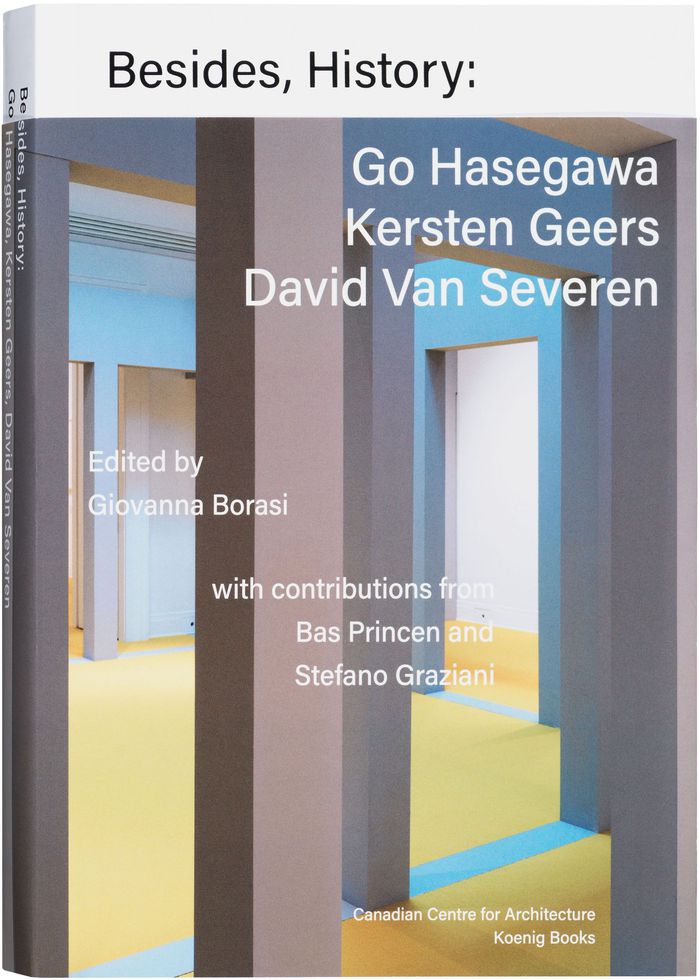
What role can history play in contemporary architecture practice? ''Besides, History: Go Hasegawa, Kersten Geers, David Van Severen'' invites three architects to reread, redraw, translate, and appropriate from the past and from each other in order to construct relationships between and meanings out of a constellation of references. In their conversations, history becomes a tool that can be used in production, rather than just an object of study. The book features newly produced plans, sections, models, and perspectives for projects by Go Hasegawa and OFFICE Kersten Geers David Van Severen, juxtaposed with reference material chosen from the CCA Collection. Introduced and annotated by the architects, these images form a visual manifesto for a unique relationship to history.
Besides, history: Go Hasegawa, Kersten Geers, David Van Severen
Actions:
Prix:
$35.00
(disponible en magasin)
Résumé:
What role can history play in contemporary architecture practice? ''Besides, History: Go Hasegawa, Kersten Geers, David Van Severen'' invites three architects to reread, redraw, translate, and appropriate from the past and from each other in order to construct relationships between and meanings out of a constellation of references. In their conversations, history becomes a tool that can be used in production, rather than just an object of study. The book features newly produced plans, sections, models, and perspectives for projects by Go Hasegawa and OFFICE Kersten Geers David Van Severen, juxtaposed with reference material chosen from the CCA Collection. Introduced and annotated by the architects, these images form a visual manifesto for a unique relationship to history.
Classification:
livres
livres
Publication:
mai 2018
mai 2018
Sujet:
Publications du CCA
Publications du CCA
Classification:
livres
livres
Actions:
Prix:
$34.95
(disponible sur commande)
Résumé:
As models and paradigms, patterns have been helping to orient architects since the Middle Ages. But patterns are also the basis of the history of ornament, an aesthetic phenomenon that links all times and cultures at a fundamental level. Ornament – and hence pattern as well – was abolished by the avant-garde in the first half of the twentieth century, but the notion of(...)
$34.95
(disponible sur commande)
Résumé:
As models and paradigms, patterns have been helping to orient architects since the Middle Ages. But patterns are also the basis of the history of ornament, an aesthetic phenomenon that links all times and cultures at a fundamental level. Ornament – and hence pattern as well – was abolished by the avant-garde in the first half of the twentieth century, but the notion of(...)
Titre:
Pattern: ornament, structure, and behavior
Actions:
Prix:
$34.95
(disponible sur commande)
Résumé:
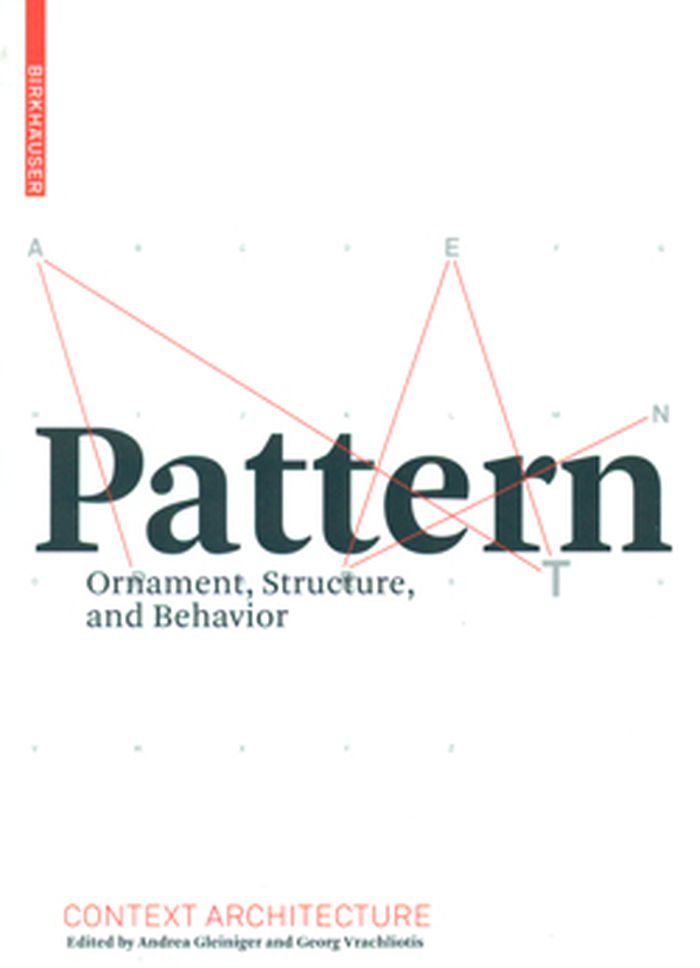
As models and paradigms, patterns have been helping to orient architects since the Middle Ages. But patterns are also the basis of the history of ornament, an aesthetic phenomenon that links all times and cultures at a fundamental level. Ornament – and hence pattern as well – was abolished by the avant-garde in the first half of the twentieth century, but the notion of pattern has taken on new meaning and importance since the 1960s. Today the use of generative computerized methods is opening up new ways of talking about an idea that is becoming increasingly abstract and dynamic. Pattern explores the question: what are the notions of pattern that must be discussed in the context of contemporary architecture?
Pattern: ornament, structure, and behavior
Actions:
Prix:
$34.95
(disponible sur commande)
Résumé:
As models and paradigms, patterns have been helping to orient architects since the Middle Ages. But patterns are also the basis of the history of ornament, an aesthetic phenomenon that links all times and cultures at a fundamental level. Ornament – and hence pattern as well – was abolished by the avant-garde in the first half of the twentieth century, but the notion of pattern has taken on new meaning and importance since the 1960s. Today the use of generative computerized methods is opening up new ways of talking about an idea that is becoming increasingly abstract and dynamic. Pattern explores the question: what are the notions of pattern that must be discussed in the context of contemporary architecture?
Classification:
livres
livres
Publication:
juin 2009
juin 2009
Sujet:
Ornementation
Ornementation
Classification:
livres
livres
Titre:
Rethinking happiness
Rethinking happiness
Actions:
Prix:
$25.00
(disponible en magasin)
Résumé:
The book contains four sample projects for new-style communities. Four stories told through engaging models and drawings suggest the design potential surrounding everyday living. The experience of Rethinking Happiness aims to reset the concept of the urban development model and to start again from scratch, redefining needs, habits and dreams in tune with present day(...)
$25.00
(disponible en magasin)
Résumé:
The book contains four sample projects for new-style communities. Four stories told through engaging models and drawings suggest the design potential surrounding everyday living. The experience of Rethinking Happiness aims to reset the concept of the urban development model and to start again from scratch, redefining needs, habits and dreams in tune with present day(...)
Titre:
Rethinking happiness
Actions:
Prix:
$25.00
(disponible en magasin)
Résumé:
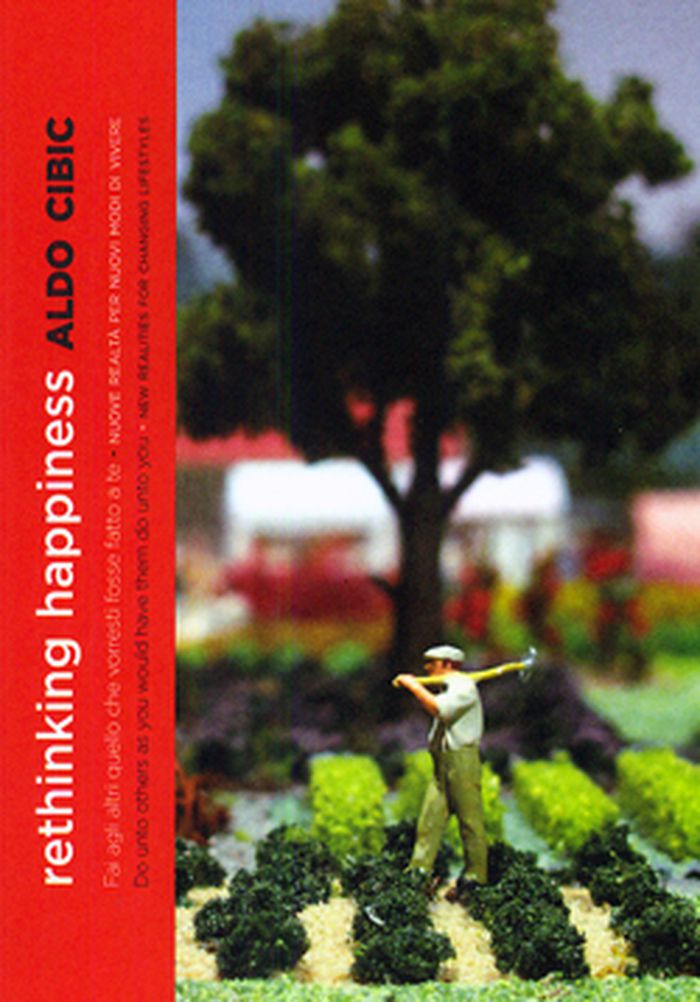
The book contains four sample projects for new-style communities. Four stories told through engaging models and drawings suggest the design potential surrounding everyday living. The experience of Rethinking Happiness aims to reset the concept of the urban development model and to start again from scratch, redefining needs, habits and dreams in tune with present day requirements. In other words, it will be looking at an updated model of contemporary life during a workshop open to economists, sociologists, architects, designers, town planners, landscape designers and simple citizens invited to participate in giving an area a new identity. Rethinking Happiness was part of the 12th International Exhibition of Architecture in Venice curated by Kazuyo Sejima.
Rethinking happiness
Actions:
Prix:
$25.00
(disponible en magasin)
Résumé:
The book contains four sample projects for new-style communities. Four stories told through engaging models and drawings suggest the design potential surrounding everyday living. The experience of Rethinking Happiness aims to reset the concept of the urban development model and to start again from scratch, redefining needs, habits and dreams in tune with present day requirements. In other words, it will be looking at an updated model of contemporary life during a workshop open to economists, sociologists, architects, designers, town planners, landscape designers and simple citizens invited to participate in giving an area a new identity. Rethinking Happiness was part of the 12th International Exhibition of Architecture in Venice curated by Kazuyo Sejima.
Classification:
livres
livres
Publication:
août 2010
août 2010
Sujet:
L'humain et la ville
L'humain et la ville
Classification:
livres
livres
Actions:
Prix:
$59.95
(disponible sur commande)
Résumé:
Giovanni Battista Piranesi (1720-1778) is most known for his terrifyingly original series of etchings of labyrinthine and megalomaniac prisons, Carceri d'Invenzione. In his own day, he was most celebrated for his Vedute, 137 etchings of ancient and modern Rome; so renowned were these startling and dramatic chiaroscuro images, imbued with Piranesi's romantic feeling for(...)
$59.95
(disponible sur commande)
Résumé:
Giovanni Battista Piranesi (1720-1778) is most known for his terrifyingly original series of etchings of labyrinthine and megalomaniac prisons, Carceri d'Invenzione. In his own day, he was most celebrated for his Vedute, 137 etchings of ancient and modern Rome; so renowned were these startling and dramatic chiaroscuro images, imbued with Piranesi's romantic feeling for(...)
Titre:
Piranesi: The complete etchings
Actions:
Prix:
$59.95
(disponible sur commande)
Résumé:
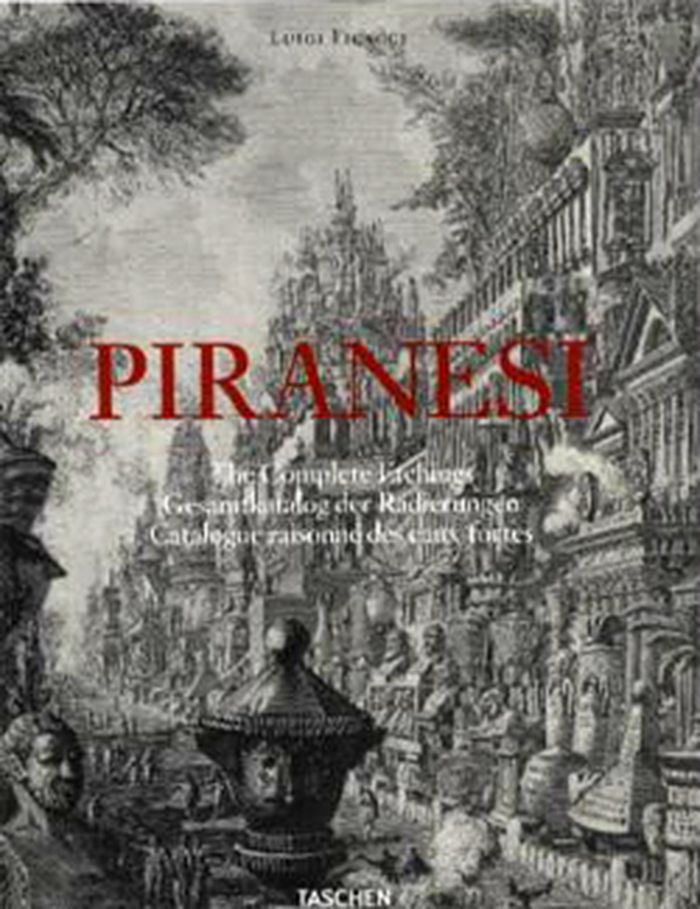
Giovanni Battista Piranesi (1720-1778) is most known for his terrifyingly original series of etchings of labyrinthine and megalomaniac prisons, Carceri d'Invenzione. In his own day, he was most celebrated for his Vedute, 137 etchings of ancient and modern Rome; so renowned were these startling and dramatic chiaroscuro images, imbued with Piranesi's romantic feeling for archaeological ruins, that they formed the mental picture of Rome for generations after. Indeed, Piranesi could be said to have shaped a whole strain of contemporary architecture, as well as the wider visualization of antiquity itself. In our time, he has had a direct influence on writers such as Borges and Kafka and on filmmakers such as Terry Gilliam and Peter Greenaway.
Piranesi: The complete etchings
Actions:
Prix:
$59.95
(disponible sur commande)
Résumé:
Giovanni Battista Piranesi (1720-1778) is most known for his terrifyingly original series of etchings of labyrinthine and megalomaniac prisons, Carceri d'Invenzione. In his own day, he was most celebrated for his Vedute, 137 etchings of ancient and modern Rome; so renowned were these startling and dramatic chiaroscuro images, imbued with Piranesi's romantic feeling for archaeological ruins, that they formed the mental picture of Rome for generations after. Indeed, Piranesi could be said to have shaped a whole strain of contemporary architecture, as well as the wider visualization of antiquity itself. In our time, he has had a direct influence on writers such as Borges and Kafka and on filmmakers such as Terry Gilliam and Peter Greenaway.
Classification:
livres
livres
Publication:
décembre 2011
décembre 2011
Sujet:
Art, époques et styles
Art, époques et styles
Classification:
périodiques
périodiques

Titre:
AA Files 76: Summer 2019
AA Files 76: Summer 2019
Actions:
Prix:
$54.00
(disponible en magasin)
Résumé:
AA Files 76 is structured as a glossary of terms relevant to contemporary debate in architecture. Each entry has been contributed by a different author, and represents a personal position as much as an attempt to frame the topic in a broader context; the issue therefore maps both a landscape of current concerns, interests, and ambitions, and also an overview of diverse(...)
$54.00
(disponible en magasin)
Résumé:
AA Files 76 is structured as a glossary of terms relevant to contemporary debate in architecture. Each entry has been contributed by a different author, and represents a personal position as much as an attempt to frame the topic in a broader context; the issue therefore maps both a landscape of current concerns, interests, and ambitions, and also an overview of diverse(...)
Titre:
AA Files 76: Summer 2019
Actions:
Prix:
$54.00
(disponible en magasin)
Résumé:
AA Files 76 is structured as a glossary of terms relevant to contemporary debate in architecture. Each entry has been contributed by a different author, and represents a personal position as much as an attempt to frame the topic in a broader context; the issue therefore maps both a landscape of current concerns, interests, and ambitions, and also an overview of diverse positions and forms of practice. The authors of this glossary are practitioners, academics, students, lawyers, politicians, activists, and their contributions do not only seek to explore the potential of the themes put forward, but also to question the ways in which we can discuss space - as designers, as scholars, as citizens.
AA Files 76: Summer 2019
Actions:
Prix:
$54.00
(disponible en magasin)
Résumé:
AA Files 76 is structured as a glossary of terms relevant to contemporary debate in architecture. Each entry has been contributed by a different author, and represents a personal position as much as an attempt to frame the topic in a broader context; the issue therefore maps both a landscape of current concerns, interests, and ambitions, and also an overview of diverse positions and forms of practice. The authors of this glossary are practitioners, academics, students, lawyers, politicians, activists, and their contributions do not only seek to explore the potential of the themes put forward, but also to question the ways in which we can discuss space - as designers, as scholars, as citizens.
Classification:
périodiques
périodiques
Publication:
octobre 2019
octobre 2019
Sujet:
Revues
Revues
Classification:
livres
livres
Titre:
Moving through the space of the picture and the page: photobook as artistic, architectural medium
Moving through the space of the picture and the page: photobook as artistic, architectural medium
Actions:
Prix:
$40.00
(disponible sur commande)
Résumé:
This publication brings together essays on six contemporary Belgian photobook makers and the way they deal with space, time, movement and surface within the book and within the photographic image. The artists discussed are Tine Guns, Dirk Braeckman, Els Martens, Max Pinckers, Vincent Delbrouck and Aglaia Konrad. In recent years, the book has firmly established itself as(...)
$40.00
(disponible sur commande)
Résumé:
This publication brings together essays on six contemporary Belgian photobook makers and the way they deal with space, time, movement and surface within the book and within the photographic image. The artists discussed are Tine Guns, Dirk Braeckman, Els Martens, Max Pinckers, Vincent Delbrouck and Aglaia Konrad. In recent years, the book has firmly established itself as(...)
Titre:
Moving through the space of the picture and the page: photobook as artistic, architectural medium
Actions:
Prix:
$40.00
(disponible sur commande)
Résumé:
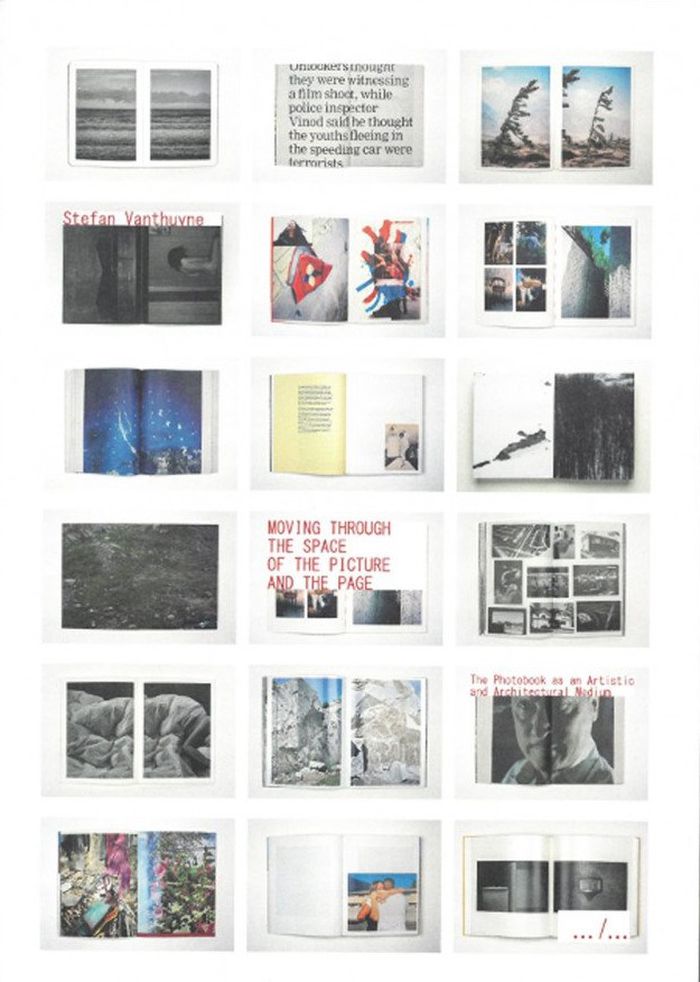
This publication brings together essays on six contemporary Belgian photobook makers and the way they deal with space, time, movement and surface within the book and within the photographic image. The artists discussed are Tine Guns, Dirk Braeckman, Els Martens, Max Pinckers, Vincent Delbrouck and Aglaia Konrad. In recent years, the book has firmly established itself as an artistic medium for photography. Open a photobook today and with any luck you will enter a world full of visual twists and turns. A previously enclosed block suddenly becomes an open volume, and through that volume you can move and navigate. How you do so, through which spaces and at what pace, is largely determined by the book’s architecture.
Moving through the space of the picture and the page: photobook as artistic, architectural medium
Actions:
Prix:
$40.00
(disponible sur commande)
Résumé:
This publication brings together essays on six contemporary Belgian photobook makers and the way they deal with space, time, movement and surface within the book and within the photographic image. The artists discussed are Tine Guns, Dirk Braeckman, Els Martens, Max Pinckers, Vincent Delbrouck and Aglaia Konrad. In recent years, the book has firmly established itself as an artistic medium for photography. Open a photobook today and with any luck you will enter a world full of visual twists and turns. A previously enclosed block suddenly becomes an open volume, and through that volume you can move and navigate. How you do so, through which spaces and at what pace, is largely determined by the book’s architecture.
Classification:
livres
livres
Publication:
septembre 2022
septembre 2022
Sujet:
Théorie de la photographie
Théorie de la photographie


