


12892 Résultats
Classification:
périodiques
périodiques
Actions:
Description:
1 online resource
Auteur:
Sujet:
Publication:
Oxford : Oxford University Press, 1987-, [Abingdon] : Routledge, Taylor & Francis, Cambridge : Cambridge University Press
Oxford : Oxford University Press, 1987-, [Abingdon] : Routledge, Taylor & Francis, Cambridge : Cambridge University Press
Classification:
périodiques
périodiques
Publication:
Oxford : Oxford University Press, 1987-, [Abingdon] : Routledge, Taylor & Francis, Cambridge : Cambridge University Press
Oxford : Oxford University Press, 1987-, [Abingdon] : Routledge, Taylor & Francis, Cambridge : Cambridge University Press
Auteur:
Sujet:
Classification:
périodiques
périodiques
Titre:
Buddhist-Christian studies.
Buddhist-Christian studies.
Actions:
Auteur:
Sujet:
Publication:
Honolulu, Hawaii : East-West Religions Project, University of Hawaii, 1981-
Honolulu, Hawaii : East-West Religions Project, University of Hawaii, 1981-
Classification:
périodiques
périodiques
Publication:
Honolulu, Hawaii : East-West Religions Project, University of Hawaii, 1981-
Honolulu, Hawaii : East-West Religions Project, University of Hawaii, 1981-
Auteur:
Sujet:
Classification:
livres
livres
Actions:
Prix:
$71.95
(disponible sur commande)
Résumé:
Situated at the intersection of architecture, art, public culture, and political theory, ''Socializing architecture'' urges architects and urbanists to intervene in the contested space between public and private interests, to design political and civic processes that mediate top-down and bottom-up urban resources, and to mobilize a new public imagination toward a more(...)
$71.95
(disponible sur commande)
Résumé:
Situated at the intersection of architecture, art, public culture, and political theory, ''Socializing architecture'' urges architects and urbanists to intervene in the contested space between public and private interests, to design political and civic processes that mediate top-down and bottom-up urban resources, and to mobilize a new public imagination toward a more(...)
Publication:
mars 2023
mars 2023
Titre:
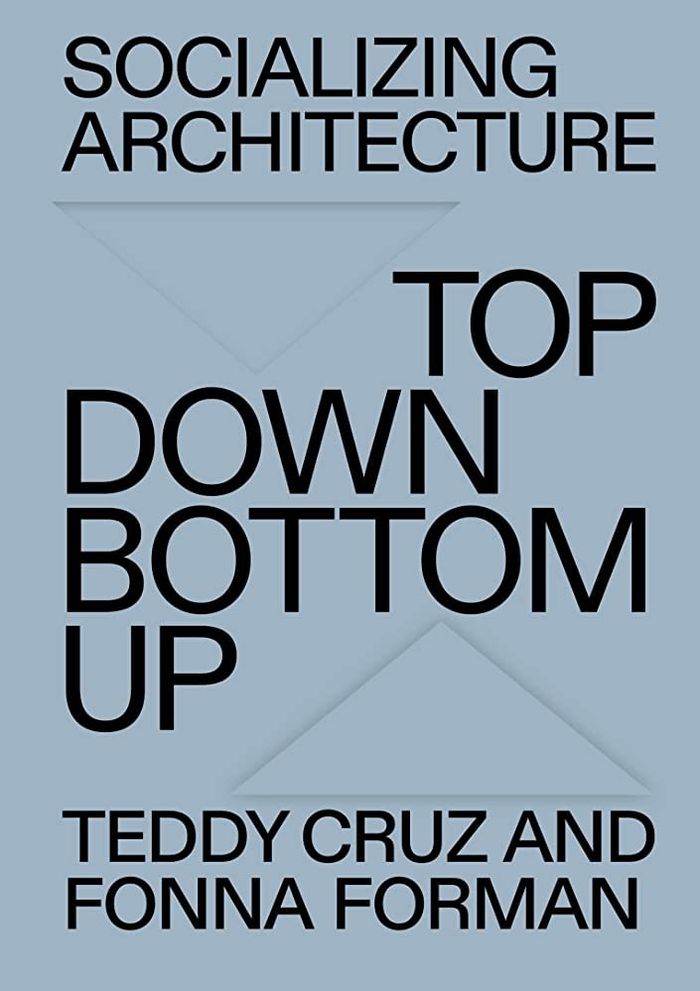
Socializing architecture: Top-down/bottom-up
Actions:
Prix:
$71.95
(disponible sur commande)
Résumé:
Situated at the intersection of architecture, art, public culture, and political theory, ''Socializing architecture'' urges architects and urbanists to intervene in the contested space between public and private interests, to design political and civic processes that mediate top-down and bottom-up urban resources, and to mobilize a new public imagination toward a more just and equitable urbanization. Drawn from decades of lived experience, Teddy Cruz and Fonna Forman engage the San Diego–Tijuana border region as a global laboratory to address the central challenges of urbanization today: deepening social and economic inequality, dramatic migratory shifts, explosive urban informality, climate disruption, the thickening of border walls, and the decline of public thinking. ''Socializing architecture'' follows ''Spatializing justice'' (Cruz and Forman, 2022). It is organized into two main sections—essays and projects—and continues to build a compelling case for architects and urban designers to do more than design buildings and physical systems. Through analysis and diverse case studies, the authors show architects and urbanists how to alter the exclusionary policies that produce public crisis and instead realize new political and economic strategies that advance a more equitable and convivial architecture.
Socializing architecture: Top-down/bottom-up
Actions:
Prix:
$71.95
(disponible sur commande)
Résumé:
Situated at the intersection of architecture, art, public culture, and political theory, ''Socializing architecture'' urges architects and urbanists to intervene in the contested space between public and private interests, to design political and civic processes that mediate top-down and bottom-up urban resources, and to mobilize a new public imagination toward a more just and equitable urbanization. Drawn from decades of lived experience, Teddy Cruz and Fonna Forman engage the San Diego–Tijuana border region as a global laboratory to address the central challenges of urbanization today: deepening social and economic inequality, dramatic migratory shifts, explosive urban informality, climate disruption, the thickening of border walls, and the decline of public thinking. ''Socializing architecture'' follows ''Spatializing justice'' (Cruz and Forman, 2022). It is organized into two main sections—essays and projects—and continues to build a compelling case for architects and urban designers to do more than design buildings and physical systems. Through analysis and diverse case studies, the authors show architects and urbanists how to alter the exclusionary policies that produce public crisis and instead realize new political and economic strategies that advance a more equitable and convivial architecture.
Classification:
livres
livres
Publication:
mars 2023
mars 2023
Classification:
livres
livres
Actions:
Prix:
$29.95
(disponible sur commande)
Résumé:
The ranchers who resettled BC's interior in the late nineteenth and early twentieth centuries depended on grassland for their cattle, but in this they faced some unlikely competition -- from grasshoppers and wild and feral horses. With the help of the government, settlers resolved to rid the range of both. Resettling the Range explores the ecology and history of the(...)
$29.95
(disponible sur commande)
Résumé:
The ranchers who resettled BC's interior in the late nineteenth and early twentieth centuries depended on grassland for their cattle, but in this they faced some unlikely competition -- from grasshoppers and wild and feral horses. With the help of the government, settlers resolved to rid the range of both. Resettling the Range explores the ecology and history of the(...)
Titre:
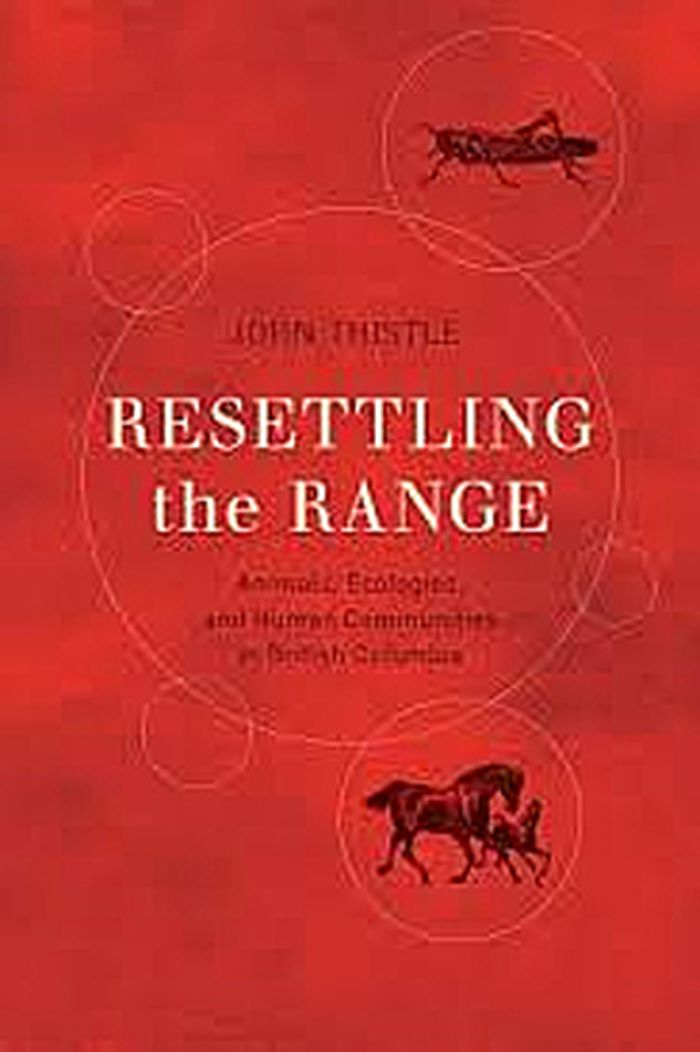
Resettling the range : animals, ecologies, and human communities in British Columbia
Actions:
Prix:
$29.95
(disponible sur commande)
Résumé:
The ranchers who resettled BC's interior in the late nineteenth and early twentieth centuries depended on grassland for their cattle, but in this they faced some unlikely competition -- from grasshoppers and wild and feral horses. With the help of the government, settlers resolved to rid the range of both. Resettling the Range explores the ecology and history of the grassland and the people who lived there by looking closely at these eradication efforts. In the claims of "range improvement" and "rational land use," author John Thistle uncovers more complicated stories of marginalization: the destruction of wild horses worked to dispossess aboriginal people and discredit their claims to land and resources, while the campaign to exterminate grasshoppers exposed long-standing class conflicts and competing versions of resettlement among immigrant ranchers. When settlers and governments separated environmental issues from their social and ecological contexts, they not only made their problems worse in many cases, but also created new ones that no one anticipated. This unconventional history examines the implications for humans and nature alike, in the process revealing a fascinating -- and troubling -- chapter of BC history.
Resettling the range : animals, ecologies, and human communities in British Columbia
Actions:
Prix:
$29.95
(disponible sur commande)
Résumé:
The ranchers who resettled BC's interior in the late nineteenth and early twentieth centuries depended on grassland for their cattle, but in this they faced some unlikely competition -- from grasshoppers and wild and feral horses. With the help of the government, settlers resolved to rid the range of both. Resettling the Range explores the ecology and history of the grassland and the people who lived there by looking closely at these eradication efforts. In the claims of "range improvement" and "rational land use," author John Thistle uncovers more complicated stories of marginalization: the destruction of wild horses worked to dispossess aboriginal people and discredit their claims to land and resources, while the campaign to exterminate grasshoppers exposed long-standing class conflicts and competing versions of resettlement among immigrant ranchers. When settlers and governments separated environmental issues from their social and ecological contexts, they not only made their problems worse in many cases, but also created new ones that no one anticipated. This unconventional history examines the implications for humans and nature alike, in the process revealing a fascinating -- and troubling -- chapter of BC history.
Classification:
livres
livres
Publication:
décembre 2015
décembre 2015
Sujet:
Architecture du Canada
Architecture du Canada
Classification:
livres
livres
Actions:
Prix:
$52.00
(disponible en magasin)
Résumé:
The cradle-to-cradle principle envisions buildings returning to the natural cycle after use. In practice, however, most are only partially composed of natural or compostable materials. One notable exception is Florian Nagler’s Garden House, winner of the Detail Award, which closely follows this principle. Another route is the reuse or refurbishment of components from(...)
$52.00
(disponible en magasin)
Résumé:
The cradle-to-cradle principle envisions buildings returning to the natural cycle after use. In practice, however, most are only partially composed of natural or compostable materials. One notable exception is Florian Nagler’s Garden House, winner of the Detail Award, which closely follows this principle. Another route is the reuse or refurbishment of components from(...)
Titre:
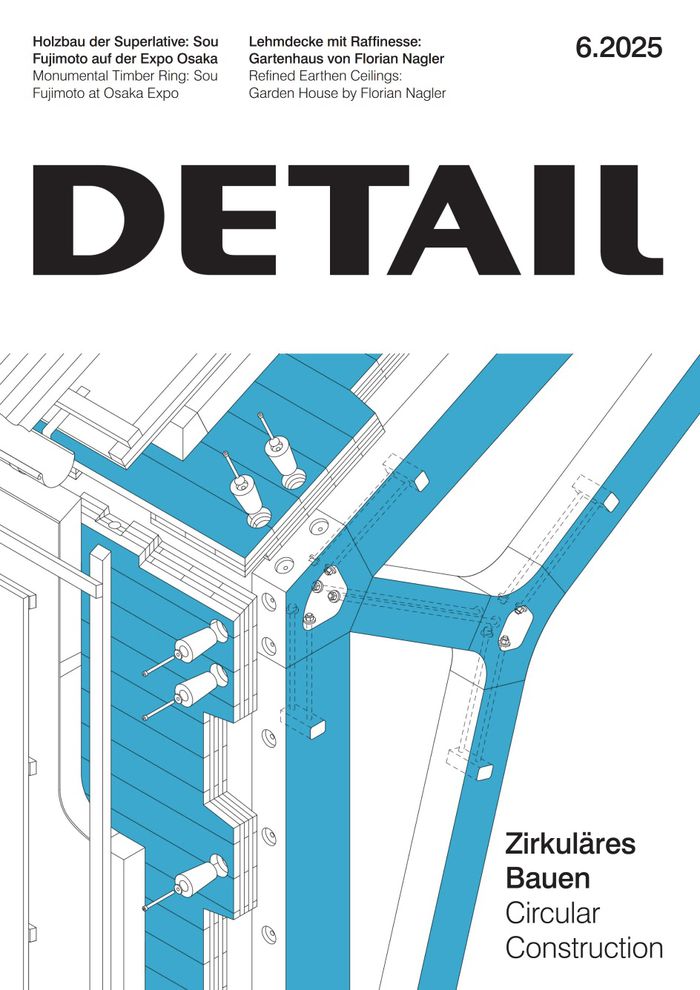
Detail 6 2025 : Circular construction
Actions:
Prix:
$52.00
(disponible en magasin)
Résumé:
The cradle-to-cradle principle envisions buildings returning to the natural cycle after use. In practice, however, most are only partially composed of natural or compostable materials. One notable exception is Florian Nagler’s Garden House, winner of the Detail Award, which closely follows this principle. Another route is the reuse or refurbishment of components from demolished buildings. But this, too, is complex – components are often scarce and costly to extract and and make fit for new applications. To facilitate recycling, some structures are being designed for disassembly. Yet even timber joints fixed with screws can prove difficult to undo after years in place. A research group in Arles sees itself as a recycler of remnants, developing new materials from construction debris and agricultural waste: sunflower stalks become acoustic panels, while rice straw from cultivation is turned into insulation. The team also experiments with local resources: in nearby salt pans, salt crystallises on metal racks to form tiles, while algae are used to make lamps, vases, and wall finishes. Architecture made from rubble, clad in salt, rice, and seaweed – a compelling vision of the future. Perhaps the most promising path lies in combining these diverse strategies.
Detail 6 2025 : Circular construction
Actions:
Prix:
$52.00
(disponible en magasin)
Résumé:
The cradle-to-cradle principle envisions buildings returning to the natural cycle after use. In practice, however, most are only partially composed of natural or compostable materials. One notable exception is Florian Nagler’s Garden House, winner of the Detail Award, which closely follows this principle. Another route is the reuse or refurbishment of components from demolished buildings. But this, too, is complex – components are often scarce and costly to extract and and make fit for new applications. To facilitate recycling, some structures are being designed for disassembly. Yet even timber joints fixed with screws can prove difficult to undo after years in place. A research group in Arles sees itself as a recycler of remnants, developing new materials from construction debris and agricultural waste: sunflower stalks become acoustic panels, while rice straw from cultivation is turned into insulation. The team also experiments with local resources: in nearby salt pans, salt crystallises on metal racks to form tiles, while algae are used to make lamps, vases, and wall finishes. Architecture made from rubble, clad in salt, rice, and seaweed – a compelling vision of the future. Perhaps the most promising path lies in combining these diverse strategies.
Classification:
livres
livres
Publication:
juin 2025
juin 2025
Sujet:
Revues
Revues
Classification:
livres
livres
Prix:
$29.95
(disponible sur commande)
Résumé:
"At the edge" is a rich and evocative call to action at a time when new ideas are urgently needed. Mandatory reading for policy analysts and decision makers in the public, private, and volunteer sectors, it will be equally useful to scholars, teachers, students, and others interested in creating sustainable societies. Throughout the world, biophysical evidence is mounting(...)
$29.95
(disponible sur commande)
Résumé:
"At the edge" is a rich and evocative call to action at a time when new ideas are urgently needed. Mandatory reading for policy analysts and decision makers in the public, private, and volunteer sectors, it will be equally useful to scholars, teachers, students, and others interested in creating sustainable societies. Throughout the world, biophysical evidence is mounting(...)
Titre:
At the edge : sustainable development in the 21st century
Actions:
Prix:
$29.95
(disponible sur commande)
Résumé:
"At the edge" is a rich and evocative call to action at a time when new ideas are urgently needed. Mandatory reading for policy analysts and decision makers in the public, private, and volunteer sectors, it will be equally useful to scholars, teachers, students, and others interested in creating sustainable societies. Throughout the world, biophysical evidence is mounting that human growth and activity patterns are slowly destroying the earth. This ecological deterioration is accompanied by similar social and economic decline, with potentially grave consequences for the continued existence of human societies. Yet, as Ann Dale compassionately argues, it is not too late to take action. Hope lies in sustainable development - the fundamental human imperative of the 21st century. Sustainable development, in Dale's view, is the process of reconciling three imperatives: the ecological, the social, and the economic. Equitable access to resources in all three spheres is fundamental to the global realization of sustainable development. This will not be realized without strong leadership by governments at all levels. Ultimately needed is a new framework for governance based on human responsibility and a recognition of the interconnectedness of human and natural systems.
At the edge : sustainable development in the 21st century
Actions:
Prix:
$29.95
(disponible sur commande)
Résumé:
"At the edge" is a rich and evocative call to action at a time when new ideas are urgently needed. Mandatory reading for policy analysts and decision makers in the public, private, and volunteer sectors, it will be equally useful to scholars, teachers, students, and others interested in creating sustainable societies. Throughout the world, biophysical evidence is mounting that human growth and activity patterns are slowly destroying the earth. This ecological deterioration is accompanied by similar social and economic decline, with potentially grave consequences for the continued existence of human societies. Yet, as Ann Dale compassionately argues, it is not too late to take action. Hope lies in sustainable development - the fundamental human imperative of the 21st century. Sustainable development, in Dale's view, is the process of reconciling three imperatives: the ecological, the social, and the economic. Equitable access to resources in all three spheres is fundamental to the global realization of sustainable development. This will not be realized without strong leadership by governments at all levels. Ultimately needed is a new framework for governance based on human responsibility and a recognition of the interconnectedness of human and natural systems.
Classification:
livres
livres
Publication:
janvier 2001, Vancouver
janvier 2001, Vancouver
Sujet:
Architecture écologique
Architecture écologique
Classification:
livres
livres
Actions:
Prix:
$20.95
(disponible sur commande)
Résumé:
The great Gothic cathedrals of Europe are among the most astonishing achievements of Western culture. Evoking feelings of awe and humility, they make us want to understand what inspired the people who had the audacity to build them. This engrossing book surveys an era that has fired the historical imagination for centuries. In it Robert A. Scott explores why medieval(...)
$20.95
(disponible sur commande)
Résumé:
The great Gothic cathedrals of Europe are among the most astonishing achievements of Western culture. Evoking feelings of awe and humility, they make us want to understand what inspired the people who had the audacity to build them. This engrossing book surveys an era that has fired the historical imagination for centuries. In it Robert A. Scott explores why medieval(...)
Titre:
The Gothic enterprise : a guide to understanding the medieval cathedral
Actions:
Prix:
$20.95
(disponible sur commande)
Résumé:
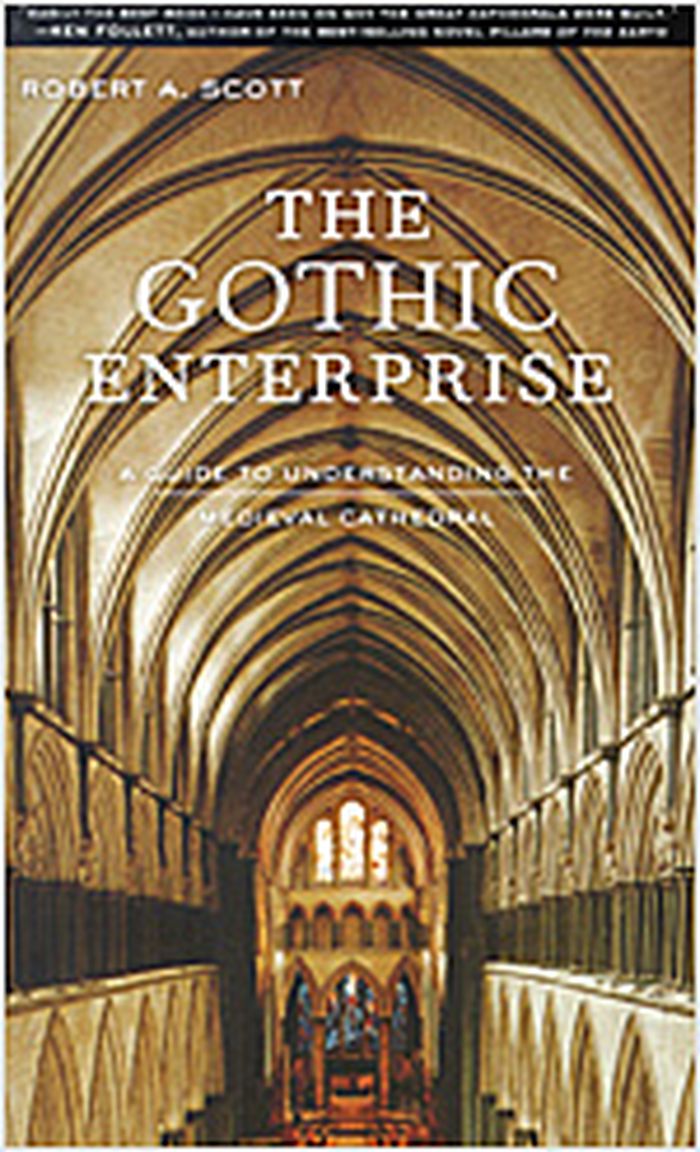
The great Gothic cathedrals of Europe are among the most astonishing achievements of Western culture. Evoking feelings of awe and humility, they make us want to understand what inspired the people who had the audacity to build them. This engrossing book surveys an era that has fired the historical imagination for centuries. In it Robert A. Scott explores why medieval people built Gothic cathedrals, how they built them, what conception of the divine lay behind their creation, and how religious and secular leaders used cathedrals for social and political purposes. While most books about Gothic cathedrals focus on a particular building or on the cathedrals of a specific region, 'The Gothic Enterprise' considers the idea of the cathedral as a humanly created space. Scott discusses why an impoverished people would commit so many social and personal resources to building something so physically stupendous and what this says about their ideas of the sacred, especially the vital role they ascribed to the divine as a protector against the dangers of everyday life. Scott's narrative offers a wealth of fascinating details concerning daily life during medieval times.
The Gothic enterprise : a guide to understanding the medieval cathedral
Actions:
Prix:
$20.95
(disponible sur commande)
Résumé:
The great Gothic cathedrals of Europe are among the most astonishing achievements of Western culture. Evoking feelings of awe and humility, they make us want to understand what inspired the people who had the audacity to build them. This engrossing book surveys an era that has fired the historical imagination for centuries. In it Robert A. Scott explores why medieval people built Gothic cathedrals, how they built them, what conception of the divine lay behind their creation, and how religious and secular leaders used cathedrals for social and political purposes. While most books about Gothic cathedrals focus on a particular building or on the cathedrals of a specific region, 'The Gothic Enterprise' considers the idea of the cathedral as a humanly created space. Scott discusses why an impoverished people would commit so many social and personal resources to building something so physically stupendous and what this says about their ideas of the sacred, especially the vital role they ascribed to the divine as a protector against the dangers of everyday life. Scott's narrative offers a wealth of fascinating details concerning daily life during medieval times.
Classification:
livres
livres
Publication:
janvier 2006, Berkeley
janvier 2006, Berkeley
Sujet:
Histoire jusqu’à 1900
Histoire jusqu’à 1900
Classification:
livres
livres
Prix:
$102.00
(disponible sur commande)
Résumé:
Edward Burtynsky’s imagery explores the intricate link between industry and nature, combining the raw elements of mining, quarrying, shipping, oil production, and recycling into eloquent, highly expressive visions that find beauty and humanity in the most unlikely places. These images are metaphors for the dilemma of our modern existence: we are drawn by desire-the desire(...)
$102.00
(disponible sur commande)
Résumé:
Edward Burtynsky’s imagery explores the intricate link between industry and nature, combining the raw elements of mining, quarrying, shipping, oil production, and recycling into eloquent, highly expressive visions that find beauty and humanity in the most unlikely places. These images are metaphors for the dilemma of our modern existence: we are drawn by desire-the desire(...)
Sujet:
Monographies photo
Monographies photo
Publication:
janvier 2006, Göttingen
janvier 2006, Göttingen
Titre:
Burtynsky - China : the photographs of Edward Burtynsky
Actions:
Prix:
$102.00
(disponible sur commande)
Résumé:
Edward Burtynsky’s imagery explores the intricate link between industry and nature, combining the raw elements of mining, quarrying, shipping, oil production, and recycling into eloquent, highly expressive visions that find beauty and humanity in the most unlikely places. These images are metaphors for the dilemma of our modern existence: we are drawn by desire-the desire to live well and in comfort-yet we all know that the world is suffering to meet those demands. Our dependence on nature to provide the materials for our consumption and our concern for the health of our planet sets us into uneasy contradiction and feeds the dialogue in Burtynsky’s images between attraction and repulsion, seduction and fear. Burtysnky’s latest body of work gives visual form to the industrial and urban transformation of China, a place where industrial forces are gathering on a scale that the world has never experienced before. If the earth’s resources were up to now under siege through western colonialism and technological progress, then China is on the brink of a sweeping assault on the planet’s ecosystem that is only just forming and is nowhere close to expressing its full impact.
Burtynsky - China : the photographs of Edward Burtynsky
Actions:
Prix:
$102.00
(disponible sur commande)
Résumé:
Edward Burtynsky’s imagery explores the intricate link between industry and nature, combining the raw elements of mining, quarrying, shipping, oil production, and recycling into eloquent, highly expressive visions that find beauty and humanity in the most unlikely places. These images are metaphors for the dilemma of our modern existence: we are drawn by desire-the desire to live well and in comfort-yet we all know that the world is suffering to meet those demands. Our dependence on nature to provide the materials for our consumption and our concern for the health of our planet sets us into uneasy contradiction and feeds the dialogue in Burtynsky’s images between attraction and repulsion, seduction and fear. Burtysnky’s latest body of work gives visual form to the industrial and urban transformation of China, a place where industrial forces are gathering on a scale that the world has never experienced before. If the earth’s resources were up to now under siege through western colonialism and technological progress, then China is on the brink of a sweeping assault on the planet’s ecosystem that is only just forming and is nowhere close to expressing its full impact.
Classification:
livres
livres
Publication:
janvier 2006, Göttingen
janvier 2006, Göttingen
Sujet:
Monographies photo
Monographies photo
Classification:
livres
livres
Titre:
Don't build, rebuild
Don't build, rebuild
Actions:
Prix:
$43.95
(disponible sur commande)
Résumé:
As climate change has escalated into a crisis, the reuse of existing structures is the only way to even begin to preserve our wood, sand, silicon, and iron, let alone stop belching carbon monoxide into the air. Our housing crisis means that we need usable buildings now more than ever, but architect and critic Aaron Betsky shows that new construction—often seeking to(...)
$43.95
(disponible sur commande)
Résumé:
As climate change has escalated into a crisis, the reuse of existing structures is the only way to even begin to preserve our wood, sand, silicon, and iron, let alone stop belching carbon monoxide into the air. Our housing crisis means that we need usable buildings now more than ever, but architect and critic Aaron Betsky shows that new construction—often seeking to(...)
Titre:
Don't build, rebuild
Actions:
Prix:
$43.95
(disponible sur commande)
Résumé:
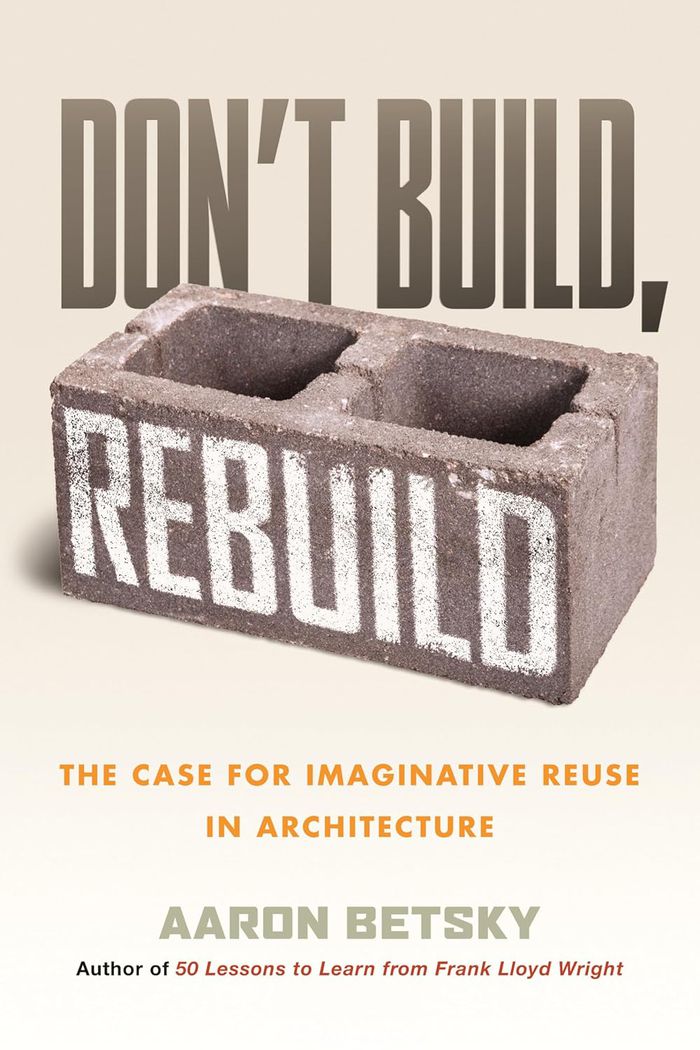
As climate change has escalated into a crisis, the reuse of existing structures is the only way to even begin to preserve our wood, sand, silicon, and iron, let alone stop belching carbon monoxide into the air. Our housing crisis means that we need usable buildings now more than ever, but architect and critic Aaron Betsky shows that new construction—often seeking to maximize profits rather than resources, often soulless in its feel—is not the answer. Whenever possible, it is better to repair, recycle, renovate, and reuse—not only from an environmental perspective, but culturally and artistically as well. Architectural reuse is as old as civilization itself. In the streets of Europe, you can find fragments from the Roman Empire. More recently, marginalized communities from New York to Detroit—queer people looking for places to gather or cruise, punks looking to make loud music, artists and displaced people looking for space to work and live—have taken over industrial spaces created then abandoned by capitalism, forging a unique style in the process. Their methods—from urban mining to dumpster diving—now inform architects transforming old structures today.
Don't build, rebuild
Actions:
Prix:
$43.95
(disponible sur commande)
Résumé:
As climate change has escalated into a crisis, the reuse of existing structures is the only way to even begin to preserve our wood, sand, silicon, and iron, let alone stop belching carbon monoxide into the air. Our housing crisis means that we need usable buildings now more than ever, but architect and critic Aaron Betsky shows that new construction—often seeking to maximize profits rather than resources, often soulless in its feel—is not the answer. Whenever possible, it is better to repair, recycle, renovate, and reuse—not only from an environmental perspective, but culturally and artistically as well. Architectural reuse is as old as civilization itself. In the streets of Europe, you can find fragments from the Roman Empire. More recently, marginalized communities from New York to Detroit—queer people looking for places to gather or cruise, punks looking to make loud music, artists and displaced people looking for space to work and live—have taken over industrial spaces created then abandoned by capitalism, forging a unique style in the process. Their methods—from urban mining to dumpster diving—now inform architects transforming old structures today.
Classification:
livres
livres
Publication:
novembre 2024
novembre 2024
Sujet:
Théorie de l’architecture
Théorie de l’architecture
Classification:
livres
livres
Actions:
Prix:
$77.50
(disponible sur commande)
Résumé:
In the very near future energy-efficient building will cease to be the exception but will be the rule. Whether insulating glazing, multifunctional facades or organic solar cells, there have been important new developments in the areas of solar thermal technology, photovoltaics, heating and ventilation technology which can make a significant contribution to the(...)
$77.50
(disponible sur commande)
Résumé:
In the very near future energy-efficient building will cease to be the exception but will be the rule. Whether insulating glazing, multifunctional facades or organic solar cells, there have been important new developments in the areas of solar thermal technology, photovoltaics, heating and ventilation technology which can make a significant contribution to the(...)
Titre:
In detail : solar architecture
Actions:
Prix:
$77.50
(disponible sur commande)
Résumé:
In the very near future energy-efficient building will cease to be the exception but will be the rule. Whether insulating glazing, multifunctional facades or organic solar cells, there have been important new developments in the areas of solar thermal technology, photovoltaics, heating and ventilation technology which can make a significant contribution to the conservation of natural resources in sustainable building. They are suitable for a wide range of uses from large-scale urban-planning projects, to individual single family houses. This publication contains carefully selected articles which cover such essential topics as passive and active systems, the development of new insulating materials, and concepts for entire residential estates. They take into consideration all areas of solar building, providing information on planning methods and techniques which will enable the user to assess and apply the individual measures correctly. The essays are complemented by a selection of examples which demonstrate the technical and creative possibilities in realized projects. Solar energy can be successfully used in all kinds of projects – single family housing, office buildings, industrial buildings, and residential concepts, and this volume presents innovative solutions with full plans and large scale details, revealing the significance of an integral planning process.
In detail : solar architecture
Actions:
Prix:
$77.50
(disponible sur commande)
Résumé:
In the very near future energy-efficient building will cease to be the exception but will be the rule. Whether insulating glazing, multifunctional facades or organic solar cells, there have been important new developments in the areas of solar thermal technology, photovoltaics, heating and ventilation technology which can make a significant contribution to the conservation of natural resources in sustainable building. They are suitable for a wide range of uses from large-scale urban-planning projects, to individual single family houses. This publication contains carefully selected articles which cover such essential topics as passive and active systems, the development of new insulating materials, and concepts for entire residential estates. They take into consideration all areas of solar building, providing information on planning methods and techniques which will enable the user to assess and apply the individual measures correctly. The essays are complemented by a selection of examples which demonstrate the technical and creative possibilities in realized projects. Solar energy can be successfully used in all kinds of projects – single family housing, office buildings, industrial buildings, and residential concepts, and this volume presents innovative solutions with full plans and large scale details, revealing the significance of an integral planning process.
Classification:
livres
livres
Publication:
décembre 2003, Basel
décembre 2003, Basel
Sujet:
Architecture écologique
Architecture écologique


