


7451 Résultats
Classification:
livres
livres
Prix:
$49.00
(disponible en magasin)
Résumé:
Il est maintenant possible de contrôler la structure de la matière à des échelles de taille si petites que les systèmes obtenus révèlent des propriétés hors du commun s'apparentant de plus en plus au vivant auquel ils sont parfois même hybridés. Dans ce monde en continuelle mouvance révélé par cette matière émergente, nos repères vacillent et il nous faut repenser(...)
$49.00
(disponible en magasin)
Résumé:
Il est maintenant possible de contrôler la structure de la matière à des échelles de taille si petites que les systèmes obtenus révèlent des propriétés hors du commun s'apparentant de plus en plus au vivant auquel ils sont parfois même hybridés. Dans ce monde en continuelle mouvance révélé par cette matière émergente, nos repères vacillent et il nous faut repenser(...)
Publication:
avril 2016
avril 2016
Titre:
L’image-matière: matériaux émergents et métamorphoses imaginaires
Actions:
Prix:
$49.00
(disponible en magasin)
Résumé:
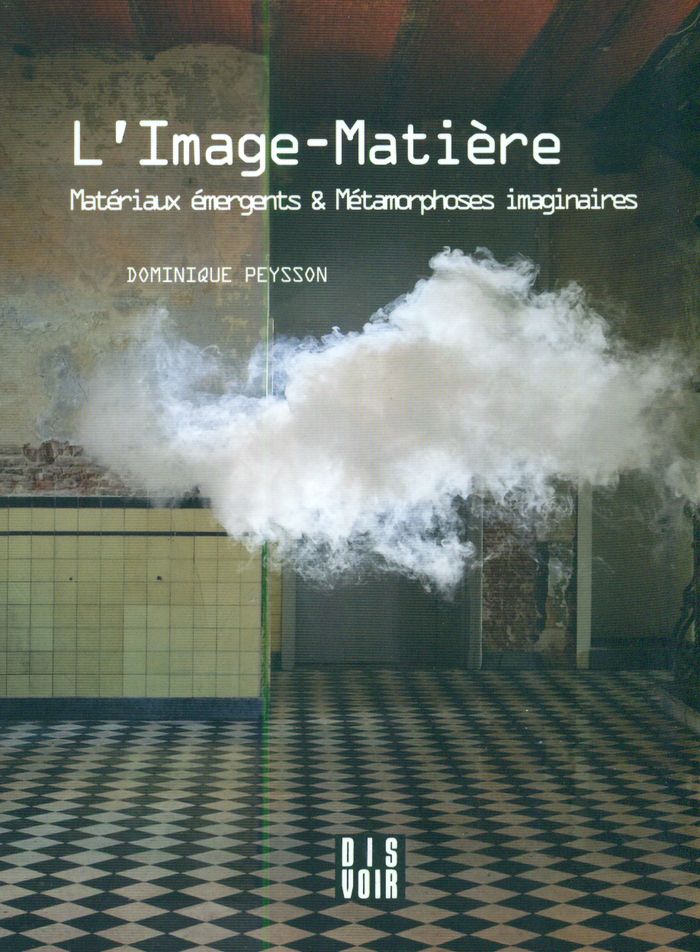
Il est maintenant possible de contrôler la structure de la matière à des échelles de taille si petites que les systèmes obtenus révèlent des propriétés hors du commun s'apparentant de plus en plus au vivant auquel ils sont parfois même hybridés. Dans ce monde en continuelle mouvance révélé par cette matière émergente, nos repères vacillent et il nous faut repenser autrement notre appréhension du réel. Or, les images dont nous disposons pour nous saisir mentalement de ces transformations sont devenues inopérantes. Elles sont à redessiner, à mettre en relation, à assembler autrement. C'est en ces lieux que l'art contemporain peut venir jouer son rôle d'intercesseur entre la matière-forme et ses mises en pratique, entre la méta-réalité de l'oeuvre et notre capacité à penser ces nouvelles émergences. Proposer des image-matières pour nous aider à métamorphoser notre imaginaire, tel est le but de cet essai.
L’image-matière: matériaux émergents et métamorphoses imaginaires
Actions:
Prix:
$49.00
(disponible en magasin)
Résumé:
Il est maintenant possible de contrôler la structure de la matière à des échelles de taille si petites que les systèmes obtenus révèlent des propriétés hors du commun s'apparentant de plus en plus au vivant auquel ils sont parfois même hybridés. Dans ce monde en continuelle mouvance révélé par cette matière émergente, nos repères vacillent et il nous faut repenser autrement notre appréhension du réel. Or, les images dont nous disposons pour nous saisir mentalement de ces transformations sont devenues inopérantes. Elles sont à redessiner, à mettre en relation, à assembler autrement. C'est en ces lieux que l'art contemporain peut venir jouer son rôle d'intercesseur entre la matière-forme et ses mises en pratique, entre la méta-réalité de l'oeuvre et notre capacité à penser ces nouvelles émergences. Proposer des image-matières pour nous aider à métamorphoser notre imaginaire, tel est le but de cet essai.
Classification:
livres
livres
Publication:
avril 2016
avril 2016
Classification:
livres
livres
Actions:
Prix:
$82.95
(disponible en magasin)
Résumé:
Hyperbody, initiated by Kas Oosterhuis and headquartered at the Delft University of Technology, is a think tank on new ways of designing and creating non standard and interactive architecture. This huge book is the first time Hyperbody has published it collaborative projects and experiments within the real world of design and construction. The designers of the paradigm(...)
$82.95
(disponible en magasin)
Résumé:
Hyperbody, initiated by Kas Oosterhuis and headquartered at the Delft University of Technology, is a think tank on new ways of designing and creating non standard and interactive architecture. This huge book is the first time Hyperbody has published it collaborative projects and experiments within the real world of design and construction. The designers of the paradigm(...)
Publication:
octobre 2011
octobre 2011
Titre:
Hyperbody : first decade of interactive architecture
Actions:
Prix:
$82.95
(disponible en magasin)
Résumé:
Hyperbody, initiated by Kas Oosterhuis and headquartered at the Delft University of Technology, is a think tank on new ways of designing and creating non standard and interactive architecture. This huge book is the first time Hyperbody has published it collaborative projects and experiments within the real world of design and construction. The designers of the paradigm changing MCAT system of architectural software, Hyperbody continues to play with software design and futurism, creating a broad and influential new dialog. This collection of writings looks at new software tools for real time interaction and parametric design and application of new production techniques file to factory production and mass customization, among other projects, applying cutting edge design methods and theories.
Hyperbody : first decade of interactive architecture
Actions:
Prix:
$82.95
(disponible en magasin)
Résumé:
Hyperbody, initiated by Kas Oosterhuis and headquartered at the Delft University of Technology, is a think tank on new ways of designing and creating non standard and interactive architecture. This huge book is the first time Hyperbody has published it collaborative projects and experiments within the real world of design and construction. The designers of the paradigm changing MCAT system of architectural software, Hyperbody continues to play with software design and futurism, creating a broad and influential new dialog. This collection of writings looks at new software tools for real time interaction and parametric design and application of new production techniques file to factory production and mass customization, among other projects, applying cutting edge design methods and theories.
Classification:
livres
livres
Publication:
octobre 2011
octobre 2011
Classification:
livres
livres
Actions:
Prix:
$24.95
(disponible sur commande)
Résumé:
Entertaining, concise, and relentlessly probing, this book is a comprehensive introduction to a new type of city, an increasingly important system of virtual spaces interconnected by the information superhighway.
$24.95
(disponible sur commande)
Résumé:
Entertaining, concise, and relentlessly probing, this book is a comprehensive introduction to a new type of city, an increasingly important system of virtual spaces interconnected by the information superhighway.
Publication:
septembre 1996, Cambridge, Mass.
septembre 1996, Cambridge, Mass.
Titre:
City of bits : space, place, and the infobahn
Actions:
Prix:
$24.95
(disponible sur commande)
Résumé:
Entertaining, concise, and relentlessly probing, this book is a comprehensive introduction to a new type of city, an increasingly important system of virtual spaces interconnected by the information superhighway.
City of bits : space, place, and the infobahn
Actions:
Prix:
$24.95
(disponible sur commande)
Résumé:
Entertaining, concise, and relentlessly probing, this book is a comprehensive introduction to a new type of city, an increasingly important system of virtual spaces interconnected by the information superhighway.
Classification:
livres
livres
Publication:
septembre 1996, Cambridge, Mass.
septembre 1996, Cambridge, Mass.
Classification:
livres
livres
Actions:
Prix:
$35.95
(disponible sur commande)
Résumé:
The last decade has witnessed a proliferation of artists whose primary medium is software. Algorithmic processes, harnessed through the medium of computer code, allow artists to generate increasingly complex visual forms that they otherwise might not have been able to imagine, let alone delineate. Form+Code in Design, Art, and Architecture is a non-technical introduction(...)
$35.95
(disponible sur commande)
Résumé:
The last decade has witnessed a proliferation of artists whose primary medium is software. Algorithmic processes, harnessed through the medium of computer code, allow artists to generate increasingly complex visual forms that they otherwise might not have been able to imagine, let alone delineate. Form+Code in Design, Art, and Architecture is a non-technical introduction(...)
Publication:
août 2010
août 2010
Titre:
Form + code in design, art, and architecture
Actions:
Prix:
$35.95
(disponible sur commande)
Résumé:
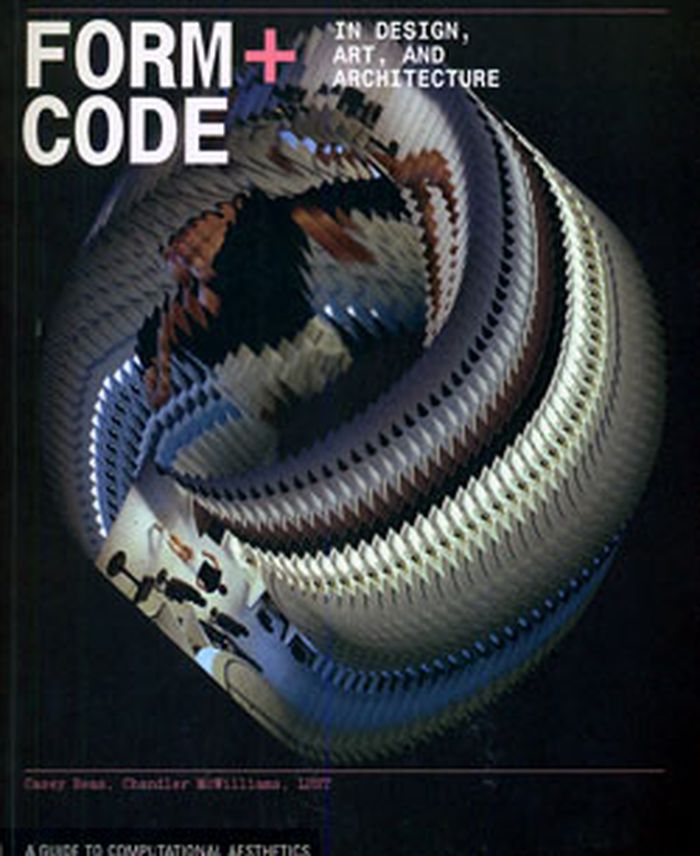
The last decade has witnessed a proliferation of artists whose primary medium is software. Algorithmic processes, harnessed through the medium of computer code, allow artists to generate increasingly complex visual forms that they otherwise might not have been able to imagine, let alone delineate. Form+Code in Design, Art, and Architecture is a non-technical introduction to the history, theory, and practice of software in the arts.
Form + code in design, art, and architecture
Actions:
Prix:
$35.95
(disponible sur commande)
Résumé:
The last decade has witnessed a proliferation of artists whose primary medium is software. Algorithmic processes, harnessed through the medium of computer code, allow artists to generate increasingly complex visual forms that they otherwise might not have been able to imagine, let alone delineate. Form+Code in Design, Art, and Architecture is a non-technical introduction to the history, theory, and practice of software in the arts.
Classification:
livres
livres
Publication:
août 2010
août 2010
Classification:
livres
livres
Actions:
Prix:
$23.95
(disponible sur commande)
Résumé:
Les nouvelles technologies recomposent le monde selon leur propre logique, celle de la performance et de l’efficacité. Elles renforcent le règne de la compétition et l’exigence d’aller toujours plus vite, de se mobiliser intégralement pour son entreprise et sur les « réseaux sociaux », d’être capable de s’adapter à toutes les évolutions technoculturelles, sous peine(...)
$23.95
(disponible sur commande)
Résumé:
Les nouvelles technologies recomposent le monde selon leur propre logique, celle de la performance et de l’efficacité. Elles renforcent le règne de la compétition et l’exigence d’aller toujours plus vite, de se mobiliser intégralement pour son entreprise et sur les « réseaux sociaux », d’être capable de s’adapter à toutes les évolutions technoculturelles, sous peine(...)
Publication:
octobre 2014
octobre 2014
Titre:
L'empire du numérique: comment internet et les nouvelles technologies ont colonisé nos vies
Actions:
Prix:
$23.95
(disponible sur commande)
Résumé:
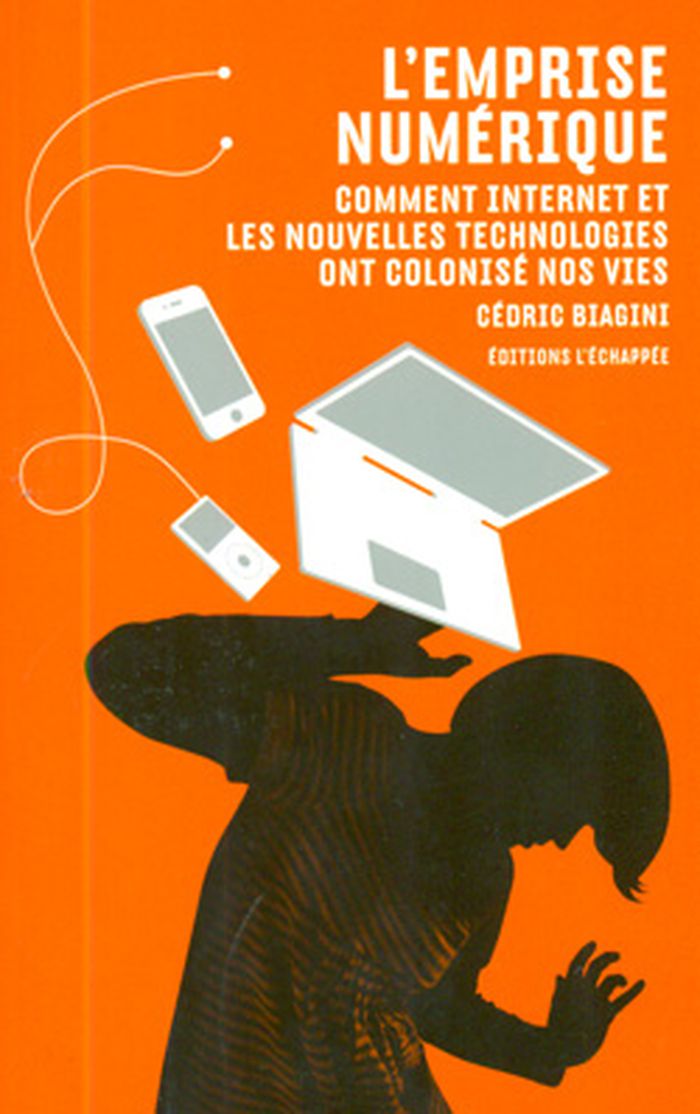
Les nouvelles technologies recomposent le monde selon leur propre logique, celle de la performance et de l’efficacité. Elles renforcent le règne de la compétition et l’exigence d’aller toujours plus vite, de se mobiliser intégralement pour son entreprise et sur les « réseaux sociaux », d’être capable de s’adapter à toutes les évolutions technoculturelles, sous peine d’être exclu. L’Homme numérique croit avoir trouvé l’autonomie en se débarrassant des pesanteurs du vieux monde matériel. « Enfin libre! », dit-il, alors qu’au contraire, il dépend de plus en plus de dispositifs technoscientifiques. Pour rester dans la course et tenter de maîtriser un réel qui lui échappe, il multiplie les machines. Mais ce sont elles qui désormais le possèdent.
L'empire du numérique: comment internet et les nouvelles technologies ont colonisé nos vies
Actions:
Prix:
$23.95
(disponible sur commande)
Résumé:
Les nouvelles technologies recomposent le monde selon leur propre logique, celle de la performance et de l’efficacité. Elles renforcent le règne de la compétition et l’exigence d’aller toujours plus vite, de se mobiliser intégralement pour son entreprise et sur les « réseaux sociaux », d’être capable de s’adapter à toutes les évolutions technoculturelles, sous peine d’être exclu. L’Homme numérique croit avoir trouvé l’autonomie en se débarrassant des pesanteurs du vieux monde matériel. « Enfin libre! », dit-il, alors qu’au contraire, il dépend de plus en plus de dispositifs technoscientifiques. Pour rester dans la course et tenter de maîtriser un réel qui lui échappe, il multiplie les machines. Mais ce sont elles qui désormais le possèdent.
Classification:
livres
livres
Publication:
octobre 2014
octobre 2014
Classification:
livres
livres
Actions:
Prix:
$21.95
(disponible sur commande)
Résumé:
Les nouvelles technologies, en dématérialisant les activités humaines, permettraient de réduire l’impact de la croissance sur la biosphère, voire, pour les plus enthousiastes, pourraient résoudre la crise environnementale. Dans ce travail précis et informé, les auteurs montrent l’impact environnemental réel du numérique en s’appuyant sur de nombreuses études. Ils(...)
$21.95
(disponible sur commande)
Résumé:
Les nouvelles technologies, en dématérialisant les activités humaines, permettraient de réduire l’impact de la croissance sur la biosphère, voire, pour les plus enthousiastes, pourraient résoudre la crise environnementale. Dans ce travail précis et informé, les auteurs montrent l’impact environnemental réel du numérique en s’appuyant sur de nombreuses études. Ils(...)
Titre:
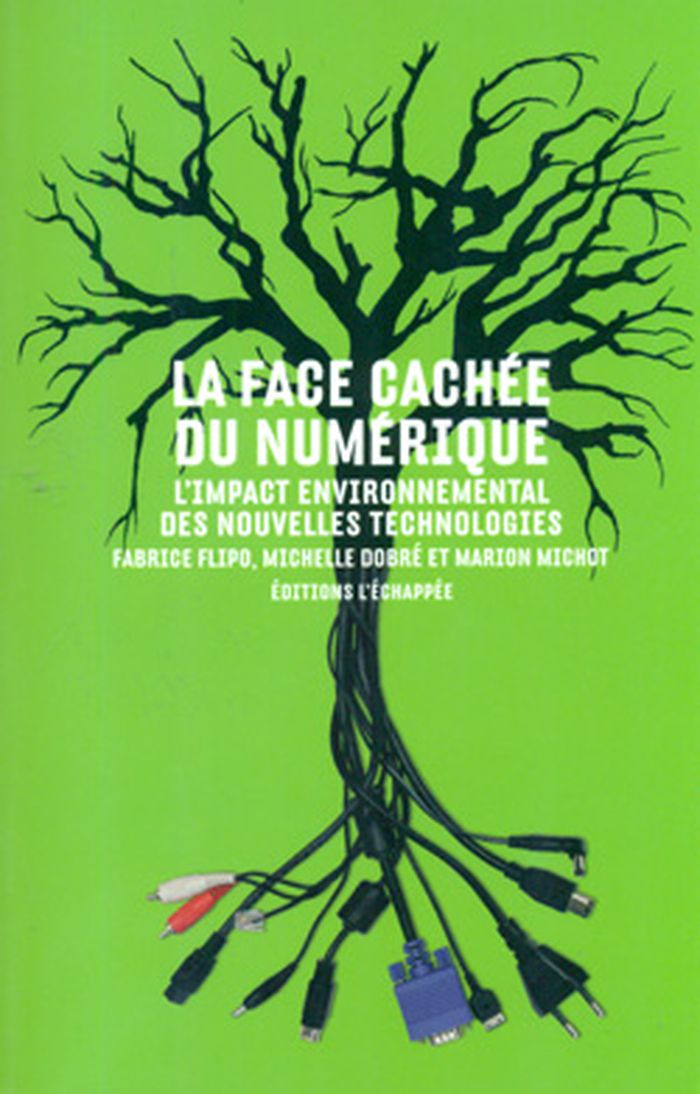
La face cachée du numérique: l'impact environnemental des nouvelles technologies
Actions:
Prix:
$21.95
(disponible sur commande)
Résumé:
Les nouvelles technologies, en dématérialisant les activités humaines, permettraient de réduire l’impact de la croissance sur la biosphère, voire, pour les plus enthousiastes, pourraient résoudre la crise environnementale. Dans ce travail précis et informé, les auteurs montrent l’impact environnemental réel du numérique en s’appuyant sur de nombreuses études. Ils démontent de manière implacable le mythe d’une nouvelle économie propre et écologique.
La face cachée du numérique: l'impact environnemental des nouvelles technologies
Actions:
Prix:
$21.95
(disponible sur commande)
Résumé:
Les nouvelles technologies, en dématérialisant les activités humaines, permettraient de réduire l’impact de la croissance sur la biosphère, voire, pour les plus enthousiastes, pourraient résoudre la crise environnementale. Dans ce travail précis et informé, les auteurs montrent l’impact environnemental réel du numérique en s’appuyant sur de nombreuses études. Ils démontent de manière implacable le mythe d’une nouvelle économie propre et écologique.
Classification:
livres
livres
Publication:
octobre 2014
octobre 2014
Classification:
livres
livres
Titre:
L'humain augmenté
L'humain augmenté
Actions:
Prix:
$14.95
(disponible sur commande)
Résumé:
Si l’humain augmenté est le dernier avatar de l’utopie technique, il exacerbe la vision purement informationnelle de l’homme et de son rapport à l’autre. Lorsqu’on parle d’humain augmenté, on sous-entend en général un individu plus fort, plus intelligent, à la longévité plus longue, etc. Autrement dit, on pense à une augmentation de ses capacités. Dès lors, l’individu se(...)
$14.95
(disponible sur commande)
Résumé:
Si l’humain augmenté est le dernier avatar de l’utopie technique, il exacerbe la vision purement informationnelle de l’homme et de son rapport à l’autre. Lorsqu’on parle d’humain augmenté, on sous-entend en général un individu plus fort, plus intelligent, à la longévité plus longue, etc. Autrement dit, on pense à une augmentation de ses capacités. Dès lors, l’individu se(...)
Publication:
octobre 2014
octobre 2014
Titre:
L'humain augmenté
Actions:
Prix:
$14.95
(disponible sur commande)
Résumé:
Si l’humain augmenté est le dernier avatar de l’utopie technique, il exacerbe la vision purement informationnelle de l’homme et de son rapport à l’autre. Lorsqu’on parle d’humain augmenté, on sous-entend en général un individu plus fort, plus intelligent, à la longévité plus longue, etc. Autrement dit, on pense à une augmentation de ses capacités. Dès lors, l’individu se trouve réduit à un ensemble de fonctions motrices, cognitives, etc. L’altérité disparaît. Il n’y a plus de rupture entre l’homme et la machine, la pensée elle-même étant conceptualisée comme une propriété émergente des interactions au sein d’un substrat matériel biologique ou électronique.
L'humain augmenté
Actions:
Prix:
$14.95
(disponible sur commande)
Résumé:
Si l’humain augmenté est le dernier avatar de l’utopie technique, il exacerbe la vision purement informationnelle de l’homme et de son rapport à l’autre. Lorsqu’on parle d’humain augmenté, on sous-entend en général un individu plus fort, plus intelligent, à la longévité plus longue, etc. Autrement dit, on pense à une augmentation de ses capacités. Dès lors, l’individu se trouve réduit à un ensemble de fonctions motrices, cognitives, etc. L’altérité disparaît. Il n’y a plus de rupture entre l’homme et la machine, la pensée elle-même étant conceptualisée comme une propriété émergente des interactions au sein d’un substrat matériel biologique ou électronique.
Classification:
livres
livres
Publication:
octobre 2014
octobre 2014
Classification:
livres
livres
Titre:
Interface
Interface
Actions:
Prix:
$41.95
(disponible sur commande)
Résumé:
In this book, Branden Hookway considers the interface not as technology but as a form of relationship with technology. The interface, Hookway proposes, is at once ubiquitous and hidden from view. It is both the bottleneck through which our relationship to technology must pass and a productive encounter embedded within the use of technology. It is a site of contestation --(...)
$41.95
(disponible sur commande)
Résumé:
In this book, Branden Hookway considers the interface not as technology but as a form of relationship with technology. The interface, Hookway proposes, is at once ubiquitous and hidden from view. It is both the bottleneck through which our relationship to technology must pass and a productive encounter embedded within the use of technology. It is a site of contestation --(...)
Publication:
avril 2014
avril 2014
Titre:
Interface
Actions:
Prix:
$41.95
(disponible sur commande)
Résumé:
In this book, Branden Hookway considers the interface not as technology but as a form of relationship with technology. The interface, Hookway proposes, is at once ubiquitous and hidden from view. It is both the bottleneck through which our relationship to technology must pass and a productive encounter embedded within the use of technology. It is a site of contestation -- between human and machine, between the material and the social, between the political and the technological -- that both defines and elides differences.
Interface
Actions:
Prix:
$41.95
(disponible sur commande)
Résumé:
In this book, Branden Hookway considers the interface not as technology but as a form of relationship with technology. The interface, Hookway proposes, is at once ubiquitous and hidden from view. It is both the bottleneck through which our relationship to technology must pass and a productive encounter embedded within the use of technology. It is a site of contestation -- between human and machine, between the material and the social, between the political and the technological -- that both defines and elides differences.
Classification:
livres
livres
Publication:
avril 2014
avril 2014
Classification:
livres
livres
Actions:
Prix:
$38.00
(disponible sur commande)
Résumé:
L'une des premières analyses à la fois historiques et théoriques de l'impact de l'avènement du numérique sur toutes formes de productions culturelles, Le langage des nouveaux médias constitue un ouvrage de référence sur le sujet. Fondateur de la discipline des software studies, Manovich y propose une analyse systématique et rigoureuse des mécanismes culturels engendrés(...)
$38.00
(disponible sur commande)
Résumé:
L'une des premières analyses à la fois historiques et théoriques de l'impact de l'avènement du numérique sur toutes formes de productions culturelles, Le langage des nouveaux médias constitue un ouvrage de référence sur le sujet. Fondateur de la discipline des software studies, Manovich y propose une analyse systématique et rigoureuse des mécanismes culturels engendrés(...)
Titre:
Le langage des nouveaux médias
Actions:
Prix:
$38.00
(disponible sur commande)
Résumé:
L'une des premières analyses à la fois historiques et théoriques de l'impact de l'avènement du numérique sur toutes formes de productions culturelles, Le langage des nouveaux médias constitue un ouvrage de référence sur le sujet. Fondateur de la discipline des software studies, Manovich y propose une analyse systématique et rigoureuse des mécanismes culturels engendrés par la généralisation de l'informatique, au travers de l'étude de nombreuses œuvres d'art, des avant-gardes historiques aux productions les plus récentes faisant appel aux technologies numériques.
Le langage des nouveaux médias
Actions:
Prix:
$38.00
(disponible sur commande)
Résumé:
L'une des premières analyses à la fois historiques et théoriques de l'impact de l'avènement du numérique sur toutes formes de productions culturelles, Le langage des nouveaux médias constitue un ouvrage de référence sur le sujet. Fondateur de la discipline des software studies, Manovich y propose une analyse systématique et rigoureuse des mécanismes culturels engendrés par la généralisation de l'informatique, au travers de l'étude de nombreuses œuvres d'art, des avant-gardes historiques aux productions les plus récentes faisant appel aux technologies numériques.
Classification:
livres
livres
Publication:
août 2014
août 2014
Classification:
livres
livres
Prix:
$38.95
(disponible sur commande)
Résumé:
Le Séminaire de Conception Architecturale Numérique (SCAN) est une conférence francophone qui rassemble des chercheurs autour de questionnements portant sur les implications du numérique en conception architecturale. Après avoir rassemblé ces chercheurs en 2005, 2007, 2009 et 2010 sur les thèmes de l'esquisse numérique, de l’image numérique, des approches(...)
$38.95
(disponible sur commande)
Résumé:
Le Séminaire de Conception Architecturale Numérique (SCAN) est une conférence francophone qui rassemble des chercheurs autour de questionnements portant sur les implications du numérique en conception architecturale. Après avoir rassemblé ces chercheurs en 2005, 2007, 2009 et 2010 sur les thèmes de l'esquisse numérique, de l’image numérique, des approches(...)
Publication:
janvier 2013
janvier 2013
Titre:
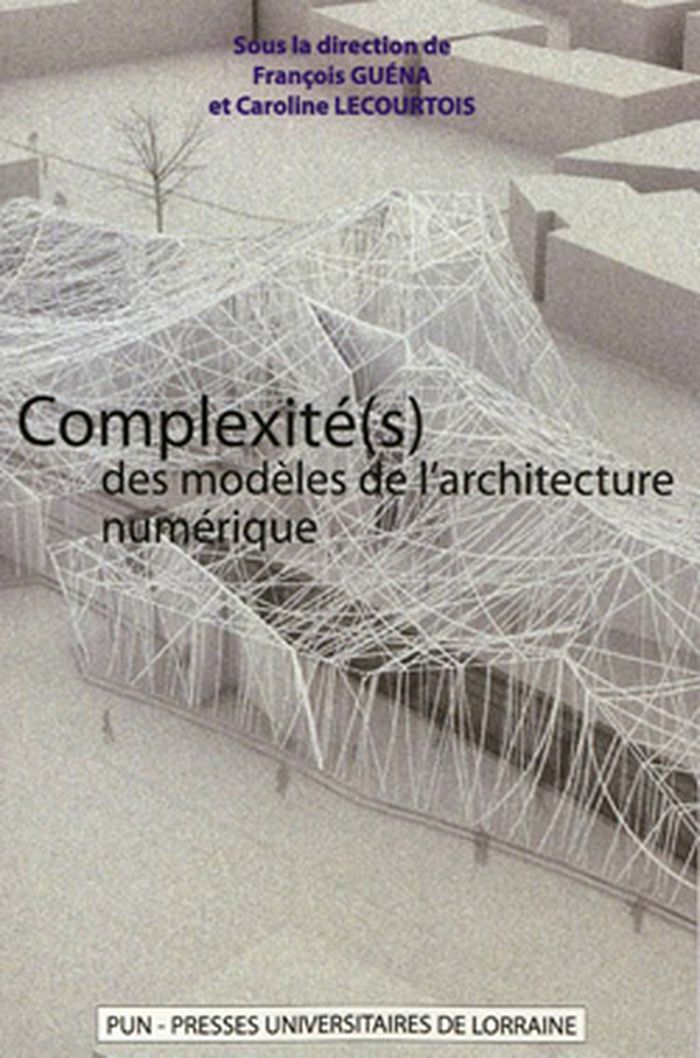
Complexité(s) des modèles de l'architecture numérique
Actions:
Prix:
$38.95
(disponible sur commande)
Résumé:
Le Séminaire de Conception Architecturale Numérique (SCAN) est une conférence francophone qui rassemble des chercheurs autour de questionnements portant sur les implications du numérique en conception architecturale. Après avoir rassemblé ces chercheurs en 2005, 2007, 2009 et 2010 sur les thèmes de l'esquisse numérique, de l’image numérique, des approches environnementales et des espaces collaboratifs, SCAN’12 invite à réfléchir à la question des complexité(s) des modèles de l’architecture numérique.
Complexité(s) des modèles de l'architecture numérique
Actions:
Prix:
$38.95
(disponible sur commande)
Résumé:
Le Séminaire de Conception Architecturale Numérique (SCAN) est une conférence francophone qui rassemble des chercheurs autour de questionnements portant sur les implications du numérique en conception architecturale. Après avoir rassemblé ces chercheurs en 2005, 2007, 2009 et 2010 sur les thèmes de l'esquisse numérique, de l’image numérique, des approches environnementales et des espaces collaboratifs, SCAN’12 invite à réfléchir à la question des complexité(s) des modèles de l’architecture numérique.
Classification:
livres
livres
Publication:
janvier 2013
janvier 2013


