


6923 Résultats
Classification:
livres
livres
Actions:
Prix:
$34.99
(disponible sur commande)
Résumé:
Nothing is harder to do these days than nothing. But in a world where our value is determined by our 24/7 data productivity, doing nothing may be our most important form of resistance. So argues artist and critic Jenny Odell in this field guide to doing nothing (at least as capitalism defines it). Odell sees our attention as the most precious—and overdrawn—resource we(...)
$34.99
(disponible sur commande)
Résumé:
Nothing is harder to do these days than nothing. But in a world where our value is determined by our 24/7 data productivity, doing nothing may be our most important form of resistance. So argues artist and critic Jenny Odell in this field guide to doing nothing (at least as capitalism defines it). Odell sees our attention as the most precious—and overdrawn—resource we(...)
Titre:
How to do nothing: resisting the attention economy
Actions:
Prix:
$34.99
(disponible sur commande)
Résumé:
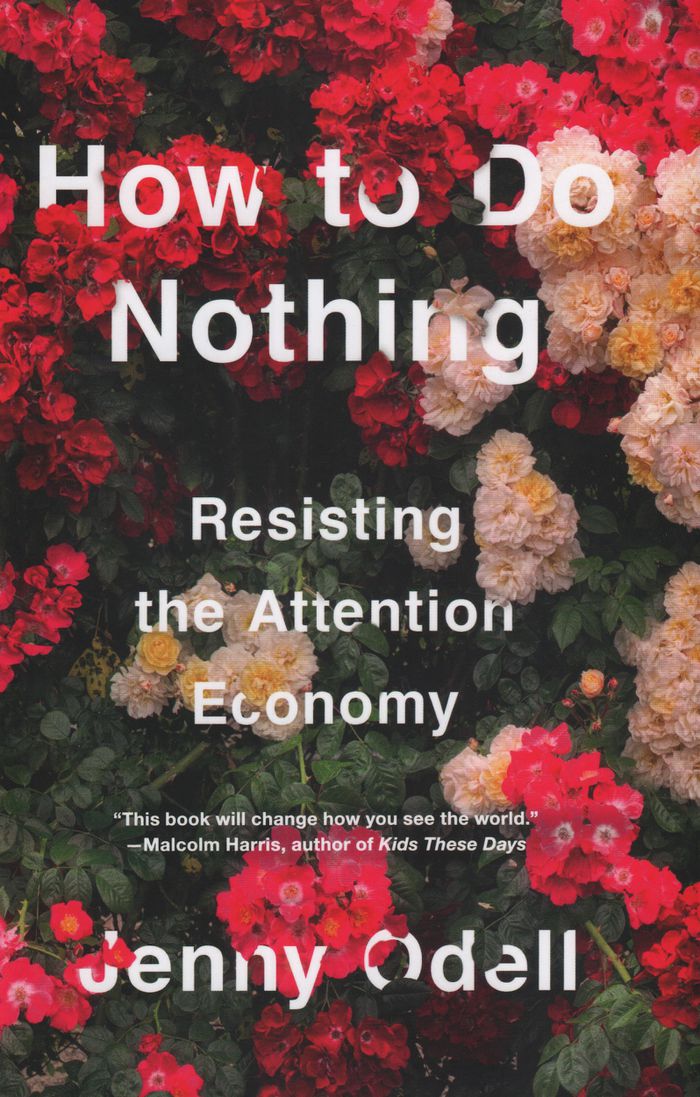
Nothing is harder to do these days than nothing. But in a world where our value is determined by our 24/7 data productivity, doing nothing may be our most important form of resistance. So argues artist and critic Jenny Odell in this field guide to doing nothing (at least as capitalism defines it). Odell sees our attention as the most precious—and overdrawn—resource we have. Once we can start paying a new kind of attention, she writes, we can undertake bolder forms of political action, reimagine humankind’s role in the environment, and arrive at more meaningful understandings of happiness and progress. Far from the simple anti-technology screed, or the back-to-nature meditation we read so often, ''How to do nothing'' is an action plan for thinking outside of capitalist narratives of efficiency and techno-determinism.
How to do nothing: resisting the attention economy
Actions:
Prix:
$34.99
(disponible sur commande)
Résumé:
Nothing is harder to do these days than nothing. But in a world where our value is determined by our 24/7 data productivity, doing nothing may be our most important form of resistance. So argues artist and critic Jenny Odell in this field guide to doing nothing (at least as capitalism defines it). Odell sees our attention as the most precious—and overdrawn—resource we have. Once we can start paying a new kind of attention, she writes, we can undertake bolder forms of political action, reimagine humankind’s role in the environment, and arrive at more meaningful understandings of happiness and progress. Far from the simple anti-technology screed, or the back-to-nature meditation we read so often, ''How to do nothing'' is an action plan for thinking outside of capitalist narratives of efficiency and techno-determinism.
Classification:
livres
livres
Publication:
avril 2019
avril 2019
Sujet:
Théorie/ philosophie
Théorie/ philosophie
Classification:
livres
livres
Actions:
Prix:
$39.95
(disponible sur commande)
Résumé:
Beyond a design school, the Harvard Graduate School of Design (GSD) is an immersive environment — a dense atmosphere saturated with creative and intellectual activity. Platform 4 represents a selective sampling of agendas cultivated at the GSD during the last academic year, revealing a diverse mixture of projects, research, and events. Organized as a searchable database,(...)
$39.95
(disponible sur commande)
Résumé:
Beyond a design school, the Harvard Graduate School of Design (GSD) is an immersive environment — a dense atmosphere saturated with creative and intellectual activity. Platform 4 represents a selective sampling of agendas cultivated at the GSD during the last academic year, revealing a diverse mixture of projects, research, and events. Organized as a searchable database,(...)
Titre:
GSD Platform 4 : a year of reseach through studio work, theses, lectures, exhibitions, and events at the Harvard University Graduate School of Design
Actions:
Prix:
$39.95
(disponible sur commande)
Résumé:
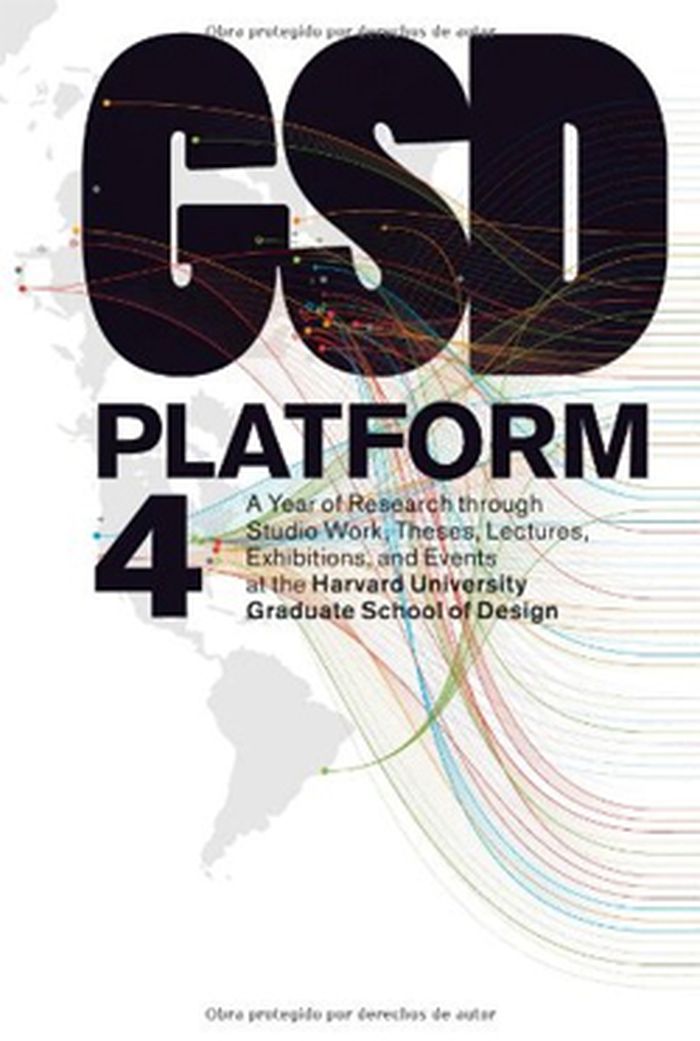
Beyond a design school, the Harvard Graduate School of Design (GSD) is an immersive environment — a dense atmosphere saturated with creative and intellectual activity. Platform 4 represents a selective sampling of agendas cultivated at the GSD during the last academic year, revealing a diverse mixture of projects, research, and events. Organized as a searchable database, this publication documents both site and situation at the GSD—it is an institutional index. While Platform 4 records research trajectories from the past year, it also has the capacity to set agendas for future work. By framing a set of issues and topics, Platform 4 focuses attention towards particular areas of interest, allowing individual work to build on and contribute to a larger body of disciplinary knowledge. In that sense, the themes within this book become projective, they provide frameworks for future inquiry.
GSD Platform 4 : a year of reseach through studio work, theses, lectures, exhibitions, and events at the Harvard University Graduate School of Design
Actions:
Prix:
$39.95
(disponible sur commande)
Résumé:
Beyond a design school, the Harvard Graduate School of Design (GSD) is an immersive environment — a dense atmosphere saturated with creative and intellectual activity. Platform 4 represents a selective sampling of agendas cultivated at the GSD during the last academic year, revealing a diverse mixture of projects, research, and events. Organized as a searchable database, this publication documents both site and situation at the GSD—it is an institutional index. While Platform 4 records research trajectories from the past year, it also has the capacity to set agendas for future work. By framing a set of issues and topics, Platform 4 focuses attention towards particular areas of interest, allowing individual work to build on and contribute to a larger body of disciplinary knowledge. In that sense, the themes within this book become projective, they provide frameworks for future inquiry.
Classification:
livres
livres
Publication:
février 2012
février 2012
Sujet:
Architecture contemporaine
Architecture contemporaine
Classification:
livres
livres
Titre:
Millau Viaduct
Millau Viaduct
Actions:
Prix:
$32.95
(disponible sur commande)
Résumé:
This book follows the evolution of Millau Viaduct in southern France from first sketches through to completion, as designed and executed by Foster + Partners, with engineer Michel Virlogeux. Spanning the spectacular gorge of the River Tarn in Southern France, the Millau Viaduct provides a critical link in the A75 autoroute between Clermont-Ferrand and Beziers.(...)
$32.95
(disponible sur commande)
Résumé:
This book follows the evolution of Millau Viaduct in southern France from first sketches through to completion, as designed and executed by Foster + Partners, with engineer Michel Virlogeux. Spanning the spectacular gorge of the River Tarn in Southern France, the Millau Viaduct provides a critical link in the A75 autoroute between Clermont-Ferrand and Beziers.(...)
Titre:
Millau Viaduct
Actions:
Prix:
$32.95
(disponible sur commande)
Résumé:
This book follows the evolution of Millau Viaduct in southern France from first sketches through to completion, as designed and executed by Foster + Partners, with engineer Michel Virlogeux. Spanning the spectacular gorge of the River Tarn in Southern France, the Millau Viaduct provides a critical link in the A75 autoroute between Clermont-Ferrand and Beziers. Commissioned by the French state, the 2.46 km-long viaduct resolves numerous structural and design challenges in an elegant cable-stayed form. Utilising optimised, repetitive spans with piers taller than the Eiffel Tower at their zenith, the bridge is structurally and visually elegant. Not only does it exemplify technical excellence, the Millau Viaduct illustrates the powerful impact that architecture of infrastructure can have on the environment. This monograph will appeal to those interested in architecture and design; equally, it illustrates a significant engineering feat.
Millau Viaduct
Actions:
Prix:
$32.95
(disponible sur commande)
Résumé:
This book follows the evolution of Millau Viaduct in southern France from first sketches through to completion, as designed and executed by Foster + Partners, with engineer Michel Virlogeux. Spanning the spectacular gorge of the River Tarn in Southern France, the Millau Viaduct provides a critical link in the A75 autoroute between Clermont-Ferrand and Beziers. Commissioned by the French state, the 2.46 km-long viaduct resolves numerous structural and design challenges in an elegant cable-stayed form. Utilising optimised, repetitive spans with piers taller than the Eiffel Tower at their zenith, the bridge is structurally and visually elegant. Not only does it exemplify technical excellence, the Millau Viaduct illustrates the powerful impact that architecture of infrastructure can have on the environment. This monograph will appeal to those interested in architecture and design; equally, it illustrates a significant engineering feat.
Classification:
livres
livres
Publication:
juin 2012
juin 2012
Sujet:
Architecture, monographies
Architecture, monographies
Classification:
livres
livres
Prix:
$35.00
(disponible sur commande)
Résumé:
Lafayette Park, an affordable middle-class residential area in downtown Detroit, is home to the largest collection of buildings designed by Ludwig Mies van der Rohe in the world. Today, it is one of Detroit’s most racially integrated and economically stable neighborhoods, although it is surrounded by evidence of a city in financial distress. Through interviews with and(...)
$35.00
(disponible sur commande)
Résumé:
Lafayette Park, an affordable middle-class residential area in downtown Detroit, is home to the largest collection of buildings designed by Ludwig Mies van der Rohe in the world. Today, it is one of Detroit’s most racially integrated and economically stable neighborhoods, although it is surrounded by evidence of a city in financial distress. Through interviews with and(...)
Titre:
Thanks for the view Mr. Mies: Lafayette Park, Detroit
Actions:
Prix:
$35.00
(disponible sur commande)
Résumé:
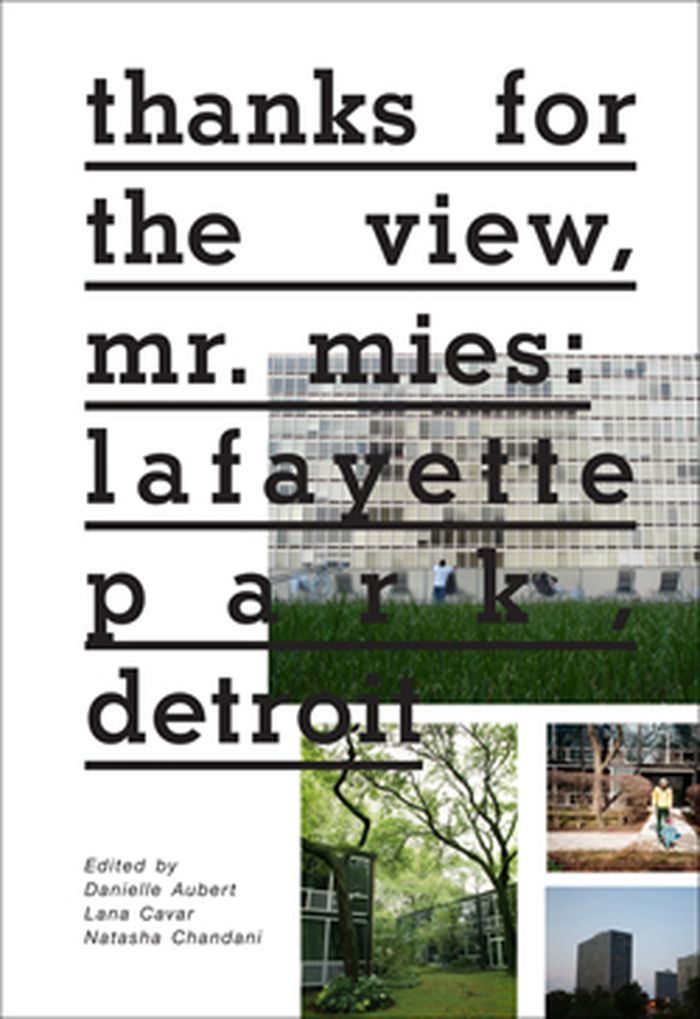
Lafayette Park, an affordable middle-class residential area in downtown Detroit, is home to the largest collection of buildings designed by Ludwig Mies van der Rohe in the world. Today, it is one of Detroit’s most racially integrated and economically stable neighborhoods, although it is surrounded by evidence of a city in financial distress. Through interviews with and essays by residents; reproductions of archival material; and new photographs by Karin Jobst, Vasco Roma, and Corine Vermeulen, and previously unpublished photographs by documentary filmmaker Janine Debanné, Thanks for the View, Mr. Mies examines the way that Lafayette Park residents confront and interact with this unique modernist environment. While there are many publications about abandoned buildings in Detroit and about the city’s prosperous past, this book is about a remarkable part of the city as it exists today, in the twenty-first century.
Thanks for the view Mr. Mies: Lafayette Park, Detroit
Actions:
Prix:
$35.00
(disponible sur commande)
Résumé:
Lafayette Park, an affordable middle-class residential area in downtown Detroit, is home to the largest collection of buildings designed by Ludwig Mies van der Rohe in the world. Today, it is one of Detroit’s most racially integrated and economically stable neighborhoods, although it is surrounded by evidence of a city in financial distress. Through interviews with and essays by residents; reproductions of archival material; and new photographs by Karin Jobst, Vasco Roma, and Corine Vermeulen, and previously unpublished photographs by documentary filmmaker Janine Debanné, Thanks for the View, Mr. Mies examines the way that Lafayette Park residents confront and interact with this unique modernist environment. While there are many publications about abandoned buildings in Detroit and about the city’s prosperous past, this book is about a remarkable part of the city as it exists today, in the twenty-first century.
Classification:
livres
livres
Publication:
octobre 2012
octobre 2012
Sujet:
Architecture, monographies
Architecture, monographies
Classification:
livres
livres
Actions:
Prix:
$39.95
(disponible sur commande)
Résumé:
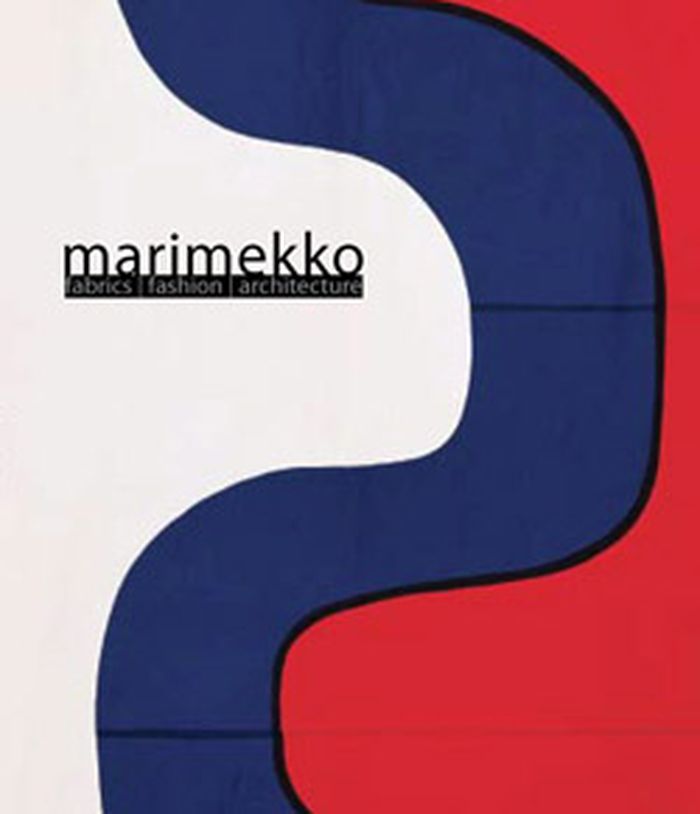
Founded in 1951 by visionary textile designer Armi Ratia and her husband, Viljo, the Marimekko Corporation in Finland not only sparked a revolution in pattern making but also pioneered a new definition of fashion that embraced the entire home environment. This book presents more than one hundred examples of the exuberant Marimekko fashions and home furnishings that gave(...)
$39.95
(disponible sur commande)
Résumé:
Founded in 1951 by visionary textile designer Armi Ratia and her husband, Viljo, the Marimekko Corporation in Finland not only sparked a revolution in pattern making but also pioneered a new definition of fashion that embraced the entire home environment. This book presents more than one hundred examples of the exuberant Marimekko fashions and home furnishings that gave(...)
Titre:
Marimekko : fabrics / fashion / architecture
Actions:
Prix:
$39.95
(disponible sur commande)
Résumé:
Founded in 1951 by visionary textile designer Armi Ratia and her husband, Viljo, the Marimekko Corporation in Finland not only sparked a revolution in pattern making but also pioneered a new definition of fashion that embraced the entire home environment. This book presents more than one hundred examples of the exuberant Marimekko fashions and home furnishings that gave the company a definitive presence on the world design stage. The book considers the history of the company from its founding through today and examines Marimekko’s impact on design in Finland and around the world. The company’s most important designers, including Maija Isola and Vuokko Eskolin-Nurmesniemi, their contributions, and their stylistic development are also discussed. In addition, the book examines Marimekko home and office interiors and how they reflected the lifestyle envisioned in Armi Ratia’s broad, radical definition of fashion.
Marimekko : fabrics / fashion / architecture
Actions:
Prix:
$39.95
(disponible sur commande)
Résumé:
Founded in 1951 by visionary textile designer Armi Ratia and her husband, Viljo, the Marimekko Corporation in Finland not only sparked a revolution in pattern making but also pioneered a new definition of fashion that embraced the entire home environment. This book presents more than one hundred examples of the exuberant Marimekko fashions and home furnishings that gave the company a definitive presence on the world design stage. The book considers the history of the company from its founding through today and examines Marimekko’s impact on design in Finland and around the world. The company’s most important designers, including Maija Isola and Vuokko Eskolin-Nurmesniemi, their contributions, and their stylistic development are also discussed. In addition, the book examines Marimekko home and office interiors and how they reflected the lifestyle envisioned in Armi Ratia’s broad, radical definition of fashion.
Classification:
livres
livres
Publication:
septembre 2012
septembre 2012
Sujet:
Création de mode
Création de mode
Classification:
livres
livres
Prix:
$55.00
(disponible sur commande)
Résumé:
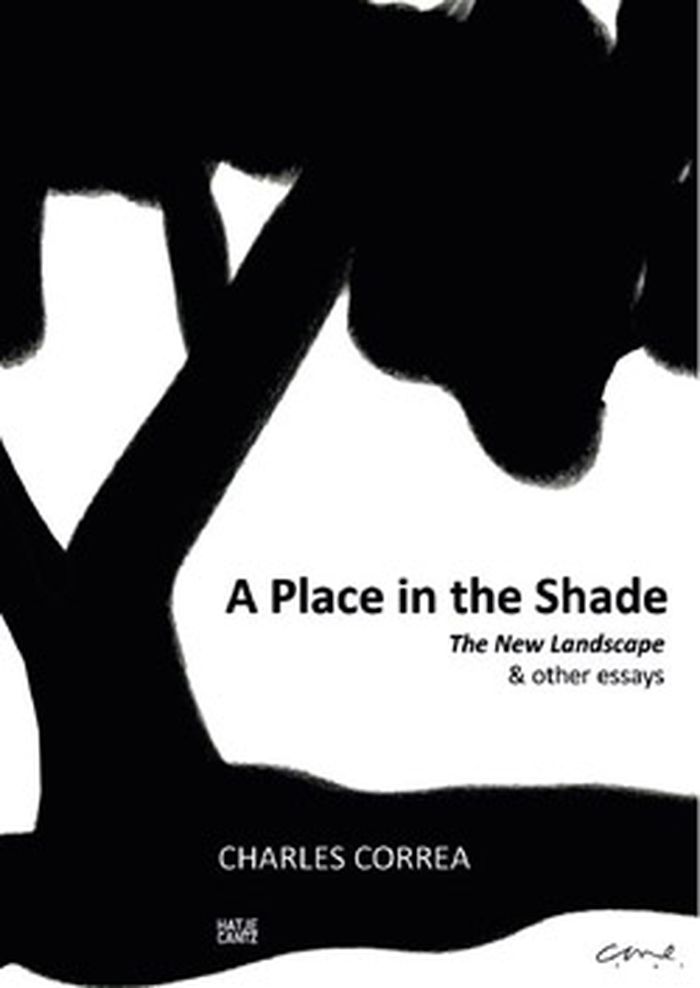
Charles Correa’s A Place in the Shade explores architectural and urban issues in India, from the house as a machine for dealing with the country’s often hostile climate to the metaphysical role of architecture as a “model of the cosmos.” This provocative and eminently readable collection of essays argues that the country’s habitat must respond to the overriding parameters(...)
$55.00
(disponible sur commande)
Résumé:
Charles Correa’s A Place in the Shade explores architectural and urban issues in India, from the house as a machine for dealing with the country’s often hostile climate to the metaphysical role of architecture as a “model of the cosmos.” This provocative and eminently readable collection of essays argues that the country’s habitat must respond to the overriding parameters(...)
Titre:
A place in the shade : the new landscape & other essays
Actions:
Prix:
$55.00
(disponible sur commande)
Résumé:
Charles Correa’s A Place in the Shade explores architectural and urban issues in India, from the house as a machine for dealing with the country’s often hostile climate to the metaphysical role of architecture as a “model of the cosmos.” This provocative and eminently readable collection of essays argues that the country’s habitat must respond to the overriding parameters of climate, culture and financial resources, and that our physical environment should accommodate both diversity and synergy. Over the last few decades, urban real estate has become the primary source of financing for political parties and the politicians who run them, and as Correa acknowledges, “you cannot look at cities without wandering into architecture on the one hand and politics on the other.” This book identifies the defining issues of the urbanization trends that are so rapidly transforming India.
A place in the shade : the new landscape & other essays
Actions:
Prix:
$55.00
(disponible sur commande)
Résumé:
Charles Correa’s A Place in the Shade explores architectural and urban issues in India, from the house as a machine for dealing with the country’s often hostile climate to the metaphysical role of architecture as a “model of the cosmos.” This provocative and eminently readable collection of essays argues that the country’s habitat must respond to the overriding parameters of climate, culture and financial resources, and that our physical environment should accommodate both diversity and synergy. Over the last few decades, urban real estate has become the primary source of financing for political parties and the politicians who run them, and as Correa acknowledges, “you cannot look at cities without wandering into architecture on the one hand and politics on the other.” This book identifies the defining issues of the urbanization trends that are so rapidly transforming India.
Classification:
livres
livres
Publication:
septembre 2012
septembre 2012
Sujet:
Théorie du paysage
Théorie du paysage
Classification:
livres
livres
Titre:
Building for dementia
Building for dementia
Actions:
Prix:
$45.00
(disponible sur commande)
Résumé:
As a consequence of demographic change, it is increasingly necessary now and in the future for the architectural profession to rethink the design of residential solutions for aging people and especially those with dementia. With advancing age we are increasingly dependent on a spatial environment that not only has a positive effect on us, but also supports our everyday(...)
$45.00
(disponible sur commande)
Résumé:
As a consequence of demographic change, it is increasingly necessary now and in the future for the architectural profession to rethink the design of residential solutions for aging people and especially those with dementia. With advancing age we are increasingly dependent on a spatial environment that not only has a positive effect on us, but also supports our everyday(...)
Titre:
Building for dementia
Actions:
Prix:
$45.00
(disponible sur commande)
Résumé:
As a consequence of demographic change, it is increasingly necessary now and in the future for the architectural profession to rethink the design of residential solutions for aging people and especially those with dementia. With advancing age we are increasingly dependent on a spatial environment that not only has a positive effect on us, but also supports our everyday activities and takes age-related restrictions into account. A focal point of the new requirements is multisensory architecture: color and lighting design, sound design, tactile materials and surfaces, and haptically attractive forms, creating a spatial atmosphere in which the resident feels comfortable, providing security and orientation and fostering motor skills and cognitive abilities. "Building for Dementia" has been developed as a guideline for contemporary and dignified architecture that meets the requirements of people with dementia and views them as an integral part of society.
Building for dementia
Actions:
Prix:
$45.00
(disponible sur commande)
Résumé:
As a consequence of demographic change, it is increasingly necessary now and in the future for the architectural profession to rethink the design of residential solutions for aging people and especially those with dementia. With advancing age we are increasingly dependent on a spatial environment that not only has a positive effect on us, but also supports our everyday activities and takes age-related restrictions into account. A focal point of the new requirements is multisensory architecture: color and lighting design, sound design, tactile materials and surfaces, and haptically attractive forms, creating a spatial atmosphere in which the resident feels comfortable, providing security and orientation and fostering motor skills and cognitive abilities. "Building for Dementia" has been developed as a guideline for contemporary and dignified architecture that meets the requirements of people with dementia and views them as an integral part of society.
Classification:
livres
livres
Publication:
décembre 2017
décembre 2017
Sujet:
Théorie de l’architecture
Théorie de l’architecture
Classification:
livres
livres
Actions:
Prix:
$76.00
(disponible sur commande)
Résumé:
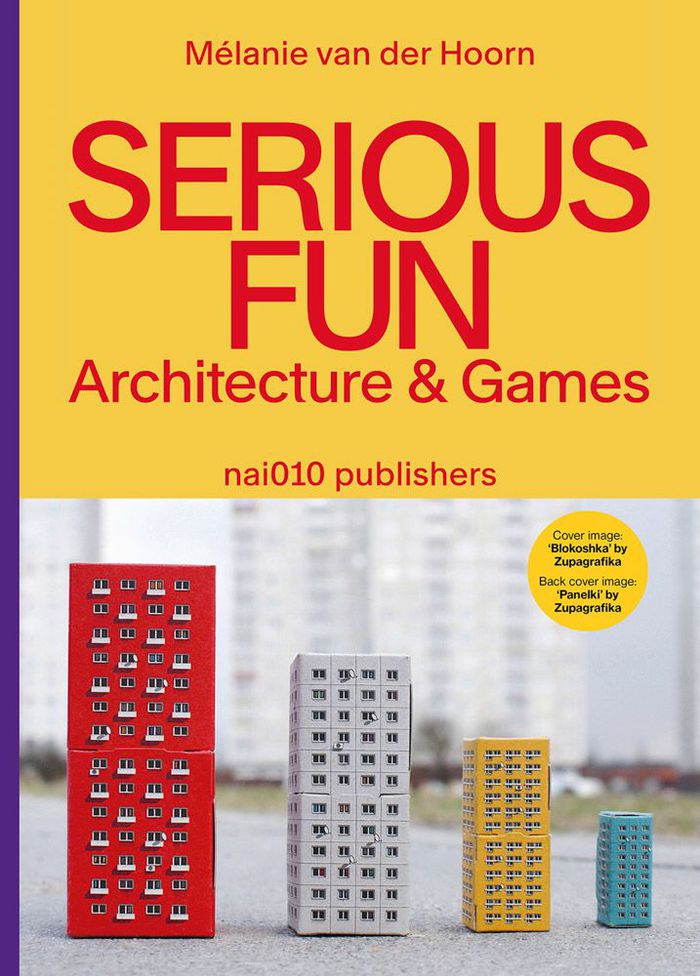
This volume examines architecture and urban design games that have been conceived and created by architects, urban designers, artists and game developers since the end of the 20th century, from doll’s houses to construction games and city building games, from SimCity to Block by Block. ''Serious fun'' examines games from both a technical and an architectural-critical(...)
$76.00
(disponible sur commande)
Résumé:
This volume examines architecture and urban design games that have been conceived and created by architects, urban designers, artists and game developers since the end of the 20th century, from doll’s houses to construction games and city building games, from SimCity to Block by Block. ''Serious fun'' examines games from both a technical and an architectural-critical(...)
Titre:
Serious fun: Architecture & games
Actions:
Prix:
$76.00
(disponible sur commande)
Résumé:
This volume examines architecture and urban design games that have been conceived and created by architects, urban designers, artists and game developers since the end of the 20th century, from doll’s houses to construction games and city building games, from SimCity to Block by Block. ''Serious fun'' examines games from both a technical and an architectural-critical point of view. As much attention is paid to the games themselves—the way they look, their construction and rules—as to their sociospatial implications, addressing the following questions: what perception of, and interaction with, the built environment do they express? What messages do the games communicate? How critical and innovative are the underlying concepts? ''Serious fun'' presents games and playfulness as tools worthy of earnest investigation, concluding with a triptych about alternative forms of representation and communication in architecture and urban design.
Serious fun: Architecture & games
Actions:
Prix:
$76.00
(disponible sur commande)
Résumé:
This volume examines architecture and urban design games that have been conceived and created by architects, urban designers, artists and game developers since the end of the 20th century, from doll’s houses to construction games and city building games, from SimCity to Block by Block. ''Serious fun'' examines games from both a technical and an architectural-critical point of view. As much attention is paid to the games themselves—the way they look, their construction and rules—as to their sociospatial implications, addressing the following questions: what perception of, and interaction with, the built environment do they express? What messages do the games communicate? How critical and innovative are the underlying concepts? ''Serious fun'' presents games and playfulness as tools worthy of earnest investigation, concluding with a triptych about alternative forms of representation and communication in architecture and urban design.
Classification:
livres
livres
Publication:
janvier 2023
janvier 2023
Sujet:
Théorie de l’architecture
Théorie de l’architecture
Classification:
livres
livres
Titre:
Return to the field
Return to the field
Actions:
Prix:
$24.00
(disponible sur commande)
Résumé:
''Return to the field'' began as an invitation to consider questions of environment, affect, and mapping emotional and physical points of contact between the human and the landscape alongside visual artist Martha Tuttle and her collaborator and co-editor, poet Gabriel Kruis. Including drawings, poems, photography, sonic maps, and an experimental digital project by Esteban(...)
$24.00
(disponible sur commande)
Résumé:
''Return to the field'' began as an invitation to consider questions of environment, affect, and mapping emotional and physical points of contact between the human and the landscape alongside visual artist Martha Tuttle and her collaborator and co-editor, poet Gabriel Kruis. Including drawings, poems, photography, sonic maps, and an experimental digital project by Esteban(...)
Titre:
Return to the field
Actions:
Prix:
$24.00
(disponible sur commande)
Résumé:
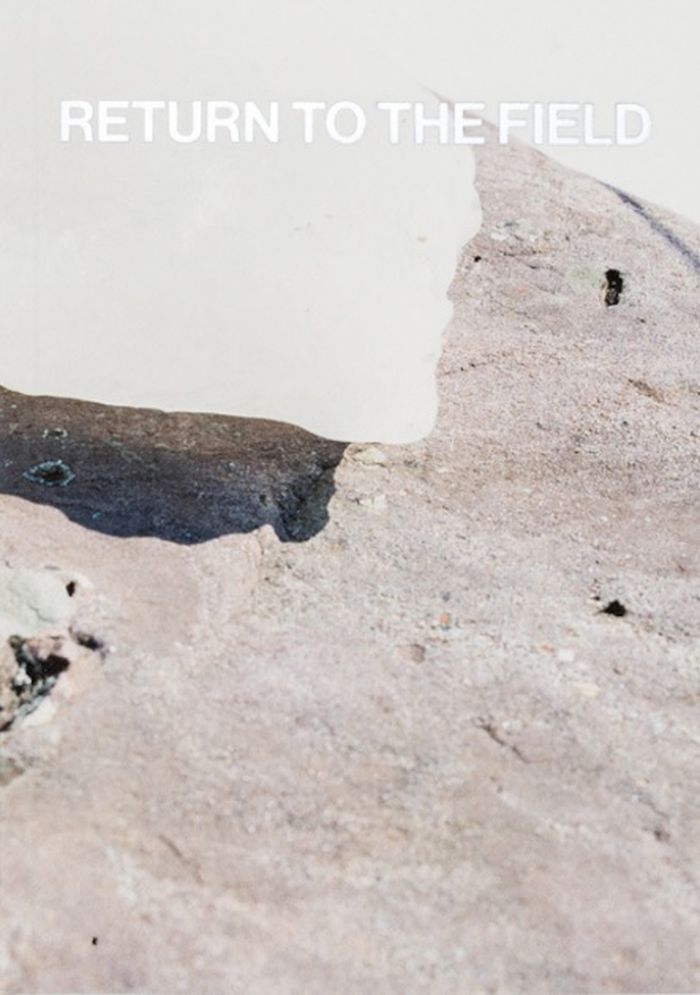
''Return to the field'' began as an invitation to consider questions of environment, affect, and mapping emotional and physical points of contact between the human and the landscape alongside visual artist Martha Tuttle and her collaborator and co-editor, poet Gabriel Kruis. Including drawings, poems, photography, sonic maps, and an experimental digital project by Esteban Cabeza de Baca, Adjua Gargi Nzinga Greaves, David Johnson, Suzanne Kite, Charmaine Lee, Philip Matthews, Nat Ward, and Sara J. Winston, ''Return to the field'' assembles a dense and resonant, multi-vocal conversation threaded together by Kruis’ book-length poem, ''A Connectome.'' ''Return to the field'' is published on the occasion of Martha Tuttle's exhibition and sculptural installation, ''A stone that thinks of Enceladus,'' on view at Storm King Art Center (New Windsor, New York) from July 15, 2020 through November 8, 2021.
Return to the field
Actions:
Prix:
$24.00
(disponible sur commande)
Résumé:
''Return to the field'' began as an invitation to consider questions of environment, affect, and mapping emotional and physical points of contact between the human and the landscape alongside visual artist Martha Tuttle and her collaborator and co-editor, poet Gabriel Kruis. Including drawings, poems, photography, sonic maps, and an experimental digital project by Esteban Cabeza de Baca, Adjua Gargi Nzinga Greaves, David Johnson, Suzanne Kite, Charmaine Lee, Philip Matthews, Nat Ward, and Sara J. Winston, ''Return to the field'' assembles a dense and resonant, multi-vocal conversation threaded together by Kruis’ book-length poem, ''A Connectome.'' ''Return to the field'' is published on the occasion of Martha Tuttle's exhibition and sculptural installation, ''A stone that thinks of Enceladus,'' on view at Storm King Art Center (New Windsor, New York) from July 15, 2020 through November 8, 2021.
Classification:
livres
livres
Publication:
octobre 2021
octobre 2021
Sujet:
Littérature et poésie
Littérature et poésie
Classification:
livres
livres
Actions:
Prix:
$115.00
(disponible sur commande)
Résumé:
Long a pioneer in architecture, Emilio Ambasz has retained a belief in the environment, or rather the larger ecology, as fundamental in viewing the world: as the author notes in the introduction, "his philosophy of ‘green over gray’ may often have fallen on deaf ears at the height of Postmodernism, but it today seems profoundly relevant." And it is in the context of today(...)
$115.00
(disponible sur commande)
Résumé:
Long a pioneer in architecture, Emilio Ambasz has retained a belief in the environment, or rather the larger ecology, as fundamental in viewing the world: as the author notes in the introduction, "his philosophy of ‘green over gray’ may often have fallen on deaf ears at the height of Postmodernism, but it today seems profoundly relevant." And it is in the context of today(...)
Titre:
Emilio Ambasz: Curating a new nature
Actions:
Prix:
$115.00
(disponible sur commande)
Résumé:
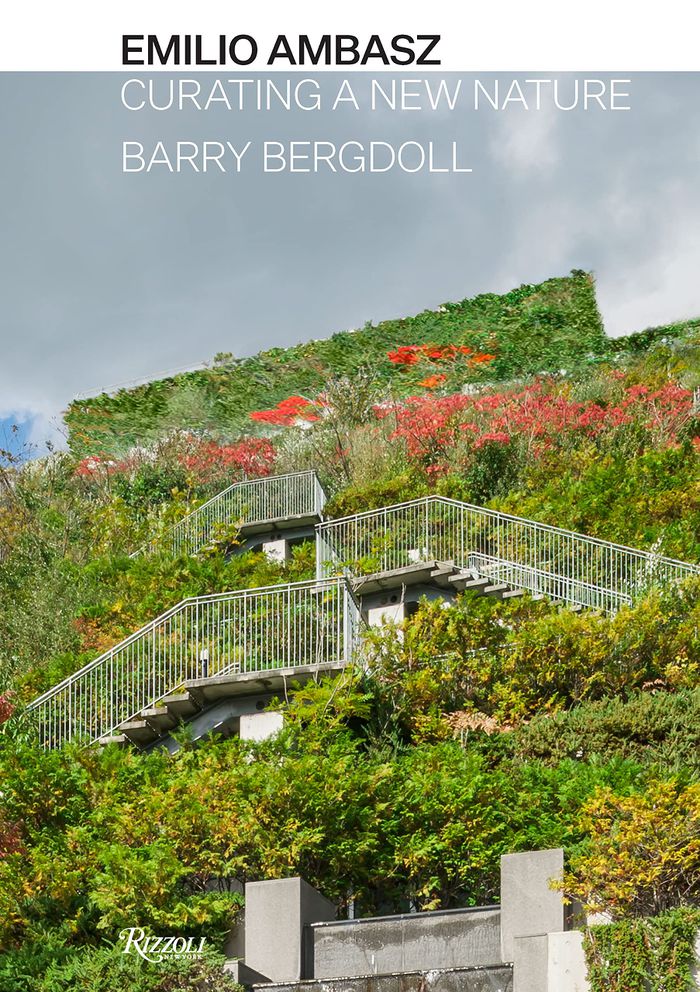
Long a pioneer in architecture, Emilio Ambasz has retained a belief in the environment, or rather the larger ecology, as fundamental in viewing the world: as the author notes in the introduction, "his philosophy of ‘green over gray’ may often have fallen on deaf ears at the height of Postmodernism, but it today seems profoundly relevant." And it is in the context of today that the book considers his work and its three main areas of concentration—architecture, industrial design, curating—with an aim of shining a light on the interdisciplinary nature of the work as a whole. Featuring built and manufactured designs that have achieved iconic fame and challenged others to approach new ways of reconciling architecture and nature, the book also considers Ambasz’s work as curator at MoMA and his ongoing influence and legacy.
Emilio Ambasz: Curating a new nature
Actions:
Prix:
$115.00
(disponible sur commande)
Résumé:
Long a pioneer in architecture, Emilio Ambasz has retained a belief in the environment, or rather the larger ecology, as fundamental in viewing the world: as the author notes in the introduction, "his philosophy of ‘green over gray’ may often have fallen on deaf ears at the height of Postmodernism, but it today seems profoundly relevant." And it is in the context of today that the book considers his work and its three main areas of concentration—architecture, industrial design, curating—with an aim of shining a light on the interdisciplinary nature of the work as a whole. Featuring built and manufactured designs that have achieved iconic fame and challenged others to approach new ways of reconciling architecture and nature, the book also considers Ambasz’s work as curator at MoMA and his ongoing influence and legacy.
Classification:
livres
livres
Publication:
novembre 2022
novembre 2022
Sujet:
Architecture, monographies
Architecture, monographies


