


13794 Résultats
Classification:
livres
livres
Actions:
Prix:
$71.00
(disponible en magasin)
Résumé:
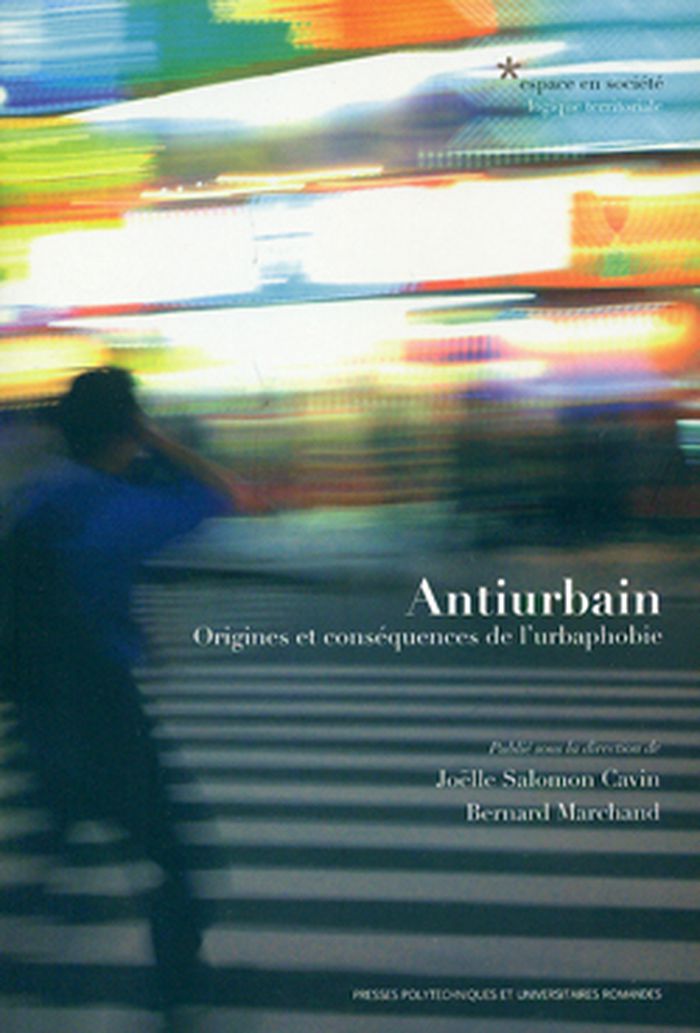
Cet ouvrage dévoile l’ampleur de la pensée et des effets de l’urbaphobie dans différents contextes nationaux. Il offre au lecteur une somme de références dont l’ambition est de convaincre des enjeux scientifiques, économiques et sociaux de ce phénomène encore peu considéré dans la réflexion et la pratique urbaine.
$71.00
(disponible en magasin)
Résumé:
Cet ouvrage dévoile l’ampleur de la pensée et des effets de l’urbaphobie dans différents contextes nationaux. Il offre au lecteur une somme de références dont l’ambition est de convaincre des enjeux scientifiques, économiques et sociaux de ce phénomène encore peu considéré dans la réflexion et la pratique urbaine.
Titre:
Antiurbain: Origines et conséquences de l'urbaphobie
Actions:
Prix:
$71.00
(disponible en magasin)
Résumé:
Cet ouvrage dévoile l’ampleur de la pensée et des effets de l’urbaphobie dans différents contextes nationaux. Il offre au lecteur une somme de références dont l’ambition est de convaincre des enjeux scientifiques, économiques et sociaux de ce phénomène encore peu considéré dans la réflexion et la pratique urbaine.
Antiurbain: Origines et conséquences de l'urbaphobie
Actions:
Prix:
$71.00
(disponible en magasin)
Résumé:
Cet ouvrage dévoile l’ampleur de la pensée et des effets de l’urbaphobie dans différents contextes nationaux. Il offre au lecteur une somme de références dont l’ambition est de convaincre des enjeux scientifiques, économiques et sociaux de ce phénomène encore peu considéré dans la réflexion et la pratique urbaine.
Classification:
livres
livres
Publication:
avril 2011
avril 2011
Sujet:
Théorie de l’urbanisme
Théorie de l’urbanisme
Classification:
livres
livres
Actions:
Prix:
$44.00
(disponible sur commande)
Résumé:
As a critic, stalwart nonconformist and champion of utopian architecture, Austrian architect Raimund Abraham (1933-2010) made one of the most significant contributions to contemporary architecture in 2002, with the construction of the Austrian Cultural Forum Building in New York. Following his tragic death in 2010, that year's Vienna Architecture Conference was held in(...)
$44.00
(disponible sur commande)
Résumé:
As a critic, stalwart nonconformist and champion of utopian architecture, Austrian architect Raimund Abraham (1933-2010) made one of the most significant contributions to contemporary architecture in 2002, with the construction of the Austrian Cultural Forum Building in New York. Following his tragic death in 2010, that year's Vienna Architecture Conference was held in(...)
Titre:
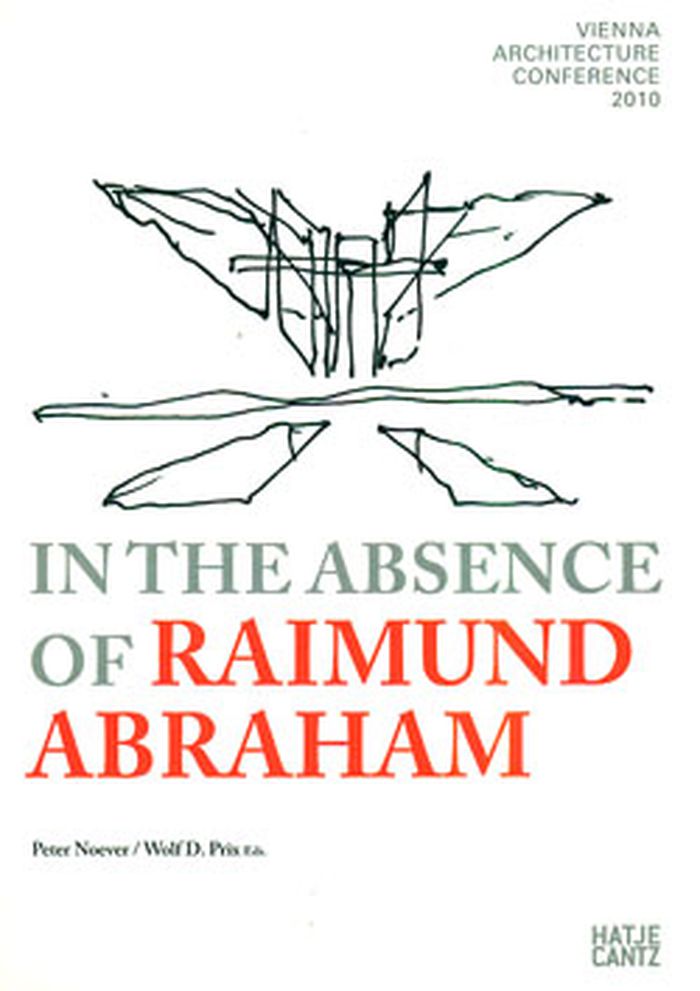
In the absence of Raimund Abraham : Vienna architecture conference 2010
Actions:
Prix:
$44.00
(disponible sur commande)
Résumé:
As a critic, stalwart nonconformist and champion of utopian architecture, Austrian architect Raimund Abraham (1933-2010) made one of the most significant contributions to contemporary architecture in 2002, with the construction of the Austrian Cultural Forum Building in New York. Following his tragic death in 2010, that year's Vienna Architecture Conference was held in his honor. This publication documents the keynote lecture, speeches and discussions held throughout the conference given by architects and artists such as Vito Acconci, Peter Cook, Kenneth Frampton, Peter Kubelka, Andrea Lenardin Madden, Thom Mayne, Jonas Mekas, Eric Owen Moss, Peter Noever, Wolf D. Prix, Alexis Rochas, Michael Rotondi, Elfie Semotan and Lebbeus Woods. The publication also includes a DVD of Abraham's now-famous last lecture, “The Profanation of Solitude,” given at the Southern California Institute of Architecture, only hours before his untimely death.
In the absence of Raimund Abraham : Vienna architecture conference 2010
Actions:
Prix:
$44.00
(disponible sur commande)
Résumé:
As a critic, stalwart nonconformist and champion of utopian architecture, Austrian architect Raimund Abraham (1933-2010) made one of the most significant contributions to contemporary architecture in 2002, with the construction of the Austrian Cultural Forum Building in New York. Following his tragic death in 2010, that year's Vienna Architecture Conference was held in his honor. This publication documents the keynote lecture, speeches and discussions held throughout the conference given by architects and artists such as Vito Acconci, Peter Cook, Kenneth Frampton, Peter Kubelka, Andrea Lenardin Madden, Thom Mayne, Jonas Mekas, Eric Owen Moss, Peter Noever, Wolf D. Prix, Alexis Rochas, Michael Rotondi, Elfie Semotan and Lebbeus Woods. The publication also includes a DVD of Abraham's now-famous last lecture, “The Profanation of Solitude,” given at the Southern California Institute of Architecture, only hours before his untimely death.
Classification:
livres
livres
Publication:
avril 2011
avril 2011
Sujet:
Théorie de l’architecture
Théorie de l’architecture
Classification:
livres
livres
Titre:
Junkspace
Junkspace
Actions:
Prix:
$28.95
(disponible sur commande)
Résumé:
En trois essais décisifs, Rem Koolhaas nous oblige à tourner la tête vers ce que nos villes sont devenues. Qu’est-ce qu’un paysage urbain ? Comment le décrire ? Comment s’y repérer ? Et que peut être aujourd’hui le travail de l’urbaniste ? Ces questions, Koolhaas ne les adresse pas aux spécialistes mais aux femmes et aux hommes qui vivent dans les villes, qui marchent(...)
$28.95
(disponible sur commande)
Résumé:
En trois essais décisifs, Rem Koolhaas nous oblige à tourner la tête vers ce que nos villes sont devenues. Qu’est-ce qu’un paysage urbain ? Comment le décrire ? Comment s’y repérer ? Et que peut être aujourd’hui le travail de l’urbaniste ? Ces questions, Koolhaas ne les adresse pas aux spécialistes mais aux femmes et aux hommes qui vivent dans les villes, qui marchent(...)
Titre:
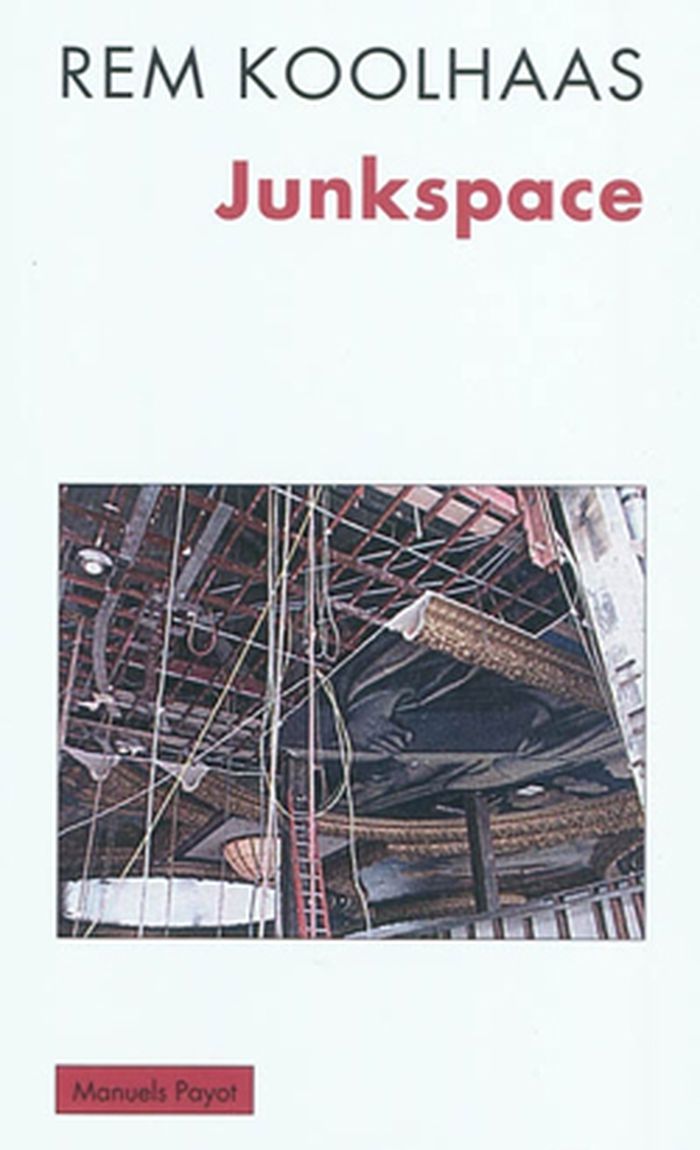
Junkspace
Actions:
Prix:
$28.95
(disponible sur commande)
Résumé:
En trois essais décisifs, Rem Koolhaas nous oblige à tourner la tête vers ce que nos villes sont devenues. Qu’est-ce qu’un paysage urbain ? Comment le décrire ? Comment s’y repérer ? Et que peut être aujourd’hui le travail de l’urbaniste ? Ces questions, Koolhaas ne les adresse pas aux spécialistes mais aux femmes et aux hommes qui vivent dans les villes, qui marchent dans les villes, qui veulent respirer dans les villes.
Junkspace
Actions:
Prix:
$28.95
(disponible sur commande)
Résumé:
En trois essais décisifs, Rem Koolhaas nous oblige à tourner la tête vers ce que nos villes sont devenues. Qu’est-ce qu’un paysage urbain ? Comment le décrire ? Comment s’y repérer ? Et que peut être aujourd’hui le travail de l’urbaniste ? Ces questions, Koolhaas ne les adresse pas aux spécialistes mais aux femmes et aux hommes qui vivent dans les villes, qui marchent dans les villes, qui veulent respirer dans les villes.
Classification:
livres
livres
Publication:
janvier 2011
janvier 2011
Sujet:
Théorie de l’urbanisme
Théorie de l’urbanisme
Classification:
livres
livres

Titre:
The Baudrillard dictionary
The Baudrillard dictionary
Actions:
Prix:
$40.50
(disponible sur commande)
Résumé:
This is the first dictionary dedicated to the work of Jean Baudrillard (1929-2007). It explains and contextualises more than a hundred key concepts, terms, influences and topics within his thought. An essential reference for students and scholars of Baudrillard, it also serves as an overview of how his ideas have shaped a broad range of disciplines, from art,(...)
$40.50
(disponible sur commande)
Résumé:
This is the first dictionary dedicated to the work of Jean Baudrillard (1929-2007). It explains and contextualises more than a hundred key concepts, terms, influences and topics within his thought. An essential reference for students and scholars of Baudrillard, it also serves as an overview of how his ideas have shaped a broad range of disciplines, from art,(...)
Titre:
The Baudrillard dictionary
Actions:
Prix:
$40.50
(disponible sur commande)
Résumé:
This is the first dictionary dedicated to the work of Jean Baudrillard (1929-2007). It explains and contextualises more than a hundred key concepts, terms, influences and topics within his thought. An essential reference for students and scholars of Baudrillard, it also serves as an overview of how his ideas have shaped a broad range of disciplines, from art, architecture, film and photography to sociology, philosophy, human geography, media studies and cultural studies. The entries are written by 35 Baudrillard specialists from around the world, including Rex Butler, Mike Gane, Gary Genosko, Victoria Grace, Diane Rubenstein and Andrew Wernick.
The Baudrillard dictionary
Actions:
Prix:
$40.50
(disponible sur commande)
Résumé:
This is the first dictionary dedicated to the work of Jean Baudrillard (1929-2007). It explains and contextualises more than a hundred key concepts, terms, influences and topics within his thought. An essential reference for students and scholars of Baudrillard, it also serves as an overview of how his ideas have shaped a broad range of disciplines, from art, architecture, film and photography to sociology, philosophy, human geography, media studies and cultural studies. The entries are written by 35 Baudrillard specialists from around the world, including Rex Butler, Mike Gane, Gary Genosko, Victoria Grace, Diane Rubenstein and Andrew Wernick.
Classification:
livres
livres
Publication:
octobre 2010
octobre 2010
Sujet:
Théorie/ philosophie
Théorie/ philosophie
Classification:
livres
livres
Actions:
Prix:
$44.95
(disponible sur commande)
Résumé:
Routinely dismissed as ‘mere sprawl’, the suburban city is the black hole of recent urbanism, absorbing human energy and resources but seldom revealing the principles of its operation. For the past 20 years Lars Lerup has explored Houston as its prototype. In this book he broadly approaches this complex conurbation so as to develop a vocabulary to interpret its(...)
$44.95
(disponible sur commande)
Résumé:
Routinely dismissed as ‘mere sprawl’, the suburban city is the black hole of recent urbanism, absorbing human energy and resources but seldom revealing the principles of its operation. For the past 20 years Lars Lerup has explored Houston as its prototype. In this book he broadly approaches this complex conurbation so as to develop a vocabulary to interpret its(...)
Titre:
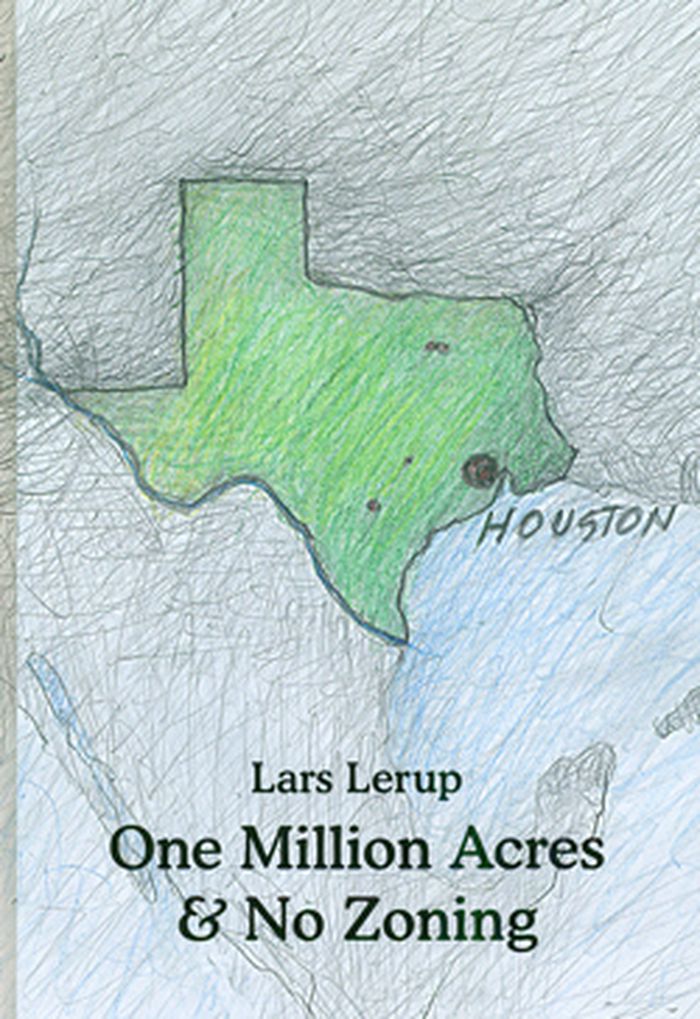
One million acres and no zoning
Actions:
Prix:
$44.95
(disponible sur commande)
Résumé:
Routinely dismissed as ‘mere sprawl’, the suburban city is the black hole of recent urbanism, absorbing human energy and resources but seldom revealing the principles of its operation. For the past 20 years Lars Lerup has explored Houston as its prototype. In this book he broadly approaches this complex conurbation so as to develop a vocabulary to interpret its urban forms. Loved by its inhabitants, defined by huge potential and difficult problems, Lerup’s Houston is a test-case for twenty-first-century urbanism and our understanding of unregulated cities everywhere.
One million acres and no zoning
Actions:
Prix:
$44.95
(disponible sur commande)
Résumé:
Routinely dismissed as ‘mere sprawl’, the suburban city is the black hole of recent urbanism, absorbing human energy and resources but seldom revealing the principles of its operation. For the past 20 years Lars Lerup has explored Houston as its prototype. In this book he broadly approaches this complex conurbation so as to develop a vocabulary to interpret its urban forms. Loved by its inhabitants, defined by huge potential and difficult problems, Lerup’s Houston is a test-case for twenty-first-century urbanism and our understanding of unregulated cities everywhere.
Classification:
livres
livres
Publication:
avril 2011
avril 2011
Sujet:
Théorie de l’urbanisme
Théorie de l’urbanisme
Classification:
livres
livres
Actions:
Prix:
$39.95
(disponible sur commande)
Résumé:
This book marks the conclusion of the AA School's Beyond Entropy research cluster, and is produced in tandem with an exhibition on show at the AA in May 2011. The theme of the book derives from the urgency with which the idea of energy has been raised in recent years in political, economic and scientific debates. The book charts the efforts of architects to(...)
$39.95
(disponible sur commande)
Résumé:
This book marks the conclusion of the AA School's Beyond Entropy research cluster, and is produced in tandem with an exhibition on show at the AA in May 2011. The theme of the book derives from the urgency with which the idea of energy has been raised in recent years in political, economic and scientific debates. The book charts the efforts of architects to(...)
Titre:
Beyond entropy: when energy becomes form
Actions:
Prix:
$39.95
(disponible sur commande)
Résumé:
This book marks the conclusion of the AA School's Beyond Entropy research cluster, and is produced in tandem with an exhibition on show at the AA in May 2011. The theme of the book derives from the urgency with which the idea of energy has been raised in recent years in political, economic and scientific debates. The book charts the efforts of architects to reappropriate this theme and to address the debate in a wider cultural sphere.
Beyond entropy: when energy becomes form
Actions:
Prix:
$39.95
(disponible sur commande)
Résumé:
This book marks the conclusion of the AA School's Beyond Entropy research cluster, and is produced in tandem with an exhibition on show at the AA in May 2011. The theme of the book derives from the urgency with which the idea of energy has been raised in recent years in political, economic and scientific debates. The book charts the efforts of architects to reappropriate this theme and to address the debate in a wider cultural sphere.
Classification:
livres
livres
Publication:
mai 2011
mai 2011
Sujet:
Théorie de l’architecture
Théorie de l’architecture
Classification:
livres
livres
Actions:
Prix:
$45.00
(disponible sur commande)
Résumé:
To commemorate the life and work of Dennis Sharp (1933–2010), Sharp Words collates together a variety of essays that touch upon each of his architectural fascinations – among them, glass architecture, picture palaces, masters of concrete and English modernism. Punctuating these texts are a number of editorials from his days as editor of AAQ, which graphically as(...)
$45.00
(disponible sur commande)
Résumé:
To commemorate the life and work of Dennis Sharp (1933–2010), Sharp Words collates together a variety of essays that touch upon each of his architectural fascinations – among them, glass architecture, picture palaces, masters of concrete and English modernism. Punctuating these texts are a number of editorials from his days as editor of AAQ, which graphically as(...)
Titre:
Sharp words: selected essays of Dennis Sharp
Actions:
Prix:
$45.00
(disponible sur commande)
Résumé:
To commemorate the life and work of Dennis Sharp (1933–2010), Sharp Words collates together a variety of essays that touch upon each of his architectural fascinations – among them, glass architecture, picture palaces, masters of concrete and English modernism. Punctuating these texts are a number of editorials from his days as editor of AAQ, which graphically as much as intellectually offer emblems of his time at the AA.
Sharp words: selected essays of Dennis Sharp
Actions:
Prix:
$45.00
(disponible sur commande)
Résumé:
To commemorate the life and work of Dennis Sharp (1933–2010), Sharp Words collates together a variety of essays that touch upon each of his architectural fascinations – among them, glass architecture, picture palaces, masters of concrete and English modernism. Punctuating these texts are a number of editorials from his days as editor of AAQ, which graphically as much as intellectually offer emblems of his time at the AA.
Classification:
livres
livres
Publication:
mai 2011
mai 2011
Sujet:
Théorie de l’architecture
Théorie de l’architecture
Classification:
livres
livres
Actions:
Prix:
$55.00
(disponible en magasin)
Résumé:
In No More Play: Conversations on Urban Speculation in Los Angeles and Beyond , American architect Michael Maltzan traces the transformations that have taken place in the city of Los Angeles since the early 1990s. Through a series of conversations with the city's leading artists and intellectuals, Maltzan explores such issues as real-estate speculation and future urban(...)
$55.00
(disponible en magasin)
Résumé:
In No More Play: Conversations on Urban Speculation in Los Angeles and Beyond , American architect Michael Maltzan traces the transformations that have taken place in the city of Los Angeles since the early 1990s. Through a series of conversations with the city's leading artists and intellectuals, Maltzan explores such issues as real-estate speculation and future urban(...)
Sujet:
Théorie de l’urbanisme
Théorie de l’urbanisme
Publication:
juillet 2011
juillet 2011
Titre:
No more play: conversations on urban speculation in Los Angeles and beyond
Actions:
Prix:
$55.00
(disponible en magasin)
Résumé:
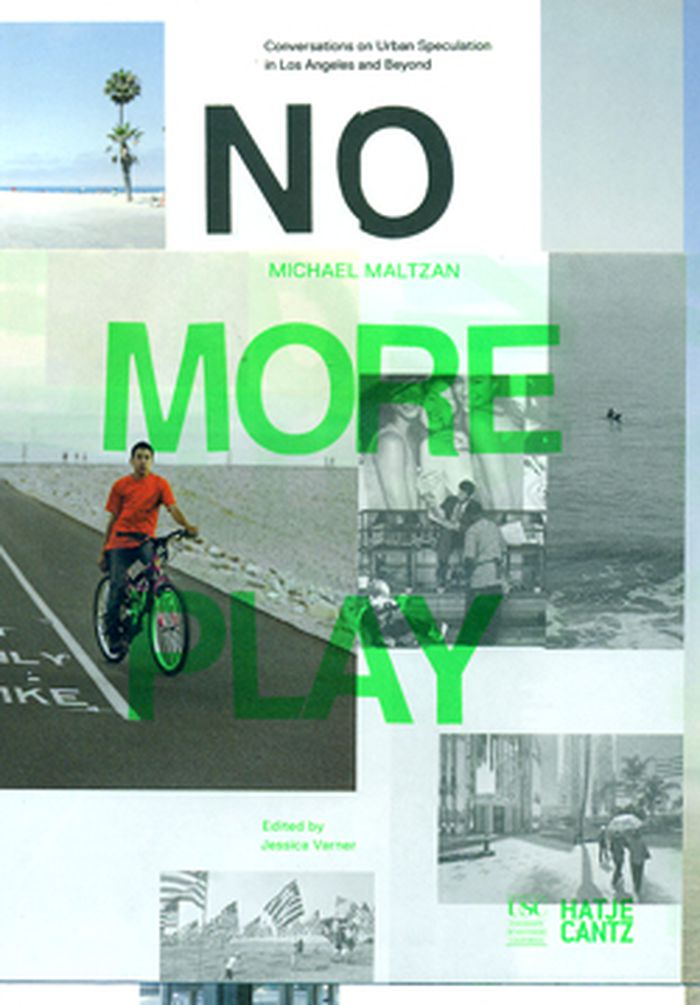
In No More Play: Conversations on Urban Speculation in Los Angeles and Beyond , American architect Michael Maltzan traces the transformations that have taken place in the city of Los Angeles since the early 1990s. Through a series of conversations with the city's leading artists and intellectuals, Maltzan explores such issues as real-estate speculation and future urban development, infrastructure, resources, site density, urban experience, political structure, commerce and community, attempting to transform our understanding of how each affects present-day Los Angeles. Intended to facilitate further dialogue on how to define the “City of Angels” at a moment when its identity is in significant flux, the book includes contributions by Iwan Baan, Catherine Opie, Sarah Whiting, Charles Waldheim, Matthew Coolidge, Geoff Manaugh, Mirko Zardini, Edward Soja, James Flanigan, Charles Jencks and Qingyun Ma.
No more play: conversations on urban speculation in Los Angeles and beyond
Actions:
Prix:
$55.00
(disponible en magasin)
Résumé:
In No More Play: Conversations on Urban Speculation in Los Angeles and Beyond , American architect Michael Maltzan traces the transformations that have taken place in the city of Los Angeles since the early 1990s. Through a series of conversations with the city's leading artists and intellectuals, Maltzan explores such issues as real-estate speculation and future urban development, infrastructure, resources, site density, urban experience, political structure, commerce and community, attempting to transform our understanding of how each affects present-day Los Angeles. Intended to facilitate further dialogue on how to define the “City of Angels” at a moment when its identity is in significant flux, the book includes contributions by Iwan Baan, Catherine Opie, Sarah Whiting, Charles Waldheim, Matthew Coolidge, Geoff Manaugh, Mirko Zardini, Edward Soja, James Flanigan, Charles Jencks and Qingyun Ma.
Classification:
livres
livres
Publication:
juillet 2011
juillet 2011
Sujet:
Théorie de l’urbanisme
Théorie de l’urbanisme
Classification:
livres
livres
Actions:
Prix:
$32.95
(disponible sur commande)
Résumé:
Ce livre permet de cerner tous les ingrédients de la production urbaine à travers l'exemple de la première ville moderne d'Europe : Ferrare, restructurée par Biagio Rossetti au XVIe siècle. " Voir la ville " implique d'observer l'ensemble du processus de planification au coeur des structures urbaines comme une oeuvre d'art, avec l'émergence d'éléments architectoniques(...)
$32.95
(disponible sur commande)
Résumé:
Ce livre permet de cerner tous les ingrédients de la production urbaine à travers l'exemple de la première ville moderne d'Europe : Ferrare, restructurée par Biagio Rossetti au XVIe siècle. " Voir la ville " implique d'observer l'ensemble du processus de planification au coeur des structures urbaines comme une oeuvre d'art, avec l'émergence d'éléments architectoniques(...)
Titre:
Apprendre à voir la ville: Ferrare, la première ville moderne d'Europe
Actions:
Prix:
$32.95
(disponible sur commande)
Résumé:
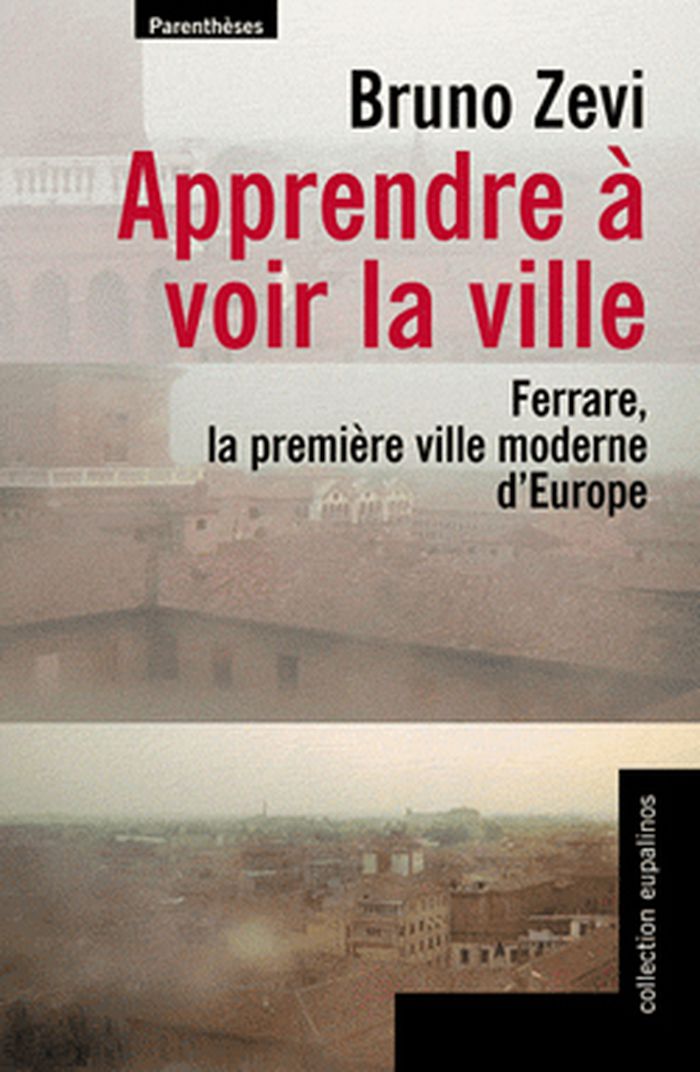
Ce livre permet de cerner tous les ingrédients de la production urbaine à travers l'exemple de la première ville moderne d'Europe : Ferrare, restructurée par Biagio Rossetti au XVIe siècle. " Voir la ville " implique d'observer l'ensemble du processus de planification au coeur des structures urbaines comme une oeuvre d'art, avec l'émergence d'éléments architectoniques telles que la place et la rue, dans une sorte de poétique de l'angle et de l'inachevé.
Apprendre à voir la ville: Ferrare, la première ville moderne d'Europe
Actions:
Prix:
$32.95
(disponible sur commande)
Résumé:
Ce livre permet de cerner tous les ingrédients de la production urbaine à travers l'exemple de la première ville moderne d'Europe : Ferrare, restructurée par Biagio Rossetti au XVIe siècle. " Voir la ville " implique d'observer l'ensemble du processus de planification au coeur des structures urbaines comme une oeuvre d'art, avec l'émergence d'éléments architectoniques telles que la place et la rue, dans une sorte de poétique de l'angle et de l'inachevé.
Classification:
livres
livres
Publication:
mars 2011
mars 2011
Sujet:
Théorie de l’urbanisme
Théorie de l’urbanisme
Classification:
livres
livres
Titre:
Architectures subjectives
Architectures subjectives
Actions:
Prix:
$44.95
(disponible en magasin)
Résumé:
Quelle place réserver aujourd'hui à la subjectivité dans la création architecturale? C'est la question que pose dans cet ouvrage Jean-Philippe Pargade qui revendique avec force le droit, pour l'architecte, d'exprimer sa singularité. A ses yeux, la pensée d'une architecture d'auteur s'imprègne d'abord de subjectivité, pour intégrer rationalité, rigueur et observations des(...)
$44.95
(disponible en magasin)
Résumé:
Quelle place réserver aujourd'hui à la subjectivité dans la création architecturale? C'est la question que pose dans cet ouvrage Jean-Philippe Pargade qui revendique avec force le droit, pour l'architecte, d'exprimer sa singularité. A ses yeux, la pensée d'une architecture d'auteur s'imprègne d'abord de subjectivité, pour intégrer rationalité, rigueur et observations des(...)
Titre:
Architectures subjectives
Actions:
Prix:
$44.95
(disponible en magasin)
Résumé:
Quelle place réserver aujourd'hui à la subjectivité dans la création architecturale? C'est la question que pose dans cet ouvrage Jean-Philippe Pargade qui revendique avec force le droit, pour l'architecte, d'exprimer sa singularité. A ses yeux, la pensée d'une architecture d'auteur s'imprègne d'abord de subjectivité, pour intégrer rationalité, rigueur et observations des usages. Elle échappe ainsi à la normalisation dévorante du monde contemporain. A travers son expérience d'architecte, en laissant percer ses influences venues de la musique improvisée et de l'art, l'auteur milite ici pour reconquérir une nouvelle dimension personnelle du projet, nourrie de la confrontation des idées au sein d'une équipe attentive et de la vision du maître d'ouvrage.
Architectures subjectives
Actions:
Prix:
$44.95
(disponible en magasin)
Résumé:
Quelle place réserver aujourd'hui à la subjectivité dans la création architecturale? C'est la question que pose dans cet ouvrage Jean-Philippe Pargade qui revendique avec force le droit, pour l'architecte, d'exprimer sa singularité. A ses yeux, la pensée d'une architecture d'auteur s'imprègne d'abord de subjectivité, pour intégrer rationalité, rigueur et observations des usages. Elle échappe ainsi à la normalisation dévorante du monde contemporain. A travers son expérience d'architecte, en laissant percer ses influences venues de la musique improvisée et de l'art, l'auteur milite ici pour reconquérir une nouvelle dimension personnelle du projet, nourrie de la confrontation des idées au sein d'une équipe attentive et de la vision du maître d'ouvrage.
Classification:
livres
livres
Publication:
avril 2010
avril 2010
Sujet:
Théorie de l’architecture
Théorie de l’architecture


