


6624 Résultats
Classification:
livres
livres
Prix:
$39.95
(disponible sur commande)
Résumé:
"Borderwall as architecture" is an artistic and intellectual hand grenade of a book, and a timely re-examination of what the physical barrier that divides the United States of America from the United Mexican States is and could be. It is both a protest against the wall and a projection about its future. Through a series of propositions suggesting that the nearly seven(...)
$39.95
(disponible sur commande)
Résumé:
"Borderwall as architecture" is an artistic and intellectual hand grenade of a book, and a timely re-examination of what the physical barrier that divides the United States of America from the United Mexican States is and could be. It is both a protest against the wall and a projection about its future. Through a series of propositions suggesting that the nearly seven(...)
Titre:
Borderwall as architecture: a manifesto for the US-Mexico boundary
Actions:
Prix:
$39.95
(disponible sur commande)
Résumé:
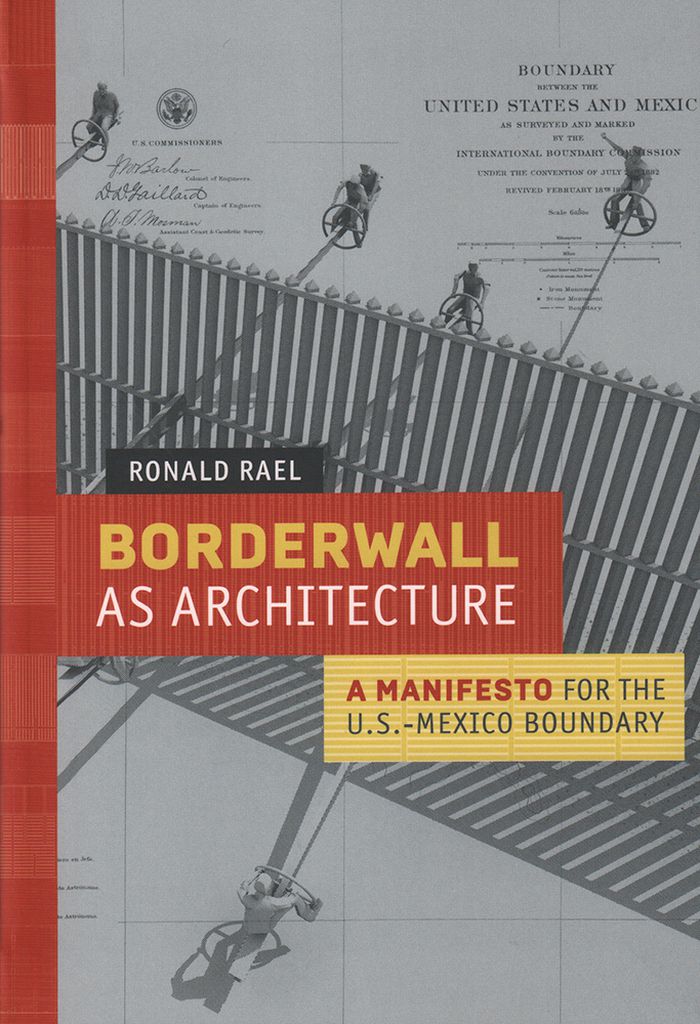
"Borderwall as architecture" is an artistic and intellectual hand grenade of a book, and a timely re-examination of what the physical barrier that divides the United States of America from the United Mexican States is and could be. It is both a protest against the wall and a projection about its future. Through a series of propositions suggesting that the nearly seven hundred miles of wall is an opportunity for economic and social development along the border that encourages its conceptual and physical dismantling, the book takes readers on a journey along a wall that cuts through a “third nation”—the Divided States of America. On the way the transformative effects of the wall on people, animals, and the natural and built landscape are exposed and interrogated through the story of people who, on both sides of the border, transform the wall, challenging its existence in remarkably creative ways. Coupled with these real-life accounts are counterproposals for the wall, created by Rael’s studio, that reimagine, hyperbolize, or question the wall and its construction, cost, performance, and meaning. Rael proposes that despite the intended use of the wall, which is to keep people out and away, the wall is instead an attractor, engaging both sides in a common dialogue. Included is a collection of reflections on the wall and its consequences by leading experts Michael Dear, Norma Iglesias-Prieto, Marcello Di Cintio, and Teddy Cruz.
Borderwall as architecture: a manifesto for the US-Mexico boundary
Actions:
Prix:
$39.95
(disponible sur commande)
Résumé:
"Borderwall as architecture" is an artistic and intellectual hand grenade of a book, and a timely re-examination of what the physical barrier that divides the United States of America from the United Mexican States is and could be. It is both a protest against the wall and a projection about its future. Through a series of propositions suggesting that the nearly seven hundred miles of wall is an opportunity for economic and social development along the border that encourages its conceptual and physical dismantling, the book takes readers on a journey along a wall that cuts through a “third nation”—the Divided States of America. On the way the transformative effects of the wall on people, animals, and the natural and built landscape are exposed and interrogated through the story of people who, on both sides of the border, transform the wall, challenging its existence in remarkably creative ways. Coupled with these real-life accounts are counterproposals for the wall, created by Rael’s studio, that reimagine, hyperbolize, or question the wall and its construction, cost, performance, and meaning. Rael proposes that despite the intended use of the wall, which is to keep people out and away, the wall is instead an attractor, engaging both sides in a common dialogue. Included is a collection of reflections on the wall and its consequences by leading experts Michael Dear, Norma Iglesias-Prieto, Marcello Di Cintio, and Teddy Cruz.
Classification:
livres
livres
Publication:
mai 2017
mai 2017
Sujet:
Théorie de l’architecture
Théorie de l’architecture
Classification:
livres
livres
Actions:
Prix:
$89.99
(disponible sur commande)
Résumé:
Written by the chair of the LEED-Neighborhood Development (LEED-ND) initiative, Sustainable Urbanism: Urban Design with Nature is both an urgent call to action and a comprehensive introduction to "sustainable urbanism"--the emerging and growing design reform movement that combines the creation and enhancement of walkable and diverse places with the need to build(...)
$89.99
(disponible sur commande)
Résumé:
Written by the chair of the LEED-Neighborhood Development (LEED-ND) initiative, Sustainable Urbanism: Urban Design with Nature is both an urgent call to action and a comprehensive introduction to "sustainable urbanism"--the emerging and growing design reform movement that combines the creation and enhancement of walkable and diverse places with the need to build(...)
Titre:
Sustainable urbanism: urban design with nature
Actions:
Prix:
$89.99
(disponible sur commande)
Résumé:
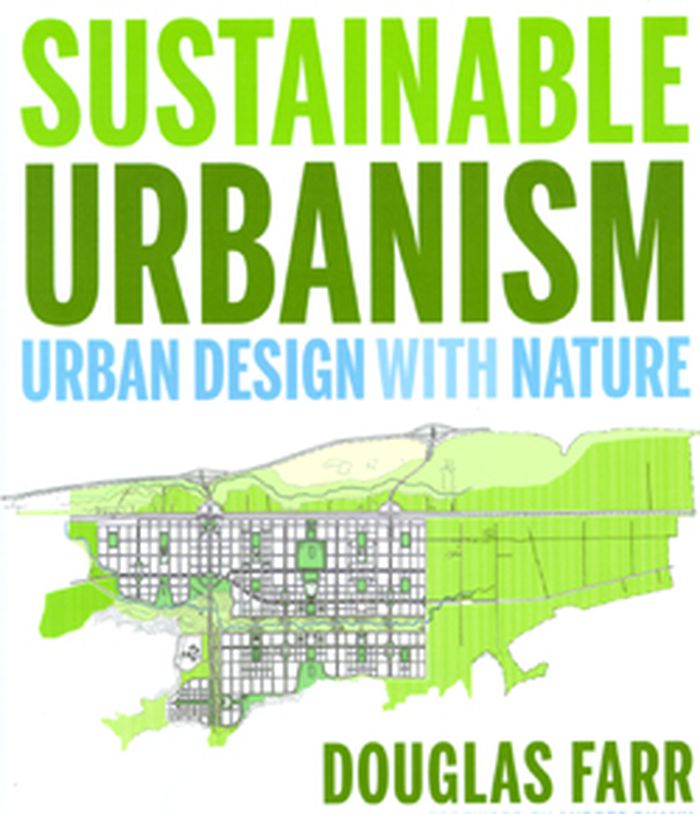
Written by the chair of the LEED-Neighborhood Development (LEED-ND) initiative, Sustainable Urbanism: Urban Design with Nature is both an urgent call to action and a comprehensive introduction to "sustainable urbanism"--the emerging and growing design reform movement that combines the creation and enhancement of walkable and diverse places with the need to build high-performance infrastructure and buildings. Providing a historic perspective on the standards and regulations that got us to where we are today in terms of urban lifestyle and attempts at reform, Douglas Farr makes a powerful case for sustainable urbanism, showing where we went wrong, and where we need to go. He then explains how to implement sustainable urbanism through leadership and communication in cities, communities, and neighborhoods. Essays written by Farr and others delve into such issues as: Increasing sustainability through density. Integrating transportation and land use. Creating sustainable neighborhoods, including housing, car-free areas, locally-owned stores, walkable neighborhoods, and universal accessibility. The health and environmental benefits of linking humans to nature, including walk-to open spaces, neighborhood stormwater systems and waste treatment, and food production. High performance buildings and district energy systems. Enriching the argument are in-depth case studies in sustainable urbanism, from BedZED in London, England and Newington in Sydney, Australia, to New Railroad Square in Santa Rosa, California and Dongtan, Shanghai, China. An epilogue looks to the future of sustainable urbanism over the next 200 years.
Sustainable urbanism: urban design with nature
Actions:
Prix:
$89.99
(disponible sur commande)
Résumé:
Written by the chair of the LEED-Neighborhood Development (LEED-ND) initiative, Sustainable Urbanism: Urban Design with Nature is both an urgent call to action and a comprehensive introduction to "sustainable urbanism"--the emerging and growing design reform movement that combines the creation and enhancement of walkable and diverse places with the need to build high-performance infrastructure and buildings. Providing a historic perspective on the standards and regulations that got us to where we are today in terms of urban lifestyle and attempts at reform, Douglas Farr makes a powerful case for sustainable urbanism, showing where we went wrong, and where we need to go. He then explains how to implement sustainable urbanism through leadership and communication in cities, communities, and neighborhoods. Essays written by Farr and others delve into such issues as: Increasing sustainability through density. Integrating transportation and land use. Creating sustainable neighborhoods, including housing, car-free areas, locally-owned stores, walkable neighborhoods, and universal accessibility. The health and environmental benefits of linking humans to nature, including walk-to open spaces, neighborhood stormwater systems and waste treatment, and food production. High performance buildings and district energy systems. Enriching the argument are in-depth case studies in sustainable urbanism, from BedZED in London, England and Newington in Sydney, Australia, to New Railroad Square in Santa Rosa, California and Dongtan, Shanghai, China. An epilogue looks to the future of sustainable urbanism over the next 200 years.
Classification:
livres
livres
Publication:
novembre 2007, Hoboken, New Jersey
novembre 2007, Hoboken, New Jersey
Sujet:
Théorie de l’urbanisme
Théorie de l’urbanisme
Classification:
livres
livres

Actions:
Prix:
$62.50
(disponible en magasin)
Résumé:
In "LAB – Building a home for scientists" Mark C. Fishman describes how to build labs as homes for scientists, to accommodate not just their fancy tools, but also their personalities. Laboratories are both monasteries and space stations, redolent of the great ideas of generations past and of technologies to propel the future. Yet standard lab design has changed only(...)
$62.50
(disponible en magasin)
Résumé:
In "LAB – Building a home for scientists" Mark C. Fishman describes how to build labs as homes for scientists, to accommodate not just their fancy tools, but also their personalities. Laboratories are both monasteries and space stations, redolent of the great ideas of generations past and of technologies to propel the future. Yet standard lab design has changed only(...)
Titre:
LAB: building a home for scientists
Actions:
Prix:
$62.50
(disponible en magasin)
Résumé:
In "LAB – Building a home for scientists" Mark C. Fishman describes how to build labs as homes for scientists, to accommodate not just their fancy tools, but also their personalities. Laboratories are both monasteries and space stations, redolent of the great ideas of generations past and of technologies to propel the future. Yet standard lab design has changed only little over recent years. Since a lab becomes a scientist's home for most of their waking hours, the question arises if design and aesthetics of a lab can influence the creativity and effectiveness of its inhabitants. Although the support of the creative process is a compelling feature of a contemporary lab, it also has to be built flexibly enough to accommodate introvert solo researchers as well as large interdisciplinary teams, while an immediate connection to fellow researchers across the globe has to be at disposal as well. Anyone who works in, or plans to build a lab, will enjoy this book, which will encourage them to think about how this special environment drives or impedes their important work. This richly illustrated publication explores the roles of labs through history, from the alchemists of the Middle Ages to the chemists of the 19th and 20th centuries and to the geneticists and structural biologists of today, and then turns to the special features of the laboratories Fishman helped to design in Cambridge, Shanghai and Basel.
LAB: building a home for scientists
Actions:
Prix:
$62.50
(disponible en magasin)
Résumé:
In "LAB – Building a home for scientists" Mark C. Fishman describes how to build labs as homes for scientists, to accommodate not just their fancy tools, but also their personalities. Laboratories are both monasteries and space stations, redolent of the great ideas of generations past and of technologies to propel the future. Yet standard lab design has changed only little over recent years. Since a lab becomes a scientist's home for most of their waking hours, the question arises if design and aesthetics of a lab can influence the creativity and effectiveness of its inhabitants. Although the support of the creative process is a compelling feature of a contemporary lab, it also has to be built flexibly enough to accommodate introvert solo researchers as well as large interdisciplinary teams, while an immediate connection to fellow researchers across the globe has to be at disposal as well. Anyone who works in, or plans to build a lab, will enjoy this book, which will encourage them to think about how this special environment drives or impedes their important work. This richly illustrated publication explores the roles of labs through history, from the alchemists of the Middle Ages to the chemists of the 19th and 20th centuries and to the geneticists and structural biologists of today, and then turns to the special features of the laboratories Fishman helped to design in Cambridge, Shanghai and Basel.
Classification:
livres
livres
Publication:
avril 2017
avril 2017
Classification:
livres
livres

Titre:
Debt: The first 5,000 years
Debt: The first 5,000 years
Actions:
Prix:
$29.99
(disponible sur commande)
Résumé:
Before there was money, there was debt. Every economics textbook says the same thing: Money was invented to replace onerous and complicated barter systems—to relieve ancient people from having to haul their goods to market. The problem with this version of history? There’s not a shred of evidence to support it. Here anthropologist David Graeber presents a stunning(...)
$29.99
(disponible sur commande)
Résumé:
Before there was money, there was debt. Every economics textbook says the same thing: Money was invented to replace onerous and complicated barter systems—to relieve ancient people from having to haul their goods to market. The problem with this version of history? There’s not a shred of evidence to support it. Here anthropologist David Graeber presents a stunning(...)
Titre:
Debt: The first 5,000 years
Actions:
Prix:
$29.99
(disponible sur commande)
Résumé:
Before there was money, there was debt. Every economics textbook says the same thing: Money was invented to replace onerous and complicated barter systems—to relieve ancient people from having to haul their goods to market. The problem with this version of history? There’s not a shred of evidence to support it. Here anthropologist David Graeber presents a stunning reversal of conventional wisdom. He shows that for more than 5,000 years, since the beginnings of the first agrarian empires, humans have used elaborate credit systems to buy and sell goods—that is, long before the invention of coins or cash. It is in this era, Graeber argues, that we also first encounter a society divided into debtors and creditors. Graeber shows that arguments about debt and debt forgiveness have been at the center of political debates from Italy to China, as well as sparking innumerable insurrections. He also brilliantly demonstrates that the language of the ancient works of law and religion (words like ''guilt,'' ''sin,'' and ''redemption'') derive in large part from ancient debates about debt, and shape even our most basic ideas of right and wrong. We are still fighting these battles today without knowing it. ''Debt: The first 5,000 years'' is a fascinating chronicle of this little known history—as well as how it has defined human history. It shows how debt has defined our human past, and what that means for our economic future.
Debt: The first 5,000 years
Actions:
Prix:
$29.99
(disponible sur commande)
Résumé:
Before there was money, there was debt. Every economics textbook says the same thing: Money was invented to replace onerous and complicated barter systems—to relieve ancient people from having to haul their goods to market. The problem with this version of history? There’s not a shred of evidence to support it. Here anthropologist David Graeber presents a stunning reversal of conventional wisdom. He shows that for more than 5,000 years, since the beginnings of the first agrarian empires, humans have used elaborate credit systems to buy and sell goods—that is, long before the invention of coins or cash. It is in this era, Graeber argues, that we also first encounter a society divided into debtors and creditors. Graeber shows that arguments about debt and debt forgiveness have been at the center of political debates from Italy to China, as well as sparking innumerable insurrections. He also brilliantly demonstrates that the language of the ancient works of law and religion (words like ''guilt,'' ''sin,'' and ''redemption'') derive in large part from ancient debates about debt, and shape even our most basic ideas of right and wrong. We are still fighting these battles today without knowing it. ''Debt: The first 5,000 years'' is a fascinating chronicle of this little known history—as well as how it has defined human history. It shows how debt has defined our human past, and what that means for our economic future.
Classification:
livres
livres
Publication:
octobre 2014
octobre 2014
Sujet:
Théorie/ philosophie
Théorie/ philosophie
Classification:
livres
livres

Actions:
Prix:
$41.00
(disponible sur commande)
Résumé:
Before there was money, there was debt. Every economics textbook says the same thing: Money was invented to replace onerous and complicated barter systems—to relieve ancient people from having to haul their goods to market. The problem with this version of history? There’s not a shred of evidence to support it. Here anthropologist David Graeber presents a stunning(...)
$41.00
(disponible sur commande)
Résumé:
Before there was money, there was debt. Every economics textbook says the same thing: Money was invented to replace onerous and complicated barter systems—to relieve ancient people from having to haul their goods to market. The problem with this version of history? There’s not a shred of evidence to support it. Here anthropologist David Graeber presents a stunning(...)
Titre:
Debt: The first 5,000 years, updated and expanded
Actions:
Prix:
$41.00
(disponible sur commande)
Résumé:
Before there was money, there was debt. Every economics textbook says the same thing: Money was invented to replace onerous and complicated barter systems—to relieve ancient people from having to haul their goods to market. The problem with this version of history? There’s not a shred of evidence to support it. Here anthropologist David Graeber presents a stunning reversal of conventional wisdom. He shows that for more than 5,000 years, since the beginnings of the first agrarian empires, humans have used elaborate credit systems to buy and sell goods—that is, long before the invention of coins or cash. It is in this era, Graeber argues, that we also first encounter a society divided into debtors and creditors. Graeber shows that arguments about debt and debt forgiveness have been at the center of political debates from Italy to China, as well as sparking innumerable insurrections. He also brilliantly demonstrates that the language of the ancient works of law and religion (words like ''guilt,'' ''sin,'' and ''redemption'') derive in large part from ancient debates about debt, and shape even our most basic ideas of right and wrong. We are still fighting these battles today without knowing it. ''Debt: The first 5,000 years'' is a fascinating chronicle of this little known history—as well as how it has defined human history. It shows how debt has defined our human past, and what that means for our economic future.
Debt: The first 5,000 years, updated and expanded
Actions:
Prix:
$41.00
(disponible sur commande)
Résumé:
Before there was money, there was debt. Every economics textbook says the same thing: Money was invented to replace onerous and complicated barter systems—to relieve ancient people from having to haul their goods to market. The problem with this version of history? There’s not a shred of evidence to support it. Here anthropologist David Graeber presents a stunning reversal of conventional wisdom. He shows that for more than 5,000 years, since the beginnings of the first agrarian empires, humans have used elaborate credit systems to buy and sell goods—that is, long before the invention of coins or cash. It is in this era, Graeber argues, that we also first encounter a society divided into debtors and creditors. Graeber shows that arguments about debt and debt forgiveness have been at the center of political debates from Italy to China, as well as sparking innumerable insurrections. He also brilliantly demonstrates that the language of the ancient works of law and religion (words like ''guilt,'' ''sin,'' and ''redemption'') derive in large part from ancient debates about debt, and shape even our most basic ideas of right and wrong. We are still fighting these battles today without knowing it. ''Debt: The first 5,000 years'' is a fascinating chronicle of this little known history—as well as how it has defined human history. It shows how debt has defined our human past, and what that means for our economic future.
Classification:
livres
livres
Publication:
juin 2021
juin 2021
Sujet:
Théorie/ philosophie
Théorie/ philosophie
Classification:
livres
livres
Actions:
Prix:
$26.95
(disponible sur commande)
Résumé:
There are an estimated 600,000,000 passenger cars in the world, and that number is increasing every day. So too is Earth’s supply of parking spaces. In some cities, parking lots cover more than one-third of the metropolitan footprint. It’s official:we have paved paradise and put up a parking lot. In this publication,author Eran Ben-Joseph shares a different vision for(...)
$26.95
(disponible sur commande)
Résumé:
There are an estimated 600,000,000 passenger cars in the world, and that number is increasing every day. So too is Earth’s supply of parking spaces. In some cities, parking lots cover more than one-third of the metropolitan footprint. It’s official:we have paved paradise and put up a parking lot. In this publication,author Eran Ben-Joseph shares a different vision for(...)
Titre:
Rethinking a lot : the design and culture of parking
Actions:
Prix:
$26.95
(disponible sur commande)
Résumé:
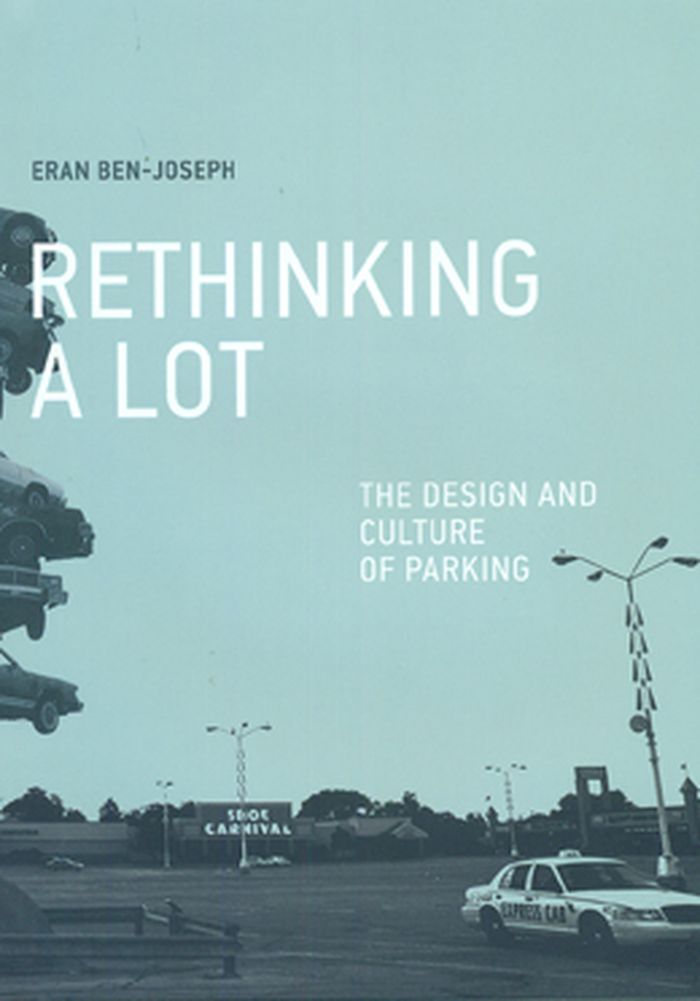
There are an estimated 600,000,000 passenger cars in the world, and that number is increasing every day. So too is Earth’s supply of parking spaces. In some cities, parking lots cover more than one-third of the metropolitan footprint. It’s official:we have paved paradise and put up a parking lot. In this publication,author Eran Ben-Joseph shares a different vision for parking’s future. Parking lots, he writes, are ripe for transformation. After all, as he points out, their design and function has not been rethought since the 1950s. With this book, Ben-Joseph pushes the parking lot into the twenty-first century. Can’t parking lots be aesthetically pleasing, environmentally and architecturally responsible? Used for something other than car storage? Ben-Joseph shows us that they can. He provides a visual history of this often ignored urban space, introducing us to some of the many alternative and nonparking purposes that parking lots have served - from RV campgrounds to stages for “Shakespeare in the Parking Lot.” He shows us parking lots that are not concrete wastelands but lushly planted with trees and flowers and beautifully integrated with the rest of the built environment. With purposeful design, Ben-Joseph argues, parking lots could be significant public places, contributing as much to their communities as great boulevards, parks, or plazas. For all the acreage they cover, parking lots have received scant attention. It’s time to change that; it’s time to rethink the lot.
Rethinking a lot : the design and culture of parking
Actions:
Prix:
$26.95
(disponible sur commande)
Résumé:
There are an estimated 600,000,000 passenger cars in the world, and that number is increasing every day. So too is Earth’s supply of parking spaces. In some cities, parking lots cover more than one-third of the metropolitan footprint. It’s official:we have paved paradise and put up a parking lot. In this publication,author Eran Ben-Joseph shares a different vision for parking’s future. Parking lots, he writes, are ripe for transformation. After all, as he points out, their design and function has not been rethought since the 1950s. With this book, Ben-Joseph pushes the parking lot into the twenty-first century. Can’t parking lots be aesthetically pleasing, environmentally and architecturally responsible? Used for something other than car storage? Ben-Joseph shows us that they can. He provides a visual history of this often ignored urban space, introducing us to some of the many alternative and nonparking purposes that parking lots have served - from RV campgrounds to stages for “Shakespeare in the Parking Lot.” He shows us parking lots that are not concrete wastelands but lushly planted with trees and flowers and beautifully integrated with the rest of the built environment. With purposeful design, Ben-Joseph argues, parking lots could be significant public places, contributing as much to their communities as great boulevards, parks, or plazas. For all the acreage they cover, parking lots have received scant attention. It’s time to change that; it’s time to rethink the lot.
Classification:
livres
livres
Publication:
mars 2012
mars 2012
Classification:
livres
livres
Titre:
Black landscapes matter
Black landscapes matter
Actions:
Prix:
$47.95
(disponible sur commande)
Résumé:
The question "Do black landscapes matter?" cuts deep to the core of American history. From the plantations of slavery to contemporary segregated cities, from freedman villages to northern migrations for freedom, the nation’s landscape bears the detritus of diverse origins. Black landscapes matter because they tell the truth. In this vital new collection, acclaimed(...)
$47.95
(disponible sur commande)
Résumé:
The question "Do black landscapes matter?" cuts deep to the core of American history. From the plantations of slavery to contemporary segregated cities, from freedman villages to northern migrations for freedom, the nation’s landscape bears the detritus of diverse origins. Black landscapes matter because they tell the truth. In this vital new collection, acclaimed(...)
Titre:
Black landscapes matter
Actions:
Prix:
$47.95
(disponible sur commande)
Résumé:
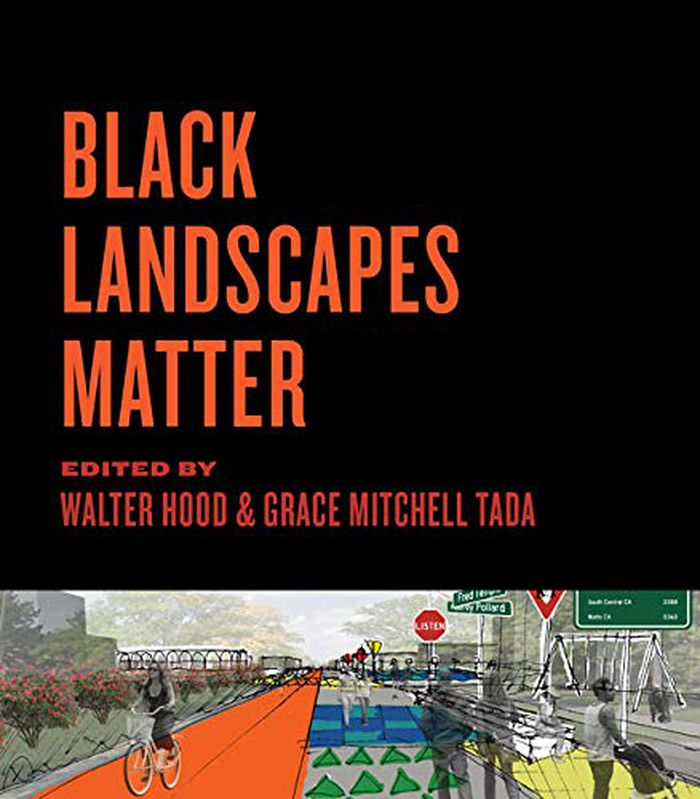
The question "Do black landscapes matter?" cuts deep to the core of American history. From the plantations of slavery to contemporary segregated cities, from freedman villages to northern migrations for freedom, the nation’s landscape bears the detritus of diverse origins. Black landscapes matter because they tell the truth. In this vital new collection, acclaimed landscape designer and public artist Walter Hood assembles a group of notable landscape architecture and planning professionals and scholars to probe how race, memory, and meaning intersect in the American landscape. Essayists examine a variety of U.S. places— ranging from New Orleans and Charlotte to Milwaukee and Detroit— exposing racism endemic in the built environment and acknowledging the widespread erasure of black geographies and cultural landscapes. Through a combination of case studies, critiques, and calls to action, contributors reveal the deficient, normative portrayals of landscape that affect communities of color and question how public design and preservation efforts can support people in these places. In a culture in which historical omissions and specious narratives routinely provoke disinvestment in minority communities, creative solutions by designers, planners, artists, and residents are necessary to activate them in novel ways. Black people have built and shaped the American landscape in ways that can never be fully known. ''Black landscapes matter'' is a timely and necessary reminder that without recognizing and reconciling these histories and spaces, America’s past and future cannot be understood.
Black landscapes matter
Actions:
Prix:
$47.95
(disponible sur commande)
Résumé:
The question "Do black landscapes matter?" cuts deep to the core of American history. From the plantations of slavery to contemporary segregated cities, from freedman villages to northern migrations for freedom, the nation’s landscape bears the detritus of diverse origins. Black landscapes matter because they tell the truth. In this vital new collection, acclaimed landscape designer and public artist Walter Hood assembles a group of notable landscape architecture and planning professionals and scholars to probe how race, memory, and meaning intersect in the American landscape. Essayists examine a variety of U.S. places— ranging from New Orleans and Charlotte to Milwaukee and Detroit— exposing racism endemic in the built environment and acknowledging the widespread erasure of black geographies and cultural landscapes. Through a combination of case studies, critiques, and calls to action, contributors reveal the deficient, normative portrayals of landscape that affect communities of color and question how public design and preservation efforts can support people in these places. In a culture in which historical omissions and specious narratives routinely provoke disinvestment in minority communities, creative solutions by designers, planners, artists, and residents are necessary to activate them in novel ways. Black people have built and shaped the American landscape in ways that can never be fully known. ''Black landscapes matter'' is a timely and necessary reminder that without recognizing and reconciling these histories and spaces, America’s past and future cannot be understood.
Classification:
livres
livres
Publication:
novembre 2020
novembre 2020
Sujet:
Théorie du paysage
Théorie du paysage
Classification:
livres
livres

Titre:
Hip-hop Architecture
Hip-hop Architecture
Actions:
Prix:
$52.50
(disponible en magasin)
Résumé:
"This book is not for you. It is not for architectural academic elites. It is not for those who have gentrified our neighborhoods, overly intellectualized the profession, and ignored all contemporary Black theory within the discipline. You have made architecture a symbol of exclusion, oppression, and domination rather than expression, aspiration, and inspiration. This(...)
$52.50
(disponible en magasin)
Résumé:
"This book is not for you. It is not for architectural academic elites. It is not for those who have gentrified our neighborhoods, overly intellectualized the profession, and ignored all contemporary Black theory within the discipline. You have made architecture a symbol of exclusion, oppression, and domination rather than expression, aspiration, and inspiration. This(...)
Titre:
Hip-hop Architecture
Actions:
Prix:
$52.50
(disponible en magasin)
Résumé:
"This book is not for you. It is not for architectural academic elites. It is not for those who have gentrified our neighborhoods, overly intellectualized the profession, and ignored all contemporary Black theory within the discipline. You have made architecture a symbol of exclusion, oppression, and domination rather than expression, aspiration, and inspiration. This book is not for conformists-Black, White, or other." As architecture grapples with its own racist legacy, "Hip-Hop architecture" outlines a powerful new manifesto- the voice of the underrepresented, marginalized, and voiceless within the discipline. Exploring the production of spaces, buildings, and urban environments that embody the creative energies in hip-hop, it is a newly expanding design philosophy which sees architecture as a distinct part of hip-hop's cultural expression, and which uses hip-hop as a lens through which to provoke new architectural ideas. Examining the present and the future of "Hip-Hop architecture," the book also explores its historical antecedents and its theory, placing it in a wider context both within architecture and within Black and African American movements. Throughout, the work is illustrated with inspirational case studies of architectural projects and creative practices, and interspersed with interludes and interviews with key architects, designers, and academics in the field. This is a vital and provocative work that will appeal to architects, designers, students, theorists, and anyone interested in a fresh view of architecture, design, race and culture.
Hip-hop Architecture
Actions:
Prix:
$52.50
(disponible en magasin)
Résumé:
"This book is not for you. It is not for architectural academic elites. It is not for those who have gentrified our neighborhoods, overly intellectualized the profession, and ignored all contemporary Black theory within the discipline. You have made architecture a symbol of exclusion, oppression, and domination rather than expression, aspiration, and inspiration. This book is not for conformists-Black, White, or other." As architecture grapples with its own racist legacy, "Hip-Hop architecture" outlines a powerful new manifesto- the voice of the underrepresented, marginalized, and voiceless within the discipline. Exploring the production of spaces, buildings, and urban environments that embody the creative energies in hip-hop, it is a newly expanding design philosophy which sees architecture as a distinct part of hip-hop's cultural expression, and which uses hip-hop as a lens through which to provoke new architectural ideas. Examining the present and the future of "Hip-Hop architecture," the book also explores its historical antecedents and its theory, placing it in a wider context both within architecture and within Black and African American movements. Throughout, the work is illustrated with inspirational case studies of architectural projects and creative practices, and interspersed with interludes and interviews with key architects, designers, and academics in the field. This is a vital and provocative work that will appeal to architects, designers, students, theorists, and anyone interested in a fresh view of architecture, design, race and culture.
Classification:
livres
livres
Publication:
avril 2021
avril 2021
Sujet:
Théorie de l’architecture
Théorie de l’architecture
Classification:
livres
livres
Prix:
$33.95
(disponible sur commande)
Résumé:
Increasingly we live through our personal screens; we work, play, socialize, and learn digitally. The shift to remote everything during the pandemic was another step in a decades-long march toward the digitization of everyday life made possible by innovations in media, information, and communication technology. In "The Digital Environment," Pablo Boczkowski and Eugenia(...)
$33.95
(disponible sur commande)
Résumé:
Increasingly we live through our personal screens; we work, play, socialize, and learn digitally. The shift to remote everything during the pandemic was another step in a decades-long march toward the digitization of everyday life made possible by innovations in media, information, and communication technology. In "The Digital Environment," Pablo Boczkowski and Eugenia(...)
Titre:
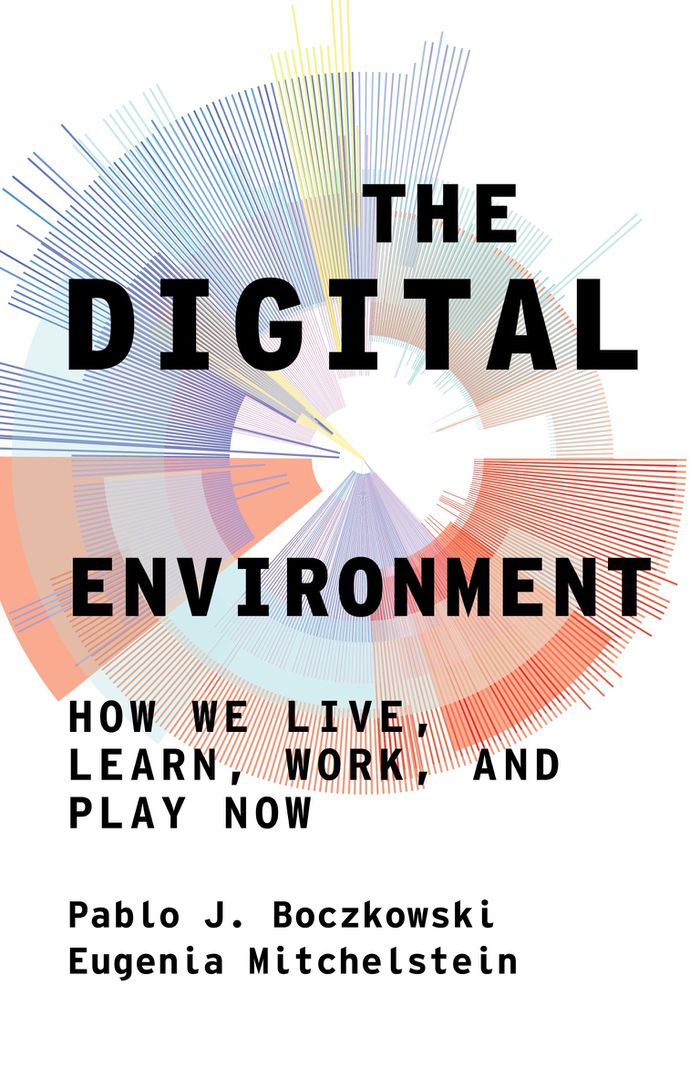
The digital environment: How we live, learn, work and play now
Actions:
Prix:
$33.95
(disponible sur commande)
Résumé:
Increasingly we live through our personal screens; we work, play, socialize, and learn digitally. The shift to remote everything during the pandemic was another step in a decades-long march toward the digitization of everyday life made possible by innovations in media, information, and communication technology. In "The Digital Environment," Pablo Boczkowski and Eugenia Mitchelstein offer a new way to understand the role of the digital in our daily lives, calling on us to turn our attention from our discrete devices and apps to the array of artifacts and practices that make up the digital environment that envelops every aspect of our social experience. Boczkowski and Mitchelstein explore a series of issues raised by the digital takeover of everyday life, drawing on interviews with a variety of experts. They show how existing inequities of gender, race, ethnicity, education, and class are baked into the design and deployment of technology, and describe emancipatory practices that counter this–including the use of Twitter as a platform for activism through such hashtags as #BlackLivesMatter and #MeToo. They discuss the digitization of parenting, schooling, and dating–noting, among other things, that today we can both begin and end relationships online. They describe how digital media shape our consumption of sports, entertainment, and news, and consider the dynamics of political campaigns, disinformation, and social activism. Finally, they report on developments in three areas that will be key to our digital future: data science, virtual reality, and space exploration.
The digital environment: How we live, learn, work and play now
Actions:
Prix:
$33.95
(disponible sur commande)
Résumé:
Increasingly we live through our personal screens; we work, play, socialize, and learn digitally. The shift to remote everything during the pandemic was another step in a decades-long march toward the digitization of everyday life made possible by innovations in media, information, and communication technology. In "The Digital Environment," Pablo Boczkowski and Eugenia Mitchelstein offer a new way to understand the role of the digital in our daily lives, calling on us to turn our attention from our discrete devices and apps to the array of artifacts and practices that make up the digital environment that envelops every aspect of our social experience. Boczkowski and Mitchelstein explore a series of issues raised by the digital takeover of everyday life, drawing on interviews with a variety of experts. They show how existing inequities of gender, race, ethnicity, education, and class are baked into the design and deployment of technology, and describe emancipatory practices that counter this–including the use of Twitter as a platform for activism through such hashtags as #BlackLivesMatter and #MeToo. They discuss the digitization of parenting, schooling, and dating–noting, among other things, that today we can both begin and end relationships online. They describe how digital media shape our consumption of sports, entertainment, and news, and consider the dynamics of political campaigns, disinformation, and social activism. Finally, they report on developments in three areas that will be key to our digital future: data science, virtual reality, and space exploration.
Classification:
livres
livres
Publication:
août 2021
août 2021
Sujet:
Social
Social
Classification:
livres
livres
Actions:
Exemplaires:
Description:
xii, 216 pages : illustrations ; 27 cm
Description:
xii, 216 pages : illustrations ; 27 cm
Auteur:
Sujet:
Publication:
Minneapolis : University of Minnesota Press, 1999.
Minneapolis : University of Minnesota Press, 1999.
Titre:
Imagining the modern city / James Donald.
Actions:
Exemplaires:
Description:
xii, 216 pages : illustrations ; 27 cm
Imagining the modern city / James Donald.
Actions:
Exemplaires:
Description:
xii, 216 pages : illustrations ; 27 cm
Classification:
livres
livres
Publication:
Minneapolis : University of Minnesota Press, 1999.
Minneapolis : University of Minnesota Press, 1999.
Auteur:
Sujet:


