


6653 Résultats
Classification:
livres
livres
Actions:
Prix:
$75.00
(disponible sur commande)
Résumé:
Today the world is focusing unprecedented attention on Asia and the Middle East, rediscovering a cultural, political, and geographical landscape that has fascinated and frustrated Westerners since the time of Alexander the Great. "Mapping the Silk Road and Beyond", traces the history of the European age of exploration and its lasting effects on these regions through(...)
$75.00
(disponible sur commande)
Résumé:
Today the world is focusing unprecedented attention on Asia and the Middle East, rediscovering a cultural, political, and geographical landscape that has fascinated and frustrated Westerners since the time of Alexander the Great. "Mapping the Silk Road and Beyond", traces the history of the European age of exploration and its lasting effects on these regions through(...)
Sujet:
Dessin d’architecture
Dessin d’architecture
Publication:
septembre 2004, London, New York
septembre 2004, London, New York
Titre:
Mapping the silk road and beyond : 2000 years of exploring the east
Actions:
Prix:
$75.00
(disponible sur commande)
Résumé:
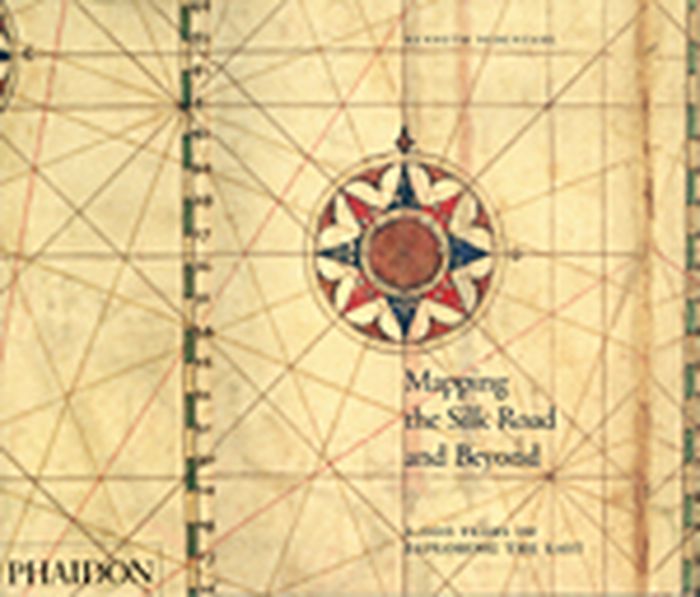
Today the world is focusing unprecedented attention on Asia and the Middle East, rediscovering a cultural, political, and geographical landscape that has fascinated and frustrated Westerners since the time of Alexander the Great. "Mapping the Silk Road and Beyond", traces the history of the European age of exploration and its lasting effects on these regions through beautifully rendered and imaginative maps drawn by explorers, merchants, and colonial administrators of the time. The book focuses on both maritime exploration and overland discovery via the ancient Silk Road, a network of trading posts that encompassed China, Tibet, Pakistan, India, Kurdistan, Iraq, Ethiopia, Eritrea, and dozens of other places known in ancient times by fabled names, including Abyssinia, Malacca, Macassar, Siam, and Cathay. The maps provide visual keys to the fascinating history of Asia and the Middle East; illuminating a cast of historical figures ranging from great leaders (the Queen of Sheba, Mohammed the prophet, King Charles V) to legendary explorers (Marco Polo, Columbus, Magellan, Sir Francis Drake, Capt. James Cook) and influential cartographers. "Mapping the Silk Road and Beyond", depicts over eighty maps organized chronologically, from Alexander the Great’s map of the world, first created in 323 BC and reproduced in a sixteenth-century atlas, to maps from the nineteenth century by French and Dutch explorers that detail the growing interaction between Europeans and Eastern cultures. The maps represent the finest examples in existence in museums, libraries, and archives around the world, chosen because they depict the most important milestones in the mapping of Asia.
Mapping the silk road and beyond : 2000 years of exploring the east
Actions:
Prix:
$75.00
(disponible sur commande)
Résumé:
Today the world is focusing unprecedented attention on Asia and the Middle East, rediscovering a cultural, political, and geographical landscape that has fascinated and frustrated Westerners since the time of Alexander the Great. "Mapping the Silk Road and Beyond", traces the history of the European age of exploration and its lasting effects on these regions through beautifully rendered and imaginative maps drawn by explorers, merchants, and colonial administrators of the time. The book focuses on both maritime exploration and overland discovery via the ancient Silk Road, a network of trading posts that encompassed China, Tibet, Pakistan, India, Kurdistan, Iraq, Ethiopia, Eritrea, and dozens of other places known in ancient times by fabled names, including Abyssinia, Malacca, Macassar, Siam, and Cathay. The maps provide visual keys to the fascinating history of Asia and the Middle East; illuminating a cast of historical figures ranging from great leaders (the Queen of Sheba, Mohammed the prophet, King Charles V) to legendary explorers (Marco Polo, Columbus, Magellan, Sir Francis Drake, Capt. James Cook) and influential cartographers. "Mapping the Silk Road and Beyond", depicts over eighty maps organized chronologically, from Alexander the Great’s map of the world, first created in 323 BC and reproduced in a sixteenth-century atlas, to maps from the nineteenth century by French and Dutch explorers that detail the growing interaction between Europeans and Eastern cultures. The maps represent the finest examples in existence in museums, libraries, and archives around the world, chosen because they depict the most important milestones in the mapping of Asia.
Classification:
livres
livres
Publication:
septembre 2004, London, New York
septembre 2004, London, New York
Sujet:
Dessin d’architecture
Dessin d’architecture
Classification:
livres
livres
Titre:
The language of ornament
The language of ornament
Actions:
Prix:
$22.99
(disponible sur commande)
Résumé:
Ornament, the art of decorative patterning, includes some of the most spectacular creations of human imagination and skill. Although the fashion for unadorned form pushed ornament to the(...)
$22.99
(disponible sur commande)
Résumé:
Ornament, the art of decorative patterning, includes some of the most spectacular creations of human imagination and skill. Although the fashion for unadorned form pushed ornament to the(...)
Titre:
The language of ornament
Actions:
Prix:
$22.99
(disponible sur commande)
Résumé:
Ornament, the art of decorative patterning, includes some of the most spectacular creations of human imagination and skill. Although the fashion for unadorned form pushed ornament to the margins of Western taste in the twentieth century, an ornamental revival is now under way. This book introduces the global panorama of ornament and will be of value to crafts people, collectors, and students of art history. Trilling's approach is both visual and historical. With over 200 illustrations, he presents the dazzling variety of ornament so that the reader can appreciate both its inherent form and the role it has played in everything from the monumental architecture of Mycenaean Greece to the inlaid vessels of Zhou Dynasty China, from the bronze mirrors of Early Celtic Britain to the carved and woven ornament of the Indians of Alaska and British Columbia. The characteristics of individual styles are balanced against their evolution and interaction from the Paleolithic Age to the present day. Special attention is paid to patterns that migrate across large stretches of space and time, showing how ornament becomes a record of cultural interaction through trade, conquest, and the spread of religions. Finally, Trilling explores the fate of ornament since the beginning of modernism in the early twentieth century. Modernism actually nurtured a vibrant and original ornamental style of its own, one so different from traditional ornament that its true nature went virtually unrecognized. Ornament in the postmodern era is open to any number of possible innovations, combining the modernist legacy with forms and principles from the world of traditional ornament.
The language of ornament
Actions:
Prix:
$22.99
(disponible sur commande)
Résumé:
Ornament, the art of decorative patterning, includes some of the most spectacular creations of human imagination and skill. Although the fashion for unadorned form pushed ornament to the margins of Western taste in the twentieth century, an ornamental revival is now under way. This book introduces the global panorama of ornament and will be of value to crafts people, collectors, and students of art history. Trilling's approach is both visual and historical. With over 200 illustrations, he presents the dazzling variety of ornament so that the reader can appreciate both its inherent form and the role it has played in everything from the monumental architecture of Mycenaean Greece to the inlaid vessels of Zhou Dynasty China, from the bronze mirrors of Early Celtic Britain to the carved and woven ornament of the Indians of Alaska and British Columbia. The characteristics of individual styles are balanced against their evolution and interaction from the Paleolithic Age to the present day. Special attention is paid to patterns that migrate across large stretches of space and time, showing how ornament becomes a record of cultural interaction through trade, conquest, and the spread of religions. Finally, Trilling explores the fate of ornament since the beginning of modernism in the early twentieth century. Modernism actually nurtured a vibrant and original ornamental style of its own, one so different from traditional ornament that its true nature went virtually unrecognized. Ornament in the postmodern era is open to any number of possible innovations, combining the modernist legacy with forms and principles from the world of traditional ornament.
Classification:
livres
livres
Publication:
juin 2001, London
juin 2001, London
Sujet:
Ornementation
Ornementation
Classification:
livres
livres
Actions:
Prix:
$60.00
(disponible sur commande)
Résumé:
"This is an experiential architecture, not a theoretical one. It is grounded in reality, not in abstract dogma, yet it seeks the transcendent, every bit as earnestly - perhaps even more so - then architecture that is built on pure theory. It is the way space, texture, light, materials actually feel that motivates these architects, and it is their skill at manipulating(...)
$60.00
(disponible sur commande)
Résumé:
"This is an experiential architecture, not a theoretical one. It is grounded in reality, not in abstract dogma, yet it seeks the transcendent, every bit as earnestly - perhaps even more so - then architecture that is built on pure theory. It is the way space, texture, light, materials actually feel that motivates these architects, and it is their skill at manipulating(...)
Titre:
Olsen Sundberg Kunding Allen : connecting architecture, art, and craft in twelve residential projects
Actions:
Prix:
$60.00
(disponible sur commande)
Résumé:
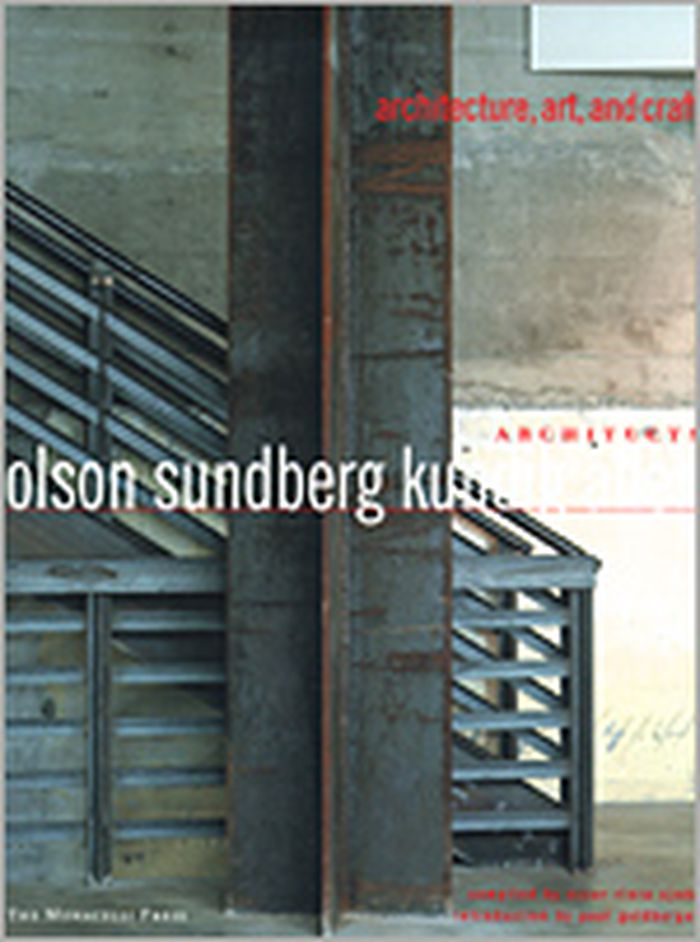
"This is an experiential architecture, not a theoretical one. It is grounded in reality, not in abstract dogma, yet it seeks the transcendent, every bit as earnestly - perhaps even more so - then architecture that is built on pure theory. It is the way space, texture, light, materials actually feel that motivates these architects, and it is their skill at manipulating these elements that gives their work the rigor and strength it possesses. This architecture is marked by a sense of a self-assured and sensual presence, shaped by light, texture, materiality and scale. It should almost go without saying at this point that in an age in which most architects actively seek to achieve the identity of a "look," Olson Sundberg's work eschews simple similarities. Certain principles are evident from one building to another, as is the absence of direct historical replication, but consistency is not the same as a packageable style. Indeed, a single, easily identifiable style is something that these architects not only do not have but seem actively to discourage, as if its presence could be taken as a sign that their firm was not sufficiently cognizant of the widely varying demands that are inherent in different clients' programs, sites and esthetic preferences. They seem determined to prove that consistency of belief need not yield similarity of visual appearance – and that it is possible to produce a coherent body of work that does not look precisely the same." Excerpted from the introduction written by Paul Goldberger.
Olsen Sundberg Kunding Allen : connecting architecture, art, and craft in twelve residential projects
Actions:
Prix:
$60.00
(disponible sur commande)
Résumé:
"This is an experiential architecture, not a theoretical one. It is grounded in reality, not in abstract dogma, yet it seeks the transcendent, every bit as earnestly - perhaps even more so - then architecture that is built on pure theory. It is the way space, texture, light, materials actually feel that motivates these architects, and it is their skill at manipulating these elements that gives their work the rigor and strength it possesses. This architecture is marked by a sense of a self-assured and sensual presence, shaped by light, texture, materiality and scale. It should almost go without saying at this point that in an age in which most architects actively seek to achieve the identity of a "look," Olson Sundberg's work eschews simple similarities. Certain principles are evident from one building to another, as is the absence of direct historical replication, but consistency is not the same as a packageable style. Indeed, a single, easily identifiable style is something that these architects not only do not have but seem actively to discourage, as if its presence could be taken as a sign that their firm was not sufficiently cognizant of the widely varying demands that are inherent in different clients' programs, sites and esthetic preferences. They seem determined to prove that consistency of belief need not yield similarity of visual appearance – and that it is possible to produce a coherent body of work that does not look precisely the same." Excerpted from the introduction written by Paul Goldberger.
Classification:
livres
livres
Publication:
juin 2001, New York
juin 2001, New York
Sujet:
Architecture, monographies
Architecture, monographies
Classification:
livres
livres
Prix:
$31.50
(disponible sur commande)
Résumé:
In "Chaos and cosmos", Karen Lang addresses the power of art to resist the pressures of the transcendental vantage point-history. Uncovering the intellectual and cultural richness of the early years of academic art history in Germany -the period from the 1880s to 1940 - she explores various attempts within art history to transform aesthetic phenomena -chaos- into the(...)
$31.50
(disponible sur commande)
Résumé:
In "Chaos and cosmos", Karen Lang addresses the power of art to resist the pressures of the transcendental vantage point-history. Uncovering the intellectual and cultural richness of the early years of academic art history in Germany -the period from the 1880s to 1940 - she explores various attempts within art history to transform aesthetic phenomena -chaos- into the(...)
Titre:
Chaos in cosmos : on the image in aesthetics and art history
Actions:
Prix:
$31.50
(disponible sur commande)
Résumé:
In "Chaos and cosmos", Karen Lang addresses the power of art to resist the pressures of the transcendental vantage point-history. Uncovering the intellectual and cultural richness of the early years of academic art history in Germany -the period from the 1880s to 1940 - she explores various attempts within art history to transform aesthetic phenomena -chaos- into the cosmos of a systematic, unified field of inquiry. Lang starts by examining Panofsky's approach to aesthetic phenomena in his early theoretical essays alongside Ernst Cassirer's contemporaneous publications on the substance and function of scientific concepts (and on Einstein's theory of relativity). She then turns to the subject of aesthetic judgment through a rereading of Kantian subjectivity and Kant's uneasy legacy in art history. From here, Lang considers the different organizing theories of symbolic form proposed by Aby Warburg and Cassirer, as well as Goethe's inspiration for both; Alois Riegl's notion of age value and Walter Benjamin's conceptions of the aura; concluding with an extended examination of objectivity and the figure of the art connoisseur. Illustrated with works of art from the Enlightenment to the present day, this book illuminates an intellectual legacy that has profoundly shaped the study of the history of art in ways that have, until now, been largely unacknowledged. Addressing the interplay of chaos and cosmos in terms of history, art history, philosophy, and epistemology, Lang traces shifts in point of view in art history and the way these shifts change aesthetic objects into historical objects, and even objects of knowledge.
Chaos in cosmos : on the image in aesthetics and art history
Actions:
Prix:
$31.50
(disponible sur commande)
Résumé:
In "Chaos and cosmos", Karen Lang addresses the power of art to resist the pressures of the transcendental vantage point-history. Uncovering the intellectual and cultural richness of the early years of academic art history in Germany -the period from the 1880s to 1940 - she explores various attempts within art history to transform aesthetic phenomena -chaos- into the cosmos of a systematic, unified field of inquiry. Lang starts by examining Panofsky's approach to aesthetic phenomena in his early theoretical essays alongside Ernst Cassirer's contemporaneous publications on the substance and function of scientific concepts (and on Einstein's theory of relativity). She then turns to the subject of aesthetic judgment through a rereading of Kantian subjectivity and Kant's uneasy legacy in art history. From here, Lang considers the different organizing theories of symbolic form proposed by Aby Warburg and Cassirer, as well as Goethe's inspiration for both; Alois Riegl's notion of age value and Walter Benjamin's conceptions of the aura; concluding with an extended examination of objectivity and the figure of the art connoisseur. Illustrated with works of art from the Enlightenment to the present day, this book illuminates an intellectual legacy that has profoundly shaped the study of the history of art in ways that have, until now, been largely unacknowledged. Addressing the interplay of chaos and cosmos in terms of history, art history, philosophy, and epistemology, Lang traces shifts in point of view in art history and the way these shifts change aesthetic objects into historical objects, and even objects of knowledge.
Classification:
livres
livres
Publication:
septembre 2006, Ithaca, London
septembre 2006, Ithaca, London
Sujet:
Théorie de l’architecture
Théorie de l’architecture
Classification:
livres
livres
Actions:
Prix:
$18.95
(disponible sur commande)
Résumé:
If a picture is worth a thousand words, then it's a good bet that at least half of those words relate to the picture's copyright status. Art historians, artists, and anyone who wants to use the images of others will find themselves awash in byzantine legal terms, constantly evolving copyright law, varying interpretations by museums and estates, and despair over the(...)
$18.95
(disponible sur commande)
Résumé:
If a picture is worth a thousand words, then it's a good bet that at least half of those words relate to the picture's copyright status. Art historians, artists, and anyone who wants to use the images of others will find themselves awash in byzantine legal terms, constantly evolving copyright law, varying interpretations by museums and estates, and despair over the(...)
Publication:
juin 2006, Chicago, London
juin 2006, Chicago, London
Titre:
Permissions, a survival guide : blunt talk about art as intellectual property
Actions:
Prix:
$18.95
(disponible sur commande)
Résumé:
If a picture is worth a thousand words, then it's a good bet that at least half of those words relate to the picture's copyright status. Art historians, artists, and anyone who wants to use the images of others will find themselves awash in byzantine legal terms, constantly evolving copyright law, varying interpretations by museums and estates, and despair over the complexity of the whole situation. Here, Susan Bielstein offers her decades of experience as an editor working with illustrated books. In doing so, she unsnarls the threads of permissions that have ensnared scholars, critics, and artists for years. Organized as a series of “takes” that range from short sidebars to extended discussions, "Permissions, a survival guide" explores intellectual property law as it pertains to visual imagery. How can you determine whether an artwork is copyrighted? How do you procure a high-quality reproduction of an image? What does “fair use” really mean? Is it ever legitimate to use the work of an artist without permission? Bielstein discusses the many uncertainties that plague writers who work with images in this highly visual age, and she does so based on her years navigating precisely these issues. As an editor who has hired a photographer to shoot an incredibly obscure work in the Italian mountains (a plan that backfired hilariously), who has tried to reason with artists' estates in languages she doesn't speak, and who has spent her time in the archival trenches, she offers a snappy and humane guide to this difficult terrain.
Permissions, a survival guide : blunt talk about art as intellectual property
Actions:
Prix:
$18.95
(disponible sur commande)
Résumé:
If a picture is worth a thousand words, then it's a good bet that at least half of those words relate to the picture's copyright status. Art historians, artists, and anyone who wants to use the images of others will find themselves awash in byzantine legal terms, constantly evolving copyright law, varying interpretations by museums and estates, and despair over the complexity of the whole situation. Here, Susan Bielstein offers her decades of experience as an editor working with illustrated books. In doing so, she unsnarls the threads of permissions that have ensnared scholars, critics, and artists for years. Organized as a series of “takes” that range from short sidebars to extended discussions, "Permissions, a survival guide" explores intellectual property law as it pertains to visual imagery. How can you determine whether an artwork is copyrighted? How do you procure a high-quality reproduction of an image? What does “fair use” really mean? Is it ever legitimate to use the work of an artist without permission? Bielstein discusses the many uncertainties that plague writers who work with images in this highly visual age, and she does so based on her years navigating precisely these issues. As an editor who has hired a photographer to shoot an incredibly obscure work in the Italian mountains (a plan that backfired hilariously), who has tried to reason with artists' estates in languages she doesn't speak, and who has spent her time in the archival trenches, she offers a snappy and humane guide to this difficult terrain.
Classification:
livres
livres
Publication:
juin 2006, Chicago, London
juin 2006, Chicago, London
Classification:
livres
livres
Prix:
$40.00
(disponible en magasin)
Résumé:
Virtuous situations from the industrial past and some ideas for the ‘climatic metropolis’ to come (cases of Brussels and Paris) compiles examples and projections that question the shape given to the city and territory at a moment of paradigm shift. The rapid evolution of climate change is leading to a clear state of emergency that is going to redefine the values and(...)
$40.00
(disponible en magasin)
Résumé:
Virtuous situations from the industrial past and some ideas for the ‘climatic metropolis’ to come (cases of Brussels and Paris) compiles examples and projections that question the shape given to the city and territory at a moment of paradigm shift. The rapid evolution of climate change is leading to a clear state of emergency that is going to redefine the values and(...)
Titre:
CENTRAL office for architecture and urbanism & Maxime Delvaux
Actions:
Prix:
$40.00
(disponible en magasin)
Résumé:
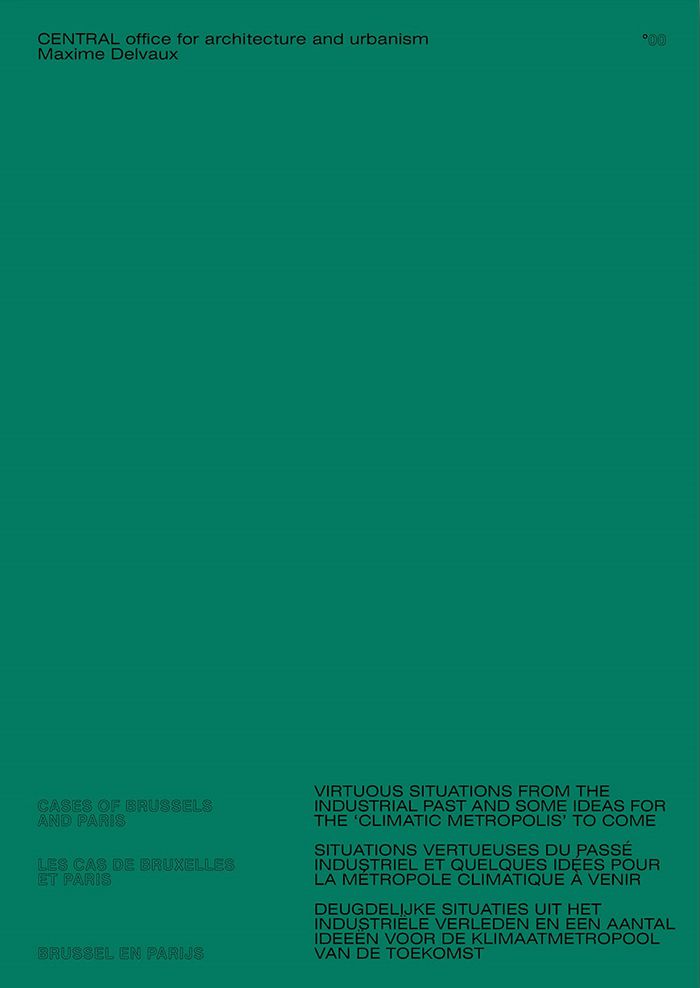
Virtuous situations from the industrial past and some ideas for the ‘climatic metropolis’ to come (cases of Brussels and Paris) compiles examples and projections that question the shape given to the city and territory at a moment of paradigm shift. The rapid evolution of climate change is leading to a clear state of emergency that is going to redefine the values and forms of our society and its territories. Several signs of a gradual paradigm shift have appeared and citizen voices are being raised against a social model that is at odds with the environment. Looking towards the past, a fascinated reading of a city’s ability to transform itself radically when necessary, is proposed. The change, generated by the race towards industrialization and social emancipation, forced metropolises such as Brussels and Paris to develop new urban functions and logics. This evolution took shape in territories that were not yet highly urbanized, but also within the city itself, in negotiation with the existing context. A series of 23 situations from the industrial age draws a panorama of virtuous examples, illustrating an assumed cohabitation between the urban fabric and the infrastructural, productive and energy needs at a precise moment of radical change in Paris and Brussels. The development of the ‘climatic metropolis’ must imperatively be based on design values and principles capable of generating a common vision. In this perspective, we propose some ideas for reflection formalized by projects tied to the built stories from the past, outlining potential situations of a new state to come for the European city.
CENTRAL office for architecture and urbanism & Maxime Delvaux
Actions:
Prix:
$40.00
(disponible en magasin)
Résumé:
Virtuous situations from the industrial past and some ideas for the ‘climatic metropolis’ to come (cases of Brussels and Paris) compiles examples and projections that question the shape given to the city and territory at a moment of paradigm shift. The rapid evolution of climate change is leading to a clear state of emergency that is going to redefine the values and forms of our society and its territories. Several signs of a gradual paradigm shift have appeared and citizen voices are being raised against a social model that is at odds with the environment. Looking towards the past, a fascinated reading of a city’s ability to transform itself radically when necessary, is proposed. The change, generated by the race towards industrialization and social emancipation, forced metropolises such as Brussels and Paris to develop new urban functions and logics. This evolution took shape in territories that were not yet highly urbanized, but also within the city itself, in negotiation with the existing context. A series of 23 situations from the industrial age draws a panorama of virtuous examples, illustrating an assumed cohabitation between the urban fabric and the infrastructural, productive and energy needs at a precise moment of radical change in Paris and Brussels. The development of the ‘climatic metropolis’ must imperatively be based on design values and principles capable of generating a common vision. In this perspective, we propose some ideas for reflection formalized by projects tied to the built stories from the past, outlining potential situations of a new state to come for the European city.
Classification:
livres
livres
Publication:
juillet 2019
juillet 2019
Sujet:
Architecture, monographies
Architecture, monographies
Classification:
livres
livres
Actions:
Prix:
$69.95
(disponible sur commande)
Résumé:
''On intricacy'' is perhaps unusual in that it’s not a monograph, nor is it a hagiography. John Meunier is still alive. ''On intricacy'' celebrates and proselytises the ideas that John has articulated throughout his career. ''On intricacy'' is not a book about him as such, nor simply a book by him, but a book with him, and it reflects his life’s work as an architect and(...)
$69.95
(disponible sur commande)
Résumé:
''On intricacy'' is perhaps unusual in that it’s not a monograph, nor is it a hagiography. John Meunier is still alive. ''On intricacy'' celebrates and proselytises the ideas that John has articulated throughout his career. ''On intricacy'' is not a book about him as such, nor simply a book by him, but a book with him, and it reflects his life’s work as an architect and(...)
Titre:
On intricacy: The work of John Meunier Architect
Actions:
Prix:
$69.95
(disponible sur commande)
Résumé:
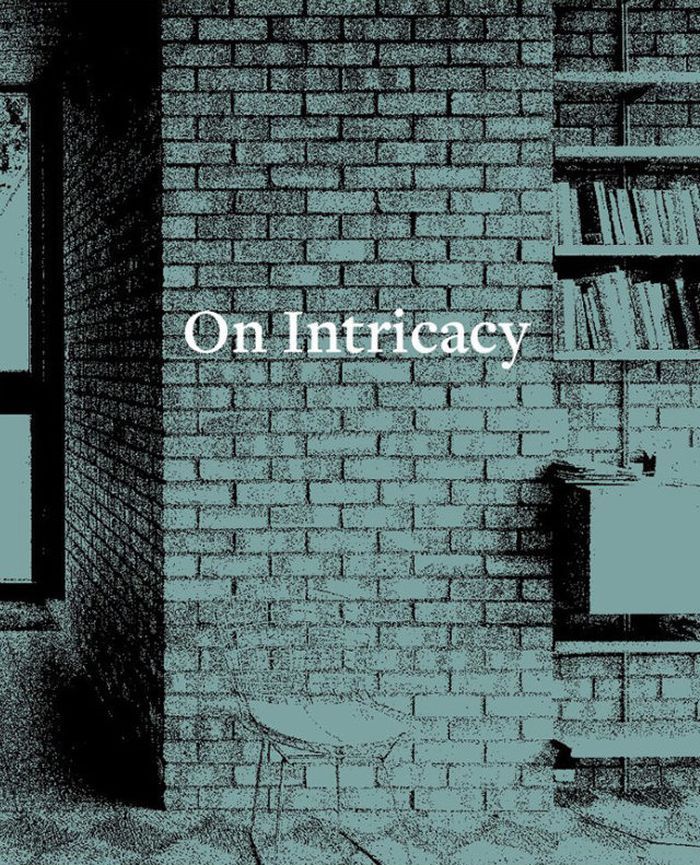
''On intricacy'' is perhaps unusual in that it’s not a monograph, nor is it a hagiography. John Meunier is still alive. ''On intricacy'' celebrates and proselytises the ideas that John has articulated throughout his career. ''On intricacy'' is not a book about him as such, nor simply a book by him, but a book with him, and it reflects his life’s work as an architect and teacher, in the UK and USA. ''On intricacy'' continues conversations between John Meunier and Patrick Lynch that first appeared in Issue 2 of the Journal of Civic Architecture. It also includes essays by Meunier, Lynch and the architect Simon Henley, as well as new photography of The Meunier House at Cambridge by David Grandorge. Intricacy is not so much an aesthetic term, although it is a sign of quality in artistic work, as something intrinsic to human situations. Intricacy is something that architecture does or doesn’t reflect, and when it does, it tends to be life-like, vital, and therefore good. ''On intricacy'' is a visual and written polemic reflecting the hard-won wisdom of a practical life. ''On intricacy'' is also a biography of sorts of a man born into a relatively recent, but also a very different age. It tells an inspiring story from a period of hope and opportunity in the 20th century. ''On intricacy'' will be welcomed by students, historians and practising architects, and by anyone concerned with the deep reciprocity of ethics and aesthetics in human ecology and culture.
On intricacy: The work of John Meunier Architect
Actions:
Prix:
$69.95
(disponible sur commande)
Résumé:
''On intricacy'' is perhaps unusual in that it’s not a monograph, nor is it a hagiography. John Meunier is still alive. ''On intricacy'' celebrates and proselytises the ideas that John has articulated throughout his career. ''On intricacy'' is not a book about him as such, nor simply a book by him, but a book with him, and it reflects his life’s work as an architect and teacher, in the UK and USA. ''On intricacy'' continues conversations between John Meunier and Patrick Lynch that first appeared in Issue 2 of the Journal of Civic Architecture. It also includes essays by Meunier, Lynch and the architect Simon Henley, as well as new photography of The Meunier House at Cambridge by David Grandorge. Intricacy is not so much an aesthetic term, although it is a sign of quality in artistic work, as something intrinsic to human situations. Intricacy is something that architecture does or doesn’t reflect, and when it does, it tends to be life-like, vital, and therefore good. ''On intricacy'' is a visual and written polemic reflecting the hard-won wisdom of a practical life. ''On intricacy'' is also a biography of sorts of a man born into a relatively recent, but also a very different age. It tells an inspiring story from a period of hope and opportunity in the 20th century. ''On intricacy'' will be welcomed by students, historians and practising architects, and by anyone concerned with the deep reciprocity of ethics and aesthetics in human ecology and culture.
Classification:
livres
livres
Publication:
janvier 2020
janvier 2020
Sujet:
Architecture, monographies
Architecture, monographies
Classification:
livres
livres
Actions:
Prix:
$67.50
(disponible sur commande)
Résumé:
This book celebrates, by way of a dual narrative, the Italian Cultural Institute in Stockholm, designed and furnished by Gio Ponti to a commission from Carlo Maurilio Lerici. The essays aim to examine the events linked to the commission of the project itself, and to the planning and realization of the building together with its interior design. The volume contains a(...)
$67.50
(disponible sur commande)
Résumé:
This book celebrates, by way of a dual narrative, the Italian Cultural Institute in Stockholm, designed and furnished by Gio Ponti to a commission from Carlo Maurilio Lerici. The essays aim to examine the events linked to the commission of the project itself, and to the planning and realization of the building together with its interior design. The volume contains a(...)
Titre:
Enchanting architecture: Gio Ponti's Italian Cultural institute in Stockholm
Actions:
Prix:
$67.50
(disponible sur commande)
Résumé:
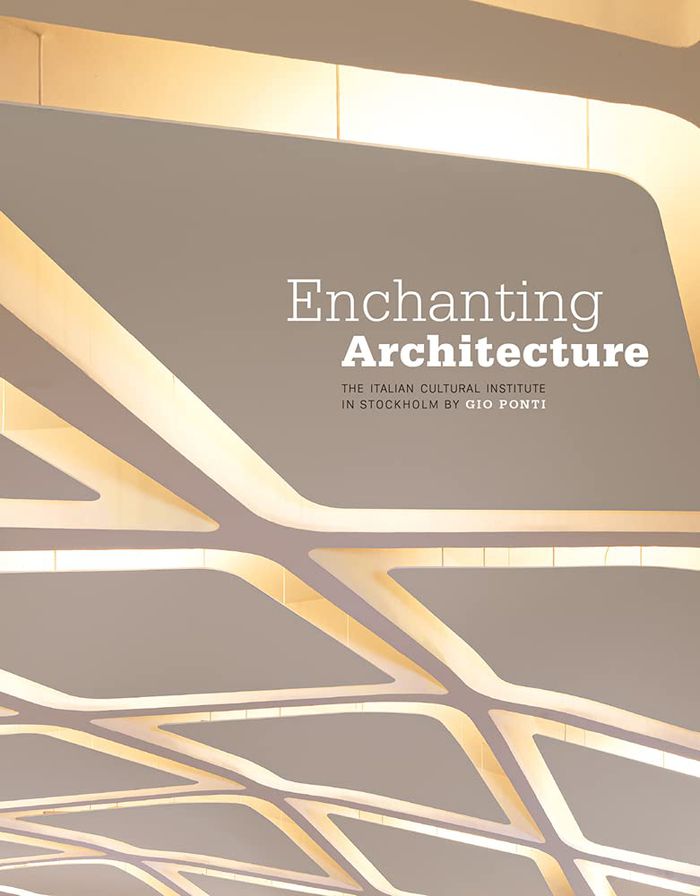
This book celebrates, by way of a dual narrative, the Italian Cultural Institute in Stockholm, designed and furnished by Gio Ponti to a commission from Carlo Maurilio Lerici. The essays aim to examine the events linked to the commission of the project itself, and to the planning and realization of the building together with its interior design. The volume contains a selection of images taken from the Institute's historical archive, as well as a new photographic reportage on the architectural and design elements featured in this building. It is well-known that Ponti took a great interest in Sweden (suffice it to think of all the space that was devoted to Swedish design in the pages of the magazine Domus from the early 1950s), yet it is fascinating to learn more and find answers regarding the dynamics that lay behind the making of this structure. Indeed, Gio Ponti managed to surpass the Swedish architect Ture Wennerholm's original idea, to breathe life into a project where the spaces, albeit organized according to function, succeed one another in a harmonious play of broken lines and different hues. Assisting him in the task were Pier Luigi Nervi and Ferruccio Rossetti. Gio Ponti gave life to a "classical modern" project in which art and architecture merge, proof that he had overcome the limits that were set by the trends characterizing that day and age. In so doing, he laid the groundwork for a new course in the cultural relations between Italy and Sweden.
Enchanting architecture: Gio Ponti's Italian Cultural institute in Stockholm
Actions:
Prix:
$67.50
(disponible sur commande)
Résumé:
This book celebrates, by way of a dual narrative, the Italian Cultural Institute in Stockholm, designed and furnished by Gio Ponti to a commission from Carlo Maurilio Lerici. The essays aim to examine the events linked to the commission of the project itself, and to the planning and realization of the building together with its interior design. The volume contains a selection of images taken from the Institute's historical archive, as well as a new photographic reportage on the architectural and design elements featured in this building. It is well-known that Ponti took a great interest in Sweden (suffice it to think of all the space that was devoted to Swedish design in the pages of the magazine Domus from the early 1950s), yet it is fascinating to learn more and find answers regarding the dynamics that lay behind the making of this structure. Indeed, Gio Ponti managed to surpass the Swedish architect Ture Wennerholm's original idea, to breathe life into a project where the spaces, albeit organized according to function, succeed one another in a harmonious play of broken lines and different hues. Assisting him in the task were Pier Luigi Nervi and Ferruccio Rossetti. Gio Ponti gave life to a "classical modern" project in which art and architecture merge, proof that he had overcome the limits that were set by the trends characterizing that day and age. In so doing, he laid the groundwork for a new course in the cultural relations between Italy and Sweden.
Classification:
livres
livres
Publication:
juin 2021
juin 2021
Sujet:
Architecture, monographies
Architecture, monographies
Classification:
livres
livres
Prix:
$73.95
(disponible sur commande)
Résumé:
Cities have contributed for centuries to the promotion of some of humanity’s greatest ideas, we must now urgently include them as among the principal players in the environmental debate and at the forefront of any policy tackling and countering – possibly reversing - climate change. Nevertheless, even today one of the most significant technologies capable of absorbing CO2(...)
$73.95
(disponible sur commande)
Résumé:
Cities have contributed for centuries to the promotion of some of humanity’s greatest ideas, we must now urgently include them as among the principal players in the environmental debate and at the forefront of any policy tackling and countering – possibly reversing - climate change. Nevertheless, even today one of the most significant technologies capable of absorbing CO2(...)
Sujet:
Architecture, monographies
Architecture, monographies
Publication:
avril 2022
avril 2022
Titre:
Green obsession: trees towards cities, humans towards forests
Actions:
Prix:
$73.95
(disponible sur commande)
Résumé:
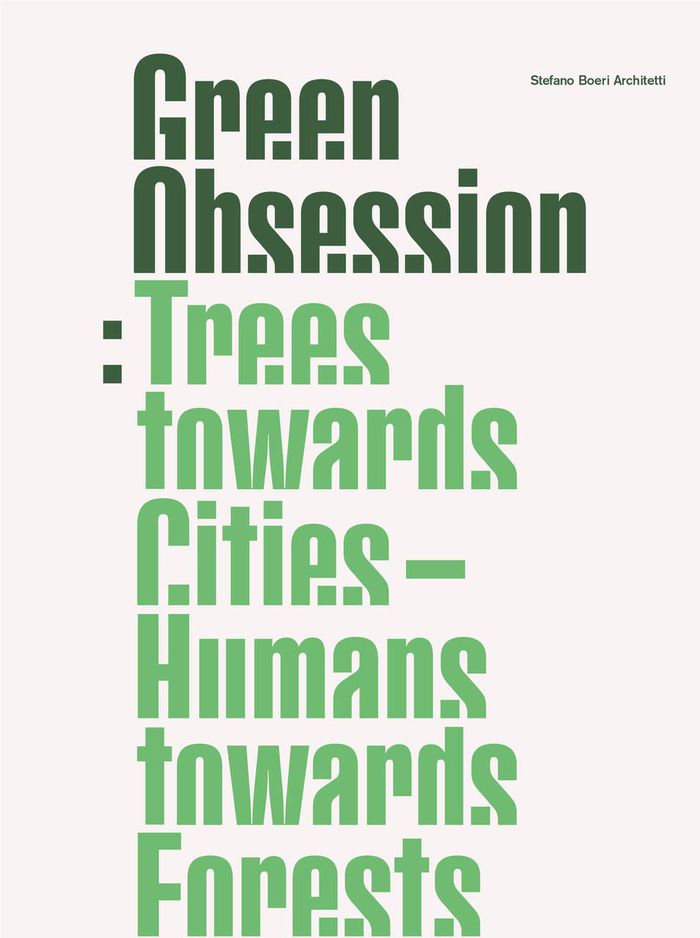
Cities have contributed for centuries to the promotion of some of humanity’s greatest ideas, we must now urgently include them as among the principal players in the environmental debate and at the forefront of any policy tackling and countering – possibly reversing - climate change. Nevertheless, even today one of the most significant technologies capable of absorbing CO2 and restoring our environment is photosynthesis. Planting trees, in addition to protecting existing natural areas and biodiversity, together with de-carbonization, renewable energies, digitalization, smart mobility and the circular economy could be the set of strategies necessary to tackle climate change. Today the effects of the Anthropocene age are ever more visible, changing our environment and affecting every species that lives within it. ''Green obsession'' offers a path to be taken, a hard but still necessary paradigm shift – even for architecture and urbanism – that aims to give a voice to this much needed ecological transition. This book aims to unveil the processes and the complexity involved in the search for a new kind of urbanism, while raising questions and opening old wounds related to the relationship between the human species and Nature and finally putting these fragments together to create a portrait of our era. We need to conceive cities as new green catalysts. Now more than ever, it is essential to act together as separate individuals and professionals, joining the cause as members of the global community with a shared environmental strategy. We all have to open the era of a new alliance between Nature and City.
Green obsession: trees towards cities, humans towards forests
Actions:
Prix:
$73.95
(disponible sur commande)
Résumé:
Cities have contributed for centuries to the promotion of some of humanity’s greatest ideas, we must now urgently include them as among the principal players in the environmental debate and at the forefront of any policy tackling and countering – possibly reversing - climate change. Nevertheless, even today one of the most significant technologies capable of absorbing CO2 and restoring our environment is photosynthesis. Planting trees, in addition to protecting existing natural areas and biodiversity, together with de-carbonization, renewable energies, digitalization, smart mobility and the circular economy could be the set of strategies necessary to tackle climate change. Today the effects of the Anthropocene age are ever more visible, changing our environment and affecting every species that lives within it. ''Green obsession'' offers a path to be taken, a hard but still necessary paradigm shift – even for architecture and urbanism – that aims to give a voice to this much needed ecological transition. This book aims to unveil the processes and the complexity involved in the search for a new kind of urbanism, while raising questions and opening old wounds related to the relationship between the human species and Nature and finally putting these fragments together to create a portrait of our era. We need to conceive cities as new green catalysts. Now more than ever, it is essential to act together as separate individuals and professionals, joining the cause as members of the global community with a shared environmental strategy. We all have to open the era of a new alliance between Nature and City.
Classification:
livres
livres
Publication:
avril 2022
avril 2022
Sujet:
Architecture, monographies
Architecture, monographies
Classification:
livres
livres
Actions:
Prix:
$80.95
(disponible sur commande)
Résumé:
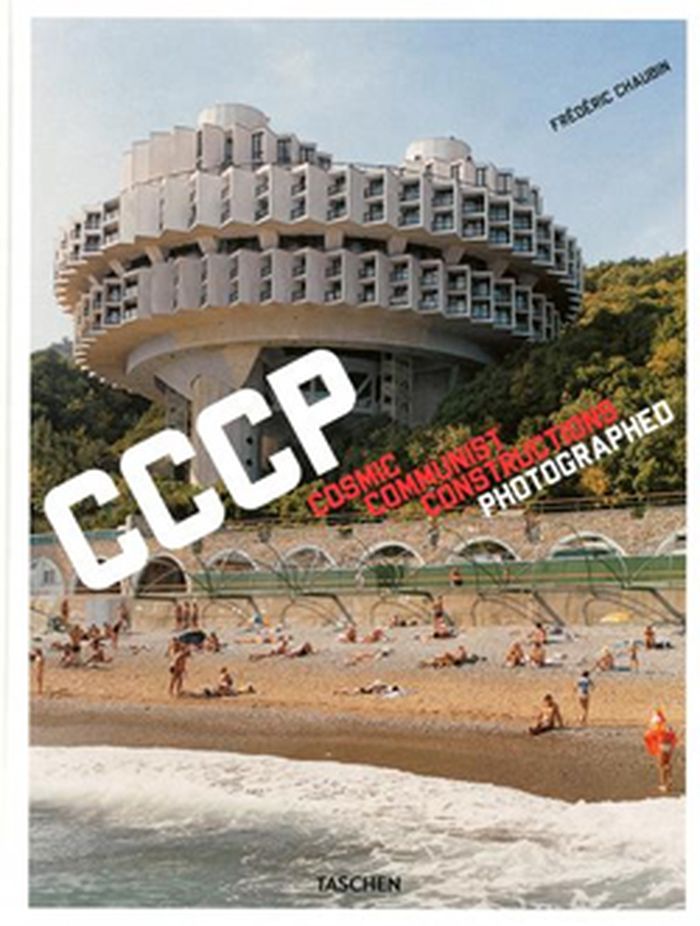
Photographer Frédéric Chaubin reveals 90 buildings sited in fourteen former Soviet Republics which express what he considers to be the fourth age of Soviet architecture. His poetic pictures reveal an unexpected rebirth of imagination, an unknown burgeoning that took place from 1970 until 1990. Contrary to the 1920s and 1950s, no “school” or main trend emerges here. These(...)
$80.95
(disponible sur commande)
Résumé:
Photographer Frédéric Chaubin reveals 90 buildings sited in fourteen former Soviet Republics which express what he considers to be the fourth age of Soviet architecture. His poetic pictures reveal an unexpected rebirth of imagination, an unknown burgeoning that took place from 1970 until 1990. Contrary to the 1920s and 1950s, no “school” or main trend emerges here. These(...)
Sujet:
Monographies photo
Monographies photo
Publication:
septembre 2010
septembre 2010
Titre:
Cosmic communist constructions photographed
Actions:
Prix:
$80.95
(disponible sur commande)
Résumé:
Photographer Frédéric Chaubin reveals 90 buildings sited in fourteen former Soviet Republics which express what he considers to be the fourth age of Soviet architecture. His poetic pictures reveal an unexpected rebirth of imagination, an unknown burgeoning that took place from 1970 until 1990. Contrary to the 1920s and 1950s, no “school” or main trend emerges here. These buildings represent a chaotic impulse brought about by a decaying system. Their diversity announced the end of the Soviet Union. Taking advantage of the collapsing monolithic structure, the holes in the widening net, architects went far beyond modernism, going back to the roots or freely innovating. Some of the daring ones completed projects that the Constructivists would have dreamt of (Druzhba Sanatorium, Yalta), others expressed their imagination in an expressionist way (Palace of Weddings, Tbilisi). A summer camp, inspired by sketches of a prototype lunar base, lays claim to Suprematist influence (Prometheus youth camp, Bogatyr). Then comes the "speaking architecture" widespread in the last years of the USSR : a crematorium adorned with concrete flames (Crematorium, Kiev), a technological institute with a flying saucer crashed on the roof (Institute of Scientific Research, Kiev), a political center watching you like Big Brother (House of Soviets, Kaliningrad). This puzzle of styles testifies to all the ideological dreams of the period, from the obsession with the cosmos to the rebirth of identity. It also outlines the geography of the USSR, showing how local influences made their exotic twists before the country was brought to its end.
Cosmic communist constructions photographed
Actions:
Prix:
$80.95
(disponible sur commande)
Résumé:
Photographer Frédéric Chaubin reveals 90 buildings sited in fourteen former Soviet Republics which express what he considers to be the fourth age of Soviet architecture. His poetic pictures reveal an unexpected rebirth of imagination, an unknown burgeoning that took place from 1970 until 1990. Contrary to the 1920s and 1950s, no “school” or main trend emerges here. These buildings represent a chaotic impulse brought about by a decaying system. Their diversity announced the end of the Soviet Union. Taking advantage of the collapsing monolithic structure, the holes in the widening net, architects went far beyond modernism, going back to the roots or freely innovating. Some of the daring ones completed projects that the Constructivists would have dreamt of (Druzhba Sanatorium, Yalta), others expressed their imagination in an expressionist way (Palace of Weddings, Tbilisi). A summer camp, inspired by sketches of a prototype lunar base, lays claim to Suprematist influence (Prometheus youth camp, Bogatyr). Then comes the "speaking architecture" widespread in the last years of the USSR : a crematorium adorned with concrete flames (Crematorium, Kiev), a technological institute with a flying saucer crashed on the roof (Institute of Scientific Research, Kiev), a political center watching you like Big Brother (House of Soviets, Kaliningrad). This puzzle of styles testifies to all the ideological dreams of the period, from the obsession with the cosmos to the rebirth of identity. It also outlines the geography of the USSR, showing how local influences made their exotic twists before the country was brought to its end.
Classification:
livres
livres
Publication:
septembre 2010
septembre 2010
Sujet:
Monographies photo
Monographies photo


