


6653 Résultats
Classification:
livres
livres
Prix:
$18.95
(disponible sur commande)
Résumé:
Why is it so hard to make up our minds? Adam and Eve set the template : do we or don’t we eat the apple? They chose, half-heartedly, and nothing was ever the same again. With this book, Kenneth Weisbrode offers an introduction to the age-old struggle with ambivalence. Ambivalence results from a basic desire to have it both ways. This is only natural - although(...)
$18.95
(disponible sur commande)
Résumé:
Why is it so hard to make up our minds? Adam and Eve set the template : do we or don’t we eat the apple? They chose, half-heartedly, and nothing was ever the same again. With this book, Kenneth Weisbrode offers an introduction to the age-old struggle with ambivalence. Ambivalence results from a basic desire to have it both ways. This is only natural - although(...)
Titre:
On ambivalence : the problems and pleasures of having it both ways
Actions:
Prix:
$18.95
(disponible sur commande)
Résumé:
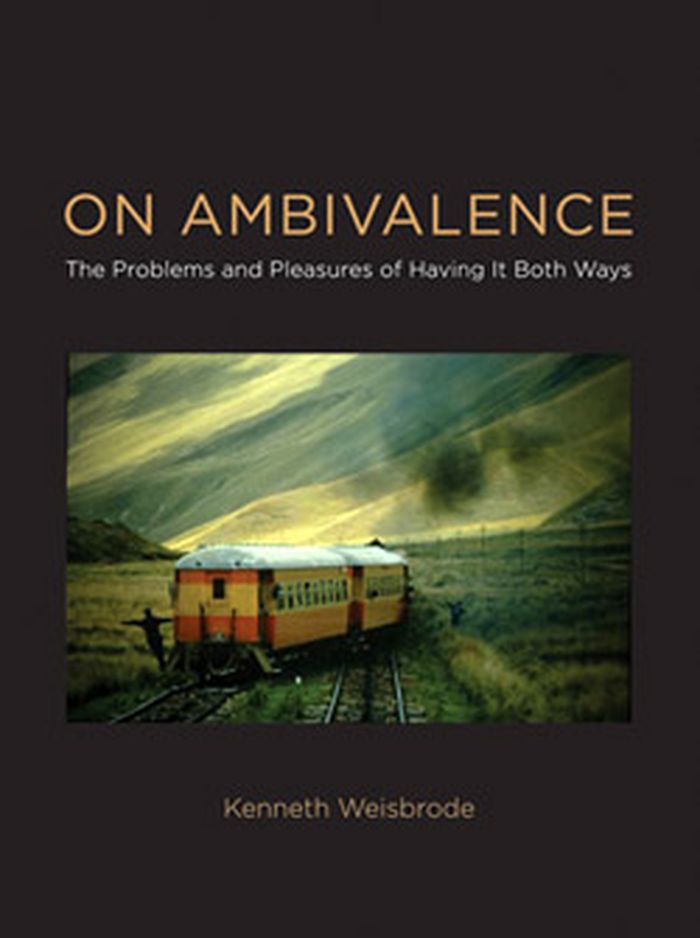
Why is it so hard to make up our minds? Adam and Eve set the template : do we or don’t we eat the apple? They chose, half-heartedly, and nothing was ever the same again. With this book, Kenneth Weisbrode offers an introduction to the age-old struggle with ambivalence. Ambivalence results from a basic desire to have it both ways. This is only natural - although insisting upon it against all reason often results not in "both" but in the disappointing "neither." Ambivalence has insinuated itself into our culture as a kind of obligatory reflex, or default position, before practically every choice we make. It affects not only individuals; organizations, societies, and cultures can also be ambivalent. How often have we asked the scornful question, "Are we the Hamlet of nations"? How often have we demanded that our leaders appear decisive, judicious, and stalwart? And how eager have we been to censure them when they hesitate or waver? Weisbrode traces the concept of ambivalence, from the Garden of Eden to Freud and beyond. The Obama era, he says, may be America’s own era of ambivalence: neither red nor blue but a multicolored kaleidoscope. Ambivalence, he argues, need not be destructive. We must learn to distinguish it from its symptoms - selfishness, ambiguity, and indecision - and accept that frustration, guilt, and paralysis felt by individuals need not lead automatically to a collective pathology. Drawing upon examples from philosophy, history, literature, and the social sciences, On Ambivalence is a pocket-sized portrait of a complex human condition.
On ambivalence : the problems and pleasures of having it both ways
Actions:
Prix:
$18.95
(disponible sur commande)
Résumé:
Why is it so hard to make up our minds? Adam and Eve set the template : do we or don’t we eat the apple? They chose, half-heartedly, and nothing was ever the same again. With this book, Kenneth Weisbrode offers an introduction to the age-old struggle with ambivalence. Ambivalence results from a basic desire to have it both ways. This is only natural - although insisting upon it against all reason often results not in "both" but in the disappointing "neither." Ambivalence has insinuated itself into our culture as a kind of obligatory reflex, or default position, before practically every choice we make. It affects not only individuals; organizations, societies, and cultures can also be ambivalent. How often have we asked the scornful question, "Are we the Hamlet of nations"? How often have we demanded that our leaders appear decisive, judicious, and stalwart? And how eager have we been to censure them when they hesitate or waver? Weisbrode traces the concept of ambivalence, from the Garden of Eden to Freud and beyond. The Obama era, he says, may be America’s own era of ambivalence: neither red nor blue but a multicolored kaleidoscope. Ambivalence, he argues, need not be destructive. We must learn to distinguish it from its symptoms - selfishness, ambiguity, and indecision - and accept that frustration, guilt, and paralysis felt by individuals need not lead automatically to a collective pathology. Drawing upon examples from philosophy, history, literature, and the social sciences, On Ambivalence is a pocket-sized portrait of a complex human condition.
Classification:
livres
livres
Publication:
janvier 2012
janvier 2012
Sujet:
Théorie/ philosophie
Théorie/ philosophie
Classification:
livres
livres
Actions:
Prix:
$24.95
(disponible sur commande)
Résumé:
Découvrez les forts et châteaux fortifiés à travers le monde, depuis leur origine il y a 10,000 ans environ jusqu'à la Deuxième Guerre mondiale. Des feuillets transparents vous conduisent au coeur des célèbres fotresses, vous dévoilant aussi bien l'intérieur d'une citadelle grecque ou d'un château fortifié japonais que le système défensif d'un château du Moyen Âge.
$24.95
(disponible sur commande)
Résumé:
Découvrez les forts et châteaux fortifiés à travers le monde, depuis leur origine il y a 10,000 ans environ jusqu'à la Deuxième Guerre mondiale. Des feuillets transparents vous conduisent au coeur des célèbres fotresses, vous dévoilant aussi bien l'intérieur d'une citadelle grecque ou d'un château fortifié japonais que le système défensif d'un château du Moyen Âge.
Titre:
Entrez dans... forts et châteaux
Actions:
Prix:
$24.95
(disponible sur commande)
Résumé:
Découvrez les forts et châteaux fortifiés à travers le monde, depuis leur origine il y a 10,000 ans environ jusqu'à la Deuxième Guerre mondiale. Des feuillets transparents vous conduisent au coeur des célèbres fotresses, vous dévoilant aussi bien l'intérieur d'une citadelle grecque ou d'un château fortifié japonais que le système défensif d'un château du Moyen Âge.
Entrez dans... forts et châteaux
Actions:
Prix:
$24.95
(disponible sur commande)
Résumé:
Découvrez les forts et châteaux fortifiés à travers le monde, depuis leur origine il y a 10,000 ans environ jusqu'à la Deuxième Guerre mondiale. Des feuillets transparents vous conduisent au coeur des célèbres fotresses, vous dévoilant aussi bien l'intérieur d'une citadelle grecque ou d'un château fortifié japonais que le système défensif d'un château du Moyen Âge.
Classification:
livres
livres
Publication:
janvier 1900, Paris
janvier 1900, Paris
Sujet:
Littérature jeunesse
Littérature jeunesse
Classification:
livres
livres
Titre:
Lyle Gomes : imagining Eden
Lyle Gomes : imagining Eden
Actions:
Prix:
$10.00
(disponible sur commande)
Résumé:
What did Eden look like? In "Imagining Eden", the photographer Lyle Gomes observes landscapes that represent the idea of locus amoenus—the pleasant place. The tradition of locus amoenus goes back to the idyllic descriptions of fictional locations, often called Arcadia, in the writings of Sappho, Apollonius, and Virgil, in the imagined period of the Golden Age. We also(...)
$10.00
(disponible sur commande)
Résumé:
What did Eden look like? In "Imagining Eden", the photographer Lyle Gomes observes landscapes that represent the idea of locus amoenus—the pleasant place. The tradition of locus amoenus goes back to the idyllic descriptions of fictional locations, often called Arcadia, in the writings of Sappho, Apollonius, and Virgil, in the imagined period of the Golden Age. We also(...)
Sujet:
livres soldés
livres soldés
Publication:
novembre 2005, Charlottesville, London
novembre 2005, Charlottesville, London
Titre:
Lyle Gomes : imagining Eden
Actions:
Prix:
$10.00
(disponible sur commande)
Résumé:
What did Eden look like? In "Imagining Eden", the photographer Lyle Gomes observes landscapes that represent the idea of locus amoenus—the pleasant place. The tradition of locus amoenus goes back to the idyllic descriptions of fictional locations, often called Arcadia, in the writings of Sappho, Apollonius, and Virgil, in the imagined period of the Golden Age. We also recognize this concept in Eden, of course, where it suggests a loss that still haunts our imaginations. It is an idea distinctly different from that of wilderness, for we feel protected in these places—even provided for, though there is no sign of toil. The chance that this Eden might somehow be regained gives the concept its consolatory power. For fifteen years, Gomes has traveled across America and Europe to find examples of this enduring ideal of place in parks, English gardens, even golf courses. Gomes’s search took him to Mount Auburn cemetery, Central Park, Monticello, the San Francisco Presidio, villa gardens near Italy’s Lake Como, Melbourne Hall in Derbyshire, and private gardens such as Biltmore and Dumbarton Oaks. "Imagining Eden" includes an introductory essay in which the landscape historian Denis Cosgrove explores how the concept of the locus amoenus relates to Gomes’s work, and the photographs are accompanied by an evocative selection of quotes by the various settings designers and by inspired observers. The book concludes with an extensive interview in which Gomes discusses how he balances craft and inspiration, the role of research in preparing a shoot, his preference for black-and-white over color (“I was completely, and immediately, enamored with the silver image”), and a sense of discovery as a chief motivation in all his work.
Lyle Gomes : imagining Eden
Actions:
Prix:
$10.00
(disponible sur commande)
Résumé:
What did Eden look like? In "Imagining Eden", the photographer Lyle Gomes observes landscapes that represent the idea of locus amoenus—the pleasant place. The tradition of locus amoenus goes back to the idyllic descriptions of fictional locations, often called Arcadia, in the writings of Sappho, Apollonius, and Virgil, in the imagined period of the Golden Age. We also recognize this concept in Eden, of course, where it suggests a loss that still haunts our imaginations. It is an idea distinctly different from that of wilderness, for we feel protected in these places—even provided for, though there is no sign of toil. The chance that this Eden might somehow be regained gives the concept its consolatory power. For fifteen years, Gomes has traveled across America and Europe to find examples of this enduring ideal of place in parks, English gardens, even golf courses. Gomes’s search took him to Mount Auburn cemetery, Central Park, Monticello, the San Francisco Presidio, villa gardens near Italy’s Lake Como, Melbourne Hall in Derbyshire, and private gardens such as Biltmore and Dumbarton Oaks. "Imagining Eden" includes an introductory essay in which the landscape historian Denis Cosgrove explores how the concept of the locus amoenus relates to Gomes’s work, and the photographs are accompanied by an evocative selection of quotes by the various settings designers and by inspired observers. The book concludes with an extensive interview in which Gomes discusses how he balances craft and inspiration, the role of research in preparing a shoot, his preference for black-and-white over color (“I was completely, and immediately, enamored with the silver image”), and a sense of discovery as a chief motivation in all his work.
Classification:
livres
livres
Publication:
novembre 2005, Charlottesville, London
novembre 2005, Charlottesville, London
Sujet:
livres soldés
livres soldés
Classification:
livres
livres
Titre:
Aleksandr Rodchenko
Aleksandr Rodchenko
Actions:
Prix:
$55.00
(disponible sur commande)
Résumé:
A leading representative of the Russian avant-garde, Alexander Rodchenko (1891- 1956) revolutionized the world of graphic art, design and photography. The over 250 illustrations featured in this volume allow the reader to grasp the full force of this innovator and to appreciate the charisma he exerted on fellow artists as much as on the men of letters, directors and(...)
$55.00
(disponible sur commande)
Résumé:
A leading representative of the Russian avant-garde, Alexander Rodchenko (1891- 1956) revolutionized the world of graphic art, design and photography. The over 250 illustrations featured in this volume allow the reader to grasp the full force of this innovator and to appreciate the charisma he exerted on fellow artists as much as on the men of letters, directors and(...)
Titre:
Aleksandr Rodchenko
Actions:
Prix:
$55.00
(disponible sur commande)
Résumé:
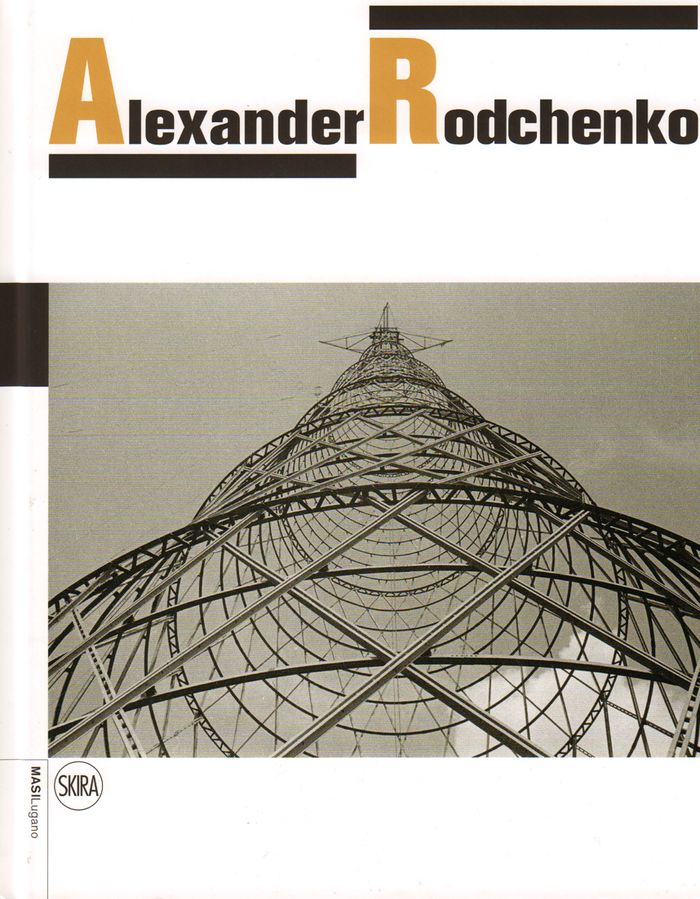
A leading representative of the Russian avant-garde, Alexander Rodchenko (1891- 1956) revolutionized the world of graphic art, design and photography. The over 250 illustrations featured in this volume allow the reader to grasp the full force of this innovator and to appreciate the charisma he exerted on fellow artists as much as on the men of letters, directors and intellectuals who shared his path. Whether it is the photomontages he created for Vladimir Mayakovsky's poem Pro Eto (About That), the covers designed for the magazine Novy LEF (New LEF) - a veritable point of reference for the revolutionary intelligentsia - or cinema posters and book illustrations, Rodchenko's works bear witness to his many collaborations and friendships, evoking not just the image of a brilliantly creative personality but a unique phase in twentieth-century history. The remarkable photographic portraits by the artist, his pictures of urban landscapes and architectures, as well as his photo-reportages in factories and building sites bring back both the faces and spirit of an age of great hopes and equally great contradictions. To this day, the style of Rodchenko the photographer, marked by unusual perspectives, sharp angles and diagonals, stands as the purest witness not just to the talent of an artist but to his eagerness to modernise art and the world at large. Complementing the volume are contributions by Olga Sviblova, the director of the House of Photography / Multimedia Art Museum of Moscow, by the grandson of the artist and leading scholar of his work Alexander Lavrentiev, in addition to writings and testimonies by Rodchenko himself and his daughter Varvara.
Aleksandr Rodchenko
Actions:
Prix:
$55.00
(disponible sur commande)
Résumé:
A leading representative of the Russian avant-garde, Alexander Rodchenko (1891- 1956) revolutionized the world of graphic art, design and photography. The over 250 illustrations featured in this volume allow the reader to grasp the full force of this innovator and to appreciate the charisma he exerted on fellow artists as much as on the men of letters, directors and intellectuals who shared his path. Whether it is the photomontages he created for Vladimir Mayakovsky's poem Pro Eto (About That), the covers designed for the magazine Novy LEF (New LEF) - a veritable point of reference for the revolutionary intelligentsia - or cinema posters and book illustrations, Rodchenko's works bear witness to his many collaborations and friendships, evoking not just the image of a brilliantly creative personality but a unique phase in twentieth-century history. The remarkable photographic portraits by the artist, his pictures of urban landscapes and architectures, as well as his photo-reportages in factories and building sites bring back both the faces and spirit of an age of great hopes and equally great contradictions. To this day, the style of Rodchenko the photographer, marked by unusual perspectives, sharp angles and diagonals, stands as the purest witness not just to the talent of an artist but to his eagerness to modernise art and the world at large. Complementing the volume are contributions by Olga Sviblova, the director of the House of Photography / Multimedia Art Museum of Moscow, by the grandson of the artist and leading scholar of his work Alexander Lavrentiev, in addition to writings and testimonies by Rodchenko himself and his daughter Varvara.
Classification:
livres
livres
Publication:
novembre 2016
novembre 2016
Sujet:
Monographies photo
Monographies photo
Classification:
livres
livres
Actions:
Prix:
$28.99
(disponible sur commande)
Résumé:
Cornelia Hahn Oberlander, who has been a landscape architect for more than sixty years, considers her profession “the art of the possible.” The description also applies to the very way this remarkable 86-year-old has lived her life. Playing in her grandmother’s garden as a child, Cornelia absorbed the beauty and importance of the natural world and by the age of eleven had(...)
$28.99
(disponible sur commande)
Résumé:
Cornelia Hahn Oberlander, who has been a landscape architect for more than sixty years, considers her profession “the art of the possible.” The description also applies to the very way this remarkable 86-year-old has lived her life. Playing in her grandmother’s garden as a child, Cornelia absorbed the beauty and importance of the natural world and by the age of eleven had(...)
Titre:
Love every leaf: the life of landscape architect Cornelia Hahn Oberlander
Actions:
Prix:
$28.99
(disponible sur commande)
Résumé:
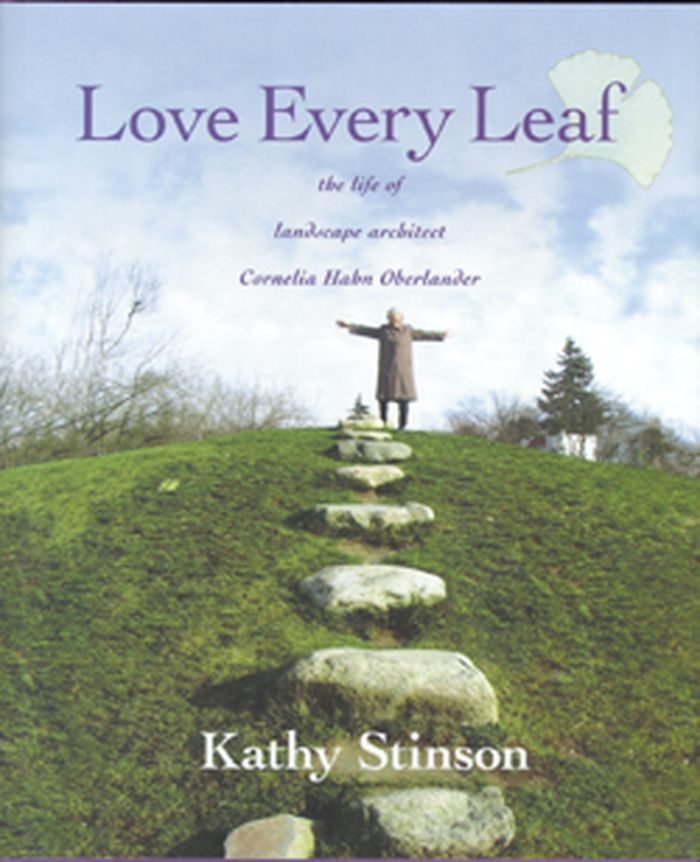
Cornelia Hahn Oberlander, who has been a landscape architect for more than sixty years, considers her profession “the art of the possible.” The description also applies to the very way this remarkable 86-year-old has lived her life. Playing in her grandmother’s garden as a child, Cornelia absorbed the beauty and importance of the natural world and by the age of eleven had decided that she would become a landscape architect. Leaving her native Germany in the wake of Hitler’s persecution of the Jews, the teenaged Cornelia was transplanted in America, where she could pursue her dream in safety, although not without having to struggle to carve out a place for herself in the male-dominated world of her chosen profession. This 96-page biography tells her remarkable life’s story, complete with photographs and plans for the imaginative playgrounds and the innovative museum and embassy grounds she has created around the world, and for green rooftops, her latest passion. Young readers will not only learn about the profession, but also will find inspiration in Cornelia Hahn Oberlander’s love for the natural world and the respect and concern she shows for our increasingly fragile environment. Kathy Stinson was born in Toronto. She was a mail sorter, elementary school teacher, and a waitress before she turned her hand to writing. It was a wise decision. She wrote Red Is Best and Big Or Little. Since then, she has had over thirty titles published for a wide range of audiences. Kathy Stinson has two grown-up children, two grown-up stepchildren, and five grandchildren. She lives with her partner, Peter Carver, near Rockwood, Ontario.
Love every leaf: the life of landscape architect Cornelia Hahn Oberlander
Actions:
Prix:
$28.99
(disponible sur commande)
Résumé:
Cornelia Hahn Oberlander, who has been a landscape architect for more than sixty years, considers her profession “the art of the possible.” The description also applies to the very way this remarkable 86-year-old has lived her life. Playing in her grandmother’s garden as a child, Cornelia absorbed the beauty and importance of the natural world and by the age of eleven had decided that she would become a landscape architect. Leaving her native Germany in the wake of Hitler’s persecution of the Jews, the teenaged Cornelia was transplanted in America, where she could pursue her dream in safety, although not without having to struggle to carve out a place for herself in the male-dominated world of her chosen profession. This 96-page biography tells her remarkable life’s story, complete with photographs and plans for the imaginative playgrounds and the innovative museum and embassy grounds she has created around the world, and for green rooftops, her latest passion. Young readers will not only learn about the profession, but also will find inspiration in Cornelia Hahn Oberlander’s love for the natural world and the respect and concern she shows for our increasingly fragile environment. Kathy Stinson was born in Toronto. She was a mail sorter, elementary school teacher, and a waitress before she turned her hand to writing. It was a wise decision. She wrote Red Is Best and Big Or Little. Since then, she has had over thirty titles published for a wide range of audiences. Kathy Stinson has two grown-up children, two grown-up stepchildren, and five grandchildren. She lives with her partner, Peter Carver, near Rockwood, Ontario.
Classification:
livres
livres
Publication:
avril 2008, Toronto, New York
avril 2008, Toronto, New York
Sujet:
Littérature jeunesse
Littérature jeunesse
Classification:
livres
livres
Actions:
Prix:
$49.95
(disponible sur commande)
Résumé:
Descartes believed that his analytic model applied to all fields of research and that all branches of science lead to truth. His many analogies with literature and art notwithstanding, Descartes offers an entry into knowledge that fails nevertheless to take into account how in the seventeenth century Dutch painters such as Vermeer similarly order a view of the world by(...)
$49.95
(disponible sur commande)
Résumé:
Descartes believed that his analytic model applied to all fields of research and that all branches of science lead to truth. His many analogies with literature and art notwithstanding, Descartes offers an entry into knowledge that fails nevertheless to take into account how in the seventeenth century Dutch painters such as Vermeer similarly order a view of the world by(...)
Titre:
Tables of knowledge : Descartes in Vermeer's studio
Actions:
Prix:
$49.95
(disponible sur commande)
Résumé:
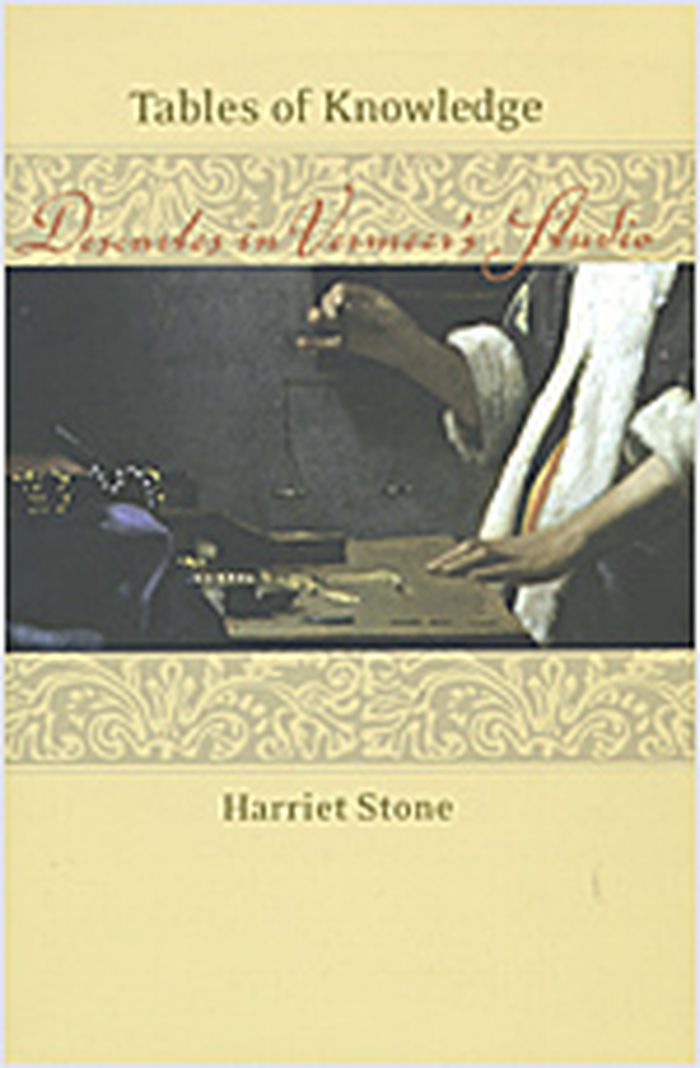
Descartes believed that his analytic model applied to all fields of research and that all branches of science lead to truth. His many analogies with literature and art notwithstanding, Descartes offers an entry into knowledge that fails nevertheless to take into account how in the seventeenth century Dutch painters such as Vermeer similarly order a view of the world by concentrating on the properties of individual objects. Descartes's celebrated scientific method offers a protocol for conducting experiments; Harriet Stone argues that this method can also serve as a guide for classifying the findings obtained from experiments. Tables of Knowledge shows that Dutch genre paintings and still lifes enact in visual form a process of recording information similar to that of science, with intriguing results. Stone investigates such diverse topics as seventeenth-century advances in optics and the attendant explosion of data about the natural world; the proliferation of material goods in prosperous Dutch homes; and the compelling realism of Golden Age paintings. Vermeer and his contemporaries, she contends, transform a potentially threatening consumerism into the viewer's aesthetic pleasure. The artists' depictions of rooms where framed images and maps adorn walls and where fruit, shimmering glassware, gold pieces, and other precious items are set out on tables constitute an inventory of middle-class life. Appealing to both the eye and the mind, Dutch paintings convey meaning by accentuating the luxury of objects displayed in all their specificity. While not without its voyeuristic, sensual, and even lascivious overtones, art offered the Dutch, who labored under the moral austerity of the Protestant Church, a way of bearing witness to ordinary experience that was unmistakably satisfying and surprisingly Cartesian.
Tables of knowledge : Descartes in Vermeer's studio
Actions:
Prix:
$49.95
(disponible sur commande)
Résumé:
Descartes believed that his analytic model applied to all fields of research and that all branches of science lead to truth. His many analogies with literature and art notwithstanding, Descartes offers an entry into knowledge that fails nevertheless to take into account how in the seventeenth century Dutch painters such as Vermeer similarly order a view of the world by concentrating on the properties of individual objects. Descartes's celebrated scientific method offers a protocol for conducting experiments; Harriet Stone argues that this method can also serve as a guide for classifying the findings obtained from experiments. Tables of Knowledge shows that Dutch genre paintings and still lifes enact in visual form a process of recording information similar to that of science, with intriguing results. Stone investigates such diverse topics as seventeenth-century advances in optics and the attendant explosion of data about the natural world; the proliferation of material goods in prosperous Dutch homes; and the compelling realism of Golden Age paintings. Vermeer and his contemporaries, she contends, transform a potentially threatening consumerism into the viewer's aesthetic pleasure. The artists' depictions of rooms where framed images and maps adorn walls and where fruit, shimmering glassware, gold pieces, and other precious items are set out on tables constitute an inventory of middle-class life. Appealing to both the eye and the mind, Dutch paintings convey meaning by accentuating the luxury of objects displayed in all their specificity. While not without its voyeuristic, sensual, and even lascivious overtones, art offered the Dutch, who labored under the moral austerity of the Protestant Church, a way of bearing witness to ordinary experience that was unmistakably satisfying and surprisingly Cartesian.
Classification:
livres
livres
Publication:
juillet 2006, Ithaca
juillet 2006, Ithaca
Sujet:
Théorie de l’architecture
Théorie de l’architecture
Classification:
livres
livres
Titre:
Pour l'amour des villes
Pour l'amour des villes
Actions:
Prix:
$54.95
(disponible sur commande)
Résumé:
Prenez la ville du Moyen Âge, remplacez le mur d'enceinte par le périphérique, et vous avez la ville contemporaine. Pourtant, la ville bientôt sans limites engloutit la campagne, écartelée entre ses fondements médiévaux et l'émergence des mégapoles. Tel un piéton amoureux de la cité médiévale, Jacques Le Goff nous en livre les clés pour appréhender(...)
$54.95
(disponible sur commande)
Résumé:
Prenez la ville du Moyen Âge, remplacez le mur d'enceinte par le périphérique, et vous avez la ville contemporaine. Pourtant, la ville bientôt sans limites engloutit la campagne, écartelée entre ses fondements médiévaux et l'émergence des mégapoles. Tel un piéton amoureux de la cité médiévale, Jacques Le Goff nous en livre les clés pour appréhender(...)
Titre:
Pour l'amour des villes
Actions:
Prix:
$54.95
(disponible sur commande)
Résumé:
Prenez la ville du Moyen Âge, remplacez le mur d'enceinte par le périphérique, et vous avez la ville contemporaine. Pourtant, la ville bientôt sans limites engloutit la campagne, écartelée entre ses fondements médiévaux et l'émergence des mégapoles. Tel un piéton amoureux de la cité médiévale, Jacques Le Goff nous en livre les clés pour appréhender l'époque de rupture urbaine qui est la nôtre.
Pour l'amour des villes
Actions:
Prix:
$54.95
(disponible sur commande)
Résumé:
Prenez la ville du Moyen Âge, remplacez le mur d'enceinte par le périphérique, et vous avez la ville contemporaine. Pourtant, la ville bientôt sans limites engloutit la campagne, écartelée entre ses fondements médiévaux et l'émergence des mégapoles. Tel un piéton amoureux de la cité médiévale, Jacques Le Goff nous en livre les clés pour appréhender l'époque de rupture urbaine qui est la nôtre.
Classification:
livres
livres
Publication:
novembre 1997, Paris
novembre 1997, Paris
Sujet:
Théorie de l’urbanisme
Théorie de l’urbanisme
Classification:
livres
livres
Titre:
Guide du Paris médiéval
Guide du Paris médiéval
Actions:
Prix:
$51.95
(disponible sur commande)
Résumé:
De la Sainte-Chapelle à l'église Saint-Germain de Vitry-sur-Seine, de la tour Saint-Jacques au colombier de Créteil, cent lieux à Paris et en région parisienne sur les traces de Philippe le Bel, Charles V et Philippe Auguste. Une belle façon de parcourir le XXe siècle et d'y découvrir la mémoire architecturale parfois oubliée de mille ans de Moyen Âge.
$51.95
(disponible sur commande)
Résumé:
De la Sainte-Chapelle à l'église Saint-Germain de Vitry-sur-Seine, de la tour Saint-Jacques au colombier de Créteil, cent lieux à Paris et en région parisienne sur les traces de Philippe le Bel, Charles V et Philippe Auguste. Une belle façon de parcourir le XXe siècle et d'y découvrir la mémoire architecturale parfois oubliée de mille ans de Moyen Âge.
Titre:
Guide du Paris médiéval
Actions:
Prix:
$51.95
(disponible sur commande)
Résumé:
De la Sainte-Chapelle à l'église Saint-Germain de Vitry-sur-Seine, de la tour Saint-Jacques au colombier de Créteil, cent lieux à Paris et en région parisienne sur les traces de Philippe le Bel, Charles V et Philippe Auguste. Une belle façon de parcourir le XXe siècle et d'y découvrir la mémoire architecturale parfois oubliée de mille ans de Moyen Âge.
Guide du Paris médiéval
Actions:
Prix:
$51.95
(disponible sur commande)
Résumé:
De la Sainte-Chapelle à l'église Saint-Germain de Vitry-sur-Seine, de la tour Saint-Jacques au colombier de Créteil, cent lieux à Paris et en région parisienne sur les traces de Philippe le Bel, Charles V et Philippe Auguste. Une belle façon de parcourir le XXe siècle et d'y découvrir la mémoire architecturale parfois oubliée de mille ans de Moyen Âge.
Classification:
livres
livres
Publication:
janvier 1997, Paris
janvier 1997, Paris
Sujet:
Guides des villes
Guides des villes
Classification:
livres
livres
Actions:
Prix:
$21.50
(disponible sur commande)
Résumé:
Digital Ground is an architect's response to the design challenge posed by pervasive computing. One century into the electronic age, people have become accustomed to interacting indirectly, mediated through networks. But now as digital technology becomes invisibly embedded in everyday things, even more activities become mediated, and networks extend rather than replace(...)
$21.50
(disponible sur commande)
Résumé:
Digital Ground is an architect's response to the design challenge posed by pervasive computing. One century into the electronic age, people have become accustomed to interacting indirectly, mediated through networks. But now as digital technology becomes invisibly embedded in everyday things, even more activities become mediated, and networks extend rather than replace(...)
Titre:
Digital ground : architecture, pervasive computing, and environmental knowing
Actions:
Prix:
$21.50
(disponible sur commande)
Résumé:
Digital Ground is an architect's response to the design challenge posed by pervasive computing. One century into the electronic age, people have become accustomed to interacting indirectly, mediated through networks. But now as digital technology becomes invisibly embedded in everyday things, even more activities become mediated, and networks extend rather than replace architecture. The young field of interaction design reflects not only how people deal with machine interfaces but also how people deal with each other in situations where interactivity has become ambient. It shifts previously utilitarian digital design concerns to a cultural level, adding notions of premise, appropriateness, and appreciation. Malcolm McCullough offers an account of the intersections of architecture and interaction design, arguing that the ubiquitous technology does not obviate the human need for place. His concept of "digital ground" expresses an alternative to anytime-anyplace sameness in computing; he shows that context not only shapes usability but ideally becomes the subject matter of interaction design and that "environmental knowing" is a process that technology may serve and not erode. Drawing on arguments from architecture, psychology, software engineering, and geography, writing for practicing interaction designers, pervasive computing researchers, architects, and the general reader on digital culture, McCullough gives us a theory of place for interaction design. Part I, "Expectations," explores our technological predispositions -- many of which ("situated interactions") arise from our embodiment in architectural settings. Part II, "Technologies," discusses hardware, software, and applications, including embedded technology ("bashing the desktop"), and building technology genres around life situations. Part III, "Practices," argues for design as a liberal art, seeing interactivity as a cultural -- not only technological -- challenge and a practical notion of place as essential. Part IV, "Epilogue," acknowledges the epochal changes occurring today, and argues for the role of "digital ground" in the necessary adaptation.
Digital ground : architecture, pervasive computing, and environmental knowing
Actions:
Prix:
$21.50
(disponible sur commande)
Résumé:
Digital Ground is an architect's response to the design challenge posed by pervasive computing. One century into the electronic age, people have become accustomed to interacting indirectly, mediated through networks. But now as digital technology becomes invisibly embedded in everyday things, even more activities become mediated, and networks extend rather than replace architecture. The young field of interaction design reflects not only how people deal with machine interfaces but also how people deal with each other in situations where interactivity has become ambient. It shifts previously utilitarian digital design concerns to a cultural level, adding notions of premise, appropriateness, and appreciation. Malcolm McCullough offers an account of the intersections of architecture and interaction design, arguing that the ubiquitous technology does not obviate the human need for place. His concept of "digital ground" expresses an alternative to anytime-anyplace sameness in computing; he shows that context not only shapes usability but ideally becomes the subject matter of interaction design and that "environmental knowing" is a process that technology may serve and not erode. Drawing on arguments from architecture, psychology, software engineering, and geography, writing for practicing interaction designers, pervasive computing researchers, architects, and the general reader on digital culture, McCullough gives us a theory of place for interaction design. Part I, "Expectations," explores our technological predispositions -- many of which ("situated interactions") arise from our embodiment in architectural settings. Part II, "Technologies," discusses hardware, software, and applications, including embedded technology ("bashing the desktop"), and building technology genres around life situations. Part III, "Practices," argues for design as a liberal art, seeing interactivity as a cultural -- not only technological -- challenge and a practical notion of place as essential. Part IV, "Epilogue," acknowledges the epochal changes occurring today, and argues for the role of "digital ground" in the necessary adaptation.
Classification:
livres
livres
Publication:
octobre 2005, Cambridge
octobre 2005, Cambridge
Sujet:
Théorie de l’architecture
Théorie de l’architecture
Classification:
livres
livres
Prix:
$90.95
(disponible en magasin)
Résumé:
Roger Fenton (1819-1869) was England’s most celebrated and influential photographer during the 1850s, the “golden age” of this radically new medium. Fenton’s majestic pictures of cathedrals, country houses, and varied countryside were without peer in England--as were his views of the royal castles and Houses of Parliament that embodied Britain’s power. But Fenton’s(...)
$90.95
(disponible en magasin)
Résumé:
Roger Fenton (1819-1869) was England’s most celebrated and influential photographer during the 1850s, the “golden age” of this radically new medium. Fenton’s majestic pictures of cathedrals, country houses, and varied countryside were without peer in England--as were his views of the royal castles and Houses of Parliament that embodied Britain’s power. But Fenton’s(...)
Sujet:
Monographies photo
Monographies photo
Publication:
novembre 2004, New Haven, London
novembre 2004, New Haven, London
Titre:
All the mighty world : the photographs of Roger Fenton, 1852-1860
Actions:
Prix:
$90.95
(disponible en magasin)
Résumé:
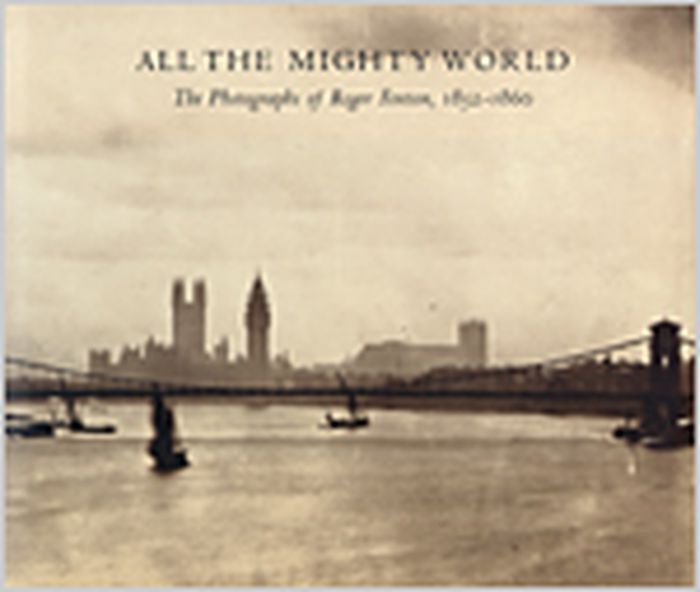
Roger Fenton (1819-1869) was England’s most celebrated and influential photographer during the 1850s, the “golden age” of this radically new medium. Fenton’s majestic pictures of cathedrals, country houses, and varied countryside were without peer in England--as were his views of the royal castles and Houses of Parliament that embodied Britain’s power. But Fenton’s choice of subjects ranged more widely still: he was among the first to photograph the Kremlin and other landmarks of Moscow and Kiev; he was commissioned in 1855 to document the Crimean War, producing early war photographs; and he created theatrical Orientalist costume pictures and a startling series of lush still lifes. Fenton had first studied law and painting, but soon after he took up the camera he was making photographs that were technically superb and highly original in their handling of composition, perspective, atmosphere, and light. Always he strove to demonstrate that photography could equal the art of painting and even surpass it. He was the force behind the founding of the Photographic Society (later the Royal Photographic Society), which worked to advance the profession and encouraged the exhibition of members’ works throughout Britain. In a career of a single decade, Fenton did much to transform photography into a medium of powerful expression and visual delight. This exquisitely produced book--the first comprehensive publication on Fenton in almost twenty years--presents eighty-five of the artist’s finest photographs and discusses every aspect of his work and his remarkable career. This catalogue accompanies an exhibition on view at the National Gallery of Art, Washington, D.C. (October 17, 2004, to January 2, 2005); the J. Paul Getty Museum, Los Angeles (February 1 to April 25, 2005); The Metropolitan Museum of Art, New York (May 16 to August 14, 2005); and Tate Britain, London (September 25, 2005, to January 2, 2006).
All the mighty world : the photographs of Roger Fenton, 1852-1860
Actions:
Prix:
$90.95
(disponible en magasin)
Résumé:
Roger Fenton (1819-1869) was England’s most celebrated and influential photographer during the 1850s, the “golden age” of this radically new medium. Fenton’s majestic pictures of cathedrals, country houses, and varied countryside were without peer in England--as were his views of the royal castles and Houses of Parliament that embodied Britain’s power. But Fenton’s choice of subjects ranged more widely still: he was among the first to photograph the Kremlin and other landmarks of Moscow and Kiev; he was commissioned in 1855 to document the Crimean War, producing early war photographs; and he created theatrical Orientalist costume pictures and a startling series of lush still lifes. Fenton had first studied law and painting, but soon after he took up the camera he was making photographs that were technically superb and highly original in their handling of composition, perspective, atmosphere, and light. Always he strove to demonstrate that photography could equal the art of painting and even surpass it. He was the force behind the founding of the Photographic Society (later the Royal Photographic Society), which worked to advance the profession and encouraged the exhibition of members’ works throughout Britain. In a career of a single decade, Fenton did much to transform photography into a medium of powerful expression and visual delight. This exquisitely produced book--the first comprehensive publication on Fenton in almost twenty years--presents eighty-five of the artist’s finest photographs and discusses every aspect of his work and his remarkable career. This catalogue accompanies an exhibition on view at the National Gallery of Art, Washington, D.C. (October 17, 2004, to January 2, 2005); the J. Paul Getty Museum, Los Angeles (February 1 to April 25, 2005); The Metropolitan Museum of Art, New York (May 16 to August 14, 2005); and Tate Britain, London (September 25, 2005, to January 2, 2006).
Classification:
livres
livres
Publication:
novembre 2004, New Haven, London
novembre 2004, New Haven, London
Sujet:
Monographies photo
Monographies photo


