


3930 Résultats
Classification:
dessins
dessins
Actions:
Numéro de référence:
PH1987:0452.01:016
Description:
- From left to right, the photograph shows the statue of santa María Salomé and of San Juan Evangelista (Vargas Lugo).
PH1987:0452.01:016
Description:
- From left to right, the photograph shows the statue of santa María Salomé and of San Juan Evangelista (Vargas Lugo).
Personnes et institutions:
Sujet:
architecture, sculpture
architecture, sculpture
Date:
1901 or before
1901 or before
Titre:
View of two statues of the altarpiece dedicated to the Virgen de los Dolores [Virgin of Sorrows] in the Church of Santa Prisca, Taxco de Alarcón, Mexico
Actions:
PH1987:0452.01:016
Description:
- From left to right, the photograph shows the statue of santa María Salomé and of San Juan Evangelista (Vargas Lugo).
View of two statues of the altarpiece dedicated to the Virgen de los Dolores [Virgin of Sorrows] in the Church of Santa Prisca, Taxco de Alarcón, Mexico
Actions:
PH1987:0452.01:016
Description:
- From left to right, the photograph shows the statue of santa María Salomé and of San Juan Evangelista (Vargas Lugo).
Classification:
dessins
dessins
Date:
1901 or before
1901 or before
Personnes et institutions:
Sujet:
architecture, sculpture
architecture, sculpture
Classification:
photographies
photographies
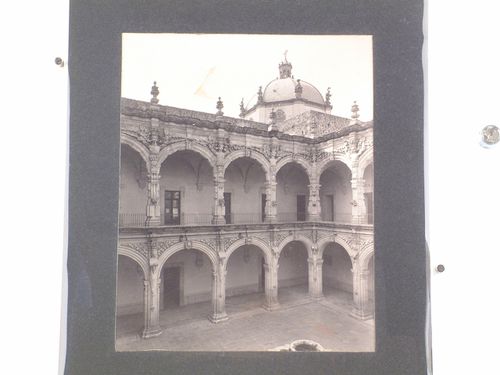
Actions:
Numéro de référence:
PH1987:0452.02:091
PH1987:0452.02:091
Personnes et institutions:
Sujet:
architecture, sculpture
architecture, sculpture
Date:
1901 or before
1901 or before
Classification:
photographies
photographies
Date:
1901 or before
1901 or before
Personnes et institutions:
Sujet:
architecture, sculpture
architecture, sculpture
Classification:
dessins
dessins
Actions:
Numéro de référence:
PH1987:0452.01:073
PH1987:0452.01:073
Personnes et institutions:
Sujet:
architecture, topographique
architecture, topographique
Date:
1901 or before
1901 or before
Classification:
dessins
dessins
Date:
1901 or before
1901 or before
Personnes et institutions:
Sujet:
architecture, topographique
architecture, topographique
Classification:
dessins
dessins
Actions:
Numéro de référence:
PH1987:0452.01:007
PH1987:0452.01:007
Personnes et institutions:
Sujet:
architecture, sculpture
architecture, sculpture
Date:
1901 or before
1901 or before
Classification:
dessins
dessins
Date:
1901 or before
1901 or before
Personnes et institutions:
Sujet:
architecture, sculpture
architecture, sculpture
Classification:
photographies
photographies
Actions:
Numéro de référence:
PH1997:0059
Description:
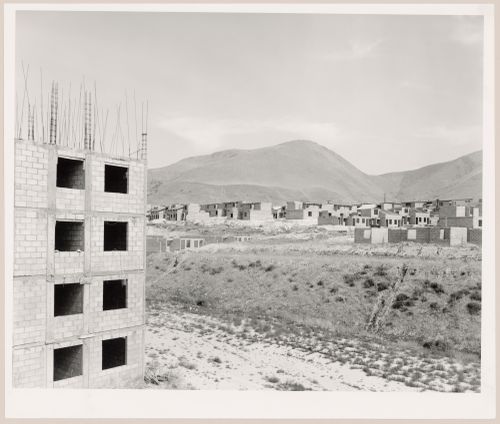
- The series "Running Fence 1997" focuses "on the first 14 miles of the border fence that separates the United States and Mexico, beginning at the Pacific Ocean and ending in the Otay Mountains.... [It] analyzes the "idea" of the border and explores its iconography, the border being a subject that is of extreme importance to the public as the world proceeds towards greater globalization. [Geoffrey] James has written of the project: "[The border fence] was built by the US Army Corps of Engineers in 1994, out of recycled metal landing strip - the most visible symbol of what is known as Operation Gatekeeper. Because the steel sheets are placed in the ground so that their ridges run horizontally, a man can hop over the fence with ease; and no Mexican child ever seems to be impeded from retrieving a soccer ball from US territory. The real barrier to illegal immigration from Mexico into the USA is less visible: hundreds of buried sensors linked to a central computer, nightscopes, helicopters and Border Patrol Agents in white Broncos."" (Evans).
PH1997:0059
Description:
- The series "Running Fence 1997" focuses "on the first 14 miles of the border fence that separates the United States and Mexico, beginning at the Pacific Ocean and ending in the Otay Mountains.... [It] analyzes the "idea" of the border and explores its iconography, the border being a subject that is of extreme importance to the public as the world proceeds towards greater globalization. [Geoffrey] James has written of the project: "[The border fence] was built by the US Army Corps of Engineers in 1994, out of recycled metal landing strip - the most visible symbol of what is known as Operation Gatekeeper. Because the steel sheets are placed in the ground so that their ridges run horizontally, a man can hop over the fence with ease; and no Mexican child ever seems to be impeded from retrieving a soccer ball from US territory. The real barrier to illegal immigration from Mexico into the USA is less visible: hundreds of buried sensors linked to a central computer, nightscopes, helicopters and Border Patrol Agents in white Broncos."" (Evans).
Personnes et institutions:
Sujet:
architecture, ingénierie, topographique
architecture, ingénierie, topographique
Date:
1997
1997
Titre:
View of an industrial park under construction with a partially completed building in the foreground and partially completed houses and mountains in the background, Mesa de Otay, Tijuana, Baja California, Mexico
Actions:
PH1997:0059
Description:
- The series "Running Fence 1997" focuses "on the first 14 miles of the border fence that separates the United States and Mexico, beginning at the Pacific Ocean and ending in the Otay Mountains.... [It] analyzes the "idea" of the border and explores its iconography, the border being a subject that is of extreme importance to the public as the world proceeds towards greater globalization. [Geoffrey] James has written of the project: "[The border fence] was built by the US Army Corps of Engineers in 1994, out of recycled metal landing strip - the most visible symbol of what is known as Operation Gatekeeper. Because the steel sheets are placed in the ground so that their ridges run horizontally, a man can hop over the fence with ease; and no Mexican child ever seems to be impeded from retrieving a soccer ball from US territory. The real barrier to illegal immigration from Mexico into the USA is less visible: hundreds of buried sensors linked to a central computer, nightscopes, helicopters and Border Patrol Agents in white Broncos."" (Evans).
View of an industrial park under construction with a partially completed building in the foreground and partially completed houses and mountains in the background, Mesa de Otay, Tijuana, Baja California, Mexico
Actions:
PH1997:0059
Description:
- The series "Running Fence 1997" focuses "on the first 14 miles of the border fence that separates the United States and Mexico, beginning at the Pacific Ocean and ending in the Otay Mountains.... [It] analyzes the "idea" of the border and explores its iconography, the border being a subject that is of extreme importance to the public as the world proceeds towards greater globalization. [Geoffrey] James has written of the project: "[The border fence] was built by the US Army Corps of Engineers in 1994, out of recycled metal landing strip - the most visible symbol of what is known as Operation Gatekeeper. Because the steel sheets are placed in the ground so that their ridges run horizontally, a man can hop over the fence with ease; and no Mexican child ever seems to be impeded from retrieving a soccer ball from US territory. The real barrier to illegal immigration from Mexico into the USA is less visible: hundreds of buried sensors linked to a central computer, nightscopes, helicopters and Border Patrol Agents in white Broncos."" (Evans).
Classification:
photographies
photographies
Date:
1997
1997
Personnes et institutions:
Sujet:
architecture, ingénierie, topographique
architecture, ingénierie, topographique
Classification:
livres
livres

Numéro de référence:
PH2006:0263
Description:
No annotations or underlining.
PH2006:0263
Description:
No annotations or underlining.
Personnes et institutions:
Date:
published 1968
published 1968
Titre:
Living Architecture: Ancient Mexican
Actions:
PH2006:0263
Description:
No annotations or underlining.
Living Architecture: Ancient Mexican
Actions:
PH2006:0263
Description:
No annotations or underlining.
Classification:
livres
livres
Date:
published 1968
published 1968
Personnes et institutions:
Classification:
photographies
photographies
Actions:
Numéro de référence:
PH1987:0452.02:098
Description:
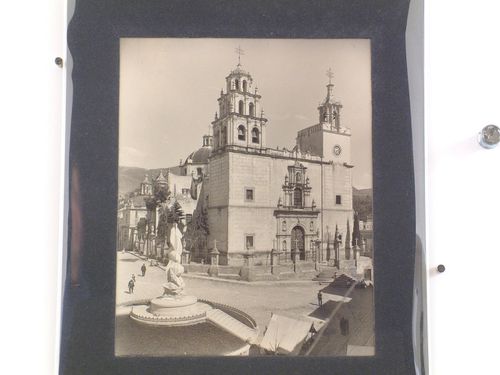
The paper label attached to the verso of the secondary support incorrectly identifies the photograph PH1987:0452.02:098 as the "Church of San Francisco" in Guanajuato.
PH1987:0452.02:098
Description:
The paper label attached to the verso of the secondary support incorrectly identifies the photograph PH1987:0452.02:098 as the "Church of San Francisco" in Guanajuato.
Personnes et institutions:
Sujet:
architecture, topographique
architecture, topographique
Date:
1901 or before
1901 or before
Titre:
View of the Basílica Colegiata de Guanajuato (previously known as Iglesia Parroquial de Guanajuato) showing the Plaza de la Paz with people throughout, Guanajuato, Mexico
Actions:
PH1987:0452.02:098
Description:
The paper label attached to the verso of the secondary support incorrectly identifies the photograph PH1987:0452.02:098 as the "Church of San Francisco" in Guanajuato.
View of the Basílica Colegiata de Guanajuato (previously known as Iglesia Parroquial de Guanajuato) showing the Plaza de la Paz with people throughout, Guanajuato, Mexico
Actions:
PH1987:0452.02:098
Description:
The paper label attached to the verso of the secondary support incorrectly identifies the photograph PH1987:0452.02:098 as the "Church of San Francisco" in Guanajuato.
Classification:
photographies
photographies
Date:
1901 or before
1901 or before
Personnes et institutions:
Sujet:
architecture, topographique
architecture, topographique
Classification:
photographies
photographies
Actions:
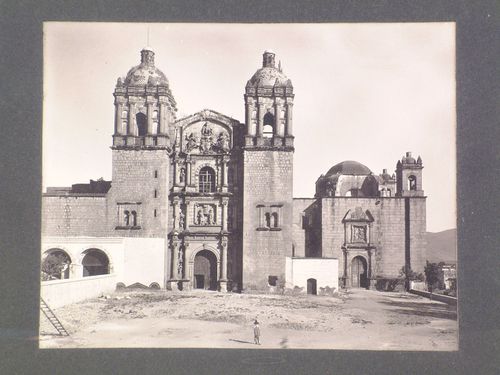
Numéro de référence:
PH1987:0452.02:129
PH1987:0452.02:129
Personnes et institutions:
Sujet:
architecture, sculpture
architecture, sculpture
Date:
1901 or before
1901 or before
Classification:
photographies
photographies
Date:
1901 or before
1901 or before
Personnes et institutions:
Sujet:
architecture, sculpture
architecture, sculpture
Classification:
photographies
photographies
![View of the throne [?] in the Salón del Generalito with the choir stalls of the Iglesia de San Agustín in the background, Colegio de San Ildefonso, Mexico City](/img-collection/yWPVOb6UxT6pJtkBmJos5Flxcvw=/500x375/351202.jpg)
Actions:
Numéro de référence:
PH1987:0452.02:031
PH1987:0452.02:031
Personnes et institutions:
Sujet:
architecture, sculpture
architecture, sculpture
Date:
1901 or before
1901 or before
Classification:
photographies
photographies
Date:
1901 or before
1901 or before
Personnes et institutions:
Sujet:
architecture, sculpture
architecture, sculpture
Classification:
photographies
photographies
Actions:
Numéro de référence:
PH1981:0997:033
PH1981:0997:033
Personnes et institutions:
Sujet:
architecture, sculpture
architecture, sculpture
Date:
April 1860
April 1860
Classification:
photographies
photographies
Date:
April 1860
April 1860
Personnes et institutions:
Sujet:
architecture, sculpture
architecture, sculpture


