


6640 Résultats
Classification:
périodiques
périodiques
Prix:
$49.65
(disponible sur commande)
Résumé:
The Industrial Revolution caused a paradigm shift from an agrarian economy to a manufacturing economy, giving birth to the industrial city. ‘City’ became synonymous with a concentration of factories causing unfiltered scenes between centres of production and urban dwellings. The corrupted image of the city ultimately led to the displacement and separation of production(...)
$49.65
(disponible sur commande)
Résumé:
The Industrial Revolution caused a paradigm shift from an agrarian economy to a manufacturing economy, giving birth to the industrial city. ‘City’ became synonymous with a concentration of factories causing unfiltered scenes between centres of production and urban dwellings. The corrupted image of the city ultimately led to the displacement and separation of production(...)
Titre:
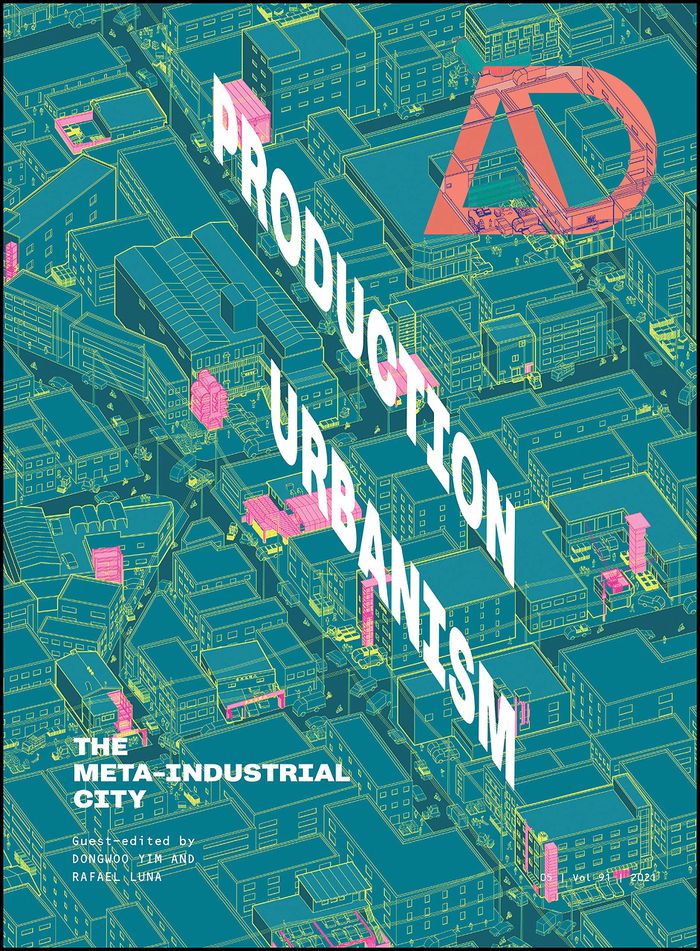
AD 91:5 Production urbanism: The meta industrial city
Actions:
Prix:
$49.65
(disponible sur commande)
Résumé:
The Industrial Revolution caused a paradigm shift from an agrarian economy to a manufacturing economy, giving birth to the industrial city. ‘City’ became synonymous with a concentration of factories causing unfiltered scenes between centres of production and urban dwellings. The corrupted image of the city ultimately led to the displacement and separation of production away from residential zones in the 20th century. However, new innovative manufacturing technologies are allowing a coexistence between factories and dwellings through hybrid typologies that blend production back into the urban fabric. This AD issue discusses the implications of the re-emergence of production as an architectural and urban agenda through hybrid models that engage a new socioeconomic shift. Given the contemporary circumstances of a global pandemic affecting global supply chains, it is necessary to deliver a vision for a new productive urbanism that allows autonomous circular economies to flourish. Our 21st-century cities have an obligation to explore a new industrial revolution of shared economies that optimise the use of the legacy systems, infrastructure and building stock. Yet it is ultimately up to architecture to take arms in delivering new typologies.
AD 91:5 Production urbanism: The meta industrial city
Actions:
Prix:
$49.65
(disponible sur commande)
Résumé:
The Industrial Revolution caused a paradigm shift from an agrarian economy to a manufacturing economy, giving birth to the industrial city. ‘City’ became synonymous with a concentration of factories causing unfiltered scenes between centres of production and urban dwellings. The corrupted image of the city ultimately led to the displacement and separation of production away from residential zones in the 20th century. However, new innovative manufacturing technologies are allowing a coexistence between factories and dwellings through hybrid typologies that blend production back into the urban fabric. This AD issue discusses the implications of the re-emergence of production as an architectural and urban agenda through hybrid models that engage a new socioeconomic shift. Given the contemporary circumstances of a global pandemic affecting global supply chains, it is necessary to deliver a vision for a new productive urbanism that allows autonomous circular economies to flourish. Our 21st-century cities have an obligation to explore a new industrial revolution of shared economies that optimise the use of the legacy systems, infrastructure and building stock. Yet it is ultimately up to architecture to take arms in delivering new typologies.
Classification:
périodiques
périodiques
Publication:
octobre 2021
octobre 2021
Sujet:
Revues
Revues
Classification:
livres
livres
Actions:
Prix:
$67.50
(disponible en magasin)
Résumé:
This publication examines the various figures and interests involved in the design and construction of the Canada Pavilion and explores how it was used over the past sixty years to exhibit the work of Canadian artists and architects. This publication intends not only to underline the pavilion's importance in the broader context of modern architecture, but also to(...)
$67.50
(disponible en magasin)
Résumé:
This publication examines the various figures and interests involved in the design and construction of the Canada Pavilion and explores how it was used over the past sixty years to exhibit the work of Canadian artists and architects. This publication intends not only to underline the pavilion's importance in the broader context of modern architecture, but also to(...)
Titre:
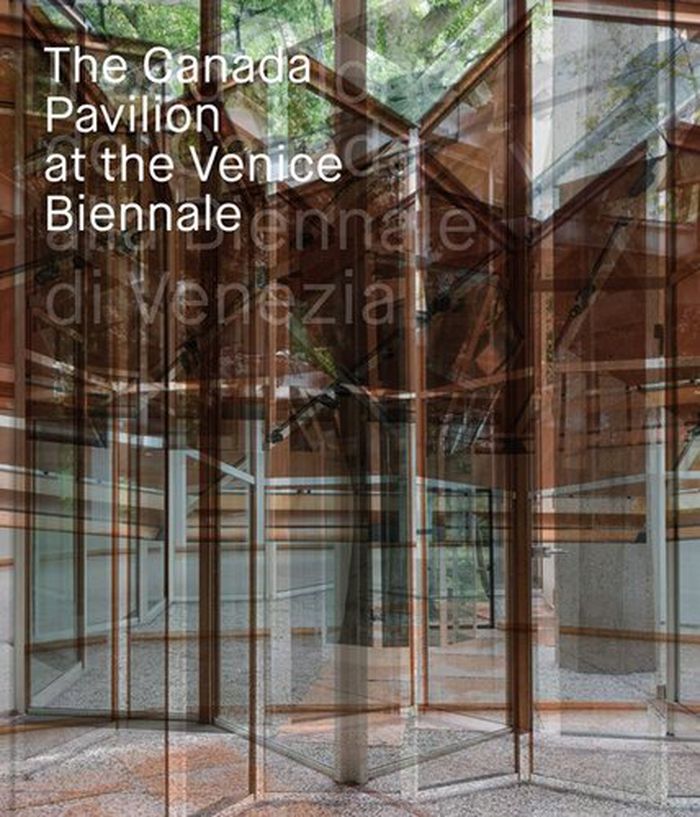
The Canada Pavilion at the Venice Biennale
Actions:
Prix:
$67.50
(disponible en magasin)
Résumé:
This publication examines the various figures and interests involved in the design and construction of the Canada Pavilion and explores how it was used over the past sixty years to exhibit the work of Canadian artists and architects. This publication intends not only to underline the pavilion's importance in the broader context of modern architecture, but also to highlight its role as an early example of cultural diplomacy. The book is fully endowed with archive material, such as photographs, drawings, and maps, along with a portfolio created by contemporary photographers (Francesco Barasciutti and Andrea Pertoldeo), showing the building before, during, and after the restoration. The essays of the various contributors to the book analyze the cultural and political context in which the Canada Pavilion committee worked (Cammie McAtee); the concept and construction of the building and the links with the architect Enrico Peressutti and the BBPR partnership (Réjean Legault); the pavilion's role in the postwar Italian cultural context (Serena Maffioletti) and its fortunes from its inauguration in 1958 to the restoration in 2018 (Josée Drouin-Brisebois); the restoration project itself (Susanna Caccia Gherardine), and, lastly, the relationship between the Canada Pavilion and the Biennale Gardens (Franco Panzini).
The Canada Pavilion at the Venice Biennale
Actions:
Prix:
$67.50
(disponible en magasin)
Résumé:
This publication examines the various figures and interests involved in the design and construction of the Canada Pavilion and explores how it was used over the past sixty years to exhibit the work of Canadian artists and architects. This publication intends not only to underline the pavilion's importance in the broader context of modern architecture, but also to highlight its role as an early example of cultural diplomacy. The book is fully endowed with archive material, such as photographs, drawings, and maps, along with a portfolio created by contemporary photographers (Francesco Barasciutti and Andrea Pertoldeo), showing the building before, during, and after the restoration. The essays of the various contributors to the book analyze the cultural and political context in which the Canada Pavilion committee worked (Cammie McAtee); the concept and construction of the building and the links with the architect Enrico Peressutti and the BBPR partnership (Réjean Legault); the pavilion's role in the postwar Italian cultural context (Serena Maffioletti) and its fortunes from its inauguration in 1958 to the restoration in 2018 (Josée Drouin-Brisebois); the restoration project itself (Susanna Caccia Gherardine), and, lastly, the relationship between the Canada Pavilion and the Biennale Gardens (Franco Panzini).
Classification:
livres
livres
Publication:
septembre 2019
septembre 2019
Sujet:
Biennale
Biennale
Classification:
livres
livres
Titre:
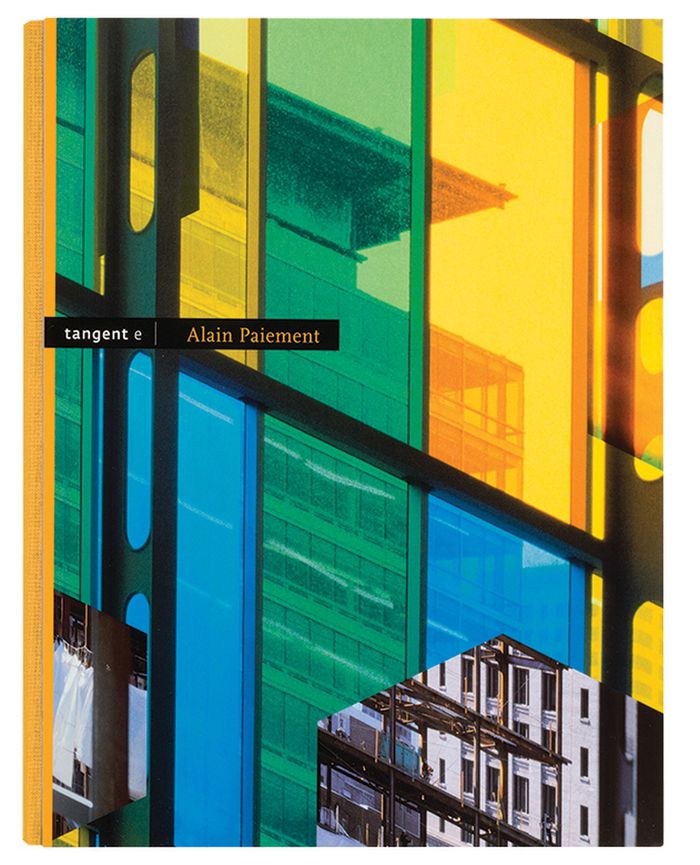
Tangent e : Alain Paiement
Tangent e : Alain Paiement
Actions:
Prix:
$24.95
(disponible en magasin)
Résumé:
Le rapport particulier entre la photographie et l'architecture, entre la photographie et l'espace, le point de contact priviligié où une droite touche un volume, font l'objet de cette nouvelle série d'expositions et de publications qui met en place des conversations visuelles entre des artistes contemporains et un ensemble de photographies choisies parmi la vaste(...)
$24.95
(disponible en magasin)
Résumé:
Le rapport particulier entre la photographie et l'architecture, entre la photographie et l'espace, le point de contact priviligié où une droite touche un volume, font l'objet de cette nouvelle série d'expositions et de publications qui met en place des conversations visuelles entre des artistes contemporains et un ensemble de photographies choisies parmi la vaste(...)
Sujet:
Publications du CCA
Publications du CCA
Publication:
avril 2003, Montréal
avril 2003, Montréal
Titre:
Tangent e : Alain Paiement
Actions:
Prix:
$24.95
(disponible en magasin)
Résumé:
Le rapport particulier entre la photographie et l'architecture, entre la photographie et l'espace, le point de contact priviligié où une droite touche un volume, font l'objet de cette nouvelle série d'expositions et de publications qui met en place des conversations visuelles entre des artistes contemporains et un ensemble de photographies choisies parmi la vaste collection du CCA. "Tangente" est inaugurée par le travail d'Alain Paiement. Dans le cadre d’un entretien entre Hubertus von Amelunxen et Alain Paiement, le livre présente les nouvelles œuvres d’Alain Paiement ainsi que les photographies choisies par l’artiste dans la collection du CCA. The special relationship between photography and architecture, between photography and space, the specific encounter when the tangent touches the circle is explored in this new series of exhibitions and publications in which contemporary artists are invited to enter into visual conversations with a body of photographs selected from the extensive collection of the CCA. "Tangent" is inaugured with the work of Alain Paiement. The book takes the form of a conversation between Hubertus von Amelunxen and Alain Paiement, and presents the new works by Paiement as well as the photographs he himself chose from the CCA collection.
Tangent e : Alain Paiement
Actions:
Prix:
$24.95
(disponible en magasin)
Résumé:
Le rapport particulier entre la photographie et l'architecture, entre la photographie et l'espace, le point de contact priviligié où une droite touche un volume, font l'objet de cette nouvelle série d'expositions et de publications qui met en place des conversations visuelles entre des artistes contemporains et un ensemble de photographies choisies parmi la vaste collection du CCA. "Tangente" est inaugurée par le travail d'Alain Paiement. Dans le cadre d’un entretien entre Hubertus von Amelunxen et Alain Paiement, le livre présente les nouvelles œuvres d’Alain Paiement ainsi que les photographies choisies par l’artiste dans la collection du CCA. The special relationship between photography and architecture, between photography and space, the specific encounter when the tangent touches the circle is explored in this new series of exhibitions and publications in which contemporary artists are invited to enter into visual conversations with a body of photographs selected from the extensive collection of the CCA. "Tangent" is inaugured with the work of Alain Paiement. The book takes the form of a conversation between Hubertus von Amelunxen and Alain Paiement, and presents the new works by Paiement as well as the photographs he himself chose from the CCA collection.
Classification:
livres
livres
Publication:
avril 2003, Montréal
avril 2003, Montréal
Sujet:
Publications du CCA
Publications du CCA
Classification:
livres
livres
Actions:
Prix:
$68.95
(disponible sur commande)
Résumé:
This collection contains studies written by art historian James Ackerman over the past decade. Whereas Ackerman’s earlier work assumed a development of the arts as they responded to social, economic, political, and cultural change, his recent work reflects the poststructural critique of the presumption of progress that characterized Renaissance and modernist history and(...)
$68.95
(disponible sur commande)
Résumé:
This collection contains studies written by art historian James Ackerman over the past decade. Whereas Ackerman’s earlier work assumed a development of the arts as they responded to social, economic, political, and cultural change, his recent work reflects the poststructural critique of the presumption of progress that characterized Renaissance and modernist history and(...)
Sujet:
Théorie de l’architecture
Théorie de l’architecture
Publication:
novembre 2001, Cambridge, Mass.
novembre 2001, Cambridge, Mass.
Titre:
Origins, imitation, conventions : representation in the visual arts
Actions:
Prix:
$68.95
(disponible sur commande)
Résumé:
This collection contains studies written by art historian James Ackerman over the past decade. Whereas Ackerman’s earlier work assumed a development of the arts as they responded to social, economic, political, and cultural change, his recent work reflects the poststructural critique of the presumption of progress that characterized Renaissance and modernist history and criticism. In this book he explores the tension between the authority of the past--which may act not only as a restraint but as a challenge and stimulus--and the potentially liberating gift of invention. He examines the ways in which artists and writers on art have related to ancestors and to established modes of representation, as well as to contemporary experiences. The "origins" studied here include the earliest art history and criticism; the beginnings of architectural drawing in the Middle Ages and Renaissance; Leonardo Da Vinci’s sketches for churches, the first in the Renaissance to propose supporting domes on sculpted walls and piers; and the first architectural photographs. "Imitation" refers to artistic achievements that in part depended on the imitation of forms established in practices outside the fine arts, such as ancient Roman rhetoric and print media. "Conventions," like language, facilitate communication between the artist and viewer, but are both more universal (understood across cultures) and more fixed (resisting variation that might diminish their clarity). The three categories are closely linked throughout the book, as most acts of representation partake to some degree of all three.
Origins, imitation, conventions : representation in the visual arts
Actions:
Prix:
$68.95
(disponible sur commande)
Résumé:
This collection contains studies written by art historian James Ackerman over the past decade. Whereas Ackerman’s earlier work assumed a development of the arts as they responded to social, economic, political, and cultural change, his recent work reflects the poststructural critique of the presumption of progress that characterized Renaissance and modernist history and criticism. In this book he explores the tension between the authority of the past--which may act not only as a restraint but as a challenge and stimulus--and the potentially liberating gift of invention. He examines the ways in which artists and writers on art have related to ancestors and to established modes of representation, as well as to contemporary experiences. The "origins" studied here include the earliest art history and criticism; the beginnings of architectural drawing in the Middle Ages and Renaissance; Leonardo Da Vinci’s sketches for churches, the first in the Renaissance to propose supporting domes on sculpted walls and piers; and the first architectural photographs. "Imitation" refers to artistic achievements that in part depended on the imitation of forms established in practices outside the fine arts, such as ancient Roman rhetoric and print media. "Conventions," like language, facilitate communication between the artist and viewer, but are both more universal (understood across cultures) and more fixed (resisting variation that might diminish their clarity). The three categories are closely linked throughout the book, as most acts of representation partake to some degree of all three.
Classification:
livres
livres
Publication:
novembre 2001, Cambridge, Mass.
novembre 2001, Cambridge, Mass.
Sujet:
Théorie de l’architecture
Théorie de l’architecture
Classification:
livres
livres
Actions:
Prix:
$131.00
(disponible en magasin)
Résumé:
Upon its publication by the MIT Press in 1972, "Learning from Las Vegas" was immediately influential and controversial. The authors made an argument that was revolutionary for its time—that the billboards and casinos of Las Vegas were worthy of architectural attention—and offered a challenge for contemporary architects obsessed with the heroic and monumental. The physical(...)
$131.00
(disponible en magasin)
Résumé:
Upon its publication by the MIT Press in 1972, "Learning from Las Vegas" was immediately influential and controversial. The authors made an argument that was revolutionary for its time—that the billboards and casinos of Las Vegas were worthy of architectural attention—and offered a challenge for contemporary architects obsessed with the heroic and monumental. The physical(...)
Sujet:
Théorie de l’architecture
Théorie de l’architecture
Publication:
septembre 2017
septembre 2017
Titre:
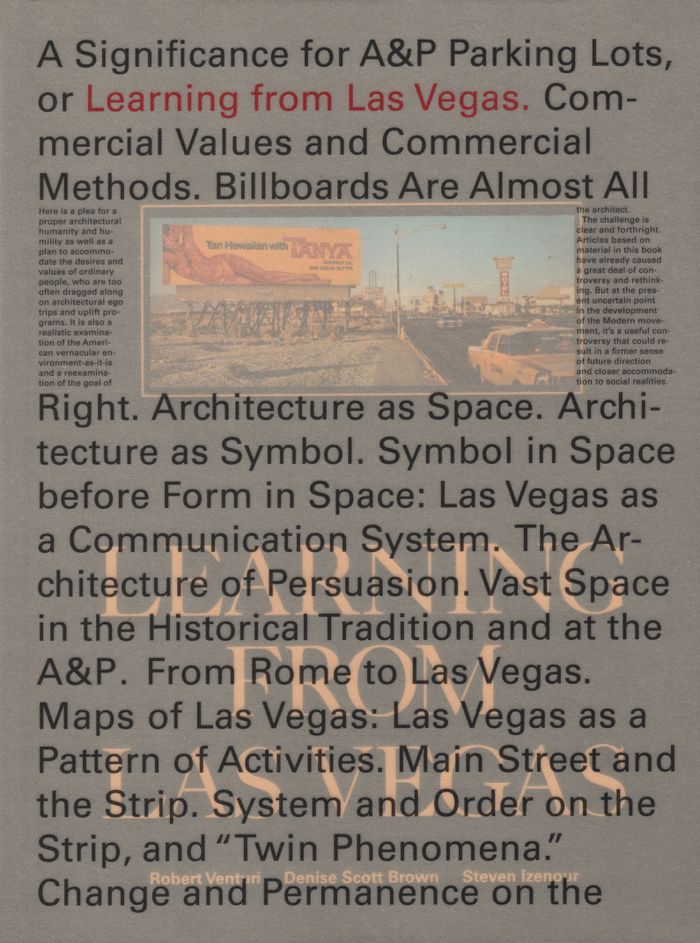
Learning from Las Vegas, facsimile edition
Actions:
Prix:
$131.00
(disponible en magasin)
Résumé:
Upon its publication by the MIT Press in 1972, "Learning from Las Vegas" was immediately influential and controversial. The authors made an argument that was revolutionary for its time—that the billboards and casinos of Las Vegas were worthy of architectural attention—and offered a challenge for contemporary architects obsessed with the heroic and monumental. The physical book itself, designed by MIT’s iconic designer Muriel Cooper, was hailed as a masterpiece of modernist design, but the book’s design struck the authors as too monumental for a text that praised the ugly and ordinary over the heroic and monumental. The MIT Press published a revised version in 1977—a modest paperback that the authors felt was more in keeping with the argument of the book—and the original Cooper-designed book fell out of print and became a highly sought-after collectors’ item; it now sells for thousands of dollars in the rare book market, while the author-redesigned paperback has remained continuously in print at a price affordable to students. Now, decades after the original hardcover edition sold out, the MIT Press is publishing a facsimile edition of the original large-format Cooper-designed edition of Learning from Las Vegas, complete with translucent glassine wrap. This edition also features a spirited preface by Denise Scott Brown, looking back on the creation of the book and explaining her and Robert Venturi’s reservations about the original design.
Learning from Las Vegas, facsimile edition
Actions:
Prix:
$131.00
(disponible en magasin)
Résumé:
Upon its publication by the MIT Press in 1972, "Learning from Las Vegas" was immediately influential and controversial. The authors made an argument that was revolutionary for its time—that the billboards and casinos of Las Vegas were worthy of architectural attention—and offered a challenge for contemporary architects obsessed with the heroic and monumental. The physical book itself, designed by MIT’s iconic designer Muriel Cooper, was hailed as a masterpiece of modernist design, but the book’s design struck the authors as too monumental for a text that praised the ugly and ordinary over the heroic and monumental. The MIT Press published a revised version in 1977—a modest paperback that the authors felt was more in keeping with the argument of the book—and the original Cooper-designed book fell out of print and became a highly sought-after collectors’ item; it now sells for thousands of dollars in the rare book market, while the author-redesigned paperback has remained continuously in print at a price affordable to students. Now, decades after the original hardcover edition sold out, the MIT Press is publishing a facsimile edition of the original large-format Cooper-designed edition of Learning from Las Vegas, complete with translucent glassine wrap. This edition also features a spirited preface by Denise Scott Brown, looking back on the creation of the book and explaining her and Robert Venturi’s reservations about the original design.
Classification:
livres
livres
Publication:
septembre 2017
septembre 2017
Sujet:
Théorie de l’architecture
Théorie de l’architecture
Classification:
livres
livres
Actions:
Prix:
$59.95
(disponible sur commande)
Résumé:
"Suspensions of Perception" is a major historical study of human attention and its volatile role in modern Western culture. It argues that the ways in which we intently look at or listen to anything result from crucial changes in the nature of perception that can be traced back to(...)
$59.95
(disponible sur commande)
Résumé:
"Suspensions of Perception" is a major historical study of human attention and its volatile role in modern Western culture. It argues that the ways in which we intently look at or listen to anything result from crucial changes in the nature of perception that can be traced back to(...)
Titre:
Suspensions of perception : attention, spectacle, and modern culture
Actions:
Prix:
$59.95
(disponible sur commande)
Résumé:
"Suspensions of Perception" is a major historical study of human attention and its volatile role in modern Western culture. It argues that the ways in which we intently look at or listen to anything result from crucial changes in the nature of perception that can be traced back to the second half of the nineteenth century. Focusing on the period from about 1880 to 1905, Jonathan Crary examines the connections between the modernization of subjectivity and the dramatic expansion and industrialization of visual/auditory culture. At the core of his project is the paradoxical nature of modern attention, which was both a fundamental condition of individual freedom, creativity, and experience and a central element in the efficient functioning of economic and disciplinary institutions as well as the emerging spaces of mass consumption and spectacle. Crary approaches these issues through multiple analyses of single works by three key modernist painters--Manet, Seurat, and Cézanne--who each engaged in a singular confrontation with the disruptions, vacancies, and rifts within a perceptual field. Each in his own way discovered that sustained attentiveness, rather than fixing or securing the world, led to perceptual disintegration and loss of presence, and each used this discovery as the basis for a reinvention of representational practices. Suspensions of Perception decisively relocates the problem of aesthetic contemplation within a broader collective encounter with the unstable nature of perception--in psychology, philosophy, neurology, early cinema, and photography. In doing so, it provides a historical framework for understanding the current social crisis of attention amid the accelerating metamorphoses of our contemporary technological culture.
Suspensions of perception : attention, spectacle, and modern culture
Actions:
Prix:
$59.95
(disponible sur commande)
Résumé:
"Suspensions of Perception" is a major historical study of human attention and its volatile role in modern Western culture. It argues that the ways in which we intently look at or listen to anything result from crucial changes in the nature of perception that can be traced back to the second half of the nineteenth century. Focusing on the period from about 1880 to 1905, Jonathan Crary examines the connections between the modernization of subjectivity and the dramatic expansion and industrialization of visual/auditory culture. At the core of his project is the paradoxical nature of modern attention, which was both a fundamental condition of individual freedom, creativity, and experience and a central element in the efficient functioning of economic and disciplinary institutions as well as the emerging spaces of mass consumption and spectacle. Crary approaches these issues through multiple analyses of single works by three key modernist painters--Manet, Seurat, and Cézanne--who each engaged in a singular confrontation with the disruptions, vacancies, and rifts within a perceptual field. Each in his own way discovered that sustained attentiveness, rather than fixing or securing the world, led to perceptual disintegration and loss of presence, and each used this discovery as the basis for a reinvention of representational practices. Suspensions of Perception decisively relocates the problem of aesthetic contemplation within a broader collective encounter with the unstable nature of perception--in psychology, philosophy, neurology, early cinema, and photography. In doing so, it provides a historical framework for understanding the current social crisis of attention amid the accelerating metamorphoses of our contemporary technological culture.
Classification:
livres
livres
Publication:
octobre 1999, Cambridge
octobre 1999, Cambridge
Sujet:
Théorie de l’architecture
Théorie de l’architecture
Classification:
livres
livres
Actions:
Prix:
$49.95
(disponible sur commande)
Résumé:
"Suspensions of Perception" is a major historical study of human attention and its volatile role in modern Western culture. It argues that the ways in which we intently look at or listen to anything result from crucial changes in the nature of perception that can be traced back to(...)
$49.95
(disponible sur commande)
Résumé:
"Suspensions of Perception" is a major historical study of human attention and its volatile role in modern Western culture. It argues that the ways in which we intently look at or listen to anything result from crucial changes in the nature of perception that can be traced back to(...)
Titre:
Suspensions of perception: attention, spectacle, and modern culture
Actions:
Prix:
$49.95
(disponible sur commande)
Résumé:
"Suspensions of Perception" is a major historical study of human attention and its volatile role in modern Western culture. It argues that the ways in which we intently look at or listen to anything result from crucial changes in the nature of perception that can be traced back to the second half of the nineteenth century. Focusing on the period from about 1880 to 1905, Jonathan Crary examines the connections between the modernization of subjectivity and the dramatic expansion and industrialization of visual/auditory culture. At the core of his project is the paradoxical nature of modern attention, which was both a fundamental condition of individual freedom, creativity, and experience and a central element in the efficient functioning of economic and disciplinary institutions as well as the emerging spaces of mass consumption and spectacle. Crary approaches these issues through multiple analyses of single works by three key modernist painters--Manet, Seurat, and Cézanne--who each engaged in a singular confrontation with the disruptions, vacancies, and rifts within a perceptual field. Each in his own way discovered that sustained attentiveness, rather than fixing or securing the world, led to perceptual disintegration and loss of presence, and each used this discovery as the basis for a reinvention of representational practices. Suspensions of Perception decisively relocates the problem of aesthetic contemplation within a broader collective encounter with the unstable nature of perception--in psychology, philosophy, neurology, early cinema, and photography. In doing so, it provides a historical framework for understanding the current social crisis of attention amid the accelerating metamorphoses of our contemporary technological culture.
Suspensions of perception: attention, spectacle, and modern culture
Actions:
Prix:
$49.95
(disponible sur commande)
Résumé:
"Suspensions of Perception" is a major historical study of human attention and its volatile role in modern Western culture. It argues that the ways in which we intently look at or listen to anything result from crucial changes in the nature of perception that can be traced back to the second half of the nineteenth century. Focusing on the period from about 1880 to 1905, Jonathan Crary examines the connections between the modernization of subjectivity and the dramatic expansion and industrialization of visual/auditory culture. At the core of his project is the paradoxical nature of modern attention, which was both a fundamental condition of individual freedom, creativity, and experience and a central element in the efficient functioning of economic and disciplinary institutions as well as the emerging spaces of mass consumption and spectacle. Crary approaches these issues through multiple analyses of single works by three key modernist painters--Manet, Seurat, and Cézanne--who each engaged in a singular confrontation with the disruptions, vacancies, and rifts within a perceptual field. Each in his own way discovered that sustained attentiveness, rather than fixing or securing the world, led to perceptual disintegration and loss of presence, and each used this discovery as the basis for a reinvention of representational practices. Suspensions of Perception decisively relocates the problem of aesthetic contemplation within a broader collective encounter with the unstable nature of perception--in psychology, philosophy, neurology, early cinema, and photography. In doing so, it provides a historical framework for understanding the current social crisis of attention amid the accelerating metamorphoses of our contemporary technological culture.
Classification:
livres
livres
Publication:
août 2001, Cambridge
août 2001, Cambridge
Sujet:
Théorie de l’architecture
Théorie de l’architecture
Classification:
livres
livres
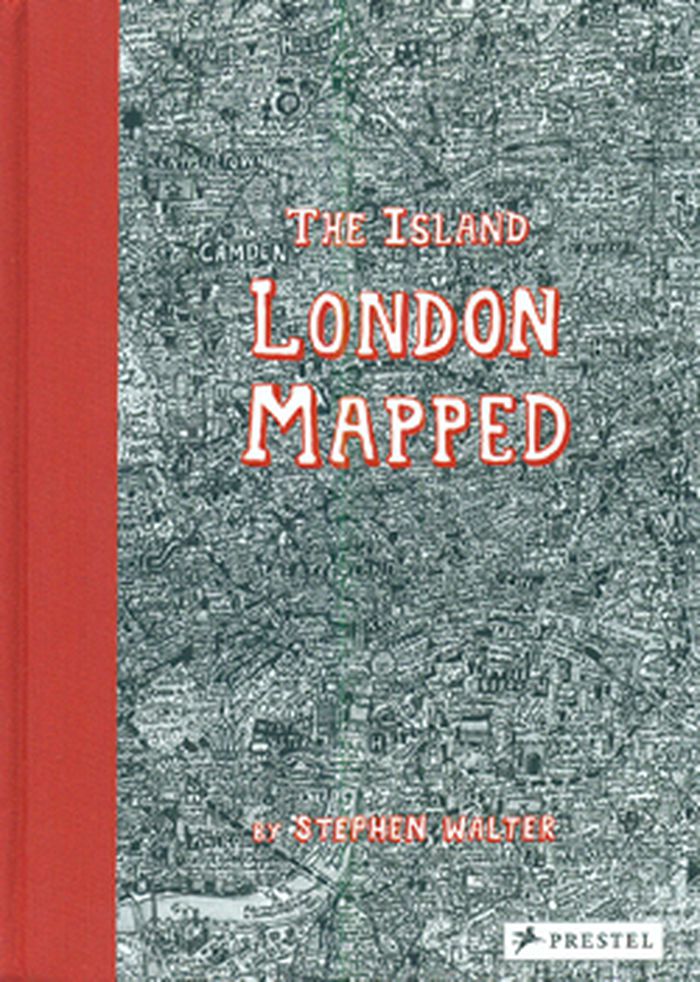
Titre:
The island: London mapped
The island: London mapped
Actions:
Prix:
$38.95
(disponible sur commande)
Résumé:
London's streets, built up over more than two thousand years, are a maze of history, cultures and stories. In his fantastically detailed maps of the city, Stephen Walter translates these elements into a tangle of insightful yet humorous words and symbols that make up a complex of hidden meanings and wider contradictions. Testament to Walter's skill and importance as a(...)
$38.95
(disponible sur commande)
Résumé:
London's streets, built up over more than two thousand years, are a maze of history, cultures and stories. In his fantastically detailed maps of the city, Stephen Walter translates these elements into a tangle of insightful yet humorous words and symbols that make up a complex of hidden meanings and wider contradictions. Testament to Walter's skill and importance as a(...)
Titre:
The island: London mapped
Actions:
Prix:
$38.95
(disponible sur commande)
Résumé:
London's streets, built up over more than two thousand years, are a maze of history, cultures and stories. In his fantastically detailed maps of the city, Stephen Walter translates these elements into a tangle of insightful yet humorous words and symbols that make up a complex of hidden meanings and wider contradictions. Testament to Walter's skill and importance as a cartographer, his groundbreaking, oversized map The Island was one of only two works by contemporary artists to feature in the seminal Magnificent Maps exhibition held at the British Library in 2010, the other by Grayson Perry and was exhibited together with some of the most important maps in history, such as Pierre Desceliers's 1550 world map.
The island: London mapped
Actions:
Prix:
$38.95
(disponible sur commande)
Résumé:
London's streets, built up over more than two thousand years, are a maze of history, cultures and stories. In his fantastically detailed maps of the city, Stephen Walter translates these elements into a tangle of insightful yet humorous words and symbols that make up a complex of hidden meanings and wider contradictions. Testament to Walter's skill and importance as a cartographer, his groundbreaking, oversized map The Island was one of only two works by contemporary artists to feature in the seminal Magnificent Maps exhibition held at the British Library in 2010, the other by Grayson Perry and was exhibited together with some of the most important maps in history, such as Pierre Desceliers's 1550 world map.
Classification:
livres
livres
Publication:
février 2015
février 2015
Classification:
livres
livres
Prix:
$56.50
(disponible sur commande)
Résumé:
Studies of the landscape have ranged from discussions of cultural geography at one end and botany at the other, with quite a mix in between. In this book Marc Treib focuses on the subject of the designed landscape, which he takes to include gardens, cemeteries, plazas, as well as a number of other landscape forms. His writings begin with an investigation of order and its(...)
$56.50
(disponible sur commande)
Résumé:
Studies of the landscape have ranged from discussions of cultural geography at one end and botany at the other, with quite a mix in between. In this book Marc Treib focuses on the subject of the designed landscape, which he takes to include gardens, cemeteries, plazas, as well as a number of other landscape forms. His writings begin with an investigation of order and its(...)
Titre:
Settings and stray paths : writing on landscapes and gardens
Actions:
Prix:
$56.50
(disponible sur commande)
Résumé:
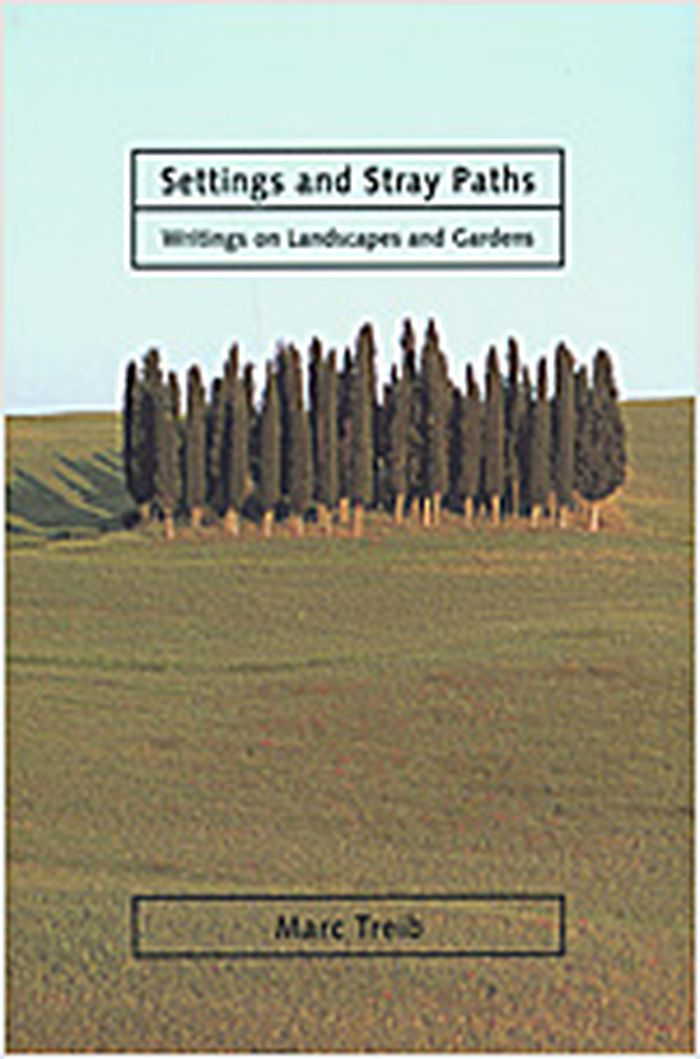
Studies of the landscape have ranged from discussions of cultural geography at one end and botany at the other, with quite a mix in between. In this book Marc Treib focuses on the subject of the designed landscape, which he takes to include gardens, cemeteries, plazas, as well as a number of other landscape forms. His writings begin with an investigation of order and its perception: How have humans organized landscapes so that the experience of them could be directed, or even "read," decoded, and understood? His writings include analyses of both historical and contemporary works, with a geographic distribution that treats Asia as well as Europe and North America. Certain essays address the question of content in landscape design, others its meaning; others examine the lives and contributions of major figures in the field, for example, cultural landscape historian John Brinckerhoff Jackson and landscape architect Garrett Eckbo; subjects such as influence also receive the author's attention. As a whole, the essays cover a remarkable range, examining issues that few other writers have attempted to explain in detail. Treib brings a designer's eye to his work, paring observation and formal analysis with a more theorical formulation of the ideas from which or by which landscape architecture is produced. Photographs by the author complement his writings, adding a visual dimension to the provocative ideas outlined in the essays. While all of these essays have appeared in print over a period of some twenty-five years, many have been published in specialist journals or in a foreign language. Settings and Stray paths assembles a vital collection of Marc Treib's writings on landscape architecture, for the first time in a single source book.
Settings and stray paths : writing on landscapes and gardens
Actions:
Prix:
$56.50
(disponible sur commande)
Résumé:
Studies of the landscape have ranged from discussions of cultural geography at one end and botany at the other, with quite a mix in between. In this book Marc Treib focuses on the subject of the designed landscape, which he takes to include gardens, cemeteries, plazas, as well as a number of other landscape forms. His writings begin with an investigation of order and its perception: How have humans organized landscapes so that the experience of them could be directed, or even "read," decoded, and understood? His writings include analyses of both historical and contemporary works, with a geographic distribution that treats Asia as well as Europe and North America. Certain essays address the question of content in landscape design, others its meaning; others examine the lives and contributions of major figures in the field, for example, cultural landscape historian John Brinckerhoff Jackson and landscape architect Garrett Eckbo; subjects such as influence also receive the author's attention. As a whole, the essays cover a remarkable range, examining issues that few other writers have attempted to explain in detail. Treib brings a designer's eye to his work, paring observation and formal analysis with a more theorical formulation of the ideas from which or by which landscape architecture is produced. Photographs by the author complement his writings, adding a visual dimension to the provocative ideas outlined in the essays. While all of these essays have appeared in print over a period of some twenty-five years, many have been published in specialist journals or in a foreign language. Settings and Stray paths assembles a vital collection of Marc Treib's writings on landscape architecture, for the first time in a single source book.
Classification:
livres
livres
Publication:
juin 2005, London, New York
juin 2005, London, New York
Sujet:
Théorie du paysage
Théorie du paysage
Classification:
livres
livres
Prix:
$47.00
(disponible sur commande)
Résumé:
In this survey of the politics and meanings of urban landscapes, leading sociologist Göran Therborn offers a tour of the world’s major capital cities, showing how they have been shaped by national, popular, and global forces. Their stories begin with the emergence of various kinds of nation-state, each with its own special capital city problematic. In turn, radical shifts(...)
$47.00
(disponible sur commande)
Résumé:
In this survey of the politics and meanings of urban landscapes, leading sociologist Göran Therborn offers a tour of the world’s major capital cities, showing how they have been shaped by national, popular, and global forces. Their stories begin with the emergence of various kinds of nation-state, each with its own special capital city problematic. In turn, radical shifts(...)
Titre:
Cities of power: the urban, the national, the popular, the global
Actions:
Prix:
$47.00
(disponible sur commande)
Résumé:
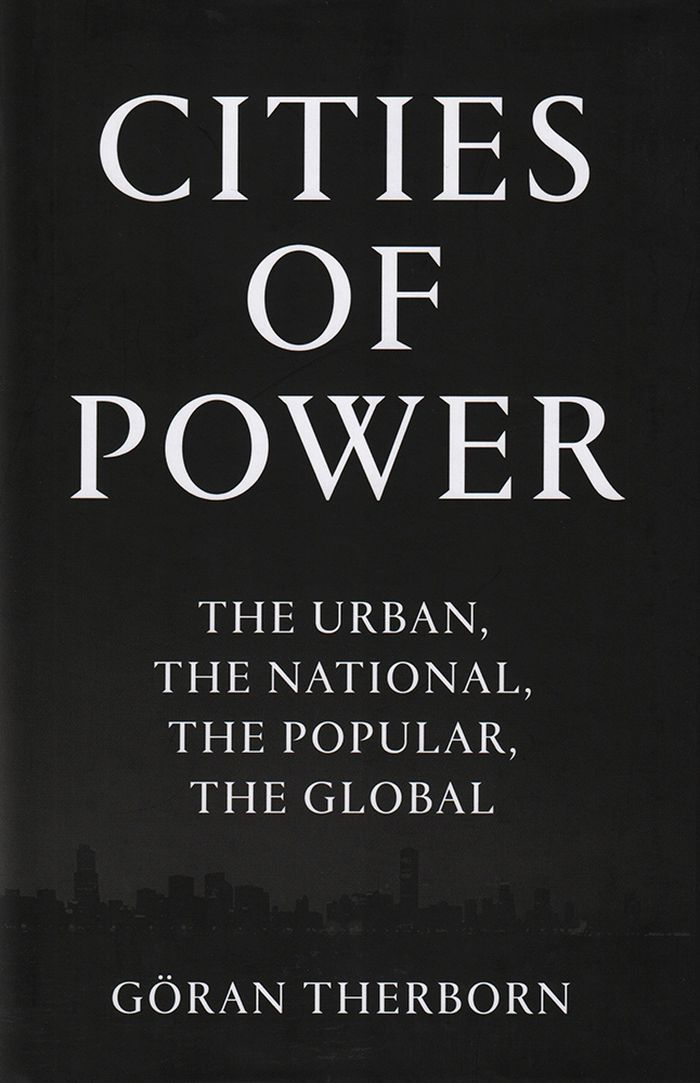
In this survey of the politics and meanings of urban landscapes, leading sociologist Göran Therborn offers a tour of the world’s major capital cities, showing how they have been shaped by national, popular, and global forces. Their stories begin with the emergence of various kinds of nation-state, each with its own special capital city problematic. In turn, radical shifts of power have impacted on these cities’ development, in popular urban reforms or movements of protest and resistance; in the rise and fall of fascism and military dictatorships; and the coming and going of Communism. Therborn also analyzes global moments of urban formation, of historical globalized nationalism, as well as the cities of current global image capitalism and their variations of skyscraping, gating, and displays of novelty. Through a global, historical lens, and with a thematic range extending from the mutations of modernist architecture to the contemporary return of urban revolutions, Therborn questions received assumptions about the source, manifestations, and reach of urban power, combining perspectives on politics, sociology, urban planning, architecture, and urban iconography. He argues that, at a time when they seem to be moving apart, there is a strong link between the city and the nation-state, and that the current globalization of cities is largely driven by the global aspirations of politicians as well as those of national and local capital. With its unique systematic overview, from Washington, D.C. and revolutionary Paris to the flamboyant twenty- first-century capital Astana in Kazakhstan, its wealth of urban observations from all the populated continents, and its sharp and multi-faceted analyses, Cities of Power forces us to rethink our urban future, as well as our historically shaped present.
Cities of power: the urban, the national, the popular, the global
Actions:
Prix:
$47.00
(disponible sur commande)
Résumé:
In this survey of the politics and meanings of urban landscapes, leading sociologist Göran Therborn offers a tour of the world’s major capital cities, showing how they have been shaped by national, popular, and global forces. Their stories begin with the emergence of various kinds of nation-state, each with its own special capital city problematic. In turn, radical shifts of power have impacted on these cities’ development, in popular urban reforms or movements of protest and resistance; in the rise and fall of fascism and military dictatorships; and the coming and going of Communism. Therborn also analyzes global moments of urban formation, of historical globalized nationalism, as well as the cities of current global image capitalism and their variations of skyscraping, gating, and displays of novelty. Through a global, historical lens, and with a thematic range extending from the mutations of modernist architecture to the contemporary return of urban revolutions, Therborn questions received assumptions about the source, manifestations, and reach of urban power, combining perspectives on politics, sociology, urban planning, architecture, and urban iconography. He argues that, at a time when they seem to be moving apart, there is a strong link between the city and the nation-state, and that the current globalization of cities is largely driven by the global aspirations of politicians as well as those of national and local capital. With its unique systematic overview, from Washington, D.C. and revolutionary Paris to the flamboyant twenty- first-century capital Astana in Kazakhstan, its wealth of urban observations from all the populated continents, and its sharp and multi-faceted analyses, Cities of Power forces us to rethink our urban future, as well as our historically shaped present.
Classification:
livres
livres
Publication:
mai 2017
mai 2017
Sujet:
Théorie de l’urbanisme
Théorie de l’urbanisme


