


7457 Résultats
Classification:
livres
livres

Actions:
Prix:
$41.99
(disponible sur commande)
Résumé:
Organized by interpretive categories such as space, infrastructure, and imaginaries, this volume uses historical and contemporary examples of how laboratories are fundamentally connected to changes in the contemporary university. The authors cover topics such as the evolution and delineation of lab-based communities, how labs’ tools and technologies contribute to defining(...)
$41.99
(disponible sur commande)
Résumé:
Organized by interpretive categories such as space, infrastructure, and imaginaries, this volume uses historical and contemporary examples of how laboratories are fundamentally connected to changes in the contemporary university. The authors cover topics such as the evolution and delineation of lab-based communities, how labs’ tools and technologies contribute to defining(...)
Publication:
décembre 2021
décembre 2021
Titre:
The lab book: situated practices in media studies
Actions:
Prix:
$41.99
(disponible sur commande)
Résumé:
Organized by interpretive categories such as space, infrastructure, and imaginaries, this volume uses historical and contemporary examples of how laboratories are fundamentally connected to changes in the contemporary university. The authors cover topics such as the evolution and delineation of lab-based communities, how labs’ tools and technologies contribute to defining their space, and a glossary of key hybrid lab techniques.
The lab book: situated practices in media studies
Actions:
Prix:
$41.99
(disponible sur commande)
Résumé:
Organized by interpretive categories such as space, infrastructure, and imaginaries, this volume uses historical and contemporary examples of how laboratories are fundamentally connected to changes in the contemporary university. The authors cover topics such as the evolution and delineation of lab-based communities, how labs’ tools and technologies contribute to defining their space, and a glossary of key hybrid lab techniques.
Classification:
livres
livres
Publication:
décembre 2021
décembre 2021
Classification:
livres
livres

Titre:
World brain
World brain
Actions:
Prix:
$33.95
(disponible sur commande)
Résumé:
In a series of talks and essays in 1937, H. G. Wells proselytized for what he called a "World Brain," as manifested in a World Encyclopedia--a repository of scientifically established knowledge--that would spread enlightenment around the world and lead to world peace. Wells, known to readers today as the author of "The War of the Worlds" and other science fiction(...)
$33.95
(disponible sur commande)
Résumé:
In a series of talks and essays in 1937, H. G. Wells proselytized for what he called a "World Brain," as manifested in a World Encyclopedia--a repository of scientifically established knowledge--that would spread enlightenment around the world and lead to world peace. Wells, known to readers today as the author of "The War of the Worlds" and other science fiction(...)
Titre:
World brain
Actions:
Prix:
$33.95
(disponible sur commande)
Résumé:
In a series of talks and essays in 1937, H. G. Wells proselytized for what he called a "World Brain," as manifested in a World Encyclopedia--a repository of scientifically established knowledge--that would spread enlightenment around the world and lead to world peace. Wells, known to readers today as the author of "The War of the Worlds" and other science fiction classics, was imagining something like a predigital Wikipedia. The World Encyclopedia would provide a summary of verified reality (in about forty volumes); it would be widely available, free of copyright, and utilize the latest technology. Of course, as Bruce Sterling points out in the foreword to this edition of Wells's work, the World Brain didn't happen; the internet did. And yet, Wells anticipated aspects of the internet, envisioning the World Brain as a technical system of networked knowledge (in Sterling's words, a "hypothetical super-gadget"). Wells's optimism about the power of information might strike readers today as naïvely utopian, but possibly also inspirational.
World brain
Actions:
Prix:
$33.95
(disponible sur commande)
Résumé:
In a series of talks and essays in 1937, H. G. Wells proselytized for what he called a "World Brain," as manifested in a World Encyclopedia--a repository of scientifically established knowledge--that would spread enlightenment around the world and lead to world peace. Wells, known to readers today as the author of "The War of the Worlds" and other science fiction classics, was imagining something like a predigital Wikipedia. The World Encyclopedia would provide a summary of verified reality (in about forty volumes); it would be widely available, free of copyright, and utilize the latest technology. Of course, as Bruce Sterling points out in the foreword to this edition of Wells's work, the World Brain didn't happen; the internet did. And yet, Wells anticipated aspects of the internet, envisioning the World Brain as a technical system of networked knowledge (in Sterling's words, a "hypothetical super-gadget"). Wells's optimism about the power of information might strike readers today as naïvely utopian, but possibly also inspirational.
Classification:
livres
livres
Publication:
août 2021
août 2021
Classification:
livres
livres

Titre:
Data feminism
Data feminism
Actions:
Prix:
$39.95
(disponible sur commande)
Résumé:
Today, data science is a form of power. It has been used to expose injustice, improve health outcomes, and topple governments. But it has also been used to discriminate, police, and surveil. This potential for good, on the one hand, and harm, on the other, makes it essential to ask: Data science by whom? Data science for whom? Data science with whose interests in mind?(...)
$39.95
(disponible sur commande)
Résumé:
Today, data science is a form of power. It has been used to expose injustice, improve health outcomes, and topple governments. But it has also been used to discriminate, police, and surveil. This potential for good, on the one hand, and harm, on the other, makes it essential to ask: Data science by whom? Data science for whom? Data science with whose interests in mind?(...)
Publication:
mars 2020
mars 2020
Titre:
Data feminism
Actions:
Prix:
$39.95
(disponible sur commande)
Résumé:
Today, data science is a form of power. It has been used to expose injustice, improve health outcomes, and topple governments. But it has also been used to discriminate, police, and surveil. This potential for good, on the one hand, and harm, on the other, makes it essential to ask: Data science by whom? Data science for whom? Data science with whose interests in mind? The narratives around big data and data science are overwhelmingly white, male, and techno-heroic. In ''Data feminism,'' Catherine D'Ignazio and Lauren Klein present a new way of thinking about data science and data ethics—one that is informed by intersectional feminist thought. Illustrating data feminism in action, D'Ignazio and Klein show how challenges to the male/female binary can help challenge other hierarchical (and empirically wrong) classification systems. They explain how, for example, an understanding of emotion can expand our ideas about effective data visualization, and how the concept of invisible labor can expose the significant human efforts required by our automated systems. And they show why the data never, ever ''speak for themselves.'' ''Data feminism'' offers strategies for data scientists seeking to learn how feminism can help them work toward justice, and for feminists who want to focus their efforts on the growing field of data science. But ''Data feminism'' is about much more than gender. It is about power, about who has it and who doesn't, and about how those differentials of power can be challenged and changed.
Data feminism
Actions:
Prix:
$39.95
(disponible sur commande)
Résumé:
Today, data science is a form of power. It has been used to expose injustice, improve health outcomes, and topple governments. But it has also been used to discriminate, police, and surveil. This potential for good, on the one hand, and harm, on the other, makes it essential to ask: Data science by whom? Data science for whom? Data science with whose interests in mind? The narratives around big data and data science are overwhelmingly white, male, and techno-heroic. In ''Data feminism,'' Catherine D'Ignazio and Lauren Klein present a new way of thinking about data science and data ethics—one that is informed by intersectional feminist thought. Illustrating data feminism in action, D'Ignazio and Klein show how challenges to the male/female binary can help challenge other hierarchical (and empirically wrong) classification systems. They explain how, for example, an understanding of emotion can expand our ideas about effective data visualization, and how the concept of invisible labor can expose the significant human efforts required by our automated systems. And they show why the data never, ever ''speak for themselves.'' ''Data feminism'' offers strategies for data scientists seeking to learn how feminism can help them work toward justice, and for feminists who want to focus their efforts on the growing field of data science. But ''Data feminism'' is about much more than gender. It is about power, about who has it and who doesn't, and about how those differentials of power can be challenged and changed.
Classification:
livres
livres
Publication:
mars 2020
mars 2020
Classification:
livres
livres
Titre:
The smartness mandate
The smartness mandate
Actions:
Prix:
$47.00
(disponible sur commande)
Résumé:
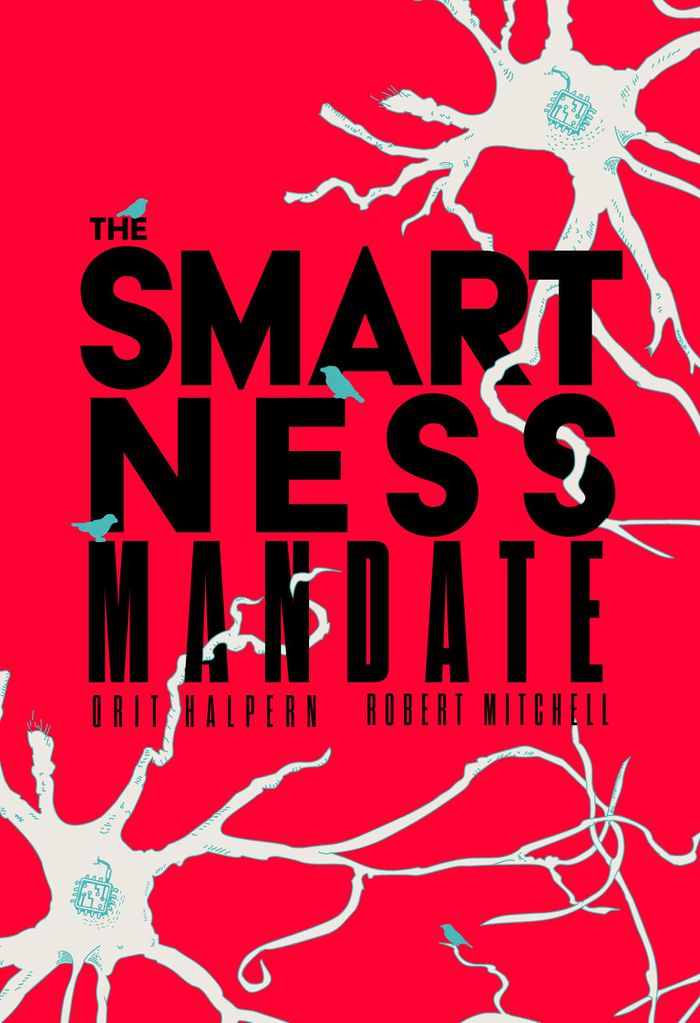
In this book, the authors suggest that "smartness" is not primarily a technology, but rather an epistemology. Through this lens, they offer a critical exploration of the practices, technologies, and subjects that such an understanding relies upon—above all, artificial intelligence and machine learning. They approach these not simply as techniques for solving problems of(...)
$47.00
(disponible sur commande)
Résumé:
In this book, the authors suggest that "smartness" is not primarily a technology, but rather an epistemology. Through this lens, they offer a critical exploration of the practices, technologies, and subjects that such an understanding relies upon—above all, artificial intelligence and machine learning. They approach these not simply as techniques for solving problems of(...)
Publication:
décembre 2022
décembre 2022
Titre:
The smartness mandate
Actions:
Prix:
$47.00
(disponible sur commande)
Résumé:
In this book, the authors suggest that "smartness" is not primarily a technology, but rather an epistemology. Through this lens, they offer a critical exploration of the practices, technologies, and subjects that such an understanding relies upon—above all, artificial intelligence and machine learning. They approach these not simply as techniques for solving problems of calculations, but rather as modes of managing life (human and other) in terms of neo-Darwinian evolution, distributed intelligences, and "resilience," all of which have serious implications for society, politics, and the environment.
The smartness mandate
Actions:
Prix:
$47.00
(disponible sur commande)
Résumé:
In this book, the authors suggest that "smartness" is not primarily a technology, but rather an epistemology. Through this lens, they offer a critical exploration of the practices, technologies, and subjects that such an understanding relies upon—above all, artificial intelligence and machine learning. They approach these not simply as techniques for solving problems of calculations, but rather as modes of managing life (human and other) in terms of neo-Darwinian evolution, distributed intelligences, and "resilience," all of which have serious implications for society, politics, and the environment.
Classification:
livres
livres
Publication:
décembre 2022
décembre 2022
Classification:
livres
livres

Actions:
Prix:
$47.00
(disponible sur commande)
Résumé:
The only way to handle data responsibly, says Melanie Feinberg in this incisive work, is to take into account its human character. Though the data she discusses may seem familiar, close scrutiny shows it to be ambiguous, complicated, and uncertain: unruly. Drawing on the tools of information science, she uses everyday events to demonstrate a practical, critical, and(...)
$47.00
(disponible sur commande)
Résumé:
The only way to handle data responsibly, says Melanie Feinberg in this incisive work, is to take into account its human character. Though the data she discusses may seem familiar, close scrutiny shows it to be ambiguous, complicated, and uncertain: unruly. Drawing on the tools of information science, she uses everyday events to demonstrate a practical, critical, and(...)
Titre:
Everyday adventures with unruly data
Actions:
Prix:
$47.00
(disponible sur commande)
Résumé:
The only way to handle data responsibly, says Melanie Feinberg in this incisive work, is to take into account its human character. Though the data she discusses may seem familiar, close scrutiny shows it to be ambiguous, complicated, and uncertain: unruly. Drawing on the tools of information science, she uses everyday events to demonstrate a practical, critical, and generative mode of thinking about data: its creation, management, aggregation, and use. As she reflects on the implications of commonplace events, Feinberg explicates fundamental concepts of data that reveal the many tiny design decisions—which may not even seem like design at all—that shape how data comes to be. Through the themes of serendipity, objectivity, equivalence, interoperability, taxonomy, labels, and locality, she illuminates the surprisingly pervasive role of data in our daily thoughts and lives.
Everyday adventures with unruly data
Actions:
Prix:
$47.00
(disponible sur commande)
Résumé:
The only way to handle data responsibly, says Melanie Feinberg in this incisive work, is to take into account its human character. Though the data she discusses may seem familiar, close scrutiny shows it to be ambiguous, complicated, and uncertain: unruly. Drawing on the tools of information science, she uses everyday events to demonstrate a practical, critical, and generative mode of thinking about data: its creation, management, aggregation, and use. As she reflects on the implications of commonplace events, Feinberg explicates fundamental concepts of data that reveal the many tiny design decisions—which may not even seem like design at all—that shape how data comes to be. Through the themes of serendipity, objectivity, equivalence, interoperability, taxonomy, labels, and locality, she illuminates the surprisingly pervasive role of data in our daily thoughts and lives.
Classification:
livres
livres
Publication:
octobre 2022
octobre 2022
Classification:
livres
livres

Actions:
Prix:
$48.00
(disponible sur commande)
Résumé:
Is there a cultural logic of what we have come to call the information age? Have the technologies and techniques centered on the computer provided not only tools but also the metaphors through which we now understand the social and economic formation of our world? In Control, Seb Franklin addresses the conditions of knowledge that make the concept of the "information(...)
$48.00
(disponible sur commande)
Résumé:
Is there a cultural logic of what we have come to call the information age? Have the technologies and techniques centered on the computer provided not only tools but also the metaphors through which we now understand the social and economic formation of our world? In Control, Seb Franklin addresses the conditions of knowledge that make the concept of the "information(...)
Titre:
Control: digitality as cultural logic
Actions:
Prix:
$48.00
(disponible sur commande)
Résumé:
Is there a cultural logic of what we have come to call the information age? Have the technologies and techniques centered on the computer provided not only tools but also the metaphors through which we now understand the social and economic formation of our world? In Control, Seb Franklin addresses the conditions of knowledge that make the concept of the "information economy" possible while at the same time obscuring its effects on material social spaces. In so doing, Franklin traces three intertwined threads: the relationships among information, labor, and social management that emerged in the nineteenth century; the mid-twentieth-century diffusion of computational metaphors; and the appearance of informatic principles in certain contemporary socioeconomic and cultural practices. Drawing on critical theory, media theory, and the history of science, Franklin names control as the episteme grounding late capitalism. Beyond any specific device or set of technically mediated practices, digitality functions within this episteme as the logical basis for reshaped concepts of labor, subjectivity, and collectivity, as well as for the intensification of older modes of exclusion and dispossession. In tracking the pervasiveness of this logical mode into the present, Franklin locates the cultural traces of control across a diverse body of objects and practices, from cybernetics to economic theory and management styles, and from concepts of language and subjectivity to literary texts, films, and video games.
Control: digitality as cultural logic
Actions:
Prix:
$48.00
(disponible sur commande)
Résumé:
Is there a cultural logic of what we have come to call the information age? Have the technologies and techniques centered on the computer provided not only tools but also the metaphors through which we now understand the social and economic formation of our world? In Control, Seb Franklin addresses the conditions of knowledge that make the concept of the "information economy" possible while at the same time obscuring its effects on material social spaces. In so doing, Franklin traces three intertwined threads: the relationships among information, labor, and social management that emerged in the nineteenth century; the mid-twentieth-century diffusion of computational metaphors; and the appearance of informatic principles in certain contemporary socioeconomic and cultural practices. Drawing on critical theory, media theory, and the history of science, Franklin names control as the episteme grounding late capitalism. Beyond any specific device or set of technically mediated practices, digitality functions within this episteme as the logical basis for reshaped concepts of labor, subjectivity, and collectivity, as well as for the intensification of older modes of exclusion and dispossession. In tracking the pervasiveness of this logical mode into the present, Franklin locates the cultural traces of control across a diverse body of objects and practices, from cybernetics to economic theory and management styles, and from concepts of language and subjectivity to literary texts, films, and video games.
Classification:
livres
livres
Publication:
novembre 2015
novembre 2015
Classification:
livres
livres
Actions:
Prix:
$79.00
(disponible sur commande)
Résumé:
Life in the digital economy of information and images enriches us but often induces a sense of being overwhelmed. ''Sensing the Future: Moholy-Nagy, Media and the Arts'' considers the impact of technology by exploring ways it was addressed in the practice of the Hungarian polymath artist László Moholy-Nagy (1895-1946), a prominent professor at the Bauhaus and a key figure(...)
$79.00
(disponible sur commande)
Résumé:
Life in the digital economy of information and images enriches us but often induces a sense of being overwhelmed. ''Sensing the Future: Moholy-Nagy, Media and the Arts'' considers the impact of technology by exploring ways it was addressed in the practice of the Hungarian polymath artist László Moholy-Nagy (1895-1946), a prominent professor at the Bauhaus and a key figure(...)
Titre:
Sensing the future: Moholy-Nagy, media and the arts.Revised edition
Actions:
Prix:
$79.00
(disponible sur commande)
Résumé:
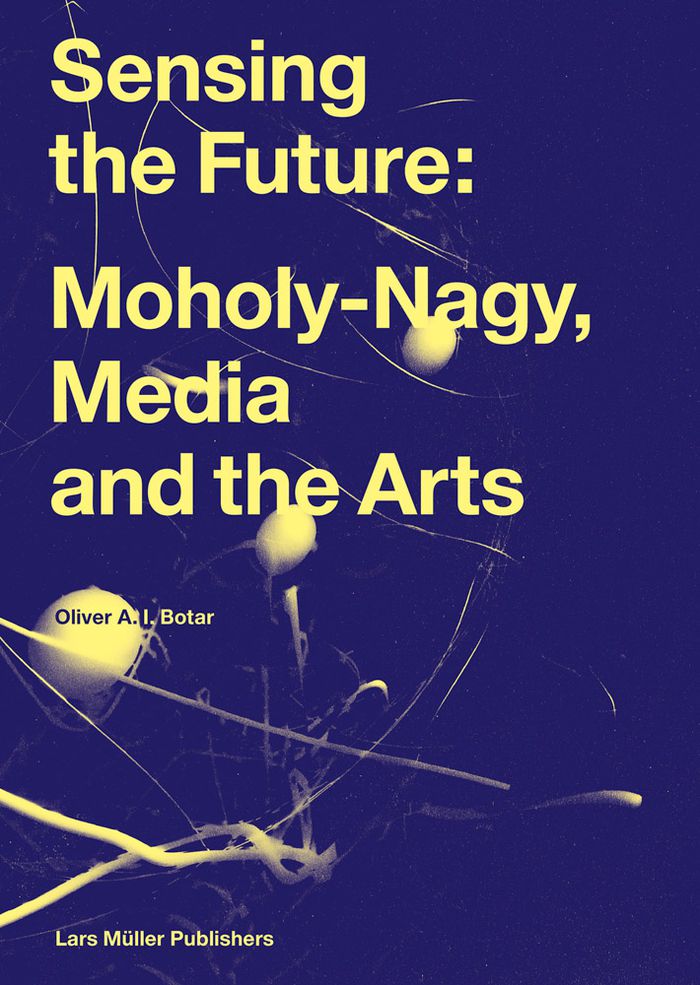
Life in the digital economy of information and images enriches us but often induces a sense of being overwhelmed. ''Sensing the Future: Moholy-Nagy, Media and the Arts'' considers the impact of technology by exploring ways it was addressed in the practice of the Hungarian polymath artist László Moholy-Nagy (1895-1946), a prominent professor at the Bauhaus and a key figure in the history of Modernism. Moholy-Nagy felt that people needed guidance to cope with the onslaught of sensory input in an increasingly technologized, mediatized, hyper-stimulating environment. His ideas informed media theorists such as Walter Benjamin, John Cage, Sigfried Giedion, and Marshall McLuhan, who anticipated digital culture as it emerged. Should we then regard Moholy-Nagy as a pioneer of the digital? His aesthetic engagement with the technology/body problematic broached the notions of immersion, interactivity and bodily participation, innately offering a critique of today’s disembodiment.
Sensing the future: Moholy-Nagy, media and the arts.Revised edition
Actions:
Prix:
$79.00
(disponible sur commande)
Résumé:
Life in the digital economy of information and images enriches us but often induces a sense of being overwhelmed. ''Sensing the Future: Moholy-Nagy, Media and the Arts'' considers the impact of technology by exploring ways it was addressed in the practice of the Hungarian polymath artist László Moholy-Nagy (1895-1946), a prominent professor at the Bauhaus and a key figure in the history of Modernism. Moholy-Nagy felt that people needed guidance to cope with the onslaught of sensory input in an increasingly technologized, mediatized, hyper-stimulating environment. His ideas informed media theorists such as Walter Benjamin, John Cage, Sigfried Giedion, and Marshall McLuhan, who anticipated digital culture as it emerged. Should we then regard Moholy-Nagy as a pioneer of the digital? His aesthetic engagement with the technology/body problematic broached the notions of immersion, interactivity and bodily participation, innately offering a critique of today’s disembodiment.
Classification:
livres
livres
Publication:
novembre 2023
novembre 2023
Classification:
livres
livres

Prix:
$36.50
(disponible en magasin)
Résumé:
''The Interiors of Social Media'' explores the relationship between architecture, interiors, and social media, guiding us through today's digital landscape to reveal where the virtual and physical worlds meet. From influencer bedrooms and gaming setups to humanitarian shelters, pet influencer homes, and porn rooms, Javier Fernández Contreras reveals how social media(...)
$36.50
(disponible en magasin)
Résumé:
''The Interiors of Social Media'' explores the relationship between architecture, interiors, and social media, guiding us through today's digital landscape to reveal where the virtual and physical worlds meet. From influencer bedrooms and gaming setups to humanitarian shelters, pet influencer homes, and porn rooms, Javier Fernández Contreras reveals how social media(...)
Titre:
The interiors of social media: Architecture, space and technology
Actions:
Prix:
$36.50
(disponible en magasin)
Résumé:
''The Interiors of Social Media'' explores the relationship between architecture, interiors, and social media, guiding us through today's digital landscape to reveal where the virtual and physical worlds meet. From influencer bedrooms and gaming setups to humanitarian shelters, pet influencer homes, and porn rooms, Javier Fernández Contreras reveals how social media does not merely depict interiors, but actively scripts new spatial types: homes that are both private and hyper-public, domestic yet performative, and material yet algorithmic. By mapping platform spatialities and tracing the themes that connect them, he examines interiors as sites of consumerism, display, and mediatization - environments that expose the ethical, political, and ecological implications of 21st-century digital culture. Drawing on architecture, media studies, and digital humanities, «The Interiors of Social Media » offers a critical lens on how online interactions are woven into everyday life and invites us to rethink architecture in the age of the algorithm.
The interiors of social media: Architecture, space and technology
Actions:
Prix:
$36.50
(disponible en magasin)
Résumé:
''The Interiors of Social Media'' explores the relationship between architecture, interiors, and social media, guiding us through today's digital landscape to reveal where the virtual and physical worlds meet. From influencer bedrooms and gaming setups to humanitarian shelters, pet influencer homes, and porn rooms, Javier Fernández Contreras reveals how social media does not merely depict interiors, but actively scripts new spatial types: homes that are both private and hyper-public, domestic yet performative, and material yet algorithmic. By mapping platform spatialities and tracing the themes that connect them, he examines interiors as sites of consumerism, display, and mediatization - environments that expose the ethical, political, and ecological implications of 21st-century digital culture. Drawing on architecture, media studies, and digital humanities, «The Interiors of Social Media » offers a critical lens on how online interactions are woven into everyday life and invites us to rethink architecture in the age of the algorithm.
Classification:
livres
livres
Publication:
juin 2026
juin 2026
Sujet:
Social
Social
Classification:
livres
livres

Actions:
Prix:
$37.95
(disponible sur commande)
Résumé:
Toyo Ito is one of the foremost architects working today. His architecture makes innovative use of steel and aluminium and includes such buildings as the White U House and the Eggs of Winds in Tokyo. This volume focuses on his Mediathèque in Sendai. This newly completed structure, which houses a library, art gallery, cinema, lecture theatre, and cybercafé, is predicated(...)
$37.95
(disponible sur commande)
Résumé:
Toyo Ito is one of the foremost architects working today. His architecture makes innovative use of steel and aluminium and includes such buildings as the White U House and the Eggs of Winds in Tokyo. This volume focuses on his Mediathèque in Sendai. This newly completed structure, which houses a library, art gallery, cinema, lecture theatre, and cybercafé, is predicated(...)
Titre:
Case : Toyo Ito - Sendai Mediatheque
Actions:
Prix:
$37.95
(disponible sur commande)
Résumé:
Toyo Ito is one of the foremost architects working today. His architecture makes innovative use of steel and aluminium and includes such buildings as the White U House and the Eggs of Winds in Tokyo. This volume focuses on his Mediathèque in Sendai. This newly completed structure, which houses a library, art gallery, cinema, lecture theatre, and cybercafé, is predicated on the idea that the users of the building occupy a media/ information landscape or “digital ecology. ”Through a series of extraordinary technical advances, floors supported by a system of occupiable hollow tubes and sophisticated information and media networks, the building creates an environment in which people can engage in cultural activities both internally (within the structure) and externally (through digital connections to the world at large). This volume investigates the evolution of the structure through a series of essays by experts on media, architectural technology, and digital culture.
Case : Toyo Ito - Sendai Mediatheque
Actions:
Prix:
$37.95
(disponible sur commande)
Résumé:
Toyo Ito is one of the foremost architects working today. His architecture makes innovative use of steel and aluminium and includes such buildings as the White U House and the Eggs of Winds in Tokyo. This volume focuses on his Mediathèque in Sendai. This newly completed structure, which houses a library, art gallery, cinema, lecture theatre, and cybercafé, is predicated on the idea that the users of the building occupy a media/ information landscape or “digital ecology. ”Through a series of extraordinary technical advances, floors supported by a system of occupiable hollow tubes and sophisticated information and media networks, the building creates an environment in which people can engage in cultural activities both internally (within the structure) and externally (through digital connections to the world at large). This volume investigates the evolution of the structure through a series of essays by experts on media, architectural technology, and digital culture.
Classification:
livres
livres
Publication:
octobre 2001, Munich
octobre 2001, Munich
Sujet:
Architecture, monographies
Architecture, monographies
Classification:
livres
livres
Titre:
La Région Decentralized.
La Région Decentralized.
Actions:
Description:
1 online resource
Auteur:
Sujet:
Publication:
[Place of publication not identified] : Rhizome, 2012.
[Place of publication not identified] : Rhizome, 2012.
Classification:
livres
livres
Publication:
[Place of publication not identified] : Rhizome, 2012.
[Place of publication not identified] : Rhizome, 2012.
Auteur:
Sujet:


