


10592 Résultats
Classification:
livres
livres
Actions:
Prix:
$30.95
(disponible sur commande)
Résumé:
Drawing on his professional experience of almost sixty years, Jacobs guides the reader through the lessons he's learnt as a planner and lover of cities. Cities from Brazil, Italy, India, Japan, China and the US are featured. Written with a engaging, humorous tone and Jacobs' own drawings, this publication transfers lessons on city design, building and urban change to all(...)
$30.95
(disponible sur commande)
Résumé:
Drawing on his professional experience of almost sixty years, Jacobs guides the reader through the lessons he's learnt as a planner and lover of cities. Cities from Brazil, Italy, India, Japan, China and the US are featured. Written with a engaging, humorous tone and Jacobs' own drawings, this publication transfers lessons on city design, building and urban change to all(...)
Titre:
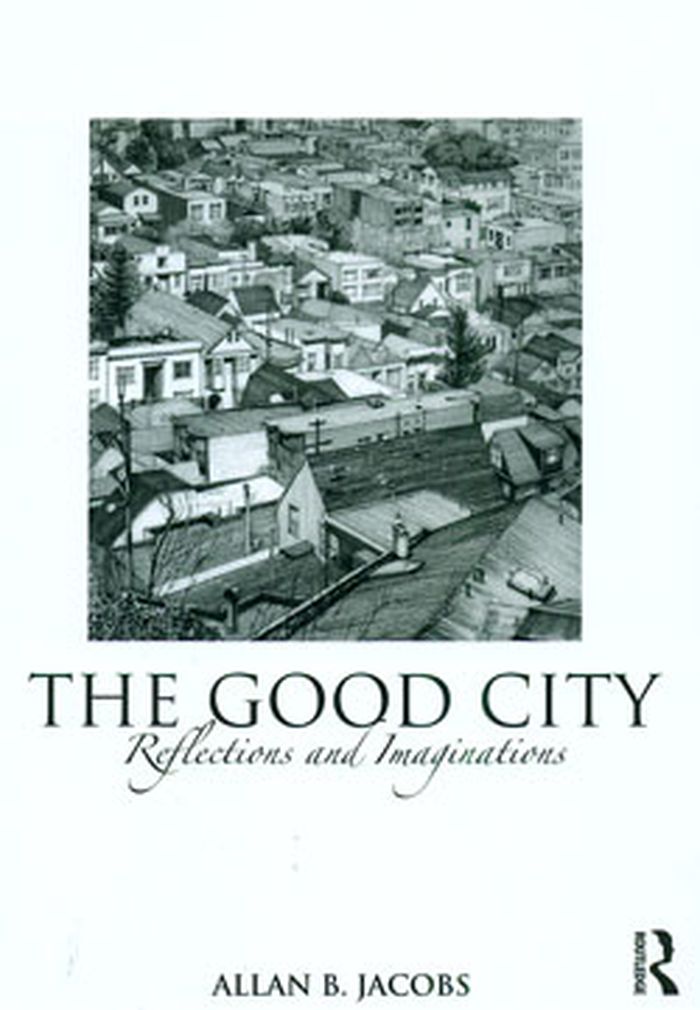
The good city: reflections and imaginations
Actions:
Prix:
$30.95
(disponible sur commande)
Résumé:
Drawing on his professional experience of almost sixty years, Jacobs guides the reader through the lessons he's learnt as a planner and lover of cities. Cities from Brazil, Italy, India, Japan, China and the US are featured. Written with a engaging, humorous tone and Jacobs' own drawings, this publication transfers lessons on city design, building and urban change to all those willing to help cities become the beautiful places they should be - and encourages all inhabitants to learn to appreciate and explore their own cities.
The good city: reflections and imaginations
Actions:
Prix:
$30.95
(disponible sur commande)
Résumé:
Drawing on his professional experience of almost sixty years, Jacobs guides the reader through the lessons he's learnt as a planner and lover of cities. Cities from Brazil, Italy, India, Japan, China and the US are featured. Written with a engaging, humorous tone and Jacobs' own drawings, this publication transfers lessons on city design, building and urban change to all those willing to help cities become the beautiful places they should be - and encourages all inhabitants to learn to appreciate and explore their own cities.
Classification:
livres
livres
Publication:
avril 2011
avril 2011
Sujet:
Théorie de l’urbanisme
Théorie de l’urbanisme
Classification:
livres
livres
Actions:
Prix:
$24.95
(disponible sur commande)
Résumé:
Présentation générale de l'urbanisme et de ses enjeux en matière d'amènagement du territoire.
$24.95
(disponible sur commande)
Résumé:
Présentation générale de l'urbanisme et de ses enjeux en matière d'amènagement du territoire.
Titre:
Les 101 mots de l'urbanisme à l'usage de tous
Actions:
Prix:
$24.95
(disponible sur commande)
Résumé:
Présentation générale de l'urbanisme et de ses enjeux en matière d'amènagement du territoire.
Les 101 mots de l'urbanisme à l'usage de tous
Actions:
Prix:
$24.95
(disponible sur commande)
Résumé:
Présentation générale de l'urbanisme et de ses enjeux en matière d'amènagement du territoire.
Classification:
livres
livres
Publication:
juillet 2011
juillet 2011
Sujet:
Théorie de l’urbanisme
Théorie de l’urbanisme
Classification:
livres
livres
Prix:
$24.95
(disponible sur commande)
Résumé:
Thirty years ago, alternative communities swept the american nation. Today, with sustainability, peak oil and retirement concerns, people of all ages are reviving and expanding notions of cooperative living as new communities form and thrive. The Modern Utopian is an exploration of the alternative communities that fascinated a nation and redefined progressive culture(...)
$24.95
(disponible sur commande)
Résumé:
Thirty years ago, alternative communities swept the american nation. Today, with sustainability, peak oil and retirement concerns, people of all ages are reviving and expanding notions of cooperative living as new communities form and thrive. The Modern Utopian is an exploration of the alternative communities that fascinated a nation and redefined progressive culture(...)
Sujet:
Théorie de l’architecture
Théorie de l’architecture
Publication:
novembre 2010
novembre 2010
Titre:
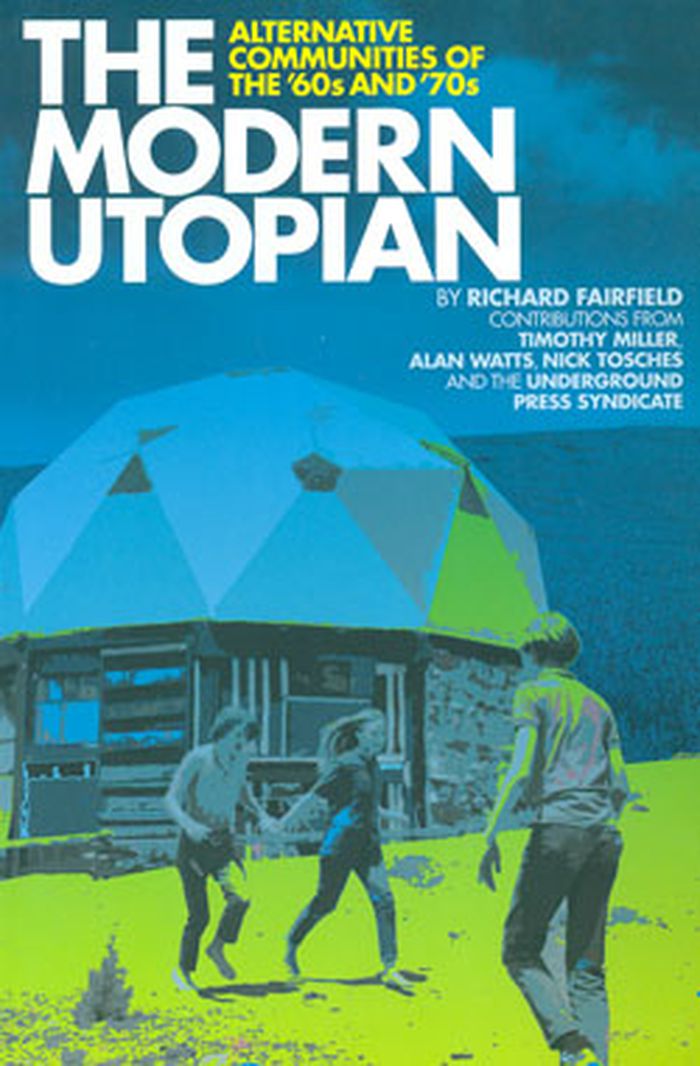
The modern utopian: alternative communities of the '60s and '70s
Actions:
Prix:
$24.95
(disponible sur commande)
Résumé:
Thirty years ago, alternative communities swept the american nation. Today, with sustainability, peak oil and retirement concerns, people of all ages are reviving and expanding notions of cooperative living as new communities form and thrive. The Modern Utopian is an exploration of the alternative communities that fascinated a nation and redefined progressive culture in the ‘60s and ‘70s, documented by those who knew it and lived it. This photo-illustrated compilation of articles visits the fabled Drop City, Morningstar Ranch, Timothy Leary at Millbrook, Detroit’s Translove Energies, the still-thriving Twin Oaks and Stephen Gaskin’s Farm, and dozens of other across the nation.
The modern utopian: alternative communities of the '60s and '70s
Actions:
Prix:
$24.95
(disponible sur commande)
Résumé:
Thirty years ago, alternative communities swept the american nation. Today, with sustainability, peak oil and retirement concerns, people of all ages are reviving and expanding notions of cooperative living as new communities form and thrive. The Modern Utopian is an exploration of the alternative communities that fascinated a nation and redefined progressive culture in the ‘60s and ‘70s, documented by those who knew it and lived it. This photo-illustrated compilation of articles visits the fabled Drop City, Morningstar Ranch, Timothy Leary at Millbrook, Detroit’s Translove Energies, the still-thriving Twin Oaks and Stephen Gaskin’s Farm, and dozens of other across the nation.
Classification:
livres
livres
Publication:
novembre 2010
novembre 2010
Sujet:
Théorie de l’architecture
Théorie de l’architecture
Classification:
livres
livres
Prix:
$39.00
(disponible sur commande)
Résumé:
Since the introduction of the personal computer in the early 1980s, many objects have been designed to have capabilities well beyond their immediate use or appearance. Whether openly and actively or in subtle, subliminal ways, these objects talk to us, and we have come to expect interaction with them. Contemporary designers, besides giving objects form and function, write(...)
$39.00
(disponible sur commande)
Résumé:
Since the introduction of the personal computer in the early 1980s, many objects have been designed to have capabilities well beyond their immediate use or appearance. Whether openly and actively or in subtle, subliminal ways, these objects talk to us, and we have come to expect interaction with them. Contemporary designers, besides giving objects form and function, write(...)
Titre:
Talk to me: design and communication between people and objects
Actions:
Prix:
$39.00
(disponible sur commande)
Résumé:
Since the introduction of the personal computer in the early 1980s, many objects have been designed to have capabilities well beyond their immediate use or appearance. Whether openly and actively or in subtle, subliminal ways, these objects talk to us, and we have come to expect interaction with them. Contemporary designers, besides giving objects form and function, write their initial scripts--the foundation for useful and satisfying conversations. This publication focuses on projects that involve such direct interaction--including interfaces, websites, video games, devices and tools, and information systems--as well as installations that establish practical, emotional, or even sensual connections to cities, companies, governmental institutions, or other individuals. The featured objects range in date from the late 1980s to today, with particular attention given to the last five years and projects currently in development. Organized thematically, it introduces design practices that are increasingly crucial to our world and demonstrates how rich and deep the influence of design will be on our future.
Talk to me: design and communication between people and objects
Actions:
Prix:
$39.00
(disponible sur commande)
Résumé:
Since the introduction of the personal computer in the early 1980s, many objects have been designed to have capabilities well beyond their immediate use or appearance. Whether openly and actively or in subtle, subliminal ways, these objects talk to us, and we have come to expect interaction with them. Contemporary designers, besides giving objects form and function, write their initial scripts--the foundation for useful and satisfying conversations. This publication focuses on projects that involve such direct interaction--including interfaces, websites, video games, devices and tools, and information systems--as well as installations that establish practical, emotional, or even sensual connections to cities, companies, governmental institutions, or other individuals. The featured objects range in date from the late 1980s to today, with particular attention given to the last five years and projects currently in development. Organized thematically, it introduces design practices that are increasingly crucial to our world and demonstrates how rich and deep the influence of design will be on our future.
Classification:
livres
livres
Publication:
juillet 2011
juillet 2011
Sujet:
Théorie du design
Théorie du design
Classification:
livres
livres
Prix:
$11.00
(disponible sur commande)
Résumé:
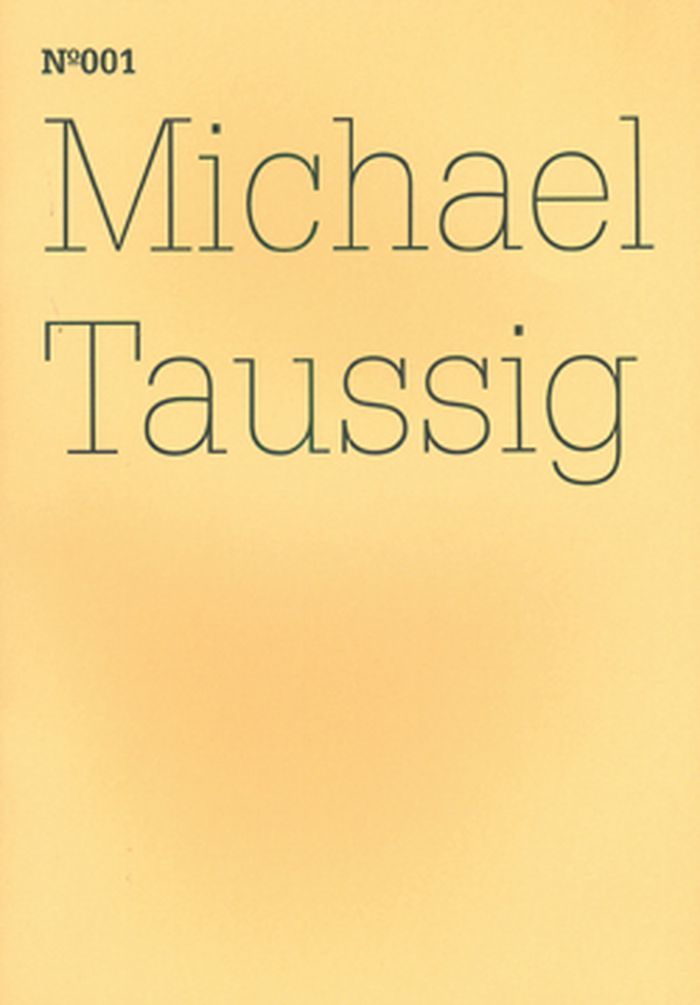
What is it that makes notebooks so fascinating? Anthropologist Michael Taussig, for whom fieldwork notebooks are indispensable, discusses notorious notetakers Walter Benjamin, Roland Barthes, Le Corbusier and Joan Didion among others.
$11.00
(disponible sur commande)
Résumé:
What is it that makes notebooks so fascinating? Anthropologist Michael Taussig, for whom fieldwork notebooks are indispensable, discusses notorious notetakers Walter Benjamin, Roland Barthes, Le Corbusier and Joan Didion among others.
Titre:
Documenta series 01: Michael Taussig, fieldwork notebooks
Actions:
Prix:
$11.00
(disponible sur commande)
Résumé:
What is it that makes notebooks so fascinating? Anthropologist Michael Taussig, for whom fieldwork notebooks are indispensable, discusses notorious notetakers Walter Benjamin, Roland Barthes, Le Corbusier and Joan Didion among others.
Documenta series 01: Michael Taussig, fieldwork notebooks
Actions:
Prix:
$11.00
(disponible sur commande)
Résumé:
What is it that makes notebooks so fascinating? Anthropologist Michael Taussig, for whom fieldwork notebooks are indispensable, discusses notorious notetakers Walter Benjamin, Roland Barthes, Le Corbusier and Joan Didion among others.
Classification:
livres
livres
Publication:
août 2011
août 2011
Sujet:
Théorie de l’art
Théorie de l’art
Classification:
livres
livres

Prix:
$11.00
(disponible sur commande)
Résumé:
The first Documenta took place in Kassel in 1955. In this lecture from 1987, Vancouver artist Ian Wallace discusses the occasion as an expression of the postwar cultural and political climate.
$11.00
(disponible sur commande)
Résumé:
The first Documenta took place in Kassel in 1955. In this lecture from 1987, Vancouver artist Ian Wallace discusses the occasion as an expression of the postwar cultural and political climate.
Titre:
Documenta series 02: Ian Wallace, the first documenta 1955
Actions:
Prix:
$11.00
(disponible sur commande)
Résumé:
The first Documenta took place in Kassel in 1955. In this lecture from 1987, Vancouver artist Ian Wallace discusses the occasion as an expression of the postwar cultural and political climate.
Documenta series 02: Ian Wallace, the first documenta 1955
Actions:
Prix:
$11.00
(disponible sur commande)
Résumé:
The first Documenta took place in Kassel in 1955. In this lecture from 1987, Vancouver artist Ian Wallace discusses the occasion as an expression of the postwar cultural and political climate.
Classification:
livres
livres
Publication:
août 2011
août 2011
Sujet:
Théorie de l’art
Théorie de l’art
Classification:
livres
livres

Actions:
Prix:
$11.00
(disponible sur commande)
Résumé:
Through stories, diaries, critical reflection and letters, Documenta 13's artistic director Carolyn Christov-Bakargiev describes some of the key issues around the 2012 exhibition.
$11.00
(disponible sur commande)
Résumé:
Through stories, diaries, critical reflection and letters, Documenta 13's artistic director Carolyn Christov-Bakargiev describes some of the key issues around the 2012 exhibition.
Titre:
Documenta series 03: Carolyn Christov-Bakargiev, letter to a friend
Actions:
Prix:
$11.00
(disponible sur commande)
Résumé:
Through stories, diaries, critical reflection and letters, Documenta 13's artistic director Carolyn Christov-Bakargiev describes some of the key issues around the 2012 exhibition.
Documenta series 03: Carolyn Christov-Bakargiev, letter to a friend
Actions:
Prix:
$11.00
(disponible sur commande)
Résumé:
Through stories, diaries, critical reflection and letters, Documenta 13's artistic director Carolyn Christov-Bakargiev describes some of the key issues around the 2012 exhibition.
Classification:
livres
livres
Publication:
août 2011
août 2011
Sujet:
Théorie de l’art
Théorie de l’art
Classification:
livres
livres

Actions:
Prix:
$11.00
(disponible sur commande)
Résumé:
For this series, artist Lawrence Weiner has made an artist's book of new statements and instructions, in exactly the same format (A6) and with the same number of pages (24) as his first contribution to Documenta, in 1972.
$11.00
(disponible sur commande)
Résumé:
For this series, artist Lawrence Weiner has made an artist's book of new statements and instructions, in exactly the same format (A6) and with the same number of pages (24) as his first contribution to Documenta, in 1972.
Titre:
Documenta series 08: Lawrence Weiner, if in fact there is a context
Actions:
Prix:
$11.00
(disponible sur commande)
Résumé:
For this series, artist Lawrence Weiner has made an artist's book of new statements and instructions, in exactly the same format (A6) and with the same number of pages (24) as his first contribution to Documenta, in 1972.
Documenta series 08: Lawrence Weiner, if in fact there is a context
Actions:
Prix:
$11.00
(disponible sur commande)
Résumé:
For this series, artist Lawrence Weiner has made an artist's book of new statements and instructions, in exactly the same format (A6) and with the same number of pages (24) as his first contribution to Documenta, in 1972.
Classification:
livres
livres
Publication:
août 2011
août 2011
Sujet:
Théorie de l’art
Théorie de l’art
Classification:
livres
livres
Actions:
Prix:
$11.00
(disponible sur commande)
Résumé:
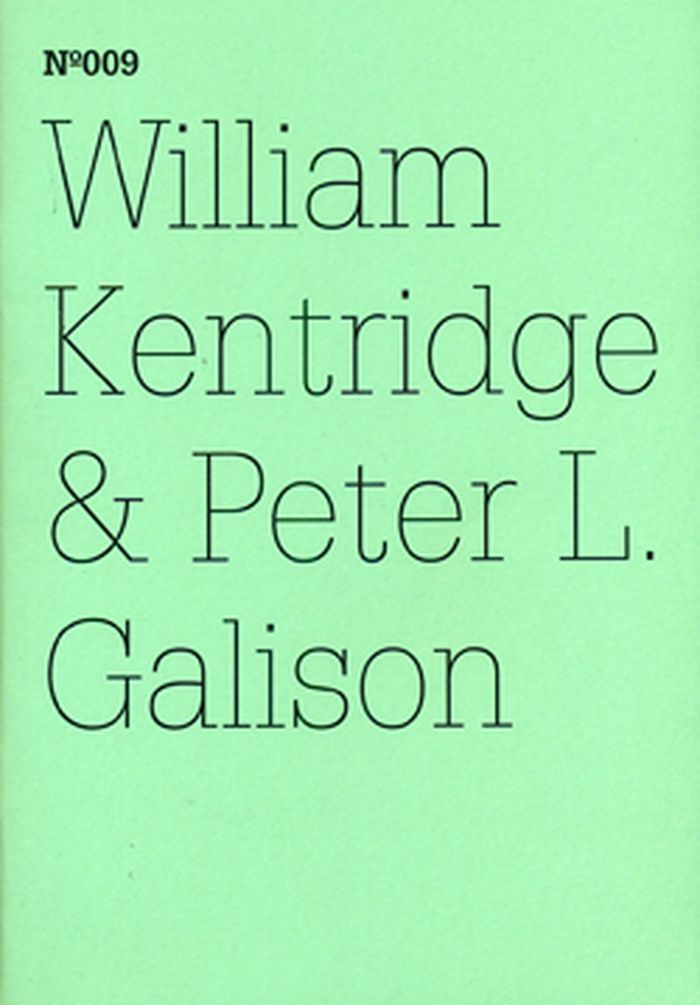
In this notebook, artist William Kentridge and science historian and filmmaker Peter L. Galison preview their Documenta 13 collaboration on the subject of non-standardized temporality, realized in drawing, text, music and film.
$11.00
(disponible sur commande)
Résumé:
In this notebook, artist William Kentridge and science historian and filmmaker Peter L. Galison preview their Documenta 13 collaboration on the subject of non-standardized temporality, realized in drawing, text, music and film.
Titre:
Documenta series 09: William Kentridge and Peter L. Galison, the refusal of time
Actions:
Prix:
$11.00
(disponible sur commande)
Résumé:
In this notebook, artist William Kentridge and science historian and filmmaker Peter L. Galison preview their Documenta 13 collaboration on the subject of non-standardized temporality, realized in drawing, text, music and film.
Documenta series 09: William Kentridge and Peter L. Galison, the refusal of time
Actions:
Prix:
$11.00
(disponible sur commande)
Résumé:
In this notebook, artist William Kentridge and science historian and filmmaker Peter L. Galison preview their Documenta 13 collaboration on the subject of non-standardized temporality, realized in drawing, text, music and film.
Classification:
livres
livres
Publication:
août 2011
août 2011
Sujet:
Théorie de l’art
Théorie de l’art
Classification:
livres
livres
Prix:
$25.00
(disponible sur commande)
Résumé:
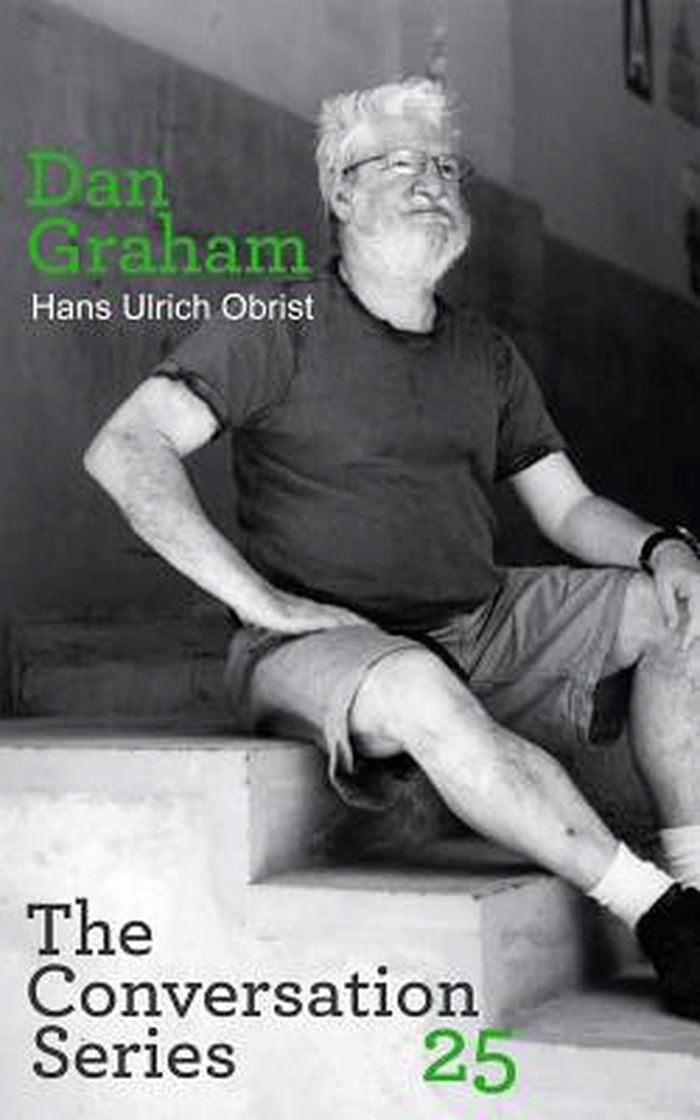
Since the mid-1960s when he started out as a fledgling critic, Dan Graham has carved out a unique role for himself, expanding the scope of the Conceptual artist to incorporate art criticism, music criticism, photography and architecture. For this volume, curator Hans Ulrich Obrist met with Graham on several occasions to discuss the artist's work, life and the numerous(...)
$25.00
(disponible sur commande)
Résumé:
Since the mid-1960s when he started out as a fledgling critic, Dan Graham has carved out a unique role for himself, expanding the scope of the Conceptual artist to incorporate art criticism, music criticism, photography and architecture. For this volume, curator Hans Ulrich Obrist met with Graham on several occasions to discuss the artist's work, life and the numerous(...)
Titre:
Hans Ulrich Obrist, the conversation series 25 : Dan Graham
Actions:
Prix:
$25.00
(disponible sur commande)
Résumé:
Since the mid-1960s when he started out as a fledgling critic, Dan Graham has carved out a unique role for himself, expanding the scope of the Conceptual artist to incorporate art criticism, music criticism, photography and architecture. For this volume, curator Hans Ulrich Obrist met with Graham on several occasions to discuss the artist's work, life and the numerous interests he passionately follows. The conversation thus wanders seamlessly from architecture to rock and roll, philosophy to astrology, Graham's early performance pieces, photography and articles, to the films and glass pavilions for which he is best known today. A fountain of art folklore, Graham offers recollections of friends and colleagues, art work and influences, providing an invaluable insight not only into the New York art scene of the 60s and 70s, but also one of its most influential representatives.
Hans Ulrich Obrist, the conversation series 25 : Dan Graham
Actions:
Prix:
$25.00
(disponible sur commande)
Résumé:
Since the mid-1960s when he started out as a fledgling critic, Dan Graham has carved out a unique role for himself, expanding the scope of the Conceptual artist to incorporate art criticism, music criticism, photography and architecture. For this volume, curator Hans Ulrich Obrist met with Graham on several occasions to discuss the artist's work, life and the numerous interests he passionately follows. The conversation thus wanders seamlessly from architecture to rock and roll, philosophy to astrology, Graham's early performance pieces, photography and articles, to the films and glass pavilions for which he is best known today. A fountain of art folklore, Graham offers recollections of friends and colleagues, art work and influences, providing an invaluable insight not only into the New York art scene of the 60s and 70s, but also one of its most influential representatives.
Classification:
livres
livres
Publication:
juillet 2011
juillet 2011
Sujet:
Théorie de l’art
Théorie de l’art


