


6832 Résultats
Classification:
livres
livres
Actions:
Prix:
$26.95
(disponible sur commande)
Résumé:
Measures are the subject of this unusual book, in which Robert Tavernor offers a fascinating account of the various measuring systems human beings have devised over two millennia. Tavernor urges us to look beyond the notion that measuring is strictly a scientific activity, divorced from human concerns. Instead, he sets measures and measuring in cultural context and shows(...)
$26.95
(disponible sur commande)
Résumé:
Measures are the subject of this unusual book, in which Robert Tavernor offers a fascinating account of the various measuring systems human beings have devised over two millennia. Tavernor urges us to look beyond the notion that measuring is strictly a scientific activity, divorced from human concerns. Instead, he sets measures and measuring in cultural context and shows(...)
Titre:
Smoot's Ear : The measure of humanity
Actions:
Prix:
$26.95
(disponible sur commande)
Résumé:
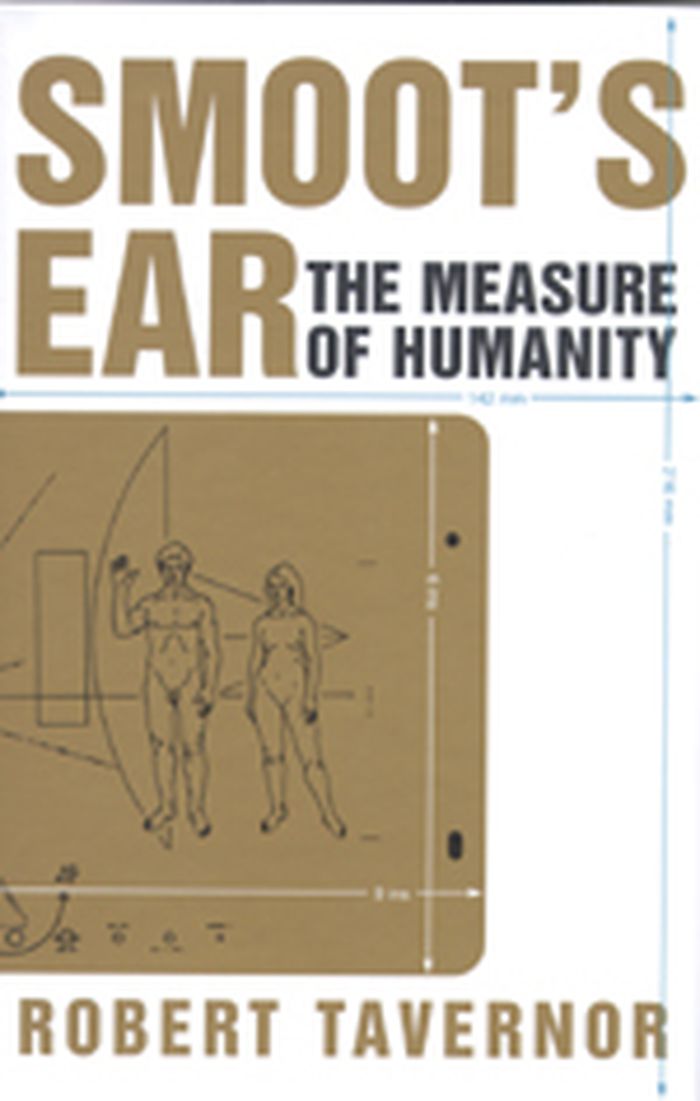
Measures are the subject of this unusual book, in which Robert Tavernor offers a fascinating account of the various measuring systems human beings have devised over two millennia. Tavernor urges us to look beyond the notion that measuring is strictly a scientific activity, divorced from human concerns. Instead, he sets measures and measuring in cultural context and shows how deeply they are connected to human experience and history. The book explores changing attitudes toward measure, focusing on key moments in art, sculpture, architecture, philosophy, and the development of scientific thought. It encompasses the journey of Western civilization from the construction of the Great Pyramid to the first manned flight to the moon. Beginning with a review of early measuring standards that referred to the feet and inches of ideal bodies, the book then tracks how Enlightenment interest in a truly scientific system of measure led to the creation of the metric system. This “rational” approach to measure in turn has inspired artists, architects, writers, and others to seek a balance that takes the human story into account. Tavernor concludes with a discussion of measure in our own time, when space travel presents to humankind a direct encounter with the unfathomable measure of the universe.
Smoot's Ear : The measure of humanity
Actions:
Prix:
$26.95
(disponible sur commande)
Résumé:
Measures are the subject of this unusual book, in which Robert Tavernor offers a fascinating account of the various measuring systems human beings have devised over two millennia. Tavernor urges us to look beyond the notion that measuring is strictly a scientific activity, divorced from human concerns. Instead, he sets measures and measuring in cultural context and shows how deeply they are connected to human experience and history. The book explores changing attitudes toward measure, focusing on key moments in art, sculpture, architecture, philosophy, and the development of scientific thought. It encompasses the journey of Western civilization from the construction of the Great Pyramid to the first manned flight to the moon. Beginning with a review of early measuring standards that referred to the feet and inches of ideal bodies, the book then tracks how Enlightenment interest in a truly scientific system of measure led to the creation of the metric system. This “rational” approach to measure in turn has inspired artists, architects, writers, and others to seek a balance that takes the human story into account. Tavernor concludes with a discussion of measure in our own time, when space travel presents to humankind a direct encounter with the unfathomable measure of the universe.
Classification:
livres
livres
Publication:
août 2007
août 2007
Classification:
livres
livres
Titre:
The arts of China after 1620
The arts of China after 1620
Actions:
Prix:
$74.95
(disponible sur commande)
Résumé:
The Arts of China after 1620 concludes a major three-volume survey that examines China's huge wealth of art, architecture and artefacts from prehistoric times to the present. Beginning with discussions of 'fine' art and painting and progressing to analysis of carving and sculpture, ceramics, glassware and textiles, the authors demonstrate how, in the age of the Emperors(...)
$74.95
(disponible sur commande)
Résumé:
The Arts of China after 1620 concludes a major three-volume survey that examines China's huge wealth of art, architecture and artefacts from prehistoric times to the present. Beginning with discussions of 'fine' art and painting and progressing to analysis of carving and sculpture, ceramics, glassware and textiles, the authors demonstrate how, in the age of the Emperors(...)
Sujet:
Histoire jusqu'à 1900, Asie
Histoire jusqu'à 1900, Asie
Publication:
septembre 2006, New Haven / London
septembre 2006, New Haven / London
Titre:
The arts of China after 1620
Actions:
Prix:
$74.95
(disponible sur commande)
Résumé:
The Arts of China after 1620 concludes a major three-volume survey that examines China's huge wealth of art, architecture and artefacts from prehistoric times to the present. Beginning with discussions of 'fine' art and painting and progressing to analysis of carving and sculpture, ceramics, glassware and textiles, the authors demonstrate how, in the age of the Emperors Kangxi, Yongzheng and Qianlong, the 'decorative' arts rose to a prominence quite unlike the western experience. Avoiding misrepresentative categorization, they single out period styles, as well as identifying repeated phases of archaism and Buddhist art, and discuss characteristic groups of jade, ivory, ceramics, glassware and textiles. They consider the importance of the imperial workshops and their role in developing craftsmen's skills and encouraging the cross-over of techniques from different disciplines and they present the compelling influence of Emperor Qianlong's aesthetic innovations. In architecture the vast plan and overwhelming authority of the imperial buildings contrasts with the restrained subtlety of domestic architecture and garden design where magnificent rocks were the principal feature, just as in landscape painting. The survey concludes by examining the development of East/West trade and the effects of commercialization on Chinese arts and crafts. This handsome, well-illustrated book provides a scholarly and illuminating resource for all students of the arts of China.
The arts of China after 1620
Actions:
Prix:
$74.95
(disponible sur commande)
Résumé:
The Arts of China after 1620 concludes a major three-volume survey that examines China's huge wealth of art, architecture and artefacts from prehistoric times to the present. Beginning with discussions of 'fine' art and painting and progressing to analysis of carving and sculpture, ceramics, glassware and textiles, the authors demonstrate how, in the age of the Emperors Kangxi, Yongzheng and Qianlong, the 'decorative' arts rose to a prominence quite unlike the western experience. Avoiding misrepresentative categorization, they single out period styles, as well as identifying repeated phases of archaism and Buddhist art, and discuss characteristic groups of jade, ivory, ceramics, glassware and textiles. They consider the importance of the imperial workshops and their role in developing craftsmen's skills and encouraging the cross-over of techniques from different disciplines and they present the compelling influence of Emperor Qianlong's aesthetic innovations. In architecture the vast plan and overwhelming authority of the imperial buildings contrasts with the restrained subtlety of domestic architecture and garden design where magnificent rocks were the principal feature, just as in landscape painting. The survey concludes by examining the development of East/West trade and the effects of commercialization on Chinese arts and crafts. This handsome, well-illustrated book provides a scholarly and illuminating resource for all students of the arts of China.
Classification:
livres
livres
Publication:
septembre 2006, New Haven / London
septembre 2006, New Haven / London
Sujet:
Histoire jusqu'à 1900, Asie
Histoire jusqu'à 1900, Asie
Classification:
livres
livres
Actions:
Prix:
$59.95
(disponible sur commande)
Résumé:
Localisé sur la Côte-de-Beaupré, à quelques kilomètres du lieu de fondation de la Nouvelle-France, un petit îlot de paroisses rurales témoigne d’une relation au sacré dans une Amérique française qui couvrira, à son apogée, les trois quarts du continent nord-américain. Par leur architecture, leur ornementation et leurs objets de culte ou de dévotion, ces paroisses sont(...)
$59.95
(disponible sur commande)
Résumé:
Localisé sur la Côte-de-Beaupré, à quelques kilomètres du lieu de fondation de la Nouvelle-France, un petit îlot de paroisses rurales témoigne d’une relation au sacré dans une Amérique française qui couvrira, à son apogée, les trois quarts du continent nord-américain. Par leur architecture, leur ornementation et leurs objets de culte ou de dévotion, ces paroisses sont(...)
Sujet:
Architecture du Québec
Architecture du Québec
Publication:
octobre 2005, Sillery
octobre 2005, Sillery
Titre:
L'art sacré en Amérique française
Actions:
Prix:
$59.95
(disponible sur commande)
Résumé:
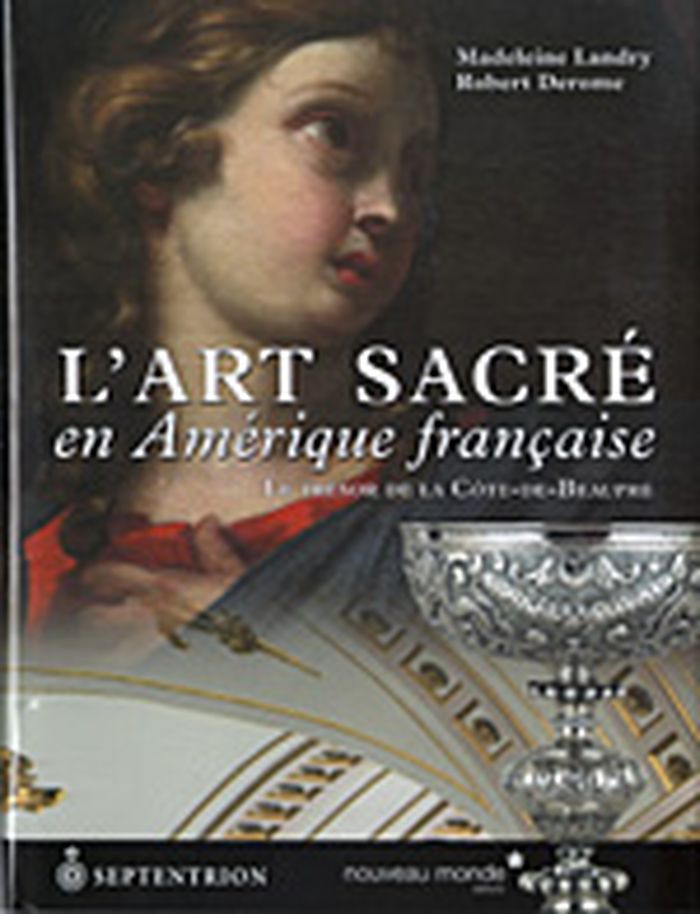
Localisé sur la Côte-de-Beaupré, à quelques kilomètres du lieu de fondation de la Nouvelle-France, un petit îlot de paroisses rurales témoigne d’une relation au sacré dans une Amérique française qui couvrira, à son apogée, les trois quarts du continent nord-américain. Par leur architecture, leur ornementation et leurs objets de culte ou de dévotion, ces paroisses sont représentatives de toutes celles de l’Amérique du Nord. La conception et l’aménagement de ces églises paroissiales constituent à la fois un joyau et un modèle, puisque, au fil de leur création, celles-ci se dotent de semblables trésors de peinture, de sculpture et d’orfèvrerie. Madeleine Landry et Robert Derome présentent un éblouissant portrait d’œuvres produites du XVIIe au XIXe siècles. Revoyant les principales références sur le sujet, les auteurs replacent chaque œuvre dans son cadre d’origine et en facilitent sa connaissance et celle de l’artiste – maître, architecte, sculpteur, peintre ou orfèvre –, qui l’a conçue. Ils posent un regard neuf sur des trésors souvent méconnus et redécouvrent la beauté, la signification et les méandres de l’histoire de chacun. Par le truchement de l’infographie, le passé ressurgit à travers des documents d’archives et des photographies anciennes, quand il ne s’agit pas de trouvailles faites dans les réserves de musées ou de collections privées, d’ici ou d’ailleurs.
L'art sacré en Amérique française
Actions:
Prix:
$59.95
(disponible sur commande)
Résumé:
Localisé sur la Côte-de-Beaupré, à quelques kilomètres du lieu de fondation de la Nouvelle-France, un petit îlot de paroisses rurales témoigne d’une relation au sacré dans une Amérique française qui couvrira, à son apogée, les trois quarts du continent nord-américain. Par leur architecture, leur ornementation et leurs objets de culte ou de dévotion, ces paroisses sont représentatives de toutes celles de l’Amérique du Nord. La conception et l’aménagement de ces églises paroissiales constituent à la fois un joyau et un modèle, puisque, au fil de leur création, celles-ci se dotent de semblables trésors de peinture, de sculpture et d’orfèvrerie. Madeleine Landry et Robert Derome présentent un éblouissant portrait d’œuvres produites du XVIIe au XIXe siècles. Revoyant les principales références sur le sujet, les auteurs replacent chaque œuvre dans son cadre d’origine et en facilitent sa connaissance et celle de l’artiste – maître, architecte, sculpteur, peintre ou orfèvre –, qui l’a conçue. Ils posent un regard neuf sur des trésors souvent méconnus et redécouvrent la beauté, la signification et les méandres de l’histoire de chacun. Par le truchement de l’infographie, le passé ressurgit à travers des documents d’archives et des photographies anciennes, quand il ne s’agit pas de trouvailles faites dans les réserves de musées ou de collections privées, d’ici ou d’ailleurs.
Classification:
livres
livres
Publication:
octobre 2005, Sillery
octobre 2005, Sillery
Sujet:
Architecture du Québec
Architecture du Québec
Classification:
livres
livres
Titre:
Jeppe Hein
Jeppe Hein
Actions:
Prix:
$35.95
(disponible sur commande)
Résumé:
Cet ouvrage a été publié à l'occasion de l'exposition Jeppe Heine, à l'espace 315, création contemporaine et prospective, Centre Pompidou, Musée national d'art moderne - Centre de création industrielle, Paris, 15 septembre -14 novembre 2005. Artiste danois, Jeppe Hein crée des objets épurés et géométriques ou des installations discrètes et ludiques dans une continuité de(...)
$35.95
(disponible sur commande)
Résumé:
Cet ouvrage a été publié à l'occasion de l'exposition Jeppe Heine, à l'espace 315, création contemporaine et prospective, Centre Pompidou, Musée national d'art moderne - Centre de création industrielle, Paris, 15 septembre -14 novembre 2005. Artiste danois, Jeppe Hein crée des objets épurés et géométriques ou des installations discrètes et ludiques dans une continuité de(...)
Publication:
septembre 2005, Paris
septembre 2005, Paris
Titre:
Jeppe Hein
Actions:
Prix:
$35.95
(disponible sur commande)
Résumé:
Cet ouvrage a été publié à l'occasion de l'exposition Jeppe Heine, à l'espace 315, création contemporaine et prospective, Centre Pompidou, Musée national d'art moderne - Centre de création industrielle, Paris, 15 septembre -14 novembre 2005. Artiste danois, Jeppe Hein crée des objets épurés et géométriques ou des installations discrètes et ludiques dans une continuité de la tradition de la sculpture minimaliste, tout en proposant un contrepoint par la mise en place d'un dialogue incongru entre les oeuvres et le spectateur. Chaque installation évolue en fonction du stimulus qu'elle reçoit du spectateur, ainsi le public provoque-t-il une réaction mais ne peut pas vraiment la maîtriser. Pour sa première exposition parisienne, Jeppe Hein présente un projet spécifique sur le thème du labyrinthe. Le visiteur est sollicité par des sons qu'il découvre au fur et à mesure de ses pérégrinations et crée sa propre oeuvre en parcourant l'installation. A l'image de l'exposition, l'ouvrage se présente comme un parcours dans le dédale des oeuvres de l'artiste, ses travaux d'approche pour cette manifestation et sa façon de croiser le thème du labyrinthe. This book has been published to coincide with the exhibition Jeppe Hein, in the Espace 315, Centre Pompidou, Paris, sept.-nov. 2005.
Jeppe Hein
Actions:
Prix:
$35.95
(disponible sur commande)
Résumé:
Cet ouvrage a été publié à l'occasion de l'exposition Jeppe Heine, à l'espace 315, création contemporaine et prospective, Centre Pompidou, Musée national d'art moderne - Centre de création industrielle, Paris, 15 septembre -14 novembre 2005. Artiste danois, Jeppe Hein crée des objets épurés et géométriques ou des installations discrètes et ludiques dans une continuité de la tradition de la sculpture minimaliste, tout en proposant un contrepoint par la mise en place d'un dialogue incongru entre les oeuvres et le spectateur. Chaque installation évolue en fonction du stimulus qu'elle reçoit du spectateur, ainsi le public provoque-t-il une réaction mais ne peut pas vraiment la maîtriser. Pour sa première exposition parisienne, Jeppe Hein présente un projet spécifique sur le thème du labyrinthe. Le visiteur est sollicité par des sons qu'il découvre au fur et à mesure de ses pérégrinations et crée sa propre oeuvre en parcourant l'installation. A l'image de l'exposition, l'ouvrage se présente comme un parcours dans le dédale des oeuvres de l'artiste, ses travaux d'approche pour cette manifestation et sa façon de croiser le thème du labyrinthe. This book has been published to coincide with the exhibition Jeppe Hein, in the Espace 315, Centre Pompidou, Paris, sept.-nov. 2005.
Classification:
livres
livres
Publication:
septembre 2005, Paris
septembre 2005, Paris
Classification:
livres
livres
Prix:
$62.50
(disponible sur commande)
Résumé:
n 1954, the French writer, politician, and publisher André Malraux (1901–1976) posed at home for a photographer from the magazine Paris Match, surrounded by pages from his forthcoming book Le musée imaginaire de la sculpture mondiale. The enchanting metaphor of the musée imaginaire (imaginary museum) was built upon that illustrated art book, and Malraux was one of its(...)
$62.50
(disponible sur commande)
Résumé:
n 1954, the French writer, politician, and publisher André Malraux (1901–1976) posed at home for a photographer from the magazine Paris Match, surrounded by pages from his forthcoming book Le musée imaginaire de la sculpture mondiale. The enchanting metaphor of the musée imaginaire (imaginary museum) was built upon that illustrated art book, and Malraux was one of its(...)
Titre:
The book on the floor: André Malraux and the imaginary museum
Actions:
Prix:
$62.50
(disponible sur commande)
Résumé:
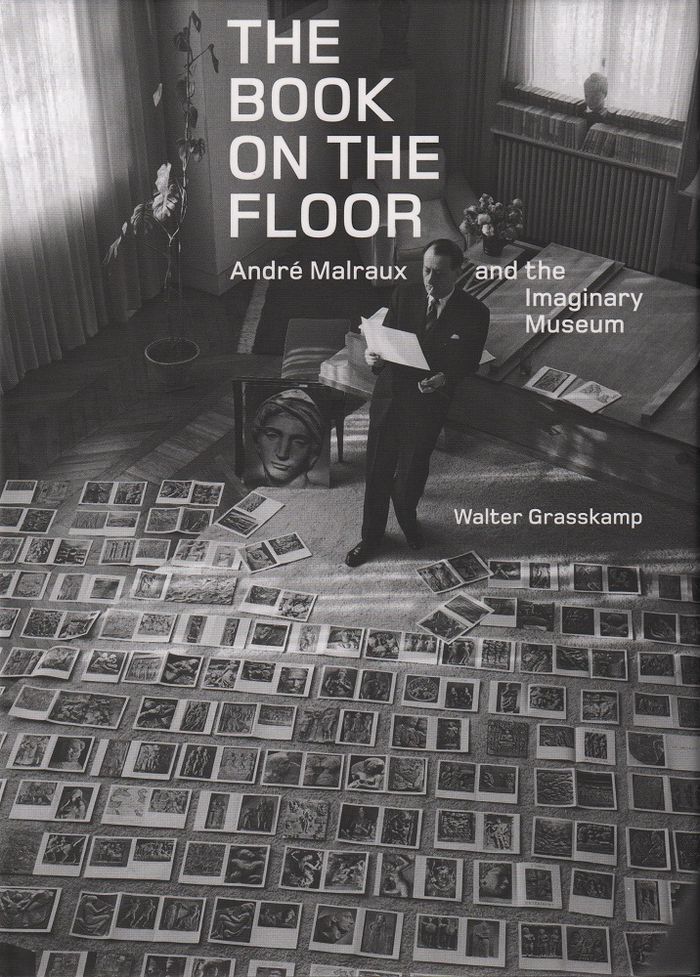
n 1954, the French writer, politician, and publisher André Malraux (1901–1976) posed at home for a photographer from the magazine Paris Match, surrounded by pages from his forthcoming book Le musée imaginaire de la sculpture mondiale. The enchanting metaphor of the musée imaginaire (imaginary museum) was built upon that illustrated art book, and Malraux was one of its greatest champions. Drawing on a range of contemporary publications, he adopted images and responded to ideas. Indeed, Malraux’s book on the floor is a variation of photographer André Vigneau’s spectacular Encyclopédie photographique de l’art, published in five volumes from 1935 on—years before Malraux would enter this field. Both authors were engaged in juxtaposing artworks via photographs and publishing these photographs by the hundreds, but Malraux was the better sloganeer. Starting from a close examination of the photograph of Malraux in his salon, art historian Walter Grasskamp takes the reader back to the dawn of this genre of illustrated art book. He shows how it catalyzed the practice of comparing works of art on a global scale. He retraces the metaphor to earlier reproduction practices and highlights its ubiquity in contemporary art, ending with an homage to the other pioneer of the “museum without walls,” the unjustly forgotten Vigneau.
The book on the floor: André Malraux and the imaginary museum
Actions:
Prix:
$62.50
(disponible sur commande)
Résumé:
n 1954, the French writer, politician, and publisher André Malraux (1901–1976) posed at home for a photographer from the magazine Paris Match, surrounded by pages from his forthcoming book Le musée imaginaire de la sculpture mondiale. The enchanting metaphor of the musée imaginaire (imaginary museum) was built upon that illustrated art book, and Malraux was one of its greatest champions. Drawing on a range of contemporary publications, he adopted images and responded to ideas. Indeed, Malraux’s book on the floor is a variation of photographer André Vigneau’s spectacular Encyclopédie photographique de l’art, published in five volumes from 1935 on—years before Malraux would enter this field. Both authors were engaged in juxtaposing artworks via photographs and publishing these photographs by the hundreds, but Malraux was the better sloganeer. Starting from a close examination of the photograph of Malraux in his salon, art historian Walter Grasskamp takes the reader back to the dawn of this genre of illustrated art book. He shows how it catalyzed the practice of comparing works of art on a global scale. He retraces the metaphor to earlier reproduction practices and highlights its ubiquity in contemporary art, ending with an homage to the other pioneer of the “museum without walls,” the unjustly forgotten Vigneau.
Classification:
livres
livres
Publication:
janvier 2017
janvier 2017
Sujet:
Théorie de la photographie
Théorie de la photographie
Classification:
livres
livres
Actions:
Prix:
$170.00
(disponible sur commande)
Résumé:
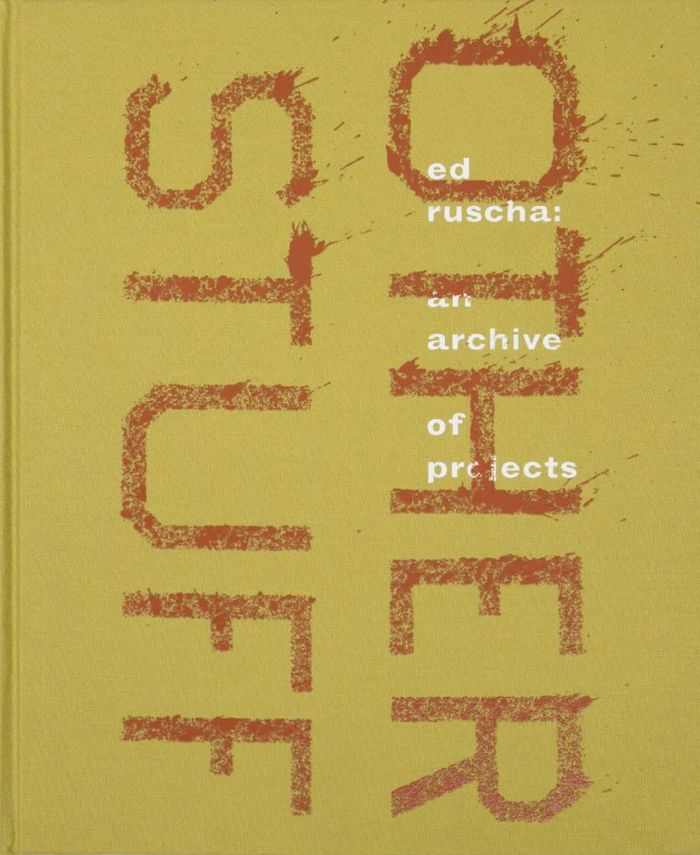
With cover artwork specially created by Ruscha, this book documents hundreds of projects and miscellaneous ephemera produced by the artist alongside his main oeuvre—including installations, films, painted book covers, contour gauge profiles, and more. Introducing readers to the stunning breadth of Edward Ruscha’s (b. 1937) creative output over the course of his entire(...)
$170.00
(disponible sur commande)
Résumé:
With cover artwork specially created by Ruscha, this book documents hundreds of projects and miscellaneous ephemera produced by the artist alongside his main oeuvre—including installations, films, painted book covers, contour gauge profiles, and more. Introducing readers to the stunning breadth of Edward Ruscha’s (b. 1937) creative output over the course of his entire(...)
Titre:
Ed Ruscha: An archive of projects
Actions:
Prix:
$170.00
(disponible sur commande)
Résumé:
With cover artwork specially created by Ruscha, this book documents hundreds of projects and miscellaneous ephemera produced by the artist alongside his main oeuvre—including installations, films, painted book covers, contour gauge profiles, and more. Introducing readers to the stunning breadth of Edward Ruscha’s (b. 1937) creative output over the course of his entire life, this book includes materials dating back to his childhood and extending to his present-day output. The projects featured here fall outside Ruscha’s production of paintings, drawings, prints, and artists’ books. Many of these are unknown and most are reproduced here for the first time. Composed of three sections—Projects and Ephemera; Contour Gauge Profiles; and Painted Book Covers—the book offers Ruscha enthusiasts and scholars a hitherto unknown aspect of Ruscha’s practice, while also showing how these projects coincide with, and sometimes even prefigure, the artistic work for which he is best known. The approximately 270 painted book covers, begun in 1990, utilize found books as support for small paintings and drawings. The 57 contour gauge profiles are silhouette-like profiles made using a mechanical device for reproducing contours. The largest section, Projects and Ephemera, consists of installations, sculpture and objects, films, book and poster design, utilitarian works, and more.
Ed Ruscha: An archive of projects
Actions:
Prix:
$170.00
(disponible sur commande)
Résumé:
With cover artwork specially created by Ruscha, this book documents hundreds of projects and miscellaneous ephemera produced by the artist alongside his main oeuvre—including installations, films, painted book covers, contour gauge profiles, and more. Introducing readers to the stunning breadth of Edward Ruscha’s (b. 1937) creative output over the course of his entire life, this book includes materials dating back to his childhood and extending to his present-day output. The projects featured here fall outside Ruscha’s production of paintings, drawings, prints, and artists’ books. Many of these are unknown and most are reproduced here for the first time. Composed of three sections—Projects and Ephemera; Contour Gauge Profiles; and Painted Book Covers—the book offers Ruscha enthusiasts and scholars a hitherto unknown aspect of Ruscha’s practice, while also showing how these projects coincide with, and sometimes even prefigure, the artistic work for which he is best known. The approximately 270 painted book covers, begun in 1990, utilize found books as support for small paintings and drawings. The 57 contour gauge profiles are silhouette-like profiles made using a mechanical device for reproducing contours. The largest section, Projects and Ephemera, consists of installations, sculpture and objects, films, book and poster design, utilitarian works, and more.
Classification:
livres
livres
Publication:
janvier 2023
janvier 2023
Classification:
livres
livres
Actions:
Prix:
$76.00
(disponible sur commande)
Résumé:
The American artist Alison Knowles’ (born 1933) groundbreaking experiments—from painting and printmaking to sculpture and installation, sound works, poetry and artist’s books—have influenced art and artists for more than 50 years but remain relatively unknown among mainstream audiences. The first comprehensive volume on the artist, ''By Alison Knowles: A retrospective''(...)
$76.00
(disponible sur commande)
Résumé:
The American artist Alison Knowles’ (born 1933) groundbreaking experiments—from painting and printmaking to sculpture and installation, sound works, poetry and artist’s books—have influenced art and artists for more than 50 years but remain relatively unknown among mainstream audiences. The first comprehensive volume on the artist, ''By Alison Knowles: A retrospective''(...)
Titre:
By Alison Knowles: A retrospective, 1960-2022
Actions:
Prix:
$76.00
(disponible sur commande)
Résumé:
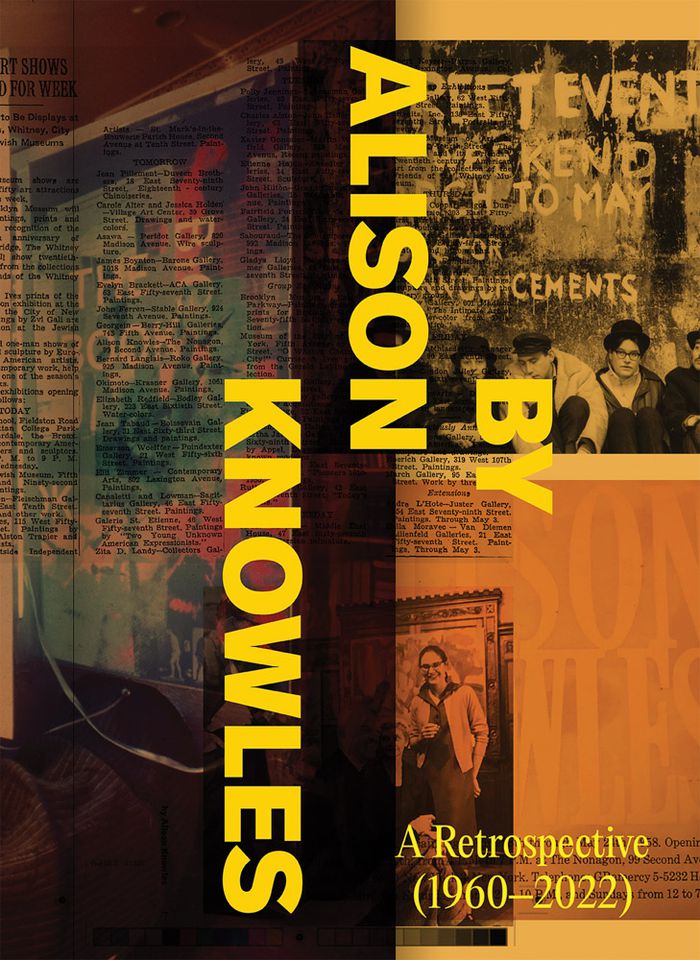
The American artist Alison Knowles’ (born 1933) groundbreaking experiments—from painting and printmaking to sculpture and installation, sound works, poetry and artist’s books—have influenced art and artists for more than 50 years but remain relatively unknown among mainstream audiences. The first comprehensive volume on the artist, ''By Alison Knowles: A retrospective'' presents more than 200 objects that span the entire breadth of her career, from her intermedia works of the 1960s to forms of participatory and relational art in the 2000s. The accompanying catalog features contributions by international Fluxus curators, historians and scholars, including lead essays by organizer Karen Moss, Hannah B. Higgins and Nicole Woods, and short contributions by Lucia Fabio, Lauren Fulton, Maud Jacquin and Sébastien Pluot. It also includes reprints of key articles by Benjamin Buchloh, Julia Robinson and Kristine Stiles, as well as a conversation between Alison Knowles and poet George Quasha. Illustrated with more than 250 images, the full-colour catalog, designed by Kimberly Varella, includes a softcover lay-flat binding, special coloured papers for each section, die-cut section dividers and a chronology. The cover of the book is a makeready (press sheets gathered from printing the interior of the book) produced during the printing of the interior pages. Each cover in the edition is unique.
By Alison Knowles: A retrospective, 1960-2022
Actions:
Prix:
$76.00
(disponible sur commande)
Résumé:
The American artist Alison Knowles’ (born 1933) groundbreaking experiments—from painting and printmaking to sculpture and installation, sound works, poetry and artist’s books—have influenced art and artists for more than 50 years but remain relatively unknown among mainstream audiences. The first comprehensive volume on the artist, ''By Alison Knowles: A retrospective'' presents more than 200 objects that span the entire breadth of her career, from her intermedia works of the 1960s to forms of participatory and relational art in the 2000s. The accompanying catalog features contributions by international Fluxus curators, historians and scholars, including lead essays by organizer Karen Moss, Hannah B. Higgins and Nicole Woods, and short contributions by Lucia Fabio, Lauren Fulton, Maud Jacquin and Sébastien Pluot. It also includes reprints of key articles by Benjamin Buchloh, Julia Robinson and Kristine Stiles, as well as a conversation between Alison Knowles and poet George Quasha. Illustrated with more than 250 images, the full-colour catalog, designed by Kimberly Varella, includes a softcover lay-flat binding, special coloured papers for each section, die-cut section dividers and a chronology. The cover of the book is a makeready (press sheets gathered from printing the interior of the book) produced during the printing of the interior pages. Each cover in the edition is unique.
Classification:
livres
livres
Publication:
septembre 2022
septembre 2022
Classification:
livres
livres
Titre:
The sun as error
The sun as error
Actions:
Prix:
$75.50
(disponible sur commande)
Résumé:
The Los Angeles based artist Shannon Ebner extends her exploration of photography, sculpture and language in this book. In collaboration with Dexter Sinister (design duo David Reinfurt and Stuart Bailey), "The Sun as Error" re-investigates the meaning and language of photographs, creating both an open-ended reading of her practice and also rethinking the idea of an(...)
$75.50
(disponible sur commande)
Résumé:
The Los Angeles based artist Shannon Ebner extends her exploration of photography, sculpture and language in this book. In collaboration with Dexter Sinister (design duo David Reinfurt and Stuart Bailey), "The Sun as Error" re-investigates the meaning and language of photographs, creating both an open-ended reading of her practice and also rethinking the idea of an(...)
Titre:
The sun as error
Actions:
Prix:
$75.50
(disponible sur commande)
Résumé:
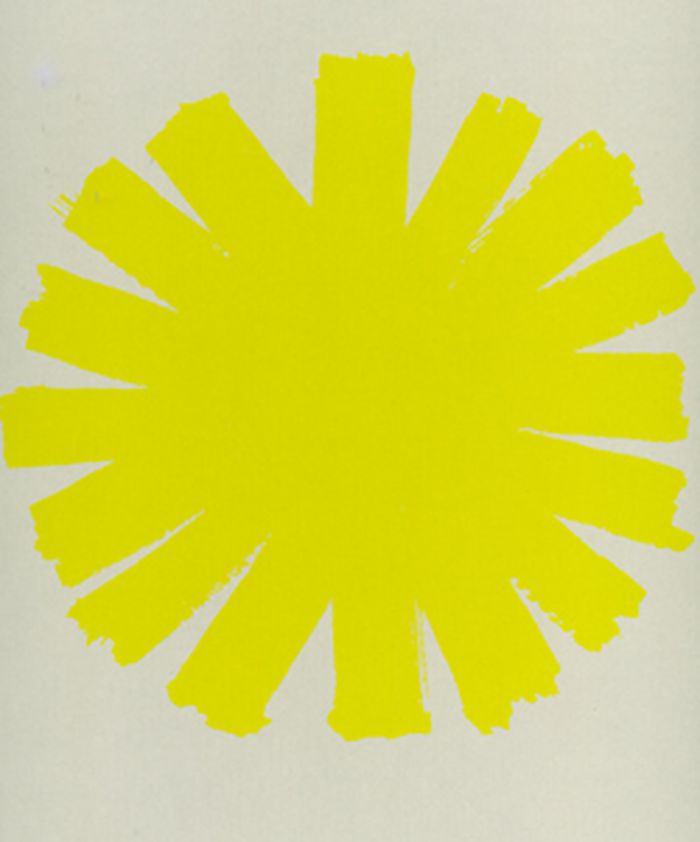
The Los Angeles based artist Shannon Ebner extends her exploration of photography, sculpture and language in this book. In collaboration with Dexter Sinister (design duo David Reinfurt and Stuart Bailey), "The Sun as Error" re-investigates the meaning and language of photographs, creating both an open-ended reading of her practice and also rethinking the idea of an artist’s monograph. Far from straightforward, the book interweaves her bodies of work, previously unseen one-off pieces, with the language of technical diagrams, optical illusions, and graphic design. One of the persistent motifs through the book’s sequence is an asterisk and, specifically, one imbued with the legacy of the graphic designer Muriel Cooper. As the first design director for MIT Press and the cofounder of the Visible Language Workshop, Cooper’s legacy for reorienting and repositioning the direction of an artist’s monograph is imaginatively explored in the creative partnership of Dexter Sinister and Shannon Ebner. Shannon Ebner’s work has been shown in exhibitions including Trace at The Whitney Museum of American Art at Altria (2006), The 2006 California Biennial at The Orange County Museum of Art, Uncertain States of America, at The Serpentine Gallery, London (2006), Learn to Read, at the Tate Modern, London (2007), and the 2008 Whitney Biennial at The Whitney Museum of American Art.
The sun as error
Actions:
Prix:
$75.50
(disponible sur commande)
Résumé:
The Los Angeles based artist Shannon Ebner extends her exploration of photography, sculpture and language in this book. In collaboration with Dexter Sinister (design duo David Reinfurt and Stuart Bailey), "The Sun as Error" re-investigates the meaning and language of photographs, creating both an open-ended reading of her practice and also rethinking the idea of an artist’s monograph. Far from straightforward, the book interweaves her bodies of work, previously unseen one-off pieces, with the language of technical diagrams, optical illusions, and graphic design. One of the persistent motifs through the book’s sequence is an asterisk and, specifically, one imbued with the legacy of the graphic designer Muriel Cooper. As the first design director for MIT Press and the cofounder of the Visible Language Workshop, Cooper’s legacy for reorienting and repositioning the direction of an artist’s monograph is imaginatively explored in the creative partnership of Dexter Sinister and Shannon Ebner. Shannon Ebner’s work has been shown in exhibitions including Trace at The Whitney Museum of American Art at Altria (2006), The 2006 California Biennial at The Orange County Museum of Art, Uncertain States of America, at The Serpentine Gallery, London (2006), Learn to Read, at the Tate Modern, London (2007), and the 2008 Whitney Biennial at The Whitney Museum of American Art.
Classification:
livres
livres
Publication:
octobre 2009
octobre 2009
Sujet:
Monographies photo
Monographies photo
Classification:
livres
livres
Actions:
Prix:
$46.99
(disponible sur commande)
Résumé:
"Biennials: The exhibitions we love to hate" examines one of the most significant recent transitions in the contemporary art world: the proliferation of large-scale international recurrent survey shows of contemporary art, commonly referred to as contemporary biennials. Since the mid-1980s biennials have been instrumental in shaping curating as an autonomous practice.(...)
$46.99
(disponible sur commande)
Résumé:
"Biennials: The exhibitions we love to hate" examines one of the most significant recent transitions in the contemporary art world: the proliferation of large-scale international recurrent survey shows of contemporary art, commonly referred to as contemporary biennials. Since the mid-1980s biennials have been instrumental in shaping curating as an autonomous practice.(...)
Titre:
Biennials: The exhibitions we love to hate
Actions:
Prix:
$46.99
(disponible sur commande)
Résumé:
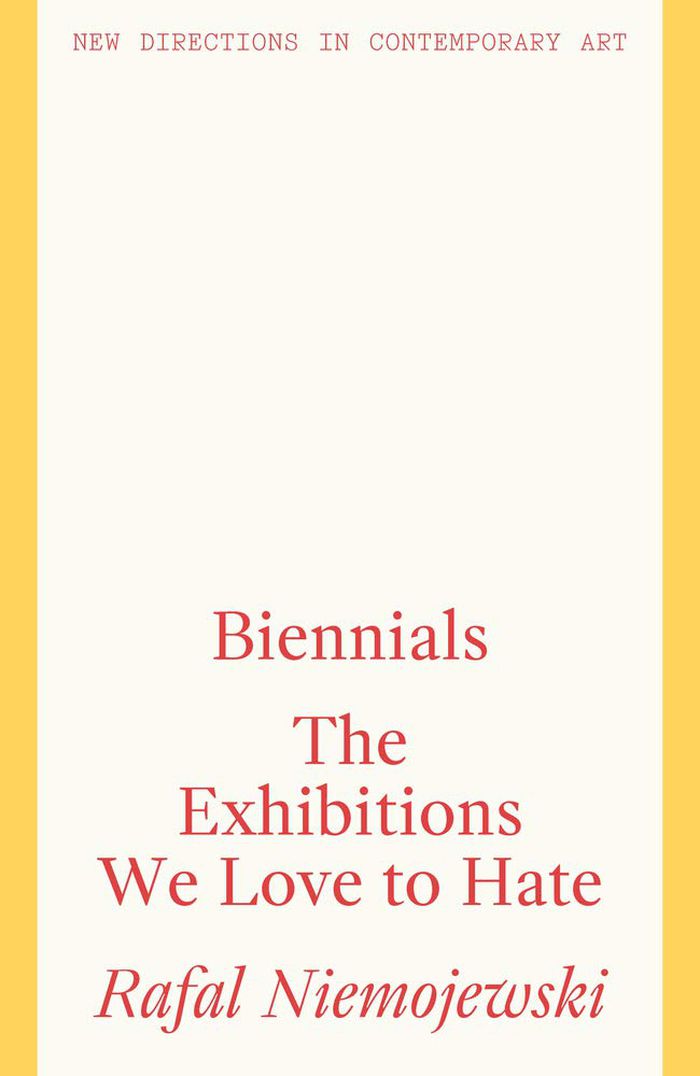
"Biennials: The exhibitions we love to hate" examines one of the most significant recent transitions in the contemporary art world: the proliferation of large-scale international recurrent survey shows of contemporary art, commonly referred to as contemporary biennials. Since the mid-1980s biennials have been instrumental in shaping curating as an autonomous practice. These exhibitions are also said to have provided increased visibility for certain types of new art practices, notably those that are socially and politically committed, research-based and site-specific, and to have undermined some of the more traditional art media, such as painting, drawing or sculpture. They have been responsible for substantially reshaping the contemporary art world and disrupting the existing value chain of the art market, which now relies on biennials as much as it does on major museums’ acquisitions and exhibitions. Rafal Niemojewski, Director of the Biennial Foundation, deftly unpicks the critical discussion and controversy surrounding contemporary biennials. Branded by some critics as showcases of neo-liberalism run amok, in which culture has become synonymous with the dollar-generating leisure industry, biennials have also been associated with the production of monumental artworks which are both highly consumable and photogenic (Instagrammable). The exhibitions we love to hate? This engaging publication makes an essential contribution to a fascinating cultural debate.
Biennials: The exhibitions we love to hate
Actions:
Prix:
$46.99
(disponible sur commande)
Résumé:
"Biennials: The exhibitions we love to hate" examines one of the most significant recent transitions in the contemporary art world: the proliferation of large-scale international recurrent survey shows of contemporary art, commonly referred to as contemporary biennials. Since the mid-1980s biennials have been instrumental in shaping curating as an autonomous practice. These exhibitions are also said to have provided increased visibility for certain types of new art practices, notably those that are socially and politically committed, research-based and site-specific, and to have undermined some of the more traditional art media, such as painting, drawing or sculpture. They have been responsible for substantially reshaping the contemporary art world and disrupting the existing value chain of the art market, which now relies on biennials as much as it does on major museums’ acquisitions and exhibitions. Rafal Niemojewski, Director of the Biennial Foundation, deftly unpicks the critical discussion and controversy surrounding contemporary biennials. Branded by some critics as showcases of neo-liberalism run amok, in which culture has become synonymous with the dollar-generating leisure industry, biennials have also been associated with the production of monumental artworks which are both highly consumable and photogenic (Instagrammable). The exhibitions we love to hate? This engaging publication makes an essential contribution to a fascinating cultural debate.
Classification:
livres
livres
Publication:
mai 2021
mai 2021
Sujet:
Muséologie
Muséologie
Classification:
livres
livres
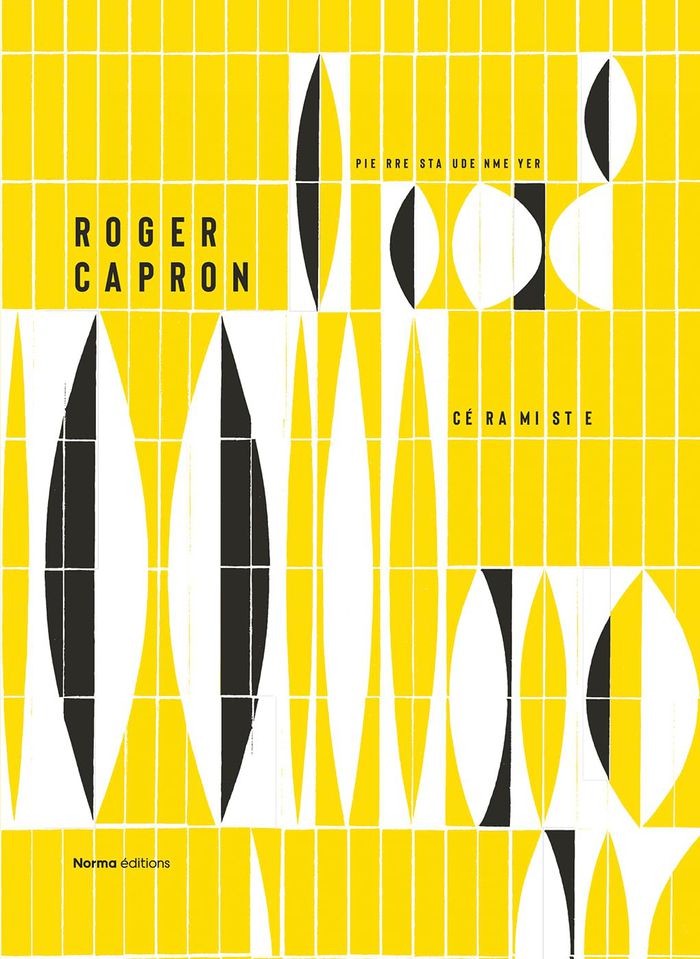
Titre:
Roger Capron : Céramiste
Roger Capron : Céramiste
Actions:
Prix:
$104.95
(disponible sur commande)
Résumé:
Réédition largement augmentée de l'édition de 2003, cette monographie revient sur le parcours de Roger Capron (1922-2006), seul céramiste français de son époque qui ait à la fois accompli une importante oeuvre artistique et fondé une entreprise individuelle de premier plan. Après avoir suivi l'enseignement du décorateur René Gabriel, Capron crée en 1946 avec Robert(...)
$104.95
(disponible sur commande)
Résumé:
Réédition largement augmentée de l'édition de 2003, cette monographie revient sur le parcours de Roger Capron (1922-2006), seul céramiste français de son époque qui ait à la fois accompli une importante oeuvre artistique et fondé une entreprise individuelle de premier plan. Après avoir suivi l'enseignement du décorateur René Gabriel, Capron crée en 1946 avec Robert(...)
Titre:
Roger Capron : Céramiste
Actions:
Prix:
$104.95
(disponible sur commande)
Résumé:
Réédition largement augmentée de l'édition de 2003, cette monographie revient sur le parcours de Roger Capron (1922-2006), seul céramiste français de son époque qui ait à la fois accompli une importante oeuvre artistique et fondé une entreprise individuelle de premier plan. Après avoir suivi l'enseignement du décorateur René Gabriel, Capron crée en 1946 avec Robert Picault l'atelier de céramique Callis à Vallauris participant à la renaissance de la céramique, faisant du beau à la portée de tous. Apparaissent à cette époque les formes et représentations emblématiques de son travail : branchages, personnages stylisés, soleils et motifs géométriques. En 1952, il rachète une poterie désaffectée et commence son aventure industrielle en fabriquant carreaux émaillés, mobilier d'appoint et panneaux décoratifs. A la fin des années 50, la commande d'une fresque de 300 m2 pour la gare maritime de Cannes lui fait découvrir la céramique architecturale qu'il mettra en oeuvre dans d'autres productions telles que la piste de danse en grès de l'hôtel Byblos de Saint Tropez. Enfin dans les années 80, Capron aborde un travail nouveau avec des pièces uniques proches de la sculpture. Basée sur le texte original de Pierre Staudenmeyer, cette version est enrichie par des des focus thématiques et un entretien exclusif entre Jacotte Capron, veuve de l'artiste, et Flavien Gaillard, spécialiste des arts décoratifs du XXe siècle, ainsi que par un répertoire de formes enrichi vient compléter la monographie.
Roger Capron : Céramiste
Actions:
Prix:
$104.95
(disponible sur commande)
Résumé:
Réédition largement augmentée de l'édition de 2003, cette monographie revient sur le parcours de Roger Capron (1922-2006), seul céramiste français de son époque qui ait à la fois accompli une importante oeuvre artistique et fondé une entreprise individuelle de premier plan. Après avoir suivi l'enseignement du décorateur René Gabriel, Capron crée en 1946 avec Robert Picault l'atelier de céramique Callis à Vallauris participant à la renaissance de la céramique, faisant du beau à la portée de tous. Apparaissent à cette époque les formes et représentations emblématiques de son travail : branchages, personnages stylisés, soleils et motifs géométriques. En 1952, il rachète une poterie désaffectée et commence son aventure industrielle en fabriquant carreaux émaillés, mobilier d'appoint et panneaux décoratifs. A la fin des années 50, la commande d'une fresque de 300 m2 pour la gare maritime de Cannes lui fait découvrir la céramique architecturale qu'il mettra en oeuvre dans d'autres productions telles que la piste de danse en grès de l'hôtel Byblos de Saint Tropez. Enfin dans les années 80, Capron aborde un travail nouveau avec des pièces uniques proches de la sculpture. Basée sur le texte original de Pierre Staudenmeyer, cette version est enrichie par des des focus thématiques et un entretien exclusif entre Jacotte Capron, veuve de l'artiste, et Flavien Gaillard, spécialiste des arts décoratifs du XXe siècle, ainsi que par un répertoire de formes enrichi vient compléter la monographie.
Classification:
livres
livres
Publication:
juin 2023
juin 2023
Sujet:
Design, monographies
Design, monographies


