


7518 Résultats
Niveau de description archivistique:
Projet
Projet
Numéro de référence:
AP018.S1.1978.PR08
Description:
This project series documents a feasibility study for a condominium building in Toronto in 1978. The office identified the project number as 7811. This project explores four schemes of different heights and square footage, all which have a large parking lot next to the building. The proposed condo building would contain 48 units and be located at the corners of St. Clair Avenue West and Yonge Street. The project is recorded through drawings of site plan and section schemes, aerial photographs of the site, and client correspondence dating from 1978.
AP018.S1.1978.PR08
Description:
This project series documents a feasibility study for a condominium building in Toronto in 1978. The office identified the project number as 7811. This project explores four schemes of different heights and square footage, all which have a large parking lot next to the building. The proposed condo building would contain 48 units and be located at the corners of St. Clair Avenue West and Yonge Street. The project is recorded through drawings of site plan and section schemes, aerial photographs of the site, and client correspondence dating from 1978.
Personnes et institutions:
Date:
1978
1978
Titre:
Imbrook Properties Condo Building, Feasibility Study, Toronto (1978)
Actions:
AP018.S1.1978.PR08
Description:
This project series documents a feasibility study for a condominium building in Toronto in 1978. The office identified the project number as 7811. This project explores four schemes of different heights and square footage, all which have a large parking lot next to the building. The proposed condo building would contain 48 units and be located at the corners of St. Clair Avenue West and Yonge Street. The project is recorded through drawings of site plan and section schemes, aerial photographs of the site, and client correspondence dating from 1978.
Imbrook Properties Condo Building, Feasibility Study, Toronto (1978)
Actions:
AP018.S1.1978.PR08
Description:
This project series documents a feasibility study for a condominium building in Toronto in 1978. The office identified the project number as 7811. This project explores four schemes of different heights and square footage, all which have a large parking lot next to the building. The proposed condo building would contain 48 units and be located at the corners of St. Clair Avenue West and Yonge Street. The project is recorded through drawings of site plan and section schemes, aerial photographs of the site, and client correspondence dating from 1978.
Niveau de description archivistique:
Project
Project
Date:
1978
1978
Personnes et institutions:
Niveau de description archivistique:
Projet
Projet
Numéro de référence:
AP018.S1.1969.PR04
Description:
This project series documents the master plan for the future Art Gallery of Ontario (AGO) expansion projects in Toronto in 1969. The office identified the project number as 69035. This project outlines the complete master plan for future expansions of the gallery. For decades, the AGO, under its previous name, The Art Gallery of Toronto, consisted of the nineteenth century Grange mansion and a gallery to its north. The project shows the growth of the AGO from two small buildings surrounded by parks to a much larger two storey building that would touch Dundas Street to the north, Beverly Street to the West, and McCaul Street and the Ontario College of Art to the East. In total, three stages were proposed in this plan to increase the AGO sevenfold from 32,000 square feet of gallery space to 253,000 square feet. In addition, a parking lot was proposed in the Dundas Street Mall to the east of the gallery. Originally, the stages were known in the documentation as Phases I, II, III, and IA but their names evolved with the project. Each stage was eventually given its own project number by the office and the original master plan documented in this project series changed in size and design over the years. This project contract was originally given to John B. Parkin Associates. However, John C. Parkin continued the project under his new firm, Parkin Architects Planners, after parting ways with partner John B. Parkin in 1971. The project is recorded through drawings, including presentation boards, dating from 1965-1978. The majority of these are original drawings showing the design planning of the art gallery.
AP018.S1.1969.PR04
Description:
This project series documents the master plan for the future Art Gallery of Ontario (AGO) expansion projects in Toronto in 1969. The office identified the project number as 69035. This project outlines the complete master plan for future expansions of the gallery. For decades, the AGO, under its previous name, The Art Gallery of Toronto, consisted of the nineteenth century Grange mansion and a gallery to its north. The project shows the growth of the AGO from two small buildings surrounded by parks to a much larger two storey building that would touch Dundas Street to the north, Beverly Street to the West, and McCaul Street and the Ontario College of Art to the East. In total, three stages were proposed in this plan to increase the AGO sevenfold from 32,000 square feet of gallery space to 253,000 square feet. In addition, a parking lot was proposed in the Dundas Street Mall to the east of the gallery. Originally, the stages were known in the documentation as Phases I, II, III, and IA but their names evolved with the project. Each stage was eventually given its own project number by the office and the original master plan documented in this project series changed in size and design over the years. This project contract was originally given to John B. Parkin Associates. However, John C. Parkin continued the project under his new firm, Parkin Architects Planners, after parting ways with partner John B. Parkin in 1971. The project is recorded through drawings, including presentation boards, dating from 1965-1978. The majority of these are original drawings showing the design planning of the art gallery.
Personnes et institutions:
Date:
1965-1981
1965-1981
Titre:
Art Gallery of Ontario, The Master Plan, Toronto (1969)
Actions:
AP018.S1.1969.PR04
Description:
This project series documents the master plan for the future Art Gallery of Ontario (AGO) expansion projects in Toronto in 1969. The office identified the project number as 69035. This project outlines the complete master plan for future expansions of the gallery. For decades, the AGO, under its previous name, The Art Gallery of Toronto, consisted of the nineteenth century Grange mansion and a gallery to its north. The project shows the growth of the AGO from two small buildings surrounded by parks to a much larger two storey building that would touch Dundas Street to the north, Beverly Street to the West, and McCaul Street and the Ontario College of Art to the East. In total, three stages were proposed in this plan to increase the AGO sevenfold from 32,000 square feet of gallery space to 253,000 square feet. In addition, a parking lot was proposed in the Dundas Street Mall to the east of the gallery. Originally, the stages were known in the documentation as Phases I, II, III, and IA but their names evolved with the project. Each stage was eventually given its own project number by the office and the original master plan documented in this project series changed in size and design over the years. This project contract was originally given to John B. Parkin Associates. However, John C. Parkin continued the project under his new firm, Parkin Architects Planners, after parting ways with partner John B. Parkin in 1971. The project is recorded through drawings, including presentation boards, dating from 1965-1978. The majority of these are original drawings showing the design planning of the art gallery.
Art Gallery of Ontario, The Master Plan, Toronto (1969)
Actions:
AP018.S1.1969.PR04
Description:
This project series documents the master plan for the future Art Gallery of Ontario (AGO) expansion projects in Toronto in 1969. The office identified the project number as 69035. This project outlines the complete master plan for future expansions of the gallery. For decades, the AGO, under its previous name, The Art Gallery of Toronto, consisted of the nineteenth century Grange mansion and a gallery to its north. The project shows the growth of the AGO from two small buildings surrounded by parks to a much larger two storey building that would touch Dundas Street to the north, Beverly Street to the West, and McCaul Street and the Ontario College of Art to the East. In total, three stages were proposed in this plan to increase the AGO sevenfold from 32,000 square feet of gallery space to 253,000 square feet. In addition, a parking lot was proposed in the Dundas Street Mall to the east of the gallery. Originally, the stages were known in the documentation as Phases I, II, III, and IA but their names evolved with the project. Each stage was eventually given its own project number by the office and the original master plan documented in this project series changed in size and design over the years. This project contract was originally given to John B. Parkin Associates. However, John C. Parkin continued the project under his new firm, Parkin Architects Planners, after parting ways with partner John B. Parkin in 1971. The project is recorded through drawings, including presentation boards, dating from 1965-1978. The majority of these are original drawings showing the design planning of the art gallery.
Niveau de description archivistique:
Project
Project
Date:
1965-1981
1965-1981
Personnes et institutions:
Classification:
dessins
dessins
Numéro de référence:
AP018.S1.1976.PR12.002
AP018.S1.1976.PR12.002
Personnes et institutions:
Date:
1976
1976
Classification:
dessins
dessins
Date:
1976
1976
Personnes et institutions:
Classification:
documents textuels
documents textuels
Numéro de référence:
AP018.S1.1981.PR18.003
AP018.S1.1981.PR18.003
Personnes et institutions:
Date:
1981
1981
Classification:
documents textuels
documents textuels
Date:
1981
1981
Personnes et institutions:
Niveau de description archivistique:
Projet
Projet
Numéro de référence:
AP018.S1.1979.PR04
Description:
This project series documents the new executive offices of J. Douglas Crashley in Toronto from 1979-1980. The office identified the project number as 7904. This project consisted of changes made to the 29th floor of Toronto office building Commerce Court North in order to accommodate the new executive offices of Central Precision Ltd., where J. Douglas Crashley was the director. The office layout included Crashley's office and other office spaces, reception, a file room, a kitchenette and conference room. The project is recorded through drawings and textual materials dating from 1974-1980. The drawings mostly consist of reprographic copies of layouts and floor plans. The textual records consist of financial records.
AP018.S1.1979.PR04
Description:
This project series documents the new executive offices of J. Douglas Crashley in Toronto from 1979-1980. The office identified the project number as 7904. This project consisted of changes made to the 29th floor of Toronto office building Commerce Court North in order to accommodate the new executive offices of Central Precision Ltd., where J. Douglas Crashley was the director. The office layout included Crashley's office and other office spaces, reception, a file room, a kitchenette and conference room. The project is recorded through drawings and textual materials dating from 1974-1980. The drawings mostly consist of reprographic copies of layouts and floor plans. The textual records consist of financial records.
Personnes et institutions:
Date:
1974-1980
1974-1980
Titre:
New Executive Offices of J.D. Crashley, Toronto (1979-1980)
Actions:
AP018.S1.1979.PR04
Description:
This project series documents the new executive offices of J. Douglas Crashley in Toronto from 1979-1980. The office identified the project number as 7904. This project consisted of changes made to the 29th floor of Toronto office building Commerce Court North in order to accommodate the new executive offices of Central Precision Ltd., where J. Douglas Crashley was the director. The office layout included Crashley's office and other office spaces, reception, a file room, a kitchenette and conference room. The project is recorded through drawings and textual materials dating from 1974-1980. The drawings mostly consist of reprographic copies of layouts and floor plans. The textual records consist of financial records.
New Executive Offices of J.D. Crashley, Toronto (1979-1980)
Actions:
AP018.S1.1979.PR04
Description:
This project series documents the new executive offices of J. Douglas Crashley in Toronto from 1979-1980. The office identified the project number as 7904. This project consisted of changes made to the 29th floor of Toronto office building Commerce Court North in order to accommodate the new executive offices of Central Precision Ltd., where J. Douglas Crashley was the director. The office layout included Crashley's office and other office spaces, reception, a file room, a kitchenette and conference room. The project is recorded through drawings and textual materials dating from 1974-1980. The drawings mostly consist of reprographic copies of layouts and floor plans. The textual records consist of financial records.
Niveau de description archivistique:
Project
Project
Date:
1974-1980
1974-1980
Personnes et institutions:
Classification:
photographies
photographies
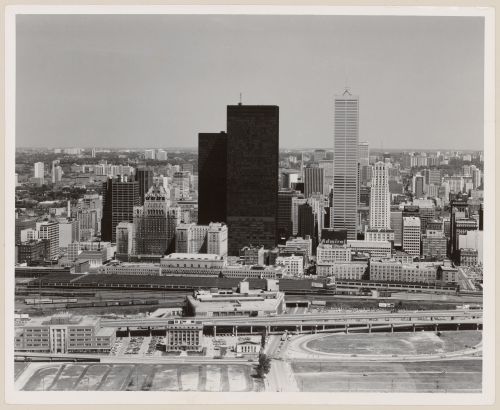
Numéro de référence:
PH2009:0005:054
PH2009:0005:054
Personnes et institutions:
Sujet:
architecture
architecture
Date:
1972
1972
Classification:
photographies
photographies
Date:
1972
1972
Personnes et institutions:
Sujet:
architecture
architecture
Classification:
photographies
photographies
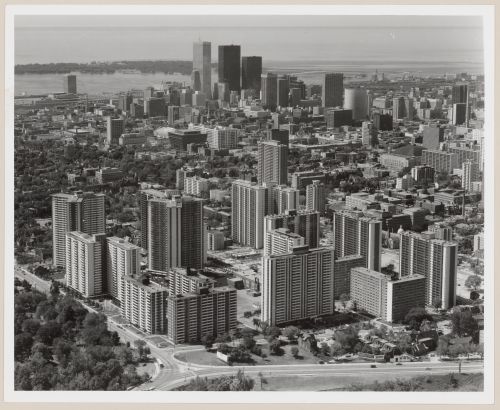
Numéro de référence:
PH2009:0005:056
PH2009:0005:056
Personnes et institutions:
Sujet:
architecture
architecture
Date:
1972
1972
Classification:
photographies
photographies
Date:
1972
1972
Personnes et institutions:
Sujet:
architecture
architecture
Classification:
photographies
photographies
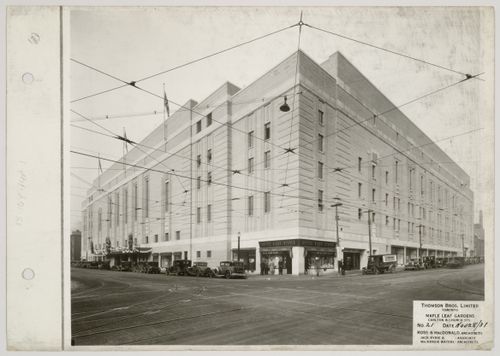
Numéro de référence:
ARCH33235
ARCH33235
Personnes et institutions:
Date:
28 November 1931
28 November 1931
Classification:
photographies
photographies
Date:
28 November 1931
28 November 1931
Personnes et institutions:
Classification:
né numérique, photographies
né numérique, photographies

Numéro de référence:
PH2018:0011:028
Description:
objet numérique
PH2018:0011:028
Description:
objet numérique
Personnes et institutions:
Date:
2014
2014
Titre:
An Enduring Wilderness: Aerial of Mimico Creek, Toronto
Actions:
PH2018:0011:028
Description:
objet numérique
An Enduring Wilderness: Aerial of Mimico Creek, Toronto
Actions:
PH2018:0011:028
Description:
objet numérique
Classification:
né numérique, photographies
né numérique, photographies
Date:
2014
2014
Personnes et institutions:
Classification:
né numérique, photographies
né numérique, photographies
Numéro de référence:
PH2018:0011:052
Description:
objet numérique
PH2018:0011:052
Description:
objet numérique
Personnes et institutions:
Date:
2016
2016
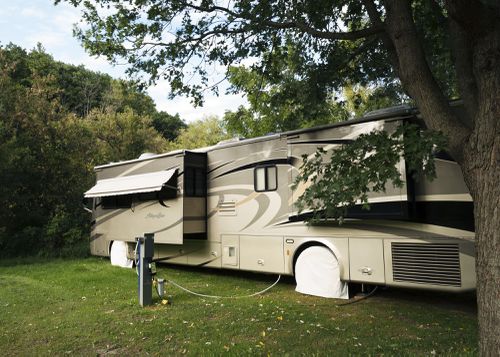
Titre:
An Enduring Wilderness: Trailer in Rouge Park, Toronto
Actions:
PH2018:0011:052
Description:
objet numérique
An Enduring Wilderness: Trailer in Rouge Park, Toronto
Actions:
PH2018:0011:052
Description:
objet numérique
Classification:
né numérique, photographies
né numérique, photographies
Date:
2016
2016
Personnes et institutions:


