


6832 Résultats
Classification:
livres
livres
Actions:
Prix:
$17.95
(disponible sur commande)
Résumé:
Almost a half-century after Yayoi Kusama debuted her landmark installation Infinity Mirror Room - Phalli's Field (1965) in New York, the work remains challenging and unclassifiable. Shifting between the Pop-like and the Surreal, the Minimal and the metaphorical, the figurative and the abstract, the psychotic and the erotic, with references to "free love" and psychedelia,(...)
$17.95
(disponible sur commande)
Résumé:
Almost a half-century after Yayoi Kusama debuted her landmark installation Infinity Mirror Room - Phalli's Field (1965) in New York, the work remains challenging and unclassifiable. Shifting between the Pop-like and the Surreal, the Minimal and the metaphorical, the figurative and the abstract, the psychotic and the erotic, with references to "free love" and psychedelia,(...)
Titre:
Yayoi Kusuma : Infinity mirror room - Phalli's Field
Actions:
Prix:
$17.95
(disponible sur commande)
Résumé:
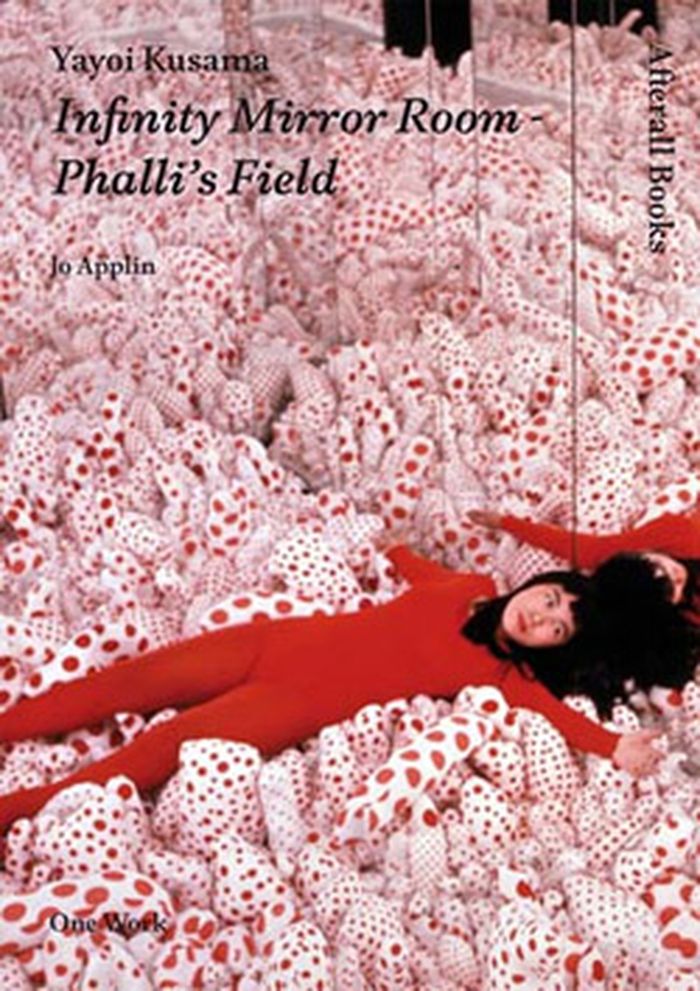
Almost a half-century after Yayoi Kusama debuted her landmark installation Infinity Mirror Room - Phalli's Field (1965) in New York, the work remains challenging and unclassifiable. Shifting between the Pop-like and the Surreal, the Minimal and the metaphorical, the figurative and the abstract, the psychotic and the erotic, with references to "free love" and psychedelia, it seemed to embody all that the 1960s was about, while at the same time denying the prevailing aesthetics of its time. The installation itself was a room lined with mirrored panels and carpeted with several hundred brightly polka-dotted soft fabric protrusions into which the visitor was completely absorbed. Kusama simply called it "a sublime, miraculous field of phalluses." A precursor of performance-based feminist art practice, media pranksterism, and "Occupy" movements, Kusama (born in 1929) was once as well known as her admirers - Andy Warhol, Donald Judd, and Joseph Cornell. In this first monograph on an epoch-defining work, Jo Applin looks at the installation in detail and places it in the context of subsequent art practice and theory as well as Kusama's own (as she called it) "obsessional art." Applin also discusses Kusama's relationship to her contemporaries, particularly those working with environments, abstract-erotic sculpture, and mirrors, and those grappling with such issues as abstraction, eroticism, sexuality, and softness. The work of Lee Lozano, Claes Oldenburg, Louise Bourgeois, and Eva Hesse is seen anew when considered in relation to Yayoi Kusama's.
Yayoi Kusuma : Infinity mirror room - Phalli's Field
Actions:
Prix:
$17.95
(disponible sur commande)
Résumé:
Almost a half-century after Yayoi Kusama debuted her landmark installation Infinity Mirror Room - Phalli's Field (1965) in New York, the work remains challenging and unclassifiable. Shifting between the Pop-like and the Surreal, the Minimal and the metaphorical, the figurative and the abstract, the psychotic and the erotic, with references to "free love" and psychedelia, it seemed to embody all that the 1960s was about, while at the same time denying the prevailing aesthetics of its time. The installation itself was a room lined with mirrored panels and carpeted with several hundred brightly polka-dotted soft fabric protrusions into which the visitor was completely absorbed. Kusama simply called it "a sublime, miraculous field of phalluses." A precursor of performance-based feminist art practice, media pranksterism, and "Occupy" movements, Kusama (born in 1929) was once as well known as her admirers - Andy Warhol, Donald Judd, and Joseph Cornell. In this first monograph on an epoch-defining work, Jo Applin looks at the installation in detail and places it in the context of subsequent art practice and theory as well as Kusama's own (as she called it) "obsessional art." Applin also discusses Kusama's relationship to her contemporaries, particularly those working with environments, abstract-erotic sculpture, and mirrors, and those grappling with such issues as abstraction, eroticism, sexuality, and softness. The work of Lee Lozano, Claes Oldenburg, Louise Bourgeois, and Eva Hesse is seen anew when considered in relation to Yayoi Kusama's.
Classification:
livres
livres
Publication:
novembre 2012
novembre 2012
Sujet:
Théorie de l’art
Théorie de l’art
Classification:
livres
livres
Actions:
Prix:
$75.00
(disponible sur commande)
Résumé:
Working across an unusually broad range of media, including painting, photography, film, drawing and sculpture, Sigmar Polke is widely regarded as one of the most influential and experimental artists of the post-war generation. His irreverent wit and promiscuous intelligence, coupled with his exceptional grasp of the properties of his materials, provided the foundation(...)
$75.00
(disponible sur commande)
Résumé:
Working across an unusually broad range of media, including painting, photography, film, drawing and sculpture, Sigmar Polke is widely regarded as one of the most influential and experimental artists of the post-war generation. His irreverent wit and promiscuous intelligence, coupled with his exceptional grasp of the properties of his materials, provided the foundation(...)
Titre:
Alibis Sigmar Polke 1963-2010
Actions:
Prix:
$75.00
(disponible sur commande)
Résumé:
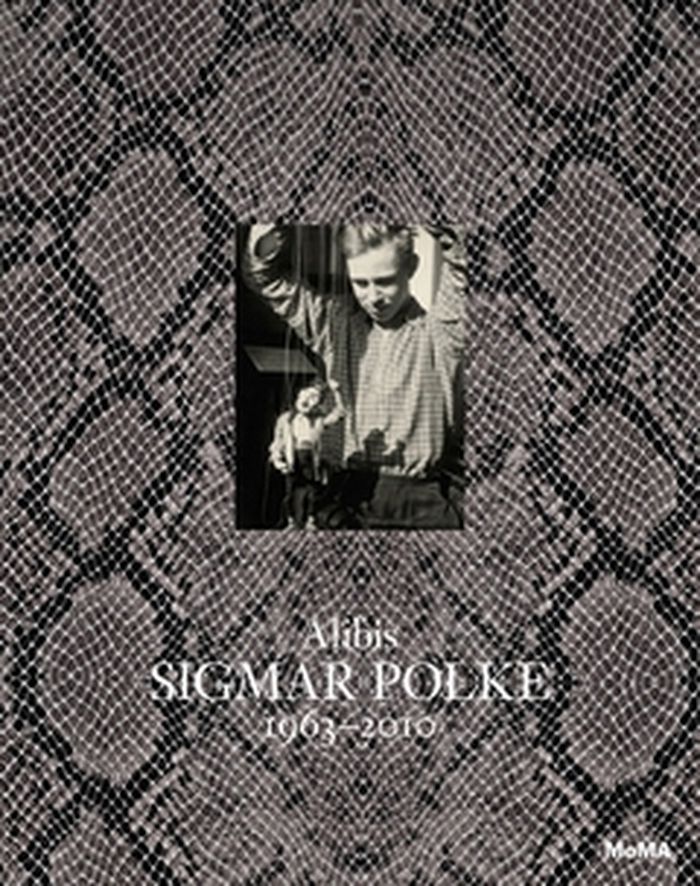
Working across an unusually broad range of media, including painting, photography, film, drawing and sculpture, Sigmar Polke is widely regarded as one of the most influential and experimental artists of the post-war generation. His irreverent wit and promiscuous intelligence, coupled with his exceptional grasp of the properties of his materials, provided the foundation for his punishing critiques of the conventions of art history and social behavior. Experimenting wildly with materials and tools as varied as meteor dust and the xerox machine, Polke made work of both an intimate and monumental scale, drawn from sources as diverse as newspaper headlines and Durer prints. Polke avoided any one signature style, a fluid method best defined by the word "alibi," which means "in or at another place." This also is a reminder of the deflection of responsibility which shaped German behavior during the Nazi period, compelling Polke's generation to reinvent the role of the artist. Published in conjunction with "Alibis: Sigmar Polke 1963-2010," the first exhibition to encompass the artist's work across all media, this richly illustrated publication provides an overview of his cross-disciplinary innovations and career. Essays by Kathy Halbreich, Associate Director of The Museum of Modern Art; Mark Godfrey, Curator of International Art, Tate Modern; and a range of scholars and artists examine the full range of Polke's exceptionally inventive oeuvre and place his enormous skepticism of all social, political and artistic conventions against German history.
Alibis Sigmar Polke 1963-2010
Actions:
Prix:
$75.00
(disponible sur commande)
Résumé:
Working across an unusually broad range of media, including painting, photography, film, drawing and sculpture, Sigmar Polke is widely regarded as one of the most influential and experimental artists of the post-war generation. His irreverent wit and promiscuous intelligence, coupled with his exceptional grasp of the properties of his materials, provided the foundation for his punishing critiques of the conventions of art history and social behavior. Experimenting wildly with materials and tools as varied as meteor dust and the xerox machine, Polke made work of both an intimate and monumental scale, drawn from sources as diverse as newspaper headlines and Durer prints. Polke avoided any one signature style, a fluid method best defined by the word "alibi," which means "in or at another place." This also is a reminder of the deflection of responsibility which shaped German behavior during the Nazi period, compelling Polke's generation to reinvent the role of the artist. Published in conjunction with "Alibis: Sigmar Polke 1963-2010," the first exhibition to encompass the artist's work across all media, this richly illustrated publication provides an overview of his cross-disciplinary innovations and career. Essays by Kathy Halbreich, Associate Director of The Museum of Modern Art; Mark Godfrey, Curator of International Art, Tate Modern; and a range of scholars and artists examine the full range of Polke's exceptionally inventive oeuvre and place his enormous skepticism of all social, political and artistic conventions against German history.
Classification:
livres
livres
Publication:
avril 2014
avril 2014
Classification:
livres
livres
Actions:
Prix:
$85.95
(disponible sur commande)
Résumé:
Publié à l'occasion de l'exposition de l'artiste au Centre Pompidou, cet ouvrage présente des photographies inédites de l'époque où Cohen est passée de la gravure et de la sculpture à la photographie sous l'influence du minimalisme, du Pop Art et de l'art conceptuel. Figure internationale de la photographie, Lynne Cohen élabore des images vides de toute présence humaine :(...)
$85.95
(disponible sur commande)
Résumé:
Publié à l'occasion de l'exposition de l'artiste au Centre Pompidou, cet ouvrage présente des photographies inédites de l'époque où Cohen est passée de la gravure et de la sculpture à la photographie sous l'influence du minimalisme, du Pop Art et de l'art conceptuel. Figure internationale de la photographie, Lynne Cohen élabore des images vides de toute présence humaine :(...)
Titre:
Lynne Cohen : Observatoires / Laboratoires
Actions:
Prix:
$85.95
(disponible sur commande)
Résumé:
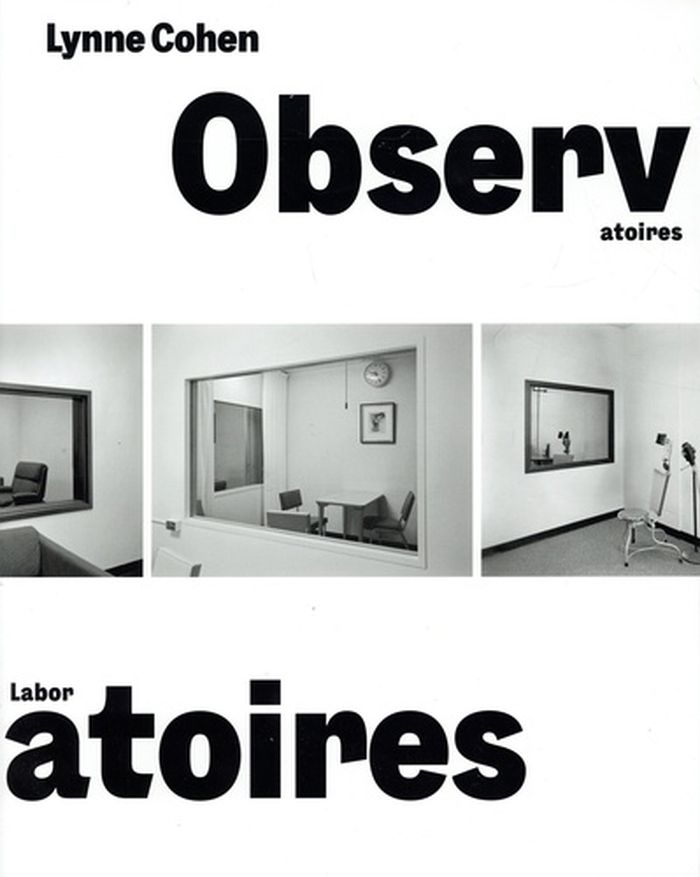
Publié à l'occasion de l'exposition de l'artiste au Centre Pompidou, cet ouvrage présente des photographies inédites de l'époque où Cohen est passée de la gravure et de la sculpture à la photographie sous l'influence du minimalisme, du Pop Art et de l'art conceptuel. Figure internationale de la photographie, Lynne Cohen élabore des images vides de toute présence humaine : des espaces intérieurs - laboratoires, stations thermales, salles d'attente ou d'entraînement... - aux décors parfois kitsch et dans lesquels planent un certain mystère, une atmosphère inquiétante. Ses cadrages rigoureux, une certaine mise à distance et une lumière qui souligne matières et surfaces confèrent aux lieux qu'elle capture une apparence à la fois " surréelle " et factice. Par la neutralité de l'éclairage et l'absence de personnages, les intérieurs domestiques et lieux de travail évoquent un contrôle social qui s'exerce de manière diffuse. Fascinée par les techniques photographiques employées dans la publicité, les annonces immobilières, les catalogues de vente par correspondance ou encore celles des cartes postales, Lynne Cohen s'inscrit dans le sillon de l'art conceptuel des années 1970, celui des artistes pour qui l'art est un moyen d'analyse. Eclairage, profondeur de champ et composition rigoureuse, voire clinique, donnent à voir des univers clos qui sont autant d'enquêtes sur la configuration de l'espace social. Salles de classe, de restaurants, de sports, halls d'hôtels, bureaux, laboratoires, espaces domestiques ou dédiés aux spas, à la police... partout s'exercent les notions d'observation, de jeux et de contrôles du social. Ces vues frontales aux cadres imposants sont toujours à double fond : quelque chose, de dérisoire ou de grave, y semble camouflé.
Lynne Cohen : Observatoires / Laboratoires
Actions:
Prix:
$85.95
(disponible sur commande)
Résumé:
Publié à l'occasion de l'exposition de l'artiste au Centre Pompidou, cet ouvrage présente des photographies inédites de l'époque où Cohen est passée de la gravure et de la sculpture à la photographie sous l'influence du minimalisme, du Pop Art et de l'art conceptuel. Figure internationale de la photographie, Lynne Cohen élabore des images vides de toute présence humaine : des espaces intérieurs - laboratoires, stations thermales, salles d'attente ou d'entraînement... - aux décors parfois kitsch et dans lesquels planent un certain mystère, une atmosphère inquiétante. Ses cadrages rigoureux, une certaine mise à distance et une lumière qui souligne matières et surfaces confèrent aux lieux qu'elle capture une apparence à la fois " surréelle " et factice. Par la neutralité de l'éclairage et l'absence de personnages, les intérieurs domestiques et lieux de travail évoquent un contrôle social qui s'exerce de manière diffuse. Fascinée par les techniques photographiques employées dans la publicité, les annonces immobilières, les catalogues de vente par correspondance ou encore celles des cartes postales, Lynne Cohen s'inscrit dans le sillon de l'art conceptuel des années 1970, celui des artistes pour qui l'art est un moyen d'analyse. Eclairage, profondeur de champ et composition rigoureuse, voire clinique, donnent à voir des univers clos qui sont autant d'enquêtes sur la configuration de l'espace social. Salles de classe, de restaurants, de sports, halls d'hôtels, bureaux, laboratoires, espaces domestiques ou dédiés aux spas, à la police... partout s'exercent les notions d'observation, de jeux et de contrôles du social. Ces vues frontales aux cadres imposants sont toujours à double fond : quelque chose, de dérisoire ou de grave, y semble camouflé.
Classification:
livres
livres
Publication:
juin 2023
juin 2023
Sujet:
Monographies photo
Monographies photo
Classification:
livres
livres
Prix:
$25.95
(disponible sur commande)
Résumé:
We surround ourselves with material things that are invested with memories but can only stand for what we have lost. Physical objects—such as one’s own body—situate and define us; yet at the same time they are fundamentally indifferent to us. The melancholy of this rift is a rich source of inspiration for artists. Peter Schwenger deftly weaves together philosophical(...)
$25.95
(disponible sur commande)
Résumé:
We surround ourselves with material things that are invested with memories but can only stand for what we have lost. Physical objects—such as one’s own body—situate and define us; yet at the same time they are fundamentally indifferent to us. The melancholy of this rift is a rich source of inspiration for artists. Peter Schwenger deftly weaves together philosophical(...)
Titre:
The tears of things : Melancholy and physical objects
Actions:
Prix:
$25.95
(disponible sur commande)
Résumé:
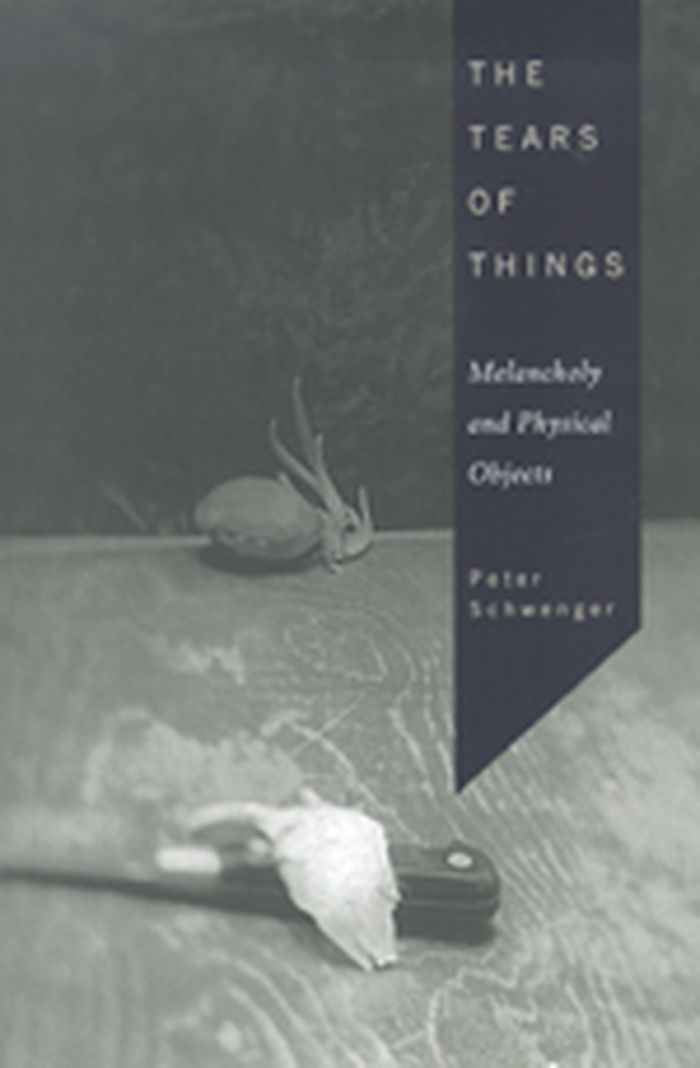
We surround ourselves with material things that are invested with memories but can only stand for what we have lost. Physical objects—such as one’s own body—situate and define us; yet at the same time they are fundamentally indifferent to us. The melancholy of this rift is a rich source of inspiration for artists. Peter Schwenger deftly weaves together philosophical and psychoanalytical theory with artistic practice. Concerned in part with the act of collecting, The Tears of Things is itself a collection of exemplary art objects—literary and cultural attempts to control and possess things—including paintings by Georgia O’Keeffe and René Magritte; sculpture by Louise Bourgeois and Marcel Duchamp; Joseph Cornell’s boxes; Edward Gorey’s graphic art; fiction by Virginia Woolf, Georges Perec, and Louise Erdrich; the hallucinatory encyclopedias of Jorge Luis Borges and Luigi Serafini; and the corpse photographs of Joel Peter Witkin. However, these representations of objects perpetually fall short of our aspirations. Schwenger examines what is left over—debris and waste—and asks what art can make of these. What emerges is not an art that reassembles but one that questions what it means to assemble in the first place. Contained in this catalog of waste is that ultimate still life, the cadaver, where the subject-object dichotomy receives its final ironic reconciliation. Peter Schwenger is professor of English at Mount St. Vincent University in Halifax, Nova Scotia. He is the author of Fantasm and Fiction: On Textual Envisioning, Letter Bomb: Nuclear Holocaust and the Exploding Word, and Phallic Critiques: Masculinity and Twentieth-Century Literature.
The tears of things : Melancholy and physical objects
Actions:
Prix:
$25.95
(disponible sur commande)
Résumé:
We surround ourselves with material things that are invested with memories but can only stand for what we have lost. Physical objects—such as one’s own body—situate and define us; yet at the same time they are fundamentally indifferent to us. The melancholy of this rift is a rich source of inspiration for artists. Peter Schwenger deftly weaves together philosophical and psychoanalytical theory with artistic practice. Concerned in part with the act of collecting, The Tears of Things is itself a collection of exemplary art objects—literary and cultural attempts to control and possess things—including paintings by Georgia O’Keeffe and René Magritte; sculpture by Louise Bourgeois and Marcel Duchamp; Joseph Cornell’s boxes; Edward Gorey’s graphic art; fiction by Virginia Woolf, Georges Perec, and Louise Erdrich; the hallucinatory encyclopedias of Jorge Luis Borges and Luigi Serafini; and the corpse photographs of Joel Peter Witkin. However, these representations of objects perpetually fall short of our aspirations. Schwenger examines what is left over—debris and waste—and asks what art can make of these. What emerges is not an art that reassembles but one that questions what it means to assemble in the first place. Contained in this catalog of waste is that ultimate still life, the cadaver, where the subject-object dichotomy receives its final ironic reconciliation. Peter Schwenger is professor of English at Mount St. Vincent University in Halifax, Nova Scotia. He is the author of Fantasm and Fiction: On Textual Envisioning, Letter Bomb: Nuclear Holocaust and the Exploding Word, and Phallic Critiques: Masculinity and Twentieth-Century Literature.
Classification:
livres
livres
Publication:
mai 2006, Minnesota
mai 2006, Minnesota
Sujet:
Théorie de l’architecture
Théorie de l’architecture
Classification:
livres
livres
Actions:
Prix:
$9.75
(disponible sur commande)
Résumé:
Following on from his internationally bestselling books on Rome and Egypt, illustrator Stephen Biesty brings his magic touch to the cradle of civilization - classical Greece. The year is 436 BCE - Olympic year - and 11-year-old Neleus is about to embark on the journey of a lifetime. Setting off from his home in Miletus with his father and brother, our young hero's(...)
$9.75
(disponible sur commande)
Résumé:
Following on from his internationally bestselling books on Rome and Egypt, illustrator Stephen Biesty brings his magic touch to the cradle of civilization - classical Greece. The year is 436 BCE - Olympic year - and 11-year-old Neleus is about to embark on the journey of a lifetime. Setting off from his home in Miletus with his father and brother, our young hero's(...)
Titre:
Greece in spectacular cross-section
Actions:
Prix:
$9.75
(disponible sur commande)
Résumé:
Following on from his internationally bestselling books on Rome and Egypt, illustrator Stephen Biesty brings his magic touch to the cradle of civilization - classical Greece. The year is 436 BCE - Olympic year - and 11-year-old Neleus is about to embark on the journey of a lifetime. Setting off from his home in Miletus with his father and brother, our young hero's final destination is the great games at Olympia, but he has many adventures and sees many sights along the way : fearsome Athenian warships at the sacred island of Delos; the rich silver mines of Laurion; the hurly-burly of the port and streets of Athens; the splendour of the Agora and the Acropolis; and a visit to the sacred oracle at Delphi. Biesty's Greece is an illustrated tour-de-force, featuring a stunning array of cross-sections, cutaways and explosions. Each drawing highlights Biesty's trademark attention to detail and is backed up by authoritative text and annotations. Biesty's eye for the quirky details of daily life combines with a witty and engaging text to provide an unforgettable window into the world of ancient Greece. Pitched at the 9-12-year-old, this book is destined to bring the ancient world to life for a wide range of readers. No aspect of Greek life is left out... domestic life, religion and the gods, the role of women, children and education, philosophy and learning, myths and legends, government, politics and law, economy and trade, warfare and slavery, the Olympic Games, music and drama, painting, pottery and sculpture, building and architecture, ships and seafaring.
Greece in spectacular cross-section
Actions:
Prix:
$9.75
(disponible sur commande)
Résumé:
Following on from his internationally bestselling books on Rome and Egypt, illustrator Stephen Biesty brings his magic touch to the cradle of civilization - classical Greece. The year is 436 BCE - Olympic year - and 11-year-old Neleus is about to embark on the journey of a lifetime. Setting off from his home in Miletus with his father and brother, our young hero's final destination is the great games at Olympia, but he has many adventures and sees many sights along the way : fearsome Athenian warships at the sacred island of Delos; the rich silver mines of Laurion; the hurly-burly of the port and streets of Athens; the splendour of the Agora and the Acropolis; and a visit to the sacred oracle at Delphi. Biesty's Greece is an illustrated tour-de-force, featuring a stunning array of cross-sections, cutaways and explosions. Each drawing highlights Biesty's trademark attention to detail and is backed up by authoritative text and annotations. Biesty's eye for the quirky details of daily life combines with a witty and engaging text to provide an unforgettable window into the world of ancient Greece. Pitched at the 9-12-year-old, this book is destined to bring the ancient world to life for a wide range of readers. No aspect of Greek life is left out... domestic life, religion and the gods, the role of women, children and education, philosophy and learning, myths and legends, government, politics and law, economy and trade, warfare and slavery, the Olympic Games, music and drama, painting, pottery and sculpture, building and architecture, ships and seafaring.
Classification:
livres
livres
Publication:
septembre 2006, Oxford, New York
septembre 2006, Oxford, New York
Sujet:
Littérature jeunesse
Littérature jeunesse
Classification:
livres
livres
Actions:
Prix:
$22.50
(disponible en magasin)
Résumé:
When architect Rafael Vinoly was commissioned to design a major new centre for the arts at Duke University, he set about creating his first museum in North America and the first stand-alone museum in Duke's eighty-year history. The resulting 65,000-square-foot building has changed the cultural landscape of the university and indeed the Southeast. This book(...)
$22.50
(disponible en magasin)
Résumé:
When architect Rafael Vinoly was commissioned to design a major new centre for the arts at Duke University, he set about creating his first museum in North America and the first stand-alone museum in Duke's eighty-year history. The resulting 65,000-square-foot building has changed the cultural landscape of the university and indeed the Southeast. This book(...)
Sujet:
Architecture, monographies
Architecture, monographies
Publication:
octobre 2005, Durham, North Carolina
octobre 2005, Durham, North Carolina
Titre:
The Nasher Museum of Art at Duke University : Rafael Vinoly Architects
Actions:
Prix:
$22.50
(disponible en magasin)
Résumé:
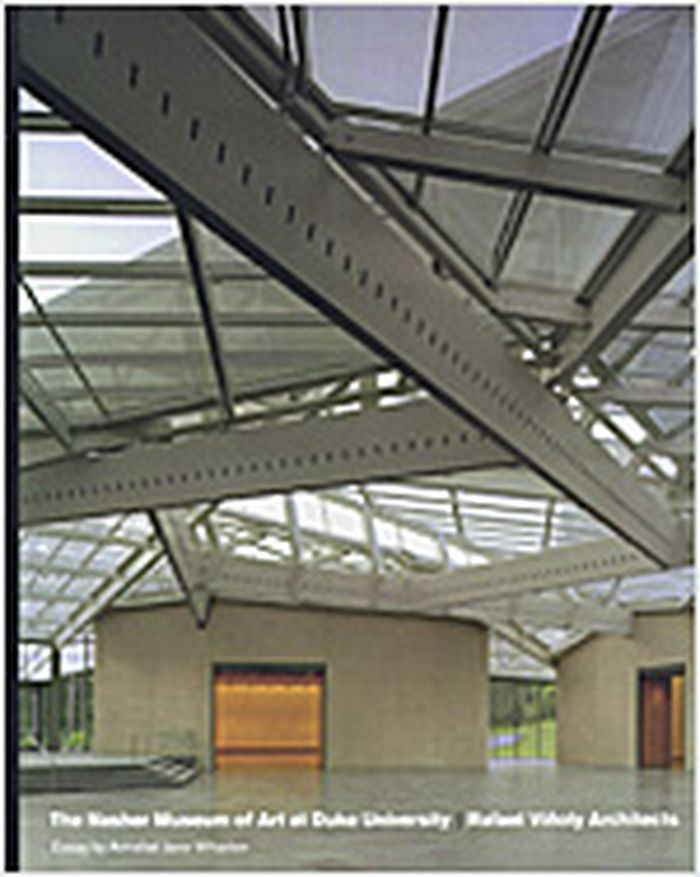
When architect Rafael Vinoly was commissioned to design a major new centre for the arts at Duke University, he set about creating his first museum in North America and the first stand-alone museum in Duke's eighty-year history. The resulting 65,000-square-foot building has changed the cultural landscape of the university and indeed the Southeast. This book documents the genesis and design of the new museum, which opens on October 2, 2005. The building is named in honor of the family of Raymond D. Nasher, an internationally prominent art collector who graduated from Duke in 1943. The brilliant core of the Nasher at Duke is a 13,000-square-foot glass and steel canopy rising to a height of 45 feet above the central gallery space. The faceted roof soars above the irregular pentagonal great hall, where five concrete pavilions fan out at different angles. The pavilions will house three large gallery spaces, an auditorium, offices, university and community classrooms, a museum shop, and a café with outdoor seating overlooking a sculpture garden. Set in the forest on Duke's campus, the museum's full-height glass walls and green slate floor connect the pavilions and further blur the division between building and nature. With an essay by art historian Annabel Jane Wharton, a design statement by architect Rafael Vinoly, a foreword by museum namesake Raymond D. Nasher, and photographs by Brad Feinknopf and Jerry Blow, this book documents the building that will become a cornerstone for cultural activities for the university and the public.
The Nasher Museum of Art at Duke University : Rafael Vinoly Architects
Actions:
Prix:
$22.50
(disponible en magasin)
Résumé:
When architect Rafael Vinoly was commissioned to design a major new centre for the arts at Duke University, he set about creating his first museum in North America and the first stand-alone museum in Duke's eighty-year history. The resulting 65,000-square-foot building has changed the cultural landscape of the university and indeed the Southeast. This book documents the genesis and design of the new museum, which opens on October 2, 2005. The building is named in honor of the family of Raymond D. Nasher, an internationally prominent art collector who graduated from Duke in 1943. The brilliant core of the Nasher at Duke is a 13,000-square-foot glass and steel canopy rising to a height of 45 feet above the central gallery space. The faceted roof soars above the irregular pentagonal great hall, where five concrete pavilions fan out at different angles. The pavilions will house three large gallery spaces, an auditorium, offices, university and community classrooms, a museum shop, and a café with outdoor seating overlooking a sculpture garden. Set in the forest on Duke's campus, the museum's full-height glass walls and green slate floor connect the pavilions and further blur the division between building and nature. With an essay by art historian Annabel Jane Wharton, a design statement by architect Rafael Vinoly, a foreword by museum namesake Raymond D. Nasher, and photographs by Brad Feinknopf and Jerry Blow, this book documents the building that will become a cornerstone for cultural activities for the university and the public.
Classification:
livres
livres
Publication:
octobre 2005, Durham, North Carolina
octobre 2005, Durham, North Carolina
Sujet:
Architecture, monographies
Architecture, monographies
Classification:
livres
livres
Actions:
Prix:
$27.00
(disponible sur commande)
Résumé:
This new survey provides a complete history of American art and architecture from its seventeenth-century colonial beginnings to the latest installation and video work. Structured chronologically, the book defines the characteristics of the different periods and highlights the consistent forms, techniques, and styles that mark the art and architecture as distinctively(...)
$27.00
(disponible sur commande)
Résumé:
This new survey provides a complete history of American art and architecture from its seventeenth-century colonial beginnings to the latest installation and video work. Structured chronologically, the book defines the characteristics of the different periods and highlights the consistent forms, techniques, and styles that mark the art and architecture as distinctively(...)
Titre:
American art and architecture
Actions:
Prix:
$27.00
(disponible sur commande)
Résumé:
This new survey provides a complete history of American art and architecture from its seventeenth-century colonial beginnings to the latest installation and video work. Structured chronologically, the book defines the characteristics of the different periods and highlights the consistent forms, techniques, and styles that mark the art and architecture as distinctively American. Michael J. Lewis charts the ways in which American artists and architects both adopted and diverged from earlier European models to create an original visual language of their own. He also shows how that language in turn came to influence and eventually dominate art and architecture around the world. The author integrates discussions of both buildings and works of visual art, revealing the shared social and aesthetic concerns that underlie the two. Vernacular, religious, secular, and corporate architecture appears alongside paintings, sculpture, photography, and new-media art. Major American artists and works from the seventeenth century to today are included, such as epic history paintings by Benjamin West and John Singleton Copley; sublime landscapes by Thomas Cole, Albert Bierstadt, and Frederick Church; society portraits by John Singer Sargent; groundbreaking abstract expressionist and pop art by Jackson Pollock, Barnett Newman, and Andy Warhol; and challenging sculptural, installation, and video works from more recent years by Robert Gober, Fred Wilson, and Matthew Barney. In architecture, dozens of different building types are illustrated and discussed, from the earliest colonial houses and churches to the most spectacular modernist and postmodernist houses, stations, museums, and iconic skyscrapers. 275 illustrations, 175 in color.
American art and architecture
Actions:
Prix:
$27.00
(disponible sur commande)
Résumé:
This new survey provides a complete history of American art and architecture from its seventeenth-century colonial beginnings to the latest installation and video work. Structured chronologically, the book defines the characteristics of the different periods and highlights the consistent forms, techniques, and styles that mark the art and architecture as distinctively American. Michael J. Lewis charts the ways in which American artists and architects both adopted and diverged from earlier European models to create an original visual language of their own. He also shows how that language in turn came to influence and eventually dominate art and architecture around the world. The author integrates discussions of both buildings and works of visual art, revealing the shared social and aesthetic concerns that underlie the two. Vernacular, religious, secular, and corporate architecture appears alongside paintings, sculpture, photography, and new-media art. Major American artists and works from the seventeenth century to today are included, such as epic history paintings by Benjamin West and John Singleton Copley; sublime landscapes by Thomas Cole, Albert Bierstadt, and Frederick Church; society portraits by John Singer Sargent; groundbreaking abstract expressionist and pop art by Jackson Pollock, Barnett Newman, and Andy Warhol; and challenging sculptural, installation, and video works from more recent years by Robert Gober, Fred Wilson, and Matthew Barney. In architecture, dozens of different building types are illustrated and discussed, from the earliest colonial houses and churches to the most spectacular modernist and postmodernist houses, stations, museums, and iconic skyscrapers. 275 illustrations, 175 in color.
Classification:
livres
livres
Publication:
mai 2006, London
mai 2006, London
Sujet:
Modernisme
Modernisme
Classification:
livres
livres
Titre:
John Divola : three acts
John Divola : three acts
Actions:
Prix:
$60.00
(disponible sur commande)
Résumé:
In 1973, artist John Divola began the first of three highly ambitious and original bodies of work that together form this publication. The Vandalism series comprises black-and-white photographs of interiors of abandoned houses. Entering illegally, Divola spray painted expressive markings in the forms of dots, lines, and grids, creating a series of conceptual gestures that(...)
$60.00
(disponible sur commande)
Résumé:
In 1973, artist John Divola began the first of three highly ambitious and original bodies of work that together form this publication. The Vandalism series comprises black-and-white photographs of interiors of abandoned houses. Entering illegally, Divola spray painted expressive markings in the forms of dots, lines, and grids, creating a series of conceptual gestures that(...)
Titre:
John Divola : three acts
Actions:
Prix:
$60.00
(disponible sur commande)
Résumé:
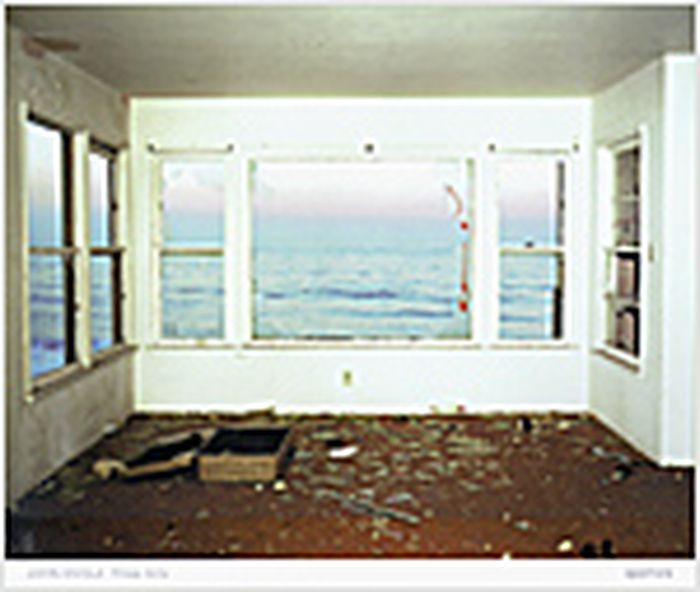
In 1973, artist John Divola began the first of three highly ambitious and original bodies of work that together form this publication. The Vandalism series comprises black-and-white photographs of interiors of abandoned houses. Entering illegally, Divola spray painted expressive markings in the forms of dots, lines, and grids, creating a series of conceptual gestures that referenced “action painting” as readily as the graffiti that was fast becoming a cultural phenomenon. The following year, Divola began the Los Angeles International Airport Noise Abatement series, photographing a condemned neighborhood bought out by the airport to serve as a noise buffer for new runways.An extensive catalog of break-ins, the photographs record the evidence of violent entries: shattered windows, doors torn from hinges, a crowbar resting in the jamb of a door pried open. The final installment in this book, the Zuma series, is the artist’s documentation of the destruction of an abandoned beachfront property. While employing similar strategies of painting and intervention, the Zuma images add variation and complexity to Divola’s established themes as they incorporate color, elements of nature, and meditation on change. These cyclical images skillfully juxtapose romantic skies and sunsets with a seaside structure that, frame by frame, deteriorates into ruin as it is vandalized by the artist and others who eventually set it on fire. Divola’s art practice shares a tradition with conceptual artists such as Bruce Nauman, whose photographs are considered to be performance or sculpture, and Robert Smithson, who used photography to investigate the built environment.
John Divola : three acts
Actions:
Prix:
$60.00
(disponible sur commande)
Résumé:
In 1973, artist John Divola began the first of three highly ambitious and original bodies of work that together form this publication. The Vandalism series comprises black-and-white photographs of interiors of abandoned houses. Entering illegally, Divola spray painted expressive markings in the forms of dots, lines, and grids, creating a series of conceptual gestures that referenced “action painting” as readily as the graffiti that was fast becoming a cultural phenomenon. The following year, Divola began the Los Angeles International Airport Noise Abatement series, photographing a condemned neighborhood bought out by the airport to serve as a noise buffer for new runways.An extensive catalog of break-ins, the photographs record the evidence of violent entries: shattered windows, doors torn from hinges, a crowbar resting in the jamb of a door pried open. The final installment in this book, the Zuma series, is the artist’s documentation of the destruction of an abandoned beachfront property. While employing similar strategies of painting and intervention, the Zuma images add variation and complexity to Divola’s established themes as they incorporate color, elements of nature, and meditation on change. These cyclical images skillfully juxtapose romantic skies and sunsets with a seaside structure that, frame by frame, deteriorates into ruin as it is vandalized by the artist and others who eventually set it on fire. Divola’s art practice shares a tradition with conceptual artists such as Bruce Nauman, whose photographs are considered to be performance or sculpture, and Robert Smithson, who used photography to investigate the built environment.
Classification:
livres
livres
Publication:
mai 2006, New York
mai 2006, New York
Sujet:
Monographies photo
Monographies photo
Classification:
livres
livres
Prix:
$72.95
(disponible sur commande)
Résumé:
Landforms are a fast-developing art form that enjoy a wide following today, because of their multiple uses and their enveloping beauty. As formal landscapes that often arise from necessity - recycling a coal site for human use or making new use of excess earth - they are a pleasure to walk over and through. In this collection of his recent work, Charles Jencks explains(...)
$72.95
(disponible sur commande)
Résumé:
Landforms are a fast-developing art form that enjoy a wide following today, because of their multiple uses and their enveloping beauty. As formal landscapes that often arise from necessity - recycling a coal site for human use or making new use of excess earth - they are a pleasure to walk over and through. In this collection of his recent work, Charles Jencks explains(...)
Titre:
The universe in the landscape: landforms by Charles Jencks
Actions:
Prix:
$72.95
(disponible sur commande)
Résumé:
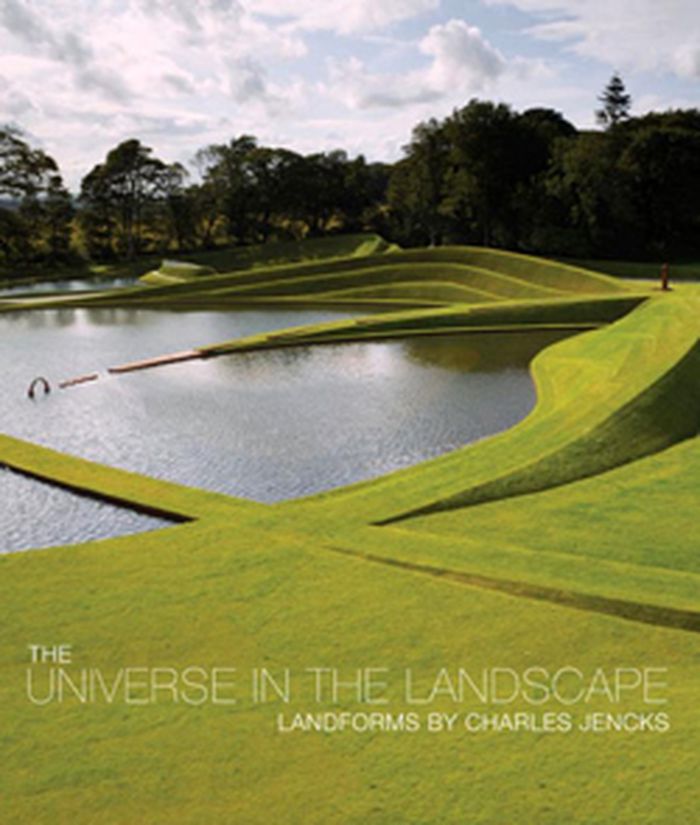
Landforms are a fast-developing art form that enjoy a wide following today, because of their multiple uses and their enveloping beauty. As formal landscapes that often arise from necessity - recycling a coal site for human use or making new use of excess earth - they are a pleasure to walk over and through. In this collection of his recent work, Charles Jencks explains his particular approach to the landform. Like the prehistoric earthworks of Britain that have been an inspiration, such as Stonehenge, his landforms contain cosmic symbolism, and they draw together sculpture, epigraphy, water, gardens, scrap metal and architecture. They address perennial themes - identity, patterns of nature, death and the power of life - but in a contemporary way, based on the insights of science. So Jencks portrays universal aspects of DNA, the spacetime warp of a black hole, the extraordinary way cells divide and unite and some basic forms of life. In this publication Jencks seeks to define a new landscape iconography based on forms and themes that may be eternal, in the sense that they crystallise nature's laws, some of which have been recently discovered. To see a world in a grain of sand was a poetic quest of William Blake and, in a different sense, to find the universe in a ritual landscape was a goal of prehistoric cultures. Jencks allies these spiritual affinities with the view of science that stresses the common patterns that underlie all parts of the cosmos, thus making them like our home planet, and the universe in a landscape.
The universe in the landscape: landforms by Charles Jencks
Actions:
Prix:
$72.95
(disponible sur commande)
Résumé:
Landforms are a fast-developing art form that enjoy a wide following today, because of their multiple uses and their enveloping beauty. As formal landscapes that often arise from necessity - recycling a coal site for human use or making new use of excess earth - they are a pleasure to walk over and through. In this collection of his recent work, Charles Jencks explains his particular approach to the landform. Like the prehistoric earthworks of Britain that have been an inspiration, such as Stonehenge, his landforms contain cosmic symbolism, and they draw together sculpture, epigraphy, water, gardens, scrap metal and architecture. They address perennial themes - identity, patterns of nature, death and the power of life - but in a contemporary way, based on the insights of science. So Jencks portrays universal aspects of DNA, the spacetime warp of a black hole, the extraordinary way cells divide and unite and some basic forms of life. In this publication Jencks seeks to define a new landscape iconography based on forms and themes that may be eternal, in the sense that they crystallise nature's laws, some of which have been recently discovered. To see a world in a grain of sand was a poetic quest of William Blake and, in a different sense, to find the universe in a ritual landscape was a goal of prehistoric cultures. Jencks allies these spiritual affinities with the view of science that stresses the common patterns that underlie all parts of the cosmos, thus making them like our home planet, and the universe in a landscape.
Classification:
livres
livres
Publication:
juin 2011
juin 2011
Classification:
livres
livres
Actions:
Prix:
$90.00
(disponible sur commande)
Résumé:
Gordon Matta-Clark, scion and rebel, died at 35 in 1978 and has since become a cult figure of late-twentieth-century art. Born in New York and trained in architecture at Cornell, he went on to question the field's conventions in vivid projects that excised holes into existing buildings or assembled deeds to New York City alleys and curbs. As the son of the Chilean-born(...)
$90.00
(disponible sur commande)
Résumé:
Gordon Matta-Clark, scion and rebel, died at 35 in 1978 and has since become a cult figure of late-twentieth-century art. Born in New York and trained in architecture at Cornell, he went on to question the field's conventions in vivid projects that excised holes into existing buildings or assembled deeds to New York City alleys and curbs. As the son of the Chilean-born(...)
Titre:
Gordon Matta-Clark: works and collected writings
Actions:
Prix:
$90.00
(disponible sur commande)
Résumé:
Gordon Matta-Clark, scion and rebel, died at 35 in 1978 and has since become a cult figure of late-twentieth-century art. Born in New York and trained in architecture at Cornell, he went on to question the field's conventions in vivid projects that excised holes into existing buildings or assembled deeds to New York City alleys and curbs. As the son of the Chilean-born Surrealist painter Roberto Matta and Anne Clark, and godson of Marcel Duchamp, with whom he played a regular game of chess in the Village, Matta-Clark had grown up inside the art world, also working an as assistant to mavericks like Dennis Oppenheim and Robert Smithson. His work and words, while sophisticated enough to make him an "artist's artist," and colossal and outgoing enough to draw public attention and affection, were always also grounded in social or political convictions. He addressed not only space and real estate (in other words, housing), but the ultimate in necessity and nourishment, food. His "Pig Roast" under the Brooklyn Bridge offered passersby 500 pork sandwiches, and Food, the artist-staffed restaurant that he opened with dancer Caroline Goodden in SoHo, became a headquarters for that nascent neighborhood in the early 70s. He consistently broke the boundaries between sculpture and architecture, photography and film, performance and installation, and above all the permanent and the transitory. Once in a while he also broke the law. This book, published in celebration of the gradual opening of Matta-Clark's archives at the Canadian Centre for Architecture in Montreal, collects previously unavailable writings, including notecards and notebooks, along with interviews and more than 100 illustrations.
Gordon Matta-Clark: works and collected writings
Actions:
Prix:
$90.00
(disponible sur commande)
Résumé:
Gordon Matta-Clark, scion and rebel, died at 35 in 1978 and has since become a cult figure of late-twentieth-century art. Born in New York and trained in architecture at Cornell, he went on to question the field's conventions in vivid projects that excised holes into existing buildings or assembled deeds to New York City alleys and curbs. As the son of the Chilean-born Surrealist painter Roberto Matta and Anne Clark, and godson of Marcel Duchamp, with whom he played a regular game of chess in the Village, Matta-Clark had grown up inside the art world, also working an as assistant to mavericks like Dennis Oppenheim and Robert Smithson. His work and words, while sophisticated enough to make him an "artist's artist," and colossal and outgoing enough to draw public attention and affection, were always also grounded in social or political convictions. He addressed not only space and real estate (in other words, housing), but the ultimate in necessity and nourishment, food. His "Pig Roast" under the Brooklyn Bridge offered passersby 500 pork sandwiches, and Food, the artist-staffed restaurant that he opened with dancer Caroline Goodden in SoHo, became a headquarters for that nascent neighborhood in the early 70s. He consistently broke the boundaries between sculpture and architecture, photography and film, performance and installation, and above all the permanent and the transitory. Once in a while he also broke the law. This book, published in celebration of the gradual opening of Matta-Clark's archives at the Canadian Centre for Architecture in Montreal, collects previously unavailable writings, including notecards and notebooks, along with interviews and more than 100 illustrations.
Classification:
livres
livres
Publication:
octobre 2006
octobre 2006


