


6923 Résultats
Classification:
livres
livres
Prix:
$48.00
(disponible en magasin)
Résumé:
Idealized representations of America, as both an aspiration and a menace, played an important role in shaping Russian architecture and urban design from the American Revolution until the fall of the Soviet Union. In Building a new New World, Jean-Louis Cohen traces the concept of “Amerikanizm” and its impact on Russia’s built environment from early czarist interest in(...)
$48.00
(disponible en magasin)
Résumé:
Idealized representations of America, as both an aspiration and a menace, played an important role in shaping Russian architecture and urban design from the American Revolution until the fall of the Soviet Union. In Building a new New World, Jean-Louis Cohen traces the concept of “Amerikanizm” and its impact on Russia’s built environment from early czarist interest in(...)
Titre:
Building a new New World: Amerikanizm in Russian Architecture
Actions:
Prix:
$48.00
(disponible en magasin)
Résumé:
Idealized representations of America, as both an aspiration and a menace, played an important role in shaping Russian architecture and urban design from the American Revolution until the fall of the Soviet Union. In Building a new New World, Jean-Louis Cohen traces the concept of “Amerikanizm” and its impact on Russia’s built environment from early czarist interest in Revolutionary America, through the spectacular World’s Fairs of the nineteenth century, to department stores, skyscrapers, and factories built in Russia using American methods during the twentieth century. Visions of America also captivated the Russian avant-garde, from El Lissitzky to Moisei Ginzburg, and Cohen explores the ongoing artistic dialogue maintained between the two countries at the mid-century and in the late Soviet era, when the Cold War induced a strategic competition. Tracing the many journeys of Russian writers, politicians, and planners through the American territory, foregrounding the constant streams of cultural and technological transfer from the U.S.A. to Russia, and revealing the parallel fascination among Russian and American intellectuals with the ongoing pursuit of land occupation and development within their respective borders, this study of Amerikanizm in the architecture and urban design of Russia makes a timely contribution to our understanding of modern architecture and its broader geopolitics.
Building a new New World: Amerikanizm in Russian Architecture
Actions:
Prix:
$48.00
(disponible en magasin)
Résumé:
Idealized representations of America, as both an aspiration and a menace, played an important role in shaping Russian architecture and urban design from the American Revolution until the fall of the Soviet Union. In Building a new New World, Jean-Louis Cohen traces the concept of “Amerikanizm” and its impact on Russia’s built environment from early czarist interest in Revolutionary America, through the spectacular World’s Fairs of the nineteenth century, to department stores, skyscrapers, and factories built in Russia using American methods during the twentieth century. Visions of America also captivated the Russian avant-garde, from El Lissitzky to Moisei Ginzburg, and Cohen explores the ongoing artistic dialogue maintained between the two countries at the mid-century and in the late Soviet era, when the Cold War induced a strategic competition. Tracing the many journeys of Russian writers, politicians, and planners through the American territory, foregrounding the constant streams of cultural and technological transfer from the U.S.A. to Russia, and revealing the parallel fascination among Russian and American intellectuals with the ongoing pursuit of land occupation and development within their respective borders, this study of Amerikanizm in the architecture and urban design of Russia makes a timely contribution to our understanding of modern architecture and its broader geopolitics.
Classification:
livres
livres
Publication:
décembre 2019
décembre 2019
Sujet:
Publications du CCA
Publications du CCA
Classification:
livres
livres
Titre:
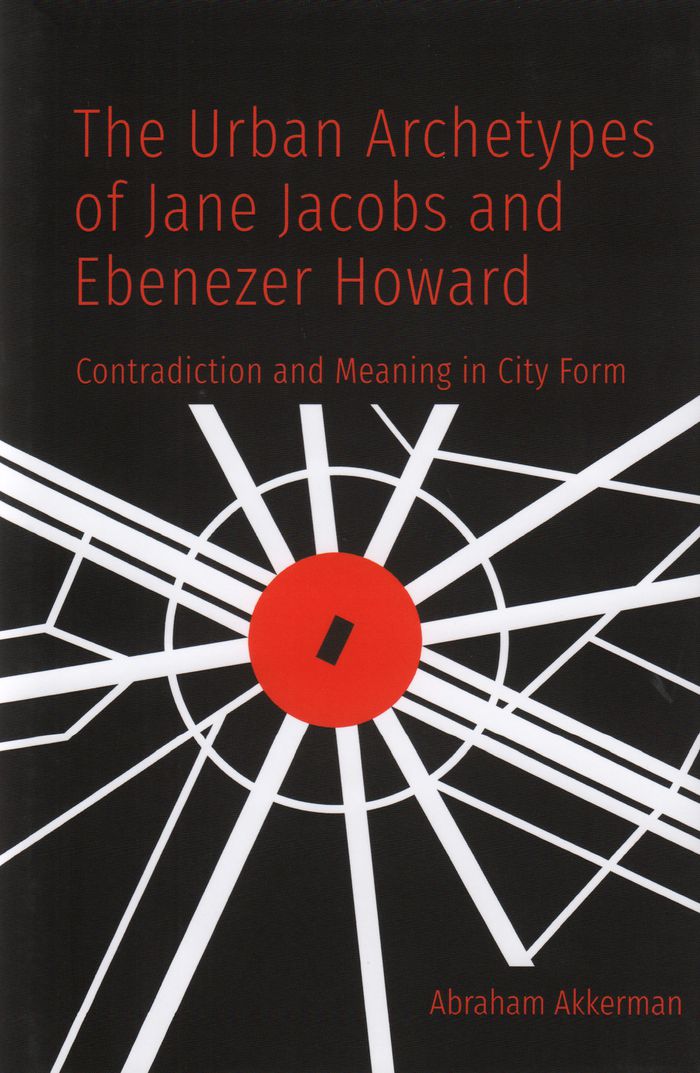
The Urban Archetypes of Jane Jacobs and Ebenezer Howard: Contradiction and meaning in city form
The Urban Archetypes of Jane Jacobs and Ebenezer Howard: Contradiction and meaning in city form
Actions:
Prix:
$80.00
(disponible sur commande)
Résumé:
Ebenezer Howard, an Englishman, and Jane Jacobs, a naturalized Canadian, personify the twentieth century’s opposing outlooks on cities. Howard had envisaged small towns, newly built from scratch, fashioned on single family homes with small gardens. Jacobs embraced existing inner-city neighbourhoods emphasizing the verve of the living street. From Howard’s idea, the(...)
$80.00
(disponible sur commande)
Résumé:
Ebenezer Howard, an Englishman, and Jane Jacobs, a naturalized Canadian, personify the twentieth century’s opposing outlooks on cities. Howard had envisaged small towns, newly built from scratch, fashioned on single family homes with small gardens. Jacobs embraced existing inner-city neighbourhoods emphasizing the verve of the living street. From Howard’s idea, the(...)
Titre:
The Urban Archetypes of Jane Jacobs and Ebenezer Howard: Contradiction and meaning in city form
Actions:
Prix:
$80.00
(disponible sur commande)
Résumé:
Ebenezer Howard, an Englishman, and Jane Jacobs, a naturalized Canadian, personify the twentieth century’s opposing outlooks on cities. Howard had envisaged small towns, newly built from scratch, fashioned on single family homes with small gardens. Jacobs embraced existing inner-city neighbourhoods emphasizing the verve of the living street. From Howard’s idea, the American Dream of garden suburbs had emerged, yet his conceptualization of a modern city received criticism for being uniform and alienated from the rest of the city. Similarly, at the turn of the new century, Jacobs’ inner-city neighbourhoods came to be recognized as the result of commodification, vacillating between poverty and newly discovered hubs of urban authenticity. Presenting Howard and Jacobs within a psychocultural context, ''The urban archetypes of Jane Jacobs and Ebenezer Howard'' addresses our urban crisis in the recognition that ''city form'' is a gendered, allegorical medium expressing femininity and masculinity within two founding features of the built environment: void and volume. Both founding contrasts bring tensions, but also the opportunities of fusion between pairs of urban polarities: human scale against superscale, gait against speed, and spontaneity against surveillance. Jacobs and Howard, in their respective attitudes, have come to embrace the two ancient archetypes, the Garden and the Citadel, leaving it to future generations to blend their two contrarian stances.
The Urban Archetypes of Jane Jacobs and Ebenezer Howard: Contradiction and meaning in city form
Actions:
Prix:
$80.00
(disponible sur commande)
Résumé:
Ebenezer Howard, an Englishman, and Jane Jacobs, a naturalized Canadian, personify the twentieth century’s opposing outlooks on cities. Howard had envisaged small towns, newly built from scratch, fashioned on single family homes with small gardens. Jacobs embraced existing inner-city neighbourhoods emphasizing the verve of the living street. From Howard’s idea, the American Dream of garden suburbs had emerged, yet his conceptualization of a modern city received criticism for being uniform and alienated from the rest of the city. Similarly, at the turn of the new century, Jacobs’ inner-city neighbourhoods came to be recognized as the result of commodification, vacillating between poverty and newly discovered hubs of urban authenticity. Presenting Howard and Jacobs within a psychocultural context, ''The urban archetypes of Jane Jacobs and Ebenezer Howard'' addresses our urban crisis in the recognition that ''city form'' is a gendered, allegorical medium expressing femininity and masculinity within two founding features of the built environment: void and volume. Both founding contrasts bring tensions, but also the opportunities of fusion between pairs of urban polarities: human scale against superscale, gait against speed, and spontaneity against surveillance. Jacobs and Howard, in their respective attitudes, have come to embrace the two ancient archetypes, the Garden and the Citadel, leaving it to future generations to blend their two contrarian stances.
Classification:
livres
livres
Publication:
janvier 2020
janvier 2020
Sujet:
Théorie de l’urbanisme
Théorie de l’urbanisme
Classification:
livres
livres
Prix:
$33.95
(disponible sur commande)
Résumé:
A manifesto for the Open City: vibrant, disordered, adaptable. In 1970 Richard Sennett published the ground breaking ''The uses of disorder,'' that the ideal of a planned and ordered city was flawed, likely to produce a fragile, restrictive urban environment. Fifty years later, Sennett returns to these still fertile ideas and alongside campaigner and architect, Pablo(...)
$33.95
(disponible sur commande)
Résumé:
A manifesto for the Open City: vibrant, disordered, adaptable. In 1970 Richard Sennett published the ground breaking ''The uses of disorder,'' that the ideal of a planned and ordered city was flawed, likely to produce a fragile, restrictive urban environment. Fifty years later, Sennett returns to these still fertile ideas and alongside campaigner and architect, Pablo(...)
Titre:
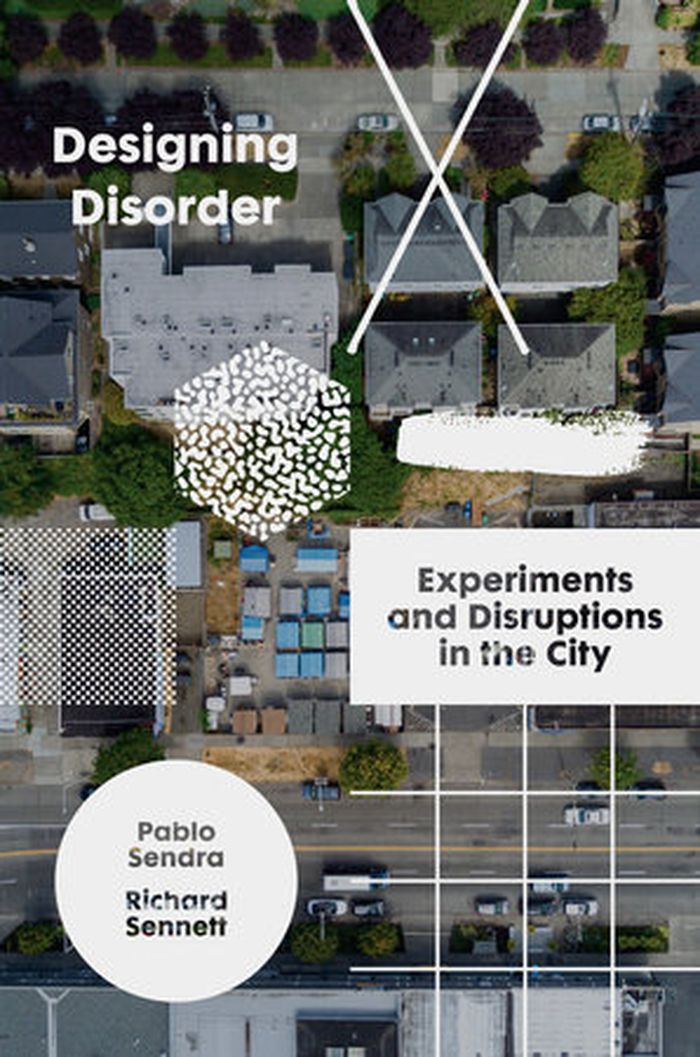
Designing disorder: experiments and disruptions in the city
Actions:
Prix:
$33.95
(disponible sur commande)
Résumé:
A manifesto for the Open City: vibrant, disordered, adaptable. In 1970 Richard Sennett published the ground breaking ''The uses of disorder,'' that the ideal of a planned and ordered city was flawed, likely to produce a fragile, restrictive urban environment. Fifty years later, Sennett returns to these still fertile ideas and alongside campaigner and architect, Pablo Sendra, sets out an agenda for the design and ethics of the Open City. The public spaces of our cities are under siege from planners, privatisation and increased surveillance. Our streets are becoming ever more lifeless and ordered. What is to be done? Can disorder be designed? Is it possible to maintain the public realm as a flexible space that adapts over time? In this provocative essay Sendra and Sennett propose a reorganisation of how we think and plan the social life of our cities. What the authors call 'Infrastructures of disorder' combine architecture, politics, urban planning and activism in order to develop places that nurture rather than stifle, bring together rather than divide up, remain open to change rather than closed off. The book proves that ideas of disorder are still some of the most radical and transformative in debates on 21st century cities.
Designing disorder: experiments and disruptions in the city
Actions:
Prix:
$33.95
(disponible sur commande)
Résumé:
A manifesto for the Open City: vibrant, disordered, adaptable. In 1970 Richard Sennett published the ground breaking ''The uses of disorder,'' that the ideal of a planned and ordered city was flawed, likely to produce a fragile, restrictive urban environment. Fifty years later, Sennett returns to these still fertile ideas and alongside campaigner and architect, Pablo Sendra, sets out an agenda for the design and ethics of the Open City. The public spaces of our cities are under siege from planners, privatisation and increased surveillance. Our streets are becoming ever more lifeless and ordered. What is to be done? Can disorder be designed? Is it possible to maintain the public realm as a flexible space that adapts over time? In this provocative essay Sendra and Sennett propose a reorganisation of how we think and plan the social life of our cities. What the authors call 'Infrastructures of disorder' combine architecture, politics, urban planning and activism in order to develop places that nurture rather than stifle, bring together rather than divide up, remain open to change rather than closed off. The book proves that ideas of disorder are still some of the most radical and transformative in debates on 21st century cities.
Classification:
livres
livres
Publication:
avril 2020
avril 2020
Sujet:
Théorie de l’urbanisme
Théorie de l’urbanisme
Classification:
livres
livres
Actions:
Prix:
$33.00
(disponible sur commande)
Résumé:
The Politics of Public Space is a quarterly publication of transcripts that speak directly to the city and the way we read it. The second volume addresses the effects of COVID-19, including the sudden changes in the way we interact and view our public spaces. It contains excerpts from Myria Georgiou, Saskia Sassen, Jack Self, Brooke Holmes, Ian Strange and Alfredo(...)
$33.00
(disponible sur commande)
Résumé:
The Politics of Public Space is a quarterly publication of transcripts that speak directly to the city and the way we read it. The second volume addresses the effects of COVID-19, including the sudden changes in the way we interact and view our public spaces. It contains excerpts from Myria Georgiou, Saskia Sassen, Jack Self, Brooke Holmes, Ian Strange and Alfredo(...)
Titre:
Politics of Public Space, Volume 2
Actions:
Prix:
$33.00
(disponible sur commande)
Résumé:
The Politics of Public Space is a quarterly publication of transcripts that speak directly to the city and the way we read it. The second volume addresses the effects of COVID-19, including the sudden changes in the way we interact and view our public spaces. It contains excerpts from Myria Georgiou, Saskia Sassen, Jack Self, Brooke Holmes, Ian Strange and Alfredo Brillembourg. This publication curates a series of global perspectives as we all come to terms with a new way of life due to the virus. Myria Georgiou observes the emergence of digital solidarity groups throughout the UK as inequalities and vulnerabilities are foregrounded. World-renowned sociologist Saskia Sassen reveals the pervasiveness of power as the fragility of our global connectedness is further disclosed. The true publicness of our cities is revealed in Jack Self’s account of protest and opposition to the political structures. Brooke Holmes depicts an interconnectedness between the health of the city and it’s citizens traced back to antiquity. Australian artist Ian Strange unpacks his understanding of the home as he recounts a decade of practice into the subject. And Venezuelan architect Alfredo Brillembourg calls to arms the architecture profession to deal directly with issues of injustice within the built environment.
Politics of Public Space, Volume 2
Actions:
Prix:
$33.00
(disponible sur commande)
Résumé:
The Politics of Public Space is a quarterly publication of transcripts that speak directly to the city and the way we read it. The second volume addresses the effects of COVID-19, including the sudden changes in the way we interact and view our public spaces. It contains excerpts from Myria Georgiou, Saskia Sassen, Jack Self, Brooke Holmes, Ian Strange and Alfredo Brillembourg. This publication curates a series of global perspectives as we all come to terms with a new way of life due to the virus. Myria Georgiou observes the emergence of digital solidarity groups throughout the UK as inequalities and vulnerabilities are foregrounded. World-renowned sociologist Saskia Sassen reveals the pervasiveness of power as the fragility of our global connectedness is further disclosed. The true publicness of our cities is revealed in Jack Self’s account of protest and opposition to the political structures. Brooke Holmes depicts an interconnectedness between the health of the city and it’s citizens traced back to antiquity. Australian artist Ian Strange unpacks his understanding of the home as he recounts a decade of practice into the subject. And Venezuelan architect Alfredo Brillembourg calls to arms the architecture profession to deal directly with issues of injustice within the built environment.
Classification:
livres
livres
Publication:
août 2020
août 2020
Sujet:
Théorie de l’urbanisme
Théorie de l’urbanisme
Classification:
livres
livres
Prix:
$58.50
(disponible en magasin)
Résumé:
Overcrowding, noise and air pollution, long commutes and lack of daylight can take a huge toll on the mental well-being of city-dwellers. With mental healthcare services under increasing pressure, could a better approach to urban design and planning provide a solution? The restrictions faced by city residents around the world during the COVID-19 pandemic has brought home(...)
$58.50
(disponible en magasin)
Résumé:
Overcrowding, noise and air pollution, long commutes and lack of daylight can take a huge toll on the mental well-being of city-dwellers. With mental healthcare services under increasing pressure, could a better approach to urban design and planning provide a solution? The restrictions faced by city residents around the world during the COVID-19 pandemic has brought home(...)
Titre:
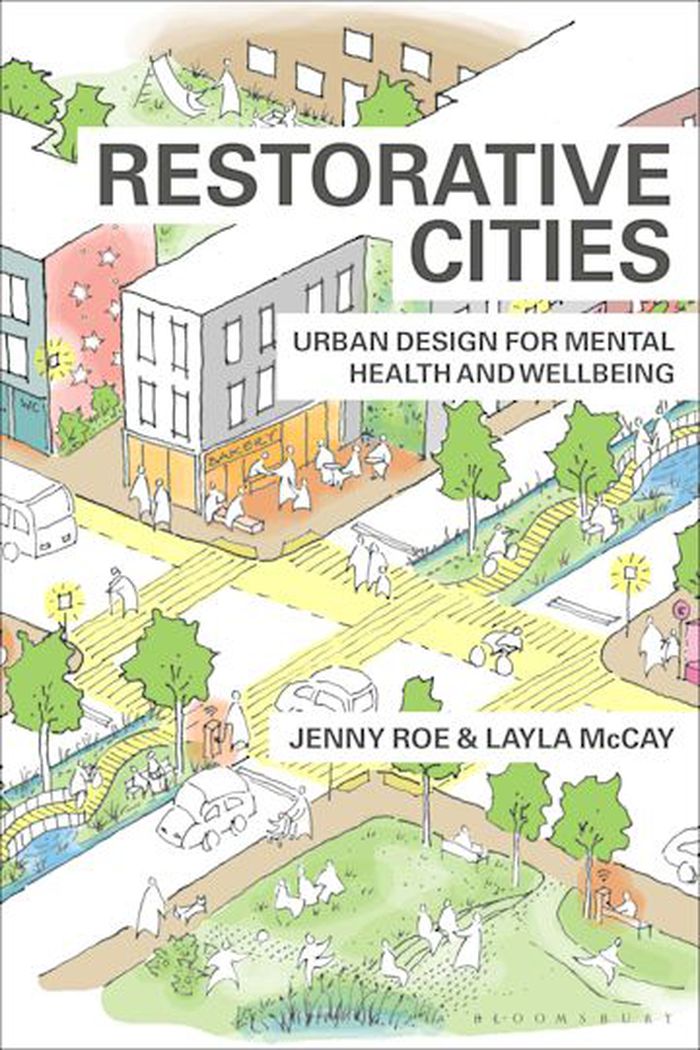
Restorative cities: urban design for mental health and wellbeing
Actions:
Prix:
$58.50
(disponible en magasin)
Résumé:
Overcrowding, noise and air pollution, long commutes and lack of daylight can take a huge toll on the mental well-being of city-dwellers. With mental healthcare services under increasing pressure, could a better approach to urban design and planning provide a solution? The restrictions faced by city residents around the world during the COVID-19 pandemic has brought home just how much urban design can affect our mental health – and created an imperative to seize this opportunity. ''Restorative cities'' explores a new way of designing cities, one which places mental health and wellness at the forefront. Establishing a blueprint for urban design for mental health, it examines a range of strategies – from sensory architecture to place-making for creativity and community – and brings a genuinely evidence-based approach that will appeal to designers and planners, health practitioners and researchers alike - and provide compelling insights for anyone who cares about how our surroundings affect us. Written by a psychiatrist and public health specialist, and an environmental psychologist with extensive experience of architectural practice, this much-needed work will prompt debate and inspire built environment students and professionals to think more about the positive potential of their designs for mental well-being.
Restorative cities: urban design for mental health and wellbeing
Actions:
Prix:
$58.50
(disponible en magasin)
Résumé:
Overcrowding, noise and air pollution, long commutes and lack of daylight can take a huge toll on the mental well-being of city-dwellers. With mental healthcare services under increasing pressure, could a better approach to urban design and planning provide a solution? The restrictions faced by city residents around the world during the COVID-19 pandemic has brought home just how much urban design can affect our mental health – and created an imperative to seize this opportunity. ''Restorative cities'' explores a new way of designing cities, one which places mental health and wellness at the forefront. Establishing a blueprint for urban design for mental health, it examines a range of strategies – from sensory architecture to place-making for creativity and community – and brings a genuinely evidence-based approach that will appeal to designers and planners, health practitioners and researchers alike - and provide compelling insights for anyone who cares about how our surroundings affect us. Written by a psychiatrist and public health specialist, and an environmental psychologist with extensive experience of architectural practice, this much-needed work will prompt debate and inspire built environment students and professionals to think more about the positive potential of their designs for mental well-being.
Classification:
livres
livres
Publication:
août 2021
août 2021
Sujet:
L'humain et la ville
L'humain et la ville
Classification:
livres
livres
Prix:
$48.99
(disponible sur commande)
Résumé:
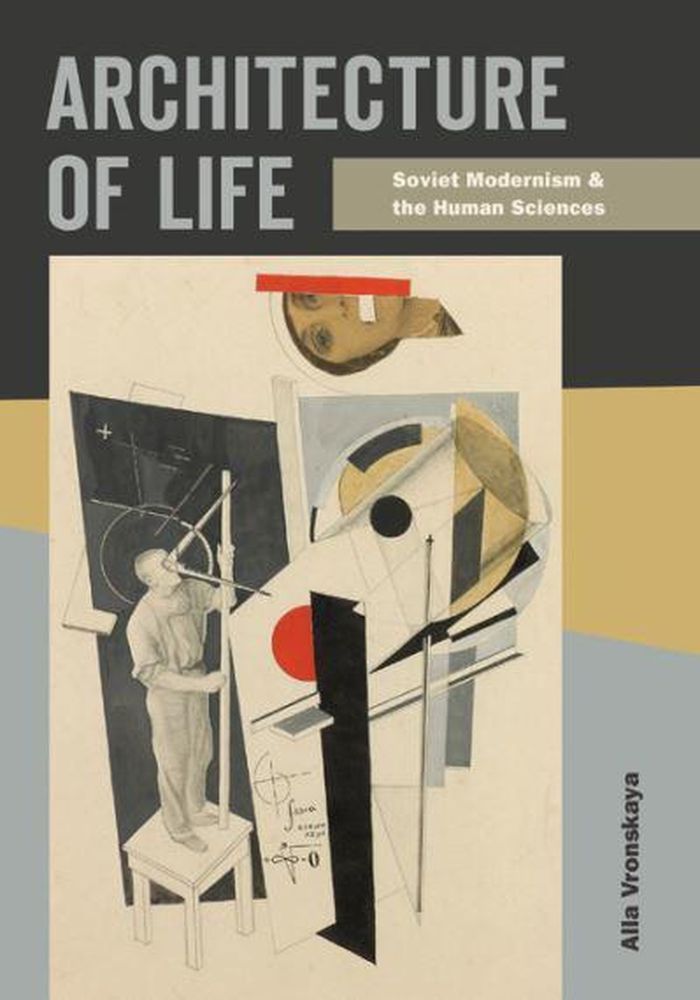
During the 1920s and 1930s, proponents of Soviet architecture looked to various principles within the human sciences in their efforts to formulate a methodological and theoretical basis for their modernist project. ''Architecture of life'' delves into the foundations of this transdisciplinary and transnational endeavor, analyzing many facets of their radical approach and(...)
$48.99
(disponible sur commande)
Résumé:
During the 1920s and 1930s, proponents of Soviet architecture looked to various principles within the human sciences in their efforts to formulate a methodological and theoretical basis for their modernist project. ''Architecture of life'' delves into the foundations of this transdisciplinary and transnational endeavor, analyzing many facets of their radical approach and(...)
Titre:
Architecture of life: Soviet modernism and the human sciences
Actions:
Prix:
$48.99
(disponible sur commande)
Résumé:
During the 1920s and 1930s, proponents of Soviet architecture looked to various principles within the human sciences in their efforts to formulate a methodological and theoretical basis for their modernist project. ''Architecture of life'' delves into the foundations of this transdisciplinary and transnational endeavor, analyzing many facets of their radical approach and situating it within the context of other modernist movements that were developing concurrently across the globe. Examining the theories advanced by El Lissitzky, Moisei Ginzburg, and Nikolay Ladovsky, as well as those of their lesser-known colleagues, this illuminating study demonstrates how Soviet architects of the interwar period sought to mitigate Fordist production methods with other, ostensibly more human-oriented approaches that drew on the biological and psychological sciences. Envisioning the built environment as innately connected to social evolution, their methods incorporated aspects of psychoanalysis, personality theory, and studies in spatial perception, all of which were integrated into an ideology that grounded functional design firmly within the attributes of the individual. A comprehensive overview of the ideals that permeated its expanded project, ''Architecture of life'' explicates the underlying impulses that motivated Soviet modernism, highlighting the deep interconnections among the ways in which it viewed all aspects of life, both natural and manufactured.
Architecture of life: Soviet modernism and the human sciences
Actions:
Prix:
$48.99
(disponible sur commande)
Résumé:
During the 1920s and 1930s, proponents of Soviet architecture looked to various principles within the human sciences in their efforts to formulate a methodological and theoretical basis for their modernist project. ''Architecture of life'' delves into the foundations of this transdisciplinary and transnational endeavor, analyzing many facets of their radical approach and situating it within the context of other modernist movements that were developing concurrently across the globe. Examining the theories advanced by El Lissitzky, Moisei Ginzburg, and Nikolay Ladovsky, as well as those of their lesser-known colleagues, this illuminating study demonstrates how Soviet architects of the interwar period sought to mitigate Fordist production methods with other, ostensibly more human-oriented approaches that drew on the biological and psychological sciences. Envisioning the built environment as innately connected to social evolution, their methods incorporated aspects of psychoanalysis, personality theory, and studies in spatial perception, all of which were integrated into an ideology that grounded functional design firmly within the attributes of the individual. A comprehensive overview of the ideals that permeated its expanded project, ''Architecture of life'' explicates the underlying impulses that motivated Soviet modernism, highlighting the deep interconnections among the ways in which it viewed all aspects of life, both natural and manufactured.
Classification:
livres
livres
Publication:
août 2022
août 2022
Sujet:
Théorie de l’architecture
Théorie de l’architecture
Classification:
livres
livres
Actions:
Prix:
$78.00
(disponible sur commande)
Résumé:
A leading figure in the New Perennial planting movement, garden designer Piet Oudolf emphasizes plant structure as the most important aspect of a successful garden. Form and texture are valued as much as color, and perennials - prized for their beauty throughout a natural life cycle - are used almost exclusively. Oudolf challenges conventional approaches to gardening that(...)
$78.00
(disponible sur commande)
Résumé:
A leading figure in the New Perennial planting movement, garden designer Piet Oudolf emphasizes plant structure as the most important aspect of a successful garden. Form and texture are valued as much as color, and perennials - prized for their beauty throughout a natural life cycle - are used almost exclusively. Oudolf challenges conventional approaches to gardening that(...)
Titre:
Piet Oudolf : landscapes in landscapes
Actions:
Prix:
$78.00
(disponible sur commande)
Résumé:
A leading figure in the New Perennial planting movement, garden designer Piet Oudolf emphasizes plant structure as the most important aspect of a successful garden. Form and texture are valued as much as color, and perennials - prized for their beauty throughout a natural life cycle - are used almost exclusively. Oudolf challenges conventional approaches to gardening that rely on short-lived bursts of color and constant maintenance and shows the delights of working with versatile, expressive perennials to create lasting, ecologically sound panoramas that relate to the greater landscape and the shifting seasons. This full-color volume features twenty-three of Oudolf's most beautiful public and private gardens, including the widely acclaimed High Line and the Battery in New York City; the Lurie Garden in Millennium Park in Chicago; Wisley, the Royal Horticultural Society Garden in Surrey, England; the Pensthorpe Nature Reserve and Gardens in Norfolk, England; the Trentham Estate in Staffordshire, England; Il Gardino delle Vergini at the 2010 Venice Biennale; the Dream Park in Enkoping, Sweden; and his own perpetually evolving garden in Hummelo, The Netherlands. Text by gardening author Noël Kingsbury places Oudolf's work in context and explains how each garden and the plants selected for it fit the specific environment.
Piet Oudolf : landscapes in landscapes
Actions:
Prix:
$78.00
(disponible sur commande)
Résumé:
A leading figure in the New Perennial planting movement, garden designer Piet Oudolf emphasizes plant structure as the most important aspect of a successful garden. Form and texture are valued as much as color, and perennials - prized for their beauty throughout a natural life cycle - are used almost exclusively. Oudolf challenges conventional approaches to gardening that rely on short-lived bursts of color and constant maintenance and shows the delights of working with versatile, expressive perennials to create lasting, ecologically sound panoramas that relate to the greater landscape and the shifting seasons. This full-color volume features twenty-three of Oudolf's most beautiful public and private gardens, including the widely acclaimed High Line and the Battery in New York City; the Lurie Garden in Millennium Park in Chicago; Wisley, the Royal Horticultural Society Garden in Surrey, England; the Pensthorpe Nature Reserve and Gardens in Norfolk, England; the Trentham Estate in Staffordshire, England; Il Gardino delle Vergini at the 2010 Venice Biennale; the Dream Park in Enkoping, Sweden; and his own perpetually evolving garden in Hummelo, The Netherlands. Text by gardening author Noël Kingsbury places Oudolf's work in context and explains how each garden and the plants selected for it fit the specific environment.
Classification:
livres
livres
Publication:
novembre 2010
novembre 2010
Classification:
livres
livres
Prix:
$50.00
(disponible sur commande)
Résumé:
Beneath the veneer of a very successful China that the world readily acknowledges, a quiet revolution is taking place within the realms of architecture and the city. The social, architectural and urban theories documented in this book are organized around the established canons of social actions – from mobilizing, laboring, resisting and mediating, to networking,(...)
$50.00
(disponible sur commande)
Résumé:
Beneath the veneer of a very successful China that the world readily acknowledges, a quiet revolution is taking place within the realms of architecture and the city. The social, architectural and urban theories documented in this book are organized around the established canons of social actions – from mobilizing, laboring, resisting and mediating, to networking,(...)
Titre:
The social imperative: Architecture and the city in China
Actions:
Prix:
$50.00
(disponible sur commande)
Résumé:
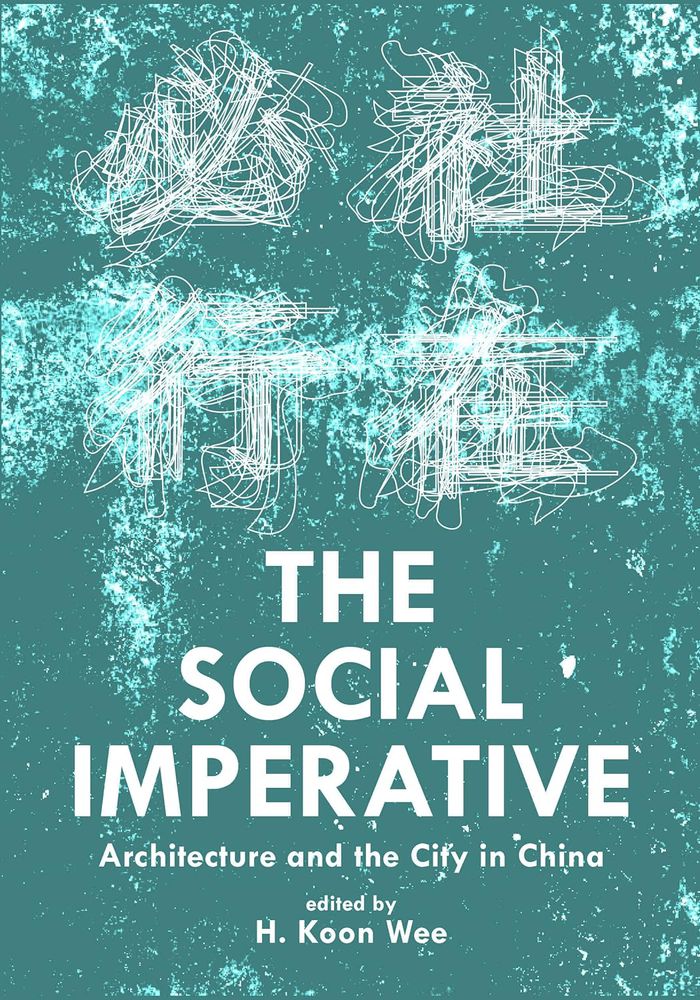
Beneath the veneer of a very successful China that the world readily acknowledges, a quiet revolution is taking place within the realms of architecture and the city. The social, architectural and urban theories documented in this book are organized around the established canons of social actions – from mobilizing, laboring, resisting and mediating, to networking, controlling, rationalizing and aestheticizing. This book aims to put the social agenda squarely back in the rapid development of the built environment in China. This publication is the culmination of a three-year study of social issues in the architecture and cities of China. It involved visits to sites undergoing massive change, discussions and debates among architects and critics, reflections by practitioners about their own work, and activists lobbying for social change. Supported by the non-profit AA Asia, the edition of the contents relied heavily on original input and exchanges between architects and theorists committed to China, from Asia and beyond. Since the 1990s, AA Asia remains one of a few unique think tanks committed to the study of architecture and cities in Asia. As an advocacy with strong academic roots, it seeks to establish the differences across various postcolonial and Asian contexts, and recalibrate the role of architecture in a technocratic era dominated by the global economy.
The social imperative: Architecture and the city in China
Actions:
Prix:
$50.00
(disponible sur commande)
Résumé:
Beneath the veneer of a very successful China that the world readily acknowledges, a quiet revolution is taking place within the realms of architecture and the city. The social, architectural and urban theories documented in this book are organized around the established canons of social actions – from mobilizing, laboring, resisting and mediating, to networking, controlling, rationalizing and aestheticizing. This book aims to put the social agenda squarely back in the rapid development of the built environment in China. This publication is the culmination of a three-year study of social issues in the architecture and cities of China. It involved visits to sites undergoing massive change, discussions and debates among architects and critics, reflections by practitioners about their own work, and activists lobbying for social change. Supported by the non-profit AA Asia, the edition of the contents relied heavily on original input and exchanges between architects and theorists committed to China, from Asia and beyond. Since the 1990s, AA Asia remains one of a few unique think tanks committed to the study of architecture and cities in Asia. As an advocacy with strong academic roots, it seeks to establish the differences across various postcolonial and Asian contexts, and recalibrate the role of architecture in a technocratic era dominated by the global economy.
Classification:
livres
livres
Publication:
septembre 2017
septembre 2017
Sujet:
Expositions en cours
Expositions en cours
Classification:
livres
livres
Actions:
Prix:
$35.00
(disponible sur commande)
Résumé:
This book is the first English translation of a renowned collection of essays by Joan Fontcuberta, in which he considers the technological shift that photography has undergone in recent years. The medium finds itself torn between loss and hope, between the disappearance of the silver gelatin photograph and the possibilities of the digital medium. Fontcuberta uses the(...)
$35.00
(disponible sur commande)
Résumé:
This book is the first English translation of a renowned collection of essays by Joan Fontcuberta, in which he considers the technological shift that photography has undergone in recent years. The medium finds itself torn between loss and hope, between the disappearance of the silver gelatin photograph and the possibilities of the digital medium. Fontcuberta uses the(...)
Titre:
Pandora's camera: photogr@phy after photography
Actions:
Prix:
$35.00
(disponible sur commande)
Résumé:
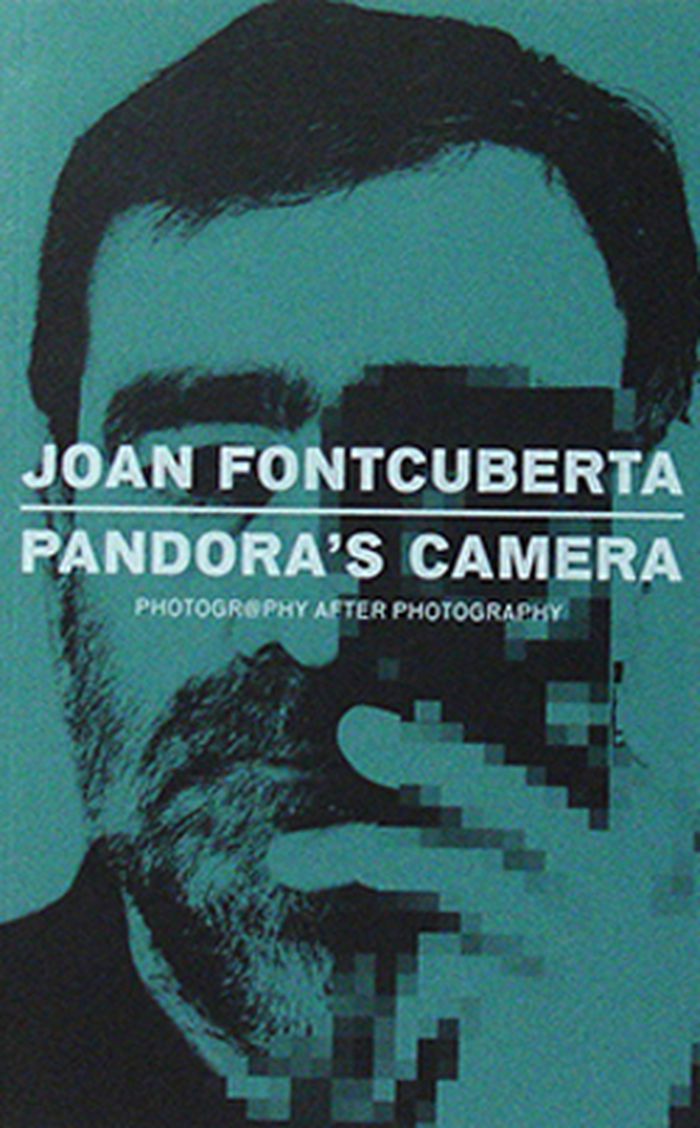
This book is the first English translation of a renowned collection of essays by Joan Fontcuberta, in which he considers the technological shift that photography has undergone in recent years. The medium finds itself torn between loss and hope, between the disappearance of the silver gelatin photograph and the possibilities of the digital medium. Fontcuberta uses the motif of Pandora’s box to conceptualise the capricious nature of photography, its fickle relationship to truth – employing the Greek myth concerning a large jar containing myriad forms of human unhappiness, or blessings, depending on the version you read. As Pandora’s camera, digital technology spells calamity to some and liberation to others; it is blamed for irretrievably discrediting veracity, but at the same time it introduces a new degree of truth. In his signature ironic style and playful tone, Fontcuberta examines the new principles that have arisen within the digital ecosystem, in jocular essays such as I Knew the Spice Girls or The Mystery of the Missing Nipple. His critical reflections and poetic evocations are inspired by the hope that still remains in the notion of a postmodern Pandora’s camera – one that might not only describe our environment, but also bring transparency to it.
Pandora's camera: photogr@phy after photography
Actions:
Prix:
$35.00
(disponible sur commande)
Résumé:
This book is the first English translation of a renowned collection of essays by Joan Fontcuberta, in which he considers the technological shift that photography has undergone in recent years. The medium finds itself torn between loss and hope, between the disappearance of the silver gelatin photograph and the possibilities of the digital medium. Fontcuberta uses the motif of Pandora’s box to conceptualise the capricious nature of photography, its fickle relationship to truth – employing the Greek myth concerning a large jar containing myriad forms of human unhappiness, or blessings, depending on the version you read. As Pandora’s camera, digital technology spells calamity to some and liberation to others; it is blamed for irretrievably discrediting veracity, but at the same time it introduces a new degree of truth. In his signature ironic style and playful tone, Fontcuberta examines the new principles that have arisen within the digital ecosystem, in jocular essays such as I Knew the Spice Girls or The Mystery of the Missing Nipple. His critical reflections and poetic evocations are inspired by the hope that still remains in the notion of a postmodern Pandora’s camera – one that might not only describe our environment, but also bring transparency to it.
Classification:
livres
livres
Publication:
novembre 2014
novembre 2014
Sujet:
Théorie de la photographie
Théorie de la photographie
Classification:
livres
livres

Actions:
Prix:
$39.99
(disponible sur commande)
Résumé:
At the opening of the nineteenth century, publishing houses in London, New York, Paris, Stuttgart, and Berlin produced books in ever greater numbers. But it was not just the advent of mass printing that created the era's 'bookish' culture. According to Andrew Piper, romantic writers played a crucial role in adjusting readers to this increasingly international and(...)
$39.99
(disponible sur commande)
Résumé:
At the opening of the nineteenth century, publishing houses in London, New York, Paris, Stuttgart, and Berlin produced books in ever greater numbers. But it was not just the advent of mass printing that created the era's 'bookish' culture. According to Andrew Piper, romantic writers played a crucial role in adjusting readers to this increasingly international and(...)
Titre:
Dreaming in books: the making of the bibliographic imagination in the romantic age
Actions:
Prix:
$39.99
(disponible sur commande)
Résumé:
At the opening of the nineteenth century, publishing houses in London, New York, Paris, Stuttgart, and Berlin produced books in ever greater numbers. But it was not just the advent of mass printing that created the era's 'bookish' culture. According to Andrew Piper, romantic writers played a crucial role in adjusting readers to this increasingly international and overflowing literary environment. Learning how to use and want books occurred through more than the technological, commercial, or legal conditions that made the growing proliferation of books possible; the making of such bibliographic fantasies was importantly a product of the symbolic operations contained within books as well. Examining novels, critical editions, gift books, translations, and illustrated books, as well as the communities who made them, "Dreaming in Books" tells a wide-ranging story of the book's identity at the turn of the nineteenth century. In so doing, it shows how many of the most pressing modern communicative concerns are not unique to the digital age but emerged with a particular sense of urgency during the bookish upheavals of the romantic era. In revisiting the book's rise through the prism of romantic literature, Piper aims to revise our assumptions about romanticism, the medium of the printed book, and, ultimately, the future of the book in our so-called digital age.
Dreaming in books: the making of the bibliographic imagination in the romantic age
Actions:
Prix:
$39.99
(disponible sur commande)
Résumé:
At the opening of the nineteenth century, publishing houses in London, New York, Paris, Stuttgart, and Berlin produced books in ever greater numbers. But it was not just the advent of mass printing that created the era's 'bookish' culture. According to Andrew Piper, romantic writers played a crucial role in adjusting readers to this increasingly international and overflowing literary environment. Learning how to use and want books occurred through more than the technological, commercial, or legal conditions that made the growing proliferation of books possible; the making of such bibliographic fantasies was importantly a product of the symbolic operations contained within books as well. Examining novels, critical editions, gift books, translations, and illustrated books, as well as the communities who made them, "Dreaming in Books" tells a wide-ranging story of the book's identity at the turn of the nineteenth century. In so doing, it shows how many of the most pressing modern communicative concerns are not unique to the digital age but emerged with a particular sense of urgency during the bookish upheavals of the romantic era. In revisiting the book's rise through the prism of romantic literature, Piper aims to revise our assumptions about romanticism, the medium of the printed book, and, ultimately, the future of the book in our so-called digital age.
Classification:
livres
livres
Publication:
avril 2009
avril 2009
Sujet:
Théorie de l’architecture
Théorie de l’architecture


