


10592 Résultats
Classification:
livres
livres
Actions:
Prix:
$36.95
(disponible sur commande)
Résumé:
Cette deuxième édition des Cahiers du Laboratoire d’Étude de l’Architecture Potentielle propose une réflexion sur l’un des problèmes centraux du Mouvement moderne et de la critique postmoderne : la tension entre l’hétéronomie et l’autonomie en architecture. This second edition of the LEAP Research Notebooks examines one of the central problems of the Modern Movement and(...)
$36.95
(disponible sur commande)
Résumé:
Cette deuxième édition des Cahiers du Laboratoire d’Étude de l’Architecture Potentielle propose une réflexion sur l’un des problèmes centraux du Mouvement moderne et de la critique postmoderne : la tension entre l’hétéronomie et l’autonomie en architecture. This second edition of the LEAP Research Notebooks examines one of the central problems of the Modern Movement and(...)
Titre:
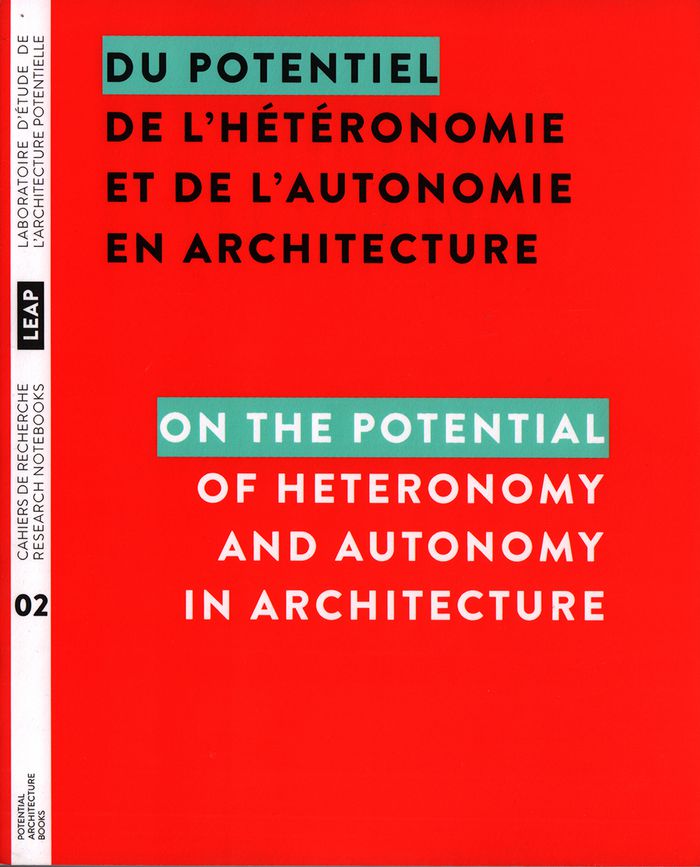
Du potentiel de l'hétéronomie et de l'autonomie en architecture / On the potential of heteronomy and autonomy in architecture
Actions:
Prix:
$36.95
(disponible sur commande)
Résumé:
Cette deuxième édition des Cahiers du Laboratoire d’Étude de l’Architecture Potentielle propose une réflexion sur l’un des problèmes centraux du Mouvement moderne et de la critique postmoderne : la tension entre l’hétéronomie et l’autonomie en architecture. This second edition of the LEAP Research Notebooks examines one of the central problems of the Modern Movement and of its subsequent postmodern critique: the tension between heteronomy and autonomy in architecture.
Du potentiel de l'hétéronomie et de l'autonomie en architecture / On the potential of heteronomy and autonomy in architecture
Actions:
Prix:
$36.95
(disponible sur commande)
Résumé:
Cette deuxième édition des Cahiers du Laboratoire d’Étude de l’Architecture Potentielle propose une réflexion sur l’un des problèmes centraux du Mouvement moderne et de la critique postmoderne : la tension entre l’hétéronomie et l’autonomie en architecture. This second edition of the LEAP Research Notebooks examines one of the central problems of the Modern Movement and of its subsequent postmodern critique: the tension between heteronomy and autonomy in architecture.
Classification:
livres
livres
Publication:
février 2018
février 2018
Sujet:
Théorie de l’architecture
Théorie de l’architecture
Classification:
livres
livres
Actions:
Prix:
$36.95
(disponible en magasin)
Résumé:
Cahiers de recherche du LEAP Vol 3. Numéro coordonné par Carmela Cucuzzella +Cynthia Imogen Hammond + Chanelle Lalonde + Sherif Goubran. Research Notebooks Vol 3. Issue coordinated by Carmela Cucuzzella +Cynthia Imogen Hammond + Chanelle Lalonde + Sherif Goubran
$36.95
(disponible en magasin)
Résumé:
Cahiers de recherche du LEAP Vol 3. Numéro coordonné par Carmela Cucuzzella +Cynthia Imogen Hammond + Chanelle Lalonde + Sherif Goubran. Research Notebooks Vol 3. Issue coordinated by Carmela Cucuzzella +Cynthia Imogen Hammond + Chanelle Lalonde + Sherif Goubran
Sujet:
Théorie de l’architecture
Théorie de l’architecture
Publication:
février 2019
février 2019
Titre:
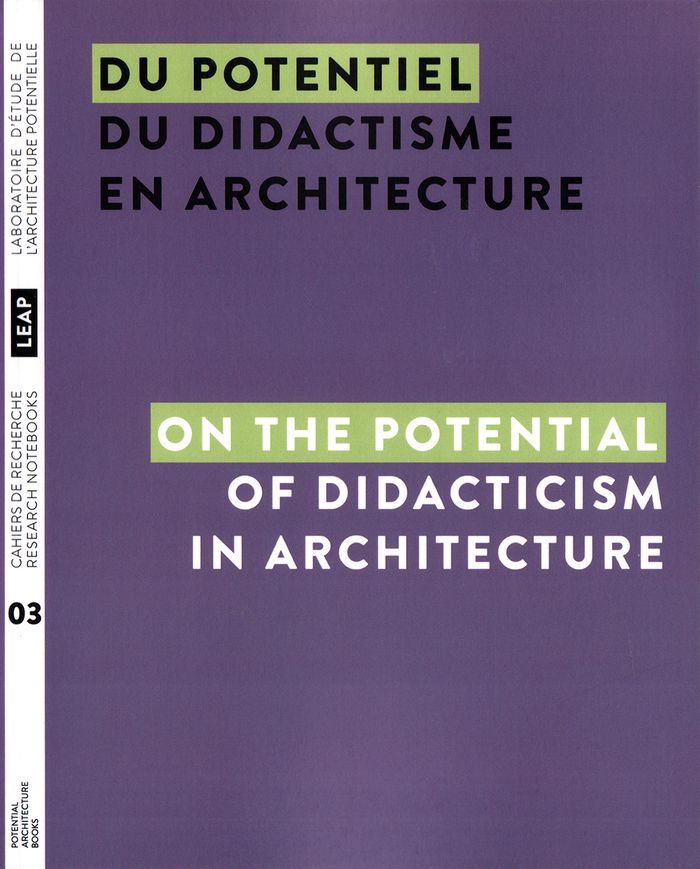
Du potentiel du didactisme en architecture / On the potential of didacticism in architecture
Actions:
Prix:
$36.95
(disponible en magasin)
Résumé:
Cahiers de recherche du LEAP Vol 3. Numéro coordonné par Carmela Cucuzzella +Cynthia Imogen Hammond + Chanelle Lalonde + Sherif Goubran. Research Notebooks Vol 3. Issue coordinated by Carmela Cucuzzella +Cynthia Imogen Hammond + Chanelle Lalonde + Sherif Goubran
Du potentiel du didactisme en architecture / On the potential of didacticism in architecture
Actions:
Prix:
$36.95
(disponible en magasin)
Résumé:
Cahiers de recherche du LEAP Vol 3. Numéro coordonné par Carmela Cucuzzella +Cynthia Imogen Hammond + Chanelle Lalonde + Sherif Goubran. Research Notebooks Vol 3. Issue coordinated by Carmela Cucuzzella +Cynthia Imogen Hammond + Chanelle Lalonde + Sherif Goubran
Classification:
livres
livres
Publication:
février 2019
février 2019
Sujet:
Théorie de l’architecture
Théorie de l’architecture
Classification:
livres
livres
Titre:
The critic as artist
The critic as artist
Actions:
Prix:
$20.00
(disponible sur commande)
Résumé:
In “The Critic as Artist”, Oscar Wilde harnesses his famous wit to demolish the supposed boundary between art and criticism. Subtitled “Upon the Importance of Doing Nothing and Discussing Everything”, the essay takes the form of a leisurely dialogue between two characters: Ernest, who insists upon Wilde’s own belief in art’s freedom from societal mandates and values, and(...)
$20.00
(disponible sur commande)
Résumé:
In “The Critic as Artist”, Oscar Wilde harnesses his famous wit to demolish the supposed boundary between art and criticism. Subtitled “Upon the Importance of Doing Nothing and Discussing Everything”, the essay takes the form of a leisurely dialogue between two characters: Ernest, who insists upon Wilde’s own belief in art’s freedom from societal mandates and values, and(...)
Titre:
The critic as artist
Actions:
Prix:
$20.00
(disponible sur commande)
Résumé:
In “The Critic as Artist”, Oscar Wilde harnesses his famous wit to demolish the supposed boundary between art and criticism. Subtitled “Upon the Importance of Doing Nothing and Discussing Everything”, the essay takes the form of a leisurely dialogue between two characters: Ernest, who insists upon Wilde’s own belief in art’s freedom from societal mandates and values, and a quizzical Gilbert. With his playwright’s ear for dialogue, Wilde champions idleness and contemplation as prerequisites to artistic cultivation. Beyond the well-known dictum of art for art’s sake, Wilde’s originality lays an argument for the equality of criticism and art. For him, criticism is not subject to the work of art, but can in fact precede it: the artist cannot create without engaging his or her critical faculties first. And, as Wilde writes, “To the critic the work of art is simply a suggestion for a new work of his own.” The field of art and criticism should be open to the free play of the mind, but Wilde plays seriously, even prophetically.
The critic as artist
Actions:
Prix:
$20.00
(disponible sur commande)
Résumé:
In “The Critic as Artist”, Oscar Wilde harnesses his famous wit to demolish the supposed boundary between art and criticism. Subtitled “Upon the Importance of Doing Nothing and Discussing Everything”, the essay takes the form of a leisurely dialogue between two characters: Ernest, who insists upon Wilde’s own belief in art’s freedom from societal mandates and values, and a quizzical Gilbert. With his playwright’s ear for dialogue, Wilde champions idleness and contemplation as prerequisites to artistic cultivation. Beyond the well-known dictum of art for art’s sake, Wilde’s originality lays an argument for the equality of criticism and art. For him, criticism is not subject to the work of art, but can in fact precede it: the artist cannot create without engaging his or her critical faculties first. And, as Wilde writes, “To the critic the work of art is simply a suggestion for a new work of his own.” The field of art and criticism should be open to the free play of the mind, but Wilde plays seriously, even prophetically.
Classification:
livres
livres
Publication:
janvier 2019
janvier 2019
Sujet:
Théorie de l’art
Théorie de l’art
Classification:
livres
livres

Actions:
Prix:
$45.00
(disponible sur commande)
Résumé:
"The Legacy of Transgressive Objects" traces the afterlife and historicization of the concept of transgression in the art, architecture, technology, music and psychedelic practices of 1968 and its legacy, by looking at the objects, materials and images that originally shaped these ideas. These decades saw the fertile cross-pollination of rebellious political and artistic(...)
$45.00
(disponible sur commande)
Résumé:
"The Legacy of Transgressive Objects" traces the afterlife and historicization of the concept of transgression in the art, architecture, technology, music and psychedelic practices of 1968 and its legacy, by looking at the objects, materials and images that originally shaped these ideas. These decades saw the fertile cross-pollination of rebellious political and artistic(...)
Titre:
The legacy of transgressive objects
Actions:
Prix:
$45.00
(disponible sur commande)
Résumé:
"The Legacy of Transgressive Objects" traces the afterlife and historicization of the concept of transgression in the art, architecture, technology, music and psychedelic practices of 1968 and its legacy, by looking at the objects, materials and images that originally shaped these ideas. These decades saw the fertile cross-pollination of rebellious political and artistic energies: radical architecture suggested a whole new organization of society, artistic practices enthusiastically dissolved boundaries between art and life, and music festivals staged gleeful opportunities for transgression. The material heritage of this historical moment is ambivalent—though often ephemeral and deteriorating, the objects associated with these ideas still function as repositories of time and as evocative physical objects. Against this background, this book traces the historical index of these objects that promised to change the world and now open up to the future horizons of the recent past.
The legacy of transgressive objects
Actions:
Prix:
$45.00
(disponible sur commande)
Résumé:
"The Legacy of Transgressive Objects" traces the afterlife and historicization of the concept of transgression in the art, architecture, technology, music and psychedelic practices of 1968 and its legacy, by looking at the objects, materials and images that originally shaped these ideas. These decades saw the fertile cross-pollination of rebellious political and artistic energies: radical architecture suggested a whole new organization of society, artistic practices enthusiastically dissolved boundaries between art and life, and music festivals staged gleeful opportunities for transgression. The material heritage of this historical moment is ambivalent—though often ephemeral and deteriorating, the objects associated with these ideas still function as repositories of time and as evocative physical objects. Against this background, this book traces the historical index of these objects that promised to change the world and now open up to the future horizons of the recent past.
Classification:
livres
livres
Publication:
mai 2019
mai 2019
Sujet:
Théorie de l’art
Théorie de l’art
Classification:
livres
livres
Actions:
Prix:
$82.00
(disponible sur commande)
Résumé:
Bicycles as a means of transport in cities are playing an ever more important role. The reasons are: reduction of motorcar traffic, sustainable traffic planning, reduction of noise and exhaust emissions, enhancement of the value of public space, healthier form of transport, savings potential in national health services and infrastructure expenditure. This book illustrates(...)
$82.00
(disponible sur commande)
Résumé:
Bicycles as a means of transport in cities are playing an ever more important role. The reasons are: reduction of motorcar traffic, sustainable traffic planning, reduction of noise and exhaust emissions, enhancement of the value of public space, healthier form of transport, savings potential in national health services and infrastructure expenditure. This book illustrates(...)
Titre:
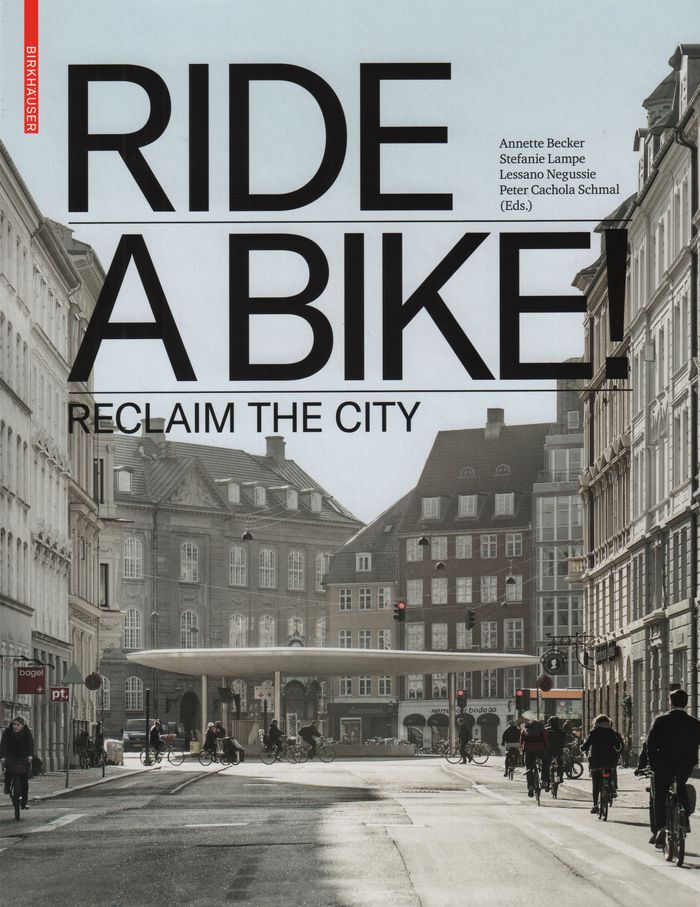
Ride a bike!: reclaim the city
Actions:
Prix:
$82.00
(disponible sur commande)
Résumé:
Bicycles as a means of transport in cities are playing an ever more important role. The reasons are: reduction of motorcar traffic, sustainable traffic planning, reduction of noise and exhaust emissions, enhancement of the value of public space, healthier form of transport, savings potential in national health services and infrastructure expenditure. This book illustrates urban design ideas and architectural projects which go far beyond purely redesigning road layouts; its eight essays focus on the trend in urban design, landscape design, and traffic planning, it introduces nine exemplary bicycle traffic concepts in various cities (Barcelona, Copenhagen, New York, and Oslo amongst others), and presents 28 forward-looking individual bicycle infrastructure projects.
Ride a bike!: reclaim the city
Actions:
Prix:
$82.00
(disponible sur commande)
Résumé:
Bicycles as a means of transport in cities are playing an ever more important role. The reasons are: reduction of motorcar traffic, sustainable traffic planning, reduction of noise and exhaust emissions, enhancement of the value of public space, healthier form of transport, savings potential in national health services and infrastructure expenditure. This book illustrates urban design ideas and architectural projects which go far beyond purely redesigning road layouts; its eight essays focus on the trend in urban design, landscape design, and traffic planning, it introduces nine exemplary bicycle traffic concepts in various cities (Barcelona, Copenhagen, New York, and Oslo amongst others), and presents 28 forward-looking individual bicycle infrastructure projects.
Classification:
livres
livres
Publication:
avril 2018
avril 2018
Sujet:
Théorie de l’urbanisme
Théorie de l’urbanisme
Classification:
livres
livres
Actions:
Prix:
$39.95
(disponible sur commande)
Résumé:
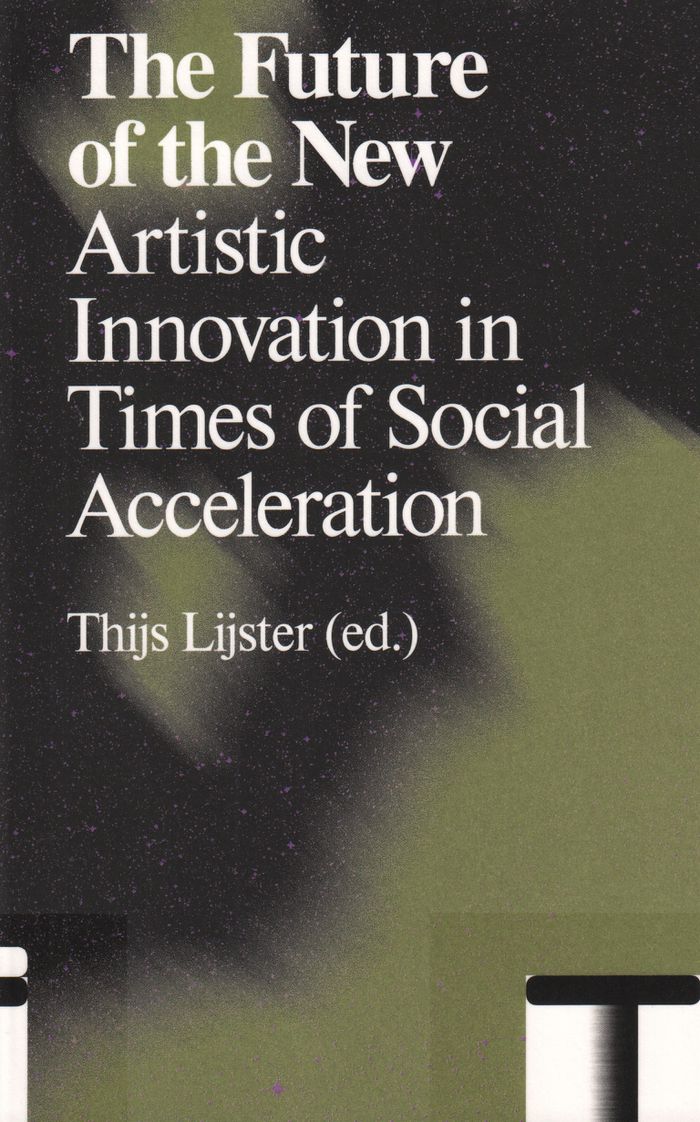
In 'The Future of the New' artists, theorists, and professionals working the art field reflect on the role of the arts in a world that is speeding up and changing through joint forces of globalization, digitization, commodification, and financialization. Can artistic innovation still function as a source of critique? How do artists, theorists, and art organizations deal(...)
$39.95
(disponible sur commande)
Résumé:
In 'The Future of the New' artists, theorists, and professionals working the art field reflect on the role of the arts in a world that is speeding up and changing through joint forces of globalization, digitization, commodification, and financialization. Can artistic innovation still function as a source of critique? How do artists, theorists, and art organizations deal(...)
Titre:
The future of the new: artistic innovation in times of social acceleration
Actions:
Prix:
$39.95
(disponible sur commande)
Résumé:
In 'The Future of the New' artists, theorists, and professionals working the art field reflect on the role of the arts in a world that is speeding up and changing through joint forces of globalization, digitization, commodification, and financialization. Can artistic innovation still function as a source of critique? How do artists, theorists, and art organizations deal with the changing role of and discourse on innovation? Should we look for alternative ways to innovate, or should we change our discourse and look for other (new!) ways to talk about the new?
The future of the new: artistic innovation in times of social acceleration
Actions:
Prix:
$39.95
(disponible sur commande)
Résumé:
In 'The Future of the New' artists, theorists, and professionals working the art field reflect on the role of the arts in a world that is speeding up and changing through joint forces of globalization, digitization, commodification, and financialization. Can artistic innovation still function as a source of critique? How do artists, theorists, and art organizations deal with the changing role of and discourse on innovation? Should we look for alternative ways to innovate, or should we change our discourse and look for other (new!) ways to talk about the new?
Classification:
livres
livres
Publication:
janvier 2019
janvier 2019
Sujet:
Théorie de l’art
Théorie de l’art
Classification:
livres
livres
Actions:
Prix:
$125.95
(disponible sur commande)
Résumé:
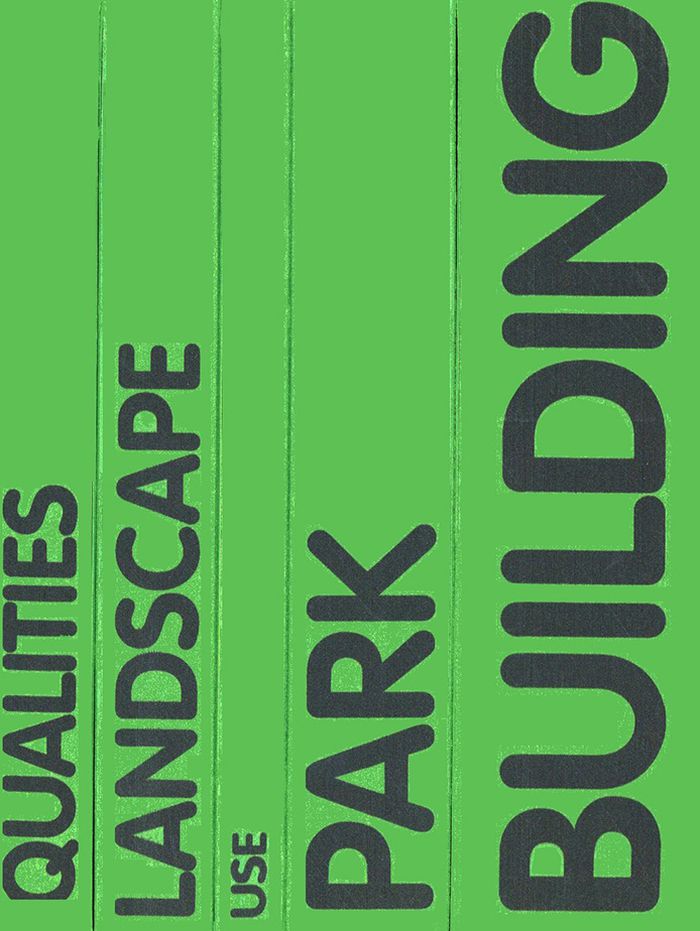
Designing gardens, parks and landscapes requires a holistic approach. It also requires extensive specialist knowledge. In courses and manuals the generalist or in-depth levels are frequently under-represented, or the attempted comprehensive view becomes too complex. "Landscape for Architects" now offers a fundamental reference work which is as comprehensive as it is(...)
$125.95
(disponible sur commande)
Résumé:
Designing gardens, parks and landscapes requires a holistic approach. It also requires extensive specialist knowledge. In courses and manuals the generalist or in-depth levels are frequently under-represented, or the attempted comprehensive view becomes too complex. "Landscape for Architects" now offers a fundamental reference work which is as comprehensive as it is(...)
Titre:
Landscape for architects: Landscape, park, building, qualities, use.
Actions:
Prix:
$125.95
(disponible sur commande)
Résumé:
Designing gardens, parks and landscapes requires a holistic approach. It also requires extensive specialist knowledge. In courses and manuals the generalist or in-depth levels are frequently under-represented, or the attempted comprehensive view becomes too complex. "Landscape for Architects" now offers a fundamental reference work which is as comprehensive as it is practical and as holistic as it is detailed. Created in cooperation with the Architecture Department of Braunschweig Technical University, Landscape for Architects addresses the aspects of landscape architecture: "questions" are raised with abstract schematic drawings, and possible 'answers' are illustrated with analytical drawings of case studies from the 20th and 21st centuries in order to inspire the reader's own creativity and to support the design process.
Landscape for architects: Landscape, park, building, qualities, use.
Actions:
Prix:
$125.95
(disponible sur commande)
Résumé:
Designing gardens, parks and landscapes requires a holistic approach. It also requires extensive specialist knowledge. In courses and manuals the generalist or in-depth levels are frequently under-represented, or the attempted comprehensive view becomes too complex. "Landscape for Architects" now offers a fundamental reference work which is as comprehensive as it is practical and as holistic as it is detailed. Created in cooperation with the Architecture Department of Braunschweig Technical University, Landscape for Architects addresses the aspects of landscape architecture: "questions" are raised with abstract schematic drawings, and possible 'answers' are illustrated with analytical drawings of case studies from the 20th and 21st centuries in order to inspire the reader's own creativity and to support the design process.
Classification:
livres
livres
Publication:
octobre 2020
octobre 2020
Sujet:
Théorie du paysage
Théorie du paysage
Classification:
livres
livres
Actions:
Prix:
$34.95
(disponible sur commande)
Résumé:
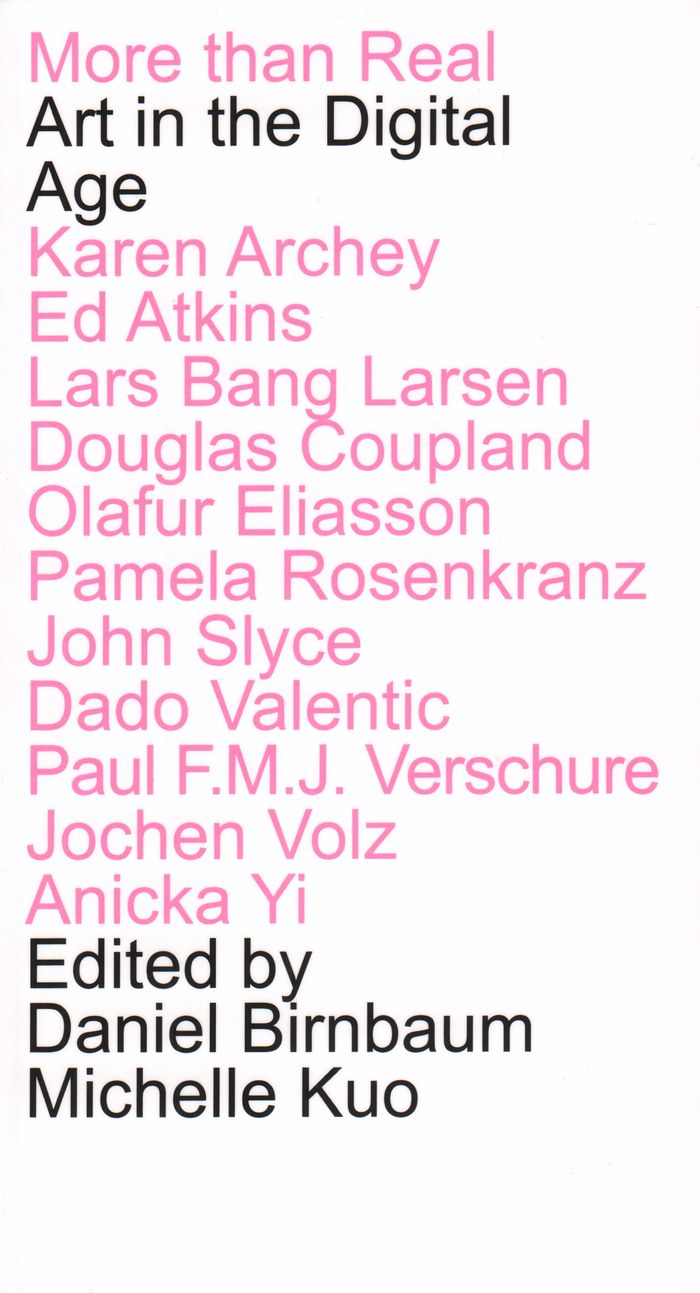
Designed by Irma Boom, this second volume in the Summit publication series gathers insights from the 2018 Verbier Art Summit in Switzerland, on the topic of art in the digital age, delivered by a wide range of curators, authors, artists and critics. The contributions—by Karen Archey, Ed Atkins, Lars Bang Larsen, Douglas Coupland, Olafur Eliasson, Pamela Rosenkranz, John(...)
$34.95
(disponible sur commande)
Résumé:
Designed by Irma Boom, this second volume in the Summit publication series gathers insights from the 2018 Verbier Art Summit in Switzerland, on the topic of art in the digital age, delivered by a wide range of curators, authors, artists and critics. The contributions—by Karen Archey, Ed Atkins, Lars Bang Larsen, Douglas Coupland, Olafur Eliasson, Pamela Rosenkranz, John(...)
Titre:
More than real: art in the digital age
Actions:
Prix:
$34.95
(disponible sur commande)
Résumé:
Designed by Irma Boom, this second volume in the Summit publication series gathers insights from the 2018 Verbier Art Summit in Switzerland, on the topic of art in the digital age, delivered by a wide range of curators, authors, artists and critics. The contributions—by Karen Archey, Ed Atkins, Lars Bang Larsen, Douglas Coupland, Olafur Eliasson, Pamela Rosenkranz, John Slyce, Dado Valentic, Paul F.M.J. Verschure, Jochen Volz and Anicka Yi—address such questions as the preservation of time-based media in museums; the concept of "biofiction"; "loss and the digital"; the body and technology; Amazon; the intersection of science and art; and virtual reality.
More than real: art in the digital age
Actions:
Prix:
$34.95
(disponible sur commande)
Résumé:
Designed by Irma Boom, this second volume in the Summit publication series gathers insights from the 2018 Verbier Art Summit in Switzerland, on the topic of art in the digital age, delivered by a wide range of curators, authors, artists and critics. The contributions—by Karen Archey, Ed Atkins, Lars Bang Larsen, Douglas Coupland, Olafur Eliasson, Pamela Rosenkranz, John Slyce, Dado Valentic, Paul F.M.J. Verschure, Jochen Volz and Anicka Yi—address such questions as the preservation of time-based media in museums; the concept of "biofiction"; "loss and the digital"; the body and technology; Amazon; the intersection of science and art; and virtual reality.
Classification:
livres
livres
Publication:
novembre 2018
novembre 2018
Sujet:
Théorie de l’art
Théorie de l’art
Classification:
livres
livres
Prix:
$63.95
(disponible sur commande)
Résumé:
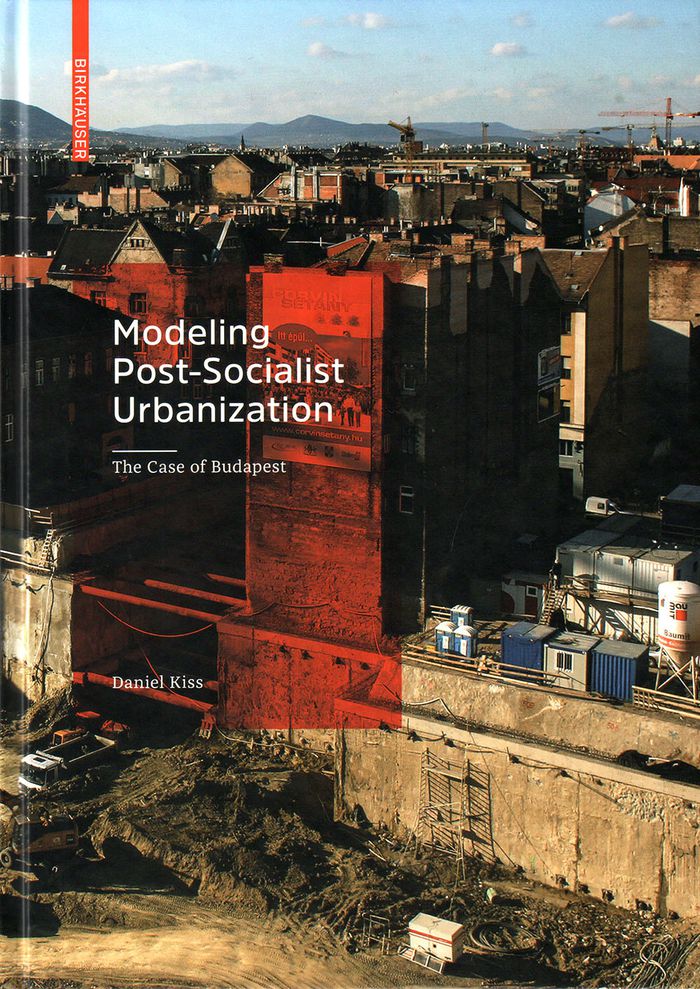
Daniel Kiss examines the urban development of Budapest from 1990 to 2010. This period is characterized by the significant decline in communally town planning: given the structural legacies of socialist urbanization, the decentralization of government and resources, and the impact of a post-socialist culture struggle, a trend is being analyzed in which nebulous(...)
$63.95
(disponible sur commande)
Résumé:
Daniel Kiss examines the urban development of Budapest from 1990 to 2010. This period is characterized by the significant decline in communally town planning: given the structural legacies of socialist urbanization, the decentralization of government and resources, and the impact of a post-socialist culture struggle, a trend is being analyzed in which nebulous(...)
Titre:
Modeling post-socialist urbanization: the case of Budapest
Actions:
Prix:
$63.95
(disponible sur commande)
Résumé:
Daniel Kiss examines the urban development of Budapest from 1990 to 2010. This period is characterized by the significant decline in communally town planning: given the structural legacies of socialist urbanization, the decentralization of government and resources, and the impact of a post-socialist culture struggle, a trend is being analyzed in which nebulous competencies lead to unclear and thus to a failure of higher-level planning. The ensuing consequence is an increase in large, investment-driven projects: it is characteristic of these privately financed projects that they do not submit to higher level control, in particular when these control bodies are rather weak. This model-based analysis presents the phenomenon as exemplary of the development in post-socialist cities.
Modeling post-socialist urbanization: the case of Budapest
Actions:
Prix:
$63.95
(disponible sur commande)
Résumé:
Daniel Kiss examines the urban development of Budapest from 1990 to 2010. This period is characterized by the significant decline in communally town planning: given the structural legacies of socialist urbanization, the decentralization of government and resources, and the impact of a post-socialist culture struggle, a trend is being analyzed in which nebulous competencies lead to unclear and thus to a failure of higher-level planning. The ensuing consequence is an increase in large, investment-driven projects: it is characteristic of these privately financed projects that they do not submit to higher level control, in particular when these control bodies are rather weak. This model-based analysis presents the phenomenon as exemplary of the development in post-socialist cities.
Classification:
livres
livres
Publication:
novembre 2018
novembre 2018
Sujet:
Théorie de l’urbanisme
Théorie de l’urbanisme
Classification:
livres
livres

Titre:
Stopping / Arrêts
Stopping / Arrêts
Actions:
Prix:
$25.00
(disponible en magasin)
Résumé:
To stop. A gesture of resistance in a world primarily designed to encourage work, consumerism, perpetual growth and efficiency. Stopping as an urban practice. In cities where pauses and idleness within specific sites are increasingly discouraged, stopping emerges as a space of rupture, pleasure, intimacy, or simply necessity and rest. In a project begun in 2015 in Mexico(...)
$25.00
(disponible en magasin)
Résumé:
To stop. A gesture of resistance in a world primarily designed to encourage work, consumerism, perpetual growth and efficiency. Stopping as an urban practice. In cities where pauses and idleness within specific sites are increasingly discouraged, stopping emerges as a space of rupture, pleasure, intimacy, or simply necessity and rest. In a project begun in 2015 in Mexico(...)
Titre:
Stopping / Arrêts
Actions:
Prix:
$25.00
(disponible en magasin)
Résumé:
To stop. A gesture of resistance in a world primarily designed to encourage work, consumerism, perpetual growth and efficiency. Stopping as an urban practice. In cities where pauses and idleness within specific sites are increasingly discouraged, stopping emerges as a space of rupture, pleasure, intimacy, or simply necessity and rest. In a project begun in 2015 in Mexico City and further developed in Montreal in 2017, Jean-François Prost explores these realities for their contrasts with the incessant movement of people and related structures in contemporary cities where sometimes even self-constructions of time and space are forbidden.
Stopping / Arrêts
Actions:
Prix:
$25.00
(disponible en magasin)
Résumé:
To stop. A gesture of resistance in a world primarily designed to encourage work, consumerism, perpetual growth and efficiency. Stopping as an urban practice. In cities where pauses and idleness within specific sites are increasingly discouraged, stopping emerges as a space of rupture, pleasure, intimacy, or simply necessity and rest. In a project begun in 2015 in Mexico City and further developed in Montreal in 2017, Jean-François Prost explores these realities for their contrasts with the incessant movement of people and related structures in contemporary cities where sometimes even self-constructions of time and space are forbidden.
Classification:
livres
livres
Publication:
février 2019
février 2019
Sujet:
Théorie de l’urbanisme
Théorie de l’urbanisme


