


6923 Résultats
Classification:
livres
livres
Actions:
Prix:
$41.95
(disponible sur commande)
Résumé:
The concept of "the city" — as well as "the state" and "the nation state" — is passé, agree contributors to this insightful book. The new scale for considering economic strength and growth opportunities is "the megaregion", a network of metropolitan centers and their surrounding areas that are spatially and functionally linked through environmental, economic, and(...)
$41.95
(disponible sur commande)
Résumé:
The concept of "the city" — as well as "the state" and "the nation state" — is passé, agree contributors to this insightful book. The new scale for considering economic strength and growth opportunities is "the megaregion", a network of metropolitan centers and their surrounding areas that are spatially and functionally linked through environmental, economic, and(...)
Titre:
Megaregions ; planning for global competitiveness
Actions:
Prix:
$41.95
(disponible sur commande)
Résumé:
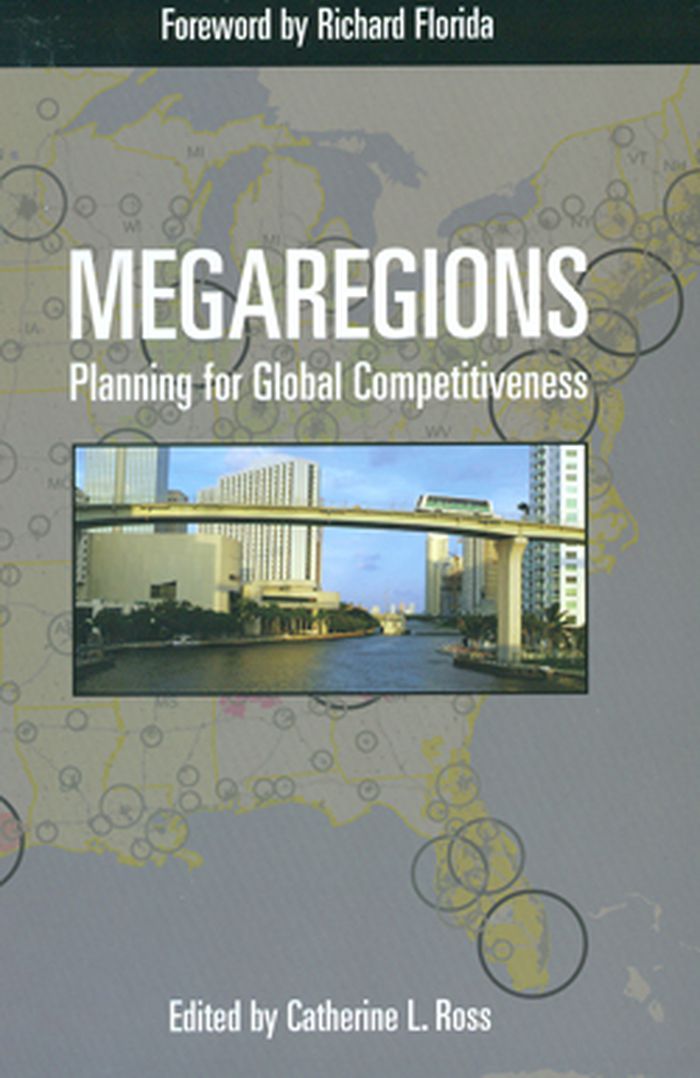
The concept of "the city" — as well as "the state" and "the nation state" — is passé, agree contributors to this insightful book. The new scale for considering economic strength and growth opportunities is "the megaregion", a network of metropolitan centers and their surrounding areas that are spatially and functionally linked through environmental, economic, and infrastructure interactions. Recently a great deal of attention has been focused on the emergence of the European Union and on European spatial planning, which has boosted the region’s competitiveness. Megaregions applies these emerging concepts in an American context. It addresses critical questions for our future : What are the spatial implications of local, regional, national, and global trends within the context of sustainability, economic competitiveness, and social equity? How can we address housing, transportation, and infrastructure needs in growing megaregions? How can we develop and implement the policy changes necessary to make viable, livable megaregions? By the year 2050, megaregions will contain two-thirds of the U.S. population. Given the projected growth of the U.S. population and the accompanying geographic changes, this forward-looking book argues that U.S. planners and policymakers must examine and implement the megaregion as a new and appropriate framework. Contributors, all of whom are leaders in their academic and professional specialties, address the most critical issues confronting the U.S. over the next fifty years. At the same time, they examine ways in which the idea of megaregions might help address our concerns about equity, the economy, and the environment. Together, these essays define the theoretical, analytical, and operational underpinnings of a new structure that could respond to the anticipated upheavals in U.S. population and living patterns.
Megaregions ; planning for global competitiveness
Actions:
Prix:
$41.95
(disponible sur commande)
Résumé:
The concept of "the city" — as well as "the state" and "the nation state" — is passé, agree contributors to this insightful book. The new scale for considering economic strength and growth opportunities is "the megaregion", a network of metropolitan centers and their surrounding areas that are spatially and functionally linked through environmental, economic, and infrastructure interactions. Recently a great deal of attention has been focused on the emergence of the European Union and on European spatial planning, which has boosted the region’s competitiveness. Megaregions applies these emerging concepts in an American context. It addresses critical questions for our future : What are the spatial implications of local, regional, national, and global trends within the context of sustainability, economic competitiveness, and social equity? How can we address housing, transportation, and infrastructure needs in growing megaregions? How can we develop and implement the policy changes necessary to make viable, livable megaregions? By the year 2050, megaregions will contain two-thirds of the U.S. population. Given the projected growth of the U.S. population and the accompanying geographic changes, this forward-looking book argues that U.S. planners and policymakers must examine and implement the megaregion as a new and appropriate framework. Contributors, all of whom are leaders in their academic and professional specialties, address the most critical issues confronting the U.S. over the next fifty years. At the same time, they examine ways in which the idea of megaregions might help address our concerns about equity, the economy, and the environment. Together, these essays define the theoretical, analytical, and operational underpinnings of a new structure that could respond to the anticipated upheavals in U.S. population and living patterns.
Classification:
livres
livres
Publication:
juin 2009
juin 2009
Sujet:
Théorie de l’urbanisme
Théorie de l’urbanisme
Classification:
livres
livres
Prix:
$56.95
(disponible sur commande)
Résumé:
Although both are central to architecture, siting and construction are often treated as separate domains. In "Uncommon Ground", David Leatherbarrow illuminates their relationship, focusing on the years between 1930 and 1960, when utopian ideas about the role of technology in (...)
$56.95
(disponible sur commande)
Résumé:
Although both are central to architecture, siting and construction are often treated as separate domains. In "Uncommon Ground", David Leatherbarrow illuminates their relationship, focusing on the years between 1930 and 1960, when utopian ideas about the role of technology in (...)
Sujet:
Théorie de l’architecture
Théorie de l’architecture
Publication:
octobre 2000, Cambridge, Mass.
octobre 2000, Cambridge, Mass.
Titre:
Uncommon ground : architecture, technology, and topography
Actions:
Prix:
$56.95
(disponible sur commande)
Résumé:
Although both are central to architecture, siting and construction are often treated as separate domains. In "Uncommon Ground", David Leatherbarrow illuminates their relationship, focusing on the years between 1930 and 1960, when utopian ideas about the role of technology in building gave way to an awareness of its disruptive impact on cities and culture. He examines the work of three architects, Richard Neutra, Antonin Raymond, and Aris Konstantinidis, who practiced in the United States, Japan, and Greece respectively. Leatherbarrow rejects the assumption that buildings of the modern period, particularly those that used the latest technology, were designed without regard to their surroundings. Although the prefabricated elements used in the buildings were designed independent of siting considerations, architects used these elements to modulate the environment. Leatherbarrow shows how the role of walls, the traditional element of architectural definition and platform partition, became less significant than that of the platforms themselves, the floors, ceilings, and intermediate levels. He shows how frontality was replaced by the building's four-sided extension into its surroundings, resulting in frontal configurations previously characteristic of the back. Arguing that the boundary between inside and outside was radically redefined, Leatherbarrow challenges cherished notions about the autonomy of the architectural object and about regional coherence. Modern architectural topography, he suggests, is an interplay of buildings, landscapes, and cities, as well as the humans who use them. The conflict between technological progress and cultural continuity, Leatherbarrow claims, exists only in theory, not in the real world of architecture. He argues that the act of building is not a matter of restoring regional identity by re-creating familiar signs, but of incorporating construction into the process of topography's perpetual becoming.
Uncommon ground : architecture, technology, and topography
Actions:
Prix:
$56.95
(disponible sur commande)
Résumé:
Although both are central to architecture, siting and construction are often treated as separate domains. In "Uncommon Ground", David Leatherbarrow illuminates their relationship, focusing on the years between 1930 and 1960, when utopian ideas about the role of technology in building gave way to an awareness of its disruptive impact on cities and culture. He examines the work of three architects, Richard Neutra, Antonin Raymond, and Aris Konstantinidis, who practiced in the United States, Japan, and Greece respectively. Leatherbarrow rejects the assumption that buildings of the modern period, particularly those that used the latest technology, were designed without regard to their surroundings. Although the prefabricated elements used in the buildings were designed independent of siting considerations, architects used these elements to modulate the environment. Leatherbarrow shows how the role of walls, the traditional element of architectural definition and platform partition, became less significant than that of the platforms themselves, the floors, ceilings, and intermediate levels. He shows how frontality was replaced by the building's four-sided extension into its surroundings, resulting in frontal configurations previously characteristic of the back. Arguing that the boundary between inside and outside was radically redefined, Leatherbarrow challenges cherished notions about the autonomy of the architectural object and about regional coherence. Modern architectural topography, he suggests, is an interplay of buildings, landscapes, and cities, as well as the humans who use them. The conflict between technological progress and cultural continuity, Leatherbarrow claims, exists only in theory, not in the real world of architecture. He argues that the act of building is not a matter of restoring regional identity by re-creating familiar signs, but of incorporating construction into the process of topography's perpetual becoming.
Classification:
livres
livres
Publication:
octobre 2000, Cambridge, Mass.
octobre 2000, Cambridge, Mass.
Sujet:
Théorie de l’architecture
Théorie de l’architecture
Classification:
livres
livres
Actions:
Prix:
$67.95
(disponible sur commande)
Résumé:
Between 1949 and 1953, Robert Frank continually returned to Europe from his new home in New York to take photographs in France, Switzerland, Spain, and Great Britain, photographs that show the development of his uniquely humanist, poetic, and realist eye. In 1951 and early 1952, Frank visited London--"I liked the light, I liked the fog."--and set out to photograph the(...)
$67.95
(disponible sur commande)
Résumé:
Between 1949 and 1953, Robert Frank continually returned to Europe from his new home in New York to take photographs in France, Switzerland, Spain, and Great Britain, photographs that show the development of his uniquely humanist, poetic, and realist eye. In 1951 and early 1952, Frank visited London--"I liked the light, I liked the fog."--and set out to photograph the(...)
Sujet:
Monographies photo
Monographies photo
Publication:
juin 2003, Zurich, Berlin and New York
juin 2003, Zurich, Berlin and New York
Titre:
Robert Frank : London / Wales
Actions:
Prix:
$67.95
(disponible sur commande)
Résumé:
Between 1949 and 1953, Robert Frank continually returned to Europe from his new home in New York to take photographs in France, Switzerland, Spain, and Great Britain, photographs that show the development of his uniquely humanist, poetic, and realist eye. In 1951 and early 1952, Frank visited London--"I liked the light, I liked the fog."--and set out to photograph the unique atmosphere of the city. He followed British financiers around the City, capturing them in their traditional top hats and long coats, creating images that depict them in a poetic dance with their fog-shrouded environment. He shot pictures of workers, men delivering coal, children playing on the streets, people waiting or relaxing in the parks, and images of poverty. In these photographs he juxtaposed money and work, wealth and poverty, creating a dynamic photographic project that has never been shown before in its entirety. Then, in March 1953, before the impending nationalization of the country's coal mines, Frank travelled to the town of Careau, in Wales, to photograph the coal miners whose lives revolved around their work. One miner, Ben James, and his family became the subject of a picture essay (originally published in a 1955 issue of U.S. Camera) in which Frank downplayed the classic modernist photographic moment in favor of a more provocative form that offered informal, revealing glances rather than an official document. In "Robert Frank: London/Wales", Frank returns for the first time to these old negatives. The volume explores a stylistic transformation in his work, a period of development which saw his mode of photography move from an innovative romanticism to a highly charged, metaphorical realism.
Robert Frank : London / Wales
Actions:
Prix:
$67.95
(disponible sur commande)
Résumé:
Between 1949 and 1953, Robert Frank continually returned to Europe from his new home in New York to take photographs in France, Switzerland, Spain, and Great Britain, photographs that show the development of his uniquely humanist, poetic, and realist eye. In 1951 and early 1952, Frank visited London--"I liked the light, I liked the fog."--and set out to photograph the unique atmosphere of the city. He followed British financiers around the City, capturing them in their traditional top hats and long coats, creating images that depict them in a poetic dance with their fog-shrouded environment. He shot pictures of workers, men delivering coal, children playing on the streets, people waiting or relaxing in the parks, and images of poverty. In these photographs he juxtaposed money and work, wealth and poverty, creating a dynamic photographic project that has never been shown before in its entirety. Then, in March 1953, before the impending nationalization of the country's coal mines, Frank travelled to the town of Careau, in Wales, to photograph the coal miners whose lives revolved around their work. One miner, Ben James, and his family became the subject of a picture essay (originally published in a 1955 issue of U.S. Camera) in which Frank downplayed the classic modernist photographic moment in favor of a more provocative form that offered informal, revealing glances rather than an official document. In "Robert Frank: London/Wales", Frank returns for the first time to these old negatives. The volume explores a stylistic transformation in his work, a period of development which saw his mode of photography move from an innovative romanticism to a highly charged, metaphorical realism.
Classification:
livres
livres
Publication:
juin 2003, Zurich, Berlin and New York
juin 2003, Zurich, Berlin and New York
Sujet:
Monographies photo
Monographies photo
Classification:
livres
livres
Actions:
Prix:
$43.95
(disponible sur commande)
Résumé:
Over the past hundred years, the global motto has been "more, more, more" in terms of growth - of population, of the built environment, of human and financial capital, and of all manner of worldly goods. This was the reality as the world population boomed during the 1960s and 1970s. But reality is changing in front of our eyes. Growth is already slowing down, and(...)
$43.95
(disponible sur commande)
Résumé:
Over the past hundred years, the global motto has been "more, more, more" in terms of growth - of population, of the built environment, of human and financial capital, and of all manner of worldly goods. This was the reality as the world population boomed during the 1960s and 1970s. But reality is changing in front of our eyes. Growth is already slowing down, and(...)
Titre:
Smaller cities in a shrinking world: learning to thrive without growth
Actions:
Prix:
$43.95
(disponible sur commande)
Résumé:
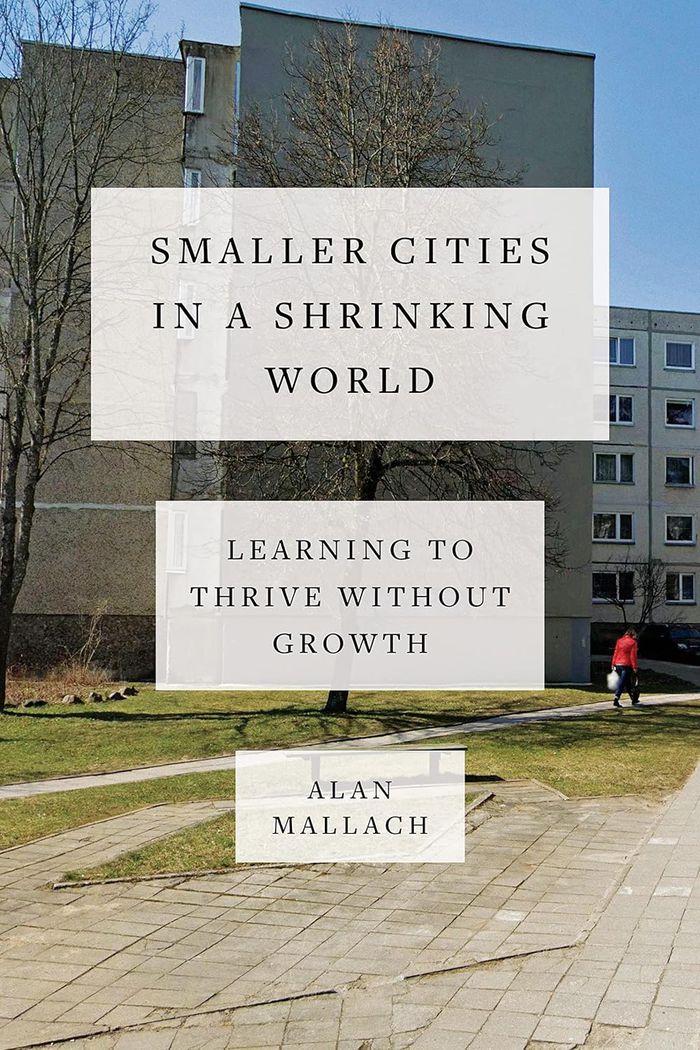
Over the past hundred years, the global motto has been "more, more, more" in terms of growth - of population, of the built environment, of human and financial capital, and of all manner of worldly goods. This was the reality as the world population boomed during the 1960s and 1970s. But reality is changing in front of our eyes. Growth is already slowing down, and according to the most sophisticated demographers, the earth's population will begin to decline not hundreds of years from now, but within the lifetimes of many of the people now living on the planet. In ''Smaller cities in a shrinking world'', urban policy expert Alan Mallach seeks to understand how declining population and economic growth, coupled with the other forces that will influence their fates, particularly climate change, will affect the world's cities over the coming decades. What will it mean to have a world full of shrinking cities? Does it mean that they are doomed to decline in more ways than simply population numbers, or can we uncouple population decline from economic decay, abandoned buildings and impoverishment? Mallach has spent much of the last thirty or more years working in, looking at, thinking, and writing about shrinking cities-from Trenton, New Jersey, where he was director of housing and economic development, to other American cities like Detroit, Flint, and St. Louis, and from there to cities in Japan and Central and Eastern Europe. He has woven together his experience, research, and analysis in this fascinating, realistic yet hopeful look at how smaller, shrinking cities can thrive, despite the daunting challenges they face.
Smaller cities in a shrinking world: learning to thrive without growth
Actions:
Prix:
$43.95
(disponible sur commande)
Résumé:
Over the past hundred years, the global motto has been "more, more, more" in terms of growth - of population, of the built environment, of human and financial capital, and of all manner of worldly goods. This was the reality as the world population boomed during the 1960s and 1970s. But reality is changing in front of our eyes. Growth is already slowing down, and according to the most sophisticated demographers, the earth's population will begin to decline not hundreds of years from now, but within the lifetimes of many of the people now living on the planet. In ''Smaller cities in a shrinking world'', urban policy expert Alan Mallach seeks to understand how declining population and economic growth, coupled with the other forces that will influence their fates, particularly climate change, will affect the world's cities over the coming decades. What will it mean to have a world full of shrinking cities? Does it mean that they are doomed to decline in more ways than simply population numbers, or can we uncouple population decline from economic decay, abandoned buildings and impoverishment? Mallach has spent much of the last thirty or more years working in, looking at, thinking, and writing about shrinking cities-from Trenton, New Jersey, where he was director of housing and economic development, to other American cities like Detroit, Flint, and St. Louis, and from there to cities in Japan and Central and Eastern Europe. He has woven together his experience, research, and analysis in this fascinating, realistic yet hopeful look at how smaller, shrinking cities can thrive, despite the daunting challenges they face.
Classification:
livres
livres
Publication:
juin 2023
juin 2023
Sujet:
Théorie de l’urbanisme
Théorie de l’urbanisme
Classification:
périodiques
périodiques
Actions:
Prix:
$52.00
(disponible en magasin)
Résumé:
Good design has the power to influence and support the human healing process. Because recovery is a process rather than a static state, it requires transitional spaces that foster transformation and facilitate social interaction. In this context, space does not merely serve as a form of complementary medicine; it is an environment with an agency of its own. Often, it(...)
$52.00
(disponible en magasin)
Résumé:
Good design has the power to influence and support the human healing process. Because recovery is a process rather than a static state, it requires transitional spaces that foster transformation and facilitate social interaction. In this context, space does not merely serve as a form of complementary medicine; it is an environment with an agency of its own. Often, it(...)
Titre:
Detail 4 2026 : Healthcare buildings
Actions:
Prix:
$52.00
(disponible en magasin)
Résumé:
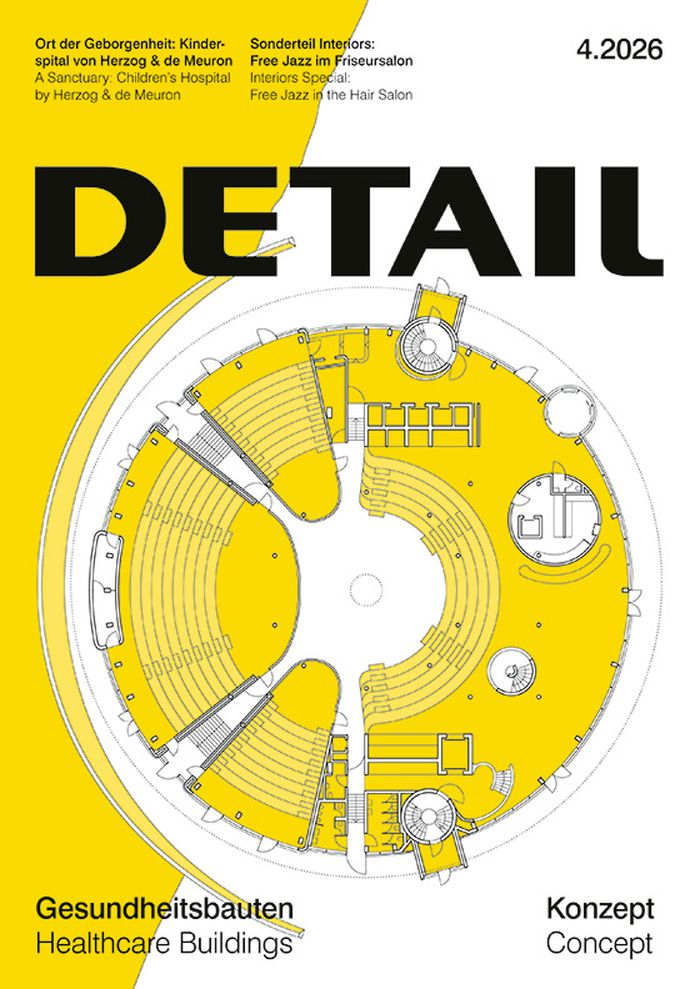
Good design has the power to influence and support the human healing process. Because recovery is a process rather than a static state, it requires transitional spaces that foster transformation and facilitate social interaction. In this context, space does not merely serve as a form of complementary medicine; it is an environment with an agency of its own. Often, it is only the absence of health that prompts us to truly examine it. This was the case for Charles Jencks, who, following his wife’s cancer diagnosis, laid the foundations for the therapy centres named after Maggie Keswick Jencks. Jencks described the first Maggie’s Centre, which opened 20 years ago in Edinburgh, as an “architecture of hope”. Similarly, Roger S. Ulrich, most recently a professor of architecture in Sweden, investigated the impact of nature on health in the mid-1980s while facing his own illness. His personal experience of nature’s restorative power led him to publish the seminal study that underpins all subsequent design approaches within the field of “healing architecture”. This issue presents exemplary special-purpose buildings from the healthcare sector that achieve exactly this. The mental health clinic by C. F. Møller in London, Dorte Mandrup Arkitekter’s healthcare centre in Copenhagen, and the Children’s Hospital in Zurich by Herzog & de Meuron are contrasted with smaller-scale pilot projects, such as the health kiosks designed by Pasel-K Architects as rural primary care infrastructure in Thüringen. Healing, it seems, knows no scale. The complex correlations between architecture and life are far from fully understood. As a young discipline, this field of architecture remains in constant flux.
Detail 4 2026 : Healthcare buildings
Actions:
Prix:
$52.00
(disponible en magasin)
Résumé:
Good design has the power to influence and support the human healing process. Because recovery is a process rather than a static state, it requires transitional spaces that foster transformation and facilitate social interaction. In this context, space does not merely serve as a form of complementary medicine; it is an environment with an agency of its own. Often, it is only the absence of health that prompts us to truly examine it. This was the case for Charles Jencks, who, following his wife’s cancer diagnosis, laid the foundations for the therapy centres named after Maggie Keswick Jencks. Jencks described the first Maggie’s Centre, which opened 20 years ago in Edinburgh, as an “architecture of hope”. Similarly, Roger S. Ulrich, most recently a professor of architecture in Sweden, investigated the impact of nature on health in the mid-1980s while facing his own illness. His personal experience of nature’s restorative power led him to publish the seminal study that underpins all subsequent design approaches within the field of “healing architecture”. This issue presents exemplary special-purpose buildings from the healthcare sector that achieve exactly this. The mental health clinic by C. F. Møller in London, Dorte Mandrup Arkitekter’s healthcare centre in Copenhagen, and the Children’s Hospital in Zurich by Herzog & de Meuron are contrasted with smaller-scale pilot projects, such as the health kiosks designed by Pasel-K Architects as rural primary care infrastructure in Thüringen. Healing, it seems, knows no scale. The complex correlations between architecture and life are far from fully understood. As a young discipline, this field of architecture remains in constant flux.
Classification:
périodiques
périodiques
Publication:
avril 2026
avril 2026
Sujet:
Revues
Revues
Classification:
livres
livres

Actions:
Prix:
$28.99
(disponible sur commande)
Résumé:
Cornelia Hahn Oberlander, who has been a landscape architect for more than sixty years, considers her profession “the art of the possible.” The description also applies to the very way this remarkable 86-year-old has lived her life. Playing in her grandmother’s garden as a child, Cornelia absorbed the beauty and importance of the natural world and by the age of eleven had(...)
$28.99
(disponible sur commande)
Résumé:
Cornelia Hahn Oberlander, who has been a landscape architect for more than sixty years, considers her profession “the art of the possible.” The description also applies to the very way this remarkable 86-year-old has lived her life. Playing in her grandmother’s garden as a child, Cornelia absorbed the beauty and importance of the natural world and by the age of eleven had(...)
Titre:
Love every leaf: the life of landscape architect Cornelia Hahn Oberlander
Actions:
Prix:
$28.99
(disponible sur commande)
Résumé:
Cornelia Hahn Oberlander, who has been a landscape architect for more than sixty years, considers her profession “the art of the possible.” The description also applies to the very way this remarkable 86-year-old has lived her life. Playing in her grandmother’s garden as a child, Cornelia absorbed the beauty and importance of the natural world and by the age of eleven had decided that she would become a landscape architect. Leaving her native Germany in the wake of Hitler’s persecution of the Jews, the teenaged Cornelia was transplanted in America, where she could pursue her dream in safety, although not without having to struggle to carve out a place for herself in the male-dominated world of her chosen profession. This 96-page biography tells her remarkable life’s story, complete with photographs and plans for the imaginative playgrounds and the innovative museum and embassy grounds she has created around the world, and for green rooftops, her latest passion. Young readers will not only learn about the profession, but also will find inspiration in Cornelia Hahn Oberlander’s love for the natural world and the respect and concern she shows for our increasingly fragile environment. Kathy Stinson was born in Toronto. She was a mail sorter, elementary school teacher, and a waitress before she turned her hand to writing. It was a wise decision. She wrote Red Is Best and Big Or Little. Since then, she has had over thirty titles published for a wide range of audiences. Kathy Stinson has two grown-up children, two grown-up stepchildren, and five grandchildren. She lives with her partner, Peter Carver, near Rockwood, Ontario.
Love every leaf: the life of landscape architect Cornelia Hahn Oberlander
Actions:
Prix:
$28.99
(disponible sur commande)
Résumé:
Cornelia Hahn Oberlander, who has been a landscape architect for more than sixty years, considers her profession “the art of the possible.” The description also applies to the very way this remarkable 86-year-old has lived her life. Playing in her grandmother’s garden as a child, Cornelia absorbed the beauty and importance of the natural world and by the age of eleven had decided that she would become a landscape architect. Leaving her native Germany in the wake of Hitler’s persecution of the Jews, the teenaged Cornelia was transplanted in America, where she could pursue her dream in safety, although not without having to struggle to carve out a place for herself in the male-dominated world of her chosen profession. This 96-page biography tells her remarkable life’s story, complete with photographs and plans for the imaginative playgrounds and the innovative museum and embassy grounds she has created around the world, and for green rooftops, her latest passion. Young readers will not only learn about the profession, but also will find inspiration in Cornelia Hahn Oberlander’s love for the natural world and the respect and concern she shows for our increasingly fragile environment. Kathy Stinson was born in Toronto. She was a mail sorter, elementary school teacher, and a waitress before she turned her hand to writing. It was a wise decision. She wrote Red Is Best and Big Or Little. Since then, she has had over thirty titles published for a wide range of audiences. Kathy Stinson has two grown-up children, two grown-up stepchildren, and five grandchildren. She lives with her partner, Peter Carver, near Rockwood, Ontario.
Classification:
livres
livres
Publication:
avril 2008, Toronto, New York
avril 2008, Toronto, New York
Sujet:
Littérature jeunesse
Littérature jeunesse
Classification:
livres
livres

Titre:
Ordinary pictures
Ordinary pictures
Actions:
Prix:
$65.00
(disponible en magasin)
Résumé:
Despite its apparent throwaway status, the stock image comprises the primary commodity of a billion-dollar global industry with far-reaching effects in the marketplace and the public sphere. Taking this overlooked facet of contemporary life as a point of departure, "Ordinary Pictures" explores the photographic apparatuses and commercial interests that have given rise to(...)
$65.00
(disponible en magasin)
Résumé:
Despite its apparent throwaway status, the stock image comprises the primary commodity of a billion-dollar global industry with far-reaching effects in the marketplace and the public sphere. Taking this overlooked facet of contemporary life as a point of departure, "Ordinary Pictures" explores the photographic apparatuses and commercial interests that have given rise to(...)
Titre:
Ordinary pictures
Actions:
Prix:
$65.00
(disponible en magasin)
Résumé:
Despite its apparent throwaway status, the stock image comprises the primary commodity of a billion-dollar global industry with far-reaching effects in the marketplace and the public sphere. Taking this overlooked facet of contemporary life as a point of departure, "Ordinary Pictures" explores the photographic apparatuses and commercial interests that have given rise to our generic image culture through the conceptual image-based work of some 40 artists, including John Baldessari, Steven Baldi, Sarah Charlesworth, Anne Collier, Liz Deschenes, John Divola, Aleksandra Domanovi c, Hans-Peter Feldmann, Morgan Fisher, Hollis Frampton, Jack Goldstein, Rachel Harrison, Robert Heinecken, Leslie Hewitt, Elad Lassry, Louise Lawler, Sherrie Levine, Steve McQueen, Jack Pierson, Peter Piller, Seth Price, Amanda Rossotto, Ed Ruscha, Steven Shore, Sturtevant, Mungo Thomson, Wolfgang Tillmans, Tseng Kwong Chi, Julia Wachtel and Christopher Williams. Spanning generations, movements and artistic strategies from the 1960s to the present day, this publication brings together works by artists who have probed, mimicked and critiqued this aspect of our visual environment as well as its industrial modes of production and distribution. Through the work of these artists and a series of scholarly essays, the catalogue aims to examine different operations of the generic image in culture, namely its anonymous circulation and editorial uses, its adaptability and reproducibility, its technical processes of production, its claim to copyright and artistic license and its tendency toward abstraction. Featuring a unique, coil-bound design reminiscent of stock photo catalogues and a flexidisc recording by the artist Jack Goldstein, this highly collectible book ultimately reflects on contemporary art's own complicit function as an expanding industrial image economy.
Ordinary pictures
Actions:
Prix:
$65.00
(disponible en magasin)
Résumé:
Despite its apparent throwaway status, the stock image comprises the primary commodity of a billion-dollar global industry with far-reaching effects in the marketplace and the public sphere. Taking this overlooked facet of contemporary life as a point of departure, "Ordinary Pictures" explores the photographic apparatuses and commercial interests that have given rise to our generic image culture through the conceptual image-based work of some 40 artists, including John Baldessari, Steven Baldi, Sarah Charlesworth, Anne Collier, Liz Deschenes, John Divola, Aleksandra Domanovi c, Hans-Peter Feldmann, Morgan Fisher, Hollis Frampton, Jack Goldstein, Rachel Harrison, Robert Heinecken, Leslie Hewitt, Elad Lassry, Louise Lawler, Sherrie Levine, Steve McQueen, Jack Pierson, Peter Piller, Seth Price, Amanda Rossotto, Ed Ruscha, Steven Shore, Sturtevant, Mungo Thomson, Wolfgang Tillmans, Tseng Kwong Chi, Julia Wachtel and Christopher Williams. Spanning generations, movements and artistic strategies from the 1960s to the present day, this publication brings together works by artists who have probed, mimicked and critiqued this aspect of our visual environment as well as its industrial modes of production and distribution. Through the work of these artists and a series of scholarly essays, the catalogue aims to examine different operations of the generic image in culture, namely its anonymous circulation and editorial uses, its adaptability and reproducibility, its technical processes of production, its claim to copyright and artistic license and its tendency toward abstraction. Featuring a unique, coil-bound design reminiscent of stock photo catalogues and a flexidisc recording by the artist Jack Goldstein, this highly collectible book ultimately reflects on contemporary art's own complicit function as an expanding industrial image economy.
Classification:
livres
livres
Publication:
mars 2016
mars 2016
Sujet:
Photographie- collections
Photographie- collections
Classification:
livres
livres
Prix:
$59.95
(disponible sur commande)
Résumé:
"The Artist as Producer" reshapes our understanding of the fundamental contribution of the Russian avant-garde to the development of modernism. Focusing on the single most important hotbed of Constructivist activity in the early 1920s - the Institute of Artistic Culture (INKhUK) in Moscow - Maria Gough offers a powerful reinterpretation of the work of the first group of(...)
$59.95
(disponible sur commande)
Résumé:
"The Artist as Producer" reshapes our understanding of the fundamental contribution of the Russian avant-garde to the development of modernism. Focusing on the single most important hotbed of Constructivist activity in the early 1920s - the Institute of Artistic Culture (INKhUK) in Moscow - Maria Gough offers a powerful reinterpretation of the work of the first group of(...)
Titre:
The artist as producer : Russian Constructivism in revolution
Actions:
Prix:
$59.95
(disponible sur commande)
Résumé:
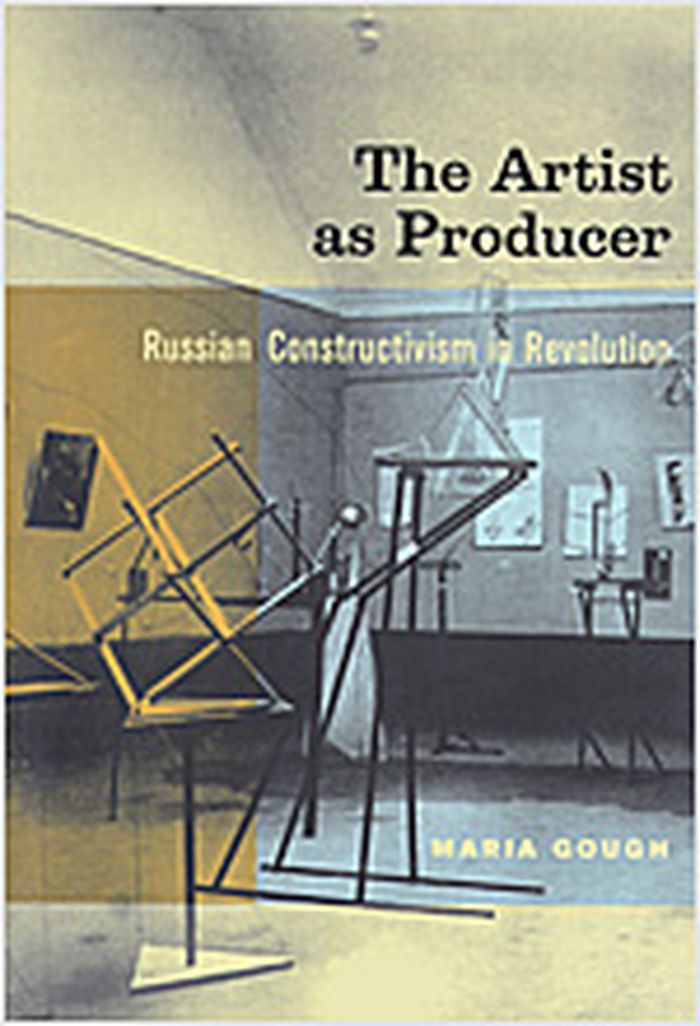
"The Artist as Producer" reshapes our understanding of the fundamental contribution of the Russian avant-garde to the development of modernism. Focusing on the single most important hotbed of Constructivist activity in the early 1920s - the Institute of Artistic Culture (INKhUK) in Moscow - Maria Gough offers a powerful reinterpretation of the work of the first group of artists to call themselves Constructivists. Her lively narrative ranges from famous figures such as Aleksandr Rodchenko to others who are much less well known, such as Karl Ioganson, a key member of the state-funded INKhUK whose work paved the way for an eventual dematerialization of the integral art object. Through the mining of untapped archives and collections in Russia and Latvia and a close reading of key Constructivist works, Gough highlights fundamental differences among the Moscow group in their handling of the experimental new sculptural form - the spatial construction - and of their subsequent shift to industrial production. "The Artist as Producer" upends the standard view that the Moscow group's formalism and abstraction were incompatible with the sociopolitical imperatives of the new Communist state. It challenges the common equation of Constructivism with functionalism and utilitarianism by delineating a contrary tendency toward non-determinism and an alternate orientation to process rather than product. Finally, the book counters the popular perception that Constructivism failed in its ambition to enter production by presenting the first-ever case study of how a Constructivist could, and in fact did, operate within an industrial environment. "The Artist as Producer" offers provocative new perspectives on three critical issues - formalism, functionalism, and failure - that are of central importance to our understanding not only of the Soviet phenomenon but also of the European vanguards more generally.
The artist as producer : Russian Constructivism in revolution
Actions:
Prix:
$59.95
(disponible sur commande)
Résumé:
"The Artist as Producer" reshapes our understanding of the fundamental contribution of the Russian avant-garde to the development of modernism. Focusing on the single most important hotbed of Constructivist activity in the early 1920s - the Institute of Artistic Culture (INKhUK) in Moscow - Maria Gough offers a powerful reinterpretation of the work of the first group of artists to call themselves Constructivists. Her lively narrative ranges from famous figures such as Aleksandr Rodchenko to others who are much less well known, such as Karl Ioganson, a key member of the state-funded INKhUK whose work paved the way for an eventual dematerialization of the integral art object. Through the mining of untapped archives and collections in Russia and Latvia and a close reading of key Constructivist works, Gough highlights fundamental differences among the Moscow group in their handling of the experimental new sculptural form - the spatial construction - and of their subsequent shift to industrial production. "The Artist as Producer" upends the standard view that the Moscow group's formalism and abstraction were incompatible with the sociopolitical imperatives of the new Communist state. It challenges the common equation of Constructivism with functionalism and utilitarianism by delineating a contrary tendency toward non-determinism and an alternate orientation to process rather than product. Finally, the book counters the popular perception that Constructivism failed in its ambition to enter production by presenting the first-ever case study of how a Constructivist could, and in fact did, operate within an industrial environment. "The Artist as Producer" offers provocative new perspectives on three critical issues - formalism, functionalism, and failure - that are of central importance to our understanding not only of the Soviet phenomenon but also of the European vanguards more generally.
Classification:
livres
livres
Publication:
janvier 1900, Berkeley
janvier 1900, Berkeley
Classification:
périodiques
périodiques
Titre:
e-flux index #3
e-flux index #3
Actions:
Prix:
$65.00
(disponible en magasin)
Résumé:
Today we are accustomed to the apophatic gesture of free-speech fundamentalists and far-right demagogues, who use the flimsy legal cover of “just asking questions” to broadcast ever more widely the most violent and reactionary forms of hate speech. In resisting this enclosure of thought, art and theory continue to be instructive, if not essential activities. The late(...)
$65.00
(disponible en magasin)
Résumé:
Today we are accustomed to the apophatic gesture of free-speech fundamentalists and far-right demagogues, who use the flimsy legal cover of “just asking questions” to broadcast ever more widely the most violent and reactionary forms of hate speech. In resisting this enclosure of thought, art and theory continue to be instructive, if not essential activities. The late(...)
Titre:
e-flux index #3
Actions:
Prix:
$65.00
(disponible en magasin)
Résumé:
Today we are accustomed to the apophatic gesture of free-speech fundamentalists and far-right demagogues, who use the flimsy legal cover of “just asking questions” to broadcast ever more widely the most violent and reactionary forms of hate speech. In resisting this enclosure of thought, art and theory continue to be instructive, if not essential activities. The late Lawrence Weiner memorably declared that “the purpose of art is to ask questions… it doesn’t answer anybody’s question but gives them the means to answer a particular question at a particular moment.” All the better when those questions can provoke a certain illuminating friction with the contradictions of one’s environment and disrupt the automaticity of one’s learned responses, remaining themselves ambiguous or unanswered—because unanswerable. This third issue of e-flux Index, bringing together all the content commissioned and published by e-flux between April and May 2024, contains many such unexpected and unanswered (or unanswerable) questions across its 76 contributions, each of which cut across and reach beyond existing disciplines and borders: “Who is willing to care?”; “Who is the addressee at the end of the regulated pipelines of the English language?”; “Yes, but is it edible?”; “Why does everyone hate college students?”; “Is some form of suffering the condition for the emergence of an organic type of intelligence?”; “What does it mean to make a film today, in 2024, when most of our image consumption has been transferred to other (smaller) screens and other media?; “How to represent history?”; “Whose lives are worth remembering—or even, living?”; “How is it possible to speak the language of imperial renaissance and decolonization in the same breath?”; “Today is which day of the revolution?”—“Are these all just notes for a poem?”
e-flux index #3
Actions:
Prix:
$65.00
(disponible en magasin)
Résumé:
Today we are accustomed to the apophatic gesture of free-speech fundamentalists and far-right demagogues, who use the flimsy legal cover of “just asking questions” to broadcast ever more widely the most violent and reactionary forms of hate speech. In resisting this enclosure of thought, art and theory continue to be instructive, if not essential activities. The late Lawrence Weiner memorably declared that “the purpose of art is to ask questions… it doesn’t answer anybody’s question but gives them the means to answer a particular question at a particular moment.” All the better when those questions can provoke a certain illuminating friction with the contradictions of one’s environment and disrupt the automaticity of one’s learned responses, remaining themselves ambiguous or unanswered—because unanswerable. This third issue of e-flux Index, bringing together all the content commissioned and published by e-flux between April and May 2024, contains many such unexpected and unanswered (or unanswerable) questions across its 76 contributions, each of which cut across and reach beyond existing disciplines and borders: “Who is willing to care?”; “Who is the addressee at the end of the regulated pipelines of the English language?”; “Yes, but is it edible?”; “Why does everyone hate college students?”; “Is some form of suffering the condition for the emergence of an organic type of intelligence?”; “What does it mean to make a film today, in 2024, when most of our image consumption has been transferred to other (smaller) screens and other media?; “How to represent history?”; “Whose lives are worth remembering—or even, living?”; “How is it possible to speak the language of imperial renaissance and decolonization in the same breath?”; “Today is which day of the revolution?”—“Are these all just notes for a poem?”
Classification:
périodiques
périodiques
Publication:
décembre 2024
décembre 2024
Sujet:
Revues
Revues
Classification:
livres
livres
Prix:
$58.50
(disponible en magasin)
Résumé:
This book examines the ways in which a historic, and so-called 'traditional' city quietly mutated into one that was modern in its own terms not only in form but also in its use and meaning. Through a study of Delhi, the author challenges some prevalent dichotomies and myths in architecture and urbanism and identifies an interpretation of modernism that expands upon(...)
$58.50
(disponible en magasin)
Résumé:
This book examines the ways in which a historic, and so-called 'traditional' city quietly mutated into one that was modern in its own terms not only in form but also in its use and meaning. Through a study of Delhi, the author challenges some prevalent dichotomies and myths in architecture and urbanism and identifies an interpretation of modernism that expands upon(...)
Publication:
avril 2005, London
avril 2005, London
Titre:
Indigenous modernities : negotiating architecture and urbanism
Actions:
Prix:
$58.50
(disponible en magasin)
Résumé:
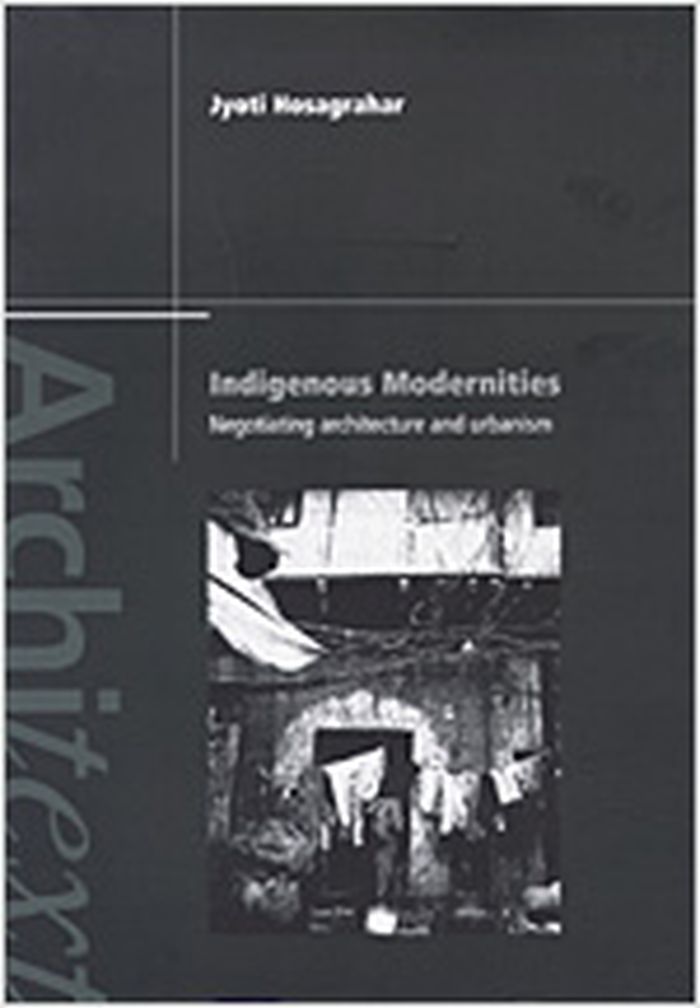
This book examines the ways in which a historic, and so-called 'traditional' city quietly mutated into one that was modern in its own terms not only in form but also in its use and meaning. Through a study of Delhi, the author challenges some prevalent dichotomies and myths in architecture and urbanism and identifies an interpretation of modernism that expands upon conventional understandings of it. Conventional discourse in the West defines modern as the antithesis of that which is 'not-modern' or is 'traditional.' Many scholars have debated the significance of the words and most agree that the very word 'tradition' was a modernist creation that variously implied backwardness, threatened by change, resistance to innovation. The first part of this book reflects on the transformations and discontinuities in built form and spatial culture and calls into question accepted notions of the static nature of what is normally referred to as 'traditional' and 'non-Western' architecture. The second part is a critical discussion of Delhi in the nineteenth and early twentieth centuries. It expands upon conventional understandings of modernity in a way that wrenches free the city's architecture and the society from the objectified realm of the exotic while also acknowledging cultural conditions of modernity and modern architecture outside the West. Stepping outside Western canons, this project looks at late nineteenth and early twentieth century architecture to include them in a conversation on architecture that has typically focused on Western Europe and North America. Finally, the author seeks out the 'indigenous modernities': the irregular, the uneven, and the unexpected in what uncritical observers might label a perfectly coherent 'traditional' built environment; or in the influence of local society and institutions on forms that appear modern by conventional standards in the West.
Indigenous modernities : negotiating architecture and urbanism
Actions:
Prix:
$58.50
(disponible en magasin)
Résumé:
This book examines the ways in which a historic, and so-called 'traditional' city quietly mutated into one that was modern in its own terms not only in form but also in its use and meaning. Through a study of Delhi, the author challenges some prevalent dichotomies and myths in architecture and urbanism and identifies an interpretation of modernism that expands upon conventional understandings of it. Conventional discourse in the West defines modern as the antithesis of that which is 'not-modern' or is 'traditional.' Many scholars have debated the significance of the words and most agree that the very word 'tradition' was a modernist creation that variously implied backwardness, threatened by change, resistance to innovation. The first part of this book reflects on the transformations and discontinuities in built form and spatial culture and calls into question accepted notions of the static nature of what is normally referred to as 'traditional' and 'non-Western' architecture. The second part is a critical discussion of Delhi in the nineteenth and early twentieth centuries. It expands upon conventional understandings of modernity in a way that wrenches free the city's architecture and the society from the objectified realm of the exotic while also acknowledging cultural conditions of modernity and modern architecture outside the West. Stepping outside Western canons, this project looks at late nineteenth and early twentieth century architecture to include them in a conversation on architecture that has typically focused on Western Europe and North America. Finally, the author seeks out the 'indigenous modernities': the irregular, the uneven, and the unexpected in what uncritical observers might label a perfectly coherent 'traditional' built environment; or in the influence of local society and institutions on forms that appear modern by conventional standards in the West.
Classification:
livres
livres
Publication:
avril 2005, London
avril 2005, London


