


13794 Résultats
Classification:
livres
livres
Actions:
Prix:
$34.95
(disponible sur commande)
Résumé:
Designed by Irma Boom, this second volume in the Summit publication series gathers insights from the 2018 Verbier Art Summit in Switzerland, on the topic of art in the digital age, delivered by a wide range of curators, authors, artists and critics. The contributions—by Karen Archey, Ed Atkins, Lars Bang Larsen, Douglas Coupland, Olafur Eliasson, Pamela Rosenkranz, John(...)
$34.95
(disponible sur commande)
Résumé:
Designed by Irma Boom, this second volume in the Summit publication series gathers insights from the 2018 Verbier Art Summit in Switzerland, on the topic of art in the digital age, delivered by a wide range of curators, authors, artists and critics. The contributions—by Karen Archey, Ed Atkins, Lars Bang Larsen, Douglas Coupland, Olafur Eliasson, Pamela Rosenkranz, John(...)
Titre:
More than real: art in the digital age
Actions:
Prix:
$34.95
(disponible sur commande)
Résumé:
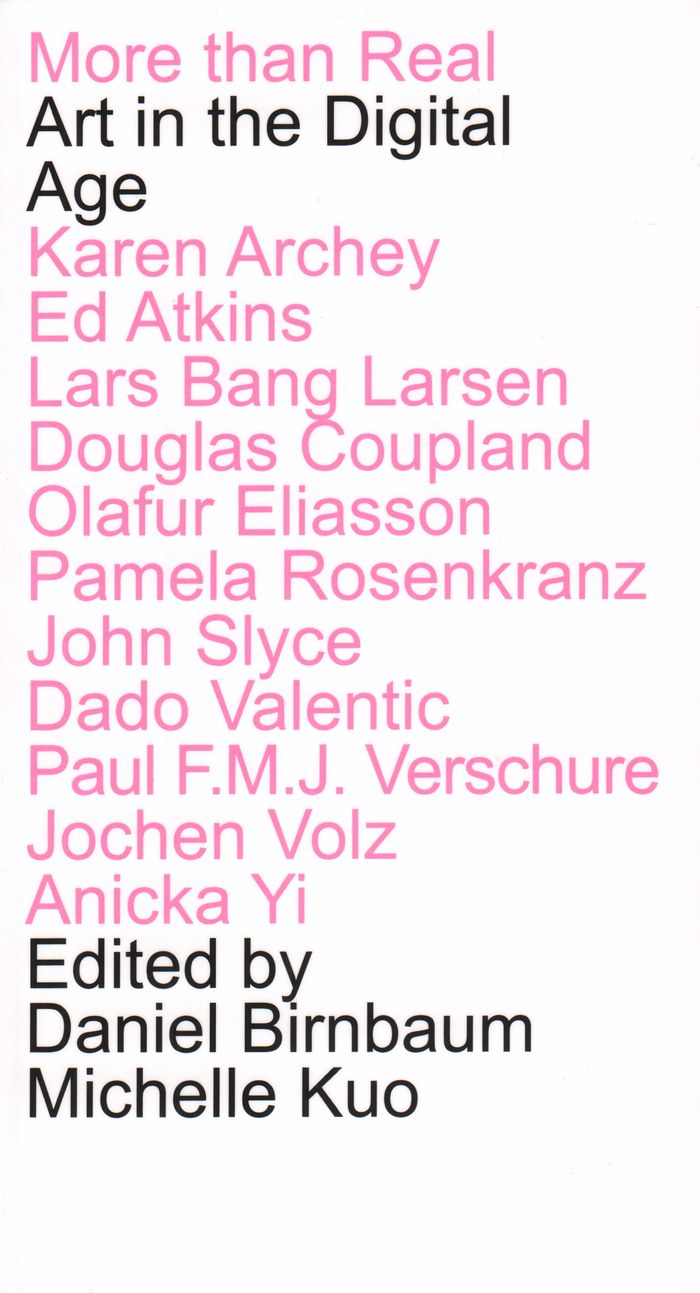
Designed by Irma Boom, this second volume in the Summit publication series gathers insights from the 2018 Verbier Art Summit in Switzerland, on the topic of art in the digital age, delivered by a wide range of curators, authors, artists and critics. The contributions—by Karen Archey, Ed Atkins, Lars Bang Larsen, Douglas Coupland, Olafur Eliasson, Pamela Rosenkranz, John Slyce, Dado Valentic, Paul F.M.J. Verschure, Jochen Volz and Anicka Yi—address such questions as the preservation of time-based media in museums; the concept of "biofiction"; "loss and the digital"; the body and technology; Amazon; the intersection of science and art; and virtual reality.
More than real: art in the digital age
Actions:
Prix:
$34.95
(disponible sur commande)
Résumé:
Designed by Irma Boom, this second volume in the Summit publication series gathers insights from the 2018 Verbier Art Summit in Switzerland, on the topic of art in the digital age, delivered by a wide range of curators, authors, artists and critics. The contributions—by Karen Archey, Ed Atkins, Lars Bang Larsen, Douglas Coupland, Olafur Eliasson, Pamela Rosenkranz, John Slyce, Dado Valentic, Paul F.M.J. Verschure, Jochen Volz and Anicka Yi—address such questions as the preservation of time-based media in museums; the concept of "biofiction"; "loss and the digital"; the body and technology; Amazon; the intersection of science and art; and virtual reality.
Classification:
livres
livres
Publication:
novembre 2018
novembre 2018
Sujet:
Théorie de l’art
Théorie de l’art
Classification:
livres
livres
Prix:
$63.95
(disponible sur commande)
Résumé:
Daniel Kiss examines the urban development of Budapest from 1990 to 2010. This period is characterized by the significant decline in communally town planning: given the structural legacies of socialist urbanization, the decentralization of government and resources, and the impact of a post-socialist culture struggle, a trend is being analyzed in which nebulous(...)
$63.95
(disponible sur commande)
Résumé:
Daniel Kiss examines the urban development of Budapest from 1990 to 2010. This period is characterized by the significant decline in communally town planning: given the structural legacies of socialist urbanization, the decentralization of government and resources, and the impact of a post-socialist culture struggle, a trend is being analyzed in which nebulous(...)
Titre:
Modeling post-socialist urbanization: the case of Budapest
Actions:
Prix:
$63.95
(disponible sur commande)
Résumé:
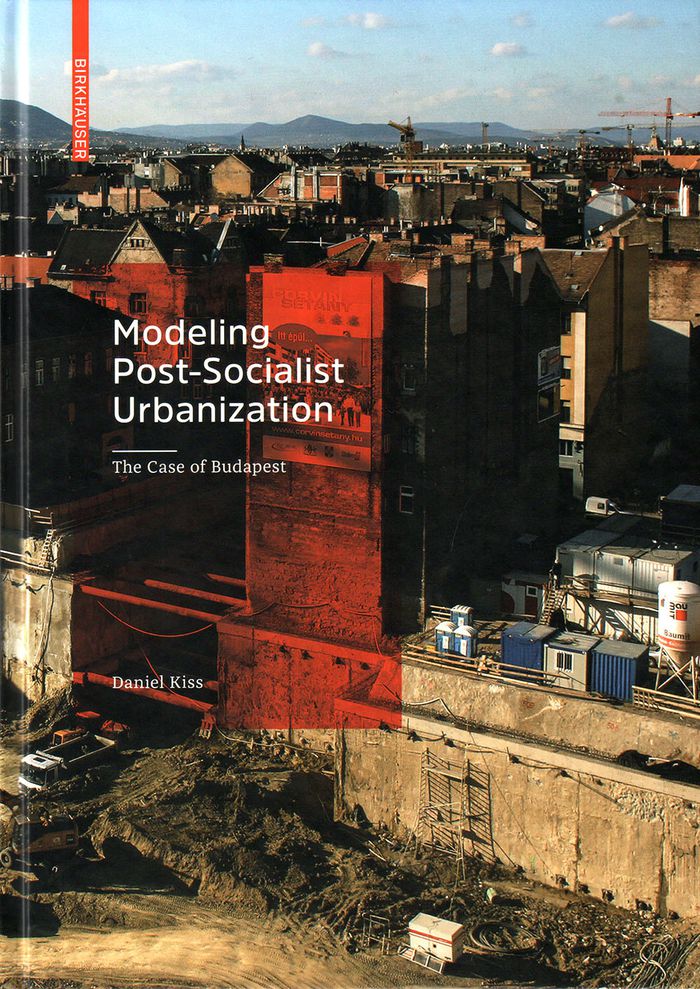
Daniel Kiss examines the urban development of Budapest from 1990 to 2010. This period is characterized by the significant decline in communally town planning: given the structural legacies of socialist urbanization, the decentralization of government and resources, and the impact of a post-socialist culture struggle, a trend is being analyzed in which nebulous competencies lead to unclear and thus to a failure of higher-level planning. The ensuing consequence is an increase in large, investment-driven projects: it is characteristic of these privately financed projects that they do not submit to higher level control, in particular when these control bodies are rather weak. This model-based analysis presents the phenomenon as exemplary of the development in post-socialist cities.
Modeling post-socialist urbanization: the case of Budapest
Actions:
Prix:
$63.95
(disponible sur commande)
Résumé:
Daniel Kiss examines the urban development of Budapest from 1990 to 2010. This period is characterized by the significant decline in communally town planning: given the structural legacies of socialist urbanization, the decentralization of government and resources, and the impact of a post-socialist culture struggle, a trend is being analyzed in which nebulous competencies lead to unclear and thus to a failure of higher-level planning. The ensuing consequence is an increase in large, investment-driven projects: it is characteristic of these privately financed projects that they do not submit to higher level control, in particular when these control bodies are rather weak. This model-based analysis presents the phenomenon as exemplary of the development in post-socialist cities.
Classification:
livres
livres
Publication:
novembre 2018
novembre 2018
Sujet:
Théorie de l’urbanisme
Théorie de l’urbanisme
Classification:
livres
livres
Titre:
Stopping / Arrêts
Stopping / Arrêts
Actions:
Prix:
$25.00
(disponible en magasin)
Résumé:
To stop. A gesture of resistance in a world primarily designed to encourage work, consumerism, perpetual growth and efficiency. Stopping as an urban practice. In cities where pauses and idleness within specific sites are increasingly discouraged, stopping emerges as a space of rupture, pleasure, intimacy, or simply necessity and rest. In a project begun in 2015 in Mexico(...)
$25.00
(disponible en magasin)
Résumé:
To stop. A gesture of resistance in a world primarily designed to encourage work, consumerism, perpetual growth and efficiency. Stopping as an urban practice. In cities where pauses and idleness within specific sites are increasingly discouraged, stopping emerges as a space of rupture, pleasure, intimacy, or simply necessity and rest. In a project begun in 2015 in Mexico(...)
Titre:
Stopping / Arrêts
Actions:
Prix:
$25.00
(disponible en magasin)
Résumé:
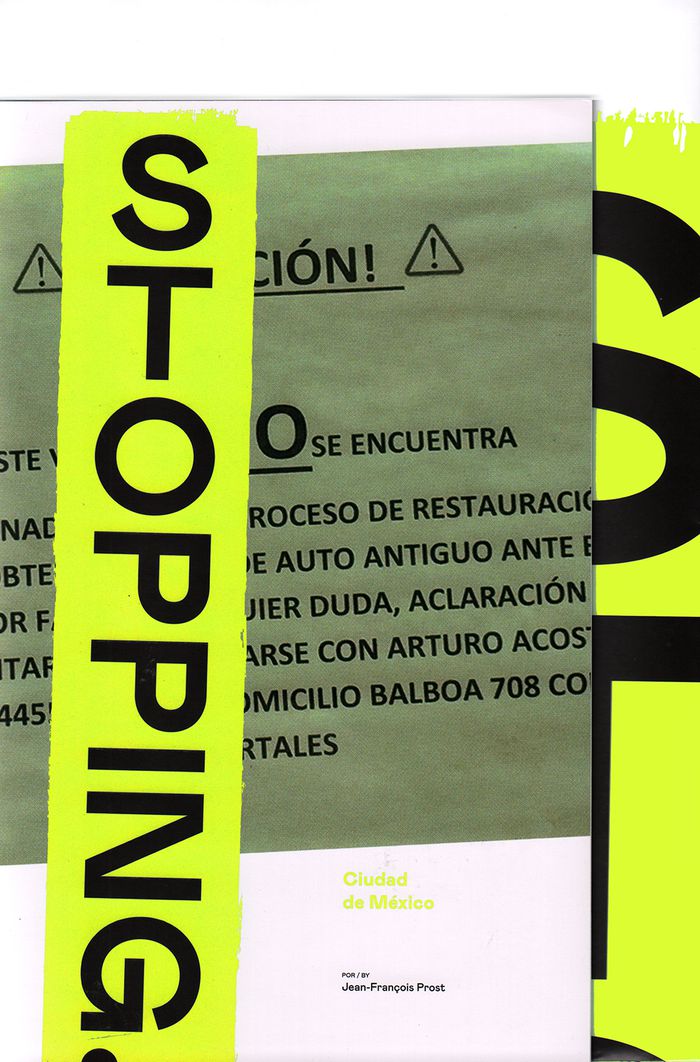
To stop. A gesture of resistance in a world primarily designed to encourage work, consumerism, perpetual growth and efficiency. Stopping as an urban practice. In cities where pauses and idleness within specific sites are increasingly discouraged, stopping emerges as a space of rupture, pleasure, intimacy, or simply necessity and rest. In a project begun in 2015 in Mexico City and further developed in Montreal in 2017, Jean-François Prost explores these realities for their contrasts with the incessant movement of people and related structures in contemporary cities where sometimes even self-constructions of time and space are forbidden.
Stopping / Arrêts
Actions:
Prix:
$25.00
(disponible en magasin)
Résumé:
To stop. A gesture of resistance in a world primarily designed to encourage work, consumerism, perpetual growth and efficiency. Stopping as an urban practice. In cities where pauses and idleness within specific sites are increasingly discouraged, stopping emerges as a space of rupture, pleasure, intimacy, or simply necessity and rest. In a project begun in 2015 in Mexico City and further developed in Montreal in 2017, Jean-François Prost explores these realities for their contrasts with the incessant movement of people and related structures in contemporary cities where sometimes even self-constructions of time and space are forbidden.
Classification:
livres
livres
Publication:
février 2019
février 2019
Sujet:
Théorie de l’urbanisme
Théorie de l’urbanisme
Classification:
livres
livres

Titre:
L’esthétique du déplaisir
L’esthétique du déplaisir
Actions:
Prix:
$22.00
(disponible sur commande)
Résumé:
Au croisement des arts, l'œuvre de Carmelo Bene – acteur, auteur et metteur en scène, pour le théâtre, le cinéma et la télévision, mais aussi romancier et poète – remet systématiquement en question le langage artistique avec lequel il s'exprime. Ni captations de spectacles théâtraux, ni adaptations cinématographiques, ses réalisations pour le petit écran explorent les(...)
$22.00
(disponible sur commande)
Résumé:
Au croisement des arts, l'œuvre de Carmelo Bene – acteur, auteur et metteur en scène, pour le théâtre, le cinéma et la télévision, mais aussi romancier et poète – remet systématiquement en question le langage artistique avec lequel il s'exprime. Ni captations de spectacles théâtraux, ni adaptations cinématographiques, ses réalisations pour le petit écran explorent les(...)
Titre:
L’esthétique du déplaisir
Actions:
Prix:
$22.00
(disponible sur commande)
Résumé:
Au croisement des arts, l'œuvre de Carmelo Bene – acteur, auteur et metteur en scène, pour le théâtre, le cinéma et la télévision, mais aussi romancier et poète – remet systématiquement en question le langage artistique avec lequel il s'exprime. Ni captations de spectacles théâtraux, ni adaptations cinématographiques, ses réalisations pour le petit écran explorent les possibilités techniques et esthétiques offertes par le médium télévisé. Ce volume réunit deux entretiens, respectivement avec les critiques Italo Moscati et Maurizio Grande, publiés au moment de la diffusion du Hamlet télévisé de Carmelo Bene (1978). L'artiste y expose sa méthode de travail et ses idées sur la télévision, ce « médium innocent aux possibilités puissantes, inexplorées ». Relues à l'ère d'Internet, ses réflexions invitent à penser les liens entre spectacle vivant et petit(s) écran(s), mais aussi entre nouveautés technologiques et recherche esthétique, entre avant-gardisme artistique et diffusion de masse.
L’esthétique du déplaisir
Actions:
Prix:
$22.00
(disponible sur commande)
Résumé:
Au croisement des arts, l'œuvre de Carmelo Bene – acteur, auteur et metteur en scène, pour le théâtre, le cinéma et la télévision, mais aussi romancier et poète – remet systématiquement en question le langage artistique avec lequel il s'exprime. Ni captations de spectacles théâtraux, ni adaptations cinématographiques, ses réalisations pour le petit écran explorent les possibilités techniques et esthétiques offertes par le médium télévisé. Ce volume réunit deux entretiens, respectivement avec les critiques Italo Moscati et Maurizio Grande, publiés au moment de la diffusion du Hamlet télévisé de Carmelo Bene (1978). L'artiste y expose sa méthode de travail et ses idées sur la télévision, ce « médium innocent aux possibilités puissantes, inexplorées ». Relues à l'ère d'Internet, ses réflexions invitent à penser les liens entre spectacle vivant et petit(s) écran(s), mais aussi entre nouveautés technologiques et recherche esthétique, entre avant-gardisme artistique et diffusion de masse.
Classification:
livres
livres
Publication:
mars 2019
mars 2019
Sujet:
Théorie de l’art
Théorie de l’art
Classification:
livres
livres
Prix:
$38.95
(disponible sur commande)
Résumé:
In this publication, Evan Friss traces the colorful and fraught history of cycling in New York City. He uncovers the bicycle’s place in the city over time, showing how it has served as a mirror of the city’s changing social, economic, infrastructural, and cultural politics since it first appeared.
$38.95
(disponible sur commande)
Résumé:
In this publication, Evan Friss traces the colorful and fraught history of cycling in New York City. He uncovers the bicycle’s place in the city over time, showing how it has served as a mirror of the city’s changing social, economic, infrastructural, and cultural politics since it first appeared.
Titre:
On bicycles: a 200-year history of cycling in New York City
Actions:
Prix:
$38.95
(disponible sur commande)
Résumé:
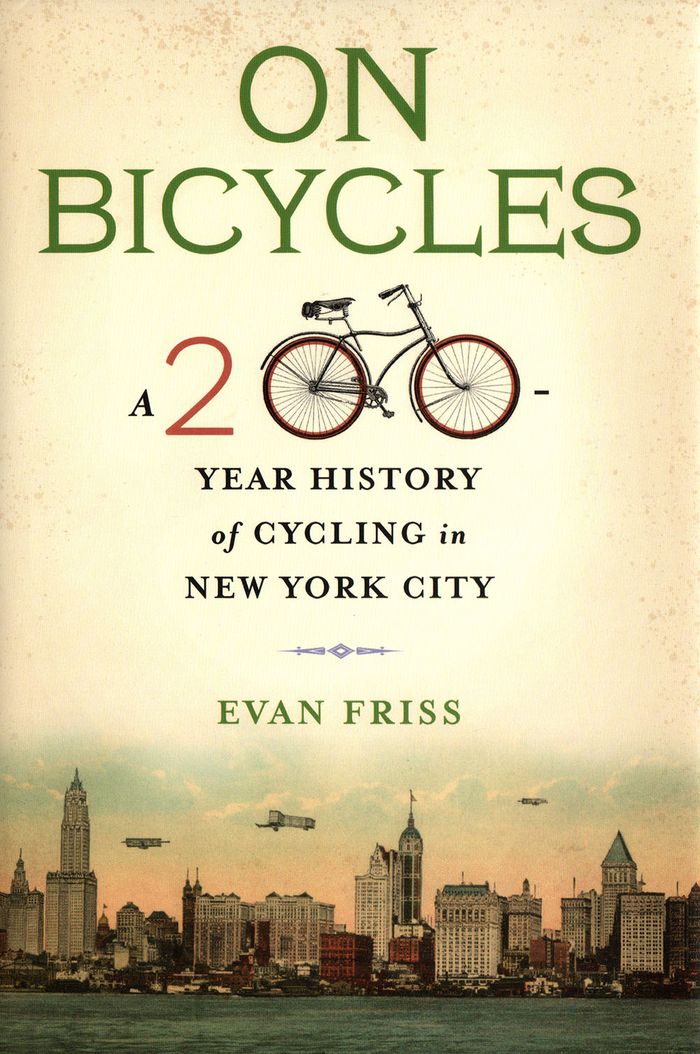
In this publication, Evan Friss traces the colorful and fraught history of cycling in New York City. He uncovers the bicycle’s place in the city over time, showing how it has served as a mirror of the city’s changing social, economic, infrastructural, and cultural politics since it first appeared.
On bicycles: a 200-year history of cycling in New York City
Actions:
Prix:
$38.95
(disponible sur commande)
Résumé:
In this publication, Evan Friss traces the colorful and fraught history of cycling in New York City. He uncovers the bicycle’s place in the city over time, showing how it has served as a mirror of the city’s changing social, economic, infrastructural, and cultural politics since it first appeared.
Classification:
livres
livres
Publication:
mai 2019
mai 2019
Sujet:
Théorie de l’urbanisme
Théorie de l’urbanisme
Classification:
livres
livres

Prix:
$40.00
(disponible en magasin)
Résumé:
The new revised edition of Valerio Olgiati's and Markus Breitschmid's widely acclaimed manifesto for a new approach in architecture in a world free of ideologies and, therefore, references.
$40.00
(disponible en magasin)
Résumé:
The new revised edition of Valerio Olgiati's and Markus Breitschmid's widely acclaimed manifesto for a new approach in architecture in a world free of ideologies and, therefore, references.
Titre:
Non-referential architecture: ideated by Valerio Olgiati
Actions:
Prix:
$40.00
(disponible en magasin)
Résumé:
The new revised edition of Valerio Olgiati's and Markus Breitschmid's widely acclaimed manifesto for a new approach in architecture in a world free of ideologies and, therefore, references.
Non-referential architecture: ideated by Valerio Olgiati
Actions:
Prix:
$40.00
(disponible en magasin)
Résumé:
The new revised edition of Valerio Olgiati's and Markus Breitschmid's widely acclaimed manifesto for a new approach in architecture in a world free of ideologies and, therefore, references.
Classification:
livres
livres
Publication:
août 2019
août 2019
Sujet:
Théorie de l’architecture
Théorie de l’architecture
Classification:
livres
livres
Actions:
Prix:
$37.99
(disponible sur commande)
Résumé:
Grounding its analysis in regional political economy and neighborhood-based ethnography, 'Cyclescapes of the Unequal City' uses the bicycle as a lens to view major shifts in today’s American city. It addresses a growing interest in bicycling as an urban economic and environmental strategy, its role in the politics of gentrification, and efforts to build more diverse(...)
$37.99
(disponible sur commande)
Résumé:
Grounding its analysis in regional political economy and neighborhood-based ethnography, 'Cyclescapes of the Unequal City' uses the bicycle as a lens to view major shifts in today’s American city. It addresses a growing interest in bicycling as an urban economic and environmental strategy, its role in the politics of gentrification, and efforts to build more diverse(...)
Titre:
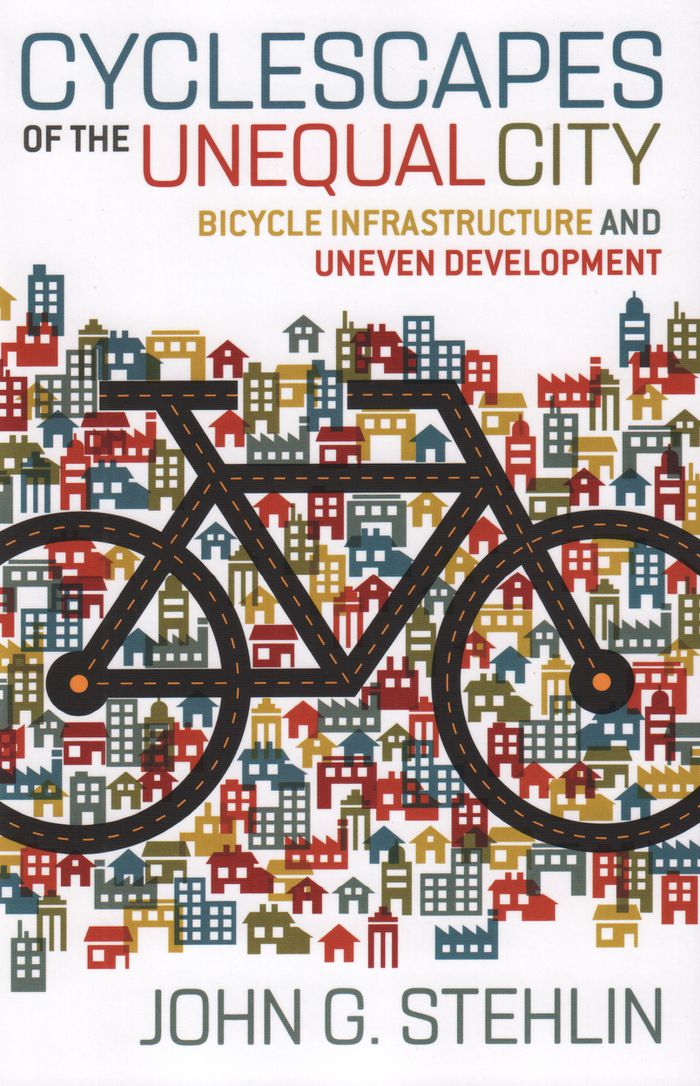
Cyclescapes of the unequal city: bicycle infrastructure and unven development
Actions:
Prix:
$37.99
(disponible sur commande)
Résumé:
Grounding its analysis in regional political economy and neighborhood-based ethnography, 'Cyclescapes of the Unequal City' uses the bicycle as a lens to view major shifts in today’s American city. It addresses a growing interest in bicycling as an urban economic and environmental strategy, its role in the politics of gentrification, and efforts to build more diverse coalitions of bicycle advocates.
Cyclescapes of the unequal city: bicycle infrastructure and unven development
Actions:
Prix:
$37.99
(disponible sur commande)
Résumé:
Grounding its analysis in regional political economy and neighborhood-based ethnography, 'Cyclescapes of the Unequal City' uses the bicycle as a lens to view major shifts in today’s American city. It addresses a growing interest in bicycling as an urban economic and environmental strategy, its role in the politics of gentrification, and efforts to build more diverse coalitions of bicycle advocates.
Classification:
livres
livres
Publication:
mars 2019
mars 2019
Sujet:
Théorie de l’urbanisme
Théorie de l’urbanisme
Classification:
livres
livres
Titre:
Atlas of poetic zoology
Atlas of poetic zoology
Actions:
Prix:
$32.00
(disponible sur commande)
Résumé:
This ''Atlas of Poetic Zoology'' leads readers into a world of wonders where turtles fly under the sea, lizards walk on water, insects impersonate flowers, birds don't fly, frogs come back from the dead, and virgin sharks give birth. Animals, writes Emmanuelle Pouydebat, are lyric poets; they discover and shape the world when they sing, dance, explore, and reproduce. The(...)
$32.00
(disponible sur commande)
Résumé:
This ''Atlas of Poetic Zoology'' leads readers into a world of wonders where turtles fly under the sea, lizards walk on water, insects impersonate flowers, birds don't fly, frogs come back from the dead, and virgin sharks give birth. Animals, writes Emmanuelle Pouydebat, are lyric poets; they discover and shape the world when they sing, dance, explore, and reproduce. The(...)
Titre:
Atlas of poetic zoology
Actions:
Prix:
$32.00
(disponible sur commande)
Résumé:
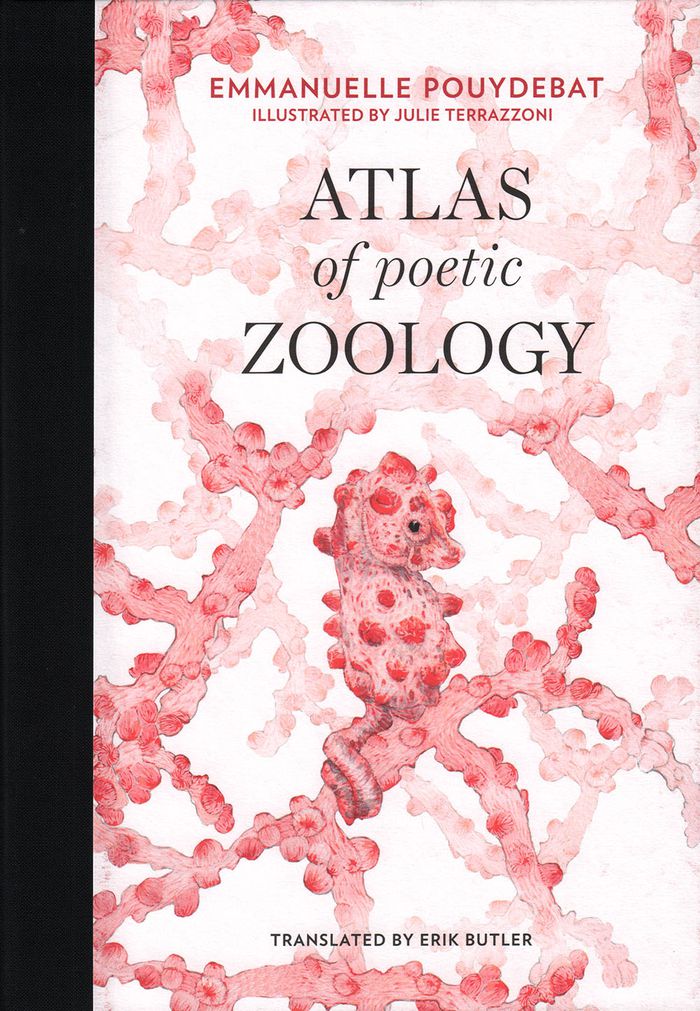
This ''Atlas of Poetic Zoology'' leads readers into a world of wonders where turtles fly under the sea, lizards walk on water, insects impersonate flowers, birds don't fly, frogs come back from the dead, and virgin sharks give birth. Animals, writes Emmanuelle Pouydebat, are lyric poets; they discover and shape the world when they sing, dance, explore, and reproduce. The animal kingdom has been evolving for 700,000 million years, weathering many crises of extinction; this book allows us to draw inspiration from animals' enduring vitality.
Atlas of poetic zoology
Actions:
Prix:
$32.00
(disponible sur commande)
Résumé:
This ''Atlas of Poetic Zoology'' leads readers into a world of wonders where turtles fly under the sea, lizards walk on water, insects impersonate flowers, birds don't fly, frogs come back from the dead, and virgin sharks give birth. Animals, writes Emmanuelle Pouydebat, are lyric poets; they discover and shape the world when they sing, dance, explore, and reproduce. The animal kingdom has been evolving for 700,000 million years, weathering many crises of extinction; this book allows us to draw inspiration from animals' enduring vitality.
Classification:
livres
livres
Publication:
mai 2019
mai 2019
Sujet:
Théorie du paysage
Théorie du paysage
Classification:
livres
livres
Actions:
Prix:
$39.95
(disponible sur commande)
Résumé:
Failure is an inevitable part of any creative practice. As game designers, John Sharp and Colleen Macklin have grappled with crises of creativity, false starts, and bad outcomes. Their tool for coping with the many varieties of failure: "iteration", the cyclical process of conceptualizing, prototyping, testing, and evaluating. Sharp and Macklin have found that(...)
$39.95
(disponible sur commande)
Résumé:
Failure is an inevitable part of any creative practice. As game designers, John Sharp and Colleen Macklin have grappled with crises of creativity, false starts, and bad outcomes. Their tool for coping with the many varieties of failure: "iteration", the cyclical process of conceptualizing, prototyping, testing, and evaluating. Sharp and Macklin have found that(...)
Titre:
Iterate: ten lessons in design and failure
Actions:
Prix:
$39.95
(disponible sur commande)
Résumé:
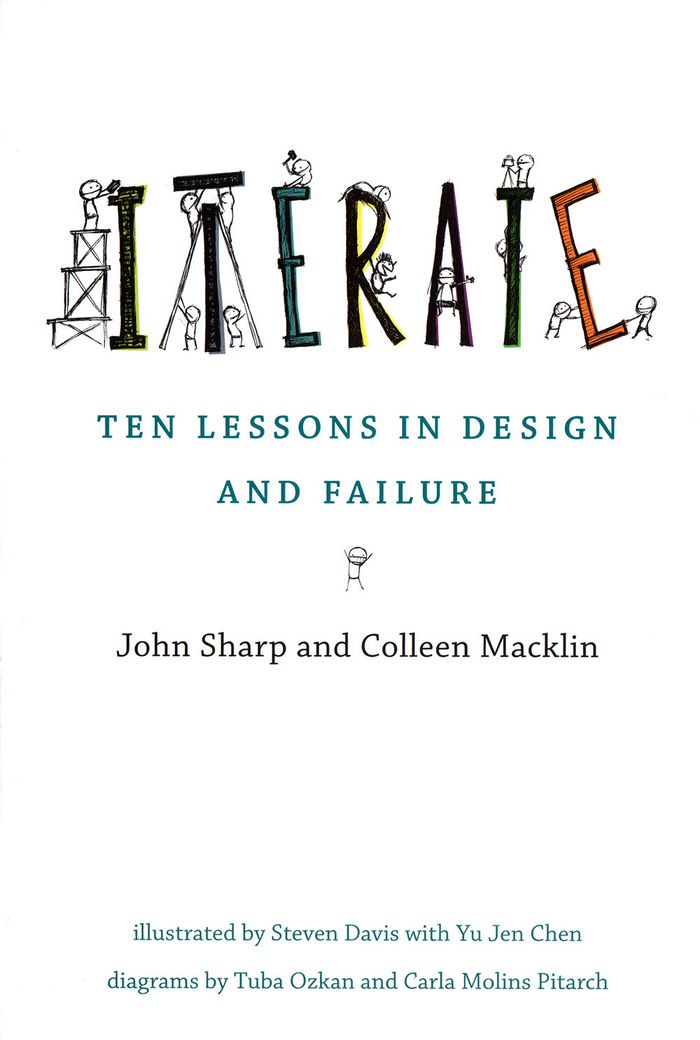
Failure is an inevitable part of any creative practice. As game designers, John Sharp and Colleen Macklin have grappled with crises of creativity, false starts, and bad outcomes. Their tool for coping with the many varieties of failure: "iteration", the cyclical process of conceptualizing, prototyping, testing, and evaluating. Sharp and Macklin have found that failure—often hidden, covered up, a source of embarrassment—is the secret ingredient of iterative creative process. In "Iterate", they explain how to fail better.
Iterate: ten lessons in design and failure
Actions:
Prix:
$39.95
(disponible sur commande)
Résumé:
Failure is an inevitable part of any creative practice. As game designers, John Sharp and Colleen Macklin have grappled with crises of creativity, false starts, and bad outcomes. Their tool for coping with the many varieties of failure: "iteration", the cyclical process of conceptualizing, prototyping, testing, and evaluating. Sharp and Macklin have found that failure—often hidden, covered up, a source of embarrassment—is the secret ingredient of iterative creative process. In "Iterate", they explain how to fail better.
Classification:
livres
livres
Publication:
mai 2019
mai 2019
Sujet:
Théorie du design
Théorie du design
Classification:
livres
livres
Prix:
$47.50
(disponible sur commande)
Résumé:
Ecological crisis has driven contemporary artists to engage with waste in its most non-biodegradable forms: plastics, e-waste, toxic waste, garbage hermetically sealed in landfills. In this provocative and original book, Amanda Boetzkes links the increasing visualization of waste in contemporary art to the rise of the global oil economy and the emergence of ecological(...)
$47.50
(disponible sur commande)
Résumé:
Ecological crisis has driven contemporary artists to engage with waste in its most non-biodegradable forms: plastics, e-waste, toxic waste, garbage hermetically sealed in landfills. In this provocative and original book, Amanda Boetzkes links the increasing visualization of waste in contemporary art to the rise of the global oil economy and the emergence of ecological(...)
Titre:
Plastic capitalism: contemporary art and the drive to waste
Actions:
Prix:
$47.50
(disponible sur commande)
Résumé:
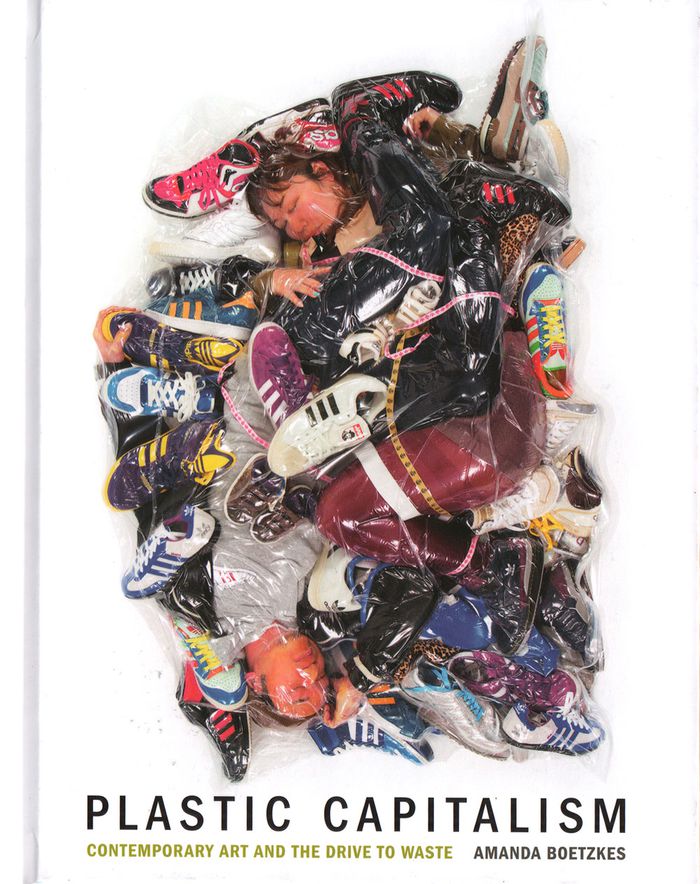
Ecological crisis has driven contemporary artists to engage with waste in its most non-biodegradable forms: plastics, e-waste, toxic waste, garbage hermetically sealed in landfills. In this provocative and original book, Amanda Boetzkes links the increasing visualization of waste in contemporary art to the rise of the global oil economy and the emergence of ecological thinking. Often, when art is analyzed in relation to the political, scientific, or ecological climate, it is considered merely illustrative. Boetzkes argues that art is constitutive of an ecological consciousness, not simply an extension of it. The visual culture of waste is central to the study of the ecological condition.
Plastic capitalism: contemporary art and the drive to waste
Actions:
Prix:
$47.50
(disponible sur commande)
Résumé:
Ecological crisis has driven contemporary artists to engage with waste in its most non-biodegradable forms: plastics, e-waste, toxic waste, garbage hermetically sealed in landfills. In this provocative and original book, Amanda Boetzkes links the increasing visualization of waste in contemporary art to the rise of the global oil economy and the emergence of ecological thinking. Often, when art is analyzed in relation to the political, scientific, or ecological climate, it is considered merely illustrative. Boetzkes argues that art is constitutive of an ecological consciousness, not simply an extension of it. The visual culture of waste is central to the study of the ecological condition.
Classification:
livres
livres
Publication:
mars 2019
mars 2019
Sujet:
Théorie de l’art
Théorie de l’art


