


79 Résultats
Classification:
livres
livres
Actions:
Exemplaires:
Description:
xix, 396 pages : illustrations, maps, plans ; 24 cm.
Description:
xix, 396 pages : illustrations, maps, plans ; 24 cm.
Auteur:
Sujet:
Publication:
New York, New York : Cambridge University Press, 2010., ©2010
New York, New York : Cambridge University Press, 2010., ©2010
Titre:
The ancient Indus : urbanism, economy, and society / Rita P. Wright.
Actions:
Exemplaires:
Description:
xix, 396 pages : illustrations, maps, plans ; 24 cm.
The ancient Indus : urbanism, economy, and society / Rita P. Wright.
Actions:
Exemplaires:
Description:
xix, 396 pages : illustrations, maps, plans ; 24 cm.
Classification:
livres
livres
Publication:
New York, New York : Cambridge University Press, 2010., ©2010
New York, New York : Cambridge University Press, 2010., ©2010
Auteur:
Sujet:
Classification:
livres
livres
Titre:
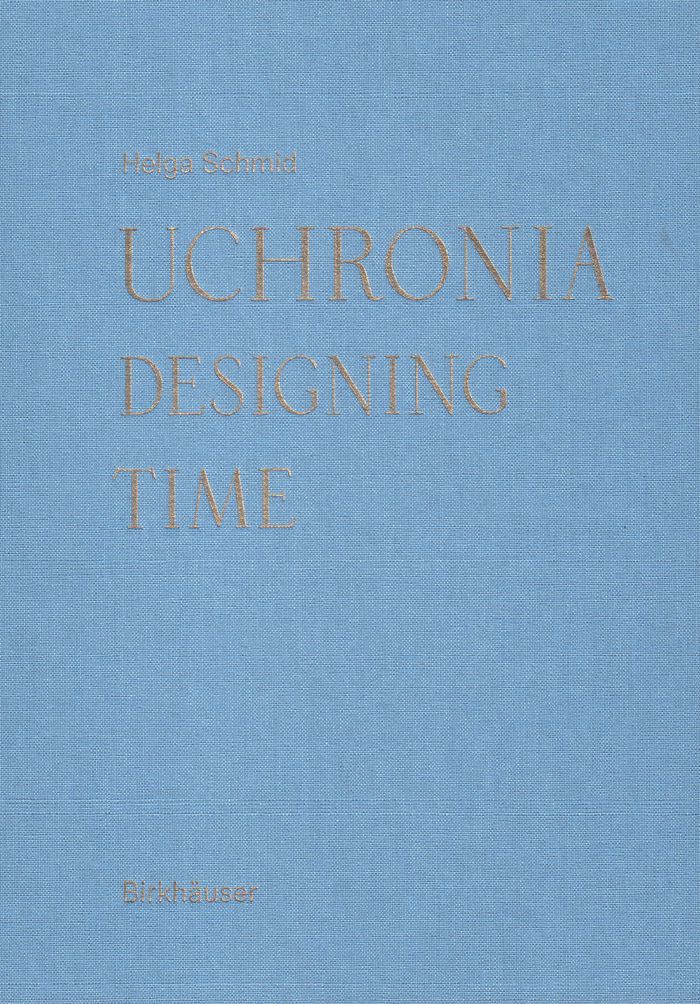
Uchronia: designing time
Uchronia: designing time
Actions:
Prix:
$64.00
(disponible sur commande)
Résumé:
This book critically investigates our contemporary time crisis. The transformation of society from an agrarian to an industrial, and finally an urbanized way of living and working has created a fundamental change in our understanding of time: a 24/7 mentality. The move from natural time to the digital age leads to a fragmentation of time that deeply affects our daily(...)
$64.00
(disponible sur commande)
Résumé:
This book critically investigates our contemporary time crisis. The transformation of society from an agrarian to an industrial, and finally an urbanized way of living and working has created a fundamental change in our understanding of time: a 24/7 mentality. The move from natural time to the digital age leads to a fragmentation of time that deeply affects our daily(...)
Titre:
Uchronia: designing time
Actions:
Prix:
$64.00
(disponible sur commande)
Résumé:
This book critically investigates our contemporary time crisis. The transformation of society from an agrarian to an industrial, and finally an urbanized way of living and working has created a fundamental change in our understanding of time: a 24/7 mentality. The move from natural time to the digital age leads to a fragmentation of time that deeply affects our daily biological and social rhythm. We need a new approach to time to overcome our temporal system of clocks and calendars. This book investigates a new perception of time by exploring the concept of uchronia, a term derived from the Greek u-topos and meaning 'no time' or 'non-time'. Uchronia is a way of questioning, speculating on and designing new kinds of temporal systems that are more about being in tune than on time.
Uchronia: designing time
Actions:
Prix:
$64.00
(disponible sur commande)
Résumé:
This book critically investigates our contemporary time crisis. The transformation of society from an agrarian to an industrial, and finally an urbanized way of living and working has created a fundamental change in our understanding of time: a 24/7 mentality. The move from natural time to the digital age leads to a fragmentation of time that deeply affects our daily biological and social rhythm. We need a new approach to time to overcome our temporal system of clocks and calendars. This book investigates a new perception of time by exploring the concept of uchronia, a term derived from the Greek u-topos and meaning 'no time' or 'non-time'. Uchronia is a way of questioning, speculating on and designing new kinds of temporal systems that are more about being in tune than on time.
Classification:
livres
livres
Publication:
janvier 2020
janvier 2020
Sujet:
Théorie du design
Théorie du design
Classification:
livres
livres
Actions:
Prix:
$32.95
(disponible sur commande)
Résumé:
Following Italy's unification in 1861, architects, artists, politicians, and literati engaged in volatile debates over the pursuit of national and regional identity. Growing industrialization and urbanization across the country contrasted with the rediscovery of traditionally built forms and objects created by the agrarian peasantry. Pride in Modesty argues that these(...)
$32.95
(disponible sur commande)
Résumé:
Following Italy's unification in 1861, architects, artists, politicians, and literati engaged in volatile debates over the pursuit of national and regional identity. Growing industrialization and urbanization across the country contrasted with the rediscovery of traditionally built forms and objects created by the agrarian peasantry. Pride in Modesty argues that these(...)
Titre:
Pride in modesty : modernist architecture and the vernacular tradition in Italy
Actions:
Prix:
$32.95
(disponible sur commande)
Résumé:
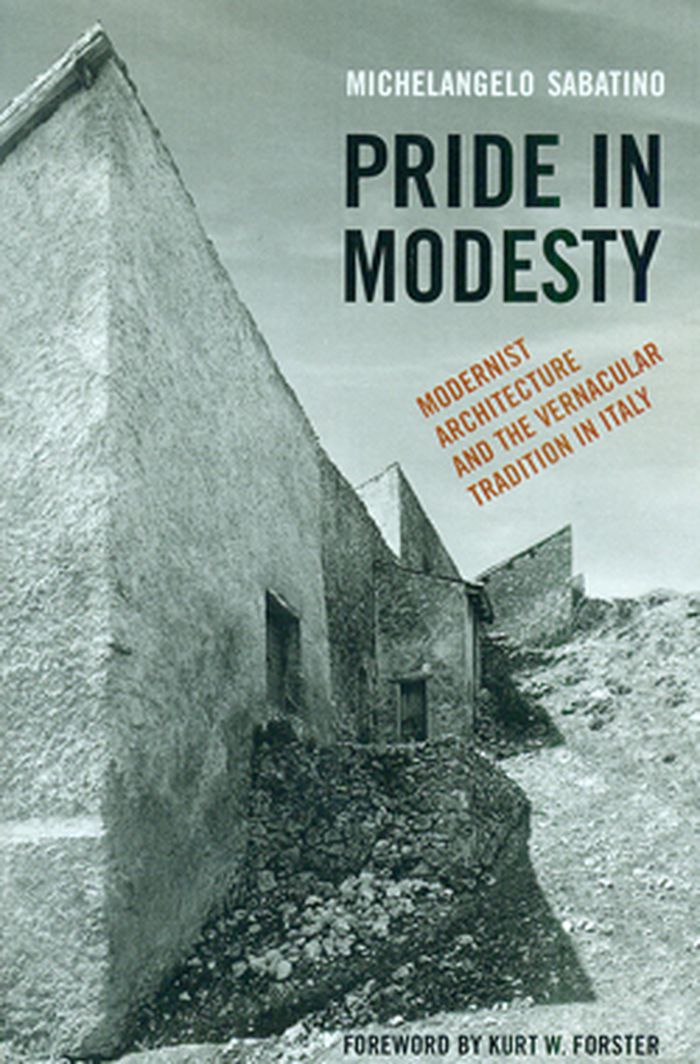
Following Italy's unification in 1861, architects, artists, politicians, and literati engaged in volatile debates over the pursuit of national and regional identity. Growing industrialization and urbanization across the country contrasted with the rediscovery of traditionally built forms and objects created by the agrarian peasantry. Pride in Modesty argues that these ordinary, often anonymous, everyday things inspired and transformed Italian art and architecture from the 1920s through the 1970s. Through in-depth examinations of texts, drawings, and buildings, Michelangelo Sabatino finds that the folk traditions of the pre-industrial countryside have provided formal, practical, and poetic inspiration directly affecting both design and construction practices over a period of sixty years and a number of different political regimes. This surprising continuity allows Sabatino to reject the division of Italian history into sharply delimited periods such as Fascist Interwar and Democratic Postwar and to instead emphasize the long, continuous process that transformed pastoral and urban ideals into a new, modernist Italy.
Pride in modesty : modernist architecture and the vernacular tradition in Italy
Actions:
Prix:
$32.95
(disponible sur commande)
Résumé:
Following Italy's unification in 1861, architects, artists, politicians, and literati engaged in volatile debates over the pursuit of national and regional identity. Growing industrialization and urbanization across the country contrasted with the rediscovery of traditionally built forms and objects created by the agrarian peasantry. Pride in Modesty argues that these ordinary, often anonymous, everyday things inspired and transformed Italian art and architecture from the 1920s through the 1970s. Through in-depth examinations of texts, drawings, and buildings, Michelangelo Sabatino finds that the folk traditions of the pre-industrial countryside have provided formal, practical, and poetic inspiration directly affecting both design and construction practices over a period of sixty years and a number of different political regimes. This surprising continuity allows Sabatino to reject the division of Italian history into sharply delimited periods such as Fascist Interwar and Democratic Postwar and to instead emphasize the long, continuous process that transformed pastoral and urban ideals into a new, modernist Italy.
Classification:
livres
livres
Publication:
juin 2011
juin 2011
Sujet:
Théorie de l’architecture
Théorie de l’architecture
Classification:
livres
livres
Titre:
Cities of change Addis Ababa: transformation strategies for urban territories in the 21st century
Cities of change Addis Ababa: transformation strategies for urban territories in the 21st century
Actions:
Prix:
$63.95
(disponible sur commande)
Résumé:
Economic strengthening and the developments associated with it, such as population growth, rural flight, and the explosive growth of cities, pose enormous challenges for city planners in urban centers throughout the world. But clumsy "test-tube" urban plans like those developed for China in part by German planners have shown that different standards and rules apply in the(...)
$63.95
(disponible sur commande)
Résumé:
Economic strengthening and the developments associated with it, such as population growth, rural flight, and the explosive growth of cities, pose enormous challenges for city planners in urban centers throughout the world. But clumsy "test-tube" urban plans like those developed for China in part by German planners have shown that different standards and rules apply in the(...)
Publication:
décembre 2009
décembre 2009
Titre:
Cities of change Addis Ababa: transformation strategies for urban territories in the 21st century
Actions:
Prix:
$63.95
(disponible sur commande)
Résumé:
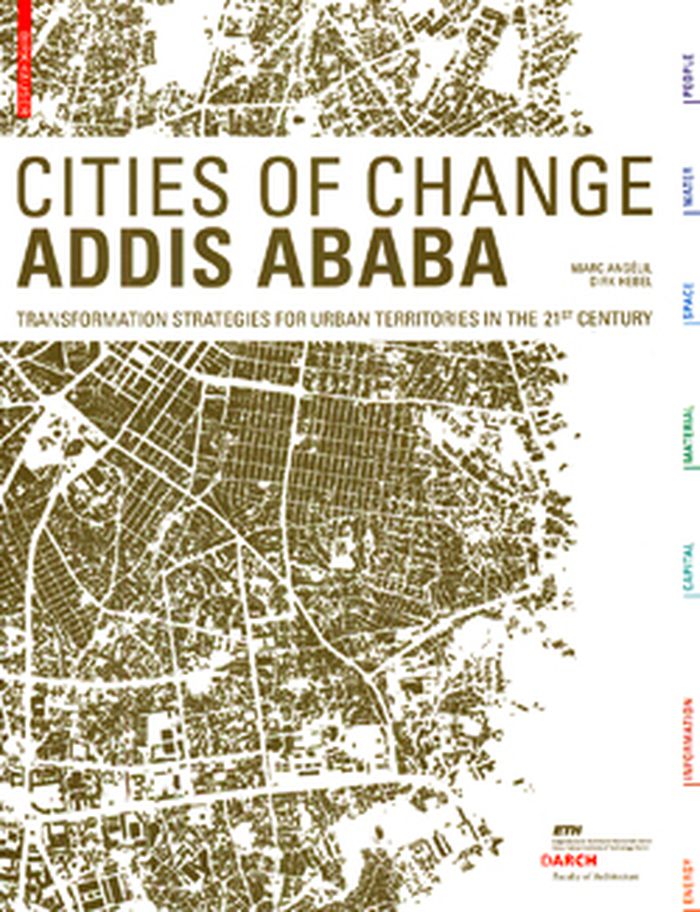
Economic strengthening and the developments associated with it, such as population growth, rural flight, and the explosive growth of cities, pose enormous challenges for city planners in urban centers throughout the world. But clumsy "test-tube" urban plans like those developed for China in part by German planners have shown that different standards and rules apply in the non-European world than in Europe s organically developed urban structures. This manual analyzes contemporary urban phenomena in economic growth regions using the Ethiopian capital city of Addis Abeba as an example, and presents a catalogue of sustainable strategies for city planning practice in the Second and Third Worlds. In the process, it provides planners with generally applicable methods and tools that are usable at the design stage and equip them to develop and deploy dynamic planning and project management processes. To this end, it illuminates such topical subjects as the changing agrarian and industrial landscape, the activation of urban wastelands, and the increasing density of urban hubs. In addition, it uses real projects as examples to highlight avenues for practical implementation.
Cities of change Addis Ababa: transformation strategies for urban territories in the 21st century
Actions:
Prix:
$63.95
(disponible sur commande)
Résumé:
Economic strengthening and the developments associated with it, such as population growth, rural flight, and the explosive growth of cities, pose enormous challenges for city planners in urban centers throughout the world. But clumsy "test-tube" urban plans like those developed for China in part by German planners have shown that different standards and rules apply in the non-European world than in Europe s organically developed urban structures. This manual analyzes contemporary urban phenomena in economic growth regions using the Ethiopian capital city of Addis Abeba as an example, and presents a catalogue of sustainable strategies for city planning practice in the Second and Third Worlds. In the process, it provides planners with generally applicable methods and tools that are usable at the design stage and equip them to develop and deploy dynamic planning and project management processes. To this end, it illuminates such topical subjects as the changing agrarian and industrial landscape, the activation of urban wastelands, and the increasing density of urban hubs. In addition, it uses real projects as examples to highlight avenues for practical implementation.
Classification:
livres
livres
Publication:
décembre 2009
décembre 2009
Classification:
périodiques
périodiques
Titre:
Oase 63 : countryside
Oase 63 : countryside
Actions:
Prix:
$39.95
(disponible en magasin)
Résumé:
The development of the countryside has generally been conceived of from an urban perspective: the country as producer of food for the urban population, as development area, or as recreational area. Even the development and protection of nature in the countryside are undertaken in service of city dwellers, so that they can experience scenic beauty as a compensation for the(...)
$39.95
(disponible en magasin)
Résumé:
The development of the countryside has generally been conceived of from an urban perspective: the country as producer of food for the urban population, as development area, or as recreational area. Even the development and protection of nature in the countryside are undertaken in service of city dwellers, so that they can experience scenic beauty as a compensation for the(...)
Sujet:
Revues
Revues
Publication:
décembre 2003, Rotterdam
décembre 2003, Rotterdam
Titre:
Oase 63 : countryside
Actions:
Prix:
$39.95
(disponible en magasin)
Résumé:
The development of the countryside has generally been conceived of from an urban perspective: the country as producer of food for the urban population, as development area, or as recreational area. Even the development and protection of nature in the countryside are undertaken in service of city dwellers, so that they can experience scenic beauty as a compensation for the pernicious urban life. Oase #63 questions existing approaches which view the countryside as the empty or "negative" part of the contemporary urban condition, and consequently reduce the countryside to what remains after the positive urban shape has been thought or carved out. Here the perspective is reversed: neither the city nor urbanization but rather the countryside and the agrarian industry constitute the starting point of this study. Thus "Oase #63" asks: Is it be possible to consider an alternative future for the countryside based on its intrinsic qualities? To what degree is the countryside capable of absorbing contemporary practices and processes? Does the countryside count at all as a bearer of political economy?
Oase 63 : countryside
Actions:
Prix:
$39.95
(disponible en magasin)
Résumé:
The development of the countryside has generally been conceived of from an urban perspective: the country as producer of food for the urban population, as development area, or as recreational area. Even the development and protection of nature in the countryside are undertaken in service of city dwellers, so that they can experience scenic beauty as a compensation for the pernicious urban life. Oase #63 questions existing approaches which view the countryside as the empty or "negative" part of the contemporary urban condition, and consequently reduce the countryside to what remains after the positive urban shape has been thought or carved out. Here the perspective is reversed: neither the city nor urbanization but rather the countryside and the agrarian industry constitute the starting point of this study. Thus "Oase #63" asks: Is it be possible to consider an alternative future for the countryside based on its intrinsic qualities? To what degree is the countryside capable of absorbing contemporary practices and processes? Does the countryside count at all as a bearer of political economy?
Classification:
périodiques
périodiques
Publication:
décembre 2003, Rotterdam
décembre 2003, Rotterdam
Sujet:
Revues
Revues
Classification:
périodiques
périodiques
Prix:
$49.65
(disponible sur commande)
Résumé:
The Industrial Revolution caused a paradigm shift from an agrarian economy to a manufacturing economy, giving birth to the industrial city. ‘City’ became synonymous with a concentration of factories causing unfiltered scenes between centres of production and urban dwellings. The corrupted image of the city ultimately led to the displacement and separation of production(...)
$49.65
(disponible sur commande)
Résumé:
The Industrial Revolution caused a paradigm shift from an agrarian economy to a manufacturing economy, giving birth to the industrial city. ‘City’ became synonymous with a concentration of factories causing unfiltered scenes between centres of production and urban dwellings. The corrupted image of the city ultimately led to the displacement and separation of production(...)
Titre:
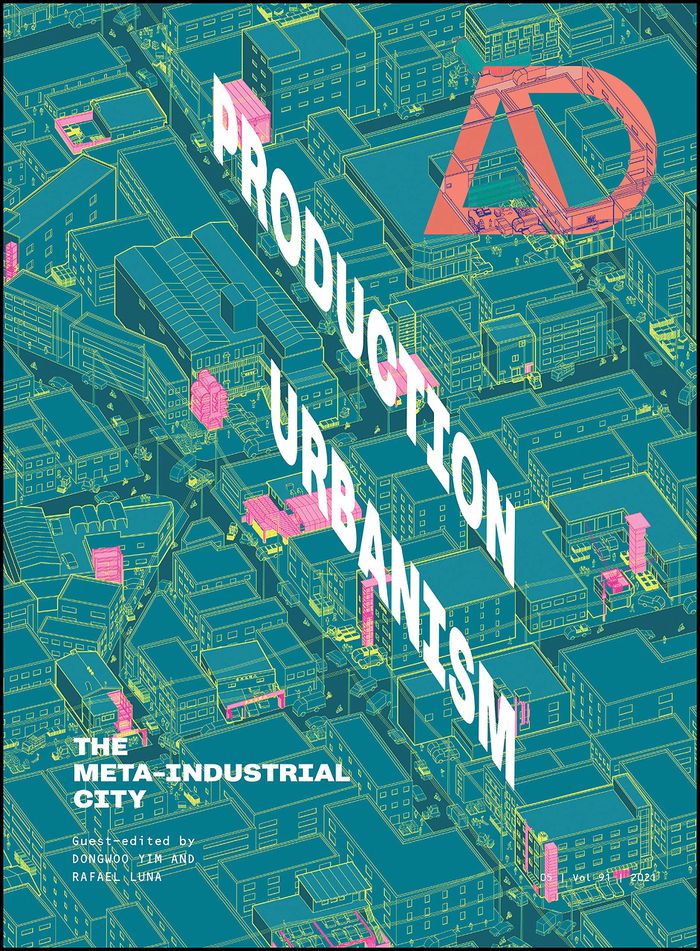
AD 91:5 Production urbanism: The meta industrial city
Actions:
Prix:
$49.65
(disponible sur commande)
Résumé:
The Industrial Revolution caused a paradigm shift from an agrarian economy to a manufacturing economy, giving birth to the industrial city. ‘City’ became synonymous with a concentration of factories causing unfiltered scenes between centres of production and urban dwellings. The corrupted image of the city ultimately led to the displacement and separation of production away from residential zones in the 20th century. However, new innovative manufacturing technologies are allowing a coexistence between factories and dwellings through hybrid typologies that blend production back into the urban fabric. This AD issue discusses the implications of the re-emergence of production as an architectural and urban agenda through hybrid models that engage a new socioeconomic shift. Given the contemporary circumstances of a global pandemic affecting global supply chains, it is necessary to deliver a vision for a new productive urbanism that allows autonomous circular economies to flourish. Our 21st-century cities have an obligation to explore a new industrial revolution of shared economies that optimise the use of the legacy systems, infrastructure and building stock. Yet it is ultimately up to architecture to take arms in delivering new typologies.
AD 91:5 Production urbanism: The meta industrial city
Actions:
Prix:
$49.65
(disponible sur commande)
Résumé:
The Industrial Revolution caused a paradigm shift from an agrarian economy to a manufacturing economy, giving birth to the industrial city. ‘City’ became synonymous with a concentration of factories causing unfiltered scenes between centres of production and urban dwellings. The corrupted image of the city ultimately led to the displacement and separation of production away from residential zones in the 20th century. However, new innovative manufacturing technologies are allowing a coexistence between factories and dwellings through hybrid typologies that blend production back into the urban fabric. This AD issue discusses the implications of the re-emergence of production as an architectural and urban agenda through hybrid models that engage a new socioeconomic shift. Given the contemporary circumstances of a global pandemic affecting global supply chains, it is necessary to deliver a vision for a new productive urbanism that allows autonomous circular economies to flourish. Our 21st-century cities have an obligation to explore a new industrial revolution of shared economies that optimise the use of the legacy systems, infrastructure and building stock. Yet it is ultimately up to architecture to take arms in delivering new typologies.
Classification:
périodiques
périodiques
Publication:
octobre 2021
octobre 2021
Sujet:
Revues
Revues
Classification:
livres
livres
Titre:
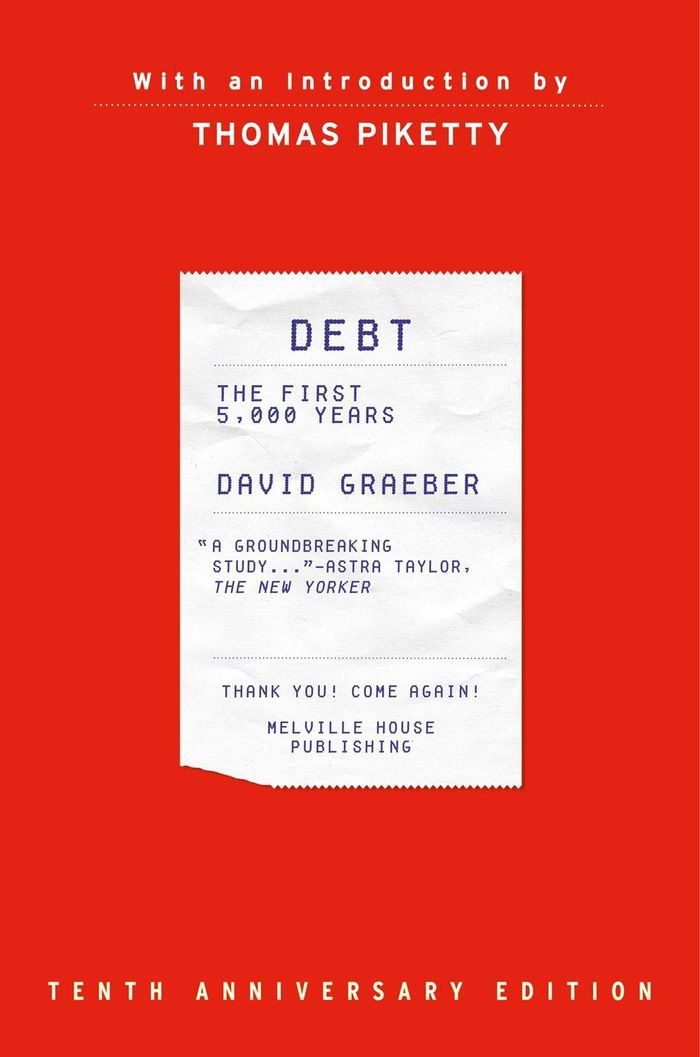
Debt: The first 5,000 years
Debt: The first 5,000 years
Actions:
Prix:
$29.99
(disponible sur commande)
Résumé:
Before there was money, there was debt. Every economics textbook says the same thing: Money was invented to replace onerous and complicated barter systems—to relieve ancient people from having to haul their goods to market. The problem with this version of history? There’s not a shred of evidence to support it. Here anthropologist David Graeber presents a stunning(...)
$29.99
(disponible sur commande)
Résumé:
Before there was money, there was debt. Every economics textbook says the same thing: Money was invented to replace onerous and complicated barter systems—to relieve ancient people from having to haul their goods to market. The problem with this version of history? There’s not a shred of evidence to support it. Here anthropologist David Graeber presents a stunning(...)
Titre:
Debt: The first 5,000 years
Actions:
Prix:
$29.99
(disponible sur commande)
Résumé:
Before there was money, there was debt. Every economics textbook says the same thing: Money was invented to replace onerous and complicated barter systems—to relieve ancient people from having to haul their goods to market. The problem with this version of history? There’s not a shred of evidence to support it. Here anthropologist David Graeber presents a stunning reversal of conventional wisdom. He shows that for more than 5,000 years, since the beginnings of the first agrarian empires, humans have used elaborate credit systems to buy and sell goods—that is, long before the invention of coins or cash. It is in this era, Graeber argues, that we also first encounter a society divided into debtors and creditors. Graeber shows that arguments about debt and debt forgiveness have been at the center of political debates from Italy to China, as well as sparking innumerable insurrections. He also brilliantly demonstrates that the language of the ancient works of law and religion (words like ''guilt,'' ''sin,'' and ''redemption'') derive in large part from ancient debates about debt, and shape even our most basic ideas of right and wrong. We are still fighting these battles today without knowing it. ''Debt: The first 5,000 years'' is a fascinating chronicle of this little known history—as well as how it has defined human history. It shows how debt has defined our human past, and what that means for our economic future.
Debt: The first 5,000 years
Actions:
Prix:
$29.99
(disponible sur commande)
Résumé:
Before there was money, there was debt. Every economics textbook says the same thing: Money was invented to replace onerous and complicated barter systems—to relieve ancient people from having to haul their goods to market. The problem with this version of history? There’s not a shred of evidence to support it. Here anthropologist David Graeber presents a stunning reversal of conventional wisdom. He shows that for more than 5,000 years, since the beginnings of the first agrarian empires, humans have used elaborate credit systems to buy and sell goods—that is, long before the invention of coins or cash. It is in this era, Graeber argues, that we also first encounter a society divided into debtors and creditors. Graeber shows that arguments about debt and debt forgiveness have been at the center of political debates from Italy to China, as well as sparking innumerable insurrections. He also brilliantly demonstrates that the language of the ancient works of law and religion (words like ''guilt,'' ''sin,'' and ''redemption'') derive in large part from ancient debates about debt, and shape even our most basic ideas of right and wrong. We are still fighting these battles today without knowing it. ''Debt: The first 5,000 years'' is a fascinating chronicle of this little known history—as well as how it has defined human history. It shows how debt has defined our human past, and what that means for our economic future.
Classification:
livres
livres
Publication:
octobre 2014
octobre 2014
Sujet:
Théorie/ philosophie
Théorie/ philosophie
Classification:
livres
livres
Actions:
Prix:
$41.00
(disponible sur commande)
Résumé:
Before there was money, there was debt. Every economics textbook says the same thing: Money was invented to replace onerous and complicated barter systems—to relieve ancient people from having to haul their goods to market. The problem with this version of history? There’s not a shred of evidence to support it. Here anthropologist David Graeber presents a stunning(...)
$41.00
(disponible sur commande)
Résumé:
Before there was money, there was debt. Every economics textbook says the same thing: Money was invented to replace onerous and complicated barter systems—to relieve ancient people from having to haul their goods to market. The problem with this version of history? There’s not a shred of evidence to support it. Here anthropologist David Graeber presents a stunning(...)
Titre:
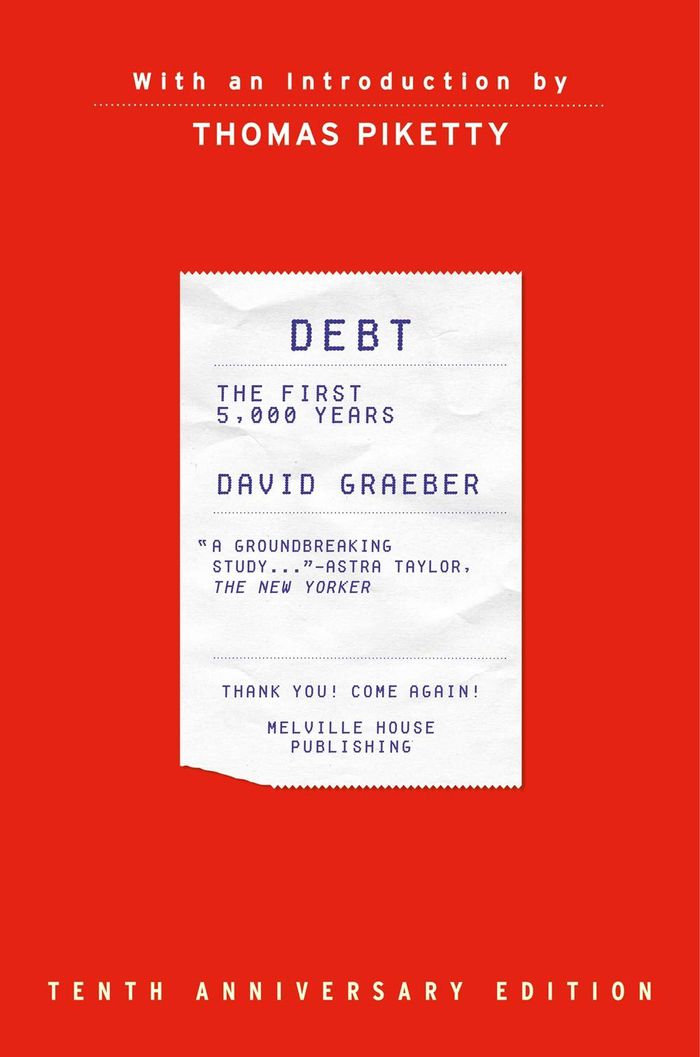
Debt: The first 5,000 years, updated and expanded
Actions:
Prix:
$41.00
(disponible sur commande)
Résumé:
Before there was money, there was debt. Every economics textbook says the same thing: Money was invented to replace onerous and complicated barter systems—to relieve ancient people from having to haul their goods to market. The problem with this version of history? There’s not a shred of evidence to support it. Here anthropologist David Graeber presents a stunning reversal of conventional wisdom. He shows that for more than 5,000 years, since the beginnings of the first agrarian empires, humans have used elaborate credit systems to buy and sell goods—that is, long before the invention of coins or cash. It is in this era, Graeber argues, that we also first encounter a society divided into debtors and creditors. Graeber shows that arguments about debt and debt forgiveness have been at the center of political debates from Italy to China, as well as sparking innumerable insurrections. He also brilliantly demonstrates that the language of the ancient works of law and religion (words like ''guilt,'' ''sin,'' and ''redemption'') derive in large part from ancient debates about debt, and shape even our most basic ideas of right and wrong. We are still fighting these battles today without knowing it. ''Debt: The first 5,000 years'' is a fascinating chronicle of this little known history—as well as how it has defined human history. It shows how debt has defined our human past, and what that means for our economic future.
Debt: The first 5,000 years, updated and expanded
Actions:
Prix:
$41.00
(disponible sur commande)
Résumé:
Before there was money, there was debt. Every economics textbook says the same thing: Money was invented to replace onerous and complicated barter systems—to relieve ancient people from having to haul their goods to market. The problem with this version of history? There’s not a shred of evidence to support it. Here anthropologist David Graeber presents a stunning reversal of conventional wisdom. He shows that for more than 5,000 years, since the beginnings of the first agrarian empires, humans have used elaborate credit systems to buy and sell goods—that is, long before the invention of coins or cash. It is in this era, Graeber argues, that we also first encounter a society divided into debtors and creditors. Graeber shows that arguments about debt and debt forgiveness have been at the center of political debates from Italy to China, as well as sparking innumerable insurrections. He also brilliantly demonstrates that the language of the ancient works of law and religion (words like ''guilt,'' ''sin,'' and ''redemption'') derive in large part from ancient debates about debt, and shape even our most basic ideas of right and wrong. We are still fighting these battles today without knowing it. ''Debt: The first 5,000 years'' is a fascinating chronicle of this little known history—as well as how it has defined human history. It shows how debt has defined our human past, and what that means for our economic future.
Classification:
livres
livres
Publication:
juin 2021
juin 2021
Sujet:
Théorie/ philosophie
Théorie/ philosophie
Classification:
livres
livres

Actions:
Prix:
$20.00
(disponible en magasin)
Résumé:
Almost ten years ago, Canary architectural practice AmP with its founders Felipe Artengo Rufino and José Pastrana (and their former partner Fernando Menis / Today: Menis Arquitectos) received acclaim far beyond their own country of Spain with their government building for the Canary Islands. A decisive factor for the international success of the team, which can be(...)
$20.00
(disponible en magasin)
Résumé:
Almost ten years ago, Canary architectural practice AmP with its founders Felipe Artengo Rufino and José Pastrana (and their former partner Fernando Menis / Today: Menis Arquitectos) received acclaim far beyond their own country of Spain with their government building for the Canary Islands. A decisive factor for the international success of the team, which can be(...)
Titre:
Amp - the mark of the volcano : artengo + pastrana
Actions:
Prix:
$20.00
(disponible en magasin)
Résumé:
Almost ten years ago, Canary architectural practice AmP with its founders Felipe Artengo Rufino and José Pastrana (and their former partner Fernando Menis / Today: Menis Arquitectos) received acclaim far beyond their own country of Spain with their government building for the Canary Islands. A decisive factor for the international success of the team, which can be considered neither minimalist nor traditionalist, was the congenial mixture of four elements: their expressionist creative impulse, their deep roots in their home environment, the Canary Islands, their sculptural approach to architecture and the creative use of concrete as design element in combination with local materials. These vital aspects of their architecture also characterize the latest works of AmP, which are always the result of exact observations of space and locality. The Aedes exhibition’s focus is on the athletics stadium in Tenerife which was completed this year. Fitted like a giant earth and stone embankment into the suburban context, it represents at the same time a master piece of modern high-tech architecture. The two residential towers in Añaza, 2007, which have already gained landmark character and are an example of an offbeat approach to council housing in Spain, appear like giant concrete sculptures with their slightly bent shape and their odd-sized windows irregularly dispersed throughout the façade. Other projects are the court house in Santa Cruz, 2007 (competition entry), the extension building Cabildo, 2007 and a school in Orotawa, 2005. The competition entry for the harbour area in Los Cristianos, 2007, illustrates the sensitive approach of Felipe Artengo Rufino und José Pastrana within the urban context, achieving a user- friendly transformation of this area where the city meets the sea, for residents as well as for tourist. A fundamental principle of AmP would be to understand a place as a sediment of geological and climatic forces, of industrial, agrarian and urban residue, permeated by sociological and cultural components. Closeness to their environment and the means at their disposal enable Felipe Artengo Rufino and José Pastrana to do research in situ and thus create a clearly defined architecture. The scenic variety of the islands, in which light plays an essential role, has a strong influence on their design process. The effects of time on their work are vital to AmP. The aging process of their favourite materials concrete, stone and timber fosters a continuous natural change which accentuates the power of architecture and makes the formal and structural aspects become even more evident in the course of time.
Amp - the mark of the volcano : artengo + pastrana
Actions:
Prix:
$20.00
(disponible en magasin)
Résumé:
Almost ten years ago, Canary architectural practice AmP with its founders Felipe Artengo Rufino and José Pastrana (and their former partner Fernando Menis / Today: Menis Arquitectos) received acclaim far beyond their own country of Spain with their government building for the Canary Islands. A decisive factor for the international success of the team, which can be considered neither minimalist nor traditionalist, was the congenial mixture of four elements: their expressionist creative impulse, their deep roots in their home environment, the Canary Islands, their sculptural approach to architecture and the creative use of concrete as design element in combination with local materials. These vital aspects of their architecture also characterize the latest works of AmP, which are always the result of exact observations of space and locality. The Aedes exhibition’s focus is on the athletics stadium in Tenerife which was completed this year. Fitted like a giant earth and stone embankment into the suburban context, it represents at the same time a master piece of modern high-tech architecture. The two residential towers in Añaza, 2007, which have already gained landmark character and are an example of an offbeat approach to council housing in Spain, appear like giant concrete sculptures with their slightly bent shape and their odd-sized windows irregularly dispersed throughout the façade. Other projects are the court house in Santa Cruz, 2007 (competition entry), the extension building Cabildo, 2007 and a school in Orotawa, 2005. The competition entry for the harbour area in Los Cristianos, 2007, illustrates the sensitive approach of Felipe Artengo Rufino und José Pastrana within the urban context, achieving a user- friendly transformation of this area where the city meets the sea, for residents as well as for tourist. A fundamental principle of AmP would be to understand a place as a sediment of geological and climatic forces, of industrial, agrarian and urban residue, permeated by sociological and cultural components. Closeness to their environment and the means at their disposal enable Felipe Artengo Rufino and José Pastrana to do research in situ and thus create a clearly defined architecture. The scenic variety of the islands, in which light plays an essential role, has a strong influence on their design process. The effects of time on their work are vital to AmP. The aging process of their favourite materials concrete, stone and timber fosters a continuous natural change which accentuates the power of architecture and makes the formal and structural aspects become even more evident in the course of time.
Classification:
livres
livres
Publication:
juillet 2007, Berlin
juillet 2007, Berlin
Sujet:
petits formats
petits formats


