


807 Résultats
Classification:
livres
livres

Actions:
Prix:
$24.95
(disponible sur commande)
Résumé:
Crooked Road tells the tale of how the Alaska Highway was built during World War II. David Remley chronicles how Americans and Canadians mapped and built the highway under the 1942 authorization of President Franklin D. Roosevelt, who ordered its construction for the joint defense of the United States and Canada. Crooked Road draws upon archival images and oral histories(...)
$24.95
(disponible sur commande)
Résumé:
Crooked Road tells the tale of how the Alaska Highway was built during World War II. David Remley chronicles how Americans and Canadians mapped and built the highway under the 1942 authorization of President Franklin D. Roosevelt, who ordered its construction for the joint defense of the United States and Canada. Crooked Road draws upon archival images and oral histories(...)
Publication:
septembre 2008, Fairbanks
septembre 2008, Fairbanks
Titre:
Crooked road: the story of Alaska highway
Actions:
Prix:
$24.95
(disponible sur commande)
Résumé:
Crooked Road tells the tale of how the Alaska Highway was built during World War II. David Remley chronicles how Americans and Canadians mapped and built the highway under the 1942 authorization of President Franklin D. Roosevelt, who ordered its construction for the joint defense of the United States and Canada. Crooked Road draws upon archival images and oral histories from those who lived in the prior unpaved wilderness and those who regularly drive on the highway today, and ultimately offers a fascinating historical account of the expansion of the American landscape. David Remley, a retired teacher, is now a full-time writer based in New Mexico.
Crooked road: the story of Alaska highway
Actions:
Prix:
$24.95
(disponible sur commande)
Résumé:
Crooked Road tells the tale of how the Alaska Highway was built during World War II. David Remley chronicles how Americans and Canadians mapped and built the highway under the 1942 authorization of President Franklin D. Roosevelt, who ordered its construction for the joint defense of the United States and Canada. Crooked Road draws upon archival images and oral histories from those who lived in the prior unpaved wilderness and those who regularly drive on the highway today, and ultimately offers a fascinating historical account of the expansion of the American landscape. David Remley, a retired teacher, is now a full-time writer based in New Mexico.
Classification:
livres
livres
Publication:
septembre 2008, Fairbanks
septembre 2008, Fairbanks
Classification:
livres
livres
Actions:
Prix:
$131.00
(disponible en magasin)
Résumé:
"KA ME RA" introduces Japanese-architecture enthusiasts to the nine photographers who have been instrumental in shaping the way we view the country’s spectacular postwar buildings. Through the illustrated pages, readers can "travel" across the nation to witness its most astonishing structures through the eyes- and camera lenses-- of these remarkable artists. But can(...)
$131.00
(disponible en magasin)
Résumé:
"KA ME RA" introduces Japanese-architecture enthusiasts to the nine photographers who have been instrumental in shaping the way we view the country’s spectacular postwar buildings. Through the illustrated pages, readers can "travel" across the nation to witness its most astonishing structures through the eyes- and camera lenses-- of these remarkable artists. But can(...)
Titre:
Ka Me Ra: Modern Japanese architecture through the photographer's lens
Actions:
Prix:
$131.00
(disponible en magasin)
Résumé:
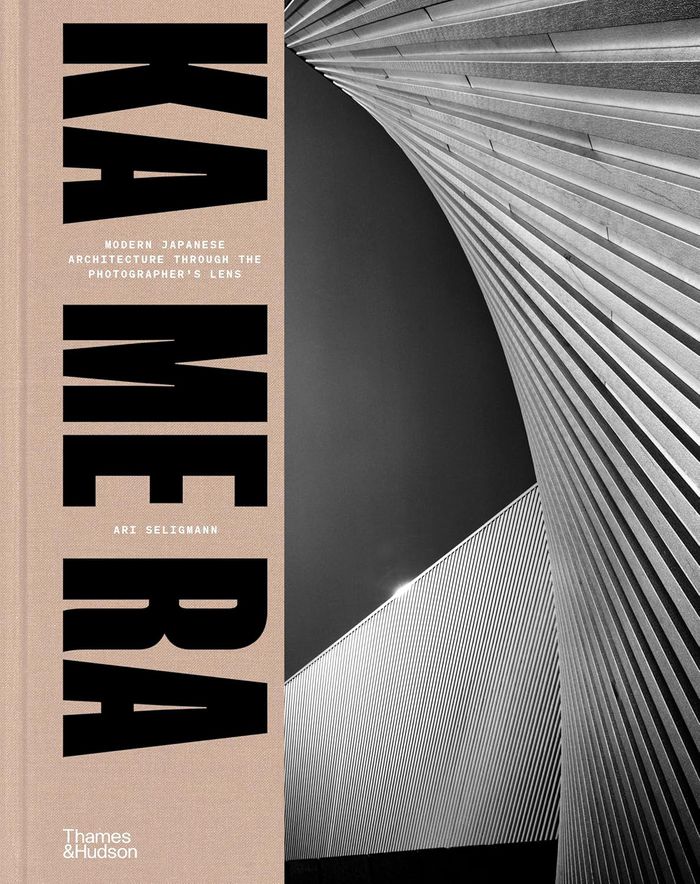
"KA ME RA" introduces Japanese-architecture enthusiasts to the nine photographers who have been instrumental in shaping the way we view the country’s spectacular postwar buildings. Through the illustrated pages, readers can "travel" across the nation to witness its most astonishing structures through the eyes- and camera lenses-- of these remarkable artists. But can documenting buildings in this way ever be entirely neutral? Author and Japanese architecture expert Ari Seligmann examines the post-World War II evolution of architectural photography in Japan as a vehicle for considering both universal and culturally specific concepts of the world through images. Through a veritable feast of exquisitely printed pictures, he grapples with the scope of architectural photography, recognizing that it is more than producing marketable images for architects and magazines, but neither is it a strictly historical record.
Ka Me Ra: Modern Japanese architecture through the photographer's lens
Actions:
Prix:
$131.00
(disponible en magasin)
Résumé:
"KA ME RA" introduces Japanese-architecture enthusiasts to the nine photographers who have been instrumental in shaping the way we view the country’s spectacular postwar buildings. Through the illustrated pages, readers can "travel" across the nation to witness its most astonishing structures through the eyes- and camera lenses-- of these remarkable artists. But can documenting buildings in this way ever be entirely neutral? Author and Japanese architecture expert Ari Seligmann examines the post-World War II evolution of architectural photography in Japan as a vehicle for considering both universal and culturally specific concepts of the world through images. Through a veritable feast of exquisitely printed pictures, he grapples with the scope of architectural photography, recognizing that it is more than producing marketable images for architects and magazines, but neither is it a strictly historical record.
Classification:
livres
livres
Publication:
mars 2026
mars 2026
Sujet:
Photographie- collections
Photographie- collections
Classification:
livres
livres
Actions:
Prix:
$108.00
(disponible sur commande)
Résumé:
This volume documents 12 paper works made from the earliest expired photographic papers in the collection of New York–based artist Alison Rossiter (born 1953), created in honor of Anna Atkins, the first person to illustrate a book with photographs. The exact expiration dates of these papers pinpoint their location on a timeline and coexist with events in world(...)
$108.00
(disponible sur commande)
Résumé:
This volume documents 12 paper works made from the earliest expired photographic papers in the collection of New York–based artist Alison Rossiter (born 1953), created in honor of Anna Atkins, the first person to illustrate a book with photographs. The exact expiration dates of these papers pinpoint their location on a timeline and coexist with events in world(...)
Titre:
Alison Rossiter: Compendium 1898-1919
Actions:
Prix:
$108.00
(disponible sur commande)
Résumé:
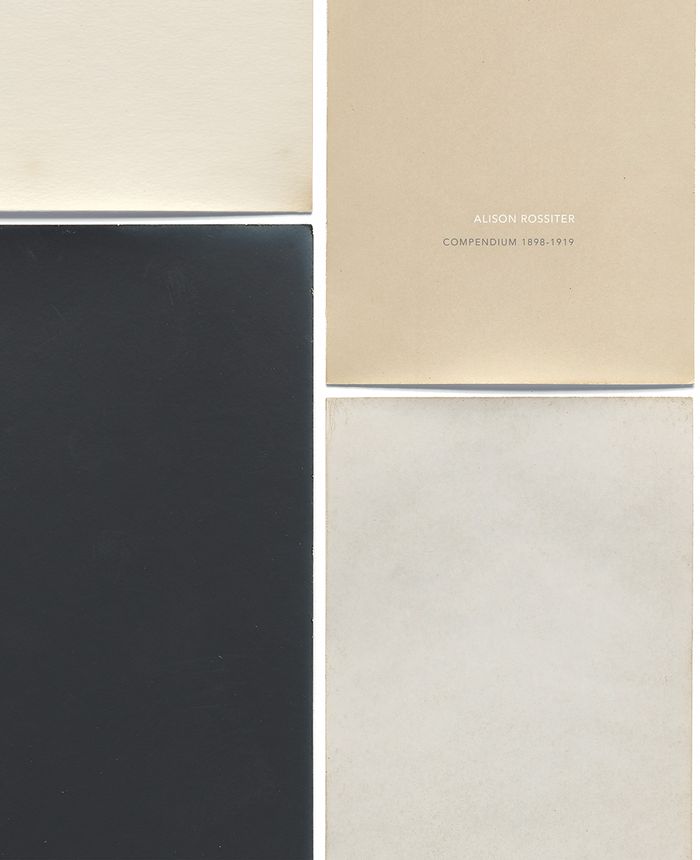
This volume documents 12 paper works made from the earliest expired photographic papers in the collection of New York–based artist Alison Rossiter (born 1953), created in honor of Anna Atkins, the first person to illustrate a book with photographs. The exact expiration dates of these papers pinpoint their location on a timeline and coexist with events in world history. No matter what the light-sensitive materials have endured through dormant years, they still respond to chemical development, and the resulting photographic tones are evidence of experience. Physical damage, moisture and mold produce tonal changes when developed. This book, a copublication with the New York Public Library and Yossi Milo, includes all 12 works from the series at actual scale, along with close-up details. The reference dates, which cover world events such as World War II, and art historical references such as Picasso’s Blue Period, are included at the back.
Alison Rossiter: Compendium 1898-1919
Actions:
Prix:
$108.00
(disponible sur commande)
Résumé:
This volume documents 12 paper works made from the earliest expired photographic papers in the collection of New York–based artist Alison Rossiter (born 1953), created in honor of Anna Atkins, the first person to illustrate a book with photographs. The exact expiration dates of these papers pinpoint their location on a timeline and coexist with events in world history. No matter what the light-sensitive materials have endured through dormant years, they still respond to chemical development, and the resulting photographic tones are evidence of experience. Physical damage, moisture and mold produce tonal changes when developed. This book, a copublication with the New York Public Library and Yossi Milo, includes all 12 works from the series at actual scale, along with close-up details. The reference dates, which cover world events such as World War II, and art historical references such as Picasso’s Blue Period, are included at the back.
Classification:
livres
livres
Publication:
juin 2020
juin 2020
Sujet:
Monographies photo
Monographies photo
Classification:
livres
livres
Titre:
Photo/montage in print
Photo/montage in print
Actions:
Prix:
$83.00
(disponible sur commande)
Résumé:
Photomontage was pioneered as a technique in central Europe in the 1910s, where it flourished as an art form through the end of World War II. While German artists such as John Heartfield, Max Ernst and Hannah Hoch used the medium to respond to the atrocities of war, other areas of Europe were simultaneously experiencing a newfound political autonomy as the(...)
$83.00
(disponible sur commande)
Résumé:
Photomontage was pioneered as a technique in central Europe in the 1910s, where it flourished as an art form through the end of World War II. While German artists such as John Heartfield, Max Ernst and Hannah Hoch used the medium to respond to the atrocities of war, other areas of Europe were simultaneously experiencing a newfound political autonomy as the(...)
Titre:
Photo/montage in print
Actions:
Prix:
$83.00
(disponible sur commande)
Résumé:
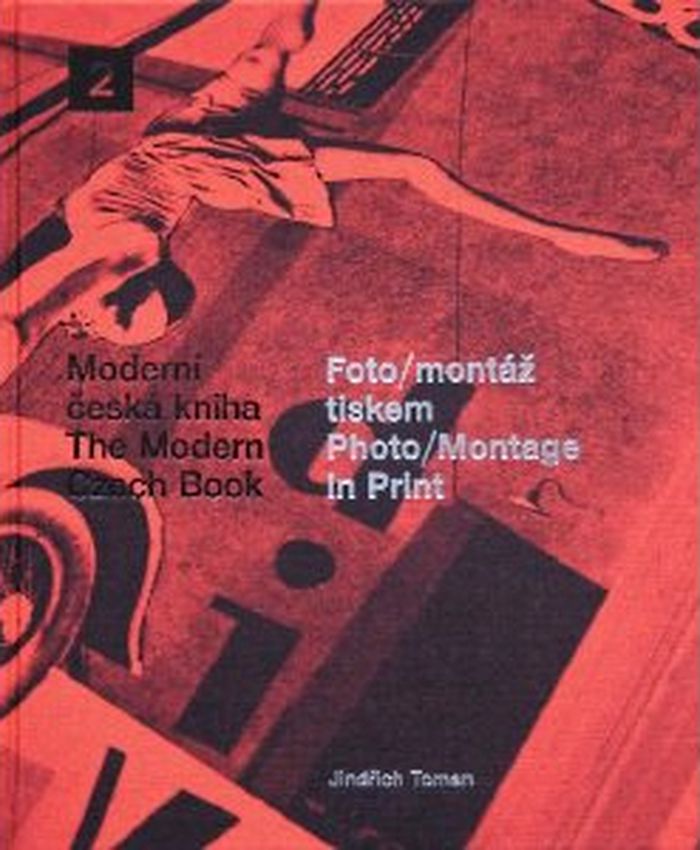
Photomontage was pioneered as a technique in central Europe in the 1910s, where it flourished as an art form through the end of World War II. While German artists such as John Heartfield, Max Ernst and Hannah Hoch used the medium to respond to the atrocities of war, other areas of Europe were simultaneously experiencing a newfound political autonomy as the Austro-Hungarian Empire collapsed. For these artists, namely Polish and Czech, photomontage manifested itself in a Surrealist approach to cut-and-paste imagery that emphasized its potential for visual poetry. "Photo/Montage in Print" traces the explosion of photomontage art in book cover design and illustrated magazines in the interwar period. Documenting the remarkable contributions of Czech artists in the creation of the visual language of modern print media, the publication includes some of the leading artists of the Czech avant garde such as Karel Teige, Jindrich Styrsky, Toyen, Ladislav Sutnar and Frantisek Muzika.
Photo/montage in print
Actions:
Prix:
$83.00
(disponible sur commande)
Résumé:
Photomontage was pioneered as a technique in central Europe in the 1910s, where it flourished as an art form through the end of World War II. While German artists such as John Heartfield, Max Ernst and Hannah Hoch used the medium to respond to the atrocities of war, other areas of Europe were simultaneously experiencing a newfound political autonomy as the Austro-Hungarian Empire collapsed. For these artists, namely Polish and Czech, photomontage manifested itself in a Surrealist approach to cut-and-paste imagery that emphasized its potential for visual poetry. "Photo/Montage in Print" traces the explosion of photomontage art in book cover design and illustrated magazines in the interwar period. Documenting the remarkable contributions of Czech artists in the creation of the visual language of modern print media, the publication includes some of the leading artists of the Czech avant garde such as Karel Teige, Jindrich Styrsky, Toyen, Ladislav Sutnar and Frantisek Muzika.
Classification:
livres
livres
Publication:
septembre 2011
septembre 2011
Sujet:
Photographie- collections
Photographie- collections
Classification:
livres
livres
Actions:
Prix:
$65.00
(disponible sur commande)
Résumé:
This in-depth look at six postwar photographers, alongwith a selection of their predecessors and contemporaries, captures a unique and pivotal moment in American photographic history. World War II and its aftermath ushered in a new era of artistic expression. Abstract Expressionism, film noir, Beat poetry, and the New Journalism are often considered responses to war's(...)
$65.00
(disponible sur commande)
Résumé:
This in-depth look at six postwar photographers, alongwith a selection of their predecessors and contemporaries, captures a unique and pivotal moment in American photographic history. World War II and its aftermath ushered in a new era of artistic expression. Abstract Expressionism, film noir, Beat poetry, and the New Journalism are often considered responses to war's(...)
Titre:
Street seen: the psychological gesture in American photography, 1940-1959
Actions:
Prix:
$65.00
(disponible sur commande)
Résumé:
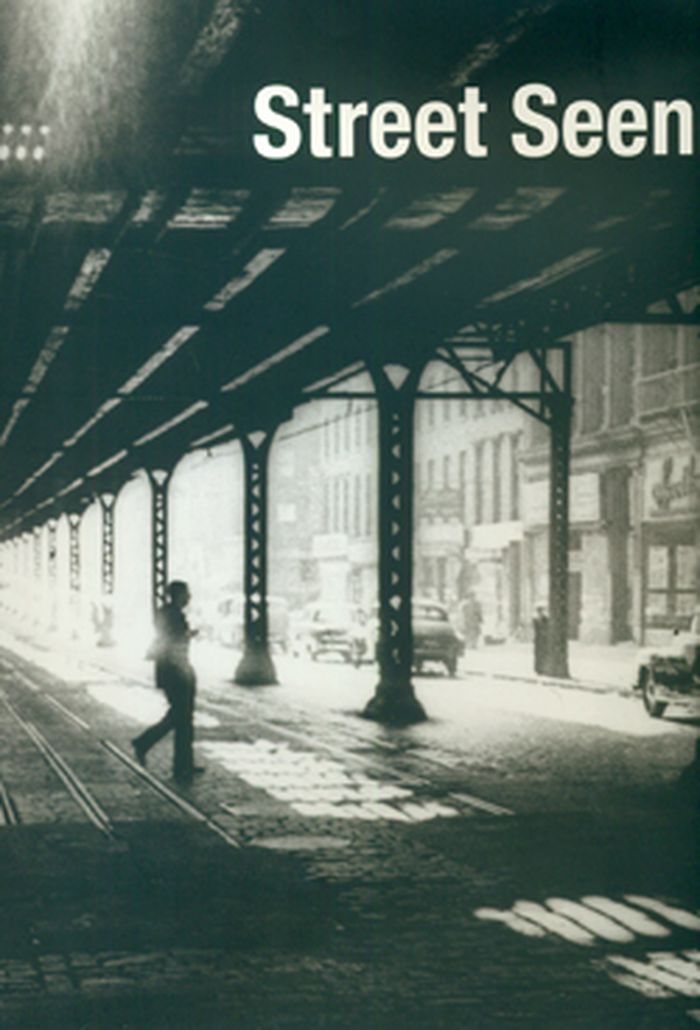
This in-depth look at six postwar photographers, alongwith a selection of their predecessors and contemporaries, captures a unique and pivotal moment in American photographic history. World War II and its aftermath ushered in a new era of artistic expression. Abstract Expressionism, film noir, Beat poetry, and the New Journalism are often considered responses to war's shocking realities. Creative photographers responded to the same situation with images that broke the rules of conventional photographic technique. This publication, a companion volume to an exhibition, highlights six photographers who were prominent during and immediately following the war. Lisette Model's unflinching look at the urban environment; Louis Faurer's portraits of eccentrics in Times Square; Ted Croner's haunting night images; Saul Leiter's evocative glimpses of daily life; William Klein's graphic, confrontational style; and Robert Frank's documentation of American ideals gone awry-these and other beautifully reproduced photographs communicate the emotional resonance of everyday life in postwar America.
Street seen: the psychological gesture in American photography, 1940-1959
Actions:
Prix:
$65.00
(disponible sur commande)
Résumé:
This in-depth look at six postwar photographers, alongwith a selection of their predecessors and contemporaries, captures a unique and pivotal moment in American photographic history. World War II and its aftermath ushered in a new era of artistic expression. Abstract Expressionism, film noir, Beat poetry, and the New Journalism are often considered responses to war's shocking realities. Creative photographers responded to the same situation with images that broke the rules of conventional photographic technique. This publication, a companion volume to an exhibition, highlights six photographers who were prominent during and immediately following the war. Lisette Model's unflinching look at the urban environment; Louis Faurer's portraits of eccentrics in Times Square; Ted Croner's haunting night images; Saul Leiter's evocative glimpses of daily life; William Klein's graphic, confrontational style; and Robert Frank's documentation of American ideals gone awry-these and other beautifully reproduced photographs communicate the emotional resonance of everyday life in postwar America.
Classification:
livres
livres
Publication:
février 2010
février 2010
Sujet:
Théorie de la photographie
Théorie de la photographie
Classification:
livres
livres
Titre:
Domus volume 2 1940-1949
Domus volume 2 1940-1949
Actions:
Prix:
$79.95
(disponible sur commande)
Résumé:
1940-1949: Destruction and Reconstruction. This volume covers the 1940s, when fascism came to a climax and World War II led to the extensive destruction of Europe. But the second half of this decade was also a time of reconstruction, democratization, and the related search for new social values. Unlike in Nazi Germany, in fascist Italy Modernism was able to advance in(...)
$79.95
(disponible sur commande)
Résumé:
1940-1949: Destruction and Reconstruction. This volume covers the 1940s, when fascism came to a climax and World War II led to the extensive destruction of Europe. But the second half of this decade was also a time of reconstruction, democratization, and the related search for new social values. Unlike in Nazi Germany, in fascist Italy Modernism was able to advance in(...)
Titre:
Domus volume 2 1940-1949
Actions:
Prix:
$79.95
(disponible sur commande)
Résumé:
1940-1949: Destruction and Reconstruction. This volume covers the 1940s, when fascism came to a climax and World War II led to the extensive destruction of Europe. But the second half of this decade was also a time of reconstruction, democratization, and the related search for new social values. Unlike in Nazi Germany, in fascist Italy Modernism was able to advance in architecture and design - as proved impressively by the buildings and designs by Carlo Mollino, Gian Luigi Banfi, Franco Albini, and Giuseppe Terragni that are documented herein. After the war, Organic Design emerged alongside the International style. This edition reflects upon the economic, social, and cultural problems of the time, but also shows how the force of the avant-garde continued to thrive in Italy, Switzerland, Scandinavia and the USA. Reports and features on modern industrial design and furniture, as well as domestic and business interiors stand side by side with articles about novel prefabricated houses
Domus volume 2 1940-1949
Actions:
Prix:
$79.95
(disponible sur commande)
Résumé:
1940-1949: Destruction and Reconstruction. This volume covers the 1940s, when fascism came to a climax and World War II led to the extensive destruction of Europe. But the second half of this decade was also a time of reconstruction, democratization, and the related search for new social values. Unlike in Nazi Germany, in fascist Italy Modernism was able to advance in architecture and design - as proved impressively by the buildings and designs by Carlo Mollino, Gian Luigi Banfi, Franco Albini, and Giuseppe Terragni that are documented herein. After the war, Organic Design emerged alongside the International style. This edition reflects upon the economic, social, and cultural problems of the time, but also shows how the force of the avant-garde continued to thrive in Italy, Switzerland, Scandinavia and the USA. Reports and features on modern industrial design and furniture, as well as domestic and business interiors stand side by side with articles about novel prefabricated houses
Classification:
livres
livres
Publication:
octobre 2008
octobre 2008
Sujet:
Design d’intérieur
Design d’intérieur
Classification:
livres
livres
Prix:
$27.95
(disponible sur commande)
Résumé:
"Do It Yourself" investigates the history behind the current do-it-yourself craze in home repair and remodeling. The origins of home improvement can be traced to the early part of the century, when (...)
$27.95
(disponible sur commande)
Résumé:
"Do It Yourself" investigates the history behind the current do-it-yourself craze in home repair and remodeling. The origins of home improvement can be traced to the early part of the century, when (...)
Publication:
avril 1998, New York
avril 1998, New York
Titre:
Do it yourself : home improvement in twentieth century America
Actions:
Prix:
$27.95
(disponible sur commande)
Résumé:
"Do It Yourself" investigates the history behind the current do-it-yourself craze in home repair and remodeling. The origins of home improvement can be traced to the early part of the century, when government loan programmes placed home ownership within the reach of growing numbers of families, mass-circulation magazines began providing their readers with information about home renovation, and increasing numbers of Americans turned to the manual arts and handicrafts as leisure-time pursuits. World War II provided many Americans with the skills and confidence to undertake home-improvement projects on their own, and after the war, changes in the manufacturing and retailing of tools and equipment created new possibilities for transforming one's home. The text of "Do It Yourself", which investigates topics ranging from women's roles in home repair to historic preservation, is a lively mix of illustrations--including period photographs, magazine spreads, and advertisements--and clearly written analysis of the trends
Do it yourself : home improvement in twentieth century America
Actions:
Prix:
$27.95
(disponible sur commande)
Résumé:
"Do It Yourself" investigates the history behind the current do-it-yourself craze in home repair and remodeling. The origins of home improvement can be traced to the early part of the century, when government loan programmes placed home ownership within the reach of growing numbers of families, mass-circulation magazines began providing their readers with information about home renovation, and increasing numbers of Americans turned to the manual arts and handicrafts as leisure-time pursuits. World War II provided many Americans with the skills and confidence to undertake home-improvement projects on their own, and after the war, changes in the manufacturing and retailing of tools and equipment created new possibilities for transforming one's home. The text of "Do It Yourself", which investigates topics ranging from women's roles in home repair to historic preservation, is a lively mix of illustrations--including period photographs, magazine spreads, and advertisements--and clearly written analysis of the trends
Classification:
livres
livres
Publication:
avril 1998, New York
avril 1998, New York
Classification:
livres
livres

Titre:
Teddy girls
Teddy girls
Actions:
Prix:
$45.00
(disponible en magasin)
Résumé:
'Teddy Girls' brings together, for the first time in one publication, images taken by Ken Russell of this scarcely documented subculture. Taken around London in January 1955 and published in the Picture Post on June 4th that year, these photographs are a testament to the supremely stylish young women depicted. The style of the Teddy Girls, like that of the Teddy Boys,(...)
$45.00
(disponible en magasin)
Résumé:
'Teddy Girls' brings together, for the first time in one publication, images taken by Ken Russell of this scarcely documented subculture. Taken around London in January 1955 and published in the Picture Post on June 4th that year, these photographs are a testament to the supremely stylish young women depicted. The style of the Teddy Girls, like that of the Teddy Boys,(...)
Titre:
Teddy girls
Actions:
Prix:
$45.00
(disponible en magasin)
Résumé:
'Teddy Girls' brings together, for the first time in one publication, images taken by Ken Russell of this scarcely documented subculture. Taken around London in January 1955 and published in the Picture Post on June 4th that year, these photographs are a testament to the supremely stylish young women depicted. The style of the Teddy Girls, like that of the Teddy Boys, grew out of a trend for Edwardian influenced fashion in post-World War II London. However, these women should be seen as more than a feminine facsimile of their male counterparts and Russell’s images document the ingenuity and complexity of their sartorial choices. As well as recording the style of the Teddy Girls, these images also provide a snapshot of London in 1955, a city in flux, still rebuilding itself after the damage inflicted by war. An essay by the fashion historian, Mairi MacKenzie, considers the cultural history and context within which these women lived and the photos were taken.
Teddy girls
Actions:
Prix:
$45.00
(disponible en magasin)
Résumé:
'Teddy Girls' brings together, for the first time in one publication, images taken by Ken Russell of this scarcely documented subculture. Taken around London in January 1955 and published in the Picture Post on June 4th that year, these photographs are a testament to the supremely stylish young women depicted. The style of the Teddy Girls, like that of the Teddy Boys, grew out of a trend for Edwardian influenced fashion in post-World War II London. However, these women should be seen as more than a feminine facsimile of their male counterparts and Russell’s images document the ingenuity and complexity of their sartorial choices. As well as recording the style of the Teddy Girls, these images also provide a snapshot of London in 1955, a city in flux, still rebuilding itself after the damage inflicted by war. An essay by the fashion historian, Mairi MacKenzie, considers the cultural history and context within which these women lived and the photos were taken.
Classification:
livres
livres
Publication:
septembre 2020
septembre 2020
Sujet:
Monographies photo
Monographies photo
Classification:
livres
livres
Titre:
High street
High street
Actions:
Prix:
$40.00
(disponible sur commande)
Résumé:
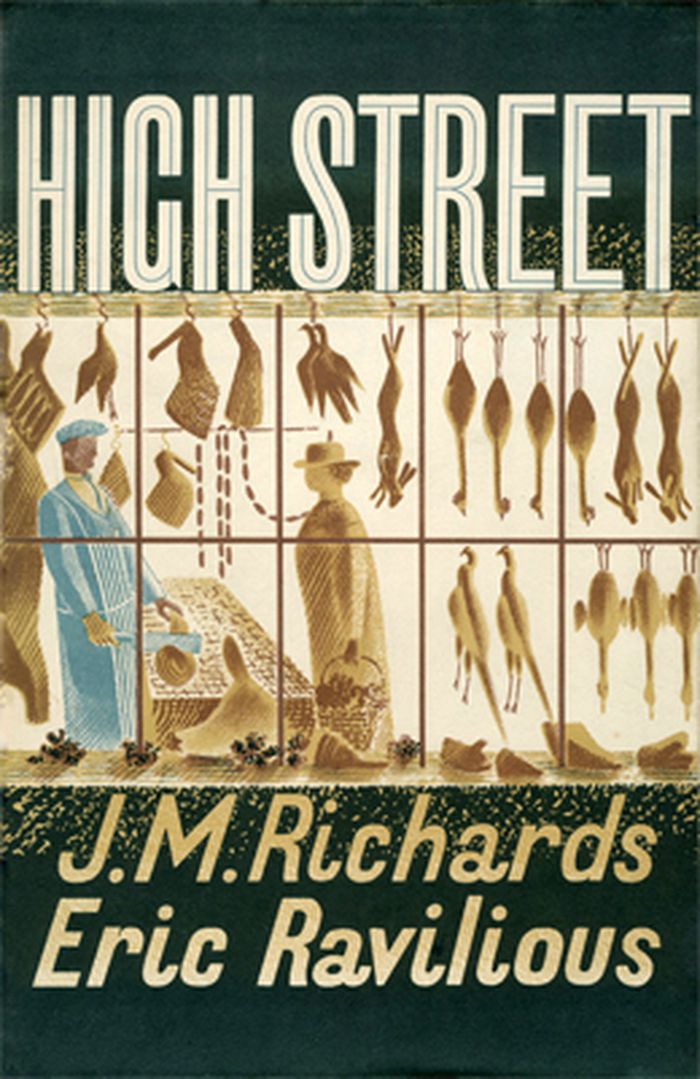
First published in 1938, this classic book introduces the British high street, pairing the timeless illustrations of beloved artist Eric Ravilious with an engaging text by architectural historian J. M. Richards. Shops include the family butcher, the cheesemonger, the knife grinder, and the oyster bar. Only 2,000 copies of the original book were printed before the(...)
$40.00
(disponible sur commande)
Résumé:
First published in 1938, this classic book introduces the British high street, pairing the timeless illustrations of beloved artist Eric Ravilious with an engaging text by architectural historian J. M. Richards. Shops include the family butcher, the cheesemonger, the knife grinder, and the oyster bar. Only 2,000 copies of the original book were printed before the(...)
Titre:
High street
Actions:
Prix:
$40.00
(disponible sur commande)
Résumé:
First published in 1938, this classic book introduces the British high street, pairing the timeless illustrations of beloved artist Eric Ravilious with an engaging text by architectural historian J. M. Richards. Shops include the family butcher, the cheesemonger, the knife grinder, and the oyster bar. Only 2,000 copies of the original book were printed before the lithographic plates were destroyed in the London Blitz during World War II. As a result, it has become one of the most collectible of all artist's books from this period. This beautiful facsimile edition features Ravilious's illustrations in exquisite color and includes an essay by V curator Gill Saunders, putting the book and its history into context.
High street
Actions:
Prix:
$40.00
(disponible sur commande)
Résumé:
First published in 1938, this classic book introduces the British high street, pairing the timeless illustrations of beloved artist Eric Ravilious with an engaging text by architectural historian J. M. Richards. Shops include the family butcher, the cheesemonger, the knife grinder, and the oyster bar. Only 2,000 copies of the original book were printed before the lithographic plates were destroyed in the London Blitz during World War II. As a result, it has become one of the most collectible of all artist's books from this period. This beautiful facsimile edition features Ravilious's illustrations in exquisite color and includes an essay by V curator Gill Saunders, putting the book and its history into context.
Classification:
livres
livres
Publication:
mars 2012
mars 2012
Sujet:
Illustration
Illustration
Classification:
livres
livres
Titre:
Refection on a past life
Refection on a past life
Actions:
Prix:
$22.00
(disponible en magasin)
Résumé:
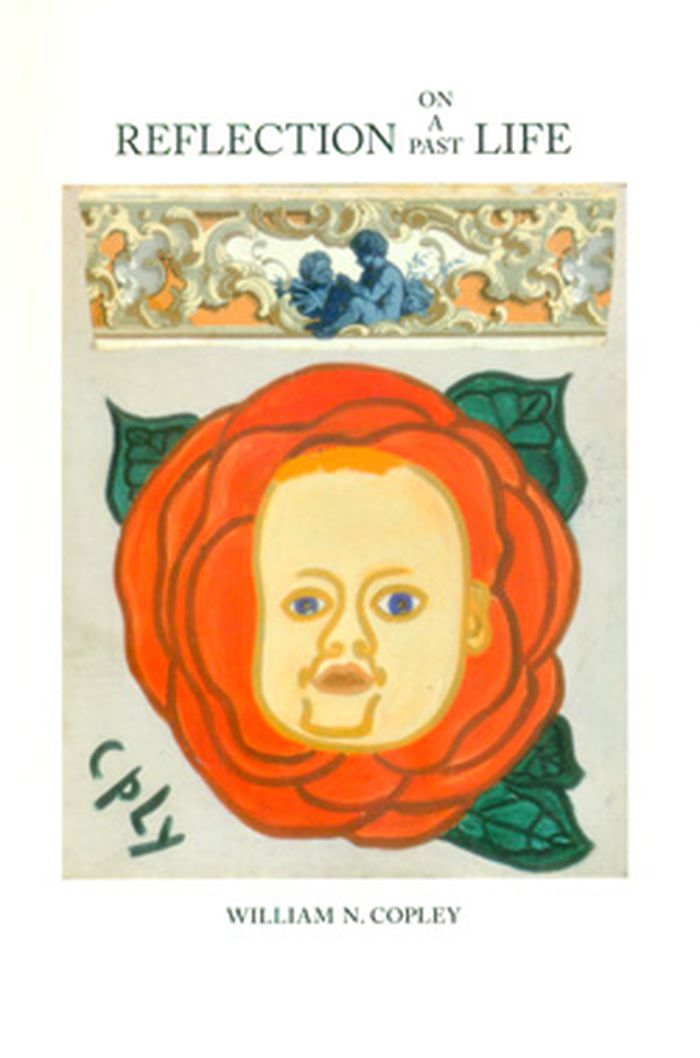
Originally written in 1976 for his Paris–New York exhibition, Reflection on a Past Life is painter William N. Copley’s (1919–1996) humorous and insightful account of his many bizarre encounters with key Surrealists, such as Man Ray, Max Ernst, Marcel Duchamp and René Magritte. After inheriting a fortune as a young man, Copley (often known as "CPLY"), used his family(...)
$22.00
(disponible en magasin)
Résumé:
Originally written in 1976 for his Paris–New York exhibition, Reflection on a Past Life is painter William N. Copley’s (1919–1996) humorous and insightful account of his many bizarre encounters with key Surrealists, such as Man Ray, Max Ernst, Marcel Duchamp and René Magritte. After inheriting a fortune as a young man, Copley (often known as "CPLY"), used his family(...)
Titre:
Refection on a past life
Actions:
Prix:
$22.00
(disponible en magasin)
Résumé:
Originally written in 1976 for his Paris–New York exhibition, Reflection on a Past Life is painter William N. Copley’s (1919–1996) humorous and insightful account of his many bizarre encounters with key Surrealists, such as Man Ray, Max Ernst, Marcel Duchamp and René Magritte. After inheriting a fortune as a young man, Copley (often known as "CPLY"), used his family wealth to open The Copley Galleries in Beverly Hills shortly after World War II, where he exhibited works by major Surrealist artists. Although the gallery proved to be a financial flop, closing after its first year, Copley secured a place in the annals of art history by bringing Surrealism to Hollywood, as well as with his own painting.
Refection on a past life
Actions:
Prix:
$22.00
(disponible en magasin)
Résumé:
Originally written in 1976 for his Paris–New York exhibition, Reflection on a Past Life is painter William N. Copley’s (1919–1996) humorous and insightful account of his many bizarre encounters with key Surrealists, such as Man Ray, Max Ernst, Marcel Duchamp and René Magritte. After inheriting a fortune as a young man, Copley (often known as "CPLY"), used his family wealth to open The Copley Galleries in Beverly Hills shortly after World War II, where he exhibited works by major Surrealist artists. Although the gallery proved to be a financial flop, closing after its first year, Copley secured a place in the annals of art history by bringing Surrealism to Hollywood, as well as with his own painting.
Classification:
livres
livres
Publication:
février 2014
février 2014
Sujet:
Théorie de l’art
Théorie de l’art


