


7798 Résultats
Classification:
livres
livres
Prix:
$54.95
(disponible en magasin)
Résumé:
Mass-produced from the 1970s to the 1990s, modular kiosks like the seminal K67, designed by the Slovenian architect Saša J. Mächtig, and similar systems – including the Polish Kami, the Macedonian KC190, and the Soviet ‘Bathyscaphe’ – could be found anywhere throughout the former Eastern Bloc and ex-Yugoslav countries, from bustling city squares to socialist-era housing(...)
$54.95
(disponible en magasin)
Résumé:
Mass-produced from the 1970s to the 1990s, modular kiosks like the seminal K67, designed by the Slovenian architect Saša J. Mächtig, and similar systems – including the Polish Kami, the Macedonian KC190, and the Soviet ‘Bathyscaphe’ – could be found anywhere throughout the former Eastern Bloc and ex-Yugoslav countries, from bustling city squares to socialist-era housing(...)
Titre:
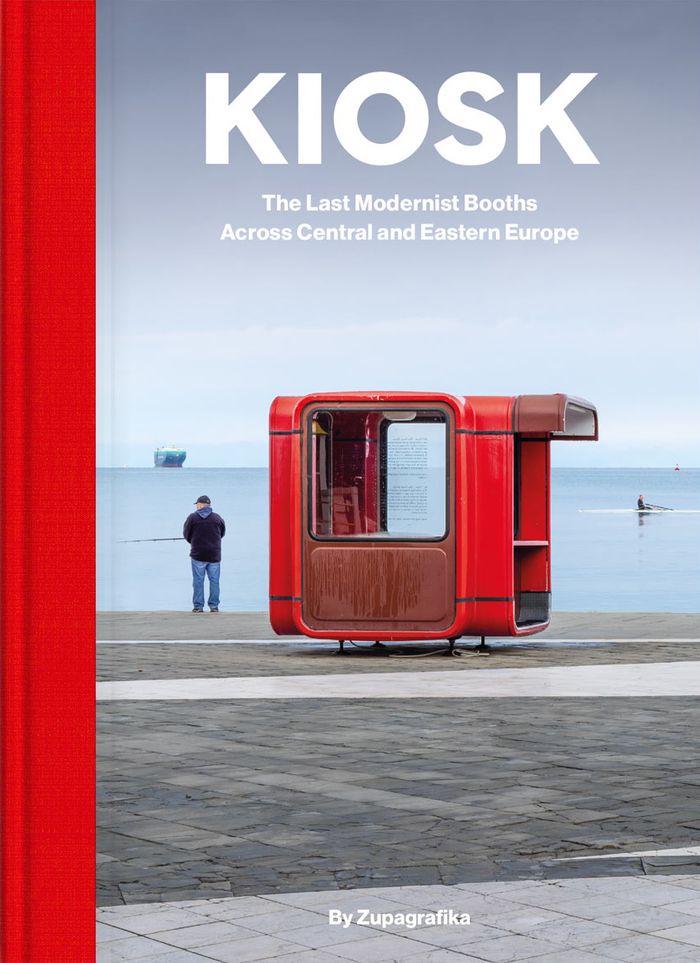
Kiosk: The last modernist booths across Central and Eastern Europe
Actions:
Prix:
$54.95
(disponible en magasin)
Résumé:
Mass-produced from the 1970s to the 1990s, modular kiosks like the seminal K67, designed by the Slovenian architect Saša J. Mächtig, and similar systems – including the Polish Kami, the Macedonian KC190, and the Soviet ‘Bathyscaphe’ – could be found anywhere throughout the former Eastern Bloc and ex-Yugoslav countries, from bustling city squares to socialist-era housing estates. They served as hot dog and Polish zapiekanka joints, farm egg and rotisserie chicken vendors, funeral flower shops, newsstands, car park booths, currency exchange offices, and more. Featuring over 150 kiosks – from Ljubljana to Warsaw, and from Belgrade to Berlin – this photobook provides previously unseen documentation of the remaining modernist booths that witnessed the socio-political transformation of Central and Eastern Europe at the end of the 20th century. While some remain active or have undergone refurbishment, others have been abandoned or have slowly faded from the urban landscape. The photographs in this unique collection were taken over the last decade by Zupagrafika’s founders, David Navarro and Martyna Sobecka. The book includes a foreword by urban explorer Maciej Czarnecki and an introduction by architectural historian Anna Cymer, offering invaluable insights into the history of these mobile structures.
Kiosk: The last modernist booths across Central and Eastern Europe
Actions:
Prix:
$54.95
(disponible en magasin)
Résumé:
Mass-produced from the 1970s to the 1990s, modular kiosks like the seminal K67, designed by the Slovenian architect Saša J. Mächtig, and similar systems – including the Polish Kami, the Macedonian KC190, and the Soviet ‘Bathyscaphe’ – could be found anywhere throughout the former Eastern Bloc and ex-Yugoslav countries, from bustling city squares to socialist-era housing estates. They served as hot dog and Polish zapiekanka joints, farm egg and rotisserie chicken vendors, funeral flower shops, newsstands, car park booths, currency exchange offices, and more. Featuring over 150 kiosks – from Ljubljana to Warsaw, and from Belgrade to Berlin – this photobook provides previously unseen documentation of the remaining modernist booths that witnessed the socio-political transformation of Central and Eastern Europe at the end of the 20th century. While some remain active or have undergone refurbishment, others have been abandoned or have slowly faded from the urban landscape. The photographs in this unique collection were taken over the last decade by Zupagrafika’s founders, David Navarro and Martyna Sobecka. The book includes a foreword by urban explorer Maciej Czarnecki and an introduction by architectural historian Anna Cymer, offering invaluable insights into the history of these mobile structures.
Classification:
livres
livres
Publication:
novembre 2024
novembre 2024
Sujet:
Modernisme
Modernisme
Classification:
livres
livres
Actions:
Prix:
$82.50
(disponible sur commande)
Résumé:
Piloting a single-engine biplane high above Washington D.C. in 1920, the intrepid inventor and aviation pioneer Sherman Fairchild first tested his custom-built sky camera, effectively founding the aerial photography company that would bear his name. Roaming America's skies for the next 40 years, the photographers of the Fairchild Aerial Survey Company documented nearly(...)
$82.50
(disponible sur commande)
Résumé:
Piloting a single-engine biplane high above Washington D.C. in 1920, the intrepid inventor and aviation pioneer Sherman Fairchild first tested his custom-built sky camera, effectively founding the aerial photography company that would bear his name. Roaming America's skies for the next 40 years, the photographers of the Fairchild Aerial Survey Company documented nearly(...)
Publication:
octobre 2001, New York
octobre 2001, New York
Titre:
Cities from the sky : an aerial portrait of America
Actions:
Prix:
$82.50
(disponible sur commande)
Résumé:
Piloting a single-engine biplane high above Washington D.C. in 1920, the intrepid inventor and aviation pioneer Sherman Fairchild first tested his custom-built sky camera, effectively founding the aerial photography company that would bear his name. Roaming America's skies for the next 40 years, the photographers of the Fairchild Aerial Survey Company documented nearly every major city in the United States. Their images, bot maplike shots from high above and low-angle raking views, form a definitive portrait of the American landscape. By the 1970s, the Fairchild archive was scattered across the country. Painstakingly reassembled for this book, the images (many of which have never been seen before) are brought together here for the first time. This large-format book collects over 125 extraordinary images taken between the 1920s and the 1960s. The photographs, valued both as works of art and as tools for urban historians, often capture historic moments: the Capitol Building during Franklin Delano Roosevelt's first inauguration and Yankee Stadium during Don Larsen's perfect game in the 1956 World Series. Others depict architectural lands: the Empire State Building, the Statue of Liberty, the Washington Monument, Hoover Dam, and Alcatraz, to name a few.
Cities from the sky : an aerial portrait of America
Actions:
Prix:
$82.50
(disponible sur commande)
Résumé:
Piloting a single-engine biplane high above Washington D.C. in 1920, the intrepid inventor and aviation pioneer Sherman Fairchild first tested his custom-built sky camera, effectively founding the aerial photography company that would bear his name. Roaming America's skies for the next 40 years, the photographers of the Fairchild Aerial Survey Company documented nearly every major city in the United States. Their images, bot maplike shots from high above and low-angle raking views, form a definitive portrait of the American landscape. By the 1970s, the Fairchild archive was scattered across the country. Painstakingly reassembled for this book, the images (many of which have never been seen before) are brought together here for the first time. This large-format book collects over 125 extraordinary images taken between the 1920s and the 1960s. The photographs, valued both as works of art and as tools for urban historians, often capture historic moments: the Capitol Building during Franklin Delano Roosevelt's first inauguration and Yankee Stadium during Don Larsen's perfect game in the 1956 World Series. Others depict architectural lands: the Empire State Building, the Statue of Liberty, the Washington Monument, Hoover Dam, and Alcatraz, to name a few.
Classification:
livres
livres
Publication:
octobre 2001, New York
octobre 2001, New York
Classification:
livres
livres
Actions:
Prix:
$17.95
(disponible sur commande)
Résumé:
De Lucchi (Ferrara 1951) was a protagonist of 'Radical Architecture', and also of the Cavart, Alchimia and Memphis movements. He has designed industrial objects for companies that are household words, such as Artemide, Kartell, Matsuhita, Mauser, Poltrona Frau and Olivetti; and buildings and interiors for clients like Deutsche Bank, Deutsche Bundesbahn, Enel, Poste(...)
$17.95
(disponible sur commande)
Résumé:
De Lucchi (Ferrara 1951) was a protagonist of 'Radical Architecture', and also of the Cavart, Alchimia and Memphis movements. He has designed industrial objects for companies that are household words, such as Artemide, Kartell, Matsuhita, Mauser, Poltrona Frau and Olivetti; and buildings and interiors for clients like Deutsche Bank, Deutsche Bundesbahn, Enel, Poste(...)
Publication:
septembre 2005, Milan
septembre 2005, Milan
Titre:
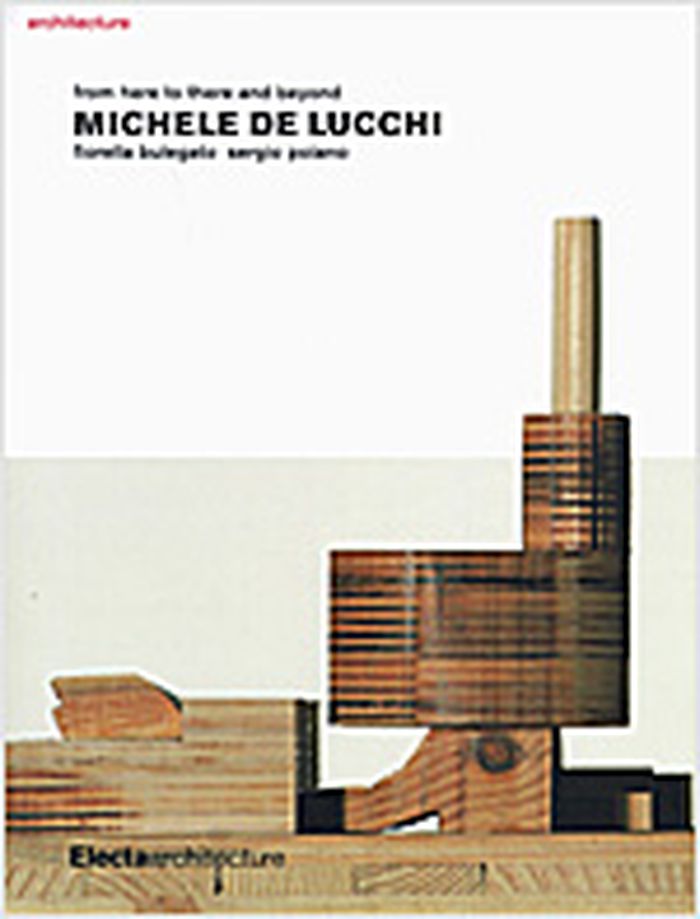
Michele De Lucchi : from here to there and beyond
Actions:
Prix:
$17.95
(disponible sur commande)
Résumé:
De Lucchi (Ferrara 1951) was a protagonist of 'Radical Architecture', and also of the Cavart, Alchimia and Memphis movements. He has designed industrial objects for companies that are household words, such as Artemide, Kartell, Matsuhita, Mauser, Poltrona Frau and Olivetti; and buildings and interiors for clients like Deutsche Bank, Deutsche Bundesbahn, Enel, Poste Italiane and Telecom Italia. In 1990 he founded Produzione Privata, an enterprise with an artisanal slant where he creates prototypes for industrial objects in limited editions by constantly drawing on Italy's skilled craft tradition. He also lectures at the IUAV University in Venice. This volume analyzes De Lucchi's works and his ideas on, among other things, the evolution of the workplace and of the objects that make up the varied landscape of advanced societies. The monograph is introduced by an essay that places De Lucchi's multifaceted work in perspective - from his debut as an artist at the beginning of the 1970s to his recent 'service design' - and includes detailed descriptions of a wide range of his major projects, a complete list of all his works, a bibliography and a selection of his writings.
Michele De Lucchi : from here to there and beyond
Actions:
Prix:
$17.95
(disponible sur commande)
Résumé:
De Lucchi (Ferrara 1951) was a protagonist of 'Radical Architecture', and also of the Cavart, Alchimia and Memphis movements. He has designed industrial objects for companies that are household words, such as Artemide, Kartell, Matsuhita, Mauser, Poltrona Frau and Olivetti; and buildings and interiors for clients like Deutsche Bank, Deutsche Bundesbahn, Enel, Poste Italiane and Telecom Italia. In 1990 he founded Produzione Privata, an enterprise with an artisanal slant where he creates prototypes for industrial objects in limited editions by constantly drawing on Italy's skilled craft tradition. He also lectures at the IUAV University in Venice. This volume analyzes De Lucchi's works and his ideas on, among other things, the evolution of the workplace and of the objects that make up the varied landscape of advanced societies. The monograph is introduced by an essay that places De Lucchi's multifaceted work in perspective - from his debut as an artist at the beginning of the 1970s to his recent 'service design' - and includes detailed descriptions of a wide range of his major projects, a complete list of all his works, a bibliography and a selection of his writings.
Classification:
livres
livres
Publication:
septembre 2005, Milan
septembre 2005, Milan
Classification:
livres
livres
Actions:
Prix:
$75.00
(disponible sur commande)
Résumé:
Walter Pfeiffer, whose work in the 1970s and 1980s prefigured many of the decisive developments in contemporary art today, is a classic artist's artist. Famous and beloved among art aficionados, Pfeiffer almost has been forgotten by the public at large. Now it's time to discover him, as his images seem more timely than ever. "Welcome Aboard! Photographs 1980 -- 2000" is(...)
$75.00
(disponible sur commande)
Résumé:
Walter Pfeiffer, whose work in the 1970s and 1980s prefigured many of the decisive developments in contemporary art today, is a classic artist's artist. Famous and beloved among art aficionados, Pfeiffer almost has been forgotten by the public at large. Now it's time to discover him, as his images seem more timely than ever. "Welcome Aboard! Photographs 1980 -- 2000" is(...)
Titre:
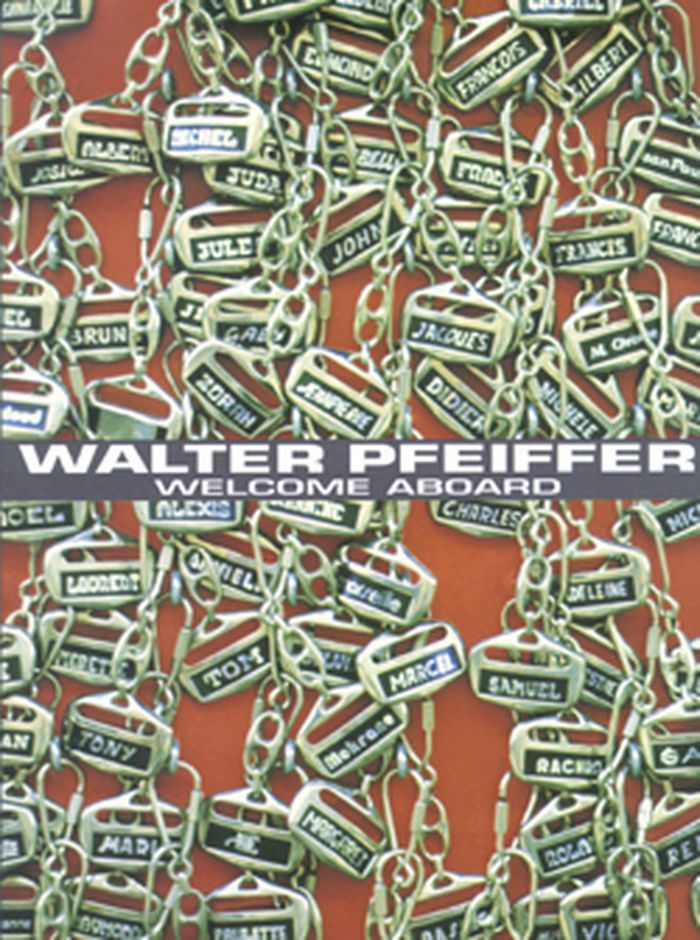
Walter Pfeiffer Welcome Aboard
Actions:
Prix:
$75.00
(disponible sur commande)
Résumé:
Walter Pfeiffer, whose work in the 1970s and 1980s prefigured many of the decisive developments in contemporary art today, is a classic artist's artist. Famous and beloved among art aficionados, Pfeiffer almost has been forgotten by the public at large. Now it's time to discover him, as his images seem more timely than ever. "Welcome Aboard! Photographs 1980 -- 2000" is both a monograph on Pfeiffer's photographic work and an artist's book, a photo-novel all of its own. Pfeiffer takes you on a long trip from suburban bliss to the horse race at Ascot, from wind-swept beaches to majestic mountaintops. Pfeiffer knows our dreams and artfully plays with them. In his still-lifes, landscapes, and portraits of beautiful boys and mischievous women, Pfeiffer celebrates his quest for beauty and glamour with sophistication, irony, and wit. Pfeiffer leads you into a world between reality and reverie, snapshot and mise-en-scène. The book is a photo album from Arcadia. With simple means Pfeiffer creates intelligent and classic images of beauty and bliss, imbued with a wistful awareness of their artifice. Stylish, suggestive, and erotic, his images are an encyclopedia of desire.
Walter Pfeiffer Welcome Aboard
Actions:
Prix:
$75.00
(disponible sur commande)
Résumé:
Walter Pfeiffer, whose work in the 1970s and 1980s prefigured many of the decisive developments in contemporary art today, is a classic artist's artist. Famous and beloved among art aficionados, Pfeiffer almost has been forgotten by the public at large. Now it's time to discover him, as his images seem more timely than ever. "Welcome Aboard! Photographs 1980 -- 2000" is both a monograph on Pfeiffer's photographic work and an artist's book, a photo-novel all of its own. Pfeiffer takes you on a long trip from suburban bliss to the horse race at Ascot, from wind-swept beaches to majestic mountaintops. Pfeiffer knows our dreams and artfully plays with them. In his still-lifes, landscapes, and portraits of beautiful boys and mischievous women, Pfeiffer celebrates his quest for beauty and glamour with sophistication, irony, and wit. Pfeiffer leads you into a world between reality and reverie, snapshot and mise-en-scène. The book is a photo album from Arcadia. With simple means Pfeiffer creates intelligent and classic images of beauty and bliss, imbued with a wistful awareness of their artifice. Stylish, suggestive, and erotic, his images are an encyclopedia of desire.
Classification:
livres
livres
Publication:
octobre 2001, Zürich
octobre 2001, Zürich
Sujet:
Monographies photo
Monographies photo
Classification:
livres
livres
Titre:
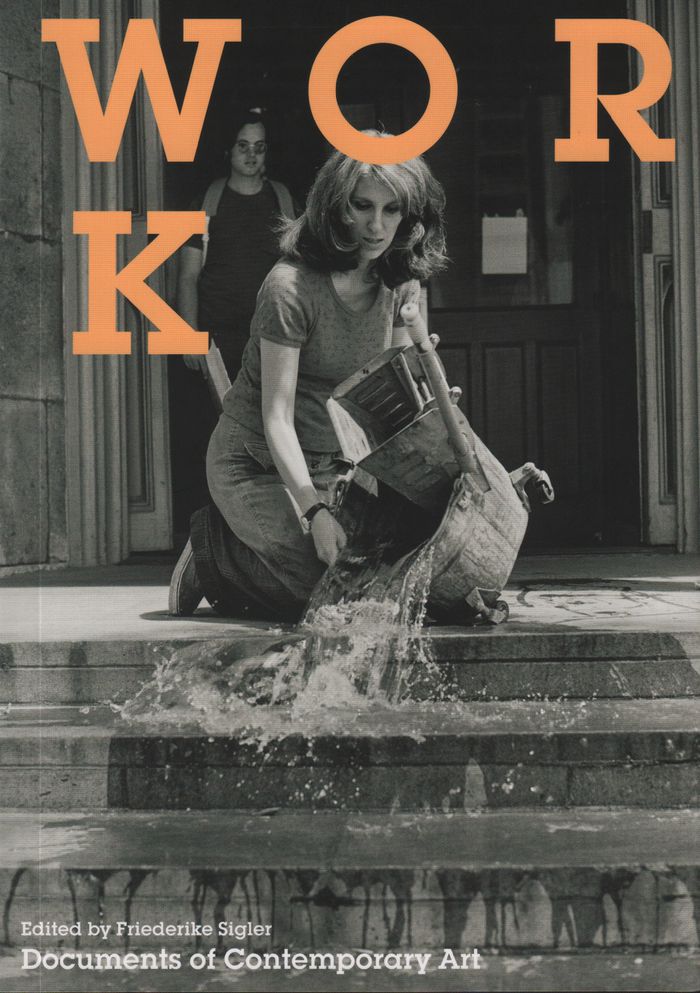
Work
Work
Actions:
Prix:
$33.50
(disponible sur commande)
Résumé:
Warhol’s Factory of the 1960s, Minimalism’s assembly-line aesthetics, conceptual and feminist concern with workers’ conditions in the 1970s—these are among the antecedents of a renewed focus on the work of art: labor as artistic activity, as artistic method and as object of artistic engagement. In 2002, the “Work Ethic” exhibition curated by Helen Molesworth at the(...)
$33.50
(disponible sur commande)
Résumé:
Warhol’s Factory of the 1960s, Minimalism’s assembly-line aesthetics, conceptual and feminist concern with workers’ conditions in the 1970s—these are among the antecedents of a renewed focus on the work of art: labor as artistic activity, as artistic method and as object of artistic engagement. In 2002, the “Work Ethic” exhibition curated by Helen Molesworth at the(...)
Titre:
Work
Actions:
Prix:
$33.50
(disponible sur commande)
Résumé:
Warhol’s Factory of the 1960s, Minimalism’s assembly-line aesthetics, conceptual and feminist concern with workers’ conditions in the 1970s—these are among the antecedents of a renewed focus on the work of art: labor as artistic activity, as artistic method and as object of artistic engagement. In 2002, the “Work Ethic” exhibition curated by Helen Molesworth at the Baltimore Museum of Art took its cue from recent art to spotlight this earlier era of artistic practice in which activity became as valid as, and often dispensed with, object-production. Revealed through this prism was “dematerialized” art’s close and critical relation to the emergent information age’s criteria of management, production and skill. By 2015, the Venice Biennale reflected artists’ wider concern with global economic and social crises, centered on exploitative and precarious worlds of employment. Yet while art increasingly engages with human travail, work’s significance in itself is seldom addressed by critics. This anthology explicitly investigates work in relation to contemporary art, surveying artistic strategies that grapple with the complexities of being an art worker in the new economy, a postproducer, a collaborator, a fabricator, a striker, an ethical campaigner, or would-be transformer of labor from oppression to liberation.
Work
Actions:
Prix:
$33.50
(disponible sur commande)
Résumé:
Warhol’s Factory of the 1960s, Minimalism’s assembly-line aesthetics, conceptual and feminist concern with workers’ conditions in the 1970s—these are among the antecedents of a renewed focus on the work of art: labor as artistic activity, as artistic method and as object of artistic engagement. In 2002, the “Work Ethic” exhibition curated by Helen Molesworth at the Baltimore Museum of Art took its cue from recent art to spotlight this earlier era of artistic practice in which activity became as valid as, and often dispensed with, object-production. Revealed through this prism was “dematerialized” art’s close and critical relation to the emergent information age’s criteria of management, production and skill. By 2015, the Venice Biennale reflected artists’ wider concern with global economic and social crises, centered on exploitative and precarious worlds of employment. Yet while art increasingly engages with human travail, work’s significance in itself is seldom addressed by critics. This anthology explicitly investigates work in relation to contemporary art, surveying artistic strategies that grapple with the complexities of being an art worker in the new economy, a postproducer, a collaborator, a fabricator, a striker, an ethical campaigner, or would-be transformer of labor from oppression to liberation.
Classification:
livres
livres
Publication:
août 2017
août 2017
Sujet:
Théorie de l’art
Théorie de l’art
Classification:
livres
livres

Actions:
Prix:
$45.00
(disponible sur commande)
Résumé:
Building Happiness discusses the nature of happiness within our built environment. In association with Building Futures, the book includes ideas and debates informed by architects such as Herman Hertzberger and Aldo van Eyck, with these brought up to date through the work of contemporary architects and commentators. The nature of our environment and how we use it and how(...)
$45.00
(disponible sur commande)
Résumé:
Building Happiness discusses the nature of happiness within our built environment. In association with Building Futures, the book includes ideas and debates informed by architects such as Herman Hertzberger and Aldo van Eyck, with these brought up to date through the work of contemporary architects and commentators. The nature of our environment and how we use it and how(...)
Titre:
Building happiness: architecture to make you smile
Actions:
Prix:
$45.00
(disponible sur commande)
Résumé:
Building Happiness discusses the nature of happiness within our built environment. In association with Building Futures, the book includes ideas and debates informed by architects such as Herman Hertzberger and Aldo van Eyck, with these brought up to date through the work of contemporary architects and commentators. The nature of our environment and how we use it and how we are conditioned by it is considered in detail, particularly the ways this affects our sense of wellbeing or happiness. Is this a personal feeling or is it how space is used in our community that constructs happiness? Is it green eco-houses, traditional cottages or 1970s modernism that makes you happy? Building Happiness comprises both short commentaries and longer essays concerned with the impact of our built environment. The book also provides a visual representation of the themes addressed through evocative illustrations, sketches and photography. With an introduction by Jane Wernick, and contributions by architectural and social critics such as Jeremy Till, Shami Chakrabarti, and Kirsty Wark, as well as commentaries from Glenda Jackson and prestigious architects and artists such as Richard Rogers and Richard Wentworth, amongst others.
Building happiness: architecture to make you smile
Actions:
Prix:
$45.00
(disponible sur commande)
Résumé:
Building Happiness discusses the nature of happiness within our built environment. In association with Building Futures, the book includes ideas and debates informed by architects such as Herman Hertzberger and Aldo van Eyck, with these brought up to date through the work of contemporary architects and commentators. The nature of our environment and how we use it and how we are conditioned by it is considered in detail, particularly the ways this affects our sense of wellbeing or happiness. Is this a personal feeling or is it how space is used in our community that constructs happiness? Is it green eco-houses, traditional cottages or 1970s modernism that makes you happy? Building Happiness comprises both short commentaries and longer essays concerned with the impact of our built environment. The book also provides a visual representation of the themes addressed through evocative illustrations, sketches and photography. With an introduction by Jane Wernick, and contributions by architectural and social critics such as Jeremy Till, Shami Chakrabarti, and Kirsty Wark, as well as commentaries from Glenda Jackson and prestigious architects and artists such as Richard Rogers and Richard Wentworth, amongst others.
Classification:
livres
livres
Publication:
décembre 2008, London
décembre 2008, London
Sujet:
Théorie de l’architecture
Théorie de l’architecture
Classification:
livres
livres
Actions:
Prix:
$16.95
(disponible sur commande)
Résumé:
Marc Camille Chaimowicz was one of the first artists to merge the realms of performance and installation art.His important 1972 installation Celebration? Realife featured masks, mirrors, various small objects, including masks and a mirror ball, music by the Rolling Stones, David Bowie, and others-and the artist, serving tea and engaging visitors in conversation in an(...)
$16.95
(disponible sur commande)
Résumé:
Marc Camille Chaimowicz was one of the first artists to merge the realms of performance and installation art.His important 1972 installation Celebration? Realife featured masks, mirrors, various small objects, including masks and a mirror ball, music by the Rolling Stones, David Bowie, and others-and the artist, serving tea and engaging visitors in conversation in an(...)
Titre:
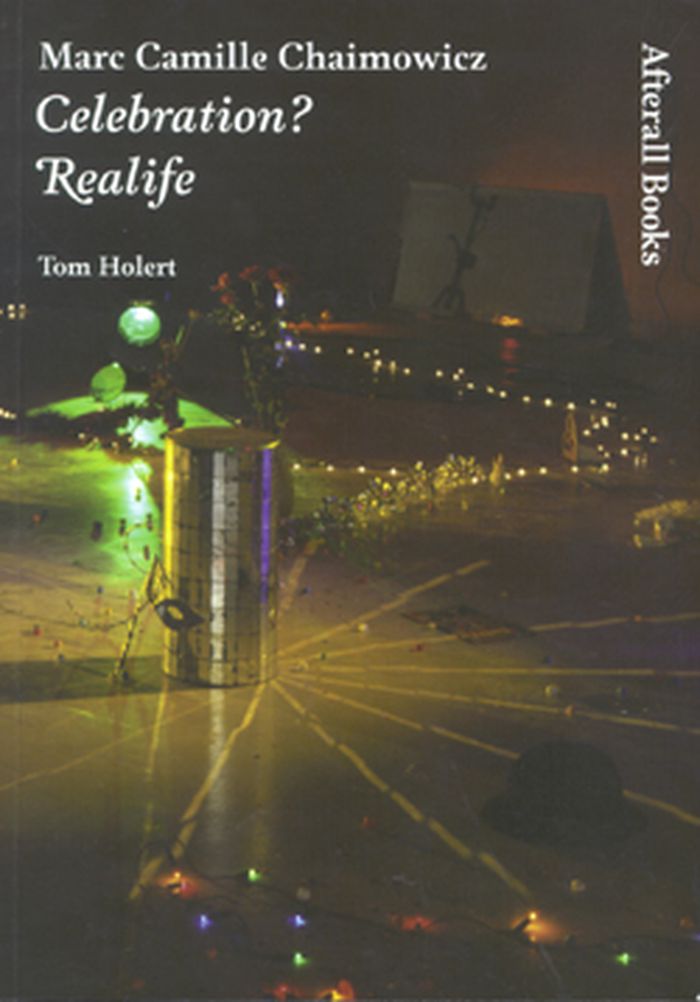
Marc Camille Chaimowicz: celebration? realife
Actions:
Prix:
$16.95
(disponible sur commande)
Résumé:
Marc Camille Chaimowicz was one of the first artists to merge the realms of performance and installation art.His important 1972 installation Celebration? Realife featured masks, mirrors, various small objects, including masks and a mirror ball, music by the Rolling Stones, David Bowie, and others-and the artist, serving tea and engaging visitors in conversation in an adjacent room. It raised questions about public/private dichotomies, art/design boundaries, and identifications based on gender, and recast the artist as a kind of art director and stage designer. This work's recent reinstallation (as Celebration? Realife Revisited 1972/2000) and the critical acclaim it inspired confirms Chaimowicz's importance and points to his relationships with artists as different and as difficult as Cerith Wyn Evans, Jutta Koether, Kai Althoff, and others. This richly illustrated study of Celebration? Realife, with many color images, uses Chaimowicz's installation to reconstruct that cultural moment in the 1970s when the role of the artist and the relationships of art, design, popular culture, and performance changed. Tom Holert is an art historian, independent scholar, and critic who has published widely in magazines including Artforum and Bookforum.
Marc Camille Chaimowicz: celebration? realife
Actions:
Prix:
$16.95
(disponible sur commande)
Résumé:
Marc Camille Chaimowicz was one of the first artists to merge the realms of performance and installation art.His important 1972 installation Celebration? Realife featured masks, mirrors, various small objects, including masks and a mirror ball, music by the Rolling Stones, David Bowie, and others-and the artist, serving tea and engaging visitors in conversation in an adjacent room. It raised questions about public/private dichotomies, art/design boundaries, and identifications based on gender, and recast the artist as a kind of art director and stage designer. This work's recent reinstallation (as Celebration? Realife Revisited 1972/2000) and the critical acclaim it inspired confirms Chaimowicz's importance and points to his relationships with artists as different and as difficult as Cerith Wyn Evans, Jutta Koether, Kai Althoff, and others. This richly illustrated study of Celebration? Realife, with many color images, uses Chaimowicz's installation to reconstruct that cultural moment in the 1970s when the role of the artist and the relationships of art, design, popular culture, and performance changed. Tom Holert is an art historian, independent scholar, and critic who has published widely in magazines including Artforum and Bookforum.
Classification:
livres
livres
Publication:
janvier 1900, London
janvier 1900, London
Sujet:
Théorie de l’art
Théorie de l’art
Classification:
livres
livres
Actions:
Prix:
$69.00
(disponible sur commande)
Résumé:
After the Second World War, talented young architects including several from Switzerland, turned to the task of promoting the ideals of Modernism. Their main interest lay in furthering the new design and construction methods which were then being made possible by industrial prefabrication and montage, eve considering and incorporating them at the design stage. The time(...)
$69.00
(disponible sur commande)
Résumé:
After the Second World War, talented young architects including several from Switzerland, turned to the task of promoting the ideals of Modernism. Their main interest lay in furthering the new design and construction methods which were then being made possible by industrial prefabrication and montage, eve considering and incorporating them at the design stage. The time(...)
Publication:
avril 2002, Basel
avril 2002, Basel
Titre:
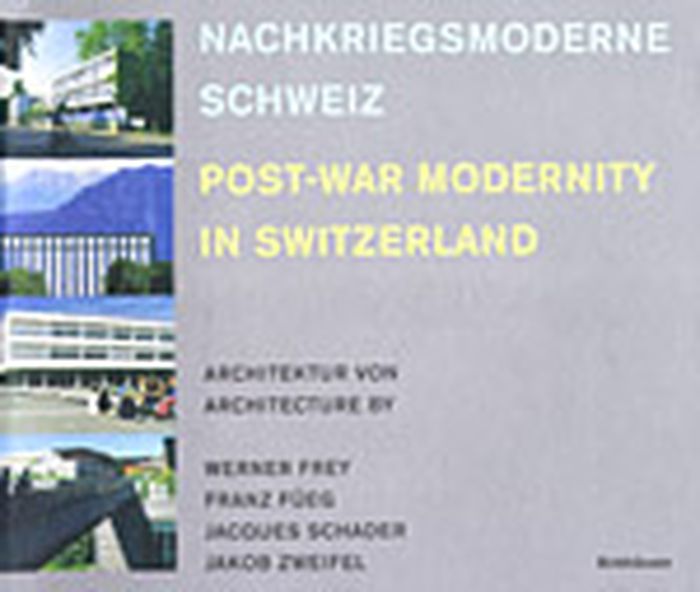
Post-war modernity in Switzerland : architecture by Werner Frey, Franz Füeg, Jacques Schader, Jakob Zweifel
Actions:
Prix:
$69.00
(disponible sur commande)
Résumé:
After the Second World War, talented young architects including several from Switzerland, turned to the task of promoting the ideals of Modernism. Their main interest lay in furthering the new design and construction methods which were then being made possible by industrial prefabrication and montage, eve considering and incorporating them at the design stage. The time has now come to review this chapter of recent architectural history. This publication focuses on four architects: Werner Frey (1912-1989), Franz Füeg (born 1921), Jacques Schader (born 1917) and Jacob Zweifel (born 1921). This group of Zurich architects created buildings which can be seen to embody the typical features of the architecture emerging from the late 1950s, 1960s, and early 1970s : fastidious construction methods, a structural approach to designing brought about by increased use of prefabricated parts, an awareness of different social needs of the individual and the group which were subsequently reflected in the designs. Using a wealth of historical illustrations together with photographs by Doris Fanconis and 8 documentary films by Georg Radanowicz, visually interpreting the architecture from a contemporary viewpoint, this book is an invaluable documentation and analysis of those buildings which are of consequence for today's architecture.
Post-war modernity in Switzerland : architecture by Werner Frey, Franz Füeg, Jacques Schader, Jakob Zweifel
Actions:
Prix:
$69.00
(disponible sur commande)
Résumé:
After the Second World War, talented young architects including several from Switzerland, turned to the task of promoting the ideals of Modernism. Their main interest lay in furthering the new design and construction methods which were then being made possible by industrial prefabrication and montage, eve considering and incorporating them at the design stage. The time has now come to review this chapter of recent architectural history. This publication focuses on four architects: Werner Frey (1912-1989), Franz Füeg (born 1921), Jacques Schader (born 1917) and Jacob Zweifel (born 1921). This group of Zurich architects created buildings which can be seen to embody the typical features of the architecture emerging from the late 1950s, 1960s, and early 1970s : fastidious construction methods, a structural approach to designing brought about by increased use of prefabricated parts, an awareness of different social needs of the individual and the group which were subsequently reflected in the designs. Using a wealth of historical illustrations together with photographs by Doris Fanconis and 8 documentary films by Georg Radanowicz, visually interpreting the architecture from a contemporary viewpoint, this book is an invaluable documentation and analysis of those buildings which are of consequence for today's architecture.
Classification:
livres
livres
Publication:
avril 2002, Basel
avril 2002, Basel
Classification:
livres
livres
Actions:
Prix:
$70.00
(disponible sur commande)
Résumé:
Inspired by the rise of environmental psychology and increasing support for behavioral research after the Second World War, new initiatives at the federal, state, and local levels looked to influence the human psyche through form, or elicit desired behaviors with environmental incentives, implementing what Joy Knoblauch calls 'psychological functionalism.' Recruited by(...)
$70.00
(disponible sur commande)
Résumé:
Inspired by the rise of environmental psychology and increasing support for behavioral research after the Second World War, new initiatives at the federal, state, and local levels looked to influence the human psyche through form, or elicit desired behaviors with environmental incentives, implementing what Joy Knoblauch calls 'psychological functionalism.' Recruited by(...)
Titre:
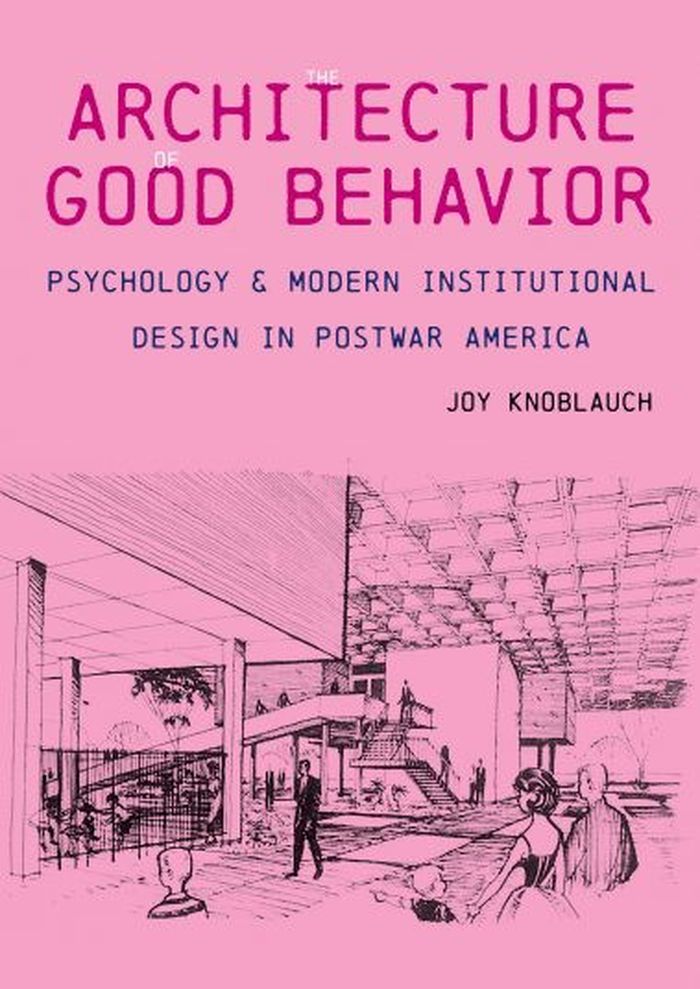
The architecture of good behaviour
Actions:
Prix:
$70.00
(disponible sur commande)
Résumé:
Inspired by the rise of environmental psychology and increasing support for behavioral research after the Second World War, new initiatives at the federal, state, and local levels looked to influence the human psyche through form, or elicit desired behaviors with environmental incentives, implementing what Joy Knoblauch calls 'psychological functionalism.' Recruited by federal construction and research programs for institutional reform and expansion — which included hospitals, mental health centers, prisons, and public housing—architects theorized new ways to control behavior and make it more functional by exercising soft power, or power through persuasion, with their designs. In the 1960s – 1970s era of anti-institutional sentiment, they hoped to offer an enlightened, palatable, more humane solution to larger social problems related to health, mental health, justice, and security of the population by applying psychological expertise to institutional design. In turn, Knoblauch argues, architects gained new roles as researchers, organizers, and writers while theories of confinement, territory, and surveillance proliferated. 'The Architecture of Good Behavior' explores psychological functionalism as a political tool and the architectural projects funded by a postwar nation in its efforts to govern, exert control over, and ultimately pacify its patients, prisoners, and residents.
The architecture of good behaviour
Actions:
Prix:
$70.00
(disponible sur commande)
Résumé:
Inspired by the rise of environmental psychology and increasing support for behavioral research after the Second World War, new initiatives at the federal, state, and local levels looked to influence the human psyche through form, or elicit desired behaviors with environmental incentives, implementing what Joy Knoblauch calls 'psychological functionalism.' Recruited by federal construction and research programs for institutional reform and expansion — which included hospitals, mental health centers, prisons, and public housing—architects theorized new ways to control behavior and make it more functional by exercising soft power, or power through persuasion, with their designs. In the 1960s – 1970s era of anti-institutional sentiment, they hoped to offer an enlightened, palatable, more humane solution to larger social problems related to health, mental health, justice, and security of the population by applying psychological expertise to institutional design. In turn, Knoblauch argues, architects gained new roles as researchers, organizers, and writers while theories of confinement, territory, and surveillance proliferated. 'The Architecture of Good Behavior' explores psychological functionalism as a political tool and the architectural projects funded by a postwar nation in its efforts to govern, exert control over, and ultimately pacify its patients, prisoners, and residents.
Classification:
livres
livres
Publication:
juin 2020
juin 2020
Sujet:
Théorie de l’architecture
Théorie de l’architecture
Classification:
livres
livres
Prix:
$45.00
(disponible sur commande)
Résumé:
General Idea was founded in Toronto in 1969 by Felix Partz, Jorge Zontal and AA Bronson as a generic identity to free the artists "from the tyranny of individual genius." Under the leadership of their fictitious muse Miss General Idea, and inspired by William Burroughs' conception of the "image virus," the collective interrogated media image culture through now legendary(...)
$45.00
(disponible sur commande)
Résumé:
General Idea was founded in Toronto in 1969 by Felix Partz, Jorge Zontal and AA Bronson as a generic identity to free the artists "from the tyranny of individual genius." Under the leadership of their fictitious muse Miss General Idea, and inspired by William Burroughs' conception of the "image virus," the collective interrogated media image culture through now legendary(...)
Titre:
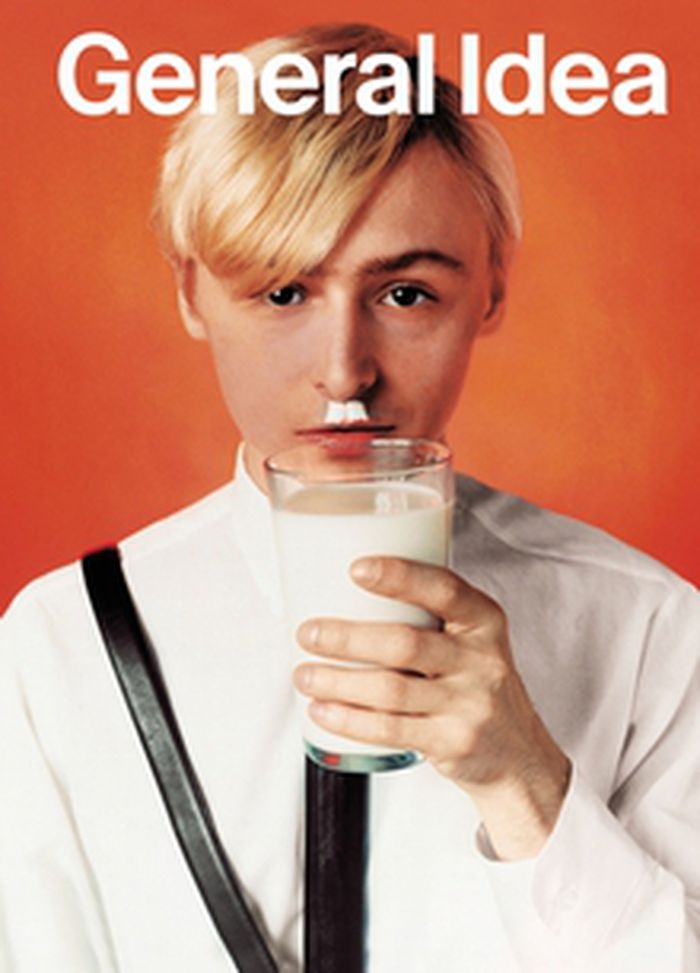
General idea: haute culture, a retrospective, 1969-1994
Actions:
Prix:
$45.00
(disponible sur commande)
Résumé:
General Idea was founded in Toronto in 1969 by Felix Partz, Jorge Zontal and AA Bronson as a generic identity to free the artists "from the tyranny of individual genius." Under the leadership of their fictitious muse Miss General Idea, and inspired by William Burroughs' conception of the "image virus," the collective interrogated media image culture through now legendary projects like File magazine, as well as paintings, installations, sculptures, mail art, photographs, videos, ephemera, TV programs and even a beauty pageant. General Idea came to an end in 1994, when Partz and Zontal died of AIDS. Today General Idea can be seen to anticipate the later art collectives of the 1970s as well as aspects of Relational Aesthetics in the 1990s. This volume presents an overview of the Canadian collective''s bold mingling of reality and fiction and their frequently transgressive, parodic incursions upon both art and society. Including newly commissioned essays and reprinted texts, this volume is richly illustrated with documents and reproductions of the most significant projects realized by General Idea between 1969 and 1994. Exhibited at ARC/Musée d'art moderne de la Ville de Paris and the Art Gallery of Ontario, Toronto in 2011.
General idea: haute culture, a retrospective, 1969-1994
Actions:
Prix:
$45.00
(disponible sur commande)
Résumé:
General Idea was founded in Toronto in 1969 by Felix Partz, Jorge Zontal and AA Bronson as a generic identity to free the artists "from the tyranny of individual genius." Under the leadership of their fictitious muse Miss General Idea, and inspired by William Burroughs' conception of the "image virus," the collective interrogated media image culture through now legendary projects like File magazine, as well as paintings, installations, sculptures, mail art, photographs, videos, ephemera, TV programs and even a beauty pageant. General Idea came to an end in 1994, when Partz and Zontal died of AIDS. Today General Idea can be seen to anticipate the later art collectives of the 1970s as well as aspects of Relational Aesthetics in the 1990s. This volume presents an overview of the Canadian collective''s bold mingling of reality and fiction and their frequently transgressive, parodic incursions upon both art and society. Including newly commissioned essays and reprinted texts, this volume is richly illustrated with documents and reproductions of the most significant projects realized by General Idea between 1969 and 1994. Exhibited at ARC/Musée d'art moderne de la Ville de Paris and the Art Gallery of Ontario, Toronto in 2011.
Classification:
livres
livres
Publication:
janvier 2011
janvier 2011


