


7081 Résultats
Classification:
livres
livres

Prix:
$34.95
(disponible sur commande)
Résumé:
From the advent of early colonial photography in the 19th century to contemporary 'white savior' social-media images, photography continues to play an integral role in the maintenance of white sovereignty. As various scholars have shown, the technology of the camera is not innocent, and neither are the images it produces. The invention and continuation of the 'white(...)
$34.95
(disponible sur commande)
Résumé:
From the advent of early colonial photography in the 19th century to contemporary 'white savior' social-media images, photography continues to play an integral role in the maintenance of white sovereignty. As various scholars have shown, the technology of the camera is not innocent, and neither are the images it produces. The invention and continuation of the 'white(...)
Titre:
The image of whiteness: Contemporary photography and racialization
Actions:
Prix:
$34.95
(disponible sur commande)
Résumé:
From the advent of early colonial photography in the 19th century to contemporary 'white savior' social-media images, photography continues to play an integral role in the maintenance of white sovereignty. As various scholars have shown, the technology of the camera is not innocent, and neither are the images it produces. The invention and continuation of the 'white race' is not just a political, social and legal phenomenon; it is also a complexly visual one. What does whiteness look like, and how might we begin to trace an antiracist history of artistic resistance that works against it? ''The image of whiteness'' seeks to introduce its reader to some important extracts from the troubling story of whiteness, to describe its falsehoods, its paradoxes and its oppressive nature, and to highlight some of the crucial work photographic artists have done to subvert and critique its image.
The image of whiteness: Contemporary photography and racialization
Actions:
Prix:
$34.95
(disponible sur commande)
Résumé:
From the advent of early colonial photography in the 19th century to contemporary 'white savior' social-media images, photography continues to play an integral role in the maintenance of white sovereignty. As various scholars have shown, the technology of the camera is not innocent, and neither are the images it produces. The invention and continuation of the 'white race' is not just a political, social and legal phenomenon; it is also a complexly visual one. What does whiteness look like, and how might we begin to trace an antiracist history of artistic resistance that works against it? ''The image of whiteness'' seeks to introduce its reader to some important extracts from the troubling story of whiteness, to describe its falsehoods, its paradoxes and its oppressive nature, and to highlight some of the crucial work photographic artists have done to subvert and critique its image.
Classification:
livres
livres
Publication:
juillet 2022
juillet 2022
Sujet:
Théorie de la photographie
Théorie de la photographie
Classification:
livres
livres

Actions:
Prix:
$69.00
(disponible sur commande)
Résumé:
The most ''African'' of the Brazilian villages in the south of Bahia bears a Swiss name. Helvécia was founded 200 years ago by Swiss and German colonists, and the coffee grown on its vast estates produced great wealth for them. This would not have been possible without exploitation: in the mid-19th century, for every 200 white colonists, there were 2,000 slaves of African(...)
$69.00
(disponible sur commande)
Résumé:
The most ''African'' of the Brazilian villages in the south of Bahia bears a Swiss name. Helvécia was founded 200 years ago by Swiss and German colonists, and the coffee grown on its vast estates produced great wealth for them. This would not have been possible without exploitation: in the mid-19th century, for every 200 white colonists, there were 2,000 slaves of African(...)
Publication:
janvier 2023
janvier 2023
Titre:
Helvécia: A Swiss colonial history in Brazil
Actions:
Prix:
$69.00
(disponible sur commande)
Résumé:
The most ''African'' of the Brazilian villages in the south of Bahia bears a Swiss name. Helvécia was founded 200 years ago by Swiss and German colonists, and the coffee grown on its vast estates produced great wealth for them. This would not have been possible without exploitation: in the mid-19th century, for every 200 white colonists, there were 2,000 slaves of African origin. Black people still make up the majority of the population today; many do not know the origins of their community. With great sensitivity and in dialogue with the inhabitants, Swiss photographer Dom Smaz goes in search of traces of the past, capturing the lives of the local people. Smaz’s pictures and text contributions by Shalini Randeria, among others, allow a new look at history and the origins of Switzerland’s wealth, revealing global histories of interconnectedness and power relations of the past that continue into the present.
Helvécia: A Swiss colonial history in Brazil
Actions:
Prix:
$69.00
(disponible sur commande)
Résumé:
The most ''African'' of the Brazilian villages in the south of Bahia bears a Swiss name. Helvécia was founded 200 years ago by Swiss and German colonists, and the coffee grown on its vast estates produced great wealth for them. This would not have been possible without exploitation: in the mid-19th century, for every 200 white colonists, there were 2,000 slaves of African origin. Black people still make up the majority of the population today; many do not know the origins of their community. With great sensitivity and in dialogue with the inhabitants, Swiss photographer Dom Smaz goes in search of traces of the past, capturing the lives of the local people. Smaz’s pictures and text contributions by Shalini Randeria, among others, allow a new look at history and the origins of Switzerland’s wealth, revealing global histories of interconnectedness and power relations of the past that continue into the present.
Classification:
livres
livres
Publication:
janvier 2023
janvier 2023
Classification:
livres
livres

Prix:
$102.00
(disponible en magasin)
Résumé:
Although Samuel Abraham Marx was born at the end of the 19th century, he had the eye of a modernist - as an architect, furniture designer, connoisseur and collector. His vision was neither ostentatious or grandiose, but subtle and quietly magnificent. Ultra-Modern, Samuel Marx, Architect, Furniture Designer, Connoisseur is the first monograph on this lesser-known but(...)
$102.00
(disponible en magasin)
Résumé:
Although Samuel Abraham Marx was born at the end of the 19th century, he had the eye of a modernist - as an architect, furniture designer, connoisseur and collector. His vision was neither ostentatious or grandiose, but subtle and quietly magnificent. Ultra-Modern, Samuel Marx, Architect, Furniture Designer, Connoisseur is the first monograph on this lesser-known but(...)
Titre:
Ultramodern : Samuel Marx, architect, designer, art collector
Actions:
Prix:
$102.00
(disponible en magasin)
Résumé:
Although Samuel Abraham Marx was born at the end of the 19th century, he had the eye of a modernist - as an architect, furniture designer, connoisseur and collector. His vision was neither ostentatious or grandiose, but subtle and quietly magnificent. Ultra-Modern, Samuel Marx, Architect, Furniture Designer, Connoisseur is the first monograph on this lesser-known but increasingly influential American designer. In more than 200 photographs, Marx expert and decorative arts dealer, Liz O Brien, reveals many of his undiscovered projects including houses that have been raised despite preservationist protests and his range of furniture designs. Marx was also sought after for his ability to integrate art in well-heeled interiors. The private art collections of many of his wealthy clients have, in the last 40 years, been dispersed to major museums including the Metropolitan Museum of Art and the Museum of Modern Art in New York, as well as the Chicago Art Institute, in Chicago.
Ultramodern : Samuel Marx, architect, designer, art collector
Actions:
Prix:
$102.00
(disponible en magasin)
Résumé:
Although Samuel Abraham Marx was born at the end of the 19th century, he had the eye of a modernist - as an architect, furniture designer, connoisseur and collector. His vision was neither ostentatious or grandiose, but subtle and quietly magnificent. Ultra-Modern, Samuel Marx, Architect, Furniture Designer, Connoisseur is the first monograph on this lesser-known but increasingly influential American designer. In more than 200 photographs, Marx expert and decorative arts dealer, Liz O Brien, reveals many of his undiscovered projects including houses that have been raised despite preservationist protests and his range of furniture designs. Marx was also sought after for his ability to integrate art in well-heeled interiors. The private art collections of many of his wealthy clients have, in the last 40 years, been dispersed to major museums including the Metropolitan Museum of Art and the Museum of Modern Art in New York, as well as the Chicago Art Institute, in Chicago.
Classification:
livres
livres
Publication:
novembre 2007, New York
novembre 2007, New York
Classification:
livres
livres

Actions:
Prix:
$28.99
(disponible sur commande)
Résumé:
Thomas Piketty’s powerful and bestselling ''Capital and Ideology'' is now available in this accessible and richly illustrated full-color graphic novel format Claire Alet and Benjamin Adam make the original work’s ideas more accessible through the addition of a family saga. Jules, the main character, is born at the end of the 19th century. He is a person of private means,(...)
$28.99
(disponible sur commande)
Résumé:
Thomas Piketty’s powerful and bestselling ''Capital and Ideology'' is now available in this accessible and richly illustrated full-color graphic novel format Claire Alet and Benjamin Adam make the original work’s ideas more accessible through the addition of a family saga. Jules, the main character, is born at the end of the 19th century. He is a person of private means,(...)
Titre:
Capital & ideology: A graphic novel adaptation
Actions:
Prix:
$28.99
(disponible sur commande)
Résumé:
Thomas Piketty’s powerful and bestselling ''Capital and Ideology'' is now available in this accessible and richly illustrated full-color graphic novel format Claire Alet and Benjamin Adam make the original work’s ideas more accessible through the addition of a family saga. Jules, the main character, is born at the end of the 19th century. He is a person of private means, a privileged figure representative of a profoundly unequal society obsessed with property. He, his family circle, and his descendants will experience the evolution of wealth and society. Eight generations of his family serve as a connecting thread running through the book, all the way up to Léa, a young woman today, who discovers the family secret at the root of their inheritance. Friendly and approachable illustrations by cartoonist and children’s book author Benjamin Adam are easy to understand without diluting the subject matter. The material is adapted expertly by Claire Alet, a former journalist at Alternatives Economiques.
Capital & ideology: A graphic novel adaptation
Actions:
Prix:
$28.99
(disponible sur commande)
Résumé:
Thomas Piketty’s powerful and bestselling ''Capital and Ideology'' is now available in this accessible and richly illustrated full-color graphic novel format Claire Alet and Benjamin Adam make the original work’s ideas more accessible through the addition of a family saga. Jules, the main character, is born at the end of the 19th century. He is a person of private means, a privileged figure representative of a profoundly unequal society obsessed with property. He, his family circle, and his descendants will experience the evolution of wealth and society. Eight generations of his family serve as a connecting thread running through the book, all the way up to Léa, a young woman today, who discovers the family secret at the root of their inheritance. Friendly and approachable illustrations by cartoonist and children’s book author Benjamin Adam are easy to understand without diluting the subject matter. The material is adapted expertly by Claire Alet, a former journalist at Alternatives Economiques.
Classification:
livres
livres
Publication:
septembre 2024
septembre 2024
Sujet:
Social
Social
Classification:
livres
livres
Prix:
$106.95
(disponible sur commande)
Résumé:
The phenomenon we know as "The Hamptons" — the epitome of high society, leisure, and affluence, the place of worldly glamour and every pleasure, natural and unnatural, that money can buy — began as a group of Puritan villages along Long Island's south shore before it was discovered at the end of the 19th century by artists and the fashionably rich. The earliest social(...)
$106.95
(disponible sur commande)
Résumé:
The phenomenon we know as "The Hamptons" — the epitome of high society, leisure, and affluence, the place of worldly glamour and every pleasure, natural and unnatural, that money can buy — began as a group of Puritan villages along Long Island's south shore before it was discovered at the end of the 19th century by artists and the fashionably rich. The earliest social(...)
Publication:
juillet 2007, New York
juillet 2007, New York
Titre:
The Archtiecture of Leisure : Houses of the Hamptons, 1880-1930
Actions:
Prix:
$106.95
(disponible sur commande)
Résumé:
The phenomenon we know as "The Hamptons" — the epitome of high society, leisure, and affluence, the place of worldly glamour and every pleasure, natural and unnatural, that money can buy — began as a group of Puritan villages along Long Island's south shore before it was discovered at the end of the 19th century by artists and the fashionably rich. The earliest social Hamptonites, descendents of colonial aristocracy, mingled with the colorful characters of the art colonies. Here the rich built fashionable and expansive summer houses where they enjoyed carefree recreation, artistic endeavors, and elegant social occasions. "Houses of the Hamptons, 1880-1930", explores more than 30 houses, many designed by some of America's leading architects. Less enamored with the showy grandeur typical of Newport's golden age, the wealthy Hamptonites built summer places that were an ensemble of exceptional architectural variety and achievement. Here, American Colonial, half-timbered Tudor, and red brick Georgian vied with shingled cottages and Mediterranean fantasy.
The Archtiecture of Leisure : Houses of the Hamptons, 1880-1930
Actions:
Prix:
$106.95
(disponible sur commande)
Résumé:
The phenomenon we know as "The Hamptons" — the epitome of high society, leisure, and affluence, the place of worldly glamour and every pleasure, natural and unnatural, that money can buy — began as a group of Puritan villages along Long Island's south shore before it was discovered at the end of the 19th century by artists and the fashionably rich. The earliest social Hamptonites, descendents of colonial aristocracy, mingled with the colorful characters of the art colonies. Here the rich built fashionable and expansive summer houses where they enjoyed carefree recreation, artistic endeavors, and elegant social occasions. "Houses of the Hamptons, 1880-1930", explores more than 30 houses, many designed by some of America's leading architects. Less enamored with the showy grandeur typical of Newport's golden age, the wealthy Hamptonites built summer places that were an ensemble of exceptional architectural variety and achievement. Here, American Colonial, half-timbered Tudor, and red brick Georgian vied with shingled cottages and Mediterranean fantasy.
Classification:
livres
livres
Publication:
juillet 2007, New York
juillet 2007, New York
Classification:
livres
livres
Actions:
Prix:
$47.95
(disponible sur commande)
Résumé:
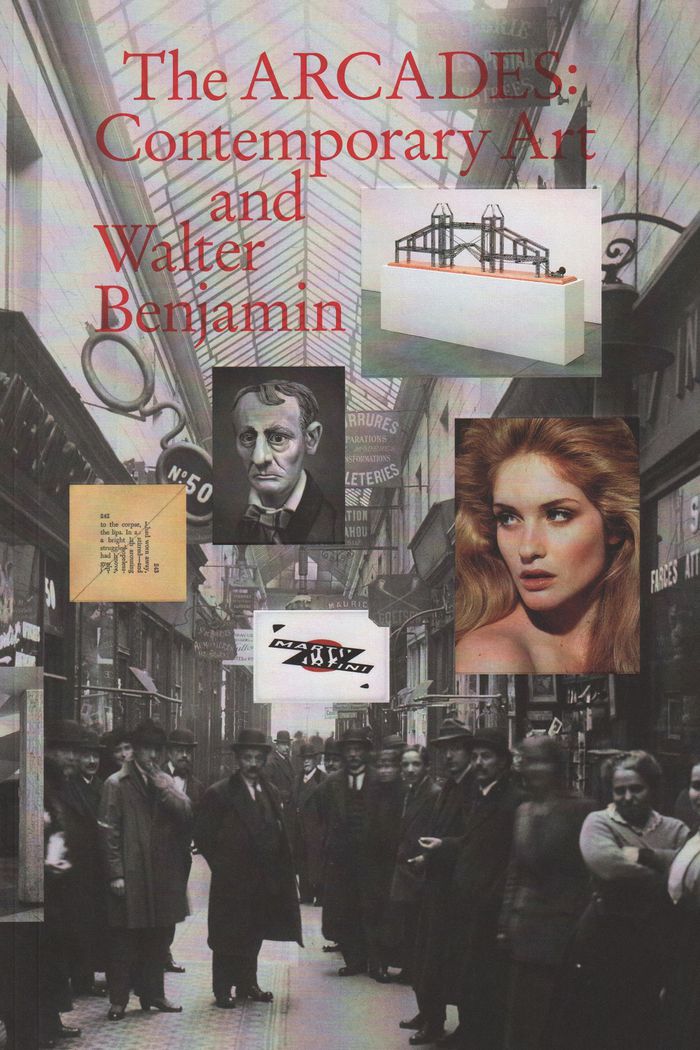
"The Arcades Project" (1927–40), the monumental unfinished work of cultural criticism by Walter Benjamin, is the German philosopher’s effort to comprehend urban modernity through the 19th-century Parisian shopping arcade. "The Arcades: contemporary art and Walter Benjamin" combines artworks with archival materials and poetic interventions to form an original, multifaceted(...)
$47.95
(disponible sur commande)
Résumé:
"The Arcades Project" (1927–40), the monumental unfinished work of cultural criticism by Walter Benjamin, is the German philosopher’s effort to comprehend urban modernity through the 19th-century Parisian shopping arcade. "The Arcades: contemporary art and Walter Benjamin" combines artworks with archival materials and poetic interventions to form an original, multifaceted(...)
Titre:
The Arcades: contemporary art and Walter Benjamin
Actions:
Prix:
$47.95
(disponible sur commande)
Résumé:
"The Arcades Project" (1927–40), the monumental unfinished work of cultural criticism by Walter Benjamin, is the German philosopher’s effort to comprehend urban modernity through the 19th-century Parisian shopping arcade. "The Arcades: contemporary art and Walter Benjamin" combines artworks with archival materials and poetic interventions to form an original, multifaceted response to this collagelike cultural text. Jens Hoffmann astutely pairs works by thirty-six well-known and emerging artists, including Lee Friedlander, Andreas Gursky, Pierre Huyghe, and Cindy Sherman, with the thirty-six “Convolutes,” or themes, in Benjamin’s text. Bound into the main volume is a graphic novelette, from the imagination of Vito Manolo Roma, of Benjamin’s dream the night before he committed suicide while fleeing the Nazis. Scholarly essays by Hoffmann and Caroline A. Jones, texts selected by the poet Kenneth Goldsmith, reproductions of Benjamin’s handwritten notes, and a list of the main Paris arcades discussed by him round out this extraordinary publication.
The Arcades: contemporary art and Walter Benjamin
Actions:
Prix:
$47.95
(disponible sur commande)
Résumé:
"The Arcades Project" (1927–40), the monumental unfinished work of cultural criticism by Walter Benjamin, is the German philosopher’s effort to comprehend urban modernity through the 19th-century Parisian shopping arcade. "The Arcades: contemporary art and Walter Benjamin" combines artworks with archival materials and poetic interventions to form an original, multifaceted response to this collagelike cultural text. Jens Hoffmann astutely pairs works by thirty-six well-known and emerging artists, including Lee Friedlander, Andreas Gursky, Pierre Huyghe, and Cindy Sherman, with the thirty-six “Convolutes,” or themes, in Benjamin’s text. Bound into the main volume is a graphic novelette, from the imagination of Vito Manolo Roma, of Benjamin’s dream the night before he committed suicide while fleeing the Nazis. Scholarly essays by Hoffmann and Caroline A. Jones, texts selected by the poet Kenneth Goldsmith, reproductions of Benjamin’s handwritten notes, and a list of the main Paris arcades discussed by him round out this extraordinary publication.
Classification:
livres
livres
Publication:
mars 2017
mars 2017
Classification:
livres
livres

Actions:
Prix:
$110.00
(disponible sur commande)
Résumé:
An extraordinary collection of eighty pictures from the Alinari Archives located in Florence, Italy makes up a never-before-published sequence of images including portraits, landscapes, and rituals providing a rare entry into traditional 19th-century Japan. Felice Beato was one of the first Western photographers to enter Japan when the country first opened its borders(...)
$110.00
(disponible sur commande)
Résumé:
An extraordinary collection of eighty pictures from the Alinari Archives located in Florence, Italy makes up a never-before-published sequence of images including portraits, landscapes, and rituals providing a rare entry into traditional 19th-century Japan. Felice Beato was one of the first Western photographers to enter Japan when the country first opened its borders(...)
Titre:
Lost Japan: the photographs of Felice Beato and the school of Yokohama (1860-1890)
Actions:
Prix:
$110.00
(disponible sur commande)
Résumé:
An extraordinary collection of eighty pictures from the Alinari Archives located in Florence, Italy makes up a never-before-published sequence of images including portraits, landscapes, and rituals providing a rare entry into traditional 19th-century Japan. Felice Beato was one of the first Western photographers to enter Japan when the country first opened its borders (1853); he revealed to the Western world a country preserved in time and never seen before. In 1863 he moved to Yokohama and opened a photography school, the School of Yokohama. The photos of the book preserve the original photographic prints, manually colored black-and-white prints, that truly embody the spirit of that period. Images feature fascinating portraits of women in kimonos, geishas, samurai warriors, and interiors of Japanese homes and gardens as well as scenes of everyday life including tea ceremonies or the theater. Each photo is accompanied by text providing historical, anthropological, and artistic context.
Lost Japan: the photographs of Felice Beato and the school of Yokohama (1860-1890)
Actions:
Prix:
$110.00
(disponible sur commande)
Résumé:
An extraordinary collection of eighty pictures from the Alinari Archives located in Florence, Italy makes up a never-before-published sequence of images including portraits, landscapes, and rituals providing a rare entry into traditional 19th-century Japan. Felice Beato was one of the first Western photographers to enter Japan when the country first opened its borders (1853); he revealed to the Western world a country preserved in time and never seen before. In 1863 he moved to Yokohama and opened a photography school, the School of Yokohama. The photos of the book preserve the original photographic prints, manually colored black-and-white prints, that truly embody the spirit of that period. Images feature fascinating portraits of women in kimonos, geishas, samurai warriors, and interiors of Japanese homes and gardens as well as scenes of everyday life including tea ceremonies or the theater. Each photo is accompanied by text providing historical, anthropological, and artistic context.
Classification:
livres
livres
Publication:
mai 2018
mai 2018
Sujet:
Monographies photo
Monographies photo
Classification:
livres
livres

Titre:
For a sovereign Europe
For a sovereign Europe
Actions:
Prix:
$14.00
(disponible en magasin)
Résumé:
A specter haunts Europe: the specter of sovereignty. Legacy of a prestigious political tradition, sovereignty has metamorphosed into a monster in the 19th century, with the advent of nationalism and the ensuing catastrophes that tainted the globe in blood. Today, at a time when nationalist passions seem to be back with a vengeance, a renewed call for sovereignty presents(...)
$14.00
(disponible en magasin)
Résumé:
A specter haunts Europe: the specter of sovereignty. Legacy of a prestigious political tradition, sovereignty has metamorphosed into a monster in the 19th century, with the advent of nationalism and the ensuing catastrophes that tainted the globe in blood. Today, at a time when nationalist passions seem to be back with a vengeance, a renewed call for sovereignty presents(...)
Titre:
For a sovereign Europe
Actions:
Prix:
$14.00
(disponible en magasin)
Résumé:
A specter haunts Europe: the specter of sovereignty. Legacy of a prestigious political tradition, sovereignty has metamorphosed into a monster in the 19th century, with the advent of nationalism and the ensuing catastrophes that tainted the globe in blood. Today, at a time when nationalist passions seem to be back with a vengeance, a renewed call for sovereignty presents itself as a return towards populations and territories to be defended. Any project aiming at doing away with nations and finding the route towards a larger political ensembles seems to be barred by what is now presented as a sacred value – the one of a people selecting its own way of being governed. But what if this was wrong? What if sovereignty could designate another horizon than the one of nations? What if Europe could become the place for a new experiment on the meaning and extension of sovereignty and democracy? This would mean a sovereign Europe.
For a sovereign Europe
Actions:
Prix:
$14.00
(disponible en magasin)
Résumé:
A specter haunts Europe: the specter of sovereignty. Legacy of a prestigious political tradition, sovereignty has metamorphosed into a monster in the 19th century, with the advent of nationalism and the ensuing catastrophes that tainted the globe in blood. Today, at a time when nationalist passions seem to be back with a vengeance, a renewed call for sovereignty presents itself as a return towards populations and territories to be defended. Any project aiming at doing away with nations and finding the route towards a larger political ensembles seems to be barred by what is now presented as a sacred value – the one of a people selecting its own way of being governed. But what if this was wrong? What if sovereignty could designate another horizon than the one of nations? What if Europe could become the place for a new experiment on the meaning and extension of sovereignty and democracy? This would mean a sovereign Europe.
Classification:
livres
livres
Publication:
novembre 2025
novembre 2025
Sujet:
Théorie/ philosophie
Théorie/ philosophie
Classification:
livres
livres

Titre:
Big shed
Big shed
Actions:
Prix:
$75.00
(disponible en magasin)
Résumé:
Exhibition halls and sports arenas, factories and warehouses, airports and railway stations, arts centres and concert halls: big sheds are all around us yet the story behind their extraordinary growth has gone untold. Beginning with the roots of the big shed – including 19th-century iron structures, the work of Buckminster Fuller, Archigram, and the Pompidou and(...)
$75.00
(disponible en magasin)
Résumé:
Exhibition halls and sports arenas, factories and warehouses, airports and railway stations, arts centres and concert halls: big sheds are all around us yet the story behind their extraordinary growth has gone untold. Beginning with the roots of the big shed – including 19th-century iron structures, the work of Buckminster Fuller, Archigram, and the Pompidou and(...)
Publication:
juin 2007, New York
juin 2007, New York
Titre:
Big shed
Actions:
Prix:
$75.00
(disponible en magasin)
Résumé:
Exhibition halls and sports arenas, factories and warehouses, airports and railway stations, arts centres and concert halls: big sheds are all around us yet the story behind their extraordinary growth has gone untold. Beginning with the roots of the big shed – including 19th-century iron structures, the work of Buckminster Fuller, Archigram, and the Pompidou and Sainsbury Centres – the book is organized by function: exhibitions, industry, transport, sports and arts. Together these areas account for the best examples of big sheds over the past twenty years, and include work by Frank Gehry, Norman Foster, Richard Rogers, Jean Nouvel, Daniel Libeskind, Nicholas Grimshaw and Toyo Ito, among many others. From the vertiginous daring of Tokyo International Forum to Madrid’s award-winning Barajas Airport, these structures have changed the very nature of architecture. Throughout the book Pryce’s dramatic photography captures the buildings’ primal vastness, while technical drawings help explain how they were designed, built and function.
Big shed
Actions:
Prix:
$75.00
(disponible en magasin)
Résumé:
Exhibition halls and sports arenas, factories and warehouses, airports and railway stations, arts centres and concert halls: big sheds are all around us yet the story behind their extraordinary growth has gone untold. Beginning with the roots of the big shed – including 19th-century iron structures, the work of Buckminster Fuller, Archigram, and the Pompidou and Sainsbury Centres – the book is organized by function: exhibitions, industry, transport, sports and arts. Together these areas account for the best examples of big sheds over the past twenty years, and include work by Frank Gehry, Norman Foster, Richard Rogers, Jean Nouvel, Daniel Libeskind, Nicholas Grimshaw and Toyo Ito, among many others. From the vertiginous daring of Tokyo International Forum to Madrid’s award-winning Barajas Airport, these structures have changed the very nature of architecture. Throughout the book Pryce’s dramatic photography captures the buildings’ primal vastness, while technical drawings help explain how they were designed, built and function.
Classification:
livres
livres
Publication:
juin 2007, New York
juin 2007, New York
Classification:
livres
livres

Actions:
Prix:
$62.50
(disponible sur commande)
Résumé:
Published to accompany an exhibition at the Technisches Museum, Vienna. "Blue. Inventing the River Danube" combines a cultural history of the river with an artistic exploration of its present. The journey begins in Vienna and continue eastwards along the river for two thousand kilometres. Historical photograhs tell the story of how technologyreinvented the Danube from the(...)
$62.50
(disponible sur commande)
Résumé:
Published to accompany an exhibition at the Technisches Museum, Vienna. "Blue. Inventing the River Danube" combines a cultural history of the river with an artistic exploration of its present. The journey begins in Vienna and continue eastwards along the river for two thousand kilometres. Historical photograhs tell the story of how technologyreinvented the Danube from the(...)
Sujet:
Monographies photo
Monographies photo
Publication:
juin 2005, Vienna
juin 2005, Vienna
Titre:
Blue : inventing the river Danube
Actions:
Prix:
$62.50
(disponible sur commande)
Résumé:
Published to accompany an exhibition at the Technisches Museum, Vienna. "Blue. Inventing the River Danube" combines a cultural history of the river with an artistic exploration of its present. The journey begins in Vienna and continue eastwards along the river for two thousand kilometres. Historical photograhs tell the story of how technologyreinvented the Danube from the middle of the 19th century onwards. They depict the development of the continent's second largest river, and its cultural and economic significance for central and south-easthern Europe. The river as it is today is the theme of the artistic work by Iosif Kiraly (Bucharest)and Sophie Ristelhueber (Paris). In winter and spring 2004/2005 the two photographers travelled along the Danube, eastwards and westwards. Kiraly visited places that have been shaped by the industrial age. Ristelhueber followed the Danube along its last few miles to Sulina, the place where the Danube ends and the Black Sea begins.
Blue : inventing the river Danube
Actions:
Prix:
$62.50
(disponible sur commande)
Résumé:
Published to accompany an exhibition at the Technisches Museum, Vienna. "Blue. Inventing the River Danube" combines a cultural history of the river with an artistic exploration of its present. The journey begins in Vienna and continue eastwards along the river for two thousand kilometres. Historical photograhs tell the story of how technologyreinvented the Danube from the middle of the 19th century onwards. They depict the development of the continent's second largest river, and its cultural and economic significance for central and south-easthern Europe. The river as it is today is the theme of the artistic work by Iosif Kiraly (Bucharest)and Sophie Ristelhueber (Paris). In winter and spring 2004/2005 the two photographers travelled along the Danube, eastwards and westwards. Kiraly visited places that have been shaped by the industrial age. Ristelhueber followed the Danube along its last few miles to Sulina, the place where the Danube ends and the Black Sea begins.
Classification:
livres
livres
Publication:
juin 2005, Vienna
juin 2005, Vienna
Sujet:
Monographies photo
Monographies photo


