


8588 Résultats
Classification:
dessins, documents textuels
dessins, documents textuels
Numéro de référence:
DR2012:0011:020
Description:
Ring binder containing notes and sketches related to the following events, locations, and/or projects: - Cities on the move; - Monument to Canadian Aid Workers; - The size of things; - New York exhibition; - Golems on the move; - American city series; - Saigon; - Federation CJA building entrance.
DR2012:0011:020
Description:
Ring binder containing notes and sketches related to the following events, locations, and/or projects: - Cities on the move; - Monument to Canadian Aid Workers; - The size of things; - New York exhibition; - Golems on the move; - American city series; - Saigon; - Federation CJA building entrance.
Personnes et institutions:
Date:
1998-1999
1998-1999
Titre:
Notes and sketches by Melvin Charney on his later works
Actions:
DR2012:0011:020
Description:
Ring binder containing notes and sketches related to the following events, locations, and/or projects: - Cities on the move; - Monument to Canadian Aid Workers; - The size of things; - New York exhibition; - Golems on the move; - American city series; - Saigon; - Federation CJA building entrance.
Notes and sketches by Melvin Charney on his later works
Actions:
DR2012:0011:020
Description:
Ring binder containing notes and sketches related to the following events, locations, and/or projects: - Cities on the move; - Monument to Canadian Aid Workers; - The size of things; - New York exhibition; - Golems on the move; - American city series; - Saigon; - Federation CJA building entrance.
Classification:
dessins, documents textuels
dessins, documents textuels
Date:
1998-1999
1998-1999
Personnes et institutions:
Classification:
expositions
expositions
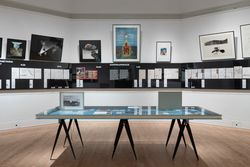
Description:
Alors que le cinéma décentralisé, expérimental et subversif gagne en importance à la fin des années 1960 et au début des années 1970, de nombreux groupes opérant dans le domaine de l’architecture, tels que Superstudio, Studio 9999 et Ant Farm explorent le médium du court métrage comme moyen d’élargir le discours architectural, d’intégrer à leurs projets des réflexions(...)
Alors que le cinéma décentralisé, expérimental et subversif gagne en importance à la fin des années 1960 et au début des années 1970, de nombreux groupes opérant dans le domaine de l’architecture, tels que Superstudio, Studio 9999 et Ant Farm explorent le médium du court métrage comme moyen d’élargir le discours architectural, d’intégrer à leurs projets des réflexions(...)
Localisation:
salle octogonale
salle octogonale
Date:
21 septembre 2018 au 19 mai 2019
21 septembre 2018 au 19 mai 2019
Titre:
Récits pour un monde nouveau
Actions:
Description:
Alors que le cinéma décentralisé, expérimental et subversif gagne en importance à la fin des années 1960 et au début des années 1970, de nombreux groupes opérant dans le domaine de l’architecture, tels que Superstudio, Studio 9999 et Ant Farm explorent le médium du court métrage comme moyen d’élargir le discours architectural, d’intégrer à leurs projets des réflexions(...)
Récits pour un monde nouveau
Actions:
Description:
Alors que le cinéma décentralisé, expérimental et subversif gagne en importance à la fin des années 1960 et au début des années 1970, de nombreux groupes opérant dans le domaine de l’architecture, tels que Superstudio, Studio 9999 et Ant Farm explorent le médium du court métrage comme moyen d’élargir le discours architectural, d’intégrer à leurs projets des réflexions(...)
Classification:
expositions
expositions
Date:
21 septembre 2018 au
19 mai 2019
21 septembre 2018 au
19 mai 2019
Localisation:
salle octogonale
salle octogonale
Classification:
archives
Niveau de description archivistique:
Fonds
archives
Niveau de description archivistique:
Fonds
Numéro de référence:
AP075
Résumé:
The Cornelia Hahn Oberlander fonds documents Oberlander's professional activities as a landscape architect. It contains over 203 projects that span from 1950 to 2018 predominantly in Canada and in the United States, but also in Germany. The fonds is a complete record of Oberlander's work, and comprises her playground projects, roof gardens, and public space landscapes, as well as landscape designs for private residences, as well as administrative records from her practice, her professional engagements, and her research materials. The material in this fonds is dated from 1936 to 2021.
AP075
Résumé:
The Cornelia Hahn Oberlander fonds documents Oberlander's professional activities as a landscape architect. It contains over 203 projects that span from 1950 to 2018 predominantly in Canada and in the United States, but also in Germany. The fonds is a complete record of Oberlander's work, and comprises her playground projects, roof gardens, and public space landscapes, as well as landscape designs for private residences, as well as administrative records from her practice, her professional engagements, and her research materials. The material in this fonds is dated from 1936 to 2021.
Personnes et institutions:
Date:
1936-2021
1936-2021
Titre:
Fonds Cornelia Hahn Oberlander
Actions:
AP075
Résumé:
The Cornelia Hahn Oberlander fonds documents Oberlander's professional activities as a landscape architect. It contains over 203 projects that span from 1950 to 2018 predominantly in Canada and in the United States, but also in Germany. The fonds is a complete record of Oberlander's work, and comprises her playground projects, roof gardens, and public space landscapes, as well as landscape designs for private residences, as well as administrative records from her practice, her professional engagements, and her research materials. The material in this fonds is dated from 1936 to 2021.
Fonds Cornelia Hahn Oberlander
Actions:
AP075
Résumé:
The Cornelia Hahn Oberlander fonds documents Oberlander's professional activities as a landscape architect. It contains over 203 projects that span from 1950 to 2018 predominantly in Canada and in the United States, but also in Germany. The fonds is a complete record of Oberlander's work, and comprises her playground projects, roof gardens, and public space landscapes, as well as landscape designs for private residences, as well as administrative records from her practice, her professional engagements, and her research materials. The material in this fonds is dated from 1936 to 2021.
Classification:
archives
Niveau de description archivistique:
Fonds
archives
Niveau de description archivistique:
Fonds
Date:
1936-2021
1936-2021
Personnes et institutions:
Classification:
photographies
Quantité:
82 photograph(s)
photographies
Quantité:
82 photograph(s)
Actions:
Numéro de référence:
PH1996:0069:001-109
Description:
Group of 109 Polaroid photographs made by Aldo Rossi with some presented in the exhibition 'Luigi Ghirri - Aldo Rossi. Things Which Are Only Themselves' held at the CCA in 1996. The photographs represent several scenes from Rossi's travels in different countries: building façades, sacred images, billboards, houses from a Shaker village, baroque façades of churches (in Lecce, Italy), shops, street scenes, lakes, ports, showcases and furniture. Rossi's photography shows the interest he shares with photographer Luigi Ghirri in the belief in the autonomous eye of the photographer and in the potential of that eye to reveal something new to the architect. Ghirri sees in Rossi's Polaroids a "concealed passion, the 'secret' images of the architect, [...] puzzles that are solved with the heart". And according to his definition of photography, "a tangle of monuments, lights, thoughts, objects, moments and metaphors forming the landscape we are searching for in our minds... as would the points of an imaginary compass, which indicates a possible direction".
PH1996:0069:001-109
Description:
Group of 109 Polaroid photographs made by Aldo Rossi with some presented in the exhibition 'Luigi Ghirri - Aldo Rossi. Things Which Are Only Themselves' held at the CCA in 1996. The photographs represent several scenes from Rossi's travels in different countries: building façades, sacred images, billboards, houses from a Shaker village, baroque façades of churches (in Lecce, Italy), shops, street scenes, lakes, ports, showcases and furniture. Rossi's photography shows the interest he shares with photographer Luigi Ghirri in the belief in the autonomous eye of the photographer and in the potential of that eye to reveal something new to the architect. Ghirri sees in Rossi's Polaroids a "concealed passion, the 'secret' images of the architect, [...] puzzles that are solved with the heart". And according to his definition of photography, "a tangle of monuments, lights, thoughts, objects, moments and metaphors forming the landscape we are searching for in our minds... as would the points of an imaginary compass, which indicates a possible direction".
Personnes et institutions:
Sujet:
architecture, ingénierie, sculpture
architecture, ingénierie, sculpture
Date:
1980s-1990s
1980s-1990s
Titre:
Group of views of architecture from Aldo Rossi's trips to Italy, France, Corsica, Greece, United States and unspecified countries
Actions:
PH1996:0069:001-109
Description:
Group of 109 Polaroid photographs made by Aldo Rossi with some presented in the exhibition 'Luigi Ghirri - Aldo Rossi. Things Which Are Only Themselves' held at the CCA in 1996. The photographs represent several scenes from Rossi's travels in different countries: building façades, sacred images, billboards, houses from a Shaker village, baroque façades of churches (in Lecce, Italy), shops, street scenes, lakes, ports, showcases and furniture. Rossi's photography shows the interest he shares with photographer Luigi Ghirri in the belief in the autonomous eye of the photographer and in the potential of that eye to reveal something new to the architect. Ghirri sees in Rossi's Polaroids a "concealed passion, the 'secret' images of the architect, [...] puzzles that are solved with the heart". And according to his definition of photography, "a tangle of monuments, lights, thoughts, objects, moments and metaphors forming the landscape we are searching for in our minds... as would the points of an imaginary compass, which indicates a possible direction".
Group of views of architecture from Aldo Rossi's trips to Italy, France, Corsica, Greece, United States and unspecified countries
Actions:
PH1996:0069:001-109
Description:
Group of 109 Polaroid photographs made by Aldo Rossi with some presented in the exhibition 'Luigi Ghirri - Aldo Rossi. Things Which Are Only Themselves' held at the CCA in 1996. The photographs represent several scenes from Rossi's travels in different countries: building façades, sacred images, billboards, houses from a Shaker village, baroque façades of churches (in Lecce, Italy), shops, street scenes, lakes, ports, showcases and furniture. Rossi's photography shows the interest he shares with photographer Luigi Ghirri in the belief in the autonomous eye of the photographer and in the potential of that eye to reveal something new to the architect. Ghirri sees in Rossi's Polaroids a "concealed passion, the 'secret' images of the architect, [...] puzzles that are solved with the heart". And according to his definition of photography, "a tangle of monuments, lights, thoughts, objects, moments and metaphors forming the landscape we are searching for in our minds... as would the points of an imaginary compass, which indicates a possible direction".
Classification:
photographies
Quantité:
82 photograph(s)
photographies
Quantité:
82 photograph(s)
Date:
1980s-1990s
1980s-1990s
Personnes et institutions:
Sujet:
architecture, ingénierie, sculpture
architecture, ingénierie, sculpture
Niveau de description archivistique:
Projet
Projet
Numéro de référence:
AP178.S1.1979.PR02
Description:
The project series documents the 1979 design entry for the Görlitzer Bad swimming pool. While the records were held in the office’s archives this project was assigned the number 48/70; in the past the office identified the project as number 159. The office assigned the date 1979 for this project. This project was submitted to the International Architectural Exhibition Berlin competition (International Bauaustellung, IBA, circa 1979-1987), an urban renewal strategy for West Berlin, Germany. Siza would later submit proposals to the IBA for Block 70 and 89 (Fränkelufer residential complex), Block 121 (Bonjour Tristesse), Block 11-12 (Kottbusser Damm), Monument to Gestapo victims Prinz- Albrecht-Palais, and a proposal for the Kulturforum. The Görlitzer Bad swimming pool was Siza's first international project and first competition. Preceding the IBA competition, Siza attended the 1976 International Design Zentrum (IDZ) symposium in Berlin, "Stadtstruktur-Stadtgestalt". Brigitte Fleck, responsible for national and international architecture competitions for the Senate of Berlin (1971-1985), invited Siza to participate in the IBA competition to design the swimming pool for Kreuzberg. Fleck had heard of Siza’s participation in the IDZ symposium and became interested in Siza’s work with the Servicio Ambulatorio de Apio Lokal (SAAL). By this time Siza’s work with SAAL had been published in the December 1976 and March 1978 publications of the Lotus International Quarterly Architectural Review (numbers 13 and 18). Fleck felt that Siza's work with SAAL would be relevant to the IBA. In 1979, Siza entered his design for the Görlitzer Bad swimming pool to be built on a vacant area on the east side of Kreuzberg. The design for the pool was strongly opposed by the public because the dome over the main swimming pool was said to resemble a mosque. This area of Kreuzberg was largely populated by Turkish Muslims and there was hostility towards this immigrant community. Although Siza’s entry went through the first round of the IBA competition, it did not win the competition and was only awarded a special prize. The project series contains sketches and studies, as well as conceptual and design development drawings of elevations, site plans, and floor plans. Documentation for the competition includes site plans for the competition and a strata plan. The photographs, negatives, contact sheets, and slides mostly document the model and drawings for the project.
AP178.S1.1979.PR02
Description:
The project series documents the 1979 design entry for the Görlitzer Bad swimming pool. While the records were held in the office’s archives this project was assigned the number 48/70; in the past the office identified the project as number 159. The office assigned the date 1979 for this project. This project was submitted to the International Architectural Exhibition Berlin competition (International Bauaustellung, IBA, circa 1979-1987), an urban renewal strategy for West Berlin, Germany. Siza would later submit proposals to the IBA for Block 70 and 89 (Fränkelufer residential complex), Block 121 (Bonjour Tristesse), Block 11-12 (Kottbusser Damm), Monument to Gestapo victims Prinz- Albrecht-Palais, and a proposal for the Kulturforum. The Görlitzer Bad swimming pool was Siza's first international project and first competition. Preceding the IBA competition, Siza attended the 1976 International Design Zentrum (IDZ) symposium in Berlin, "Stadtstruktur-Stadtgestalt". Brigitte Fleck, responsible for national and international architecture competitions for the Senate of Berlin (1971-1985), invited Siza to participate in the IBA competition to design the swimming pool for Kreuzberg. Fleck had heard of Siza’s participation in the IDZ symposium and became interested in Siza’s work with the Servicio Ambulatorio de Apio Lokal (SAAL). By this time Siza’s work with SAAL had been published in the December 1976 and March 1978 publications of the Lotus International Quarterly Architectural Review (numbers 13 and 18). Fleck felt that Siza's work with SAAL would be relevant to the IBA. In 1979, Siza entered his design for the Görlitzer Bad swimming pool to be built on a vacant area on the east side of Kreuzberg. The design for the pool was strongly opposed by the public because the dome over the main swimming pool was said to resemble a mosque. This area of Kreuzberg was largely populated by Turkish Muslims and there was hostility towards this immigrant community. Although Siza’s entry went through the first round of the IBA competition, it did not win the competition and was only awarded a special prize. The project series contains sketches and studies, as well as conceptual and design development drawings of elevations, site plans, and floor plans. Documentation for the competition includes site plans for the competition and a strata plan. The photographs, negatives, contact sheets, and slides mostly document the model and drawings for the project.
Personnes et institutions:
Date:
1978-1979
1978-1979
Titre:
Piscina de "Görlitzer Bad" Kreuzberg, Berlim Oeste [Görlitzer Bad swimming pool], Berlin, Germany (1978-1979)
Actions:
AP178.S1.1979.PR02
Description:
The project series documents the 1979 design entry for the Görlitzer Bad swimming pool. While the records were held in the office’s archives this project was assigned the number 48/70; in the past the office identified the project as number 159. The office assigned the date 1979 for this project. This project was submitted to the International Architectural Exhibition Berlin competition (International Bauaustellung, IBA, circa 1979-1987), an urban renewal strategy for West Berlin, Germany. Siza would later submit proposals to the IBA for Block 70 and 89 (Fränkelufer residential complex), Block 121 (Bonjour Tristesse), Block 11-12 (Kottbusser Damm), Monument to Gestapo victims Prinz- Albrecht-Palais, and a proposal for the Kulturforum. The Görlitzer Bad swimming pool was Siza's first international project and first competition. Preceding the IBA competition, Siza attended the 1976 International Design Zentrum (IDZ) symposium in Berlin, "Stadtstruktur-Stadtgestalt". Brigitte Fleck, responsible for national and international architecture competitions for the Senate of Berlin (1971-1985), invited Siza to participate in the IBA competition to design the swimming pool for Kreuzberg. Fleck had heard of Siza’s participation in the IDZ symposium and became interested in Siza’s work with the Servicio Ambulatorio de Apio Lokal (SAAL). By this time Siza’s work with SAAL had been published in the December 1976 and March 1978 publications of the Lotus International Quarterly Architectural Review (numbers 13 and 18). Fleck felt that Siza's work with SAAL would be relevant to the IBA. In 1979, Siza entered his design for the Görlitzer Bad swimming pool to be built on a vacant area on the east side of Kreuzberg. The design for the pool was strongly opposed by the public because the dome over the main swimming pool was said to resemble a mosque. This area of Kreuzberg was largely populated by Turkish Muslims and there was hostility towards this immigrant community. Although Siza’s entry went through the first round of the IBA competition, it did not win the competition and was only awarded a special prize. The project series contains sketches and studies, as well as conceptual and design development drawings of elevations, site plans, and floor plans. Documentation for the competition includes site plans for the competition and a strata plan. The photographs, negatives, contact sheets, and slides mostly document the model and drawings for the project.
Piscina de "Görlitzer Bad" Kreuzberg, Berlim Oeste [Görlitzer Bad swimming pool], Berlin, Germany (1978-1979)
Actions:
AP178.S1.1979.PR02
Description:
The project series documents the 1979 design entry for the Görlitzer Bad swimming pool. While the records were held in the office’s archives this project was assigned the number 48/70; in the past the office identified the project as number 159. The office assigned the date 1979 for this project. This project was submitted to the International Architectural Exhibition Berlin competition (International Bauaustellung, IBA, circa 1979-1987), an urban renewal strategy for West Berlin, Germany. Siza would later submit proposals to the IBA for Block 70 and 89 (Fränkelufer residential complex), Block 121 (Bonjour Tristesse), Block 11-12 (Kottbusser Damm), Monument to Gestapo victims Prinz- Albrecht-Palais, and a proposal for the Kulturforum. The Görlitzer Bad swimming pool was Siza's first international project and first competition. Preceding the IBA competition, Siza attended the 1976 International Design Zentrum (IDZ) symposium in Berlin, "Stadtstruktur-Stadtgestalt". Brigitte Fleck, responsible for national and international architecture competitions for the Senate of Berlin (1971-1985), invited Siza to participate in the IBA competition to design the swimming pool for Kreuzberg. Fleck had heard of Siza’s participation in the IDZ symposium and became interested in Siza’s work with the Servicio Ambulatorio de Apio Lokal (SAAL). By this time Siza’s work with SAAL had been published in the December 1976 and March 1978 publications of the Lotus International Quarterly Architectural Review (numbers 13 and 18). Fleck felt that Siza's work with SAAL would be relevant to the IBA. In 1979, Siza entered his design for the Görlitzer Bad swimming pool to be built on a vacant area on the east side of Kreuzberg. The design for the pool was strongly opposed by the public because the dome over the main swimming pool was said to resemble a mosque. This area of Kreuzberg was largely populated by Turkish Muslims and there was hostility towards this immigrant community. Although Siza’s entry went through the first round of the IBA competition, it did not win the competition and was only awarded a special prize. The project series contains sketches and studies, as well as conceptual and design development drawings of elevations, site plans, and floor plans. Documentation for the competition includes site plans for the competition and a strata plan. The photographs, negatives, contact sheets, and slides mostly document the model and drawings for the project.
Niveau de description archivistique:
Project
Project
Date:
1978-1979
1978-1979
Personnes et institutions:
Classification:
photographies
photographies
Actions:
Numéro de référence:
PH1982:0284:001-023
Description:
Portfolio containing 23 photographs showing views of buildings and monuments in the German town of Hildesheim in Lower Saxony. Some of the buildings depicted date back from the 15th, 16th and 17th centuries. Churches (St. Michael's church, St. Andrew's evangelical Church, St. Godehard's Church, Church of the Holy Cross), the Emperor's House, the Butcher's Guild Hall, a baptismal font, houses, hospital, hotels and the market place of the town, are the main subjects composing this portfolio : Knochenhauer - Amthaus; Zwei Häuser am Markt; Altdeutsches Haus, Osterstrasse; Rathhaus; Altdeutsches Haus, Dammstrasse, Altdeutsches Haus (Wiener Hof.); Roland-Hospital, Eckemeckerstrasse; Haus mit Medaillonbildern römisher Kaiser; Häuser am Andreas - Platz; Mittelalterliches Haus am Andreas-Platz mit der Durchfahrt; Taufbecken in Dom; Dom, Inneres mit Kronleuchter; Dom mit 1000 jähr, Rosenstock, Alte Ansicht; Domfriedhof mit Annenkapelle; Bernwards -Säule; Godehardi-Kirche, Mittelschiff; Godehardi-Kirche, Aeusseres; Michaelis-Kirche; Mittelschiff; Kreuzgang der Michaelis-Kirche;; Renaissance-Haus Neustädter Markt; Andreas-Kirche; Altdeutsches Haus, Hoherweg (Kniep).
PH1982:0284:001-023
Description:
Portfolio containing 23 photographs showing views of buildings and monuments in the German town of Hildesheim in Lower Saxony. Some of the buildings depicted date back from the 15th, 16th and 17th centuries. Churches (St. Michael's church, St. Andrew's evangelical Church, St. Godehard's Church, Church of the Holy Cross), the Emperor's House, the Butcher's Guild Hall, a baptismal font, houses, hospital, hotels and the market place of the town, are the main subjects composing this portfolio : Knochenhauer - Amthaus; Zwei Häuser am Markt; Altdeutsches Haus, Osterstrasse; Rathhaus; Altdeutsches Haus, Dammstrasse, Altdeutsches Haus (Wiener Hof.); Roland-Hospital, Eckemeckerstrasse; Haus mit Medaillonbildern römisher Kaiser; Häuser am Andreas - Platz; Mittelalterliches Haus am Andreas-Platz mit der Durchfahrt; Taufbecken in Dom; Dom, Inneres mit Kronleuchter; Dom mit 1000 jähr, Rosenstock, Alte Ansicht; Domfriedhof mit Annenkapelle; Bernwards -Säule; Godehardi-Kirche, Mittelschiff; Godehardi-Kirche, Aeusseres; Michaelis-Kirche; Mittelschiff; Kreuzgang der Michaelis-Kirche;; Renaissance-Haus Neustädter Markt; Andreas-Kirche; Altdeutsches Haus, Hoherweg (Kniep).
Personnes et institutions:
Date:
ca. 1885-1899
ca. 1885-1899
Titre:
Album von Hildesheim Ansichtenund Kunstwerke
Actions:
PH1982:0284:001-023
Description:
Portfolio containing 23 photographs showing views of buildings and monuments in the German town of Hildesheim in Lower Saxony. Some of the buildings depicted date back from the 15th, 16th and 17th centuries. Churches (St. Michael's church, St. Andrew's evangelical Church, St. Godehard's Church, Church of the Holy Cross), the Emperor's House, the Butcher's Guild Hall, a baptismal font, houses, hospital, hotels and the market place of the town, are the main subjects composing this portfolio : Knochenhauer - Amthaus; Zwei Häuser am Markt; Altdeutsches Haus, Osterstrasse; Rathhaus; Altdeutsches Haus, Dammstrasse, Altdeutsches Haus (Wiener Hof.); Roland-Hospital, Eckemeckerstrasse; Haus mit Medaillonbildern römisher Kaiser; Häuser am Andreas - Platz; Mittelalterliches Haus am Andreas-Platz mit der Durchfahrt; Taufbecken in Dom; Dom, Inneres mit Kronleuchter; Dom mit 1000 jähr, Rosenstock, Alte Ansicht; Domfriedhof mit Annenkapelle; Bernwards -Säule; Godehardi-Kirche, Mittelschiff; Godehardi-Kirche, Aeusseres; Michaelis-Kirche; Mittelschiff; Kreuzgang der Michaelis-Kirche;; Renaissance-Haus Neustädter Markt; Andreas-Kirche; Altdeutsches Haus, Hoherweg (Kniep).
Album von Hildesheim Ansichtenund Kunstwerke
Actions:
PH1982:0284:001-023
Description:
Portfolio containing 23 photographs showing views of buildings and monuments in the German town of Hildesheim in Lower Saxony. Some of the buildings depicted date back from the 15th, 16th and 17th centuries. Churches (St. Michael's church, St. Andrew's evangelical Church, St. Godehard's Church, Church of the Holy Cross), the Emperor's House, the Butcher's Guild Hall, a baptismal font, houses, hospital, hotels and the market place of the town, are the main subjects composing this portfolio : Knochenhauer - Amthaus; Zwei Häuser am Markt; Altdeutsches Haus, Osterstrasse; Rathhaus; Altdeutsches Haus, Dammstrasse, Altdeutsches Haus (Wiener Hof.); Roland-Hospital, Eckemeckerstrasse; Haus mit Medaillonbildern römisher Kaiser; Häuser am Andreas - Platz; Mittelalterliches Haus am Andreas-Platz mit der Durchfahrt; Taufbecken in Dom; Dom, Inneres mit Kronleuchter; Dom mit 1000 jähr, Rosenstock, Alte Ansicht; Domfriedhof mit Annenkapelle; Bernwards -Säule; Godehardi-Kirche, Mittelschiff; Godehardi-Kirche, Aeusseres; Michaelis-Kirche; Mittelschiff; Kreuzgang der Michaelis-Kirche;; Renaissance-Haus Neustädter Markt; Andreas-Kirche; Altdeutsches Haus, Hoherweg (Kniep).
Classification:
photographies
photographies
Date:
ca. 1885-1899
ca. 1885-1899
Personnes et institutions:
Niveau de description archivistique:
Projet
Projet
Numéro de référence:
AP178.S1.1979.PR06
Description:
The project series documents the 1979 design entry for Block 70 and 89, also known as the Fränkelufer residential complex. While the records were held in the office’s archives this project was assigned the number 55/70. The office assigned the date 1979 for this project. This project was submitted to the International Architectural Exhibition Berlin competition (International Bauaustellung, IBA, circa 1979-1987), an urban renewal strategy for West Berlin, Germany. Six months prior to submitting the design for Block 70 and 89 Siza submitted a design for the Görlitzer Bad swimming pool, which did not win the competition but received a special prize. Siza later submitted proposals to the IBA for Bonjour Tristesse (Block 121), Monument to Gestapo victims Prinz-Albrecht-Palais, Block 11-12 (Kottbusser Damm), and the Kulturforum, all of which are documented in this fonds. The IBA divided West Berlin into two parts: IBA Neubau ('new building'), led by Josef Paul Kleihues, and IBA Altbau ('old building') led by Hardt-Walherr Hämer. IBA Nuebau's focus was to build new structures while IBA Altbau's was to renovate existing buildings. The competition site for Block 70 and 89 was located on the west side of Kreuzberg, a district on the eastern edge of West Berlin. Although this project was part of the Altbau section, it nonetheless required building new housing complexes, which was generally under the purview of the Neubau section (Mota, "An archaeology of the ordinary" 299). Siza won second prize in the competition for his design of Block 70 and 89. This design proposal is said to have prepared Siza's ideas for his first international built project, Block 121 (Mathur, "The migrant's time"). The project series contains sketches and studies, which include notes. Several of the project sketches also include sketches of people. Documenting the design proposal are site plans, elevations, interior elevations, and floor plans. Photographs, negatives, contact sheets, and slides depict the project site and surrounding area as well as the model and drawings. Additionally there are panoramic photomontages of the project site. Please note that documentation for this project series is housed with documentation on Block 11-12 in file AP178.S1.1980.PR03.008, in the order it was kept by the office. Documentation for Block 70 and 89 includes an invitation to the competition, recommendations from the IBA advisory council, and other information regarding the competition.
AP178.S1.1979.PR06
Description:
The project series documents the 1979 design entry for Block 70 and 89, also known as the Fränkelufer residential complex. While the records were held in the office’s archives this project was assigned the number 55/70. The office assigned the date 1979 for this project. This project was submitted to the International Architectural Exhibition Berlin competition (International Bauaustellung, IBA, circa 1979-1987), an urban renewal strategy for West Berlin, Germany. Six months prior to submitting the design for Block 70 and 89 Siza submitted a design for the Görlitzer Bad swimming pool, which did not win the competition but received a special prize. Siza later submitted proposals to the IBA for Bonjour Tristesse (Block 121), Monument to Gestapo victims Prinz-Albrecht-Palais, Block 11-12 (Kottbusser Damm), and the Kulturforum, all of which are documented in this fonds. The IBA divided West Berlin into two parts: IBA Neubau ('new building'), led by Josef Paul Kleihues, and IBA Altbau ('old building') led by Hardt-Walherr Hämer. IBA Nuebau's focus was to build new structures while IBA Altbau's was to renovate existing buildings. The competition site for Block 70 and 89 was located on the west side of Kreuzberg, a district on the eastern edge of West Berlin. Although this project was part of the Altbau section, it nonetheless required building new housing complexes, which was generally under the purview of the Neubau section (Mota, "An archaeology of the ordinary" 299). Siza won second prize in the competition for his design of Block 70 and 89. This design proposal is said to have prepared Siza's ideas for his first international built project, Block 121 (Mathur, "The migrant's time"). The project series contains sketches and studies, which include notes. Several of the project sketches also include sketches of people. Documenting the design proposal are site plans, elevations, interior elevations, and floor plans. Photographs, negatives, contact sheets, and slides depict the project site and surrounding area as well as the model and drawings. Additionally there are panoramic photomontages of the project site. Please note that documentation for this project series is housed with documentation on Block 11-12 in file AP178.S1.1980.PR03.008, in the order it was kept by the office. Documentation for Block 70 and 89 includes an invitation to the competition, recommendations from the IBA advisory council, and other information regarding the competition.
Personnes et institutions:
Date:
1976-1982
1976-1982
Titre:
Blocke 70 und 89, Kreuzberg, Fränkelufer [Fränkelufer residential complex], Berlin, Germany (1976-1982)
Actions:
AP178.S1.1979.PR06
Description:
The project series documents the 1979 design entry for Block 70 and 89, also known as the Fränkelufer residential complex. While the records were held in the office’s archives this project was assigned the number 55/70. The office assigned the date 1979 for this project. This project was submitted to the International Architectural Exhibition Berlin competition (International Bauaustellung, IBA, circa 1979-1987), an urban renewal strategy for West Berlin, Germany. Six months prior to submitting the design for Block 70 and 89 Siza submitted a design for the Görlitzer Bad swimming pool, which did not win the competition but received a special prize. Siza later submitted proposals to the IBA for Bonjour Tristesse (Block 121), Monument to Gestapo victims Prinz-Albrecht-Palais, Block 11-12 (Kottbusser Damm), and the Kulturforum, all of which are documented in this fonds. The IBA divided West Berlin into two parts: IBA Neubau ('new building'), led by Josef Paul Kleihues, and IBA Altbau ('old building') led by Hardt-Walherr Hämer. IBA Nuebau's focus was to build new structures while IBA Altbau's was to renovate existing buildings. The competition site for Block 70 and 89 was located on the west side of Kreuzberg, a district on the eastern edge of West Berlin. Although this project was part of the Altbau section, it nonetheless required building new housing complexes, which was generally under the purview of the Neubau section (Mota, "An archaeology of the ordinary" 299). Siza won second prize in the competition for his design of Block 70 and 89. This design proposal is said to have prepared Siza's ideas for his first international built project, Block 121 (Mathur, "The migrant's time"). The project series contains sketches and studies, which include notes. Several of the project sketches also include sketches of people. Documenting the design proposal are site plans, elevations, interior elevations, and floor plans. Photographs, negatives, contact sheets, and slides depict the project site and surrounding area as well as the model and drawings. Additionally there are panoramic photomontages of the project site. Please note that documentation for this project series is housed with documentation on Block 11-12 in file AP178.S1.1980.PR03.008, in the order it was kept by the office. Documentation for Block 70 and 89 includes an invitation to the competition, recommendations from the IBA advisory council, and other information regarding the competition.
Blocke 70 und 89, Kreuzberg, Fränkelufer [Fränkelufer residential complex], Berlin, Germany (1976-1982)
Actions:
AP178.S1.1979.PR06
Description:
The project series documents the 1979 design entry for Block 70 and 89, also known as the Fränkelufer residential complex. While the records were held in the office’s archives this project was assigned the number 55/70. The office assigned the date 1979 for this project. This project was submitted to the International Architectural Exhibition Berlin competition (International Bauaustellung, IBA, circa 1979-1987), an urban renewal strategy for West Berlin, Germany. Six months prior to submitting the design for Block 70 and 89 Siza submitted a design for the Görlitzer Bad swimming pool, which did not win the competition but received a special prize. Siza later submitted proposals to the IBA for Bonjour Tristesse (Block 121), Monument to Gestapo victims Prinz-Albrecht-Palais, Block 11-12 (Kottbusser Damm), and the Kulturforum, all of which are documented in this fonds. The IBA divided West Berlin into two parts: IBA Neubau ('new building'), led by Josef Paul Kleihues, and IBA Altbau ('old building') led by Hardt-Walherr Hämer. IBA Nuebau's focus was to build new structures while IBA Altbau's was to renovate existing buildings. The competition site for Block 70 and 89 was located on the west side of Kreuzberg, a district on the eastern edge of West Berlin. Although this project was part of the Altbau section, it nonetheless required building new housing complexes, which was generally under the purview of the Neubau section (Mota, "An archaeology of the ordinary" 299). Siza won second prize in the competition for his design of Block 70 and 89. This design proposal is said to have prepared Siza's ideas for his first international built project, Block 121 (Mathur, "The migrant's time"). The project series contains sketches and studies, which include notes. Several of the project sketches also include sketches of people. Documenting the design proposal are site plans, elevations, interior elevations, and floor plans. Photographs, negatives, contact sheets, and slides depict the project site and surrounding area as well as the model and drawings. Additionally there are panoramic photomontages of the project site. Please note that documentation for this project series is housed with documentation on Block 11-12 in file AP178.S1.1980.PR03.008, in the order it was kept by the office. Documentation for Block 70 and 89 includes an invitation to the competition, recommendations from the IBA advisory council, and other information regarding the competition.
Niveau de description archivistique:
Project
Project
Date:
1976-1982
1976-1982
Personnes et institutions:
Classification:
documents textuels
documents textuels
Numéro de référence:
ARCH153692
Description:
3 essays by Werner Oechslin rejected for publication by editorial board of Oppositions magazine: Constant Désiré Despradelle- A Representative of the Parisian Beaux-Arts-System at M.I.T, The Age of Philip Johnson, New York's Projected Monument of Post-Modernism: Philip Johnson's Project for the New At&T Building; includes reasearch and photographic material
ARCH153692
Description:
3 essays by Werner Oechslin rejected for publication by editorial board of Oppositions magazine: Constant Désiré Despradelle- A Representative of the Parisian Beaux-Arts-System at M.I.T, The Age of Philip Johnson, New York's Projected Monument of Post-Modernism: Philip Johnson's Project for the New At&T Building; includes reasearch and photographic material
Personnes et institutions:
Date:
1977-1981
1977-1981
Titre:
Essays by Werner Oechslin rejected for publication by editorial board of Oppositions magazine
Actions:
ARCH153692
Description:
3 essays by Werner Oechslin rejected for publication by editorial board of Oppositions magazine: Constant Désiré Despradelle- A Representative of the Parisian Beaux-Arts-System at M.I.T, The Age of Philip Johnson, New York's Projected Monument of Post-Modernism: Philip Johnson's Project for the New At&T Building; includes reasearch and photographic material
Essays by Werner Oechslin rejected for publication by editorial board of Oppositions magazine
Actions:
ARCH153692
Description:
3 essays by Werner Oechslin rejected for publication by editorial board of Oppositions magazine: Constant Désiré Despradelle- A Representative of the Parisian Beaux-Arts-System at M.I.T, The Age of Philip Johnson, New York's Projected Monument of Post-Modernism: Philip Johnson's Project for the New At&T Building; includes reasearch and photographic material
Classification:
documents textuels
documents textuels
Date:
1977-1981
1977-1981
Personnes et institutions:
Actions:
Numéro de référence:
PH1979:0607
Description:
Album titled 'Vues de Paris prises au Daguerréotype. Daziaro 15 boulevart [sic] des Italiens'. The name Daziaro refers to the print merchant from Saint Petersburg, in Paris. The title page reads: 'Collection de vues de Paris prises au daguerréotype. Gravures en taille douce sur acier par Chamouin'. It shows 25 steel engravings for which daguerreotypes were used as references, of views of Paris (and one of Versailles). It is an example of an early use of photography to make iconographical illustrations. The monuments of Paris portrayed in this album are Place de la Concorde, Palais du Sénat, Hôtel de Ville, Fontaine de la Place Louvois, Château des Tuileries, Église St.-Germain l'Auxerrois, Palais royal, La Bourse, Pont Neuf, Arc de Triomphe, Église de la Madeleine, École militaire et Champ de Mars, Arc de Triomphe du Carrousel, Château de Versailles, Palais du Corps législatif et Ministère des Affaires Étrangères, Louvre, Église Notre-Dame, Fontaine Molière, Colonne de la Place Vendôme, Colonne de Juillet, Dôme des Invalides, Panthéon and Église Saint-Sulpice.
PH1979:0607
Description:
Album titled 'Vues de Paris prises au Daguerréotype. Daziaro 15 boulevart [sic] des Italiens'. The name Daziaro refers to the print merchant from Saint Petersburg, in Paris. The title page reads: 'Collection de vues de Paris prises au daguerréotype. Gravures en taille douce sur acier par Chamouin'. It shows 25 steel engravings for which daguerreotypes were used as references, of views of Paris (and one of Versailles). It is an example of an early use of photography to make iconographical illustrations. The monuments of Paris portrayed in this album are Place de la Concorde, Palais du Sénat, Hôtel de Ville, Fontaine de la Place Louvois, Château des Tuileries, Église St.-Germain l'Auxerrois, Palais royal, La Bourse, Pont Neuf, Arc de Triomphe, Église de la Madeleine, École militaire et Champ de Mars, Arc de Triomphe du Carrousel, Château de Versailles, Palais du Corps législatif et Ministère des Affaires Étrangères, Louvre, Église Notre-Dame, Fontaine Molière, Colonne de la Place Vendôme, Colonne de Juillet, Dôme des Invalides, Panthéon and Église Saint-Sulpice.
Personnes et institutions:
Sujet:
architecture
architecture
Date:
ca. 1855
ca. 1855
Titre:
Vues de Paris prises au Daguerréotype
Actions:
PH1979:0607
Description:
Album titled 'Vues de Paris prises au Daguerréotype. Daziaro 15 boulevart [sic] des Italiens'. The name Daziaro refers to the print merchant from Saint Petersburg, in Paris. The title page reads: 'Collection de vues de Paris prises au daguerréotype. Gravures en taille douce sur acier par Chamouin'. It shows 25 steel engravings for which daguerreotypes were used as references, of views of Paris (and one of Versailles). It is an example of an early use of photography to make iconographical illustrations. The monuments of Paris portrayed in this album are Place de la Concorde, Palais du Sénat, Hôtel de Ville, Fontaine de la Place Louvois, Château des Tuileries, Église St.-Germain l'Auxerrois, Palais royal, La Bourse, Pont Neuf, Arc de Triomphe, Église de la Madeleine, École militaire et Champ de Mars, Arc de Triomphe du Carrousel, Château de Versailles, Palais du Corps législatif et Ministère des Affaires Étrangères, Louvre, Église Notre-Dame, Fontaine Molière, Colonne de la Place Vendôme, Colonne de Juillet, Dôme des Invalides, Panthéon and Église Saint-Sulpice.
Vues de Paris prises au Daguerréotype
Actions:
PH1979:0607
Description:
Album titled 'Vues de Paris prises au Daguerréotype. Daziaro 15 boulevart [sic] des Italiens'. The name Daziaro refers to the print merchant from Saint Petersburg, in Paris. The title page reads: 'Collection de vues de Paris prises au daguerréotype. Gravures en taille douce sur acier par Chamouin'. It shows 25 steel engravings for which daguerreotypes were used as references, of views of Paris (and one of Versailles). It is an example of an early use of photography to make iconographical illustrations. The monuments of Paris portrayed in this album are Place de la Concorde, Palais du Sénat, Hôtel de Ville, Fontaine de la Place Louvois, Château des Tuileries, Église St.-Germain l'Auxerrois, Palais royal, La Bourse, Pont Neuf, Arc de Triomphe, Église de la Madeleine, École militaire et Champ de Mars, Arc de Triomphe du Carrousel, Château de Versailles, Palais du Corps législatif et Ministère des Affaires Étrangères, Louvre, Église Notre-Dame, Fontaine Molière, Colonne de la Place Vendôme, Colonne de Juillet, Dôme des Invalides, Panthéon and Église Saint-Sulpice.
Date:
ca. 1855
ca. 1855
Personnes et institutions:
Sujet:
architecture
architecture
Niveau de description archivistique:
Sous-série
Sous-série
Numéro de référence:
CI001.S2.D4
Description:
The CCA collection includes albums of drawings for some of Charles Rohault de Fleury's most important public architectural projects, built and unbuilt. They provide valuable insight into his design development process, construction techniques, and flexibility regarding building types and styles, as well as illuminating the larger issues of urban planning and the complex interaction between architect, contractor, and entrepreneur in mid-19th century France. The neo-Moorish Hippodrome National (DR1974:0002:017:001-060) - an ephemeral structure constructed of a wood frame with canvas sheathing- was built adjacent to the Place de l'Étoile in 1845 and destroyed in 1856. The documents and drawings in the album provide a highly detailed and complete overview of the project from the study of historical models to contract drawings. Written documentation, including cost estimates, a contract, daily accounts of construction, entrepreneur's accounts, and correspondence with the principal contractor, is particularly revealing of the working procedures on a large commercial project. In 1855 Charles and Auguste Joseph Pellechet constructed the Chambre des Notaires on the newly transformed Place du Chatelet - the intended centre point of Haussmann's 'Nouveau Paris' (1). The CCA album contains primarily transfer lithographed working and contract drawings signed by the entrepreneurs and/or contractors (DR1974:0002:022:001-021). The plans reflect Charles' sensitive integration of iron and masonry construction, which allowed for abundant fenestration on the side facades, while maintaining the traditional aspects of character and solidity required in a prominent urban building. Charles' approach to the design of more utilitarian structures is indicated in his album of competition drawings for a municipal slaughterhouse submitted to the city of Saint-Germain-en-Laye, 1846-1847 (DR1974:0002:023:001-012). His interpretation of the written programme (included in the album) and the resulting design, is strongly influenced by his father's previous slaughterhouse projects, as well as his own for La Villete, 1835-1836 (see DR1974:0002:014:001-104 in Hubert Rohault de Fleury's Public and Urban Architecture (file CI001.S3.D1)). The pared down Neoclassical style of the slaughterhouse is typical of both Charles and Hubert's utilitarian structures. Charles' largest public urban project outside of Paris was for an unexecuted Hôtel de Prefecture (Departement de la Vienne) and Hôtel de Ville for the city of Poitiers, 1859-1860 (DR1974:0002:020:001-050). The project for the Louis XIIIth style Hotel de Prefecture is fairly complete and includes many working drawings, while the Francis Ist style Hotel de Ville is much less developed and consists primarily of unbound sketches and finished drawings. A site plan indicates that Charles intended the Hôtel de Prefecture and Hôtel de Ville to be located nearly opposite each other and connected by a major thoroughfare. The placement of both structures in the western quarter of the city probably reflects an earlier urban renewal plan proposed by the architects Morandiere et Compaing in 1849. The Hôtel de Prefecture (1864-1868) and Hotel de Ville (1869-1876) were eventually built after designs by Antoine Guerinot, in the same style, and on sites close to those proposed by Charles. Drawings and engravings of antique and contemporary theatres, fountains, honorific monuments, and large public projects by other architects are collected in album DR1974:0002:010:001-048 for reference purposes (some of these may have been collected by his father Hubert). (1) David Van Zanten, "Building Paris: Architectural Institutions and the Transformation of the French Capital, 1830-1870" (Cambridge, Eng.: Cambridge University Press, 1994), p. 235 and pp. 233-241 for the development of the Place du Chatelet.
CI001.S2.D4
Description:
The CCA collection includes albums of drawings for some of Charles Rohault de Fleury's most important public architectural projects, built and unbuilt. They provide valuable insight into his design development process, construction techniques, and flexibility regarding building types and styles, as well as illuminating the larger issues of urban planning and the complex interaction between architect, contractor, and entrepreneur in mid-19th century France. The neo-Moorish Hippodrome National (DR1974:0002:017:001-060) - an ephemeral structure constructed of a wood frame with canvas sheathing- was built adjacent to the Place de l'Étoile in 1845 and destroyed in 1856. The documents and drawings in the album provide a highly detailed and complete overview of the project from the study of historical models to contract drawings. Written documentation, including cost estimates, a contract, daily accounts of construction, entrepreneur's accounts, and correspondence with the principal contractor, is particularly revealing of the working procedures on a large commercial project. In 1855 Charles and Auguste Joseph Pellechet constructed the Chambre des Notaires on the newly transformed Place du Chatelet - the intended centre point of Haussmann's 'Nouveau Paris' (1). The CCA album contains primarily transfer lithographed working and contract drawings signed by the entrepreneurs and/or contractors (DR1974:0002:022:001-021). The plans reflect Charles' sensitive integration of iron and masonry construction, which allowed for abundant fenestration on the side facades, while maintaining the traditional aspects of character and solidity required in a prominent urban building. Charles' approach to the design of more utilitarian structures is indicated in his album of competition drawings for a municipal slaughterhouse submitted to the city of Saint-Germain-en-Laye, 1846-1847 (DR1974:0002:023:001-012). His interpretation of the written programme (included in the album) and the resulting design, is strongly influenced by his father's previous slaughterhouse projects, as well as his own for La Villete, 1835-1836 (see DR1974:0002:014:001-104 in Hubert Rohault de Fleury's Public and Urban Architecture (file CI001.S3.D1)). The pared down Neoclassical style of the slaughterhouse is typical of both Charles and Hubert's utilitarian structures. Charles' largest public urban project outside of Paris was for an unexecuted Hôtel de Prefecture (Departement de la Vienne) and Hôtel de Ville for the city of Poitiers, 1859-1860 (DR1974:0002:020:001-050). The project for the Louis XIIIth style Hotel de Prefecture is fairly complete and includes many working drawings, while the Francis Ist style Hotel de Ville is much less developed and consists primarily of unbound sketches and finished drawings. A site plan indicates that Charles intended the Hôtel de Prefecture and Hôtel de Ville to be located nearly opposite each other and connected by a major thoroughfare. The placement of both structures in the western quarter of the city probably reflects an earlier urban renewal plan proposed by the architects Morandiere et Compaing in 1849. The Hôtel de Prefecture (1864-1868) and Hotel de Ville (1869-1876) were eventually built after designs by Antoine Guerinot, in the same style, and on sites close to those proposed by Charles. Drawings and engravings of antique and contemporary theatres, fountains, honorific monuments, and large public projects by other architects are collected in album DR1974:0002:010:001-048 for reference purposes (some of these may have been collected by his father Hubert). (1) David Van Zanten, "Building Paris: Architectural Institutions and the Transformation of the French Capital, 1830-1870" (Cambridge, Eng.: Cambridge University Press, 1994), p. 235 and pp. 233-241 for the development of the Place du Chatelet.
Personnes et institutions:
Date:
[1840-1860]
[1840-1860]
Titre:
Public and Urban Architecture
CI001.S2.D4
Description:
The CCA collection includes albums of drawings for some of Charles Rohault de Fleury's most important public architectural projects, built and unbuilt. They provide valuable insight into his design development process, construction techniques, and flexibility regarding building types and styles, as well as illuminating the larger issues of urban planning and the complex interaction between architect, contractor, and entrepreneur in mid-19th century France. The neo-Moorish Hippodrome National (DR1974:0002:017:001-060) - an ephemeral structure constructed of a wood frame with canvas sheathing- was built adjacent to the Place de l'Étoile in 1845 and destroyed in 1856. The documents and drawings in the album provide a highly detailed and complete overview of the project from the study of historical models to contract drawings. Written documentation, including cost estimates, a contract, daily accounts of construction, entrepreneur's accounts, and correspondence with the principal contractor, is particularly revealing of the working procedures on a large commercial project. In 1855 Charles and Auguste Joseph Pellechet constructed the Chambre des Notaires on the newly transformed Place du Chatelet - the intended centre point of Haussmann's 'Nouveau Paris' (1). The CCA album contains primarily transfer lithographed working and contract drawings signed by the entrepreneurs and/or contractors (DR1974:0002:022:001-021). The plans reflect Charles' sensitive integration of iron and masonry construction, which allowed for abundant fenestration on the side facades, while maintaining the traditional aspects of character and solidity required in a prominent urban building. Charles' approach to the design of more utilitarian structures is indicated in his album of competition drawings for a municipal slaughterhouse submitted to the city of Saint-Germain-en-Laye, 1846-1847 (DR1974:0002:023:001-012). His interpretation of the written programme (included in the album) and the resulting design, is strongly influenced by his father's previous slaughterhouse projects, as well as his own for La Villete, 1835-1836 (see DR1974:0002:014:001-104 in Hubert Rohault de Fleury's Public and Urban Architecture (file CI001.S3.D1)). The pared down Neoclassical style of the slaughterhouse is typical of both Charles and Hubert's utilitarian structures. Charles' largest public urban project outside of Paris was for an unexecuted Hôtel de Prefecture (Departement de la Vienne) and Hôtel de Ville for the city of Poitiers, 1859-1860 (DR1974:0002:020:001-050). The project for the Louis XIIIth style Hotel de Prefecture is fairly complete and includes many working drawings, while the Francis Ist style Hotel de Ville is much less developed and consists primarily of unbound sketches and finished drawings. A site plan indicates that Charles intended the Hôtel de Prefecture and Hôtel de Ville to be located nearly opposite each other and connected by a major thoroughfare. The placement of both structures in the western quarter of the city probably reflects an earlier urban renewal plan proposed by the architects Morandiere et Compaing in 1849. The Hôtel de Prefecture (1864-1868) and Hotel de Ville (1869-1876) were eventually built after designs by Antoine Guerinot, in the same style, and on sites close to those proposed by Charles. Drawings and engravings of antique and contemporary theatres, fountains, honorific monuments, and large public projects by other architects are collected in album DR1974:0002:010:001-048 for reference purposes (some of these may have been collected by his father Hubert). (1) David Van Zanten, "Building Paris: Architectural Institutions and the Transformation of the French Capital, 1830-1870" (Cambridge, Eng.: Cambridge University Press, 1994), p. 235 and pp. 233-241 for the development of the Place du Chatelet.
Public and Urban Architecture
CI001.S2.D4
Description:
The CCA collection includes albums of drawings for some of Charles Rohault de Fleury's most important public architectural projects, built and unbuilt. They provide valuable insight into his design development process, construction techniques, and flexibility regarding building types and styles, as well as illuminating the larger issues of urban planning and the complex interaction between architect, contractor, and entrepreneur in mid-19th century France. The neo-Moorish Hippodrome National (DR1974:0002:017:001-060) - an ephemeral structure constructed of a wood frame with canvas sheathing- was built adjacent to the Place de l'Étoile in 1845 and destroyed in 1856. The documents and drawings in the album provide a highly detailed and complete overview of the project from the study of historical models to contract drawings. Written documentation, including cost estimates, a contract, daily accounts of construction, entrepreneur's accounts, and correspondence with the principal contractor, is particularly revealing of the working procedures on a large commercial project. In 1855 Charles and Auguste Joseph Pellechet constructed the Chambre des Notaires on the newly transformed Place du Chatelet - the intended centre point of Haussmann's 'Nouveau Paris' (1). The CCA album contains primarily transfer lithographed working and contract drawings signed by the entrepreneurs and/or contractors (DR1974:0002:022:001-021). The plans reflect Charles' sensitive integration of iron and masonry construction, which allowed for abundant fenestration on the side facades, while maintaining the traditional aspects of character and solidity required in a prominent urban building. Charles' approach to the design of more utilitarian structures is indicated in his album of competition drawings for a municipal slaughterhouse submitted to the city of Saint-Germain-en-Laye, 1846-1847 (DR1974:0002:023:001-012). His interpretation of the written programme (included in the album) and the resulting design, is strongly influenced by his father's previous slaughterhouse projects, as well as his own for La Villete, 1835-1836 (see DR1974:0002:014:001-104 in Hubert Rohault de Fleury's Public and Urban Architecture (file CI001.S3.D1)). The pared down Neoclassical style of the slaughterhouse is typical of both Charles and Hubert's utilitarian structures. Charles' largest public urban project outside of Paris was for an unexecuted Hôtel de Prefecture (Departement de la Vienne) and Hôtel de Ville for the city of Poitiers, 1859-1860 (DR1974:0002:020:001-050). The project for the Louis XIIIth style Hotel de Prefecture is fairly complete and includes many working drawings, while the Francis Ist style Hotel de Ville is much less developed and consists primarily of unbound sketches and finished drawings. A site plan indicates that Charles intended the Hôtel de Prefecture and Hôtel de Ville to be located nearly opposite each other and connected by a major thoroughfare. The placement of both structures in the western quarter of the city probably reflects an earlier urban renewal plan proposed by the architects Morandiere et Compaing in 1849. The Hôtel de Prefecture (1864-1868) and Hotel de Ville (1869-1876) were eventually built after designs by Antoine Guerinot, in the same style, and on sites close to those proposed by Charles. Drawings and engravings of antique and contemporary theatres, fountains, honorific monuments, and large public projects by other architects are collected in album DR1974:0002:010:001-048 for reference purposes (some of these may have been collected by his father Hubert). (1) David Van Zanten, "Building Paris: Architectural Institutions and the Transformation of the French Capital, 1830-1870" (Cambridge, Eng.: Cambridge University Press, 1994), p. 235 and pp. 233-241 for the development of the Place du Chatelet.
Niveau de description archivistique:
File 4
File 4
Date:
[1840-1860]
[1840-1860]
Personnes et institutions:


