


10592 Résultats
Classification:
livres
livres
Actions:
Prix:
$42.95
(disponible sur commande)
Résumé:
Ce livre ne s'intéresse pas aux œuvres déjà faites, mais à des « œuvres à faire ». Il a pour objet les métamorphoses du travail de création impulsées par un dispositif original de soutien et de médiation artistique : l'action Nouveaux Commanditaires conçue par l'artiste François Hers et mis en œuvre par la Fondation de France depuis 1991. « Faire œuvre » et « faire(...)
$42.95
(disponible sur commande)
Résumé:
Ce livre ne s'intéresse pas aux œuvres déjà faites, mais à des « œuvres à faire ». Il a pour objet les métamorphoses du travail de création impulsées par un dispositif original de soutien et de médiation artistique : l'action Nouveaux Commanditaires conçue par l'artiste François Hers et mis en œuvre par la Fondation de France depuis 1991. « Faire œuvre » et « faire(...)
Titre:
L'oeuvre commune: affaire d'art et de citoyen
Actions:
Prix:
$42.95
(disponible sur commande)
Résumé:
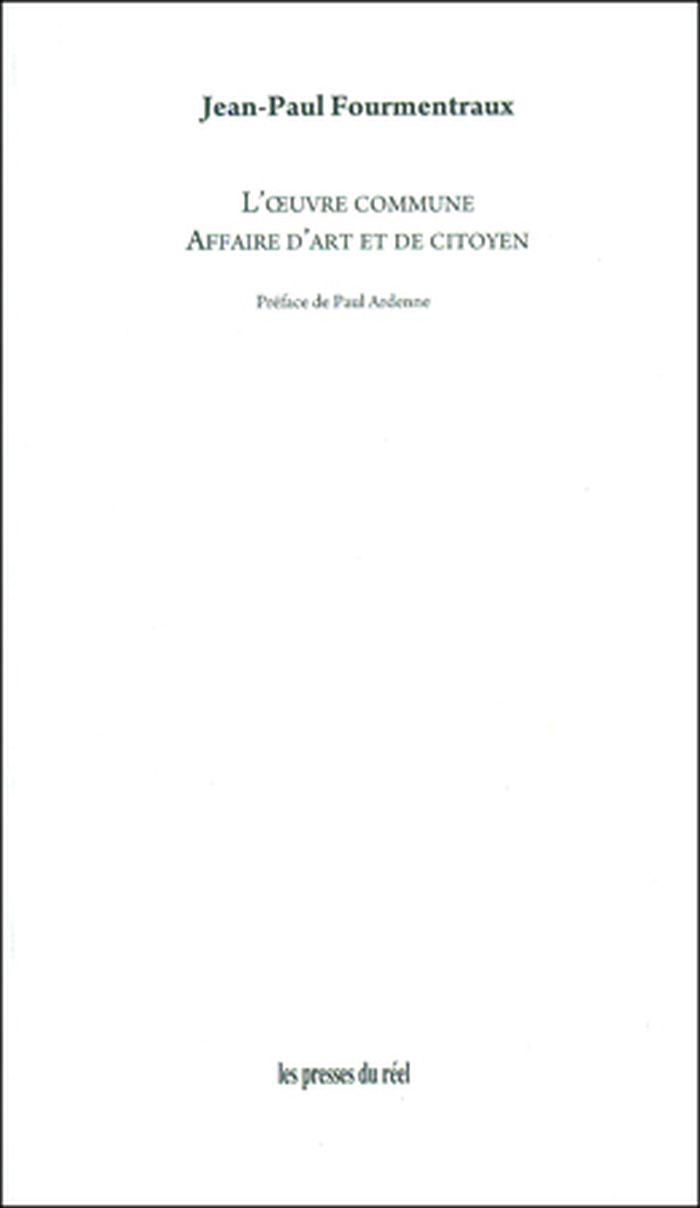
Ce livre ne s'intéresse pas aux œuvres déjà faites, mais à des « œuvres à faire ». Il a pour objet les métamorphoses du travail de création impulsées par un dispositif original de soutien et de médiation artistique : l'action Nouveaux Commanditaires conçue par l'artiste François Hers et mis en œuvre par la Fondation de France depuis 1991. « Faire œuvre » et « faire société » sont ici rendus indissociables.
L'oeuvre commune: affaire d'art et de citoyen
Actions:
Prix:
$42.95
(disponible sur commande)
Résumé:
Ce livre ne s'intéresse pas aux œuvres déjà faites, mais à des « œuvres à faire ». Il a pour objet les métamorphoses du travail de création impulsées par un dispositif original de soutien et de médiation artistique : l'action Nouveaux Commanditaires conçue par l'artiste François Hers et mis en œuvre par la Fondation de France depuis 1991. « Faire œuvre » et « faire société » sont ici rendus indissociables.
Classification:
livres
livres
Publication:
février 2012
février 2012
Sujet:
Théorie de l’art
Théorie de l’art
Classification:
livres
livres
Titre:
Les deux chemins
Les deux chemins
Actions:
Prix:
$45.95
(disponible en magasin)
Résumé:
L'ouvrage dans lequel Ruskin explore les rapports entre la création artistique et la production industrielle, entre l'artiste et son matériau, et démontre le lien indissociable entre la formation des artisans, l'éducation esthétique du grand public et les chefs-d'œuvre de l'art européen. Traduit de l'anglais par Frédérique Campbell (titre original : The Two(...)
$45.95
(disponible en magasin)
Résumé:
L'ouvrage dans lequel Ruskin explore les rapports entre la création artistique et la production industrielle, entre l'artiste et son matériau, et démontre le lien indissociable entre la formation des artisans, l'éducation esthétique du grand public et les chefs-d'œuvre de l'art européen. Traduit de l'anglais par Frédérique Campbell (titre original : The Two(...)
Titre:
Les deux chemins
Actions:
Prix:
$45.95
(disponible en magasin)
Résumé:
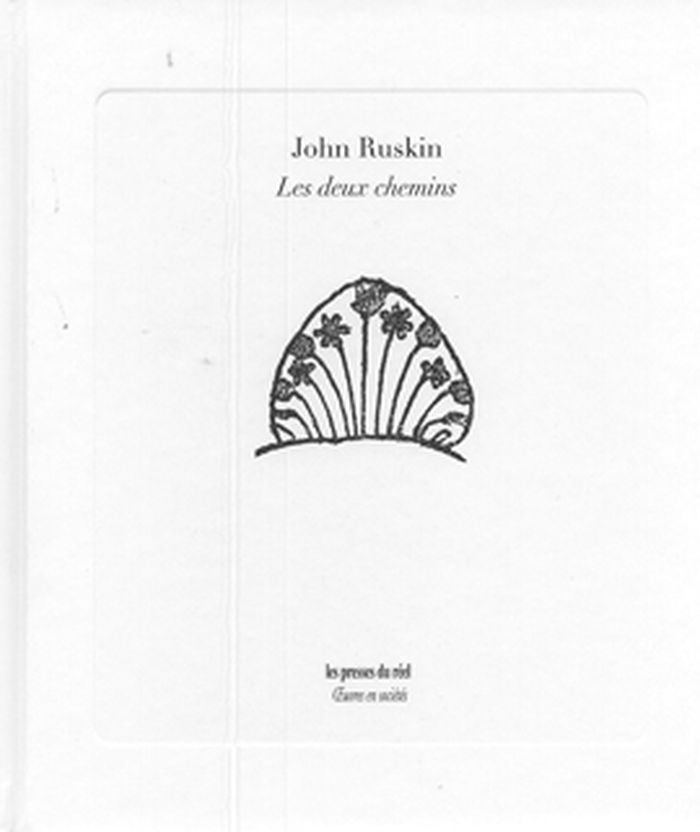
L'ouvrage dans lequel Ruskin explore les rapports entre la création artistique et la production industrielle, entre l'artiste et son matériau, et démontre le lien indissociable entre la formation des artisans, l'éducation esthétique du grand public et les chefs-d'œuvre de l'art européen. Traduit de l'anglais par Frédérique Campbell (titre original : The Two Paths, Londres, Smith, Elder and Co., 1859). Première traduction française. Préface de Frédérique Campbell.
Les deux chemins
Actions:
Prix:
$45.95
(disponible en magasin)
Résumé:
L'ouvrage dans lequel Ruskin explore les rapports entre la création artistique et la production industrielle, entre l'artiste et son matériau, et démontre le lien indissociable entre la formation des artisans, l'éducation esthétique du grand public et les chefs-d'œuvre de l'art européen. Traduit de l'anglais par Frédérique Campbell (titre original : The Two Paths, Londres, Smith, Elder and Co., 1859). Première traduction française. Préface de Frédérique Campbell.
Classification:
livres
livres
Publication:
février 2012
février 2012
Sujet:
Théorie de l’art
Théorie de l’art
Classification:
livres
livres
Actions:
Prix:
$30.95
(disponible sur commande)
Résumé:
In The Lure of the City, Austin Williams and Alastair Donald explore the potential of cities to meet the economic, social, and political challenges of the current age. This book seeks to examine the dynamics of urban life, showing that new opportunities can be maximized and social advances realized in existing and emerging urban centers. It explores both the planned and(...)
$30.95
(disponible sur commande)
Résumé:
In The Lure of the City, Austin Williams and Alastair Donald explore the potential of cities to meet the economic, social, and political challenges of the current age. This book seeks to examine the dynamics of urban life, showing that new opportunities can be maximized and social advances realized in existing and emerging urban centers. It explores both the planned and(...)
Titre:
The lure of the city: from slums to suburbs
Actions:
Prix:
$30.95
(disponible sur commande)
Résumé:
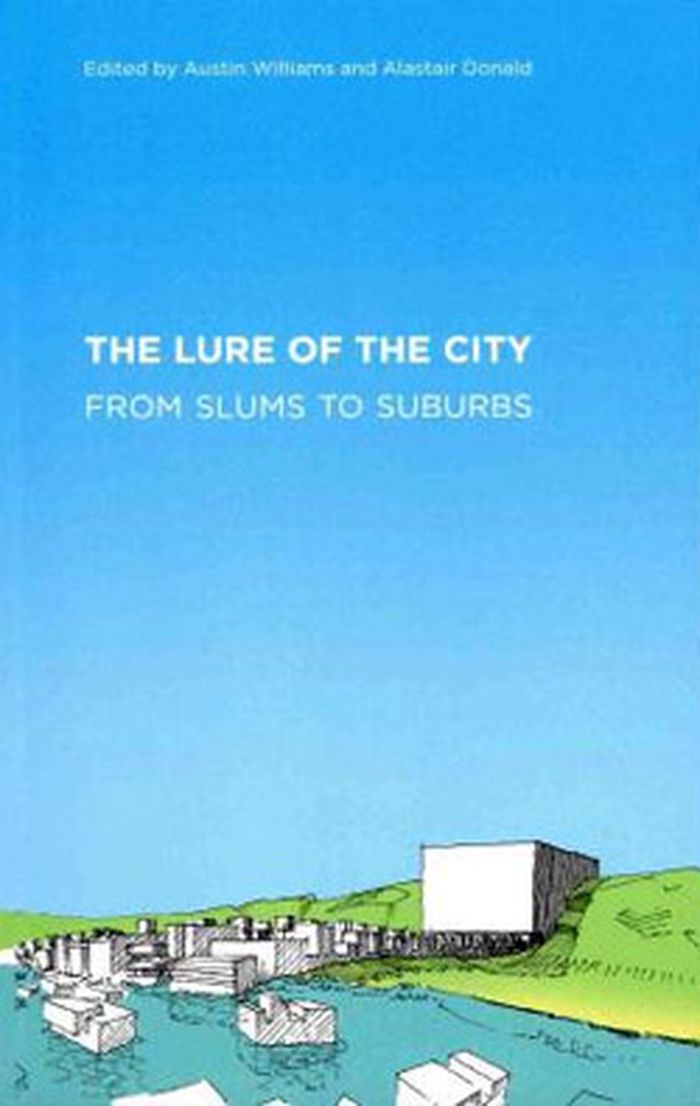
In The Lure of the City, Austin Williams and Alastair Donald explore the potential of cities to meet the economic, social, and political challenges of the current age. This book seeks to examine the dynamics of urban life, showing that new opportunities can be maximized and social advances realized in existing and emerging urban centers. It explores both the planned and organic nature of urban developments and the impacts and aspirations of the people who live and work in them.
The lure of the city: from slums to suburbs
Actions:
Prix:
$30.95
(disponible sur commande)
Résumé:
In The Lure of the City, Austin Williams and Alastair Donald explore the potential of cities to meet the economic, social, and political challenges of the current age. This book seeks to examine the dynamics of urban life, showing that new opportunities can be maximized and social advances realized in existing and emerging urban centers. It explores both the planned and organic nature of urban developments and the impacts and aspirations of the people who live and work in them.
Classification:
livres
livres
Publication:
janvier 2012
janvier 2012
Sujet:
Théorie de l’urbanisme
Théorie de l’urbanisme
Classification:
livres
livres
Actions:
Prix:
$51.95
(disponible sur commande)
Résumé:
The Prudential Center anchors the Boston skyline with its tall, gray tower. Though unassuming architecturally, it is a historical beacon, representing a midcentury moment when insurance companies such as Prudential were particularly aware of how their physical presence and civic engagement reflected upon their intangible product: financial security. Looking to New York's(...)
$51.95
(disponible sur commande)
Résumé:
The Prudential Center anchors the Boston skyline with its tall, gray tower. Though unassuming architecturally, it is a historical beacon, representing a midcentury moment when insurance companies such as Prudential were particularly aware of how their physical presence and civic engagement reflected upon their intangible product: financial security. Looking to New York's(...)
Titre:
Insuring the city: the Prudential Center and the Postwar urban landscape
Actions:
Prix:
$51.95
(disponible sur commande)
Résumé:
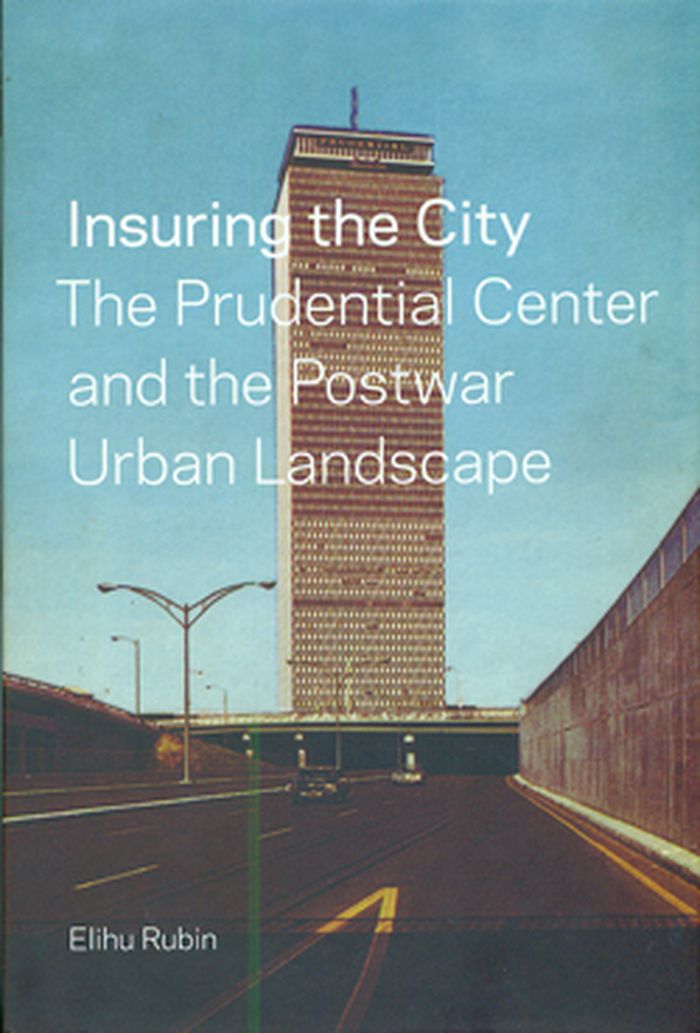
The Prudential Center anchors the Boston skyline with its tall, gray tower. Though unassuming architecturally, it is a historical beacon, representing a midcentury moment when insurance companies such as Prudential were particularly aware of how their physical presence and civic engagement reflected upon their intangible product: financial security. Looking to New York's Rockefeller Center, the creators of the Prudential Center aspired to use real estate development as a tool toward civic achievement, reinvigorating central Boston and integrating a large complex of buildings with new infrastructure for the automobile. Architectural historian Elihu Rubin tells the full story of "The Pru", placing it within the political, economic, and architectural contexts of the period. The Prudential Center played a pivotal role in the economic redevelopment of Boston and was arguably one of the most significant urban developments of the 1950s and '60s. It is an important story, and one that provides great insight into the evolution of the modern city in postwar America.
Insuring the city: the Prudential Center and the Postwar urban landscape
Actions:
Prix:
$51.95
(disponible sur commande)
Résumé:
The Prudential Center anchors the Boston skyline with its tall, gray tower. Though unassuming architecturally, it is a historical beacon, representing a midcentury moment when insurance companies such as Prudential were particularly aware of how their physical presence and civic engagement reflected upon their intangible product: financial security. Looking to New York's Rockefeller Center, the creators of the Prudential Center aspired to use real estate development as a tool toward civic achievement, reinvigorating central Boston and integrating a large complex of buildings with new infrastructure for the automobile. Architectural historian Elihu Rubin tells the full story of "The Pru", placing it within the political, economic, and architectural contexts of the period. The Prudential Center played a pivotal role in the economic redevelopment of Boston and was arguably one of the most significant urban developments of the 1950s and '60s. It is an important story, and one that provides great insight into the evolution of the modern city in postwar America.
Classification:
livres
livres
Publication:
mai 2012
mai 2012
Sujet:
Théorie de l’urbanisme
Théorie de l’urbanisme
Classification:
livres
livres
Prix:
$74.95
(disponible sur commande)
Résumé:
In the late 19th century, a centuries-old preference for highly ornamented architecture gave way to a budding Modernism of clean lines and unadorned surfaces. At the same moment, everyday objects—cups, saucers, chairs, and tables—began to receive critical attention. Alina Payne addresses this shift, arguing for a new understanding of the genealogy of architectural(...)
$74.95
(disponible sur commande)
Résumé:
In the late 19th century, a centuries-old preference for highly ornamented architecture gave way to a budding Modernism of clean lines and unadorned surfaces. At the same moment, everyday objects—cups, saucers, chairs, and tables—began to receive critical attention. Alina Payne addresses this shift, arguing for a new understanding of the genealogy of architectural(...)
Titre:
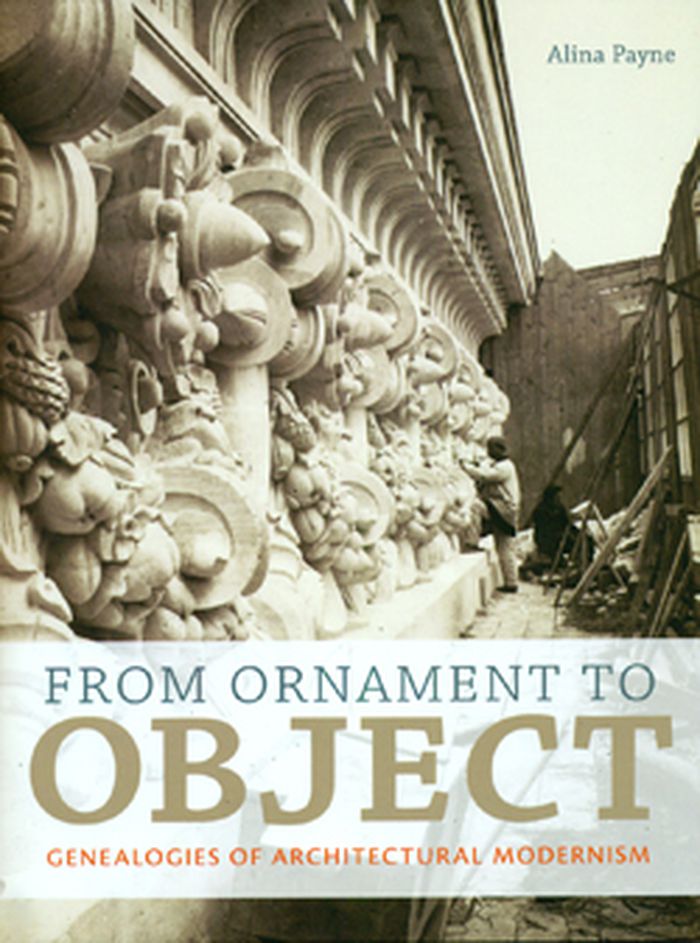
From ornament to object: genealogies of architectural modernism
Actions:
Prix:
$74.95
(disponible sur commande)
Résumé:
In the late 19th century, a centuries-old preference for highly ornamented architecture gave way to a budding Modernism of clean lines and unadorned surfaces. At the same moment, everyday objects—cups, saucers, chairs, and tables—began to receive critical attention. Alina Payne addresses this shift, arguing for a new understanding of the genealogy of architectural modernism: rather than the well-known story in which an absorption of technology and mass production created a radical aesthetic that broke decisively with the past, Payne argues for a more gradual shift, as the eloquence of architectural ornamentation was taken on by objects of daily use. As she demonstrates, the work of Adolf Loos and Le Corbusier should be seen as the culmination of a conversation about ornament dating as far back as the Renaissance. Payne looks beyond the usual suspects of philosophy and science to establish theoretical catalysts for the shift from ornament to object in the varied fields of anthropology and ethnology; art history and the museum; and archaeology and psychology.
From ornament to object: genealogies of architectural modernism
Actions:
Prix:
$74.95
(disponible sur commande)
Résumé:
In the late 19th century, a centuries-old preference for highly ornamented architecture gave way to a budding Modernism of clean lines and unadorned surfaces. At the same moment, everyday objects—cups, saucers, chairs, and tables—began to receive critical attention. Alina Payne addresses this shift, arguing for a new understanding of the genealogy of architectural modernism: rather than the well-known story in which an absorption of technology and mass production created a radical aesthetic that broke decisively with the past, Payne argues for a more gradual shift, as the eloquence of architectural ornamentation was taken on by objects of daily use. As she demonstrates, the work of Adolf Loos and Le Corbusier should be seen as the culmination of a conversation about ornament dating as far back as the Renaissance. Payne looks beyond the usual suspects of philosophy and science to establish theoretical catalysts for the shift from ornament to object in the varied fields of anthropology and ethnology; art history and the museum; and archaeology and psychology.
Classification:
livres
livres
Publication:
juillet 2012
juillet 2012
Sujet:
Théorie de l’architecture
Théorie de l’architecture
Classification:
livres
livres
Titre:
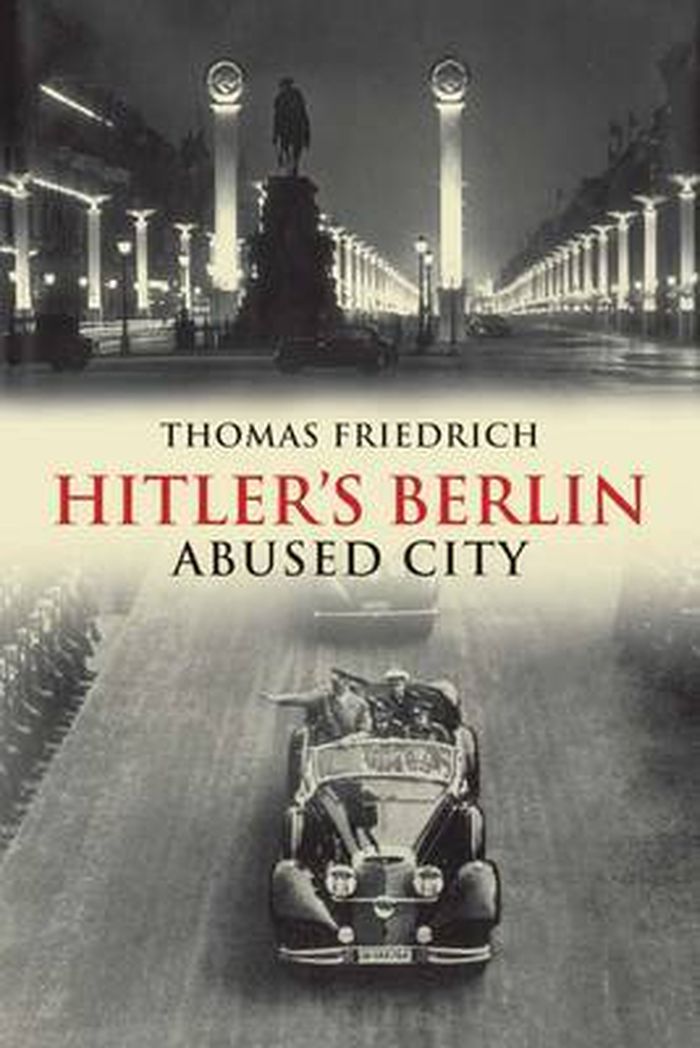
Hitler'S Berlin: abused city
Hitler'S Berlin: abused city
Actions:
Prix:
$49.95
(disponible sur commande)
Résumé:
From his first visit to Berlin in 1916, Hitler was preoccupied and fascinated by Germany''s great capital city. In this vivid and entirely new account of Hitler''s relationship with Berlin, Thomas Friedrich explores how Hitler identified with the city, how his political aspirations were reflected in architectural aspirations for the capital, and how Berlin surprisingly(...)
$49.95
(disponible sur commande)
Résumé:
From his first visit to Berlin in 1916, Hitler was preoccupied and fascinated by Germany''s great capital city. In this vivid and entirely new account of Hitler''s relationship with Berlin, Thomas Friedrich explores how Hitler identified with the city, how his political aspirations were reflected in architectural aspirations for the capital, and how Berlin surprisingly(...)
Titre:
Hitler'S Berlin: abused city
Actions:
Prix:
$49.95
(disponible sur commande)
Résumé:
From his first visit to Berlin in 1916, Hitler was preoccupied and fascinated by Germany''s great capital city. In this vivid and entirely new account of Hitler''s relationship with Berlin, Thomas Friedrich explores how Hitler identified with the city, how his political aspirations were reflected in architectural aspirations for the capital, and how Berlin surprisingly influenced the development of Hitler''s political ideas. A leading expert on the twentieth-century history of Berlin, Friedrich employs new and little-known German sources to track Hitler''s attitudes and plans for the city. Even while he despised both the cosmopolitan culture of the Weimar Republic and the profound Jewish influence on the city, Hitler was drawn to the grandiosity of its architecture and its imperial spirit. He dreamed of transforming Berlin into a capital that would reflect his autocracy, and he used the city for such varied purposes as testing his anti-Semitic policies and demonstrating the might of the Third Reich. Illuminating Berlin's burdened years under Nazi subjection, Friedrich offers new understandings of Hitler and his politics, architectural views, and artistic opinions.
Hitler'S Berlin: abused city
Actions:
Prix:
$49.95
(disponible sur commande)
Résumé:
From his first visit to Berlin in 1916, Hitler was preoccupied and fascinated by Germany''s great capital city. In this vivid and entirely new account of Hitler''s relationship with Berlin, Thomas Friedrich explores how Hitler identified with the city, how his political aspirations were reflected in architectural aspirations for the capital, and how Berlin surprisingly influenced the development of Hitler''s political ideas. A leading expert on the twentieth-century history of Berlin, Friedrich employs new and little-known German sources to track Hitler''s attitudes and plans for the city. Even while he despised both the cosmopolitan culture of the Weimar Republic and the profound Jewish influence on the city, Hitler was drawn to the grandiosity of its architecture and its imperial spirit. He dreamed of transforming Berlin into a capital that would reflect his autocracy, and he used the city for such varied purposes as testing his anti-Semitic policies and demonstrating the might of the Third Reich. Illuminating Berlin's burdened years under Nazi subjection, Friedrich offers new understandings of Hitler and his politics, architectural views, and artistic opinions.
Classification:
livres
livres
Publication:
février 2012
février 2012
Sujet:
Théorie de l’urbanisme
Théorie de l’urbanisme
Classification:
livres
livres
Titre:
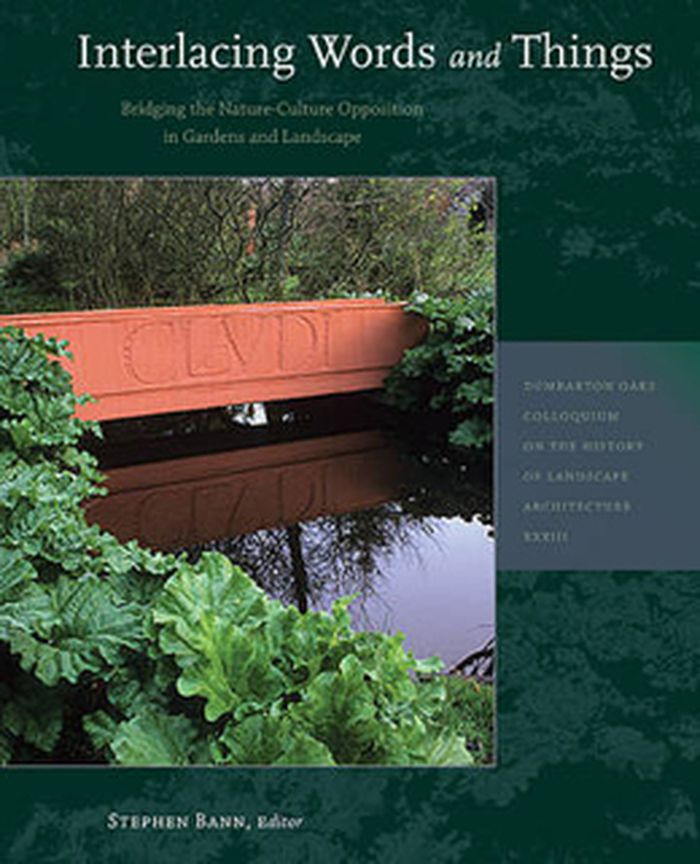
Interlacing words and things : bridging the nature-culture opposition in garden and landscape
Interlacing words and things : bridging the nature-culture opposition in garden and landscape
Actions:
Prix:
$46.95
(disponible sur commande)
Résumé:
This illustrated volume examines how the natural world is transformed through the creative use of language. Its contributors do not assume that there is an opposition between nature and culture, but rather emphasize that forms of language are embedded in our understanding and appreciation of the natural environment across cultures and time periods.
$46.95
(disponible sur commande)
Résumé:
This illustrated volume examines how the natural world is transformed through the creative use of language. Its contributors do not assume that there is an opposition between nature and culture, but rather emphasize that forms of language are embedded in our understanding and appreciation of the natural environment across cultures and time periods.
Titre:
Interlacing words and things : bridging the nature-culture opposition in garden and landscape
Actions:
Prix:
$46.95
(disponible sur commande)
Résumé:
This illustrated volume examines how the natural world is transformed through the creative use of language. Its contributors do not assume that there is an opposition between nature and culture, but rather emphasize that forms of language are embedded in our understanding and appreciation of the natural environment across cultures and time periods.
Interlacing words and things : bridging the nature-culture opposition in garden and landscape
Actions:
Prix:
$46.95
(disponible sur commande)
Résumé:
This illustrated volume examines how the natural world is transformed through the creative use of language. Its contributors do not assume that there is an opposition between nature and culture, but rather emphasize that forms of language are embedded in our understanding and appreciation of the natural environment across cultures and time periods.
Classification:
livres
livres
Publication:
avril 2012
avril 2012
Sujet:
Théorie du paysage
Théorie du paysage
Classification:
livres
livres
Titre:
Doug Patt : how to architect
Doug Patt : how to architect
Actions:
Prix:
$15.95
(disponible sur commande)
Résumé:
The word "architect" is a noun, but Doug Patt uses it as a verb - coining a term and making a point about using parts of speech and parts of buildings in new ways. Changing the function of a word, or a room, can produce surprise and meaning. In "How to Architect," Patt - an architect and the creator of a series of wildly popular online videos about architecture -presents(...)
$15.95
(disponible sur commande)
Résumé:
The word "architect" is a noun, but Doug Patt uses it as a verb - coining a term and making a point about using parts of speech and parts of buildings in new ways. Changing the function of a word, or a room, can produce surprise and meaning. In "How to Architect," Patt - an architect and the creator of a series of wildly popular online videos about architecture -presents(...)
Titre:
Doug Patt : how to architect
Actions:
Prix:
$15.95
(disponible sur commande)
Résumé:
The word "architect" is a noun, but Doug Patt uses it as a verb - coining a term and making a point about using parts of speech and parts of buildings in new ways. Changing the function of a word, or a room, can produce surprise and meaning. In "How to Architect," Patt - an architect and the creator of a series of wildly popular online videos about architecture -presents the basics of architecture in A-Z form, starting with "A is for Asymmetry" (as seen in Chartres Cathedral and Frank Gehry), detouring through "N is for Narrative," and ending with "Z is for Zeal" (a quality that successful architects tend to have, even in fiction - see T "The Fountainhead's" architect-hero Howard Roark.)
Doug Patt : how to architect
Actions:
Prix:
$15.95
(disponible sur commande)
Résumé:
The word "architect" is a noun, but Doug Patt uses it as a verb - coining a term and making a point about using parts of speech and parts of buildings in new ways. Changing the function of a word, or a room, can produce surprise and meaning. In "How to Architect," Patt - an architect and the creator of a series of wildly popular online videos about architecture -presents the basics of architecture in A-Z form, starting with "A is for Asymmetry" (as seen in Chartres Cathedral and Frank Gehry), detouring through "N is for Narrative," and ending with "Z is for Zeal" (a quality that successful architects tend to have, even in fiction - see T "The Fountainhead's" architect-hero Howard Roark.)
Classification:
livres
livres
Publication:
mars 2012
mars 2012
Sujet:
Théorie de l’architecture
Théorie de l’architecture
Classification:
livres
livres
Titre:
Toward a minor architecture
Toward a minor architecture
Actions:
Prix:
$28.95
(disponible sur commande)
Résumé:
Architecture can no longer limit itself to the art of making buildings; it must also invent the politics of taking them apart. This is Jill Stoner’s premise for a minor architecture. Her architect’s eye tracks differently from most, drawn not to the lauded and iconic but to what she calls “the landscape of our constructed mistakes”--metropolitan hinterlands rife with(...)
$28.95
(disponible sur commande)
Résumé:
Architecture can no longer limit itself to the art of making buildings; it must also invent the politics of taking them apart. This is Jill Stoner’s premise for a minor architecture. Her architect’s eye tracks differently from most, drawn not to the lauded and iconic but to what she calls “the landscape of our constructed mistakes”--metropolitan hinterlands rife with(...)
Titre:
Toward a minor architecture
Actions:
Prix:
$28.95
(disponible sur commande)
Résumé:
Architecture can no longer limit itself to the art of making buildings; it must also invent the politics of taking them apart. This is Jill Stoner’s premise for a minor architecture. Her architect’s eye tracks differently from most, drawn not to the lauded and iconic but to what she calls “the landscape of our constructed mistakes”--metropolitan hinterlands rife with failed and foreclosed developments, undersubscribed office parks, chain hotels, and abandoned malls. These graveyards of capital, Stoner asserts, may be stripped of their excess and become sites of strategic spatial operations. But first we must dissect and dismantle prevalent architectural mythologies that brought them into being--western obsessions with interiority, with the autonomy of the building-object, with the architect’s mantle of celebrity, and with the idea of nature as that which is “other” than the built metropolis. These four myths form the warp of the book.
Toward a minor architecture
Actions:
Prix:
$28.95
(disponible sur commande)
Résumé:
Architecture can no longer limit itself to the art of making buildings; it must also invent the politics of taking them apart. This is Jill Stoner’s premise for a minor architecture. Her architect’s eye tracks differently from most, drawn not to the lauded and iconic but to what she calls “the landscape of our constructed mistakes”--metropolitan hinterlands rife with failed and foreclosed developments, undersubscribed office parks, chain hotels, and abandoned malls. These graveyards of capital, Stoner asserts, may be stripped of their excess and become sites of strategic spatial operations. But first we must dissect and dismantle prevalent architectural mythologies that brought them into being--western obsessions with interiority, with the autonomy of the building-object, with the architect’s mantle of celebrity, and with the idea of nature as that which is “other” than the built metropolis. These four myths form the warp of the book.
Classification:
livres
livres
Publication:
mars 2012
mars 2012
Sujet:
Théorie de l’architecture
Théorie de l’architecture
Classification:
livres
livres
Actions:
Prix:
$32.00
(disponible sur commande)
Résumé:
With the emergence of conceptual art in the mid-1960s, the traditional notion of the studio became at least partly obsolete. Other sites emerged for the generation of art, leading to the idea of "post-studio practice." But the studio never went away; it was continually reinvented in response to new realities. This collection, expanding on current critical interest in(...)
$32.00
(disponible sur commande)
Résumé:
With the emergence of conceptual art in the mid-1960s, the traditional notion of the studio became at least partly obsolete. Other sites emerged for the generation of art, leading to the idea of "post-studio practice." But the studio never went away; it was continually reinvented in response to new realities. This collection, expanding on current critical interest in(...)
Titre:
Documents of contemporary art : the studio
Actions:
Prix:
$32.00
(disponible sur commande)
Résumé:
With the emergence of conceptual art in the mid-1960s, the traditional notion of the studio became at least partly obsolete. Other sites emerged for the generation of art, leading to the idea of "post-studio practice." But the studio never went away; it was continually reinvented in response to new realities. This collection, expanding on current critical interest in issues of production and situation, looks at the evolution of studio - and "post-studio" - practice over the last half century. In recent decades many artists have turned their studios into offices from which they organize a multiplicity of operations and interactions. Others use the studio as a quasi-exhibition space, or work on a laptop computer - mobile, flexible, and ready to follow the next commission.
Documents of contemporary art : the studio
Actions:
Prix:
$32.00
(disponible sur commande)
Résumé:
With the emergence of conceptual art in the mid-1960s, the traditional notion of the studio became at least partly obsolete. Other sites emerged for the generation of art, leading to the idea of "post-studio practice." But the studio never went away; it was continually reinvented in response to new realities. This collection, expanding on current critical interest in issues of production and situation, looks at the evolution of studio - and "post-studio" - practice over the last half century. In recent decades many artists have turned their studios into offices from which they organize a multiplicity of operations and interactions. Others use the studio as a quasi-exhibition space, or work on a laptop computer - mobile, flexible, and ready to follow the next commission.
Classification:
livres
livres
Publication:
mars 2012
mars 2012
Sujet:
Théorie de l’art
Théorie de l’art


