


36173 Résultats
Classification:
livres
livres
Titre:
A museum of one's own
A museum of one's own
Actions:
Prix:
$54.95
(disponible sur commande)
Résumé:
When French revolutionaries sacked royal holdings at the end of the 18th century, they began the largest transfer of artistic goods in world history. By 1850 many "repossessed" treasures had come to rest in a new institution, the public museum, where they were assigned educational tasks. Anne Higonnet's book begins at this turning point in the history of art, but it looks(...)
$54.95
(disponible sur commande)
Résumé:
When French revolutionaries sacked royal holdings at the end of the 18th century, they began the largest transfer of artistic goods in world history. By 1850 many "repossessed" treasures had come to rest in a new institution, the public museum, where they were assigned educational tasks. Anne Higonnet's book begins at this turning point in the history of art, but it looks(...)
Titre:
A museum of one's own
Actions:
Prix:
$54.95
(disponible sur commande)
Résumé:
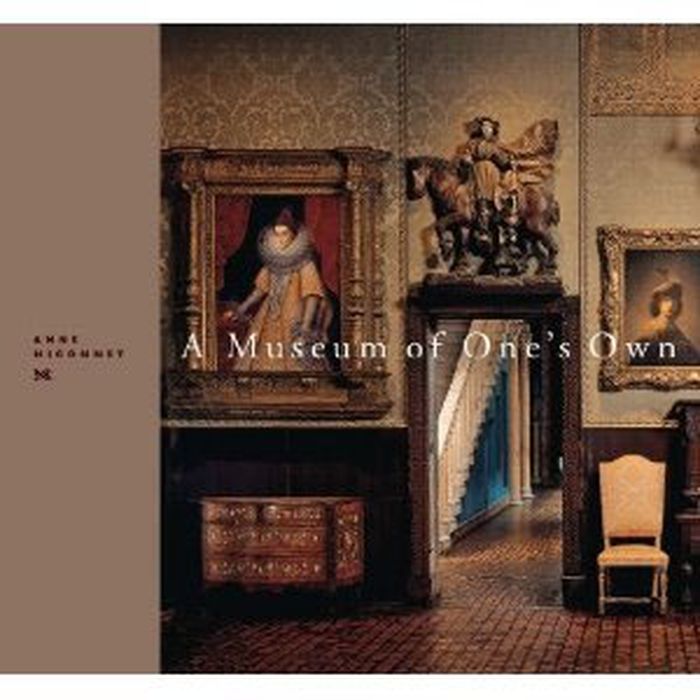
When French revolutionaries sacked royal holdings at the end of the 18th century, they began the largest transfer of artistic goods in world history. By 1850 many "repossessed" treasures had come to rest in a new institution, the public museum, where they were assigned educational tasks. Anne Higonnet's book begins at this turning point in the history of art, but it looks instead at another new institution, the collection museum. Emerging in London with the Wallace Collection, the collection museum spread rapidly in Gilded Age America. To the discontent of many Europeans, cash-flush Americans like J.P. Morgan and Henry Clay Frick went on collecting campaigns that netted masterpiece after masterpiece, along with the furniture and fittings of dozens of aristocratic residences. Higonnet weaves letters, auction records and photographs into an engrossing account of the founding of both renowned and obscure collection museums. She also explores how these collectors stoked the tremendous values accorded paintings by Raphael, Titian, Rembrandt, Vermeer, Velazquez, Gainsborough and Reynolds.
A museum of one's own
Actions:
Prix:
$54.95
(disponible sur commande)
Résumé:
When French revolutionaries sacked royal holdings at the end of the 18th century, they began the largest transfer of artistic goods in world history. By 1850 many "repossessed" treasures had come to rest in a new institution, the public museum, where they were assigned educational tasks. Anne Higonnet's book begins at this turning point in the history of art, but it looks instead at another new institution, the collection museum. Emerging in London with the Wallace Collection, the collection museum spread rapidly in Gilded Age America. To the discontent of many Europeans, cash-flush Americans like J.P. Morgan and Henry Clay Frick went on collecting campaigns that netted masterpiece after masterpiece, along with the furniture and fittings of dozens of aristocratic residences. Higonnet weaves letters, auction records and photographs into an engrossing account of the founding of both renowned and obscure collection museums. She also explores how these collectors stoked the tremendous values accorded paintings by Raphael, Titian, Rembrandt, Vermeer, Velazquez, Gainsborough and Reynolds.
Classification:
livres
livres
Publication:
mai 2010
mai 2010
Classification:
livres
livres
Titre:
Artivisme
Artivisme
Actions:
Prix:
$73.00
(disponible sur commande)
Résumé:
Quel art, quelle action politique possibles dans une société vouée au marché ? À cette double question, certains artistes et activistes répondent d'un pas de côté : en dehors des disciplines instituées et des routines protestataires, ils inventent des manières d'agir et de créer qui se nouent à l'articulation de la vie, de la performance, de la fête et du jeu. De même que(...)
$73.00
(disponible sur commande)
Résumé:
Quel art, quelle action politique possibles dans une société vouée au marché ? À cette double question, certains artistes et activistes répondent d'un pas de côté : en dehors des disciplines instituées et des routines protestataires, ils inventent des manières d'agir et de créer qui se nouent à l'articulation de la vie, de la performance, de la fête et du jeu. De même que(...)
Titre:
Artivisme
Actions:
Prix:
$73.00
(disponible sur commande)
Résumé:
Quel art, quelle action politique possibles dans une société vouée au marché ? À cette double question, certains artistes et activistes répondent d'un pas de côté : en dehors des disciplines instituées et des routines protestataires, ils inventent des manières d'agir et de créer qui se nouent à l'articulation de la vie, de la performance, de la fête et du jeu. De même que le queer pose l'existence d'un troisième genre par delà féminin et masculin, de même l'artivisme suggère qu'il existe un troisième terme entre esthétique et politique. C'est l'art festif des collectifs décidés à réenchanter la vie, l'utopie des squats et des zones d'autonomie temporaire, la fronde libertaire des hackers et artistes du Net. Ce sont les détournements du Critical Art Ensemble, de Banksy et du Billboard Liberation Front, les sabotages joyeux de la guérilla pâtissière et des Yes Men, les infiltrations de JR, les performances de Steven Cohen ou Oreet Ashery, les prêches de Reverend Billy... Toutes ces pratiques, dont l'enjeu est d'opposer l'imagination et la créativité à l'ennui, la liberté d'action à la surveillance généralisée, la révolte collective au repli individuel, s'inscrivent dans une galaxie sans frontières...
Artivisme
Actions:
Prix:
$73.00
(disponible sur commande)
Résumé:
Quel art, quelle action politique possibles dans une société vouée au marché ? À cette double question, certains artistes et activistes répondent d'un pas de côté : en dehors des disciplines instituées et des routines protestataires, ils inventent des manières d'agir et de créer qui se nouent à l'articulation de la vie, de la performance, de la fête et du jeu. De même que le queer pose l'existence d'un troisième genre par delà féminin et masculin, de même l'artivisme suggère qu'il existe un troisième terme entre esthétique et politique. C'est l'art festif des collectifs décidés à réenchanter la vie, l'utopie des squats et des zones d'autonomie temporaire, la fronde libertaire des hackers et artistes du Net. Ce sont les détournements du Critical Art Ensemble, de Banksy et du Billboard Liberation Front, les sabotages joyeux de la guérilla pâtissière et des Yes Men, les infiltrations de JR, les performances de Steven Cohen ou Oreet Ashery, les prêches de Reverend Billy... Toutes ces pratiques, dont l'enjeu est d'opposer l'imagination et la créativité à l'ennui, la liberté d'action à la surveillance généralisée, la révolte collective au repli individuel, s'inscrivent dans une galaxie sans frontières...
Classification:
livres
livres
Publication:
décembre 2010
décembre 2010
Sujet:
Théorie de l’art
Théorie de l’art
Classification:
livres
livres
Titre:
Eadweard Muybridge
Eadweard Muybridge
Actions:
Prix:
$19.95
(disponible sur commande)
Résumé:
In Eadweard Muybridge, Braun establishes Muybridge’s central contributions to the history of art, science, photography, and motion pictures. This biography traces the sensational events of Muybridge’s life and his personal reinventions as artist, photographer, researcher, and showman.
$19.95
(disponible sur commande)
Résumé:
In Eadweard Muybridge, Braun establishes Muybridge’s central contributions to the history of art, science, photography, and motion pictures. This biography traces the sensational events of Muybridge’s life and his personal reinventions as artist, photographer, researcher, and showman.
Titre:
Eadweard Muybridge
Actions:
Prix:
$19.95
(disponible sur commande)
Résumé:
In Eadweard Muybridge, Braun establishes Muybridge’s central contributions to the history of art, science, photography, and motion pictures. This biography traces the sensational events of Muybridge’s life and his personal reinventions as artist, photographer, researcher, and showman.
Eadweard Muybridge
Actions:
Prix:
$19.95
(disponible sur commande)
Résumé:
In Eadweard Muybridge, Braun establishes Muybridge’s central contributions to the history of art, science, photography, and motion pictures. This biography traces the sensational events of Muybridge’s life and his personal reinventions as artist, photographer, researcher, and showman.
Classification:
livres
livres
Publication:
septembre 2010
septembre 2010
Sujet:
Monographies photo
Monographies photo
Classification:
livres
livres
Actions:
Prix:
$29.95
(disponible sur commande)
Résumé:
In Walled States, Waning Sovereignty, Wendy Brown considers the recent spate of wall building in contrast to the erosion of nation-state sovereignty. Drawing on classical and contemporary political theories of state sovereignty in order to understand how state power and national identity persist amid its decline, Brown considers both the need of the state for legitimacy(...)
$29.95
(disponible sur commande)
Résumé:
In Walled States, Waning Sovereignty, Wendy Brown considers the recent spate of wall building in contrast to the erosion of nation-state sovereignty. Drawing on classical and contemporary political theories of state sovereignty in order to understand how state power and national identity persist amid its decline, Brown considers both the need of the state for legitimacy(...)
Titre:
Walled states, waning sovereignty
Actions:
Prix:
$29.95
(disponible sur commande)
Résumé:
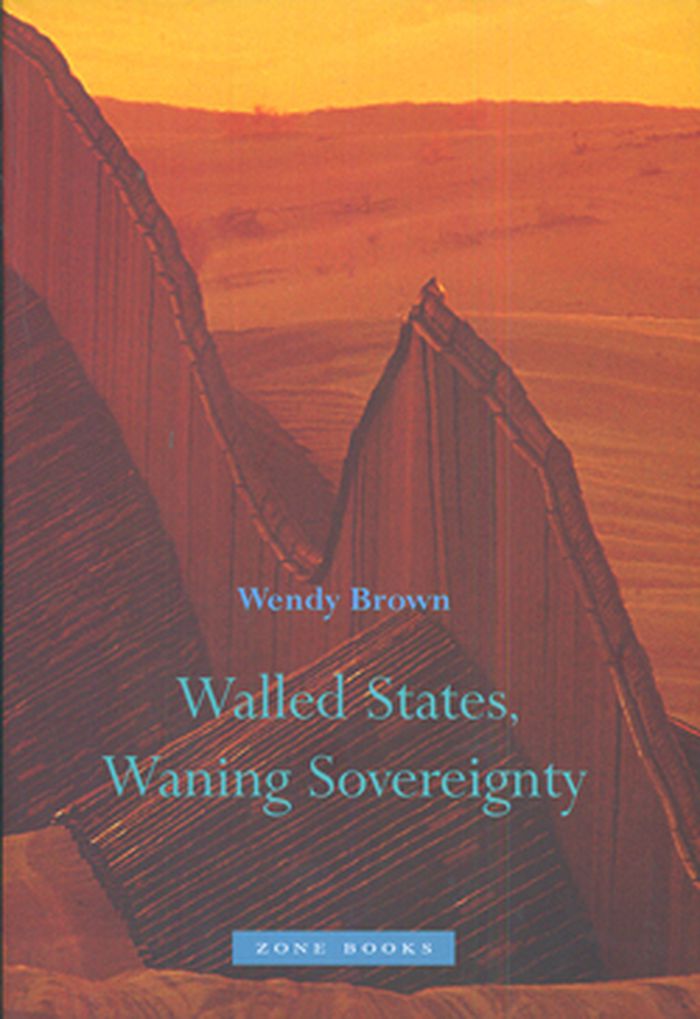
In Walled States, Waning Sovereignty, Wendy Brown considers the recent spate of wall building in contrast to the erosion of nation-state sovereignty. Drawing on classical and contemporary political theories of state sovereignty in order to understand how state power and national identity persist amid its decline, Brown considers both the need of the state for legitimacy and the popular desires that incite the contemporary building of walls. The new walls—dividing Texas from Mexico, Israel from Palestine, South Africa from Zimbabwe—consecrate the broken boundaries they would seem to contest and signify the ungovernability of a range of forces unleashed by globalization. Yet these same walls often amount to little more than theatrical props, frequently breached, and blur the distinction between law and lawlessness that they are intended to represent. But if today's walls fail to resolve the conflicts between globalization and national identity, they nonetheless project a stark image of sovereign power. Walls, Brown argues, address human desires for containment and protection in a world increasingly without these provisions. Walls respond to the wish for horizons even as horizons are vanquished.
Walled states, waning sovereignty
Actions:
Prix:
$29.95
(disponible sur commande)
Résumé:
In Walled States, Waning Sovereignty, Wendy Brown considers the recent spate of wall building in contrast to the erosion of nation-state sovereignty. Drawing on classical and contemporary political theories of state sovereignty in order to understand how state power and national identity persist amid its decline, Brown considers both the need of the state for legitimacy and the popular desires that incite the contemporary building of walls. The new walls—dividing Texas from Mexico, Israel from Palestine, South Africa from Zimbabwe—consecrate the broken boundaries they would seem to contest and signify the ungovernability of a range of forces unleashed by globalization. Yet these same walls often amount to little more than theatrical props, frequently breached, and blur the distinction between law and lawlessness that they are intended to represent. But if today's walls fail to resolve the conflicts between globalization and national identity, they nonetheless project a stark image of sovereign power. Walls, Brown argues, address human desires for containment and protection in a world increasingly without these provisions. Walls respond to the wish for horizons even as horizons are vanquished.
Classification:
livres
livres
Publication:
octobre 2010
octobre 2010
Sujet:
Théorie de l’architecture
Théorie de l’architecture
Classification:
livres
livres
Actions:
Prix:
$37.50
(disponible sur commande)
Résumé:
New Labour came to power in 1997 amid much talk of regenerating the inner cities left to rot under successive Conservative governments. Over the next decade, urban environments became the laboratories of the new enterprise economy: of finance, property speculation, and the service industry. Now, with New Labour capsized, Owen Hatherley sets out to explore the wreckage —(...)
$37.50
(disponible sur commande)
Résumé:
New Labour came to power in 1997 amid much talk of regenerating the inner cities left to rot under successive Conservative governments. Over the next decade, urban environments became the laboratories of the new enterprise economy: of finance, property speculation, and the service industry. Now, with New Labour capsized, Owen Hatherley sets out to explore the wreckage —(...)
Titre:
A guide to the new ruins of Great Britain
Actions:
Prix:
$37.50
(disponible sur commande)
Résumé:
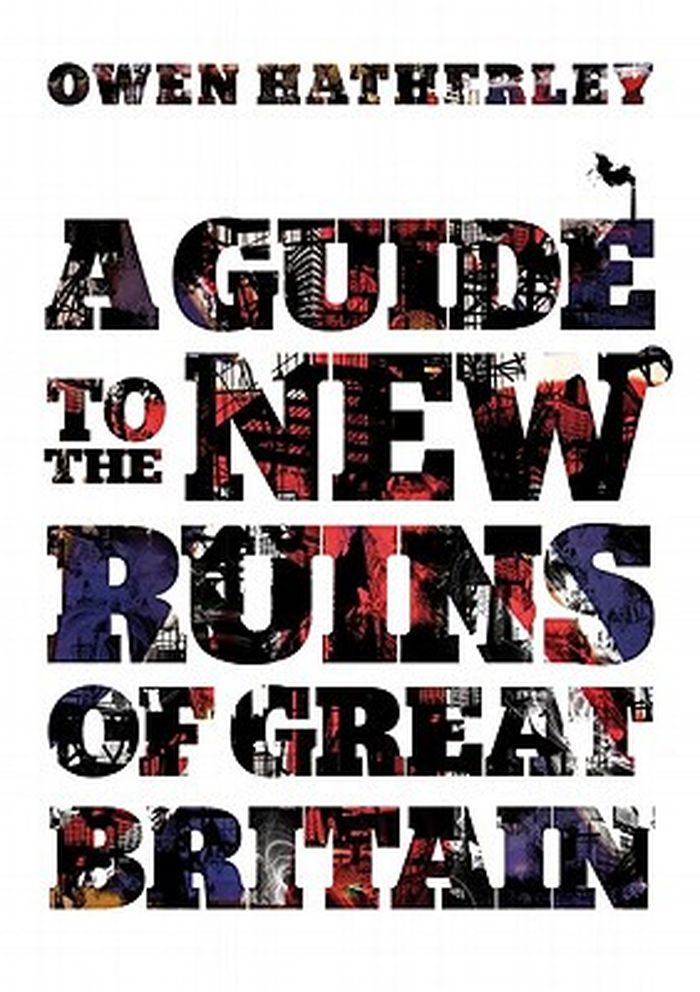
New Labour came to power in 1997 amid much talk of regenerating the inner cities left to rot under successive Conservative governments. Over the next decade, urban environments became the laboratories of the new enterprise economy: of finance, property speculation, and the service industry. Now, with New Labour capsized, Owen Hatherley sets out to explore the wreckage — the architecture that epitomized an age of greed and selfish aspiration. From riverside apartment complexes, art galleries and amorphous interactive “centers” to shopping malls, call centers and factories turned into expensive lofts, Hatherley maps the derelict Britain of the 2010s, an emphatic expression of a failed politics.
A guide to the new ruins of Great Britain
Actions:
Prix:
$37.50
(disponible sur commande)
Résumé:
New Labour came to power in 1997 amid much talk of regenerating the inner cities left to rot under successive Conservative governments. Over the next decade, urban environments became the laboratories of the new enterprise economy: of finance, property speculation, and the service industry. Now, with New Labour capsized, Owen Hatherley sets out to explore the wreckage — the architecture that epitomized an age of greed and selfish aspiration. From riverside apartment complexes, art galleries and amorphous interactive “centers” to shopping malls, call centers and factories turned into expensive lofts, Hatherley maps the derelict Britain of the 2010s, an emphatic expression of a failed politics.
Classification:
livres
livres
Publication:
décembre 2010
décembre 2010
Classification:
livres
livres
Actions:
Prix:
$24.95
(disponible sur commande)
Résumé:
In these diatribes on the marketing of culture and the branding of identity, the development of spectacle-architecture and the rise of global cities, Hal Foster surveys our new political economy of design. This publication explores the historical relations of modern art and modern museum, the conceptual vicissitudes of art history and visual studies, the recent travails(...)
$24.95
(disponible sur commande)
Résumé:
In these diatribes on the marketing of culture and the branding of identity, the development of spectacle-architecture and the rise of global cities, Hal Foster surveys our new political economy of design. This publication explores the historical relations of modern art and modern museum, the conceptual vicissitudes of art history and visual studies, the recent travails(...)
Titre:
Design and crime: (and other diatribes)
Actions:
Prix:
$24.95
(disponible sur commande)
Résumé:
In these diatribes on the marketing of culture and the branding of identity, the development of spectacle-architecture and the rise of global cities, Hal Foster surveys our new political economy of design. This publication explores the historical relations of modern art and modern museum, the conceptual vicissitudes of art history and visual studies, the recent travails of art criticism, and the double aftermath of modernism and postmodernism in an attempt to illuminate the conditions for critical culture in the present.
Design and crime: (and other diatribes)
Actions:
Prix:
$24.95
(disponible sur commande)
Résumé:
In these diatribes on the marketing of culture and the branding of identity, the development of spectacle-architecture and the rise of global cities, Hal Foster surveys our new political economy of design. This publication explores the historical relations of modern art and modern museum, the conceptual vicissitudes of art history and visual studies, the recent travails of art criticism, and the double aftermath of modernism and postmodernism in an attempt to illuminate the conditions for critical culture in the present.
Classification:
livres
livres
Publication:
janvier 2011
janvier 2011
Sujet:
Théorie du design
Théorie du design
Classification:
livres
livres
Actions:
Prix:
$23.95
(disponible sur commande)
Résumé:
First published in 1967, Guy Debord's stinging revolutionary critique of contemporary society, The Society of the Spectacle has since acquired a cult status. Credited by many as being the inspiration for the ideas generated by the events of May 1968 in France, Debord's pitiless attack on commodity fetishism and its incrustation in the practices of everyday life continues(...)
$23.95
(disponible sur commande)
Résumé:
First published in 1967, Guy Debord's stinging revolutionary critique of contemporary society, The Society of the Spectacle has since acquired a cult status. Credited by many as being the inspiration for the ideas generated by the events of May 1968 in France, Debord's pitiless attack on commodity fetishism and its incrustation in the practices of everyday life continues(...)
Titre:
Comments on the society of the spectacle
Actions:
Prix:
$23.95
(disponible sur commande)
Résumé:
First published in 1967, Guy Debord's stinging revolutionary critique of contemporary society, The Society of the Spectacle has since acquired a cult status. Credited by many as being the inspiration for the ideas generated by the events of May 1968 in France, Debord's pitiless attack on commodity fetishism and its incrustation in the practices of everyday life continues to burn brightly in today's age of satellite television and the soundbite. In Comments on the Society of the Spectacle, published twenty years later, Debord returned to the themes of his previous analysis and demonstrated how they were all the more relevant in a period when the integrated spectacle was dominant. Resolutely refusing to be reconciled to the system, Debord trenchantly slices through the doxa and mystification offered tip by journalists and pundits to show how aspects of reality as diverse as terrorism and the environment, the Mafia and the media, were caught up in the logic of the spectacular society. Pointing the finger clearly at those who benefit from the logic of domination, Debord's comments convey the revolutionary impulse at the heart of situationism.
Comments on the society of the spectacle
Actions:
Prix:
$23.95
(disponible sur commande)
Résumé:
First published in 1967, Guy Debord's stinging revolutionary critique of contemporary society, The Society of the Spectacle has since acquired a cult status. Credited by many as being the inspiration for the ideas generated by the events of May 1968 in France, Debord's pitiless attack on commodity fetishism and its incrustation in the practices of everyday life continues to burn brightly in today's age of satellite television and the soundbite. In Comments on the Society of the Spectacle, published twenty years later, Debord returned to the themes of his previous analysis and demonstrated how they were all the more relevant in a period when the integrated spectacle was dominant. Resolutely refusing to be reconciled to the system, Debord trenchantly slices through the doxa and mystification offered tip by journalists and pundits to show how aspects of reality as diverse as terrorism and the environment, the Mafia and the media, were caught up in the logic of the spectacular society. Pointing the finger clearly at those who benefit from the logic of domination, Debord's comments convey the revolutionary impulse at the heart of situationism.
Classification:
livres
livres
Publication:
janvier 2011
janvier 2011
Sujet:
Théorie/ philosophie
Théorie/ philosophie
Classification:
livres
livres
Titre:
The Panopticon writings
The Panopticon writings
Actions:
Prix:
$23.95
(disponible sur commande)
Résumé:
The Panopticon project for a model prison obsessed the English philosopher Jeremy Bentham for almost 20 years. In the end, the project came to nothing; the Panopticon was never built. But it is precisely this that makes the Panopticon project the best exemplification of Bentham's own theory of fictions, according to which non-existent fictitious entities can have all too(...)
$23.95
(disponible sur commande)
Résumé:
The Panopticon project for a model prison obsessed the English philosopher Jeremy Bentham for almost 20 years. In the end, the project came to nothing; the Panopticon was never built. But it is precisely this that makes the Panopticon project the best exemplification of Bentham's own theory of fictions, according to which non-existent fictitious entities can have all too(...)
Titre:
The Panopticon writings
Actions:
Prix:
$23.95
(disponible sur commande)
Résumé:
The Panopticon project for a model prison obsessed the English philosopher Jeremy Bentham for almost 20 years. In the end, the project came to nothing; the Panopticon was never built. But it is precisely this that makes the Panopticon project the best exemplification of Bentham's own theory of fictions, according to which non-existent fictitious entities can have all too real effects. There is probably no building that has stirred more philosophical controversy than Bentham's Panopticon. It is not merely, as Foucault thought, "a cruel, ingenious cage", in which subjects collaborate in their own subjection, but much more - constructing the Panopticon produces not only a prison, but also a god within it. It is a machine which on assembly is already inhabited by a ghost. It is through the Panopticon and the closely related theory of fictions that Bentham has made his greatest impact on modern thought; above all, on the theory of power.
The Panopticon writings
Actions:
Prix:
$23.95
(disponible sur commande)
Résumé:
The Panopticon project for a model prison obsessed the English philosopher Jeremy Bentham for almost 20 years. In the end, the project came to nothing; the Panopticon was never built. But it is precisely this that makes the Panopticon project the best exemplification of Bentham's own theory of fictions, according to which non-existent fictitious entities can have all too real effects. There is probably no building that has stirred more philosophical controversy than Bentham's Panopticon. It is not merely, as Foucault thought, "a cruel, ingenious cage", in which subjects collaborate in their own subjection, but much more - constructing the Panopticon produces not only a prison, but also a god within it. It is a machine which on assembly is already inhabited by a ghost. It is through the Panopticon and the closely related theory of fictions that Bentham has made his greatest impact on modern thought; above all, on the theory of power.
Classification:
livres
livres
Publication:
janvier 2011
janvier 2011
Sujet:
Théorie/ philosophie
Théorie/ philosophie
Classification:
livres
livres
Actions:
Prix:
$20.00
(disponible sur commande)
Résumé:
This publication elaborates a dialectics of modernity, eternity and tradition
$20.00
(disponible sur commande)
Résumé:
This publication elaborates a dialectics of modernity, eternity and tradition
Titre:
The politics of time: modernity and avant-garde
Actions:
Prix:
$20.00
(disponible sur commande)
Résumé:
This publication elaborates a dialectics of modernity, eternity and tradition
The politics of time: modernity and avant-garde
Actions:
Prix:
$20.00
(disponible sur commande)
Résumé:
This publication elaborates a dialectics of modernity, eternity and tradition
Classification:
livres
livres
Publication:
janvier 2011
janvier 2011
Sujet:
Théorie/ philosophie
Théorie/ philosophie
Classification:
livres
livres
Actions:
Prix:
$25.95
(disponible en magasin)
Résumé:
This publication contests the tendency, still dominant in most social science, to reduce human geography to a reflective mirror, or, as Marx called it, an "unnecessary complication." Beginning with a critique of historicism and its constraining effects on the geographical imagination, Edward Soja builds on the work of Foucault, Berger, Giddens, Berman, Jameson and, above(...)
$25.95
(disponible en magasin)
Résumé:
This publication contests the tendency, still dominant in most social science, to reduce human geography to a reflective mirror, or, as Marx called it, an "unnecessary complication." Beginning with a critique of historicism and its constraining effects on the geographical imagination, Edward Soja builds on the work of Foucault, Berger, Giddens, Berman, Jameson and, above(...)
Titre:
Postmodern geographies: the reassertion of space in critical social theory
Actions:
Prix:
$25.95
(disponible en magasin)
Résumé:
This publication contests the tendency, still dominant in most social science, to reduce human geography to a reflective mirror, or, as Marx called it, an "unnecessary complication." Beginning with a critique of historicism and its constraining effects on the geographical imagination, Edward Soja builds on the work of Foucault, Berger, Giddens, Berman, Jameson and, above all, Henri Lefebvre, to argue for a historical and geographical materialism, a radical rethinking of the dialectics of space, time and social being. The author charts the respatialization of social theory from the still unfolding encounter between Western Marxism and modern geography, through the current debates on the emergence of a postfordist regime of "flexible accumulation." The postmodern geography of Los Angeles, exposed in a provocative pair of essays, serves as a model in his account of the contemporary struggle for control over the social production of space.
Postmodern geographies: the reassertion of space in critical social theory
Actions:
Prix:
$25.95
(disponible en magasin)
Résumé:
This publication contests the tendency, still dominant in most social science, to reduce human geography to a reflective mirror, or, as Marx called it, an "unnecessary complication." Beginning with a critique of historicism and its constraining effects on the geographical imagination, Edward Soja builds on the work of Foucault, Berger, Giddens, Berman, Jameson and, above all, Henri Lefebvre, to argue for a historical and geographical materialism, a radical rethinking of the dialectics of space, time and social being. The author charts the respatialization of social theory from the still unfolding encounter between Western Marxism and modern geography, through the current debates on the emergence of a postfordist regime of "flexible accumulation." The postmodern geography of Los Angeles, exposed in a provocative pair of essays, serves as a model in his account of the contemporary struggle for control over the social production of space.
Classification:
livres
livres
Publication:
janvier 2011
janvier 2011
Sujet:
Théorie/ philosophie
Théorie/ philosophie


