


781 Résultats
Classification:
livres
livres
Titre:
Structures of displacement
Structures of displacement
Actions:
Prix:
$58.00
(disponible sur commande)
Résumé:
''Structures of displacement'' documents a joint project of the [applied] Foreign Affairs lab of the Institute of Architecture at the University of Applied Arts Vienna and the United Nations Industrial Development Organization (UNIDO). The project involved the conception and design of an agricultural training center at Harsham Camp, a refugee camp in Erbil in the(...)
$58.00
(disponible sur commande)
Résumé:
''Structures of displacement'' documents a joint project of the [applied] Foreign Affairs lab of the Institute of Architecture at the University of Applied Arts Vienna and the United Nations Industrial Development Organization (UNIDO). The project involved the conception and design of an agricultural training center at Harsham Camp, a refugee camp in Erbil in the(...)
Titre:
Structures of displacement
Actions:
Prix:
$58.00
(disponible sur commande)
Résumé:
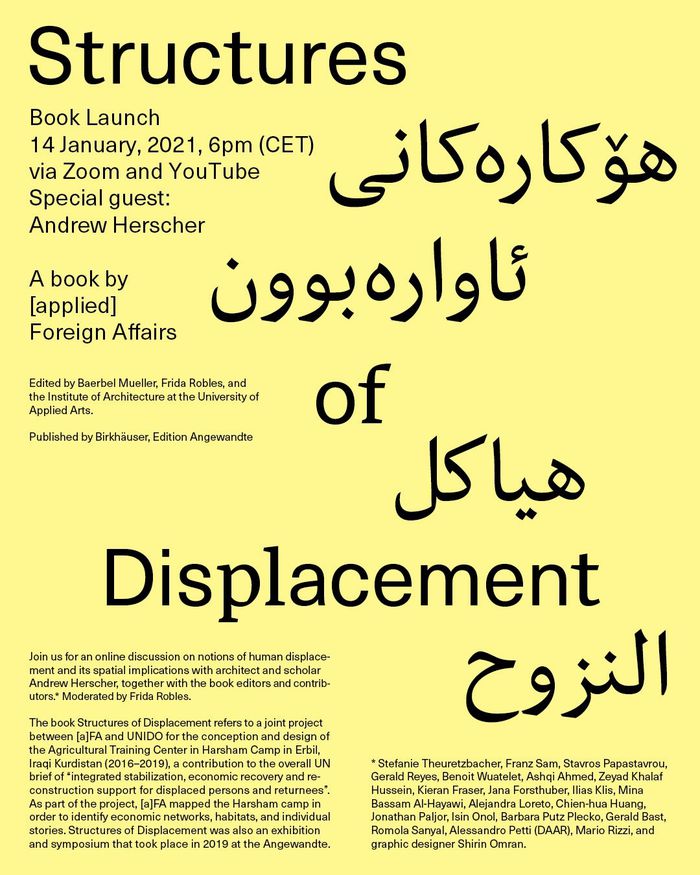
''Structures of displacement'' documents a joint project of the [applied] Foreign Affairs lab of the Institute of Architecture at the University of Applied Arts Vienna and the United Nations Industrial Development Organization (UNIDO). The project involved the conception and design of an agricultural training center at Harsham Camp, a refugee camp in Erbil in the Kurdistan region of Iraq (2016–2019). This book presents [a]FA’s mapping of the Harsham Camp to identify and describe its economic networks and habitats, and provides insights into the individual biographies of the camp’s residents. The project was conducted as part of the UN mandate to stabilize Iraq and support economic recovery and reconstruction for displaced persons and returnees.
Structures of displacement
Actions:
Prix:
$58.00
(disponible sur commande)
Résumé:
''Structures of displacement'' documents a joint project of the [applied] Foreign Affairs lab of the Institute of Architecture at the University of Applied Arts Vienna and the United Nations Industrial Development Organization (UNIDO). The project involved the conception and design of an agricultural training center at Harsham Camp, a refugee camp in Erbil in the Kurdistan region of Iraq (2016–2019). This book presents [a]FA’s mapping of the Harsham Camp to identify and describe its economic networks and habitats, and provides insights into the individual biographies of the camp’s residents. The project was conducted as part of the UN mandate to stabilize Iraq and support economic recovery and reconstruction for displaced persons and returnees.
Classification:
livres
livres
Publication:
novembre 2020
novembre 2020
Sujet:
Architecture contemporaine
Architecture contemporaine
Classification:
livres
livres
Titre:
MAP 005 : Chernobyl
MAP 005 : Chernobyl
Actions:
Prix:
$11.95
(disponible sur commande)
Résumé:
This issue charts the history of major nuclear accidents, focusing on the Chernobyl reactor 4 explosion of 1986, mapping a minute by minute description of the events on nuclear plant cut-outs and info graphics. From its medical implications to the social impact of the accident and articles and input from scientists, this issue offers a wide spectrum of commentaries on the(...)
$11.95
(disponible sur commande)
Résumé:
This issue charts the history of major nuclear accidents, focusing on the Chernobyl reactor 4 explosion of 1986, mapping a minute by minute description of the events on nuclear plant cut-outs and info graphics. From its medical implications to the social impact of the accident and articles and input from scientists, this issue offers a wide spectrum of commentaries on the(...)
Titre:
MAP 005 : Chernobyl
Actions:
Prix:
$11.95
(disponible sur commande)
Résumé:
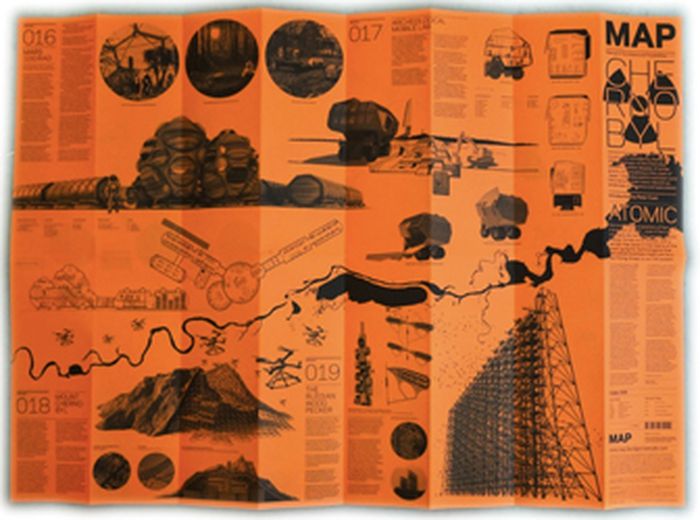
This issue charts the history of major nuclear accidents, focusing on the Chernobyl reactor 4 explosion of 1986, mapping a minute by minute description of the events on nuclear plant cut-outs and info graphics. From its medical implications to the social impact of the accident and articles and input from scientists, this issue offers a wide spectrum of commentaries on the implications of radiation in this scarred landscape. The project page investigates various scenarios; an astrobiology testing base, the reuse of the massive "Woodpecker" ex-soviet antenna into a migratory bird feeding ground, a mobile archeology lab for radioactive landscapes and Mount Chernobyl, an alternative to the new sarcophagus for the damaged reactor.
MAP 005 : Chernobyl
Actions:
Prix:
$11.95
(disponible sur commande)
Résumé:
This issue charts the history of major nuclear accidents, focusing on the Chernobyl reactor 4 explosion of 1986, mapping a minute by minute description of the events on nuclear plant cut-outs and info graphics. From its medical implications to the social impact of the accident and articles and input from scientists, this issue offers a wide spectrum of commentaries on the implications of radiation in this scarred landscape. The project page investigates various scenarios; an astrobiology testing base, the reuse of the massive "Woodpecker" ex-soviet antenna into a migratory bird feeding ground, a mobile archeology lab for radioactive landscapes and Mount Chernobyl, an alternative to the new sarcophagus for the damaged reactor.
Classification:
livres
livres
Publication:
septembre 2012
septembre 2012
Sujet:
Consignation
Consignation
Classification:
livres
livres
Titre:
The curator's handbook
The curator's handbook
Actions:
Prix:
$34.95
(disponible sur commande)
Résumé:
The Curators Handbook is the practical handbook for curators and curatorial students, mapping out every stage of the exhibition-making process from initial idea to final installation. In his introduction, Adrian George traces the history of curating back to its origins in the 17th century and outlines the multifarious roles of the curator today, including as custodian,(...)
$34.95
(disponible sur commande)
Résumé:
The Curators Handbook is the practical handbook for curators and curatorial students, mapping out every stage of the exhibition-making process from initial idea to final installation. In his introduction, Adrian George traces the history of curating back to its origins in the 17th century and outlines the multifarious roles of the curator today, including as custodian,(...)
Titre:
The curator's handbook
Actions:
Prix:
$34.95
(disponible sur commande)
Résumé:
The Curators Handbook is the practical handbook for curators and curatorial students, mapping out every stage of the exhibition-making process from initial idea to final installation. In his introduction, Adrian George traces the history of curating back to its origins in the 17th century and outlines the multifarious roles of the curator today, including as custodian, interpreter, educator, facilitator and organizer. Twelve chapters then chart the various stages of the exhibition process in invaluable detail and clear, informative language from initial concept to writing contracts and loan requests, putting together budgets and schedules, producing exhibition catalogues and interpretation materials, designing gallery spaces, working with artists, lenders and art handlers, organizing private views, and documenting and evaluating a show.
The curator's handbook
Actions:
Prix:
$34.95
(disponible sur commande)
Résumé:
The Curators Handbook is the practical handbook for curators and curatorial students, mapping out every stage of the exhibition-making process from initial idea to final installation. In his introduction, Adrian George traces the history of curating back to its origins in the 17th century and outlines the multifarious roles of the curator today, including as custodian, interpreter, educator, facilitator and organizer. Twelve chapters then chart the various stages of the exhibition process in invaluable detail and clear, informative language from initial concept to writing contracts and loan requests, putting together budgets and schedules, producing exhibition catalogues and interpretation materials, designing gallery spaces, working with artists, lenders and art handlers, organizing private views, and documenting and evaluating a show.
Classification:
livres
livres
Publication:
août 2015
août 2015
Sujet:
Muséologie
Muséologie
Classification:
livres
livres
Actions:
Prix:
$247.99
(disponible sur commande)
Résumé:
From the publishers of Architectural Graphic Standards, this book, created under the auspices of The American Planning Association, is the most comprehensive reference book on urban planning, design, and development available today. Contributions from more than two hundred renowned professionals provide rules of thumb and best practices for mitigating such environmental(...)
$247.99
(disponible sur commande)
Résumé:
From the publishers of Architectural Graphic Standards, this book, created under the auspices of The American Planning Association, is the most comprehensive reference book on urban planning, design, and development available today. Contributions from more than two hundred renowned professionals provide rules of thumb and best practices for mitigating such environmental(...)
Publication:
janvier 2006, Hoboken
janvier 2006, Hoboken
Titre:
Planning and urban design standards
Actions:
Prix:
$247.99
(disponible sur commande)
Résumé:
From the publishers of Architectural Graphic Standards, this book, created under the auspices of The American Planning Association, is the most comprehensive reference book on urban planning, design, and development available today. Contributions from more than two hundred renowned professionals provide rules of thumb and best practices for mitigating such environmental impacts as noise, traffic, aesthetics, preservation of green space and wildlife, water quality, and more. You get in-depth information on the tools and techniques used to achieve planning and design outcomes, including economic analysis, mapping, visualization, legal foundations, and real estate developments. Thousands of illustrations, examples of custom work by todays leading planners, and insider information make this work the new standard in the field. Order your copy today.
Planning and urban design standards
Actions:
Prix:
$247.99
(disponible sur commande)
Résumé:
From the publishers of Architectural Graphic Standards, this book, created under the auspices of The American Planning Association, is the most comprehensive reference book on urban planning, design, and development available today. Contributions from more than two hundred renowned professionals provide rules of thumb and best practices for mitigating such environmental impacts as noise, traffic, aesthetics, preservation of green space and wildlife, water quality, and more. You get in-depth information on the tools and techniques used to achieve planning and design outcomes, including economic analysis, mapping, visualization, legal foundations, and real estate developments. Thousands of illustrations, examples of custom work by todays leading planners, and insider information make this work the new standard in the field. Order your copy today.
Classification:
livres
livres
Publication:
janvier 2006, Hoboken
janvier 2006, Hoboken
Classification:
livres
livres
Titre:
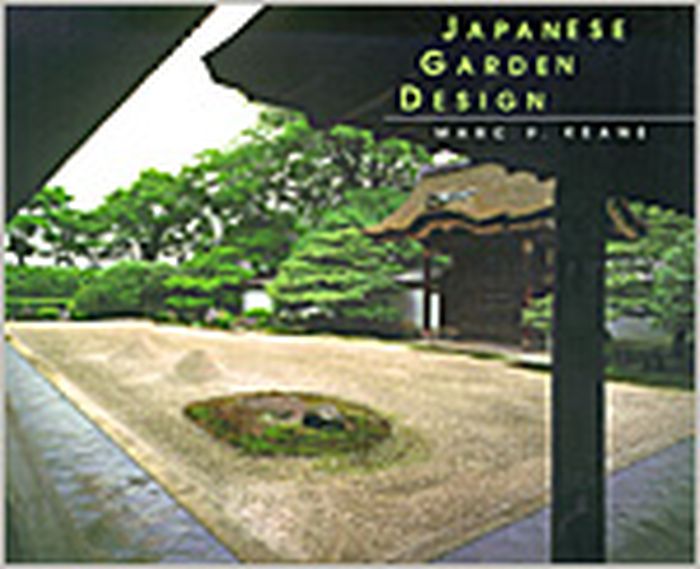
Japanese garden design
Japanese garden design
Actions:
Prix:
$40.00
(disponible sur commande)
Résumé:
A landscape architect and garden designer working in Japan, Keane here offers a history of the Japanese garden over 20 centuries, showing how society, politics, religion, art, and the tea ceremony have contributed to the structure and elements of these beautiful retreats. He also includes chapters on design principles and techniques, explaining, for instance, how(...)
$40.00
(disponible sur commande)
Résumé:
A landscape architect and garden designer working in Japan, Keane here offers a history of the Japanese garden over 20 centuries, showing how society, politics, religion, art, and the tea ceremony have contributed to the structure and elements of these beautiful retreats. He also includes chapters on design principles and techniques, explaining, for instance, how(...)
Titre:
Japanese garden design
Actions:
Prix:
$40.00
(disponible sur commande)
Résumé:
A landscape architect and garden designer working in Japan, Keane here offers a history of the Japanese garden over 20 centuries, showing how society, politics, religion, art, and the tea ceremony have contributed to the structure and elements of these beautiful retreats. He also includes chapters on design principles and techniques, explaining, for instance, how individual aspects such as rock, sand, plants, and bridges embody the symbolism of the gardens. This comprehensive book includes not only excellent full-colour photography but detailed plans of the various types of gardens. An extensive glossary, a bibliography of books in English and Japanese, and numerous maps are also offered. The text concludes with a timetable mapping the evolution of the garden alongside events in Japanese culture and world history.
Japanese garden design
Actions:
Prix:
$40.00
(disponible sur commande)
Résumé:
A landscape architect and garden designer working in Japan, Keane here offers a history of the Japanese garden over 20 centuries, showing how society, politics, religion, art, and the tea ceremony have contributed to the structure and elements of these beautiful retreats. He also includes chapters on design principles and techniques, explaining, for instance, how individual aspects such as rock, sand, plants, and bridges embody the symbolism of the gardens. This comprehensive book includes not only excellent full-colour photography but detailed plans of the various types of gardens. An extensive glossary, a bibliography of books in English and Japanese, and numerous maps are also offered. The text concludes with a timetable mapping the evolution of the garden alongside events in Japanese culture and world history.
Classification:
livres
livres
Publication:
septembre 2004, Boston
septembre 2004, Boston
Sujet:
Jardins
Jardins
Classification:
livres
livres
Actions:
Prix:
$38.95
(disponible sur commande)
Résumé:
The extent to which economic value is placed on knowledge today forces us to reconsider its social role and our relation to it. Research, the general category for processes of knowledge production, has become omnipresent in both education and practice. Today it’s not so important what you know but rather how you think. Progress, in this sense, is predicated by critical(...)
$38.95
(disponible sur commande)
Résumé:
The extent to which economic value is placed on knowledge today forces us to reconsider its social role and our relation to it. Research, the general category for processes of knowledge production, has become omnipresent in both education and practice. Today it’s not so important what you know but rather how you think. Progress, in this sense, is predicated by critical(...)
Titre:
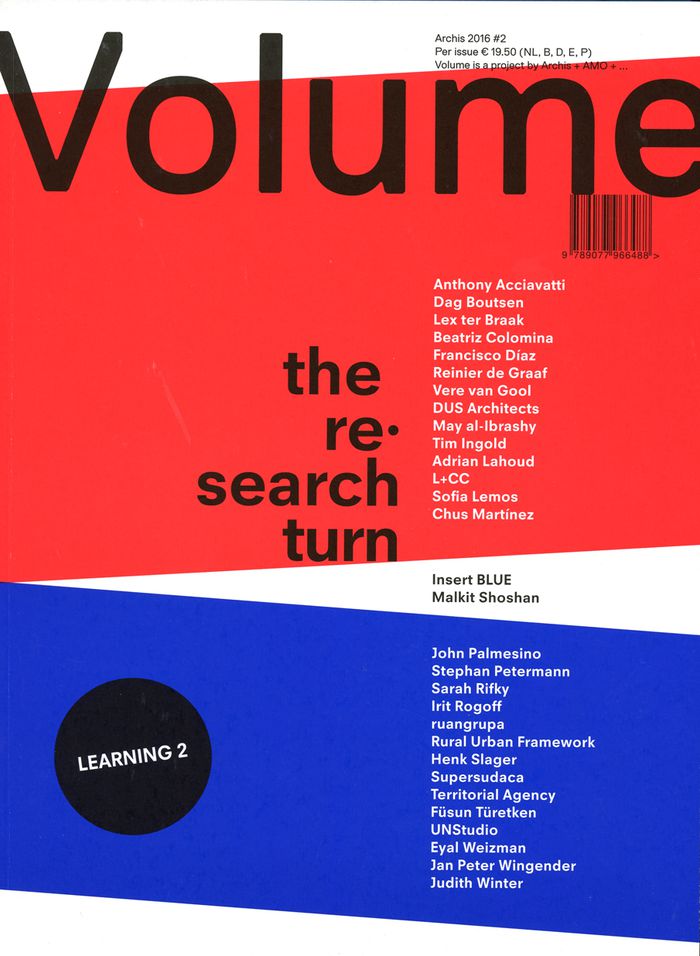
Volume 48: the research turn inset by Malkit Shoshan
Actions:
Prix:
$38.95
(disponible sur commande)
Résumé:
The extent to which economic value is placed on knowledge today forces us to reconsider its social role and our relation to it. Research, the general category for processes of knowledge production, has become omnipresent in both education and practice. Today it’s not so important what you know but rather how you think. Progress, in this sense, is predicated by critical reflection on ways of knowing and disciplinary traditions of thought. This issue of Volume – the second in our series on learning – is dedicated to mapping the contemporary field of research in architecture, art and the social sciences. We wanted to learn from those who have been instrumental in shifting the boundaries and shaping today’s landscape of creative knowledge production.
Volume 48: the research turn inset by Malkit Shoshan
Actions:
Prix:
$38.95
(disponible sur commande)
Résumé:
The extent to which economic value is placed on knowledge today forces us to reconsider its social role and our relation to it. Research, the general category for processes of knowledge production, has become omnipresent in both education and practice. Today it’s not so important what you know but rather how you think. Progress, in this sense, is predicated by critical reflection on ways of knowing and disciplinary traditions of thought. This issue of Volume – the second in our series on learning – is dedicated to mapping the contemporary field of research in architecture, art and the social sciences. We wanted to learn from those who have been instrumental in shifting the boundaries and shaping today’s landscape of creative knowledge production.
Classification:
livres
livres
Publication:
juillet 2016
juillet 2016
Sujet:
Revues
Revues
Classification:
livres
livres

Actions:
Prix:
$59.99
(disponible sur commande)
Résumé:
Cities are hybrid entities based on multilayered and sometimes contradictory organizing principles. As complex networks of geographic, economic, political and cultural segments, they are caught up in a constant process of differentiation. How are we to understand such dynamic processes, especially the complex connections between individuals, whose movements and(...)
$59.99
(disponible sur commande)
Résumé:
Cities are hybrid entities based on multilayered and sometimes contradictory organizing principles. As complex networks of geographic, economic, political and cultural segments, they are caught up in a constant process of differentiation. How are we to understand such dynamic processes, especially the complex connections between individuals, whose movements and(...)
Titre:
You are the city: observation, organization and transformation of urban settings
Actions:
Prix:
$59.99
(disponible sur commande)
Résumé:
Cities are hybrid entities based on multilayered and sometimes contradictory organizing principles. As complex networks of geographic, economic, political and cultural segments, they are caught up in a constant process of differentiation. How are we to understand such dynamic processes, especially the complex connections between individuals, whose movements and interactions leave traces in the urban landscape? This publication offers architects, urban planners and general readers interested in city design and growth a novel approach, a mapping tool that creates a framework for understanding the continually changing configuration of the city. With transparent slides, the tool allows one to superimpose various realities like layers and build new urban connections. It invites readers in short to immerse themselves in the complexity of our cities.
You are the city: observation, organization and transformation of urban settings
Actions:
Prix:
$59.99
(disponible sur commande)
Résumé:
Cities are hybrid entities based on multilayered and sometimes contradictory organizing principles. As complex networks of geographic, economic, political and cultural segments, they are caught up in a constant process of differentiation. How are we to understand such dynamic processes, especially the complex connections between individuals, whose movements and interactions leave traces in the urban landscape? This publication offers architects, urban planners and general readers interested in city design and growth a novel approach, a mapping tool that creates a framework for understanding the continually changing configuration of the city. With transparent slides, the tool allows one to superimpose various realities like layers and build new urban connections. It invites readers in short to immerse themselves in the complexity of our cities.
Classification:
livres
livres
Publication:
mars 2009
mars 2009
Sujet:
Théorie de l’urbanisme
Théorie de l’urbanisme
Classification:
livres
livres
Prix:
$49.95
(disponible sur commande)
Résumé:
Digital currencies (cryptocurrencies) and digital property require large amounts of land, resources, and data centers and infrastructures to store these ''supplies''. There is a larger architectural and urban infrastructural challenge and urgency on how these various kinds of digital exchanges are mediated, to limit the detrimental use of our everyday resources. (...)
$49.95
(disponible sur commande)
Résumé:
Digital currencies (cryptocurrencies) and digital property require large amounts of land, resources, and data centers and infrastructures to store these ''supplies''. There is a larger architectural and urban infrastructural challenge and urgency on how these various kinds of digital exchanges are mediated, to limit the detrimental use of our everyday resources. (...)
Titre:
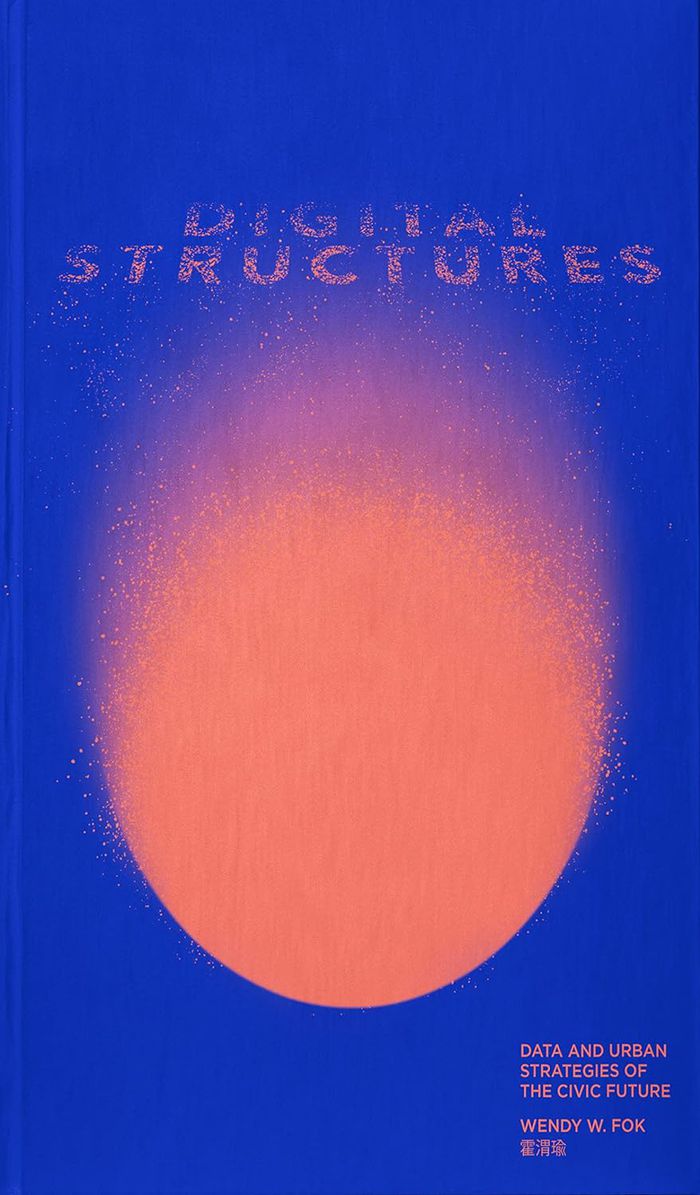
Digitalstructures: Data and urban strategies of the civic future
Actions:
Prix:
$49.95
(disponible sur commande)
Résumé:
Digital currencies (cryptocurrencies) and digital property require large amounts of land, resources, and data centers and infrastructures to store these ''supplies''. There is a larger architectural and urban infrastructural challenge and urgency on how these various kinds of digital exchanges are mediated, to limit the detrimental use of our everyday resources. Using a mixed-media approach, this book couples a novel exploration of XR (mixed-reality) and AR (augmented reality) into several parts of the book. To prolong the shelf-life of emergent data and case-studies on the topic, the book is complemented with an open-access digital platform for readers to access video interviews with the industry experts, diagrammatic mapping and graphical cartography, and 3D artifacts that shows how data interacts with phygital properties.
Digitalstructures: Data and urban strategies of the civic future
Actions:
Prix:
$49.95
(disponible sur commande)
Résumé:
Digital currencies (cryptocurrencies) and digital property require large amounts of land, resources, and data centers and infrastructures to store these ''supplies''. There is a larger architectural and urban infrastructural challenge and urgency on how these various kinds of digital exchanges are mediated, to limit the detrimental use of our everyday resources. Using a mixed-media approach, this book couples a novel exploration of XR (mixed-reality) and AR (augmented reality) into several parts of the book. To prolong the shelf-life of emergent data and case-studies on the topic, the book is complemented with an open-access digital platform for readers to access video interviews with the industry experts, diagrammatic mapping and graphical cartography, and 3D artifacts that shows how data interacts with phygital properties.
Classification:
livres
livres
Publication:
août 2023
août 2023
Sujet:
Architecture numérique
Architecture numérique
Classification:
livres
livres
Actions:
Prix:
$59.95
(disponible en magasin)
Résumé:
"The New Design Museum" brings together theories and voices from leading international institutions and independent initiatives addressing the transformed––and continually transforming––nature of design in the twenty-first century and its planetary scope in both practical and discursive dimensions. By mapping a new landscape of institutional practices across different(...)
$59.95
(disponible en magasin)
Résumé:
"The New Design Museum" brings together theories and voices from leading international institutions and independent initiatives addressing the transformed––and continually transforming––nature of design in the twenty-first century and its planetary scope in both practical and discursive dimensions. By mapping a new landscape of institutional practices across different(...)
Titre:
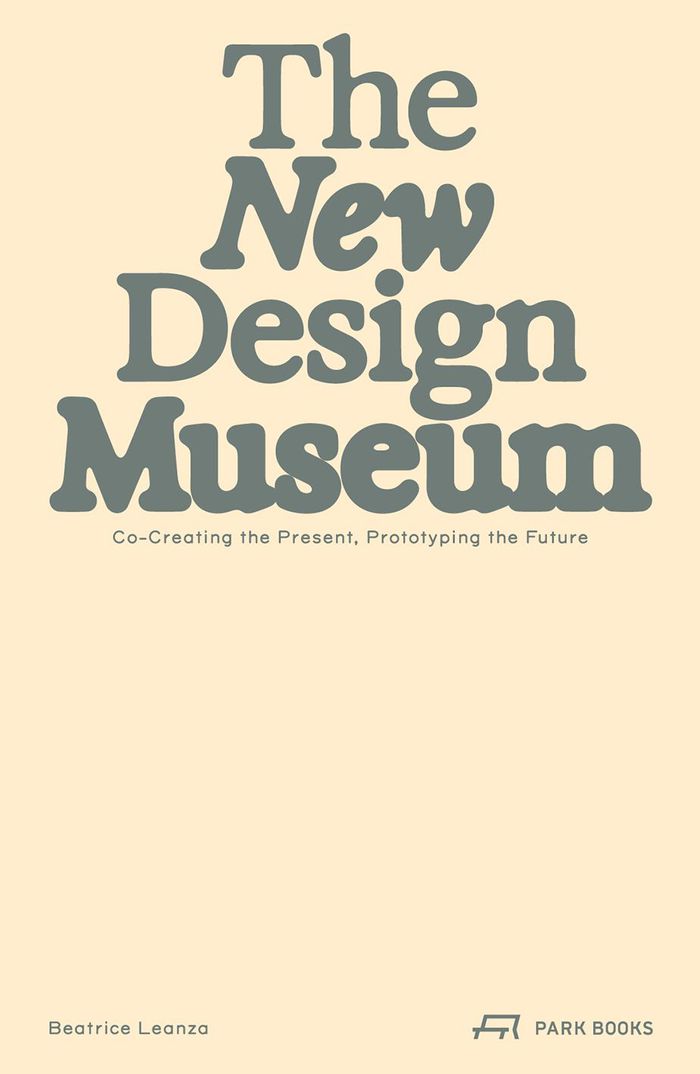
The new design museum: Co-creating the present, prototyping the future
Actions:
Prix:
$59.95
(disponible en magasin)
Résumé:
"The New Design Museum" brings together theories and voices from leading international institutions and independent initiatives addressing the transformed––and continually transforming––nature of design in the twenty-first century and its planetary scope in both practical and discursive dimensions. By mapping a new landscape of institutional practices across different geographical locations, it reveals how spaces of culture dedicated to design need transformation—of their missions, programs, and outreach platforms—to respond to an ever-expanding outlook on design as a field that is moving beyond its traditional presentation as an object-based practice. This book ultimately examines the critical role of cultural institutions as engines for knowledge production, where a democratic politics of mutual care and shared purpose can be explored and exercised.
The new design museum: Co-creating the present, prototyping the future
Actions:
Prix:
$59.95
(disponible en magasin)
Résumé:
"The New Design Museum" brings together theories and voices from leading international institutions and independent initiatives addressing the transformed––and continually transforming––nature of design in the twenty-first century and its planetary scope in both practical and discursive dimensions. By mapping a new landscape of institutional practices across different geographical locations, it reveals how spaces of culture dedicated to design need transformation—of their missions, programs, and outreach platforms—to respond to an ever-expanding outlook on design as a field that is moving beyond its traditional presentation as an object-based practice. This book ultimately examines the critical role of cultural institutions as engines for knowledge production, where a democratic politics of mutual care and shared purpose can be explored and exercised.
Classification:
livres
livres
Publication:
août 2025
août 2025
Sujet:
Muséologie
Muséologie
Classification:
livres
livres
Actions:
Prix:
$79.00
(disponible sur commande)
Résumé:
The cultural capital of Pakistan, and one of the world’s most historically fascinating cities–Lahore–has retained much of its historic heritage despite centuries of turbulence. Today it remains a vibrant epicenter of commercial and cultural activity. Since 2007 the Aga Khan Trust for Culture has been working to preserve the walled city of Lahore. This book explores every(...)
$79.00
(disponible sur commande)
Résumé:
The cultural capital of Pakistan, and one of the world’s most historically fascinating cities–Lahore–has retained much of its historic heritage despite centuries of turbulence. Today it remains a vibrant epicenter of commercial and cultural activity. Since 2007 the Aga Khan Trust for Culture has been working to preserve the walled city of Lahore. This book explores every(...)
Titre:
Lahore: a framework for urban consevation
Actions:
Prix:
$79.00
(disponible sur commande)
Résumé:
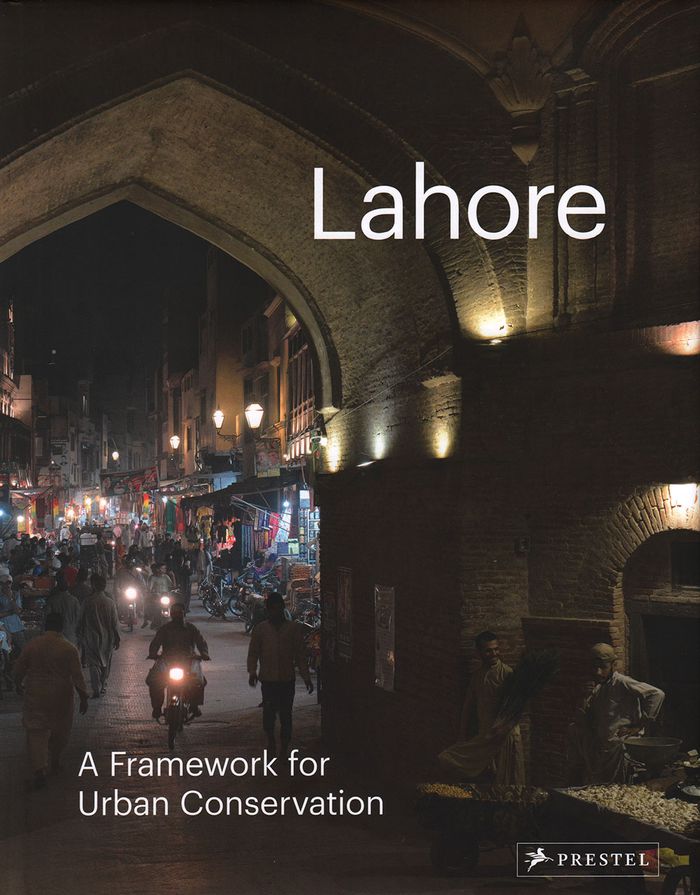
The cultural capital of Pakistan, and one of the world’s most historically fascinating cities–Lahore–has retained much of its historic heritage despite centuries of turbulence. Today it remains a vibrant epicenter of commercial and cultural activity. Since 2007 the Aga Khan Trust for Culture has been working to preserve the walled city of Lahore. This book explores every aspect of that effort, including drafting a strategic master plan, mapping strategies for conserving monuments, gardens, and temples, renovating neighborhoods and landscapes, and developing environmental solutions. It focuses on specific sites, such as the Shahi Hammam, or Royal Bath; the Shahi Guzargah heritage trail; the fabled Imperial Kitchen; Lahore Fort–a World Heritage site–and the Badshahi and Wazir Khan mosques.
Lahore: a framework for urban consevation
Actions:
Prix:
$79.00
(disponible sur commande)
Résumé:
The cultural capital of Pakistan, and one of the world’s most historically fascinating cities–Lahore–has retained much of its historic heritage despite centuries of turbulence. Today it remains a vibrant epicenter of commercial and cultural activity. Since 2007 the Aga Khan Trust for Culture has been working to preserve the walled city of Lahore. This book explores every aspect of that effort, including drafting a strategic master plan, mapping strategies for conserving monuments, gardens, and temples, renovating neighborhoods and landscapes, and developing environmental solutions. It focuses on specific sites, such as the Shahi Hammam, or Royal Bath; the Shahi Guzargah heritage trail; the fabled Imperial Kitchen; Lahore Fort–a World Heritage site–and the Badshahi and Wazir Khan mosques.
Classification:
livres
livres
Publication:
novembre 2019
novembre 2019
Sujet:
Histoire jusqu'à 1900, Asie
Histoire jusqu'à 1900, Asie


