


741 Résultats
Classification:
livres
livres
Titre:
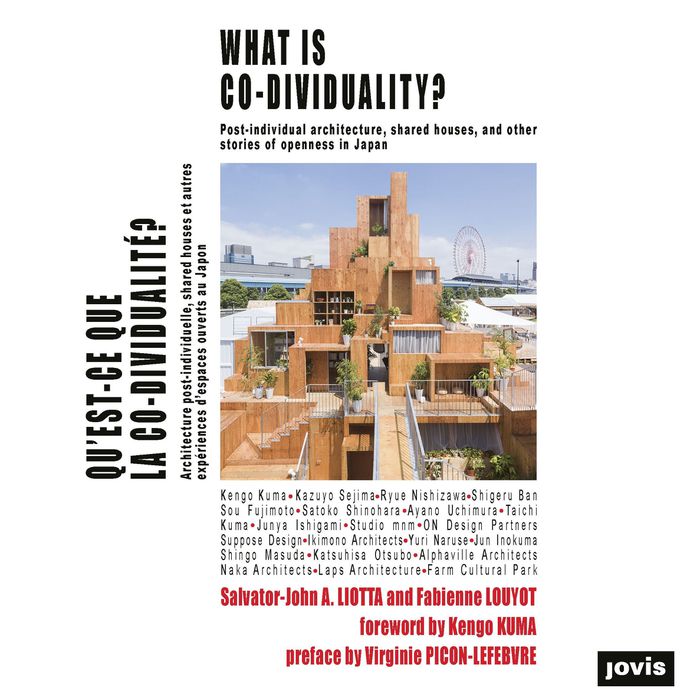
What is co-dividuality?: post-individual architecture, shared houses and other stories of openness
What is co-dividuality?: post-individual architecture, shared houses and other stories of openness
Actions:
Prix:
$48.95
(disponible sur commande)
Résumé:
This book explores the concept of co-dividuality, an architecture that expresses a new response to joint living in the age of postindividualism, social media, and the sharing economy. The focus lies on current experimentation in Japanese architecture and presents thematic homes with shared spaces designed as a result of warm, simple, fun and contemporary design(...)
$48.95
(disponible sur commande)
Résumé:
This book explores the concept of co-dividuality, an architecture that expresses a new response to joint living in the age of postindividualism, social media, and the sharing economy. The focus lies on current experimentation in Japanese architecture and presents thematic homes with shared spaces designed as a result of warm, simple, fun and contemporary design(...)
Publication:
juin 2020
juin 2020
Titre:
What is co-dividuality?: post-individual architecture, shared houses and other stories of openness
Actions:
Prix:
$48.95
(disponible sur commande)
Résumé:
This book explores the concept of co-dividuality, an architecture that expresses a new response to joint living in the age of postindividualism, social media, and the sharing economy. The focus lies on current experimentation in Japanese architecture and presents thematic homes with shared spaces designed as a result of warm, simple, fun and contemporary design reflections. In addition to their private room, the co-tenants have large common areas where they can practice urban farming, create a start-up, cook together, or experience new spatial ergonomics. The book offers an overview not only on domestic space but also on projects characterized by a multifarious mix between public and private spheres. 'What Is Co-dividuality?' reflects on how we might want to live tomorrow. The book includes projects by Kengo Kuma, Kazuyo Sejima, Ryue Nishizawa, Shigeru Ban, Sou Fujimoto, Satoko Shinohara, Ayano Uchimura, Taichi Kuma, Junya Ishigami, Suppose Design, Naruse Inokuma, and Masuda + Otsubo, among others.
What is co-dividuality?: post-individual architecture, shared houses and other stories of openness
Actions:
Prix:
$48.95
(disponible sur commande)
Résumé:
This book explores the concept of co-dividuality, an architecture that expresses a new response to joint living in the age of postindividualism, social media, and the sharing economy. The focus lies on current experimentation in Japanese architecture and presents thematic homes with shared spaces designed as a result of warm, simple, fun and contemporary design reflections. In addition to their private room, the co-tenants have large common areas where they can practice urban farming, create a start-up, cook together, or experience new spatial ergonomics. The book offers an overview not only on domestic space but also on projects characterized by a multifarious mix between public and private spheres. 'What Is Co-dividuality?' reflects on how we might want to live tomorrow. The book includes projects by Kengo Kuma, Kazuyo Sejima, Ryue Nishizawa, Shigeru Ban, Sou Fujimoto, Satoko Shinohara, Ayano Uchimura, Taichi Kuma, Junya Ishigami, Suppose Design, Naruse Inokuma, and Masuda + Otsubo, among others.
Classification:
livres
livres
Publication:
juin 2020
juin 2020
Classification:
livres
livres
Prix:
$38.95
(disponible sur commande)
Résumé:
In this book, Timothy Hyde considers the role of aesthetic judgment in architectural debates and their resulting social effects across three centuries of British architectural history. From eighteenth-century ideas about Stonehenge to Prince Charles’s opinions about the National Gallery, Hyde uncovers a new story of aesthetic judgment, where arguments about architectural(...)
$38.95
(disponible sur commande)
Résumé:
In this book, Timothy Hyde considers the role of aesthetic judgment in architectural debates and their resulting social effects across three centuries of British architectural history. From eighteenth-century ideas about Stonehenge to Prince Charles’s opinions about the National Gallery, Hyde uncovers a new story of aesthetic judgment, where arguments about architectural(...)
Titre:
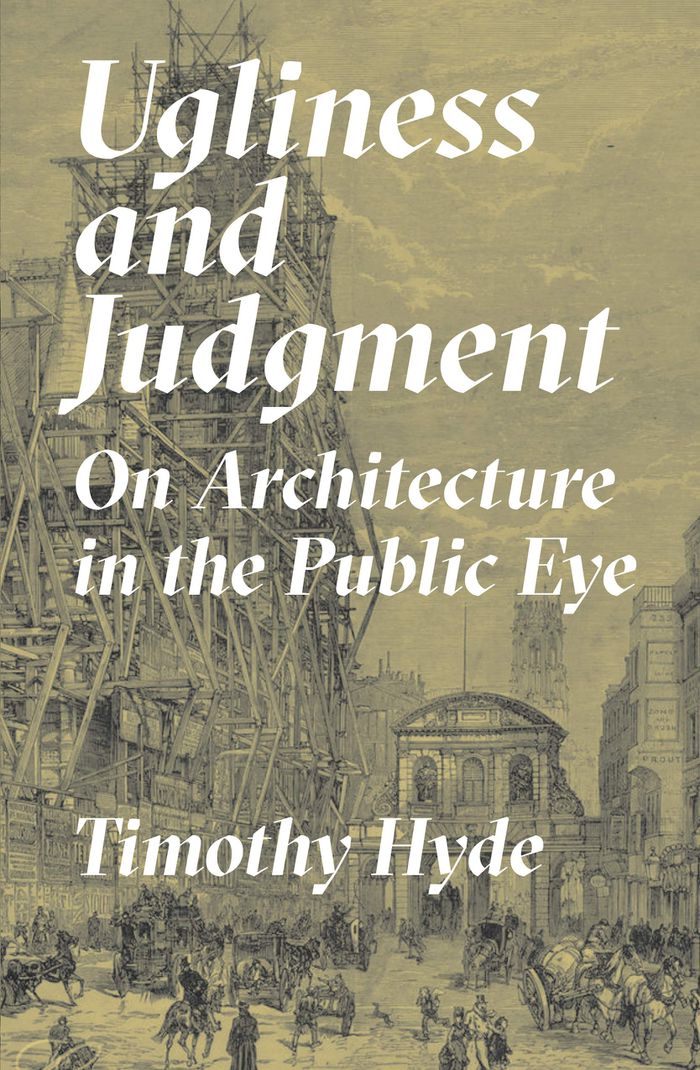
Ugliness and judgment: On architecture in the public eye
Actions:
Prix:
$38.95
(disponible sur commande)
Résumé:
In this book, Timothy Hyde considers the role of aesthetic judgment in architectural debates and their resulting social effects across three centuries of British architectural history. From eighteenth-century ideas about Stonehenge to Prince Charles’s opinions about the National Gallery, Hyde uncovers a new story of aesthetic judgment, where arguments about architectural ugliness do not pertain solely to buildings or assessments of style, but intrude into other spheres of civil society. Hyde explores how accidental and willful conditions of ugliness have been debated in parliamentary committees, courtrooms, and public inquiries. He recounts how architects such as Christopher Wren, John Soane, James Stirling, and Ludwig Mies van der Rohe have been summoned by tribunals of aesthetic judgment. With his novel scrutiny of lawsuits for libel, changing paradigms of nuisance law, and conventions of monarchical privilege, he shows how aesthetic judgments have become entangled in wider assessments of art, science, religion, political economy, and the state.
Ugliness and judgment: On architecture in the public eye
Actions:
Prix:
$38.95
(disponible sur commande)
Résumé:
In this book, Timothy Hyde considers the role of aesthetic judgment in architectural debates and their resulting social effects across three centuries of British architectural history. From eighteenth-century ideas about Stonehenge to Prince Charles’s opinions about the National Gallery, Hyde uncovers a new story of aesthetic judgment, where arguments about architectural ugliness do not pertain solely to buildings or assessments of style, but intrude into other spheres of civil society. Hyde explores how accidental and willful conditions of ugliness have been debated in parliamentary committees, courtrooms, and public inquiries. He recounts how architects such as Christopher Wren, John Soane, James Stirling, and Ludwig Mies van der Rohe have been summoned by tribunals of aesthetic judgment. With his novel scrutiny of lawsuits for libel, changing paradigms of nuisance law, and conventions of monarchical privilege, he shows how aesthetic judgments have become entangled in wider assessments of art, science, religion, political economy, and the state.
Classification:
livres
livres
Publication:
janvier 2023
janvier 2023
Sujet:
Théorie de l’architecture
Théorie de l’architecture
Classification:
livres
livres
Actions:
Prix:
$19.95
(disponible en magasin)
Résumé:
In this text, Brenner, Peck and Theodore question the claim that neoliberalism has ended in the wake of the global economic crisis that began in September of 2008. The authors argue that this assumption rests upon an inadequate understanding of the reach and tenacity of the crisis-induced, market-disciplinary forms of regulatory restructuring that have accompanied the(...)
$19.95
(disponible en magasin)
Résumé:
In this text, Brenner, Peck and Theodore question the claim that neoliberalism has ended in the wake of the global economic crisis that began in September of 2008. The authors argue that this assumption rests upon an inadequate understanding of the reach and tenacity of the crisis-induced, market-disciplinary forms of regulatory restructuring that have accompanied the(...)
Publication:
juillet 2011
juillet 2011
Titre:
Civic city cahier 4 : Afterlives of neoliberalism
Actions:
Prix:
$19.95
(disponible en magasin)
Résumé:
In this text, Brenner, Peck and Theodore question the claim that neoliberalism has ended in the wake of the global economic crisis that began in September of 2008. The authors argue that this assumption rests upon an inadequate understanding of the reach and tenacity of the crisis-induced, market-disciplinary forms of regulatory restructuring that have accompanied the neoliberalisation of cities, regions and states across the world. In contrast with the over-simplified, monolithic conceptualisations of the global economy that prevail in many popular and academic accounts, the authors emphasise the constitutively uneven, institutionally hybrid and chronically unstable character of neoliberalism. For urban designers, planners and activists working to promote more socially just and democratic forms of urbanism, Brenner, Peck and Theodore insist on the need to radically restructure the macroinstitutional "rules of the game" that variously encourage and disallow localities, cities and regions to adapt to market-based approaches to (re)investment, collective-goods provisioning, and social reproduction. "Absent this", they argue, "the potential of progressive postneoliberal projects will continue to be frustrated by the dead hand of market rule".
Civic city cahier 4 : Afterlives of neoliberalism
Actions:
Prix:
$19.95
(disponible en magasin)
Résumé:
In this text, Brenner, Peck and Theodore question the claim that neoliberalism has ended in the wake of the global economic crisis that began in September of 2008. The authors argue that this assumption rests upon an inadequate understanding of the reach and tenacity of the crisis-induced, market-disciplinary forms of regulatory restructuring that have accompanied the neoliberalisation of cities, regions and states across the world. In contrast with the over-simplified, monolithic conceptualisations of the global economy that prevail in many popular and academic accounts, the authors emphasise the constitutively uneven, institutionally hybrid and chronically unstable character of neoliberalism. For urban designers, planners and activists working to promote more socially just and democratic forms of urbanism, Brenner, Peck and Theodore insist on the need to radically restructure the macroinstitutional "rules of the game" that variously encourage and disallow localities, cities and regions to adapt to market-based approaches to (re)investment, collective-goods provisioning, and social reproduction. "Absent this", they argue, "the potential of progressive postneoliberal projects will continue to be frustrated by the dead hand of market rule".
Classification:
livres
livres
Publication:
juillet 2011
juillet 2011
Classification:
livres
livres
Prix:
$38.95
(disponible sur commande)
Résumé:
Beautiful Data is both a history of big data and interactivity, and a sophisticated meditation on ideas about vision and cognition in the second half of the twentieth century. Contending that our forms of attention, observation, and truth are contingent and contested, Orit Halpern historicizes the ways that we are trained, and train ourselves, to observe and analyze the(...)
$38.95
(disponible sur commande)
Résumé:
Beautiful Data is both a history of big data and interactivity, and a sophisticated meditation on ideas about vision and cognition in the second half of the twentieth century. Contending that our forms of attention, observation, and truth are contingent and contested, Orit Halpern historicizes the ways that we are trained, and train ourselves, to observe and analyze the(...)
Titre:
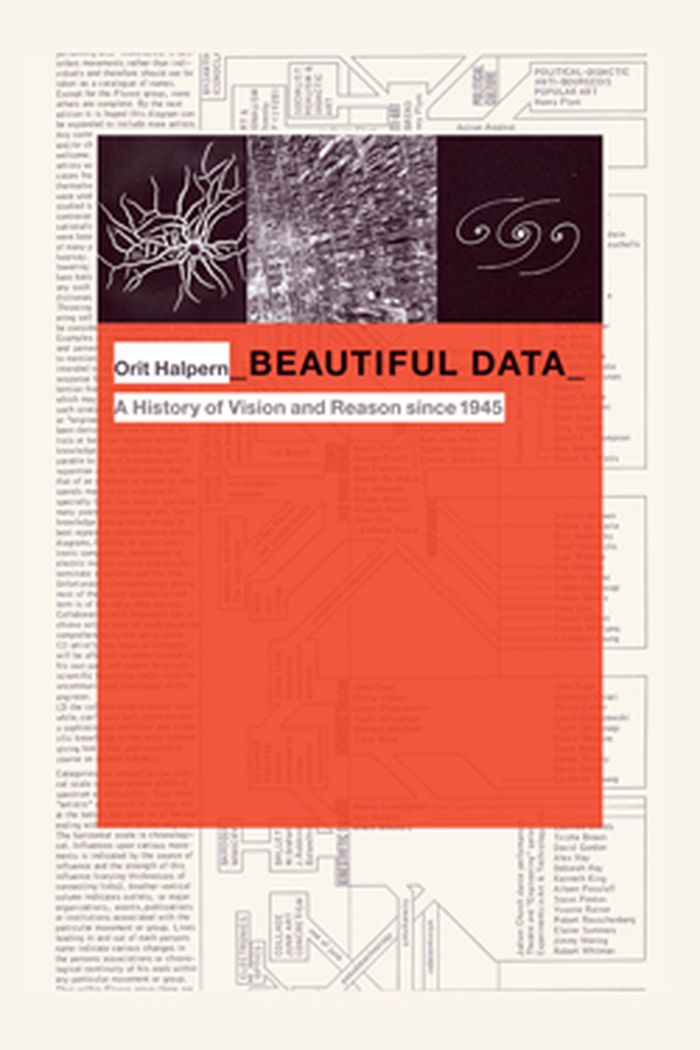
Beautiful data: a history of vision and reason since 1945
Actions:
Prix:
$38.95
(disponible sur commande)
Résumé:
Beautiful Data is both a history of big data and interactivity, and a sophisticated meditation on ideas about vision and cognition in the second half of the twentieth century. Contending that our forms of attention, observation, and truth are contingent and contested, Orit Halpern historicizes the ways that we are trained, and train ourselves, to observe and analyze the world. Tracing the postwar impact of cybernetics and the communication sciences on the social and human sciences, design, arts, and urban planning, she finds a radical shift in attitudes toward recording and displaying information. These changed attitudes produced what she calls communicative objectivity: new forms of observation, rationality, and economy based on the management and analysis of data. Halpern complicates assumptions about the value of data and visualization, arguing that changes in how we manage and train perception, and define reason and intelligence, are also transformations in governmentality. She also challenges the paradoxical belief that we are experiencing a crisis of attention caused by digital media, a crisis that can be resolved only through intensified media consumption.
Beautiful data: a history of vision and reason since 1945
Actions:
Prix:
$38.95
(disponible sur commande)
Résumé:
Beautiful Data is both a history of big data and interactivity, and a sophisticated meditation on ideas about vision and cognition in the second half of the twentieth century. Contending that our forms of attention, observation, and truth are contingent and contested, Orit Halpern historicizes the ways that we are trained, and train ourselves, to observe and analyze the world. Tracing the postwar impact of cybernetics and the communication sciences on the social and human sciences, design, arts, and urban planning, she finds a radical shift in attitudes toward recording and displaying information. These changed attitudes produced what she calls communicative objectivity: new forms of observation, rationality, and economy based on the management and analysis of data. Halpern complicates assumptions about the value of data and visualization, arguing that changes in how we manage and train perception, and define reason and intelligence, are also transformations in governmentality. She also challenges the paradoxical belief that we are experiencing a crisis of attention caused by digital media, a crisis that can be resolved only through intensified media consumption.
Classification:
livres
livres
Publication:
août 2014
août 2014
Sujet:
Théorie de l’architecture
Théorie de l’architecture
Classification:
livres
livres

Actions:
Prix:
$64.95
(disponible sur commande)
Résumé:
This incisive look at the historical, social, and economic forces that have shaped China's modern architecture analyzes the country's struggle to define its own architectural aesthetics. Since the early 1980s, when China opened its doors to international trade and tourism, the country's economy has expanded at an incredible rate. Today, China is poised to be a testing(...)
$64.95
(disponible sur commande)
Résumé:
This incisive look at the historical, social, and economic forces that have shaped China's modern architecture analyzes the country's struggle to define its own architectural aesthetics. Since the early 1980s, when China opened its doors to international trade and tourism, the country's economy has expanded at an incredible rate. Today, China is poised to be a testing(...)
Publication:
janvier 1900, Munich / Berlin /London / New York
janvier 1900, Munich / Berlin /London / New York
Titre:
China's new dawn : an architectural transformation
Actions:
Prix:
$64.95
(disponible sur commande)
Résumé:
This incisive look at the historical, social, and economic forces that have shaped China's modern architecture analyzes the country's struggle to define its own architectural aesthetics. Since the early 1980s, when China opened its doors to international trade and tourism, the country's economy has expanded at an incredible rate. Today, China is poised to be a testing ground for the world's most innovative designers and engineers. Layla Dawson's groundbreaking survey of architectural currents in China lays out not only the historical events that have brought the country to this unique position, but explores the challenges inherent in opening up the country to outside forces and ideas. She examines projects by Chinese and non-Chinese architects, including Zaha Hadid's Soho City masterplan, Rem Koolhaas's CCTV Headquarters, Norman Foster's Shanghai Tower and plans for the Beijing 2008 Olympic Games. As Dawson demonstrates how conflicting architectural philosophies are visible in China's newly rising skyline, she takes an unblinking look at the liabilities China faces by opening itself up to foreign influence.
China's new dawn : an architectural transformation
Actions:
Prix:
$64.95
(disponible sur commande)
Résumé:
This incisive look at the historical, social, and economic forces that have shaped China's modern architecture analyzes the country's struggle to define its own architectural aesthetics. Since the early 1980s, when China opened its doors to international trade and tourism, the country's economy has expanded at an incredible rate. Today, China is poised to be a testing ground for the world's most innovative designers and engineers. Layla Dawson's groundbreaking survey of architectural currents in China lays out not only the historical events that have brought the country to this unique position, but explores the challenges inherent in opening up the country to outside forces and ideas. She examines projects by Chinese and non-Chinese architects, including Zaha Hadid's Soho City masterplan, Rem Koolhaas's CCTV Headquarters, Norman Foster's Shanghai Tower and plans for the Beijing 2008 Olympic Games. As Dawson demonstrates how conflicting architectural philosophies are visible in China's newly rising skyline, she takes an unblinking look at the liabilities China faces by opening itself up to foreign influence.
Classification:
livres
livres
Publication:
janvier 1900, Munich / Berlin /London / New York
janvier 1900, Munich / Berlin /London / New York
Classification:
livres
livres
Actions:
Prix:
$28.95
(disponible sur commande)
Résumé:
The shift in the ideological winds toward a "free-market" economy has brought profound effects in urban areas. "The neoliberal city" presents an overview of the effect of these changes on today's cities. The term "neoliberalism" was originally used in reference to a set of practices that first-world institutions like the IMF and World Bank impose on third-world countries(...)
$28.95
(disponible sur commande)
Résumé:
The shift in the ideological winds toward a "free-market" economy has brought profound effects in urban areas. "The neoliberal city" presents an overview of the effect of these changes on today's cities. The term "neoliberalism" was originally used in reference to a set of practices that first-world institutions like the IMF and World Bank impose on third-world countries(...)
Titre:
The neoliberal city : governance, ideology, and development in american urbanism
Actions:
Prix:
$28.95
(disponible sur commande)
Résumé:
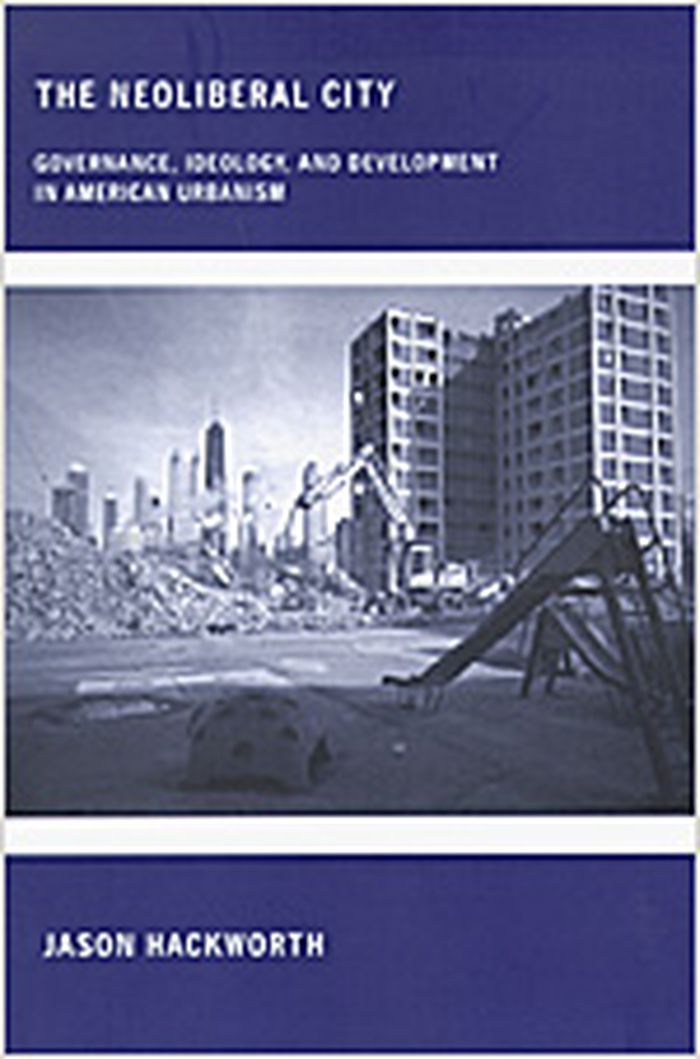
The shift in the ideological winds toward a "free-market" economy has brought profound effects in urban areas. "The neoliberal city" presents an overview of the effect of these changes on today's cities. The term "neoliberalism" was originally used in reference to a set of practices that first-world institutions like the IMF and World Bank impose on third-world countries and cities. The support of unimpeded trade and individual freedoms and the discouragement of state regulation and social spending are the putative centerpieces of this vision. More and more, though, people have come to recognize that first-world cities are undergoing the same processes. In "The neoliberal city", Jason Hackworth argues that neoliberal policies are in fact having a profound effect on the nature and direction of urbanization in the United States and other wealthy countries, and that much can be learned from studying its effect. He explores the impact that neoliberalism has had on three aspects of urbanization in the United States: governance, urban form, and social movements. The American inner city is seen as a crucial battle zone for the wider neoliberal transition primarily because it embodies neoliberalism's antithesis, Keynesian egalitarian liberalism. Focusing on issues such as gentrification in New York City; public-housing policy in New York, Chicago, and Seattle; downtown redevelopment in Phoenix; and urban-landscape change in New Brunswick, N.J., Hackworth shows us how material and symbolic changes to institutions, neighborhoods, and entire urban regions can be traced in part to the rise of neoliberalism.
The neoliberal city : governance, ideology, and development in american urbanism
Actions:
Prix:
$28.95
(disponible sur commande)
Résumé:
The shift in the ideological winds toward a "free-market" economy has brought profound effects in urban areas. "The neoliberal city" presents an overview of the effect of these changes on today's cities. The term "neoliberalism" was originally used in reference to a set of practices that first-world institutions like the IMF and World Bank impose on third-world countries and cities. The support of unimpeded trade and individual freedoms and the discouragement of state regulation and social spending are the putative centerpieces of this vision. More and more, though, people have come to recognize that first-world cities are undergoing the same processes. In "The neoliberal city", Jason Hackworth argues that neoliberal policies are in fact having a profound effect on the nature and direction of urbanization in the United States and other wealthy countries, and that much can be learned from studying its effect. He explores the impact that neoliberalism has had on three aspects of urbanization in the United States: governance, urban form, and social movements. The American inner city is seen as a crucial battle zone for the wider neoliberal transition primarily because it embodies neoliberalism's antithesis, Keynesian egalitarian liberalism. Focusing on issues such as gentrification in New York City; public-housing policy in New York, Chicago, and Seattle; downtown redevelopment in Phoenix; and urban-landscape change in New Brunswick, N.J., Hackworth shows us how material and symbolic changes to institutions, neighborhoods, and entire urban regions can be traced in part to the rise of neoliberalism.
Classification:
livres
livres
Publication:
décembre 2006, Ithaca, London
décembre 2006, Ithaca, London
Sujet:
Théorie de l’urbanisme
Théorie de l’urbanisme
Classification:
livres
livres
Prix:
$26.95
(disponible sur commande)
Résumé:
This new edition of Mike Davis’s work gives an update on Los Angeles as the city hits the 21st century. No metropolis has been more loved or more hated. To its official boosters, “Los Angeles brings it all together.” To detractors, LA is a sunlit mortuary where “you can rot without feeling it.” To Mike Davis, the author of this wide-ranging work of social history, Los(...)
$26.95
(disponible sur commande)
Résumé:
This new edition of Mike Davis’s work gives an update on Los Angeles as the city hits the 21st century. No metropolis has been more loved or more hated. To its official boosters, “Los Angeles brings it all together.” To detractors, LA is a sunlit mortuary where “you can rot without feeling it.” To Mike Davis, the author of this wide-ranging work of social history, Los(...)
Titre:
City of quartz : excavating the future in Los Angeles, new edition
Actions:
Prix:
$26.95
(disponible sur commande)
Résumé:
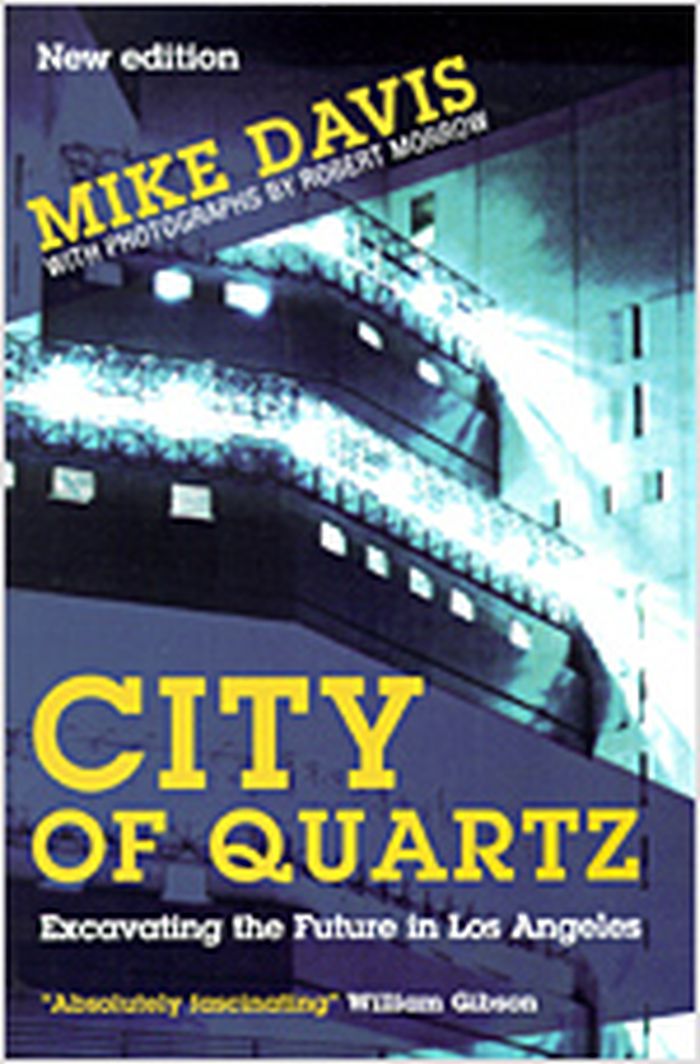
This new edition of Mike Davis’s work gives an update on Los Angeles as the city hits the 21st century. No metropolis has been more loved or more hated. To its official boosters, “Los Angeles brings it all together.” To detractors, LA is a sunlit mortuary where “you can rot without feeling it.” To Mike Davis, the author of this wide-ranging work of social history, Los Angeles is both utopia and dystopia, a place where the last Joshua trees are being plowed under to make room for model communities in the desert, where the rich have hired their own police to fend off street gangs, as well as armed Beirut militias. In "City of quartz", Davis reconstructs LA’s shadow history and dissects its ethereal economy. He tells us who has the power and how they hold on to it. He gives us a city of Dickensian extremes, Pynchonesque conspiracies, and a desperation straight out of Nathaniel West—a city in which we may glimpse our own future mirrored with terrifying clarity. In this new edition, Davis provides an update on the city’s current status.
City of quartz : excavating the future in Los Angeles, new edition
Actions:
Prix:
$26.95
(disponible sur commande)
Résumé:
This new edition of Mike Davis’s work gives an update on Los Angeles as the city hits the 21st century. No metropolis has been more loved or more hated. To its official boosters, “Los Angeles brings it all together.” To detractors, LA is a sunlit mortuary where “you can rot without feeling it.” To Mike Davis, the author of this wide-ranging work of social history, Los Angeles is both utopia and dystopia, a place where the last Joshua trees are being plowed under to make room for model communities in the desert, where the rich have hired their own police to fend off street gangs, as well as armed Beirut militias. In "City of quartz", Davis reconstructs LA’s shadow history and dissects its ethereal economy. He tells us who has the power and how they hold on to it. He gives us a city of Dickensian extremes, Pynchonesque conspiracies, and a desperation straight out of Nathaniel West—a city in which we may glimpse our own future mirrored with terrifying clarity. In this new edition, Davis provides an update on the city’s current status.
Classification:
livres
livres
Publication:
septembre 2006, London, New York
septembre 2006, London, New York
Sujet:
Théorie de l’urbanisme
Théorie de l’urbanisme
Classification:
livres
livres
Titre:
Work
Work
Actions:
Prix:
$33.50
(disponible sur commande)
Résumé:
Warhol’s Factory of the 1960s, Minimalism’s assembly-line aesthetics, conceptual and feminist concern with workers’ conditions in the 1970s—these are among the antecedents of a renewed focus on the work of art: labor as artistic activity, as artistic method and as object of artistic engagement. In 2002, the “Work Ethic” exhibition curated by Helen Molesworth at the(...)
$33.50
(disponible sur commande)
Résumé:
Warhol’s Factory of the 1960s, Minimalism’s assembly-line aesthetics, conceptual and feminist concern with workers’ conditions in the 1970s—these are among the antecedents of a renewed focus on the work of art: labor as artistic activity, as artistic method and as object of artistic engagement. In 2002, the “Work Ethic” exhibition curated by Helen Molesworth at the(...)
Titre:
Work
Actions:
Prix:
$33.50
(disponible sur commande)
Résumé:
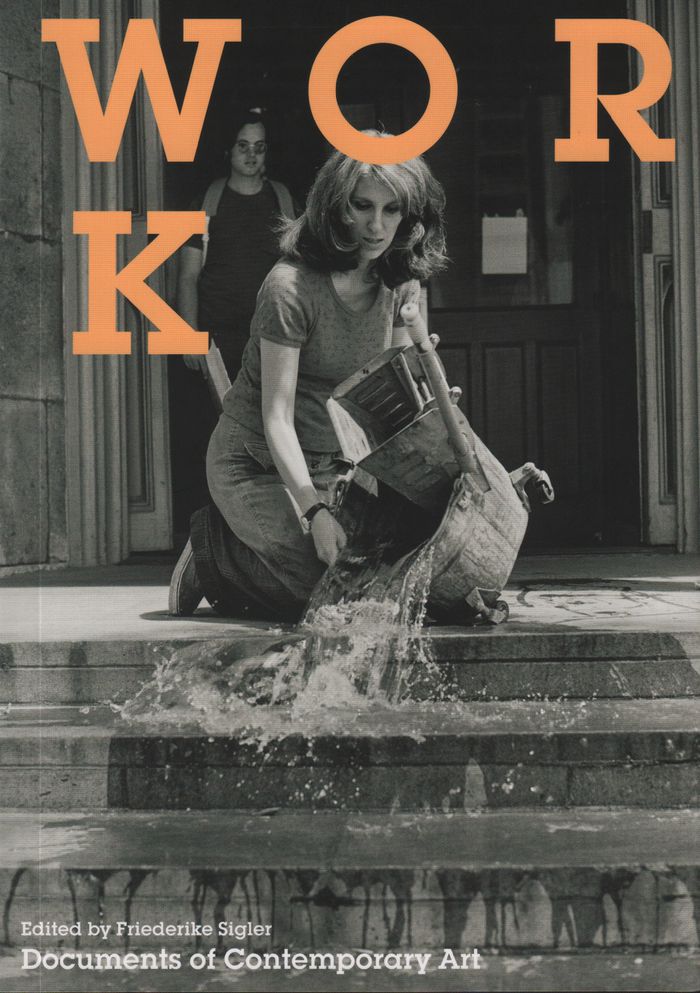
Warhol’s Factory of the 1960s, Minimalism’s assembly-line aesthetics, conceptual and feminist concern with workers’ conditions in the 1970s—these are among the antecedents of a renewed focus on the work of art: labor as artistic activity, as artistic method and as object of artistic engagement. In 2002, the “Work Ethic” exhibition curated by Helen Molesworth at the Baltimore Museum of Art took its cue from recent art to spotlight this earlier era of artistic practice in which activity became as valid as, and often dispensed with, object-production. Revealed through this prism was “dematerialized” art’s close and critical relation to the emergent information age’s criteria of management, production and skill. By 2015, the Venice Biennale reflected artists’ wider concern with global economic and social crises, centered on exploitative and precarious worlds of employment. Yet while art increasingly engages with human travail, work’s significance in itself is seldom addressed by critics. This anthology explicitly investigates work in relation to contemporary art, surveying artistic strategies that grapple with the complexities of being an art worker in the new economy, a postproducer, a collaborator, a fabricator, a striker, an ethical campaigner, or would-be transformer of labor from oppression to liberation.
Work
Actions:
Prix:
$33.50
(disponible sur commande)
Résumé:
Warhol’s Factory of the 1960s, Minimalism’s assembly-line aesthetics, conceptual and feminist concern with workers’ conditions in the 1970s—these are among the antecedents of a renewed focus on the work of art: labor as artistic activity, as artistic method and as object of artistic engagement. In 2002, the “Work Ethic” exhibition curated by Helen Molesworth at the Baltimore Museum of Art took its cue from recent art to spotlight this earlier era of artistic practice in which activity became as valid as, and often dispensed with, object-production. Revealed through this prism was “dematerialized” art’s close and critical relation to the emergent information age’s criteria of management, production and skill. By 2015, the Venice Biennale reflected artists’ wider concern with global economic and social crises, centered on exploitative and precarious worlds of employment. Yet while art increasingly engages with human travail, work’s significance in itself is seldom addressed by critics. This anthology explicitly investigates work in relation to contemporary art, surveying artistic strategies that grapple with the complexities of being an art worker in the new economy, a postproducer, a collaborator, a fabricator, a striker, an ethical campaigner, or would-be transformer of labor from oppression to liberation.
Classification:
livres
livres
Publication:
août 2017
août 2017
Sujet:
Théorie de l’art
Théorie de l’art
Classification:
livres
livres
Prix:
$59.95
(disponible sur commande)
Résumé:
From its origins in the Midwest in the early nineteenth century, the technique of light timber framing—also known at the time as "Chicago construction"—quickly came to underwrite the territorial and ideological expansion of the United States. Softwood construction was inherently practical, as its materials were readily available and required little skill to assemble. The(...)
$59.95
(disponible sur commande)
Résumé:
From its origins in the Midwest in the early nineteenth century, the technique of light timber framing—also known at the time as "Chicago construction"—quickly came to underwrite the territorial and ideological expansion of the United States. Softwood construction was inherently practical, as its materials were readily available and required little skill to assemble. The(...)
Sujet:
Constructions en bois
Constructions en bois
Publication:
septembre 2023
septembre 2023
Titre:
American framing: the architecture of a specific anonymity
Actions:
Prix:
$59.95
(disponible sur commande)
Résumé:
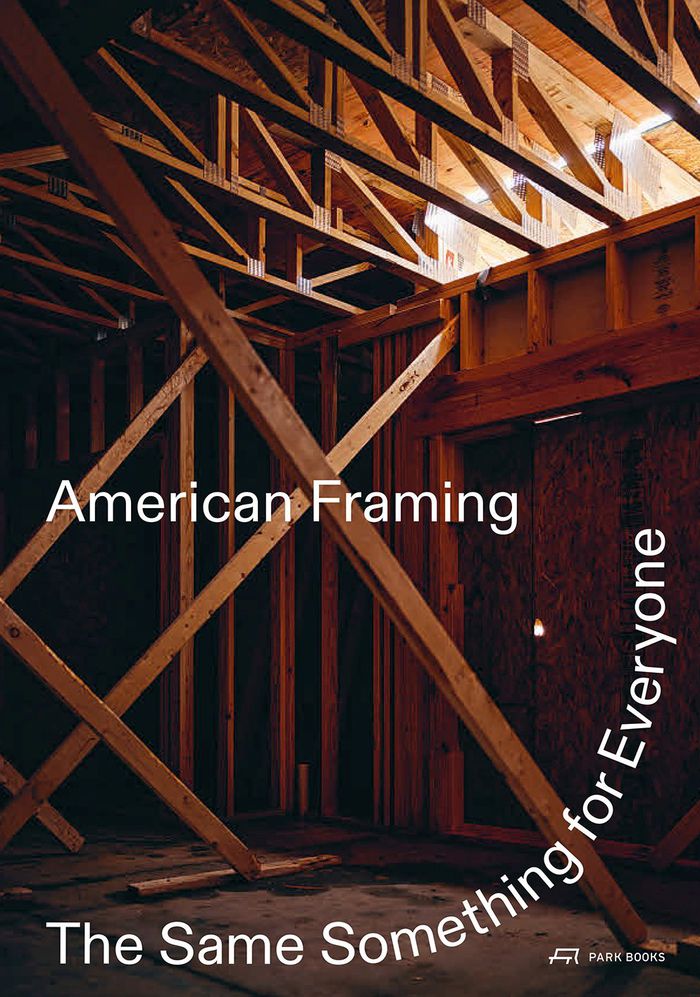
From its origins in the Midwest in the early nineteenth century, the technique of light timber framing—also known at the time as "Chicago construction"—quickly came to underwrite the territorial and ideological expansion of the United States. Softwood construction was inherently practical, as its materials were readily available and required little skill to assemble. The result was a built environment that erased typological and class distinctions: no amount of money can buy you a better 2 x 4. This fundamental sameness paradoxically underlies the American culture of individuality, unifying all superficial differences. It has been both a cause and effect of the country’s high regard for novelty, in contrast with the stability that is often assumed to be essential to architecture. "American framing" is a visual and textual exploration of the social, environmental, and architectural conditions and consequences of this ubiquitous form of construction. For architecture, it offers a story of an American project that is bored with tradition, eager to choose economy over technical skill, and accepting of a relaxed idea of craft in the pursuit of something useful and new—the forming of an architecture that enables architecture.
American framing: the architecture of a specific anonymity
Actions:
Prix:
$59.95
(disponible sur commande)
Résumé:
From its origins in the Midwest in the early nineteenth century, the technique of light timber framing—also known at the time as "Chicago construction"—quickly came to underwrite the territorial and ideological expansion of the United States. Softwood construction was inherently practical, as its materials were readily available and required little skill to assemble. The result was a built environment that erased typological and class distinctions: no amount of money can buy you a better 2 x 4. This fundamental sameness paradoxically underlies the American culture of individuality, unifying all superficial differences. It has been both a cause and effect of the country’s high regard for novelty, in contrast with the stability that is often assumed to be essential to architecture. "American framing" is a visual and textual exploration of the social, environmental, and architectural conditions and consequences of this ubiquitous form of construction. For architecture, it offers a story of an American project that is bored with tradition, eager to choose economy over technical skill, and accepting of a relaxed idea of craft in the pursuit of something useful and new—the forming of an architecture that enables architecture.
Classification:
livres
livres
Publication:
septembre 2023
septembre 2023
Sujet:
Constructions en bois
Constructions en bois
Classification:
livres
livres

Actions:
Prix:
$27.50
(disponible sur commande)
Résumé:
The American suburban dream house-a single-family, detached dwelling, frequently clustered in tight rows and cul-de-sacs-has been attacked for some time as homogeneous and barren, yet the suburbs are home to half of the American population. Architectural historian John Archer suggests the endurance of the ideal house is deeply rooted in the notions of privacy, property,(...)
$27.50
(disponible sur commande)
Résumé:
The American suburban dream house-a single-family, detached dwelling, frequently clustered in tight rows and cul-de-sacs-has been attacked for some time as homogeneous and barren, yet the suburbs are home to half of the American population. Architectural historian John Archer suggests the endurance of the ideal house is deeply rooted in the notions of privacy, property,(...)
Titre:
Architecture and suburbia: from english villa to American dream house, 1690-2000
Actions:
Prix:
$27.50
(disponible sur commande)
Résumé:
The American suburban dream house-a single-family, detached dwelling, frequently clustered in tight rows and cul-de-sacs-has been attacked for some time as homogeneous and barren, yet the suburbs are home to half of the American population. Architectural historian John Archer suggests the endurance of the ideal house is deeply rooted in the notions of privacy, property, and selfhood that were introduced in late seventeenth-century England and became the foundation of the American nation and identity. Spanning four centuries, Architecture and Suburbia explores phenomena ranging from household furnishings and routines to the proliferation of the dream house in parallel with Cold War politics. Beginning with John Locke, whose Enlightenment philosophy imagined individuals capable of self-fulfillment, Archer examines the eighteenth-century British bourgeois villa and the earliest London suburbs. He recounts how early American homeowners used houses to establish social status and how twentieth-century Americans continued to flock to single-family houses in the suburbs, encouraged by patriotism, fueled by consumerism, and resisting disdain by disaffected youths, designers, and intellectuals. Finally, he recognizes “hybridized” or increasingly diverse American suburbs as the dynamic basis for a strengthened social fabric. From Enlightenment philosophy to rap lyrics, from the rise of a mercantile economy to discussions over neighborhoods, sprawl, and gated communities, Archer addresses the past, present, and future of the American dream house. John Archer is professor of cultural studies and comparative literature at the University of Minnesota. His book The Literature of British Domestic Architecture, 1715-1842, is the standard reference on the subject, and he also contributed to the Encyclopedia of Urban America and the Encyclopedia of Twentieth-Century Architecture.
Architecture and suburbia: from english villa to American dream house, 1690-2000
Actions:
Prix:
$27.50
(disponible sur commande)
Résumé:
The American suburban dream house-a single-family, detached dwelling, frequently clustered in tight rows and cul-de-sacs-has been attacked for some time as homogeneous and barren, yet the suburbs are home to half of the American population. Architectural historian John Archer suggests the endurance of the ideal house is deeply rooted in the notions of privacy, property, and selfhood that were introduced in late seventeenth-century England and became the foundation of the American nation and identity. Spanning four centuries, Architecture and Suburbia explores phenomena ranging from household furnishings and routines to the proliferation of the dream house in parallel with Cold War politics. Beginning with John Locke, whose Enlightenment philosophy imagined individuals capable of self-fulfillment, Archer examines the eighteenth-century British bourgeois villa and the earliest London suburbs. He recounts how early American homeowners used houses to establish social status and how twentieth-century Americans continued to flock to single-family houses in the suburbs, encouraged by patriotism, fueled by consumerism, and resisting disdain by disaffected youths, designers, and intellectuals. Finally, he recognizes “hybridized” or increasingly diverse American suburbs as the dynamic basis for a strengthened social fabric. From Enlightenment philosophy to rap lyrics, from the rise of a mercantile economy to discussions over neighborhoods, sprawl, and gated communities, Archer addresses the past, present, and future of the American dream house. John Archer is professor of cultural studies and comparative literature at the University of Minnesota. His book The Literature of British Domestic Architecture, 1715-1842, is the standard reference on the subject, and he also contributed to the Encyclopedia of Urban America and the Encyclopedia of Twentieth-Century Architecture.
Classification:
livres
livres
Publication:
février 2008, Minneapolis, London
février 2008, Minneapolis, London
Sujet:
Banlieues
Banlieues


