


13794 Résultats
Classification:
livres
livres
Actions:
Prix:
$39.95
(disponible sur commande)
Résumé:
Le design institue un rapport ambivalent à notre culture matérielle. Il produit à la fois l'objet de série, fini et prêt à l'usage et le prototype mis en oeuvre au sein de l'enchevêtrement de croquis et de maquettes, comme matériau actif et ouvert de développement du geste inventif. Comment une même culture industrielle peut-elle induire deux rapports aux objets si(...)
$39.95
(disponible sur commande)
Résumé:
Le design institue un rapport ambivalent à notre culture matérielle. Il produit à la fois l'objet de série, fini et prêt à l'usage et le prototype mis en oeuvre au sein de l'enchevêtrement de croquis et de maquettes, comme matériau actif et ouvert de développement du geste inventif. Comment une même culture industrielle peut-elle induire deux rapports aux objets si(...)
Titre:
La zone obscure : Vers une pensée mineure du design
Actions:
Prix:
$39.95
(disponible sur commande)
Résumé:
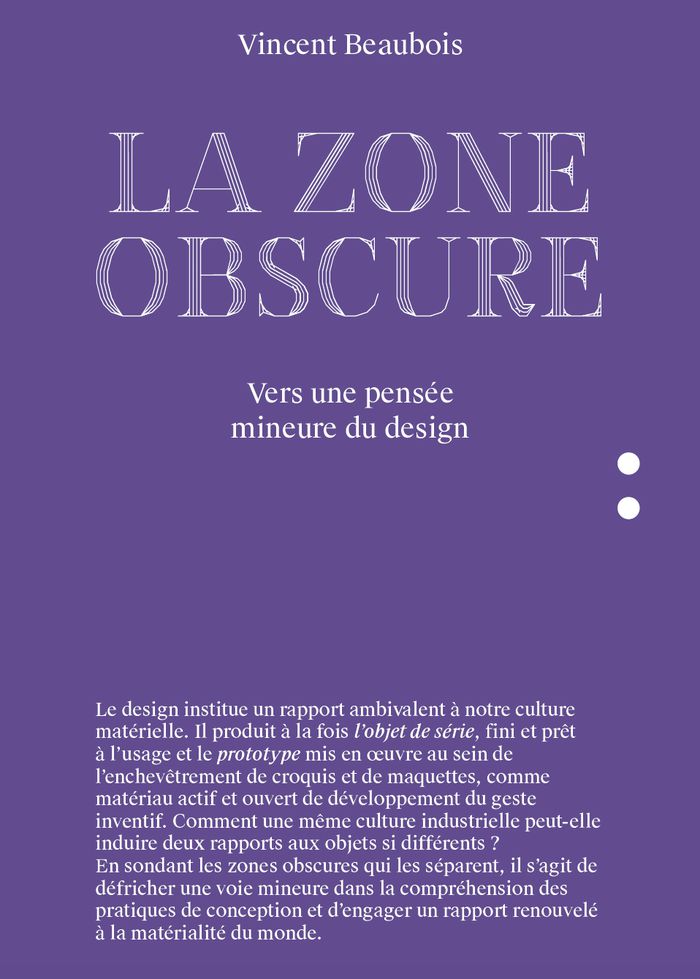
Le design institue un rapport ambivalent à notre culture matérielle. Il produit à la fois l'objet de série, fini et prêt à l'usage et le prototype mis en oeuvre au sein de l'enchevêtrement de croquis et de maquettes, comme matériau actif et ouvert de développement du geste inventif. Comment une même culture industrielle peut-elle induire deux rapports aux objets si différents ? En sondant les zones obscures qui les séparent, il s'agit de défricher une voie mineure dans la compréhension des pratiques de conception et d'engager un rapport renouvelé à la matérialité du monde. La zone obscure (LZO) de Vincent Beaubois interroge la discipline du design à l'aune de la conceptualité de Gilbert Simondon, l'un des rares philosophes français à s'être très tôt intéressé aux objets techniques. Beaubois s'oppose à une pensée majeure du design, d'essence industrielle, pour promouvoir au contraire une « pensée mineure du design » qui, contre l'idéologie du projet, privilégierait les notions de diagramme et de prototype. Il faudra donc « se défaire du design comme simple outil de développement pour en faire un vecteur d'intensification et de problématisation de notre rapport au monde ».
La zone obscure : Vers une pensée mineure du design
Actions:
Prix:
$39.95
(disponible sur commande)
Résumé:
Le design institue un rapport ambivalent à notre culture matérielle. Il produit à la fois l'objet de série, fini et prêt à l'usage et le prototype mis en oeuvre au sein de l'enchevêtrement de croquis et de maquettes, comme matériau actif et ouvert de développement du geste inventif. Comment une même culture industrielle peut-elle induire deux rapports aux objets si différents ? En sondant les zones obscures qui les séparent, il s'agit de défricher une voie mineure dans la compréhension des pratiques de conception et d'engager un rapport renouvelé à la matérialité du monde. La zone obscure (LZO) de Vincent Beaubois interroge la discipline du design à l'aune de la conceptualité de Gilbert Simondon, l'un des rares philosophes français à s'être très tôt intéressé aux objets techniques. Beaubois s'oppose à une pensée majeure du design, d'essence industrielle, pour promouvoir au contraire une « pensée mineure du design » qui, contre l'idéologie du projet, privilégierait les notions de diagramme et de prototype. Il faudra donc « se défaire du design comme simple outil de développement pour en faire un vecteur d'intensification et de problématisation de notre rapport au monde ».
Classification:
livres
livres
Publication:
septembre 2022
septembre 2022
Sujet:
Théorie du design
Théorie du design
Classification:
livres
livres
Actions:
Prix:
$40.00
(disponible en magasin)
Résumé:
Ce numéro propose l’hypothèse d'un renouveau de l'habitabilité du monde du point de vue des artistes dans une perspective convergente de l'histoire politique, des humanités environnementales et de l'histoire de l'art, interrogeant les liens entre écoféminisme(s) et pratiques artistiques, mais aussi un autre rapport, plus collaboratif que séparatif, au monde vivant,(...)
$40.00
(disponible en magasin)
Résumé:
Ce numéro propose l’hypothèse d'un renouveau de l'habitabilité du monde du point de vue des artistes dans une perspective convergente de l'histoire politique, des humanités environnementales et de l'histoire de l'art, interrogeant les liens entre écoféminisme(s) et pratiques artistiques, mais aussi un autre rapport, plus collaboratif que séparatif, au monde vivant,(...)
Sujet:
Théorie de l’art
Théorie de l’art
Publication:
septembre 2022
septembre 2022
Titre:
EKES (Earthkeeping Earthshaking) : Écoféminisme(s) et art contemporain
Actions:
Prix:
$40.00
(disponible en magasin)
Résumé:
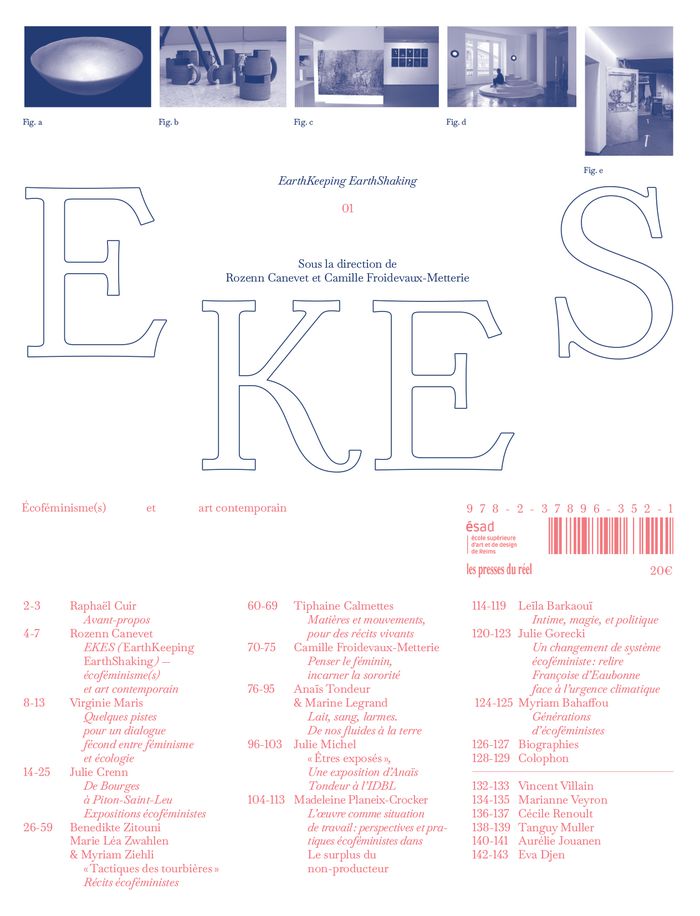
Ce numéro propose l’hypothèse d'un renouveau de l'habitabilité du monde du point de vue des artistes dans une perspective convergente de l'histoire politique, des humanités environnementales et de l'histoire de l'art, interrogeant les liens entre écoféminisme(s) et pratiques artistiques, mais aussi un autre rapport, plus collaboratif que séparatif, au monde vivant, considéré non plus comme un tout mais comme une multitude.
EKES (Earthkeeping Earthshaking) : Écoféminisme(s) et art contemporain
Actions:
Prix:
$40.00
(disponible en magasin)
Résumé:
Ce numéro propose l’hypothèse d'un renouveau de l'habitabilité du monde du point de vue des artistes dans une perspective convergente de l'histoire politique, des humanités environnementales et de l'histoire de l'art, interrogeant les liens entre écoféminisme(s) et pratiques artistiques, mais aussi un autre rapport, plus collaboratif que séparatif, au monde vivant, considéré non plus comme un tout mais comme une multitude.
Classification:
livres
livres
Publication:
septembre 2022
septembre 2022
Sujet:
Théorie de l’art
Théorie de l’art
Classification:
livres
livres
Actions:
Prix:
$25.00
(disponible sur commande)
Résumé:
« Less is more », dit le dicton moderniste. Mais est-ce bien le cas ? À une époque où l'on nous exhorte sans cesse à faire « plus avec moins », pouvons-nous encore romantiser les prétentions du minimalisme ? Le propos d'Aureli s'exprime dans toute son actualité, alors que presque dix ans se sont écoulés depuis sa première publication : il offre un regard critique sur la(...)
$25.00
(disponible sur commande)
Résumé:
« Less is more », dit le dicton moderniste. Mais est-ce bien le cas ? À une époque où l'on nous exhorte sans cesse à faire « plus avec moins », pouvons-nous encore romantiser les prétentions du minimalisme ? Le propos d'Aureli s'exprime dans toute son actualité, alors que presque dix ans se sont écoulés depuis sa première publication : il offre un regard critique sur la(...)
Titre:
Less is Enough : Sur l'architecture et l'ascétisme
Actions:
Prix:
$25.00
(disponible sur commande)
Résumé:
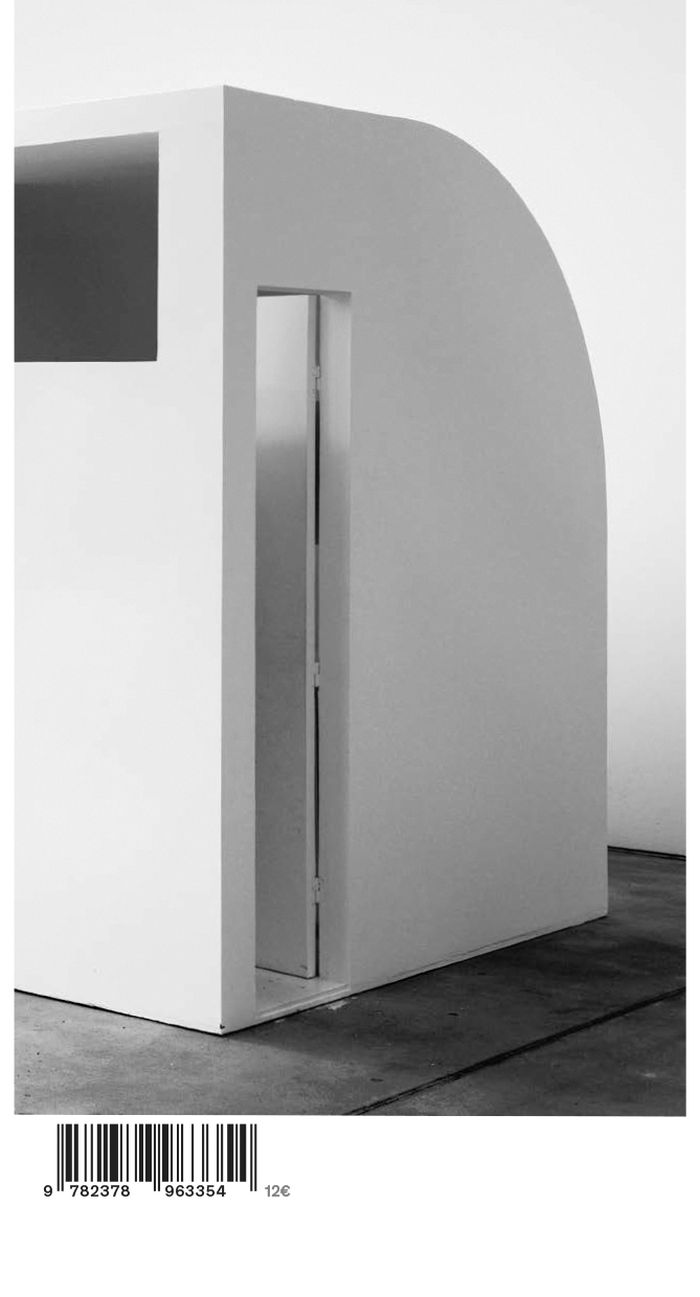
« Less is more », dit le dicton moderniste. Mais est-ce bien le cas ? À une époque où l'on nous exhorte sans cesse à faire « plus avec moins », pouvons-nous encore romantiser les prétentions du minimalisme ? Le propos d'Aureli s'exprime dans toute son actualité, alors que presque dix ans se sont écoulés depuis sa première publication : il offre un regard critique sur la pratique architecturale et sur les questions fondamentales de la discipline, que ce soit dans le passé ou pour notre avenir, en démasquant habilement l'hypocrisie du capitalisme latent qui esthétise l'ascétisme, tout en continuant de regarder avec espoir la possibilité de conserver l'idée du « less » comme point de départ. Il se veut donc le témoin d'une époque où le cadre théorique et critique de l'architecture nécessitent une profonde reconfiguration.
Less is Enough : Sur l'architecture et l'ascétisme
Actions:
Prix:
$25.00
(disponible sur commande)
Résumé:
« Less is more », dit le dicton moderniste. Mais est-ce bien le cas ? À une époque où l'on nous exhorte sans cesse à faire « plus avec moins », pouvons-nous encore romantiser les prétentions du minimalisme ? Le propos d'Aureli s'exprime dans toute son actualité, alors que presque dix ans se sont écoulés depuis sa première publication : il offre un regard critique sur la pratique architecturale et sur les questions fondamentales de la discipline, que ce soit dans le passé ou pour notre avenir, en démasquant habilement l'hypocrisie du capitalisme latent qui esthétise l'ascétisme, tout en continuant de regarder avec espoir la possibilité de conserver l'idée du « less » comme point de départ. Il se veut donc le témoin d'une époque où le cadre théorique et critique de l'architecture nécessitent une profonde reconfiguration.
Classification:
livres
livres
Publication:
septembre 2022
septembre 2022
Sujet:
Théorie de l’architecture
Théorie de l’architecture
Classification:
livres
livres
Prix:
$30.00
(disponible sur commande)
Résumé:
Publié par Giovanni Battista Piranesi en 1765 contre les expériences néoclassiques françaises, anglaises et allemandes, ce dialogue théorique est certainement le texte le plus radical de l'histoire de la théorie architecturale moderne. Selon Hanno-Walter Kruft, il est clair dès le départ que Piranèse, avec son dialogue, « fait de la provocation ». « Utopie négative », ce(...)
$30.00
(disponible sur commande)
Résumé:
Publié par Giovanni Battista Piranesi en 1765 contre les expériences néoclassiques françaises, anglaises et allemandes, ce dialogue théorique est certainement le texte le plus radical de l'histoire de la théorie architecturale moderne. Selon Hanno-Walter Kruft, il est clair dès le départ que Piranèse, avec son dialogue, « fait de la provocation ». « Utopie négative », ce(...)
Titre:
Point de vue sur l'architecture: Dialogue. Protopiro et Didascalo
Actions:
Prix:
$30.00
(disponible sur commande)
Résumé:
Publié par Giovanni Battista Piranesi en 1765 contre les expériences néoclassiques françaises, anglaises et allemandes, ce dialogue théorique est certainement le texte le plus radical de l'histoire de la théorie architecturale moderne. Selon Hanno-Walter Kruft, il est clair dès le départ que Piranèse, avec son dialogue, « fait de la provocation ». « Utopie négative », ce texte préfigure, selon Manfredo Tafuri, la réduction de l'architecture à un « travail abstrait et répétitif » et anticipe « la distinction fondamentale qu'Adolf Loos énoncera entre architecture, monument et tombeau ». Accompagné de deux essais du philosophe Marco Assennato, qui tentent d'en actualiser le problématiques, Caryatide propose ici une première édition française du texte.
Point de vue sur l'architecture: Dialogue. Protopiro et Didascalo
Actions:
Prix:
$30.00
(disponible sur commande)
Résumé:
Publié par Giovanni Battista Piranesi en 1765 contre les expériences néoclassiques françaises, anglaises et allemandes, ce dialogue théorique est certainement le texte le plus radical de l'histoire de la théorie architecturale moderne. Selon Hanno-Walter Kruft, il est clair dès le départ que Piranèse, avec son dialogue, « fait de la provocation ». « Utopie négative », ce texte préfigure, selon Manfredo Tafuri, la réduction de l'architecture à un « travail abstrait et répétitif » et anticipe « la distinction fondamentale qu'Adolf Loos énoncera entre architecture, monument et tombeau ». Accompagné de deux essais du philosophe Marco Assennato, qui tentent d'en actualiser le problématiques, Caryatide propose ici une première édition française du texte.
Classification:
livres
livres
Publication:
septembre 2022
septembre 2022
Sujet:
Théorie de l’architecture
Théorie de l’architecture
Classification:
livres
livres
Prix:
$28.00
(disponible sur commande)
Résumé:
Par un travail de lecture et d'étymologie attentive des traités d'architecture, de Vitruve à Vittone, Bruno Queysanne nous révèle un aspect peu connu de ces textes « classiques », dans lesquels les architectes laissent de côté leur rhétorique savante et dogmatique et, recouvrant leurs habits d'homme de métier, nous livrent des conseils pragmatiques quant à la réalisation(...)
$28.00
(disponible sur commande)
Résumé:
Par un travail de lecture et d'étymologie attentive des traités d'architecture, de Vitruve à Vittone, Bruno Queysanne nous révèle un aspect peu connu de ces textes « classiques », dans lesquels les architectes laissent de côté leur rhétorique savante et dogmatique et, recouvrant leurs habits d'homme de métier, nous livrent des conseils pragmatiques quant à la réalisation(...)
Titre:
Sur la projettation : Pour une pragmatique architecturale
Actions:
Prix:
$28.00
(disponible sur commande)
Résumé:
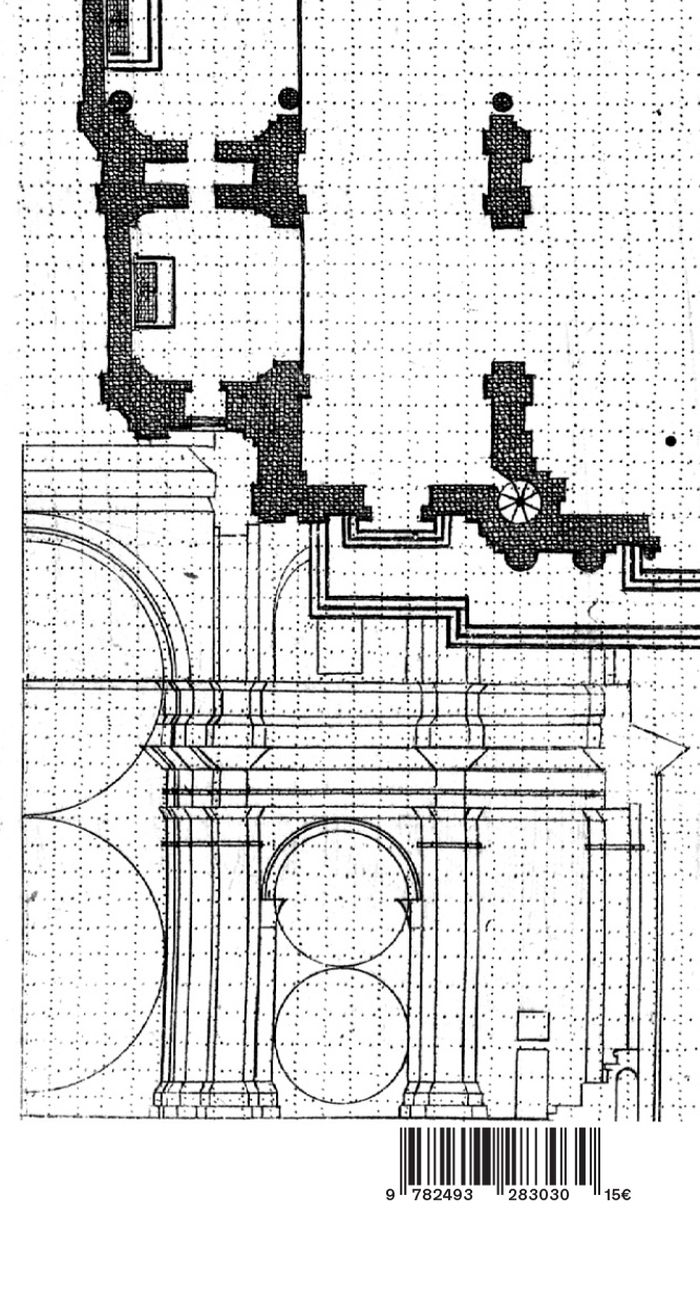
Par un travail de lecture et d'étymologie attentive des traités d'architecture, de Vitruve à Vittone, Bruno Queysanne nous révèle un aspect peu connu de ces textes « classiques », dans lesquels les architectes laissent de côté leur rhétorique savante et dogmatique et, recouvrant leurs habits d'homme de métier, nous livrent des conseils pragmatiques quant à la réalisation de l'œuvre architecturale.
Sur la projettation : Pour une pragmatique architecturale
Actions:
Prix:
$28.00
(disponible sur commande)
Résumé:
Par un travail de lecture et d'étymologie attentive des traités d'architecture, de Vitruve à Vittone, Bruno Queysanne nous révèle un aspect peu connu de ces textes « classiques », dans lesquels les architectes laissent de côté leur rhétorique savante et dogmatique et, recouvrant leurs habits d'homme de métier, nous livrent des conseils pragmatiques quant à la réalisation de l'œuvre architecturale.
Classification:
livres
livres
Publication:
septembre 2022
septembre 2022
Sujet:
Théorie de l’architecture
Théorie de l’architecture
Classification:
livres
livres
Actions:
Prix:
$48.95
(disponible sur commande)
Résumé:
These sharp and insightful texts, whether addressing the impact of digital technology, the design of an effective hotel, the emergence of the Los Angeles vanguard, or the proper execution of a thesis project, combine frontline reportage, archival scholarship, trenchant prose, and impressive critical acumen to cut through the cacophony of recent architectural discourse(...)
$48.95
(disponible sur commande)
Résumé:
These sharp and insightful texts, whether addressing the impact of digital technology, the design of an effective hotel, the emergence of the Los Angeles vanguard, or the proper execution of a thesis project, combine frontline reportage, archival scholarship, trenchant prose, and impressive critical acumen to cut through the cacophony of recent architectural discourse(...)
Titre:
Figments of the architectural imagination
Actions:
Prix:
$48.95
(disponible sur commande)
Résumé:
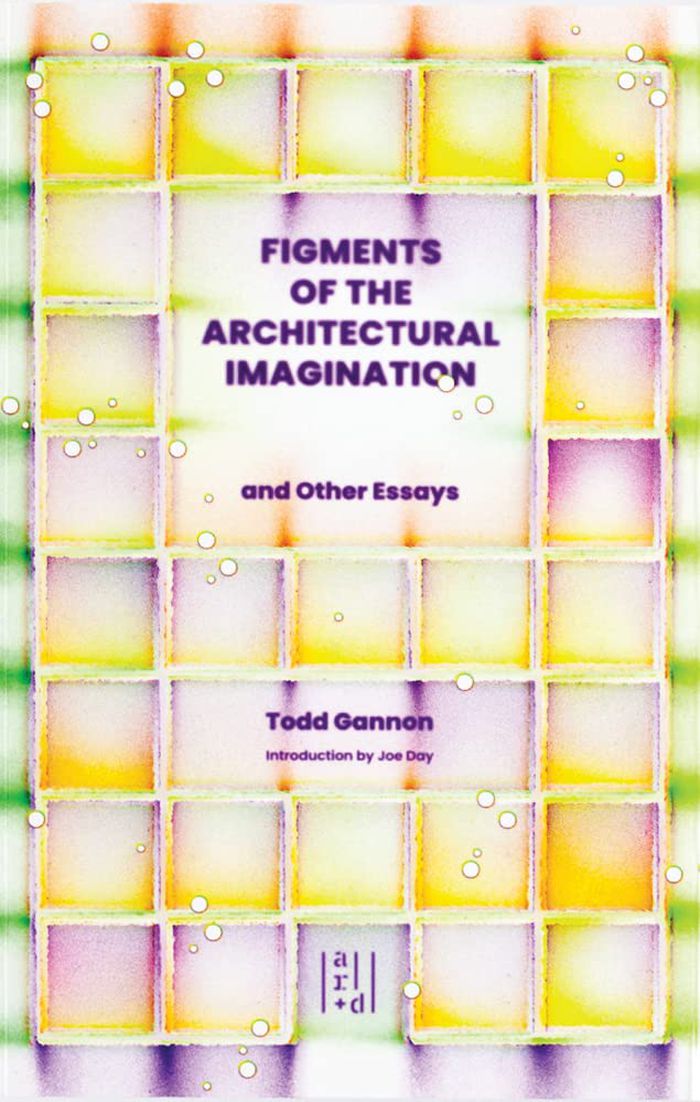
These sharp and insightful texts, whether addressing the impact of digital technology, the design of an effective hotel, the emergence of the Los Angeles vanguard, or the proper execution of a thesis project, combine frontline reportage, archival scholarship, trenchant prose, and impressive critical acumen to cut through the cacophony of recent architectural discourse with uncommon clarity, intelligence, rigor, and wit. Taken together, these essays provide essential orientation for practitioners, academics, students, and afficionados hoping to understand how contemporary architecture came to be where it is and to speculate on where it might go next.
Figments of the architectural imagination
Actions:
Prix:
$48.95
(disponible sur commande)
Résumé:
These sharp and insightful texts, whether addressing the impact of digital technology, the design of an effective hotel, the emergence of the Los Angeles vanguard, or the proper execution of a thesis project, combine frontline reportage, archival scholarship, trenchant prose, and impressive critical acumen to cut through the cacophony of recent architectural discourse with uncommon clarity, intelligence, rigor, and wit. Taken together, these essays provide essential orientation for practitioners, academics, students, and afficionados hoping to understand how contemporary architecture came to be where it is and to speculate on where it might go next.
Classification:
livres
livres
Publication:
octobre 2022
octobre 2022
Sujet:
Théorie de l’architecture
Théorie de l’architecture
Classification:
livres
livres
Actions:
Prix:
$25.95
(disponible sur commande)
Résumé:
What is an object? This question was addressed by Graham Harman, the originator of object-oriented philosophy and a central figure of speculative realism, in a lecture at Moderna Museet in Stockholm. Providing a thorough exposition of the object from an ontological standpoint, and putting forward a concept of the object beyond reductionism, Harman declares an approach(...)
$25.95
(disponible sur commande)
Résumé:
What is an object? This question was addressed by Graham Harman, the originator of object-oriented philosophy and a central figure of speculative realism, in a lecture at Moderna Museet in Stockholm. Providing a thorough exposition of the object from an ontological standpoint, and putting forward a concept of the object beyond reductionism, Harman declares an approach(...)
Titre:
Artful objects: Graham Harman on art and the business of speculative realism
Actions:
Prix:
$25.95
(disponible sur commande)
Résumé:
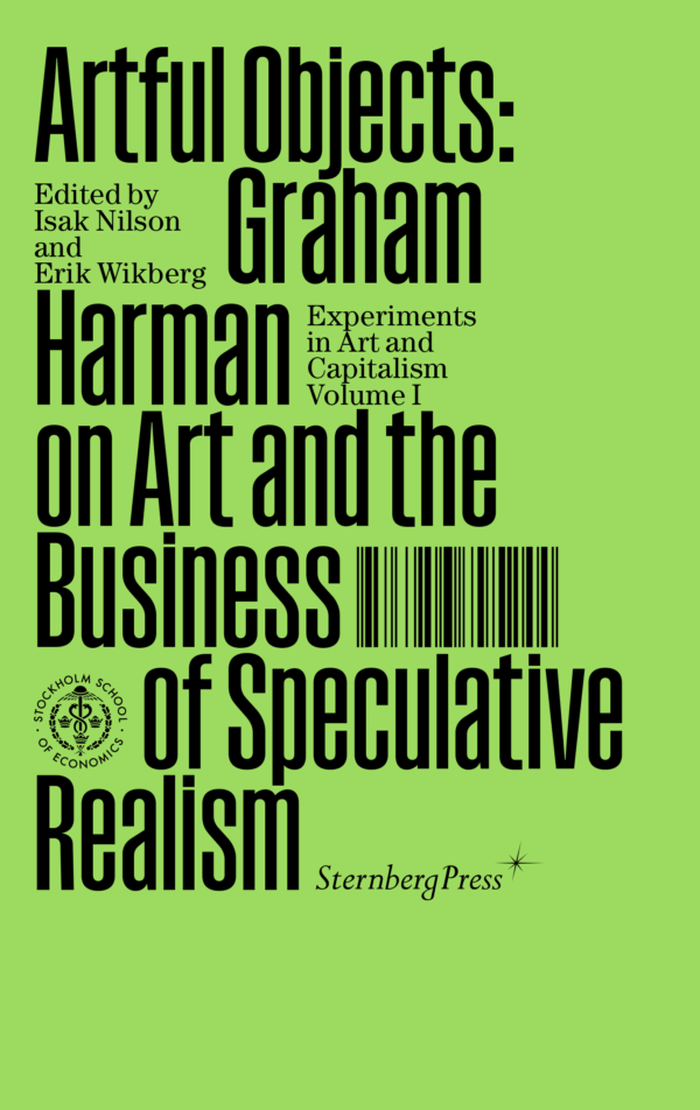
What is an object? This question was addressed by Graham Harman, the originator of object-oriented philosophy and a central figure of speculative realism, in a lecture at Moderna Museet in Stockholm. Providing a thorough exposition of the object from an ontological standpoint, and putting forward a concept of the object beyond reductionism, Harman declares an approach that brings together philosophy and the arts where an object is not reducible to its components or effects and must instead be approached obliquely or indirectly. The lecture was held on the occasion of "Sculpture after Sculpture," an exhibition of work by Katharina Fritsch, Jeff Koons, and Charles Ray. In the exhibition hall with the show’s thirteen sculptures, thirteen questions about the object were posed to Graham Harman by interlocutors from the worlds of art, business studies, and philosophy.
Artful objects: Graham Harman on art and the business of speculative realism
Actions:
Prix:
$25.95
(disponible sur commande)
Résumé:
What is an object? This question was addressed by Graham Harman, the originator of object-oriented philosophy and a central figure of speculative realism, in a lecture at Moderna Museet in Stockholm. Providing a thorough exposition of the object from an ontological standpoint, and putting forward a concept of the object beyond reductionism, Harman declares an approach that brings together philosophy and the arts where an object is not reducible to its components or effects and must instead be approached obliquely or indirectly. The lecture was held on the occasion of "Sculpture after Sculpture," an exhibition of work by Katharina Fritsch, Jeff Koons, and Charles Ray. In the exhibition hall with the show’s thirteen sculptures, thirteen questions about the object were posed to Graham Harman by interlocutors from the worlds of art, business studies, and philosophy.
Classification:
livres
livres
Publication:
octobre 2021
octobre 2021
Sujet:
Théorie de l’art
Théorie de l’art
Classification:
livres
livres
Titre:
Book of ruins
Book of ruins
Actions:
Prix:
$80.99
(disponible sur commande)
Résumé:
''Book of ruins'' offers a survey – not encyclopedic, but substantial – of leading moments when the fact and idea of ruins were taken up by writers, travellers and artists: painters, film makers, landscape architects, and architects. Gathering together short texts and extracts that describe and reflect on ruins, dating from remote antiquity (Scipio shedding tears when(...)
$80.99
(disponible sur commande)
Résumé:
''Book of ruins'' offers a survey – not encyclopedic, but substantial – of leading moments when the fact and idea of ruins were taken up by writers, travellers and artists: painters, film makers, landscape architects, and architects. Gathering together short texts and extracts that describe and reflect on ruins, dating from remote antiquity (Scipio shedding tears when(...)
Sujet:
Théorie de l’architecture
Théorie de l’architecture
Publication:
septembre 2022
septembre 2022
Titre:
Book of ruins
Actions:
Prix:
$80.99
(disponible sur commande)
Résumé:
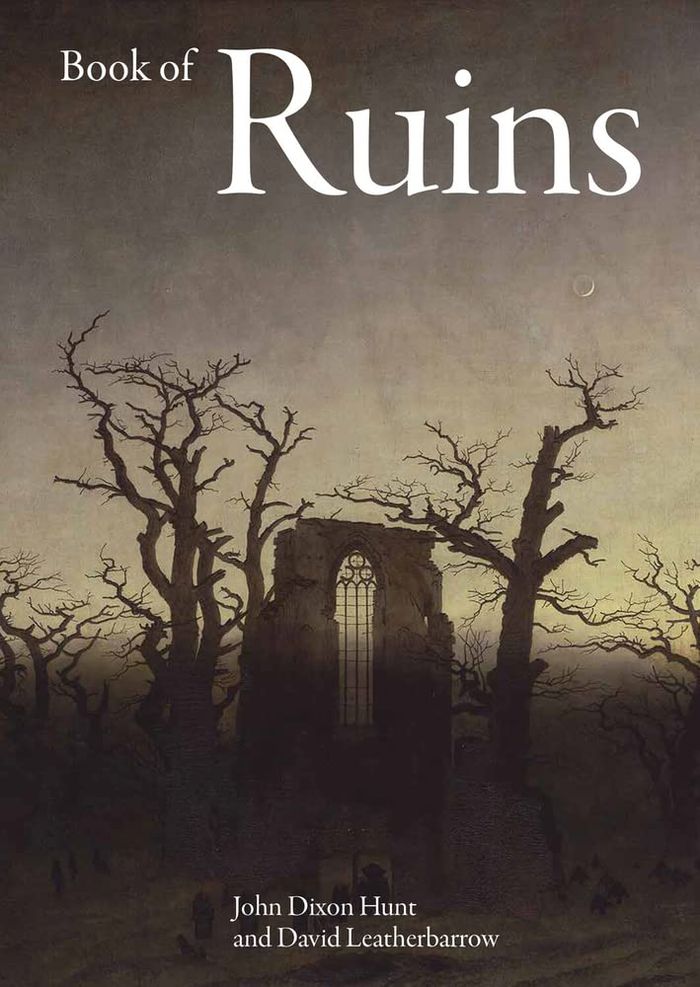
''Book of ruins'' offers a survey – not encyclopedic, but substantial – of leading moments when the fact and idea of ruins were taken up by writers, travellers and artists: painters, film makers, landscape architects, and architects. Gathering together short texts and extracts that describe and reflect on ruins, dating from remote antiquity (Scipio shedding tears when viewing the destruction of Carthage) to present times (the ruins of a modern city, portrayed in the film ''Requiem for Detroit''), it provides a perspective upon what the past has meant to different cultures at different times. Following an introductory essay, the book includes 70 entries, chronologically ordered, each including an indicative image (or two), an introductory commentary by the authors, and the text itself. The texts come from designers (from Bernini through Piranesi to David Chipperfield) as well as other artists (John Piper), and from literary figures (Goethe, Wordsworth, Byron and Shelley, Hugo, and Hardy). It concludes by discussing what we do with ruins by way of preservation, conservation, adaptive reuse and appropriation, and contemporary loss and ruin, as illustrated by 9/11 and the Neues Museum and highlighting the continuing relevance of the ruin.
Book of ruins
Actions:
Prix:
$80.99
(disponible sur commande)
Résumé:
''Book of ruins'' offers a survey – not encyclopedic, but substantial – of leading moments when the fact and idea of ruins were taken up by writers, travellers and artists: painters, film makers, landscape architects, and architects. Gathering together short texts and extracts that describe and reflect on ruins, dating from remote antiquity (Scipio shedding tears when viewing the destruction of Carthage) to present times (the ruins of a modern city, portrayed in the film ''Requiem for Detroit''), it provides a perspective upon what the past has meant to different cultures at different times. Following an introductory essay, the book includes 70 entries, chronologically ordered, each including an indicative image (or two), an introductory commentary by the authors, and the text itself. The texts come from designers (from Bernini through Piranesi to David Chipperfield) as well as other artists (John Piper), and from literary figures (Goethe, Wordsworth, Byron and Shelley, Hugo, and Hardy). It concludes by discussing what we do with ruins by way of preservation, conservation, adaptive reuse and appropriation, and contemporary loss and ruin, as illustrated by 9/11 and the Neues Museum and highlighting the continuing relevance of the ruin.
Classification:
livres
livres
Publication:
septembre 2022
septembre 2022
Sujet:
Théorie de l’architecture
Théorie de l’architecture
Classification:
livres
livres

Actions:
Prix:
$39.95
(disponible sur commande)
Résumé:
The creation of pleasant living environments that avoid the simple container of human beings and build spaces of coexistence receptive to the needs of users has been one of the objectives of architectural practice for decades. The projects presented in this book are magnificent recent examples of how architecture can create attractive residential buildings aware of their(...)
$39.95
(disponible sur commande)
Résumé:
The creation of pleasant living environments that avoid the simple container of human beings and build spaces of coexistence receptive to the needs of users has been one of the objectives of architectural practice for decades. The projects presented in this book are magnificent recent examples of how architecture can create attractive residential buildings aware of their(...)
Titre:
Eco-cities: new healthy architecture
Actions:
Prix:
$39.95
(disponible sur commande)
Résumé:
The creation of pleasant living environments that avoid the simple container of human beings and build spaces of coexistence receptive to the needs of users has been one of the objectives of architectural practice for decades. The projects presented in this book are magnificent recent examples of how architecture can create attractive residential buildings aware of their social function, promoting interaction between users and the harmonious relationship of the community with its natural and urban environment. Likewise, all of them transmit a great sensitivity towards issues such as sustainability, eco efficiency or the integration and conservation of historical and industrial heritage, using construction methods ranging from traditional techniques to the most modern parametric design systems.
Eco-cities: new healthy architecture
Actions:
Prix:
$39.95
(disponible sur commande)
Résumé:
The creation of pleasant living environments that avoid the simple container of human beings and build spaces of coexistence receptive to the needs of users has been one of the objectives of architectural practice for decades. The projects presented in this book are magnificent recent examples of how architecture can create attractive residential buildings aware of their social function, promoting interaction between users and the harmonious relationship of the community with its natural and urban environment. Likewise, all of them transmit a great sensitivity towards issues such as sustainability, eco efficiency or the integration and conservation of historical and industrial heritage, using construction methods ranging from traditional techniques to the most modern parametric design systems.
Classification:
livres
livres
Publication:
janvier 2023
janvier 2023
Sujet:
Théorie de l’urbanisme
Théorie de l’urbanisme
Classification:
livres
livres
Titre:
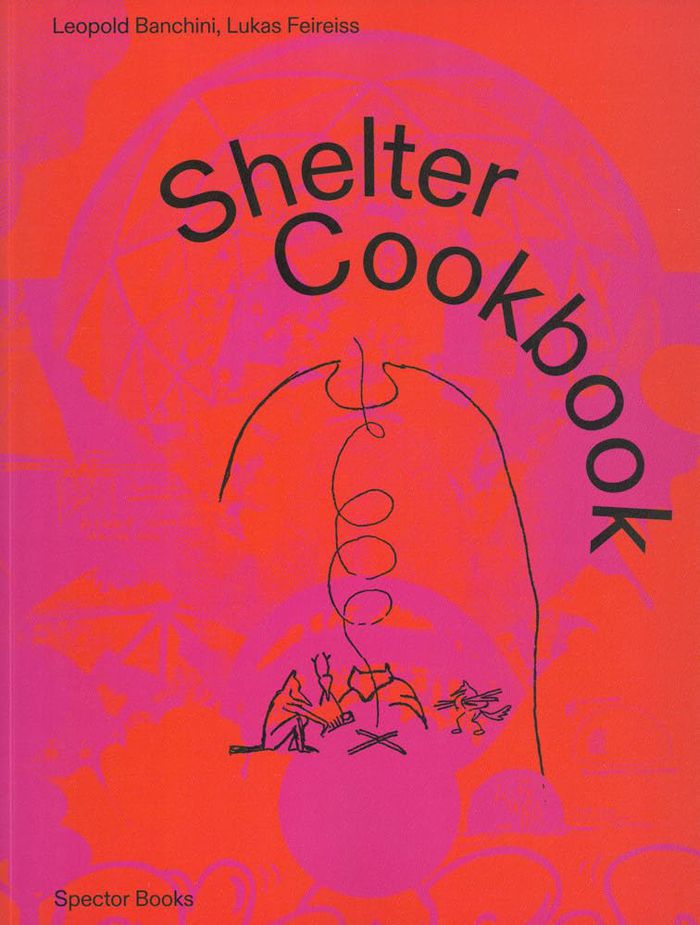
Shelter cookbook
Shelter cookbook
Actions:
Prix:
$55.00
(disponible en magasin)
Résumé:
DIY architect, publisher and pioneer of the self-build movement, Lloyd Kahn (born 1935) is a legend of the American counterculture. Influenced by Buckminster Fuller, in 1968 Kahn started building geodesic domes, and was an editor for Stewart Brand’s Whole Earth Catalog. In 1970 Kahn published his first book, Domebook One, followed the next year by the bestselling Domebook(...)
$55.00
(disponible en magasin)
Résumé:
DIY architect, publisher and pioneer of the self-build movement, Lloyd Kahn (born 1935) is a legend of the American counterculture. Influenced by Buckminster Fuller, in 1968 Kahn started building geodesic domes, and was an editor for Stewart Brand’s Whole Earth Catalog. In 1970 Kahn published his first book, Domebook One, followed the next year by the bestselling Domebook(...)
Sujet:
Théorie de l’architecture
Théorie de l’architecture
Publication:
décembre 2025
décembre 2025
Titre:
Shelter cookbook
Actions:
Prix:
$55.00
(disponible en magasin)
Résumé:
DIY architect, publisher and pioneer of the self-build movement, Lloyd Kahn (born 1935) is a legend of the American counterculture. Influenced by Buckminster Fuller, in 1968 Kahn started building geodesic domes, and was an editor for Stewart Brand’s Whole Earth Catalog. In 1970 Kahn published his first book, Domebook One, followed the next year by the bestselling Domebook 2. In 1971, he bought land in Bolinas and built a geodesic dome (later to be featured in Life magazine), but he soon pursued other ways to build, resulting in the classic 1973 book "Shelter." Kahn published numerous self-build books over the ensuing decades, most recently "Tiny Homes on the Move" (2014). "Shelter Cookbook" is an exploration of Kahn’s now iconic publications by the Swiss architect Leopold Banchini (born 1981) - whose practice makes emphatic use of DIY architecture culture- and the German author and curator Lukas Feireiss (born 1977). It relates Kahn’s building philosophy to contemporary practices, recording Banchini and Feireiss’ personal search for unexpected relationships between historical documents and contemporary architectural projects. The large-format volume includes interviews, photospreads and archival material on self-building, and also includes a mycological investigation. "Shelter Cookbook" will inspire architects, designers, artists and counterculture cognoscenti alike with its positive vision of the possibilities and legacy of the self-build movement.
Shelter cookbook
Actions:
Prix:
$55.00
(disponible en magasin)
Résumé:
DIY architect, publisher and pioneer of the self-build movement, Lloyd Kahn (born 1935) is a legend of the American counterculture. Influenced by Buckminster Fuller, in 1968 Kahn started building geodesic domes, and was an editor for Stewart Brand’s Whole Earth Catalog. In 1970 Kahn published his first book, Domebook One, followed the next year by the bestselling Domebook 2. In 1971, he bought land in Bolinas and built a geodesic dome (later to be featured in Life magazine), but he soon pursued other ways to build, resulting in the classic 1973 book "Shelter." Kahn published numerous self-build books over the ensuing decades, most recently "Tiny Homes on the Move" (2014). "Shelter Cookbook" is an exploration of Kahn’s now iconic publications by the Swiss architect Leopold Banchini (born 1981) - whose practice makes emphatic use of DIY architecture culture- and the German author and curator Lukas Feireiss (born 1977). It relates Kahn’s building philosophy to contemporary practices, recording Banchini and Feireiss’ personal search for unexpected relationships between historical documents and contemporary architectural projects. The large-format volume includes interviews, photospreads and archival material on self-building, and also includes a mycological investigation. "Shelter Cookbook" will inspire architects, designers, artists and counterculture cognoscenti alike with its positive vision of the possibilities and legacy of the self-build movement.
Classification:
livres
livres
Publication:
décembre 2025
décembre 2025
Sujet:
Théorie de l’architecture
Théorie de l’architecture


