


807 Résultats
Classification:
livres
livres
Prix:
$60.00
(disponible sur commande)
Résumé:
Published to accompany the exhibition Italian Futurism, 1909–1944: Reconstructing the Universe opening at the Solomon R. Guggenheim Museum in 2014, this catalogue considerably advances the scholarship and understanding of an influential yet little-known twentieth- century artistic movement. This publication examines the historical sweep of Futurism from its inception with(...)
$60.00
(disponible sur commande)
Résumé:
Published to accompany the exhibition Italian Futurism, 1909–1944: Reconstructing the Universe opening at the Solomon R. Guggenheim Museum in 2014, this catalogue considerably advances the scholarship and understanding of an influential yet little-known twentieth- century artistic movement. This publication examines the historical sweep of Futurism from its inception with(...)
Titre:
Italian futurism, 1909-1944: reconstructing the universe
Actions:
Prix:
$60.00
(disponible sur commande)
Résumé:
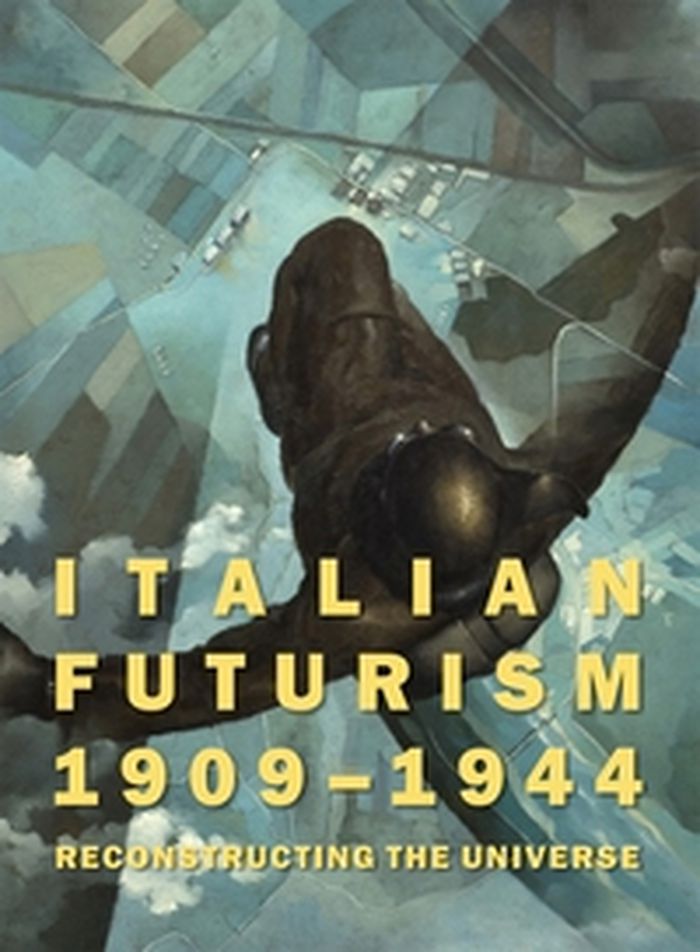
Published to accompany the exhibition Italian Futurism, 1909–1944: Reconstructing the Universe opening at the Solomon R. Guggenheim Museum in 2014, this catalogue considerably advances the scholarship and understanding of an influential yet little-known twentieth- century artistic movement. This publication examines the historical sweep of Futurism from its inception with F.T. Marinetti’s manifesto in 1909 through the movement’s demise at the end of World War II. Presenting over 300 works created between 1909 and 1944, by artists, writers, designers and composers such as Giacomo Balla, Umberto Boccioni, Anton Giulio Bragaglia, Fortunato Depero, Gerardo Dottori, Marinetti, Ivo Pannaggi, Rosa Rosà, Luigi Russolo, Tato and many others, this publication encompasses not only painting and sculpture, but also architecture, design, ceramics, fashion, film, photography, advertising, free-form poetry, publications, music, theater and performance.
Italian futurism, 1909-1944: reconstructing the universe
Actions:
Prix:
$60.00
(disponible sur commande)
Résumé:
Published to accompany the exhibition Italian Futurism, 1909–1944: Reconstructing the Universe opening at the Solomon R. Guggenheim Museum in 2014, this catalogue considerably advances the scholarship and understanding of an influential yet little-known twentieth- century artistic movement. This publication examines the historical sweep of Futurism from its inception with F.T. Marinetti’s manifesto in 1909 through the movement’s demise at the end of World War II. Presenting over 300 works created between 1909 and 1944, by artists, writers, designers and composers such as Giacomo Balla, Umberto Boccioni, Anton Giulio Bragaglia, Fortunato Depero, Gerardo Dottori, Marinetti, Ivo Pannaggi, Rosa Rosà, Luigi Russolo, Tato and many others, this publication encompasses not only painting and sculpture, but also architecture, design, ceramics, fashion, film, photography, advertising, free-form poetry, publications, music, theater and performance.
Classification:
livres
livres
Publication:
février 2014
février 2014
Sujet:
Art, époques et styles
Art, époques et styles
Classification:
livres
livres
Actions:
Prix:
$36.95
(disponible sur commande)
Résumé:
In the decades after World War II, artists and designers of the land art movement used the natural landscape to create monumental site-specific artworks. Second Site offers a powerful meditation on how environmental change and the passage of time alter and transform the meanings—and sometimes appearances—of works created to inhabit a specific place. James Nisbet offers(...)
$36.95
(disponible sur commande)
Résumé:
In the decades after World War II, artists and designers of the land art movement used the natural landscape to create monumental site-specific artworks. Second Site offers a powerful meditation on how environmental change and the passage of time alter and transform the meanings—and sometimes appearances—of works created to inhabit a specific place. James Nisbet offers(...)
Titre:
Second site. Point essays on architecture
Actions:
Prix:
$36.95
(disponible sur commande)
Résumé:
In the decades after World War II, artists and designers of the land art movement used the natural landscape to create monumental site-specific artworks. Second Site offers a powerful meditation on how environmental change and the passage of time alter and transform the meanings—and sometimes appearances—of works created to inhabit a specific place. James Nisbet offers fresh approaches to well-known artworks by Ant Farm, Rebecca Belmore, Nancy Holt, Richard Serra, and Robert Smithson. He also examines the work of less recognized artists such as Agnes Denes, Bonnie Devine, and herman de vries. Nisbet tracks the vicissitudes wrought by climate change and urban development on site-specific artworks, taking readers from the plains of Amarillo, Texas, to a field of volcanic rock in Mexico City, to abandoned quarries in Finland.
Second site. Point essays on architecture
Actions:
Prix:
$36.95
(disponible sur commande)
Résumé:
In the decades after World War II, artists and designers of the land art movement used the natural landscape to create monumental site-specific artworks. Second Site offers a powerful meditation on how environmental change and the passage of time alter and transform the meanings—and sometimes appearances—of works created to inhabit a specific place. James Nisbet offers fresh approaches to well-known artworks by Ant Farm, Rebecca Belmore, Nancy Holt, Richard Serra, and Robert Smithson. He also examines the work of less recognized artists such as Agnes Denes, Bonnie Devine, and herman de vries. Nisbet tracks the vicissitudes wrought by climate change and urban development on site-specific artworks, taking readers from the plains of Amarillo, Texas, to a field of volcanic rock in Mexico City, to abandoned quarries in Finland.
Classification:
livres
livres
Publication:
novembre 2021
novembre 2021
Classification:
livres
livres
Titre:
Luc Tuymans
Luc Tuymans
Actions:
Prix:
$72.00
(disponible sur commande)
Résumé:
Luc Tuymans is one of today's most widely admired painters, a continuation of the great tradition of Northern European painting and an enduring influence on younger and emerging artists. As a European child of the 1950s, his relationship to painting is inevitably structured by television, cinema and by the lingering effects of World War II; more recent historical(...)
$72.00
(disponible sur commande)
Résumé:
Luc Tuymans is one of today's most widely admired painters, a continuation of the great tradition of Northern European painting and an enduring influence on younger and emerging artists. As a European child of the 1950s, his relationship to painting is inevitably structured by television, cinema and by the lingering effects of World War II; more recent historical(...)
Publication:
octobre 2009
octobre 2009
Titre:
Luc Tuymans
Actions:
Prix:
$72.00
(disponible sur commande)
Résumé:
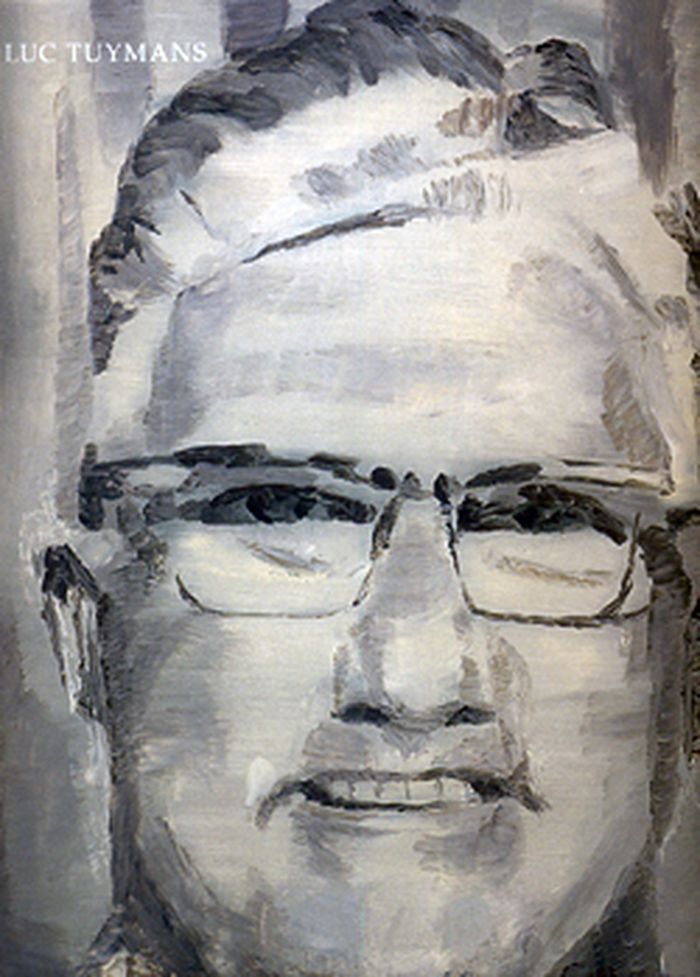
Luc Tuymans is one of today's most widely admired painters, a continuation of the great tradition of Northern European painting and an enduring influence on younger and emerging artists. As a European child of the 1950s, his relationship to painting is inevitably structured by television, cinema and by the lingering effects of World War II; more recent historical preoccupations have included the dramatic turn of world events post-9/11. Tuymans combines a muted palette with deteriorated surface effect and a singular use of cropping, close-up and sequencing--perfect devices with which to undertake his investigation of the pathological, the banal and the conspiratorial. Published in conjunction with the artist's first full-scale American survey, this is without question the authoritative publication on Tuymans. It features approximately 75 key works from 1978 to the present, and is accompanied by essays analyzing the painter's main concerns, with particular attention paid to his working process and his adaptation of source materials.
Luc Tuymans
Actions:
Prix:
$72.00
(disponible sur commande)
Résumé:
Luc Tuymans is one of today's most widely admired painters, a continuation of the great tradition of Northern European painting and an enduring influence on younger and emerging artists. As a European child of the 1950s, his relationship to painting is inevitably structured by television, cinema and by the lingering effects of World War II; more recent historical preoccupations have included the dramatic turn of world events post-9/11. Tuymans combines a muted palette with deteriorated surface effect and a singular use of cropping, close-up and sequencing--perfect devices with which to undertake his investigation of the pathological, the banal and the conspiratorial. Published in conjunction with the artist's first full-scale American survey, this is without question the authoritative publication on Tuymans. It features approximately 75 key works from 1978 to the present, and is accompanied by essays analyzing the painter's main concerns, with particular attention paid to his working process and his adaptation of source materials.
Classification:
livres
livres
Publication:
octobre 2009
octobre 2009
Classification:
livres
livres
Prix:
$44.00
(disponible sur commande)
Résumé:
The design of imaginary, conceptual, or radical buildings is as old as the practice of architecture itself. For centuries, architects such as Piranesi, Ledoux, and Sant'Elia have drawn on their creative abilities to produce breathtaking works of imagination. Since World War II, technology has caught up with our imagination: there are few buildings that can be envisioned(...)
$44.00
(disponible sur commande)
Résumé:
The design of imaginary, conceptual, or radical buildings is as old as the practice of architecture itself. For centuries, architects such as Piranesi, Ledoux, and Sant'Elia have drawn on their creative abilities to produce breathtaking works of imagination. Since World War II, technology has caught up with our imagination: there are few buildings that can be envisioned(...)
Titre:
Visionary Architecture: Blueprints of the modern imagination
Actions:
Prix:
$44.00
(disponible sur commande)
Résumé:
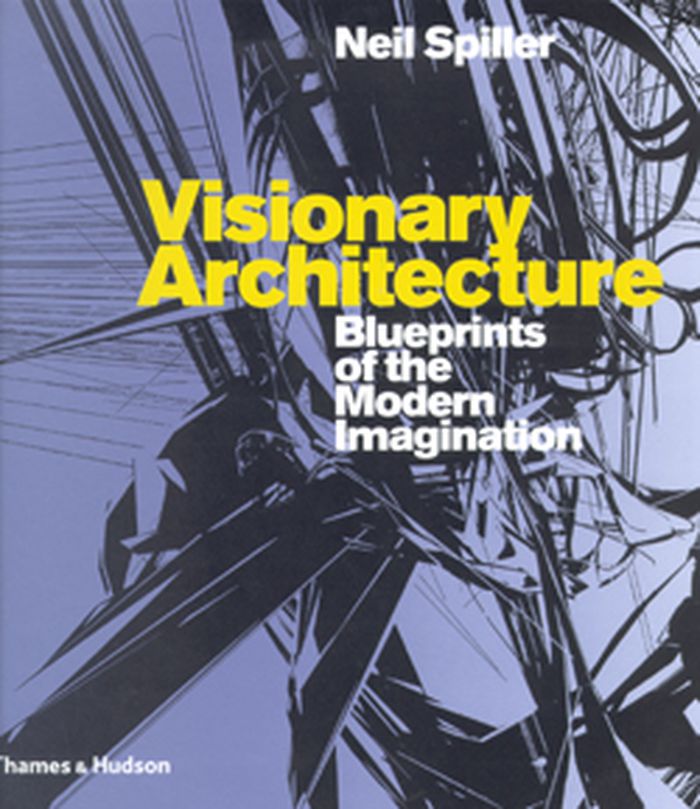
The design of imaginary, conceptual, or radical buildings is as old as the practice of architecture itself. For centuries, architects such as Piranesi, Ledoux, and Sant'Elia have drawn on their creative abilities to produce breathtaking works of imagination. Since World War II, technology has caught up with our imagination: there are few buildings that can be envisioned but not built. For the past six decades, architects have created an astonishing range of constructs and urban utopias that have influenced generations of practitioners. Architects such as Libeskind, Koolhaas, Eisenman, Hadid, and many others, whose works were once considered too experimental or controversial to construct, are creating cultural icons the world over. This definitive history of experimental architecture since 1945 provides a thematic overview of the most important and far-reaching work produced in the last sixty years; a survey of contemporary experimental practices, shown through case studies; and an illustrated glossary of ideas, movements, people, and terms. 450+ illustrations, 250 in color.
Visionary Architecture: Blueprints of the modern imagination
Actions:
Prix:
$44.00
(disponible sur commande)
Résumé:
The design of imaginary, conceptual, or radical buildings is as old as the practice of architecture itself. For centuries, architects such as Piranesi, Ledoux, and Sant'Elia have drawn on their creative abilities to produce breathtaking works of imagination. Since World War II, technology has caught up with our imagination: there are few buildings that can be envisioned but not built. For the past six decades, architects have created an astonishing range of constructs and urban utopias that have influenced generations of practitioners. Architects such as Libeskind, Koolhaas, Eisenman, Hadid, and many others, whose works were once considered too experimental or controversial to construct, are creating cultural icons the world over. This definitive history of experimental architecture since 1945 provides a thematic overview of the most important and far-reaching work produced in the last sixty years; a survey of contemporary experimental practices, shown through case studies; and an illustrated glossary of ideas, movements, people, and terms. 450+ illustrations, 250 in color.
Classification:
livres
livres
Publication:
novembre 2007, New York
novembre 2007, New York
Sujet:
Modernisme
Modernisme
Classification:
livres
livres
Actions:
Prix:
$71.00
(disponible sur commande)
Résumé:
In 1966, at the age of 28, photographer Joel Meyerowitz embarked on a journey that would take him to the United Kingdom, Ireland, Spain, France, Germany, Eastern Europe, Turkey and Greece. In total, he drove 20,000 miles through 10 countries and ended up taking 25,000 photographs. This trip was a transcendental experience and formative in shaping Meyerowitz's instinctive(...)
$71.00
(disponible sur commande)
Résumé:
In 1966, at the age of 28, photographer Joel Meyerowitz embarked on a journey that would take him to the United Kingdom, Ireland, Spain, France, Germany, Eastern Europe, Turkey and Greece. In total, he drove 20,000 miles through 10 countries and ended up taking 25,000 photographs. This trip was a transcendental experience and formative in shaping Meyerowitz's instinctive(...)
Titre:
Joel Meyerowitz: Europa 1966-1967
Actions:
Prix:
$71.00
(disponible sur commande)
Résumé:
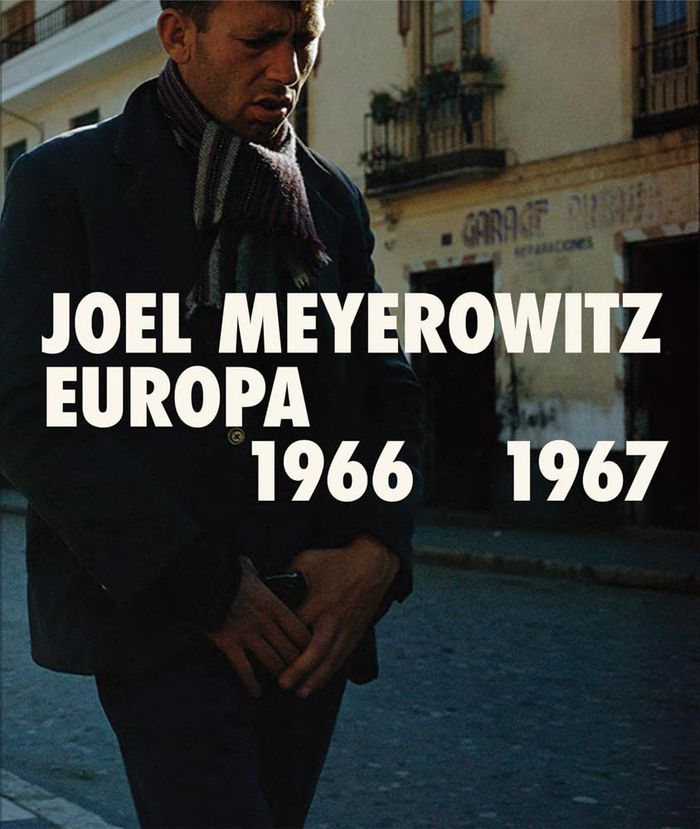
In 1966, at the age of 28, photographer Joel Meyerowitz embarked on a journey that would take him to the United Kingdom, Ireland, Spain, France, Germany, Eastern Europe, Turkey and Greece. In total, he drove 20,000 miles through 10 countries and ended up taking 25,000 photographs. This trip was a transcendental experience and formative in shaping Meyerowitz's instinctive and brilliant identity that he is known for today. Europa 1966–1967 compiles a selection of photographs taken by Meyerowitz on his yearlong trip through Europe, offering an exciting glimpse of the “New Old World” that, having lately overcome the trauma of World War II, opened itself to modernity and progress. Meyerowitz witnessed societies in transition, stuck between dictatorship and economic blossoming. Yet he also documented unshakable cultural traditions, such as when he lived with a flamenco-performing family in Francoist Spain for six months. The strength and freshness of Meyerowitz’s gaze and the new codes that were captured in these pictures inspired the next generation of photographers.
Joel Meyerowitz: Europa 1966-1967
Actions:
Prix:
$71.00
(disponible sur commande)
Résumé:
In 1966, at the age of 28, photographer Joel Meyerowitz embarked on a journey that would take him to the United Kingdom, Ireland, Spain, France, Germany, Eastern Europe, Turkey and Greece. In total, he drove 20,000 miles through 10 countries and ended up taking 25,000 photographs. This trip was a transcendental experience and formative in shaping Meyerowitz's instinctive and brilliant identity that he is known for today. Europa 1966–1967 compiles a selection of photographs taken by Meyerowitz on his yearlong trip through Europe, offering an exciting glimpse of the “New Old World” that, having lately overcome the trauma of World War II, opened itself to modernity and progress. Meyerowitz witnessed societies in transition, stuck between dictatorship and economic blossoming. Yet he also documented unshakable cultural traditions, such as when he lived with a flamenco-performing family in Francoist Spain for six months. The strength and freshness of Meyerowitz’s gaze and the new codes that were captured in these pictures inspired the next generation of photographers.
Classification:
livres
livres
Publication:
octobre 2024
octobre 2024
Sujet:
Monographies photo
Monographies photo
Classification:
livres
livres
Actions:
Prix:
$90.00
(disponible sur commande)
Résumé:
In the interwar period and immediately following World War II, the U.S. government promoted the vision of a modern, progressive, and democratic Latin America and worked to cast the region as a partner in the fight against fascism and communism. This effort was bolstered by the work and products of many institutions, including the Museum of Modern Art, New York. Using(...)
$90.00
(disponible sur commande)
Résumé:
In the interwar period and immediately following World War II, the U.S. government promoted the vision of a modern, progressive, and democratic Latin America and worked to cast the region as a partner in the fight against fascism and communism. This effort was bolstered by the work and products of many institutions, including the Museum of Modern Art, New York. Using(...)
Publication:
août 2022
août 2022
Titre:
Constructing Latin America: Architecture, politics and race at the Museum of Modern Art
Actions:
Prix:
$90.00
(disponible sur commande)
Résumé:
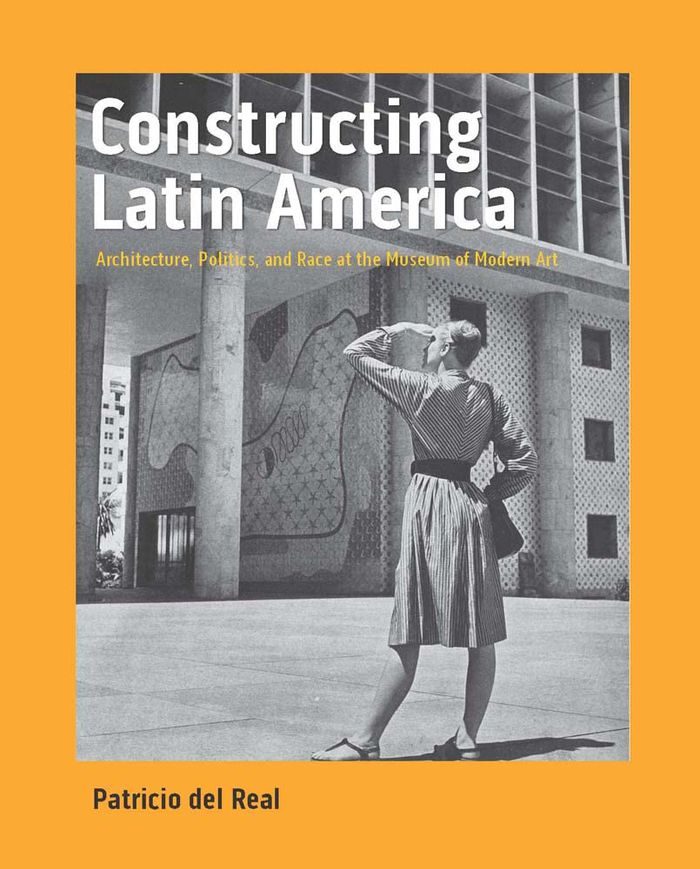
In the interwar period and immediately following World War II, the U.S. government promoted the vision of a modern, progressive, and democratic Latin America and worked to cast the region as a partner in the fight against fascism and communism. This effort was bolstered by the work and products of many institutions, including the Museum of Modern Art, New York. Using modern architecture to imagine a Latin America under postwar U.S. leadership, MoMA presented blockbuster shows, including Brazil Builds (1943) and Latin American Architecture since 1945 (1955), that deployed racially coded aesthetics and emphasized the confluence of ''Americanness'' and ''modernity'' in a globalizing world. Delving into the heated debates of the period and presenting never-before-published internal documents and photos from the museum and the Nelson A. Rockefeller archives, Patricio del Real is the first to fully address MoMA’s role in U.S. cultural imperialism and its consequences through its exhibitions on Latin American art and architecture.
Constructing Latin America: Architecture, politics and race at the Museum of Modern Art
Actions:
Prix:
$90.00
(disponible sur commande)
Résumé:
In the interwar period and immediately following World War II, the U.S. government promoted the vision of a modern, progressive, and democratic Latin America and worked to cast the region as a partner in the fight against fascism and communism. This effort was bolstered by the work and products of many institutions, including the Museum of Modern Art, New York. Using modern architecture to imagine a Latin America under postwar U.S. leadership, MoMA presented blockbuster shows, including Brazil Builds (1943) and Latin American Architecture since 1945 (1955), that deployed racially coded aesthetics and emphasized the confluence of ''Americanness'' and ''modernity'' in a globalizing world. Delving into the heated debates of the period and presenting never-before-published internal documents and photos from the museum and the Nelson A. Rockefeller archives, Patricio del Real is the first to fully address MoMA’s role in U.S. cultural imperialism and its consequences through its exhibitions on Latin American art and architecture.
Classification:
livres
livres
Publication:
août 2022
août 2022
Classification:
livres
livres
Titre:
Neues Museum
Neues Museum
Actions:
Prix:
$50.00
(disponible sur commande)
Résumé:
The Neues Museum - an important mid-nineteenth century example of Neoclassical architecture and the centerpiece of Berlin's Museum Island - was badly damaged during World War II. From 1997-2009, British architect David Chipperfield worked to restore the structure - which was originally completed by Friedrich August Stueler in 1859 - to its pre-war function. Located behind(...)
$50.00
(disponible sur commande)
Résumé:
The Neues Museum - an important mid-nineteenth century example of Neoclassical architecture and the centerpiece of Berlin's Museum Island - was badly damaged during World War II. From 1997-2009, British architect David Chipperfield worked to restore the structure - which was originally completed by Friedrich August Stueler in 1859 - to its pre-war function. Located behind(...)
Sujet:
Architecture, monographies
Architecture, monographies
Publication:
septembre 2009
septembre 2009
Titre:
Neues Museum
Actions:
Prix:
$50.00
(disponible sur commande)
Résumé:
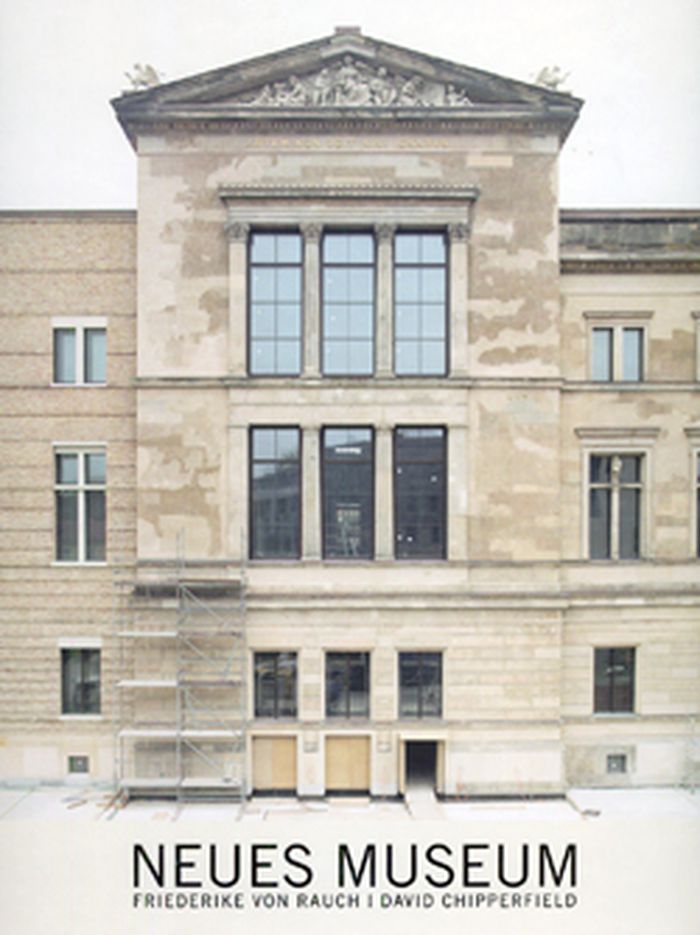
The Neues Museum - an important mid-nineteenth century example of Neoclassical architecture and the centerpiece of Berlin's Museum Island - was badly damaged during World War II. From 1997-2009, British architect David Chipperfield worked to restore the structure - which was originally completed by Friedrich August Stueler in 1859 - to its pre-war function. Located behind the Altes Museum, the space housed the Egyptian Collection. Chipperfield's controversial plans followed a principle of conservation (or amalgamation) rather than reconstruction; he preserved the skeleton of the original building, with its elaborate finishes, attractive brickwork, frescoes and ornamentation, merging and contrasting these characteristics with his own subtle interpolations of clean white lines and quiet geometrical structures. The results are astounding, setting new standards in the field and opening up exciting possibilities for museum conversions. This volume celebrates Chipperfield's work in a series of images by the Berlin-based architectural photographer Friederike von Rauch. Von Rauch is well known for her unusual and exacting approach to architectural photography : eschewing digital technology and only using natural light, she presents a crisp and vibrant series of images that eloquently tell the story of Chipperfield's unorthodox but successful restoration.
Neues Museum
Actions:
Prix:
$50.00
(disponible sur commande)
Résumé:
The Neues Museum - an important mid-nineteenth century example of Neoclassical architecture and the centerpiece of Berlin's Museum Island - was badly damaged during World War II. From 1997-2009, British architect David Chipperfield worked to restore the structure - which was originally completed by Friedrich August Stueler in 1859 - to its pre-war function. Located behind the Altes Museum, the space housed the Egyptian Collection. Chipperfield's controversial plans followed a principle of conservation (or amalgamation) rather than reconstruction; he preserved the skeleton of the original building, with its elaborate finishes, attractive brickwork, frescoes and ornamentation, merging and contrasting these characteristics with his own subtle interpolations of clean white lines and quiet geometrical structures. The results are astounding, setting new standards in the field and opening up exciting possibilities for museum conversions. This volume celebrates Chipperfield's work in a series of images by the Berlin-based architectural photographer Friederike von Rauch. Von Rauch is well known for her unusual and exacting approach to architectural photography : eschewing digital technology and only using natural light, she presents a crisp and vibrant series of images that eloquently tell the story of Chipperfield's unorthodox but successful restoration.
Classification:
livres
livres
Publication:
septembre 2009
septembre 2009
Sujet:
Architecture, monographies
Architecture, monographies
Classification:
livres
livres
Actions:
Prix:
$205.00
(disponible sur commande)
Résumé:
Presenting illustrations gathered together for the first time, Le Corbusier: Furniture and Interiors is a comprehensive account of Le Corbusier’s extensive work in furniture and interior design. As a young architect, Swiss-born Charles-Edouard Jeanneret primarily worked in designed furnishings. After he moved to Paris in the early 1920s and adopted his now famous moniker,(...)
$205.00
(disponible sur commande)
Résumé:
Presenting illustrations gathered together for the first time, Le Corbusier: Furniture and Interiors is a comprehensive account of Le Corbusier’s extensive work in furniture and interior design. As a young architect, Swiss-born Charles-Edouard Jeanneret primarily worked in designed furnishings. After he moved to Paris in the early 1920s and adopted his now famous moniker,(...)
Titre:
Le Corbusier : furniture and interiors 1905-1965
Actions:
Prix:
$205.00
(disponible sur commande)
Résumé:
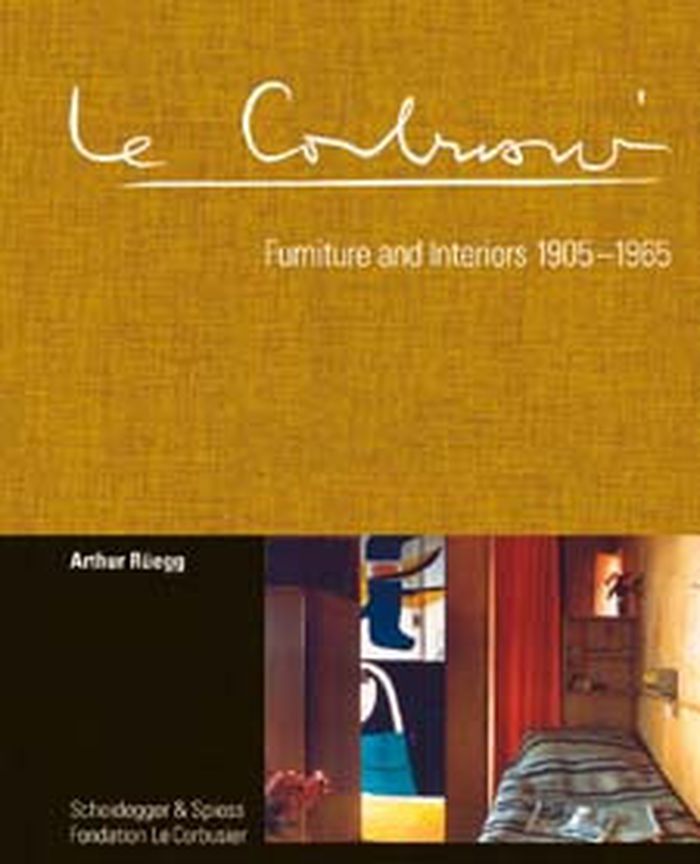
Presenting illustrations gathered together for the first time, Le Corbusier: Furniture and Interiors is a comprehensive account of Le Corbusier’s extensive work in furniture and interior design. As a young architect, Swiss-born Charles-Edouard Jeanneret primarily worked in designed furnishings. After he moved to Paris in the early 1920s and adopted his now famous moniker, Le Corbusier developed a particular interest in équipement, a term he coined for the essential furnishings of a residence. He focused specifically on tables, cabinets, and eventually the chrome and leather chairs—designed in collaboration with Pierre Jeanneret and Charlotte Perriand—for which he became famous. These pieces exhibit Le Corbusier’s trademark metal detailing and elegant austerity. After World War II, Le Corbusier shifted to more functional designs for use in everyday life. These wooden pieces resemble packing crates, evoking a rustic design aesthetic rooted in functionality.
Le Corbusier : furniture and interiors 1905-1965
Actions:
Prix:
$205.00
(disponible sur commande)
Résumé:
Presenting illustrations gathered together for the first time, Le Corbusier: Furniture and Interiors is a comprehensive account of Le Corbusier’s extensive work in furniture and interior design. As a young architect, Swiss-born Charles-Edouard Jeanneret primarily worked in designed furnishings. After he moved to Paris in the early 1920s and adopted his now famous moniker, Le Corbusier developed a particular interest in équipement, a term he coined for the essential furnishings of a residence. He focused specifically on tables, cabinets, and eventually the chrome and leather chairs—designed in collaboration with Pierre Jeanneret and Charlotte Perriand—for which he became famous. These pieces exhibit Le Corbusier’s trademark metal detailing and elegant austerity. After World War II, Le Corbusier shifted to more functional designs for use in everyday life. These wooden pieces resemble packing crates, evoking a rustic design aesthetic rooted in functionality.
Classification:
livres
livres
Publication:
juillet 2012
juillet 2012
Sujet:
Design, monographies
Design, monographies
Classification:
livres
livres
Actions:
Prix:
$50.00
(disponible sur commande)
Résumé:
In the 1920s and 1930s, the Villa Foscari in Venice, better known as La Malcontenta, became a meeting place for intellectuals, artists, and members of the nobility such as Serge Diaghilev, Boris Kochno, Serge Lifar, Winston Churchill, Robert Byron, Diana Cooper, and Le Corbusier. It was an era of inspiring encounters between aristocrats, the avantgarde, snobs, and(...)
$50.00
(disponible sur commande)
Résumé:
In the 1920s and 1930s, the Villa Foscari in Venice, better known as La Malcontenta, became a meeting place for intellectuals, artists, and members of the nobility such as Serge Diaghilev, Boris Kochno, Serge Lifar, Winston Churchill, Robert Byron, Diana Cooper, and Le Corbusier. It was an era of inspiring encounters between aristocrats, the avantgarde, snobs, and(...)
Titre:
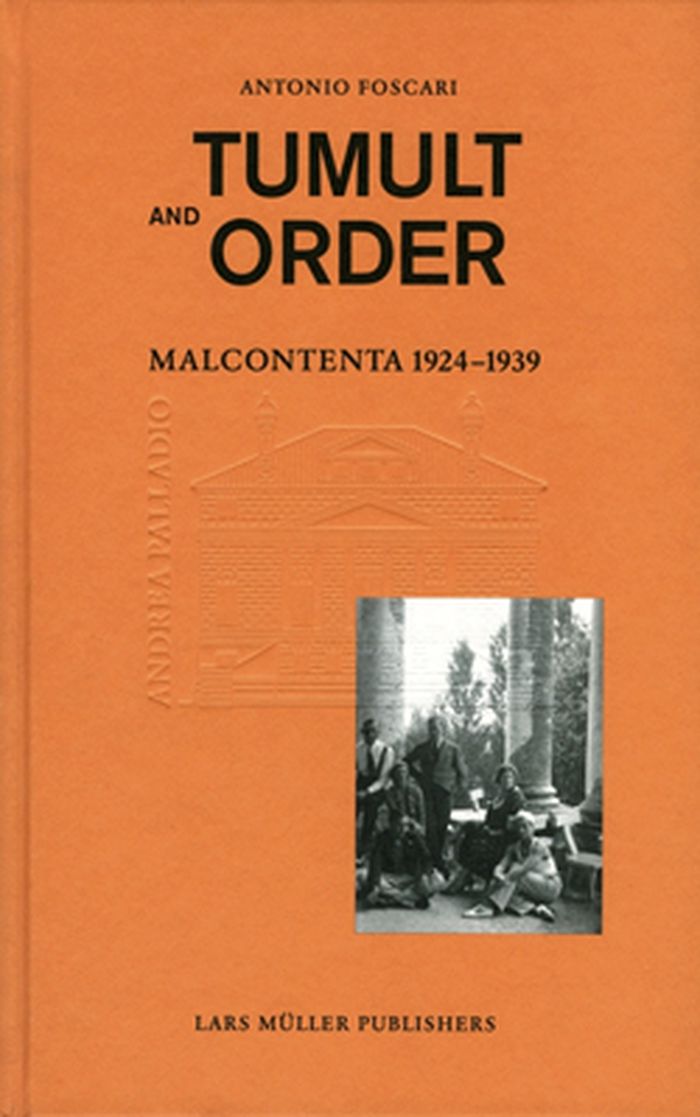
Tumult and order : Malcontenta, 1924-1939
Actions:
Prix:
$50.00
(disponible sur commande)
Résumé:
In the 1920s and 1930s, the Villa Foscari in Venice, better known as La Malcontenta, became a meeting place for intellectuals, artists, and members of the nobility such as Serge Diaghilev, Boris Kochno, Serge Lifar, Winston Churchill, Robert Byron, Diana Cooper, and Le Corbusier. It was an era of inspiring encounters between aristocrats, the avantgarde, snobs, and intellectuals that ended when Italy entered World War II. Antonio Foscari recounts this lively period in the building’s history and talks about its then owner, Bertie Landsberg, and his friends Catherine de Rochegude, Baroness of Erlanger, and Paul Rodocanachi, who not only lovingly renovated the villa, but made it such a lively place for the first time. The text is complemented by numerous photographs dating from this exciting time that convey an impression of what was happening in the villa in those days.
Tumult and order : Malcontenta, 1924-1939
Actions:
Prix:
$50.00
(disponible sur commande)
Résumé:
In the 1920s and 1930s, the Villa Foscari in Venice, better known as La Malcontenta, became a meeting place for intellectuals, artists, and members of the nobility such as Serge Diaghilev, Boris Kochno, Serge Lifar, Winston Churchill, Robert Byron, Diana Cooper, and Le Corbusier. It was an era of inspiring encounters between aristocrats, the avantgarde, snobs, and intellectuals that ended when Italy entered World War II. Antonio Foscari recounts this lively period in the building’s history and talks about its then owner, Bertie Landsberg, and his friends Catherine de Rochegude, Baroness of Erlanger, and Paul Rodocanachi, who not only lovingly renovated the villa, but made it such a lively place for the first time. The text is complemented by numerous photographs dating from this exciting time that convey an impression of what was happening in the villa in those days.
Classification:
livres
livres
Publication:
août 2012
août 2012
Sujet:
Théorie de l’architecture
Théorie de l’architecture
Classification:
livres
livres

Actions:
Prix:
$20.00
(disponible sur commande)
Résumé:
Antonin Artaud's journey to Ireland in 1937 marked an extraordinary—and apocalyptic—turning point in his life and career. After publishing the manifesto ''The New Revelations of Being'' about the 'catastrophic immediate-future,' Artaud abruptly left Paris for Ireland, remaining there for six weeks without money. Artaud was eventually arrested as an undesirable alien,(...)
$20.00
(disponible sur commande)
Résumé:
Antonin Artaud's journey to Ireland in 1937 marked an extraordinary—and apocalyptic—turning point in his life and career. After publishing the manifesto ''The New Revelations of Being'' about the 'catastrophic immediate-future,' Artaud abruptly left Paris for Ireland, remaining there for six weeks without money. Artaud was eventually arrested as an undesirable alien,(...)
Titre:
Artaud 1937 Apocalypse: letters from Ireland
Actions:
Prix:
$20.00
(disponible sur commande)
Résumé:
Antonin Artaud's journey to Ireland in 1937 marked an extraordinary—and apocalyptic—turning point in his life and career. After publishing the manifesto ''The New Revelations of Being'' about the 'catastrophic immediate-future,' Artaud abruptly left Paris for Ireland, remaining there for six weeks without money. Artaud was eventually arrested as an undesirable alien, beaten by the police, and summarily deported back to France. On his return, he spent nine years in asylums, remaining there through the entire span of World War II. During his fateful journey, Artaud wrote letters to friends in Paris which included several 'magic spells,' intended to curse his enemies and protect his friends from the city's forthcoming incineration and the Antichrist's appearance. This book collects all of Artaud's surviving correspondence from his time in Ireland, as well as photographs of the locations he traveled through.
Artaud 1937 Apocalypse: letters from Ireland
Actions:
Prix:
$20.00
(disponible sur commande)
Résumé:
Antonin Artaud's journey to Ireland in 1937 marked an extraordinary—and apocalyptic—turning point in his life and career. After publishing the manifesto ''The New Revelations of Being'' about the 'catastrophic immediate-future,' Artaud abruptly left Paris for Ireland, remaining there for six weeks without money. Artaud was eventually arrested as an undesirable alien, beaten by the police, and summarily deported back to France. On his return, he spent nine years in asylums, remaining there through the entire span of World War II. During his fateful journey, Artaud wrote letters to friends in Paris which included several 'magic spells,' intended to curse his enemies and protect his friends from the city's forthcoming incineration and the Antichrist's appearance. This book collects all of Artaud's surviving correspondence from his time in Ireland, as well as photographs of the locations he traveled through.
Classification:
livres
livres
Publication:
mai 2019
mai 2019
Sujet:
Trajets
Trajets


