


765 Résultats
Classification:
livres
livres
Titre:
The spirit of chairs
The spirit of chairs
Actions:
Prix:
$98.00
(disponible sur commande)
Résumé:
The chairs in this private collection are not an assembly of objects of everyday use. They are a congregation of creatures often eluding their primary purpose as seating. Metaphorically exaggerated height and disassociation transform the chairs into individuals, or sculptures exploring the uncertain boundaries of physics. The book’s generous layout allows readers to(...)
$98.00
(disponible sur commande)
Résumé:
The chairs in this private collection are not an assembly of objects of everyday use. They are a congregation of creatures often eluding their primary purpose as seating. Metaphorically exaggerated height and disassociation transform the chairs into individuals, or sculptures exploring the uncertain boundaries of physics. The book’s generous layout allows readers to(...)
Titre:
The spirit of chairs
Actions:
Prix:
$98.00
(disponible sur commande)
Résumé:
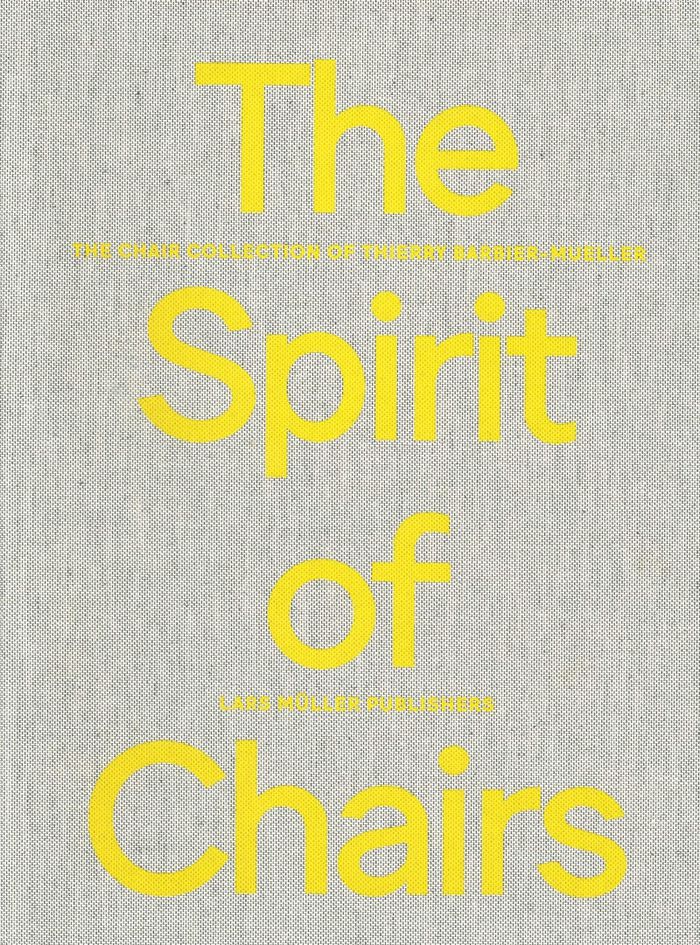
The chairs in this private collection are not an assembly of objects of everyday use. They are a congregation of creatures often eluding their primary purpose as seating. Metaphorically exaggerated height and disassociation transform the chairs into individuals, or sculptures exploring the uncertain boundaries of physics. The book’s generous layout allows readers to immerse themselves in this cabinet of curiosities and give their imagination free rein. Nicolas Polli and Jean Vincent Simonet use their photographic essays to interpret the exhibits originating from well-known artists and designers. The texts illustrate the collection in terms of the friction between art and design. They explain the collection’s significance in the life of the collector, and they discuss the general motives that lead to a passion for collecting.
The spirit of chairs
Actions:
Prix:
$98.00
(disponible sur commande)
Résumé:
The chairs in this private collection are not an assembly of objects of everyday use. They are a congregation of creatures often eluding their primary purpose as seating. Metaphorically exaggerated height and disassociation transform the chairs into individuals, or sculptures exploring the uncertain boundaries of physics. The book’s generous layout allows readers to immerse themselves in this cabinet of curiosities and give their imagination free rein. Nicolas Polli and Jean Vincent Simonet use their photographic essays to interpret the exhibits originating from well-known artists and designers. The texts illustrate the collection in terms of the friction between art and design. They explain the collection’s significance in the life of the collector, and they discuss the general motives that lead to a passion for collecting.
Classification:
livres
livres
Publication:
février 2023
février 2023
Sujet:
Design industriel
Design industriel
Classification:
livres
livres
Titre:
The Swedish house
The Swedish house
Actions:
Prix:
$65.00
(disponible sur commande)
Résumé:
The traditions of residential design in Sweden are inseparable from the history of the country itself and from the history of construction in Scandinavia. This illustrated volume presents historic wood houses - castles, cottages, stately homes, rectories, seaside bathing huts, barns and sawmills - from the seventeenth century to the present. Also shown in detail are(...)
$65.00
(disponible sur commande)
Résumé:
The traditions of residential design in Sweden are inseparable from the history of the country itself and from the history of construction in Scandinavia. This illustrated volume presents historic wood houses - castles, cottages, stately homes, rectories, seaside bathing huts, barns and sawmills - from the seventeenth century to the present. Also shown in detail are(...)
Titre:
The Swedish house
Actions:
Prix:
$65.00
(disponible sur commande)
Résumé:
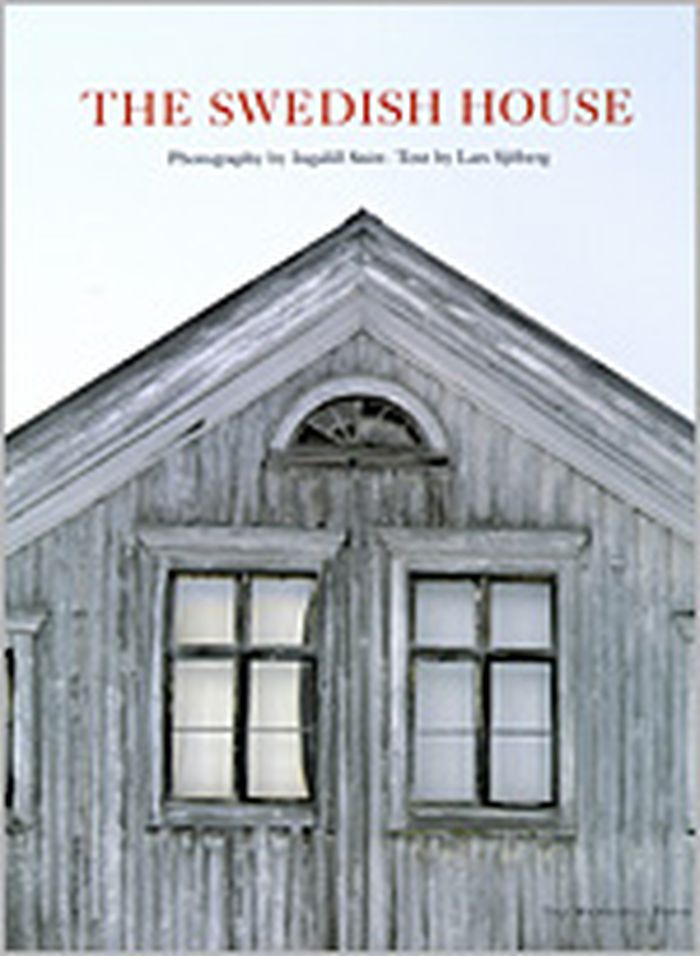
The traditions of residential design in Sweden are inseparable from the history of the country itself and from the history of construction in Scandinavia. This illustrated volume presents historic wood houses - castles, cottages, stately homes, rectories, seaside bathing huts, barns and sawmills - from the seventeenth century to the present. Also shown in detail are wooden churches and even entire towns built of wood. Among the buildings featured are a farmhouse on the Sorby country estate dating from the second half of the seventeenth century; the childhood home and the adult estate, Hammarby, of the influential botanist LLinnaeus (complete with lecture pulpit and specimen collection cabinet): and Gunnebo, a lavish wooden interpretation of an Italian villa built for wealthy merchant John Hall. With photographs by Ingalill Snitt.
The Swedish house
Actions:
Prix:
$65.00
(disponible sur commande)
Résumé:
The traditions of residential design in Sweden are inseparable from the history of the country itself and from the history of construction in Scandinavia. This illustrated volume presents historic wood houses - castles, cottages, stately homes, rectories, seaside bathing huts, barns and sawmills - from the seventeenth century to the present. Also shown in detail are wooden churches and even entire towns built of wood. Among the buildings featured are a farmhouse on the Sorby country estate dating from the second half of the seventeenth century; the childhood home and the adult estate, Hammarby, of the influential botanist LLinnaeus (complete with lecture pulpit and specimen collection cabinet): and Gunnebo, a lavish wooden interpretation of an Italian villa built for wealthy merchant John Hall. With photographs by Ingalill Snitt.
Classification:
livres
livres
Publication:
octobre 2003, New York
octobre 2003, New York
Sujet:
Histoire jusqu’à 1900
Histoire jusqu’à 1900
Classification:
livres
livres
Actions:
Prix:
$88.95
(disponible en magasin)
Résumé:
Aujourd’hui, les musées sont plus que jamais au centre des problématiques culturelles, sociales et économiques de nos sociétés. Et la muséologie occupe désormais une place incontournable dans le champ des sciences sociales. Ce dictionnaire, réunissant une équipe d'experts internationaux, vient, en plus de 1200 entrées organisées en 7 thématiques, définir, analyser et(...)
$88.95
(disponible en magasin)
Résumé:
Aujourd’hui, les musées sont plus que jamais au centre des problématiques culturelles, sociales et économiques de nos sociétés. Et la muséologie occupe désormais une place incontournable dans le champ des sciences sociales. Ce dictionnaire, réunissant une équipe d'experts internationaux, vient, en plus de 1200 entrées organisées en 7 thématiques, définir, analyser et(...)
Titre:
Dictionnaire de muséologie, nouvelle édition
Actions:
Prix:
$88.95
(disponible en magasin)
Résumé:
Aujourd’hui, les musées sont plus que jamais au centre des problématiques culturelles, sociales et économiques de nos sociétés. Et la muséologie occupe désormais une place incontournable dans le champ des sciences sociales. Ce dictionnaire, réunissant une équipe d'experts internationaux, vient, en plus de 1200 entrées organisées en 7 thématiques, définir, analyser et mettre en perspective l'ensemble des termes utilisés dans le champ muséal, des plus académiques (exposition, artefact, patrimoine immatériel, cabinet de curiosité) aux plus innovants (digital curatorship, memory spots, cybermusée...). Un ouvrage de référence couvrant à la fois les domaines de la muséologie, de l’exposition, des méthodes de recherche, de gestion des collections et de conservation/restauration, de l’éducation muséale et la médiation, dans la gestion/marketing, de l’histoire et de l’analyse critique du musée.
Dictionnaire de muséologie, nouvelle édition
Actions:
Prix:
$88.95
(disponible en magasin)
Résumé:
Aujourd’hui, les musées sont plus que jamais au centre des problématiques culturelles, sociales et économiques de nos sociétés. Et la muséologie occupe désormais une place incontournable dans le champ des sciences sociales. Ce dictionnaire, réunissant une équipe d'experts internationaux, vient, en plus de 1200 entrées organisées en 7 thématiques, définir, analyser et mettre en perspective l'ensemble des termes utilisés dans le champ muséal, des plus académiques (exposition, artefact, patrimoine immatériel, cabinet de curiosité) aux plus innovants (digital curatorship, memory spots, cybermusée...). Un ouvrage de référence couvrant à la fois les domaines de la muséologie, de l’exposition, des méthodes de recherche, de gestion des collections et de conservation/restauration, de l’éducation muséale et la médiation, dans la gestion/marketing, de l’histoire et de l’analyse critique du musée.
Classification:
livres
livres
Publication:
septembre 2022
septembre 2022
Sujet:
Muséologie
Muséologie
Classification:
livres
livres
Titre:
The big archive
The big archive
Actions:
Prix:
$35.50
(disponible sur commande)
Résumé:
The typewriter, the card index, and the filing cabinet: these are technologies and modalities of the archive. To the bureaucrat, archives contain little more than garbage, paperwork no longer needed; to the historian, on the other hand, the archive’s content stands as a quasi-objective correlative of the “living” past. Twentieth-century art made use of the archive in a(...)
$35.50
(disponible sur commande)
Résumé:
The typewriter, the card index, and the filing cabinet: these are technologies and modalities of the archive. To the bureaucrat, archives contain little more than garbage, paperwork no longer needed; to the historian, on the other hand, the archive’s content stands as a quasi-objective correlative of the “living” past. Twentieth-century art made use of the archive in a(...)
Titre:
The big archive
Actions:
Prix:
$35.50
(disponible sur commande)
Résumé:
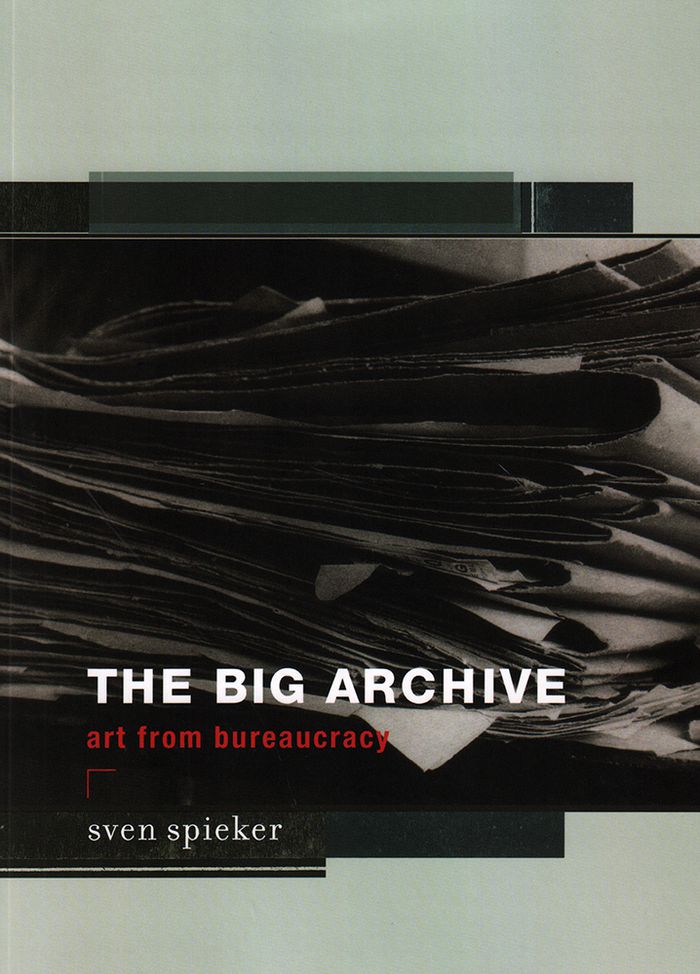
The typewriter, the card index, and the filing cabinet: these are technologies and modalities of the archive. To the bureaucrat, archives contain little more than garbage, paperwork no longer needed; to the historian, on the other hand, the archive’s content stands as a quasi-objective correlative of the “living” past. Twentieth-century art made use of the archive in a variety of ways—from what Spieker calls Marcel Duchamp’s “anemic archive” of readymades and El Lissitzky’s Demonstration Rooms to the compilations of photographs made by such postwar artists as Susan Hiller and Gerhard Richter. In "The big archive", Sven Spieker investigates the archive—as both bureaucratic institution and index of evolving attitudes toward contingent time in science and art—and finds it to be a crucible of twentieth-century modernism.
The big archive
Actions:
Prix:
$35.50
(disponible sur commande)
Résumé:
The typewriter, the card index, and the filing cabinet: these are technologies and modalities of the archive. To the bureaucrat, archives contain little more than garbage, paperwork no longer needed; to the historian, on the other hand, the archive’s content stands as a quasi-objective correlative of the “living” past. Twentieth-century art made use of the archive in a variety of ways—from what Spieker calls Marcel Duchamp’s “anemic archive” of readymades and El Lissitzky’s Demonstration Rooms to the compilations of photographs made by such postwar artists as Susan Hiller and Gerhard Richter. In "The big archive", Sven Spieker investigates the archive—as both bureaucratic institution and index of evolving attitudes toward contingent time in science and art—and finds it to be a crucible of twentieth-century modernism.
Classification:
livres
livres
Publication:
mars 2017
mars 2017
Classification:
livres
livres
Actions:
Prix:
$54.95
(disponible sur commande)
Résumé:
The celebrated British architect Sir John Soane (1753–1837) created his extraordinary house-museum from three properties in Lincoln’s Inn Fields, London.There, in houses that embody both his architectural vision and his passion for collecting, Soane exhibited a marvellous array of artefacts, including an outstanding collection of plaster casts, and idiosyncratic items(...)
$54.95
(disponible sur commande)
Résumé:
The celebrated British architect Sir John Soane (1753–1837) created his extraordinary house-museum from three properties in Lincoln’s Inn Fields, London.There, in houses that embody both his architectural vision and his passion for collecting, Soane exhibited a marvellous array of artefacts, including an outstanding collection of plaster casts, and idiosyncratic items(...)
Titre:
Sir John Soane's museum London
Actions:
Prix:
$54.95
(disponible sur commande)
Résumé:
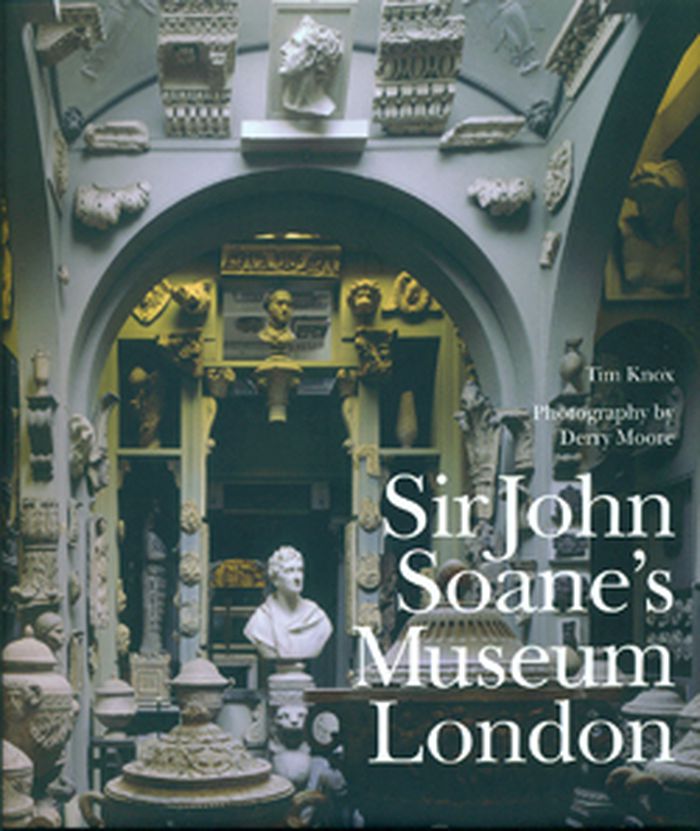
The celebrated British architect Sir John Soane (1753–1837) created his extraordinary house-museum from three properties in Lincoln’s Inn Fields, London.There, in houses that embody both his architectural vision and his passion for collecting, Soane exhibited a marvellous array of artefacts, including an outstanding collection of plaster casts, and idiosyncratic items ranging from mummified cats to the sarcophagus of the Egyptian king Seti I. Soane intended the collection to be an ‘Academy of Architecture’ that would inspire students for generations to come, and today it continues to attract more than 90,000 visitors every year.Written by the present director of the museum and featuring specially commissioned photographs by Derry Moore, this absorbing account of a unique, perpetually surprising cabinet of curiosities offers a fascinating insight into the genius of an exceptional man.
Sir John Soane's museum London
Actions:
Prix:
$54.95
(disponible sur commande)
Résumé:
The celebrated British architect Sir John Soane (1753–1837) created his extraordinary house-museum from three properties in Lincoln’s Inn Fields, London.There, in houses that embody both his architectural vision and his passion for collecting, Soane exhibited a marvellous array of artefacts, including an outstanding collection of plaster casts, and idiosyncratic items ranging from mummified cats to the sarcophagus of the Egyptian king Seti I. Soane intended the collection to be an ‘Academy of Architecture’ that would inspire students for generations to come, and today it continues to attract more than 90,000 visitors every year.Written by the present director of the museum and featuring specially commissioned photographs by Derry Moore, this absorbing account of a unique, perpetually surprising cabinet of curiosities offers a fascinating insight into the genius of an exceptional man.
Classification:
livres
livres
Publication:
mars 2009
mars 2009
Sujet:
Architecture, monographies
Architecture, monographies
Classification:
livres
livres
Actions:
Prix:
$21.00
(disponible sur commande)
Résumé:
The Madrid-based studio Gutiérrez-delaFuente Arquitectos (GdlF) takes on a paradoxical challenge: in an almost entirely built urban landscape, they care for the unbuilt environment. Instead of focusing only on new architecture, the team led by Natalia Gutiérrez and Julio de la Fuente adapts existing spaces, revealing their hidden potential. Their approach – working with(...)
$21.00
(disponible sur commande)
Résumé:
The Madrid-based studio Gutiérrez-delaFuente Arquitectos (GdlF) takes on a paradoxical challenge: in an almost entirely built urban landscape, they care for the unbuilt environment. Instead of focusing only on new architecture, the team led by Natalia Gutiérrez and Julio de la Fuente adapts existing spaces, revealing their hidden potential. Their approach – working with(...)
Titre:
Gutiérrez-delaFuente Arquitectos, Madrid: Shaping the unbuilt environment
Actions:
Prix:
$21.00
(disponible sur commande)
Résumé:
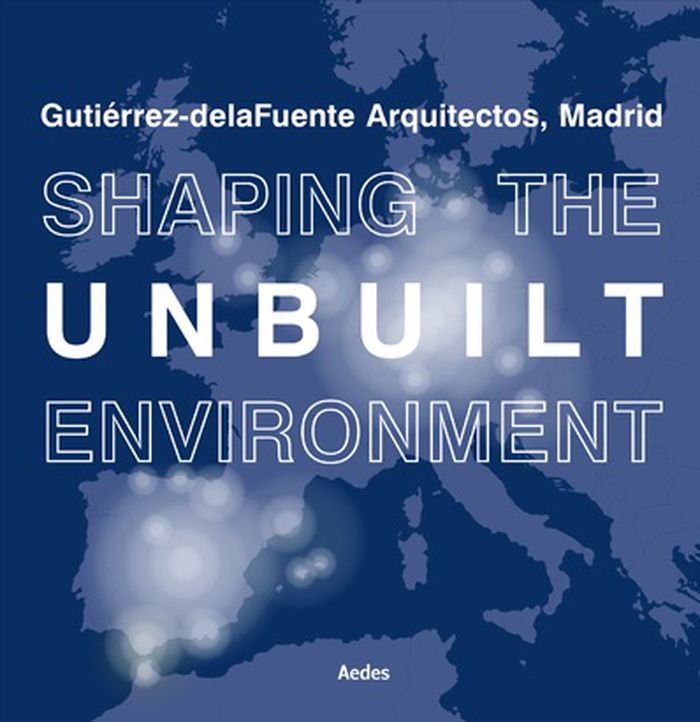
The Madrid-based studio Gutiérrez-delaFuente Arquitectos (GdlF) takes on a paradoxical challenge: in an almost entirely built urban landscape, they care for the unbuilt environment. Instead of focusing only on new architecture, the team led by Natalia Gutiérrez and Julio de la Fuente adapts existing spaces, revealing their hidden potential. Their approach – working with the already-there – understands the unbuilt as a crucial component of an ecological transformation. The exhibition at Aedes, curated by Kaye Geipel and Gutiérrez-delaFuente Arquitectos, presents sustainable strategies for improving in-between spaces through selected projects in Germany, Belgium, Spain, the UK and Switzerland. A central element is the film installation European Encounter Cabinet, in which international experts close to the studio share their perspectives on the future of architecture and urban planning in European cities and territories.
Gutiérrez-delaFuente Arquitectos, Madrid: Shaping the unbuilt environment
Actions:
Prix:
$21.00
(disponible sur commande)
Résumé:
The Madrid-based studio Gutiérrez-delaFuente Arquitectos (GdlF) takes on a paradoxical challenge: in an almost entirely built urban landscape, they care for the unbuilt environment. Instead of focusing only on new architecture, the team led by Natalia Gutiérrez and Julio de la Fuente adapts existing spaces, revealing their hidden potential. Their approach – working with the already-there – understands the unbuilt as a crucial component of an ecological transformation. The exhibition at Aedes, curated by Kaye Geipel and Gutiérrez-delaFuente Arquitectos, presents sustainable strategies for improving in-between spaces through selected projects in Germany, Belgium, Spain, the UK and Switzerland. A central element is the film installation European Encounter Cabinet, in which international experts close to the studio share their perspectives on the future of architecture and urban planning in European cities and territories.
Classification:
livres
livres
Publication:
mars 2025
mars 2025
Sujet:
Architecture, monographies
Architecture, monographies
Classification:
livres
livres
Titre:
Sanctuary
Sanctuary
Actions:
Prix:
$29.95
(disponible sur commande)
Résumé:
This fictional work about the construction and decay of a late modernist building can also be read as an essay on our contemporary unease with modernism in general. Author Brian Dillon, UK editor of Cabinet magazine, based it on research into St. Peter's Seminary, a college complex commissioned by the Catholic Church in the 1950s, completed in 1968, and abandoned by 1980.(...)
$29.95
(disponible sur commande)
Résumé:
This fictional work about the construction and decay of a late modernist building can also be read as an essay on our contemporary unease with modernism in general. Author Brian Dillon, UK editor of Cabinet magazine, based it on research into St. Peter's Seminary, a college complex commissioned by the Catholic Church in the 1950s, completed in 1968, and abandoned by 1980.(...)
Titre:
Sanctuary
Actions:
Prix:
$29.95
(disponible sur commande)
Résumé:
This fictional work about the construction and decay of a late modernist building can also be read as an essay on our contemporary unease with modernism in general. Author Brian Dillon, UK editor of Cabinet magazine, based it on research into St. Peter's Seminary, a college complex commissioned by the Catholic Church in the 1950s, completed in 1968, and abandoned by 1980. On the outskirts of Glasgow - itself a city with a vexed relationship to Le Corbusier-esque modernism - the building is rich with histories: of its architects, its residing student priests, the drug addicts it once housed and treated, and the local teenagers for whom it is a kind of Gothic recreation center. This book takes the material remains of modernism and treats them from a literary point of view.
Sanctuary
Actions:
Prix:
$29.95
(disponible sur commande)
Résumé:
This fictional work about the construction and decay of a late modernist building can also be read as an essay on our contemporary unease with modernism in general. Author Brian Dillon, UK editor of Cabinet magazine, based it on research into St. Peter's Seminary, a college complex commissioned by the Catholic Church in the 1950s, completed in 1968, and abandoned by 1980. On the outskirts of Glasgow - itself a city with a vexed relationship to Le Corbusier-esque modernism - the building is rich with histories: of its architects, its residing student priests, the drug addicts it once housed and treated, and the local teenagers for whom it is a kind of Gothic recreation center. This book takes the material remains of modernism and treats them from a literary point of view.
Classification:
livres
livres
Publication:
décembre 2010
décembre 2010
Classification:
livres
livres
Actions:
Prix:
$27.95
(disponible sur commande)
Résumé:
This book examines Dutch commemorative coins which will continue to be minted, despite the introduction of the Euro. In a lyrical article, Gert Staal explores the sentimental and symbolical significance of coins. The results of a workshop ‘Design by the mm3’, in which eleven artist/designers took part, is discussed in an article by Lilet Breddels and presented in numerous(...)
$27.95
(disponible sur commande)
Résumé:
This book examines Dutch commemorative coins which will continue to be minted, despite the introduction of the Euro. In a lyrical article, Gert Staal explores the sentimental and symbolical significance of coins. The results of a workshop ‘Design by the mm3’, in which eleven artist/designers took part, is discussed in an article by Lilet Breddels and presented in numerous(...)
Sujet:
Design industriel
Design industriel
Publication:
janvier 2002,
janvier 2002,
Titre:
Design by the mm3 munt : picturing coins
Actions:
Prix:
$27.95
(disponible sur commande)
Résumé:
This book examines Dutch commemorative coins which will continue to be minted, despite the introduction of the Euro. In a lyrical article, Gert Staal explores the sentimental and symbolical significance of coins. The results of a workshop ‘Design by the mm3’, in which eleven artist/designers took part, is discussed in an article by Lilet Breddels and presented in numerous illustrations. Gerard Unger subverts his own specialization in typography by arguing that artists are perfectly capable of creating their own lettering for coin designs. Hans Jacobi, keeper of the Koninklijke Penningen Kabinet (Royal Coins Cabinet) in Leiden, throws light on the vicissitudes of Dutch coin design during the last twenty years. In an epilogue, Janwillem Schrofer, a member of the Advisory Commission for New Coinage and the president of the Rijksakademie, Amsterdam, presents his outlook on the importance of good coin design.
Design by the mm3 munt : picturing coins
Actions:
Prix:
$27.95
(disponible sur commande)
Résumé:
This book examines Dutch commemorative coins which will continue to be minted, despite the introduction of the Euro. In a lyrical article, Gert Staal explores the sentimental and symbolical significance of coins. The results of a workshop ‘Design by the mm3’, in which eleven artist/designers took part, is discussed in an article by Lilet Breddels and presented in numerous illustrations. Gerard Unger subverts his own specialization in typography by arguing that artists are perfectly capable of creating their own lettering for coin designs. Hans Jacobi, keeper of the Koninklijke Penningen Kabinet (Royal Coins Cabinet) in Leiden, throws light on the vicissitudes of Dutch coin design during the last twenty years. In an epilogue, Janwillem Schrofer, a member of the Advisory Commission for New Coinage and the president of the Rijksakademie, Amsterdam, presents his outlook on the importance of good coin design.
Classification:
livres
livres
Publication:
janvier 2002,
janvier 2002,
Sujet:
Design industriel
Design industriel
Classification:
livres
livres
Actions:
Prix:
$35.95
(disponible sur commande)
Résumé:
What makes us love our things? Why do we attach certain sentiments to certain items? How is it that sometimes objects can tell stories more eloquently than people? These are questions explored and answered in "The uncommon life of common objects". Author Akiko Busch devotes a chapter to each of 12 common objects, and discusses her and others’ experiences that give(...)
$35.95
(disponible sur commande)
Résumé:
What makes us love our things? Why do we attach certain sentiments to certain items? How is it that sometimes objects can tell stories more eloquently than people? These are questions explored and answered in "The uncommon life of common objects". Author Akiko Busch devotes a chapter to each of 12 common objects, and discusses her and others’ experiences that give(...)
Titre:
The uncommon life of common objects : essays on design and the everyday
Actions:
Prix:
$35.95
(disponible sur commande)
Résumé:
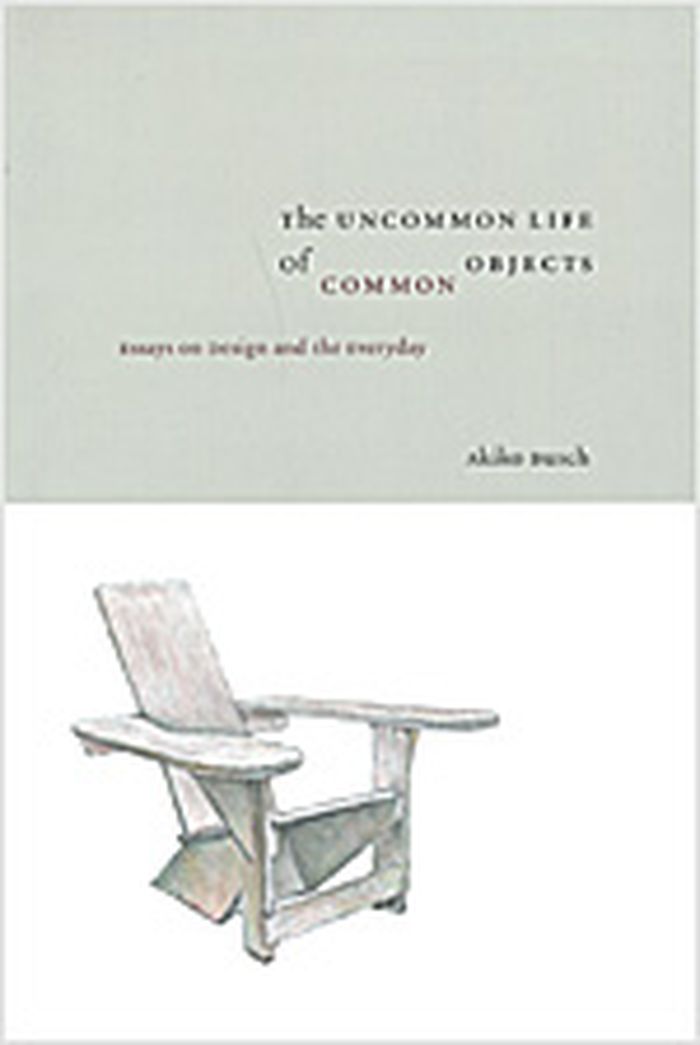
What makes us love our things? Why do we attach certain sentiments to certain items? How is it that sometimes objects can tell stories more eloquently than people? These are questions explored and answered in "The uncommon life of common objects". Author Akiko Busch devotes a chapter to each of 12 common objects, and discusses her and others’ experiences that give everyday things their significance. Through her examination of : a video camera, a cellular phone, a vegetable peeler, a snowboard, a baby carriage, a chair, a refrigerator, a mailbox, a medicine cabinet, a cereal box, a backpack, and a desk, Busch illuminates the social and personal issues that shape our lives and the ownership of our things. Each of the 12 chapters is accompanied by a four-color drawing. Edited by Diana Murphy. Foreword by Susan S. Szenasy. Original illustrations by George Skelcher.
The uncommon life of common objects : essays on design and the everyday
Actions:
Prix:
$35.95
(disponible sur commande)
Résumé:
What makes us love our things? Why do we attach certain sentiments to certain items? How is it that sometimes objects can tell stories more eloquently than people? These are questions explored and answered in "The uncommon life of common objects". Author Akiko Busch devotes a chapter to each of 12 common objects, and discusses her and others’ experiences that give everyday things their significance. Through her examination of : a video camera, a cellular phone, a vegetable peeler, a snowboard, a baby carriage, a chair, a refrigerator, a mailbox, a medicine cabinet, a cereal box, a backpack, and a desk, Busch illuminates the social and personal issues that shape our lives and the ownership of our things. Each of the 12 chapters is accompanied by a four-color drawing. Edited by Diana Murphy. Foreword by Susan S. Szenasy. Original illustrations by George Skelcher.
Classification:
livres
livres
Publication:
juillet 2005, New York
juillet 2005, New York
Sujet:
Design d’intérieur
Design d’intérieur
Classification:
livres
livres
Titre:
Mark Dion
Mark Dion
Actions:
Prix:
$65.00
(disponible sur commande)
Résumé:
Since the late 1980s Dion (b. 1961, Massachusetts) has been delving into the tropes and research methods of scientists, explorers, museum curators and archaeologists. He has created a body of work that playfully presents art as scientific enquiry or field work, questioning how knowledge is gathered, classified and displayed. Five installations will be displayed at(...)
$65.00
(disponible sur commande)
Résumé:
Since the late 1980s Dion (b. 1961, Massachusetts) has been delving into the tropes and research methods of scientists, explorers, museum curators and archaeologists. He has created a body of work that playfully presents art as scientific enquiry or field work, questioning how knowledge is gathered, classified and displayed. Five installations will be displayed at(...)
Publication:
mai 2018
mai 2018
Titre:
Mark Dion
Actions:
Prix:
$65.00
(disponible sur commande)
Résumé:
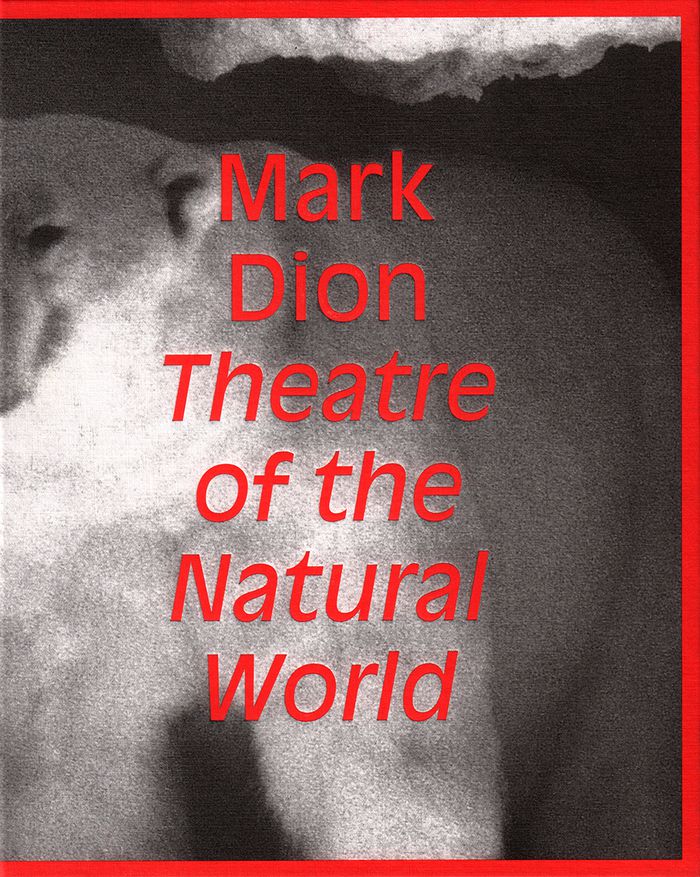
Since the late 1980s Dion (b. 1961, Massachusetts) has been delving into the tropes and research methods of scientists, explorers, museum curators and archaeologists. He has created a body of work that playfully presents art as scientific enquiry or field work, questioning how knowledge is gathered, classified and displayed. Five installations will be displayed at Whitechapel Gallery: a scholar’s study invites us to unravel intricate drawings and models; the "Bureau for the Centre of the Study for Surrealism and its Legacy" displays the strange magic of obsolete things; the muddy banks of the Thames have also yielded their treasures for poetic display in a gigantic cabinet; while a Dickensian Curiosity Shop tempts us with the bizarre aura of American bric-a-brac. Each immersive environment is also a habitat, evoking the characters that observe, conserve or exploit the natural world.
Mark Dion
Actions:
Prix:
$65.00
(disponible sur commande)
Résumé:
Since the late 1980s Dion (b. 1961, Massachusetts) has been delving into the tropes and research methods of scientists, explorers, museum curators and archaeologists. He has created a body of work that playfully presents art as scientific enquiry or field work, questioning how knowledge is gathered, classified and displayed. Five installations will be displayed at Whitechapel Gallery: a scholar’s study invites us to unravel intricate drawings and models; the "Bureau for the Centre of the Study for Surrealism and its Legacy" displays the strange magic of obsolete things; the muddy banks of the Thames have also yielded their treasures for poetic display in a gigantic cabinet; while a Dickensian Curiosity Shop tempts us with the bizarre aura of American bric-a-brac. Each immersive environment is also a habitat, evoking the characters that observe, conserve or exploit the natural world.
Classification:
livres
livres
Publication:
mai 2018
mai 2018


