


7437 Résultats
Classification:
livres
livres

Prix:
$63.50
(disponible sur commande)
Résumé:
From its invention in Europe at the end of the nineteenth century, the automobile crisscrossed the world, completely took over the cities, and became a feature of daily life. Considered basic to the American lifestyle, the car reflected individualism, pragmatism, comfort, and above all modernity. In Latin America, it served as a symbol of distinction, similar to jewelry(...)
$63.50
(disponible sur commande)
Résumé:
From its invention in Europe at the end of the nineteenth century, the automobile crisscrossed the world, completely took over the cities, and became a feature of daily life. Considered basic to the American lifestyle, the car reflected individualism, pragmatism, comfort, and above all modernity. In Latin America, it served as a symbol of distinction, similar to jewelry(...)
Titre:
The cultural life of the automobile: roads to modernity
Actions:
Prix:
$63.50
(disponible sur commande)
Résumé:
From its invention in Europe at the end of the nineteenth century, the automobile crisscrossed the world, completely took over the cities, and became a feature of daily life. Considered basic to the American lifestyle, the car reflected individualism, pragmatism, comfort, and above all modernity. In Latin America, it served as a symbol of distinction, similar to jewelry or fine clothing. In The Cultural Life of the Automobile, Guillermo Giucci focuses on the automobile as an instrument of social change through its "kinetic modernity" and as an embodiment of the tremendous social impact of technology on cultural life. Material culture--how certain objects generate a wide array of cultural responses--has been the focus of much scholarly discussion in recent years. The automobile wrought major changes and inspired images in language, literature, and popular culture. Focusing primarily on Latin America but also covering the United States, Europe, Asia, and Africa, Giucci examines how the automobile was variously adapted by different cultures and how its use shaped and changed social and economic relationships within them. At the same time, he shows how the "automobilization" of society became an essential support for the development of modern individualism, and the automobile its clearest material manifestation.
The cultural life of the automobile: roads to modernity
Actions:
Prix:
$63.50
(disponible sur commande)
Résumé:
From its invention in Europe at the end of the nineteenth century, the automobile crisscrossed the world, completely took over the cities, and became a feature of daily life. Considered basic to the American lifestyle, the car reflected individualism, pragmatism, comfort, and above all modernity. In Latin America, it served as a symbol of distinction, similar to jewelry or fine clothing. In The Cultural Life of the Automobile, Guillermo Giucci focuses on the automobile as an instrument of social change through its "kinetic modernity" and as an embodiment of the tremendous social impact of technology on cultural life. Material culture--how certain objects generate a wide array of cultural responses--has been the focus of much scholarly discussion in recent years. The automobile wrought major changes and inspired images in language, literature, and popular culture. Focusing primarily on Latin America but also covering the United States, Europe, Asia, and Africa, Giucci examines how the automobile was variously adapted by different cultures and how its use shaped and changed social and economic relationships within them. At the same time, he shows how the "automobilization" of society became an essential support for the development of modern individualism, and the automobile its clearest material manifestation.
Classification:
livres
livres
Publication:
août 2012
août 2012
Classification:
livres
livres
Prix:
$38.95
(disponible en magasin)
Résumé:
In Architecture in Translation, Esra Akcan offers a way to understand the global circulation of culture that extends the notion of translation beyond language to visual fields. She shows how members of the ruling Kemalist elite in Turkey further aligned themselves with Europe by choosing German-speaking architects to oversee much of the design of modern cities. Focusing(...)
$38.95
(disponible en magasin)
Résumé:
In Architecture in Translation, Esra Akcan offers a way to understand the global circulation of culture that extends the notion of translation beyond language to visual fields. She shows how members of the ruling Kemalist elite in Turkey further aligned themselves with Europe by choosing German-speaking architects to oversee much of the design of modern cities. Focusing(...)
Titre:
Architecture in translation : Germany, Turkey & the modern house
Actions:
Prix:
$38.95
(disponible en magasin)
Résumé:
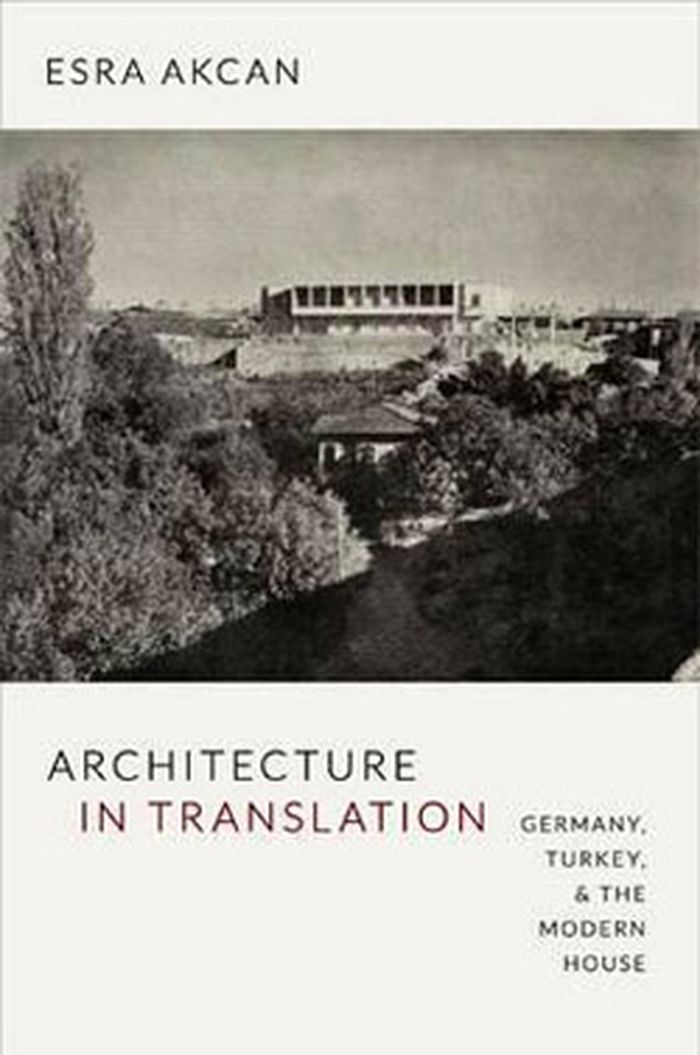
In Architecture in Translation, Esra Akcan offers a way to understand the global circulation of culture that extends the notion of translation beyond language to visual fields. She shows how members of the ruling Kemalist elite in Turkey further aligned themselves with Europe by choosing German-speaking architects to oversee much of the design of modern cities. Focusing on the period from the 1920s through the 1950s, Akcan traces the geographical circulation of modern residential models, including the garden city—which emphasized green spaces separating low-density neighborhoods of houses surrounded by gardens—and mass housing built first for the working-class residents in industrial cities and, later, more broadly for mixed-income residents. She shows how the concept of translation—the process of change that occurs with transportation of people, ideas, technology, information, and images from one or more countries to another—allows for consideration of the sociopolitical context and agency of all parties in cultural exchanges. Moving beyond the indistinct concepts of hybrid and transculturation and avoiding passive metaphors such as import, influence, or transfer, translation offers a new approach relevant to many disciplines. Akcan advocates a commitment to a new culture of translatability from below for a truly cosmopolitan ethics in a globalizing world.
Architecture in translation : Germany, Turkey & the modern house
Actions:
Prix:
$38.95
(disponible en magasin)
Résumé:
In Architecture in Translation, Esra Akcan offers a way to understand the global circulation of culture that extends the notion of translation beyond language to visual fields. She shows how members of the ruling Kemalist elite in Turkey further aligned themselves with Europe by choosing German-speaking architects to oversee much of the design of modern cities. Focusing on the period from the 1920s through the 1950s, Akcan traces the geographical circulation of modern residential models, including the garden city—which emphasized green spaces separating low-density neighborhoods of houses surrounded by gardens—and mass housing built first for the working-class residents in industrial cities and, later, more broadly for mixed-income residents. She shows how the concept of translation—the process of change that occurs with transportation of people, ideas, technology, information, and images from one or more countries to another—allows for consideration of the sociopolitical context and agency of all parties in cultural exchanges. Moving beyond the indistinct concepts of hybrid and transculturation and avoiding passive metaphors such as import, influence, or transfer, translation offers a new approach relevant to many disciplines. Akcan advocates a commitment to a new culture of translatability from below for a truly cosmopolitan ethics in a globalizing world.
Classification:
livres
livres
Publication:
août 2012
août 2012
Sujet:
Théorie de l’architecture
Théorie de l’architecture
Classification:
livres
livres
Prix:
$28.95
(disponible sur commande)
Résumé:
“Propositions for Non-Fascist Living” begins from the urgent need to model a world decidedly void of fascisms during a time when the rise of contemporary fascisms threatens the very foundations of a possibility for common life. Borrowing from Michel Foucault's notion of “non-fascist living” as an “art of living counter to all forms of fascism,” including that “in us all…(...)
$28.95
(disponible sur commande)
Résumé:
“Propositions for Non-Fascist Living” begins from the urgent need to model a world decidedly void of fascisms during a time when the rise of contemporary fascisms threatens the very foundations of a possibility for common life. Borrowing from Michel Foucault's notion of “non-fascist living” as an “art of living counter to all forms of fascism,” including that “in us all…(...)
Titre:
Propositions for non-fascist living: tentative and urgent
Actions:
Prix:
$28.95
(disponible sur commande)
Résumé:
“Propositions for Non-Fascist Living” begins from the urgent need to model a world decidedly void of fascisms during a time when the rise of contemporary fascisms threatens the very foundations of a possibility for common life. Borrowing from Michel Foucault's notion of “non-fascist living” as an “art of living counter to all forms of fascism,” including that “in us all… the fascism that causes us to love power, to desire the very thing that dominates and exploits us,” the book addresses the practice of “living” rather than the mere object of life. Artists, theorists, activists, and scholars offer texts and visual essays that engage varied perspectives on practicing life and articulate methods that support multiplicity and difference rather than vaunting power and hierarchy. Architectural theorist Eyal Weizman, for example, describes an “unlikely common” in gathering evidence against false narratives; art historian and critic Sven Lütticken develops a non-fascist proposition drawn from the intersection of art, technology, and law; philosopher Rosi Braidotti explores an ethics of affirmation and the practices of dying. “Propositions for Non-Fascist Living” is the first in a BASICS series of readers from BAK, “basis voor actuele kunst”, Utrecht, engaging some of the most urgent problems of our time through theoretically informed and politically driven artistic research and practice.
Propositions for non-fascist living: tentative and urgent
Actions:
Prix:
$28.95
(disponible sur commande)
Résumé:
“Propositions for Non-Fascist Living” begins from the urgent need to model a world decidedly void of fascisms during a time when the rise of contemporary fascisms threatens the very foundations of a possibility for common life. Borrowing from Michel Foucault's notion of “non-fascist living” as an “art of living counter to all forms of fascism,” including that “in us all… the fascism that causes us to love power, to desire the very thing that dominates and exploits us,” the book addresses the practice of “living” rather than the mere object of life. Artists, theorists, activists, and scholars offer texts and visual essays that engage varied perspectives on practicing life and articulate methods that support multiplicity and difference rather than vaunting power and hierarchy. Architectural theorist Eyal Weizman, for example, describes an “unlikely common” in gathering evidence against false narratives; art historian and critic Sven Lütticken develops a non-fascist proposition drawn from the intersection of art, technology, and law; philosopher Rosi Braidotti explores an ethics of affirmation and the practices of dying. “Propositions for Non-Fascist Living” is the first in a BASICS series of readers from BAK, “basis voor actuele kunst”, Utrecht, engaging some of the most urgent problems of our time through theoretically informed and politically driven artistic research and practice.
Classification:
livres
livres
Publication:
décembre 2019
décembre 2019
Sujet:
Théorie/ philosophie
Théorie/ philosophie
Classification:
livres
livres
Titre:
Original Bauhaus Catalogue
Original Bauhaus Catalogue
Actions:
Prix:
$79.00
(disponible sur commande)
Résumé:
The Bauhaus existed for only 14 years in Germany, but for the past 100 years its ideas have been passed on and its products relaunched, imitated, and further developed. Using 14 famous, familiar, or forgotten objects, this book offers 14 case studies. It examines questions such as how did the woman sitting on the tubular-steel chair become the most famous anonymous figure(...)
$79.00
(disponible sur commande)
Résumé:
The Bauhaus existed for only 14 years in Germany, but for the past 100 years its ideas have been passed on and its products relaunched, imitated, and further developed. Using 14 famous, familiar, or forgotten objects, this book offers 14 case studies. It examines questions such as how did the woman sitting on the tubular-steel chair become the most famous anonymous figure(...)
Titre:
Original Bauhaus Catalogue
Actions:
Prix:
$79.00
(disponible sur commande)
Résumé:
The Bauhaus existed for only 14 years in Germany, but for the past 100 years its ideas have been passed on and its products relaunched, imitated, and further developed. Using 14 famous, familiar, or forgotten objects, this book offers 14 case studies. It examines questions such as how did the woman sitting on the tubular-steel chair become the most famous anonymous figure from the Bauhaus; whether the Haus am Horn in Weimar has a secret twin; and why the tea infusers by Marianne Brandt which were created as prototypes for industrial production always remained one-of-a-kind pieces. This book presents art and design from the Bauhaus-Archiv's collection, along with exceptional loans from international collections. It sheds light on how unique work and series, remake and original are inseparably linked in the history of the Bauhaus. This is because Bauhaus artists did not see art and technology as opposed to each other. Instead, they used technical innovations to create exceptional works of art, and they took serial production into account from the moment they began drafting their designs. Reproductions, re-editions, and remakes have made the Bauhaus the 20th century's most influential school of architecture, design, and art, and this book offers a new take on the Bauhaus legacy.
Original Bauhaus Catalogue
Actions:
Prix:
$79.00
(disponible sur commande)
Résumé:
The Bauhaus existed for only 14 years in Germany, but for the past 100 years its ideas have been passed on and its products relaunched, imitated, and further developed. Using 14 famous, familiar, or forgotten objects, this book offers 14 case studies. It examines questions such as how did the woman sitting on the tubular-steel chair become the most famous anonymous figure from the Bauhaus; whether the Haus am Horn in Weimar has a secret twin; and why the tea infusers by Marianne Brandt which were created as prototypes for industrial production always remained one-of-a-kind pieces. This book presents art and design from the Bauhaus-Archiv's collection, along with exceptional loans from international collections. It sheds light on how unique work and series, remake and original are inseparably linked in the history of the Bauhaus. This is because Bauhaus artists did not see art and technology as opposed to each other. Instead, they used technical innovations to create exceptional works of art, and they took serial production into account from the moment they began drafting their designs. Reproductions, re-editions, and remakes have made the Bauhaus the 20th century's most influential school of architecture, design, and art, and this book offers a new take on the Bauhaus legacy.
Classification:
livres
livres
Publication:
novembre 2019
novembre 2019
Sujet:
Modernisme
Modernisme
Classification:
livres
livres
Titre:
Kengo Kuma: Topography
Kengo Kuma: Topography
Actions:
Prix:
$100.00
(disponible en magasin)
Résumé:
Kengo Kuma is a globally acclaimed Japanese architect whose prodigious output possesses an inherent respect and value of materials and environment, often creating a harmonious balance between building and landscape. He masterfully engages both architectural experimentation and traditional Japanese design with twenty-first-century technology, resulting in highly advanced(...)
$100.00
(disponible en magasin)
Résumé:
Kengo Kuma is a globally acclaimed Japanese architect whose prodigious output possesses an inherent respect and value of materials and environment, often creating a harmonious balance between building and landscape. He masterfully engages both architectural experimentation and traditional Japanese design with twenty-first-century technology, resulting in highly advanced(...)
Titre:
Kengo Kuma: Topography
Actions:
Prix:
$100.00
(disponible en magasin)
Résumé:
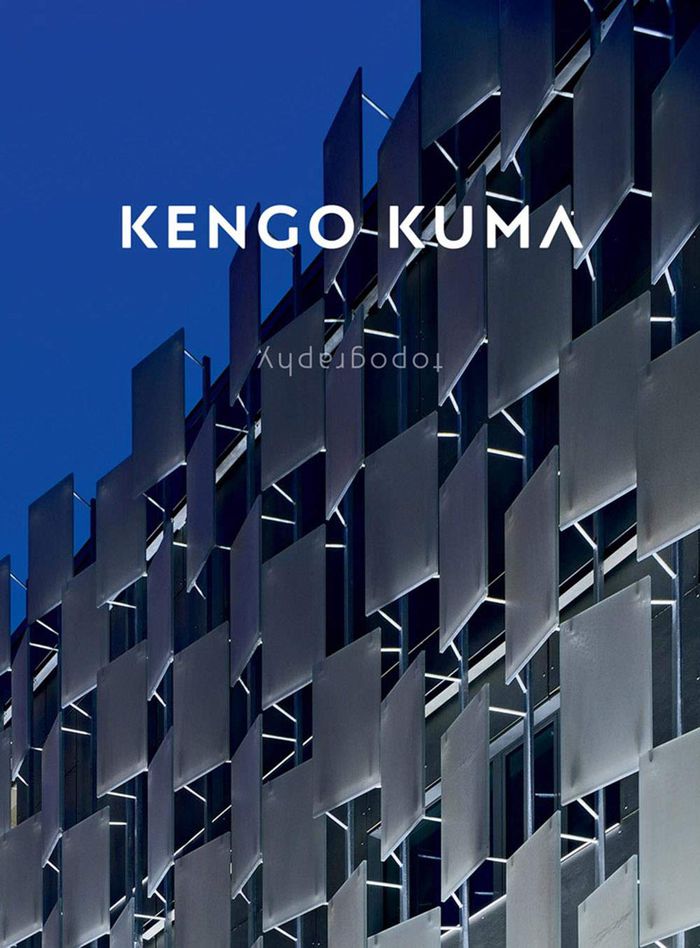
Kengo Kuma is a globally acclaimed Japanese architect whose prodigious output possesses an inherent respect and value of materials and environment, often creating a harmonious balance between building and landscape. He masterfully engages both architectural experimentation and traditional Japanese design with twenty-first-century technology, resulting in highly advanced yet beautifully simple, gentle, human-scaled buildings. Often ranked among other esteemed architects, such as Shigeru Ban, Tadao Ando, Kazuyo Sejima, or Kenzo Tange, Kuma is always in search of new materials to replace concrete and steel, and seeks a new approach for architecture in a post-industrial society, fusing interior and exterior realms to make spaces that create a calming and tranquil atmosphere. Known for his prolific writing, Kuma is constantly re-engaging with different aspects of the architectural discipline, whether it be construction or representation in order to give further progress to his ideas. This volume showcases close to forty high-profile works by Kengo Kuma & Associates (based in Tokyo and Paris), focusing on some of his most recognised works, including the Asakusa Culture and Tourism Center in Tokyo, the Mont Blanc Base Camp project, the Great Bamboo Wall, as well as progress for the design for Tokyo's main stadium for the 2020 Olympic Games.
Kengo Kuma: Topography
Actions:
Prix:
$100.00
(disponible en magasin)
Résumé:
Kengo Kuma is a globally acclaimed Japanese architect whose prodigious output possesses an inherent respect and value of materials and environment, often creating a harmonious balance between building and landscape. He masterfully engages both architectural experimentation and traditional Japanese design with twenty-first-century technology, resulting in highly advanced yet beautifully simple, gentle, human-scaled buildings. Often ranked among other esteemed architects, such as Shigeru Ban, Tadao Ando, Kazuyo Sejima, or Kenzo Tange, Kuma is always in search of new materials to replace concrete and steel, and seeks a new approach for architecture in a post-industrial society, fusing interior and exterior realms to make spaces that create a calming and tranquil atmosphere. Known for his prolific writing, Kuma is constantly re-engaging with different aspects of the architectural discipline, whether it be construction or representation in order to give further progress to his ideas. This volume showcases close to forty high-profile works by Kengo Kuma & Associates (based in Tokyo and Paris), focusing on some of his most recognised works, including the Asakusa Culture and Tourism Center in Tokyo, the Mont Blanc Base Camp project, the Great Bamboo Wall, as well as progress for the design for Tokyo's main stadium for the 2020 Olympic Games.
Classification:
livres
livres
Publication:
mars 2021
mars 2021
Sujet:
Architecture, monographies
Architecture, monographies
Classification:
livres
livres
Titre:
Architecture and dystopia
Architecture and dystopia
Actions:
Prix:
$45.00
(disponible sur commande)
Résumé:
As a response to the profound crisis of Western culture the emerged in the 1960s, radical artists from Italy, Austria, England and Japan called into question the foundations of modernist utopias. They transmuted the difficulties of capitalism into a repertory of startling images that revealed the disturbing realities of consumer society, even in those places still(...)
$45.00
(disponible sur commande)
Résumé:
As a response to the profound crisis of Western culture the emerged in the 1960s, radical artists from Italy, Austria, England and Japan called into question the foundations of modernist utopias. They transmuted the difficulties of capitalism into a repertory of startling images that revealed the disturbing realities of consumer society, even in those places still(...)
Titre:
Architecture and dystopia
Actions:
Prix:
$45.00
(disponible sur commande)
Résumé:
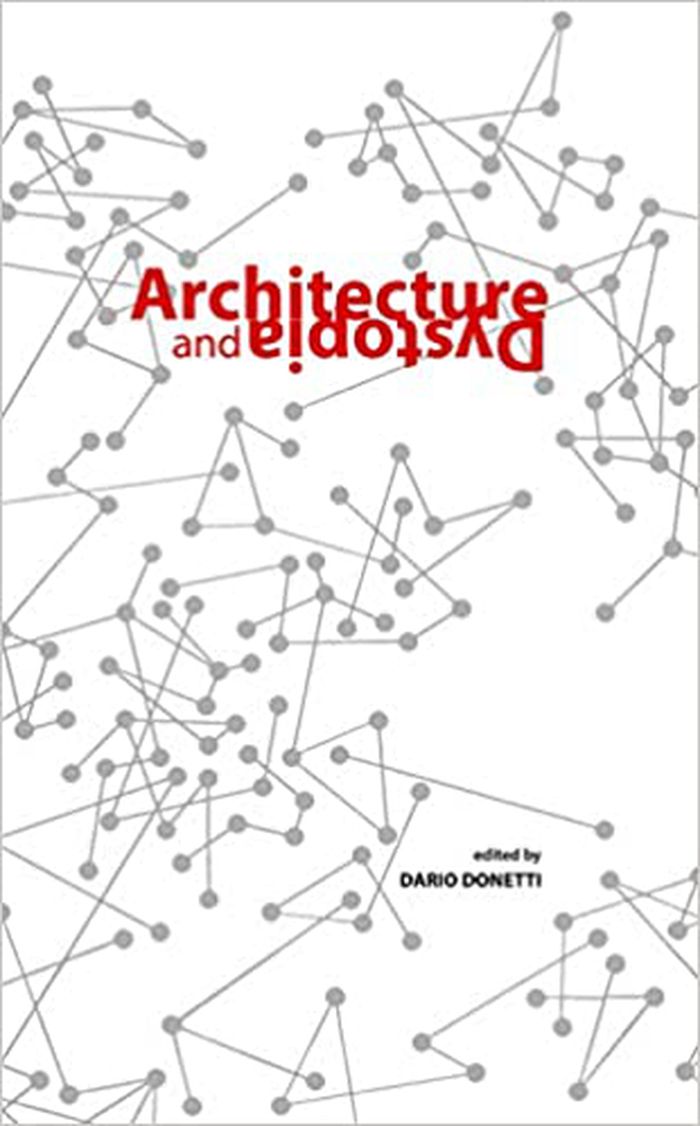
As a response to the profound crisis of Western culture the emerged in the 1960s, radical artists from Italy, Austria, England and Japan called into question the foundations of modernist utopias. They transmuted the difficulties of capitalism into a repertory of startling images that revealed the disturbing realities of consumer society, even in those places still resistant to the penetration of modern architecture, such as Superstudio and Archizoom’s Florence. Their model, though exhausted in the space of experimentation, went on to inspire a generation of architects, from the High Tech movement to Rem Koolhaas.. In the light of these examples, how to define a unified 'dystopian' method of design, i.e. a common ground for an architecture that, by its very nature, seems to resist systematization? Are the most recognizable architectural expressions of this theoretical framework — characterized by brazen displays of technology and structures of overwhelming scale — merely isolated cases, albeit of particular iconic power? Or do they belong to a wider landscape of antirational architectural projects? And to what extent are these disturbing expressions premised on the utopian tradition or, better yet, the conceptual model of 'negative thought'? The goal of this book is to respond to such questions, thus initiating an open dialogue about the legitimacy of this critical category.
Architecture and dystopia
Actions:
Prix:
$45.00
(disponible sur commande)
Résumé:
As a response to the profound crisis of Western culture the emerged in the 1960s, radical artists from Italy, Austria, England and Japan called into question the foundations of modernist utopias. They transmuted the difficulties of capitalism into a repertory of startling images that revealed the disturbing realities of consumer society, even in those places still resistant to the penetration of modern architecture, such as Superstudio and Archizoom’s Florence. Their model, though exhausted in the space of experimentation, went on to inspire a generation of architects, from the High Tech movement to Rem Koolhaas.. In the light of these examples, how to define a unified 'dystopian' method of design, i.e. a common ground for an architecture that, by its very nature, seems to resist systematization? Are the most recognizable architectural expressions of this theoretical framework — characterized by brazen displays of technology and structures of overwhelming scale — merely isolated cases, albeit of particular iconic power? Or do they belong to a wider landscape of antirational architectural projects? And to what extent are these disturbing expressions premised on the utopian tradition or, better yet, the conceptual model of 'negative thought'? The goal of this book is to respond to such questions, thus initiating an open dialogue about the legitimacy of this critical category.
Classification:
livres
livres
Publication:
décembre 2019
décembre 2019
Sujet:
Théorie de l’architecture
Théorie de l’architecture
Classification:
livres
livres
Titre:
Visionary cities
Visionary cities
Actions:
Prix:
$25.00
(disponible sur commande)
Résumé:
Recognizing that our civic responsibilities towards our environments have drastically increased, Visionary Cities ambitiously sets the agenda for the city of the future. Amid crippling bureaucracies and economic crises, present-day thinking on city design remains woefully inadequate, and this first publication in NAi's Future Cities Series announces 12 civic issues that(...)
$25.00
(disponible sur commande)
Résumé:
Recognizing that our civic responsibilities towards our environments have drastically increased, Visionary Cities ambitiously sets the agenda for the city of the future. Amid crippling bureaucracies and economic crises, present-day thinking on city design remains woefully inadequate, and this first publication in NAi's Future Cities Series announces 12 civic issues that(...)
Titre:
Visionary cities
Actions:
Prix:
$25.00
(disponible sur commande)
Résumé:
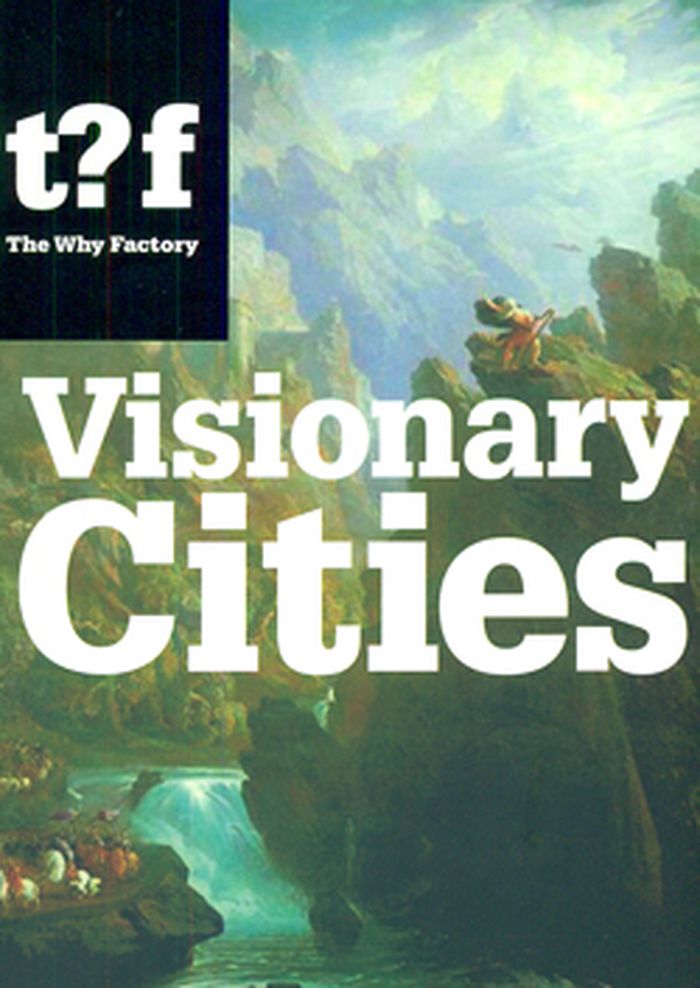
Recognizing that our civic responsibilities towards our environments have drastically increased, Visionary Cities ambitiously sets the agenda for the city of the future. Amid crippling bureaucracies and economic crises, present-day thinking on city design remains woefully inadequate, and this first publication in NAi's Future Cities Series announces 12 civic issues that are in need of transformation through the researches of The Why Factory, a global urban-studies thinktank operated in part by the Delft University of Technology. These issues include: “The Solitary (Our Dreams are Undermining the City)”; “The Iconic (Our Idols Have Been Compromised)”; “The Fun (We Are Having Too Much Fun)”; “The Cautious (Being Careful Is Killing Us)”; “The Poor (Slums Are Growing Bigger Than The Cities They Are Part Of”; and “The Future (Our Future Is Being Imagined Without Us).” A howl against civic impotence and the apathy of citizens in the face of incompetence and decay, Visionary Cities makes a manifesto of these and other topics to loudly demand large-scale change on a collective rather than individual level. In an afterword, Winy Maas, of the innovative Dutch architecture firm MVRDV, argues that architecture possesses a visionary dimension waiting to be applied to the cities of the future.
Visionary cities
Actions:
Prix:
$25.00
(disponible sur commande)
Résumé:
Recognizing that our civic responsibilities towards our environments have drastically increased, Visionary Cities ambitiously sets the agenda for the city of the future. Amid crippling bureaucracies and economic crises, present-day thinking on city design remains woefully inadequate, and this first publication in NAi's Future Cities Series announces 12 civic issues that are in need of transformation through the researches of The Why Factory, a global urban-studies thinktank operated in part by the Delft University of Technology. These issues include: “The Solitary (Our Dreams are Undermining the City)”; “The Iconic (Our Idols Have Been Compromised)”; “The Fun (We Are Having Too Much Fun)”; “The Cautious (Being Careful Is Killing Us)”; “The Poor (Slums Are Growing Bigger Than The Cities They Are Part Of”; and “The Future (Our Future Is Being Imagined Without Us).” A howl against civic impotence and the apathy of citizens in the face of incompetence and decay, Visionary Cities makes a manifesto of these and other topics to loudly demand large-scale change on a collective rather than individual level. In an afterword, Winy Maas, of the innovative Dutch architecture firm MVRDV, argues that architecture possesses a visionary dimension waiting to be applied to the cities of the future.
Classification:
livres
livres
Publication:
mars 2010
mars 2010
Sujet:
Théorie de l’urbanisme
Théorie de l’urbanisme
Classification:
livres
livres

Actions:
Prix:
$35.00
(disponible sur commande)
Résumé:
This book is the first English translation of a renowned collection of essays by Joan Fontcuberta, in which he considers the technological shift that photography has undergone in recent years. The medium finds itself torn between loss and hope, between the disappearance of the silver gelatin photograph and the possibilities of the digital medium. Fontcuberta uses the(...)
$35.00
(disponible sur commande)
Résumé:
This book is the first English translation of a renowned collection of essays by Joan Fontcuberta, in which he considers the technological shift that photography has undergone in recent years. The medium finds itself torn between loss and hope, between the disappearance of the silver gelatin photograph and the possibilities of the digital medium. Fontcuberta uses the(...)
Titre:
Pandora's camera: photogr@phy after photography
Actions:
Prix:
$35.00
(disponible sur commande)
Résumé:
This book is the first English translation of a renowned collection of essays by Joan Fontcuberta, in which he considers the technological shift that photography has undergone in recent years. The medium finds itself torn between loss and hope, between the disappearance of the silver gelatin photograph and the possibilities of the digital medium. Fontcuberta uses the motif of Pandora’s box to conceptualise the capricious nature of photography, its fickle relationship to truth – employing the Greek myth concerning a large jar containing myriad forms of human unhappiness, or blessings, depending on the version you read. As Pandora’s camera, digital technology spells calamity to some and liberation to others; it is blamed for irretrievably discrediting veracity, but at the same time it introduces a new degree of truth. In his signature ironic style and playful tone, Fontcuberta examines the new principles that have arisen within the digital ecosystem, in jocular essays such as I Knew the Spice Girls or The Mystery of the Missing Nipple. His critical reflections and poetic evocations are inspired by the hope that still remains in the notion of a postmodern Pandora’s camera – one that might not only describe our environment, but also bring transparency to it.
Pandora's camera: photogr@phy after photography
Actions:
Prix:
$35.00
(disponible sur commande)
Résumé:
This book is the first English translation of a renowned collection of essays by Joan Fontcuberta, in which he considers the technological shift that photography has undergone in recent years. The medium finds itself torn between loss and hope, between the disappearance of the silver gelatin photograph and the possibilities of the digital medium. Fontcuberta uses the motif of Pandora’s box to conceptualise the capricious nature of photography, its fickle relationship to truth – employing the Greek myth concerning a large jar containing myriad forms of human unhappiness, or blessings, depending on the version you read. As Pandora’s camera, digital technology spells calamity to some and liberation to others; it is blamed for irretrievably discrediting veracity, but at the same time it introduces a new degree of truth. In his signature ironic style and playful tone, Fontcuberta examines the new principles that have arisen within the digital ecosystem, in jocular essays such as I Knew the Spice Girls or The Mystery of the Missing Nipple. His critical reflections and poetic evocations are inspired by the hope that still remains in the notion of a postmodern Pandora’s camera – one that might not only describe our environment, but also bring transparency to it.
Classification:
livres
livres
Publication:
novembre 2014
novembre 2014
Sujet:
Théorie de la photographie
Théorie de la photographie
Classification:
livres
livres
Titre:
The lost subways of North America: A Cartographic guide to the past, present, what might have been
The lost subways of North America: A Cartographic guide to the past, present, what might have been
Actions:
Prix:
$51.95
(disponible sur commande)
Résumé:
Every driver in North America shares one miserable, soul-sucking universal experience—being stuck in traffic. But things weren’t always like this. Why is it that the mass transit systems of most cities in the United States and Canada are now utterly inadequate? ''The lost subways of North America'' offers a new way to consider this eternal question, with a strikingly(...)
$51.95
(disponible sur commande)
Résumé:
Every driver in North America shares one miserable, soul-sucking universal experience—being stuck in traffic. But things weren’t always like this. Why is it that the mass transit systems of most cities in the United States and Canada are now utterly inadequate? ''The lost subways of North America'' offers a new way to consider this eternal question, with a strikingly(...)
Titre:
The lost subways of North America: A Cartographic guide to the past, present, what might have been
Actions:
Prix:
$51.95
(disponible sur commande)
Résumé:
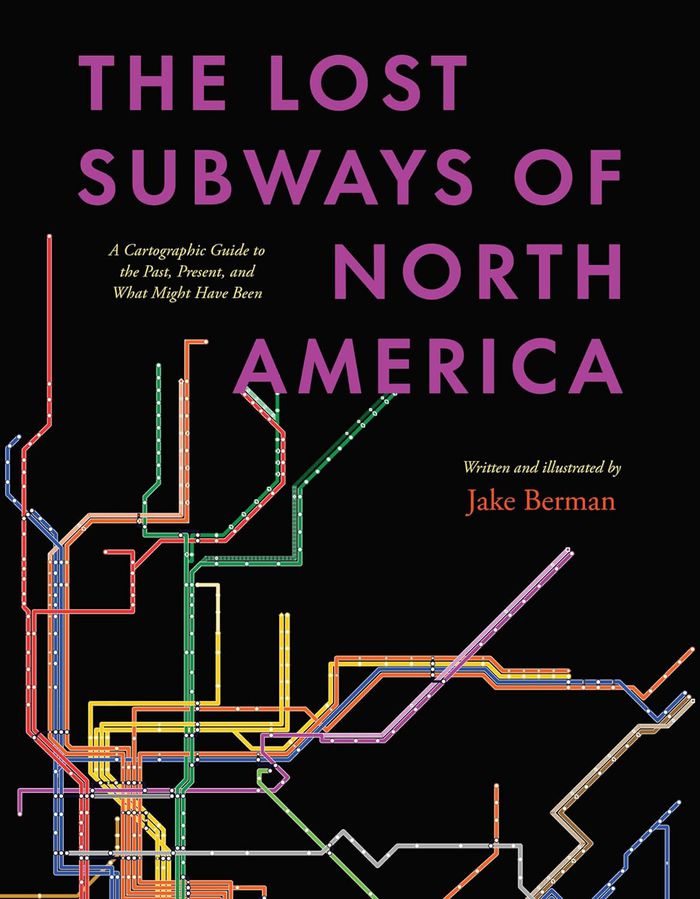
Every driver in North America shares one miserable, soul-sucking universal experience—being stuck in traffic. But things weren’t always like this. Why is it that the mass transit systems of most cities in the United States and Canada are now utterly inadequate? ''The lost subways of North America'' offers a new way to consider this eternal question, with a strikingly visual—and fun—journey through past, present, and unbuilt urban transit. Using meticulous archival research, cartographer and artist Jake Berman has successfully plotted maps of old train networks covering twenty-three North American metropolises, ranging from New York City’s Civil War–era plan for a steam-powered subway under Fifth Avenue to the ultramodern automated Vancouver SkyTrain and the thousand-mile electric railway system of pre–World War II Los Angeles. He takes us through colorful maps of old, often forgotten streetcar lines, lost ideas for never-built transit, and modern rail systems—drawing us into the captivating transit histories of US and Canadian cities. Berman combines vintage styling with modern printing technology to create a sweeping visual history of North American public transit and urban development. With more than one hundred original maps, accompanied by essays on each city’s urban development, this book presents a fascinating look at North American rapid transit systems.
The lost subways of North America: A Cartographic guide to the past, present, what might have been
Actions:
Prix:
$51.95
(disponible sur commande)
Résumé:
Every driver in North America shares one miserable, soul-sucking universal experience—being stuck in traffic. But things weren’t always like this. Why is it that the mass transit systems of most cities in the United States and Canada are now utterly inadequate? ''The lost subways of North America'' offers a new way to consider this eternal question, with a strikingly visual—and fun—journey through past, present, and unbuilt urban transit. Using meticulous archival research, cartographer and artist Jake Berman has successfully plotted maps of old train networks covering twenty-three North American metropolises, ranging from New York City’s Civil War–era plan for a steam-powered subway under Fifth Avenue to the ultramodern automated Vancouver SkyTrain and the thousand-mile electric railway system of pre–World War II Los Angeles. He takes us through colorful maps of old, often forgotten streetcar lines, lost ideas for never-built transit, and modern rail systems—drawing us into the captivating transit histories of US and Canadian cities. Berman combines vintage styling with modern printing technology to create a sweeping visual history of North American public transit and urban development. With more than one hundred original maps, accompanied by essays on each city’s urban development, this book presents a fascinating look at North American rapid transit systems.
Classification:
livres
livres
Publication:
novembre 2023
novembre 2023
Classification:
livres
livres
Actions:
Prix:
$45.00
(disponible en magasin)
Résumé:
Mouna Andraos and Melissa Mongiat—together with their team at Daily tous les jours—have been creating celebrated interactive art and narrative experiences for public spaces around the world for over 15 years. Their groundbreaking work is part of an emergent practice that combines technology, storytelling, performance, and placemaking to build a new infrastructure for the(...)
$45.00
(disponible en magasin)
Résumé:
Mouna Andraos and Melissa Mongiat—together with their team at Daily tous les jours—have been creating celebrated interactive art and narrative experiences for public spaces around the world for over 15 years. Their groundbreaking work is part of an emergent practice that combines technology, storytelling, performance, and placemaking to build a new infrastructure for the(...)
Publication:
août 2025
août 2025
Titre:
Strangers need strange moments together: Designing interaction for public spaces
Actions:
Prix:
$45.00
(disponible en magasin)
Résumé:
Mouna Andraos and Melissa Mongiat—together with their team at Daily tous les jours—have been creating celebrated interactive art and narrative experiences for public spaces around the world for over 15 years. Their groundbreaking work is part of an emergent practice that combines technology, storytelling, performance, and placemaking to build a new infrastructure for the human spirit. In ''Strangers Need Strange Moments Together'', Andraos and Mongiat invite a broad range of readers—fellow practitioners, urbanists, policy makers, educators, and engaged citizens—to take a joyful approach to building resilient urban communities and re-enchanting public space. In times of unprecedented pace of urban growth, with increasing loneliness and division, they shed light on the importance of moving beyond purely data-driven urban planning methodologies—which prioritize productivity, efficiency, and automation—and forging new modes of public interaction. Cities must be spaces for the whimsical, unexpected, and weird, and for the wasted time and strange moments of serendipitous encounter. Andraos and Mongiat use the raw material of the “daily everyday” to propose new models of living together in the 21st century, and to foreground the dimensions of life that characterize what it means to be human in the first place.
Strangers need strange moments together: Designing interaction for public spaces
Actions:
Prix:
$45.00
(disponible en magasin)
Résumé:
Mouna Andraos and Melissa Mongiat—together with their team at Daily tous les jours—have been creating celebrated interactive art and narrative experiences for public spaces around the world for over 15 years. Their groundbreaking work is part of an emergent practice that combines technology, storytelling, performance, and placemaking to build a new infrastructure for the human spirit. In ''Strangers Need Strange Moments Together'', Andraos and Mongiat invite a broad range of readers—fellow practitioners, urbanists, policy makers, educators, and engaged citizens—to take a joyful approach to building resilient urban communities and re-enchanting public space. In times of unprecedented pace of urban growth, with increasing loneliness and division, they shed light on the importance of moving beyond purely data-driven urban planning methodologies—which prioritize productivity, efficiency, and automation—and forging new modes of public interaction. Cities must be spaces for the whimsical, unexpected, and weird, and for the wasted time and strange moments of serendipitous encounter. Andraos and Mongiat use the raw material of the “daily everyday” to propose new models of living together in the 21st century, and to foreground the dimensions of life that characterize what it means to be human in the first place.
Classification:
livres
livres
Publication:
août 2025
août 2025


