


7437 Résultats
Classification:
livres
livres
Prix:
$54.00
(disponible sur commande)
Résumé:
In ''Alien agency,'' Chris Salter tells three stories of art in the making. Salter examines three works in which the materials of art—the ''stuff of the world''—behave and perform in ways beyond the creator's intent, becoming unknown, surprising, alien. Studying these works—all three deeply embroiled in and enabled by science and technology—allows him to focus on practice(...)
$54.00
(disponible sur commande)
Résumé:
In ''Alien agency,'' Chris Salter tells three stories of art in the making. Salter examines three works in which the materials of art—the ''stuff of the world''—behave and perform in ways beyond the creator's intent, becoming unknown, surprising, alien. Studying these works—all three deeply embroiled in and enabled by science and technology—allows him to focus on practice(...)
Titre:
Alien agency: Experimental encounters with art in the making
Actions:
Prix:
$54.00
(disponible sur commande)
Résumé:
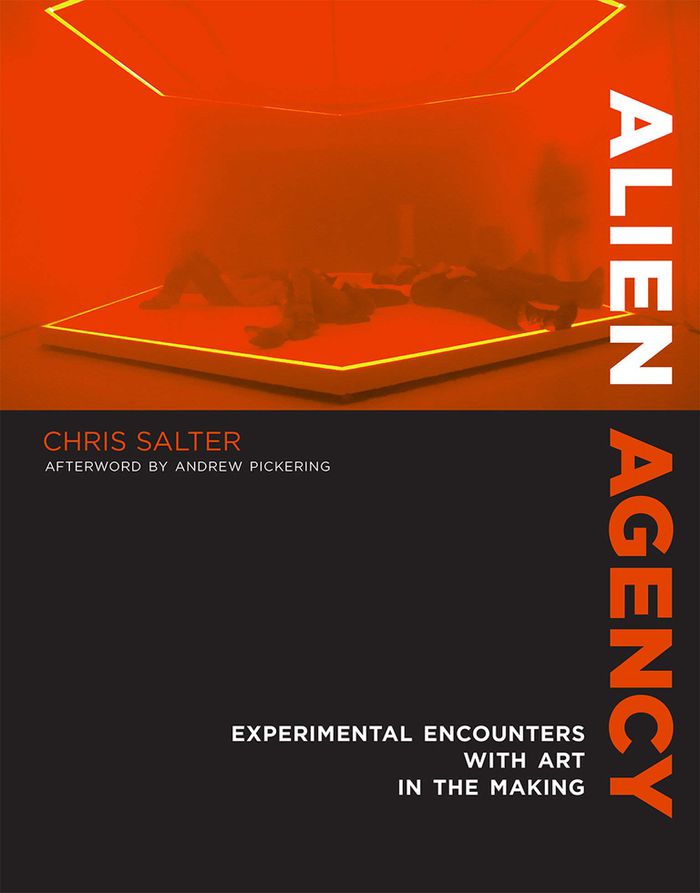
In ''Alien agency,'' Chris Salter tells three stories of art in the making. Salter examines three works in which the materials of art—the ''stuff of the world''—behave and perform in ways beyond the creator's intent, becoming unknown, surprising, alien. Studying these works—all three deeply embroiled in and enabled by science and technology—allows him to focus on practice through the experiential and affective elements of creation. Drawing on extensive ethnographic observation and on his own experience as an artist, Salter investigates how researcher-creators organize the conditions for these experimental, performative assemblages—assemblages that sidestep dichotomies between subjects and objects, human and nonhuman, mind and body, knowing and experiencing. Salter reports on the sound artists Bruce Odland and Sam Auinger (O+A) and their efforts to capture and then project unnoticed urban sounds; tracks the multi-year project TEMA (Tissue Engineered Muscle Actuators) at the art research lab SymbioticA and its construction of a hybrid ''semi-living'' machine from specially grown mouse muscle cells; and describes a research-creation project (which he himself initiated) that uses light, vibration, sound, smell, and other sensory stimuli to enable audiences to experience other cultures' ''ways of sensing.'' Combining theory, diary, history, and ethnography, Salter also explores a broader question: How do new things emerge into the world and what do they do?
Alien agency: Experimental encounters with art in the making
Actions:
Prix:
$54.00
(disponible sur commande)
Résumé:
In ''Alien agency,'' Chris Salter tells three stories of art in the making. Salter examines three works in which the materials of art—the ''stuff of the world''—behave and perform in ways beyond the creator's intent, becoming unknown, surprising, alien. Studying these works—all three deeply embroiled in and enabled by science and technology—allows him to focus on practice through the experiential and affective elements of creation. Drawing on extensive ethnographic observation and on his own experience as an artist, Salter investigates how researcher-creators organize the conditions for these experimental, performative assemblages—assemblages that sidestep dichotomies between subjects and objects, human and nonhuman, mind and body, knowing and experiencing. Salter reports on the sound artists Bruce Odland and Sam Auinger (O+A) and their efforts to capture and then project unnoticed urban sounds; tracks the multi-year project TEMA (Tissue Engineered Muscle Actuators) at the art research lab SymbioticA and its construction of a hybrid ''semi-living'' machine from specially grown mouse muscle cells; and describes a research-creation project (which he himself initiated) that uses light, vibration, sound, smell, and other sensory stimuli to enable audiences to experience other cultures' ''ways of sensing.'' Combining theory, diary, history, and ethnography, Salter also explores a broader question: How do new things emerge into the world and what do they do?
Classification:
livres
livres
Publication:
février 2015
février 2015
Sujet:
Théorie/ philosophie
Théorie/ philosophie
Classification:
livres
livres
Titre:
Graftworld
Graftworld
Actions:
Prix:
$21.95
(disponible sur commande)
Résumé:
In addition to Graft’s the widely published projects, like the prize-winning Hotel Q in Berlin, Restaurants Fix and Stack in Las Vegas and several international houses, the exhibition will focus on the new and unpublished work of Graft, including numerous high-rise buildings, special hotel designs and private residences, research installations as well as public(...)
$21.95
(disponible sur commande)
Résumé:
In addition to Graft’s the widely published projects, like the prize-winning Hotel Q in Berlin, Restaurants Fix and Stack in Las Vegas and several international houses, the exhibition will focus on the new and unpublished work of Graft, including numerous high-rise buildings, special hotel designs and private residences, research installations as well as public(...)
Titre:
Graftworld
Actions:
Prix:
$21.95
(disponible sur commande)
Résumé:
In addition to Graft’s the widely published projects, like the prize-winning Hotel Q in Berlin, Restaurants Fix and Stack in Las Vegas and several international houses, the exhibition will focus on the new and unpublished work of Graft, including numerous high-rise buildings, special hotel designs and private residences, research installations as well as public projects. Graftworld refers to Graft’s specific method of work process, which fuses syntactic, semantic and phenomenological aspects into architecture. Graft uses narrative elements of cinema, exploiting space - time interconnections through storyboarding with progressive technical research of long term collaborations with various companies. The exhibit will showcase this methodology in an accessible, usable exhibition sculpture, an interactive lounge displaying not only projects of all three office locations but providing chillout zones to relax as well. Classical distinctive architecture elements like floor, wall and ceiling will be fused into a lounge-display-hybrid. Graftworld is thought to be inclusive and rather crosses and blurs boundaries than accepting their exclusive nature. This approach also touches on the increasing transition of distinct modern mono-functional living and working environments, that are blending into new urban lifestyles of the metropolitan nomads. Graftworld proposes architecture that can evolve to be sculpture, be furniture, be a product, be an urban scenario, be landscape at the same time. Design, methodology and technology are not classically “displayed”, but are integrated in the Graftworld.
Graftworld
Actions:
Prix:
$21.95
(disponible sur commande)
Résumé:
In addition to Graft’s the widely published projects, like the prize-winning Hotel Q in Berlin, Restaurants Fix and Stack in Las Vegas and several international houses, the exhibition will focus on the new and unpublished work of Graft, including numerous high-rise buildings, special hotel designs and private residences, research installations as well as public projects. Graftworld refers to Graft’s specific method of work process, which fuses syntactic, semantic and phenomenological aspects into architecture. Graft uses narrative elements of cinema, exploiting space - time interconnections through storyboarding with progressive technical research of long term collaborations with various companies. The exhibit will showcase this methodology in an accessible, usable exhibition sculpture, an interactive lounge displaying not only projects of all three office locations but providing chillout zones to relax as well. Classical distinctive architecture elements like floor, wall and ceiling will be fused into a lounge-display-hybrid. Graftworld is thought to be inclusive and rather crosses and blurs boundaries than accepting their exclusive nature. This approach also touches on the increasing transition of distinct modern mono-functional living and working environments, that are blending into new urban lifestyles of the metropolitan nomads. Graftworld proposes architecture that can evolve to be sculpture, be furniture, be a product, be an urban scenario, be landscape at the same time. Design, methodology and technology are not classically “displayed”, but are integrated in the Graftworld.
Classification:
livres
livres
Publication:
janvier 2007, Berlin
janvier 2007, Berlin
Sujet:
petits formats
petits formats
Classification:
livres
livres
Actions:
Prix:
$32.95
(disponible sur commande)
Résumé:
"Peeking through the Keyhole" is about transformations in the way we live and the places we call home. Until the past few decades, transitions in the style of homes and types of households were slow and gradual. With today's instant communication, the way we observe other people, other cultures, and other times has altered, and been altered by, the homes we live in.(...)
$32.95
(disponible sur commande)
Résumé:
"Peeking through the Keyhole" is about transformations in the way we live and the places we call home. Until the past few decades, transitions in the style of homes and types of households were slow and gradual. With today's instant communication, the way we observe other people, other cultures, and other times has altered, and been altered by, the homes we live in.(...)
Sujet:
Théorie de l’architecture
Théorie de l’architecture
Publication:
janvier 2002, Montréal
janvier 2002, Montréal
Titre:
Peeking through the keyhole : the evolution of North American homes
Actions:
Prix:
$32.95
(disponible sur commande)
Résumé:
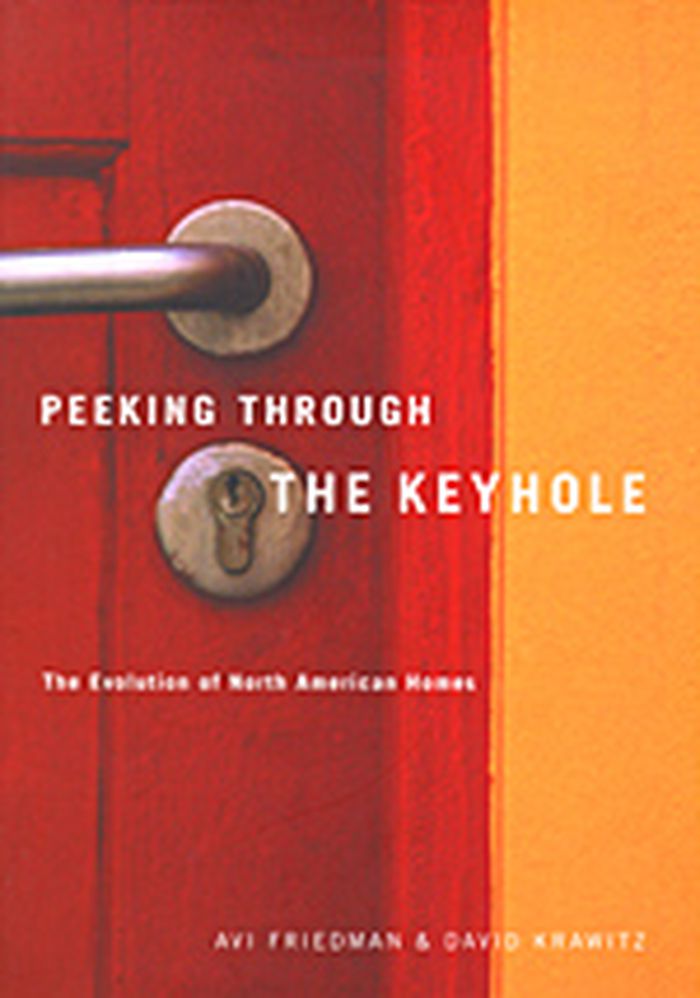
"Peeking through the Keyhole" is about transformations in the way we live and the places we call home. Until the past few decades, transitions in the style of homes and types of households were slow and gradual. With today's instant communication, the way we observe other people, other cultures, and other times has altered, and been altered by, the homes we live in. Avi Friedman and David Krawitz guide the reader through the trends and changes that have influenced residential design and construction over the last fifty years. From kitchens to home offices to entire neighbourhoods, they unravel the effect of technology and consumerism on the way we perceive and use domestic space, arguing that the home is no longer a product of pure design but a response to factors and forces beyond the control of designers, builders, and users. Each chapter approaches the theme of home from a different vantage point: the first three chapters focus on food and kitchens, communication, construction and renovation; the middle chapters deal with childhood and aging; and the final chapters examine our ideas of home in the context of the broader community and as an object of commerce. The authors demonstrate how much life has changed in the years following the Second World War, showing how transformations in society, the economy, and lifestyles are reflected in our homes.
Peeking through the keyhole : the evolution of North American homes
Actions:
Prix:
$32.95
(disponible sur commande)
Résumé:
"Peeking through the Keyhole" is about transformations in the way we live and the places we call home. Until the past few decades, transitions in the style of homes and types of households were slow and gradual. With today's instant communication, the way we observe other people, other cultures, and other times has altered, and been altered by, the homes we live in. Avi Friedman and David Krawitz guide the reader through the trends and changes that have influenced residential design and construction over the last fifty years. From kitchens to home offices to entire neighbourhoods, they unravel the effect of technology and consumerism on the way we perceive and use domestic space, arguing that the home is no longer a product of pure design but a response to factors and forces beyond the control of designers, builders, and users. Each chapter approaches the theme of home from a different vantage point: the first three chapters focus on food and kitchens, communication, construction and renovation; the middle chapters deal with childhood and aging; and the final chapters examine our ideas of home in the context of the broader community and as an object of commerce. The authors demonstrate how much life has changed in the years following the Second World War, showing how transformations in society, the economy, and lifestyles are reflected in our homes.
Classification:
livres
livres
Publication:
janvier 2002, Montréal
janvier 2002, Montréal
Sujet:
Théorie de l’architecture
Théorie de l’architecture
Classification:
livres
livres
Actions:
Prix:
$63.95
(disponible sur commande)
Résumé:
This book investigates the state of panoptic art at a time when issues of security and civil liberties are on many people’s minds. Traditional imaging and tracking systems have given way to infinitely more powerful “dataveillance” technologies, as an evolving arsenal of surrogate eyes and ears in our society shifts its focus from military to domestic space. Taking as its(...)
$63.95
(disponible sur commande)
Résumé:
This book investigates the state of panoptic art at a time when issues of security and civil liberties are on many people’s minds. Traditional imaging and tracking systems have given way to infinitely more powerful “dataveillance” technologies, as an evolving arsenal of surrogate eyes and ears in our society shifts its focus from military to domestic space. Taking as its(...)
Publication:
mars 2002, Karlsruhe, Germany / Cambridge, Massachusett
mars 2002, Karlsruhe, Germany / Cambridge, Massachusett
Titre:
CTRL (space) : rhetorics of surveillance from Bentham to big brother
Actions:
Prix:
$63.95
(disponible sur commande)
Résumé:
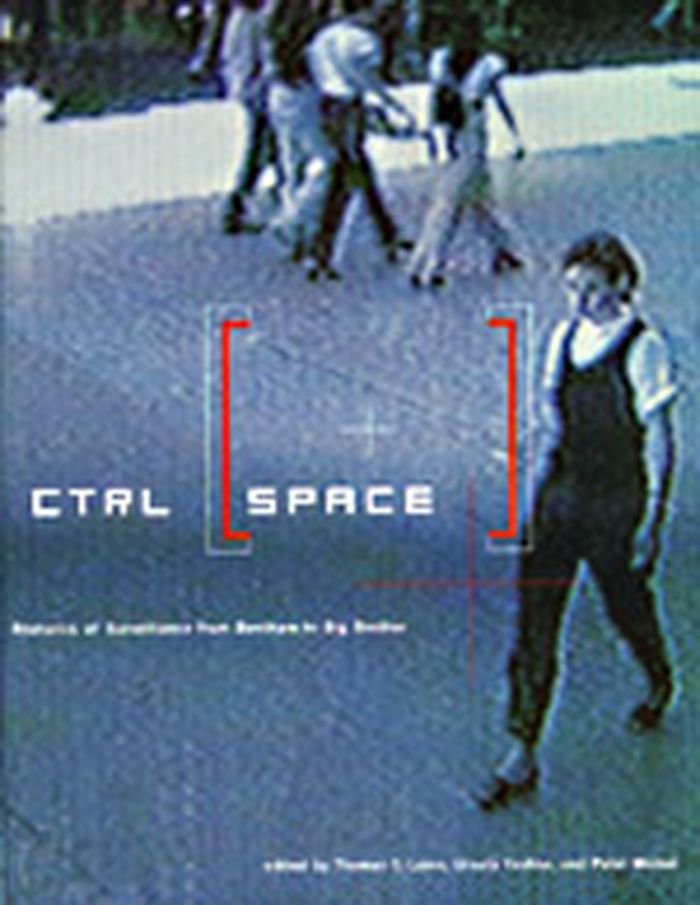
This book investigates the state of panoptic art at a time when issues of security and civil liberties are on many people’s minds. Traditional imaging and tracking systems have given way to infinitely more powerful “dataveillance” technologies, as an evolving arsenal of surrogate eyes and ears in our society shifts its focus from military to domestic space. Taking as its point of departure an architectural drawing by Jeremy Bentham that became the model for an entire social regime, CTRL [SPACE] looks at the shifting relationships between design and power, imaging and oppression, from the eighteenth to the twenty-first centuries. From the photographs taken with hidden cameras by Walker Evans and Paul Strand in the early twentieth century to the appropriation of military satellite technology by Marko Peljhan a hundred years later, the works of a wide range of artists have explored the dynamics of watching and being watched. The artists whose panoptical preoccupations are featured include, among others, Sophie Calle, Diller + Scofidio, Dan Graham, Pierre Huyghe, Michael Klier, Rem Koolhaas, Bruce Nauman, Yoko Ono, Thomas Ruff, Julia Scher, Andy Warhol, and Peter Weibel. This book, along with the exhibition it accompanies, is the first state-of-the-art survey of panopticism--in digital culture, architecture, television, video, cinema, painting, photography, conceptual art, installation work, robotics, and satellite imaging.
CTRL (space) : rhetorics of surveillance from Bentham to big brother
Actions:
Prix:
$63.95
(disponible sur commande)
Résumé:
This book investigates the state of panoptic art at a time when issues of security and civil liberties are on many people’s minds. Traditional imaging and tracking systems have given way to infinitely more powerful “dataveillance” technologies, as an evolving arsenal of surrogate eyes and ears in our society shifts its focus from military to domestic space. Taking as its point of departure an architectural drawing by Jeremy Bentham that became the model for an entire social regime, CTRL [SPACE] looks at the shifting relationships between design and power, imaging and oppression, from the eighteenth to the twenty-first centuries. From the photographs taken with hidden cameras by Walker Evans and Paul Strand in the early twentieth century to the appropriation of military satellite technology by Marko Peljhan a hundred years later, the works of a wide range of artists have explored the dynamics of watching and being watched. The artists whose panoptical preoccupations are featured include, among others, Sophie Calle, Diller + Scofidio, Dan Graham, Pierre Huyghe, Michael Klier, Rem Koolhaas, Bruce Nauman, Yoko Ono, Thomas Ruff, Julia Scher, Andy Warhol, and Peter Weibel. This book, along with the exhibition it accompanies, is the first state-of-the-art survey of panopticism--in digital culture, architecture, television, video, cinema, painting, photography, conceptual art, installation work, robotics, and satellite imaging.
Classification:
livres
livres
Publication:
mars 2002, Karlsruhe, Germany / Cambridge, Massachusett
mars 2002, Karlsruhe, Germany / Cambridge, Massachusett
Classification:
livres
livres
Actions:
Prix:
$79.00
(disponible sur commande)
Résumé:
The art of producing color in movies is a fascinating process with a long history. Many people don’t realize that, as early as the 1890s, much of silent cinema was in color. They also may not know that women were the main workforce behind the techniques that first produced these effects, a tradition that continued as the practice evolved. Breakthroughs in color technology(...)
$79.00
(disponible sur commande)
Résumé:
The art of producing color in movies is a fascinating process with a long history. Many people don’t realize that, as early as the 1890s, much of silent cinema was in color. They also may not know that women were the main workforce behind the techniques that first produced these effects, a tradition that continued as the practice evolved. Breakthroughs in color technology(...)
Publication:
octobre 2024
octobre 2024
Titre:
Color in motion: Chromatic explorations of cinema
Actions:
Prix:
$79.00
(disponible sur commande)
Résumé:
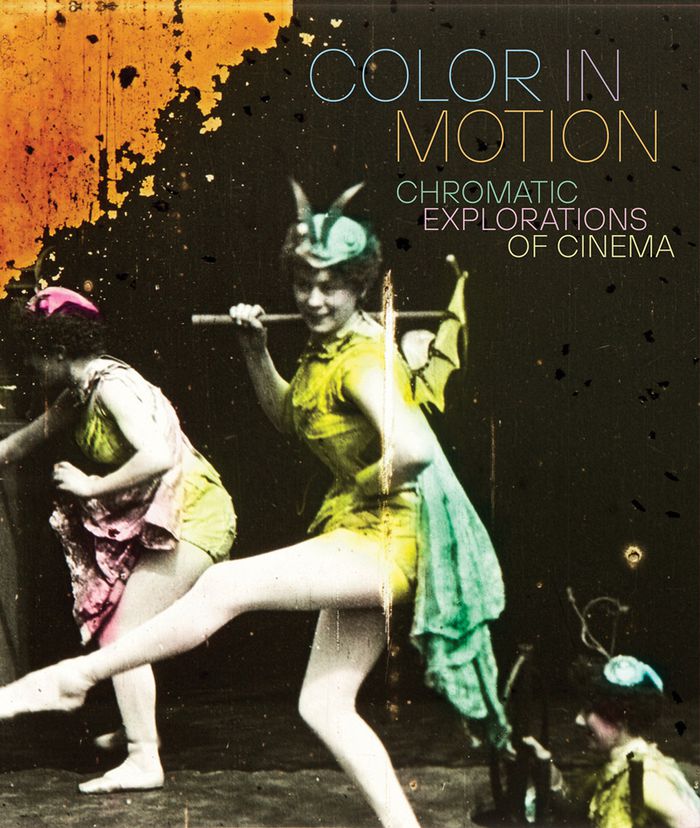
The art of producing color in movies is a fascinating process with a long history. Many people don’t realize that, as early as the 1890s, much of silent cinema was in color. They also may not know that women were the main workforce behind the techniques that first produced these effects, a tradition that continued as the practice evolved. Breakthroughs in color technology have created ongoing opportunities for filmmakers to experiment with new forms of narrative and emotional storytelling. Spectacular, psychological and sensory, color has become an integral part of the cinematic experience. From the earliest hand-painted films to Technicolor and today’s digital cinema, Color in Motion takes readers on a journey through the evolution and significance of color in film. Presenting insightful analysis, engaging case studies and inspiring conversations with scholars and experts in the field, with topics ranging from animation to the intersections of color and race in cinema, it traces the historical development of color technologies and their impact onscreen. Incorporating vivid images of color films throughout history—Serpentine Dance, The Cabinet of Dr. Caligari, Fantasia, The Red Shoes, Vertigo, West Side Story, 2001: A Space Odyssey, Moonlight and more, as well as new multispectral scans of rare silent-era film prints—this essential volume celebrates color’s enduring influence on the medium of film.
Color in motion: Chromatic explorations of cinema
Actions:
Prix:
$79.00
(disponible sur commande)
Résumé:
The art of producing color in movies is a fascinating process with a long history. Many people don’t realize that, as early as the 1890s, much of silent cinema was in color. They also may not know that women were the main workforce behind the techniques that first produced these effects, a tradition that continued as the practice evolved. Breakthroughs in color technology have created ongoing opportunities for filmmakers to experiment with new forms of narrative and emotional storytelling. Spectacular, psychological and sensory, color has become an integral part of the cinematic experience. From the earliest hand-painted films to Technicolor and today’s digital cinema, Color in Motion takes readers on a journey through the evolution and significance of color in film. Presenting insightful analysis, engaging case studies and inspiring conversations with scholars and experts in the field, with topics ranging from animation to the intersections of color and race in cinema, it traces the historical development of color technologies and their impact onscreen. Incorporating vivid images of color films throughout history—Serpentine Dance, The Cabinet of Dr. Caligari, Fantasia, The Red Shoes, Vertigo, West Side Story, 2001: A Space Odyssey, Moonlight and more, as well as new multispectral scans of rare silent-era film prints—this essential volume celebrates color’s enduring influence on the medium of film.
Classification:
livres
livres
Publication:
octobre 2024
octobre 2024
Classification:
livres
livres
Titre:
Public space? Lost and found
Public space? Lost and found
Actions:
Prix:
$52.50
(disponible sur commande)
Résumé:
“Public space” is a potent and contentious topic among artists, architects, and cultural producers. Public Space? Lost and Found considers the role of aesthetic practices within the construction, identification, and critique of shared territories, and how artists or architects—the “antennae of the race”—can heighten our awareness of rapidly changing formulations of public(...)
$52.50
(disponible sur commande)
Résumé:
“Public space” is a potent and contentious topic among artists, architects, and cultural producers. Public Space? Lost and Found considers the role of aesthetic practices within the construction, identification, and critique of shared territories, and how artists or architects—the “antennae of the race”—can heighten our awareness of rapidly changing formulations of public(...)
Sujet:
Théorie de l’architecture
Théorie de l’architecture
Publication:
juillet 2017
juillet 2017
Titre:
Public space? Lost and found
Actions:
Prix:
$52.50
(disponible sur commande)
Résumé:
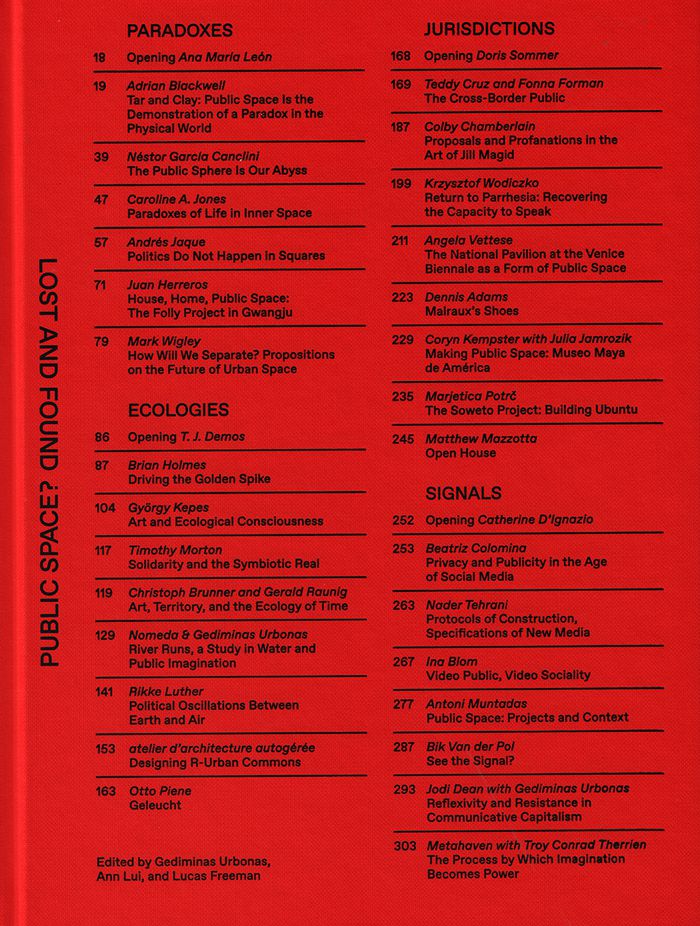
“Public space” is a potent and contentious topic among artists, architects, and cultural producers. Public Space? Lost and Found considers the role of aesthetic practices within the construction, identification, and critique of shared territories, and how artists or architects—the “antennae of the race”—can heighten our awareness of rapidly changing formulations of public space in the age of digital media, vast ecological crises, and civic uprisings. "Public Space? Lost and found" combines significant recent projects in art and architecture with writings by historians and theorists. Contributors investigate strategies for responding to underrepresented communities and areas of conflict through the work of Marjetica Potrc in Johannesburg and Teddy Cruz on the Mexico-U.S. border, among others. They explore our collective stakes in ecological catastrophe through artistic research such as atelier d’architecture autogérée’s hubs for community action and recycling in Colombes, France, and Brian Holmes’s theoretical investigation of new forms of aesthetic perception in the age of the Anthropocene. Inspired by artist and MIT professor Antoni Muntadas’ early coining of the term “media landscape,” contributors also look ahead, casting a critical eye on the fraught impact of digital media and the internet on public space. This book is the first in a new series of volumes produced by the MIT School of Architecture and Planning’s Program in Art, Culture and Technology.
Public space? Lost and found
Actions:
Prix:
$52.50
(disponible sur commande)
Résumé:
“Public space” is a potent and contentious topic among artists, architects, and cultural producers. Public Space? Lost and Found considers the role of aesthetic practices within the construction, identification, and critique of shared territories, and how artists or architects—the “antennae of the race”—can heighten our awareness of rapidly changing formulations of public space in the age of digital media, vast ecological crises, and civic uprisings. "Public Space? Lost and found" combines significant recent projects in art and architecture with writings by historians and theorists. Contributors investigate strategies for responding to underrepresented communities and areas of conflict through the work of Marjetica Potrc in Johannesburg and Teddy Cruz on the Mexico-U.S. border, among others. They explore our collective stakes in ecological catastrophe through artistic research such as atelier d’architecture autogérée’s hubs for community action and recycling in Colombes, France, and Brian Holmes’s theoretical investigation of new forms of aesthetic perception in the age of the Anthropocene. Inspired by artist and MIT professor Antoni Muntadas’ early coining of the term “media landscape,” contributors also look ahead, casting a critical eye on the fraught impact of digital media and the internet on public space. This book is the first in a new series of volumes produced by the MIT School of Architecture and Planning’s Program in Art, Culture and Technology.
Classification:
livres
livres
Publication:
juillet 2017
juillet 2017
Sujet:
Théorie de l’architecture
Théorie de l’architecture
Classification:
livres
livres
Titre:
Mute magazine graphic design
Mute magazine graphic design
Actions:
Prix:
$37.00
(disponible sur commande)
Résumé:
In the early 1990s, long before the internet became an integral part of life, a handful of pioneering magazines took it upon themselves to imagine the web into existence. Using fiction, interviews, speculative theory and experimental graphic design, these titles helped create a lexicon and iconography every bit as powerful as the architecture of the World Wide Web.(...)
$37.00
(disponible sur commande)
Résumé:
In the early 1990s, long before the internet became an integral part of life, a handful of pioneering magazines took it upon themselves to imagine the web into existence. Using fiction, interviews, speculative theory and experimental graphic design, these titles helped create a lexicon and iconography every bit as powerful as the architecture of the World Wide Web.(...)
Publication:
août 2008, London
août 2008, London
Titre:
Mute magazine graphic design
Actions:
Prix:
$37.00
(disponible sur commande)
Résumé:
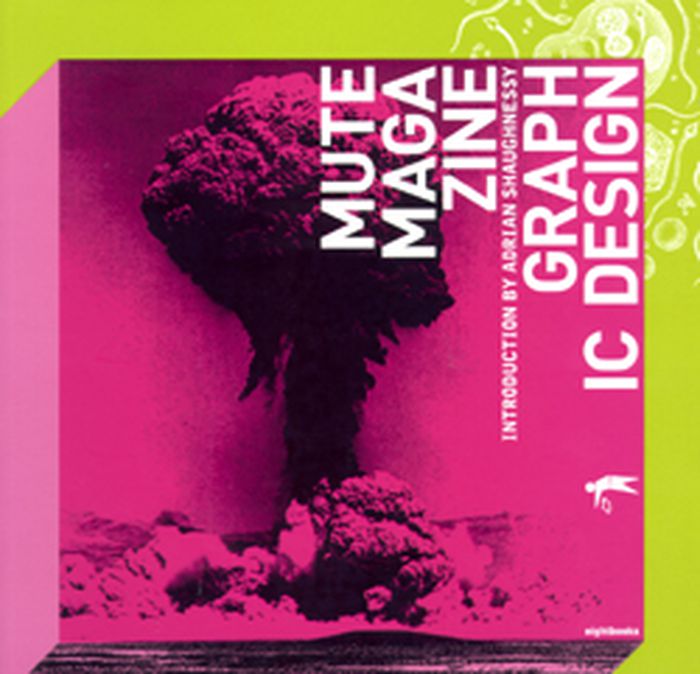
In the early 1990s, long before the internet became an integral part of life, a handful of pioneering magazines took it upon themselves to imagine the web into existence. Using fiction, interviews, speculative theory and experimental graphic design, these titles helped create a lexicon and iconography every bit as powerful as the architecture of the World Wide Web. London-based Mute occupied a central position here, wielding an influence vastly disproportionate to its size. The product of a period of intense creative ferment, Mute engaged boldly with allcomers. The magazine offered a platform to authors Bruce Sterling, Arthur Kroker, Mark Dery, Geert Lovink, Hari Kunzru, James Flint and Lev Manovich, just as it did to artists Keith Tyson, VNS Matrix and the Bureau of Inverse Technology. As new technologies forced a collapse of disciplinary boundaries and the intermingling of communities, Mute became part of a dynamic London scene, featuring many of the artists, writers and photographers who came to epitomise London’s status as a creative hotbed. The resulting collection of magazines defines an era, telling the fascinating tale of one publisher's relationship with the ‘digital revolution’ – the nineties’ very own Big Bang. This book presents a full overview of the magazine over a decade, showing its entire output – logos, covers and spreads. Using generous illustrations and in-depth captions, it details recurrent graphic themes and places Mute's evolution in perspective
Mute magazine graphic design
Actions:
Prix:
$37.00
(disponible sur commande)
Résumé:
In the early 1990s, long before the internet became an integral part of life, a handful of pioneering magazines took it upon themselves to imagine the web into existence. Using fiction, interviews, speculative theory and experimental graphic design, these titles helped create a lexicon and iconography every bit as powerful as the architecture of the World Wide Web. London-based Mute occupied a central position here, wielding an influence vastly disproportionate to its size. The product of a period of intense creative ferment, Mute engaged boldly with allcomers. The magazine offered a platform to authors Bruce Sterling, Arthur Kroker, Mark Dery, Geert Lovink, Hari Kunzru, James Flint and Lev Manovich, just as it did to artists Keith Tyson, VNS Matrix and the Bureau of Inverse Technology. As new technologies forced a collapse of disciplinary boundaries and the intermingling of communities, Mute became part of a dynamic London scene, featuring many of the artists, writers and photographers who came to epitomise London’s status as a creative hotbed. The resulting collection of magazines defines an era, telling the fascinating tale of one publisher's relationship with the ‘digital revolution’ – the nineties’ very own Big Bang. This book presents a full overview of the magazine over a decade, showing its entire output – logos, covers and spreads. Using generous illustrations and in-depth captions, it details recurrent graphic themes and places Mute's evolution in perspective
Classification:
livres
livres
Publication:
août 2008, London
août 2008, London
Classification:
livres
livres
Actions:
Prix:
$37.50
(disponible sur commande)
Résumé:
As our everyday social and cultural experiences are increasingly mediated by electronic products--from "intelligent" toasters to iPods--it is the design of these products that shapes our experience of the "electrosphere" in which we live. Designers of electronic products, writes Anthony Dunne in "Hertzian tales", must begin to think more broadly about the aesthetic role(...)
$37.50
(disponible sur commande)
Résumé:
As our everyday social and cultural experiences are increasingly mediated by electronic products--from "intelligent" toasters to iPods--it is the design of these products that shapes our experience of the "electrosphere" in which we live. Designers of electronic products, writes Anthony Dunne in "Hertzian tales", must begin to think more broadly about the aesthetic role(...)
Titre:
Hertzian tales : electronic products, aesthetic experience, and critical design
Actions:
Prix:
$37.50
(disponible sur commande)
Résumé:
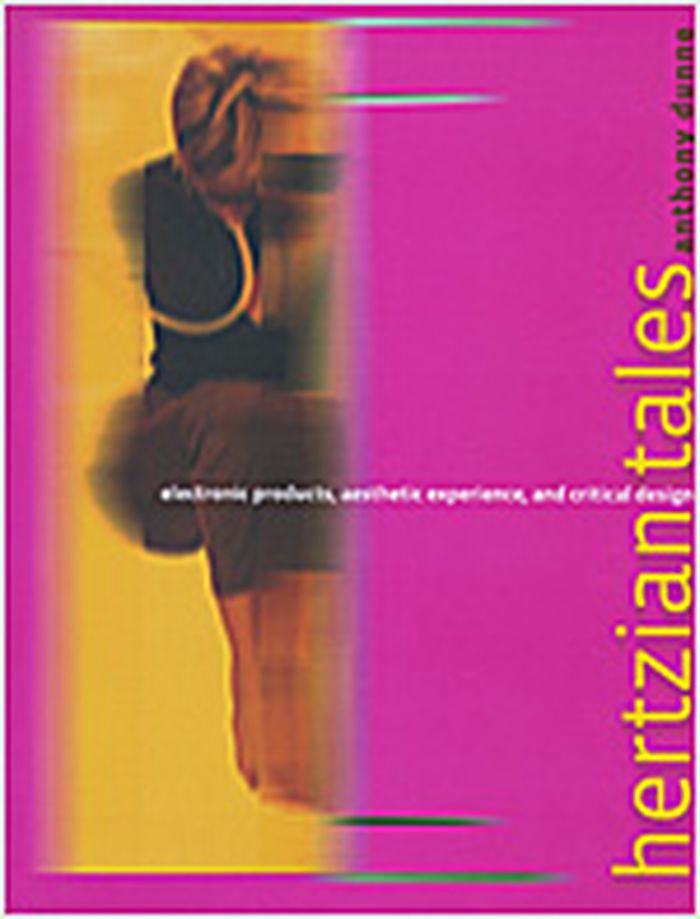
As our everyday social and cultural experiences are increasingly mediated by electronic products--from "intelligent" toasters to iPods--it is the design of these products that shapes our experience of the "electrosphere" in which we live. Designers of electronic products, writes Anthony Dunne in "Hertzian tales", must begin to think more broadly about the aesthetic role of electronic products in everyday life. Industrial design has the potential to enrich our daily lives--to improve the quality of our relationship to the artificial environment of technology, and even, argues Dunne, to be subverted for socially beneficial ends. The cultural speculations and conceptual design proposals in "Hertzian tales" are not utopian visions or blueprints; instead, they embody a critique of present-day practices, "mixing criticism with optimism." Six essays explore design approaches for developing the aesthetic potential of electronic products outside a commercial context--considering such topics as the post-optimal object and the aesthetics of user-unfriendliness--and five proposals offer commentary in the form of objects, videos, and images. Very little has changed in the world of design since "Hertzian tales" was first published by the Royal College of Art in 1999, writes Dunne in his preface to this MIT Press edition : "Design is not engaging with the social, cultural, and ethical implications of the technologies it makes so sexy and consumable." His project and proposals challenge it to do so.
Hertzian tales : electronic products, aesthetic experience, and critical design
Actions:
Prix:
$37.50
(disponible sur commande)
Résumé:
As our everyday social and cultural experiences are increasingly mediated by electronic products--from "intelligent" toasters to iPods--it is the design of these products that shapes our experience of the "electrosphere" in which we live. Designers of electronic products, writes Anthony Dunne in "Hertzian tales", must begin to think more broadly about the aesthetic role of electronic products in everyday life. Industrial design has the potential to enrich our daily lives--to improve the quality of our relationship to the artificial environment of technology, and even, argues Dunne, to be subverted for socially beneficial ends. The cultural speculations and conceptual design proposals in "Hertzian tales" are not utopian visions or blueprints; instead, they embody a critique of present-day practices, "mixing criticism with optimism." Six essays explore design approaches for developing the aesthetic potential of electronic products outside a commercial context--considering such topics as the post-optimal object and the aesthetics of user-unfriendliness--and five proposals offer commentary in the form of objects, videos, and images. Very little has changed in the world of design since "Hertzian tales" was first published by the Royal College of Art in 1999, writes Dunne in his preface to this MIT Press edition : "Design is not engaging with the social, cultural, and ethical implications of the technologies it makes so sexy and consumable." His project and proposals challenge it to do so.
Classification:
livres
livres
Publication:
mars 2006, Cambridge, Mass.
mars 2006, Cambridge, Mass.
Sujet:
Théorie du design
Théorie du design
Classification:
livres
livres
Actions:
Prix:
$32.95
(disponible sur commande)
Résumé:
Public toilets provide a unique opportunity for interrogating how conventional assumptions about the body, sexuality, privacy, and technology are formed in public spaces and inscribed through design across cultures. This collection of original essays from international scholars is the first to explore the cultural meanings, histories, and ideologies of public toilets as(...)
$32.95
(disponible sur commande)
Résumé:
Public toilets provide a unique opportunity for interrogating how conventional assumptions about the body, sexuality, privacy, and technology are formed in public spaces and inscribed through design across cultures. This collection of original essays from international scholars is the first to explore the cultural meanings, histories, and ideologies of public toilets as(...)
Titre:
Ladies and gents ; public toilets and gender
Actions:
Prix:
$32.95
(disponible sur commande)
Résumé:
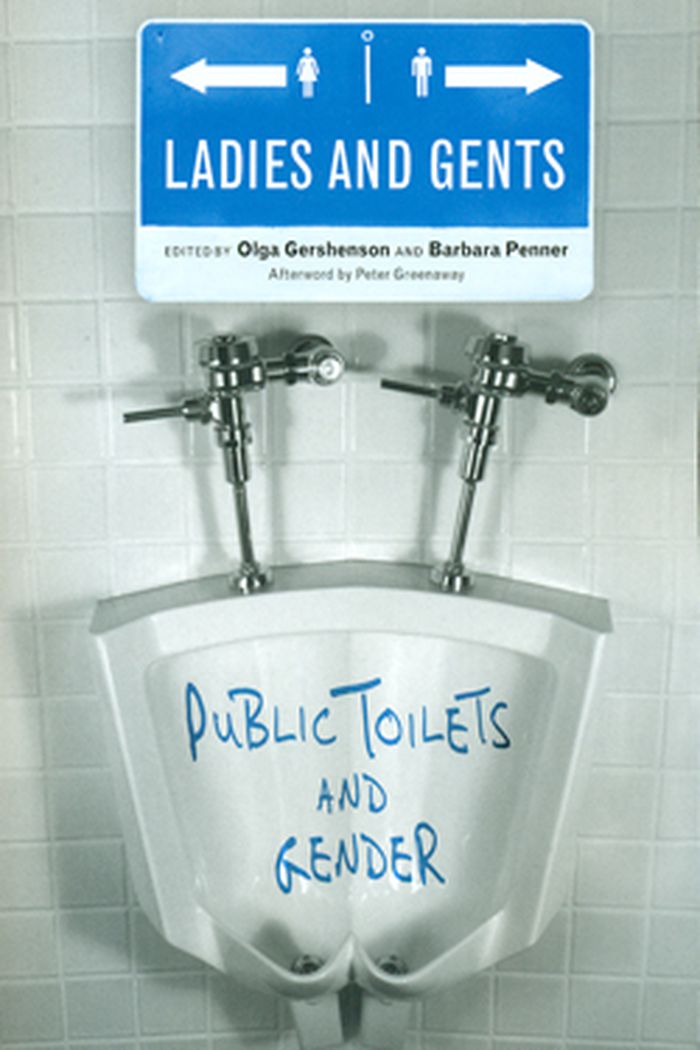
Public toilets provide a unique opportunity for interrogating how conventional assumptions about the body, sexuality, privacy, and technology are formed in public spaces and inscribed through design across cultures. This collection of original essays from international scholars is the first to explore the cultural meanings, histories, and ideologies of public toilets as gendered spaces. The publication consists of two sets of essays. The first, "Potty Politics: Toilets, Gender and Identity," establishes the importance of accessible, secure public toilets to the creation of inclusive cities, work, and learning environments. The second set of essays, "Toilet Art : Design and Cultural Representations," discusses public toilets as spaces of representation and representational spaces, with reference to architectural design, humor, film, theater, art, and popular culture. Visual materials and original artwork are included throughout, depicting subjects as varied as female urinals, art installations sited in public restrooms, and the toilet in contemporary art. Taken together, these seventeen essays demonstrate that public toilets are often sites where gendered bodies compete for resources and recognition — and the stakes are high. Contributors include: Nathan Abrams, Jami L. Anderson, Johan Andersson, Kathryn H. Anthony, Kathy Battista, Andrew Brown-May, Ben Campkin, Meghan Dufresne, Peg Fraser, Deborah Gans, Clara Greed, Robin Lydenberg, Claudia Mitchell, Alison Moore, Frances Pheasant-Kelly, Bushra Rehman, Alex Schweder, Naomi Stead, and the editors.
Ladies and gents ; public toilets and gender
Actions:
Prix:
$32.95
(disponible sur commande)
Résumé:
Public toilets provide a unique opportunity for interrogating how conventional assumptions about the body, sexuality, privacy, and technology are formed in public spaces and inscribed through design across cultures. This collection of original essays from international scholars is the first to explore the cultural meanings, histories, and ideologies of public toilets as gendered spaces. The publication consists of two sets of essays. The first, "Potty Politics: Toilets, Gender and Identity," establishes the importance of accessible, secure public toilets to the creation of inclusive cities, work, and learning environments. The second set of essays, "Toilet Art : Design and Cultural Representations," discusses public toilets as spaces of representation and representational spaces, with reference to architectural design, humor, film, theater, art, and popular culture. Visual materials and original artwork are included throughout, depicting subjects as varied as female urinals, art installations sited in public restrooms, and the toilet in contemporary art. Taken together, these seventeen essays demonstrate that public toilets are often sites where gendered bodies compete for resources and recognition — and the stakes are high. Contributors include: Nathan Abrams, Jami L. Anderson, Johan Andersson, Kathryn H. Anthony, Kathy Battista, Andrew Brown-May, Ben Campkin, Meghan Dufresne, Peg Fraser, Deborah Gans, Clara Greed, Robin Lydenberg, Claudia Mitchell, Alison Moore, Frances Pheasant-Kelly, Bushra Rehman, Alex Schweder, Naomi Stead, and the editors.
Classification:
livres
livres
Publication:
juillet 2009
juillet 2009
Sujet:
Théorie de l’urbanisme
Théorie de l’urbanisme
Classification:
livres
livres
Titre:
Museums and memory
Museums and memory
Actions:
Prix:
$28.50
(disponible sur commande)
Résumé:
Museums today are more than familiar cultural institutions and showplaces of accumulated objects; they are the sites of interaction between personal and collective identities, between memory and history. The essays in this volume consider museums from personal experience and historical study, and from the memories of museum visitors, curators, and(...)
$28.50
(disponible sur commande)
Résumé:
Museums today are more than familiar cultural institutions and showplaces of accumulated objects; they are the sites of interaction between personal and collective identities, between memory and history. The essays in this volume consider museums from personal experience and historical study, and from the memories of museum visitors, curators, and(...)
Titre:
Museums and memory
Actions:
Prix:
$28.50
(disponible sur commande)
Résumé:
Museums today are more than familiar cultural institutions and showplaces of accumulated objects; they are the sites of interaction between personal and collective identities, between memory and history. The essays in this volume consider museums from personal experience and historical study, and from the memories of museum visitors, curators, and scholars. Representing a variety of fields—history, anthropology, art history, and museum scholarship—the contributors discuss museums across disciplinary boundaries that have separated art museums from natural history museums or local history museums from national galleries. The essays range widely over time (from the Renaissance to the second half of the twentieth century), and place (China, Japan, the United States, and Germany), in exhibitions explored (photography, Native American history, and “Jurassic technology”), and institution (the Chinese Imperial Collection, Renaissance curiosity cabinets, and modern art museums). Memory operates thematically among the essays in diverse and provocative ways. The papers are organized according to three suggestive themes: experimental ways of theorizing and designing contemporary museums with an explicit interest in history and memory; discussions of personal encounters with historical exhibits; and the professional risks at stake for collectors and curators who shape the institutional presentation of history and memory. The contributors are Susan A. Crane, Wolfgang Ernst, Michael Fehr, Paula Findlen, Tamara Hamlish, Alexis Joachimides, Suzanne Marchand, Julia A. Thomas, and Diana Drake Wilson.
Museums and memory
Actions:
Prix:
$28.50
(disponible sur commande)
Résumé:
Museums today are more than familiar cultural institutions and showplaces of accumulated objects; they are the sites of interaction between personal and collective identities, between memory and history. The essays in this volume consider museums from personal experience and historical study, and from the memories of museum visitors, curators, and scholars. Representing a variety of fields—history, anthropology, art history, and museum scholarship—the contributors discuss museums across disciplinary boundaries that have separated art museums from natural history museums or local history museums from national galleries. The essays range widely over time (from the Renaissance to the second half of the twentieth century), and place (China, Japan, the United States, and Germany), in exhibitions explored (photography, Native American history, and “Jurassic technology”), and institution (the Chinese Imperial Collection, Renaissance curiosity cabinets, and modern art museums). Memory operates thematically among the essays in diverse and provocative ways. The papers are organized according to three suggestive themes: experimental ways of theorizing and designing contemporary museums with an explicit interest in history and memory; discussions of personal encounters with historical exhibits; and the professional risks at stake for collectors and curators who shape the institutional presentation of history and memory. The contributors are Susan A. Crane, Wolfgang Ernst, Michael Fehr, Paula Findlen, Tamara Hamlish, Alexis Joachimides, Suzanne Marchand, Julia A. Thomas, and Diana Drake Wilson.
Classification:
livres
livres
Publication:
juin 2000, Stanford
juin 2000, Stanford


