


7437 Résultats
Classification:
livres
livres
Prix:
$120.00
(disponible sur commande)
Résumé:
Addressing fundamental problems in modern Western approaches to art, this book proposes a conceptual frame-work for the analysis and understanding of all art by replacing the notion of the 'visual arts' with that of the 'spatial arts', which comprise two fundamental categories: 'real space' and 'virtual space'. Real space is the space we share with other people and(...)
$120.00
(disponible sur commande)
Résumé:
Addressing fundamental problems in modern Western approaches to art, this book proposes a conceptual frame-work for the analysis and understanding of all art by replacing the notion of the 'visual arts' with that of the 'spatial arts', which comprise two fundamental categories: 'real space' and 'virtual space'. Real space is the space we share with other people and(...)
Titre:
Real spaces : world art history and the rise of Western modernism
Actions:
Prix:
$120.00
(disponible sur commande)
Résumé:
Addressing fundamental problems in modern Western approaches to art, this book proposes a conceptual frame-work for the analysis and understanding of all art by replacing the notion of the 'visual arts' with that of the 'spatial arts', which comprise two fundamental categories: 'real space' and 'virtual space'. Real space is the space we share with other people and things, and its fundamental arts are sculpture - the art of personal space - and architecture, the art of social space. Virtual space, representing real space in two dimensions, as in paintings, drawings and prints, always entails a format in real space, thus making real space the primary category. Using these distinctions and adopting a wide definition of art that in principle embraces anything that is made, the author examines some of the basic characteristics of all art in a survey that traces the development of human skill from the first hominid tools to the sophisticated universal three-dimensional grid of modern technology, which he describes as 'metaoptical' space. Successive chapters deal with facture, refinement and the discovery of abstract relations; the making of places, boundaries and alignments; the creation of centres and the relations between art, order and political power; the origins of three-dimensional, planar and virtual images; planarity and the development of measures, ratios and grids; virtual images, the development of perspective and the essentially centreless metaoptical world of Western modernism.
Real spaces : world art history and the rise of Western modernism
Actions:
Prix:
$120.00
(disponible sur commande)
Résumé:
Addressing fundamental problems in modern Western approaches to art, this book proposes a conceptual frame-work for the analysis and understanding of all art by replacing the notion of the 'visual arts' with that of the 'spatial arts', which comprise two fundamental categories: 'real space' and 'virtual space'. Real space is the space we share with other people and things, and its fundamental arts are sculpture - the art of personal space - and architecture, the art of social space. Virtual space, representing real space in two dimensions, as in paintings, drawings and prints, always entails a format in real space, thus making real space the primary category. Using these distinctions and adopting a wide definition of art that in principle embraces anything that is made, the author examines some of the basic characteristics of all art in a survey that traces the development of human skill from the first hominid tools to the sophisticated universal three-dimensional grid of modern technology, which he describes as 'metaoptical' space. Successive chapters deal with facture, refinement and the discovery of abstract relations; the making of places, boundaries and alignments; the creation of centres and the relations between art, order and political power; the origins of three-dimensional, planar and virtual images; planarity and the development of measures, ratios and grids; virtual images, the development of perspective and the essentially centreless metaoptical world of Western modernism.
Classification:
livres
livres
Publication:
mai 2003, London / New York
mai 2003, London / New York
Sujet:
Théorie de l’architecture
Théorie de l’architecture
Classification:
périodiques
périodiques
Actions:
Prix:
$40.00
(disponible sur commande)
Résumé:
New Geographies 11: Extraterrestrial explores the historical and contemporary consequence of our planetary relationship with space. It interprets this duality through the conceptual lens of “extraterrestrial,” which engages an entangled zone of expanding practices in geography, landscape, and architecture, stretching Earth to space, and conversely, space to Earth. This(...)
$40.00
(disponible sur commande)
Résumé:
New Geographies 11: Extraterrestrial explores the historical and contemporary consequence of our planetary relationship with space. It interprets this duality through the conceptual lens of “extraterrestrial,” which engages an entangled zone of expanding practices in geography, landscape, and architecture, stretching Earth to space, and conversely, space to Earth. This(...)
Titre:
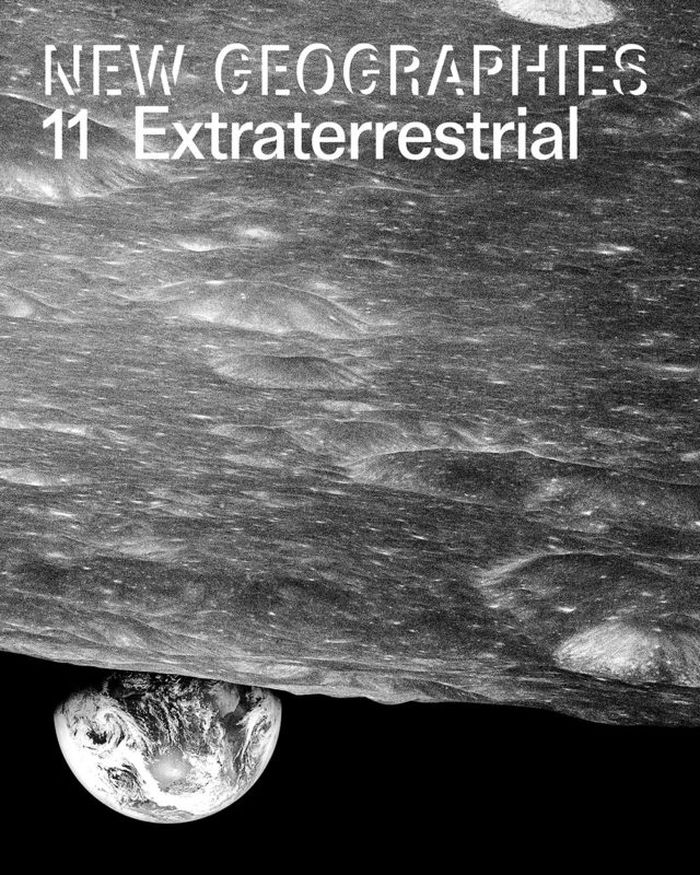
New Geographies 11: Extraterrestrial
Actions:
Prix:
$40.00
(disponible sur commande)
Résumé:
New Geographies 11: Extraterrestrial explores the historical and contemporary consequence of our planetary relationship with space. It interprets this duality through the conceptual lens of “extraterrestrial,” which engages an entangled zone of expanding practices in geography, landscape, and architecture, stretching Earth to space, and conversely, space to Earth. This issue questions the means through which space is forged as a condition extra to our own terra. Complicit within this imagination resides a deep political and economic logic that serves to territorialize outer space as an exception to, and extension of, Earth. These critical processes are revealed as not extra at all, but rather distinctly of terra. Through a series of written, photographic, and representational investigations, this edition of New Geographies builds on earlier studies of outer space from science, technology and society, as well as from the design disciplines, history, and critical geography. It reinforces the need for humanity’s changing relationship with outer space to be recorded, critiqued, and theorized from a breadth of academic traditions and projected within design discourse. This issue brings together experts contributing to the social, political, and cultural imaginary implicit in extraterrestrial. Three primary thematic territorial devices structure these explorations: a technologically constructed space between, a material culture constructed and discharged, and a space politically and economically reflective, all revealed through historical and contemporary society.
New Geographies 11: Extraterrestrial
Actions:
Prix:
$40.00
(disponible sur commande)
Résumé:
New Geographies 11: Extraterrestrial explores the historical and contemporary consequence of our planetary relationship with space. It interprets this duality through the conceptual lens of “extraterrestrial,” which engages an entangled zone of expanding practices in geography, landscape, and architecture, stretching Earth to space, and conversely, space to Earth. This issue questions the means through which space is forged as a condition extra to our own terra. Complicit within this imagination resides a deep political and economic logic that serves to territorialize outer space as an exception to, and extension of, Earth. These critical processes are revealed as not extra at all, but rather distinctly of terra. Through a series of written, photographic, and representational investigations, this edition of New Geographies builds on earlier studies of outer space from science, technology and society, as well as from the design disciplines, history, and critical geography. It reinforces the need for humanity’s changing relationship with outer space to be recorded, critiqued, and theorized from a breadth of academic traditions and projected within design discourse. This issue brings together experts contributing to the social, political, and cultural imaginary implicit in extraterrestrial. Three primary thematic territorial devices structure these explorations: a technologically constructed space between, a material culture constructed and discharged, and a space politically and economically reflective, all revealed through historical and contemporary society.
Classification:
périodiques
périodiques
Publication:
juin 2020
juin 2020
Sujet:
Revues
Revues
Classification:
livres
livres
Actions:
Prix:
$37.99
(disponible en magasin)
Résumé:
Digital tools have launched architecture into a dizzying new era, one in which wood, stone, metal, glass, and other traditional materials are augmented by pixels and code. In this ambitious exploration, an eminent thinker examines what, exactly, the building blocks of architecture have meant over the centuries and how technology may-or may not-be changing how we think(...)
$37.99
(disponible en magasin)
Résumé:
Digital tools have launched architecture into a dizzying new era, one in which wood, stone, metal, glass, and other traditional materials are augmented by pixels and code. In this ambitious exploration, an eminent thinker examines what, exactly, the building blocks of architecture have meant over the centuries and how technology may-or may not-be changing how we think(...)
Titre:
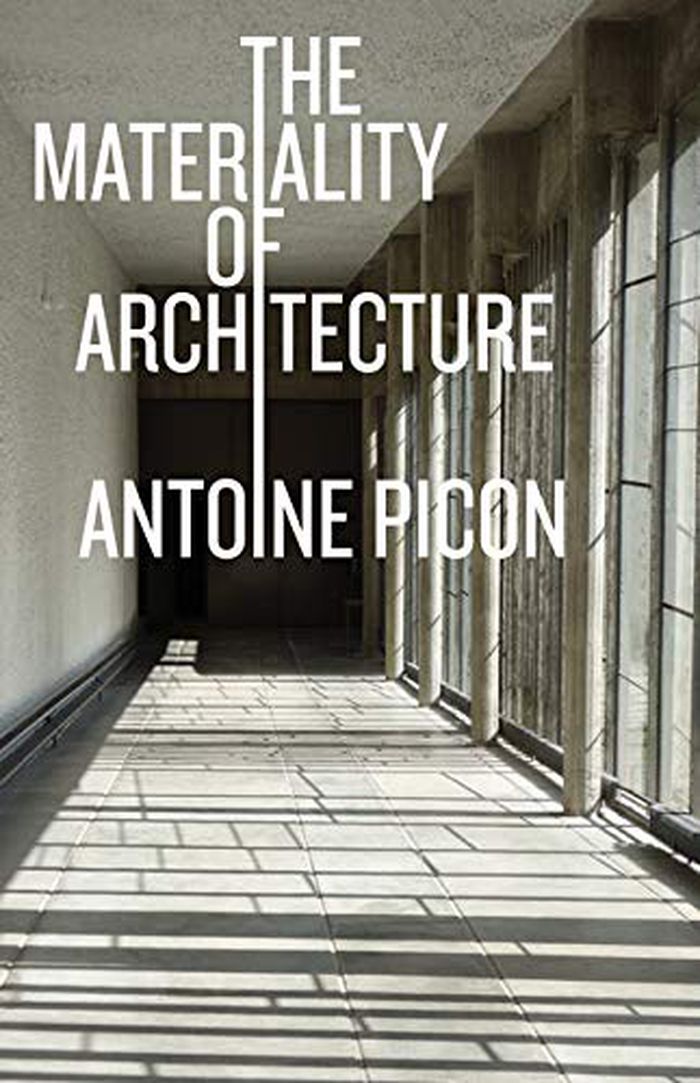
The materiality of architecture
Actions:
Prix:
$37.99
(disponible en magasin)
Résumé:
Digital tools have launched architecture into a dizzying new era, one in which wood, stone, metal, glass, and other traditional materials are augmented by pixels and code. In this ambitious exploration, an eminent thinker examines what, exactly, the building blocks of architecture have meant over the centuries and how technology may-or may not-be changing how we think about them. Antoine Picon argues that materiality is not only about matter and that the silence and inscrutability-the otherness-of raw materials work against humanity's need to live in a meaningful world. He describes how people define who they are, in part, through their specific physical experience of architectural materials and spaces. Indeed, Picon asserts, the entire paradox of the architectural discipline consists in its desire to render matter expressive to human beings. Through a retrospective review of canonical moments in Western European architecture, Picon offers an original perspective on the ways materiality has varied throughout centuries, demonstrating how experiences of the physical world have changed in relation to the evolution of human subjectivity. Ultimately, Picon concludes that computer-based design methods are not an abrupt departure from previous architectural traditions but rather a new way for architects to control material resources. The result reinforces the fundamentally humanistic nature of architectural endeavor with an increasing sense of design freedom and a release from material constraint in the digital era.
The materiality of architecture
Actions:
Prix:
$37.99
(disponible en magasin)
Résumé:
Digital tools have launched architecture into a dizzying new era, one in which wood, stone, metal, glass, and other traditional materials are augmented by pixels and code. In this ambitious exploration, an eminent thinker examines what, exactly, the building blocks of architecture have meant over the centuries and how technology may-or may not-be changing how we think about them. Antoine Picon argues that materiality is not only about matter and that the silence and inscrutability-the otherness-of raw materials work against humanity's need to live in a meaningful world. He describes how people define who they are, in part, through their specific physical experience of architectural materials and spaces. Indeed, Picon asserts, the entire paradox of the architectural discipline consists in its desire to render matter expressive to human beings. Through a retrospective review of canonical moments in Western European architecture, Picon offers an original perspective on the ways materiality has varied throughout centuries, demonstrating how experiences of the physical world have changed in relation to the evolution of human subjectivity. Ultimately, Picon concludes that computer-based design methods are not an abrupt departure from previous architectural traditions but rather a new way for architects to control material resources. The result reinforces the fundamentally humanistic nature of architectural endeavor with an increasing sense of design freedom and a release from material constraint in the digital era.
Classification:
livres
livres
Publication:
janvier 2021
janvier 2021
Sujet:
Théorie de l’architecture
Théorie de l’architecture
Classification:
livres
livres
Actions:
Prix:
$22.00
(disponible sur commande)
Résumé:
"Visual cultures as time travel" makes a case for cultural, aesthetic, and historical research that is oriented toward the future, not the past, actively constructing new categories of assembly that don't yet exist. Ayesha Hameed considers the relationship between climate change and plantation economies, proposing a watery plantationocene that revolves around two islands:(...)
$22.00
(disponible sur commande)
Résumé:
"Visual cultures as time travel" makes a case for cultural, aesthetic, and historical research that is oriented toward the future, not the past, actively constructing new categories of assembly that don't yet exist. Ayesha Hameed considers the relationship between climate change and plantation economies, proposing a watery plantationocene that revolves around two islands:(...)
Titre:
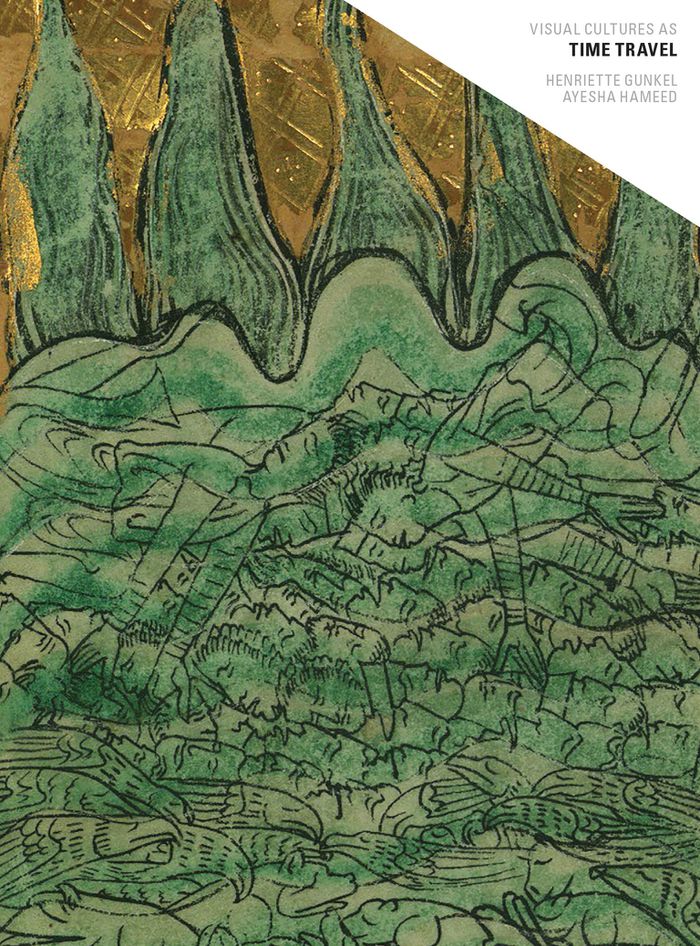
Visual cultures as time travel
Actions:
Prix:
$22.00
(disponible sur commande)
Résumé:
"Visual cultures as time travel" makes a case for cultural, aesthetic, and historical research that is oriented toward the future, not the past, actively constructing new categories of assembly that don't yet exist. Ayesha Hameed considers the relationship between climate change and plantation economies, proposing a watery plantationocene that revolves around two islands: a former plantation in St. George's Parish in Barbados, and the port city of Port of Spain in Trinidad. It visits a marine research institute on a third island, Seili in Finland, to consider how notions of temporality and adaptation are produced in the climate emergency we face. Henriette Gunkel introduces the idea of time travel through notions of dizziness, freefall, and of being in vertigo as set out in Octavia Butler's novel Kindred and Kitso Lynn Lelliott's multimedia installation South Atlantic Hauntings, exploring what counts as technology, how it operates in relation to time, including deep space time, and how it interacts with the different types of bodies—human, machine, planetary, spectral, ancestral—that inhabit the terrestrial and extraterrestrial worlds. In conversation, Hameed and Gunkel propose a notion of time travel marked by possibility and loss—in the aftermath of transatlantic slavery and in the moment of mass illegalized migration, of blackness and time, of wildfires and floods, of lost and co-opted futures, of deep geological time, and of falling.
Visual cultures as time travel
Actions:
Prix:
$22.00
(disponible sur commande)
Résumé:
"Visual cultures as time travel" makes a case for cultural, aesthetic, and historical research that is oriented toward the future, not the past, actively constructing new categories of assembly that don't yet exist. Ayesha Hameed considers the relationship between climate change and plantation economies, proposing a watery plantationocene that revolves around two islands: a former plantation in St. George's Parish in Barbados, and the port city of Port of Spain in Trinidad. It visits a marine research institute on a third island, Seili in Finland, to consider how notions of temporality and adaptation are produced in the climate emergency we face. Henriette Gunkel introduces the idea of time travel through notions of dizziness, freefall, and of being in vertigo as set out in Octavia Butler's novel Kindred and Kitso Lynn Lelliott's multimedia installation South Atlantic Hauntings, exploring what counts as technology, how it operates in relation to time, including deep space time, and how it interacts with the different types of bodies—human, machine, planetary, spectral, ancestral—that inhabit the terrestrial and extraterrestrial worlds. In conversation, Hameed and Gunkel propose a notion of time travel marked by possibility and loss—in the aftermath of transatlantic slavery and in the moment of mass illegalized migration, of blackness and time, of wildfires and floods, of lost and co-opted futures, of deep geological time, and of falling.
Classification:
livres
livres
Publication:
septembre 2021
septembre 2021
Sujet:
Théorie/ philosophie
Théorie/ philosophie
Classification:
livres
livres
Titre:
Mårten Lange: Ghost witness
Mårten Lange: Ghost witness
Actions:
Prix:
$67.95
(disponible sur commande)
Résumé:
China has a rich tradition of ghost stories and supernatural beliefs. There are tales of ghosts that can shape-shift, or turn into air, or pure darkness or light. In ''Ghost witness,'' Mårten Lange tells the story of a country rushing towards the future with the past following silently behind, like a spectre in the smog. In his time in China, Lange visited urban(...)
$67.95
(disponible sur commande)
Résumé:
China has a rich tradition of ghost stories and supernatural beliefs. There are tales of ghosts that can shape-shift, or turn into air, or pure darkness or light. In ''Ghost witness,'' Mårten Lange tells the story of a country rushing towards the future with the past following silently behind, like a spectre in the smog. In his time in China, Lange visited urban(...)
Titre:
Mårten Lange: Ghost witness
Actions:
Prix:
$67.95
(disponible sur commande)
Résumé:
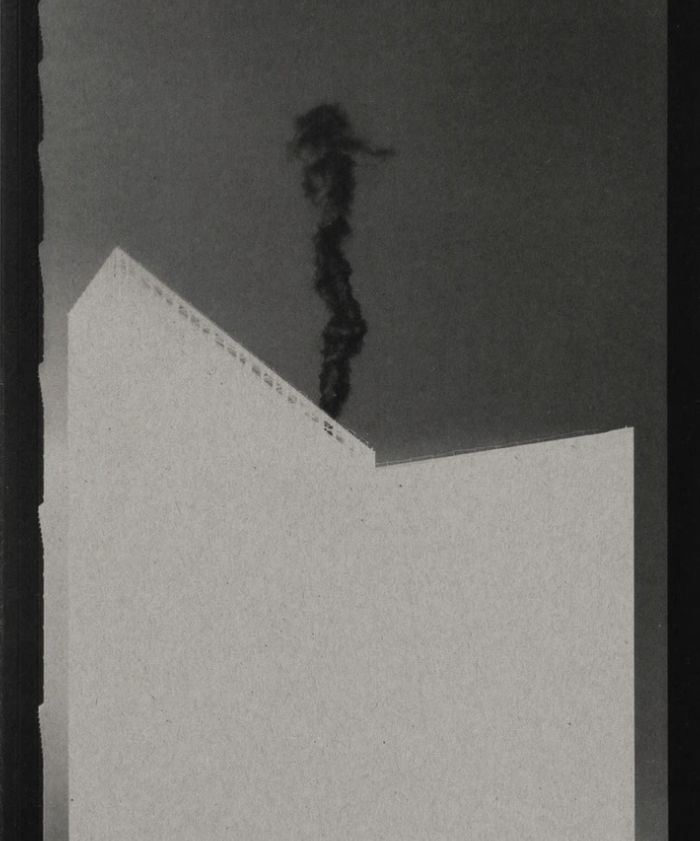
China has a rich tradition of ghost stories and supernatural beliefs. There are tales of ghosts that can shape-shift, or turn into air, or pure darkness or light. In ''Ghost witness,'' Mårten Lange tells the story of a country rushing towards the future with the past following silently behind, like a spectre in the smog. In his time in China, Lange visited urban metropolises that have expanded rapidly in recent years, as a result of hyper-accelerated growth and development. Walking through these megacities, Lange explores the bleeding edge between rationalised urban planning and messy everyday lives. ''Ghost witness'' engages with the unique quality of light in the urban environment, where the sun filters through the polluted air and the vast arrays of LEDs twinkle in the rain – revealing the world indirectly, like a mirror. The images in ''Ghost witness'' inhabit and replicate the machine-like rational logic of the grid to interrogate overlaps and fissures between architecture, technology, surveillance and the future. Lange’s precise photographs often describe those fissures: indecipherable codes, broken windows, decay and entropy within the order of glass and steel. Suspended in a liminal state between constant construction and expansion, Lange questions what it means for humanity to dwell inside environments that are planned, designed and repeated, with little recourse for history, transition and change.
Mårten Lange: Ghost witness
Actions:
Prix:
$67.95
(disponible sur commande)
Résumé:
China has a rich tradition of ghost stories and supernatural beliefs. There are tales of ghosts that can shape-shift, or turn into air, or pure darkness or light. In ''Ghost witness,'' Mårten Lange tells the story of a country rushing towards the future with the past following silently behind, like a spectre in the smog. In his time in China, Lange visited urban metropolises that have expanded rapidly in recent years, as a result of hyper-accelerated growth and development. Walking through these megacities, Lange explores the bleeding edge between rationalised urban planning and messy everyday lives. ''Ghost witness'' engages with the unique quality of light in the urban environment, where the sun filters through the polluted air and the vast arrays of LEDs twinkle in the rain – revealing the world indirectly, like a mirror. The images in ''Ghost witness'' inhabit and replicate the machine-like rational logic of the grid to interrogate overlaps and fissures between architecture, technology, surveillance and the future. Lange’s precise photographs often describe those fissures: indecipherable codes, broken windows, decay and entropy within the order of glass and steel. Suspended in a liminal state between constant construction and expansion, Lange questions what it means for humanity to dwell inside environments that are planned, designed and repeated, with little recourse for history, transition and change.
Classification:
livres
livres
Publication:
novembre 2020
novembre 2020
Sujet:
Monographies photo
Monographies photo
Classification:
livres
livres
Titre:
Conversations
Conversations
Actions:
Prix:
$25.95
(disponible sur commande)
Résumé:
Ai Weiwei is one of the world’s most acclaimed artists and dissidents. This book presents him in conversation with theorists, critics, journalists, and curators about key moments in his life and career. These wide-ranging conversations flow between topics such as his relationship with China, the meaning of citizenship, moving his studio to Lesbos to be on the front lines(...)
$25.95
(disponible sur commande)
Résumé:
Ai Weiwei is one of the world’s most acclaimed artists and dissidents. This book presents him in conversation with theorists, critics, journalists, and curators about key moments in his life and career. These wide-ranging conversations flow between topics such as his relationship with China, the meaning of citizenship, moving his studio to Lesbos to be on the front lines(...)
Titre:
Conversations
Actions:
Prix:
$25.95
(disponible sur commande)
Résumé:
Ai Weiwei is one of the world’s most acclaimed artists and dissidents. This book presents him in conversation with theorists, critics, journalists, and curators about key moments in his life and career. These wide-ranging conversations flow between topics such as his relationship with China, the meaning of citizenship, moving his studio to Lesbos to be on the front lines of the migrant crisis, how to make art, and technology as a tool for freedom or oppression. Ai opens up about his relationship to his father as a poet and as a dissident forced into hard labor in a small village after the Cultural Revolution. He shares his thoughts on formal education and the importance of finding your own way as an artist. New York- both the city and its people- were formative for Ai Weiwei, and he speaks eloquently about how these experiences continue to influence him. Ai conjures up scenes from his long relationship with the city: dropping out of Parsons School of Design because he couldn’t afford tuition, making portraits in Washington Square Park as an undocumented immigrant in the 1980s, taking photos for the New York Times at demonstrations in Tompkins Square Park, and returning to set up the ''Good Fences Make Good Neighbors'' project across the city. These candid, spontaneous conversations reveal why Ai Weiwei has become such a major force in contemporary art and political life.
Conversations
Actions:
Prix:
$25.95
(disponible sur commande)
Résumé:
Ai Weiwei is one of the world’s most acclaimed artists and dissidents. This book presents him in conversation with theorists, critics, journalists, and curators about key moments in his life and career. These wide-ranging conversations flow between topics such as his relationship with China, the meaning of citizenship, moving his studio to Lesbos to be on the front lines of the migrant crisis, how to make art, and technology as a tool for freedom or oppression. Ai opens up about his relationship to his father as a poet and as a dissident forced into hard labor in a small village after the Cultural Revolution. He shares his thoughts on formal education and the importance of finding your own way as an artist. New York- both the city and its people- were formative for Ai Weiwei, and he speaks eloquently about how these experiences continue to influence him. Ai conjures up scenes from his long relationship with the city: dropping out of Parsons School of Design because he couldn’t afford tuition, making portraits in Washington Square Park as an undocumented immigrant in the 1980s, taking photos for the New York Times at demonstrations in Tompkins Square Park, and returning to set up the ''Good Fences Make Good Neighbors'' project across the city. These candid, spontaneous conversations reveal why Ai Weiwei has become such a major force in contemporary art and political life.
Classification:
livres
livres
Publication:
février 2021
février 2021
Classification:
livres
livres
Prix:
$98.00
(disponible sur commande)
Résumé:
''Room 606'' preserves the definitive masterwork of the Danish architect and designer Arne Jacobsen, in microcosm. Room 606 is the only surviving interior of the SAS House; the combined luxury hotel and satellite air terminal that Jacobsen designed for the Scandinavian Airlines System (SAS) and completed in 1960. The SAS House was the most complete commission of(...)
$98.00
(disponible sur commande)
Résumé:
''Room 606'' preserves the definitive masterwork of the Danish architect and designer Arne Jacobsen, in microcosm. Room 606 is the only surviving interior of the SAS House; the combined luxury hotel and satellite air terminal that Jacobsen designed for the Scandinavian Airlines System (SAS) and completed in 1960. The SAS House was the most complete commission of(...)
Titre:
Room 606: The SAS House and the Work of Arne Jacobsen
Actions:
Prix:
$98.00
(disponible sur commande)
Résumé:
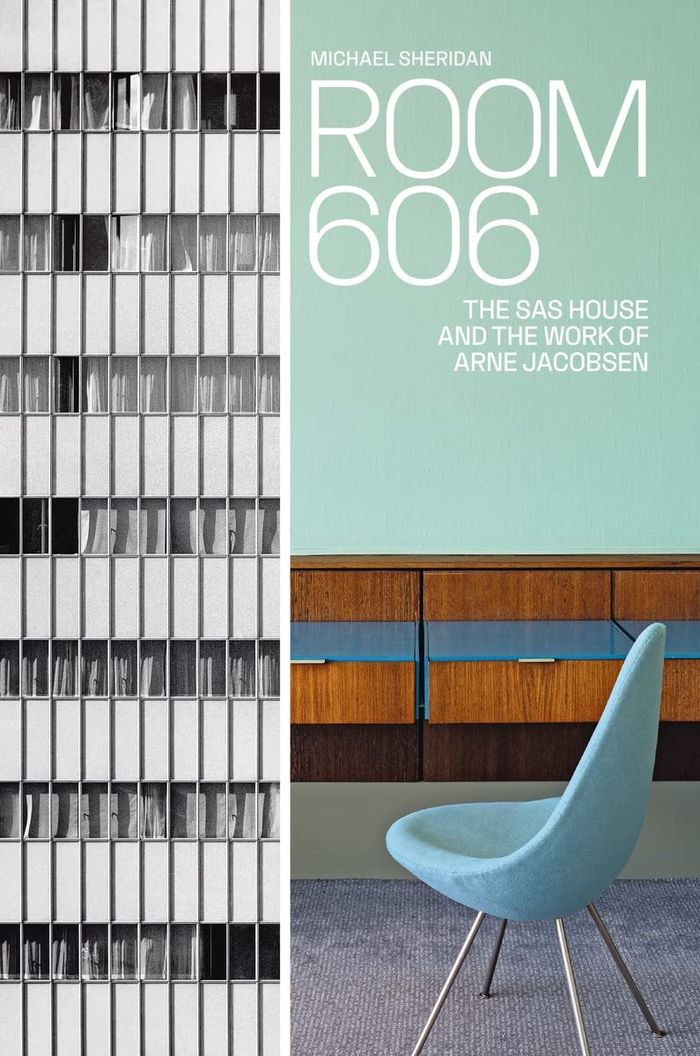
''Room 606'' preserves the definitive masterwork of the Danish architect and designer Arne Jacobsen, in microcosm. Room 606 is the only surviving interior of the SAS House; the combined luxury hotel and satellite air terminal that Jacobsen designed for the Scandinavian Airlines System (SAS) and completed in 1960. The SAS House was the most complete commission of Jacobsen’s career, in which he exercised the full range of his talents as a designer of furniture, lamps, textiles, gardens, tableware and graphics. As the fragment that encapsulates the basic ideas of the whole building, Room 606 provides a lens for reconstructing Jacobsen’s vanished masterwork in words and images. Richly illustrated with nearly 500 photographs and drawings, this book guides the reader on a virtual tour through the Royal Hotel and SAS Air Terminal as they stood in 1960. Along the way, the author reveals the connections between the SAS House and Jacobsen’s earlier buildings and objects. As a result, the tour that begins in Room 606 provides a general introduction to Jacobsen’s career. Based on his ongoing study of modern Nordic architecture, Michael Sheridan has developed ideas established in his 2003 cult classic- also titled ''Room 606'' and long out of print- to arrive at a fresh perspective on Arne Jacobsen’s life’s work. Using new text and images, Sheridan reveals the essence of Jacobsen’s creative practice, in which he employed technology to heighten the presence of nature.
Room 606: The SAS House and the Work of Arne Jacobsen
Actions:
Prix:
$98.00
(disponible sur commande)
Résumé:
''Room 606'' preserves the definitive masterwork of the Danish architect and designer Arne Jacobsen, in microcosm. Room 606 is the only surviving interior of the SAS House; the combined luxury hotel and satellite air terminal that Jacobsen designed for the Scandinavian Airlines System (SAS) and completed in 1960. The SAS House was the most complete commission of Jacobsen’s career, in which he exercised the full range of his talents as a designer of furniture, lamps, textiles, gardens, tableware and graphics. As the fragment that encapsulates the basic ideas of the whole building, Room 606 provides a lens for reconstructing Jacobsen’s vanished masterwork in words and images. Richly illustrated with nearly 500 photographs and drawings, this book guides the reader on a virtual tour through the Royal Hotel and SAS Air Terminal as they stood in 1960. Along the way, the author reveals the connections between the SAS House and Jacobsen’s earlier buildings and objects. As a result, the tour that begins in Room 606 provides a general introduction to Jacobsen’s career. Based on his ongoing study of modern Nordic architecture, Michael Sheridan has developed ideas established in his 2003 cult classic- also titled ''Room 606'' and long out of print- to arrive at a fresh perspective on Arne Jacobsen’s life’s work. Using new text and images, Sheridan reveals the essence of Jacobsen’s creative practice, in which he employed technology to heighten the presence of nature.
Classification:
livres
livres
Publication:
mars 2023
mars 2023
Sujet:
Architecture, monographies
Architecture, monographies
Classification:
livres
livres
Prix:
$45.00
(disponible sur commande)
Résumé:
As digital technology advances at breakneck speed, images are circulating quicker than ever before. But what is the status of the image in the digital era? In this publication, art historian Hubert Burda (born 1940) examines the "iconic turn" in ten themed chapters and conversations with leading cultural theorists. In the first chapter, "The View Through the Window,"(...)
$45.00
(disponible sur commande)
Résumé:
As digital technology advances at breakneck speed, images are circulating quicker than ever before. But what is the status of the image in the digital era? In this publication, art historian Hubert Burda (born 1940) examines the "iconic turn" in ten themed chapters and conversations with leading cultural theorists. In the first chapter, "The View Through the Window,"(...)
Sujet:
Épistémologie et réseau
Épistémologie et réseau
Publication:
août 2011
août 2011
Titre:
The digital wunderkammer : 10 chapters on the iconic turn
Actions:
Prix:
$45.00
(disponible sur commande)
Résumé:
As digital technology advances at breakneck speed, images are circulating quicker than ever before. But what is the status of the image in the digital era? In this publication, art historian Hubert Burda (born 1940) examines the "iconic turn" in ten themed chapters and conversations with leading cultural theorists. In the first chapter, "The View Through the Window," Burda traces the connection between perspectival painting and the television, demonstrating in the second chapter how the image requires a frame, which in turn requires a material vehicle - the topic of the third chapter - that in our era has become a non-material vehicle with its own formal parameters. In the fourth chapter, "The Mobile Image," Burda shows how images have always been linked to portability, but now migrate to an unprecedented degree, so that anyone with a personal device can globally disseminate, say, footage from a concert via Youtube. A discussion of the capacity of individual images to placate or ennervate leads to a seventh chapter on the appetite for the Sublime and the rhetoric and representation of power throughout art history. Following a discussion of the democratization of celebrity culture, Burda proposes that the Google search box is perhaps the most interesting "interface" of our times, analogous to the seventeenth-century cabinet of curiosities (or wunderkammer). Conversations with Friedrich Kittler, Peter Sloterdijk, Bazon Brock, Horst Bredekamp and Hans Belting further extend this imaginative debate on the "iconic turn."
The digital wunderkammer : 10 chapters on the iconic turn
Actions:
Prix:
$45.00
(disponible sur commande)
Résumé:
As digital technology advances at breakneck speed, images are circulating quicker than ever before. But what is the status of the image in the digital era? In this publication, art historian Hubert Burda (born 1940) examines the "iconic turn" in ten themed chapters and conversations with leading cultural theorists. In the first chapter, "The View Through the Window," Burda traces the connection between perspectival painting and the television, demonstrating in the second chapter how the image requires a frame, which in turn requires a material vehicle - the topic of the third chapter - that in our era has become a non-material vehicle with its own formal parameters. In the fourth chapter, "The Mobile Image," Burda shows how images have always been linked to portability, but now migrate to an unprecedented degree, so that anyone with a personal device can globally disseminate, say, footage from a concert via Youtube. A discussion of the capacity of individual images to placate or ennervate leads to a seventh chapter on the appetite for the Sublime and the rhetoric and representation of power throughout art history. Following a discussion of the democratization of celebrity culture, Burda proposes that the Google search box is perhaps the most interesting "interface" of our times, analogous to the seventeenth-century cabinet of curiosities (or wunderkammer). Conversations with Friedrich Kittler, Peter Sloterdijk, Bazon Brock, Horst Bredekamp and Hans Belting further extend this imaginative debate on the "iconic turn."
Classification:
livres
livres
Publication:
août 2011
août 2011
Sujet:
Épistémologie et réseau
Épistémologie et réseau
Classification:
livres
livres
Prix:
$75.95
(disponible sur commande)
Résumé:
Valerio Olgiati has worked as an architect in Los Angeles, Zurich, and, since 2008, in Flims. He has been a visiting professor at the Eidgenössische Technische Hochschule (Swiss Federal Institute of Technology) in Zurich, the AA in London, and at Cornell University in Ithaca, New York. Since 2002 he has been professor at the Accademia di architettura in Mendrisio and(...)
$75.95
(disponible sur commande)
Résumé:
Valerio Olgiati has worked as an architect in Los Angeles, Zurich, and, since 2008, in Flims. He has been a visiting professor at the Eidgenössische Technische Hochschule (Swiss Federal Institute of Technology) in Zurich, the AA in London, and at Cornell University in Ithaca, New York. Since 2002 he has been professor at the Accademia di architettura in Mendrisio and(...)
Titre:
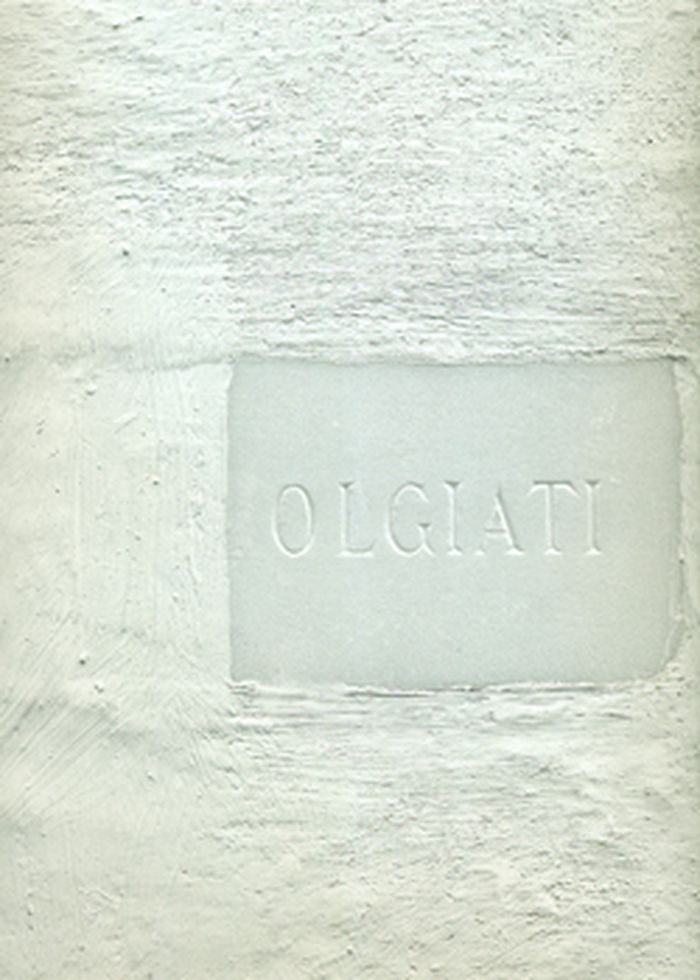
Dado : built and inhabited by Rudolph Olgiati and Valerio Olgiati
Actions:
Prix:
$75.95
(disponible sur commande)
Résumé:
Valerio Olgiati has worked as an architect in Los Angeles, Zurich, and, since 2008, in Flims. He has been a visiting professor at the Eidgenössische Technische Hochschule (Swiss Federal Institute of Technology) in Zurich, the AA in London, and at Cornell University in Ithaca, New York. Since 2002 he has been professor at the Accademia di architettura in Mendrisio and since autumn 2009 he has held the Kenzo Tange Chair at Harvard. The unmistakable straight lines and independence of his buildings has brought him international attention. The Olgiati’s family estate is located in the historical town center of Flims. Rudolf Olgiati (1910–95) purchased the property, known as Dado, in 1930 and throughout his life used it to realize his architectural thoughts and ideas. Today, the son is living in his father’s house, and in 2008 he set up his much-admired architectural firm on the former site of the barn. This publication portrays the life and work of both architects using the example of the house and studio - that is, through the transformations they have undergone at the hands of their residents over a period of nearly eighty years. It shows personal furniture and objects, the individual layout and design of the spaces, and hence the penchants and attitudes of the two architects. At the same time this unusual portrait documents not only the relationship between father and son but also the characters of two generations and their understanding of architecture and aesthetics.
Dado : built and inhabited by Rudolph Olgiati and Valerio Olgiati
Actions:
Prix:
$75.95
(disponible sur commande)
Résumé:
Valerio Olgiati has worked as an architect in Los Angeles, Zurich, and, since 2008, in Flims. He has been a visiting professor at the Eidgenössische Technische Hochschule (Swiss Federal Institute of Technology) in Zurich, the AA in London, and at Cornell University in Ithaca, New York. Since 2002 he has been professor at the Accademia di architettura in Mendrisio and since autumn 2009 he has held the Kenzo Tange Chair at Harvard. The unmistakable straight lines and independence of his buildings has brought him international attention. The Olgiati’s family estate is located in the historical town center of Flims. Rudolf Olgiati (1910–95) purchased the property, known as Dado, in 1930 and throughout his life used it to realize his architectural thoughts and ideas. Today, the son is living in his father’s house, and in 2008 he set up his much-admired architectural firm on the former site of the barn. This publication portrays the life and work of both architects using the example of the house and studio - that is, through the transformations they have undergone at the hands of their residents over a period of nearly eighty years. It shows personal furniture and objects, the individual layout and design of the spaces, and hence the penchants and attitudes of the two architects. At the same time this unusual portrait documents not only the relationship between father and son but also the characters of two generations and their understanding of architecture and aesthetics.
Classification:
livres
livres
Publication:
mars 2010
mars 2010
Sujet:
Architecture, monographies
Architecture, monographies
Classification:
livres
livres
Actions:
Prix:
$44.95
(disponible sur commande)
Résumé:
"Worldchanging : a User's guide for the 21st century " proposes innovative solutions, ideas and inventions emerging today for building a sustainable, livable, prosperous future. From consumer consciousness to a new vision for industry; non-toxic homes to refugee shelters; microfinance to effective philanthropy; socially responsible investing to starting a green business;(...)
$44.95
(disponible sur commande)
Résumé:
"Worldchanging : a User's guide for the 21st century " proposes innovative solutions, ideas and inventions emerging today for building a sustainable, livable, prosperous future. From consumer consciousness to a new vision for industry; non-toxic homes to refugee shelters; microfinance to effective philanthropy; socially responsible investing to starting a green business;(...)
Titre:
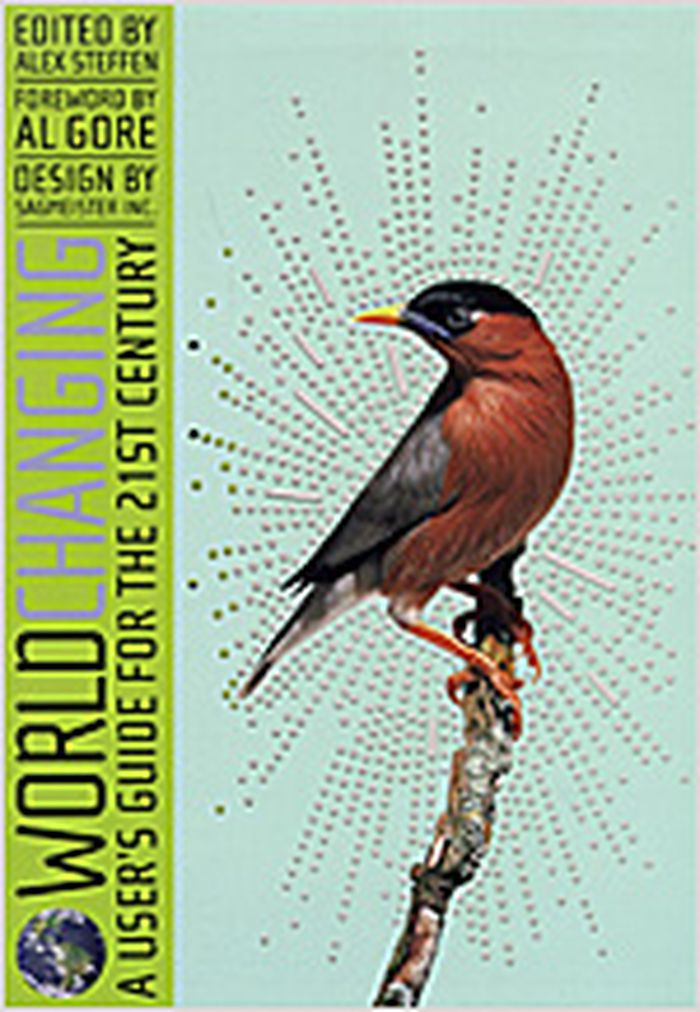
Worldchanging : a user's guide for the 21st century
Actions:
Prix:
$44.95
(disponible sur commande)
Résumé:
"Worldchanging : a User's guide for the 21st century " proposes innovative solutions, ideas and inventions emerging today for building a sustainable, livable, prosperous future. From consumer consciousness to a new vision for industry; non-toxic homes to refugee shelters; microfinance to effective philanthropy; socially responsible investing to starting a green business; citizen media to human rights; ecological economics to climate change, this is a comprehensive, cutting-edge overview. The book contains 7 sections which include those topics - from eco-building to responsible shopping, political action to humanitarian relief : stuff : green design, biomimicry, sustainable food, clothing, trade and technology ; shelter : green building and landscaping, clean energy, water, disaster relief and humanitarian design ; cities : smart growth, sustainable communities, transportation, greening infrastructure, product-service systems, leapfrogging and megacity challenges ; community : education, women's rights, public health, holistic approaches to community development, South-South science, social entrepreneurship and micro-lending, and philanthropy ; business : socially responsible investment, worldchanging start-ups, ecological economics, corporate social responsibility and green business ; politics : networked politics, new media, transparency, human rights, non-violent revolution and peacemaking ; planet : big picture -- everything from placing oneself in a bioregion to climate foresight to environmental history to green space exploration. Brought together by Alex Steffen, co-founder of the web site Worldchanging.com, this team of writers includes Cameron Sinclair, founder of Architecture for Humanity, Geekcorps founder Ethan Zuckerman, sustainable food expert Anna Lappé, and many others. With foreword by Al Gore. Design by Sagmeister.
Worldchanging : a user's guide for the 21st century
Actions:
Prix:
$44.95
(disponible sur commande)
Résumé:
"Worldchanging : a User's guide for the 21st century " proposes innovative solutions, ideas and inventions emerging today for building a sustainable, livable, prosperous future. From consumer consciousness to a new vision for industry; non-toxic homes to refugee shelters; microfinance to effective philanthropy; socially responsible investing to starting a green business; citizen media to human rights; ecological economics to climate change, this is a comprehensive, cutting-edge overview. The book contains 7 sections which include those topics - from eco-building to responsible shopping, political action to humanitarian relief : stuff : green design, biomimicry, sustainable food, clothing, trade and technology ; shelter : green building and landscaping, clean energy, water, disaster relief and humanitarian design ; cities : smart growth, sustainable communities, transportation, greening infrastructure, product-service systems, leapfrogging and megacity challenges ; community : education, women's rights, public health, holistic approaches to community development, South-South science, social entrepreneurship and micro-lending, and philanthropy ; business : socially responsible investment, worldchanging start-ups, ecological economics, corporate social responsibility and green business ; politics : networked politics, new media, transparency, human rights, non-violent revolution and peacemaking ; planet : big picture -- everything from placing oneself in a bioregion to climate foresight to environmental history to green space exploration. Brought together by Alex Steffen, co-founder of the web site Worldchanging.com, this team of writers includes Cameron Sinclair, founder of Architecture for Humanity, Geekcorps founder Ethan Zuckerman, sustainable food expert Anna Lappé, and many others. With foreword by Al Gore. Design by Sagmeister.
Classification:
livres
livres
Publication:
janvier 2007, New York
janvier 2007, New York
Sujet:
Architecture écologique
Architecture écologique


