


7437 Résultats
Classification:
livres
livres
Actions:
Prix:
$99.00
(disponible sur commande)
Résumé:
''Magic Architecture'' was the architect Frederick Kiesler’s most ambitious book project, an epoch-spanning history of human housing from prehistory to the atomic era, submitted to editors after World War II but left unpublished. In its holistic view of habitation through the lens of anthropology, ecology, and the life sciences, ''Magic Architecture'' is one of the most(...)
$99.00
(disponible sur commande)
Résumé:
''Magic Architecture'' was the architect Frederick Kiesler’s most ambitious book project, an epoch-spanning history of human housing from prehistory to the atomic era, submitted to editors after World War II but left unpublished. In its holistic view of habitation through the lens of anthropology, ecology, and the life sciences, ''Magic Architecture'' is one of the most(...)
Titre:
Magic architecture: The story of human housing
Actions:
Prix:
$99.00
(disponible sur commande)
Résumé:
''Magic Architecture'' was the architect Frederick Kiesler’s most ambitious book project, an epoch-spanning history of human housing from prehistory to the atomic era, submitted to editors after World War II but left unpublished. In its holistic view of habitation through the lens of anthropology, ecology, and the life sciences, ''Magic Architecture'' is one of the most extraordinary texts on architecture written in the twentieth century, now at last published in the twenty-first. Kiesler’s exploration of the effects of modern technology in combination with the alternative epistemology of “magical” practices associated with cave drawings and the first artifacts of human industry reflects his profoundly interdisciplinary perspective on the development of art, architecture, and design. This critical edition preserves Kiesler’s conception of the book as a neo-Vitruvian treatise divided into ten parts that narrate an alternative history and theory of architecture. Also included are more than seventy composite plate illustrations consisting of images cut and pasted from books and popular science journals, with elaborate captions, as well as Kiesler’s own line drawings made specifically for this project. The editors have reassembled the book’s text and illustrations from archival documents, supplementing them with notes that trace the copious development of the work. Introductory essays provide an interpretation of key themes and bibliographic sources, as well as a chronological context of the architect’s research. Appendixes offer additional textual and visual material gathered by Kiesler for the project.
Magic architecture: The story of human housing
Actions:
Prix:
$99.00
(disponible sur commande)
Résumé:
''Magic Architecture'' was the architect Frederick Kiesler’s most ambitious book project, an epoch-spanning history of human housing from prehistory to the atomic era, submitted to editors after World War II but left unpublished. In its holistic view of habitation through the lens of anthropology, ecology, and the life sciences, ''Magic Architecture'' is one of the most extraordinary texts on architecture written in the twentieth century, now at last published in the twenty-first. Kiesler’s exploration of the effects of modern technology in combination with the alternative epistemology of “magical” practices associated with cave drawings and the first artifacts of human industry reflects his profoundly interdisciplinary perspective on the development of art, architecture, and design. This critical edition preserves Kiesler’s conception of the book as a neo-Vitruvian treatise divided into ten parts that narrate an alternative history and theory of architecture. Also included are more than seventy composite plate illustrations consisting of images cut and pasted from books and popular science journals, with elaborate captions, as well as Kiesler’s own line drawings made specifically for this project. The editors have reassembled the book’s text and illustrations from archival documents, supplementing them with notes that trace the copious development of the work. Introductory essays provide an interpretation of key themes and bibliographic sources, as well as a chronological context of the architect’s research. Appendixes offer additional textual and visual material gathered by Kiesler for the project.
Classification:
livres
livres
Publication:
avril 2025
avril 2025
Sujet:
Architecture, monographies
Architecture, monographies
Classification:
livres
livres
Actions:
Prix:
$54.95
(disponible sur commande)
Résumé:
For years, architects have enjoyed the challenge of incorporating lightweight structures -- fabrics, tents, canopies, membranes, and so on -- into their designs. Such materials are a welcome boon to architectural creativity, allowing designers to envision spaces that take innovative shapes and interact with their surroundings in ways unattainable with conventional(...)
$54.95
(disponible sur commande)
Résumé:
For years, architects have enjoyed the challenge of incorporating lightweight structures -- fabrics, tents, canopies, membranes, and so on -- into their designs. Such materials are a welcome boon to architectural creativity, allowing designers to envision spaces that take innovative shapes and interact with their surroundings in ways unattainable with conventional(...)
Titre:
The magic of tents : transforming space
Actions:
Prix:
$54.95
(disponible sur commande)
Résumé:
For years, architects have enjoyed the challenge of incorporating lightweight structures -- fabrics, tents, canopies, membranes, and so on -- into their designs. Such materials are a welcome boon to architectural creativity, allowing designers to envision spaces that take innovative shapes and interact with their surroundings in ways unattainable with conventional materials. Recent years have seen an increase in the use of such structures, in part because advances in computer technology have made it easier to render and model such projects, and in part because such structures are ideally suited to today's increasing concerns about environmentalism and sustainability. The Magic of Tents showcases innovative uses of lightweight, tented structures from across the United States and around the world -- from an Arizona school to an Istanbul bank, from a Miami nightclub on the beach to a private home in Germany, from corporate headquarters in Los Angeles to offices in Oslo, and many more! The book features both residential and commercial projects, projects with both exterior and interior usages, projects where the tented element is the driving component of the design, and projects that incorporate lightweight structures to accent or address a specific need. Endlessly flexible, nurturing of creativity, cost- and energy-conscious, tented structures are an ideal means to address many concerns of modern architecture -- a creative means to not only define space, but also to transform it into something to meet all sorts of design needs, for projects both grand and small.
The magic of tents : transforming space
Actions:
Prix:
$54.95
(disponible sur commande)
Résumé:
For years, architects have enjoyed the challenge of incorporating lightweight structures -- fabrics, tents, canopies, membranes, and so on -- into their designs. Such materials are a welcome boon to architectural creativity, allowing designers to envision spaces that take innovative shapes and interact with their surroundings in ways unattainable with conventional materials. Recent years have seen an increase in the use of such structures, in part because advances in computer technology have made it easier to render and model such projects, and in part because such structures are ideally suited to today's increasing concerns about environmentalism and sustainability. The Magic of Tents showcases innovative uses of lightweight, tented structures from across the United States and around the world -- from an Arizona school to an Istanbul bank, from a Miami nightclub on the beach to a private home in Germany, from corporate headquarters in Los Angeles to offices in Oslo, and many more! The book features both residential and commercial projects, projects with both exterior and interior usages, projects where the tented element is the driving component of the design, and projects that incorporate lightweight structures to accent or address a specific need. Endlessly flexible, nurturing of creativity, cost- and energy-conscious, tented structures are an ideal means to address many concerns of modern architecture -- a creative means to not only define space, but also to transform it into something to meet all sorts of design needs, for projects both grand and small.
Classification:
livres
livres
Publication:
mai 2004, New York
mai 2004, New York
Sujet:
Architecture miniature
Architecture miniature
Classification:
livres
livres
Actions:
Prix:
$68.00
(disponible sur commande)
Résumé:
British architect Cedric Price (1934–2003) had a lifelong fascination with the mechanization of society and its effect on people’s lives. In the 1960s and ’70s, Price began to look for answers to some of the pressing problems he saw in society in the tenets of architecture and design. His intense intellectual curiosity soon led him to other disciplines, including the(...)
$68.00
(disponible sur commande)
Résumé:
British architect Cedric Price (1934–2003) had a lifelong fascination with the mechanization of society and its effect on people’s lives. In the 1960s and ’70s, Price began to look for answers to some of the pressing problems he saw in society in the tenets of architecture and design. His intense intellectual curiosity soon led him to other disciplines, including the(...)
Titre:
The city and the architecture of change: the work and radical visions of Cedric Price
Actions:
Prix:
$68.00
(disponible sur commande)
Résumé:
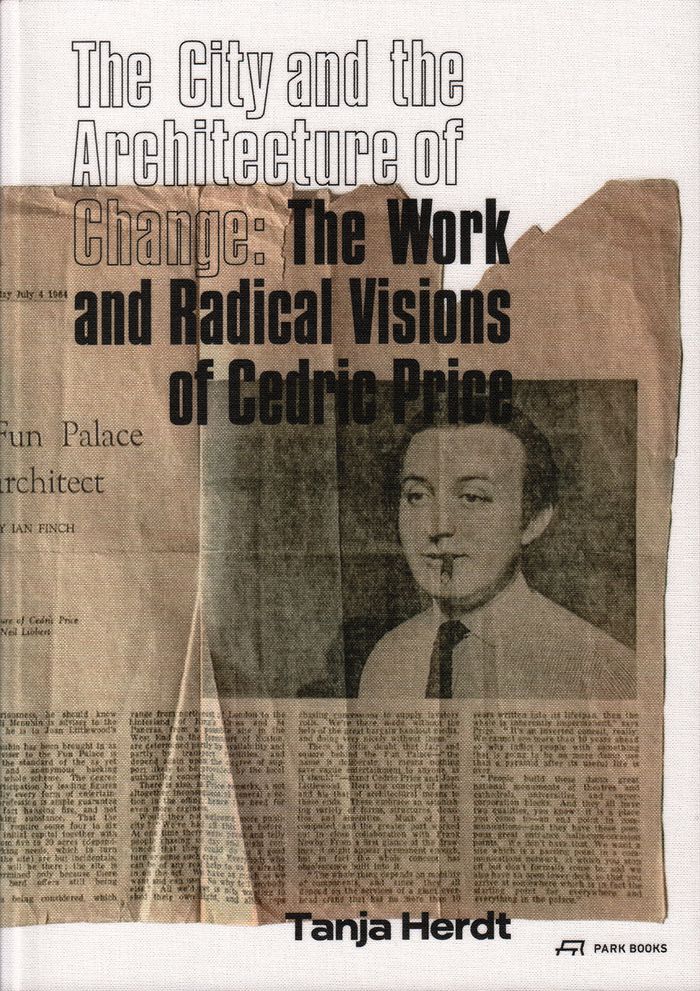
British architect Cedric Price (1934–2003) had a lifelong fascination with the mechanization of society and its effect on people’s lives. In the 1960s and ’70s, Price began to look for answers to some of the pressing problems he saw in society in the tenets of architecture and design. His intense intellectual curiosity soon led him to other disciplines, including the social and natural sciences, while his sense of humor and self-irony—which also extended to his profession—allowed him to keep his ideas in perspective. With "The city and the architecture of change", Tanja Herdt offers a comprehensive look back at the life and work of Price. Based on extensive research, including previously unpublished materials, Herdt provides a thorough account of Price’s key architectural concepts and visions, and then analyzes his perspectives on the city as a system, the influence of products and contemporary culture on architecture, and the role of science and technology in architecture and design. Apart from providing new insights into Price’s well-known and studied projects, such as Fun Palace and Potteries Thinkbelt, Herdt also brings to light many lesser-known works from the 1970s like McAppy and The Generator. She concludes by refuting the common perception of Cedric Price as an “anti-architect.” Richly illustrated with plans and photographs, many of which have never been published before, "The city and the architecture of change" affords a glimpse into the mind of this highly creative and forward-thinking architect.
The city and the architecture of change: the work and radical visions of Cedric Price
Actions:
Prix:
$68.00
(disponible sur commande)
Résumé:
British architect Cedric Price (1934–2003) had a lifelong fascination with the mechanization of society and its effect on people’s lives. In the 1960s and ’70s, Price began to look for answers to some of the pressing problems he saw in society in the tenets of architecture and design. His intense intellectual curiosity soon led him to other disciplines, including the social and natural sciences, while his sense of humor and self-irony—which also extended to his profession—allowed him to keep his ideas in perspective. With "The city and the architecture of change", Tanja Herdt offers a comprehensive look back at the life and work of Price. Based on extensive research, including previously unpublished materials, Herdt provides a thorough account of Price’s key architectural concepts and visions, and then analyzes his perspectives on the city as a system, the influence of products and contemporary culture on architecture, and the role of science and technology in architecture and design. Apart from providing new insights into Price’s well-known and studied projects, such as Fun Palace and Potteries Thinkbelt, Herdt also brings to light many lesser-known works from the 1970s like McAppy and The Generator. She concludes by refuting the common perception of Cedric Price as an “anti-architect.” Richly illustrated with plans and photographs, many of which have never been published before, "The city and the architecture of change" affords a glimpse into the mind of this highly creative and forward-thinking architect.
Classification:
livres
livres
Publication:
octobre 2017
octobre 2017
Sujet:
Architecture, monographies
Architecture, monographies
Classification:
livres
livres
Titre:
Privacy a manifesto
Privacy a manifesto
Actions:
Prix:
$24.95
(disponible sur commande)
Résumé:
What ever happened to privacy? The simple right to be left alone? Surveillance cameras track our movements. Governments monitor our phone calls, e-mails, and Internet habits. Insurance companies know what drugs we take. Banks and credit agencies keep tabs on our smallest purchases. And new technologies - which gather, store, and share information as never before - have(...)
$24.95
(disponible sur commande)
Résumé:
What ever happened to privacy? The simple right to be left alone? Surveillance cameras track our movements. Governments monitor our phone calls, e-mails, and Internet habits. Insurance companies know what drugs we take. Banks and credit agencies keep tabs on our smallest purchases. And new technologies - which gather, store, and share information as never before - have(...)
Titre:
Privacy a manifesto
Actions:
Prix:
$24.95
(disponible sur commande)
Résumé:
What ever happened to privacy? The simple right to be left alone? Surveillance cameras track our movements. Governments monitor our phone calls, e-mails, and Internet habits. Insurance companies know what drugs we take. Banks and credit agencies keep tabs on our smallest purchases. And new technologies - which gather, store, and share information as never before - have made all of this possible. But, as the acclaimed social thinker Wolfgang Sofsky shows in this brief and powerful defense of privacy, neither technology nor fears of terrorism deserve all the blame. Rather, through indifference and the desire for attention, we have been accomplices in the loss of our privacy. When we aren't resigning ourselves to privacy's disappearance as the inevitable price of living in a new age, we are eagerly embracing opportunities to divulge personal information to people we know - and, increasingly, to people we don't. Dramatically demonstrating how much privacy we have already surrendered, Sofsky describes a day in the life of an average modern citizen - in other words, a person under almost constant scrutiny. He also briefly traces the changing status of privacy from ancient Rome to today, explains how liberty and freedom of thought depend on privacy, and points to some of the places where privacy is under greatest threat, from health to personal space. Privacy is a timely and compelling reminder of just how important privacy is - and just how devastating its loss would be.
Privacy a manifesto
Actions:
Prix:
$24.95
(disponible sur commande)
Résumé:
What ever happened to privacy? The simple right to be left alone? Surveillance cameras track our movements. Governments monitor our phone calls, e-mails, and Internet habits. Insurance companies know what drugs we take. Banks and credit agencies keep tabs on our smallest purchases. And new technologies - which gather, store, and share information as never before - have made all of this possible. But, as the acclaimed social thinker Wolfgang Sofsky shows in this brief and powerful defense of privacy, neither technology nor fears of terrorism deserve all the blame. Rather, through indifference and the desire for attention, we have been accomplices in the loss of our privacy. When we aren't resigning ourselves to privacy's disappearance as the inevitable price of living in a new age, we are eagerly embracing opportunities to divulge personal information to people we know - and, increasingly, to people we don't. Dramatically demonstrating how much privacy we have already surrendered, Sofsky describes a day in the life of an average modern citizen - in other words, a person under almost constant scrutiny. He also briefly traces the changing status of privacy from ancient Rome to today, explains how liberty and freedom of thought depend on privacy, and points to some of the places where privacy is under greatest threat, from health to personal space. Privacy is a timely and compelling reminder of just how important privacy is - and just how devastating its loss would be.
Classification:
livres
livres
Publication:
octobre 2008, Princeton, Oxford
octobre 2008, Princeton, Oxford
Sujet:
Théorie/ philosophie
Théorie/ philosophie
Classification:
livres
livres
Prix:
$24.95
(disponible sur commande)
Résumé:
Industrialization created cities of Dickensian squalor that were crowded, smoky, dirty, and disease-ridden. By the beginning of the twentieth century, urban visionaries were looking for ways to improve living and working conditions in industrial cities. In "Invented Edens", Robert Kargon and Arthur Molella trace the arc of one form of urban design, which they term the(...)
$24.95
(disponible sur commande)
Résumé:
Industrialization created cities of Dickensian squalor that were crowded, smoky, dirty, and disease-ridden. By the beginning of the twentieth century, urban visionaries were looking for ways to improve living and working conditions in industrial cities. In "Invented Edens", Robert Kargon and Arthur Molella trace the arc of one form of urban design, which they term the(...)
Sujet:
Architecture écologique
Architecture écologique
Publication:
octobre 2005, Cambridge (MA), London
octobre 2005, Cambridge (MA), London
Titre:
Invented Edens : techno-cities of the twentieth century
Actions:
Prix:
$24.95
(disponible sur commande)
Résumé:
Industrialization created cities of Dickensian squalor that were crowded, smoky, dirty, and disease-ridden. By the beginning of the twentieth century, urban visionaries were looking for ways to improve living and working conditions in industrial cities. In "Invented Edens", Robert Kargon and Arthur Molella trace the arc of one form of urban design, which they term the techno-city : a planned city developed in conjunction with large industrial or technological enterprises, blending the technological and the pastoral, the mill town and the garden city. Techno-cities of the twentieth century range from factory towns in Mussolini's Italy to the Disney creation of Celebration, Florida. Kargon and Molella show that the techno-city represents an experiment in integrating modern technology into the world of ideal life. Techno-cities mirror society's understanding of current technologies and, at the same time, seek to regain the lost virtues of the edenic pre-industrial village. The idea of the techno-city transcended ideologies, crossed national borders, and spanned the entire twentieth century. Kargon and Molella map the concept through a series of exemplars. These include Norris, Tennessee, home to the Tennessee Valley Authority; Torviscosa, Italy, built by Italy's Fascist government to accommodate synthetic textile manufacturing (and featured in an early short by Michelangelo Antonioni); Ciudad Guayana, Venezuela, planned by a team from MIT and Harvard; and, finally, Disney's Celebration - perhaps the ultimate techno-city, a fantasy city reflecting an era in which virtual experiences are rapidly replacing actual ones.
Invented Edens : techno-cities of the twentieth century
Actions:
Prix:
$24.95
(disponible sur commande)
Résumé:
Industrialization created cities of Dickensian squalor that were crowded, smoky, dirty, and disease-ridden. By the beginning of the twentieth century, urban visionaries were looking for ways to improve living and working conditions in industrial cities. In "Invented Edens", Robert Kargon and Arthur Molella trace the arc of one form of urban design, which they term the techno-city : a planned city developed in conjunction with large industrial or technological enterprises, blending the technological and the pastoral, the mill town and the garden city. Techno-cities of the twentieth century range from factory towns in Mussolini's Italy to the Disney creation of Celebration, Florida. Kargon and Molella show that the techno-city represents an experiment in integrating modern technology into the world of ideal life. Techno-cities mirror society's understanding of current technologies and, at the same time, seek to regain the lost virtues of the edenic pre-industrial village. The idea of the techno-city transcended ideologies, crossed national borders, and spanned the entire twentieth century. Kargon and Molella map the concept through a series of exemplars. These include Norris, Tennessee, home to the Tennessee Valley Authority; Torviscosa, Italy, built by Italy's Fascist government to accommodate synthetic textile manufacturing (and featured in an early short by Michelangelo Antonioni); Ciudad Guayana, Venezuela, planned by a team from MIT and Harvard; and, finally, Disney's Celebration - perhaps the ultimate techno-city, a fantasy city reflecting an era in which virtual experiences are rapidly replacing actual ones.
Classification:
livres
livres
Publication:
octobre 2005, Cambridge (MA), London
octobre 2005, Cambridge (MA), London
Sujet:
Architecture écologique
Architecture écologique
Classification:
livres
livres
Actions:
Prix:
$78.00
(disponible sur commande)
Résumé:
Curious about how Alsop Architects managed to construct that flying, translucent rectangle at the Ontario College of Art and Design? Wonder about the sustainability of the Genzyme Building? The saying "the truth is in the details" reveals an essential quality of architectural design. How a staircase curves, a roof seemingly floats, or a concrete wall illuminates are(...)
$78.00
(disponible sur commande)
Résumé:
Curious about how Alsop Architects managed to construct that flying, translucent rectangle at the Ontario College of Art and Design? Wonder about the sustainability of the Genzyme Building? The saying "the truth is in the details" reveals an essential quality of architectural design. How a staircase curves, a roof seemingly floats, or a concrete wall illuminates are(...)
Publication:
décembre 2006, New York
décembre 2006, New York
Titre:
Details in contemporary architecture
Actions:
Prix:
$78.00
(disponible sur commande)
Résumé:
Curious about how Alsop Architects managed to construct that flying, translucent rectangle at the Ontario College of Art and Design? Wonder about the sustainability of the Genzyme Building? The saying "the truth is in the details" reveals an essential quality of architectural design. How a staircase curves, a roof seemingly floats, or a concrete wall illuminates are critical questions for architects looking at or creating new work. You might forgive designers for closely guarding their signature techniques. Fortunately, editors Christine Killory and René Davids culled an amazing collection of the best trade secrets in "Details in contemporary architecture". By looking at the best work of the past two years, the book demonstrates how complicated design problems have been handled by architects to achieve beautiful, functional, innovative, sustainable, and, where necessary, economical results. Including work by David Chipperfield, Herzog and de Meuron, Morphosis, ShoP, and many other well-known firms, "Details in contemporary architecture" extensively explores the common as well as more exotic architectural detailing (screens and walls, doors and windows, roofs, bridges, and stairs) that so often gets lost in the pages and photographs of the design media. "Details in contemporary architecture" is the first volume of a new series entitled "AsBuilt". AsBuilt features details from a representative range of building types and materials of recent built work in America. The series seeks to ground both practice and theory more deeply while fostering a better understanding of the relationships between architectural form and technology.
Details in contemporary architecture
Actions:
Prix:
$78.00
(disponible sur commande)
Résumé:
Curious about how Alsop Architects managed to construct that flying, translucent rectangle at the Ontario College of Art and Design? Wonder about the sustainability of the Genzyme Building? The saying "the truth is in the details" reveals an essential quality of architectural design. How a staircase curves, a roof seemingly floats, or a concrete wall illuminates are critical questions for architects looking at or creating new work. You might forgive designers for closely guarding their signature techniques. Fortunately, editors Christine Killory and René Davids culled an amazing collection of the best trade secrets in "Details in contemporary architecture". By looking at the best work of the past two years, the book demonstrates how complicated design problems have been handled by architects to achieve beautiful, functional, innovative, sustainable, and, where necessary, economical results. Including work by David Chipperfield, Herzog and de Meuron, Morphosis, ShoP, and many other well-known firms, "Details in contemporary architecture" extensively explores the common as well as more exotic architectural detailing (screens and walls, doors and windows, roofs, bridges, and stairs) that so often gets lost in the pages and photographs of the design media. "Details in contemporary architecture" is the first volume of a new series entitled "AsBuilt". AsBuilt features details from a representative range of building types and materials of recent built work in America. The series seeks to ground both practice and theory more deeply while fostering a better understanding of the relationships between architectural form and technology.
Classification:
livres
livres
Publication:
décembre 2006, New York
décembre 2006, New York
Classification:
livres
livres
Actions:
Prix:
$23.95
(disponible sur commande)
Résumé:
At the dawn of the twenty-first century, architecture is in a state of crisis. Numbed by an ugly and shoddily constructed built environment and outraged by the cost of high-profile design projects, the public has become disinterested in and contemptuous of architecture as both a profession and an art. At the same time, some of our most creative designers have isolated(...)
$23.95
(disponible sur commande)
Résumé:
At the dawn of the twenty-first century, architecture is in a state of crisis. Numbed by an ugly and shoddily constructed built environment and outraged by the cost of high-profile design projects, the public has become disinterested in and contemptuous of architecture as both a profession and an art. At the same time, some of our most creative designers have isolated(...)
Titre:
In the scheme of things : alternative thinking on the practice of architecture
Actions:
Prix:
$23.95
(disponible sur commande)
Résumé:
At the dawn of the twenty-first century, architecture is in a state of crisis. Numbed by an ugly and shoddily constructed built environment and outraged by the cost of high-profile design projects, the public has become disinterested in and contemptuous of architecture as both a profession and an art. At the same time, some of our most creative designers have isolated themselves from the tastes and needs of mainstream society, reflecting a similar malaise found in design and architecture schools around the country. In this troubling climate, Thomas R. Fisher contends that the purpose and prospects of architectural practice must be reconsidered and reenergized. "In the Scheme of Things" looks at architecture's need to respond creatively and meaningfully to the extraordinary changes affecting the profession now, changes that include the global economy, the advent of computer-aided design, and the growing disconnection between design schools, architectural practice, and the public. In each of the twelve essays that comprise this timely volume, Fisher addresses issues of vital concern to architects and students, offering hard-hitting criticism and proposing innovative and practical ideas for reform at the level of both the individual practitioner and the profession as a whole. Through his thoughtful and nuanced consideration of architecture's ideological foundations and its relationship to ecology, politics, and technology, as well as his subtle understanding of the architect's interior life, Fisher challenges the demoralized design community to recapture its historical role as steward and visionary of the public realm.
In the scheme of things : alternative thinking on the practice of architecture
Actions:
Prix:
$23.95
(disponible sur commande)
Résumé:
At the dawn of the twenty-first century, architecture is in a state of crisis. Numbed by an ugly and shoddily constructed built environment and outraged by the cost of high-profile design projects, the public has become disinterested in and contemptuous of architecture as both a profession and an art. At the same time, some of our most creative designers have isolated themselves from the tastes and needs of mainstream society, reflecting a similar malaise found in design and architecture schools around the country. In this troubling climate, Thomas R. Fisher contends that the purpose and prospects of architectural practice must be reconsidered and reenergized. "In the Scheme of Things" looks at architecture's need to respond creatively and meaningfully to the extraordinary changes affecting the profession now, changes that include the global economy, the advent of computer-aided design, and the growing disconnection between design schools, architectural practice, and the public. In each of the twelve essays that comprise this timely volume, Fisher addresses issues of vital concern to architects and students, offering hard-hitting criticism and proposing innovative and practical ideas for reform at the level of both the individual practitioner and the profession as a whole. Through his thoughtful and nuanced consideration of architecture's ideological foundations and its relationship to ecology, politics, and technology, as well as his subtle understanding of the architect's interior life, Fisher challenges the demoralized design community to recapture its historical role as steward and visionary of the public realm.
Classification:
livres
livres
Publication:
février 2006, Minneapolis
février 2006, Minneapolis
Sujet:
Théorie de l’architecture
Théorie de l’architecture
Classification:
livres
livres
Titre:
AD Space architecture
AD Space architecture
Actions:
Prix:
$54.99
(disponible en magasin)
Résumé:
This Architectural Design title poses a unique challenge to architects. It incites designers to respond to the limitless potential that outer space presents at the beginning of the third millennium. No longer man's final frontier restricted to the activities of government space agencies, the extraterrestial environment is soon to be opened up by private enterprises and(...)
$54.99
(disponible en magasin)
Résumé:
This Architectural Design title poses a unique challenge to architects. It incites designers to respond to the limitless potential that outer space presents at the beginning of the third millennium. No longer man's final frontier restricted to the activities of government space agencies, the extraterrestial environment is soon to be opened up by private enterprises and(...)
Titre:
AD Space architecture
Actions:
Prix:
$54.99
(disponible en magasin)
Résumé:
This Architectural Design title poses a unique challenge to architects. It incites designers to respond to the limitless potential that outer space presents at the beginning of the third millennium. No longer man's final frontier restricted to the activities of government space agencies, the extraterrestial environment is soon to be opened up by private enterprises and individuals. Featured work, by those such as WAT, Shimizu Systems and the X-Prize contenders, prove that entrepreneurial companies are already producing independent pioneering designs for the first tourists. Contributing specialists from a wide range of disciplines endorse these developments: the engineer David Ashford describes the viability of developing commercial passenger planes for space tourism within decades and the economist Patrick Collins analyses the commercial rewards to be reaped from outer space. The social, legal and scientific effects of creating what could ultimately be an unlimited ecological zone beyond Earth are explored further. Just how far reaching the effects will be for the practice of architecture is suggested both by John Zukowsky's comprehensive overview of space architecture and Ted Krueger, who organised an architectural workshop with NASA. This is not, however, to overlook space's artistic impact on architectural design in the latter 20th century. Space Architecture also recognises the seductive power that high-technology space imagery has had for contemporary architects and their debt to film and TV, as well as cult figures such as David Bowie.
AD Space architecture
Actions:
Prix:
$54.99
(disponible en magasin)
Résumé:
This Architectural Design title poses a unique challenge to architects. It incites designers to respond to the limitless potential that outer space presents at the beginning of the third millennium. No longer man's final frontier restricted to the activities of government space agencies, the extraterrestial environment is soon to be opened up by private enterprises and individuals. Featured work, by those such as WAT, Shimizu Systems and the X-Prize contenders, prove that entrepreneurial companies are already producing independent pioneering designs for the first tourists. Contributing specialists from a wide range of disciplines endorse these developments: the engineer David Ashford describes the viability of developing commercial passenger planes for space tourism within decades and the economist Patrick Collins analyses the commercial rewards to be reaped from outer space. The social, legal and scientific effects of creating what could ultimately be an unlimited ecological zone beyond Earth are explored further. Just how far reaching the effects will be for the practice of architecture is suggested both by John Zukowsky's comprehensive overview of space architecture and Ted Krueger, who organised an architectural workshop with NASA. This is not, however, to overlook space's artistic impact on architectural design in the latter 20th century. Space Architecture also recognises the seductive power that high-technology space imagery has had for contemporary architects and their debt to film and TV, as well as cult figures such as David Bowie.
Classification:
livres
livres
Publication:
mars 2000
mars 2000
Classification:
livres
livres
Titre:
Portable architecture
Portable architecture
Actions:
Prix:
$85.50
(disponible sur commande)
Résumé:
Designers included in the first edition have continued to exercise their skills on new projects that are progressions from their former work. The nature of this book is that the case studies are primarily projects that have been taken to completion, however, it is of interest that several of the designers included here are currently involved in much more(...)
$85.50
(disponible sur commande)
Résumé:
Designers included in the first edition have continued to exercise their skills on new projects that are progressions from their former work. The nature of this book is that the case studies are primarily projects that have been taken to completion, however, it is of interest that several of the designers included here are currently involved in much more(...)
Titre:
Portable architecture
Actions:
Prix:
$85.50
(disponible sur commande)
Résumé:
Designers included in the first edition have continued to exercise their skills on new projects that are progressions from their former work. The nature of this book is that the case studies are primarily projects that have been taken to completion, however, it is of interest that several of the designers included here are currently involved in much more ambitious projects. The Millennium Dome is also discussed in the introduction as an example of large scale portable architecture and a high profile building in the UK. The overriding purpose of this book is to show that portable buildings are eminently feasible, capable of a wide range of roles and economic to build and operate. They can also be subversive as well as sensitive, amusing as well as appropriate, energetic as well as economic. This second edition of 'Portable Architecture' includes work by two new design teams and seven new case studies to help further define the relevant characteristics of this important strand of contemporary building design. The projects completed by the two new designers introduced in this edition have been included for very difference reasons. Architects Branson Coates designed Powerhouse::UK, a temporary British products design exhibition sponsored by the UK Department of Trade and Industry represents an establishment based endorsement of a portable building. Festo KG's 'Airtecture' hall uses inflatable technology and fundamentally could not be more different, it was not reported in the main stream press yet it won many industrial design awards.
Portable architecture
Actions:
Prix:
$85.50
(disponible sur commande)
Résumé:
Designers included in the first edition have continued to exercise their skills on new projects that are progressions from their former work. The nature of this book is that the case studies are primarily projects that have been taken to completion, however, it is of interest that several of the designers included here are currently involved in much more ambitious projects. The Millennium Dome is also discussed in the introduction as an example of large scale portable architecture and a high profile building in the UK. The overriding purpose of this book is to show that portable buildings are eminently feasible, capable of a wide range of roles and economic to build and operate. They can also be subversive as well as sensitive, amusing as well as appropriate, energetic as well as economic. This second edition of 'Portable Architecture' includes work by two new design teams and seven new case studies to help further define the relevant characteristics of this important strand of contemporary building design. The projects completed by the two new designers introduced in this edition have been included for very difference reasons. Architects Branson Coates designed Powerhouse::UK, a temporary British products design exhibition sponsored by the UK Department of Trade and Industry represents an establishment based endorsement of a portable building. Festo KG's 'Airtecture' hall uses inflatable technology and fundamentally could not be more different, it was not reported in the main stream press yet it won many industrial design awards.
Classification:
livres
livres
Publication:
janvier 1900, Oxford
janvier 1900, Oxford
Sujet:
Structures d’ingénierie
Structures d’ingénierie
Classification:
livres
livres

Actions:
Prix:
$29.95
(disponible sur commande)
Résumé:
Moving the critical debate about photography away from its current Euro-American centre of gravity, "Photography’s Other Histories" breaks with the notion that photographic history is best seen as the explosion of a Western technology advanced by the work of singular individuals. This collection presents a different account, describing photography as a globally(...)
$29.95
(disponible sur commande)
Résumé:
Moving the critical debate about photography away from its current Euro-American centre of gravity, "Photography’s Other Histories" breaks with the notion that photographic history is best seen as the explosion of a Western technology advanced by the work of singular individuals. This collection presents a different account, describing photography as a globally(...)
Sujet:
Théorie de la photographie
Théorie de la photographie
Publication:
mars 2003, Durham, N.C.
mars 2003, Durham, N.C.
Titre:
Photography's other histories
Actions:
Prix:
$29.95
(disponible sur commande)
Résumé:
Moving the critical debate about photography away from its current Euro-American centre of gravity, "Photography’s Other Histories" breaks with the notion that photographic history is best seen as the explosion of a Western technology advanced by the work of singular individuals. This collection presents a different account, describing photography as a globally disseminated and locally appropriated medium. Essays firmly grounded in photographic practice — in the actual making of pictures — suggest the extraordinary diversity of nonwestern photography "Photography’s Other Histories" explores from a variety of geographic, cultural, and historic perspectives the role of photography in raising historical consciousness. It includes two first-person pieces by indigenous Australians and one by a Seminole/Muskogee/Diné artist. Some of the essays analyze representations of colonial subjects—from the limited ways Westerners have depicted Navajos to Japanese photos recording the occupation of Manchuria and from the changing nature of the "contract" between Aboriginal subjects and photographers to the surprising range of cultural influences evident in the photographs colonialist F. R. Barton took in New Guinea in the late 1800s and early 1900s. Focusing on photographic self-fashioning and the development of vernacular modernisms, other essays highlight the visionary quality of much popular photography. Case studies centered in early-twentieth-century Peru and contemporary India, Kenya, and Nigeria chronicle the diverse practices that have flourished in postcolonial societies. "Photography’s Other Histories" recasts popular photography around the world, as not simply reproducing culture but creating it.
Photography's other histories
Actions:
Prix:
$29.95
(disponible sur commande)
Résumé:
Moving the critical debate about photography away from its current Euro-American centre of gravity, "Photography’s Other Histories" breaks with the notion that photographic history is best seen as the explosion of a Western technology advanced by the work of singular individuals. This collection presents a different account, describing photography as a globally disseminated and locally appropriated medium. Essays firmly grounded in photographic practice — in the actual making of pictures — suggest the extraordinary diversity of nonwestern photography "Photography’s Other Histories" explores from a variety of geographic, cultural, and historic perspectives the role of photography in raising historical consciousness. It includes two first-person pieces by indigenous Australians and one by a Seminole/Muskogee/Diné artist. Some of the essays analyze representations of colonial subjects—from the limited ways Westerners have depicted Navajos to Japanese photos recording the occupation of Manchuria and from the changing nature of the "contract" between Aboriginal subjects and photographers to the surprising range of cultural influences evident in the photographs colonialist F. R. Barton took in New Guinea in the late 1800s and early 1900s. Focusing on photographic self-fashioning and the development of vernacular modernisms, other essays highlight the visionary quality of much popular photography. Case studies centered in early-twentieth-century Peru and contemporary India, Kenya, and Nigeria chronicle the diverse practices that have flourished in postcolonial societies. "Photography’s Other Histories" recasts popular photography around the world, as not simply reproducing culture but creating it.
Classification:
livres
livres
Publication:
mars 2003, Durham, N.C.
mars 2003, Durham, N.C.
Sujet:
Théorie de la photographie
Théorie de la photographie


