


7437 Résultats
Classification:
livres
livres
Titre:
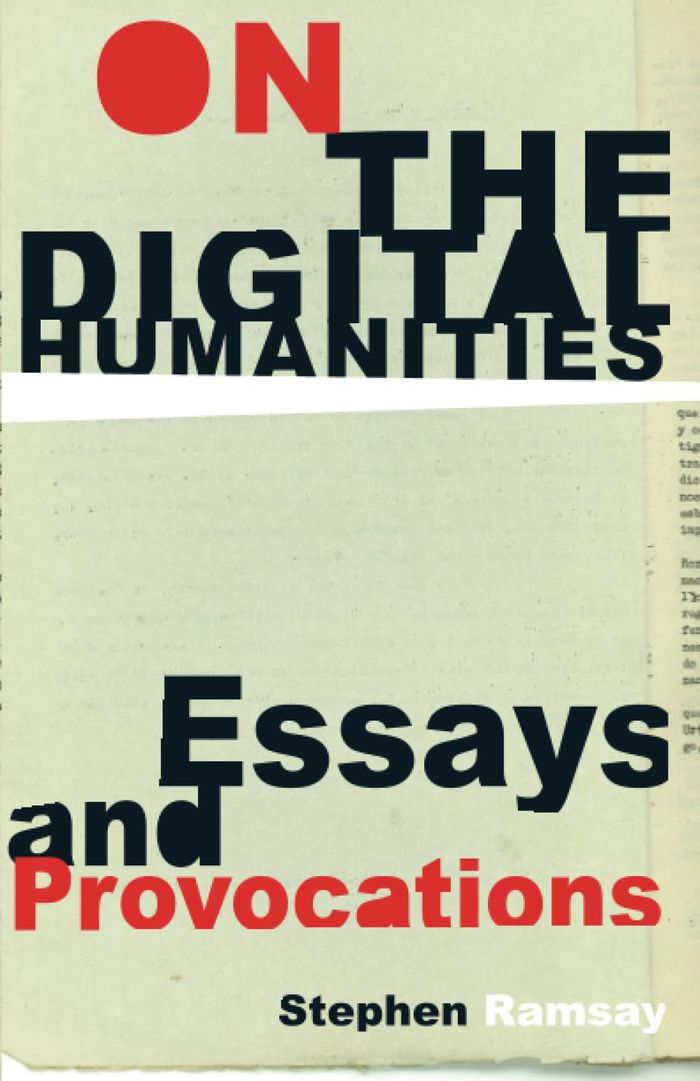
On the digital humanities
On the digital humanities
Actions:
Prix:
$35.99
(disponible sur commande)
Résumé:
Since its inception, the digital humanities has been repeatedly attacked as a threat to the humanities: warnings from literary and cultural theorists of technology overtaking English departments and the mechanization of teaching have peppered popular media. Stephen Ramsay’s ''On the digital humanities'', a collection of essays spanning the personal to the polemic, is a(...)
$35.99
(disponible sur commande)
Résumé:
Since its inception, the digital humanities has been repeatedly attacked as a threat to the humanities: warnings from literary and cultural theorists of technology overtaking English departments and the mechanization of teaching have peppered popular media. Stephen Ramsay’s ''On the digital humanities'', a collection of essays spanning the personal to the polemic, is a(...)
Titre:
On the digital humanities
Actions:
Prix:
$35.99
(disponible sur commande)
Résumé:
Since its inception, the digital humanities has been repeatedly attacked as a threat to the humanities: warnings from literary and cultural theorists of technology overtaking English departments and the mechanization of teaching have peppered popular media. Stephen Ramsay’s ''On the digital humanities'', a collection of essays spanning the personal to the polemic, is a spirited defense of the field of digital humanities. A founding figure in what was once known as 'humanities computing,' Ramsay has a well-known and contentious relationship with what is now called the digital humanities (DH). Here Ramsay collects and updates his most influential and notorious essays and speeches from the past fifteen years, considering DH from an array of practical and theoretical perspectives. The essays pursue a broad variety of themes, including the nature of data and its place in more conventional notions of text and interpretation, the relationship between the constraints of computation and the more open-ended nature of the humanities, the positioning of practical skills and infrastructures in both research and pedagogical contexts, the status of DH as a program for political and social action, and personal reflections on the author’s journey into the field as both a theorist and a technologist. These wide-ranging essays all center around one idea: that DH not forsake its connection to the humanities. While 'digital humanities' may sound like an entirely new form of engagement with the artifacts of human culture, Ramsay argues that the field well reveals what is most essential to humanistic inquiry.
On the digital humanities
Actions:
Prix:
$35.99
(disponible sur commande)
Résumé:
Since its inception, the digital humanities has been repeatedly attacked as a threat to the humanities: warnings from literary and cultural theorists of technology overtaking English departments and the mechanization of teaching have peppered popular media. Stephen Ramsay’s ''On the digital humanities'', a collection of essays spanning the personal to the polemic, is a spirited defense of the field of digital humanities. A founding figure in what was once known as 'humanities computing,' Ramsay has a well-known and contentious relationship with what is now called the digital humanities (DH). Here Ramsay collects and updates his most influential and notorious essays and speeches from the past fifteen years, considering DH from an array of practical and theoretical perspectives. The essays pursue a broad variety of themes, including the nature of data and its place in more conventional notions of text and interpretation, the relationship between the constraints of computation and the more open-ended nature of the humanities, the positioning of practical skills and infrastructures in both research and pedagogical contexts, the status of DH as a program for political and social action, and personal reflections on the author’s journey into the field as both a theorist and a technologist. These wide-ranging essays all center around one idea: that DH not forsake its connection to the humanities. While 'digital humanities' may sound like an entirely new form of engagement with the artifacts of human culture, Ramsay argues that the field well reveals what is most essential to humanistic inquiry.
Classification:
livres
livres
Publication:
août 2023
août 2023
Classification:
livres
livres
Actions:
Prix:
$79.25
(disponible sur commande)
Résumé:
'More would be unnecessary, less impossible', is designer Bruno Ninaber van Eyben's principle. His work, for which he was the first to receive the Kho Liang Ie Award in 1979, is characterized by silent dialogues between form, function, technology and material. From a minimalist position Ninaber van Eyben searches for pragmatic solutions to make functional objects, always(...)
$79.25
(disponible sur commande)
Résumé:
'More would be unnecessary, less impossible', is designer Bruno Ninaber van Eyben's principle. His work, for which he was the first to receive the Kho Liang Ie Award in 1979, is characterized by silent dialogues between form, function, technology and material. From a minimalist position Ninaber van Eyben searches for pragmatic solutions to make functional objects, always(...)
Titre:
Bruno Ninaber van Eyben with compliments
Actions:
Prix:
$79.25
(disponible sur commande)
Résumé:
'More would be unnecessary, less impossible', is designer Bruno Ninaber van Eyben's principle. His work, for which he was the first to receive the Kho Liang Ie Award in 1979, is characterized by silent dialogues between form, function, technology and material. From a minimalist position Ninaber van Eyben searches for pragmatic solutions to make functional objects, always keeping in touch with the end product's poetic quality. Among other classics he gave the wristwatch (1973), the neck watch (1976) and the TL lamp (1977) to the world. His watches are still commercially successful. In 1980 Ninaber designed the Dutch coin series with the portrait of H.M. Queen Beatrix and eighteen years later his design won the competition for the Dutch side of the Euro coin. His products grace museum collections in the Netherlands and also abroad, notably at the Museum of Modern Art in New York. Together with Wolfram Peters and Peter Krouwel he founded the industrial design studio n|p|k in 1985. He was its co-director for twelve years. In 1997 he started a new office, Bruno Ninaber van Eyben design & production. It develops high-quality and sometimes more personal products independently and for a limited number of customers, such as the Prime Minister's national gift, the chairperson's gavel for Parliament and the new chain of office for the mayor of Papendrecht, a small town near Rotterdam. "With compliments" is not a traditional monograph. It is mainly a story in images, showing Ninaber's products and sources of inspiration. Short, strong statements underline the images and provide them with a context.
Bruno Ninaber van Eyben with compliments
Actions:
Prix:
$79.25
(disponible sur commande)
Résumé:
'More would be unnecessary, less impossible', is designer Bruno Ninaber van Eyben's principle. His work, for which he was the first to receive the Kho Liang Ie Award in 1979, is characterized by silent dialogues between form, function, technology and material. From a minimalist position Ninaber van Eyben searches for pragmatic solutions to make functional objects, always keeping in touch with the end product's poetic quality. Among other classics he gave the wristwatch (1973), the neck watch (1976) and the TL lamp (1977) to the world. His watches are still commercially successful. In 1980 Ninaber designed the Dutch coin series with the portrait of H.M. Queen Beatrix and eighteen years later his design won the competition for the Dutch side of the Euro coin. His products grace museum collections in the Netherlands and also abroad, notably at the Museum of Modern Art in New York. Together with Wolfram Peters and Peter Krouwel he founded the industrial design studio n|p|k in 1985. He was its co-director for twelve years. In 1997 he started a new office, Bruno Ninaber van Eyben design & production. It develops high-quality and sometimes more personal products independently and for a limited number of customers, such as the Prime Minister's national gift, the chairperson's gavel for Parliament and the new chain of office for the mayor of Papendrecht, a small town near Rotterdam. "With compliments" is not a traditional monograph. It is mainly a story in images, showing Ninaber's products and sources of inspiration. Short, strong statements underline the images and provide them with a context.
Classification:
livres
livres
Publication:
janvier 2002, Rotterdam
janvier 2002, Rotterdam
Sujet:
Design, monographies
Design, monographies
Classification:
livres
livres
Titre:
Design by numbers
Design by numbers
Actions:
Prix:
$44.95
(disponible en magasin)
Résumé:
Most art and technology projects pair artists with engineers or scientists: the artist has the conception, and the technical person provides the know-how. John Maeda is an artist and a computer scientist, and he views the computer not as a substitute for brush and paint but as an artistic medium in its own right. Design By Numbers is a reader-friendly tutorial on both the(...)
$44.95
(disponible en magasin)
Résumé:
Most art and technology projects pair artists with engineers or scientists: the artist has the conception, and the technical person provides the know-how. John Maeda is an artist and a computer scientist, and he views the computer not as a substitute for brush and paint but as an artistic medium in its own right. Design By Numbers is a reader-friendly tutorial on both the(...)
Publication:
octobre 2001, Cambridge, Mass.
octobre 2001, Cambridge, Mass.
Titre:
Design by numbers
Actions:
Prix:
$44.95
(disponible en magasin)
Résumé:
Most art and technology projects pair artists with engineers or scientists: the artist has the conception, and the technical person provides the know-how. John Maeda is an artist and a computer scientist, and he views the computer not as a substitute for brush and paint but as an artistic medium in its own right. Design By Numbers is a reader-friendly tutorial on both the philosophy and nuts-and-bolts techniques of programming for artists. Practicing what he preaches, Maeda composed Design By Numbers using a computational process he developed specifically for the book. He introduces a programming language and development environment, available on the Web, which can be freely downloaded or run directly within any JAVA-enabled Web browser. Appropriately, the new language is called DBN (for "design by numbers"). Designed for "visual" people--artists, designers, anyone who likes to pick up a pencil and doodle--DBN has very few commands and consists of elements resembling those of many other languages, such as LISP, LOGO, C/JAVA, and BASIC. Throughout the book Maeda emphasizes the importance--and delights--of understanding the motivation behind computer programming, as well as the many wonders that emerge from well-written programs. Sympathetic to the "mathematically challenged," he places minimal emphasis on mathematics in the first half of the book. Because computation is inherently mathematical, the books second half uses intermediate mathematical concepts that generally do not go beyond high-school algebra. The reader who masters the skills so clearly set out by Maeda will be ready to exploit the true character of digital media design.
Design by numbers
Actions:
Prix:
$44.95
(disponible en magasin)
Résumé:
Most art and technology projects pair artists with engineers or scientists: the artist has the conception, and the technical person provides the know-how. John Maeda is an artist and a computer scientist, and he views the computer not as a substitute for brush and paint but as an artistic medium in its own right. Design By Numbers is a reader-friendly tutorial on both the philosophy and nuts-and-bolts techniques of programming for artists. Practicing what he preaches, Maeda composed Design By Numbers using a computational process he developed specifically for the book. He introduces a programming language and development environment, available on the Web, which can be freely downloaded or run directly within any JAVA-enabled Web browser. Appropriately, the new language is called DBN (for "design by numbers"). Designed for "visual" people--artists, designers, anyone who likes to pick up a pencil and doodle--DBN has very few commands and consists of elements resembling those of many other languages, such as LISP, LOGO, C/JAVA, and BASIC. Throughout the book Maeda emphasizes the importance--and delights--of understanding the motivation behind computer programming, as well as the many wonders that emerge from well-written programs. Sympathetic to the "mathematically challenged," he places minimal emphasis on mathematics in the first half of the book. Because computation is inherently mathematical, the books second half uses intermediate mathematical concepts that generally do not go beyond high-school algebra. The reader who masters the skills so clearly set out by Maeda will be ready to exploit the true character of digital media design.
Classification:
livres
livres
Publication:
octobre 2001, Cambridge, Mass.
octobre 2001, Cambridge, Mass.
Classification:
livres
livres
Actions:
Prix:
$40.00
(disponible sur commande)
Résumé:
One of Spain’s most prominent and innovative artists, Joan Fontcuberta is best known for exploring the interstices between art, science, and illusion. Where science reaches its limits in his works, the imagination frequently finds a creative space in which to flourish. In "Landscapes without memory", Fontcuberta has co-opted a piece of computer software originally(...)
$40.00
(disponible sur commande)
Résumé:
One of Spain’s most prominent and innovative artists, Joan Fontcuberta is best known for exploring the interstices between art, science, and illusion. Where science reaches its limits in his works, the imagination frequently finds a creative space in which to flourish. In "Landscapes without memory", Fontcuberta has co-opted a piece of computer software originally(...)
Sujet:
Monographies photo
Monographies photo
Publication:
janvier 1900, New York
janvier 1900, New York
Titre:
Joan Fontcuberta : landscapes without memory
Actions:
Prix:
$40.00
(disponible sur commande)
Résumé:
One of Spain’s most prominent and innovative artists, Joan Fontcuberta is best known for exploring the interstices between art, science, and illusion. Where science reaches its limits in his works, the imagination frequently finds a creative space in which to flourish. In "Landscapes without memory", Fontcuberta has co-opted a piece of computer software originally designed for military or scientific use in rendering three-dimensional images of landscapes. The software enables the user to build photo-realistic models based on information scanned from two-dimensional sources—usually satellite surveys or cartographic data. The result gives the user the illusion of navigating in three dimensions which had previously been visualized only as a flat image. With this widely available “freeware” as his starting point, Fontcuberta has created the two series that constitute his "Landscapes without memory". In the “Landscapes of landscapes” series, Fontcuberta feeds the software fragments of pictures by Turner, Cézanne, Dalí, Stieglitz, Weston, and others, forcing the program to interpret a variety of landscape masterworks as “real.” The contours and tones of these painted and photographic landscapes are transformed into three-dimensional mountains, rivers, valleys, and clouds. The vocabulary of art is thus transmuted into that of cartography. In the “Bodyscapes” series, Fontcuberta uses the same software to reinterpret photographs depicting fragments of his own body. The result? A wild, baroque, virtual- fantasy world. While referring to the contemporary exchange between illusion, nature, culture, and technology, "Landscapes without memory" also makes a pointed gesture aimed at fooling that epitome of machine rationalism: the computer.
Joan Fontcuberta : landscapes without memory
Actions:
Prix:
$40.00
(disponible sur commande)
Résumé:
One of Spain’s most prominent and innovative artists, Joan Fontcuberta is best known for exploring the interstices between art, science, and illusion. Where science reaches its limits in his works, the imagination frequently finds a creative space in which to flourish. In "Landscapes without memory", Fontcuberta has co-opted a piece of computer software originally designed for military or scientific use in rendering three-dimensional images of landscapes. The software enables the user to build photo-realistic models based on information scanned from two-dimensional sources—usually satellite surveys or cartographic data. The result gives the user the illusion of navigating in three dimensions which had previously been visualized only as a flat image. With this widely available “freeware” as his starting point, Fontcuberta has created the two series that constitute his "Landscapes without memory". In the “Landscapes of landscapes” series, Fontcuberta feeds the software fragments of pictures by Turner, Cézanne, Dalí, Stieglitz, Weston, and others, forcing the program to interpret a variety of landscape masterworks as “real.” The contours and tones of these painted and photographic landscapes are transformed into three-dimensional mountains, rivers, valleys, and clouds. The vocabulary of art is thus transmuted into that of cartography. In the “Bodyscapes” series, Fontcuberta uses the same software to reinterpret photographs depicting fragments of his own body. The result? A wild, baroque, virtual- fantasy world. While referring to the contemporary exchange between illusion, nature, culture, and technology, "Landscapes without memory" also makes a pointed gesture aimed at fooling that epitome of machine rationalism: the computer.
Classification:
livres
livres
Publication:
janvier 1900, New York
janvier 1900, New York
Sujet:
Monographies photo
Monographies photo
Classification:
livres
livres
Actions:
Prix:
$31.95
(disponible sur commande)
Résumé:
The underground has been a dominant image of modern life since the late eighteenth century. A site of crisis, fascination, and hidden truth, the underground is a space at once more immediate and more threatening than the ordinary world above. In Subterranean Cities, David L. Pike explores the representation of underground space in the nineteenth and early twentieth(...)
$31.95
(disponible sur commande)
Résumé:
The underground has been a dominant image of modern life since the late eighteenth century. A site of crisis, fascination, and hidden truth, the underground is a space at once more immediate and more threatening than the ordinary world above. In Subterranean Cities, David L. Pike explores the representation of underground space in the nineteenth and early twentieth(...)
Titre:
subterranean cities : the world beneath Paris and London, 1800-1945
Actions:
Prix:
$31.95
(disponible sur commande)
Résumé:
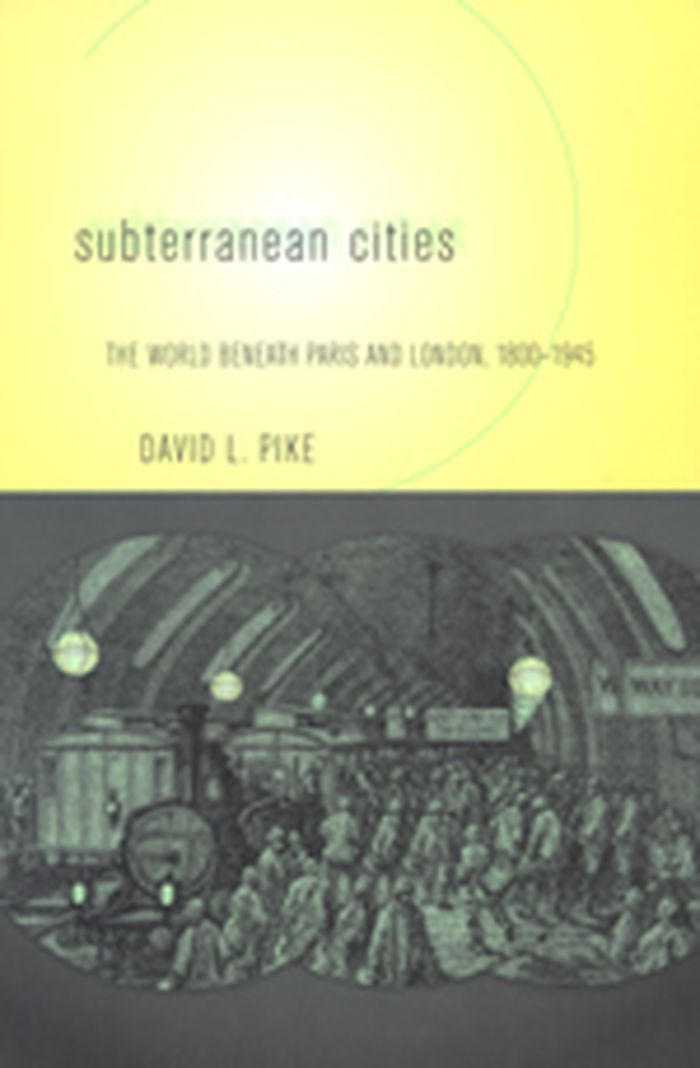
The underground has been a dominant image of modern life since the late eighteenth century. A site of crisis, fascination, and hidden truth, the underground is a space at once more immediate and more threatening than the ordinary world above. In Subterranean Cities, David L. Pike explores the representation of underground space in the nineteenth and early twentieth centuries, a period during which technology and heavy industry transformed urban life. The metropolis had long been considered a moral underworld of iniquity and dissolution. As the complex drainage systems, underground railways, utility tunnels, and storage vaults of the modern cityscape superseded the countryside of caverns and mines as the principal location of actual subterranean spaces, ancient and modern converged in a mythic space that was nevertheless rooted in the everyday life of the contemporary city. Writers and artists from Felix Nadar and Charles Baudelaire to Charles Dickens and Alice Meynell, Gustave Doré and Victor Hugo, George Gissing and Emile Zola, and Jules Verne and H. G. Wells integrated images of the urban underworld into their portrayals of the anatomy of modern society. Illustrated with photographs, movie stills, prints, engravings, paintings, cartoons, maps, and drawings of actual and imagined urban spaces, Subterranean Cities documents the emergence of a novel space in the subterranean obsessions and anxieties within nineteenth-century urban culture. Chapters on the subways, sewers, and cemeteries of Paris and London provide a detailed analysis of these competing centers of urban modernity. A concluding chapter considers the enduring influence of these spaces on urban culture at the turn of the twenty-first century.
subterranean cities : the world beneath Paris and London, 1800-1945
Actions:
Prix:
$31.95
(disponible sur commande)
Résumé:
The underground has been a dominant image of modern life since the late eighteenth century. A site of crisis, fascination, and hidden truth, the underground is a space at once more immediate and more threatening than the ordinary world above. In Subterranean Cities, David L. Pike explores the representation of underground space in the nineteenth and early twentieth centuries, a period during which technology and heavy industry transformed urban life. The metropolis had long been considered a moral underworld of iniquity and dissolution. As the complex drainage systems, underground railways, utility tunnels, and storage vaults of the modern cityscape superseded the countryside of caverns and mines as the principal location of actual subterranean spaces, ancient and modern converged in a mythic space that was nevertheless rooted in the everyday life of the contemporary city. Writers and artists from Felix Nadar and Charles Baudelaire to Charles Dickens and Alice Meynell, Gustave Doré and Victor Hugo, George Gissing and Emile Zola, and Jules Verne and H. G. Wells integrated images of the urban underworld into their portrayals of the anatomy of modern society. Illustrated with photographs, movie stills, prints, engravings, paintings, cartoons, maps, and drawings of actual and imagined urban spaces, Subterranean Cities documents the emergence of a novel space in the subterranean obsessions and anxieties within nineteenth-century urban culture. Chapters on the subways, sewers, and cemeteries of Paris and London provide a detailed analysis of these competing centers of urban modernity. A concluding chapter considers the enduring influence of these spaces on urban culture at the turn of the twenty-first century.
Classification:
livres
livres
Publication:
septembre 2005, Ithaca / London
septembre 2005, Ithaca / London
Sujet:
Théorie de l’urbanisme
Théorie de l’urbanisme
Classification:
livres
livres
Actions:
Prix:
$31.50
(disponible sur commande)
Résumé:
In "Enduring innocence", Keller Easterling tells the stories of outlaw "spatial products"- resorts, information technology campuses, retail chains, golf courses, ports, and other hybrid spaces that exist outside normal constituencies and jurisdictions-in difficult political situations around the world. These spaces-familiar commercial formulas of retail, business, and(...)
$31.50
(disponible sur commande)
Résumé:
In "Enduring innocence", Keller Easterling tells the stories of outlaw "spatial products"- resorts, information technology campuses, retail chains, golf courses, ports, and other hybrid spaces that exist outside normal constituencies and jurisdictions-in difficult political situations around the world. These spaces-familiar commercial formulas of retail, business, and(...)
Sujet:
Théorie de l’architecture
Théorie de l’architecture
Publication:
janvier 1900, Cambridge, London
janvier 1900, Cambridge, London
Titre:
Enduring innocence : global architecture and its political masquerades
Actions:
Prix:
$31.50
(disponible sur commande)
Résumé:
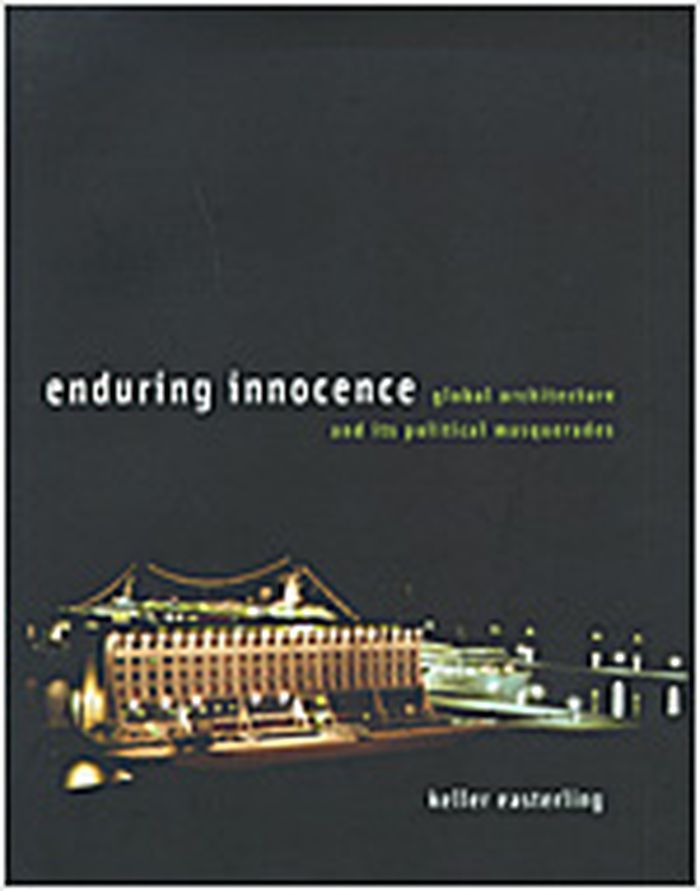
In "Enduring innocence", Keller Easterling tells the stories of outlaw "spatial products"- resorts, information technology campuses, retail chains, golf courses, ports, and other hybrid spaces that exist outside normal constituencies and jurisdictions-in difficult political situations around the world. These spaces-familiar commercial formulas of retail, business, and trade-aspire to be worlds unto themselves, self-reflexive and innocent of politics. But as Easterling shows, in reality these enclaves can become political pawns and objects of contention. Jurisdictionally ambiguous, they are imbued with myths, desires, and symbolic capital. Their hilarious and dangerous masquerades often mix quite easily with the cunning of political platforms. Easterling argues that the study of such "real estate cocktails" provides vivid evidence of the market's weakness, resilience, or violence. "Enduring innocence" collects six stories of spatial products and their political predicaments: cruise ship tourism in North Korea; high-tech agricultural formations in Spain (which have reignited labor wars and piracy in the Mediterranean); hyperbolic forms of sovereignty in commercial and spiritual organizations shared by gurus and golf celebrities; automated global ports; microwave urbanism in South Asian IT enclaves; and a global industry of building demolition that suggests urban warfare. These regimes of nonnational sovereignty, writes Easterling, "move around the world like weather fronts"; she focuses not on their blending- their global connectivity-but on their segregation and the cultural collisions that ensue. "Enduring innocence" resists the dream of one globally legible world found in many architectural discourses on globalization. Instead, Easterling's consideration of these segregated worlds provides new tools for practitioners sensitive to the political composition of urban landscapes.
Enduring innocence : global architecture and its political masquerades
Actions:
Prix:
$31.50
(disponible sur commande)
Résumé:
In "Enduring innocence", Keller Easterling tells the stories of outlaw "spatial products"- resorts, information technology campuses, retail chains, golf courses, ports, and other hybrid spaces that exist outside normal constituencies and jurisdictions-in difficult political situations around the world. These spaces-familiar commercial formulas of retail, business, and trade-aspire to be worlds unto themselves, self-reflexive and innocent of politics. But as Easterling shows, in reality these enclaves can become political pawns and objects of contention. Jurisdictionally ambiguous, they are imbued with myths, desires, and symbolic capital. Their hilarious and dangerous masquerades often mix quite easily with the cunning of political platforms. Easterling argues that the study of such "real estate cocktails" provides vivid evidence of the market's weakness, resilience, or violence. "Enduring innocence" collects six stories of spatial products and their political predicaments: cruise ship tourism in North Korea; high-tech agricultural formations in Spain (which have reignited labor wars and piracy in the Mediterranean); hyperbolic forms of sovereignty in commercial and spiritual organizations shared by gurus and golf celebrities; automated global ports; microwave urbanism in South Asian IT enclaves; and a global industry of building demolition that suggests urban warfare. These regimes of nonnational sovereignty, writes Easterling, "move around the world like weather fronts"; she focuses not on their blending- their global connectivity-but on their segregation and the cultural collisions that ensue. "Enduring innocence" resists the dream of one globally legible world found in many architectural discourses on globalization. Instead, Easterling's consideration of these segregated worlds provides new tools for practitioners sensitive to the political composition of urban landscapes.
Classification:
livres
livres
Publication:
janvier 1900, Cambridge, London
janvier 1900, Cambridge, London
Sujet:
Théorie de l’architecture
Théorie de l’architecture
Classification:
livres
livres
Actions:
Prix:
$29.95
(disponible sur commande)
Résumé:
The red maple leaf is the quintessential symbol of Canada and the flag that popularized it throughout the world was designed in the 1960s as a result of government legislation aimed at creating a vital, new Canadian national identity through objects, events, and building projects. Made in Canada looks at the development of Canadian craft, design, and culture through(...)
$29.95
(disponible sur commande)
Résumé:
The red maple leaf is the quintessential symbol of Canada and the flag that popularized it throughout the world was designed in the 1960s as a result of government legislation aimed at creating a vital, new Canadian national identity through objects, events, and building projects. Made in Canada looks at the development of Canadian craft, design, and culture through(...)
Titre:
Made in Canada : craft and design in the sixties
Actions:
Prix:
$29.95
(disponible sur commande)
Résumé:
The red maple leaf is the quintessential symbol of Canada and the flag that popularized it throughout the world was designed in the 1960s as a result of government legislation aimed at creating a vital, new Canadian national identity through objects, events, and building projects. Made in Canada looks at the development of Canadian craft, design, and culture through ambitious government programs meant to reinforce the country's identity as a modern, sophisticated, and autonomous nation. As well, it documents the demise of a singular notion of modern life and its replacement with a focus on personal identity and consumerism. Changes in the 1960s included the building of modern airports, first space satellite, and new national symbols such as the maple leaf flag. Canadians embraced this heightened sense of individuality and demanded products that were equally individual. As a result pop culture objects sat on cool furniture influenced by Scandinavian modernism while handmade crafts reflected a growing concern with environmental issues. Expo 67 was the turning point - one final expression of optimism before Canada was rocked by social change and varied struggles for identity. Made in Canada examines national dreams and expressions of individuality in thoughtful and illuminating essays. Contributors include Sandra Alfoldy (NSCAD University), Paul Bourassa (Musée des beaux-arts de Québec), Brent Cordner (designer and educator, Toronto), Douglas Coupland (artist and author, Vancouver), Bernard Flaman (Government of Saskatchewan), Rachel Gotlieb (freelance curator and writer, Toronto), Michael Large (Sheridan College Institute of Technology and Advanced Learning), and Michael Prokopow (Design Exchange).
Made in Canada : craft and design in the sixties
Actions:
Prix:
$29.95
(disponible sur commande)
Résumé:
The red maple leaf is the quintessential symbol of Canada and the flag that popularized it throughout the world was designed in the 1960s as a result of government legislation aimed at creating a vital, new Canadian national identity through objects, events, and building projects. Made in Canada looks at the development of Canadian craft, design, and culture through ambitious government programs meant to reinforce the country's identity as a modern, sophisticated, and autonomous nation. As well, it documents the demise of a singular notion of modern life and its replacement with a focus on personal identity and consumerism. Changes in the 1960s included the building of modern airports, first space satellite, and new national symbols such as the maple leaf flag. Canadians embraced this heightened sense of individuality and demanded products that were equally individual. As a result pop culture objects sat on cool furniture influenced by Scandinavian modernism while handmade crafts reflected a growing concern with environmental issues. Expo 67 was the turning point - one final expression of optimism before Canada was rocked by social change and varied struggles for identity. Made in Canada examines national dreams and expressions of individuality in thoughtful and illuminating essays. Contributors include Sandra Alfoldy (NSCAD University), Paul Bourassa (Musée des beaux-arts de Québec), Brent Cordner (designer and educator, Toronto), Douglas Coupland (artist and author, Vancouver), Bernard Flaman (Government of Saskatchewan), Rachel Gotlieb (freelance curator and writer, Toronto), Michael Large (Sheridan College Institute of Technology and Advanced Learning), and Michael Prokopow (Design Exchange).
Classification:
livres
livres
Publication:
février 2005, Montreal
février 2005, Montreal
Sujet:
Architecture du Canada
Architecture du Canada
Classification:
livres
livres
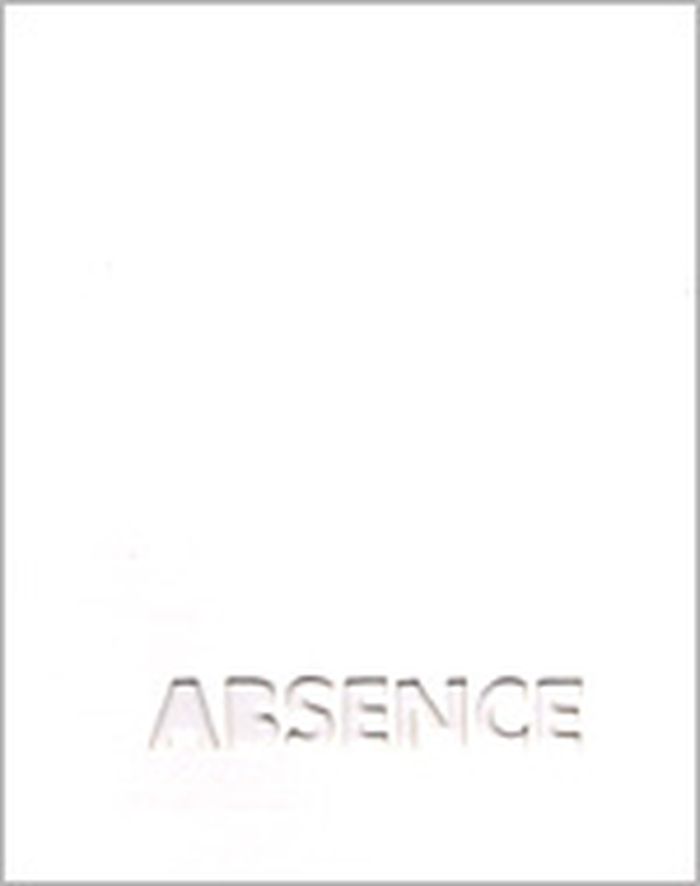
Titre:
Absence : J. Meejin Yoon
Absence : J. Meejin Yoon
Actions:
Prix:
$45.00
(disponible sur commande)
Résumé:
Both a book and a sculptural object, "Absence" is a memorial to the twin towers of the World Trade Center. Yoon, an architect and designer who is currently an Assistant Professor of Architecture at the Massachusetts Institute of Technology, chose not to produce a traditional design proposal for the World Trade Center Memorial Competition. Instead she created a(...)
$45.00
(disponible sur commande)
Résumé:
Both a book and a sculptural object, "Absence" is a memorial to the twin towers of the World Trade Center. Yoon, an architect and designer who is currently an Assistant Professor of Architecture at the Massachusetts Institute of Technology, chose not to produce a traditional design proposal for the World Trade Center Memorial Competition. Instead she created a(...)
Titre:
Absence : J. Meejin Yoon
Actions:
Prix:
$45.00
(disponible sur commande)
Résumé:
Both a book and a sculptural object, "Absence" is a memorial to the twin towers of the World Trade Center. Yoon, an architect and designer who is currently an Assistant Professor of Architecture at the Massachusetts Institute of Technology, chose not to produce a traditional design proposal for the World Trade Center Memorial Competition. Instead she created a non-architectural, non site-specific space of remembrance : a portable personal memorial in the form of book. At almost two pounds, "Absence" has a considerable physical presence, but it is in every way the ghost of a presence, and it is this ghostliness that gives it its particular emotional weight. A solid white block of thick stock cardboard pages, the book’s only "text" consists of one pinhole and two identical squares die-cut into each of its one hundred and twenty pages – one for each story of the towers including the antenna mast. These removed elements lead the reader floor by floor through the missing buildings towards the final page where the footprint of the entire site of the World Trade Center is die-cut into a delicate lattice of absent structures. Of all of the proposed monuments and grand designs for the twin towers to emerge in the last two years, "Absence" is remarkable for its employment of an under-used strategy : restraint. The simplicity of Yoon’s materials and her use of repetition speak, without words, about unspeakable loss. As a scale model of a vanished architectural site, it operates on a larger cultural level by commemorating the site itself. Unpaginated.
Absence : J. Meejin Yoon
Actions:
Prix:
$45.00
(disponible sur commande)
Résumé:
Both a book and a sculptural object, "Absence" is a memorial to the twin towers of the World Trade Center. Yoon, an architect and designer who is currently an Assistant Professor of Architecture at the Massachusetts Institute of Technology, chose not to produce a traditional design proposal for the World Trade Center Memorial Competition. Instead she created a non-architectural, non site-specific space of remembrance : a portable personal memorial in the form of book. At almost two pounds, "Absence" has a considerable physical presence, but it is in every way the ghost of a presence, and it is this ghostliness that gives it its particular emotional weight. A solid white block of thick stock cardboard pages, the book’s only "text" consists of one pinhole and two identical squares die-cut into each of its one hundred and twenty pages – one for each story of the towers including the antenna mast. These removed elements lead the reader floor by floor through the missing buildings towards the final page where the footprint of the entire site of the World Trade Center is die-cut into a delicate lattice of absent structures. Of all of the proposed monuments and grand designs for the twin towers to emerge in the last two years, "Absence" is remarkable for its employment of an under-used strategy : restraint. The simplicity of Yoon’s materials and her use of repetition speak, without words, about unspeakable loss. As a scale model of a vanished architectural site, it operates on a larger cultural level by commemorating the site itself. Unpaginated.
Classification:
livres
livres
Publication:
septembre 2003, New York
septembre 2003, New York
Classification:
livres
livres
Actions:
Prix:
$74.95
(disponible sur commande)
Résumé:
In an era of globalisation, there is an unprecedented scale and nature of contemporary migrant flows, as well as the flow of goods, capital, ideas, images and technology. This sheer number and mobility of contemporary migrants clearly has massively disruptive effects on traditional modes of dwelling however they were manifest in everyday life. But contemporary migrancy(...)
$74.95
(disponible sur commande)
Résumé:
In an era of globalisation, there is an unprecedented scale and nature of contemporary migrant flows, as well as the flow of goods, capital, ideas, images and technology. This sheer number and mobility of contemporary migrants clearly has massively disruptive effects on traditional modes of dwelling however they were manifest in everyday life. But contemporary migrancy(...)
Sujet:
Théorie de l’architecture
Théorie de l’architecture
Publication:
septembre 2003, London / New York
septembre 2003, London / New York
Titre:
Drifting : architecture and migrancy
Actions:
Prix:
$74.95
(disponible sur commande)
Résumé:
In an era of globalisation, there is an unprecedented scale and nature of contemporary migrant flows, as well as the flow of goods, capital, ideas, images and technology. This sheer number and mobility of contemporary migrants clearly has massively disruptive effects on traditional modes of dwelling however they were manifest in everyday life. But contemporary migrancy also has important consequences for the way dwelling is conceptualised more generally. This book is concerned with the modes of dwelling that emerge through migrancy; it is also concerned with the effects these modes of dwelling have for dominant conceptions of space and place; and finally, it is interested in the kinds of architectures that become possible if those effects are taken seriously. This book inspects the intersections between architectures of place and flows of migrancy. It does so without seeking to defend the idea of place, nor lament its passing. Rather, this book is an exploration of the often complex and unorthodox modes of dwelling that are emerging precisely from within the ruins of the idea of place. This exploration is informed by post-structuralist analyses of architecture and urbanism, and their representation in media such as film. It focuses on the Pacific Rim as an intensified zone of global flows. Within the Pacific Rim there are complex tensions between the new economies of Asia and the settler nations of Canada, the US, Australia and New Zealand. These tensions produce difficulties for the narrative of the nation state, and herald conditions that no longer conform to the geo-political norms of the old world.
Drifting : architecture and migrancy
Actions:
Prix:
$74.95
(disponible sur commande)
Résumé:
In an era of globalisation, there is an unprecedented scale and nature of contemporary migrant flows, as well as the flow of goods, capital, ideas, images and technology. This sheer number and mobility of contemporary migrants clearly has massively disruptive effects on traditional modes of dwelling however they were manifest in everyday life. But contemporary migrancy also has important consequences for the way dwelling is conceptualised more generally. This book is concerned with the modes of dwelling that emerge through migrancy; it is also concerned with the effects these modes of dwelling have for dominant conceptions of space and place; and finally, it is interested in the kinds of architectures that become possible if those effects are taken seriously. This book inspects the intersections between architectures of place and flows of migrancy. It does so without seeking to defend the idea of place, nor lament its passing. Rather, this book is an exploration of the often complex and unorthodox modes of dwelling that are emerging precisely from within the ruins of the idea of place. This exploration is informed by post-structuralist analyses of architecture and urbanism, and their representation in media such as film. It focuses on the Pacific Rim as an intensified zone of global flows. Within the Pacific Rim there are complex tensions between the new economies of Asia and the settler nations of Canada, the US, Australia and New Zealand. These tensions produce difficulties for the narrative of the nation state, and herald conditions that no longer conform to the geo-political norms of the old world.
Classification:
livres
livres
Publication:
septembre 2003, London / New York
septembre 2003, London / New York
Sujet:
Théorie de l’architecture
Théorie de l’architecture
Classification:
périodiques
périodiques
Actions:
Prix:
$32.95
(disponible sur commande)
Résumé:
“Transparency is overrated,” Jacques Herzog asserted roughly a year ago at the opening of the Vitra Schaudepot in Weil am Rhein. Is that really the case? In the present issue, we explore this topic and take stock of the present situation. Admittedly, the emblematic character of transparent architecture has lost much of its relevance since the post-war years – its charisma(...)
$32.95
(disponible sur commande)
Résumé:
“Transparency is overrated,” Jacques Herzog asserted roughly a year ago at the opening of the Vitra Schaudepot in Weil am Rhein. Is that really the case? In the present issue, we explore this topic and take stock of the present situation. Admittedly, the emblematic character of transparent architecture has lost much of its relevance since the post-war years – its charisma(...)
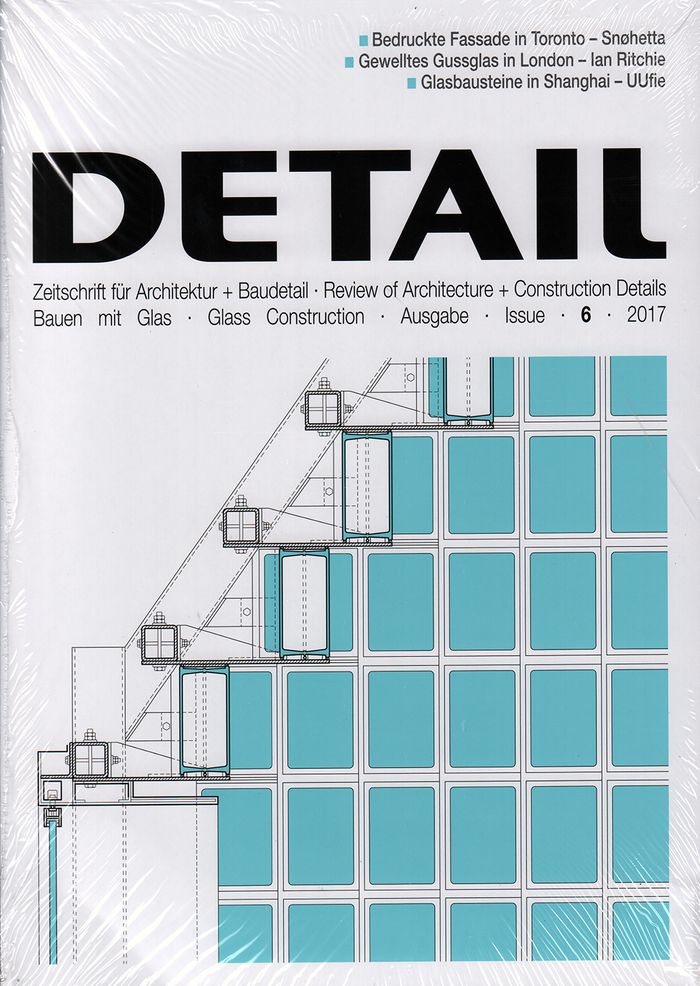
Titre:
Detail 6 2017: glass construction
Actions:
Prix:
$32.95
(disponible sur commande)
Résumé:
“Transparency is overrated,” Jacques Herzog asserted roughly a year ago at the opening of the Vitra Schaudepot in Weil am Rhein. Is that really the case? In the present issue, we explore this topic and take stock of the present situation. Admittedly, the emblematic character of transparent architecture has lost much of its relevance since the post-war years – its charisma as a symbol of democracy. Yet buildings of glass are far more varied today, and their architecture is in many ways unique. In this issue of Detail, Heide Wessely has selected some groundbreaking schemes. With its printed-glass facade, the Ryerson University structure in Toronto by Snøhetta offers students variously lighted internal spaces, which they, in turn, can use for different study scenarios. With pivoting, printed-glass louvres, the facade of the bank in Nantes by AIA Associés responds to insolation to create a climatic buffer zone. The thermally insulated cast-glass elements in the outer skin of the Sainsbury Wellcome Centre in London by Ian Ritchie Architects screen the interior of the research institute from the street, while allowing diffused, non-glare light into the working spaces. In contrast, the glass pavilion in Manchester and the glazed atrium in Baker Street, London, are functional and restrained extensions to existing buildings. The Discussion section in this issue explores the potential of glass in the many housing towers that are springing up in cities today; and in his Technology article, Kars Haarhuis takes a look at innovative hybrid structures in which concrete or steel are combined with glass in a load-bearing form.
Detail 6 2017: glass construction
Actions:
Prix:
$32.95
(disponible sur commande)
Résumé:
“Transparency is overrated,” Jacques Herzog asserted roughly a year ago at the opening of the Vitra Schaudepot in Weil am Rhein. Is that really the case? In the present issue, we explore this topic and take stock of the present situation. Admittedly, the emblematic character of transparent architecture has lost much of its relevance since the post-war years – its charisma as a symbol of democracy. Yet buildings of glass are far more varied today, and their architecture is in many ways unique. In this issue of Detail, Heide Wessely has selected some groundbreaking schemes. With its printed-glass facade, the Ryerson University structure in Toronto by Snøhetta offers students variously lighted internal spaces, which they, in turn, can use for different study scenarios. With pivoting, printed-glass louvres, the facade of the bank in Nantes by AIA Associés responds to insolation to create a climatic buffer zone. The thermally insulated cast-glass elements in the outer skin of the Sainsbury Wellcome Centre in London by Ian Ritchie Architects screen the interior of the research institute from the street, while allowing diffused, non-glare light into the working spaces. In contrast, the glass pavilion in Manchester and the glazed atrium in Baker Street, London, are functional and restrained extensions to existing buildings. The Discussion section in this issue explores the potential of glass in the many housing towers that are springing up in cities today; and in his Technology article, Kars Haarhuis takes a look at innovative hybrid structures in which concrete or steel are combined with glass in a load-bearing form.
Classification:
périodiques
périodiques
Publication:
juin 2017
juin 2017
Sujet:
Revues
Revues


