


778 Résultats
Classification:
livres
livres
Actions:
Prix:
$47.95
(disponible sur commande)
Résumé:
Moment of Grace tells the story of the American city in its heyday. Capturing the mood of the '50s in historical photographs and mining varied sources--including urban critics, interviews with city residents, novels, songs, magazines, and newspapers--Moment of Grace brings alive the downtowns, the neighborhoods, and the suburbs of the era. The book also portrays the '50s(...)
$47.95
(disponible sur commande)
Résumé:
Moment of Grace tells the story of the American city in its heyday. Capturing the mood of the '50s in historical photographs and mining varied sources--including urban critics, interviews with city residents, novels, songs, magazines, and newspapers--Moment of Grace brings alive the downtowns, the neighborhoods, and the suburbs of the era. The book also portrays the '50s(...)
Titre:
Moment of grace : the American city in the 1950s
Actions:
Prix:
$47.95
(disponible sur commande)
Résumé:
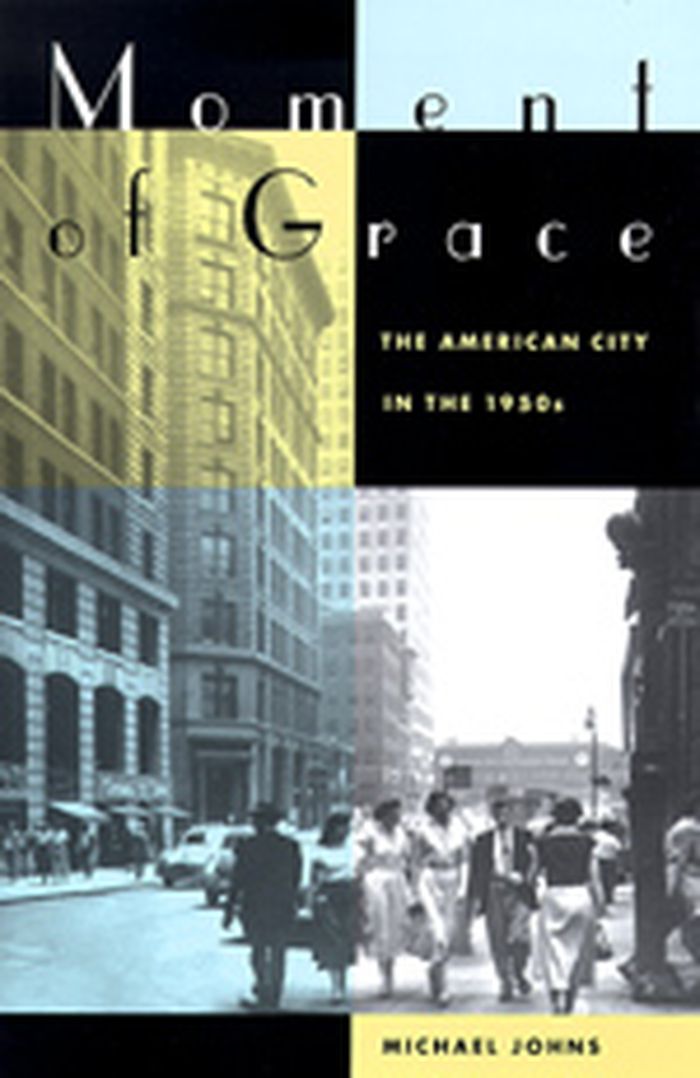
Moment of Grace tells the story of the American city in its heyday. Capturing the mood of the '50s in historical photographs and mining varied sources--including urban critics, interviews with city residents, novels, songs, magazines, and newspapers--Moment of Grace brings alive the downtowns, the neighborhoods, and the suburbs of the era. The book also portrays the '50s as a critical turning point in American culture and economy. Johns explores the '50s in cities such as New York, San Francisco, Philadelphia, Chicago, and Oakland, writing about fashion, nightlife, architecture, literature, business and economic trends, and teenage culture. He tells us what was for sale in the stores, who lived in the neighborhoods, what life was like for women in the brand-new suburbs, and much more.
Moment of grace : the American city in the 1950s
Actions:
Prix:
$47.95
(disponible sur commande)
Résumé:
Moment of Grace tells the story of the American city in its heyday. Capturing the mood of the '50s in historical photographs and mining varied sources--including urban critics, interviews with city residents, novels, songs, magazines, and newspapers--Moment of Grace brings alive the downtowns, the neighborhoods, and the suburbs of the era. The book also portrays the '50s as a critical turning point in American culture and economy. Johns explores the '50s in cities such as New York, San Francisco, Philadelphia, Chicago, and Oakland, writing about fashion, nightlife, architecture, literature, business and economic trends, and teenage culture. He tells us what was for sale in the stores, who lived in the neighborhoods, what life was like for women in the brand-new suburbs, and much more.
Classification:
livres
livres
Publication:
novembre 2002, Berkeley
novembre 2002, Berkeley
Sujet:
Théorie de l’urbanisme
Théorie de l’urbanisme
Classification:
livres
livres
Prix:
$24.95
(disponible sur commande)
Résumé:
Thousands of newcomers are pouring into Alberta from around the globe, bringing unexpected gifts. Many are writers and storytellers. What pulls them to Canada? What happens to them on the journey? What experiences have they deliberately left behind? What treasures do they bring? How do they describe their emerging sense of place and their creative aspirations in a new(...)
$24.95
(disponible sur commande)
Résumé:
Thousands of newcomers are pouring into Alberta from around the globe, bringing unexpected gifts. Many are writers and storytellers. What pulls them to Canada? What happens to them on the journey? What experiences have they deliberately left behind? What treasures do they bring? How do they describe their emerging sense of place and their creative aspirations in a new(...)
Titre:
The story that brought me here: to Alberta from everywhere
Actions:
Prix:
$24.95
(disponible sur commande)
Résumé:
Thousands of newcomers are pouring into Alberta from around the globe, bringing unexpected gifts. Many are writers and storytellers. What pulls them to Canada? What happens to them on the journey? What experiences have they deliberately left behind? What treasures do they bring? How do they describe their emerging sense of place and their creative aspirations in a new home? In this moving collection of stories and poems, writers from around the world share their thoughts on creating a life in Alberta. Expressed with beauty and clarity, and sometimes translated from the writer's native tongue, these very personal accounts of joy and sadness, regret and humour, homesickness and exuberance, describe the defining moments of a departure and an arrival. Linda Goyette is an Edmonton writer and journalist with an interest in giving voice to a new Canadian dialogue. Her previous books include Rocky Mountain Kids, Kidmonton: True Stories of River City Kids; Edmonton in Our Own Words, which won the Grant MacEwan Authors Award in 2005; Standing Together: Women Speak Out About Violence and Abuse and Second Opinion.
The story that brought me here: to Alberta from everywhere
Actions:
Prix:
$24.95
(disponible sur commande)
Résumé:
Thousands of newcomers are pouring into Alberta from around the globe, bringing unexpected gifts. Many are writers and storytellers. What pulls them to Canada? What happens to them on the journey? What experiences have they deliberately left behind? What treasures do they bring? How do they describe their emerging sense of place and their creative aspirations in a new home? In this moving collection of stories and poems, writers from around the world share their thoughts on creating a life in Alberta. Expressed with beauty and clarity, and sometimes translated from the writer's native tongue, these very personal accounts of joy and sadness, regret and humour, homesickness and exuberance, describe the defining moments of a departure and an arrival. Linda Goyette is an Edmonton writer and journalist with an interest in giving voice to a new Canadian dialogue. Her previous books include Rocky Mountain Kids, Kidmonton: True Stories of River City Kids; Edmonton in Our Own Words, which won the Grant MacEwan Authors Award in 2005; Standing Together: Women Speak Out About Violence and Abuse and Second Opinion.
Classification:
livres
livres
Publication:
septembre 2008, Edmonton
septembre 2008, Edmonton
Sujet:
Architecture du Canada
Architecture du Canada
Classification:
livres
livres
Actions:
Prix:
$58.99
(disponible sur commande)
Résumé:
Frequently reviled by feminists of our generation, Le Corbusier was in fact one of the few Modernist architects to give serious consideration to the role of women in contemporary society, believing them to be instigators of change and an important force in the advancement of society. Ranging in scope from Le Corbusier’s interest in fashion, housework and sex to a close(...)
$58.99
(disponible sur commande)
Résumé:
Frequently reviled by feminists of our generation, Le Corbusier was in fact one of the few Modernist architects to give serious consideration to the role of women in contemporary society, believing them to be instigators of change and an important force in the advancement of society. Ranging in scope from Le Corbusier’s interest in fashion, housework and sex to a close(...)
Titre:
Le Corbusier : architect and feminist
Actions:
Prix:
$58.99
(disponible sur commande)
Résumé:
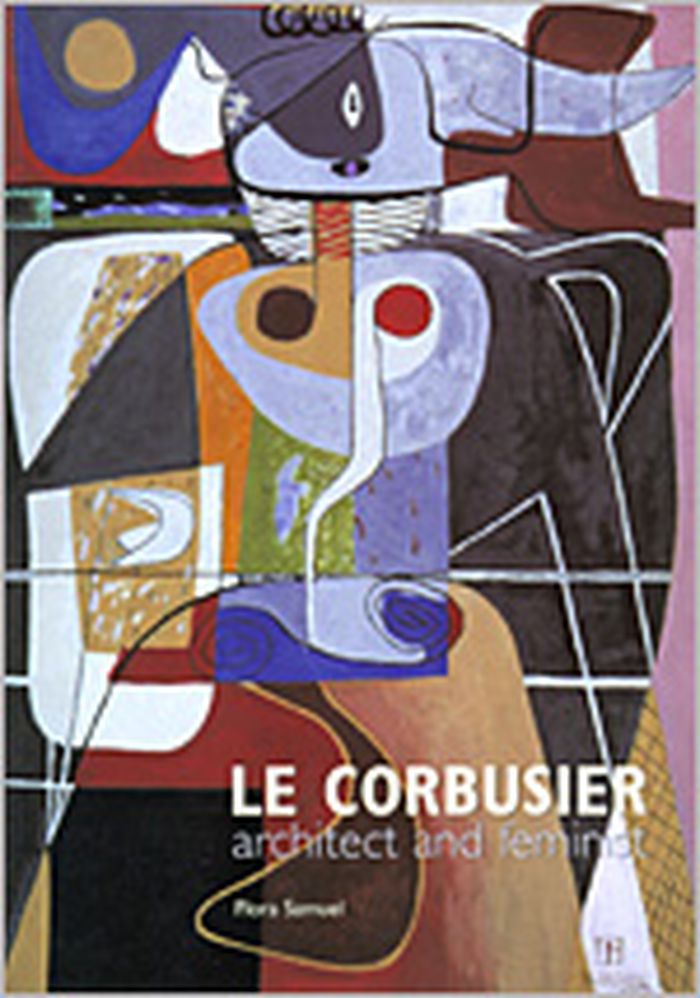
Frequently reviled by feminists of our generation, Le Corbusier was in fact one of the few Modernist architects to give serious consideration to the role of women in contemporary society, believing them to be instigators of change and an important force in the advancement of society. Ranging in scope from Le Corbusier’s interest in fashion, housework and sex to a close analysis of the philosophies underlying his architecture, his fascination with Orphism, his artwork and his buildings, this book examines the ramifications of his interest in feminism in all aspects of his life. A disparity between his idealised view of womanhood and the reality of the women he knew and loved is revealed. The book is essential reading for anybody who is interested in the way the relationship between the sexes impacts on architecture, and in the personal and professional life of Le Corbusier. Encompassing much new material – including the Provisional Theatre at La Sainte Baume, designed by Le Corbusier but never before published – it provides a valuable resource for those who remain unconvinced by standard histories of this enigmatic and complex figure.
Le Corbusier : architect and feminist
Actions:
Prix:
$58.99
(disponible sur commande)
Résumé:
Frequently reviled by feminists of our generation, Le Corbusier was in fact one of the few Modernist architects to give serious consideration to the role of women in contemporary society, believing them to be instigators of change and an important force in the advancement of society. Ranging in scope from Le Corbusier’s interest in fashion, housework and sex to a close analysis of the philosophies underlying his architecture, his fascination with Orphism, his artwork and his buildings, this book examines the ramifications of his interest in feminism in all aspects of his life. A disparity between his idealised view of womanhood and the reality of the women he knew and loved is revealed. The book is essential reading for anybody who is interested in the way the relationship between the sexes impacts on architecture, and in the personal and professional life of Le Corbusier. Encompassing much new material – including the Provisional Theatre at La Sainte Baume, designed by Le Corbusier but never before published – it provides a valuable resource for those who remain unconvinced by standard histories of this enigmatic and complex figure.
Classification:
livres
livres
Publication:
janvier 2004, Chichester
janvier 2004, Chichester
Sujet:
Architecture, monographies
Architecture, monographies
Classification:
livres
livres
Prix:
$67.50
(disponible en magasin)
Résumé:
Formerly the Louis I. Kahn Visiting Assistant Professor at Yale University, architect Fernanda Canales (born 1974), together with her studio, was named one of the world's "100+ Best Architecture Firms" by Domus magazine, and was cited by the New York Times as one of 10 women changing the face of international leadership. Canales' practice almost exclusively focuses on(...)
$67.50
(disponible en magasin)
Résumé:
Formerly the Louis I. Kahn Visiting Assistant Professor at Yale University, architect Fernanda Canales (born 1974), together with her studio, was named one of the world's "100+ Best Architecture Firms" by Domus magazine, and was cited by the New York Times as one of 10 women changing the face of international leadership. Canales' practice almost exclusively focuses on(...)
Titre:
2G Essays: My house, your city. Privacy in a shared world
Actions:
Prix:
$67.50
(disponible en magasin)
Résumé:
Formerly the Louis I. Kahn Visiting Assistant Professor at Yale University, architect Fernanda Canales (born 1974), together with her studio, was named one of the world's "100+ Best Architecture Firms" by Domus magazine, and was cited by the New York Times as one of 10 women changing the face of international leadership. Canales' practice almost exclusively focuses on residential buildings. Her solutions address the environmental challenges of a given area or of a changing climate at large: whether rebuilding a family home damaged by an earthquake or designing a new house around the existing trees and vegetation. In this collection of essays published by 2G, Canales analyzes the evolution of the house by dismantling three critical assumptions: the house as a place of rest separate from work, the house as an object of private property and the house as a sanctuary for the nuclear family.
2G Essays: My house, your city. Privacy in a shared world
Actions:
Prix:
$67.50
(disponible en magasin)
Résumé:
Formerly the Louis I. Kahn Visiting Assistant Professor at Yale University, architect Fernanda Canales (born 1974), together with her studio, was named one of the world's "100+ Best Architecture Firms" by Domus magazine, and was cited by the New York Times as one of 10 women changing the face of international leadership. Canales' practice almost exclusively focuses on residential buildings. Her solutions address the environmental challenges of a given area or of a changing climate at large: whether rebuilding a family home damaged by an earthquake or designing a new house around the existing trees and vegetation. In this collection of essays published by 2G, Canales analyzes the evolution of the house by dismantling three critical assumptions: the house as a place of rest separate from work, the house as an object of private property and the house as a sanctuary for the nuclear family.
Classification:
livres
livres
Publication:
mai 2025
mai 2025
Sujet:
Théorie de l’architecture
Théorie de l’architecture
Classification:
livres
livres
Titre:
Toronto sprawls
Toronto sprawls
Actions:
Prix:
$24.95
(disponible sur commande)
Résumé:
With a landmass spanning approximately 7000 square kilometres and a population of roughly five million, the Greater Toronto Area is Canada’s largest metropolitan centre. How did a small nineteenth-century colonial capital become this sprawling urban giant, and how did government policies shape the contours of its landscape? In Toronto Sprawls, Lawrence Solomon examines(...)
$24.95
(disponible sur commande)
Résumé:
With a landmass spanning approximately 7000 square kilometres and a population of roughly five million, the Greater Toronto Area is Canada’s largest metropolitan centre. How did a small nineteenth-century colonial capital become this sprawling urban giant, and how did government policies shape the contours of its landscape? In Toronto Sprawls, Lawrence Solomon examines(...)
Titre:
Toronto sprawls
Actions:
Prix:
$24.95
(disponible sur commande)
Résumé:
With a landmass spanning approximately 7000 square kilometres and a population of roughly five million, the Greater Toronto Area is Canada’s largest metropolitan centre. How did a small nineteenth-century colonial capital become this sprawling urban giant, and how did government policies shape the contours of its landscape? In Toronto Sprawls, Lawrence Solomon examines the great migration from farm to the city that occurred in the last half of the nineteenth century. During this period, a disproportionate number of single women came to Toronto, while at the same time, immigration from abroad was swelling the city’s urban boundaries. Labour unions were also increasingly successful in recruiting urban workers in these years. Governments responded to these perceived threats with a series of policies designed to foster order. To promote single family dwellings conducive to the traditional family, buildings in high-density areas were razed and apartment buildings banned. To discourage returning First World War veterans from settling in cities, the government offered grants to spur rural settlement. These policies and others dispersed the city’s population and promoted sprawl. An illuminating read, Toronto Sprawls makes a convincing case that urban sprawl in Toronto was not caused by market forces, but rather policies and programs designed to disperse Toronto’s urban population.
Toronto sprawls
Actions:
Prix:
$24.95
(disponible sur commande)
Résumé:
With a landmass spanning approximately 7000 square kilometres and a population of roughly five million, the Greater Toronto Area is Canada’s largest metropolitan centre. How did a small nineteenth-century colonial capital become this sprawling urban giant, and how did government policies shape the contours of its landscape? In Toronto Sprawls, Lawrence Solomon examines the great migration from farm to the city that occurred in the last half of the nineteenth century. During this period, a disproportionate number of single women came to Toronto, while at the same time, immigration from abroad was swelling the city’s urban boundaries. Labour unions were also increasingly successful in recruiting urban workers in these years. Governments responded to these perceived threats with a series of policies designed to foster order. To promote single family dwellings conducive to the traditional family, buildings in high-density areas were razed and apartment buildings banned. To discourage returning First World War veterans from settling in cities, the government offered grants to spur rural settlement. These policies and others dispersed the city’s population and promoted sprawl. An illuminating read, Toronto Sprawls makes a convincing case that urban sprawl in Toronto was not caused by market forces, but rather policies and programs designed to disperse Toronto’s urban population.
Classification:
livres
livres
Publication:
avril 2007, Toronto
avril 2007, Toronto
Sujet:
Architecture du Canada
Architecture du Canada
Classification:
livres
livres
Prix:
$14.00
(disponible en magasin)
Résumé:
In this new volume of the CCA Singles presenting the Meanwhile in Japan conversations, Toyo Ito sat with a group of young architects and academics to discuss how his early work of the 1970s and 1980s took a radical approach to intervening in a newly emerged consumerist culture in Tokyo. As architects elsewhere in the world sought to break through the conventions of(...)
$14.00
(disponible en magasin)
Résumé:
In this new volume of the CCA Singles presenting the Meanwhile in Japan conversations, Toyo Ito sat with a group of young architects and academics to discuss how his early work of the 1970s and 1980s took a radical approach to intervening in a newly emerged consumerist culture in Tokyo. As architects elsewhere in the world sought to break through the conventions of(...)
Titre:
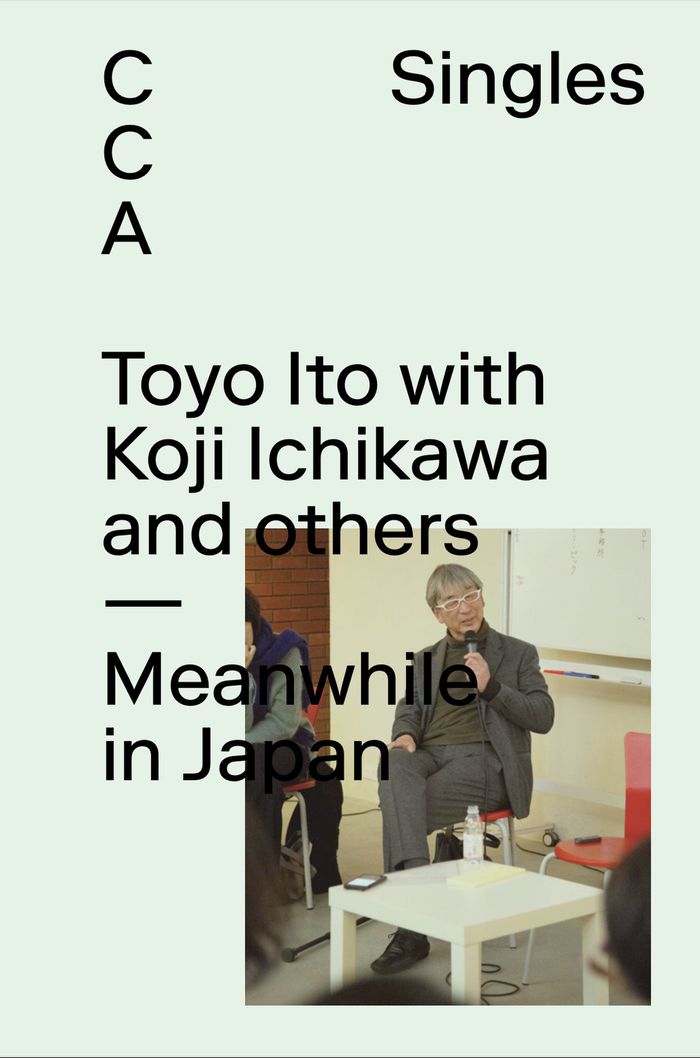
Meanwhile in Japan: Toyo Ito with Koji Ichikawa and others
Actions:
Prix:
$14.00
(disponible en magasin)
Résumé:
In this new volume of the CCA Singles presenting the Meanwhile in Japan conversations, Toyo Ito sat with a group of young architects and academics to discuss how his early work of the 1970s and 1980s took a radical approach to intervening in a newly emerged consumerist culture in Tokyo. As architects elsewhere in the world sought to break through the conventions of modernism, Ito attempted to bring new significance to architecture in a rapidly transforming city, with particular attention to the lives of women in urban society. Led by Koji Ichikawa, the conversation included Mikio Wakabayashi, Kozo Kadowaki, Yutaro Muraji, Leo Tanishige, Mariko Terada, Naohiko Hino, Erika Nakagawa, and Tomoharu Makabe.
Meanwhile in Japan: Toyo Ito with Koji Ichikawa and others
Actions:
Prix:
$14.00
(disponible en magasin)
Résumé:
In this new volume of the CCA Singles presenting the Meanwhile in Japan conversations, Toyo Ito sat with a group of young architects and academics to discuss how his early work of the 1970s and 1980s took a radical approach to intervening in a newly emerged consumerist culture in Tokyo. As architects elsewhere in the world sought to break through the conventions of modernism, Ito attempted to bring new significance to architecture in a rapidly transforming city, with particular attention to the lives of women in urban society. Led by Koji Ichikawa, the conversation included Mikio Wakabayashi, Kozo Kadowaki, Yutaro Muraji, Leo Tanishige, Mariko Terada, Naohiko Hino, Erika Nakagawa, and Tomoharu Makabe.
Classification:
livres
livres
Publication:
avril 2024
avril 2024
Sujet:
Publications du CCA
Publications du CCA
Classification:
livres
livres
Actions:
Prix:
$44.00
(disponible sur commande)
Résumé:
Text by muf. Including an essay by Katherine Shonfield and a contribution by Adrian Dannatt. muf is a London-based all-women art and architecture practice committed to working in public space. This is the only monograph existing on their work so far depicting each of their projects in lavish pictures and informative text.
$44.00
(disponible sur commande)
Résumé:
Text by muf. Including an essay by Katherine Shonfield and a contribution by Adrian Dannatt. muf is a London-based all-women art and architecture practice committed to working in public space. This is the only monograph existing on their work so far depicting each of their projects in lavish pictures and informative text.
Titre:
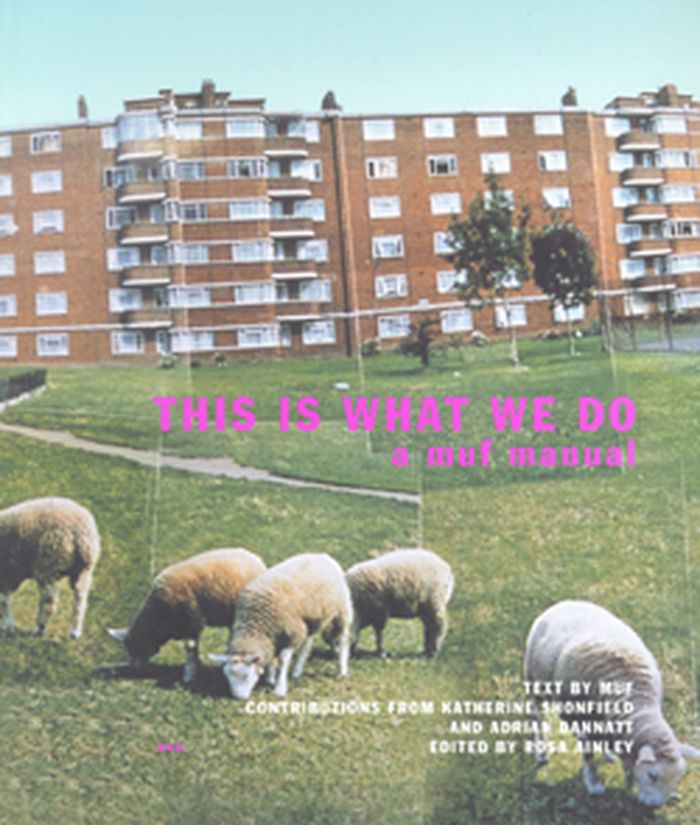
This is what we do: a muf manual
Actions:
Prix:
$44.00
(disponible sur commande)
Résumé:
Text by muf. Including an essay by Katherine Shonfield and a contribution by Adrian Dannatt. muf is a London-based all-women art and architecture practice committed to working in public space. This is the only monograph existing on their work so far depicting each of their projects in lavish pictures and informative text.
This is what we do: a muf manual
Actions:
Prix:
$44.00
(disponible sur commande)
Résumé:
Text by muf. Including an essay by Katherine Shonfield and a contribution by Adrian Dannatt. muf is a London-based all-women art and architecture practice committed to working in public space. This is the only monograph existing on their work so far depicting each of their projects in lavish pictures and informative text.
Classification:
livres
livres
Publication:
mars 2008, London
mars 2008, London
Classification:
livres
livres
Actions:
Prix:
$9.75
(disponible sur commande)
Résumé:
Following on from his internationally bestselling books on Rome and Egypt, illustrator Stephen Biesty brings his magic touch to the cradle of civilization - classical Greece. The year is 436 BCE - Olympic year - and 11-year-old Neleus is about to embark on the journey of a lifetime. Setting off from his home in Miletus with his father and brother, our young hero's(...)
$9.75
(disponible sur commande)
Résumé:
Following on from his internationally bestselling books on Rome and Egypt, illustrator Stephen Biesty brings his magic touch to the cradle of civilization - classical Greece. The year is 436 BCE - Olympic year - and 11-year-old Neleus is about to embark on the journey of a lifetime. Setting off from his home in Miletus with his father and brother, our young hero's(...)
Titre:
Greece in spectacular cross-section
Actions:
Prix:
$9.75
(disponible sur commande)
Résumé:
Following on from his internationally bestselling books on Rome and Egypt, illustrator Stephen Biesty brings his magic touch to the cradle of civilization - classical Greece. The year is 436 BCE - Olympic year - and 11-year-old Neleus is about to embark on the journey of a lifetime. Setting off from his home in Miletus with his father and brother, our young hero's final destination is the great games at Olympia, but he has many adventures and sees many sights along the way : fearsome Athenian warships at the sacred island of Delos; the rich silver mines of Laurion; the hurly-burly of the port and streets of Athens; the splendour of the Agora and the Acropolis; and a visit to the sacred oracle at Delphi. Biesty's Greece is an illustrated tour-de-force, featuring a stunning array of cross-sections, cutaways and explosions. Each drawing highlights Biesty's trademark attention to detail and is backed up by authoritative text and annotations. Biesty's eye for the quirky details of daily life combines with a witty and engaging text to provide an unforgettable window into the world of ancient Greece. Pitched at the 9-12-year-old, this book is destined to bring the ancient world to life for a wide range of readers. No aspect of Greek life is left out... domestic life, religion and the gods, the role of women, children and education, philosophy and learning, myths and legends, government, politics and law, economy and trade, warfare and slavery, the Olympic Games, music and drama, painting, pottery and sculpture, building and architecture, ships and seafaring.
Greece in spectacular cross-section
Actions:
Prix:
$9.75
(disponible sur commande)
Résumé:
Following on from his internationally bestselling books on Rome and Egypt, illustrator Stephen Biesty brings his magic touch to the cradle of civilization - classical Greece. The year is 436 BCE - Olympic year - and 11-year-old Neleus is about to embark on the journey of a lifetime. Setting off from his home in Miletus with his father and brother, our young hero's final destination is the great games at Olympia, but he has many adventures and sees many sights along the way : fearsome Athenian warships at the sacred island of Delos; the rich silver mines of Laurion; the hurly-burly of the port and streets of Athens; the splendour of the Agora and the Acropolis; and a visit to the sacred oracle at Delphi. Biesty's Greece is an illustrated tour-de-force, featuring a stunning array of cross-sections, cutaways and explosions. Each drawing highlights Biesty's trademark attention to detail and is backed up by authoritative text and annotations. Biesty's eye for the quirky details of daily life combines with a witty and engaging text to provide an unforgettable window into the world of ancient Greece. Pitched at the 9-12-year-old, this book is destined to bring the ancient world to life for a wide range of readers. No aspect of Greek life is left out... domestic life, religion and the gods, the role of women, children and education, philosophy and learning, myths and legends, government, politics and law, economy and trade, warfare and slavery, the Olympic Games, music and drama, painting, pottery and sculpture, building and architecture, ships and seafaring.
Classification:
livres
livres
Publication:
septembre 2006, Oxford, New York
septembre 2006, Oxford, New York
Sujet:
Littérature jeunesse
Littérature jeunesse
Classification:
livres
livres
Prix:
$75.00
(disponible sur commande)
Résumé:
''Raising the Curtain'' centres on two modernist opera theatres built on the western periphery of the Soviet Union, now located in the capitals of Lithuania and Belarus: the Opera and Ballet Theatre in Vilnius, Lithuania, inaugurated in 1974, and the Comic Opera in Minsk, Belarus, which opened in 1981. Both were designed, by a lucky coincidence, by architectural(...)
$75.00
(disponible sur commande)
Résumé:
''Raising the Curtain'' centres on two modernist opera theatres built on the western periphery of the Soviet Union, now located in the capitals of Lithuania and Belarus: the Opera and Ballet Theatre in Vilnius, Lithuania, inaugurated in 1974, and the Comic Opera in Minsk, Belarus, which opened in 1981. Both were designed, by a lucky coincidence, by architectural(...)
Titre:
Raising the curtain: Operatic modernism in the Soviet Republics
Actions:
Prix:
$75.00
(disponible sur commande)
Résumé:
''Raising the Curtain'' centres on two modernist opera theatres built on the western periphery of the Soviet Union, now located in the capitals of Lithuania and Belarus: the Opera and Ballet Theatre in Vilnius, Lithuania, inaugurated in 1974, and the Comic Opera in Minsk, Belarus, which opened in 1981. Both were designed, by a lucky coincidence, by architectural collectives led by women, Nijole Buciute (1930-2010) and Oxana Tkachuk (b. 1933) respectively. Drawing upon the close relation of operatic environments to national imaginaries, the book expands the stories of the theatres’ creation into an interrogation of the national condition in the Soviet non-Russian republics. Lithuania and Belarus exemplify the broad range of Soviet national scenarios, presenting two polar extremes of the paths taken: Lithuania was the first republic to leave the Soviet Union in 1990, while Belarus retained its reputation as the “last Soviet republic” well into the 21st century. ''Raising the Curtain'' puts centre stage the involvement of architecture of Soviet modernism with the geopolitical transformations of the era, offering an intimate look at the tectonic shifts which still reverberate across the globe.
Raising the curtain: Operatic modernism in the Soviet Republics
Actions:
Prix:
$75.00
(disponible sur commande)
Résumé:
''Raising the Curtain'' centres on two modernist opera theatres built on the western periphery of the Soviet Union, now located in the capitals of Lithuania and Belarus: the Opera and Ballet Theatre in Vilnius, Lithuania, inaugurated in 1974, and the Comic Opera in Minsk, Belarus, which opened in 1981. Both were designed, by a lucky coincidence, by architectural collectives led by women, Nijole Buciute (1930-2010) and Oxana Tkachuk (b. 1933) respectively. Drawing upon the close relation of operatic environments to national imaginaries, the book expands the stories of the theatres’ creation into an interrogation of the national condition in the Soviet non-Russian republics. Lithuania and Belarus exemplify the broad range of Soviet national scenarios, presenting two polar extremes of the paths taken: Lithuania was the first republic to leave the Soviet Union in 1990, while Belarus retained its reputation as the “last Soviet republic” well into the 21st century. ''Raising the Curtain'' puts centre stage the involvement of architecture of Soviet modernism with the geopolitical transformations of the era, offering an intimate look at the tectonic shifts which still reverberate across the globe.
Classification:
livres
livres
Publication:
juin 2025
juin 2025
Sujet:
Modernisme
Modernisme
Classification:
livres
livres
Prix:
$124.50
(disponible sur commande)
Résumé:
During his tenure as Chief Royal Architect (1539-1588) in the "Golden Age" of the Ottoman Empire, Sinan designed hundreds of structures that helped create the renowned urban image of Istanbul, particularly mosques with seemingly weightless, light-filled centralized domes that have been compared with developments in Renaissance Italy. His distinctive architectural idiom(...)
$124.50
(disponible sur commande)
Résumé:
During his tenure as Chief Royal Architect (1539-1588) in the "Golden Age" of the Ottoman Empire, Sinan designed hundreds of structures that helped create the renowned urban image of Istanbul, particularly mosques with seemingly weightless, light-filled centralized domes that have been compared with developments in Renaissance Italy. His distinctive architectural idiom(...)
Titre:
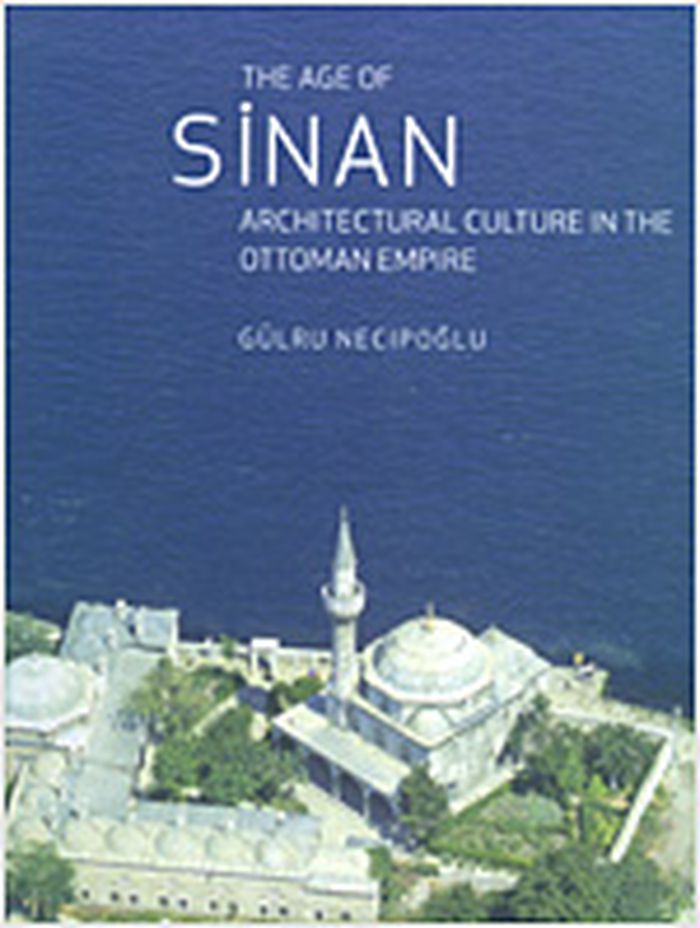
The Age of Sinan : architectural culture in the Ottoman Empire
Actions:
Prix:
$124.50
(disponible sur commande)
Résumé:
During his tenure as Chief Royal Architect (1539-1588) in the "Golden Age" of the Ottoman Empire, Sinan designed hundreds of structures that helped create the renowned urban image of Istanbul, particularly mosques with seemingly weightless, light-filled centralized domes that have been compared with developments in Renaissance Italy. His distinctive architectural idiom left its imprint over a vast empire extending from the Danube to the Tigris, and he became the most celebrated of all Ottoman architects. In this lavishly illustrated, major new assessment of Sinan's oeuvre, Gülru Necipoglu challenges standard views of Sinan as a "Turkish Michelangelo" driven solely by an insatiable urge for artistic experimentation. Her innovative analysis shows that Sinan's rich variety of mosque designs sprang from a process of negotiation between the architect and his elite patrons, both men and women. Defined though they were by social and territorial hierarchies and associated notions of identity, memory, and decorum, Sinan's mosques simultaneously shaped these conceptions. "The Age of Sinan" draws on a wealth of primary sources to reveal the chief architect's monuments as bearers of previously unrecognized dimensions of meaning. A sophisticated study of the cultural and social history of Ottoman architecture, interpreting the works of a seminal figure in the early modern eastern Mediterranean world, it is must-reading for scholars and students of art history and other fields with an interest in the Ottoman Empire.
The Age of Sinan : architectural culture in the Ottoman Empire
Actions:
Prix:
$124.50
(disponible sur commande)
Résumé:
During his tenure as Chief Royal Architect (1539-1588) in the "Golden Age" of the Ottoman Empire, Sinan designed hundreds of structures that helped create the renowned urban image of Istanbul, particularly mosques with seemingly weightless, light-filled centralized domes that have been compared with developments in Renaissance Italy. His distinctive architectural idiom left its imprint over a vast empire extending from the Danube to the Tigris, and he became the most celebrated of all Ottoman architects. In this lavishly illustrated, major new assessment of Sinan's oeuvre, Gülru Necipoglu challenges standard views of Sinan as a "Turkish Michelangelo" driven solely by an insatiable urge for artistic experimentation. Her innovative analysis shows that Sinan's rich variety of mosque designs sprang from a process of negotiation between the architect and his elite patrons, both men and women. Defined though they were by social and territorial hierarchies and associated notions of identity, memory, and decorum, Sinan's mosques simultaneously shaped these conceptions. "The Age of Sinan" draws on a wealth of primary sources to reveal the chief architect's monuments as bearers of previously unrecognized dimensions of meaning. A sophisticated study of the cultural and social history of Ottoman architecture, interpreting the works of a seminal figure in the early modern eastern Mediterranean world, it is must-reading for scholars and students of art history and other fields with an interest in the Ottoman Empire.
Classification:
livres
livres
Publication:
mai 2005, Princeton
mai 2005, Princeton
Sujet:
Histoire jusqu'à 1900, Asie
Histoire jusqu'à 1900, Asie


