


7437 Résultats
Classification:
livres
livres

Titre:
The second digital turn
The second digital turn
Actions:
Prix:
$33.95
(disponible sur commande)
Résumé:
Almost a generation ago, the early software for computer aided design and manufacturing (CAD/CAM) spawned a style of smooth and curving lines and surfaces that gave visible form to the first digital age, and left an indelible mark on contemporary architecture. But today's digitally intelligent architecture no longer looks that way. In The Second Digital Turn, Mario Carpo(...)
$33.95
(disponible sur commande)
Résumé:
Almost a generation ago, the early software for computer aided design and manufacturing (CAD/CAM) spawned a style of smooth and curving lines and surfaces that gave visible form to the first digital age, and left an indelible mark on contemporary architecture. But today's digitally intelligent architecture no longer looks that way. In The Second Digital Turn, Mario Carpo(...)
Titre:
The second digital turn
Actions:
Prix:
$33.95
(disponible sur commande)
Résumé:
Almost a generation ago, the early software for computer aided design and manufacturing (CAD/CAM) spawned a style of smooth and curving lines and surfaces that gave visible form to the first digital age, and left an indelible mark on contemporary architecture. But today's digitally intelligent architecture no longer looks that way. In The Second Digital Turn, Mario Carpo explains that this is because the design professions are now coming to terms with a new kind of digital tools they have adopted—no longer tools for making but tools for thinking. In the early 1990s the design professions were the first to intuit and interpret the new technical logic of the digital age: digital mass-customization (the use of digital tools to mass-produce variations at no extra cost) has already changed the way we produce and consume almost everything, and the same technology applied to commerce at large is now heralding a new society without scale—a flat marginal cost society where bigger markets will not make anything cheaper. But today, the unprecedented power of computation also favors a new kind of science where prediction can be based on sheer information retrieval, and form finding by simulation and optimization can replace deduction from mathematical formulas. Designers have been toying with machine thinking and machine learning for some time, and the apparently unfathomable complexity of the physical shapes they are now creating already expresses a new form of artificial intelligence, outside the tradition of modern science and alien to the organic logic of our mind.
The second digital turn
Actions:
Prix:
$33.95
(disponible sur commande)
Résumé:
Almost a generation ago, the early software for computer aided design and manufacturing (CAD/CAM) spawned a style of smooth and curving lines and surfaces that gave visible form to the first digital age, and left an indelible mark on contemporary architecture. But today's digitally intelligent architecture no longer looks that way. In The Second Digital Turn, Mario Carpo explains that this is because the design professions are now coming to terms with a new kind of digital tools they have adopted—no longer tools for making but tools for thinking. In the early 1990s the design professions were the first to intuit and interpret the new technical logic of the digital age: digital mass-customization (the use of digital tools to mass-produce variations at no extra cost) has already changed the way we produce and consume almost everything, and the same technology applied to commerce at large is now heralding a new society without scale—a flat marginal cost society where bigger markets will not make anything cheaper. But today, the unprecedented power of computation also favors a new kind of science where prediction can be based on sheer information retrieval, and form finding by simulation and optimization can replace deduction from mathematical formulas. Designers have been toying with machine thinking and machine learning for some time, and the apparently unfathomable complexity of the physical shapes they are now creating already expresses a new form of artificial intelligence, outside the tradition of modern science and alien to the organic logic of our mind.
Classification:
livres
livres
Publication:
octobre 2017
octobre 2017
Sujet:
Architecture numérique
Architecture numérique
Classification:
livres
livres
Actions:
Prix:
$39.95
(disponible en magasin)
Résumé:
For E. C. Relph, the landscape of late twentieth-century cities must be envisioned as a total environment—not just streets and buildings but billboards and parking meters as well. "The modern urban landscape" traces the developments since 1880 in architecture, technology, planning, and society that have formed the visual context of daily life. Each of these shaping(...)
$39.95
(disponible en magasin)
Résumé:
For E. C. Relph, the landscape of late twentieth-century cities must be envisioned as a total environment—not just streets and buildings but billboards and parking meters as well. "The modern urban landscape" traces the developments since 1880 in architecture, technology, planning, and society that have formed the visual context of daily life. Each of these shaping(...)
Titre:
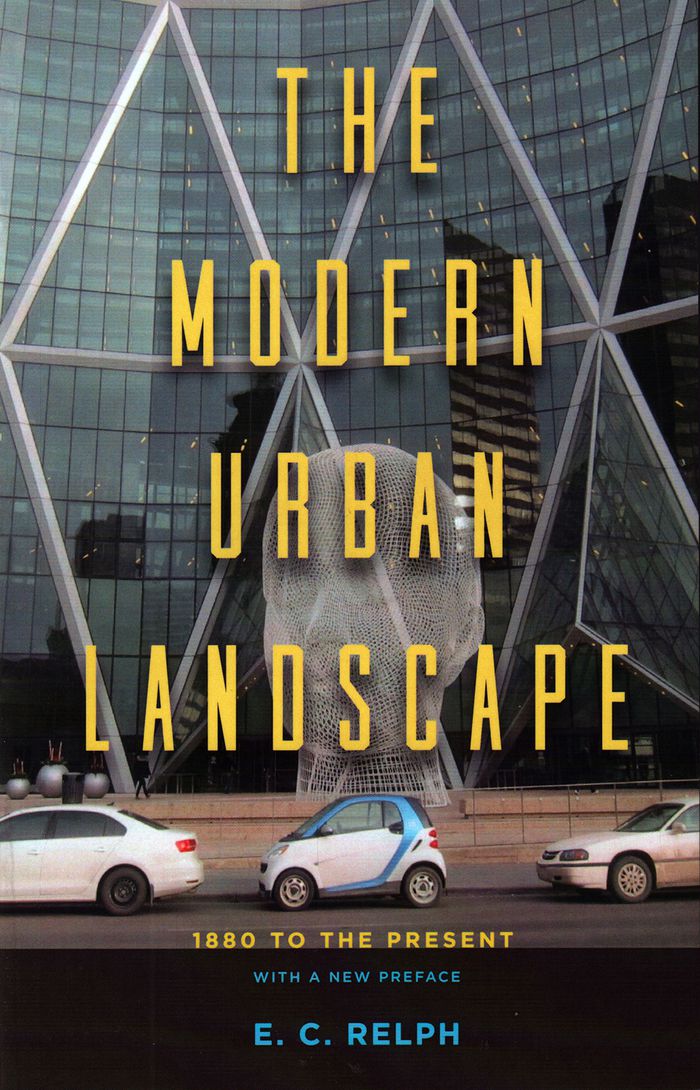
The modern urban landscape: 1880 to the present
Actions:
Prix:
$39.95
(disponible en magasin)
Résumé:
For E. C. Relph, the landscape of late twentieth-century cities must be envisioned as a total environment—not just streets and buildings but billboards and parking meters as well. "The modern urban landscape" traces the developments since 1880 in architecture, technology, planning, and society that have formed the visual context of daily life. Each of these shaping influences is often viewed in isolation, but Relph surveys the ways in which they have operated independently to create what we see when we walk down a street, shop in a mall, or stare through a windshield on an expressway. Two sets of ideas and fashions, Relph argues, have had an especially important impact on urban landscapes in the twentieth century. An "internationalism" made possible by new building technologies and design ideologies has replaced regional style and custom as the dominant feature of city appearance, while a firm belief in the merits of self-consciousness has imposed logical analysis and technical manipulation on such commonplace objects as curbstones and park benches. "As a result," writes Relph, "the modern urban landscape is both rationalized and artificial, which is another way of saying that it is intensely human." This edition features a new preface in which the author identifies the major visible changes in urban landscapes over the past thirty years, including destination architecture, coffee shops, condominium towers, revitalized downtown streets, and the creation of edge cities. He also considers the less visible yet pervasive impacts associated with the emergence of electronic technologies and sustainable development.
The modern urban landscape: 1880 to the present
Actions:
Prix:
$39.95
(disponible en magasin)
Résumé:
For E. C. Relph, the landscape of late twentieth-century cities must be envisioned as a total environment—not just streets and buildings but billboards and parking meters as well. "The modern urban landscape" traces the developments since 1880 in architecture, technology, planning, and society that have formed the visual context of daily life. Each of these shaping influences is often viewed in isolation, but Relph surveys the ways in which they have operated independently to create what we see when we walk down a street, shop in a mall, or stare through a windshield on an expressway. Two sets of ideas and fashions, Relph argues, have had an especially important impact on urban landscapes in the twentieth century. An "internationalism" made possible by new building technologies and design ideologies has replaced regional style and custom as the dominant feature of city appearance, while a firm belief in the merits of self-consciousness has imposed logical analysis and technical manipulation on such commonplace objects as curbstones and park benches. "As a result," writes Relph, "the modern urban landscape is both rationalized and artificial, which is another way of saying that it is intensely human." This edition features a new preface in which the author identifies the major visible changes in urban landscapes over the past thirty years, including destination architecture, coffee shops, condominium towers, revitalized downtown streets, and the creation of edge cities. He also considers the less visible yet pervasive impacts associated with the emergence of electronic technologies and sustainable development.
Classification:
livres
livres
Publication:
juillet 2016
juillet 2016
Sujet:
Théorie de l’urbanisme
Théorie de l’urbanisme
Classification:
livres
livres
Actions:
Prix:
$63.00
(disponible sur commande)
Résumé:
366 cartograms cover a vast array of subjects, providing a definitive reference on how regions and countries compare in resources, production, consumption, and more. Advances in technology have made widespread and detailed data gathering easier, resulting in a deluge of statistics on subjects as diverse as literacy rates, military spending, overweight children,(...)
$63.00
(disponible sur commande)
Résumé:
366 cartograms cover a vast array of subjects, providing a definitive reference on how regions and countries compare in resources, production, consumption, and more. Advances in technology have made widespread and detailed data gathering easier, resulting in a deluge of statistics on subjects as diverse as literacy rates, military spending, overweight children,(...)
Sujet:
Dessin d’architecture
Dessin d’architecture
Publication:
octobre 2008, New York
octobre 2008, New York
Titre:
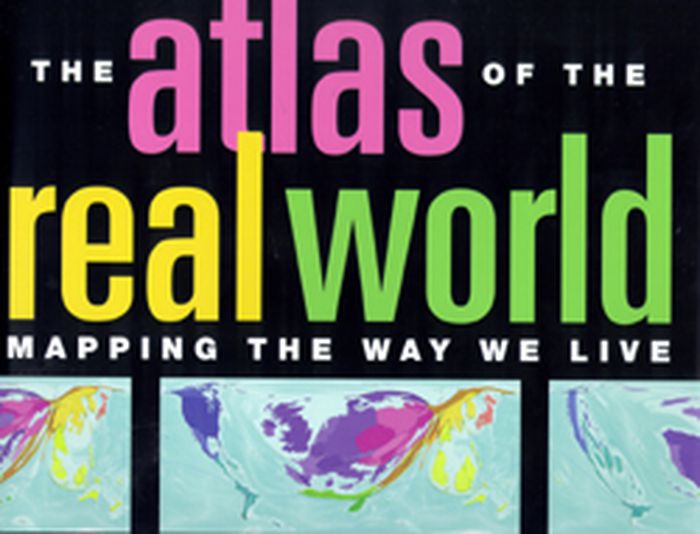
The atlas of the real world: mapping the way we live
Actions:
Prix:
$63.00
(disponible sur commande)
Résumé:
366 cartograms cover a vast array of subjects, providing a definitive reference on how regions and countries compare in resources, production, consumption, and more. Advances in technology have made widespread and detailed data gathering easier, resulting in a deluge of statistics on subjects as diverse as literacy rates, military spending, overweight children, television viewing figures, and endangered species. But how do we represent and compare data from one part of the world to another in a useful way? Here, sophisticated software combined with comprehensive analysis of every aspect of life represents the world as it really is. Digitally modified maps depict the areas and countries of the world not by their physical size but by their demographic importance on a vast range of topics. The rainforests of South America, with thirty percent of the world's fresh water, make the continent balloon in an analysis of water resources, whereas Kuwait, dependent on desalinated seawater, disappears from the map. Fuel use, alcohol consumption, population, malaria: here are hundreds of key indicators to the way we live. This innovative and exceptionally accessible reference work will be an indispensable tool for journalists, economists, marketers, politicians, financiers, environmentalists, and scholars. Its cartograms are augmented by graphs, tables, and full commentaries. 366 color maps. About the Author Daniel Dorling is Professor of Human Geography at the University of Sheffield, England. Mark Newman is Assistant Professor of Physics and Complex Systems at the University of Michigan. Anna Barford is a Research Associate at the University of Sheffield.
The atlas of the real world: mapping the way we live
Actions:
Prix:
$63.00
(disponible sur commande)
Résumé:
366 cartograms cover a vast array of subjects, providing a definitive reference on how regions and countries compare in resources, production, consumption, and more. Advances in technology have made widespread and detailed data gathering easier, resulting in a deluge of statistics on subjects as diverse as literacy rates, military spending, overweight children, television viewing figures, and endangered species. But how do we represent and compare data from one part of the world to another in a useful way? Here, sophisticated software combined with comprehensive analysis of every aspect of life represents the world as it really is. Digitally modified maps depict the areas and countries of the world not by their physical size but by their demographic importance on a vast range of topics. The rainforests of South America, with thirty percent of the world's fresh water, make the continent balloon in an analysis of water resources, whereas Kuwait, dependent on desalinated seawater, disappears from the map. Fuel use, alcohol consumption, population, malaria: here are hundreds of key indicators to the way we live. This innovative and exceptionally accessible reference work will be an indispensable tool for journalists, economists, marketers, politicians, financiers, environmentalists, and scholars. Its cartograms are augmented by graphs, tables, and full commentaries. 366 color maps. About the Author Daniel Dorling is Professor of Human Geography at the University of Sheffield, England. Mark Newman is Assistant Professor of Physics and Complex Systems at the University of Michigan. Anna Barford is a Research Associate at the University of Sheffield.
Classification:
livres
livres
Publication:
octobre 2008, New York
octobre 2008, New York
Sujet:
Dessin d’architecture
Dessin d’architecture
Classification:
livres
livres
Actions:
Prix:
$44.95
(disponible sur commande)
Résumé:
The Nature of Landscape offers an inspiring, personal account of a quest into the meaning and background of the term ‘landscape’. The author, a landscape planner and designer currently teaching at Eindhoven University of Technology, researches the origins of landscape in our civilization and describes different points of view that have helped shape our opinions on(...)
$44.95
(disponible sur commande)
Résumé:
The Nature of Landscape offers an inspiring, personal account of a quest into the meaning and background of the term ‘landscape’. The author, a landscape planner and designer currently teaching at Eindhoven University of Technology, researches the origins of landscape in our civilization and describes different points of view that have helped shape our opinions on(...)
Titre:
The nature of landscape : a personal quest
Actions:
Prix:
$44.95
(disponible sur commande)
Résumé:
The Nature of Landscape offers an inspiring, personal account of a quest into the meaning and background of the term ‘landscape’. The author, a landscape planner and designer currently teaching at Eindhoven University of Technology, researches the origins of landscape in our civilization and describes different points of view that have helped shape our opinions on landscape. For the author, our notion of landscape is focused around the terms 'nature versus culture' and 'native versus foreign'. These counterparts make up his 'mindscape diamond', a modified matrix that not only explains trends in landscape perception and design, but also helps to define developments in land use, architecture, urban planning and environmental art. On a more metaphorical level, the author's abundantly illustrated quest is symbolized by a number of personal impressions, such as the discovery of a stone circle in the desert, a lesson in the peculiarities of the Russian language, a journey along the industrial heritage of the German Ruhrgebiet and a visit to a town where ‘Bavaria comes to Washington’. Offering an unexpected reading experience, these and other descriptions demonstrate how varied ‘landscape’ can be. In a worldwide overview of 30 landscape related artworks and 30 park designs, the author discusses landscape attitudes past and present. In a final chapter, he brings together recent developments in society, architecture and art to make a forecast of landscape trends in the near future. Themes such as man-made nature and reinvented heritage conclude this unusual book on the essence of landscape.
The nature of landscape : a personal quest
Actions:
Prix:
$44.95
(disponible sur commande)
Résumé:
The Nature of Landscape offers an inspiring, personal account of a quest into the meaning and background of the term ‘landscape’. The author, a landscape planner and designer currently teaching at Eindhoven University of Technology, researches the origins of landscape in our civilization and describes different points of view that have helped shape our opinions on landscape. For the author, our notion of landscape is focused around the terms 'nature versus culture' and 'native versus foreign'. These counterparts make up his 'mindscape diamond', a modified matrix that not only explains trends in landscape perception and design, but also helps to define developments in land use, architecture, urban planning and environmental art. On a more metaphorical level, the author's abundantly illustrated quest is symbolized by a number of personal impressions, such as the discovery of a stone circle in the desert, a lesson in the peculiarities of the Russian language, a journey along the industrial heritage of the German Ruhrgebiet and a visit to a town where ‘Bavaria comes to Washington’. Offering an unexpected reading experience, these and other descriptions demonstrate how varied ‘landscape’ can be. In a worldwide overview of 30 landscape related artworks and 30 park designs, the author discusses landscape attitudes past and present. In a final chapter, he brings together recent developments in society, architecture and art to make a forecast of landscape trends in the near future. Themes such as man-made nature and reinvented heritage conclude this unusual book on the essence of landscape.
Classification:
livres
livres
Publication:
mars 2001, Rotterdam
mars 2001, Rotterdam
Sujet:
Théorie du paysage
Théorie du paysage
Classification:
livres
livres
Titre:
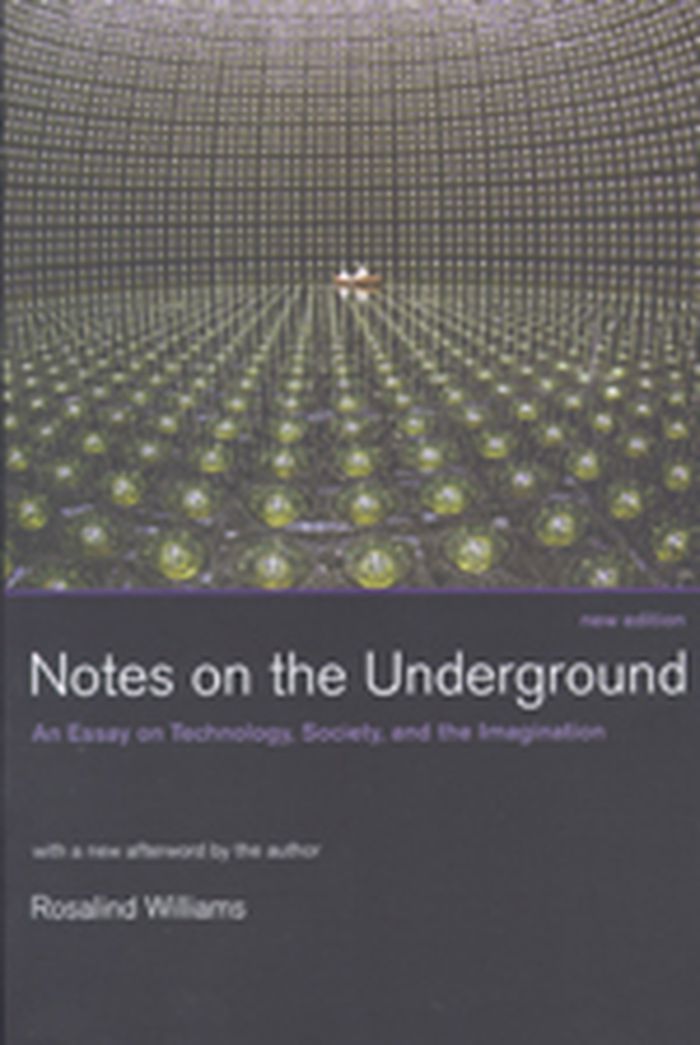
Notes on the Underground
Notes on the Underground
Actions:
Prix:
$24.95
(disponible sur commande)
Résumé:
The underground has always played a prominent role in human imaginings, both as a place of refuge and as a source of fear. The late nineteenth century saw a new fascination with the underground as Western societies tried to cope with the pervasive changes of a new social and technological order. In Notes on the Underground, Rosalind Williams takes us inside that critical(...)
$24.95
(disponible sur commande)
Résumé:
The underground has always played a prominent role in human imaginings, both as a place of refuge and as a source of fear. The late nineteenth century saw a new fascination with the underground as Western societies tried to cope with the pervasive changes of a new social and technological order. In Notes on the Underground, Rosalind Williams takes us inside that critical(...)
Titre:
Notes on the Underground
Actions:
Prix:
$24.95
(disponible sur commande)
Résumé:
The underground has always played a prominent role in human imaginings, both as a place of refuge and as a source of fear. The late nineteenth century saw a new fascination with the underground as Western societies tried to cope with the pervasive changes of a new social and technological order. In Notes on the Underground, Rosalind Williams takes us inside that critical historical moment, giving equal coverage to actual and imaginary undergrounds. She looks at the real-life invasions of the underground that occurred as modern urban infrastructures of sewers and subways were laid, and at the simultaneous archaeological excavations that were unearthing both human history and the planet’s deep past. She also examines the subterranean stories of Verne, Wells, Forster, Hugo, Bulwer-Lytton, and other writers who proposed alternative visions of the coming technological civilization. Williams argues that these imagined and real underground environments provide models of human life in a world dominated by human presence and offer a prophetic look at today’s technology-dominated society. In a new afterword written for this edition, Williams points out that her book traces the emergence in the nineteenth century of what we would now call an environmental consciousness--an awareness that there will be consequences when humans live in a sealed, finite environment. Today we are more aware than ever of our limited biosphere and how vulnerable it is. Notes on the Underground, now even more than when it first appeared, offers a guide to the human, cultural, and technical consequences of what Williams calls "the human empire on earth."
Notes on the Underground
Actions:
Prix:
$24.95
(disponible sur commande)
Résumé:
The underground has always played a prominent role in human imaginings, both as a place of refuge and as a source of fear. The late nineteenth century saw a new fascination with the underground as Western societies tried to cope with the pervasive changes of a new social and technological order. In Notes on the Underground, Rosalind Williams takes us inside that critical historical moment, giving equal coverage to actual and imaginary undergrounds. She looks at the real-life invasions of the underground that occurred as modern urban infrastructures of sewers and subways were laid, and at the simultaneous archaeological excavations that were unearthing both human history and the planet’s deep past. She also examines the subterranean stories of Verne, Wells, Forster, Hugo, Bulwer-Lytton, and other writers who proposed alternative visions of the coming technological civilization. Williams argues that these imagined and real underground environments provide models of human life in a world dominated by human presence and offer a prophetic look at today’s technology-dominated society. In a new afterword written for this edition, Williams points out that her book traces the emergence in the nineteenth century of what we would now call an environmental consciousness--an awareness that there will be consequences when humans live in a sealed, finite environment. Today we are more aware than ever of our limited biosphere and how vulnerable it is. Notes on the Underground, now even more than when it first appeared, offers a guide to the human, cultural, and technical consequences of what Williams calls "the human empire on earth."
Classification:
livres
livres
Publication:
mars 2008, Cambridge
mars 2008, Cambridge
Sujet:
Théorie de l’architecture
Théorie de l’architecture
Classification:
livres
livres
Actions:
Prix:
$25.95
(disponible sur commande)
Résumé:
"This is a book about science, technology, and love," writes Sherry Turkle. In it, we learn how a love for science can start with a love for an object--a microscope, a modem, a mud pie, a pair of dice, a fishing rod. Objects fire imagination and set young people on a path to a career in science. In this collection, distinguished scientists, engineers, and designers as(...)
$25.95
(disponible sur commande)
Résumé:
"This is a book about science, technology, and love," writes Sherry Turkle. In it, we learn how a love for science can start with a love for an object--a microscope, a modem, a mud pie, a pair of dice, a fishing rod. Objects fire imagination and set young people on a path to a career in science. In this collection, distinguished scientists, engineers, and designers as(...)
Titre:
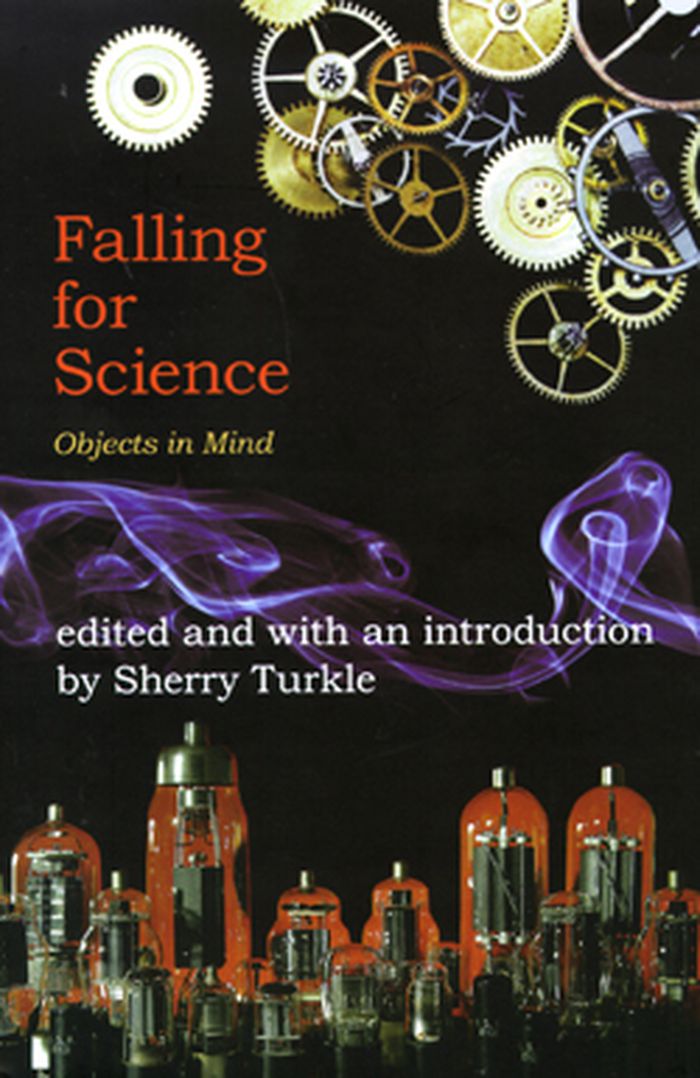
Falling for science: objects in mind
Actions:
Prix:
$25.95
(disponible sur commande)
Résumé:
"This is a book about science, technology, and love," writes Sherry Turkle. In it, we learn how a love for science can start with a love for an object--a microscope, a modem, a mud pie, a pair of dice, a fishing rod. Objects fire imagination and set young people on a path to a career in science. In this collection, distinguished scientists, engineers, and designers as well as twenty-five years of MIT students describe how objects encountered in childhood became part of the fabric of their scientific selves. In two major essays that frame the collection, Turkle tells a story of inspiration and connection through objects that is often neglected in standard science education and in our preoccupation with the virtual. The senior scientists' essays trace the arc of a life: the gears of a toy car introduce the chain of cause and effect to artificial intelligence pioneer Seymour Papert; microscopes disclose the mystery of how things work to MIT President and neuroanatomist Susan Hockfield; architect Moshe Safdie describes how his boyhood fascination with steps, terraces, and the wax hexagons of beehives lead him to a life immersed in the complexities of design. The student essays tell stories that echo these narratives: plastic eggs in an Easter basket reveal the power of centripetal force; experiments with baking illuminate the geology of planets; LEGO bricks model worlds, carefully engineered and colonized. All of these voices--students and mentors-testify to the power of objects to awaken and inform young scientific minds. This is a truth that is simple, intuitive, and easily overlooked.
Falling for science: objects in mind
Actions:
Prix:
$25.95
(disponible sur commande)
Résumé:
"This is a book about science, technology, and love," writes Sherry Turkle. In it, we learn how a love for science can start with a love for an object--a microscope, a modem, a mud pie, a pair of dice, a fishing rod. Objects fire imagination and set young people on a path to a career in science. In this collection, distinguished scientists, engineers, and designers as well as twenty-five years of MIT students describe how objects encountered in childhood became part of the fabric of their scientific selves. In two major essays that frame the collection, Turkle tells a story of inspiration and connection through objects that is often neglected in standard science education and in our preoccupation with the virtual. The senior scientists' essays trace the arc of a life: the gears of a toy car introduce the chain of cause and effect to artificial intelligence pioneer Seymour Papert; microscopes disclose the mystery of how things work to MIT President and neuroanatomist Susan Hockfield; architect Moshe Safdie describes how his boyhood fascination with steps, terraces, and the wax hexagons of beehives lead him to a life immersed in the complexities of design. The student essays tell stories that echo these narratives: plastic eggs in an Easter basket reveal the power of centripetal force; experiments with baking illuminate the geology of planets; LEGO bricks model worlds, carefully engineered and colonized. All of these voices--students and mentors-testify to the power of objects to awaken and inform young scientific minds. This is a truth that is simple, intuitive, and easily overlooked.
Classification:
livres
livres
Publication:
mai 2008, Cambridge, London
mai 2008, Cambridge, London
Sujet:
Théorie du design
Théorie du design
Classification:
livres
livres
Actions:
Exemplaires:
Description:
256 pages : illustrations (chiefly color), plans ; 25 cm
Description:
256 pages : illustrations (chiefly color), plans ; 25 cm
Auteur:
Sujet:
- Building, Wooden.,
- Architecture, Modern 21st century.,
- Construction en bois.,
- Architecture 21e siècle.,
- Architecture, Modern,
- architectural drawings (visual works),
- Architectural drawings.,
- Dessins d'architecture.
Publication:
[Berlin] : Braun, 2008.
[Berlin] : Braun, 2008.
Titre:
Touch wood : the rediscovery of a building material ; [text editing, Dirk Meyhöfer ; translation, Stephen Roche].
Actions:
Exemplaires:
Description:
256 pages : illustrations (chiefly color), plans ; 25 cm
Touch wood : the rediscovery of a building material ; [text editing, Dirk Meyhöfer ; translation, Stephen Roche].
Actions:
Exemplaires:
Description:
256 pages : illustrations (chiefly color), plans ; 25 cm
Classification:
livres
livres
Publication:
[Berlin] : Braun, 2008.
[Berlin] : Braun, 2008.
Auteur:
Sujet:
- Building, Wooden.,
- Architecture, Modern 21st century.,
- Construction en bois.,
- Architecture 21e siècle.,
- Architecture, Modern,
- architectural drawings (visual works),
- Architectural drawings.,
- Dessins d'architecture.
Classification:
livres
livres
Actions:
Description:
1 online resource (264 p.)
Auteur:
- Albrecht, Janina,,
- Blitz, Andreas,,
- Buehler, Ralph,,
- Canzler, Weert,,
- David, Erwan,,
- Duarte, Fábio,,
- Eckart, Peter,,
- Gorman, Claire,,
- Göbel, Stefan,,
- Haustein, Sonja,,
- Hekmati, Björn,,
- Hinde, Stephen,,
- Jensen, Ole B.,,
- Knie, Andreas,,
- Knöll, Martin,,
- Krajewski, Andrea,,
- Lanzendorf, Martin,,
- Le-Hoa Võ, Melissa,,
- Moeckl, Anna-Lena,,
- Mondschein, Andrew,,
- Müggenburg, Hannah,,
- Müller, Philipp,,
- Pandit, Lakshya,,
- Rammler, Stephan,,
- Ratti, Carlo,,
- Reinfeld, Nicole,,
- Reitmaier, Sabine,,
- Roe, Jenny,,
- Rudolph-Cleff, Annette,,
- Santi, Paolo,,
- Schwarze, Julian,,
- Schäfer, Petra,,
- Shelton, Brian,,
- Steinmetz, Ralf,,
- Stolte, Dana,,
- Teoman, Denis,,
- Tregel, Thomas,,
- Vöckler, Kai,
Sujet:
- City planning.,
- Industrial design.,
- Space (Architecture),
- Sustainable development.,
- User interfaces (Computer systems),
- Virtual reality.,
- Auto.,
- Elektromobilität.,
- Fahrrad.,
- Gesundheit.,
- Infrastruktur.,
- Innovation.,
- Klimawandel.,
- Lieferketten.,
- Mobilität.,
- Mobilitätsdesign.,
- Mobilitätskonzept.,
- Mobilitätswandel.,
- Mobilitätswende.,
- Nachhaltigkeit.,
- Ressourcenverknappung.,
- Stadtentwicklung.,
- Stadtplanung.,
- Umdenken.,
- Zukunftsstudien.,
- autofrei.,
- klimagerecht.,
- öffentlicher Nahverkehr.,
- Design.,
- Espace (Architecture),
- Développement durable.,
- Interfaces utilisateurs (Informatique),
- sustainable development.,
- ARCHITECTURE / Urban & Land Use Planning.,
- Mobility.,
- bicycle.,
- car-free.,
- car.,
- climate change.,
- climate-friendly.,
- electromobility.,
- future studies.,
- health.,
- infrastructure.,
- innovation.,
- mobility change.,
- mobility concept.,
- mobility design.,
- mobility transition.,
- public transport.,
- resource scarcity.,
- rethinking.,
- supply chains.,
- sustainability.,
- urban development.,
- urban planning.,
- Electronic books.,
- Collections
Publication:
Berlin : JOVIS Verlag GmbH, [2022], ©2023
Berlin : JOVIS Verlag GmbH, [2022], ©2023
Titre:
Mobility Design : Shaping Future Mobility Volume 2: Research / ed. by Peter Eckart, Martin Knöll, Martin Lanzendorf, Kai Vöckler.
Actions:
Description:
1 online resource (264 p.)
Mobility Design : Shaping Future Mobility Volume 2: Research / ed. by Peter Eckart, Martin Knöll, Martin Lanzendorf, Kai Vöckler.
Actions:
Description:
1 online resource (264 p.)
Classification:
livres
livres
Publication:
Berlin : JOVIS Verlag GmbH, [2022], ©2023
Berlin : JOVIS Verlag GmbH, [2022], ©2023
Auteur:
- Albrecht, Janina,,
- Blitz, Andreas,,
- Buehler, Ralph,,
- Canzler, Weert,,
- David, Erwan,,
- Duarte, Fábio,,
- Eckart, Peter,,
- Gorman, Claire,,
- Göbel, Stefan,,
- Haustein, Sonja,,
- Hekmati, Björn,,
- Hinde, Stephen,,
- Jensen, Ole B.,,
- Knie, Andreas,,
- Knöll, Martin,,
- Krajewski, Andrea,,
- Lanzendorf, Martin,,
- Le-Hoa Võ, Melissa,,
- Moeckl, Anna-Lena,,
- Mondschein, Andrew,,
- Müggenburg, Hannah,,
- Müller, Philipp,,
- Pandit, Lakshya,,
- Rammler, Stephan,,
- Ratti, Carlo,,
- Reinfeld, Nicole,,
- Reitmaier, Sabine,,
- Roe, Jenny,,
- Rudolph-Cleff, Annette,,
- Santi, Paolo,,
- Schwarze, Julian,,
- Schäfer, Petra,,
- Shelton, Brian,,
- Steinmetz, Ralf,,
- Stolte, Dana,,
- Teoman, Denis,,
- Tregel, Thomas,,
- Vöckler, Kai,
Sujet:
- City planning.,
- Industrial design.,
- Space (Architecture),
- Sustainable development.,
- User interfaces (Computer systems),
- Virtual reality.,
- Auto.,
- Elektromobilität.,
- Fahrrad.,
- Gesundheit.,
- Infrastruktur.,
- Innovation.,
- Klimawandel.,
- Lieferketten.,
- Mobilität.,
- Mobilitätsdesign.,
- Mobilitätskonzept.,
- Mobilitätswandel.,
- Mobilitätswende.,
- Nachhaltigkeit.,
- Ressourcenverknappung.,
- Stadtentwicklung.,
- Stadtplanung.,
- Umdenken.,
- Zukunftsstudien.,
- autofrei.,
- klimagerecht.,
- öffentlicher Nahverkehr.,
- Design.,
- Espace (Architecture),
- Développement durable.,
- Interfaces utilisateurs (Informatique),
- sustainable development.,
- ARCHITECTURE / Urban & Land Use Planning.,
- Mobility.,
- bicycle.,
- car-free.,
- car.,
- climate change.,
- climate-friendly.,
- electromobility.,
- future studies.,
- health.,
- infrastructure.,
- innovation.,
- mobility change.,
- mobility concept.,
- mobility design.,
- mobility transition.,
- public transport.,
- resource scarcity.,
- rethinking.,
- supply chains.,
- sustainability.,
- urban development.,
- urban planning.,
- Electronic books.,
- Collections
Classification:
livres
livres
Titre:
The city reader 4th edition
The city reader 4th edition
Actions:
Prix:
$83.95
(disponible sur commande)
Résumé:
The fourth edition of the highly successful The City Reader brings together the very best of publications on the city. Classic writings by such authors as Lewis Mumford, Ernest W. Burgess, LeCorbusier, Lewis Wirth, Jane Jacobs and Kevin Lynch meet the best contemporary writings of, among others, Sir Peter Hall, Richard Florida, Mike Davis, Michael Porter, Robert Putnam,(...)
$83.95
(disponible sur commande)
Résumé:
The fourth edition of the highly successful The City Reader brings together the very best of publications on the city. Classic writings by such authors as Lewis Mumford, Ernest W. Burgess, LeCorbusier, Lewis Wirth, Jane Jacobs and Kevin Lynch meet the best contemporary writings of, among others, Sir Peter Hall, Richard Florida, Mike Davis, Michael Porter, Robert Putnam,(...)
Sujet:
Théorie de l’urbanisme
Théorie de l’urbanisme
Publication:
août 2007, London New York
août 2007, London New York
Titre:
The city reader 4th edition
Actions:
Prix:
$83.95
(disponible sur commande)
Résumé:
The fourth edition of the highly successful The City Reader brings together the very best of publications on the city. Classic writings by such authors as Lewis Mumford, Ernest W. Burgess, LeCorbusier, Lewis Wirth, Jane Jacobs and Kevin Lynch meet the best contemporary writings of, among others, Sir Peter Hall, Richard Florida, Mike Davis, Michael Porter, Robert Putnam, Andrus Duany, Saskia Sassen, and Manuel Castells. New to the fourth edition are important classic writings on urban economics by Wilbur Thomson and on bosses and machines by James Bryce, Jane Addams, and William L. Riordan, and new contemporary material on sustainable urban development , the creative class, metropolitics, occidentalism, Asian megacities, and urban futurism by The Bruntland Commission, Richard Florida, Myron Orfield, Ian Buruma and Avishai Margalit, Aprodicio Laquian, and Joel Kotkin. Fifty-seven generous selections are included: a combination of forty-six readings from the third edition and eleven entirely new selections. Structured to aid student understanding, the anthology features main and part Introductions, as well as individual introductions to the selected articles. Each selection is introduced with a brief intellectual biography and a review of the author s writings and related literature, an explanation of how the piece fits into the broader context of urban history and practice, competing ideological perspectives on the city, and the major current debates concerning race and gender, globalization, terrorism, the impact of information technology on cities, civic engagement, and postmodernism. The City Reader provides the comprehensive mapping of the terrain of Urban Studies, old and new. It is illustrated with over forty photographs and is essential reading for anyone interested in the city.
The city reader 4th edition
Actions:
Prix:
$83.95
(disponible sur commande)
Résumé:
The fourth edition of the highly successful The City Reader brings together the very best of publications on the city. Classic writings by such authors as Lewis Mumford, Ernest W. Burgess, LeCorbusier, Lewis Wirth, Jane Jacobs and Kevin Lynch meet the best contemporary writings of, among others, Sir Peter Hall, Richard Florida, Mike Davis, Michael Porter, Robert Putnam, Andrus Duany, Saskia Sassen, and Manuel Castells. New to the fourth edition are important classic writings on urban economics by Wilbur Thomson and on bosses and machines by James Bryce, Jane Addams, and William L. Riordan, and new contemporary material on sustainable urban development , the creative class, metropolitics, occidentalism, Asian megacities, and urban futurism by The Bruntland Commission, Richard Florida, Myron Orfield, Ian Buruma and Avishai Margalit, Aprodicio Laquian, and Joel Kotkin. Fifty-seven generous selections are included: a combination of forty-six readings from the third edition and eleven entirely new selections. Structured to aid student understanding, the anthology features main and part Introductions, as well as individual introductions to the selected articles. Each selection is introduced with a brief intellectual biography and a review of the author s writings and related literature, an explanation of how the piece fits into the broader context of urban history and practice, competing ideological perspectives on the city, and the major current debates concerning race and gender, globalization, terrorism, the impact of information technology on cities, civic engagement, and postmodernism. The City Reader provides the comprehensive mapping of the terrain of Urban Studies, old and new. It is illustrated with over forty photographs and is essential reading for anyone interested in the city.
Classification:
livres
livres
Publication:
août 2007, London New York
août 2007, London New York
Sujet:
Théorie de l’urbanisme
Théorie de l’urbanisme
Classification:
livres
livres
Actions:
Prix:
$55.00
(disponible sur commande)
Résumé:
Aalto's career overlapped both chronologically and ideologically with those of Le Corbusier and Mies van der Rohe, but his commitment to a humanitarian ideal, inspired by nature, set him apart from his purist Modernist contemporaries. His beautiful buildings, including the Paimio Sanatorium, Villa Mairea, Jyvaskla Worker's Club, Church of the Three Crosses and Baker House(...)
$55.00
(disponible sur commande)
Résumé:
Aalto's career overlapped both chronologically and ideologically with those of Le Corbusier and Mies van der Rohe, but his commitment to a humanitarian ideal, inspired by nature, set him apart from his purist Modernist contemporaries. His beautiful buildings, including the Paimio Sanatorium, Villa Mairea, Jyvaskla Worker's Club, Church of the Three Crosses and Baker House(...)
Sujet:
Architecture, monographies
Architecture, monographies
Publication:
avril 2007, London
avril 2007, London
Titre:
Alvar Aalto : trough the eyes of shigeru ban
Actions:
Prix:
$55.00
(disponible sur commande)
Résumé:
Aalto's career overlapped both chronologically and ideologically with those of Le Corbusier and Mies van der Rohe, but his commitment to a humanitarian ideal, inspired by nature, set him apart from his purist Modernist contemporaries. His beautiful buildings, including the Paimio Sanatorium, Villa Mairea, Jyvaskla Worker's Club, Church of the Three Crosses and Baker House Dormitory, with their curving facades, careful interaction of wood, concrete and brick, and innovative uses of emerging technologies, show the touch of a true master. With contributions from Colin St John Wilson (architect of the British Library), Juhani Pallasmaa (Aalto specialist at the University of Technology, Helsinki), as well as an exclusive interview with Shigeru Ban, Alvar Aalto: Through the Eyes of Shigeru Ban offers a refreshing new take on Aalto's architecture and design. Added to this, three new translations of Aalto's own writings provide an insight into the workings of his mind, and the theoretical and philosophical discussions that he was engaging with in the 1920s and 30s. Beautifully illustrated, Alvar Aalto: Through the Eyes of Shigeru Ban features stunning new images by photographer Judith Turner, whose abstract interpretation of Aalto's work brings out the poetry of his buildings, and shows them in a whole new light. Hitherto unseen archive images from the Aalto foundation are also published for the first time, making this a truly unique publication. The environmental concerns of the twenty-first century mean that Aalto’s legacies have become ever more apparent. This timely retrospective pays tribute to one of the great masters of architecture and is essential reading for architects, designers and anyone interested in the origins of contemporary architecture and culture.
Alvar Aalto : trough the eyes of shigeru ban
Actions:
Prix:
$55.00
(disponible sur commande)
Résumé:
Aalto's career overlapped both chronologically and ideologically with those of Le Corbusier and Mies van der Rohe, but his commitment to a humanitarian ideal, inspired by nature, set him apart from his purist Modernist contemporaries. His beautiful buildings, including the Paimio Sanatorium, Villa Mairea, Jyvaskla Worker's Club, Church of the Three Crosses and Baker House Dormitory, with their curving facades, careful interaction of wood, concrete and brick, and innovative uses of emerging technologies, show the touch of a true master. With contributions from Colin St John Wilson (architect of the British Library), Juhani Pallasmaa (Aalto specialist at the University of Technology, Helsinki), as well as an exclusive interview with Shigeru Ban, Alvar Aalto: Through the Eyes of Shigeru Ban offers a refreshing new take on Aalto's architecture and design. Added to this, three new translations of Aalto's own writings provide an insight into the workings of his mind, and the theoretical and philosophical discussions that he was engaging with in the 1920s and 30s. Beautifully illustrated, Alvar Aalto: Through the Eyes of Shigeru Ban features stunning new images by photographer Judith Turner, whose abstract interpretation of Aalto's work brings out the poetry of his buildings, and shows them in a whole new light. Hitherto unseen archive images from the Aalto foundation are also published for the first time, making this a truly unique publication. The environmental concerns of the twenty-first century mean that Aalto’s legacies have become ever more apparent. This timely retrospective pays tribute to one of the great masters of architecture and is essential reading for architects, designers and anyone interested in the origins of contemporary architecture and culture.
Classification:
livres
livres
Publication:
avril 2007, London
avril 2007, London
Sujet:
Architecture, monographies
Architecture, monographies


