


7531 Résultats
Classification:
périodiques
périodiques
Actions:
Prix:
$34.95
(disponible sur commande)
Résumé:
Au sommaire : le trinôme lumière - couleur - texture. Lumière : penser la ville par la lumière ; un plan lumière en Région wallonne; plan lumière de la ville de Namur ; de l'éclairage public à la mise en lumière ; la lumière entre en gare ; la protection du ciel nocturne ;le Centre pour la Fondation Polaire Internationale à Toronto ; couleurs et pratiques urbanistiques ;(...)
$34.95
(disponible sur commande)
Résumé:
Au sommaire : le trinôme lumière - couleur - texture. Lumière : penser la ville par la lumière ; un plan lumière en Région wallonne; plan lumière de la ville de Namur ; de l'éclairage public à la mise en lumière ; la lumière entre en gare ; la protection du ciel nocturne ;le Centre pour la Fondation Polaire Internationale à Toronto ; couleurs et pratiques urbanistiques ;(...)
Titre:
Les cahiers de l'urbanisme no 59-60 - juin 2006 : lumière - couleur
Actions:
Prix:
$34.95
(disponible sur commande)
Résumé:
Au sommaire : le trinôme lumière - couleur - texture. Lumière : penser la ville par la lumière ; un plan lumière en Région wallonne; plan lumière de la ville de Namur ; de l'éclairage public à la mise en lumière ; la lumière entre en gare ; la protection du ciel nocturne ;le Centre pour la Fondation Polaire Internationale à Toronto ; couleurs et pratiques urbanistiques ; une charte chromatique à Binant ; quelle palette de couleur pour la Lorraine belge ; revalorisation du logement social par la couleur ; matières et couleurs des villes anciennes ; couleurs des portails gothiques ; la couleur et la pierre ; façades enduites ou peintes dans l'ancien Pays de Liège ; promenade dans la ville de Liège ; restauration des couleurs de l'église Saint-Barthélémy ; la couleur dans le traitement des façades en Hainaut ; le Grand-Hornu, toujours cet inconnu ; les couleurs de Tournai ; façades et sculptures polychromées au Grand-Duché de Luxembourg.
Les cahiers de l'urbanisme no 59-60 - juin 2006 : lumière - couleur
Actions:
Prix:
$34.95
(disponible sur commande)
Résumé:
Au sommaire : le trinôme lumière - couleur - texture. Lumière : penser la ville par la lumière ; un plan lumière en Région wallonne; plan lumière de la ville de Namur ; de l'éclairage public à la mise en lumière ; la lumière entre en gare ; la protection du ciel nocturne ;le Centre pour la Fondation Polaire Internationale à Toronto ; couleurs et pratiques urbanistiques ; une charte chromatique à Binant ; quelle palette de couleur pour la Lorraine belge ; revalorisation du logement social par la couleur ; matières et couleurs des villes anciennes ; couleurs des portails gothiques ; la couleur et la pierre ; façades enduites ou peintes dans l'ancien Pays de Liège ; promenade dans la ville de Liège ; restauration des couleurs de l'église Saint-Barthélémy ; la couleur dans le traitement des façades en Hainaut ; le Grand-Hornu, toujours cet inconnu ; les couleurs de Tournai ; façades et sculptures polychromées au Grand-Duché de Luxembourg.
Classification:
périodiques
périodiques
Publication:
juin 2006, Sprimont
juin 2006, Sprimont
Sujet:
Revues
Revues
Classification:
livres
livres
Actions:
Prix:
$20.00
(disponible sur commande)
Résumé:
When William Thorsell assumes command of Toronto's Royal Ontario Museum, he moves quickly to rejuvenate the beloved building on Bloor Street. As former editor of one of Canada's leading newspapers, Thorsell envisions an iconic public building— a bold gesture that will inject a shot of architectural amphetamine into the staid and sensible veins of Canada's biggest burg.(...)
$20.00
(disponible sur commande)
Résumé:
When William Thorsell assumes command of Toronto's Royal Ontario Museum, he moves quickly to rejuvenate the beloved building on Bloor Street. As former editor of one of Canada's leading newspapers, Thorsell envisions an iconic public building— a bold gesture that will inject a shot of architectural amphetamine into the staid and sensible veins of Canada's biggest burg.(...)
Titre:
The museum : Art, ego , steel , beams
Actions:
Prix:
$20.00
(disponible sur commande)
Résumé:
When William Thorsell assumes command of Toronto's Royal Ontario Museum, he moves quickly to rejuvenate the beloved building on Bloor Street. As former editor of one of Canada's leading newspapers, Thorsell envisions an iconic public building— a bold gesture that will inject a shot of architectural amphetamine into the staid and sensible veins of Canada's biggest burg. Who to trust with such a venture? Enter Daniel Libeskind. More than a celebrity architect, Libeskind is a global brand linked to some of the world's most prestigious building projects. As Libeskind's unusual crystalline structure rises into the Toronto sky, Thorsell and Libeskind dance a high-tension tango. Budgets are blown. Timetables trashed. Citizens outraged. Tuned to contemporary debates on public architecture, The Museum charts the progress of Thorsell's grand scheme in an entertaining tale of art, ego and steel beams.
The museum : Art, ego , steel , beams
Actions:
Prix:
$20.00
(disponible sur commande)
Résumé:
When William Thorsell assumes command of Toronto's Royal Ontario Museum, he moves quickly to rejuvenate the beloved building on Bloor Street. As former editor of one of Canada's leading newspapers, Thorsell envisions an iconic public building— a bold gesture that will inject a shot of architectural amphetamine into the staid and sensible veins of Canada's biggest burg. Who to trust with such a venture? Enter Daniel Libeskind. More than a celebrity architect, Libeskind is a global brand linked to some of the world's most prestigious building projects. As Libeskind's unusual crystalline structure rises into the Toronto sky, Thorsell and Libeskind dance a high-tension tango. Budgets are blown. Timetables trashed. Citizens outraged. Tuned to contemporary debates on public architecture, The Museum charts the progress of Thorsell's grand scheme in an entertaining tale of art, ego and steel beams.
Classification:
livres
livres
Publication:
septembre 2010
septembre 2010
Sujet:
DVD vidéo
DVD vidéo
Classification:
livres
livres

Actions:
Prix:
$34.95
(disponible sur commande)
Résumé:
In "Jane Jacobs : urban visionary", journalist Alice Sparberg Alexiou deconstructs Jane Jacobs’ richly packed life of ideas and social action, offering a fluid and engaging synthesis of meticulously researched observation and analysis. Alexiou traces Jacobs’ move from Scranton, Pennsylvania, to New York City and the controversy that erupted when she dared to take on(...)
$34.95
(disponible sur commande)
Résumé:
In "Jane Jacobs : urban visionary", journalist Alice Sparberg Alexiou deconstructs Jane Jacobs’ richly packed life of ideas and social action, offering a fluid and engaging synthesis of meticulously researched observation and analysis. Alexiou traces Jacobs’ move from Scranton, Pennsylvania, to New York City and the controversy that erupted when she dared to take on(...)
Titre:
Jane Jacobs : urban visionary
Actions:
Prix:
$34.95
(disponible sur commande)
Résumé:
In "Jane Jacobs : urban visionary", journalist Alice Sparberg Alexiou deconstructs Jane Jacobs’ richly packed life of ideas and social action, offering a fluid and engaging synthesis of meticulously researched observation and analysis. Alexiou traces Jacobs’ move from Scranton, Pennsylvania, to New York City and the controversy that erupted when she dared to take on conventional urban planning wisdom with her classic "Death and life". She protested then-current urban renewal practices and championed the "sidewalk ballet" — the fragile meeting of buildings, streets and people — threatened by the building of highways and the tearing down of working neighbourhoods. Jacobs moved to Canada in the late 1960s and embarke on Toronto-saving campaigns, helping to preserve Old City Hall and Union Station. She was also instrumental in preventing the construction of the Spadina Expressway, which would have cut a swath through Toronto’s Annex and other essential neighbourhoods.
Jane Jacobs : urban visionary
Actions:
Prix:
$34.95
(disponible sur commande)
Résumé:
In "Jane Jacobs : urban visionary", journalist Alice Sparberg Alexiou deconstructs Jane Jacobs’ richly packed life of ideas and social action, offering a fluid and engaging synthesis of meticulously researched observation and analysis. Alexiou traces Jacobs’ move from Scranton, Pennsylvania, to New York City and the controversy that erupted when she dared to take on conventional urban planning wisdom with her classic "Death and life". She protested then-current urban renewal practices and championed the "sidewalk ballet" — the fragile meeting of buildings, streets and people — threatened by the building of highways and the tearing down of working neighbourhoods. Jacobs moved to Canada in the late 1960s and embarke on Toronto-saving campaigns, helping to preserve Old City Hall and Union Station. She was also instrumental in preventing the construction of the Spadina Expressway, which would have cut a swath through Toronto’s Annex and other essential neighbourhoods.
Classification:
livres
livres
Publication:
février 2006, Toronto
février 2006, Toronto
Sujet:
Théorie de l’urbanisme
Théorie de l’urbanisme
Classification:
livres
livres
Actions:
Prix:
$45.00
(disponible en magasin)
Résumé:
Geoffrey James directs his gaze to the in-between spaces and forgotten places that resist the idea of a cohesive national identity. With an equable eye, James documents the ephemeral and the monumental: a demolition derby in Quebec, how an inmate at Kingston Penitentiary has decorated his cell, the Dickensian side door of Massey Hall in Toronto. The photographs in this(...)
$45.00
(disponible en magasin)
Résumé:
Geoffrey James directs his gaze to the in-between spaces and forgotten places that resist the idea of a cohesive national identity. With an equable eye, James documents the ephemeral and the monumental: a demolition derby in Quebec, how an inmate at Kingston Penitentiary has decorated his cell, the Dickensian side door of Massey Hall in Toronto. The photographs in this(...)
Titre:
Geoffrey James: Canadian photographs
Actions:
Prix:
$45.00
(disponible en magasin)
Résumé:
Geoffrey James directs his gaze to the in-between spaces and forgotten places that resist the idea of a cohesive national identity. With an equable eye, James documents the ephemeral and the monumental: a demolition derby in Quebec, how an inmate at Kingston Penitentiary has decorated his cell, the Dickensian side door of Massey Hall in Toronto. The photographs in this collection celebrate the everyday while meditating on the issues James’s adopted home faces: the bifurcation of rural and urban, rapid growth and increasing inequality, and its journey toward truth and reconciliation. Linked by views taken from train windows from British Columbia to Nova Scotia, James’s unofficial portrait of Canada brings into sharp relief the unfinished business of the nation as it lurches into the next century. Canadian Photographs includes a conversation between the photographer and Peter Galassi, former Chief Curator of Photography at the Museum of Modern Art.
Geoffrey James: Canadian photographs
Actions:
Prix:
$45.00
(disponible en magasin)
Résumé:
Geoffrey James directs his gaze to the in-between spaces and forgotten places that resist the idea of a cohesive national identity. With an equable eye, James documents the ephemeral and the monumental: a demolition derby in Quebec, how an inmate at Kingston Penitentiary has decorated his cell, the Dickensian side door of Massey Hall in Toronto. The photographs in this collection celebrate the everyday while meditating on the issues James’s adopted home faces: the bifurcation of rural and urban, rapid growth and increasing inequality, and its journey toward truth and reconciliation. Linked by views taken from train windows from British Columbia to Nova Scotia, James’s unofficial portrait of Canada brings into sharp relief the unfinished business of the nation as it lurches into the next century. Canadian Photographs includes a conversation between the photographer and Peter Galassi, former Chief Curator of Photography at the Museum of Modern Art.
Classification:
livres
livres
Publication:
octobre 2024
octobre 2024
Sujet:
Monographies photo
Monographies photo
Classification:
livres
livres
Actions:
Prix:
$34.95
(disponible sur commande)
Résumé:
"Animal metropolis" brings a Canadian perspective to the growing field of animal history, ranging across species and cities, from the beavers who engineered Stanley Park to the carthorses who shaped the city of Montreal. Some essays consider animals as spectacle: orca captivity in Vancouver, polar bear tourism in Churchill, Manitoba, fish on display in the Dominion(...)
$34.95
(disponible sur commande)
Résumé:
"Animal metropolis" brings a Canadian perspective to the growing field of animal history, ranging across species and cities, from the beavers who engineered Stanley Park to the carthorses who shaped the city of Montreal. Some essays consider animals as spectacle: orca captivity in Vancouver, polar bear tourism in Churchill, Manitoba, fish on display in the Dominion(...)
Publication:
février 2017
février 2017
Titre:
Animal metropolis: histories of human-animal relations in urban Canada
Actions:
Prix:
$34.95
(disponible sur commande)
Résumé:
"Animal metropolis" brings a Canadian perspective to the growing field of animal history, ranging across species and cities, from the beavers who engineered Stanley Park to the carthorses who shaped the city of Montreal. Some essays consider animals as spectacle: orca captivity in Vancouver, polar bear tourism in Churchill, Manitoba, fish on display in the Dominion Fisheries Museum, and the racialized memory of Jumbo the elephant in St. Thomas, Ontario. Others examine the bodily intimacies of shared urban spaces: the regulation of rabid dogs in Banff, the maternal politics of pure milk in Hamilton and the circulation of tetanus bacilli from horse to human in Toronto. Another considers the marginalization of women in Canada’s animal welfare movement. The authors collectively push forward from a historiography that features nonhuman animals as objects within human-centered inquiries to a historiography that considers the eclectic contacts, exchanges, and cohabitation of human and nonhuman animals.
Animal metropolis: histories of human-animal relations in urban Canada
Actions:
Prix:
$34.95
(disponible sur commande)
Résumé:
"Animal metropolis" brings a Canadian perspective to the growing field of animal history, ranging across species and cities, from the beavers who engineered Stanley Park to the carthorses who shaped the city of Montreal. Some essays consider animals as spectacle: orca captivity in Vancouver, polar bear tourism in Churchill, Manitoba, fish on display in the Dominion Fisheries Museum, and the racialized memory of Jumbo the elephant in St. Thomas, Ontario. Others examine the bodily intimacies of shared urban spaces: the regulation of rabid dogs in Banff, the maternal politics of pure milk in Hamilton and the circulation of tetanus bacilli from horse to human in Toronto. Another considers the marginalization of women in Canada’s animal welfare movement. The authors collectively push forward from a historiography that features nonhuman animals as objects within human-centered inquiries to a historiography that considers the eclectic contacts, exchanges, and cohabitation of human and nonhuman animals.
Classification:
livres
livres
Publication:
février 2017
février 2017
Classification:
livres
livres

Actions:
Prix:
$14.95
(disponible sur commande)
Résumé:
À partir du milieu du xixe siècle, l’Amérique du Nord est le théâtre d’une révolution industrielle qui transforme radicalement le visage de ses villes. En quelques décennies, les métropoles du continent s’imposent comme incarnations d’une modernité urbaine triomphante. De Montréal à La Nouvelle-Orléans, le développement des transports en commun ouvre la porte à un(...)
$14.95
(disponible sur commande)
Résumé:
À partir du milieu du xixe siècle, l’Amérique du Nord est le théâtre d’une révolution industrielle qui transforme radicalement le visage de ses villes. En quelques décennies, les métropoles du continent s’imposent comme incarnations d’une modernité urbaine triomphante. De Montréal à La Nouvelle-Orléans, le développement des transports en commun ouvre la porte à un(...)
Titre:
Histoire des villes nord-américaines
Actions:
Prix:
$14.95
(disponible sur commande)
Résumé:
À partir du milieu du xixe siècle, l’Amérique du Nord est le théâtre d’une révolution industrielle qui transforme radicalement le visage de ses villes. En quelques décennies, les métropoles du continent s’imposent comme incarnations d’une modernité urbaine triomphante. De Montréal à La Nouvelle-Orléans, le développement des transports en commun ouvre la porte à un étalement urbain qui donne naissance à des quartiers bourgeois prestigieux, mais aussi à des quartiers chauds associés au jeu et à la prostitution. De Toronto à New York, experts, architectes et politiciens tentent de faire sens du chaos urbain pour s’enrichir ou sauver la ville d’elle-même. De Vancouver à Chicago, parcs et boulevards, gratte-ciels et espaces publics sont construits et aménagés pour célébrer la grandeur des cités du Nouveau Monde. Et dans l’ombre de chacune d’entre elles, il y a ceux et celles qui luttent contre les inégalités qui s’y accentuent et y persistent.
Histoire des villes nord-américaines
Actions:
Prix:
$14.95
(disponible sur commande)
Résumé:
À partir du milieu du xixe siècle, l’Amérique du Nord est le théâtre d’une révolution industrielle qui transforme radicalement le visage de ses villes. En quelques décennies, les métropoles du continent s’imposent comme incarnations d’une modernité urbaine triomphante. De Montréal à La Nouvelle-Orléans, le développement des transports en commun ouvre la porte à un étalement urbain qui donne naissance à des quartiers bourgeois prestigieux, mais aussi à des quartiers chauds associés au jeu et à la prostitution. De Toronto à New York, experts, architectes et politiciens tentent de faire sens du chaos urbain pour s’enrichir ou sauver la ville d’elle-même. De Vancouver à Chicago, parcs et boulevards, gratte-ciels et espaces publics sont construits et aménagés pour célébrer la grandeur des cités du Nouveau Monde. Et dans l’ombre de chacune d’entre elles, il y a ceux et celles qui luttent contre les inégalités qui s’y accentuent et y persistent.
Classification:
livres
livres
Publication:
avril 2022
avril 2022
Sujet:
Théorie de l’urbanisme
Théorie de l’urbanisme
Classification:
livres
livres
Actions:
Prix:
$41.95
(disponible sur commande)
Résumé:
Cet ouvrage, écrit par un économiste, s’ouvre sur une anecdote se rapportant à l’une des œuvres de Damien Hirst, un des grands noms de l’art contemporain qui domine la scène artistique britannique depuis les années 1990. Plusieurs de ses créations (dont L’impossibilité physique de la mort dans un esprit vivant, à savoir un requin tigre conservé dans du formol et présenté(...)
$41.95
(disponible sur commande)
Résumé:
Cet ouvrage, écrit par un économiste, s’ouvre sur une anecdote se rapportant à l’une des œuvres de Damien Hirst, un des grands noms de l’art contemporain qui domine la scène artistique britannique depuis les années 1990. Plusieurs de ses créations (dont L’impossibilité physique de la mort dans un esprit vivant, à savoir un requin tigre conservé dans du formol et présenté(...)
Titre:
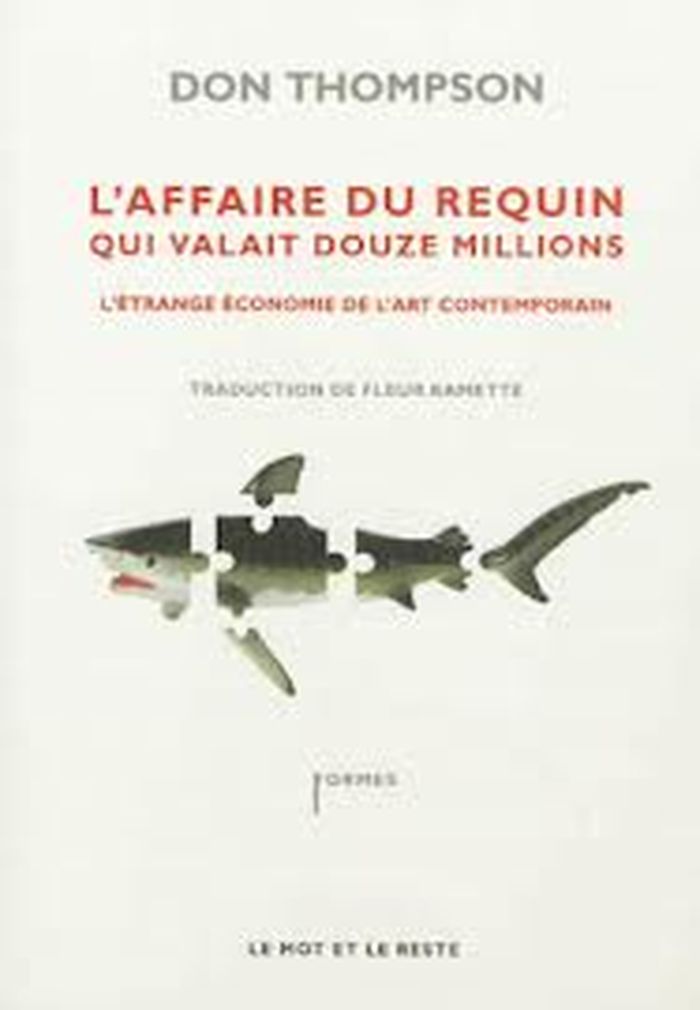
L'affaire du requin qui valait douze millions: l'étrange économie de l'art contemporain
Actions:
Prix:
$41.95
(disponible sur commande)
Résumé:
Cet ouvrage, écrit par un économiste, s’ouvre sur une anecdote se rapportant à l’une des œuvres de Damien Hirst, un des grands noms de l’art contemporain qui domine la scène artistique britannique depuis les années 1990. Plusieurs de ses créations (dont L’impossibilité physique de la mort dans un esprit vivant, à savoir un requin tigre conservé dans du formol et présenté dans un aquarium) ont atteint des sommes record sur le marché de l’art. À partir de cet élément, Don Thompson déroule une étude détaillée, précise et largement accessible du marché de l’art, de ses lois économiques et psychologiques, de ses acteurs (artistes, galeristes, collectionneurs, musées, grandes maisons de vente aux enchères). Ce livre s’adresse à toute personne qui s’intéresse à l’art contemporain. Don Thompson est professeur d’économie. Il a notamment enseigné à l’université de Harvard, à la London School of Economics et à l’université de Toronto.
L'affaire du requin qui valait douze millions: l'étrange économie de l'art contemporain
Actions:
Prix:
$41.95
(disponible sur commande)
Résumé:
Cet ouvrage, écrit par un économiste, s’ouvre sur une anecdote se rapportant à l’une des œuvres de Damien Hirst, un des grands noms de l’art contemporain qui domine la scène artistique britannique depuis les années 1990. Plusieurs de ses créations (dont L’impossibilité physique de la mort dans un esprit vivant, à savoir un requin tigre conservé dans du formol et présenté dans un aquarium) ont atteint des sommes record sur le marché de l’art. À partir de cet élément, Don Thompson déroule une étude détaillée, précise et largement accessible du marché de l’art, de ses lois économiques et psychologiques, de ses acteurs (artistes, galeristes, collectionneurs, musées, grandes maisons de vente aux enchères). Ce livre s’adresse à toute personne qui s’intéresse à l’art contemporain. Don Thompson est professeur d’économie. Il a notamment enseigné à l’université de Harvard, à la London School of Economics et à l’université de Toronto.
Classification:
livres
livres
Publication:
mars 2014
mars 2014
Sujet:
Théorie de l’art
Théorie de l’art
Classification:
livres
livres
Prix:
$10.00
(disponible sur commande)
Résumé:
The ROM's architecture is a combination of many styles that reflect the times in which the individual buildings were designed, as well as the tastes of the ROM's leaders since the Museum's inception in 1912. Although the approaches vary, the ROM has always strived to create an outstanding institution, and its bold architectural visions over the years embody this goal. The(...)
$10.00
(disponible sur commande)
Résumé:
The ROM's architecture is a combination of many styles that reflect the times in which the individual buildings were designed, as well as the tastes of the ROM's leaders since the Museum's inception in 1912. Although the approaches vary, the ROM has always strived to create an outstanding institution, and its bold architectural visions over the years embody this goal. The(...)
Titre:
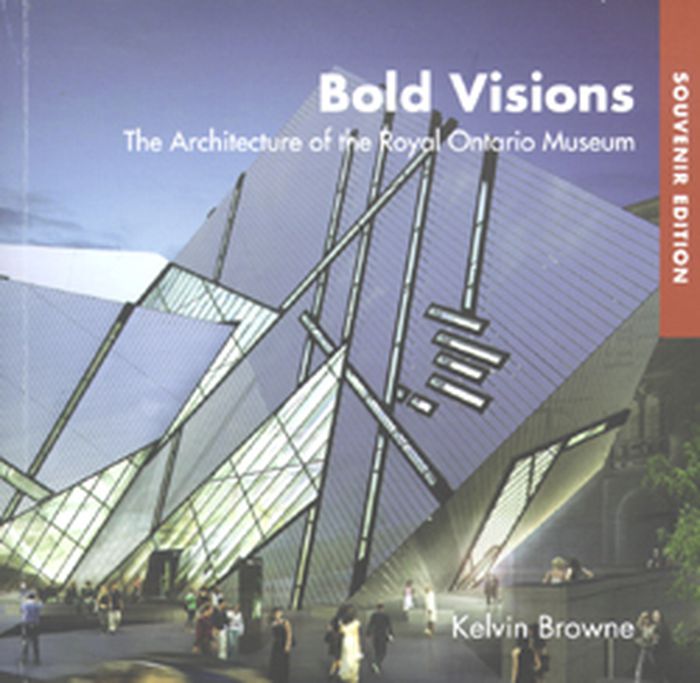
Bold Visions: the architecture of the Royal Ontario Museum
Actions:
Prix:
$10.00
(disponible sur commande)
Résumé:
The ROM's architecture is a combination of many styles that reflect the times in which the individual buildings were designed, as well as the tastes of the ROM's leaders since the Museum's inception in 1912. Although the approaches vary, the ROM has always strived to create an outstanding institution, and its bold architectural visions over the years embody this goal. The ROM's first building (1914) may appear quaint and relatively modest today, but it was a significant undertaking at the time, an audacious move for a city the size of Toronto to envision a structure comparable to those in London or New York. Daniel Libeskind's Michael Lee-Chin Crystal addition of 2007 is the most recent expression of this spirit. This same impetus has made the ROM Canada's largest museum of natural history and world cultures, with more than six milion objects, in its collections and more than 1.5 milion visitors annually.
Bold Visions: the architecture of the Royal Ontario Museum
Actions:
Prix:
$10.00
(disponible sur commande)
Résumé:
The ROM's architecture is a combination of many styles that reflect the times in which the individual buildings were designed, as well as the tastes of the ROM's leaders since the Museum's inception in 1912. Although the approaches vary, the ROM has always strived to create an outstanding institution, and its bold architectural visions over the years embody this goal. The ROM's first building (1914) may appear quaint and relatively modest today, but it was a significant undertaking at the time, an audacious move for a city the size of Toronto to envision a structure comparable to those in London or New York. Daniel Libeskind's Michael Lee-Chin Crystal addition of 2007 is the most recent expression of this spirit. This same impetus has made the ROM Canada's largest museum of natural history and world cultures, with more than six milion objects, in its collections and more than 1.5 milion visitors annually.
Classification:
livres
livres
Publication:
mai 2007, Toronto
mai 2007, Toronto
Sujet:
Architecture du Canada
Architecture du Canada
Classification:
livres
livres
Actions:
Prix:
$180.00
(disponible sur commande)
Résumé:
FILE Magazine occupies a very unique position: between 1972 and 1989, the celebrated Canadian artists' collective General Idea (active 1969 1994) published 26 issues of this sophisticated magazine, which had a distribution extending far beyond its Toronto underground origins. The name and logo adapted those of the famous LIFE—whose heyday was in the 1950s and early 1960s(...)
$180.00
(disponible sur commande)
Résumé:
FILE Magazine occupies a very unique position: between 1972 and 1989, the celebrated Canadian artists' collective General Idea (active 1969 1994) published 26 issues of this sophisticated magazine, which had a distribution extending far beyond its Toronto underground origins. The name and logo adapted those of the famous LIFE—whose heyday was in the 1950s and early 1960s(...)
Titre:
FILE Magazine: complete reprint
Actions:
Prix:
$180.00
(disponible sur commande)
Résumé:
FILE Magazine occupies a very unique position: between 1972 and 1989, the celebrated Canadian artists' collective General Idea (active 1969 1994) published 26 issues of this sophisticated magazine, which had a distribution extending far beyond its Toronto underground origins. The name and logo adapted those of the famous LIFE—whose heyday was in the 1950s and early 1960s demonstrating an already very Pop strategy of appropriation. As AA Bronson, one of the members of the collective has since described it, the magazine's purpose was the search for "an alternative to the Alternative Press," a subversive concept of infiltration within mainstream media and culture. Thus the manifestos of the early issues, lists of addresses, and letters from friends, were rapidly replaced by General Idea's scripts and projects as well as cultural issues (as in the famous 'Glamour' or 'Punk' issues), while never loosing a cutting-edge attention to emerging practices on the art scene and experimental layouts.
FILE Magazine: complete reprint
Actions:
Prix:
$180.00
(disponible sur commande)
Résumé:
FILE Magazine occupies a very unique position: between 1972 and 1989, the celebrated Canadian artists' collective General Idea (active 1969 1994) published 26 issues of this sophisticated magazine, which had a distribution extending far beyond its Toronto underground origins. The name and logo adapted those of the famous LIFE—whose heyday was in the 1950s and early 1960s demonstrating an already very Pop strategy of appropriation. As AA Bronson, one of the members of the collective has since described it, the magazine's purpose was the search for "an alternative to the Alternative Press," a subversive concept of infiltration within mainstream media and culture. Thus the manifestos of the early issues, lists of addresses, and letters from friends, were rapidly replaced by General Idea's scripts and projects as well as cultural issues (as in the famous 'Glamour' or 'Punk' issues), while never loosing a cutting-edge attention to emerging practices on the art scene and experimental layouts.
Classification:
livres
livres
Publication:
décembre 2007, Zurich
décembre 2007, Zurich
Classification:
livres
livres
Actions:
Prix:
$28.99
(disponible en magasin)
Résumé:
When Marjorie Hill graduated in 1920 as Canada's "first girl architect," she was entering a profession that had been established in Canada just 30 years earlier. For the Record, the first history of women architects in Canada, provides a fascinating introduction to early women architects, presented within the context of developments in both Europe and North(...)
$28.99
(disponible en magasin)
Résumé:
When Marjorie Hill graduated in 1920 as Canada's "first girl architect," she was entering a profession that had been established in Canada just 30 years earlier. For the Record, the first history of women architects in Canada, provides a fascinating introduction to early women architects, presented within the context of developments in both Europe and North(...)
Titre:
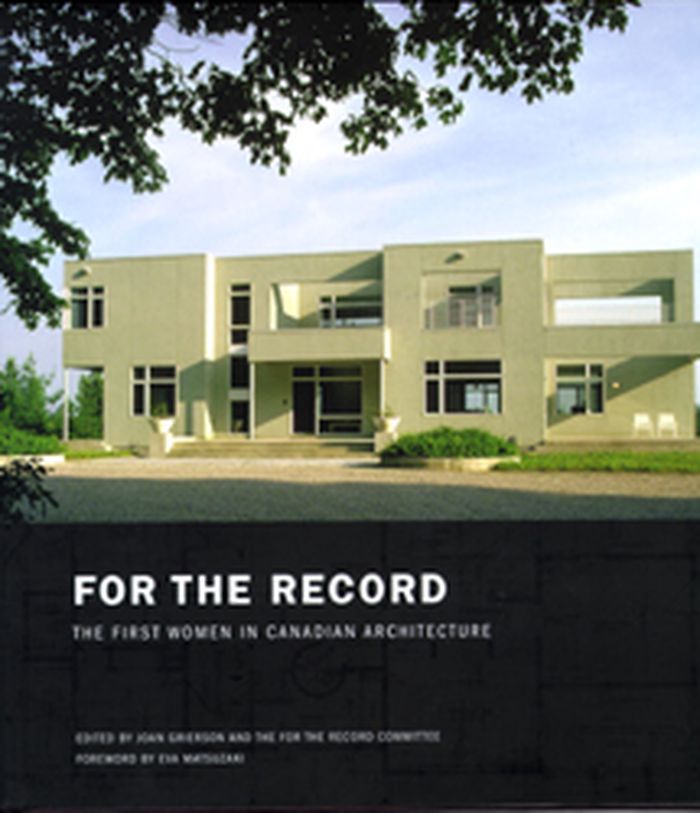
For the record: first women in Canadian architecture
Actions:
Prix:
$28.99
(disponible en magasin)
Résumé:
When Marjorie Hill graduated in 1920 as Canada's "first girl architect," she was entering a profession that had been established in Canada just 30 years earlier. For the Record, the first history of women architects in Canada, provides a fascinating introduction to early women architects, presented within the context of developments in both Europe and North America. Profiles of the women who graduated from the School of Architecture at the University of Toronto between 1920 and 1960 are illustrated with photographs of their work and include archival material that has never before been published. The final chapter on contemporary women in architecture showcases contributions by leading women architects across the country, from Halifax to Vancouver to Iqaluit. For the Record also provides current information on schools of architecture in Canada and includes a list of other resources to encourage young women who are thinking of pursuing careers in architecture. Foreword by Eva Matsuzaki.
For the record: first women in Canadian architecture
Actions:
Prix:
$28.99
(disponible en magasin)
Résumé:
When Marjorie Hill graduated in 1920 as Canada's "first girl architect," she was entering a profession that had been established in Canada just 30 years earlier. For the Record, the first history of women architects in Canada, provides a fascinating introduction to early women architects, presented within the context of developments in both Europe and North America. Profiles of the women who graduated from the School of Architecture at the University of Toronto between 1920 and 1960 are illustrated with photographs of their work and include archival material that has never before been published. The final chapter on contemporary women in architecture showcases contributions by leading women architects across the country, from Halifax to Vancouver to Iqaluit. For the Record also provides current information on schools of architecture in Canada and includes a list of other resources to encourage young women who are thinking of pursuing careers in architecture. Foreword by Eva Matsuzaki.
Classification:
livres
livres
Publication:
mai 2008, Toronto
mai 2008, Toronto
Sujet:
Architectes canadiens
Architectes canadiens


