


7565 Résultats
Classification:
livres
livres
Actions:
Prix:
$57.00
(disponible en magasin)
Résumé:
In 1983, Ursula Schulz-Dornburg accompanied two ethnologists and an architect on a research trip to Tana Toraja on the central Indonesian island of Sulawesi. Initiated by the Royal Tropical Institute of Amsterdam, the trip was intended to “explore the changing patterns in architecture and symbolism among the Sa‘dan Toraja”. On the way back from Rantepao to Ujung Pandang(...)
$57.00
(disponible en magasin)
Résumé:
In 1983, Ursula Schulz-Dornburg accompanied two ethnologists and an architect on a research trip to Tana Toraja on the central Indonesian island of Sulawesi. Initiated by the Royal Tropical Institute of Amsterdam, the trip was intended to “explore the changing patterns in architecture and symbolism among the Sa‘dan Toraja”. On the way back from Rantepao to Ujung Pandang(...)
Titre:
Ursula Schulz-Dornburg: Bugis Houses, Celebes
Actions:
Prix:
$57.00
(disponible en magasin)
Résumé:
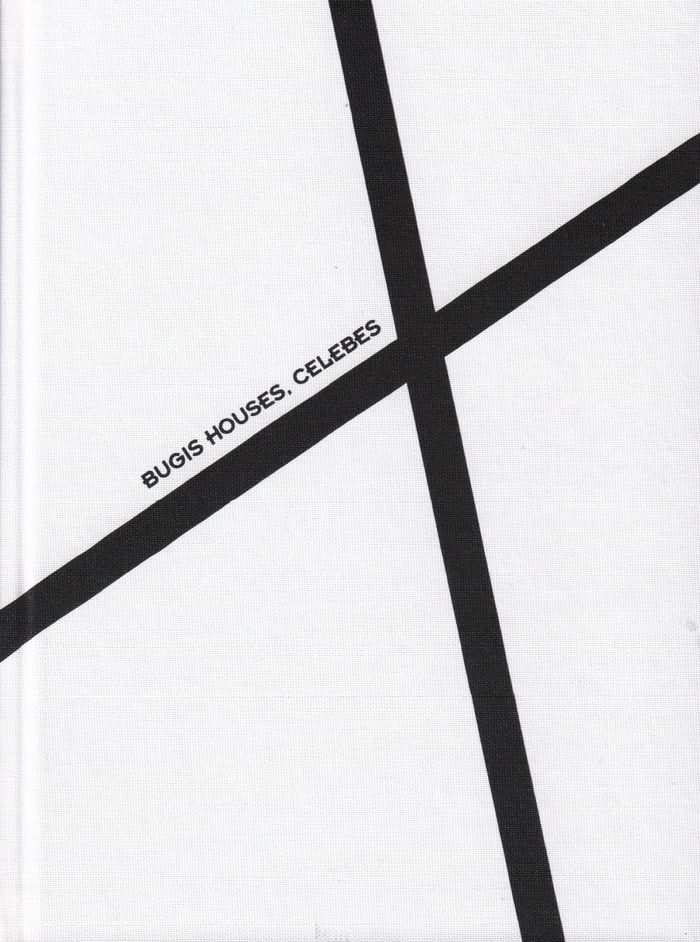
In 1983, Ursula Schulz-Dornburg accompanied two ethnologists and an architect on a research trip to Tana Toraja on the central Indonesian island of Sulawesi. Initiated by the Royal Tropical Institute of Amsterdam, the trip was intended to “explore the changing patterns in architecture and symbolism among the Sa‘dan Toraja”. On the way back from Rantepao to Ujung Pandang airport, Schulz-Dornburg passed the distinctive houses of the Bugis or To-Ugiq people, perched on the yellow paddy fields. Fascinated by their complex, expressive architectures, she began to photograph the houses in the short time she had before leaving, realising that the structures would likely not exist in their traditional form for much longer. The result is a body of work that not only surveys the houses’ physical forms but also considers wide-ranging ideas of physical and emotional homebuilding and the precarious place of tradition in the present day. Poised between heaven and earth and standing above the water when the rice fields are flooded, the Bugis houses reflect the creation myth of their people, in which the gods of the upper and lower worlds came together to create man to populate the uninhabited middle world. The farmers depicted by Schulz-Dornburg are likewise suspended between historic tradition and the impending pressures of the contemporary world. As they go about their work or greet her camera, they and their homes are held in the balance between past and future, mythology and everyday reality. With these shrewd and sensitive images, Schulz-Dornburg captures life as it is built and lived within a particular culture and landscape, offering a searching reflection on the places we call home.
Ursula Schulz-Dornburg: Bugis Houses, Celebes
Actions:
Prix:
$57.00
(disponible en magasin)
Résumé:
In 1983, Ursula Schulz-Dornburg accompanied two ethnologists and an architect on a research trip to Tana Toraja on the central Indonesian island of Sulawesi. Initiated by the Royal Tropical Institute of Amsterdam, the trip was intended to “explore the changing patterns in architecture and symbolism among the Sa‘dan Toraja”. On the way back from Rantepao to Ujung Pandang airport, Schulz-Dornburg passed the distinctive houses of the Bugis or To-Ugiq people, perched on the yellow paddy fields. Fascinated by their complex, expressive architectures, she began to photograph the houses in the short time she had before leaving, realising that the structures would likely not exist in their traditional form for much longer. The result is a body of work that not only surveys the houses’ physical forms but also considers wide-ranging ideas of physical and emotional homebuilding and the precarious place of tradition in the present day. Poised between heaven and earth and standing above the water when the rice fields are flooded, the Bugis houses reflect the creation myth of their people, in which the gods of the upper and lower worlds came together to create man to populate the uninhabited middle world. The farmers depicted by Schulz-Dornburg are likewise suspended between historic tradition and the impending pressures of the contemporary world. As they go about their work or greet her camera, they and their homes are held in the balance between past and future, mythology and everyday reality. With these shrewd and sensitive images, Schulz-Dornburg captures life as it is built and lived within a particular culture and landscape, offering a searching reflection on the places we call home.
Classification:
livres
livres
Publication:
juillet 2021
juillet 2021
Sujet:
Monographies photo
Monographies photo
Classification:
livres
livres
Titre:
Des espèces d'espaces
Des espèces d'espaces
Actions:
Prix:
$35.00
(disponible sur commande)
Résumé:
Publication de l'exposition thématique qui a regroupé des photographes du Québec et de la Catalogne. Se basant sur la prémisse que l'art contemporain a de plus en plus recours au concept et aux diverses interprétations de la maison, chaque artiste présente un regard personnel sur les croisements entre les endroits publics et les endroits personnels, révélant des lieux où(...)
$35.00
(disponible sur commande)
Résumé:
Publication de l'exposition thématique qui a regroupé des photographes du Québec et de la Catalogne. Se basant sur la prémisse que l'art contemporain a de plus en plus recours au concept et aux diverses interprétations de la maison, chaque artiste présente un regard personnel sur les croisements entre les endroits publics et les endroits personnels, révélant des lieux où(...)
Sujet:
Théorie de la photographie
Théorie de la photographie
Publication:
janvier 1900, Montréal / Tarragone
janvier 1900, Montréal / Tarragone
Titre:
Des espèces d'espaces
Actions:
Prix:
$35.00
(disponible sur commande)
Résumé:
Publication de l'exposition thématique qui a regroupé des photographes du Québec et de la Catalogne. Se basant sur la prémisse que l'art contemporain a de plus en plus recours au concept et aux diverses interprétations de la maison, chaque artiste présente un regard personnel sur les croisements entre les endroits publics et les endroits personnels, révélant des lieux où l'architecture s'intègre dans la vie quotidienne. L'essai nous dirige à travers l'oeuvre de chaque artiste, soit par observations ou par analyses qui suggèrent la narration qui émerge des différents endroits représentés par des paysages, banlieues, villes ou maisons. Parmi les artistes québécois on retrouve Jocelyne Alloucherie, Nicolas Baier, Alain Paiement et Claire Savoie et Jordi Colomer, Anna Ferrer, Perejaume et Xavier Ribas pour la Catalogne. Cette publication est la plus récente dans une série qui trace un lien entre ces deux âmes-soeurs séparées par un océan. Produit en collaboration avec Tinglato 2, Centre d'art contemporani à Tarragone. En français, anglais et catalan. / Publication of a thematic exhibition featuring leading photographers from Québec, Canada, and Catalunya, Spain. Working from a premise that contemporary art increasingly resorts to representations of the home, each artist presents a personal take on the intersections between public place and private space, revealing points where architecture fits into the lives of people. Through observation and analysis Jean suggests narratives that arise from the places depicted, be they landscape, the suburb, the city or the home. With the participation of Jocelyne Alloucherie, Nicolas Baier, Alain Paiement, Claire Savoie, Jordi Colomer, Anna Ferrer, Perejaume and Xavier Ribas. The latest in a series of publications from Vox drawing on kindred national spirits. Produced with Tinglado 2, Centre d'art contemporani. In English, French and Catalan.
Des espèces d'espaces
Actions:
Prix:
$35.00
(disponible sur commande)
Résumé:
Publication de l'exposition thématique qui a regroupé des photographes du Québec et de la Catalogne. Se basant sur la prémisse que l'art contemporain a de plus en plus recours au concept et aux diverses interprétations de la maison, chaque artiste présente un regard personnel sur les croisements entre les endroits publics et les endroits personnels, révélant des lieux où l'architecture s'intègre dans la vie quotidienne. L'essai nous dirige à travers l'oeuvre de chaque artiste, soit par observations ou par analyses qui suggèrent la narration qui émerge des différents endroits représentés par des paysages, banlieues, villes ou maisons. Parmi les artistes québécois on retrouve Jocelyne Alloucherie, Nicolas Baier, Alain Paiement et Claire Savoie et Jordi Colomer, Anna Ferrer, Perejaume et Xavier Ribas pour la Catalogne. Cette publication est la plus récente dans une série qui trace un lien entre ces deux âmes-soeurs séparées par un océan. Produit en collaboration avec Tinglato 2, Centre d'art contemporani à Tarragone. En français, anglais et catalan. / Publication of a thematic exhibition featuring leading photographers from Québec, Canada, and Catalunya, Spain. Working from a premise that contemporary art increasingly resorts to representations of the home, each artist presents a personal take on the intersections between public place and private space, revealing points where architecture fits into the lives of people. Through observation and analysis Jean suggests narratives that arise from the places depicted, be they landscape, the suburb, the city or the home. With the participation of Jocelyne Alloucherie, Nicolas Baier, Alain Paiement, Claire Savoie, Jordi Colomer, Anna Ferrer, Perejaume and Xavier Ribas. The latest in a series of publications from Vox drawing on kindred national spirits. Produced with Tinglado 2, Centre d'art contemporani. In English, French and Catalan.
Classification:
livres
livres
Publication:
janvier 1900, Montréal / Tarragone
janvier 1900, Montréal / Tarragone
Sujet:
Théorie de la photographie
Théorie de la photographie
Classification:
livres
livres
Actions:
Prix:
$22.95
(disponible en magasin)
Résumé:
Construction on the Märkische Viertel in northern Berlin began in 1963 under the supervision of a team of nationally and internationally recognized architects. In the ensuing decades, under the management of the housing association GESOBAU AG, the Viertel evolved from a district that generated controversy throughout the Federal Republic into an exemplary large-scale(...)
$22.95
(disponible en magasin)
Résumé:
Construction on the Märkische Viertel in northern Berlin began in 1963 under the supervision of a team of nationally and internationally recognized architects. In the ensuing decades, under the management of the housing association GESOBAU AG, the Viertel evolved from a district that generated controversy throughout the Federal Republic into an exemplary large-scale(...)
Titre:
Das Märkische Viertel : idee - wirklichkeit - vision
Actions:
Prix:
$22.95
(disponible en magasin)
Résumé:
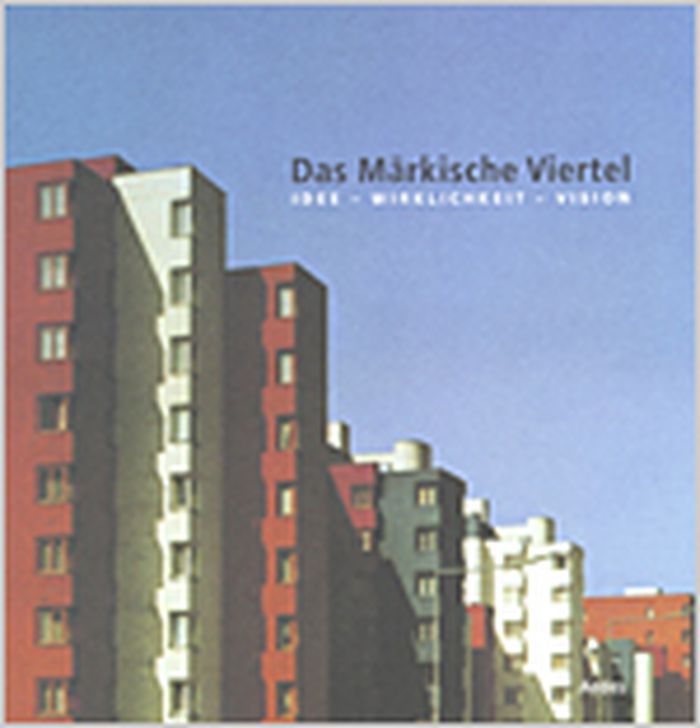
Construction on the Märkische Viertel in northern Berlin began in 1963 under the supervision of a team of nationally and internationally recognized architects. In the ensuing decades, under the management of the housing association GESOBAU AG, the Viertel evolved from a district that generated controversy throughout the Federal Republic into an exemplary large-scale residential settlement. Architects Werner Düttmann, Hans Müller and Georg Heinrichs wanted to design a better world, with humane dwellings for both inner city residents displaced by redevelopment and evacuees from the east. The concept underlying their masterplan was to shape the landscape via architectural structures. They thought in large forms and proportions, designing a prototypical satellite town for northern Berlin that would contain 16,000 apartments for 40,000 residents, while doing justice to the varied requirements of occupants. Architects such as Oswald M. Ungers, Chen Kuen Lee, Ernst Gisel and René Gagès took part in the construction of this large-scale estate, which caused a furor simply by virtue of its immense scale, unusual for Western Europe. Already in 1964, just after the first residents moved in, the Märkische Viertel, nicknamed the "MV,” was deemed controversial. Some condemned it as a "concrete citadel launched from the drafting table,” a "stony nightmare,” or "the Parrot Estate,” while others celebrated it as a glowing example of a model large-scale settlement. Only recent years have seen an unprejudiced and discriminating appraisal of the project. The residents themselves have always seen their homes in a more positive light than outside observers. In 2003, a survey commissioned by the GESOBAU AG suggested they were perfectly comfortable in their neighborhood. And their children — and even children’s children — often remain in the district. What is the secret of the Maerkische Viertel? How was this once inhospitable bedroom community transformed into a coveted residential district, and how is the transition between generations to be accomplished? Can the Maerkische Viertel sustain itself under the altered economic situation affecting residential housing, or have drastic interventions into the existing architecture become a necessity?
Das Märkische Viertel : idee - wirklichkeit - vision
Actions:
Prix:
$22.95
(disponible en magasin)
Résumé:
Construction on the Märkische Viertel in northern Berlin began in 1963 under the supervision of a team of nationally and internationally recognized architects. In the ensuing decades, under the management of the housing association GESOBAU AG, the Viertel evolved from a district that generated controversy throughout the Federal Republic into an exemplary large-scale residential settlement. Architects Werner Düttmann, Hans Müller and Georg Heinrichs wanted to design a better world, with humane dwellings for both inner city residents displaced by redevelopment and evacuees from the east. The concept underlying their masterplan was to shape the landscape via architectural structures. They thought in large forms and proportions, designing a prototypical satellite town for northern Berlin that would contain 16,000 apartments for 40,000 residents, while doing justice to the varied requirements of occupants. Architects such as Oswald M. Ungers, Chen Kuen Lee, Ernst Gisel and René Gagès took part in the construction of this large-scale estate, which caused a furor simply by virtue of its immense scale, unusual for Western Europe. Already in 1964, just after the first residents moved in, the Märkische Viertel, nicknamed the "MV,” was deemed controversial. Some condemned it as a "concrete citadel launched from the drafting table,” a "stony nightmare,” or "the Parrot Estate,” while others celebrated it as a glowing example of a model large-scale settlement. Only recent years have seen an unprejudiced and discriminating appraisal of the project. The residents themselves have always seen their homes in a more positive light than outside observers. In 2003, a survey commissioned by the GESOBAU AG suggested they were perfectly comfortable in their neighborhood. And their children — and even children’s children — often remain in the district. What is the secret of the Maerkische Viertel? How was this once inhospitable bedroom community transformed into a coveted residential district, and how is the transition between generations to be accomplished? Can the Maerkische Viertel sustain itself under the altered economic situation affecting residential housing, or have drastic interventions into the existing architecture become a necessity?
Classification:
livres
livres
Publication:
juillet 2004, Berlin
juillet 2004, Berlin
Sujet:
petits formats
petits formats
Classification:
livres
livres
Actions:
Prix:
$39.95
(disponible sur commande)
Résumé:
In "The Geography of Nowhere", James Howard Kunstler declared suburbia "a tragic landscape of cartoon architecture, junked cities, and ravaged countryside" and put himself at the heart of a fierce debate over how we will live in twenty-first century America. Now, Kunstler turns his eye on urban life both in America and across the world. From classical Rome to the(...)
$39.95
(disponible sur commande)
Résumé:
In "The Geography of Nowhere", James Howard Kunstler declared suburbia "a tragic landscape of cartoon architecture, junked cities, and ravaged countryside" and put himself at the heart of a fierce debate over how we will live in twenty-first century America. Now, Kunstler turns his eye on urban life both in America and across the world. From classical Rome to the(...)
Titre:
The city in mind : notes on the urban condition
Actions:
Prix:
$39.95
(disponible sur commande)
Résumé:
In "The Geography of Nowhere", James Howard Kunstler declared suburbia "a tragic landscape of cartoon architecture, junked cities, and ravaged countryside" and put himself at the heart of a fierce debate over how we will live in twenty-first century America. Now, Kunstler turns his eye on urban life both in America and across the world. From classical Rome to the "gigantic hairball" of contemporary Atlanta, he offers a far-reaching discourse on the history and current state of urban life. "The City in Mind" tells the story of urban design and how the architectural makeup of a city directly influences its culture as well as its success. From the ingenious architectural design of Louis-Napoleon's renovation of Paris to the bloody collision of cultures that occurred when Cortés conquered the Aztec capital Tenochtitlan, from the grandiose architectural schemes of Hitler and Albert Speer to the meanings behind the ludicrous spectacle of Las Vegas, Kunstler opens up a new dialogue on the development and effects of urban construction. In his investigations, he discovers American communities in the Sunbelt and Southwest alienated from each other and themselves, Northeastern cities caught between their initial civic construction and our current car-obsessed society, and a disparate Europe with its mix of pre-industrial creativity, and war-marked reminders of the twentieth century. Expanding on ideas first discussed in Jane Jacobs' seminal work, "The Death and Life of Great American Cities", Kunstler looks to Europe to discover what is constant and enduring in cities at their greatest, and at the same time, how a city's design can be directly linked to its decline. In these excursions he finds the reasons that America got lost in its suburban wilderness and locates the pathways in culture that might lead to a civic revival here. Kunstler's examination of these cities is at once a concise history of their urban lives and a detailed criticism of how those histories have either aided or hindered the social and civil progress of the cities' occupants. By turns dramatic and comic, and always authoritative, "The City in Mind", is an exceptional glimpse into the urban condition.
The city in mind : notes on the urban condition
Actions:
Prix:
$39.95
(disponible sur commande)
Résumé:
In "The Geography of Nowhere", James Howard Kunstler declared suburbia "a tragic landscape of cartoon architecture, junked cities, and ravaged countryside" and put himself at the heart of a fierce debate over how we will live in twenty-first century America. Now, Kunstler turns his eye on urban life both in America and across the world. From classical Rome to the "gigantic hairball" of contemporary Atlanta, he offers a far-reaching discourse on the history and current state of urban life. "The City in Mind" tells the story of urban design and how the architectural makeup of a city directly influences its culture as well as its success. From the ingenious architectural design of Louis-Napoleon's renovation of Paris to the bloody collision of cultures that occurred when Cortés conquered the Aztec capital Tenochtitlan, from the grandiose architectural schemes of Hitler and Albert Speer to the meanings behind the ludicrous spectacle of Las Vegas, Kunstler opens up a new dialogue on the development and effects of urban construction. In his investigations, he discovers American communities in the Sunbelt and Southwest alienated from each other and themselves, Northeastern cities caught between their initial civic construction and our current car-obsessed society, and a disparate Europe with its mix of pre-industrial creativity, and war-marked reminders of the twentieth century. Expanding on ideas first discussed in Jane Jacobs' seminal work, "The Death and Life of Great American Cities", Kunstler looks to Europe to discover what is constant and enduring in cities at their greatest, and at the same time, how a city's design can be directly linked to its decline. In these excursions he finds the reasons that America got lost in its suburban wilderness and locates the pathways in culture that might lead to a civic revival here. Kunstler's examination of these cities is at once a concise history of their urban lives and a detailed criticism of how those histories have either aided or hindered the social and civil progress of the cities' occupants. By turns dramatic and comic, and always authoritative, "The City in Mind", is an exceptional glimpse into the urban condition.
Classification:
livres
livres
Publication:
janvier 2002, New York
janvier 2002, New York
Sujet:
Théorie de l’urbanisme
Théorie de l’urbanisme
Classification:
livres
livres
Actions:
Prix:
$29.99
(disponible sur commande)
Résumé:
In 1825 the Erie Canal, connecting the Atlantic with the American heartland via the Great Lakes, was completed, and in 1861 the Civil War, disrupting American unity, began. This volume examines the exhilarating period between these two far-reaching events. The(...)
$29.99
(disponible sur commande)
Résumé:
In 1825 the Erie Canal, connecting the Atlantic with the American heartland via the Great Lakes, was completed, and in 1861 the Civil War, disrupting American unity, began. This volume examines the exhilarating period between these two far-reaching events. The(...)
Sujet:
livres soldés
livres soldés
Publication:
octobre 2000, New York
octobre 2000, New York
Titre:
Art and the empire city : New York, 1825-1861
Actions:
Prix:
$29.99
(disponible sur commande)
Résumé:
In 1825 the Erie Canal, connecting the Atlantic with the American heartland via the Great Lakes, was completed, and in 1861 the Civil War, disrupting American unity, began. This volume examines the exhilarating period between these two far-reaching events. The Erie Canal turned the port of New York into the gateway to the United States, ushering in a time of enormous growth and change for the city of New York. Still very much a work in progress, New York became both an international economic and cultural center: it was transformed into what contemporary observers variously termed the Empire City, the Great Emporium, and the Empress City of the West. The cultural component of this transformation was as significant as its economic aspect. Highly skilled artists and craftsmen working in New York, both native born and immigrant, grew in number, and institutions devoted to the arts emerged and flourished. With Broadway at its heart, the Great Emporium developed into the nation’s major manufacturing and retailing center, the depot for luxury goods made in and around the city and imported from Europe. The complex story of the proliferation of the arts in New York and the evolution of an increasingly discerning audience for those arts during the antebellum period is the focus of this book, which accompanies a major exhibition at The Metropolitan Museum of Art. In essays that will interest scholars as well as a more general audience, specialists from the Metropolitan Museum, the Museum of the City of New York, and the University of California at Berkeley bring new research and insights to bear on a broad range of subjects. Their texts offer both historical and cultural contexts and explore the city’s development as a nexus for the marketing and display of art, as well as private collecting; landscape painting viewed against the background of tourism; new departures in sculpture, architecture, and printmaking; the birth of photography; New York as a fashion center; shopping for home decorations; changing styles in furniture; and the evolution of the ceramics, glass, and silver industries. This volume is lavishly illustrated in color and black and white, providing reproductions of the more than three hundred works in the exhibition as well as comparative material. A checklist of works in the exhibition, a bibliography, and an index are included.
Art and the empire city : New York, 1825-1861
Actions:
Prix:
$29.99
(disponible sur commande)
Résumé:
In 1825 the Erie Canal, connecting the Atlantic with the American heartland via the Great Lakes, was completed, and in 1861 the Civil War, disrupting American unity, began. This volume examines the exhilarating period between these two far-reaching events. The Erie Canal turned the port of New York into the gateway to the United States, ushering in a time of enormous growth and change for the city of New York. Still very much a work in progress, New York became both an international economic and cultural center: it was transformed into what contemporary observers variously termed the Empire City, the Great Emporium, and the Empress City of the West. The cultural component of this transformation was as significant as its economic aspect. Highly skilled artists and craftsmen working in New York, both native born and immigrant, grew in number, and institutions devoted to the arts emerged and flourished. With Broadway at its heart, the Great Emporium developed into the nation’s major manufacturing and retailing center, the depot for luxury goods made in and around the city and imported from Europe. The complex story of the proliferation of the arts in New York and the evolution of an increasingly discerning audience for those arts during the antebellum period is the focus of this book, which accompanies a major exhibition at The Metropolitan Museum of Art. In essays that will interest scholars as well as a more general audience, specialists from the Metropolitan Museum, the Museum of the City of New York, and the University of California at Berkeley bring new research and insights to bear on a broad range of subjects. Their texts offer both historical and cultural contexts and explore the city’s development as a nexus for the marketing and display of art, as well as private collecting; landscape painting viewed against the background of tourism; new departures in sculpture, architecture, and printmaking; the birth of photography; New York as a fashion center; shopping for home decorations; changing styles in furniture; and the evolution of the ceramics, glass, and silver industries. This volume is lavishly illustrated in color and black and white, providing reproductions of the more than three hundred works in the exhibition as well as comparative material. A checklist of works in the exhibition, a bibliography, and an index are included.
Classification:
livres
livres
Publication:
octobre 2000, New York
octobre 2000, New York
Sujet:
livres soldés
livres soldés


