


10592 Résultats
Classification:
livres
livres
Actions:
Prix:
$76.00
(disponible sur commande)
Résumé:
This volume examines architecture and urban design games that have been conceived and created by architects, urban designers, artists and game developers since the end of the 20th century, from doll’s houses to construction games and city building games, from SimCity to Block by Block. ''Serious fun'' examines games from both a technical and an architectural-critical(...)
$76.00
(disponible sur commande)
Résumé:
This volume examines architecture and urban design games that have been conceived and created by architects, urban designers, artists and game developers since the end of the 20th century, from doll’s houses to construction games and city building games, from SimCity to Block by Block. ''Serious fun'' examines games from both a technical and an architectural-critical(...)
Titre:
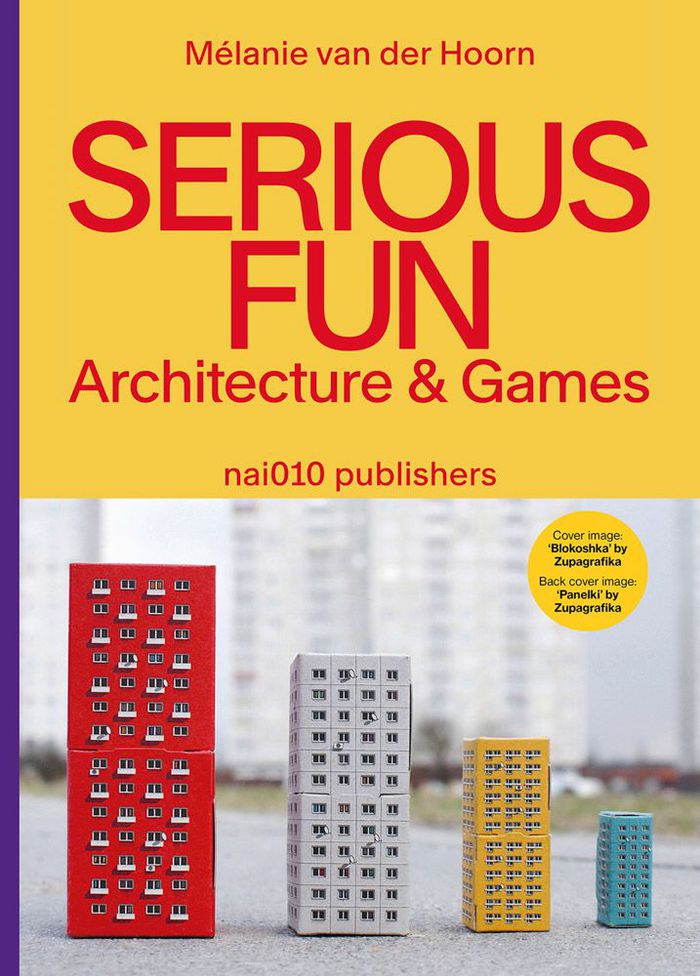
Serious fun: Architecture & games
Actions:
Prix:
$76.00
(disponible sur commande)
Résumé:
This volume examines architecture and urban design games that have been conceived and created by architects, urban designers, artists and game developers since the end of the 20th century, from doll’s houses to construction games and city building games, from SimCity to Block by Block. ''Serious fun'' examines games from both a technical and an architectural-critical point of view. As much attention is paid to the games themselves—the way they look, their construction and rules—as to their sociospatial implications, addressing the following questions: what perception of, and interaction with, the built environment do they express? What messages do the games communicate? How critical and innovative are the underlying concepts? ''Serious fun'' presents games and playfulness as tools worthy of earnest investigation, concluding with a triptych about alternative forms of representation and communication in architecture and urban design.
Serious fun: Architecture & games
Actions:
Prix:
$76.00
(disponible sur commande)
Résumé:
This volume examines architecture and urban design games that have been conceived and created by architects, urban designers, artists and game developers since the end of the 20th century, from doll’s houses to construction games and city building games, from SimCity to Block by Block. ''Serious fun'' examines games from both a technical and an architectural-critical point of view. As much attention is paid to the games themselves—the way they look, their construction and rules—as to their sociospatial implications, addressing the following questions: what perception of, and interaction with, the built environment do they express? What messages do the games communicate? How critical and innovative are the underlying concepts? ''Serious fun'' presents games and playfulness as tools worthy of earnest investigation, concluding with a triptych about alternative forms of representation and communication in architecture and urban design.
Classification:
livres
livres
Publication:
janvier 2023
janvier 2023
Sujet:
Théorie de l’architecture
Théorie de l’architecture
Classification:
livres
livres
Prix:
$64.95
(disponible sur commande)
Résumé:
''Duodji Reader'' is a selection of twelve essays on duodji by Sámi duojárat and writers from the past 60 years. The craft practices of Indigenous peoples from all over the world have been getting increased attention and appreciation globally over the last few decades. It has also become a topic that has occupied its fair share of discourse in academia and in art(...)
$64.95
(disponible sur commande)
Résumé:
''Duodji Reader'' is a selection of twelve essays on duodji by Sámi duojárat and writers from the past 60 years. The craft practices of Indigenous peoples from all over the world have been getting increased attention and appreciation globally over the last few decades. It has also become a topic that has occupied its fair share of discourse in academia and in art(...)
Titre:
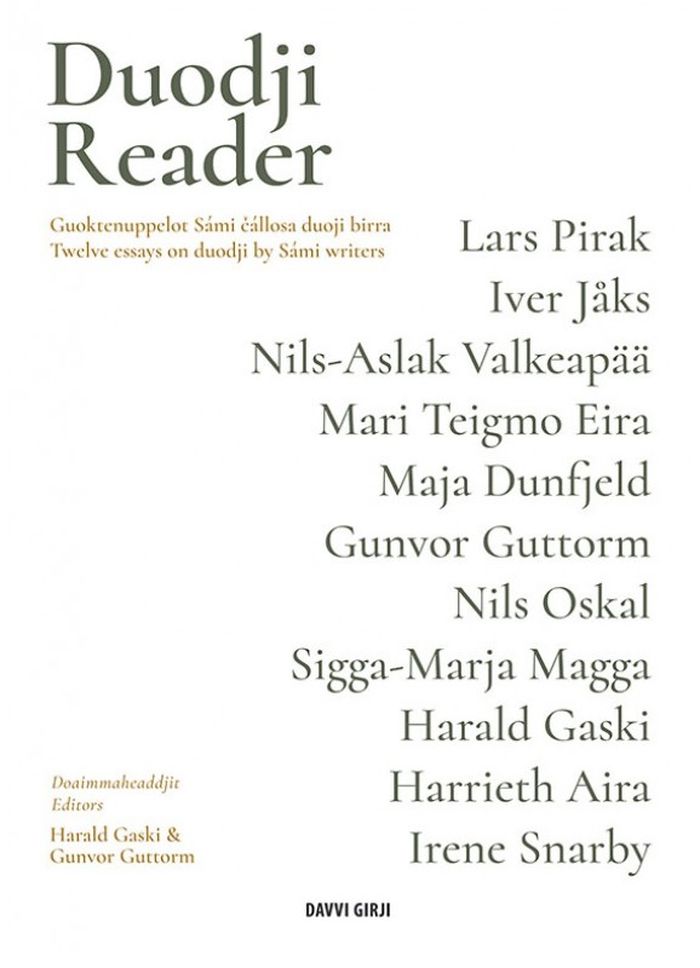
Duodji reader: Twelve essays on duodji by Sámi writers
Actions:
Prix:
$64.95
(disponible sur commande)
Résumé:
''Duodji Reader'' is a selection of twelve essays on duodji by Sámi duojárat and writers from the past 60 years. The craft practices of Indigenous peoples from all over the world have been getting increased attention and appreciation globally over the last few decades. It has also become a topic that has occupied its fair share of discourse in academia and in art education. As a contribution to this interest in Indigenous art and crafts practices, we offer this book on Sámi duodji. Duodji is the artistic crafts form of the Indigenous people of the European Arctic. Duodji refers not only to the end result, the finished object itself, but also describes the whole process - from the incipient idea to the final product. Duodji demonstrates a holistic circle of creation, how nature and humans collaborate in recognising, visualising, and shaping items that serve the need for both practical use and aesthetic form. ''Duodji reader: Twelve essays on duodji by Sámi writers'' is produced by Sámi Allaskuvla and Norwegian Crafts. The publication is edited by the professors Gunvor Guttorm and Harald Gaski, and contains essays from eleven prominent Sámi scholars, duojárat, and writers from North, South, and Lule Sámi areas. The essays are presented in Lule, South or North Sámi as well as in English. The publication also contains a wide-ranging selection of photographs of duodji by more than thirty contemporary duojárat. The book is well-suited both as background and text material for education in crafts, as well as a resource for the theory and practice of Sámi duodji as an Indigenous art form with long roots in the Arctic North.
Duodji reader: Twelve essays on duodji by Sámi writers
Actions:
Prix:
$64.95
(disponible sur commande)
Résumé:
''Duodji Reader'' is a selection of twelve essays on duodji by Sámi duojárat and writers from the past 60 years. The craft practices of Indigenous peoples from all over the world have been getting increased attention and appreciation globally over the last few decades. It has also become a topic that has occupied its fair share of discourse in academia and in art education. As a contribution to this interest in Indigenous art and crafts practices, we offer this book on Sámi duodji. Duodji is the artistic crafts form of the Indigenous people of the European Arctic. Duodji refers not only to the end result, the finished object itself, but also describes the whole process - from the incipient idea to the final product. Duodji demonstrates a holistic circle of creation, how nature and humans collaborate in recognising, visualising, and shaping items that serve the need for both practical use and aesthetic form. ''Duodji reader: Twelve essays on duodji by Sámi writers'' is produced by Sámi Allaskuvla and Norwegian Crafts. The publication is edited by the professors Gunvor Guttorm and Harald Gaski, and contains essays from eleven prominent Sámi scholars, duojárat, and writers from North, South, and Lule Sámi areas. The essays are presented in Lule, South or North Sámi as well as in English. The publication also contains a wide-ranging selection of photographs of duodji by more than thirty contemporary duojárat. The book is well-suited both as background and text material for education in crafts, as well as a resource for the theory and practice of Sámi duodji as an Indigenous art form with long roots in the Arctic North.
Classification:
livres
livres
Publication:
février 2022
février 2022
Sujet:
Théorie de l’art
Théorie de l’art
Classification:
livres
livres
Actions:
Prix:
$32.95
(disponible sur commande)
Résumé:
Nothing about how we live today is sustainable. Therefore, a profound paradigm shift is imminent (indeed is already underway). To paraphrase Marx and Engels, all that is solid has melted into air, all that was sacred has been profaned, and humanity is compelled to face with sober senses the real conditions of life, our relations with each other and this planet. First(...)
$32.95
(disponible sur commande)
Résumé:
Nothing about how we live today is sustainable. Therefore, a profound paradigm shift is imminent (indeed is already underway). To paraphrase Marx and Engels, all that is solid has melted into air, all that was sacred has been profaned, and humanity is compelled to face with sober senses the real conditions of life, our relations with each other and this planet. First(...)
Sujet:
Théorie de l’architecture
Théorie de l’architecture
Publication:
août 2022
août 2022
Titre:
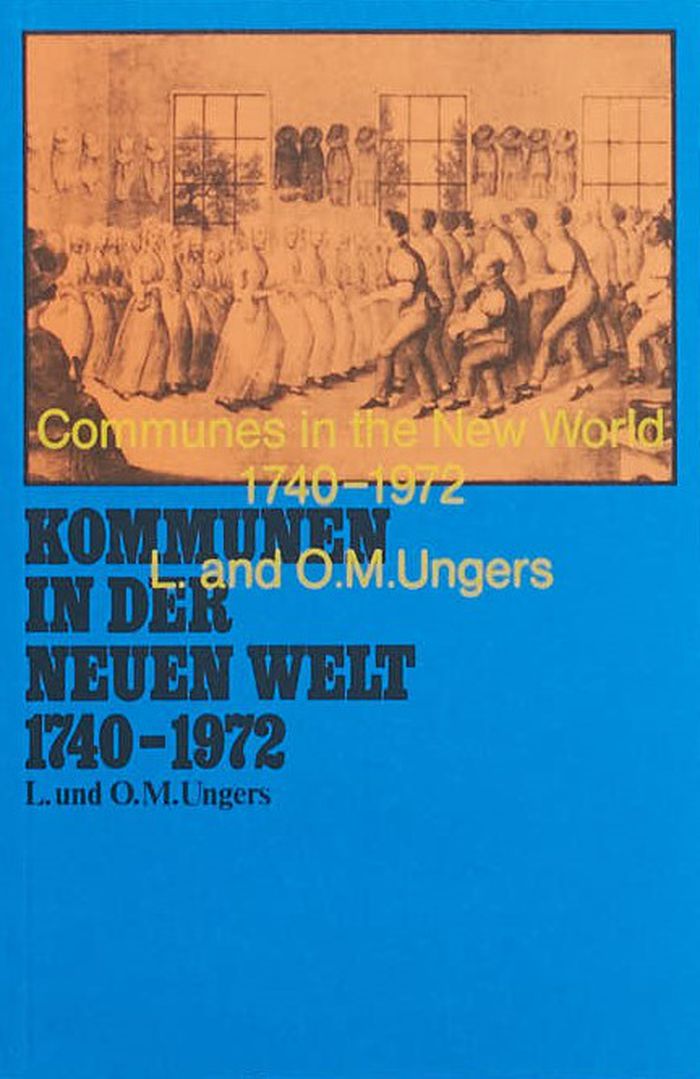
Kommunen in der neuen welt: Utopian communes in the new world 1740-1972
Actions:
Prix:
$32.95
(disponible sur commande)
Résumé:
Nothing about how we live today is sustainable. Therefore, a profound paradigm shift is imminent (indeed is already underway). To paraphrase Marx and Engels, all that is solid has melted into air, all that was sacred has been profaned, and humanity is compelled to face with sober senses the real conditions of life, our relations with each other and this planet. First published nearly fifty years ago, this text handles its subject matter with precision and brevity; it is an excellent introduction to the fantastical reality of utopian life in the "New World".
Kommunen in der neuen welt: Utopian communes in the new world 1740-1972
Actions:
Prix:
$32.95
(disponible sur commande)
Résumé:
Nothing about how we live today is sustainable. Therefore, a profound paradigm shift is imminent (indeed is already underway). To paraphrase Marx and Engels, all that is solid has melted into air, all that was sacred has been profaned, and humanity is compelled to face with sober senses the real conditions of life, our relations with each other and this planet. First published nearly fifty years ago, this text handles its subject matter with precision and brevity; it is an excellent introduction to the fantastical reality of utopian life in the "New World".
Classification:
livres
livres
Publication:
août 2022
août 2022
Sujet:
Théorie de l’architecture
Théorie de l’architecture
Classification:
livres
livres
Prix:
$17.95
(disponible sur commande)
Résumé:
Des quartiers sans voitures, c’est plus qu’une question environnementale. C’est d’abord et avant tout une question socioéconomique. Dans cet essai, le maire de Laval Stéphane Boyer imagine la ville de demain comme un réseau de quartiers denses et interconnectés à l’intérieur desquels la majorité des déplacements se font à pied ou à vélo, et où les relations humaines(...)
$17.95
(disponible sur commande)
Résumé:
Des quartiers sans voitures, c’est plus qu’une question environnementale. C’est d’abord et avant tout une question socioéconomique. Dans cet essai, le maire de Laval Stéphane Boyer imagine la ville de demain comme un réseau de quartiers denses et interconnectés à l’intérieur desquels la majorité des déplacements se font à pied ou à vélo, et où les relations humaines(...)
Titre:
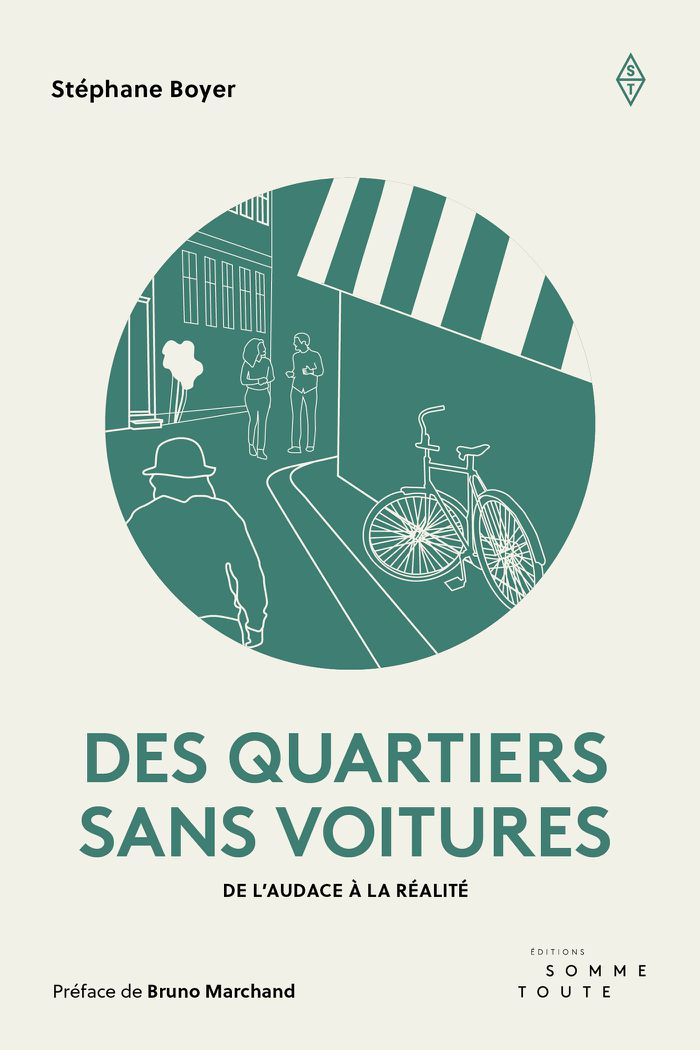
Des quartiers sans voitures : De l'audace à la réalité
Actions:
Prix:
$17.95
(disponible sur commande)
Résumé:
Des quartiers sans voitures, c’est plus qu’une question environnementale. C’est d’abord et avant tout une question socioéconomique. Dans cet essai, le maire de Laval Stéphane Boyer imagine la ville de demain comme un réseau de quartiers denses et interconnectés à l’intérieur desquels la majorité des déplacements se font à pied ou à vélo, et où les relations humaines redonnent un sens de communauté aux centres urbains. L’auteur met à profit son expérience d’élu municipal et propose des pistes de solution pour freiner l’expansion des grandes villes à l’ère où le sentiment de communauté s’érode, où les villes doivent subvenir à un nombre croissant de besoins et où les changements climatiques nous forcent à repenser nos façons de faire.
Des quartiers sans voitures : De l'audace à la réalité
Actions:
Prix:
$17.95
(disponible sur commande)
Résumé:
Des quartiers sans voitures, c’est plus qu’une question environnementale. C’est d’abord et avant tout une question socioéconomique. Dans cet essai, le maire de Laval Stéphane Boyer imagine la ville de demain comme un réseau de quartiers denses et interconnectés à l’intérieur desquels la majorité des déplacements se font à pied ou à vélo, et où les relations humaines redonnent un sens de communauté aux centres urbains. L’auteur met à profit son expérience d’élu municipal et propose des pistes de solution pour freiner l’expansion des grandes villes à l’ère où le sentiment de communauté s’érode, où les villes doivent subvenir à un nombre croissant de besoins et où les changements climatiques nous forcent à repenser nos façons de faire.
Classification:
livres
livres
Publication:
septembre 2022
septembre 2022
Sujet:
Théorie de l’urbanisme
Théorie de l’urbanisme
Classification:
livres
livres
Actions:
Prix:
$54.95
(disponible sur commande)
Résumé:
L’architecture de Maurice Sauzet s’est construite en dehors, si ce n’est à rebours de la pensée moderniste. Son vocabulaire, en harmonie avec l’homme et le paysage, puise au contraire dans le registre évanescent des émotions et des perceptions ; une orientation fondatrice qu’il doit à sa découverte, très tôt dans sa carrière, de l’architecture traditionnelle japonaise et(...)
$54.95
(disponible sur commande)
Résumé:
L’architecture de Maurice Sauzet s’est construite en dehors, si ce n’est à rebours de la pensée moderniste. Son vocabulaire, en harmonie avec l’homme et le paysage, puise au contraire dans le registre évanescent des émotions et des perceptions ; une orientation fondatrice qu’il doit à sa découverte, très tôt dans sa carrière, de l’architecture traditionnelle japonaise et(...)
Titre:
Habiter entre nature et émotion
Actions:
Prix:
$54.95
(disponible sur commande)
Résumé:
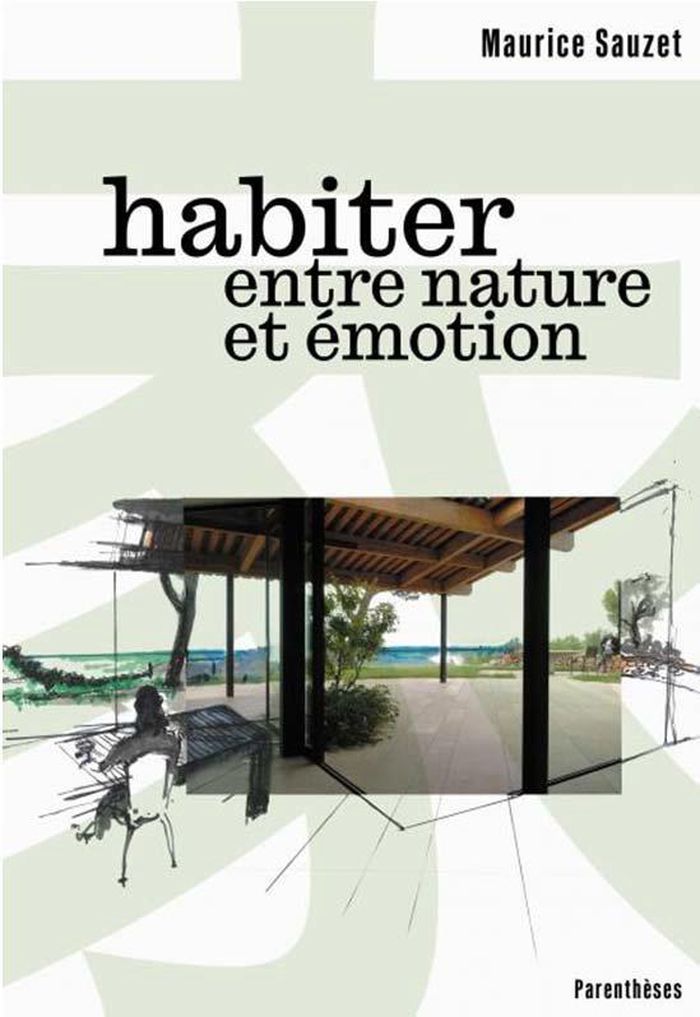
L’architecture de Maurice Sauzet s’est construite en dehors, si ce n’est à rebours de la pensée moderniste. Son vocabulaire, en harmonie avec l’homme et le paysage, puise au contraire dans le registre évanescent des émotions et des perceptions ; une orientation fondatrice qu’il doit à sa découverte, très tôt dans sa carrière, de l’architecture traditionnelle japonaise et de l’esprit du bouddhisme zen. Destiné à nourrir l’inspiration des architectes d’aujourd’hui, et propre à aider de futurs habitants à clarifier leurs désirs, cet ouvrage a été pensé comme un manuel, un outil concret au service d’une conception au diapason du monde. S’appuyant sur deux réalisations, une création et une rénovation de maisons, l’auteur y livre pas à pas les principes de sa pensée et sa méthode de travail. Au centre : la prise en compte des attentes de ceux qui y vivront, l’ajustement subtil au site de construction et, par-dessus tout, la recherche directrice de « prises sensibles ».
Habiter entre nature et émotion
Actions:
Prix:
$54.95
(disponible sur commande)
Résumé:
L’architecture de Maurice Sauzet s’est construite en dehors, si ce n’est à rebours de la pensée moderniste. Son vocabulaire, en harmonie avec l’homme et le paysage, puise au contraire dans le registre évanescent des émotions et des perceptions ; une orientation fondatrice qu’il doit à sa découverte, très tôt dans sa carrière, de l’architecture traditionnelle japonaise et de l’esprit du bouddhisme zen. Destiné à nourrir l’inspiration des architectes d’aujourd’hui, et propre à aider de futurs habitants à clarifier leurs désirs, cet ouvrage a été pensé comme un manuel, un outil concret au service d’une conception au diapason du monde. S’appuyant sur deux réalisations, une création et une rénovation de maisons, l’auteur y livre pas à pas les principes de sa pensée et sa méthode de travail. Au centre : la prise en compte des attentes de ceux qui y vivront, l’ajustement subtil au site de construction et, par-dessus tout, la recherche directrice de « prises sensibles ».
Classification:
livres
livres
Publication:
septembre 2022
septembre 2022
Sujet:
Théorie de l’architecture
Théorie de l’architecture
Classification:
livres
livres
Actions:
Prix:
$36.95
(disponible sur commande)
Résumé:
Partez à la découverte des dessous fascinants de 100 chefs-d’œuvre de l’art mondial. Que recèle l’une des fresques réalisées par Michel-Ange sur le plafond de la chapelle Sixtine ? Pourquoi Rembrandt peignait-il sans cesse son propre portrait ? Quel secret se cache derrière «Le Printemps de Botticelli» ou les installations lumineuses de Yayoi Kusama ? Cet ouvrage propose(...)
$36.95
(disponible sur commande)
Résumé:
Partez à la découverte des dessous fascinants de 100 chefs-d’œuvre de l’art mondial. Que recèle l’une des fresques réalisées par Michel-Ange sur le plafond de la chapelle Sixtine ? Pourquoi Rembrandt peignait-il sans cesse son propre portrait ? Quel secret se cache derrière «Le Printemps de Botticelli» ou les installations lumineuses de Yayoi Kusama ? Cet ouvrage propose(...)
Titre:
Petites histoires de l'art en 100 chefs-d'œuvres
Actions:
Prix:
$36.95
(disponible sur commande)
Résumé:
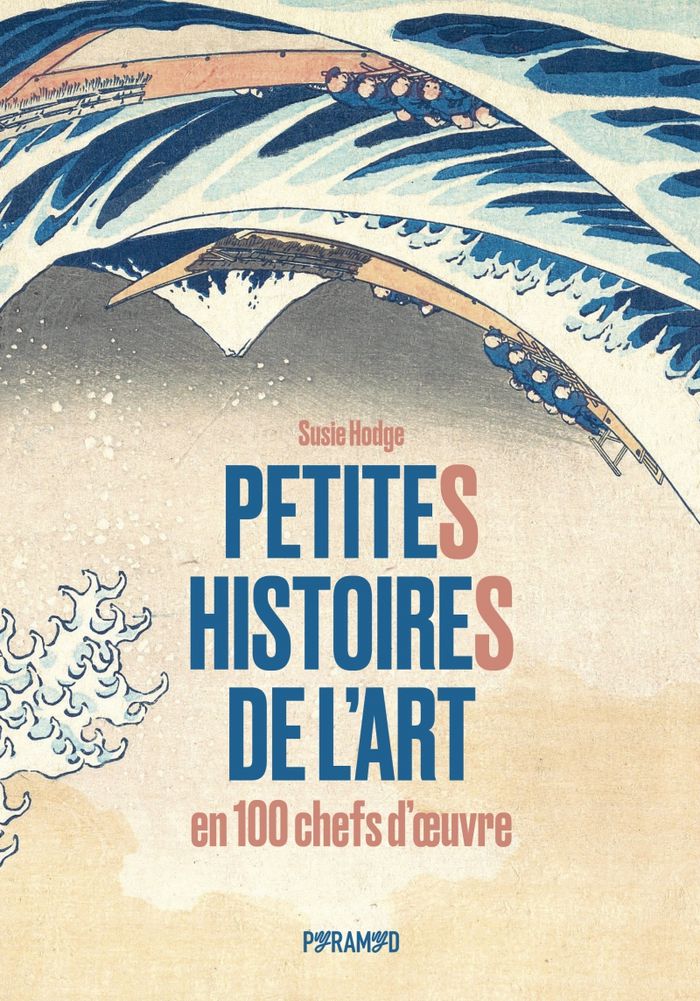
Partez à la découverte des dessous fascinants de 100 chefs-d’œuvre de l’art mondial. Que recèle l’une des fresques réalisées par Michel-Ange sur le plafond de la chapelle Sixtine ? Pourquoi Rembrandt peignait-il sans cesse son propre portrait ? Quel secret se cache derrière «Le Printemps de Botticelli» ou les installations lumineuses de Yayoi Kusama ? Cet ouvrage propose des réponses simples et claires à toutes ces questions. Si vous avez déjà admiré une œuvre d’art en vous demandant ce qu’elle pouvait bien signifier, ce guide est fait pour vous. Il vous aidera à voir l’art autrement, et à l’apprécier davantage encore.
Petites histoires de l'art en 100 chefs-d'œuvres
Actions:
Prix:
$36.95
(disponible sur commande)
Résumé:
Partez à la découverte des dessous fascinants de 100 chefs-d’œuvre de l’art mondial. Que recèle l’une des fresques réalisées par Michel-Ange sur le plafond de la chapelle Sixtine ? Pourquoi Rembrandt peignait-il sans cesse son propre portrait ? Quel secret se cache derrière «Le Printemps de Botticelli» ou les installations lumineuses de Yayoi Kusama ? Cet ouvrage propose des réponses simples et claires à toutes ces questions. Si vous avez déjà admiré une œuvre d’art en vous demandant ce qu’elle pouvait bien signifier, ce guide est fait pour vous. Il vous aidera à voir l’art autrement, et à l’apprécier davantage encore.
Classification:
livres
livres
Publication:
septembre 2022
septembre 2022
Sujet:
Théorie de l’art
Théorie de l’art
Classification:
livres
livres
Actions:
Prix:
$55.95
(disponible sur commande)
Résumé:
This book argues, boredom shares an intimate relationship with architecture-one that has been seldom explored in architectural history and theory. Christian Parreno investigates that relationship, showing how an understanding of boredom affords us a new way of looking at and understanding the modern experience. The author reconstructs a series of episodes in architectural(...)
$55.95
(disponible sur commande)
Résumé:
This book argues, boredom shares an intimate relationship with architecture-one that has been seldom explored in architectural history and theory. Christian Parreno investigates that relationship, showing how an understanding of boredom affords us a new way of looking at and understanding the modern experience. The author reconstructs a series of episodes in architectural(...)
Titre:
Boredom, architecture and spatial experience
Actions:
Prix:
$55.95
(disponible sur commande)
Résumé:
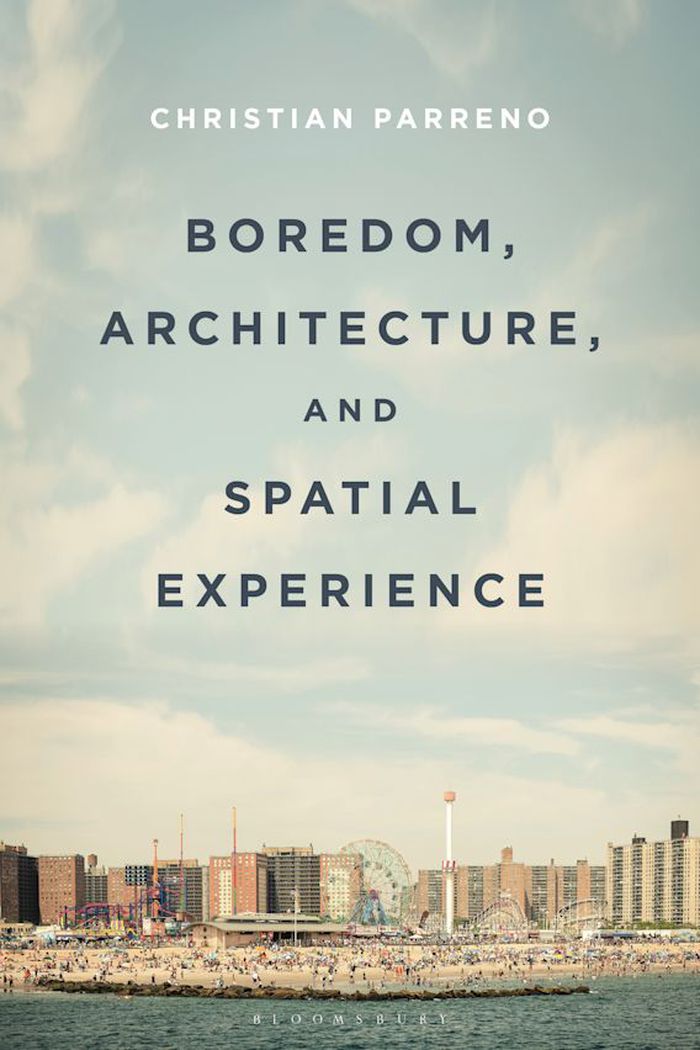
This book argues, boredom shares an intimate relationship with architecture-one that has been seldom explored in architectural history and theory. Christian Parreno investigates that relationship, showing how an understanding of boredom affords us a new way of looking at and understanding the modern experience. The author reconstructs a series of episodes in architectural history, from the 19th century to the present, to survey how boredom became a normalized component of the everyday, how it infiltrated into the production and reception of architecture, and how it serves to diagnose moments of crisis in the continuous transformations of the built environment. Erudite and innovative, the work moves deftly from architectural theory and philosophy to literature and psychology to make its case.
Boredom, architecture and spatial experience
Actions:
Prix:
$55.95
(disponible sur commande)
Résumé:
This book argues, boredom shares an intimate relationship with architecture-one that has been seldom explored in architectural history and theory. Christian Parreno investigates that relationship, showing how an understanding of boredom affords us a new way of looking at and understanding the modern experience. The author reconstructs a series of episodes in architectural history, from the 19th century to the present, to survey how boredom became a normalized component of the everyday, how it infiltrated into the production and reception of architecture, and how it serves to diagnose moments of crisis in the continuous transformations of the built environment. Erudite and innovative, the work moves deftly from architectural theory and philosophy to literature and psychology to make its case.
Classification:
livres
livres
Publication:
septembre 2022
septembre 2022
Sujet:
Théorie de l’architecture
Théorie de l’architecture
Classification:
livres
livres
Actions:
Prix:
$51.50
(disponible en magasin)
Résumé:
This publication explores the unwritten history of city-building in the Arctic over the last 100 years. Spanning northern regions of North America, through Greenland, Svalbard to Russia, this is the first book to provide a truly circumpolar account of historical and contemporary architecture and urbanism in the Arctic – and it shows how the Arctic city offers valuable(...)
$51.50
(disponible en magasin)
Résumé:
This publication explores the unwritten history of city-building in the Arctic over the last 100 years. Spanning northern regions of North America, through Greenland, Svalbard to Russia, this is the first book to provide a truly circumpolar account of historical and contemporary architecture and urbanism in the Arctic – and it shows how the Arctic city offers valuable(...)
Titre:
Making the arctic city: history and future of urbanism in the circumpolar north
Actions:
Prix:
$51.50
(disponible en magasin)
Résumé:
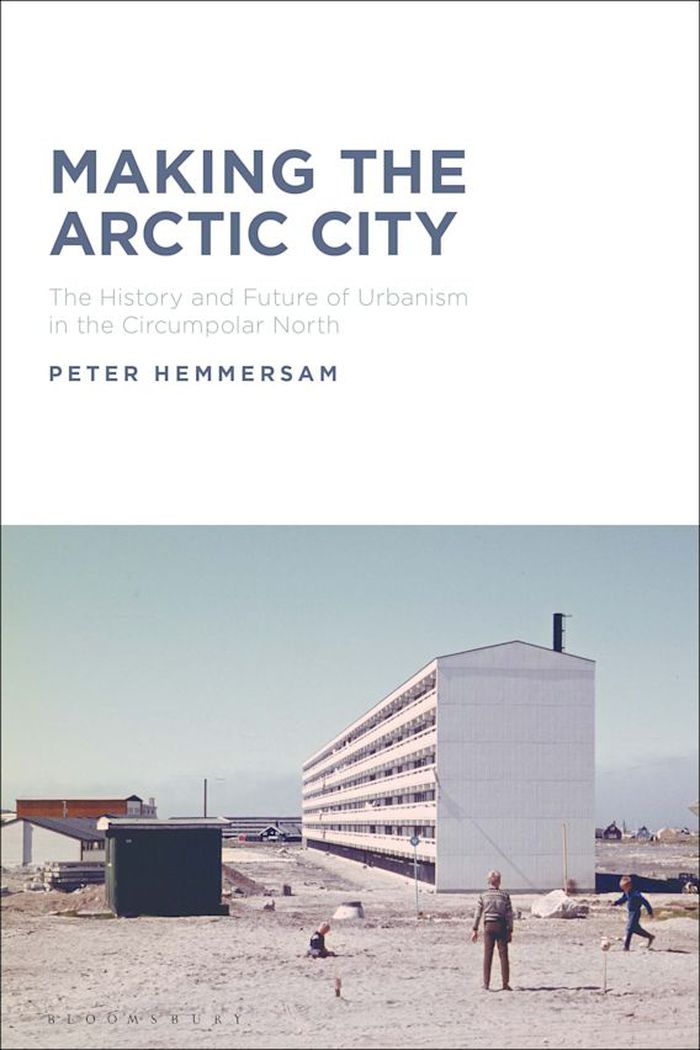
This publication explores the unwritten history of city-building in the Arctic over the last 100 years. Spanning northern regions of North America, through Greenland, Svalbard to Russia, this is the first book to provide a truly circumpolar account of historical and contemporary architecture and urbanism in the Arctic – and it shows how the Arctic city offers valuable lessons for the post-colonial study of architectural and urban planning history elsewhere. Examining architects' and planners' designs for Arctic urban futures, it considers the impact of 20th-century models of urban design and planning in Arctic cities, and reveals how contemporary architectural approaches continue to this day to essentialize 'extreme' climate conditions and disregard the agency of Arctic city-dwellers – a critical perspective that is vital to the formulation of future design and planning practices in the region.
Making the arctic city: history and future of urbanism in the circumpolar north
Actions:
Prix:
$51.50
(disponible en magasin)
Résumé:
This publication explores the unwritten history of city-building in the Arctic over the last 100 years. Spanning northern regions of North America, through Greenland, Svalbard to Russia, this is the first book to provide a truly circumpolar account of historical and contemporary architecture and urbanism in the Arctic – and it shows how the Arctic city offers valuable lessons for the post-colonial study of architectural and urban planning history elsewhere. Examining architects' and planners' designs for Arctic urban futures, it considers the impact of 20th-century models of urban design and planning in Arctic cities, and reveals how contemporary architectural approaches continue to this day to essentialize 'extreme' climate conditions and disregard the agency of Arctic city-dwellers – a critical perspective that is vital to the formulation of future design and planning practices in the region.
Classification:
livres
livres
Publication:
janvier 2023
janvier 2023
Sujet:
Théorie de l’urbanisme
Théorie de l’urbanisme
Classification:
livres
livres
Actions:
Prix:
$35.00
(disponible en magasin)
Résumé:
Cette anthologie propose une sélection de textes de l’artiste collective Claire Fontaine, fondée à Paris en 2004. La pratique de l’écriture constitue une partie intégrante de sa recherche, aussi bien visuelle que conceptuelle, autour des questions de la valeur, la liberté, l’économie et le féminisme. Les textes ici réunis ont des registres différents qui vont du théorique(...)
$35.00
(disponible en magasin)
Résumé:
Cette anthologie propose une sélection de textes de l’artiste collective Claire Fontaine, fondée à Paris en 2004. La pratique de l’écriture constitue une partie intégrante de sa recherche, aussi bien visuelle que conceptuelle, autour des questions de la valeur, la liberté, l’économie et le féminisme. Les textes ici réunis ont des registres différents qui vont du théorique(...)
Titre:
La grève humaine : Et l'art de créer la liberté
Actions:
Prix:
$35.00
(disponible en magasin)
Résumé:
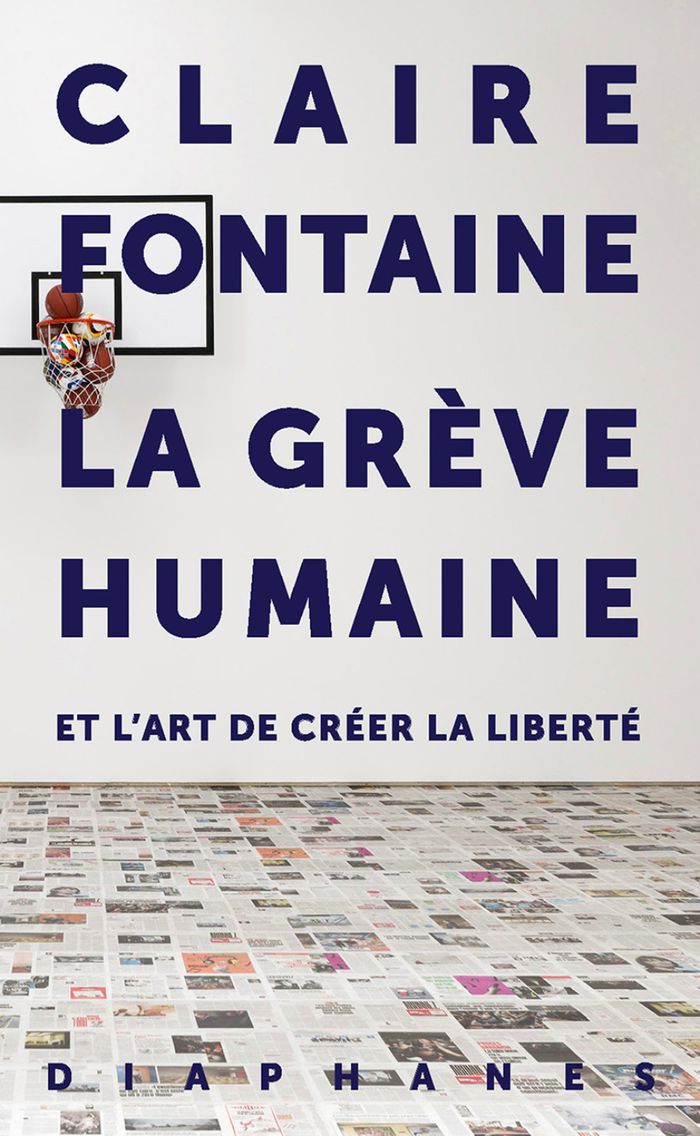
Cette anthologie propose une sélection de textes de l’artiste collective Claire Fontaine, fondée à Paris en 2004. La pratique de l’écriture constitue une partie intégrante de sa recherche, aussi bien visuelle que conceptuelle, autour des questions de la valeur, la liberté, l’économie et le féminisme. Les textes ici réunis ont des registres différents qui vont du théorique au poétique, de la lettre ouverte au manifeste politique. Ils convergent souvent vers l’horizon de ce que l’auteure appelle « la grève humaine », une révolte qui s’oppose à toutes les formes d’exploitation et pas seulement à celles de nature professionnelle. Ce livre d’artiste est le témoignage d’une exploration toujours en cours, une boîte à outils existentielle pour nous sortir du sentiment étouffant de notre impuissance politique.
La grève humaine : Et l'art de créer la liberté
Actions:
Prix:
$35.00
(disponible en magasin)
Résumé:
Cette anthologie propose une sélection de textes de l’artiste collective Claire Fontaine, fondée à Paris en 2004. La pratique de l’écriture constitue une partie intégrante de sa recherche, aussi bien visuelle que conceptuelle, autour des questions de la valeur, la liberté, l’économie et le féminisme. Les textes ici réunis ont des registres différents qui vont du théorique au poétique, de la lettre ouverte au manifeste politique. Ils convergent souvent vers l’horizon de ce que l’auteure appelle « la grève humaine », une révolte qui s’oppose à toutes les formes d’exploitation et pas seulement à celles de nature professionnelle. Ce livre d’artiste est le témoignage d’une exploration toujours en cours, une boîte à outils existentielle pour nous sortir du sentiment étouffant de notre impuissance politique.
Classification:
livres
livres
Publication:
mars 2020
mars 2020
Sujet:
Théorie de l’art
Théorie de l’art
Classification:
livres
livres
Actions:
Prix:
$39.95
(disponible sur commande)
Résumé:
Le design institue un rapport ambivalent à notre culture matérielle. Il produit à la fois l'objet de série, fini et prêt à l'usage et le prototype mis en oeuvre au sein de l'enchevêtrement de croquis et de maquettes, comme matériau actif et ouvert de développement du geste inventif. Comment une même culture industrielle peut-elle induire deux rapports aux objets si(...)
$39.95
(disponible sur commande)
Résumé:
Le design institue un rapport ambivalent à notre culture matérielle. Il produit à la fois l'objet de série, fini et prêt à l'usage et le prototype mis en oeuvre au sein de l'enchevêtrement de croquis et de maquettes, comme matériau actif et ouvert de développement du geste inventif. Comment une même culture industrielle peut-elle induire deux rapports aux objets si(...)
Titre:
La zone obscure : Vers une pensée mineure du design
Actions:
Prix:
$39.95
(disponible sur commande)
Résumé:
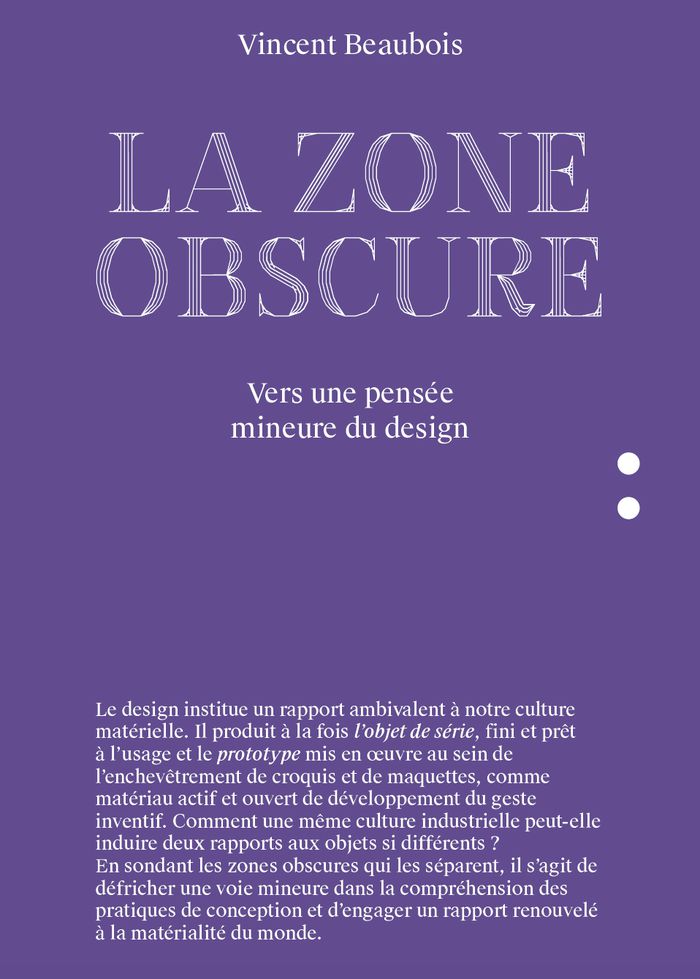
Le design institue un rapport ambivalent à notre culture matérielle. Il produit à la fois l'objet de série, fini et prêt à l'usage et le prototype mis en oeuvre au sein de l'enchevêtrement de croquis et de maquettes, comme matériau actif et ouvert de développement du geste inventif. Comment une même culture industrielle peut-elle induire deux rapports aux objets si différents ? En sondant les zones obscures qui les séparent, il s'agit de défricher une voie mineure dans la compréhension des pratiques de conception et d'engager un rapport renouvelé à la matérialité du monde. La zone obscure (LZO) de Vincent Beaubois interroge la discipline du design à l'aune de la conceptualité de Gilbert Simondon, l'un des rares philosophes français à s'être très tôt intéressé aux objets techniques. Beaubois s'oppose à une pensée majeure du design, d'essence industrielle, pour promouvoir au contraire une « pensée mineure du design » qui, contre l'idéologie du projet, privilégierait les notions de diagramme et de prototype. Il faudra donc « se défaire du design comme simple outil de développement pour en faire un vecteur d'intensification et de problématisation de notre rapport au monde ».
La zone obscure : Vers une pensée mineure du design
Actions:
Prix:
$39.95
(disponible sur commande)
Résumé:
Le design institue un rapport ambivalent à notre culture matérielle. Il produit à la fois l'objet de série, fini et prêt à l'usage et le prototype mis en oeuvre au sein de l'enchevêtrement de croquis et de maquettes, comme matériau actif et ouvert de développement du geste inventif. Comment une même culture industrielle peut-elle induire deux rapports aux objets si différents ? En sondant les zones obscures qui les séparent, il s'agit de défricher une voie mineure dans la compréhension des pratiques de conception et d'engager un rapport renouvelé à la matérialité du monde. La zone obscure (LZO) de Vincent Beaubois interroge la discipline du design à l'aune de la conceptualité de Gilbert Simondon, l'un des rares philosophes français à s'être très tôt intéressé aux objets techniques. Beaubois s'oppose à une pensée majeure du design, d'essence industrielle, pour promouvoir au contraire une « pensée mineure du design » qui, contre l'idéologie du projet, privilégierait les notions de diagramme et de prototype. Il faudra donc « se défaire du design comme simple outil de développement pour en faire un vecteur d'intensification et de problématisation de notre rapport au monde ».
Classification:
livres
livres
Publication:
septembre 2022
septembre 2022
Sujet:
Théorie du design
Théorie du design


