


13794 Résultats
Classification:
livres
livres
Titre:
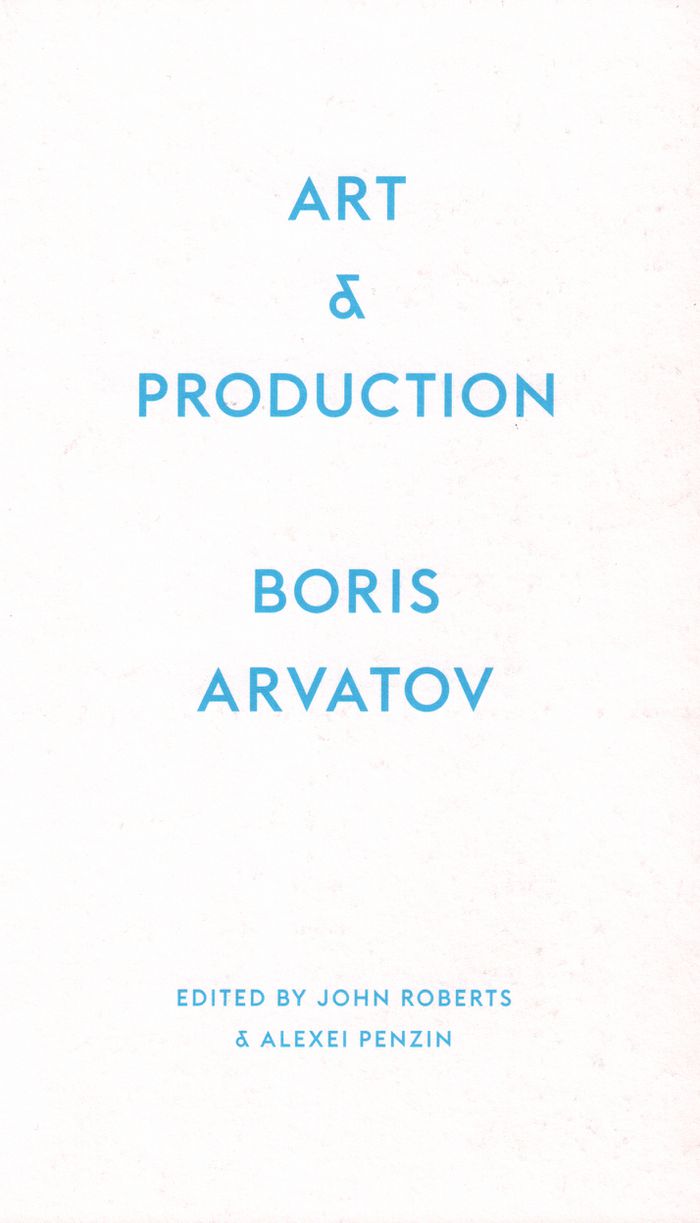
Art and production
Art and production
Actions:
Prix:
$38.95
(disponible en magasin)
Résumé:
Boris Arvatov's ''Art and Production'' is a classic of the early Soviet avant-garde. Now nearing a century since its first publication, it is a crucial intervention for those seeking to understand the social dynamic of art and revolution during the period.
$38.95
(disponible en magasin)
Résumé:
Boris Arvatov's ''Art and Production'' is a classic of the early Soviet avant-garde. Now nearing a century since its first publication, it is a crucial intervention for those seeking to understand the social dynamic of art and revolution during the period.
Titre:
Art and production
Actions:
Prix:
$38.95
(disponible en magasin)
Résumé:
Boris Arvatov's ''Art and Production'' is a classic of the early Soviet avant-garde. Now nearing a century since its first publication, it is a crucial intervention for those seeking to understand the social dynamic of art and revolution during the period.
Art and production
Actions:
Prix:
$38.95
(disponible en magasin)
Résumé:
Boris Arvatov's ''Art and Production'' is a classic of the early Soviet avant-garde. Now nearing a century since its first publication, it is a crucial intervention for those seeking to understand the social dynamic of art and revolution during the period.
Classification:
livres
livres
Publication:
novembre 2017
novembre 2017
Sujet:
Théorie de l’art
Théorie de l’art
Classification:
livres
livres

Actions:
Prix:
$40.95
(disponible en magasin)
Résumé:
L’acte d’aménager doit contribuer à faire société. Tel est le postulat de ce livre. Preuves à l’appui, à travers une diversité d’expériences relatées, de témoignages conviés, il démontre que les enjeux d’inclusion sont partout : dans le logement, dans la production de l’espace public, dans l’occupation des rez-de-chaussée d’immeubles, dans la manière de faire vivre les équipements.
$40.95
(disponible en magasin)
Résumé:
L’acte d’aménager doit contribuer à faire société. Tel est le postulat de ce livre. Preuves à l’appui, à travers une diversité d’expériences relatées, de témoignages conviés, il démontre que les enjeux d’inclusion sont partout : dans le logement, dans la production de l’espace public, dans l’occupation des rez-de-chaussée d’immeubles, dans la manière de faire vivre les équipements.
Titre:
Aménager sans exclure, faire la ville incluante
Actions:
Prix:
$40.95
(disponible en magasin)
Résumé:
L’acte d’aménager doit contribuer à faire société. Tel est le postulat de ce livre. Preuves à l’appui, à travers une diversité d’expériences relatées, de témoignages conviés, il démontre que les enjeux d’inclusion sont partout : dans le logement, dans la production de l’espace public, dans l’occupation des rez-de-chaussée d’immeubles, dans la manière de faire vivre les équipements.
Aménager sans exclure, faire la ville incluante
Actions:
Prix:
$40.95
(disponible en magasin)
Résumé:
L’acte d’aménager doit contribuer à faire société. Tel est le postulat de ce livre. Preuves à l’appui, à travers une diversité d’expériences relatées, de témoignages conviés, il démontre que les enjeux d’inclusion sont partout : dans le logement, dans la production de l’espace public, dans l’occupation des rez-de-chaussée d’immeubles, dans la manière de faire vivre les équipements.
Classification:
livres
livres
Publication:
juin 2018
juin 2018
Sujet:
Théorie de l’urbanisme
Théorie de l’urbanisme
Classification:
livres
livres
Actions:
Prix:
$79.95
(disponible sur commande)
Résumé:
L’ouvrage « Capital agricole : chantiers pour une ville cultivée » déterre les liens qualitatifs entre production agricole et production urbaine, entre le cultivé et l’habité. Architectes, urbanistes, agriculteurs, écologues, ingénieurs, entrepreneurs, historiens, géographes, sociologues..., réunis autour de l’agence d’architecture SOA, reviennent sur l’exceptionnel(...)
$79.95
(disponible sur commande)
Résumé:
L’ouvrage « Capital agricole : chantiers pour une ville cultivée » déterre les liens qualitatifs entre production agricole et production urbaine, entre le cultivé et l’habité. Architectes, urbanistes, agriculteurs, écologues, ingénieurs, entrepreneurs, historiens, géographes, sociologues..., réunis autour de l’agence d’architecture SOA, reviennent sur l’exceptionnel(...)
Titre:
Capital agricole : chantiers pour une ville cultivée
Actions:
Prix:
$79.95
(disponible sur commande)
Résumé:
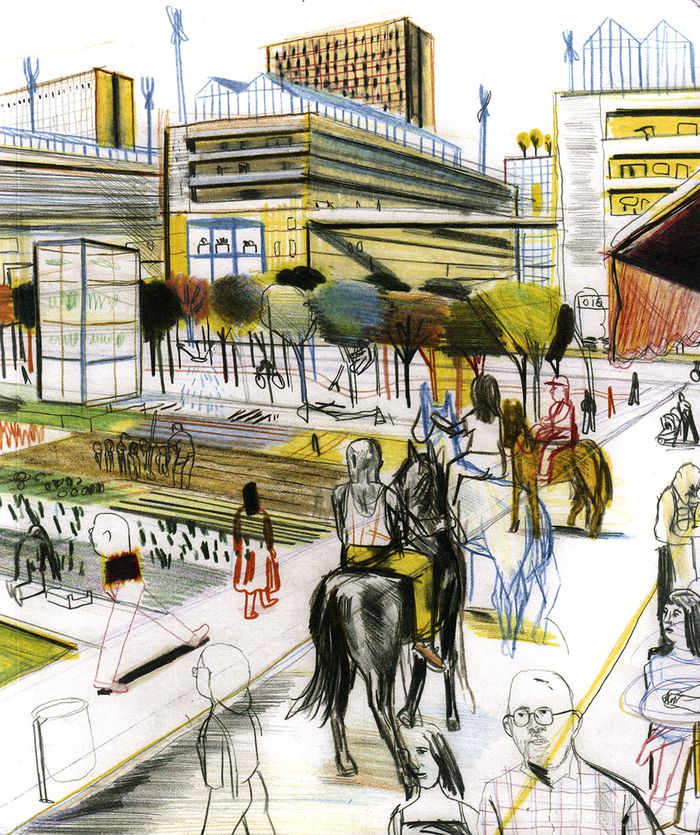
L’ouvrage « Capital agricole : chantiers pour une ville cultivée » déterre les liens qualitatifs entre production agricole et production urbaine, entre le cultivé et l’habité. Architectes, urbanistes, agriculteurs, écologues, ingénieurs, entrepreneurs, historiens, géographes, sociologues..., réunis autour de l’agence d’architecture SOA, reviennent sur l’exceptionnel patrimoine agricole disparu au cours du XXe siècle, ainsi que sur les mutations sociales, économiques et territoriales qui ont profondément bouleversé l’organisation des rapports ville-nature-agriculture. À partir des formes ordinaires de l’agglomération parisienne – grands ensembles, lotissements, zones d’activités – cette étude invite à une revalorisation des sols par les activités agricoles des fermes existantes ou à créer, et à structurer un réseau de nouvelles centralités civiques à l’échelle métropolitaine.
Capital agricole : chantiers pour une ville cultivée
Actions:
Prix:
$79.95
(disponible sur commande)
Résumé:
L’ouvrage « Capital agricole : chantiers pour une ville cultivée » déterre les liens qualitatifs entre production agricole et production urbaine, entre le cultivé et l’habité. Architectes, urbanistes, agriculteurs, écologues, ingénieurs, entrepreneurs, historiens, géographes, sociologues..., réunis autour de l’agence d’architecture SOA, reviennent sur l’exceptionnel patrimoine agricole disparu au cours du XXe siècle, ainsi que sur les mutations sociales, économiques et territoriales qui ont profondément bouleversé l’organisation des rapports ville-nature-agriculture. À partir des formes ordinaires de l’agglomération parisienne – grands ensembles, lotissements, zones d’activités – cette étude invite à une revalorisation des sols par les activités agricoles des fermes existantes ou à créer, et à structurer un réseau de nouvelles centralités civiques à l’échelle métropolitaine.
Classification:
livres
livres
Publication:
octobre 2018
octobre 2018
Sujet:
Théorie de l’urbanisme
Théorie de l’urbanisme
Classification:
livres
livres
Actions:
Prix:
$68.00
(disponible sur commande)
Résumé:
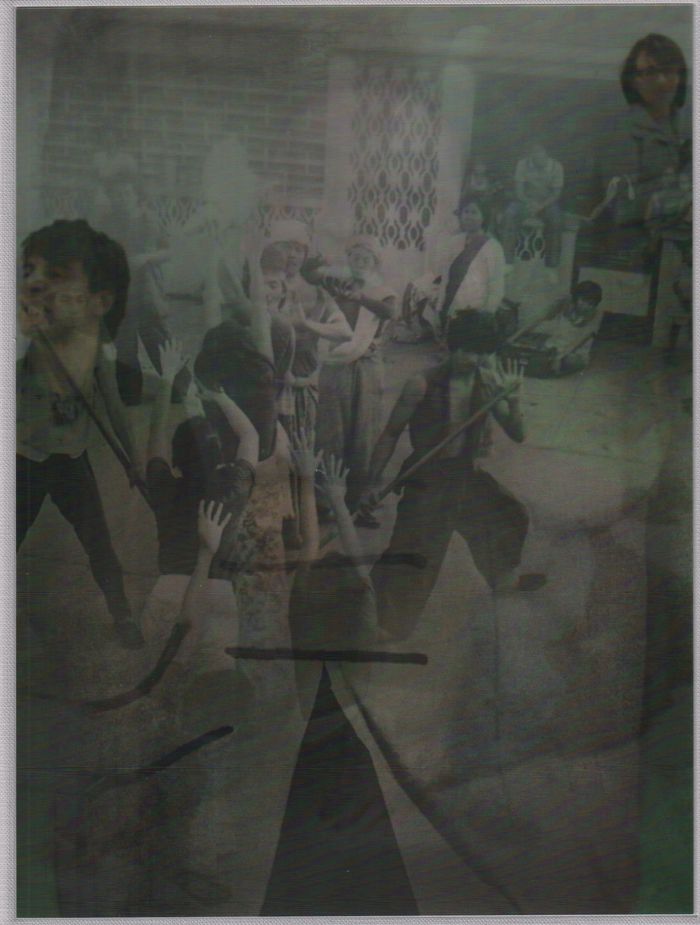
Dedicated to the renewed encounter between dance and performance and the institutions of global contemporary art, 'Is the Living Body the Last Thing Left Alive?' proposes that a new performance turn has emerged in the second decade of the century, and looks at its correlations with other shifts in practices, discourses, and broader society.
$68.00
(disponible sur commande)
Résumé:
Dedicated to the renewed encounter between dance and performance and the institutions of global contemporary art, 'Is the Living Body the Last Thing Left Alive?' proposes that a new performance turn has emerged in the second decade of the century, and looks at its correlations with other shifts in practices, discourses, and broader society.
Titre:
Is the living body the last thing left alive? The new performance turn
Actions:
Prix:
$68.00
(disponible sur commande)
Résumé:
Dedicated to the renewed encounter between dance and performance and the institutions of global contemporary art, 'Is the Living Body the Last Thing Left Alive?' proposes that a new performance turn has emerged in the second decade of the century, and looks at its correlations with other shifts in practices, discourses, and broader society.
Is the living body the last thing left alive? The new performance turn
Actions:
Prix:
$68.00
(disponible sur commande)
Résumé:
Dedicated to the renewed encounter between dance and performance and the institutions of global contemporary art, 'Is the Living Body the Last Thing Left Alive?' proposes that a new performance turn has emerged in the second decade of the century, and looks at its correlations with other shifts in practices, discourses, and broader society.
Classification:
livres
livres
Publication:
février 2018
février 2018
Sujet:
Théorie de l’art
Théorie de l’art
Classification:
livres
livres
Actions:
Prix:
$18.95
(disponible sur commande)
Résumé:
Drawing together discourses on contemporaneity and new materialisms, the essay examines a material conception of time, making it possible to develop a critique of the philosophical discourse on presence. Claiming that there is no now, ebeling develops an archaeology of contemporaneity where the traces of the present can only be secured through visual or material(...)
$18.95
(disponible sur commande)
Résumé:
Drawing together discourses on contemporaneity and new materialisms, the essay examines a material conception of time, making it possible to develop a critique of the philosophical discourse on presence. Claiming that there is no now, ebeling develops an archaeology of contemporaneity where the traces of the present can only be secured through visual or material(...)
Titre:
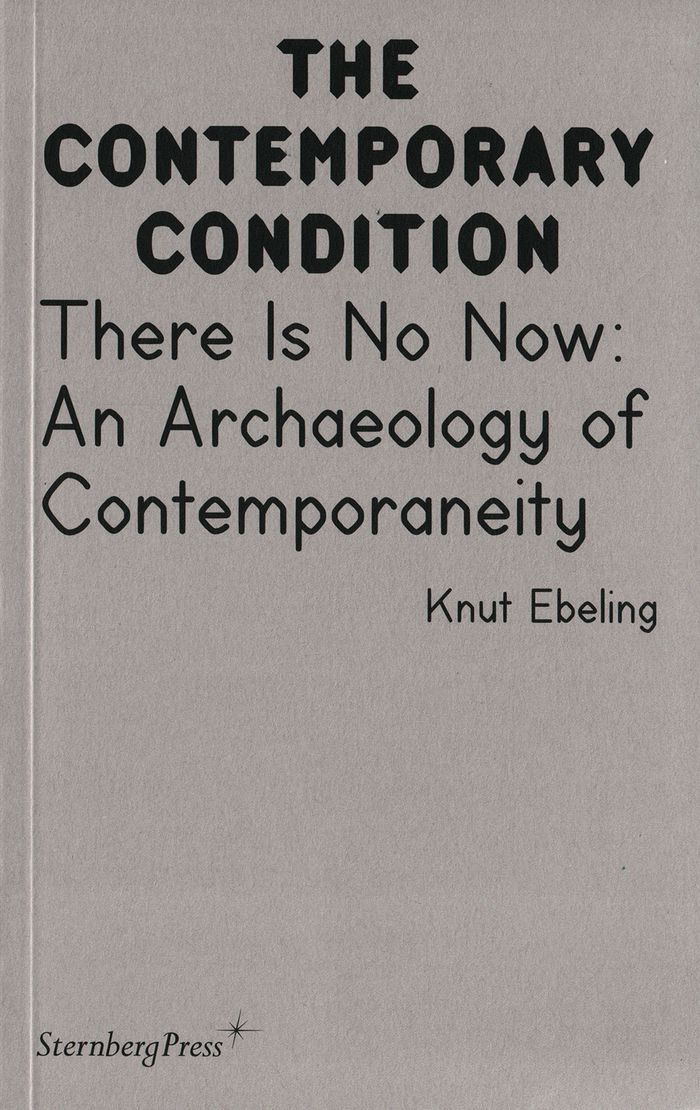
There is no now: an archaeology of contemporaneity
Actions:
Prix:
$18.95
(disponible sur commande)
Résumé:
Drawing together discourses on contemporaneity and new materialisms, the essay examines a material conception of time, making it possible to develop a critique of the philosophical discourse on presence. Claiming that there is no now, ebeling develops an archaeology of contemporaneity where the traces of the present can only be secured through visual or material operations, not historical ones.
There is no now: an archaeology of contemporaneity
Actions:
Prix:
$18.95
(disponible sur commande)
Résumé:
Drawing together discourses on contemporaneity and new materialisms, the essay examines a material conception of time, making it possible to develop a critique of the philosophical discourse on presence. Claiming that there is no now, ebeling develops an archaeology of contemporaneity where the traces of the present can only be secured through visual or material operations, not historical ones.
Classification:
livres
livres
Publication:
mars 2018
mars 2018
Sujet:
Théorie/ philosophie
Théorie/ philosophie
Classification:
livres
livres
Titre:
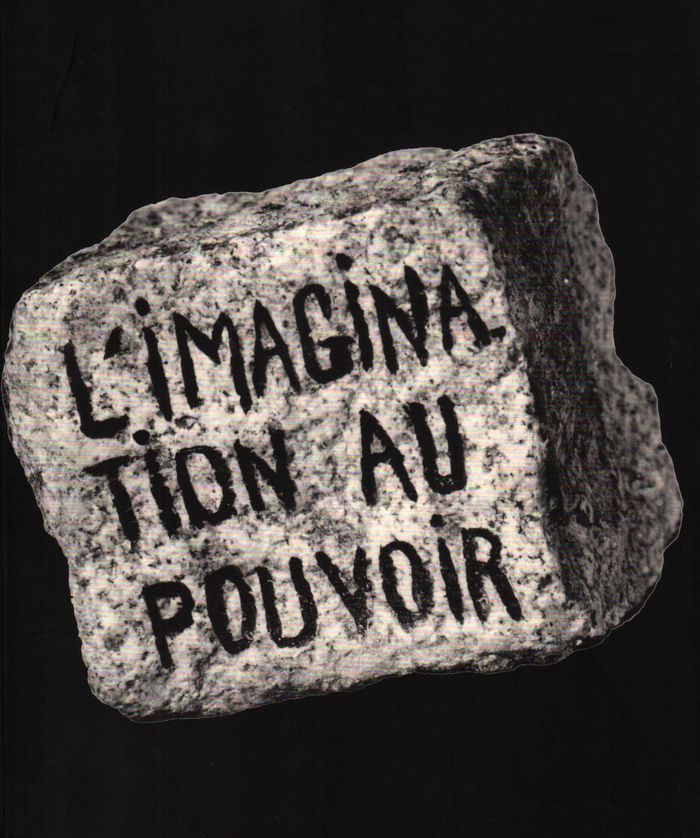
L'imagination au pouvoir
L'imagination au pouvoir
Actions:
Prix:
$34.95
(disponible en magasin)
Résumé:
Aller simple pour le quartier latin, direction Mai 68 : les murs sont recouverts de slogans d’inspiration situationniste ou anarchisante. Édité pour la première fois par Éric Losfeld au Terrain vague, en 1968, ''L’Imagination au pouvoir'' est un témoignage à chaud sur ces dix jours qui ébranlèrent la société française. Il en restitue la part la plus spontanée, goguenarde(...)
$34.95
(disponible en magasin)
Résumé:
Aller simple pour le quartier latin, direction Mai 68 : les murs sont recouverts de slogans d’inspiration situationniste ou anarchisante. Édité pour la première fois par Éric Losfeld au Terrain vague, en 1968, ''L’Imagination au pouvoir'' est un témoignage à chaud sur ces dix jours qui ébranlèrent la société française. Il en restitue la part la plus spontanée, goguenarde(...)
Titre:
L'imagination au pouvoir
Actions:
Prix:
$34.95
(disponible en magasin)
Résumé:
Aller simple pour le quartier latin, direction Mai 68 : les murs sont recouverts de slogans d’inspiration situationniste ou anarchisante. Édité pour la première fois par Éric Losfeld au Terrain vague, en 1968, ''L’Imagination au pouvoir'' est un témoignage à chaud sur ces dix jours qui ébranlèrent la société française. Il en restitue la part la plus spontanée, goguenarde et poétique.
L'imagination au pouvoir
Actions:
Prix:
$34.95
(disponible en magasin)
Résumé:
Aller simple pour le quartier latin, direction Mai 68 : les murs sont recouverts de slogans d’inspiration situationniste ou anarchisante. Édité pour la première fois par Éric Losfeld au Terrain vague, en 1968, ''L’Imagination au pouvoir'' est un témoignage à chaud sur ces dix jours qui ébranlèrent la société française. Il en restitue la part la plus spontanée, goguenarde et poétique.
Classification:
livres
livres
Publication:
mars 2018
mars 2018
Sujet:
Théorie de l’art
Théorie de l’art
Classification:
livres
livres
Prix:
$21.99
(disponible sur commande)
Résumé:
The definitive guide to the Danish wellbeing concept, 'Hygge,' from happiness expert and CEO of the Happiness Research Institute in Copenhagen. The Danish word 'hygge' doesn't directly translate into English, but it more or less means comfort, warmth or togetherness. Denmark is the happiest nation in the world and Meik puts this largely down to them living the hygge way.(...)
$21.99
(disponible sur commande)
Résumé:
The definitive guide to the Danish wellbeing concept, 'Hygge,' from happiness expert and CEO of the Happiness Research Institute in Copenhagen. The Danish word 'hygge' doesn't directly translate into English, but it more or less means comfort, warmth or togetherness. Denmark is the happiest nation in the world and Meik puts this largely down to them living the hygge way.(...)
Titre:
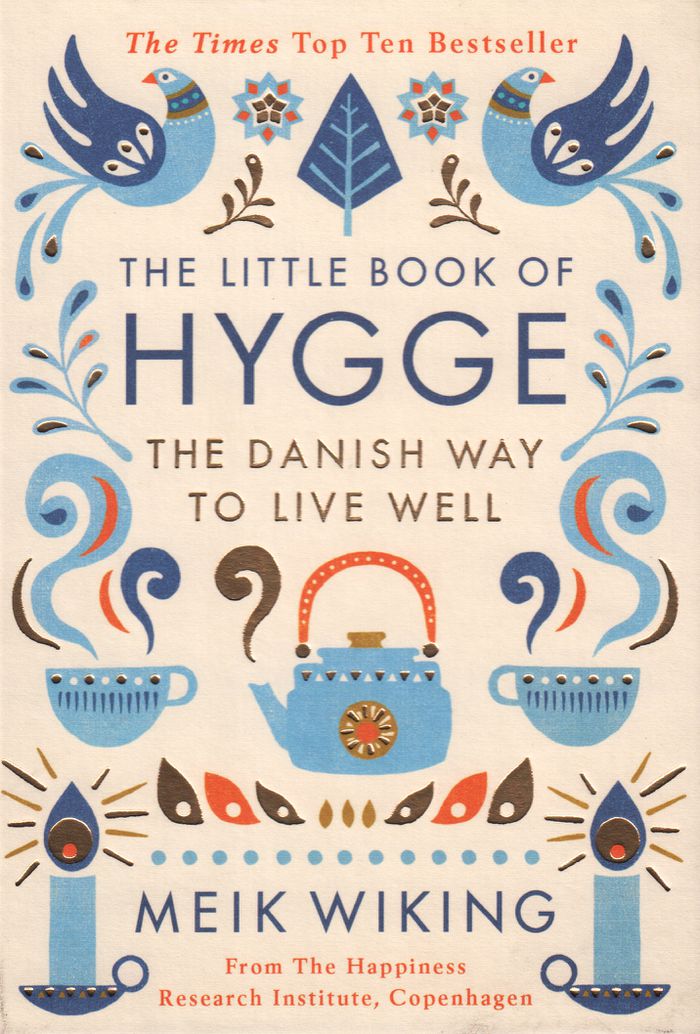
The little book of Hygge: the Danish way to live well
Actions:
Prix:
$21.99
(disponible sur commande)
Résumé:
The definitive guide to the Danish wellbeing concept, 'Hygge,' from happiness expert and CEO of the Happiness Research Institute in Copenhagen. The Danish word 'hygge' doesn't directly translate into English, but it more or less means comfort, warmth or togetherness. Denmark is the happiest nation in the world and Meik puts this largely down to them living the hygge way. They focus on the small things that really matter, spend more quality time with friends and family and enjoy the good things in life. ''The Little Book of Hygge'' will give you practical steps and tips to become more hygge: how to pick the right lighting, organise a dinner party and even how to dress hygge, all backed up by Meik's years' of research at the Happiness Research Institute in Copenhagen.
The little book of Hygge: the Danish way to live well
Actions:
Prix:
$21.99
(disponible sur commande)
Résumé:
The definitive guide to the Danish wellbeing concept, 'Hygge,' from happiness expert and CEO of the Happiness Research Institute in Copenhagen. The Danish word 'hygge' doesn't directly translate into English, but it more or less means comfort, warmth or togetherness. Denmark is the happiest nation in the world and Meik puts this largely down to them living the hygge way. They focus on the small things that really matter, spend more quality time with friends and family and enjoy the good things in life. ''The Little Book of Hygge'' will give you practical steps and tips to become more hygge: how to pick the right lighting, organise a dinner party and even how to dress hygge, all backed up by Meik's years' of research at the Happiness Research Institute in Copenhagen.
Classification:
livres
livres
Publication:
septembre 2016
septembre 2016
Sujet:
Théorie/ philosophie
Théorie/ philosophie
Classification:
livres
livres
Actions:
Prix:
$39.95
(disponible sur commande)
Résumé:
L’architecture comme l'aventure de la composition est ici restituée à l'aide de l'analyse approfondie d'un certain nombre d'études pour lesquelles l'auteur étudie leur morphologie architecturale, révèle les différentes géométries qui la sous-tendent et les tracés qui ont servi à l'architecte pour les concevoir.
$39.95
(disponible sur commande)
Résumé:
L’architecture comme l'aventure de la composition est ici restituée à l'aide de l'analyse approfondie d'un certain nombre d'études pour lesquelles l'auteur étudie leur morphologie architecturale, révèle les différentes géométries qui la sous-tendent et les tracés qui ont servi à l'architecte pour les concevoir.
Titre:
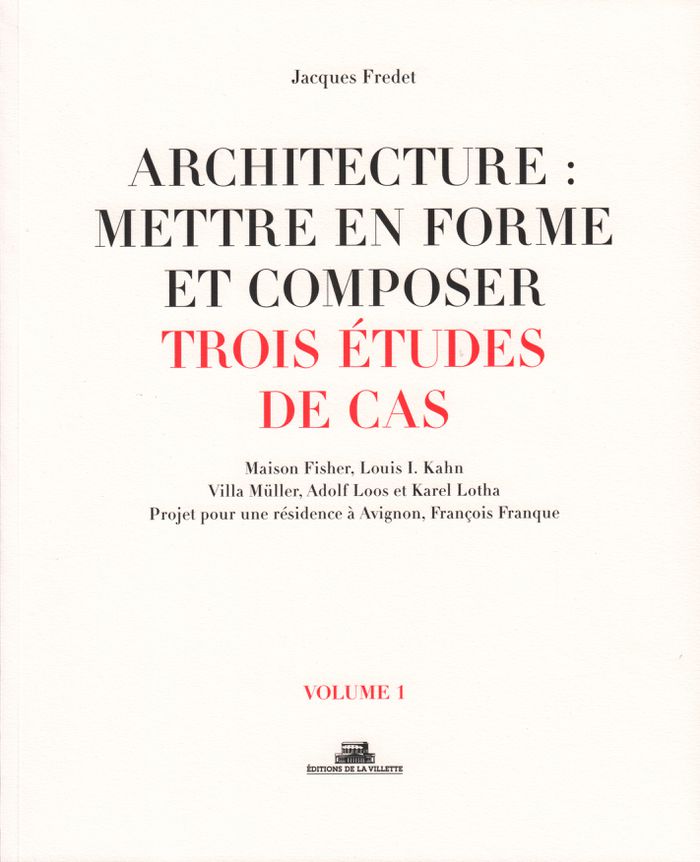
Architecture, t.01 : mettre en forme et composer, trois études de cas
Actions:
Prix:
$39.95
(disponible sur commande)
Résumé:
L’architecture comme l'aventure de la composition est ici restituée à l'aide de l'analyse approfondie d'un certain nombre d'études pour lesquelles l'auteur étudie leur morphologie architecturale, révèle les différentes géométries qui la sous-tendent et les tracés qui ont servi à l'architecte pour les concevoir.
Architecture, t.01 : mettre en forme et composer, trois études de cas
Actions:
Prix:
$39.95
(disponible sur commande)
Résumé:
L’architecture comme l'aventure de la composition est ici restituée à l'aide de l'analyse approfondie d'un certain nombre d'études pour lesquelles l'auteur étudie leur morphologie architecturale, révèle les différentes géométries qui la sous-tendent et les tracés qui ont servi à l'architecte pour les concevoir.
Classification:
livres
livres
Publication:
octobre 2018
octobre 2018
Sujet:
Théorie de l’architecture
Théorie de l’architecture
Classification:
livres
livres
Actions:
Prix:
$55.95
(disponible sur commande)
Résumé:
On a souvent discouru sur leur contenu des activités, sur la manière de bâtir, sur le contexte de leur apparition mais rarement sur la mise en forme de bâtiments. Or ce qui fait la spécificité de cet art de la combinatoire c'est le travail de mise en forme, de conjuguer des éléments hétérogènes bref ce qu'on appelle couramment créer alors que le terme approprié est(...)
$55.95
(disponible sur commande)
Résumé:
On a souvent discouru sur leur contenu des activités, sur la manière de bâtir, sur le contexte de leur apparition mais rarement sur la mise en forme de bâtiments. Or ce qui fait la spécificité de cet art de la combinatoire c'est le travail de mise en forme, de conjuguer des éléments hétérogènes bref ce qu'on appelle couramment créer alors que le terme approprié est(...)
Titre:
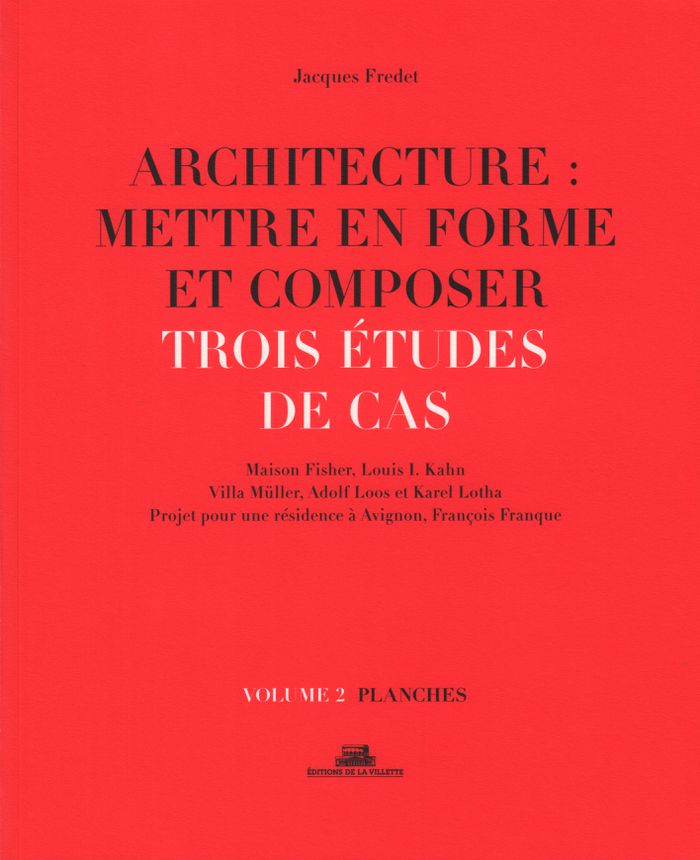
Architecture, t.02 : mettre en forme et composer, trois études de cas
Actions:
Prix:
$55.95
(disponible sur commande)
Résumé:
On a souvent discouru sur leur contenu des activités, sur la manière de bâtir, sur le contexte de leur apparition mais rarement sur la mise en forme de bâtiments. Or ce qui fait la spécificité de cet art de la combinatoire c'est le travail de mise en forme, de conjuguer des éléments hétérogènes bref ce qu'on appelle couramment créer alors que le terme approprié est composer. Dans ce volume, les planches montrent les plans et les tracés de trois bâtiments: Maison Fisher, Louis I. Kahn; Villa Müller, Adolf Loos et Karel Lotha; Projet pour une résiedence à Avignon, François Franque.
Architecture, t.02 : mettre en forme et composer, trois études de cas
Actions:
Prix:
$55.95
(disponible sur commande)
Résumé:
On a souvent discouru sur leur contenu des activités, sur la manière de bâtir, sur le contexte de leur apparition mais rarement sur la mise en forme de bâtiments. Or ce qui fait la spécificité de cet art de la combinatoire c'est le travail de mise en forme, de conjuguer des éléments hétérogènes bref ce qu'on appelle couramment créer alors que le terme approprié est composer. Dans ce volume, les planches montrent les plans et les tracés de trois bâtiments: Maison Fisher, Louis I. Kahn; Villa Müller, Adolf Loos et Karel Lotha; Projet pour une résiedence à Avignon, François Franque.
Classification:
livres
livres
Publication:
octobre 2018
octobre 2018
Sujet:
Théorie de l’architecture
Théorie de l’architecture
Classification:
livres
livres
Actions:
Prix:
$29.95
(disponible sur commande)
Résumé:
Une veritable somme de connaissances, au sens encyclopédique du terme, sur le dessin d'architecture. À l'aide de l'analyse de plusieurs études sur l'architecture, l'auteur redéfinit la notion de composition dans la théorie architecturale. Le dessin d'architecture doit se prémunir du "réalisme" pour accéder à un niveau de généralité et d'abstraction. Il permet d'imaginer(...)
$29.95
(disponible sur commande)
Résumé:
Une veritable somme de connaissances, au sens encyclopédique du terme, sur le dessin d'architecture. À l'aide de l'analyse de plusieurs études sur l'architecture, l'auteur redéfinit la notion de composition dans la théorie architecturale. Le dessin d'architecture doit se prémunir du "réalisme" pour accéder à un niveau de généralité et d'abstraction. Il permet d'imaginer(...)
Titre:
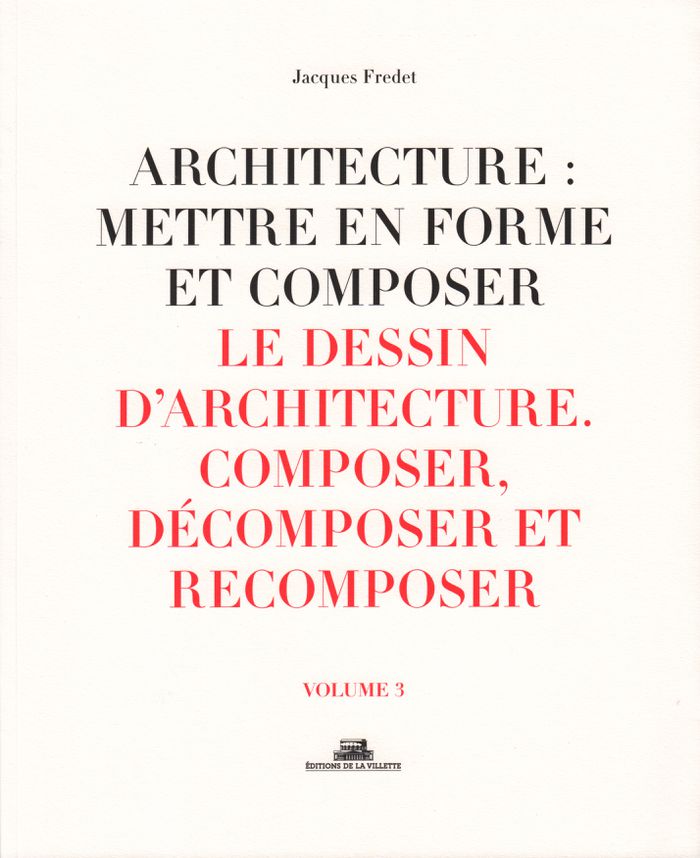
Architecture, t.03 : mettre en forme et composer, le dessin d'architecture
Actions:
Prix:
$29.95
(disponible sur commande)
Résumé:
Une veritable somme de connaissances, au sens encyclopédique du terme, sur le dessin d'architecture. À l'aide de l'analyse de plusieurs études sur l'architecture, l'auteur redéfinit la notion de composition dans la théorie architecturale. Le dessin d'architecture doit se prémunir du "réalisme" pour accéder à un niveau de généralité et d'abstraction. Il permet d'imaginer et d'explorer une disposition spatiale n'existant pas encore, ou d'intervenir et de transformer un bâti préexistant par un projet qui tienne compte d'une logique consciente de la forme (morphologie), celle-ci devant être acquise dans un apprentissage spécifique et maîtrisée dans une pratique effective.
Architecture, t.03 : mettre en forme et composer, le dessin d'architecture
Actions:
Prix:
$29.95
(disponible sur commande)
Résumé:
Une veritable somme de connaissances, au sens encyclopédique du terme, sur le dessin d'architecture. À l'aide de l'analyse de plusieurs études sur l'architecture, l'auteur redéfinit la notion de composition dans la théorie architecturale. Le dessin d'architecture doit se prémunir du "réalisme" pour accéder à un niveau de généralité et d'abstraction. Il permet d'imaginer et d'explorer une disposition spatiale n'existant pas encore, ou d'intervenir et de transformer un bâti préexistant par un projet qui tienne compte d'une logique consciente de la forme (morphologie), celle-ci devant être acquise dans un apprentissage spécifique et maîtrisée dans une pratique effective.
Classification:
livres
livres
Publication:
octobre 2018
octobre 2018
Sujet:
Théorie de l’architecture
Théorie de l’architecture


