


36173 Résultats
Classification:
livres
livres
Actions:
Prix:
$72.95
(disponible en magasin)
Résumé:
O-14: Projection and Reception explores the groundbreaking exo-skeleton office tower in Dubai by New York-based architects, Reiser+Umemoto. This monograph not only provides exhaustive documentation of O-14's design and construction but delves further into the complex interrelationships this architectural model weaves between technology, expression and politics in the(...)
$72.95
(disponible en magasin)
Résumé:
O-14: Projection and Reception explores the groundbreaking exo-skeleton office tower in Dubai by New York-based architects, Reiser+Umemoto. This monograph not only provides exhaustive documentation of O-14's design and construction but delves further into the complex interrelationships this architectural model weaves between technology, expression and politics in the(...)
Titre:
Reiser + Umemoto: 0-14 projection and reception
Actions:
Prix:
$72.95
(disponible en magasin)
Résumé:
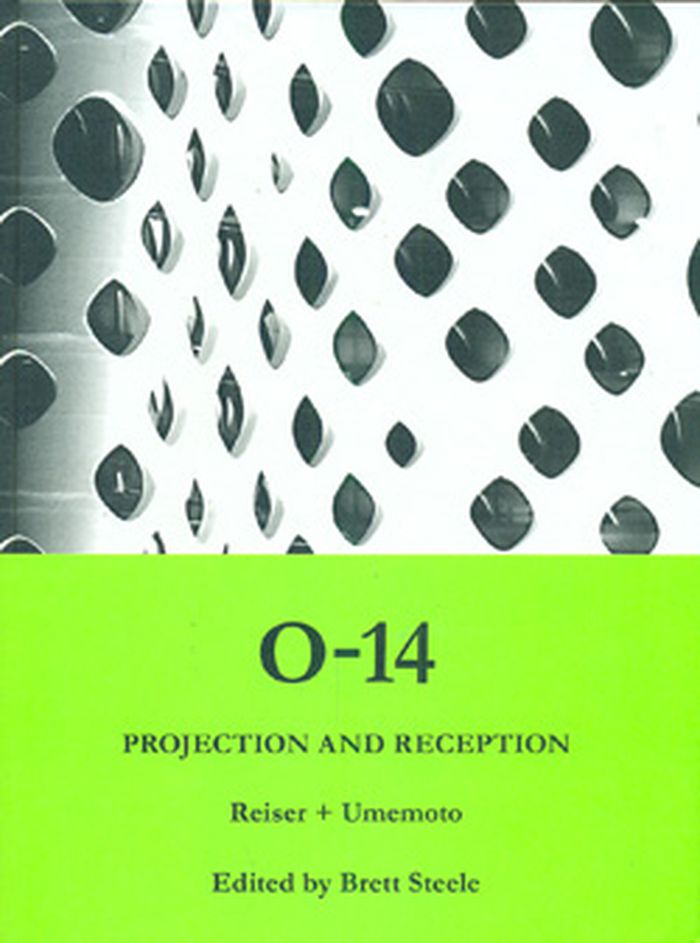
O-14: Projection and Reception explores the groundbreaking exo-skeleton office tower in Dubai by New York-based architects, Reiser+Umemoto. This monograph not only provides exhaustive documentation of O-14's design and construction but delves further into the complex interrelationships this architectural model weaves between technology, expression and politics in the context of the 'nowhere place' of the global city. The book is both an account of a design's realisation and a manifesto, and contains Jesse Reiser's explanatory and theoretical texts on the tower as well as a number of critical essays.
Reiser + Umemoto: 0-14 projection and reception
Actions:
Prix:
$72.95
(disponible en magasin)
Résumé:
O-14: Projection and Reception explores the groundbreaking exo-skeleton office tower in Dubai by New York-based architects, Reiser+Umemoto. This monograph not only provides exhaustive documentation of O-14's design and construction but delves further into the complex interrelationships this architectural model weaves between technology, expression and politics in the context of the 'nowhere place' of the global city. The book is both an account of a design's realisation and a manifesto, and contains Jesse Reiser's explanatory and theoretical texts on the tower as well as a number of critical essays.
Classification:
livres
livres
Publication:
juin 2011
juin 2011
Sujet:
Architecture, monographies
Architecture, monographies
Classification:
livres
livres
Actions:
Prix:
$80.00
(disponible en magasin)
Résumé:
Presents the results of the research of the AA´s graduate Design Research Lab (DRL), and with it constructs a generative view of space and structure and the exploration of behaviour-based models of living through patterns found in nature.
$80.00
(disponible en magasin)
Résumé:
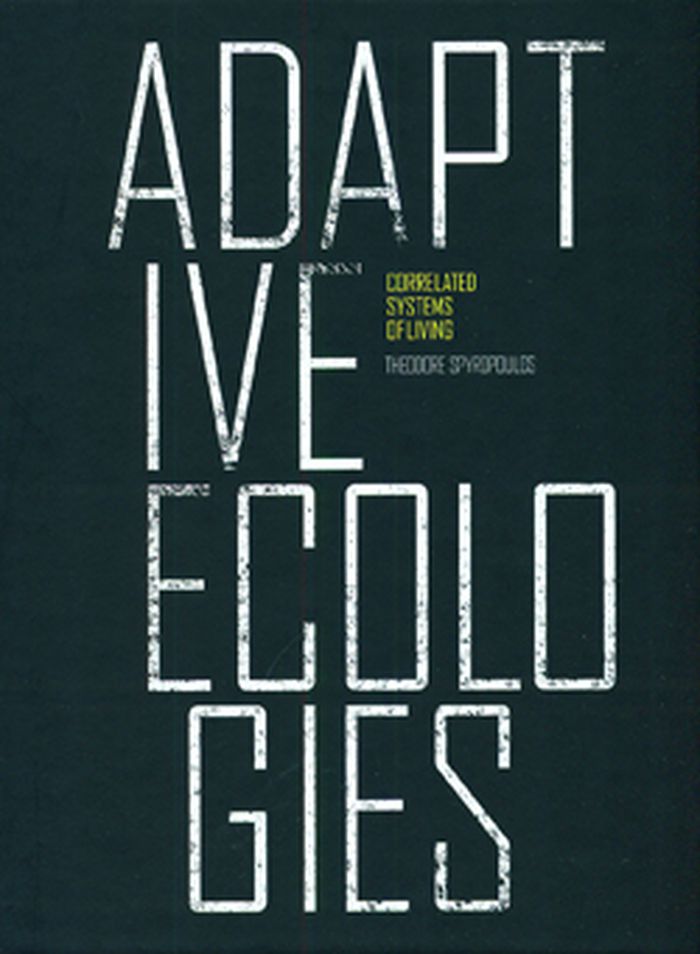
Presents the results of the research of the AA´s graduate Design Research Lab (DRL), and with it constructs a generative view of space and structure and the exploration of behaviour-based models of living through patterns found in nature.
Titre:
Adaptive ecologies : correlated systems of living
Actions:
Prix:
$80.00
(disponible en magasin)
Résumé:
Presents the results of the research of the AA´s graduate Design Research Lab (DRL), and with it constructs a generative view of space and structure and the exploration of behaviour-based models of living through patterns found in nature.
Adaptive ecologies : correlated systems of living
Actions:
Prix:
$80.00
(disponible en magasin)
Résumé:
Presents the results of the research of the AA´s graduate Design Research Lab (DRL), and with it constructs a generative view of space and structure and the exploration of behaviour-based models of living through patterns found in nature.
Classification:
livres
livres
Publication:
juin 2011
juin 2011
Sujet:
Logements collectifs
Logements collectifs
Classification:
livres
livres
Actions:
Prix:
$71.50
(disponible sur commande)
Résumé:
In Renaissance Rome, ancient ruins were preserved as often as they were mined for their materials. Although the question of what to preserve and how continued to be subject to debate, preservation acquired renewed force and urgency in the fifteenth and sixteenth centuries as the new papal capital rose upon the ruins of the ancient city. Preservation practices became more(...)
$71.50
(disponible sur commande)
Résumé:
In Renaissance Rome, ancient ruins were preserved as often as they were mined for their materials. Although the question of what to preserve and how continued to be subject to debate, preservation acquired renewed force and urgency in the fifteenth and sixteenth centuries as the new papal capital rose upon the ruins of the ancient city. Preservation practices became more(...)
Titre:
The ruin of the eternal city : Antiquity & preservation in renaissance Rome
Actions:
Prix:
$71.50
(disponible sur commande)
Résumé:
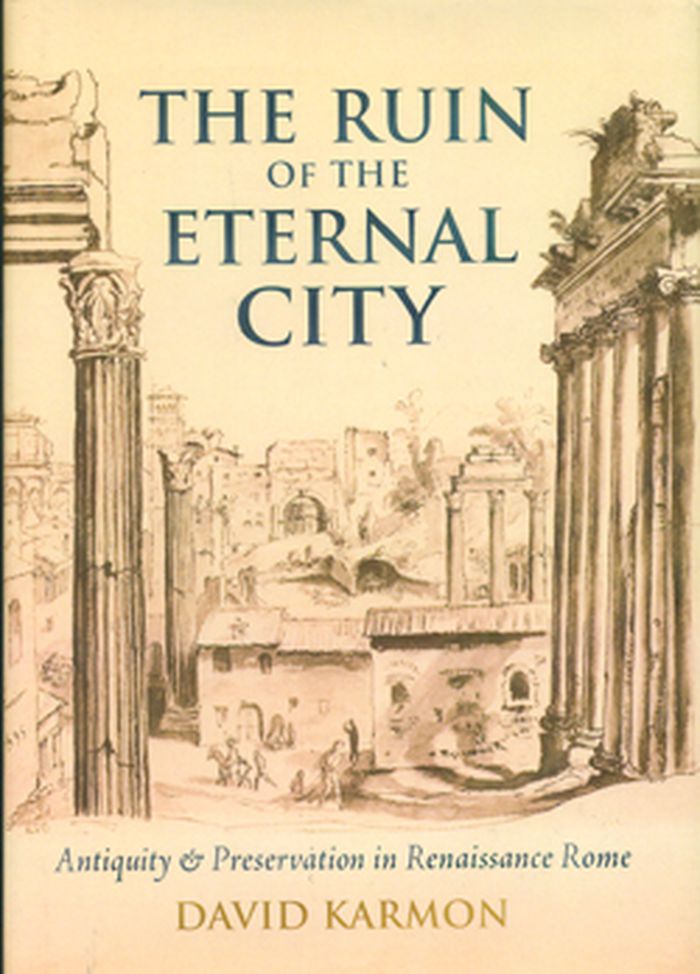
In Renaissance Rome, ancient ruins were preserved as often as they were mined for their materials. Although the question of what to preserve and how continued to be subject to debate, preservation acquired renewed force and urgency in the fifteenth and sixteenth centuries as the new papal capital rose upon the ruins of the ancient city. Preservation practices became more focused and effective in Renaissance Rome than ever before. "The Ruin of the Eternal City" offers a new interpretation of the ongoing life of ancient buildings within the expanding early modern city. While historians and archaeologists have long affirmed that early modern builders disregarded the protection of antiquity, this study provides the first systematic analysis of preservation problems as perceived by the Renaissance popes, the civic magistrates, and ordinary citizens. Based on new evidence and recent conservation theory, this compelling study explores how civic officials balanced the defense of specific sites against the pressing demands imposed by population growth, circulation, and notions of urban decorum. Above all, the preservation of antiquity remained an indispensable tool to advance competing political agendas in the papal capital. A broad range of preservation policies and practices are examined at the half-ruined Colosseum, the intact Pantheon, and the little-known but essential Renaissance bridge known as the Ponte Santa Maria.
The ruin of the eternal city : Antiquity & preservation in renaissance Rome
Actions:
Prix:
$71.50
(disponible sur commande)
Résumé:
In Renaissance Rome, ancient ruins were preserved as often as they were mined for their materials. Although the question of what to preserve and how continued to be subject to debate, preservation acquired renewed force and urgency in the fifteenth and sixteenth centuries as the new papal capital rose upon the ruins of the ancient city. Preservation practices became more focused and effective in Renaissance Rome than ever before. "The Ruin of the Eternal City" offers a new interpretation of the ongoing life of ancient buildings within the expanding early modern city. While historians and archaeologists have long affirmed that early modern builders disregarded the protection of antiquity, this study provides the first systematic analysis of preservation problems as perceived by the Renaissance popes, the civic magistrates, and ordinary citizens. Based on new evidence and recent conservation theory, this compelling study explores how civic officials balanced the defense of specific sites against the pressing demands imposed by population growth, circulation, and notions of urban decorum. Above all, the preservation of antiquity remained an indispensable tool to advance competing political agendas in the papal capital. A broad range of preservation policies and practices are examined at the half-ruined Colosseum, the intact Pantheon, and the little-known but essential Renaissance bridge known as the Ponte Santa Maria.
Classification:
livres
livres
Publication:
avril 2011
avril 2011
Classification:
livres
livres
Titre:
Translated by
Translated by
Actions:
Prix:
$25.00
(disponible sur commande)
Résumé:
Translated By is published to coincide with an exhibition at the AA, which gathers eleven literary writers and eleven literary places and subjects them to an act of immaterial translation – via the voice. The stories run through Ramallah, recollect turn-of-the-century Sofia, remember the spaceship-looking-Sheraton Hotel in Doha, wander through the 'Metaverse' and(...)
$25.00
(disponible sur commande)
Résumé:
Translated By is published to coincide with an exhibition at the AA, which gathers eleven literary writers and eleven literary places and subjects them to an act of immaterial translation – via the voice. The stories run through Ramallah, recollect turn-of-the-century Sofia, remember the spaceship-looking-Sheraton Hotel in Doha, wander through the 'Metaverse' and(...)
Titre:
Translated by
Actions:
Prix:
$25.00
(disponible sur commande)
Résumé:
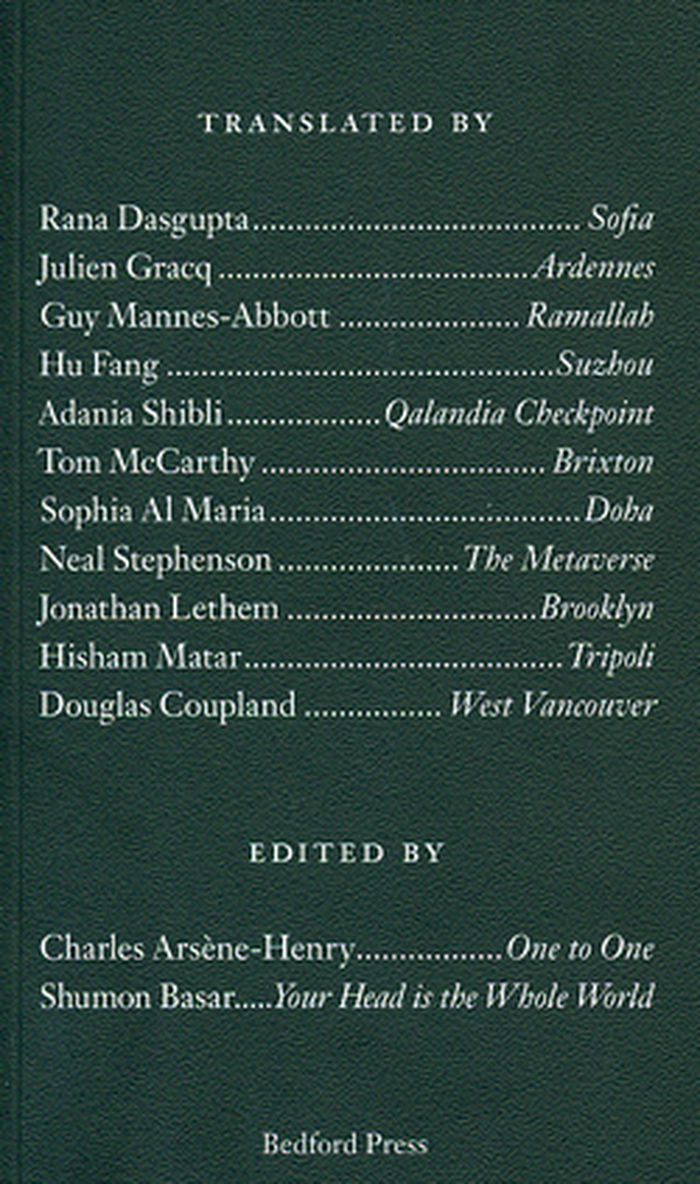
Translated By is published to coincide with an exhibition at the AA, which gathers eleven literary writers and eleven literary places and subjects them to an act of immaterial translation – via the voice. The stories run through Ramallah, recollect turn-of-the-century Sofia, remember the spaceship-looking-Sheraton Hotel in Doha, wander through the 'Metaverse' and end at the end of the world in West Vancouver. Each of the authors invent or interpret place. Mundane, marginal, infamous, impossible. Together, the texts create a strange and beautiful territory that traverses distance and time. Writers include Douglas Coupland, Rana Dasgupta, Hu Fang, Julien Gracq, Jonathan Letham, Tom McCarthy, Guy Mannes Abbott, Sophia Al Maria, Hisham Matar, Adania Shibli, and Neal Stephenson, with essays by Charles Arsène-Henry and Shumon Basar.
Translated by
Actions:
Prix:
$25.00
(disponible sur commande)
Résumé:
Translated By is published to coincide with an exhibition at the AA, which gathers eleven literary writers and eleven literary places and subjects them to an act of immaterial translation – via the voice. The stories run through Ramallah, recollect turn-of-the-century Sofia, remember the spaceship-looking-Sheraton Hotel in Doha, wander through the 'Metaverse' and end at the end of the world in West Vancouver. Each of the authors invent or interpret place. Mundane, marginal, infamous, impossible. Together, the texts create a strange and beautiful territory that traverses distance and time. Writers include Douglas Coupland, Rana Dasgupta, Hu Fang, Julien Gracq, Jonathan Letham, Tom McCarthy, Guy Mannes Abbott, Sophia Al Maria, Hisham Matar, Adania Shibli, and Neal Stephenson, with essays by Charles Arsène-Henry and Shumon Basar.
Classification:
livres
livres
Publication:
février 2011
février 2011
Sujet:
Littérature et poésie
Littérature et poésie
Classification:
livres
livres
Actions:
Prix:
$19.95
(disponible en magasin)
Résumé:
In this text, Brenner, Peck and Theodore question the claim that neoliberalism has ended in the wake of the global economic crisis that began in September of 2008. The authors argue that this assumption rests upon an inadequate understanding of the reach and tenacity of the crisis-induced, market-disciplinary forms of regulatory restructuring that have accompanied the(...)
$19.95
(disponible en magasin)
Résumé:
In this text, Brenner, Peck and Theodore question the claim that neoliberalism has ended in the wake of the global economic crisis that began in September of 2008. The authors argue that this assumption rests upon an inadequate understanding of the reach and tenacity of the crisis-induced, market-disciplinary forms of regulatory restructuring that have accompanied the(...)
Publication:
juillet 2011
juillet 2011
Titre:
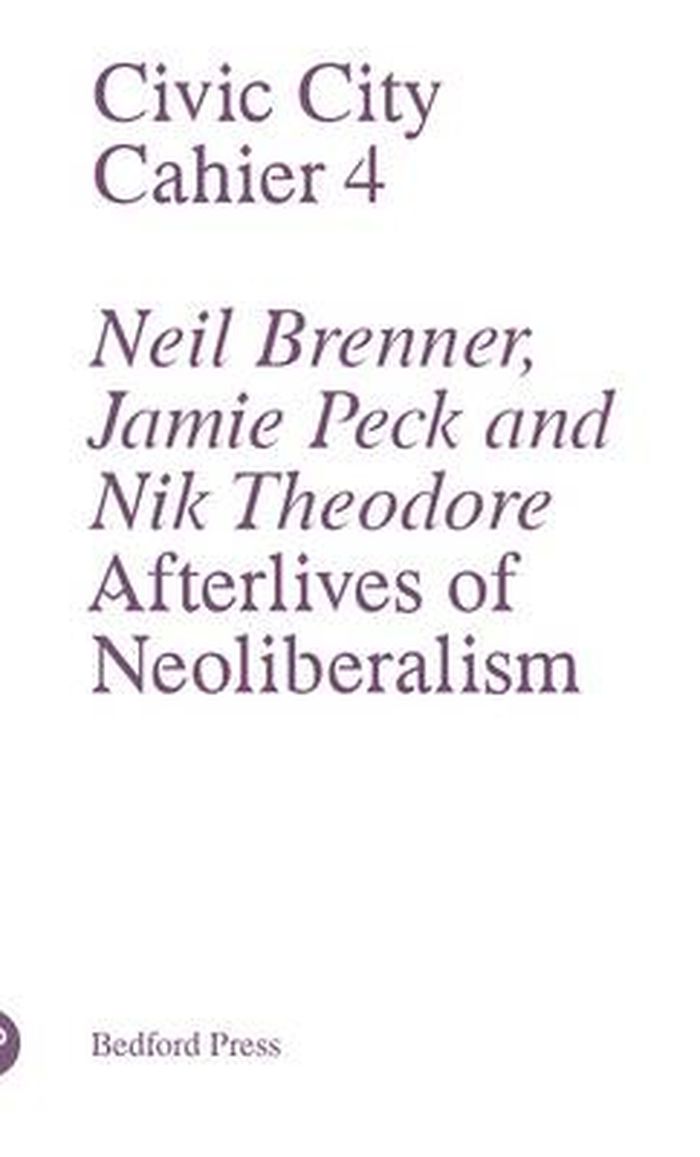
Civic city cahier 4 : Afterlives of neoliberalism
Actions:
Prix:
$19.95
(disponible en magasin)
Résumé:
In this text, Brenner, Peck and Theodore question the claim that neoliberalism has ended in the wake of the global economic crisis that began in September of 2008. The authors argue that this assumption rests upon an inadequate understanding of the reach and tenacity of the crisis-induced, market-disciplinary forms of regulatory restructuring that have accompanied the neoliberalisation of cities, regions and states across the world. In contrast with the over-simplified, monolithic conceptualisations of the global economy that prevail in many popular and academic accounts, the authors emphasise the constitutively uneven, institutionally hybrid and chronically unstable character of neoliberalism. For urban designers, planners and activists working to promote more socially just and democratic forms of urbanism, Brenner, Peck and Theodore insist on the need to radically restructure the macroinstitutional "rules of the game" that variously encourage and disallow localities, cities and regions to adapt to market-based approaches to (re)investment, collective-goods provisioning, and social reproduction. "Absent this", they argue, "the potential of progressive postneoliberal projects will continue to be frustrated by the dead hand of market rule".
Civic city cahier 4 : Afterlives of neoliberalism
Actions:
Prix:
$19.95
(disponible en magasin)
Résumé:
In this text, Brenner, Peck and Theodore question the claim that neoliberalism has ended in the wake of the global economic crisis that began in September of 2008. The authors argue that this assumption rests upon an inadequate understanding of the reach and tenacity of the crisis-induced, market-disciplinary forms of regulatory restructuring that have accompanied the neoliberalisation of cities, regions and states across the world. In contrast with the over-simplified, monolithic conceptualisations of the global economy that prevail in many popular and academic accounts, the authors emphasise the constitutively uneven, institutionally hybrid and chronically unstable character of neoliberalism. For urban designers, planners and activists working to promote more socially just and democratic forms of urbanism, Brenner, Peck and Theodore insist on the need to radically restructure the macroinstitutional "rules of the game" that variously encourage and disallow localities, cities and regions to adapt to market-based approaches to (re)investment, collective-goods provisioning, and social reproduction. "Absent this", they argue, "the potential of progressive postneoliberal projects will continue to be frustrated by the dead hand of market rule".
Classification:
livres
livres
Publication:
juillet 2011
juillet 2011
Classification:
livres
livres
Actions:
Prix:
$12.25
(disponible sur commande)
Résumé:
Villes réinventées, rêvées ou idéales, aucune ne figure sur les cartes du temps présent, et pourtant l'on peut s'y promener, en contempler les splendeurs architecturales, converser avec leurs habitants, mais aussi avoir maille à partir avec les autorités, se faire dépouiller dans quelque taverne mal famée... Le présent ouvrage est donc complété de quelques informations(...)
$12.25
(disponible sur commande)
Résumé:
Villes réinventées, rêvées ou idéales, aucune ne figure sur les cartes du temps présent, et pourtant l'on peut s'y promener, en contempler les splendeurs architecturales, converser avec leurs habitants, mais aussi avoir maille à partir avec les autorités, se faire dépouiller dans quelque taverne mal famée... Le présent ouvrage est donc complété de quelques informations(...)
Titre:
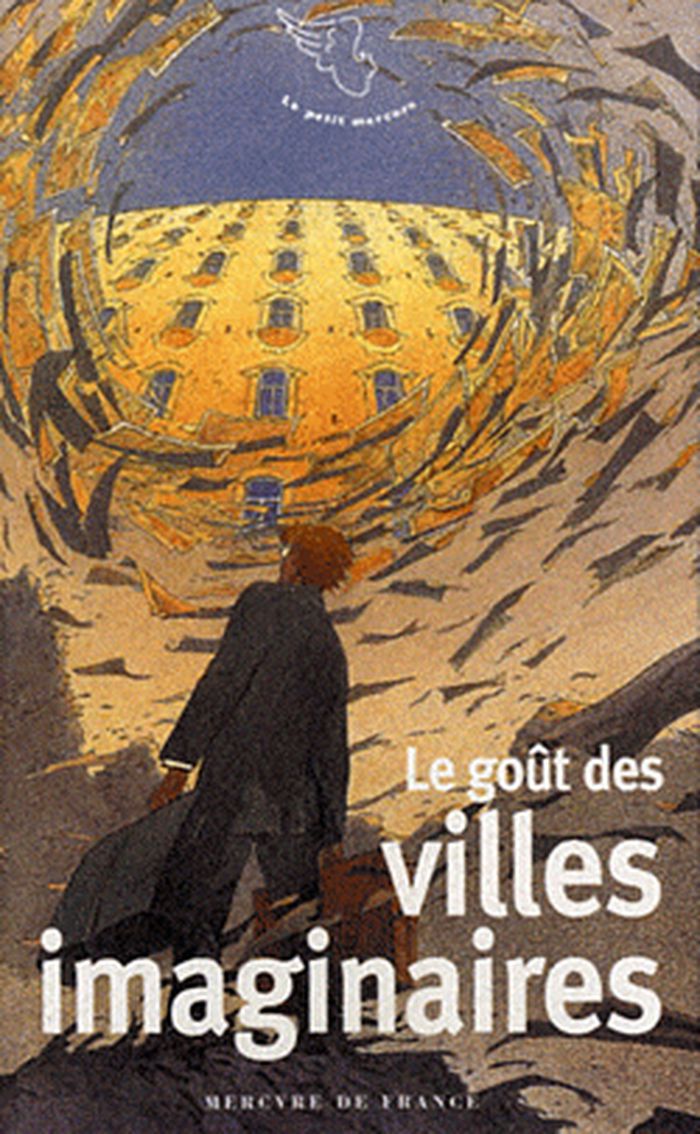
Le goût des villes imaginaires
Actions:
Prix:
$12.25
(disponible sur commande)
Résumé:
Villes réinventées, rêvées ou idéales, aucune ne figure sur les cartes du temps présent, et pourtant l'on peut s'y promener, en contempler les splendeurs architecturales, converser avec leurs habitants, mais aussi avoir maille à partir avec les autorités, se faire dépouiller dans quelque taverne mal famée... Le présent ouvrage est donc complété de quelques informations pratiques essentielles, afin d'avertir le voyageur des coutumes étranges et des pièges mortels qu'il affrontera inévitablement au cours de ces incursions dans l'espace-temps.
Le goût des villes imaginaires
Actions:
Prix:
$12.25
(disponible sur commande)
Résumé:
Villes réinventées, rêvées ou idéales, aucune ne figure sur les cartes du temps présent, et pourtant l'on peut s'y promener, en contempler les splendeurs architecturales, converser avec leurs habitants, mais aussi avoir maille à partir avec les autorités, se faire dépouiller dans quelque taverne mal famée... Le présent ouvrage est donc complété de quelques informations pratiques essentielles, afin d'avertir le voyageur des coutumes étranges et des pièges mortels qu'il affrontera inévitablement au cours de ces incursions dans l'espace-temps.
Classification:
livres
livres
Publication:
mars 2011
mars 2011
Classification:
livres
livres
Actions:
Prix:
$23.95
(disponible sur commande)
Résumé:
Edna le Pingouin en a plus qu’assez de voir toujours les mêmes couleurs sur la banquise : le blanc de la glace,le noir de la nuit et le bleu de la mer. Elle décide un jour de partir à la recherche d’une autre couleur... À partir de 4 ans.
$23.95
(disponible sur commande)
Résumé:
Edna le Pingouin en a plus qu’assez de voir toujours les mêmes couleurs sur la banquise : le blanc de la glace,le noir de la nuit et le bleu de la mer. Elle décide un jour de partir à la recherche d’une autre couleur... À partir de 4 ans.
Titre:
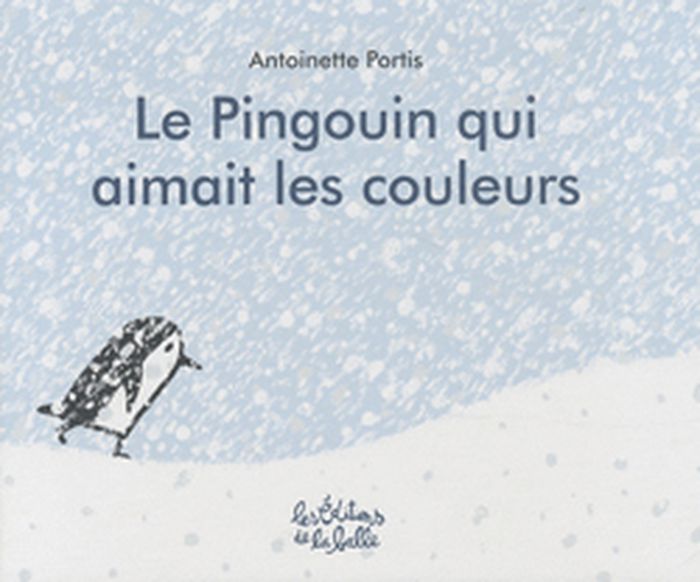
Le Pingouin qui aimait les couleurs
Actions:
Prix:
$23.95
(disponible sur commande)
Résumé:
Edna le Pingouin en a plus qu’assez de voir toujours les mêmes couleurs sur la banquise : le blanc de la glace,le noir de la nuit et le bleu de la mer. Elle décide un jour de partir à la recherche d’une autre couleur... À partir de 4 ans.
Le Pingouin qui aimait les couleurs
Actions:
Prix:
$23.95
(disponible sur commande)
Résumé:
Edna le Pingouin en a plus qu’assez de voir toujours les mêmes couleurs sur la banquise : le blanc de la glace,le noir de la nuit et le bleu de la mer. Elle décide un jour de partir à la recherche d’une autre couleur... À partir de 4 ans.
Classification:
livres
livres
Publication:
avril 2011
avril 2011
Sujet:
Littérature jeunesse
Littérature jeunesse
Classification:
livres
livres
Actions:
Prix:
$29.95
(disponible sur commande)
Résumé:
Rien de plus banal a priori que ces sigles indiquant où se trouvent les toilettes pour hommes ou femmes : des gares aux restaurants et bistros, on tombe sur ces logos dès qu'une envie pressante nous pousse à fréquenter les salles d'eau d'un lieu public. Si souvent la séparation hommes/femmes est symbolisée par un pictogramme, il n'est pas rare de tomber sur des panonceaux(...)
$29.95
(disponible sur commande)
Résumé:
Rien de plus banal a priori que ces sigles indiquant où se trouvent les toilettes pour hommes ou femmes : des gares aux restaurants et bistros, on tombe sur ces logos dès qu'une envie pressante nous pousse à fréquenter les salles d'eau d'un lieu public. Si souvent la séparation hommes/femmes est symbolisée par un pictogramme, il n'est pas rare de tomber sur des panonceaux(...)
Titre:
Toilet signs: sur la porte des toilettes
Actions:
Prix:
$29.95
(disponible sur commande)
Résumé:
Rien de plus banal a priori que ces sigles indiquant où se trouvent les toilettes pour hommes ou femmes : des gares aux restaurants et bistros, on tombe sur ces logos dès qu'une envie pressante nous pousse à fréquenter les salles d'eau d'un lieu public. Si souvent la séparation hommes/femmes est symbolisée par un pictogramme, il n'est pas rare de tomber sur des panonceaux plus originaux, humoristiques, surprenants voire. incompréhensibles ! C'est à un voyage visuel inédit que vous convie ce petit ouvrage illustré.
Toilet signs: sur la porte des toilettes
Actions:
Prix:
$29.95
(disponible sur commande)
Résumé:
Rien de plus banal a priori que ces sigles indiquant où se trouvent les toilettes pour hommes ou femmes : des gares aux restaurants et bistros, on tombe sur ces logos dès qu'une envie pressante nous pousse à fréquenter les salles d'eau d'un lieu public. Si souvent la séparation hommes/femmes est symbolisée par un pictogramme, il n'est pas rare de tomber sur des panonceaux plus originaux, humoristiques, surprenants voire. incompréhensibles ! C'est à un voyage visuel inédit que vous convie ce petit ouvrage illustré.
Classification:
livres
livres
Publication:
avril 2011
avril 2011
Sujet:
Signalétique
Signalétique
Classification:
livres
livres
Actions:
Prix:
$30.00
(disponible sur commande)
Résumé:
The Neue Nationalgalerie in Berlin is not only a museum but also an architectural milestone. The last building of the great German architect Ludwig Mies van der Rohe (1886-1969 is widely considered one of the most perfect statements of his aesthetic, with its monumental steel columns and cantilevered roof with glass enclosure. The Neue Nationalgalerie is especially famous(...)
$30.00
(disponible sur commande)
Résumé:
The Neue Nationalgalerie in Berlin is not only a museum but also an architectural milestone. The last building of the great German architect Ludwig Mies van der Rohe (1886-1969 is widely considered one of the most perfect statements of his aesthetic, with its monumental steel columns and cantilevered roof with glass enclosure. The Neue Nationalgalerie is especially famous(...)
Titre:
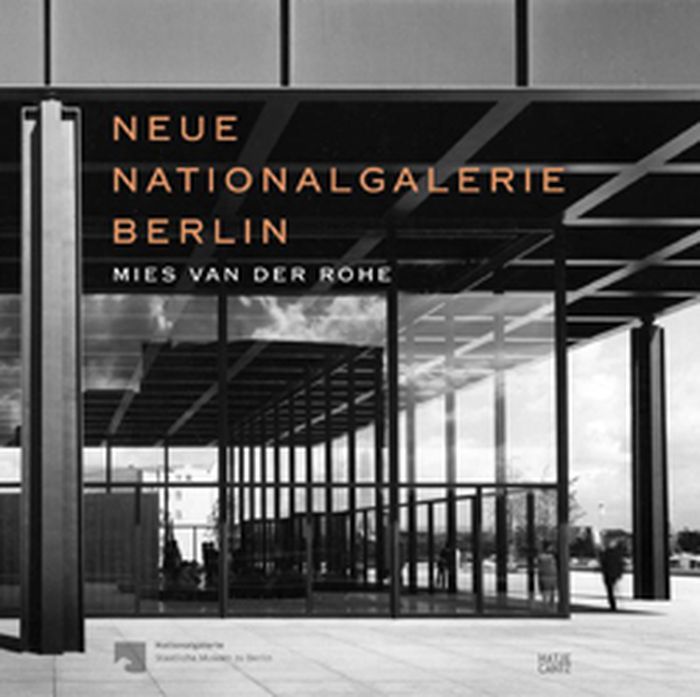
Mies van der Rohe: Neue Nationalgalerie Berlin
Actions:
Prix:
$30.00
(disponible sur commande)
Résumé:
The Neue Nationalgalerie in Berlin is not only a museum but also an architectural milestone. The last building of the great German architect Ludwig Mies van der Rohe (1886-1969 is widely considered one of the most perfect statements of his aesthetic, with its monumental steel columns and cantilevered roof with glass enclosure. The Neue Nationalgalerie is especially famous for its 50 x 50-meter hall. There is no other van der Rohe structure in which the boundary between inside and outside is as porous as in this famous hall. This publication presents the building from today's perspectives, but also features historical photographs taken during the construction period, the building's opening in 1968 and the spectacular early exhibitions that took place there.
Mies van der Rohe: Neue Nationalgalerie Berlin
Actions:
Prix:
$30.00
(disponible sur commande)
Résumé:
The Neue Nationalgalerie in Berlin is not only a museum but also an architectural milestone. The last building of the great German architect Ludwig Mies van der Rohe (1886-1969 is widely considered one of the most perfect statements of his aesthetic, with its monumental steel columns and cantilevered roof with glass enclosure. The Neue Nationalgalerie is especially famous for its 50 x 50-meter hall. There is no other van der Rohe structure in which the boundary between inside and outside is as porous as in this famous hall. This publication presents the building from today's perspectives, but also features historical photographs taken during the construction period, the building's opening in 1968 and the spectacular early exhibitions that took place there.
Classification:
livres
livres
Publication:
juin 2011
juin 2011
Sujet:
Architecture, monographies
Architecture, monographies
Classification:
livres
livres
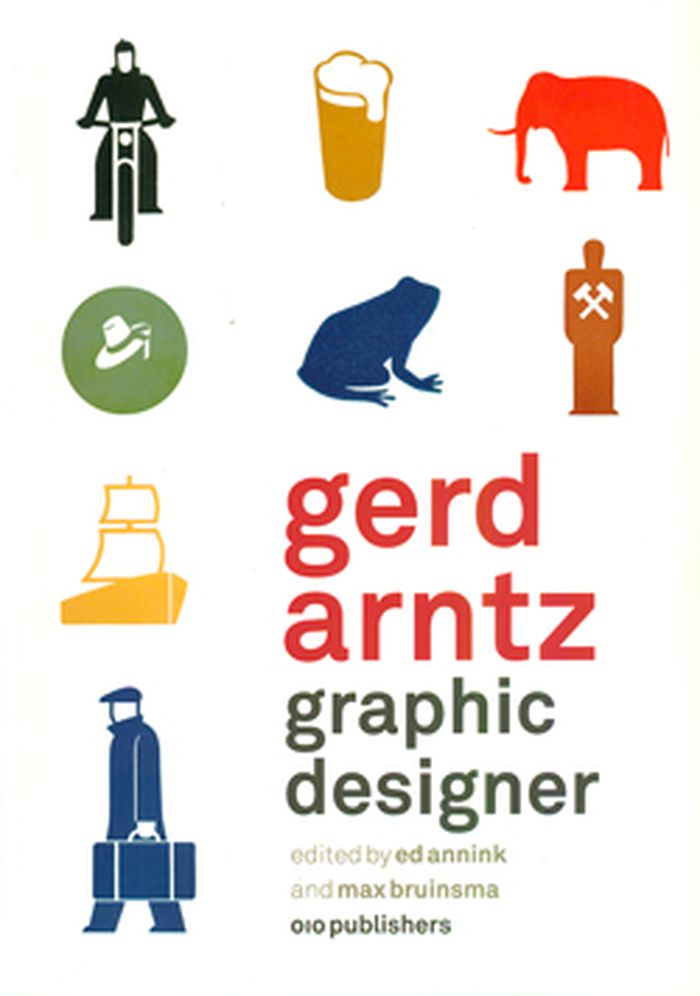
Titre:
Gerd Arntz: graphic designer
Gerd Arntz: graphic designer
Actions:
Prix:
$59.95
(disponible sur commande)
Résumé:
As an engaged graphic artist and designer Gerd Arntz (1900-1988) portrayed the world in wood and linoleum cuts. Together with Otto Neurath he designed the symbols for the International System Of Typographic Picture Education (ISOTYPE). This book displays many Isotypes and explains the system and its context, and an overview of Arntzs life and work.
$59.95
(disponible sur commande)
Résumé:
As an engaged graphic artist and designer Gerd Arntz (1900-1988) portrayed the world in wood and linoleum cuts. Together with Otto Neurath he designed the symbols for the International System Of Typographic Picture Education (ISOTYPE). This book displays many Isotypes and explains the system and its context, and an overview of Arntzs life and work.
Titre:
Gerd Arntz: graphic designer
Actions:
Prix:
$59.95
(disponible sur commande)
Résumé:
As an engaged graphic artist and designer Gerd Arntz (1900-1988) portrayed the world in wood and linoleum cuts. Together with Otto Neurath he designed the symbols for the International System Of Typographic Picture Education (ISOTYPE). This book displays many Isotypes and explains the system and its context, and an overview of Arntzs life and work.
Gerd Arntz: graphic designer
Actions:
Prix:
$59.95
(disponible sur commande)
Résumé:
As an engaged graphic artist and designer Gerd Arntz (1900-1988) portrayed the world in wood and linoleum cuts. Together with Otto Neurath he designed the symbols for the International System Of Typographic Picture Education (ISOTYPE). This book displays many Isotypes and explains the system and its context, and an overview of Arntzs life and work.
Classification:
livres
livres
Publication:
février 2011
février 2011


