


805 Résultats
Classification:
livres
livres
Prix:
$32.95
(disponible sur commande)
Résumé:
Imagine affordable homes that are both well-designed and environmentally friendly, better for the families who live in them and for the planet. The HOME House Project brings such imagining closer to reality. This book chronicles a multi-year national design initiative aimed at addressing issues of design, affordability, and sustainability in housing. Launched by the(...)
$32.95
(disponible sur commande)
Résumé:
Imagine affordable homes that are both well-designed and environmentally friendly, better for the families who live in them and for the planet. The HOME House Project brings such imagining closer to reality. This book chronicles a multi-year national design initiative aimed at addressing issues of design, affordability, and sustainability in housing. Launched by the(...)
Titre:
The HOME House Project : the future of affordable housing
Actions:
Prix:
$32.95
(disponible sur commande)
Résumé:
Imagine affordable homes that are both well-designed and environmentally friendly, better for the families who live in them and for the planet. The HOME House Project brings such imagining closer to reality. This book chronicles a multi-year national design initiative aimed at addressing issues of design, affordability, and sustainability in housing. Launched by the Southeastern Center for Contemporary Art (SECCA) in Winston-Salem, North Carolina, this project challenged designers and architects to imagine a world in which sustainable and environmentally friendly materials, technologies, and techniques were considered important elements of housing for low- and moderate-income families. A SECCA-sponsored open competition in 2003 drew 440 entries from the United States and six other countries, all using Habitat for Humanity's three- and four-bedroom house plans as a point of departure for the design of affordable and environmentally friendly housing. This book, published in conjunction with a traveling exhibition, documents the 25 prize-winning designs as well as fifty other selected submissions with 396 colour illustrations. The accompanying text includes Michael Sorkin's essay connecting democratic values to quality of housing, Ben Nicholson's satiric critique of American excess, Steve Badanes's insights on the social responsibilities of architects, and HOME House Project Director David Brown's overview of the project and its continuing evolution.
The HOME House Project : the future of affordable housing
Actions:
Prix:
$32.95
(disponible sur commande)
Résumé:
Imagine affordable homes that are both well-designed and environmentally friendly, better for the families who live in them and for the planet. The HOME House Project brings such imagining closer to reality. This book chronicles a multi-year national design initiative aimed at addressing issues of design, affordability, and sustainability in housing. Launched by the Southeastern Center for Contemporary Art (SECCA) in Winston-Salem, North Carolina, this project challenged designers and architects to imagine a world in which sustainable and environmentally friendly materials, technologies, and techniques were considered important elements of housing for low- and moderate-income families. A SECCA-sponsored open competition in 2003 drew 440 entries from the United States and six other countries, all using Habitat for Humanity's three- and four-bedroom house plans as a point of departure for the design of affordable and environmentally friendly housing. This book, published in conjunction with a traveling exhibition, documents the 25 prize-winning designs as well as fifty other selected submissions with 396 colour illustrations. The accompanying text includes Michael Sorkin's essay connecting democratic values to quality of housing, Ben Nicholson's satiric critique of American excess, Steve Badanes's insights on the social responsibilities of architects, and HOME House Project Director David Brown's overview of the project and its continuing evolution.
Classification:
livres
livres
Publication:
janvier 1900, Cambridge, Mass.
janvier 1900, Cambridge, Mass.
Sujet:
Logements collectifs
Logements collectifs
Classification:
vidéo
vidéo
Actions:
Prix:
$32.00
(disponible sur commande)
Résumé:
Suburbia, and all it promises, has become the American Dream. With brutal honesty and a touch of irony, "The end of suburbia" explored the American Way of Life and its prospects as the planet enters the age of Peak Oil. Director Greg Greene once again takes us “through the looking glass” on a journey of discovery – a sobering yet vital and ultimately positive(...)
$32.00
(disponible sur commande)
Résumé:
Suburbia, and all it promises, has become the American Dream. With brutal honesty and a touch of irony, "The end of suburbia" explored the American Way of Life and its prospects as the planet enters the age of Peak Oil. Director Greg Greene once again takes us “through the looking glass” on a journey of discovery – a sobering yet vital and ultimately positive(...)
Titre:
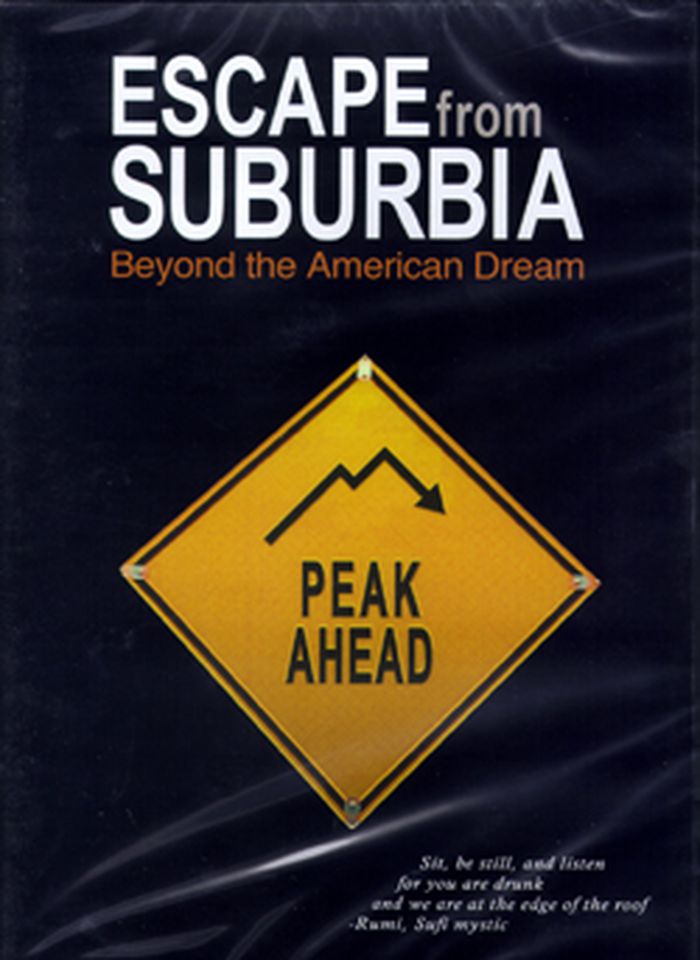
Escape from suburbia : beyond the American dream
Actions:
Prix:
$32.00
(disponible sur commande)
Résumé:
Suburbia, and all it promises, has become the American Dream. With brutal honesty and a touch of irony, "The end of suburbia" explored the American Way of Life and its prospects as the planet enters the age of Peak Oil. Director Greg Greene once again takes us “through the looking glass” on a journey of discovery – a sobering yet vital and ultimately positive exploration of what the second half of the Oil Age has in store for us. Through personal stories and interviews we examine how declining world oil production has already begun to affect modern life in North America. Expert scientific opinion is balanced with “on the street” portraits from an emerging global movement of citizen’s groups who are confronting the challenges of Peak Oil in extraordinary ways. The clock is ticking. This movie asks the tough questions : Are we approaching Peak Oil now? What are the controversies surrounding our future energy options? Why are a growing number of specialists and citizens skeptical of these options? What are ordinary people across North America doing in their own communities to prepare for Peak Oil? And what will you do as energy prices skyrocket and the Oil Age draws to a close?
Escape from suburbia : beyond the American dream
Actions:
Prix:
$32.00
(disponible sur commande)
Résumé:
Suburbia, and all it promises, has become the American Dream. With brutal honesty and a touch of irony, "The end of suburbia" explored the American Way of Life and its prospects as the planet enters the age of Peak Oil. Director Greg Greene once again takes us “through the looking glass” on a journey of discovery – a sobering yet vital and ultimately positive exploration of what the second half of the Oil Age has in store for us. Through personal stories and interviews we examine how declining world oil production has already begun to affect modern life in North America. Expert scientific opinion is balanced with “on the street” portraits from an emerging global movement of citizen’s groups who are confronting the challenges of Peak Oil in extraordinary ways. The clock is ticking. This movie asks the tough questions : Are we approaching Peak Oil now? What are the controversies surrounding our future energy options? Why are a growing number of specialists and citizens skeptical of these options? What are ordinary people across North America doing in their own communities to prepare for Peak Oil? And what will you do as energy prices skyrocket and the Oil Age draws to a close?
Classification:
vidéo
vidéo
Publication:
novembre 2007, Toronto
novembre 2007, Toronto
Sujet:
DVD vidéo
DVD vidéo
Classification:
livres
livres
Actions:
Prix:
$30.00
(disponible sur commande)
Résumé:
Our culture has no concept of stopping. We continue to build motorways and airports for a future in which cars and planes may no longer exist. We’re converting our planet from a natural one to an artificial one in which the quantity of man-made objects – houses, asphalt, cars, plastic, computers and so on – now exceeds the totality of living matter. And while biomass(...)
$30.00
(disponible sur commande)
Résumé:
Our culture has no concept of stopping. We continue to build motorways and airports for a future in which cars and planes may no longer exist. We’re converting our planet from a natural one to an artificial one in which the quantity of man-made objects – houses, asphalt, cars, plastic, computers and so on – now exceeds the totality of living matter. And while biomass(...)
Titre:
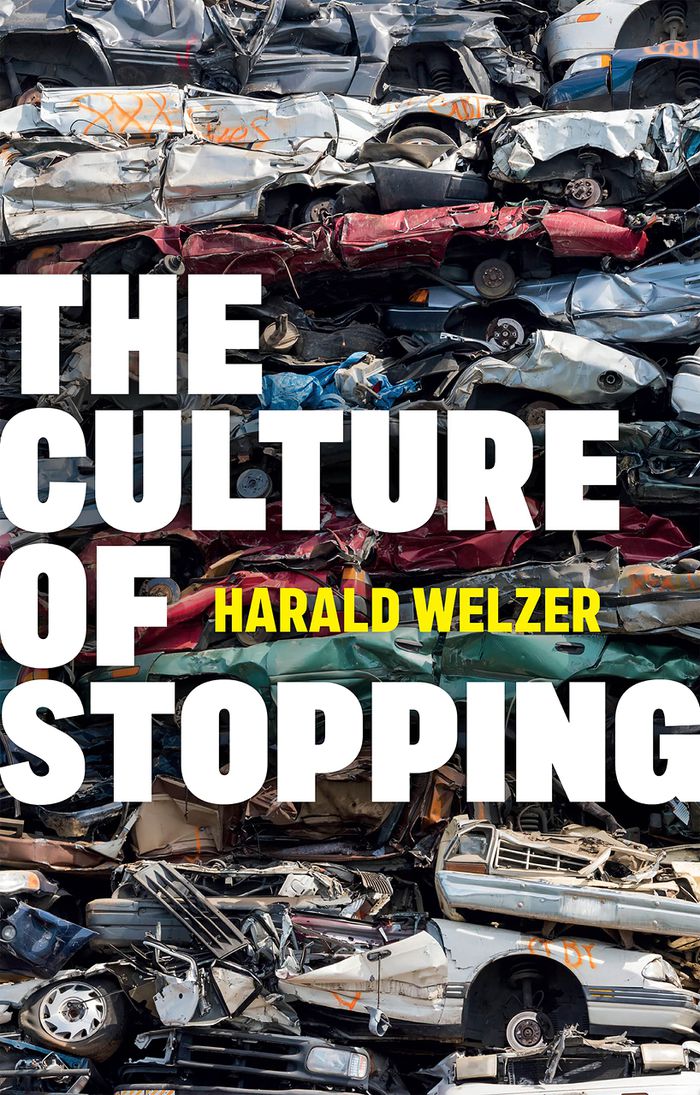
The culture of stopping: obituary to myself
Actions:
Prix:
$30.00
(disponible sur commande)
Résumé:
Our culture has no concept of stopping. We continue to build motorways and airports for a future in which cars and planes may no longer exist. We’re converting our planet from a natural one to an artificial one in which the quantity of man-made objects – houses, asphalt, cars, plastic, computers and so on – now exceeds the totality of living matter. And while biomass continues to decline due to deforestation and species extinction, the mass of man-made objects is growing faster than ever. We’re on a treadmill to disaster. To get off this treadmill, argues Harald Welzer, we need to learn how to stop: as individuals and as societies, we need to stop doing what we’re doing and say ‘enough’. We find it hard to do this because our culture has trained us to regard endless escalation as desirable, and we’re reluctant to surrender the material benefits of growth. But as long as the expansive cultural model continues to prevail, there will be no change of course in favour of sustainable and climate-friendly practices and lifestyles. We need a cultural model in which the beauty of stopping is given the recognition needed for the project of civilization to continue. Optimizing processes that are heading in the wrong direction only makes matters worse.
The culture of stopping: obituary to myself
Actions:
Prix:
$30.00
(disponible sur commande)
Résumé:
Our culture has no concept of stopping. We continue to build motorways and airports for a future in which cars and planes may no longer exist. We’re converting our planet from a natural one to an artificial one in which the quantity of man-made objects – houses, asphalt, cars, plastic, computers and so on – now exceeds the totality of living matter. And while biomass continues to decline due to deforestation and species extinction, the mass of man-made objects is growing faster than ever. We’re on a treadmill to disaster. To get off this treadmill, argues Harald Welzer, we need to learn how to stop: as individuals and as societies, we need to stop doing what we’re doing and say ‘enough’. We find it hard to do this because our culture has trained us to regard endless escalation as desirable, and we’re reluctant to surrender the material benefits of growth. But as long as the expansive cultural model continues to prevail, there will be no change of course in favour of sustainable and climate-friendly practices and lifestyles. We need a cultural model in which the beauty of stopping is given the recognition needed for the project of civilization to continue. Optimizing processes that are heading in the wrong direction only makes matters worse.
Classification:
livres
livres
Publication:
août 2023
août 2023
Sujet:
Social
Social
Classification:
livres
livres
Actions:
Prix:
$40.00
(disponible sur commande)
Résumé:
The crackling of a campfire. The scratch, hiss, and pop of a vinyl record. The first glug of wine as it is poured from a bottle. These are just a few of writer Caspar Henderson’s favorite sounds. In ''A book of noises,'' Henderson invites readers to use their ears a little better—to tune in to the world in all its surprising noisiness. Describing sounds from around(...)
$40.00
(disponible sur commande)
Résumé:
The crackling of a campfire. The scratch, hiss, and pop of a vinyl record. The first glug of wine as it is poured from a bottle. These are just a few of writer Caspar Henderson’s favorite sounds. In ''A book of noises,'' Henderson invites readers to use their ears a little better—to tune in to the world in all its surprising noisiness. Describing sounds from around(...)
Titre:
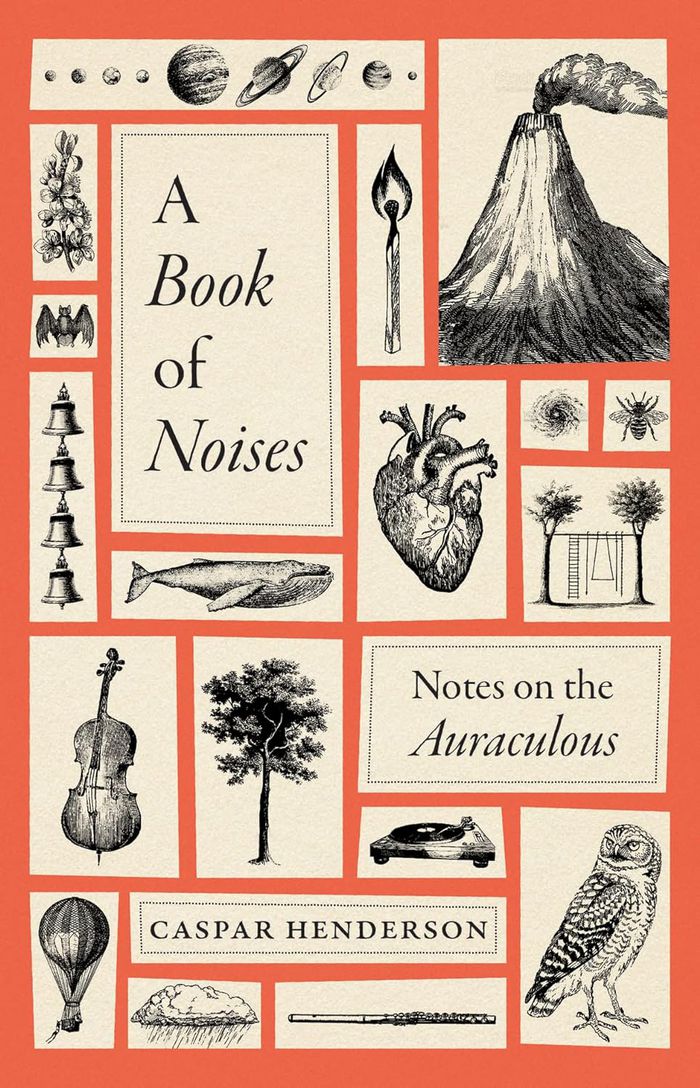
A book of noises: Notes on the auraculous
Actions:
Prix:
$40.00
(disponible sur commande)
Résumé:
The crackling of a campfire. The scratch, hiss, and pop of a vinyl record. The first glug of wine as it is poured from a bottle. These are just a few of writer Caspar Henderson’s favorite sounds. In ''A book of noises,'' Henderson invites readers to use their ears a little better—to tune in to the world in all its surprising noisiness. Describing sounds from around the natural and human world, the forty-eight essays that make up A Book of Noises are a celebration of all things ''auraculous.'' Henderson calls on his characteristic curiosity to explore sounds related to humans (anthropophony), other life (biophony), the planet (geophony), and space (cosmophony). Henderson finds the beauty in everyday sounds, like the ringing of a bell, the buzz of a bee, or the ''earworm'' songs that get stuck in our heads.''A book of noises'' also explores the marvelous, miraculous sounds we may never get the chance to hear, like the deep boom of a volcano or the quiet, rustling sound of the Northern Lights. ''A book of noises'' will teach readers to really listen to the sounds of the world around them, to broaden and deepen their appreciation of the humans, animals, rocks, and trees simultaneously broadcasting across the whole spectrum of sentience.
A book of noises: Notes on the auraculous
Actions:
Prix:
$40.00
(disponible sur commande)
Résumé:
The crackling of a campfire. The scratch, hiss, and pop of a vinyl record. The first glug of wine as it is poured from a bottle. These are just a few of writer Caspar Henderson’s favorite sounds. In ''A book of noises,'' Henderson invites readers to use their ears a little better—to tune in to the world in all its surprising noisiness. Describing sounds from around the natural and human world, the forty-eight essays that make up A Book of Noises are a celebration of all things ''auraculous.'' Henderson calls on his characteristic curiosity to explore sounds related to humans (anthropophony), other life (biophony), the planet (geophony), and space (cosmophony). Henderson finds the beauty in everyday sounds, like the ringing of a bell, the buzz of a bee, or the ''earworm'' songs that get stuck in our heads.''A book of noises'' also explores the marvelous, miraculous sounds we may never get the chance to hear, like the deep boom of a volcano or the quiet, rustling sound of the Northern Lights. ''A book of noises'' will teach readers to really listen to the sounds of the world around them, to broaden and deepen their appreciation of the humans, animals, rocks, and trees simultaneously broadcasting across the whole spectrum of sentience.
Classification:
livres
livres
Publication:
novembre 2023
novembre 2023
Sujet:
Acoustique
Acoustique
Classification:
livres
livres
Actions:
Prix:
$54.00
(disponible en magasin)
Résumé:
To think through soil is to engage with some of the most critical issues of our time. In addition to its agricultural role in feeding eight billion people, soil has become the primary agent of carbon storage in global climate models, and it is crucial for biodiversity, flood control, and freshwater resources. Perhaps no other material is asked to do so much for the human(...)
$54.00
(disponible en magasin)
Résumé:
To think through soil is to engage with some of the most critical issues of our time. In addition to its agricultural role in feeding eight billion people, soil has become the primary agent of carbon storage in global climate models, and it is crucial for biodiversity, flood control, and freshwater resources. Perhaps no other material is asked to do so much for the human(...)
Sujet:
L'écologie de l'architecure
L'écologie de l'architecure
Publication:
juin 2025
juin 2025
Titre:
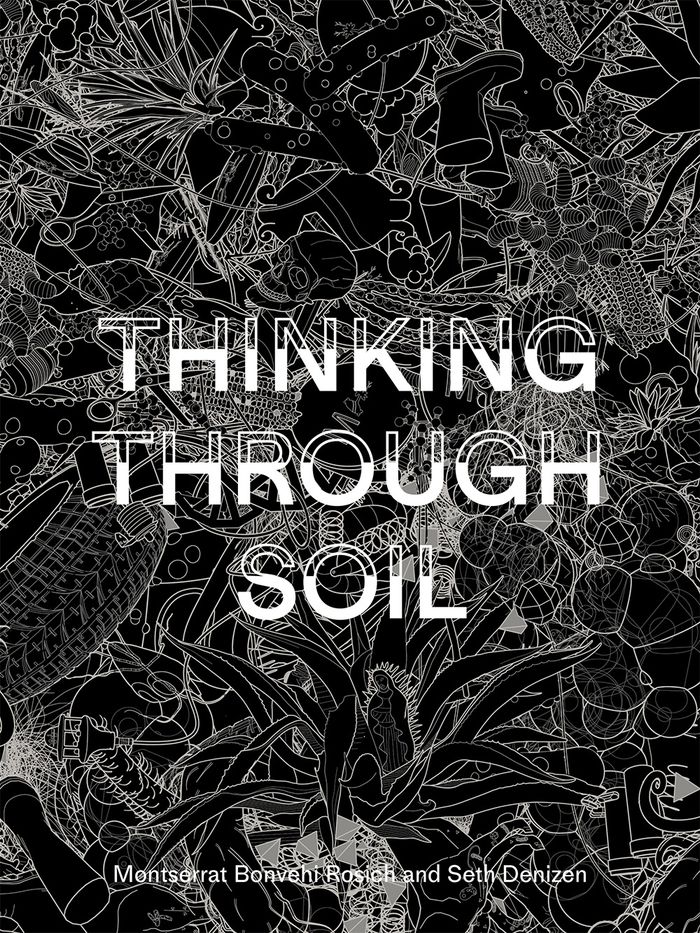
Thinking through soil: Wastewater agriculture in the Mezquital Valley
Actions:
Prix:
$54.00
(disponible en magasin)
Résumé:
To think through soil is to engage with some of the most critical issues of our time. In addition to its agricultural role in feeding eight billion people, soil has become the primary agent of carbon storage in global climate models, and it is crucial for biodiversity, flood control, and freshwater resources. Perhaps no other material is asked to do so much for the human environment, and yet our basic conceptual model of what soil is and how it works remains surprisingly vague. In cities, soil occupies a blurry category whose boundaries are both empirically uncertain and politically contested. Soil functions as a nexus for environmental processes through which the planet’s most fundamental material transformations occur, but conjuring what it actually is serves as a useful exercise in reframing environmental thought, design thinking, and city and regional planning toward a healthier, more ethical, and more sustainable future. Through a sustained analysis of the world’s largest wastewater agricultural system, located in the Mexico City–Mezquital hydrological region, ''Thinking Through Soil'' imagines what a better environmental future might look like in central Mexico. More broadly, this case study offers a new image of soil that captures its shifting identity, explains its profound importance to rural and urban life, and argues for its capacity to save our planet.
Thinking through soil: Wastewater agriculture in the Mezquital Valley
Actions:
Prix:
$54.00
(disponible en magasin)
Résumé:
To think through soil is to engage with some of the most critical issues of our time. In addition to its agricultural role in feeding eight billion people, soil has become the primary agent of carbon storage in global climate models, and it is crucial for biodiversity, flood control, and freshwater resources. Perhaps no other material is asked to do so much for the human environment, and yet our basic conceptual model of what soil is and how it works remains surprisingly vague. In cities, soil occupies a blurry category whose boundaries are both empirically uncertain and politically contested. Soil functions as a nexus for environmental processes through which the planet’s most fundamental material transformations occur, but conjuring what it actually is serves as a useful exercise in reframing environmental thought, design thinking, and city and regional planning toward a healthier, more ethical, and more sustainable future. Through a sustained analysis of the world’s largest wastewater agricultural system, located in the Mexico City–Mezquital hydrological region, ''Thinking Through Soil'' imagines what a better environmental future might look like in central Mexico. More broadly, this case study offers a new image of soil that captures its shifting identity, explains its profound importance to rural and urban life, and argues for its capacity to save our planet.
Classification:
livres
livres
Publication:
juin 2025
juin 2025
Sujet:
L'écologie de l'architecure
L'écologie de l'architecure
Classification:
livres
livres
Actions:
Prix:
$47.95
(disponible sur commande)
Résumé:
Plastiglomerates, surveillance robot dogs, fordite, artificial grass, antenna trees, COVID-19, decapitated mountains, drone-fighting eagles, standardized bananas: all of these specimens—some more familiar than others—are examples of the hybridity that shapes the current landscapes of science, technology and everyday life. Inspired by medieval bestiaries and the(...)
$47.95
(disponible sur commande)
Résumé:
Plastiglomerates, surveillance robot dogs, fordite, artificial grass, antenna trees, COVID-19, decapitated mountains, drone-fighting eagles, standardized bananas: all of these specimens—some more familiar than others—are examples of the hybridity that shapes the current landscapes of science, technology and everyday life. Inspired by medieval bestiaries and the(...)
Titre:
A bestiary of the Anthropocene. Hybrid plants, animals, minerals, fungi, and other specimens
Actions:
Prix:
$47.95
(disponible sur commande)
Résumé:
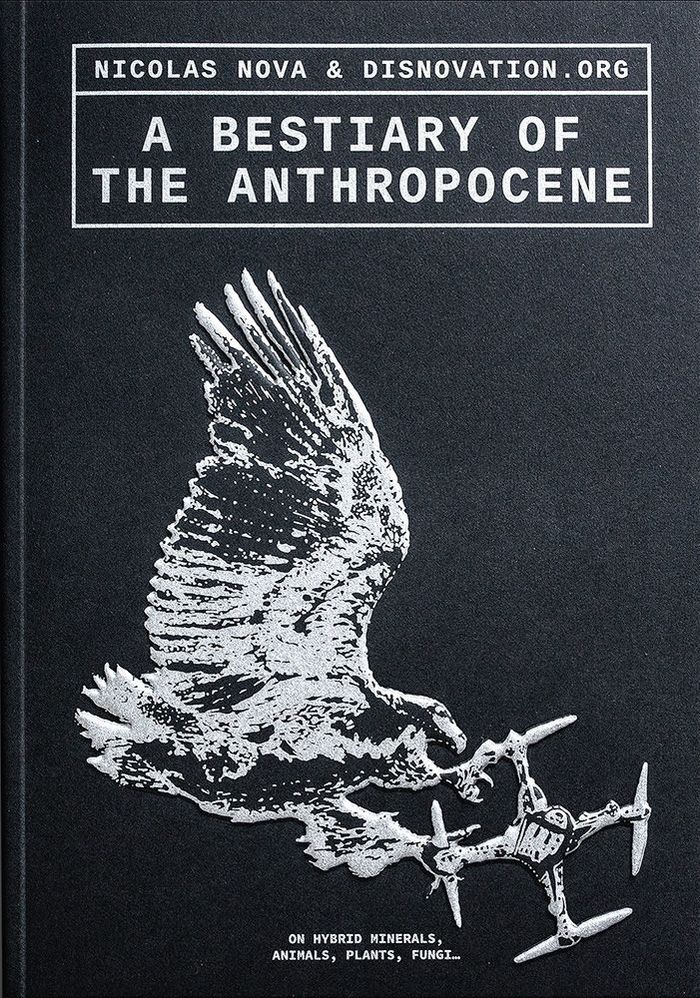
Plastiglomerates, surveillance robot dogs, fordite, artificial grass, antenna trees, COVID-19, decapitated mountains, drone-fighting eagles, standardized bananas: all of these specimens—some more familiar than others—are examples of the hybridity that shapes the current landscapes of science, technology and everyday life. Inspired by medieval bestiaries and the increasingly visible effects of climate change on the planet, French researcher Nicolas Nova & art collective DISNOVATION.ORG provide an ethnographic guide to the ''post-natural'' era in which we live, highlighting the amalgamations of nature and artifice that already co-exist in the 21st century. A sort of field handbook, ''A bestiary of the Anthropocene'' aims to help us orient ourselves within the technosphere and the biosphere. What happens when technologies and their unintended consequences become so ubiquitous that it is difficult to define what is “natural” or not? What does it mean to live in a hybrid environment made of organic and synthetic matter? In order to answer such questions, Nova & DISNOVATION.ORG bring their own research together with contributions from collectives such as the Center for Genomic Gastronomy and Aliens in Green as well as text by scholars and researchers from around the world. Polish graphic designer Maria Roszkowska provides illustrations.
A bestiary of the Anthropocene. Hybrid plants, animals, minerals, fungi, and other specimens
Actions:
Prix:
$47.95
(disponible sur commande)
Résumé:
Plastiglomerates, surveillance robot dogs, fordite, artificial grass, antenna trees, COVID-19, decapitated mountains, drone-fighting eagles, standardized bananas: all of these specimens—some more familiar than others—are examples of the hybridity that shapes the current landscapes of science, technology and everyday life. Inspired by medieval bestiaries and the increasingly visible effects of climate change on the planet, French researcher Nicolas Nova & art collective DISNOVATION.ORG provide an ethnographic guide to the ''post-natural'' era in which we live, highlighting the amalgamations of nature and artifice that already co-exist in the 21st century. A sort of field handbook, ''A bestiary of the Anthropocene'' aims to help us orient ourselves within the technosphere and the biosphere. What happens when technologies and their unintended consequences become so ubiquitous that it is difficult to define what is “natural” or not? What does it mean to live in a hybrid environment made of organic and synthetic matter? In order to answer such questions, Nova & DISNOVATION.ORG bring their own research together with contributions from collectives such as the Center for Genomic Gastronomy and Aliens in Green as well as text by scholars and researchers from around the world. Polish graphic designer Maria Roszkowska provides illustrations.
Classification:
livres
livres
Publication:
mai 2021
mai 2021
Classification:
livres
livres
Actions:
Prix:
$36.95
(disponible sur commande)
Résumé:
''Cultures of contagion'' recounts episodes in the history of contagions, from ancient times to the twenty-first century. It considers contagion not only in the medical sense but also as a process, a metaphor, and an interpretive model–as a term that describes not only the transmission of a virus but also the propagation of a phenomenon. The authors describe a wide range(...)
$36.95
(disponible sur commande)
Résumé:
''Cultures of contagion'' recounts episodes in the history of contagions, from ancient times to the twenty-first century. It considers contagion not only in the medical sense but also as a process, a metaphor, and an interpretive model–as a term that describes not only the transmission of a virus but also the propagation of a phenomenon. The authors describe a wide range(...)
Titre:
Cultures of contagion: A glossary
Actions:
Prix:
$36.95
(disponible sur commande)
Résumé:
''Cultures of contagion'' recounts episodes in the history of contagions, from ancient times to the twenty-first century. It considers contagion not only in the medical sense but also as a process, a metaphor, and an interpretive model–as a term that describes not only the transmission of a virus but also the propagation of a phenomenon. The authors describe a wide range of social, cultural, political, and anthropological instances through the prism of contagion–from anti-Semitism to migration, from the nuclear contamination of the planet to the violence of Mao’s Red Guard. The book proceeds glossary style, with a series of short texts arranged alphabetically, beginning with an entry on aluminum and ''environmental contagion'' and ending with a discussion of writing and ''textual resemblance'' caused by influence, imitation, borrowing, and plagiarism. The authors–leading scholars associated with the Center for Historical Research (CRH, Centre de recherches historiques), Paris–consider such topics as the connection between contagion and suggestion, ''waltzmania'' in post-Terror Paris, the effect of reading on sensitive imaginations, and the contagiousness of yawning. They take two distinct approaches: either examining contagion and what it signified contemporaneously, or deploying contagion as an interpretive tool. Both perspectives illuminate unexpected connections, unnoticed configurations, and invisible interactions.
Cultures of contagion: A glossary
Actions:
Prix:
$36.95
(disponible sur commande)
Résumé:
''Cultures of contagion'' recounts episodes in the history of contagions, from ancient times to the twenty-first century. It considers contagion not only in the medical sense but also as a process, a metaphor, and an interpretive model–as a term that describes not only the transmission of a virus but also the propagation of a phenomenon. The authors describe a wide range of social, cultural, political, and anthropological instances through the prism of contagion–from anti-Semitism to migration, from the nuclear contamination of the planet to the violence of Mao’s Red Guard. The book proceeds glossary style, with a series of short texts arranged alphabetically, beginning with an entry on aluminum and ''environmental contagion'' and ending with a discussion of writing and ''textual resemblance'' caused by influence, imitation, borrowing, and plagiarism. The authors–leading scholars associated with the Center for Historical Research (CRH, Centre de recherches historiques), Paris–consider such topics as the connection between contagion and suggestion, ''waltzmania'' in post-Terror Paris, the effect of reading on sensitive imaginations, and the contagiousness of yawning. They take two distinct approaches: either examining contagion and what it signified contemporaneously, or deploying contagion as an interpretive tool. Both perspectives illuminate unexpected connections, unnoticed configurations, and invisible interactions.
Classification:
livres
livres
Publication:
octobre 2021
octobre 2021
Sujet:
Social
Social
Classification:
livres
livres
Prix:
$24.95
(disponible sur commande)
Résumé:
During the two hundred millennia we've been on the planet, nothing has shaped us more profoundly than the city. In a fascinating narrative that ranges through cities famous and forgotten, acclaimed historian Ben Wilson tells the glorious story of how urban living has allowed human culture to flourish. Beginning with Uruk, the world's first city, he shows that cities(...)
$24.95
(disponible sur commande)
Résumé:
During the two hundred millennia we've been on the planet, nothing has shaped us more profoundly than the city. In a fascinating narrative that ranges through cities famous and forgotten, acclaimed historian Ben Wilson tells the glorious story of how urban living has allowed human culture to flourish. Beginning with Uruk, the world's first city, he shows that cities(...)
Titre:
Metropolis: a history of the city, mankind's greatest invention
Actions:
Prix:
$24.95
(disponible sur commande)
Résumé:
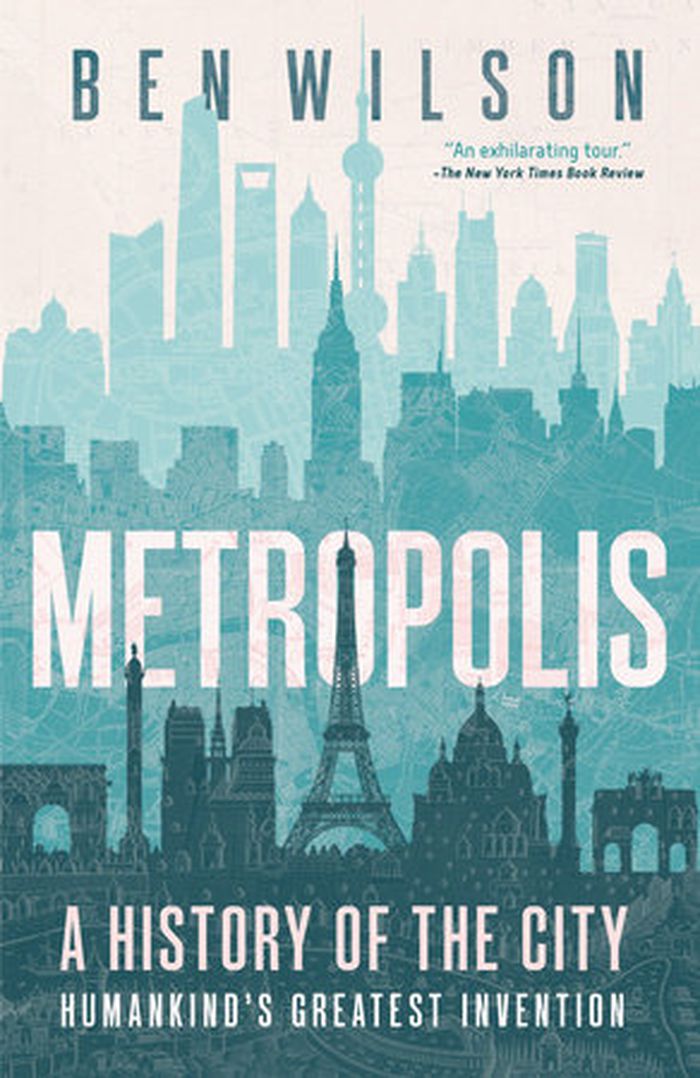
During the two hundred millennia we've been on the planet, nothing has shaped us more profoundly than the city. In a fascinating narrative that ranges through cities famous and forgotten, acclaimed historian Ben Wilson tells the glorious story of how urban living has allowed human culture to flourish. Beginning with Uruk, the world's first city, he shows that cities created such a blossoming of human endeavor--new professions, new forms of art, worship, and trade--that they kick-started civilization itself. Despite outbreaks of plague and war, and outlasting empires, the city endured and new cities sprang up to capture the inimitable energy of human beings together. Wilson reveals the innovations nurturned amid the density of urban centers over the centuries: civics in the agora of Athens, global trade in ninth-century Baghdad, finance in the coffeehouses of London, domestic comforts in the heart of Amsterdam, peacocking in Belle Epoque Paris. In the modern age, the skyscrapers of New York City inspired utopian visions of community design, while the trees of twenty-first-century Seattle and Shanghai point to a sustainable future in the age of climate change. Page turning and irresistible, ''Metropolis'' is a history of cities that is also a history of how humanity lives.
Metropolis: a history of the city, mankind's greatest invention
Actions:
Prix:
$24.95
(disponible sur commande)
Résumé:
During the two hundred millennia we've been on the planet, nothing has shaped us more profoundly than the city. In a fascinating narrative that ranges through cities famous and forgotten, acclaimed historian Ben Wilson tells the glorious story of how urban living has allowed human culture to flourish. Beginning with Uruk, the world's first city, he shows that cities created such a blossoming of human endeavor--new professions, new forms of art, worship, and trade--that they kick-started civilization itself. Despite outbreaks of plague and war, and outlasting empires, the city endured and new cities sprang up to capture the inimitable energy of human beings together. Wilson reveals the innovations nurturned amid the density of urban centers over the centuries: civics in the agora of Athens, global trade in ninth-century Baghdad, finance in the coffeehouses of London, domestic comforts in the heart of Amsterdam, peacocking in Belle Epoque Paris. In the modern age, the skyscrapers of New York City inspired utopian visions of community design, while the trees of twenty-first-century Seattle and Shanghai point to a sustainable future in the age of climate change. Page turning and irresistible, ''Metropolis'' is a history of cities that is also a history of how humanity lives.
Classification:
livres
livres
Publication:
octobre 2021
octobre 2021
Sujet:
Théorie de l’urbanisme
Théorie de l’urbanisme
Classification:
livres
livres
Actions:
Exemplaires:
Description:
223 pages ; 21 cm.
Description:
223 pages ; 21 cm.
Sujet:
Publication:
Vincennes (Val-de-Marne) : Éditions Terre urbaine, [2023]
Vincennes (Val-de-Marne) : Éditions Terre urbaine, [2023]
Titre:
Territoires submergés : quelles adaptations aux risques côtiers ? / Alexandre K. Magnan, Margot Liebel, Catherine Meur-Ferec, Anne-Solange Muis, Antoine Petitjean, Laurent Pinon.
Actions:
Exemplaires:
Description:
223 pages ; 21 cm.
Territoires submergés : quelles adaptations aux risques côtiers ? / Alexandre K. Magnan, Margot Liebel, Catherine Meur-Ferec, Anne-Solange Muis, Antoine Petitjean, Laurent Pinon.
Actions:
Exemplaires:
Description:
223 pages ; 21 cm.
Classification:
livres
livres
Publication:
Vincennes (Val-de-Marne) : Éditions Terre urbaine, [2023]
Vincennes (Val-de-Marne) : Éditions Terre urbaine, [2023]
Sujet:
Classification:
livres
livres
Titre:
Tools n° 05 : To Spin
Tools n° 05 : To Spin
Actions:
Prix:
$49.95
(disponible en magasin)
Résumé:
Le cinquième numéro de la revue annuelle qui s'attache à valoriser les savoir-faire et la technique dans le design, l'artisanat ou l'industrie, se penche sur le geste de tourner. Le monde tourne, et avec lui, tout ce qui est à sa surface : vous, moi, les arbres, la mer, les montagnes. On a beau se bercer de l'illusion que tout est immobile, la réalité, c'est qu'on est(...)
$49.95
(disponible en magasin)
Résumé:
Le cinquième numéro de la revue annuelle qui s'attache à valoriser les savoir-faire et la technique dans le design, l'artisanat ou l'industrie, se penche sur le geste de tourner. Le monde tourne, et avec lui, tout ce qui est à sa surface : vous, moi, les arbres, la mer, les montagnes. On a beau se bercer de l'illusion que tout est immobile, la réalité, c'est qu'on est(...)
Titre:
Tools n° 05 : To Spin
Actions:
Prix:
$49.95
(disponible en magasin)
Résumé:
Le cinquième numéro de la revue annuelle qui s'attache à valoriser les savoir-faire et la technique dans le design, l'artisanat ou l'industrie, se penche sur le geste de tourner. Le monde tourne, et avec lui, tout ce qui est à sa surface : vous, moi, les arbres, la mer, les montagnes. On a beau se bercer de l'illusion que tout est immobile, la réalité, c'est qu'on est perpétuellement en mouvement. La planète fait des tours sur elle-même, elle tourne autour du soleil, et nous, là, au moment où je vous parle, on est en quelque sorte le produit de cette rotation : c'est grâce au cycle des jours, des saisons et des années que notre planète offre les conditions favorables à la vie. / The fifth issue of the annual magazine that promotes know-how and technique in design, craft or industry looks at the act of spinning. The world is spinning, and so is everything on it: you and me, the trees, the oceans, and the mountains. We may have deluded ourselves into thinking everything is stationary, but the reality is that we're perpetually in motion. The planet is spinning around its axis and orbiting around the sun, and in a way, at this very moment, we are all products of rotation: life on Earth is only possible because of the cycles of days, seasons, and years.
Tools n° 05 : To Spin
Actions:
Prix:
$49.95
(disponible en magasin)
Résumé:
Le cinquième numéro de la revue annuelle qui s'attache à valoriser les savoir-faire et la technique dans le design, l'artisanat ou l'industrie, se penche sur le geste de tourner. Le monde tourne, et avec lui, tout ce qui est à sa surface : vous, moi, les arbres, la mer, les montagnes. On a beau se bercer de l'illusion que tout est immobile, la réalité, c'est qu'on est perpétuellement en mouvement. La planète fait des tours sur elle-même, elle tourne autour du soleil, et nous, là, au moment où je vous parle, on est en quelque sorte le produit de cette rotation : c'est grâce au cycle des jours, des saisons et des années que notre planète offre les conditions favorables à la vie. / The fifth issue of the annual magazine that promotes know-how and technique in design, craft or industry looks at the act of spinning. The world is spinning, and so is everything on it: you and me, the trees, the oceans, and the mountains. We may have deluded ourselves into thinking everything is stationary, but the reality is that we're perpetually in motion. The planet is spinning around its axis and orbiting around the sun, and in a way, at this very moment, we are all products of rotation: life on Earth is only possible because of the cycles of days, seasons, and years.
Classification:
livres
livres
Publication:
février 2025
février 2025
Sujet:
Revues
Revues


