


10592 Résultats
Classification:
livres
livres

Titre:
The comfort of things
The comfort of things
Actions:
Prix:
$23.95
(disponible sur commande)
Résumé:
This book visits an ordinary street and looks into thirty households. It reveals the aspirations and frustrations, the tragedies and accomplishments that are played out behind the doors. It focuses on the things that matter to these people, which quite often turn out to be material things -- their house, the dog, their music, the Christmas decorations. The Comfort of(...)
$23.95
(disponible sur commande)
Résumé:
This book visits an ordinary street and looks into thirty households. It reveals the aspirations and frustrations, the tragedies and accomplishments that are played out behind the doors. It focuses on the things that matter to these people, which quite often turn out to be material things -- their house, the dog, their music, the Christmas decorations. The Comfort of(...)
Titre:
The comfort of things
Actions:
Prix:
$23.95
(disponible sur commande)
Résumé:
This book visits an ordinary street and looks into thirty households. It reveals the aspirations and frustrations, the tragedies and accomplishments that are played out behind the doors. It focuses on the things that matter to these people, which quite often turn out to be material things -- their house, the dog, their music, the Christmas decorations. The Comfort of Things shows how much is to be gained when we stop lamenting what we think we used to be and focus instead on what we are now becoming. It reveals the forms by which ordinary people make sense of their lives, and the ways in which objects become our companions in the daily struggle to make life meaningful.
The comfort of things
Actions:
Prix:
$23.95
(disponible sur commande)
Résumé:
This book visits an ordinary street and looks into thirty households. It reveals the aspirations and frustrations, the tragedies and accomplishments that are played out behind the doors. It focuses on the things that matter to these people, which quite often turn out to be material things -- their house, the dog, their music, the Christmas decorations. The Comfort of Things shows how much is to be gained when we stop lamenting what we think we used to be and focus instead on what we are now becoming. It reveals the forms by which ordinary people make sense of their lives, and the ways in which objects become our companions in the daily struggle to make life meaningful.
Classification:
livres
livres
Publication:
septembre 2009
septembre 2009
Sujet:
Théorie du design
Théorie du design
Classification:
livres
livres
Titre:
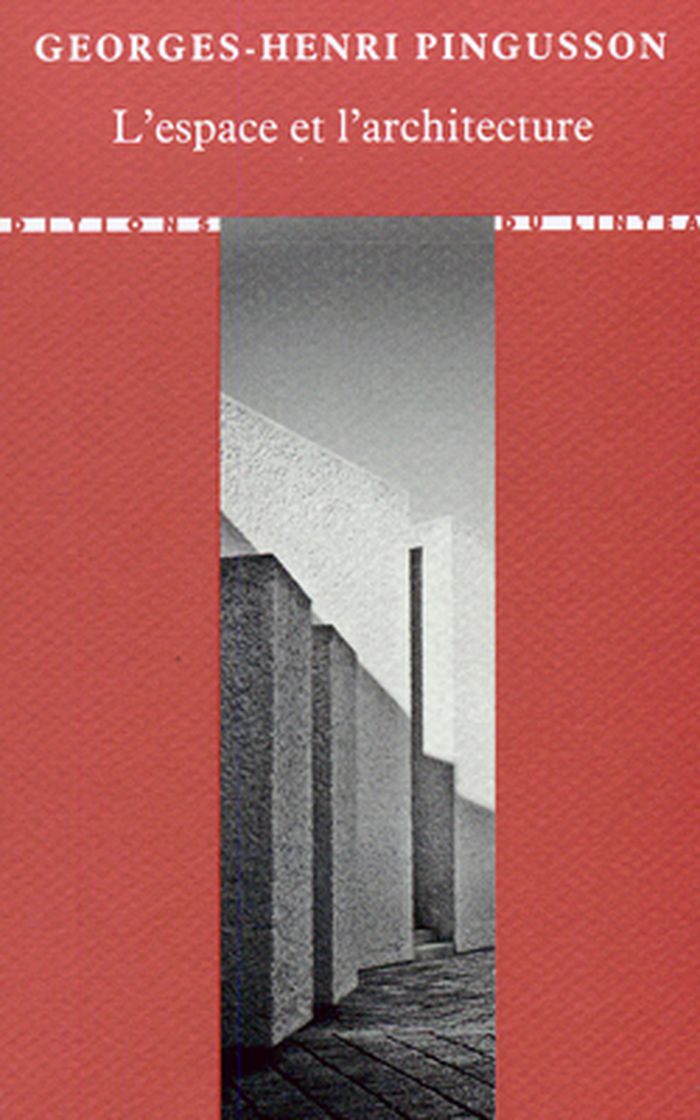
L'espace et l'architecture
L'espace et l'architecture
Actions:
Prix:
$57.95
(disponible sur commande)
Résumé:
Cette réflexion sur l’espace est l’aboutissement d’une longue carrière. Elle est destinée à tous ceux qui s’intéressent à l’architecture, étudiants, professionnels, profanes aussi bien. C’est toute une culture humaniste que l’architecte propose, destinée d’abord à la construction quotidienne de soi-même.
$57.95
(disponible sur commande)
Résumé:
Cette réflexion sur l’espace est l’aboutissement d’une longue carrière. Elle est destinée à tous ceux qui s’intéressent à l’architecture, étudiants, professionnels, profanes aussi bien. C’est toute une culture humaniste que l’architecte propose, destinée d’abord à la construction quotidienne de soi-même.
Titre:
L'espace et l'architecture
Actions:
Prix:
$57.95
(disponible sur commande)
Résumé:
Cette réflexion sur l’espace est l’aboutissement d’une longue carrière. Elle est destinée à tous ceux qui s’intéressent à l’architecture, étudiants, professionnels, profanes aussi bien. C’est toute une culture humaniste que l’architecte propose, destinée d’abord à la construction quotidienne de soi-même.
L'espace et l'architecture
Actions:
Prix:
$57.95
(disponible sur commande)
Résumé:
Cette réflexion sur l’espace est l’aboutissement d’une longue carrière. Elle est destinée à tous ceux qui s’intéressent à l’architecture, étudiants, professionnels, profanes aussi bien. C’est toute une culture humaniste que l’architecte propose, destinée d’abord à la construction quotidienne de soi-même.
Classification:
livres
livres
Publication:
avril 2010
avril 2010
Sujet:
Théorie de l’architecture
Théorie de l’architecture
Classification:
livres
livres
Actions:
Prix:
$42.50
(disponible sur commande)
Résumé:
Bringing together leading researchers from geography, political science, sociology, public policy and technology studies, this publication exposes the politics of well-known disruptions such as devastation of New Orleans in 2005, the global SARS outbreak in 2002-3, and the great power collapse in the North Eastern US in 2003. But the book also excavates the politics of(...)
$42.50
(disponible sur commande)
Résumé:
Bringing together leading researchers from geography, political science, sociology, public policy and technology studies, this publication exposes the politics of well-known disruptions such as devastation of New Orleans in 2005, the global SARS outbreak in 2002-3, and the great power collapse in the North Eastern US in 2003. But the book also excavates the politics of(...)
Titre:
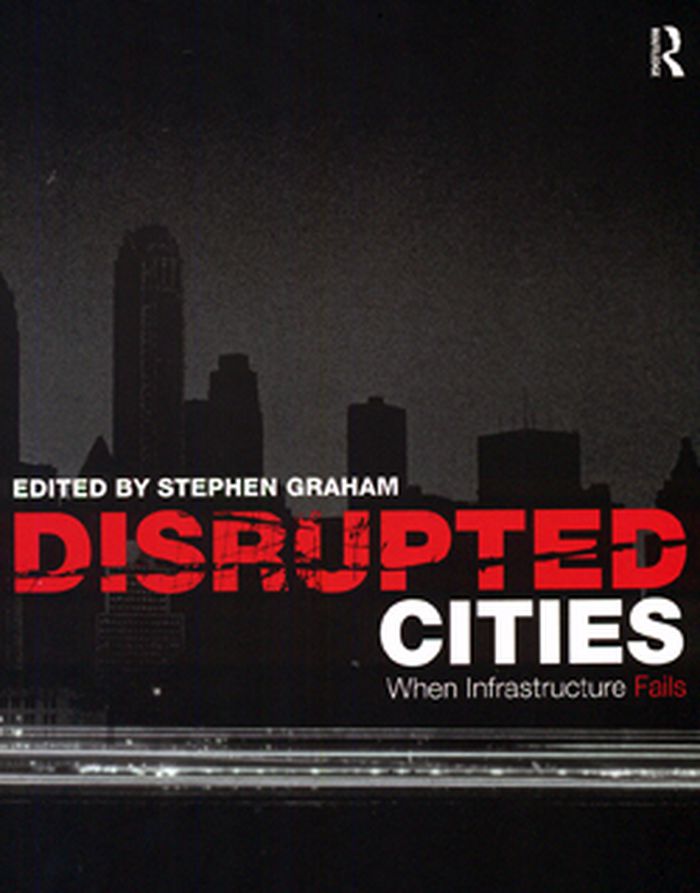
Disrupted cities : when infrastructure fails
Actions:
Prix:
$42.50
(disponible sur commande)
Résumé:
Bringing together leading researchers from geography, political science, sociology, public policy and technology studies, this publication exposes the politics of well-known disruptions such as devastation of New Orleans in 2005, the global SARS outbreak in 2002-3, and the great power collapse in the North Eastern US in 2003. But the book also excavates the politics of more hidden disruptions : the clogging of city sewers with fat; the day-to-day infrastructural collapses which dominate urban life in much of the global south; the deliberate devastation of urban infrastructure by state militaries; and the ways in which alleged threats of infrastructural disruption have been used to radically reorganise cities as part of the ‘war on terror’.
Disrupted cities : when infrastructure fails
Actions:
Prix:
$42.50
(disponible sur commande)
Résumé:
Bringing together leading researchers from geography, political science, sociology, public policy and technology studies, this publication exposes the politics of well-known disruptions such as devastation of New Orleans in 2005, the global SARS outbreak in 2002-3, and the great power collapse in the North Eastern US in 2003. But the book also excavates the politics of more hidden disruptions : the clogging of city sewers with fat; the day-to-day infrastructural collapses which dominate urban life in much of the global south; the deliberate devastation of urban infrastructure by state militaries; and the ways in which alleged threats of infrastructural disruption have been used to radically reorganise cities as part of the ‘war on terror’.
Classification:
livres
livres
Publication:
octobre 2009
octobre 2009
Sujet:
Théorie de l’urbanisme
Théorie de l’urbanisme
Classification:
livres
livres
Titre:
e-flux journal : reader 2009
e-flux journal : reader 2009
Actions:
Prix:
$18.95
(disponible sur commande)
Résumé:
Since conceptualism, the field of art has become increasingly accustomed to playing host to its own critique, and recent decades have found institutions engaged in self-critique as if by mandate. Important notions of legibility, autonomy, and critical engagement that were once necessary to carve out a space for a critic or critical art publication have transposed(...)
$18.95
(disponible sur commande)
Résumé:
Since conceptualism, the field of art has become increasingly accustomed to playing host to its own critique, and recent decades have found institutions engaged in self-critique as if by mandate. Important notions of legibility, autonomy, and critical engagement that were once necessary to carve out a space for a critic or critical art publication have transposed(...)
Titre:
e-flux journal : reader 2009
Actions:
Prix:
$18.95
(disponible sur commande)
Résumé:
Since conceptualism, the field of art has become increasingly accustomed to playing host to its own critique, and recent decades have found institutions engaged in self-critique as if by mandate. Important notions of legibility, autonomy, and critical engagement that were once necessary to carve out a space for a critic or critical art publication have transposed themselves onto artistic production proper, and are now considered to be of equal importance to artist, curator, institution, and engaged audience member alike. This climate of disciplinary reconfiguration and geographic dispersal has made the art world a highly complex place — the objective position that once defined the role of a critic has been effectively replaced by a need to understand just how large and varied the whole thing has become. The urgent task has now become to engage the new intellectual territories in a way that can revitalize the critical vocabulary of contemporary art. Perhaps the most productive way of doing this is through a fresh approach to the function of an art journal as something that situates the multitude of what is currently available, and makes that available back to the multitude. The selection of essays included in this book seeks to highlight an ongoing topical thread that ran throughout the first eight issues of e-flux journal — a sequence of overlapping concerns passed on from one contribution to the next.
e-flux journal : reader 2009
Actions:
Prix:
$18.95
(disponible sur commande)
Résumé:
Since conceptualism, the field of art has become increasingly accustomed to playing host to its own critique, and recent decades have found institutions engaged in self-critique as if by mandate. Important notions of legibility, autonomy, and critical engagement that were once necessary to carve out a space for a critic or critical art publication have transposed themselves onto artistic production proper, and are now considered to be of equal importance to artist, curator, institution, and engaged audience member alike. This climate of disciplinary reconfiguration and geographic dispersal has made the art world a highly complex place — the objective position that once defined the role of a critic has been effectively replaced by a need to understand just how large and varied the whole thing has become. The urgent task has now become to engage the new intellectual territories in a way that can revitalize the critical vocabulary of contemporary art. Perhaps the most productive way of doing this is through a fresh approach to the function of an art journal as something that situates the multitude of what is currently available, and makes that available back to the multitude. The selection of essays included in this book seeks to highlight an ongoing topical thread that ran throughout the first eight issues of e-flux journal — a sequence of overlapping concerns passed on from one contribution to the next.
Classification:
livres
livres
Publication:
février 2010
février 2010
Sujet:
Théorie de l’art
Théorie de l’art
Classification:
livres
livres
Titre:
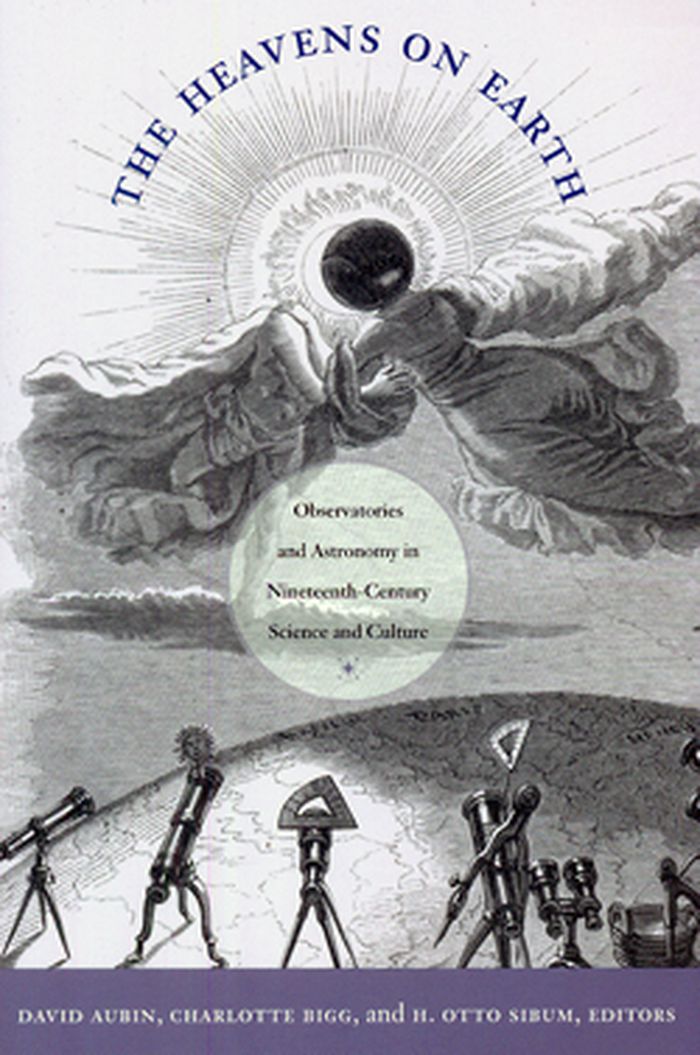
The heavens on earth : observatories and astronomies in nineteeth-century science and culture
The heavens on earth : observatories and astronomies in nineteeth-century science and culture
Actions:
Prix:
$41.50
(disponible sur commande)
Résumé:
This book explores the place of the observatory in nineteenth-century science and culture. Astronomy was a core pursuit for observatories, but usually not the only one. It belonged to a larger group of "observatory sciences" that also included geodesy, meteorology, geomagnetism, and even parts of physics and statistics. These pursuits coexisted in the nineteenth-century(...)
$41.50
(disponible sur commande)
Résumé:
This book explores the place of the observatory in nineteenth-century science and culture. Astronomy was a core pursuit for observatories, but usually not the only one. It belonged to a larger group of "observatory sciences" that also included geodesy, meteorology, geomagnetism, and even parts of physics and statistics. These pursuits coexisted in the nineteenth-century(...)
Sujet:
Théorie de l’architecture
Théorie de l’architecture
Publication:
avril 2010
avril 2010
Titre:
The heavens on earth : observatories and astronomies in nineteeth-century science and culture
Actions:
Prix:
$41.50
(disponible sur commande)
Résumé:
This book explores the place of the observatory in nineteenth-century science and culture. Astronomy was a core pursuit for observatories, but usually not the only one. It belonged to a larger group of "observatory sciences" that also included geodesy, meteorology, geomagnetism, and even parts of physics and statistics. These pursuits coexisted in the nineteenth-century observatory; this collection surveys them as a coherent whole. Broadening the focus beyond the solitary astronomer at his telescope, it illuminates the observatory’s importance to technological, military, political, and colonial undertakings, as well as in advancing and popularizing the mathematical, physical, and cosmological sciences. The contributors examine "observatory techniques" developed and used not only in connection with observatories but also by instrument makers in their workshops, navy officers on ships, civil engineers in the field, and many others. These techniques included the calibration and coordination of precision instruments for making observations and taking measurements; methods of data acquisition and tabulation; and the production of maps, drawings, and photographs, as well as numerical, textual, and visual representations of the heavens and the earth. They also encompassed the social management of personnel within observatories, the coordination of international scientific collaborations, and interactions with dignitaries and the public. The state observatory occupied a particularly privileged place in the life of the city. With their imposing architecture and ancient traditions, state observatories served representative purposes for their patrons, whether as symbols of a monarch’s enlightened power, a nation’s industrial and scientific excellence, or republican progressive values.
The heavens on earth : observatories and astronomies in nineteeth-century science and culture
Actions:
Prix:
$41.50
(disponible sur commande)
Résumé:
This book explores the place of the observatory in nineteenth-century science and culture. Astronomy was a core pursuit for observatories, but usually not the only one. It belonged to a larger group of "observatory sciences" that also included geodesy, meteorology, geomagnetism, and even parts of physics and statistics. These pursuits coexisted in the nineteenth-century observatory; this collection surveys them as a coherent whole. Broadening the focus beyond the solitary astronomer at his telescope, it illuminates the observatory’s importance to technological, military, political, and colonial undertakings, as well as in advancing and popularizing the mathematical, physical, and cosmological sciences. The contributors examine "observatory techniques" developed and used not only in connection with observatories but also by instrument makers in their workshops, navy officers on ships, civil engineers in the field, and many others. These techniques included the calibration and coordination of precision instruments for making observations and taking measurements; methods of data acquisition and tabulation; and the production of maps, drawings, and photographs, as well as numerical, textual, and visual representations of the heavens and the earth. They also encompassed the social management of personnel within observatories, the coordination of international scientific collaborations, and interactions with dignitaries and the public. The state observatory occupied a particularly privileged place in the life of the city. With their imposing architecture and ancient traditions, state observatories served representative purposes for their patrons, whether as symbols of a monarch’s enlightened power, a nation’s industrial and scientific excellence, or republican progressive values.
Classification:
livres
livres
Publication:
avril 2010
avril 2010
Sujet:
Théorie de l’architecture
Théorie de l’architecture
Classification:
livres
livres
Actions:
Prix:
$19.95
(disponible sur commande)
Résumé:
Reveals the untested urban planning that transforms not only our cities, but the nature of public space, of citizenship and of trust. This book argues for an alternative, continental approach that celebrates shared space.
$19.95
(disponible sur commande)
Résumé:
Reveals the untested urban planning that transforms not only our cities, but the nature of public space, of citizenship and of trust. This book argues for an alternative, continental approach that celebrates shared space.
Titre:
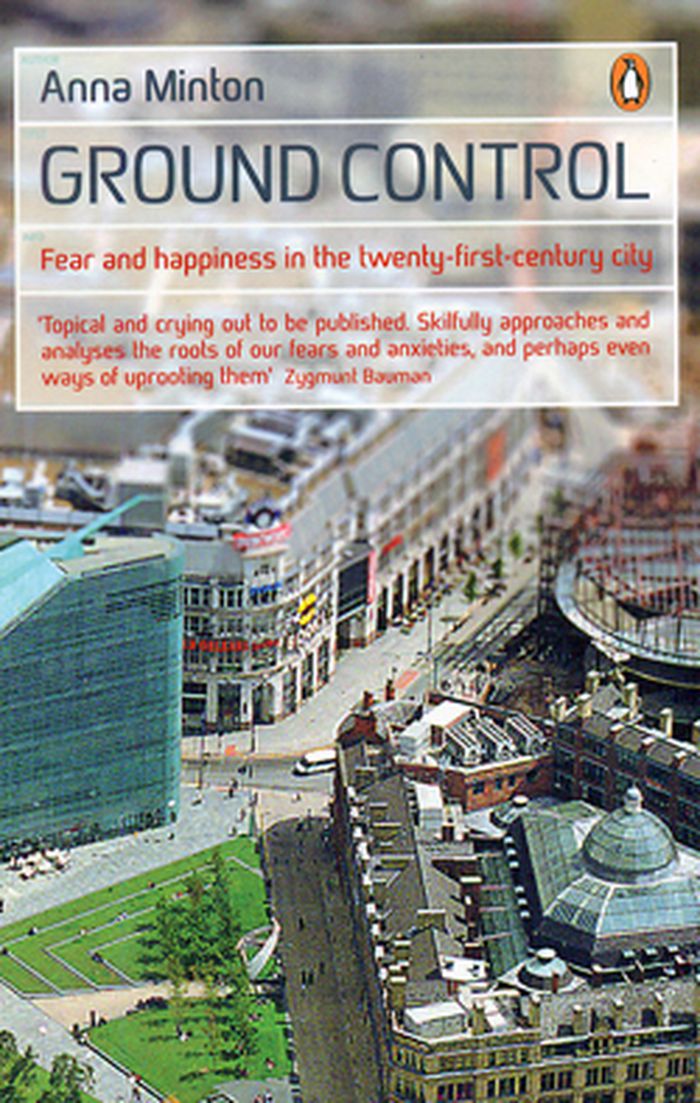
Ground control: fear and happiness in the twenty-first-century city
Actions:
Prix:
$19.95
(disponible sur commande)
Résumé:
Reveals the untested urban planning that transforms not only our cities, but the nature of public space, of citizenship and of trust. This book argues for an alternative, continental approach that celebrates shared space.
Ground control: fear and happiness in the twenty-first-century city
Actions:
Prix:
$19.95
(disponible sur commande)
Résumé:
Reveals the untested urban planning that transforms not only our cities, but the nature of public space, of citizenship and of trust. This book argues for an alternative, continental approach that celebrates shared space.
Classification:
livres
livres
Publication:
juillet 2009
juillet 2009
Sujet:
Théorie de l’urbanisme
Théorie de l’urbanisme
Classification:
livres
livres
Prix:
$29.95
(disponible sur commande)
Résumé:
A revisitation of renowned urbanist-activist Jane Jacobs' lifework, What we see invites thirty practitioners across fields to refresh Jacobs' economic, social and urban planning theories for the present day. Combining personal and professional observations with meditations on Jacobs' insights, essayists bring their diverse experience to bear to sketch the blueprints for(...)
$29.95
(disponible sur commande)
Résumé:
A revisitation of renowned urbanist-activist Jane Jacobs' lifework, What we see invites thirty practitioners across fields to refresh Jacobs' economic, social and urban planning theories for the present day. Combining personal and professional observations with meditations on Jacobs' insights, essayists bring their diverse experience to bear to sketch the blueprints for(...)
Titre:
What we see: Advancing the observations of Jane Jacobs
Actions:
Prix:
$29.95
(disponible sur commande)
Résumé:
A revisitation of renowned urbanist-activist Jane Jacobs' lifework, What we see invites thirty practitioners across fields to refresh Jacobs' economic, social and urban planning theories for the present day. Combining personal and professional observations with meditations on Jacobs' insights, essayists bring their diverse experience to bear to sketch the blueprints for the living city.
What we see: Advancing the observations of Jane Jacobs
Actions:
Prix:
$29.95
(disponible sur commande)
Résumé:
A revisitation of renowned urbanist-activist Jane Jacobs' lifework, What we see invites thirty practitioners across fields to refresh Jacobs' economic, social and urban planning theories for the present day. Combining personal and professional observations with meditations on Jacobs' insights, essayists bring their diverse experience to bear to sketch the blueprints for the living city.
Classification:
livres
livres
Publication:
mai 2010
mai 2010
Sujet:
Théorie de l’urbanisme
Théorie de l’urbanisme
Classification:
livres
livres
Titre:
New city life
New city life
Actions:
Prix:
$69.95
(disponible sur commande)
Résumé:
New City Life tells the story of the gradual development of industrial society's essential city life to the elective city life if a leisure and consumer society. Whereas city life was once a necessity and taken for granted, today it is an option. Based on the comprehensive and detailed study of city life in Copenhagen over the past four decades.
$69.95
(disponible sur commande)
Résumé:
New City Life tells the story of the gradual development of industrial society's essential city life to the elective city life if a leisure and consumer society. Whereas city life was once a necessity and taken for granted, today it is an option. Based on the comprehensive and detailed study of city life in Copenhagen over the past four decades.
Sujet:
Théorie de l’urbanisme
Théorie de l’urbanisme
Publication:
janvier 2006
janvier 2006
Titre:
New city life
Actions:
Prix:
$69.95
(disponible sur commande)
Résumé:
New City Life tells the story of the gradual development of industrial society's essential city life to the elective city life if a leisure and consumer society. Whereas city life was once a necessity and taken for granted, today it is an option. Based on the comprehensive and detailed study of city life in Copenhagen over the past four decades.
New city life
Actions:
Prix:
$69.95
(disponible sur commande)
Résumé:
New City Life tells the story of the gradual development of industrial society's essential city life to the elective city life if a leisure and consumer society. Whereas city life was once a necessity and taken for granted, today it is an option. Based on the comprehensive and detailed study of city life in Copenhagen over the past four decades.
Classification:
livres
livres
Publication:
janvier 2006
janvier 2006
Sujet:
Théorie de l’urbanisme
Théorie de l’urbanisme
Classification:
livres
livres
Titre:
The battle for Gotham
The battle for Gotham
Actions:
Prix:
$35.50
(disponible sur commande)
Résumé:
In the 1970s, New York City hit rock bottom. Crime was at its highest, the middle class exodus was in high gear, and bankruptcy loomed. Many people credit New York's master builder Robert Moses with turning Gotham around, despite his brutal, undemocratic and demolition-heavy ways. Urban critic and journalist Roberta Brandes Gratz contradicts this conventional view. New(...)
$35.50
(disponible sur commande)
Résumé:
In the 1970s, New York City hit rock bottom. Crime was at its highest, the middle class exodus was in high gear, and bankruptcy loomed. Many people credit New York's master builder Robert Moses with turning Gotham around, despite his brutal, undemocratic and demolition-heavy ways. Urban critic and journalist Roberta Brandes Gratz contradicts this conventional view. New(...)
Titre:
The battle for Gotham
Actions:
Prix:
$35.50
(disponible sur commande)
Résumé:
In the 1970s, New York City hit rock bottom. Crime was at its highest, the middle class exodus was in high gear, and bankruptcy loomed. Many people credit New York's master builder Robert Moses with turning Gotham around, despite his brutal, undemocratic and demolition-heavy ways. Urban critic and journalist Roberta Brandes Gratz contradicts this conventional view. New York City, Gratz argues, recovered precisely because of the waning power of Moses. His decline in the late 1960s and the drying up of big government funding for urban renewal projects allowed New York to organically regenerate according to the precepts defined by Jane Jacobs in her classic, The Death and Life of Great American Cities, and in contradiction to Moses's urban philosophy. As American cities face a devastating economic crisis, Jacobs's philosophy is again vital for the redevelopment of metropolitan life.
The battle for Gotham
Actions:
Prix:
$35.50
(disponible sur commande)
Résumé:
In the 1970s, New York City hit rock bottom. Crime was at its highest, the middle class exodus was in high gear, and bankruptcy loomed. Many people credit New York's master builder Robert Moses with turning Gotham around, despite his brutal, undemocratic and demolition-heavy ways. Urban critic and journalist Roberta Brandes Gratz contradicts this conventional view. New York City, Gratz argues, recovered precisely because of the waning power of Moses. His decline in the late 1960s and the drying up of big government funding for urban renewal projects allowed New York to organically regenerate according to the precepts defined by Jane Jacobs in her classic, The Death and Life of Great American Cities, and in contradiction to Moses's urban philosophy. As American cities face a devastating economic crisis, Jacobs's philosophy is again vital for the redevelopment of metropolitan life.
Classification:
livres
livres
Publication:
avril 2010
avril 2010
Sujet:
Théorie de l’urbanisme
Théorie de l’urbanisme
Classification:
livres
livres

Titre:
Benjamin for architects
Benjamin for architects
Actions:
Prix:
$41.90
(disponible sur commande)
Résumé:
Walter Benjamin has become a decisive reference point for a whole range of critical disciplines, as he constructed a unique and provocative synthesis of aesthetics, politics and philosophy. Examining Benjamin’s contributions to cultural criticism in relation to the works of Max Ernst, Adolf Loos, Le Corbusier and Sigfried Giedion, this book also situates Benjamin’s(...)
$41.90
(disponible sur commande)
Résumé:
Walter Benjamin has become a decisive reference point for a whole range of critical disciplines, as he constructed a unique and provocative synthesis of aesthetics, politics and philosophy. Examining Benjamin’s contributions to cultural criticism in relation to the works of Max Ernst, Adolf Loos, Le Corbusier and Sigfried Giedion, this book also situates Benjamin’s(...)
Titre:
Benjamin for architects
Actions:
Prix:
$41.90
(disponible sur commande)
Résumé:
Walter Benjamin has become a decisive reference point for a whole range of critical disciplines, as he constructed a unique and provocative synthesis of aesthetics, politics and philosophy. Examining Benjamin’s contributions to cultural criticism in relation to the works of Max Ernst, Adolf Loos, Le Corbusier and Sigfried Giedion, this book also situates Benjamin’s work within more recent developments in architecture and urbanism. This is a concise account of the relevance of Walter Benjamin’s writings to architects, locating Benjamin’s critical work within the context of contemporary architecture and urbanism.
Benjamin for architects
Actions:
Prix:
$41.90
(disponible sur commande)
Résumé:
Walter Benjamin has become a decisive reference point for a whole range of critical disciplines, as he constructed a unique and provocative synthesis of aesthetics, politics and philosophy. Examining Benjamin’s contributions to cultural criticism in relation to the works of Max Ernst, Adolf Loos, Le Corbusier and Sigfried Giedion, this book also situates Benjamin’s work within more recent developments in architecture and urbanism. This is a concise account of the relevance of Walter Benjamin’s writings to architects, locating Benjamin’s critical work within the context of contemporary architecture and urbanism.
Classification:
livres
livres
Publication:
octobre 2010
octobre 2010
Sujet:
Théorie de l’architecture
Théorie de l’architecture


