


13794 Résultats
Classification:
livres
livres
Actions:
Prix:
$23.95
(disponible en magasin)
Résumé:
As the world redesigns and rebuilds in the face of economic and ecological crises, unprecedented numbers of architects are out of work. What does this say about the value of architecture? That is the question that confronted architect Eric Cesal as he finished graduate school at the onset of the worst financial meltdown in a generation. This publication is his journey:(...)
$23.95
(disponible en magasin)
Résumé:
As the world redesigns and rebuilds in the face of economic and ecological crises, unprecedented numbers of architects are out of work. What does this say about the value of architecture? That is the question that confronted architect Eric Cesal as he finished graduate school at the onset of the worst financial meltdown in a generation. This publication is his journey:(...)
Titre:
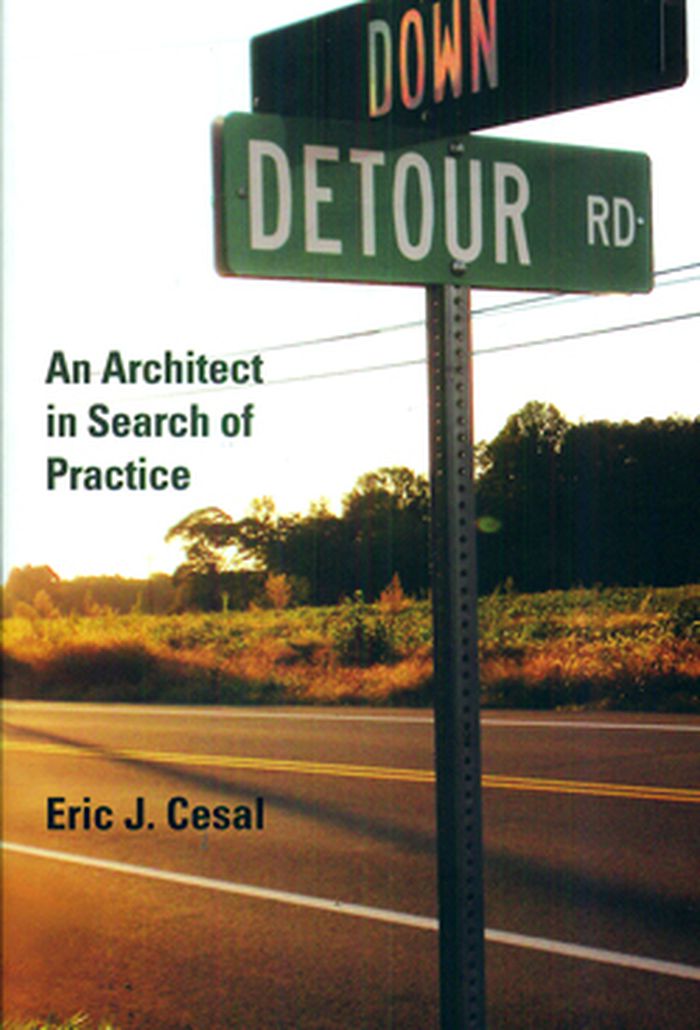
Down detour road: an architect in search of practice
Actions:
Prix:
$23.95
(disponible en magasin)
Résumé:
As the world redesigns and rebuilds in the face of economic and ecological crises, unprecedented numbers of architects are out of work. What does this say about the value of architecture? That is the question that confronted architect Eric Cesal as he finished graduate school at the onset of the worst financial meltdown in a generation. This publication is his journey: one that begins off-course, and ends in a hopeful new vision of architecture.
Down detour road: an architect in search of practice
Actions:
Prix:
$23.95
(disponible en magasin)
Résumé:
As the world redesigns and rebuilds in the face of economic and ecological crises, unprecedented numbers of architects are out of work. What does this say about the value of architecture? That is the question that confronted architect Eric Cesal as he finished graduate school at the onset of the worst financial meltdown in a generation. This publication is his journey: one that begins off-course, and ends in a hopeful new vision of architecture.
Classification:
livres
livres
Publication:
juin 2010
juin 2010
Sujet:
Théorie de l’architecture
Théorie de l’architecture
Classification:
livres
livres
Actions:
Prix:
$31.95
(disponible sur commande)
Résumé:
Combining formal argument with informal conversations and design proposals, this title offers creative ideas for "thinking and acting architecture differently." What makes the book unique is the freshness of its voices — young architects and emerging practitioners who for the most part have not published before. Interwoven with their proposals are conversations among(...)
$31.95
(disponible sur commande)
Résumé:
Combining formal argument with informal conversations and design proposals, this title offers creative ideas for "thinking and acting architecture differently." What makes the book unique is the freshness of its voices — young architects and emerging practitioners who for the most part have not published before. Interwoven with their proposals are conversations among(...)
Titre:
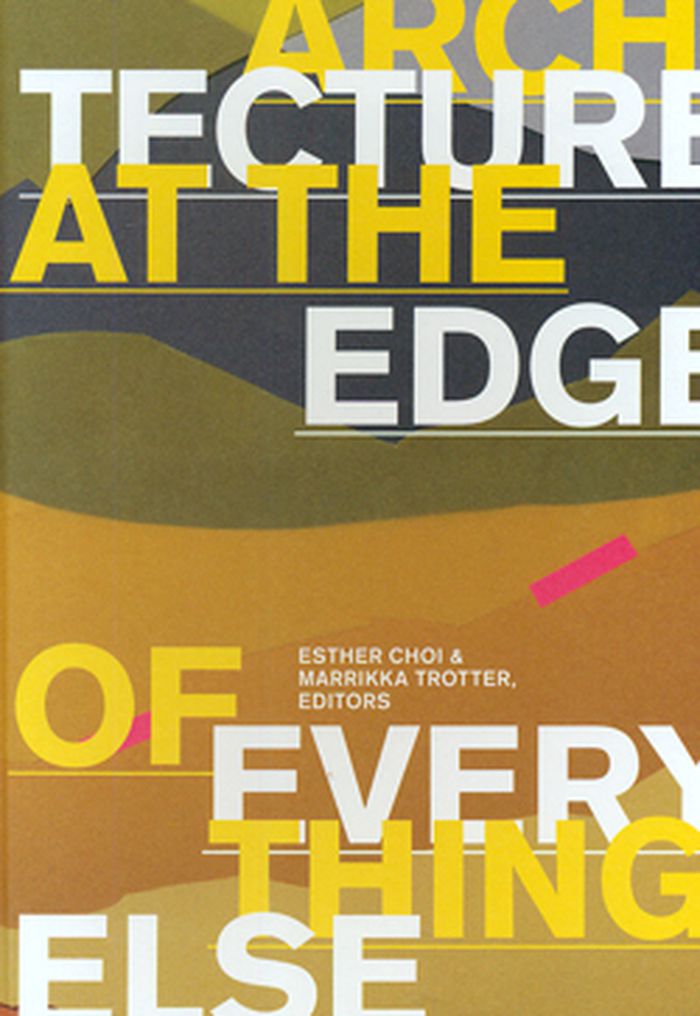
Architecture at the edge of everything else
Actions:
Prix:
$31.95
(disponible sur commande)
Résumé:
Combining formal argument with informal conversations and design proposals, this title offers creative ideas for "thinking and acting architecture differently." What makes the book unique is the freshness of its voices — young architects and emerging practitioners who for the most part have not published before. Interwoven with their proposals are conversations among these new voices and more established authors and practitioners, including Sanford Kwinter, Sylvia Lavin, K. Michael Hays, Philippe Rahm, Liam Gillick, Teddy Cruz, and Michael Meredith. This publication investigates the inner contradictions tangling and obscuring architectural discourse. It locates architecture in a cultural, social, political, and situational landscape — the space it actually occupies in the contemporary world. Examining architecture as it comes into contact with other disciplines — including art, art history, cultural studies, curating, landscape architecture, neuroaesthetics, pedagogy, philosophy, political science, and urbanism — the book considers architecture's precarious position at the edge : at the edge of its own dilemmas and at the edge of "everything else." In different ways, all the contributors suggest how to understand the innovative possibilities and pitfalls of spatial practices—teasing, analyzing, and celebrating architecture's disciplinary ambiguity — with proposals that range from a "lo-res" architecture to one controlled by the curatorial impulse, from customizable "skins" on residential buildings to the collection of residual space for new uses. Their investigations encompass how to interpret, how to intervene, and how to imagine.
Architecture at the edge of everything else
Actions:
Prix:
$31.95
(disponible sur commande)
Résumé:
Combining formal argument with informal conversations and design proposals, this title offers creative ideas for "thinking and acting architecture differently." What makes the book unique is the freshness of its voices — young architects and emerging practitioners who for the most part have not published before. Interwoven with their proposals are conversations among these new voices and more established authors and practitioners, including Sanford Kwinter, Sylvia Lavin, K. Michael Hays, Philippe Rahm, Liam Gillick, Teddy Cruz, and Michael Meredith. This publication investigates the inner contradictions tangling and obscuring architectural discourse. It locates architecture in a cultural, social, political, and situational landscape — the space it actually occupies in the contemporary world. Examining architecture as it comes into contact with other disciplines — including art, art history, cultural studies, curating, landscape architecture, neuroaesthetics, pedagogy, philosophy, political science, and urbanism — the book considers architecture's precarious position at the edge : at the edge of its own dilemmas and at the edge of "everything else." In different ways, all the contributors suggest how to understand the innovative possibilities and pitfalls of spatial practices—teasing, analyzing, and celebrating architecture's disciplinary ambiguity — with proposals that range from a "lo-res" architecture to one controlled by the curatorial impulse, from customizable "skins" on residential buildings to the collection of residual space for new uses. Their investigations encompass how to interpret, how to intervene, and how to imagine.
Classification:
livres
livres
Publication:
juin 2010
juin 2010
Sujet:
Théorie de l’architecture
Théorie de l’architecture
Classification:
livres
livres
Prix:
$34.95
(disponible sur commande)
Résumé:
After the vast destruction wrought by Hurricane Katrina, New Orleans faces a rare chance to rebuild, with an unprecedented opportunity to plan what gets built. As the city's director of planning from 1992 until 2000, Kristina Ford is uniquely placed to use these opportunities as a springboard for an eye-opening discussion of the intransigent problems and promising(...)
$34.95
(disponible sur commande)
Résumé:
After the vast destruction wrought by Hurricane Katrina, New Orleans faces a rare chance to rebuild, with an unprecedented opportunity to plan what gets built. As the city's director of planning from 1992 until 2000, Kristina Ford is uniquely placed to use these opportunities as a springboard for an eye-opening discussion of the intransigent problems and promising(...)
Titre:
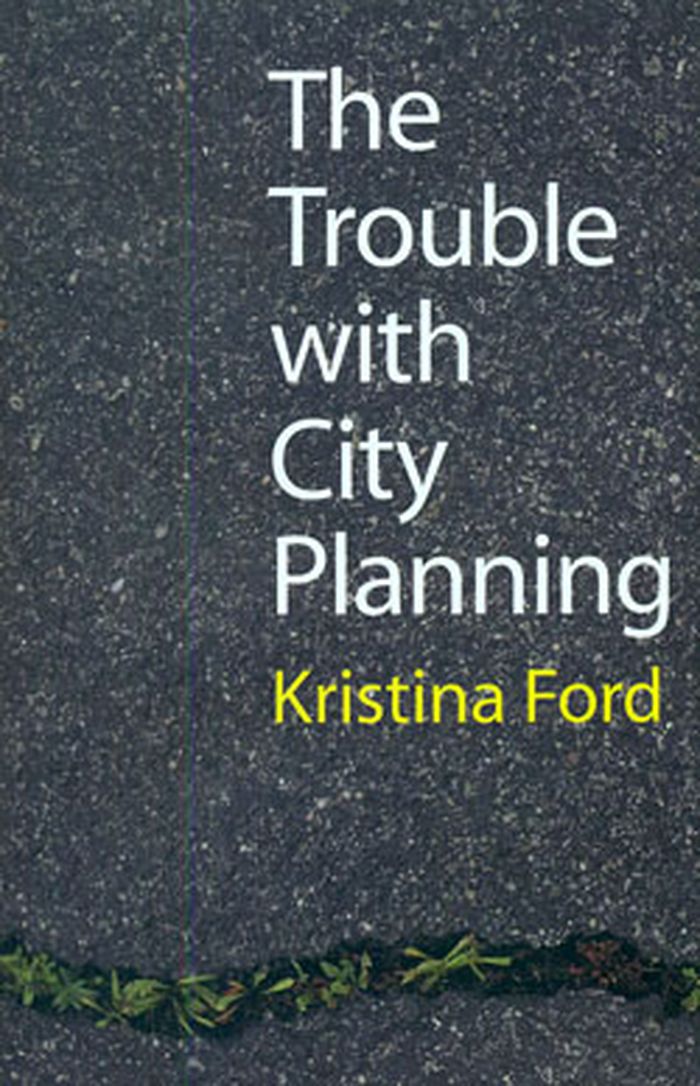
The trouble with the city planning: what New Orleans can teach us
Actions:
Prix:
$34.95
(disponible sur commande)
Résumé:
After the vast destruction wrought by Hurricane Katrina, New Orleans faces a rare chance to rebuild, with an unprecedented opportunity to plan what gets built. As the city's director of planning from 1992 until 2000, Kristina Ford is uniquely placed to use these opportunities as a springboard for an eye-opening discussion of the intransigent problems and promising possibilities facing city planners across the nation and beyond.
The trouble with the city planning: what New Orleans can teach us
Actions:
Prix:
$34.95
(disponible sur commande)
Résumé:
After the vast destruction wrought by Hurricane Katrina, New Orleans faces a rare chance to rebuild, with an unprecedented opportunity to plan what gets built. As the city's director of planning from 1992 until 2000, Kristina Ford is uniquely placed to use these opportunities as a springboard for an eye-opening discussion of the intransigent problems and promising possibilities facing city planners across the nation and beyond.
Classification:
livres
livres
Publication:
décembre 2010
décembre 2010
Sujet:
Théorie de l’urbanisme
Théorie de l’urbanisme
Classification:
livres
livres
Prix:
$28.95
(disponible sur commande)
Résumé:
Raymond Tallis shows that it is easy to underestimate the influence of small things in determining what manner of creatures humans are. He argues that the independent movement of the human index finger is one such easily overlooked factor. Tallis argues that it is through pointing that the index finger made a significant contribution to the development of humans and(...)
$28.95
(disponible sur commande)
Résumé:
Raymond Tallis shows that it is easy to underestimate the influence of small things in determining what manner of creatures humans are. He argues that the independent movement of the human index finger is one such easily overlooked factor. Tallis argues that it is through pointing that the index finger made a significant contribution to the development of humans and(...)
Titre:
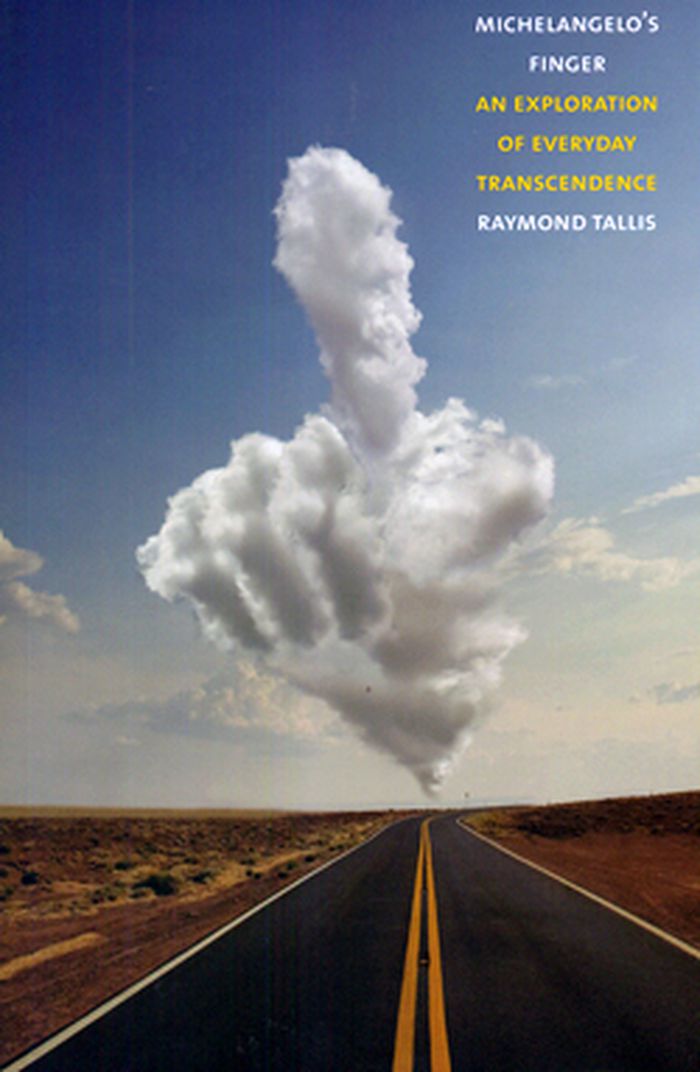
Michelangelo's finger: An exploration of everyday transcendence
Actions:
Prix:
$28.95
(disponible sur commande)
Résumé:
Raymond Tallis shows that it is easy to underestimate the influence of small things in determining what manner of creatures humans are. He argues that the independent movement of the human index finger is one such easily overlooked factor. Tallis argues that it is through pointing that the index finger made a significant contribution to the development of humans and to the creation of a human world separate from the rest of the natural world. Observing the ceiling of the Sistine Chapel and the hugely familiar and awkward encounter between Michelangelo’s God and Man through their index fingers, Tallis identifies the artist’s intuitive awareness of the central role of the index finger in making us unique. Just as the reaching index fingers of God and Man are here made central to the creation of our kind, so Tallis believes that the seemingly simple act of pointing, which is used in a wide variety of ways, is central to our extraordinary evolution.
Michelangelo's finger: An exploration of everyday transcendence
Actions:
Prix:
$28.95
(disponible sur commande)
Résumé:
Raymond Tallis shows that it is easy to underestimate the influence of small things in determining what manner of creatures humans are. He argues that the independent movement of the human index finger is one such easily overlooked factor. Tallis argues that it is through pointing that the index finger made a significant contribution to the development of humans and to the creation of a human world separate from the rest of the natural world. Observing the ceiling of the Sistine Chapel and the hugely familiar and awkward encounter between Michelangelo’s God and Man through their index fingers, Tallis identifies the artist’s intuitive awareness of the central role of the index finger in making us unique. Just as the reaching index fingers of God and Man are here made central to the creation of our kind, so Tallis believes that the seemingly simple act of pointing, which is used in a wide variety of ways, is central to our extraordinary evolution.
Classification:
livres
livres
Publication:
septembre 2010
septembre 2010
Sujet:
Théorie/ philosophie
Théorie/ philosophie
Classification:
livres
livres
Actions:
Prix:
$22.95
(disponible sur commande)
Résumé:
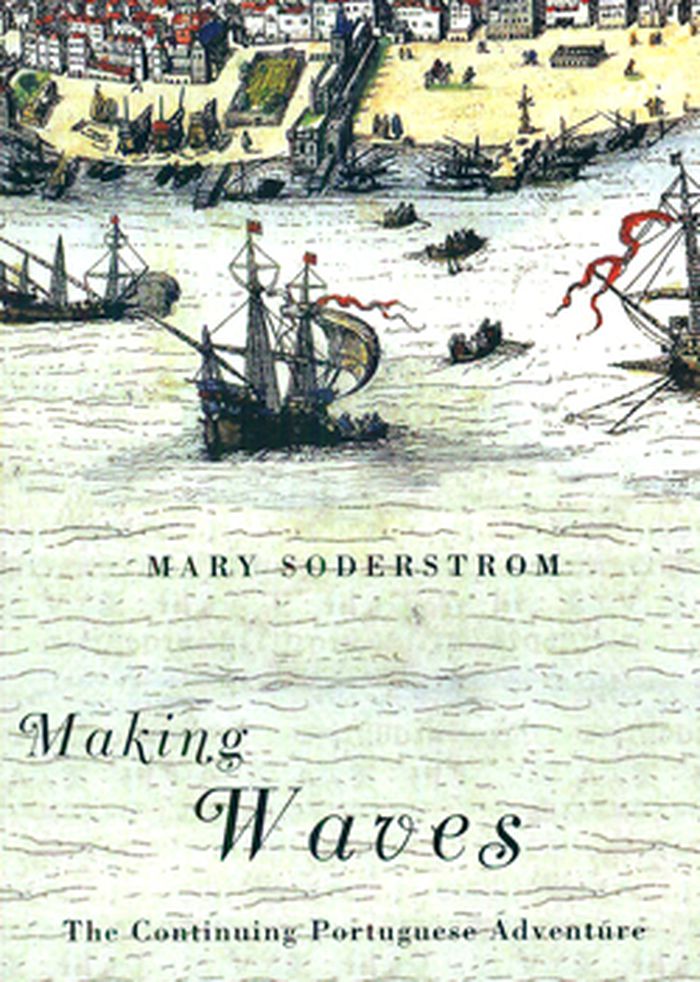
The world is the way it is today because 600 years ago Portugal, a small nation on the edge of Europe, sent its sailors off in search of spices and souls. In Making Waves: The Continuing Portuguese Adventure, Mary Soderstrom takes us to places touched by the Portuguese telling a tale of adventure and triumph.
$22.95
(disponible sur commande)
Résumé:
The world is the way it is today because 600 years ago Portugal, a small nation on the edge of Europe, sent its sailors off in search of spices and souls. In Making Waves: The Continuing Portuguese Adventure, Mary Soderstrom takes us to places touched by the Portuguese telling a tale of adventure and triumph.
Titre:
Making waves: The continuing Portuguese adventure
Actions:
Prix:
$22.95
(disponible sur commande)
Résumé:
The world is the way it is today because 600 years ago Portugal, a small nation on the edge of Europe, sent its sailors off in search of spices and souls. In Making Waves: The Continuing Portuguese Adventure, Mary Soderstrom takes us to places touched by the Portuguese telling a tale of adventure and triumph.
Making waves: The continuing Portuguese adventure
Actions:
Prix:
$22.95
(disponible sur commande)
Résumé:
The world is the way it is today because 600 years ago Portugal, a small nation on the edge of Europe, sent its sailors off in search of spices and souls. In Making Waves: The Continuing Portuguese Adventure, Mary Soderstrom takes us to places touched by the Portuguese telling a tale of adventure and triumph.
Classification:
livres
livres
Publication:
septembre 2010
septembre 2010
Sujet:
Théorie de l’urbanisme
Théorie de l’urbanisme
Classification:
livres
livres
Actions:
Prix:
$19.95
(disponible sur commande)
Résumé:
Air Guitar pioneered a kind of plain-talking in cultural criticism, willingly subjective and always candid and direct. A valuable reading tool for art lovers, neophytes, students and teachers alike, Hickey's book--now in its eighth printing--has galvanized a generation of art lovers, with new takes on Norman Rockwell, Robert Mapplethorpe, Stan Brakhage, Andy Warhol and Perry Mason.
$19.95
(disponible sur commande)
Résumé:
Air Guitar pioneered a kind of plain-talking in cultural criticism, willingly subjective and always candid and direct. A valuable reading tool for art lovers, neophytes, students and teachers alike, Hickey's book--now in its eighth printing--has galvanized a generation of art lovers, with new takes on Norman Rockwell, Robert Mapplethorpe, Stan Brakhage, Andy Warhol and Perry Mason.
Titre:
Air guitar: essays on art and democracy
Actions:
Prix:
$19.95
(disponible sur commande)
Résumé:
Air Guitar pioneered a kind of plain-talking in cultural criticism, willingly subjective and always candid and direct. A valuable reading tool for art lovers, neophytes, students and teachers alike, Hickey's book--now in its eighth printing--has galvanized a generation of art lovers, with new takes on Norman Rockwell, Robert Mapplethorpe, Stan Brakhage, Andy Warhol and Perry Mason.
Air guitar: essays on art and democracy
Actions:
Prix:
$19.95
(disponible sur commande)
Résumé:
Air Guitar pioneered a kind of plain-talking in cultural criticism, willingly subjective and always candid and direct. A valuable reading tool for art lovers, neophytes, students and teachers alike, Hickey's book--now in its eighth printing--has galvanized a generation of art lovers, with new takes on Norman Rockwell, Robert Mapplethorpe, Stan Brakhage, Andy Warhol and Perry Mason.
Classification:
livres
livres
Publication:
août 1997
août 1997
Sujet:
Théorie de l’art
Théorie de l’art
Classification:
livres
livres
Actions:
Prix:
$19.50
(disponible sur commande)
Résumé:
Few man-made things seem as stable, as immutable, as a building. Yet the life of any structure is neither fixed nor timeless. Buildings are forced to adapt to each succeeding age. The Parthenon, that epitome of a ruined temple, was for centuries a working church and then a mosque; the cathedral of Notre Dame was “restored” to a design that none of its original makers(...)
$19.50
(disponible sur commande)
Résumé:
Few man-made things seem as stable, as immutable, as a building. Yet the life of any structure is neither fixed nor timeless. Buildings are forced to adapt to each succeeding age. The Parthenon, that epitome of a ruined temple, was for centuries a working church and then a mosque; the cathedral of Notre Dame was “restored” to a design that none of its original makers(...)
Titre:
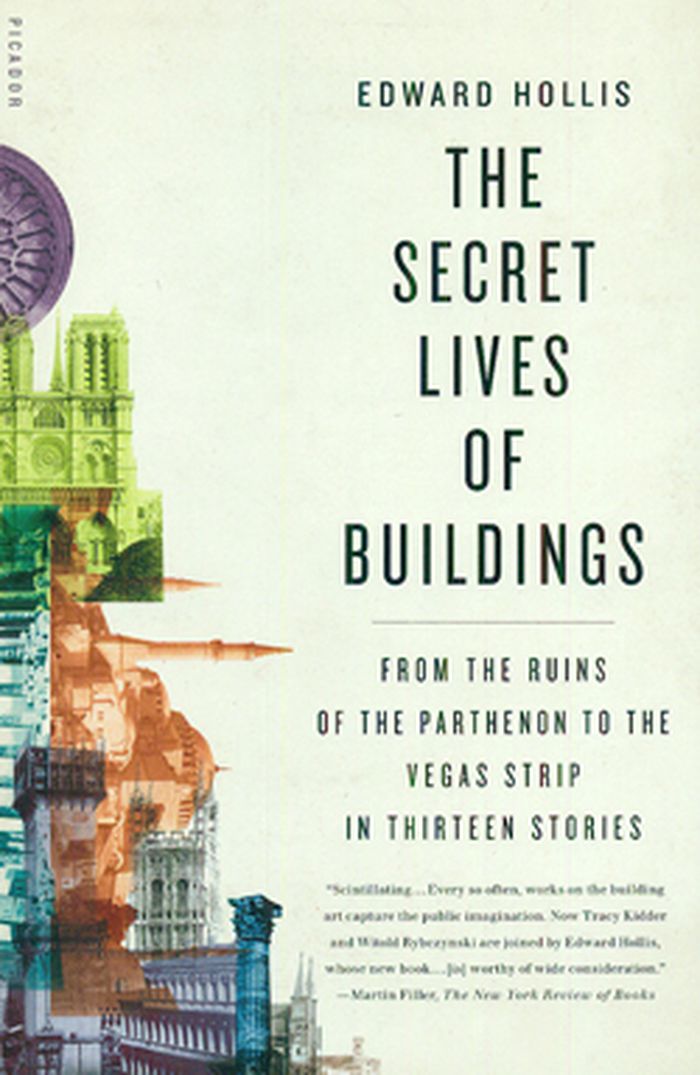
The secret lives of buildings : from the ruins of the Parthenon to the Vegas strip in thirteen stories
Actions:
Prix:
$19.50
(disponible sur commande)
Résumé:
Few man-made things seem as stable, as immutable, as a building. Yet the life of any structure is neither fixed nor timeless. Buildings are forced to adapt to each succeeding age. The Parthenon, that epitome of a ruined temple, was for centuries a working church and then a mosque; the cathedral of Notre Dame was “restored” to a design that none of its original makers would have recognized; remains of the Berlin Wall, once gleefully smashed, have become precious relics. Here Edward Hollis recounts the most enthralling of these metamorphoses and shows how buildings have come to embody the history of Western culture.
The secret lives of buildings : from the ruins of the Parthenon to the Vegas strip in thirteen stories
Actions:
Prix:
$19.50
(disponible sur commande)
Résumé:
Few man-made things seem as stable, as immutable, as a building. Yet the life of any structure is neither fixed nor timeless. Buildings are forced to adapt to each succeeding age. The Parthenon, that epitome of a ruined temple, was for centuries a working church and then a mosque; the cathedral of Notre Dame was “restored” to a design that none of its original makers would have recognized; remains of the Berlin Wall, once gleefully smashed, have become precious relics. Here Edward Hollis recounts the most enthralling of these metamorphoses and shows how buildings have come to embody the history of Western culture.
Classification:
livres
livres
Publication:
novembre 2010
novembre 2010
Sujet:
Théorie de l’architecture
Théorie de l’architecture
Classification:
livres
livres

Actions:
Prix:
$34.95
(disponible sur commande)
Résumé:
This publication gathers writings from the past decade along with new reflections on an era framed by the destruction of the World Trade Center and the opening of the world's tallest skyscraper. Assessing ordinary commercial structures as well as head-turning designs by some of the worldrsquo;s leading architects, Kamin paints a sweeping but finely textured portrait of a(...)
$34.95
(disponible sur commande)
Résumé:
This publication gathers writings from the past decade along with new reflections on an era framed by the destruction of the World Trade Center and the opening of the world's tallest skyscraper. Assessing ordinary commercial structures as well as head-turning designs by some of the worldrsquo;s leading architects, Kamin paints a sweeping but finely textured portrait of a(...)
Titre:
Terror and wonder: architecture in a tumultuous age
Actions:
Prix:
$34.95
(disponible sur commande)
Résumé:
This publication gathers writings from the past decade along with new reflections on an era framed by the destruction of the World Trade Center and the opening of the world's tallest skyscraper. Assessing ordinary commercial structures as well as head-turning designs by some of the worldrsquo;s leading architects, Kamin paints a sweeping but finely textured portrait of a tumultuous age torn between the conflicting mandates of architectural spectacle and sustainability.
Terror and wonder: architecture in a tumultuous age
Actions:
Prix:
$34.95
(disponible sur commande)
Résumé:
This publication gathers writings from the past decade along with new reflections on an era framed by the destruction of the World Trade Center and the opening of the world's tallest skyscraper. Assessing ordinary commercial structures as well as head-turning designs by some of the worldrsquo;s leading architects, Kamin paints a sweeping but finely textured portrait of a tumultuous age torn between the conflicting mandates of architectural spectacle and sustainability.
Classification:
livres
livres
Publication:
octobre 2010
octobre 2010
Sujet:
Théorie de l’architecture
Théorie de l’architecture
Classification:
livres
livres
Titre:
Architecture, means and ends
Architecture, means and ends
Actions:
Prix:
$39.95
(disponible sur commande)
Résumé:
In this book, Vittorio Gregotti argues that by making symbolic expression a primary objective in the design of a project, the designer will produce a practical aesthetic as well as an ethical solution.
$39.95
(disponible sur commande)
Résumé:
In this book, Vittorio Gregotti argues that by making symbolic expression a primary objective in the design of a project, the designer will produce a practical aesthetic as well as an ethical solution.
Titre:
Architecture, means and ends
Actions:
Prix:
$39.95
(disponible sur commande)
Résumé:
In this book, Vittorio Gregotti argues that by making symbolic expression a primary objective in the design of a project, the designer will produce a practical aesthetic as well as an ethical solution.
Architecture, means and ends
Actions:
Prix:
$39.95
(disponible sur commande)
Résumé:
In this book, Vittorio Gregotti argues that by making symbolic expression a primary objective in the design of a project, the designer will produce a practical aesthetic as well as an ethical solution.
Classification:
livres
livres
Publication:
novembre 2010
novembre 2010
Sujet:
Théorie de l’architecture
Théorie de l’architecture
Classification:
livres
livres
Actions:
Prix:
$29.95
(disponible sur commande)
Résumé:
Architecture’s Evil Empire, looks at how today’s trademark architectural individualism stretches beyond the well-known works and ultimately extends to the entire built environment. Glendinning examines how the global empire of the current modernism emerged—particularly in relation to the excesses of global capitalism—and explains its key organizational and architectural(...)
$29.95
(disponible sur commande)
Résumé:
Architecture’s Evil Empire, looks at how today’s trademark architectural individualism stretches beyond the well-known works and ultimately extends to the entire built environment. Glendinning examines how the global empire of the current modernism emerged—particularly in relation to the excesses of global capitalism—and explains its key organizational and architectural(...)
Titre:
Architecture's evil empire: The triumph and tragedy of global modernism
Actions:
Prix:
$29.95
(disponible sur commande)
Résumé:
Architecture’s Evil Empire, looks at how today’s trademark architectural individualism stretches beyond the well-known works and ultimately extends to the entire built environment. Glendinning examines how the global empire of the current modernism emerged—particularly in relation to the excesses of global capitalism—and explains its key organizational and architectural features, placing its most influential theorists and designers in a broader context of history and artistic movements.
Architecture's evil empire: The triumph and tragedy of global modernism
Actions:
Prix:
$29.95
(disponible sur commande)
Résumé:
Architecture’s Evil Empire, looks at how today’s trademark architectural individualism stretches beyond the well-known works and ultimately extends to the entire built environment. Glendinning examines how the global empire of the current modernism emerged—particularly in relation to the excesses of global capitalism—and explains its key organizational and architectural features, placing its most influential theorists and designers in a broader context of history and artistic movements.
Classification:
livres
livres
Publication:
octobre 2010
octobre 2010
Sujet:
Théorie de l’architecture
Théorie de l’architecture


